

Is Attention Interpretable?
Open accessThe DOI matches its Crossref record; 43 of the 43 references it cites were found in a registry or an index.
Abstract
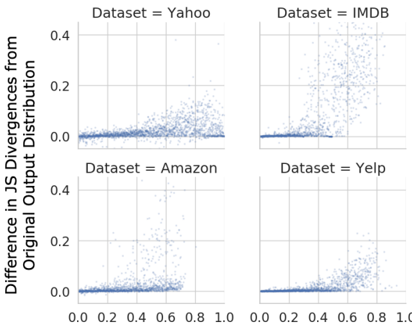
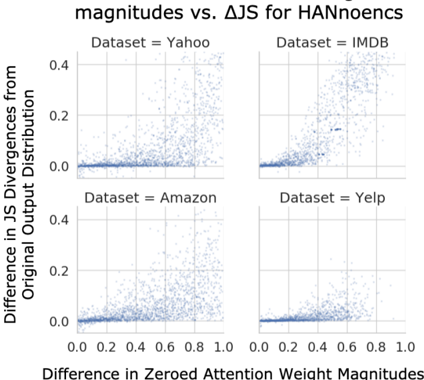
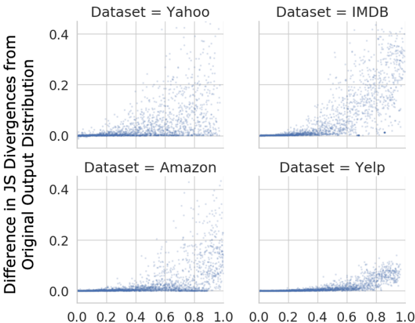
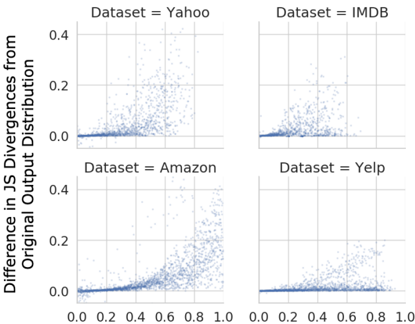
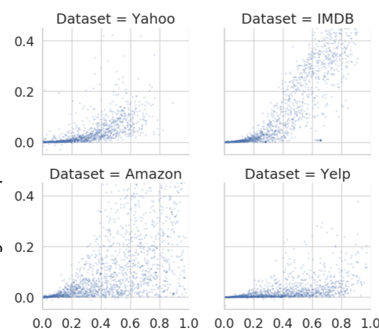
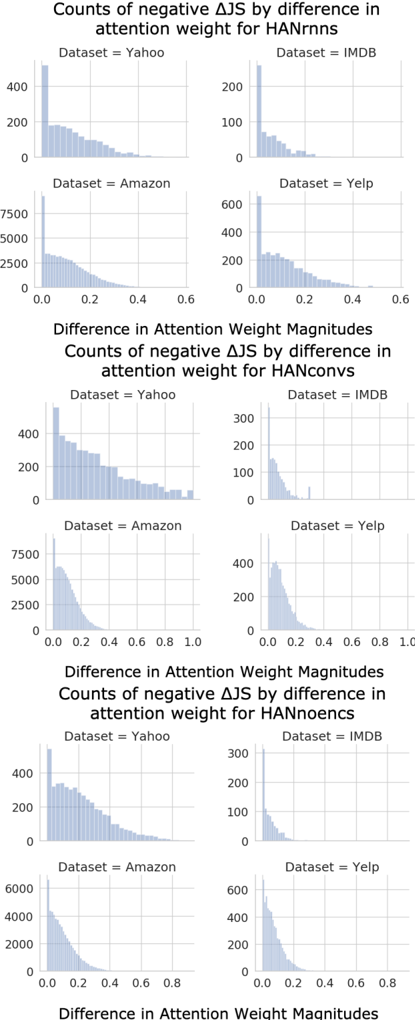
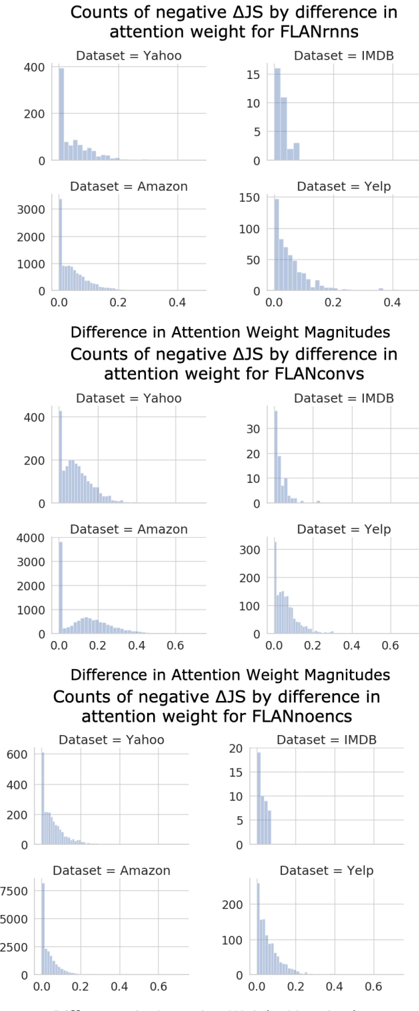
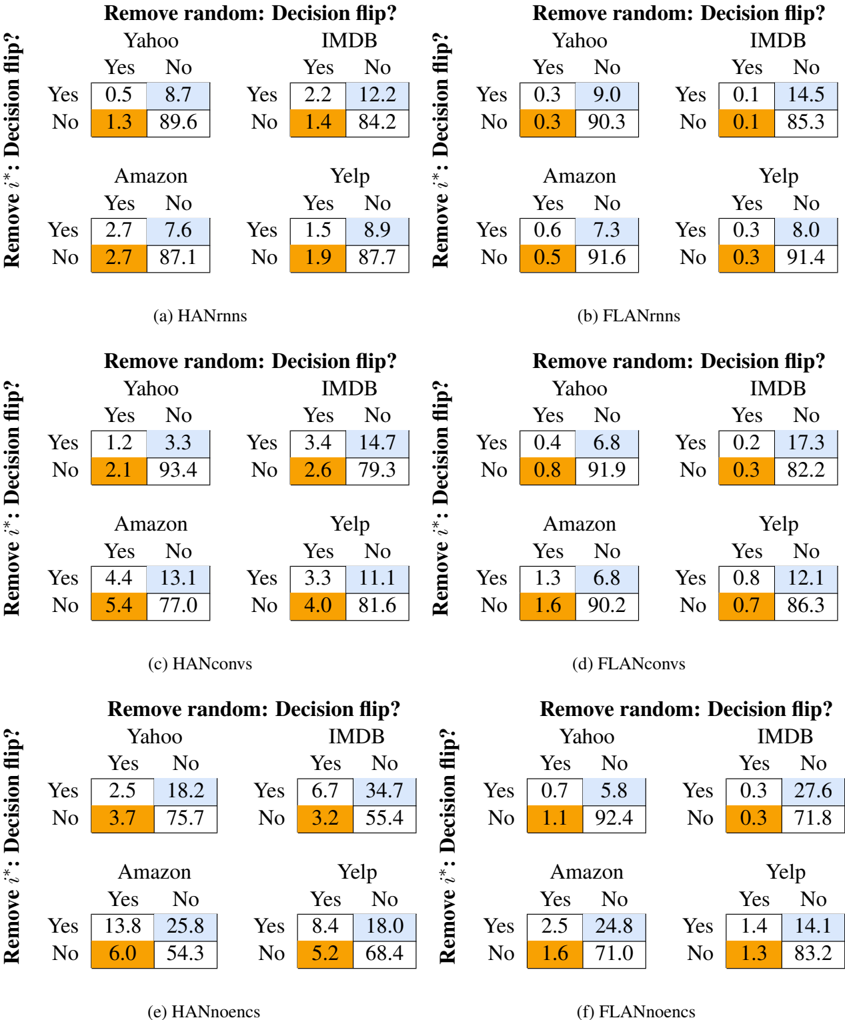
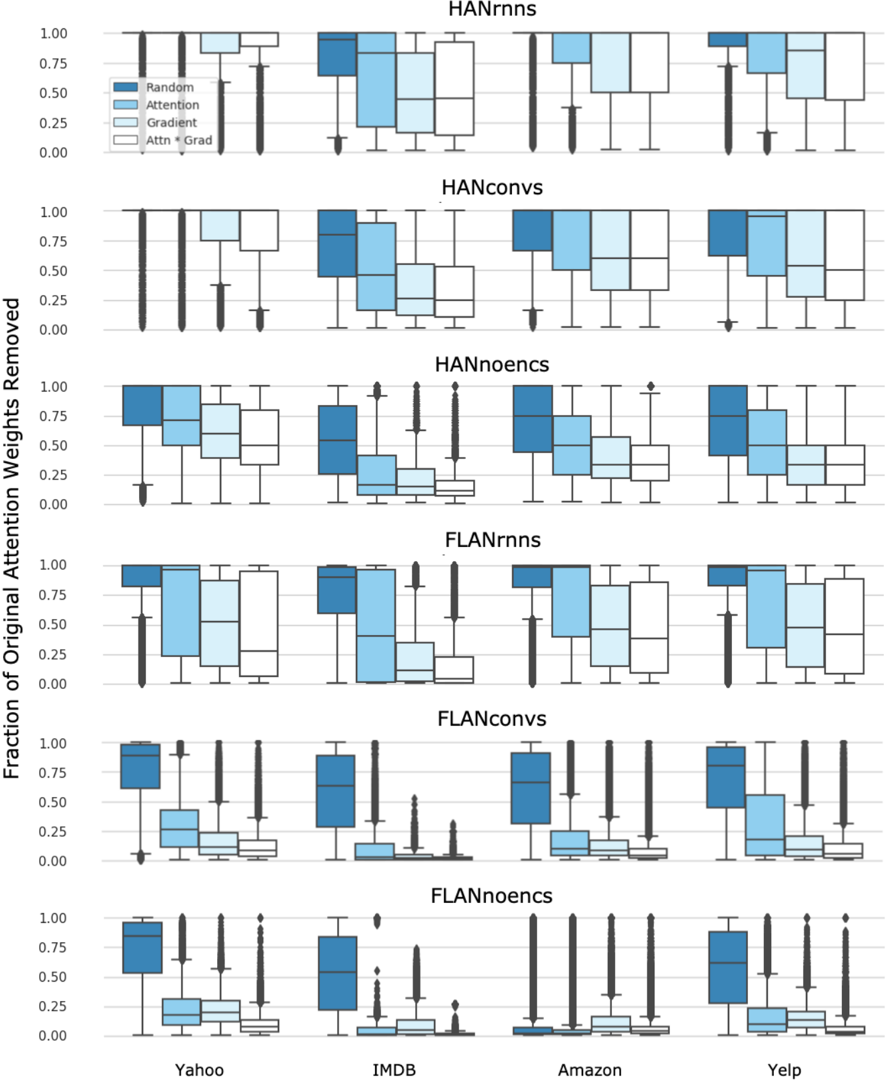
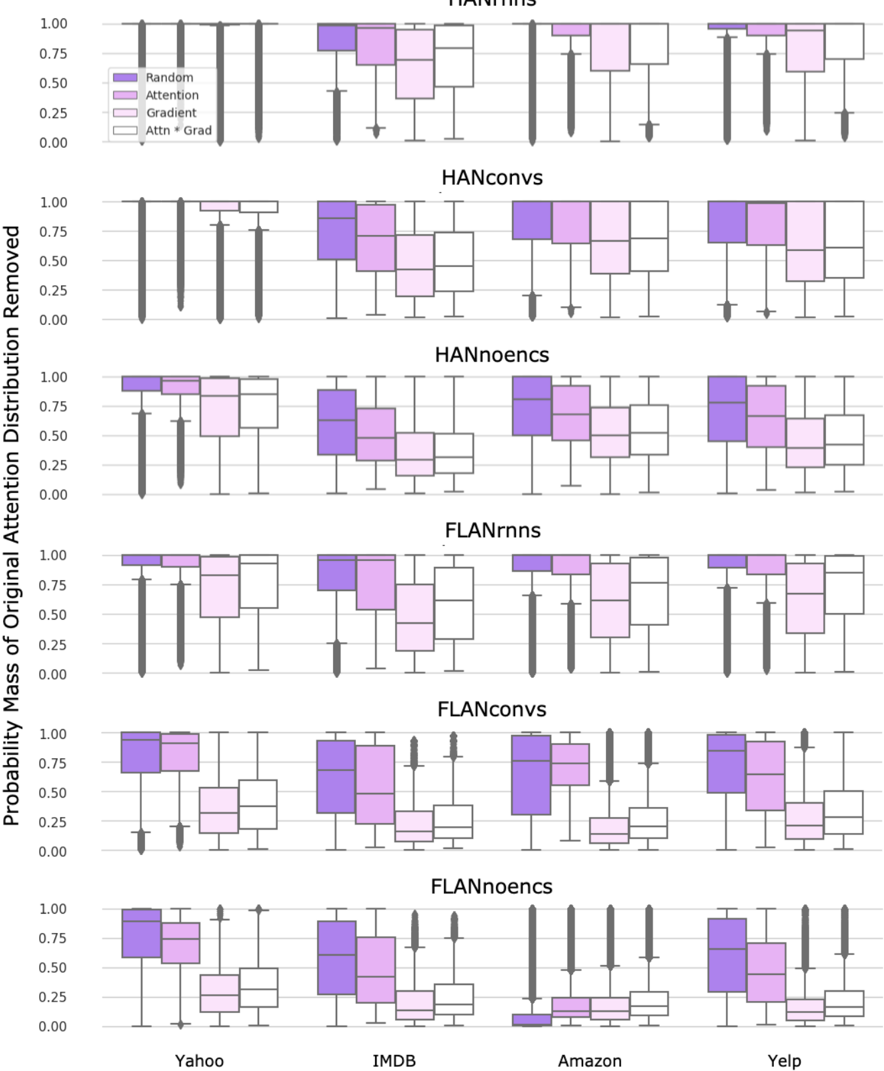
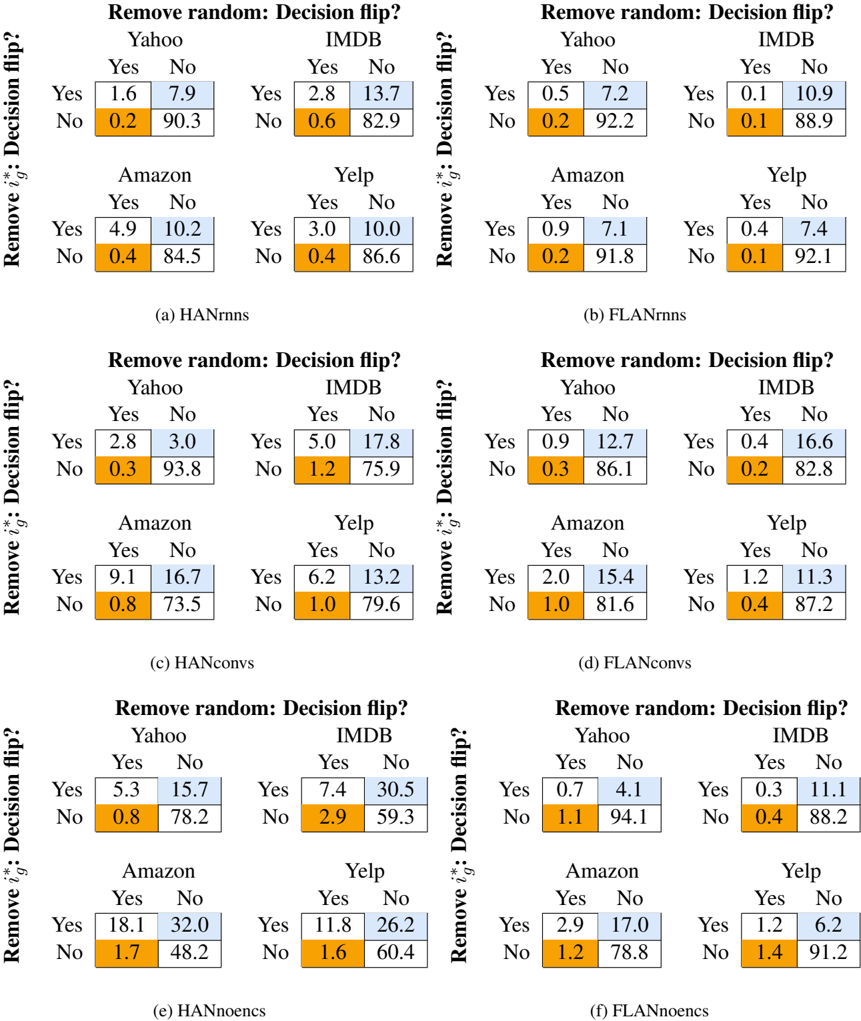
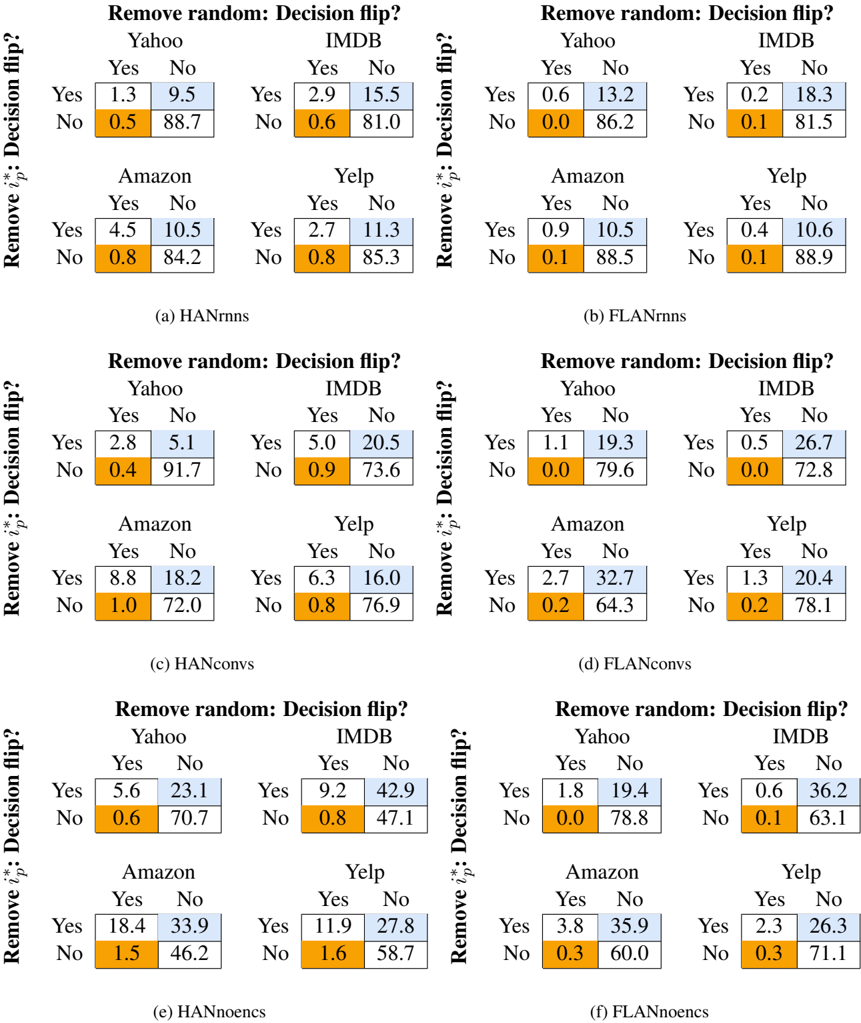
Attention mechanisms have recently boosted performance on a range of NLP tasks.Because attention layers explicitly weight input components' representations, it is also often assumed that attention can be used to identify information that models found important (e.g., specific contextualized word tokens).We test whether that assumption holds by manipulating attention weights in already-trained text classification models and analyzing the resulting differences in their predictions.While we observe some ways in which higher attention weights correlate with greater impact on model predictions, we also find many ways in which this does not hold, i.e., where gradient-based rankings of attention weights better predict their effects than their magnitudes.We conclude that while attention noisily predicts input components' overall importance to a model, it is by no means a fail-safe indicator.1
Overview
The claims and statistics of this paper haven’t been checked yet.
Free: it reads the open-access text and checks the first 5 claims that cite a source we can check. Create a free account to check every claim.
Integrity signals
Registry
Cites
Statistics
Figures
Verification
Claims the paper makes
The claims and statistics of this paper haven’t been checked yet.
Free: it reads the open-access text and checks the first 5 claims that cite a source we can check. Create a free account to check every claim.
Claims other papers make about this one
Each is checked against this paper’s own text: does it say what the citing paper says it does?
The source backs part of the claim, not all of it — or backs it for a different population, condition or comparison.
In the citing paper
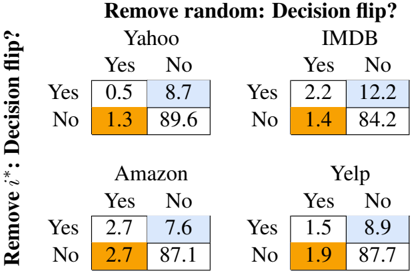
“Besides using Incremental Deletion/Addition to evaluate correctness and output-completeness, compactness can be evaluated by counting how many features of the explanation need to be removed, perturbed or added to change the decision of the predictive model [7,34,70,123,165,221].”
From From Anecdotal Evidence to Quantitative Evaluation Methods: A Systematic Review on Evaluating Explainable AI (2023) · cites this paper as [221]
Experimental — accuracy not yet measuredIn the citing paper
“In [85], the attention mechanism weights were seen as at best noisy predictors of the relative importance of specific regions of the input sequence, and they should not be treated as justifications for the model’s decisions.”
From Survey of Explainable AI Techniques in Healthcare (2023) · cites this paper as [85]
In the citing paper
“Although this is typically the case for softmax scores [221], there might be cases where this assumption is invalid.”
From From Anecdotal Evidence to Quantitative Evaluation Methods: A Systematic Review on Evaluating Explainable AI (2023) · cites this paper as [221]
Self-check
Percentages, sums and reported differences re-computed from the paper’s own numbers.
The self-check needs the paper’s full text.
Citations
Cites
Vaswani, A., Shazeer, N., Parmar, N., Uszkoreit, J., Jones, L., Gomez, A. N., Kaiser, L., & Polosukhin, I. (2017) · arXiv · doi:10.48550/arxiv.1706.03762 · Cited by 120,404
Adam: A Method for Stochastic Optimization
Kingma, D. P., & Ba, J. (2014) · arXiv · doi:10.48550/arxiv.1412.6980 · Cited by 98,946 · cited 1×
“Unless otherwise noted, to train each model, we used Adam (Kingma and Ba, 2014) with gradient clipping of 10.0 and a patience value of 5, so we would stop training a model if five epochs elapsed without any improvement in validation set accuracy.”
MethodInfluential"Why Should I Trust You?": Explaining the Predictions of Any Classifier
Ribeiro, M. T., Singh, S., & Guestrin, C. (2016) · Proceedings of the 22nd ACM SIGKDD International Conference on Knowledge Discovery and Data Mining · doi:10.1145/2939672.2939778 · Cited by 17,555 · cited 4×
“Note, however, that we still do not take either as a gold-standard indicator of importance to the model, as with the gradient in Ross et al. (2017) and Melis and Jaakkola (2018), but merely as an alternative ordering method.”
BackgroundMethodInfluentialNeural Machine Translation by Jointly Learning to Align and Translate
Bahdanau, D., Cho, K., & Bengio, Y. (2014) · arXiv · doi:10.48550/arxiv.1409.0473 · Cited by 16,213 · cited 2×
“Specifically, we use the additive formulation originally defined in Bahdanau et al. (2015).”
BackgroundMethodConvolutional Neural Networks for Sentence Classification
Kim, Y. (2014) · Proceedings of the 2014 Conference on Empirical Methods in Natural Language Processing (EMNLP) · doi:10.3115/v1/d14-1181 · Cited by 14,831 · cited 2×
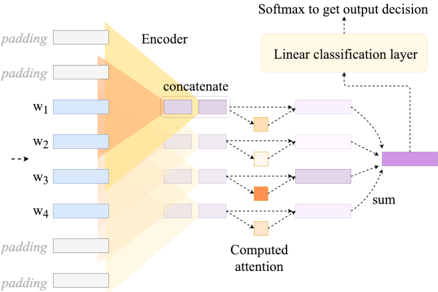
“Aside from biRNNs, we also experiment with models that instead contextualize word vectors by convolutions on only a token’s close neighbors, inspired by Kim (2014). See Figure 2 for a diagram of the FLAN architecture using a convolutional encoder.”
MethodEffective Approaches to Attention-based Neural Machine Translation
Luong, T., Pham, H., & Manning, C. D. (2015) · Proceedings of the 2015 Conference on Empirical Methods in Natural Language Processing · doi:10.18653/v1/d15-1166 · Cited by 8,382 · cited 1×
“For many different problems — to name a few, machine translation (Luong et al., 2015), syntactic parsing (Vinyals et al., 2015), reading comprehension (Hermann et al., 2015), and language modeling (Liu and Lapata, 2018) — incorporating attention mechanisms into models has proven beneficial for…”
BackgroundLipton, Z. C. (2018) · Queue · doi:10.1145/3236386.3241340 · Cited by 5,427 · cited 1×
“Lipton (2016) describes a model as “transparent” if “a person can contemplate the entire model at once.””
BackgroundHierarchical Attention Networks for Document Classification
Yang, Z., Yang, D., Dyer, C., He, X., Smola, A., & Hovy, E. (2016) · Proceedings of the 2016 Conference of the North American Chapter of the Association for Computational Linguistics: Human Language Technologies · doi:10.18653/v1/n16-1174 · Cited by 4,712 · cited 6×
“Our model architectures are inspired by the hierarchical attention network (HAN; Yang et al., 2016), a text classification model with two layers of attention, first to the word tokens in each sentence and then to the resulting sentence representations.”
BackgroundMethodResultInfluentialCharacter-level Convolutional Networks for Text Classification
Zhang, X., Zhao, J., & LeCun, Y. (2015) · arXiv (Cornell University) · doi:10.48550/arxiv.1509.01626 · Cited by 3,205 · cited 3×
“We investigate four model architectures on a topic classification dataset (Yahoo Answers; Zhang et al., 2015) and on three review ratings datasets: IMDB (Diao et al.”
MethodTeaching Machines to Read and Comprehend
Hermann, K. M., Kočiský, T., Grefenstette, E., Espeholt, L., Kay, W., Suleyman, M., & Blunsom, P. (2015) · arXiv (Cornell University) · doi:10.48550/arxiv.1506.03340 · Cited by 2,521 · cited 1×
“For many different problems—to name a few, machine translation (Luong et al., 2015), syntactic parsing (Vinyals et al., 2015), reading comprehension (Hermann et al., 2015), and language modeling (Liu and Lapata, 2018)—incorporating attention mechanisms into models has proven benefi-cial for…”
Background
Research works printed but not linked: 4
- Philipp Koehn and Rebecca Knowles. 2017. Six chal- lenges for neural machine translation. In Pro- ceedings of the First Workshop on Neural Machine Translation.
- Zachary C Lipton. 2016. The mythos of model inter- pretability. arXiv preprint arXiv:1606.03490. · arXiv
- Yang Liu and Mirella Lapata. 2018. Learning struc- tured text representations. Transactions of the Asso- ciation of Computational Linguistics, 6:63-75.
- Oriol Vinyals, Łukasz Kaiser, Terry Koo, Slav Petrov, Ilya Sutskever, and Geoffrey Hinton. 2015. Gram- mar as a foreign language. In Advances in Neural Information Processing Systems.
Cited by
Items 501–600 of 699
Spindola, S., José, M. M., Oliveira, A. S., Cação, F. N., & Cozman, F. G. (2021) · doi:10.5753/eniac.2021.18302 · Cited by 2
How does Attention Affect the Model?
Zhang, C., Li, Q., Hua, L., & Song, D. (2021) · Findings of the Association for Computational Linguistics: ACL (Findings of ACL) · doi:10.18653/v1/2021.findings-acl.22 · Cited by 3
“For example, Serrano and Smith (2019) and Jain and Wallace (2019) used an erasure-based approach and advocated the attention weight does not necessarily correspond to importance.”
BackgroundAn Investigation of Language Model Interpretability via Sentence Editing
Stevens, S., & Su, Y. (2021) · BlackboxNLP Workshop on Analyzing and Interpreting Neural Networks for NLP (BlackboxNLP) · doi:10.18653/v1/2021.blackboxnlp-1.34 · Cited by 4
“While previous work [9, 10] has shown that attention weights are not always faithful, The algorithm <del>descripted</del> <ins>described</ins> in the previous sections has several advantages.”
BackgroundAttention Constraint Mechanism through Auxiliary Attention
Fan, Y., & Arora, A. (2022) · IEEE International Conference on Tools with Artificial Intelligence (ICTAI) · doi:10.1109/ictai56018.2022.00022 · Cited by 2
“Assigning excessive weight to representations that contain invalid information is another factor contributing to poor translation performance [4], [5].”
BackgroundCalibration Meets Explanation: A Simple and Effective Approach for Model Confidence Estimates
Li, D., Hu, B., & Chen, Q. (2022) · Conference on Empirical Methods in Natural Language Processing (EMNLP) · doi:10.18653/v1/2022.emnlp-main.178 · Cited by 11
The Solvability of Interpretability Evaluation Metrics
Zhou, Y., & Shah, J. (2023) · Findings of the Association for Computational Linguistics: EACL · doi:10.18653/v1/2023.findings-eacl.182 · Cited by 16
Station and Track Attribute-Aware Music Personalization
Mei, M. J., Bembom, O., & Ehmann, A. F. (2023) · ACM Conference on Recommender Systems (RecSys) · doi:10.1145/3604915.3610239 · Cited by 2
Ballout, M., Krumnack, U., Heidemann, G., & Kühnberger, K. (2023) · Communications in computer and information science · doi:10.1007/978-3-031-44070-0_1 · Cited by 5
Make Your Decision Convincing! A Unified Two-Stage Framework: Self-Attribution and Decision-Making
Du, Y., Zhao, S., Wang, H., Chen, Y., Bai, R., Qiang, Z., Cai, M., & Qin, B. (2023) · Findings of the Association for Computational Linguistics: EMNLP (Findings of EMNLP) · doi:10.18653/v1/2023.findings-emnlp.78 · Cited by 3
Time Series Model Interpretation via Temporal Feature Sampling
Liu, Z., Li, X., & Cui, Y. (2024) · Lecture notes in computer science · doi:10.1007/978-981-97-2303-4_23 · Cited by 2
Wang, Z., Lin, Z., Lin, W., Yang, M., Zeng, M., & Tan, K. C. (2026) · IEEE Transactions on Pattern Analysis and Machine Intelligence · doi:10.1109/tpami.2026.3664098 · Cited by 17
“However, recent studies suggest that “attention is not explanation” because attention weights could not reflect the true feature importance [33], [34], [35].”
InfluentialLai, V., Cai, J. Z., & Tan, C. (2019) · arXiv (Cornell University) · doi:10.48550/arxiv.1910.08534 · Cited by 12
“Similarly, Serrano and Smith (2019) show that attention is not a fail-safe indicator for explaining machine predictions based on intermediate representation erasure.”
BackgroundUnsupervised Extraction of Market Moving Events with Neural Attention.
Corro, L. D., & Hoffart, J. (2020) · San Andres Digital Repository (University of San Andrés) · Cited by 3
Towards Prediction Explainability through Sparse CommunicationPreprint
Treviso, M., & Martins, A. F. T. (2020) · arXiv (Cornell University) · Cited by 2
Meta-path Free Semi-supervised Learning for Heterogeneous NetworksPreprint
Park, S.-W., Bae, B. J., Yeo, J., & Hwang, S.-W. (2020) · arXiv (Cornell University) · doi:10.48550/arxiv.2010.08924 · Cited by 2
“• As opposed to GCN, our models allow for assigning different importances to nodes of a same neighborhood, which may lead to benefits in interpretability (Veliˇckovi´c et al. 2018), as was the case in NLP domain (Wiegre ff e and Pinter 2019; Serrano and Smith 2019).”
MethodOn the Dynamics of Training Attention ModelsPreprint
Lu, H., Mao, Y., & Nayak, A. R. (2020) · arXiv (Cornell University) · doi:10.48550/arxiv.2011.10036 · Cited by 3
“One focus of these works pertains to understanding whether an attention mechanism can provide meaningful explanations (Voita et al., 2019; Jain & Wallace, 2019; Wiegreffe & Pinter, 2019; Serrano & Smith, 2020; Vashishth et al., 2020).”
Predicting Opioid Use Disorder from Longitudinal Healthcare Data using Multi-stream TransformerPreprint
Fouladvand, S., Talbert, J., Dwoskin, L. P., Bush, H., Meadows, A. L., Peterson, L. E., Kavuluru, R., & Chen, J. (2021) · arXiv (Cornell University) · doi:10.48550/arxiv.2103.08800 · Cited by 7
Explaining Neural Network Predictions on Sentence Pairs via Learning Word-Group MasksPreprint
Chen, H., Feng, S., Ganhotra, J., Wan, H., Gunasekara, C., Joshi, S., & Ji, Y. (2021) · arXiv (Cornell University) · doi:10.48550/arxiv.2104.04488 · Cited by 2
Neural approaches to discourse coherence: modeling, evaluation and application
Farag, Y. (2020) · Apollo (University of Cambridge) · doi:10.17863/cam.70024 · Cited by 2
Human Interpretable AI: Enhancing Tsetlin Machine Stochasticity with Drop Clause.Preprint
Sharma, J., Yadav, R. K., Granmo, O., & Jiao, L. (2021) · arXiv (Cornell University) · Cited by 5
Zou, J., & Ding, N. (2021) · Research Square · doi:10.21203/rs.3.rs-813994/v1 · Cited by 2
A Comparison of Code Embeddings and BeyondPreprint
Han, S., Wang, D., Li, W., & Lu, X. (2021) · arXiv (Cornell University) · doi:10.48550/arxiv.2109.07173 · Cited by 7
“We attempt to answer the question by investigating what elements in the source code are mostly relevant to the model prediction, which is a widely studied problem in the field of explainable deep learning in recent years [28, 51, 69].”
BackgroundMethodEvaluating Large Language Models in Psychological Research: A Guide for ReviewersPreprint
Abdurahman, S., Ziabari, A. S., Moore, A. K., Bartels, D. M., & Dehghani, M. (2024) · PsyArXiv (OSF Preprints) · doi:10.31234/osf.io/ag7hy · Cited by 5
Disentangling syntactics, semantics, and pragmatics in natural language processing
Zhang, X. (2024) · DR-NTU (Nanyang Technological University) · doi:10.32657/10356/177426 · Cited by 4
Chen, L., Fang, Z., Jin, X., & Cai, X. (2024) · International Journal of Applied Earth Observation and Geoinformation · doi:10.1016/j.jag.2024.104185 · Cited by 2
EveMRC: Two-Stage Bidirectional Evidence Modeling for Multi-Choice Machine Reading Comprehension
Xu, H., Chen, L., Sun, L., Cao, R., Ma, D., & Yu, K. (2025) · IEEE Transactions on Audio Speech and Language Processing · doi:10.1109/taslpro.2025.3542294 · Cited by 1
“Some researchers argue that attention does not necessarily correspond to the importance and may not be an optimal method to identify the attribution for an output [30], [31].”
Navigating the informativeness-compression trade-off in XAI
Oldenburg, N., & Søgaard, A. (2025) · AI and Ethics · doi:10.1007/s43681-025-00733-5 · Cited by 4
“…levels of specification for post-hoc explanations (Feature attribution [73, 91], Counterfactual reasoning [109, 120], Causal inference methods [8], Concept-based explanations [64]) but ideally also provide modes for system-based explanations like decision-trees [10] and attention [97, 111].”
Amirahmadi, A., Etminani, F., & Ohlsson, M. (2025) · Frontiers in Artificial Intelligence · doi:10.3389/frai.2025.1663484 · Cited by 3
Ryu, H. S., Ju, U., & Wallraven, C. (2025) · IEEE Transactions on Visualization and Computer Graphics · doi:10.1109/tvcg.2025.3616811 · Cited by 3
Inverted Transformers Interpretability Beyond Attention Visualization
Cazaux, H., Rudd, R., Stefánsson, H., Ólafsson, S., & Ásgeirsson, E. I. (2025) · International Joint Conference on Neural Networks (IJCNN) · doi:10.1109/ijcnn64981.2025.11227951 · Cited by 3
“Exploiting the raw attention weights to draw attention maps has earned a skeptical reputation for interpretability [20] [21].”
One For All: A Unified Approach to Classification and Self-explanation
Naouar, M., Vogt, Y., Boedecker, J., Kalweit, G., & Kalweit, G. (2025) · Lecture notes in computer science · doi:10.1007/978-3-032-05185-1_42 · Cited by 1
“While computationally efficient, the attri-bution estimates of these methods often lack in faithfulness, as they are not explicitly optimized for explainability [13, 15, 23].”
Dialectal substitution as an adversarial approach for evaluating Arabic NLP robustness
Alshemali, B. (2026) · Scientific Reports · doi:10.1038/s41598-026-36252-4 · Cited by 3
“Any changes in these tokens, especially the sentiment-driven adjectives or crucial nouns, often result in higher variability in the model confidence 92,93 .”
FORCE: Feature-Oriented Representation with Clustering and Explanation
Mukherjee, R., & Thompson, J. A. (2026) · European Journal of Artificial Intelligence and Machine Learning · doi:10.24018/ejai.2026.5.1.1076 · Cited by 2
Neural text sanitization with privacy risk indicators: an empirical analysis
Papadopoulou, A. I., Lison, P., Anderson, M., Øvrelid, L., & Pilán, I. (2026) · Language Resources and Evaluation · doi:10.1007/s10579-026-09911-1 · Cited by 9
“…associations (e.g., via co-occurrence statistics or point-wise mutual information, (Sánchez & Batet, 2016 )), or leveraging gradient-based and attention-based attribution methods (Li et al., 2016 ; Serrano & Smith, 2019)) to esti - mate inter-span influence without exhaustive recomputation.”
Jyothy, V. A., Pai, M. L., PA, S. E., & Jaleel, U. C. A. (2026) · Journal of Cheminformatics · doi:10.1186/s13321-026-01206-5 · Cited by 1
“However, the empirical evidence suggests that attention weights do not correlate with causal feature importance, which cannot account for mechanistic decision pathways [21, 40].”
Simulating the Evolution of Grammatical Gender from Latin to Old Occitan
Wiedner, M., & Schöffel, M. (2026) · AI-Linguistica Linguistic Studies on AI-Generated Texts and Discourses · doi:10.62408/ai-ling.v3i1.66 · Cited by 1
“Several studies (e.g., Jain and Wallace 2019; Serrano and Smith 2019; Wiegreffe and Pinter 2019) have shown that modifying or randomising attention weights can sometimes leave the model’s output unchanged, suggesting that attention does not always serve as a faithful explanation of model reasoning.”
Liang, W., Zhang, C.-C., & Xicai, Y. (2005) · PubMed · Cited by 1
La #felicidad en Twitter: ¿qué representa realmente?
Bel-Enguix, G., Gómez-Adorno, H., Mendoza, K., Sidorov, G., & Vásquez, J. (2022) · Linguamática · doi:10.21814/lm.14.1.342 · Cited by 1
Chen, W., Huang, X., Liu, X., Wu, H., & Qi, F. (2022) · Lecture notes in computer science · doi:10.1007/978-3-031-23473-6_43 · Cited by 1
Behavior Sequence Transformer Applied on SERP Evaluation and Model Interpretation
Dong, X., Shen, S., Jia, J., Yu, L., Wang, Y., & Zhang, P. (2022) · International Conference on Machine Learning and Applications · doi:10.1109/icmla55696.2022.00108 · Cited by 1
“Some studies concentrate on the self-attention weights from the Transformer model [9], while some studies argue that self-attention weights cannot represent model interpretation [27].”
BackgroundScudo, F. L. (2023) · Lecture notes of the Institute for Computer Sciences, Social Informatics and Telecommunications Engineering · doi:10.1007/978-3-031-31469-8_2 · Cited by 1
Regularization, Semi-supervision, and Supervision for a Plausible Attention-Based Explanation
Nguyen, D. H., Mallart, C., Gravier, G., & Sébillot, P. (2023) · Lecture notes in computer science · doi:10.1007/978-3-031-35320-8_20 · Cited by 2
Human attention during goal-directed reading comprehension relies on task optimization
Zou, J., Zhang, Y., Li, J., Tian, X., & Ding, N. (2023) · eLife · doi:10.7554/elife.87197 · Cited by 9
“…interpretable, but the conclusions are mixed: some studies find that the DNN attention weights are positively correlated with the importance of each word ( Yang et al., 2016 ; Lin et al., 2017 ), while other studies fail to find such correlation ( Serrano and Smith, 2019 ; Jain and Wallace, 2019 ).”
BackgroundSpatial-Aware Multi-Directional Autoencoder For Pre-Training
Yang, W., Liang, S., & Yin, J. (2023) · The Computer Journal · doi:10.1093/comjnl/bxad063 · Cited by 1
Small is the New Big: Pre-finetuned compact models are better for Asynchronous Active Learning
Liu, D., Pavani, K., & Dasgupta, S. (2023) · Workshop on Simple and Efficient Natural Language Processing (SustaiNLP) · doi:10.18653/v1/2023.sustainlp-1.7 · Cited by 1
UKP-SQuARE: An Interactive Tool for Teaching Question Answering
Fang, H., Puerto, H., & Gurevych, I. (2023) · Workshop on Innovative Use of NLP for Building Educational Applications · doi:10.18653/v1/2023.bea-1.17 · Cited by 1
Wang, C., Li, Y., Sun, X., Wu, Q., Wang, D., & Huang, Z. (2023) · International Joint Conference on Artificial Intelligence · doi:10.24963/ijcai.2023/478 · Cited by 9
“In addition, whether the attention mechanism can be directly applied to model interpretation is still controversial [14, 15].”
BackgroundWhy Bother with Geometry? On the Relevance of Linear Decompositions of Transformer Embeddings
Mickus, T., & Vázquez, R. (2023) · BlackboxNLP Workshop on Analyzing and Interpreting Neural Networks for NLP (BlackboxNLP) · doi:10.18653/v1/2023.blackboxnlp-1.10 · Cited by 4
Rizzo, M., Conati, C., Jang, D., & Hu, H. (2024) · Communications in computer and information science · doi:10.1007/978-3-031-63800-8_7 · Cited by 1
Pattern-Wise Transparent Sequential Recommendation
Ma, K., Xu, C., Chen, Z., & Zhang, W. (2025) · IEEE Transactions on Knowledge and Data Engineering · doi:10.1109/tkde.2025.3549032 · Cited by 1
“Thisconstraintprohibitsdirectembedding fusionasemployedinTransformer-basedmethods[5],[6],[18], wheretheinterpretabilityofattentionweightsindeeplayers remainsquestionable[4],[19].”
InfluentialThe Conformer Encoder May Reverse the Time Dimension
Schmitt, R., Zeyer, A., Zeineldeen, M., Schlüter, R., & Ney, H. (2025) · IEEE International Conference on Acoustics Speech and Signal Processing · doi:10.1109/icassp49660.2025.10889452 · Cited by 1
“Moreover, [8], [9] shows how gradients could be used to better interpret the behavior of a model.”
Multi-Scale Grouped Prototypes for Interpretable Semantic Segmentation
Porta, H., Dalsasso, E., Marcos, D., & Tuia, D. (2025) · IEEE Winter Conference on Applications of Computer Vision · doi:10.1109/wacv61041.2025.00284 · Cited by 6
“Some examples of interpretable by-design approaches are concept bottleneck models [43, 46, 57, 62]; attention modules [66,73,98,99] which point to critical parts of each input sample; generalized additive models [3, 31]; and prototype learning introduced in [8, 51], where part of an encoded input…”
Moral Sparks in Social Media Narratives
Xi, R., & Singh, M. P. (2025) · ACM Conference on Hypertext and Social Media (HT) · doi:10.1145/3720553.3746669 · Cited by 3
Interacting Knowledge Sources, Inspection and Analysis: Case-studies on Biomedical text processing
Bagherzadeh, P., & Bergler, S. (2021) · BlackboxNLP Workshop on Analyzing and Interpreting Neural Networks for NLP (BlackboxNLP) · doi:10.18653/v1/2021.blackboxnlp-1.35 · Cited by 1
“As argued by (Wiegreffe and Pinter, 2019) and (Serrano and Smith, 2019) the attention mechanism fails to provide explanation, since it operates on the contextualized representations.”
BackgroundOn Sample Based Explanation Methods for Sequence-to-Sequence Applications
Qin, Y., & Zhang, F. (2022) · International Conference on Computational Intelligence and Applications (ICCIA) · doi:10.1109/iccia55271.2022.9828448 · Cited by 1
A rehabilitation activity monitoring method based on Shallow-CNN
Wu, S., Huang, T., & Li, Y. (2022) · IEEE International Conference on Bioinformatics and Biomedicine (BIBM) · doi:10.1109/bibm55620.2022.9995387 · Cited by 1
“Attention has received extensive interest since it was proposed [37], and has been used in many deep learning technologies [28, 33, 34, 35, 36].”
BackgroundTowards Explaining Shortcut Learning Through Attention Visualization and Adversarial Attacks
Correia, P. G., & Cardoso, H. L. (2023) · Communications in computer and information science · doi:10.1007/978-3-031-34204-2_45 · Cited by 1
Topics to Avoid: Demoting Latent Confounds in Text ClassificationPreprint
Kumar, S., Wintner, S., Smith, N. A., & Tsvetkov, Y. (2019) · arXiv (Cornell University) · doi:10.48550/arxiv.1909.00453 · Cited by 8
“Recently, there has been a debate on whether attention can be used to explain model decisions (Serrano and Smith, 2019; Jain and Wallace, 2019; Wiegreffe and Pinter, 2019), we thus present additional analysis of our proposed method based on saliency maps (Ding et al., 2019).”
MethodSelf-citationMulti-Dimensional Explanation of ReviewsPreprint
Antognini, D., Musat, C., & Faltings, B. V. (2019) · arXiv (Cornell University) · Cited by 1
Toward Interpretability of Dual-Encoder Models for Dialogue Response SuggestionsPreprint
Li, Y., Li, D., Prakash, S., & Wang, P. (2020) · arXiv (Cornell University) · doi:10.48550/arxiv.2003.04998 · Cited by 1
“4 Combine Word Embeddings As pointed out by [4, 27], using only the features computed after attention can lead to inaccuracies.”
BackgroundCompetition analysis on the over-the-counter credit default swap marketPreprint
Abraham, L. (2020) · arXiv (Cornell University) · doi:10.48550/arxiv.2012.01883 · Cited by 3
“The values of these coefficients can also be used as part of a model interpretability process [58].”
Bai, N., Luo, R., Nourian, P., & Roders, A. P. (2021) · arXiv (Cornell University) · Cited by 1
Interpretable and Low-Resource Entity Matching via Decoupling Feature Learning from Decision MakingPreprint
Yao, Z., Li, C., Dong, T., Lv, X., Yu, J., Hou, L., Li, J., Zhang, Y., & Dai, Z. (2021) · arXiv (Cornell University) · doi:10.48550/arxiv.2106.04174 · Cited by 1
Why Attentions May Not Be Interpretable?Preprint
Bai, B., Liang, J., Zhang, G., Li, H., Bai, K., & Wang, F. (2020) · arXiv (Cornell University) · doi:10.48550/arxiv.2006.05656 · Cited by 12
“Serrano and Smith [26] applied a different analysis based on intermediate representation erasure and found that while attention noisily predicts input components’ overall importance to a model, it is by no means a fail-safe indicator.”
BackgroundUsing Self-Supervised Feature Extractors with Attention for Automatic COVID-19 Detection from SpeechPreprint
Mendonça, J., Solera-Ureña, R., Abad, A., & Trancoso, I. M. (2021) · arXiv (Cornell University) · doi:10.48550/arxiv.2107.00112 · Cited by 3
“Attention mechanisms are often used to present a certain degree of explainability to models [13]: attention provides a distribution over attended-to input units, and this is intuitively presented as portraying the relative importance of inputs.”
BackgroundShi, Y. (2021) · arXiv (Cornell University) · doi:10.48550/arxiv.2107.00653 · Cited by 2
Training dynamics of neural language models
Saphra, N. (2021) · ERA · doi:10.7488/era/1421 · Cited by 9
McLaughlin, R. T., Asthana, M., Meo, M. A. D., Ceccarelli, M., Jacob, H. J., & Masica, D. L. (2021) · bioRxiv (Cold Spring Harbor Laboratory) · doi:10.1101/2021.12.07.471513 · Cited by 1
“…offer faithful explanation of predictions has been debated, working in some contexts and not others(Jain and Wallace 2019; Wiegreffe and Pinter 2019; Serrano and Smith 2019), but in this work, we see clear concordance between the values in the feature masks and statistical differences in the data.”
ResultVision-and-Language Pretraining: Methods, Applications, and Future ChallengesPreprint
Nguyen, T., Nguyen, C.-D. T., Wu, X., Ng, S.-K., & Luu, A.-T. (2023) · Research Square · doi:10.21203/rs.3.rs-3120051/v1 · Cited by 1
Kimchi, I., Schroeder, S., & Siegelman, N. (2024) · doi:10.31234/osf.io/qubv3 · Cited by 1
Yadav, S., & Subbian, V. (2024) · SSRN Electronic Journal · doi:10.2139/ssrn.5023458 · Cited by 1
Semantic-Aware Graph Embedding Approach Uncovers LC-61, a Potent Anti– Leishmania infantum CompoundPreprint
Costa, V. A. F., Carvalho, A. M. D. S., Chelucci, R. C., de Melo, F. D. S. M., Felizardo, G. S. S., Bernardes, C. A. C., Martin, H., Braga, R. C., Charneau, S. O., Muratov, E. N., et al. (2025) · bioRxiv (Cold Spring Harbor Laboratory) · doi:10.1101/2025.11.19.687645 · Cited by 1
t2pmhc: A Structure-Informed Graph Neural Network to predict TCR-pMHC BindingPreprint
Polster, M., Stadelmaier, J., Ball, E., Scheid, J., Bauer, J., Nelde, A., Claassen, M., Dubbelaar, M. L., Walz, J. S., & Nahnsen, S. (2026) · bioRxiv (Cold Spring Harbor Laboratory) · doi:10.64898/2026.02.27.708137 · Cited by 3
Disentangling RNA evolution and thermodynamics in genomic language modelsPreprint
Xu, Y., Pai, N., & Wayment-Steele, H. K. (2026) · bioRxiv (Cold Spring Harbor Laboratory) · doi:10.64898/2026.05.28.728275 · Cited by 2
“This property addresses well-recognized concerns that attention weights alone are not always faithful explanations of model behavior 26 .”
Walk the talk? Measuring the faithfulness of large language model explanations
Matton, K., Ness, R. O., Guttag, J., & Kıcıman, E. (2025) · arXiv · doi:10.48550/arxiv.2504.14150 · Cited by 1
Spatial Attention as an Interface for Image Captioning ModelsPreprint
Sadler, P. (2020) · arXiv (Cornell University) · doi:10.48550/arxiv.2010.11701
“In difference to Xu et al. (2015) who probably chose the last model, I picked the model with the best BLEU-4 score over the epochs.”
MethodExplainable Prescriptive Process Analytics (Extended Abstract).
Galanti, R. (2020)
ABSTRACTING INFLUENCE PATHS FOR EXPLAINING (CONTEXTUALIZATION OF) BERT MODELSPreprint
Lu, K., Wang, Z., Mardziel, P., & Datta, A. (2021) · arXiv (Cornell University)
Training with Adversaries to Improve Faithfulness of Attention in Neural Machine Translation
Moradi, P., Kambhatla, N., & Sarkar, A. (2020) · Conference of the Asia-Pacific Chapter of the Association for Computational Linguistics and the International Joint Conference on Natural Language Processing: Student Research Workshop (AACL-IJCNLP SRW) · doi:10.18653/v1/2020.aacl-srw.14 · Cited by 1
“Yellow words are not attended. nations, highlights, rationales, etc.) [51, 35, 14, 17, 6, 23], and (d) evaluating different explanation methods from different perspectives [54, 45, 49, 22, 55, 67, 34] which are all discussed in details in Chapter 2.”
BackgroundLyu, S., Wu, X., Li, J., Chen, Q., & Chen, H. (2021) · arXiv (Cornell University)
Exploring Multi-hop Reasoning Process in NLU from the View of Bayesian Probability
Li, Y., Tian, J., He, H., & Jin, Y. (2021)
Marginal Utility Diminishes: Exploring the Minimum Knowledge for BERT Knowledge DistillationPreprint
Liu, Y., Meng, F., Lin, Z., Wang, W., & Zhou, J. (2021) · arXiv (Cornell University) · doi:10.48550/arxiv.2106.05691
“However, prior work (Wiegreffe and Pinter, 2019; Serrano and Smith, 2019; Brunner et al., 2020; Hao et al., 2020) finds that attention weights usually fail to correlate well with their contributions to the final prediction.”
Robustifying Multi-hop QA through Pseudo-Evidentiality TrainingPreprint
Lee, K., Hwang, S.-W., Han, S.-E., & Lee, D. (2021) · arXiv (Cornell University) · doi:10.48550/arxiv.2107.03242 · Cited by 2
“However, follow-up works (Serrano and Smith, 2019; Jain and Wallace, 2019) argued that attention is limited as an explanation, because causality cannot be measured, without observing model behaviors in a counterfactual case of the same passage without S .”
Interpreting Process Predictions using a Milestone-Aware Counterfactual ApproachPreprint
Hsieh, C., Moreira, C., & Ouyang, C. (2021) · arXiv (Cornell University)
Explain and Improve: LRP-Inference Fine-Tuning for Image Captioning ModelsPreprint
Sun, J., Lapuschkin, S., Samek, W., & Binder, A. (2020) · arXiv (Cornell University) · doi:10.48550/arxiv.2001.01037
“The question to what extent attention is suitable as an explanation has been raised in the natural language processing context [79], [80], [81].”
BackgroundNovel Algorithms for Understanding Online Reviews
Shi, T. (2021) · VTechWorks (Virginia Tech)
Explaining the Attention Mechanism of End-to-End Speech Recognition Using Decision TreesPreprint
Wang, Y., Du, W., Cai, C., & Xu, Y. (2021) · arXiv (Cornell University) · doi:10.48550/arxiv.2110.03879 · Cited by 2
A Framework for Rationale Extraction for Deep QA modelsPreprint
Ramnath, S., Nema, P., Sahni, D., & Khapra, M. M. (2021) · arXiv (Cornell University) · doi:10.48550/arxiv.2110.04620
“Based on one definition of model explainability (from Serrano and Smith (2019b)), we saw that all four models could be deemed explainable.”
BackgroundMethodReview Based on Attention Model
Yuan, L., & Li, S. (2021) · International Conference on High Performance Big Data and Intelligent Systems (HPBD&IS) · doi:10.1109/hpbdis53214.2021.9658434 · Cited by 1
Task Optimization Leads to Human-like Top-down and Bottom-up Attention during Reading ComprehensionPreprint
Zou, J., & Ding, N. (2021) · Research Square · doi:10.21203/rs.3.rs-1034025/v1
“Other studies, however, reveal low correlation between attention weights and other measures of the importance of words, and therefore raise concern about the interpretablility of attention weights 70,71 .”
Velardi, P., Prenkaj, B., d’Aragona, D. A., Flaborea, A., Galasso, F., Gravina, S., Podo, L., & Reda, E. (2022) · SSRN Electronic Journal · doi:10.2139/ssrn.4047839
Tang, X., Khan, A. R., Wang, S., & Jia, X. (2022) · International Joint Conference on Artificial Intelligence · doi:10.24963/ijcai.2022/609
Monte Carlo Tree Search for Interpreting Stress in Natural Language
Swanson, K., Hsu, J., & Süzgün, M. (2022) · Workshop on Language Technology for Equality, Diversity, Inclusion (LT-EDI) · doi:10.18653/v1/2022.ltedi-1.12
Measuring the misinformation ecosystem: audiences, platforms, and storytellers
Jiang, S. (2021) · Digital Repository Service (Northeastern University) · doi:10.17760/d20412317 · Cited by 2
The model thinks what?! Interpreting deep NLP models with rationales and influence
Jain, S. (2022) · Digital Repository Service (Northeastern University) · doi:10.17760/d20467212
Frontiers in Explainable Automated Writing Evaluation
Inui, K., Ishii, Y., Matsubayashi, Y., Inoue, N., Naito, S., Isobe, Y., Funayama, H., & KIKUCHI, S. (2023) · IEICE ESS FUNDAMENTALS REVIEW · doi:10.1587/essfr.16.4_289 · Cited by 1
Towards Interpretable Feature Representation for Domain Adaptation Problem
Fang, Y., Chen, Z., Zhou, Q., & Li, X. (2022) · IEEE International Conference on Tools with Artificial Intelligence (ICTAI) · doi:10.1109/ictai56018.2022.00018
“Based on this, recently scientific conferences, target deep learning’s interpretability aspects research has become quite a hot topic [10] [28] [29] [30] [31].”
BackgroundHuman Attention during Goal-directed Reading Comprehension Relies on Task OptimizationPreprint
Zou, J., Zhang, Y., Li, J., Tian, X., & Ding, N. (2023) · bioRxiv (Cold Spring Harbor Laboratory) · doi:10.1101/2023.04.25.538252
Transfer Ranking in Finance: Applications to Cross-Sectional Momentum with Data Scarcity
Poh, D., Roberts, S., & Zohren, S. (2023) · Journal of Systematic Investing · doi:10.52354/jsi.3.1.ii
Inducing Generalizable and Interpretable Lexica
Geng, Y., Wu, Z., Santhosh, R., Srivastava, T., Ungar, L., & Sedoc, J. (2022) · Findings of the Association for Computational Linguistics: EMNLP (Findings of EMNLP) · doi:10.18653/v1/2022.findings-emnlp.325 · Cited by 2
“Some authors claim that attention weights do not explain the reasoning behind model predictions (Jain and Wallace, 2019; Serrano and Smith, 2019), while others claim that attention weights do capture linguistic insights and can explain the models’ decisions (Vashishth et al., 2019; Wiegreffe and…”
Background
Metadata
- Authors
- Serrano, S., & Smith, N. A.
- Affiliations
- University of Washington (US)
- Venue
- Proceedings of the 57th Annual Meeting of the Association for Computational Linguistics
- Published
- 2019
- Pages
- 2931-2951
- ISSN
- 0736-587X (ISSN-L)
- OpenAlex
- W2948140294
- Cited by
- 690
- References
- 39
- Citations by year
- 2026: 63 · 2025: 85 · 2024: 82 · 2023: 102 · 2022: 119 · 2021: 143 · 2020: 80 · 2019: 15
- FWCI
- 34.15
- Type
- conference paper
- Language
- en
- Open access
- hybrid
- doi.org
- Licence
- cc-by
- Locations
- Proceedings of the conference - Association for Computational Linguistics. Meeting (publishedVersion, cc-by)
- arXiv (Cornell University) (submittedVersion)
- arXiv (Cornell University)
- Topics
- Physical Sciences › Computer Science › Artificial Intelligence › Explainable Artificial Intelligence (XAI)
- Physical Sciences › Computer Science › Artificial Intelligence › Topic Modeling
- Physical Sciences › Computer Science › Artificial Intelligence › Natural Language Processing Techniques
- Keywords
- attention mechanism, interpretability, text classification, model interpretability, feature importance, explainable AI
About these checks
Registry, retraction, Cites and statistics results are computed, not judged, with one exception: a printed reference that no index lists is read once by a model before it counts as a citation error. Claims are extracted by a model and kept only when their quote appears verbatim in the text; each cited source is then checked, with a model’s help, for whether it says what the claim relies on. Those verdicts can be wrong — read the claim’s quote and the cited source before relying on one.
Statistics and arithmetic are recomputed, not judged.
Confidence bands are shown only for fields calibrated on our annotated test set. None is calibrated yet, so no band is shown.
What counts as a claim ›How we measure confidence ›How we check this ›
Are you an author, or do you see a problem with this page? Request a review
Data sources
Bibliographic data: Semantic Scholar, OpenAlex, Crossref.
Contains information from the Semantic Scholar Academic Graph Datasets, made available under the ODC Attribution License (ODC-BY 1.0).
Semantic Scholar’s data is described in: Kinney, R., et al. (2023). The Semantic Scholar Open Data Platform. arXiv:2301.10140.
