

Is Attention Interpretable?
Open accessThe DOI matches its Crossref record; 43 of the 43 references it cites were found in a registry or an index.
Abstract
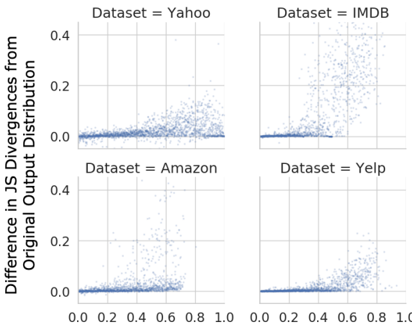
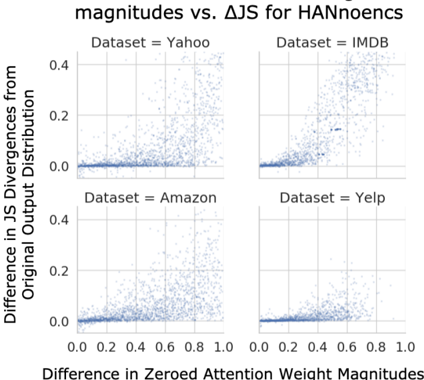
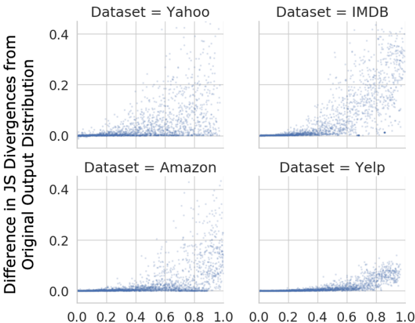
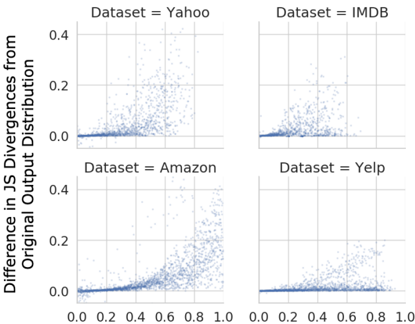
Attention mechanisms have recently boosted performance on a range of NLP tasks.Because attention layers explicitly weight input components' representations, it is also often assumed that attention can be used to identify information that models found important (e.g., specific contextualized word tokens).We test whether that assumption holds by manipulating attention weights in already-trained text classification models and analyzing the resulting differences in their predictions.While we observe some ways in which higher attention weights correlate with greater impact on model predictions, we also find many ways in which this does not hold, i.e., where gradient-based rankings of attention weights better predict their effects than their magnitudes.We conclude that while attention noisily predicts input components' overall importance to a model, it is by no means a fail-safe indicator.1
Overview
The claims and statistics of this paper haven’t been checked yet.
Free: it reads the open-access text and checks the first 5 claims that cite a source we can check. Create a free account to check every claim.
Integrity signals
Registry
Cites
Statistics
Figures
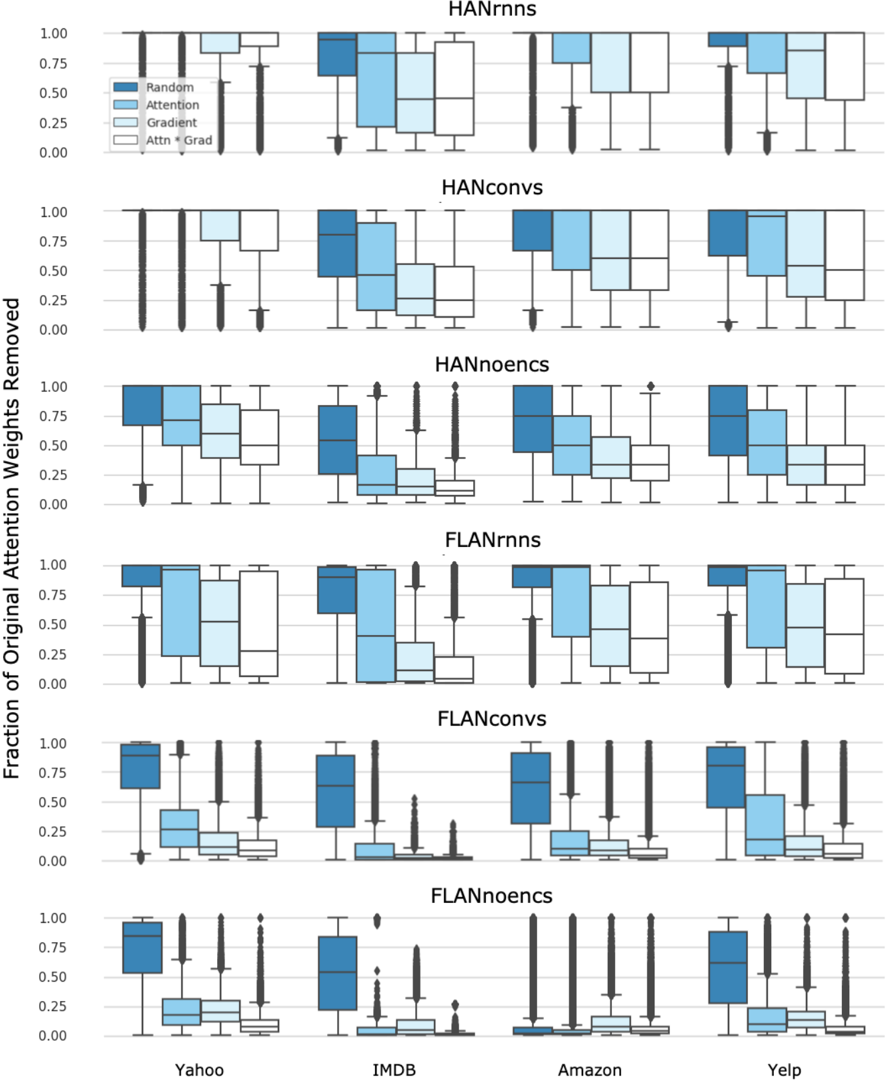
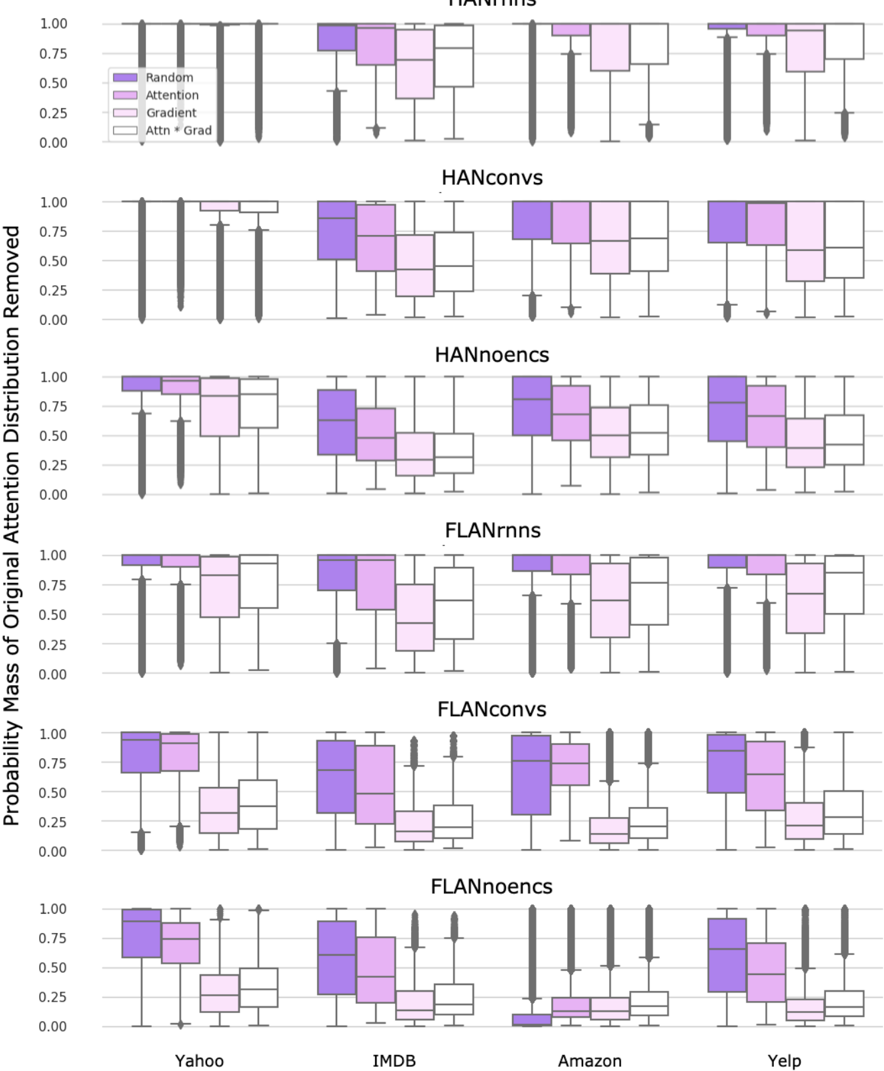
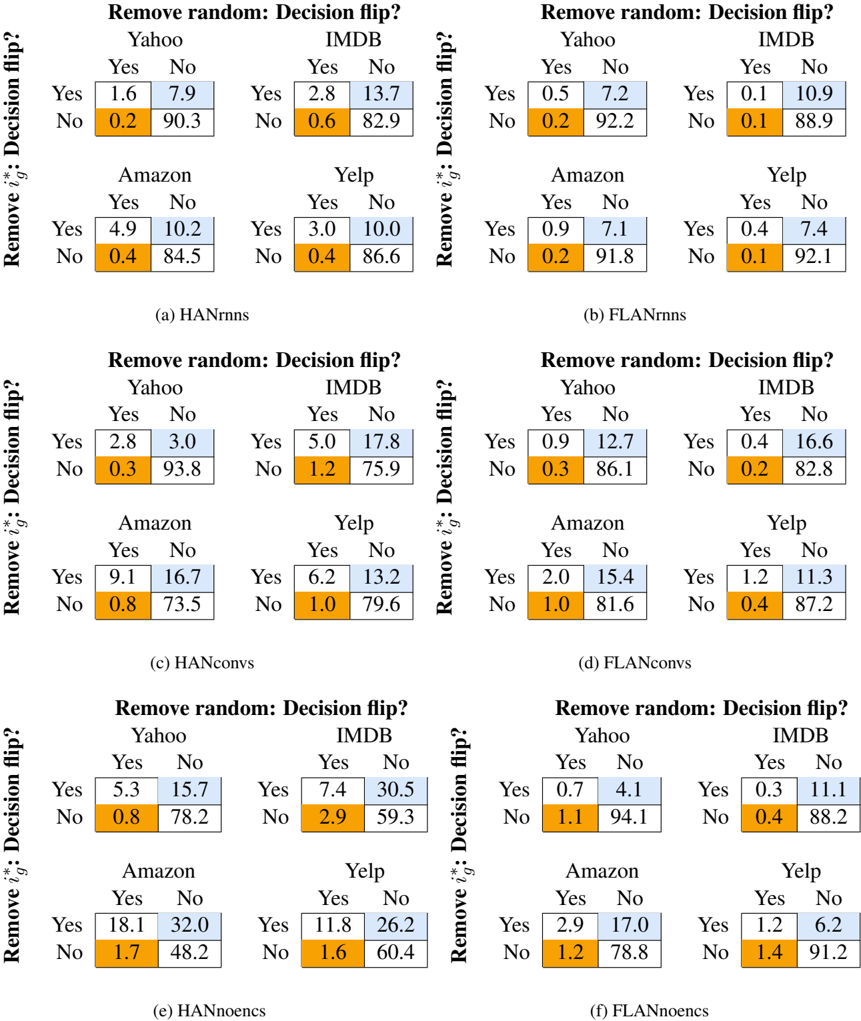
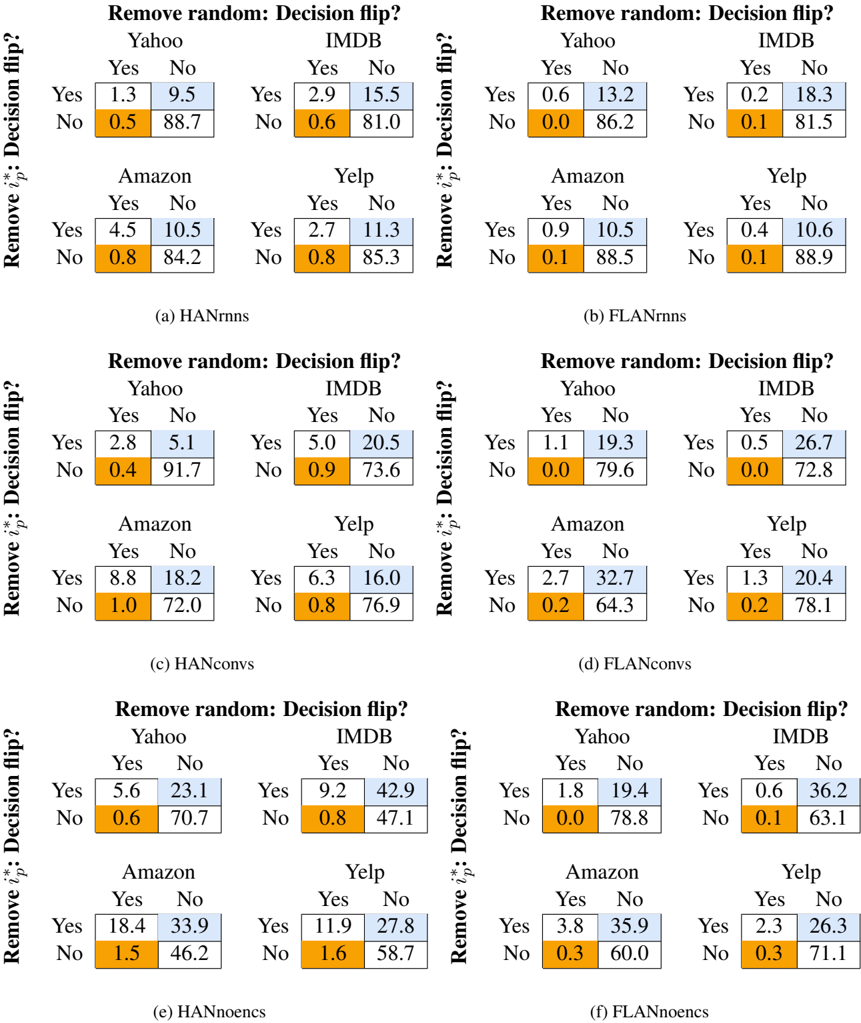
Verification
Claims the paper makes
The claims and statistics of this paper haven’t been checked yet.
Free: it reads the open-access text and checks the first 5 claims that cite a source we can check. Create a free account to check every claim.
Claims other papers make about this one
Each is checked against this paper’s own text: does it say what the citing paper says it does?
The source backs part of the claim, not all of it — or backs it for a different population, condition or comparison.
In the citing paper
“Besides using Incremental Deletion/Addition to evaluate correctness and output-completeness, compactness can be evaluated by counting how many features of the explanation need to be removed, perturbed or added to change the decision of the predictive model [7,34,70,123,165,221].”
From From Anecdotal Evidence to Quantitative Evaluation Methods: A Systematic Review on Evaluating Explainable AI (2023) · cites this paper as [221]
Experimental — accuracy not yet measuredIn the citing paper
“In [85], the attention mechanism weights were seen as at best noisy predictors of the relative importance of specific regions of the input sequence, and they should not be treated as justifications for the model’s decisions.”
From Survey of Explainable AI Techniques in Healthcare (2023) · cites this paper as [85]
In the citing paper
“Although this is typically the case for softmax scores [221], there might be cases where this assumption is invalid.”
From From Anecdotal Evidence to Quantitative Evaluation Methods: A Systematic Review on Evaluating Explainable AI (2023) · cites this paper as [221]
Self-check
Percentages, sums and reported differences re-computed from the paper’s own numbers.
The self-check needs the paper’s full text.
Citations
Cites
Vaswani, A., Shazeer, N., Parmar, N., Uszkoreit, J., Jones, L., Gomez, A. N., Kaiser, L., & Polosukhin, I. (2017) · arXiv · doi:10.48550/arxiv.1706.03762 · Cited by 120,404
Adam: A Method for Stochastic Optimization
Kingma, D. P., & Ba, J. (2014) · arXiv · doi:10.48550/arxiv.1412.6980 · Cited by 98,946 · cited 1×
“Unless otherwise noted, to train each model, we used Adam (Kingma and Ba, 2014) with gradient clipping of 10.0 and a patience value of 5, so we would stop training a model if five epochs elapsed without any improvement in validation set accuracy.”
MethodInfluential"Why Should I Trust You?": Explaining the Predictions of Any Classifier
Ribeiro, M. T., Singh, S., & Guestrin, C. (2016) · Proceedings of the 22nd ACM SIGKDD International Conference on Knowledge Discovery and Data Mining · doi:10.1145/2939672.2939778 · Cited by 17,555 · cited 4×
“Note, however, that we still do not take either as a gold-standard indicator of importance to the model, as with the gradient in Ross et al. (2017) and Melis and Jaakkola (2018), but merely as an alternative ordering method.”
BackgroundMethodInfluentialNeural Machine Translation by Jointly Learning to Align and Translate
Bahdanau, D., Cho, K., & Bengio, Y. (2014) · arXiv · doi:10.48550/arxiv.1409.0473 · Cited by 16,213 · cited 2×
“Specifically, we use the additive formulation originally defined in Bahdanau et al. (2015).”
BackgroundMethodConvolutional Neural Networks for Sentence Classification
Kim, Y. (2014) · Proceedings of the 2014 Conference on Empirical Methods in Natural Language Processing (EMNLP) · doi:10.3115/v1/d14-1181 · Cited by 14,831 · cited 2×
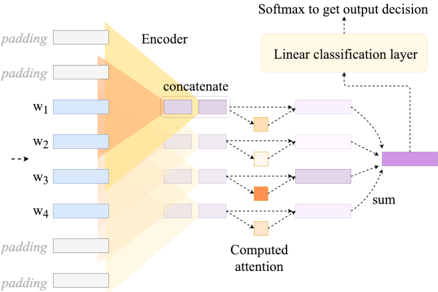
“Aside from biRNNs, we also experiment with models that instead contextualize word vectors by convolutions on only a token’s close neighbors, inspired by Kim (2014). See Figure 2 for a diagram of the FLAN architecture using a convolutional encoder.”
MethodEffective Approaches to Attention-based Neural Machine Translation
Luong, T., Pham, H., & Manning, C. D. (2015) · Proceedings of the 2015 Conference on Empirical Methods in Natural Language Processing · doi:10.18653/v1/d15-1166 · Cited by 8,382 · cited 1×
“For many different problems — to name a few, machine translation (Luong et al., 2015), syntactic parsing (Vinyals et al., 2015), reading comprehension (Hermann et al., 2015), and language modeling (Liu and Lapata, 2018) — incorporating attention mechanisms into models has proven beneficial for…”
BackgroundLipton, Z. C. (2018) · Queue · doi:10.1145/3236386.3241340 · Cited by 5,427 · cited 1×
“Lipton (2016) describes a model as “transparent” if “a person can contemplate the entire model at once.””
BackgroundHierarchical Attention Networks for Document Classification
Yang, Z., Yang, D., Dyer, C., He, X., Smola, A., & Hovy, E. (2016) · Proceedings of the 2016 Conference of the North American Chapter of the Association for Computational Linguistics: Human Language Technologies · doi:10.18653/v1/n16-1174 · Cited by 4,712 · cited 6×
“Our model architectures are inspired by the hierarchical attention network (HAN; Yang et al., 2016), a text classification model with two layers of attention, first to the word tokens in each sentence and then to the resulting sentence representations.”
BackgroundMethodResultInfluentialCharacter-level Convolutional Networks for Text Classification
Zhang, X., Zhao, J., & LeCun, Y. (2015) · arXiv (Cornell University) · doi:10.48550/arxiv.1509.01626 · Cited by 3,205 · cited 3×
“We investigate four model architectures on a topic classification dataset (Yahoo Answers; Zhang et al., 2015) and on three review ratings datasets: IMDB (Diao et al.”
MethodTeaching Machines to Read and Comprehend
Hermann, K. M., Kočiský, T., Grefenstette, E., Espeholt, L., Kay, W., Suleyman, M., & Blunsom, P. (2015) · arXiv (Cornell University) · doi:10.48550/arxiv.1506.03340 · Cited by 2,521 · cited 1×
“For many different problems—to name a few, machine translation (Luong et al., 2015), syntactic parsing (Vinyals et al., 2015), reading comprehension (Hermann et al., 2015), and language modeling (Liu and Lapata, 2018)—incorporating attention mechanisms into models has proven benefi-cial for…”
Background
Research works printed but not linked: 4
- Philipp Koehn and Rebecca Knowles. 2017. Six chal- lenges for neural machine translation. In Pro- ceedings of the First Workshop on Neural Machine Translation.
- Zachary C Lipton. 2016. The mythos of model inter- pretability. arXiv preprint arXiv:1606.03490. · arXiv
- Yang Liu and Mirella Lapata. 2018. Learning struc- tured text representations. Transactions of the Asso- ciation of Computational Linguistics, 6:63-75.
- Oriol Vinyals, Łukasz Kaiser, Terry Koo, Slav Petrov, Ilya Sutskever, and Geoffrey Hinton. 2015. Gram- mar as a foreign language. In Advances in Neural Information Processing Systems.
Cited by
Items 201–300 of 699
Interpreting Gender Bias in Neural Machine Translation: Multilingual Architecture Matters
Costa‐jussà, M. R., Escolano, C., Basta, C., Ferrando, J., Batlle, R., & Kharitonova, K. (2022) · Proceedings of the AAAI Conference on Artificial Intelligence · doi:10.1609/aaai.v36i11.21442 · Cited by 33
“Although its use as an interpretability method has been criticized (Jain and Wal-lace 2019; Serrano and Smith 2019; Pruthi et al. 2020), us-ing also the Euclidean norms of the vectors computed across each attention head (Kobayashi et al. 2020), the attention vector-norms method from now on, has…”
MethodAdapLeR: Speeding up Inference by Adaptive Length Reduction
Modarressi, A., Mohebbi, H., & Pilehvar, M. T. (2022) · Proceedings of the 60th Annual Meeting of the Association for Computational Linguistics (Volume 1: Long Papers) · doi:10.18653/v1/2022.acl-long.1 · Cited by 18
Attributing Fair Decisions with Attention Interventions
Mehrabi, N., Gupta, U., Morstatter, F., Steeg, G. V., & Galstyan, A. (2022) · Workshop on Trustworthy Natural Language Processing (TrustNLP) · doi:10.18653/v1/2022.trustnlp-1.2 · Cited by 35
MGRW-Transformer: Multigranularity Random Walk Transformer Model for Interpretable Learning
Ding, W., Geng, Y., Huang, J., Ju, H., Wang, H., & Lin, C. (2023) · IEEE Transactions on Neural Networks and Learning Systems · doi:10.1109/tnnls.2023.3326283 · Cited by 21
Explaining through Transformer Input Sampling
Englebert, A., Stassin, S., Nanfack, G., Mahmoudi, S. A., Siebert, X., Cornu, O., & Vleeschouwer, C. D. (2023) · IEEE International Conference on Computer Vision Workshops · doi:10.1109/iccvw60793.2023.00088 · Cited by 35
“Multiple works have shown that raw attention is not enough to provide a valid explanation since it takes into account the query and key elements of the self-attention, but not the value [17, 22, 10].”
BackgroundLai, V., Cai, Z., & Tan, C. (2019) · Conference on Empirical Methods in Natural Language Processing (EMNLP) · doi:10.18653/v1/d19-1046 · Cited by 27
“Similarly, Serrano and Smith (2019) show that attention is not a fail-safe indicator for explaining machine predictions based on intermediate representation erasure.”
BackgroundStructured Self-Attention Weights Encode Semantics in Sentiment Analysis
Wu, Z., Nguyen, T.-S., & Ong, D. C. (2020) · BlackboxNLP Workshop on Analyzing and Interpreting Neural Networks for NLP (BlackboxNLP) · doi:10.18653/v1/2020.blackboxnlp-1.24 · Cited by 29
Attention Flows are Shapley Value Explanations
Ethayarajh, K., & Jurafsky, D. (2021) · doi:10.18653/v1/2021.acl-short.8 · Cited by 55
“Unlike with attention weights, which have been criticized for allowing counterfactual explanations (Jain and Wallace, 2019; Serrano and Smith, 2019), there can thus be no counterfactual Shapley Value distribution for a given input and payoff function v .”
Alignment Rationale for Natural Language Inference
Jiang, Z., Zhang, Y., Zhao, Y., Zhao, J., & Liu, K. (2021) · doi:10.18653/v1/2021.acl-long.417 · Cited by 23
“However, attention is argued not as explainable as expected (Jain and Wallace, 2019; Serrano and Smith, 2019; Bastings and Filip-pova, 2020).”
BackgroundMethodNeural Temporal Point Processes For Modelling Electronic Health RecordsPreprint
Enguehard, J., Busbridge, D., Bozson, A. J., Woodcock, C., & Hammerla, N. (2020) · arXiv (Cornell University) · doi:10.48550/arxiv.2007.13794 · Cited by 44
Dehdarirad, T. (2025) · Data and Information Management · doi:10.1016/j.dim.2025.100101 · Cited by 23
Emerging AI approaches for cancer spatial omics
Noorbakhsh, J., pour, A. F., & Chuang, J. H. (2025) · GigaScience · doi:10.1093/gigascience/giaf128 · Cited by 21
VQA-MHUG: A Gaze Dataset to Study Multimodal Neural Attention in Visual Question Answering
Sood, E., Kögel, F., Strohm, F., Dhar, P., & Bulling, A. (2021) · Conference on Computational Natural Language Learning · doi:10.18653/v1/2021.conll-1.3 · Cited by 33
Fouladvand, S., Talbert, J., Dwoskin, L. P., Bush, H., Meadows, A. L., Peterson, L. E., Mishra, Y. R., Roggenkamp, S. K., Wang, F., Kavuluru, R., et al. (2023) · IEEE Journal of Biomedical and Health Informatics · doi:10.1109/jbhi.2023.3265920 · Cited by 17
“…weights cannot be considered as causal inferences and it is still unclear whether attentions can be used to explain deep learning models [35], [36], [37], Figures 4 and 5 provide explanations on how MUPOD was able to capture the important associations between predictors and discriminate OUD…”
BackgroundFerrando, J., Gállego, G. I., Alastruey, B., Escolano, C., & Costa‐jussà, M. R. (2022) · Conference on Empirical Methods in Natural Language Processing (EMNLP) · doi:10.18653/v1/2022.emnlp-main.599 · Cited by 70
FiD-Ex: Improving Sequence-to-Sequence Models for Extractive Rationale Generation
Lakhotia, K., Paranjape, B., Ghoshal, A., Yih, S., Mehdad, Y., & Iyer, S. V. (2021) · Conference on Empirical Methods in Natural Language Processing (EMNLP) · doi:10.18653/v1/2021.emnlp-main.301 · Cited by 38
“…Warstadt et al., 2019; Ettinger, 2020), as well as input saliency maps to highlight the most important tokens/sentences in the input for each prediction (Serrano and Smith, 2019; Ribeiro et al., 2016; Swanson et al., 2020; Tenney et al., 2019), and input token relationships (Lamm et al., 2020).”
BackgroundTranslation Error Detection as Rationale Extraction
Fomicheva, M., Specia, L., & Αλέτρας, Ν. (2022) · Findings of the Association for Computational Linguistics: ACL (Findings of ACL) · doi:10.18653/v1/2022.findings-acl.327 · Cited by 25
Hassid, M., Peng, H. M., Rotem, D., Kasai, J., Montero, I., Smith, N. A., & Schwartz, R. (2022) · Findings of the Association for Computational Linguistics: EMNLP (Findings of EMNLP) · doi:10.18653/v1/2022.findings-emnlp.101 · Cited by 43
Self-citationLess is More: Attention Supervision with Counterfactuals for Text Classification
Choi, S. L., Park, H., Yeo, J., & Hwang, S.-W. (2020) · Conference on Empirical Methods in Natural Language Processing (EMNLP) · doi:10.18653/v1/2020.emnlp-main.543 · Cited by 25
“The practical importance of attention mechanism has been well-established, for both (a) improving NLP models (Vaswani et al., 2017), and also (b) enhancing human understanding of models (Serrano and Smith, 2019; Wiegre ff e and Pinter, 2019).”
BackgroundMethodUnderstanding Multi-Head Attention in Abstractive SummarizationPreprint
Baan, J., ter Hoeve, M., van der Wees, M., Schuth, A., & de Rijke, M. (2019) · arXiv (Cornell University) · doi:10.48550/arxiv.1911.03898 · Cited by 36
“A promising recent line of work focuses on adversarial attention attacks (Jain and Wallace, 2019; Serrano and Smith, 2019; Vashishth et al., 2019), but this is not yet applied to sequence-to-sequence tasks.”
Optimization Methods for Interpretable Differentiable Decision Trees in Reinforcement LearningPreprint
Silva, A., Killian, T. W., Rodriguez, I. D. J., Son, S.-H., & Gombolay, M. (2019) · arXiv (Cornell University) · doi:10.48550/arxiv.1903.09338 · Cited by 43
ContextCite: Attributing Model Generation to Context
Cohen-Wang, B., Shah, H., Georgiev, K., & Madry, A. (2024) · arXiv · doi:10.48550/arxiv.2409.00729 · Cited by 16
“Finally, we explore whether context attribution can help surface poisoning attacks [15–17].”
Learning-based models for vulnerability detection: an extensive study
Ni, C., Yin, X., Shen, L., & Wang, S. (2025) · Empirical Software Engineering · doi:10.1007/s10664-025-10734-x · Cited by 34
How to Dissect a Muppet: The Structure of Transformer Embedding Spaces
Mickus, T., Paperno, D., & Constant, M. (2022) · Transactions of the Association for Computational Linguistics · doi:10.1162/tacl_a_00501 · Cited by 35
“Lastly, our approach provides some quantitative argument for the validity of attention-based studies (Serrano and Smith, 2019; Jain and Wallace, 2019; Wiegreffe and Pinter, 2019; Pruthi et al., 2020) and expands on earlier works looking beyond attention weights (Kobayashi et al., 2020).”
ResultOn the Faithfulness of Vision Transformer Explanations
Wu, J., Kang, W., Tang, H., Hong, Y., & Yan, Y. (2024) · IEEE Computer Society Conference on Computer Vision and Pattern Recognition/Proceedings - IEEE Computer Society Conference on Computer Vision and Pattern Recognition/Proceedings · doi:10.1109/cvpr52733.2024.01040 · Cited by 51
“For instance, the reliability of attention weights has been questioned in several studies [8, 24, 26, 40], premised on the hypothesis that attention weights should not conflict with gradient rankings or token norms.”
BackgroundHuo, Y., Wong, D. F., Ni, L. M.-S., Chao, L. S., & Zhang, J. (2020) · Knowledge-Based Systems · doi:10.1016/j.knosys.2020.106389 · Cited by 17
Exploring the Role of BERT Token Representations to Explain Sentence Probing Results
Mohebbi, H., Modarressi, A., & Pilehvar, M. T. (2021) · Conference on Empirical Methods in Natural Language Processing (EMNLP) · doi:10.18653/v1/2021.emnlp-main.61 · Cited by 51
“Note that using attention weights for this purpose can be misleading given that raw attention weights do not necessarily correspond to the importance of individual token representations (Serrano and Smith, 2019; Jain and Wallace, 2019; Abnar and Zuidema, 2020; Kobayashi et al., 2020).”
BackgroundOn the Explainability of Automatic Predictions of Mental Disorders from Social Media Data
Uban, A. S., Chulvi, B., & Rosso, P. (2021) · Lecture notes in computer science · doi:10.1007/978-3-030-80599-9_27 · Cited by 21
Structurizing Misinformation Stories via Rationalizing Fact-Checks
Jiang, S., & Wilson, C. (2021) · doi:10.18653/v1/2021.acl-long.51 · Cited by 19
“Although there have been debates on the properties achieved by attention-based explanations (Jain and Wallace, 2019; Wiegreffe and Pinter, 2019; Serrano and Smith, 2019), rationales extracted by straightforward rules on attention weights were demonstrated as comparable to human-generated rationales…”
Reducing Cross-Topic Political Homogenization in Content-Based News Recommendation
Shivaram, K., Liu, P., Shapiro, M. A., Bilgic, M., & Culotta, A. (2022) · ACM Conference on Recommender Systems (RecSys) · doi:10.1145/3523227.3546782 · Cited by 26
“there is a need to focus on the existing debate about the role of attention in explaining model decisions [18, 42], although these issues appear to be more important in tasks of greater complexity than text classification.”
BackgroundT.y.s.s, S., Xu, S., Ichim, O., & Grabmair, M. (2022) · Conference on Empirical Methods in Natural Language Processing (EMNLP) · doi:10.18653/v1/2022.emnlp-main.74 · Cited by 47
Attention is Not Only a Weight: Analyzing Transformers with Vector NormsPreprint
Kobayashi, G., Kuribayashi, T., Yokoi, S., & Inui, K. (2020) · arXiv (Cornell University) · doi:10.48550/arxiv.2004.10102 · Cited by 15
“the models (Jain and Wallace, 2019; Serrano and Smith, 2019; Wiegreffe and Pinter, 2019; Pruthi et al., 2020; Vashishth et al., 2019).”
Rationales for Sequential Predictions
Vafa, K., Deng, Y., Blei, D., & Rush, A. (2021) · Proceedings of the 2021 Conference on Empirical Methods in Natural Language Processing · doi:10.18653/v1/2021.emnlp-main.807 · Cited by 14
“Practitioners have shown that attention-based explanations are generally not faithful (Jain and Wallace, 2019; Serrano and Smith, 2019), but that they may be plausible (Wiegreffe and Pinter, 2019; Mohanku-mar et al., 2020; Vashishth et al., 2019).”
BackgroundChan, Y. H., Girish, D., Gupta, S., Xia, J., Kasi, C., He, Y., Wang, C., & Rajapakse, J. C. (2025) · NeuroImage · doi:10.1016/j.neuroimage.2025.121422 · Cited by 24
Gupta, V., Bhat, R. A., Ghosal, A., Shrivastava, M., Singh, M., & Srikumar, V. (2022) · Transactions of the Association for Computational Linguistics · doi:10.1162/tacl_a_00482 · Cited by 22
“More effort is needed to either make the model more interpretable or at least generate explanations for the predictions (Feng et al., 2018; Serrano and Smith, 2019; Jain and Wallace, 2019; Wiegreffe and Pinter, 2019; DeYoung et al., 2020; Paranjape et al., 2020).”
BackgroundFerrando, J., & Costa‐jussà, M. R. (2021) · Findings of the Association for Computational Linguistics: EMNLP (Findings of EMNLP) · doi:10.18653/v1/2021.findings-emnlp.39 · Cited by 25
VGNMN: Video-grounded Neural Module Networks for Video-Grounded Dialogue Systems
Le, H., Chen, N. F., & Hoi, S. C. H. (2022) · Conference of the North American Chapter of the Association for Computational Linguistics: Human Language Technologies (NAACL-HLT) · doi:10.18653/v1/2022.naacl-main.247 · Cited by 28
“Similar challenges have been observed in image-grounded tasks in which deep neural networks exhibit shallow understanding capability as they exploit superficial visual cues (Agrawal et al., 2016; Goyal et al., 2017; Feng et al., 2018; Serrano and Smith, 2019).”
BackgroundWang, M., Wang, D., Xiang, Y., Liang, Y., Xia, R., Yang, J., Xu, F., & Huang, X. (2023) · Frontiers in Marine Science · doi:10.3389/fmars.2023.1112065 · Cited by 21
“Many studies have discussed the model interpretation ability of the attention weight distribution for neural network models based on attention mechanisms (Pruthi et al., 2019; Serrano and Smith, 2019; Wiegreffe and Pinter, 2019).”
BackgroundRobust and Interpretable General Movement Assessment Using Fidgety Movement Detection
de Morais, R. F. A. B., Le, V., Morgan, C., Spittle, A. J., Badawi, N. A., Valentine, J. P., Hurrion, E. M., Dawson, P. A., Tran, T., & Venkatesh, S. (2023) · IEEE Journal of Biomedical and Health Informatics · doi:10.1109/jbhi.2023.3299236 · Cited by 14
“However, there are no guarantees that such scores really point towards FM locations as their interpretability is known to be weak [17], [18].”
Token Transformation Matters: Towards Faithful Post-Hoc Explanation for Vision Transformer
Wu, J., Duan, B., Kang, W., Tang, H., & Yan, Y. (2024) · IEEE Computer Society Conference on Computer Vision and Pattern Recognition/Proceedings - IEEE Computer Society Conference on Computer Vision and Pattern Recognition/Proceedings · doi:10.1109/cvpr52733.2024.01039 · Cited by 42
“Such a lack of transparency undermines the trustworthiness of decision-making processes [2, 16, 26, 38, 49].”
BackgroundHigh-Resolution Estimation of Daily PM2.5 Levels in the Contiguous US Using Bi-LSTM with Attention
Wang, Z., Crooks, J., Regan, E. A., & Karimzadeh, M. (2025) · Remote Sensing · doi:10.3390/rs17010126 · Cited by 21
“While attention weights offer insights into temporal dynamics, their interpretation must be approached with caution, as they can be sometimes misleading [56].”
Show Me What You’re Looking For
Schwenke, L., & Atzmueller, M. (2021) · Proceedings of the ... International Florida Artificial Intelligence Research Society Conference · doi:10.32473/flairs.v34i1.128399 · Cited by 15
Data-driven Cross-lingual Syntax: An Agreement Study with Massively Multilingual Models
de Varda, A. G., & Marelli, M. (2023) · Computational Linguistics · doi:10.1162/coli_a_00472 · Cited by 28
“…weights (see for instance Karpathy, Johnson, and Fei-Fei 2015; Li et al. 2015; Radford, Jozefowicz, and Sutskever 2017; Tang et al. 2017; Kementchedjhieva and Lopez 2018; Bau et al. 2018; Dalvi et al. 2019a; Lakretz et al. 2019; Pinter, Marone, and Eisenstein 2019; Serrano and Smith 2019).”
BackgroundMulti-view self-attention networks
Xu, M., Yang, B., Wong, D. F., & Chao, L. S. (2022) · Knowledge-Based Systems · doi:10.1016/j.knosys.2022.108268 · Cited by 15
On the Faithfulness Measurements for Model Interpretations.Preprint
Yin, F., Shi, Z., Hsieh, C., & Chang, K.-W. (2021) · arXiv (Cornell University) · Cited by 13
Best practices for interpretable machine learning in computational biology
Chen, V., Yang, M., Cui, W., Kim, J. S., Talwalkar, A., & Ma, J. (2022) · doi:10.1101/2022.10.28.513978 · Cited by 14
Connecting Attributions and QA Model Behavior on Realistic Counterfactuals
Ye, X., Nair, R., & Durrett, G. (2021) · Conference on Empirical Methods in Natural Language Processing (EMNLP) · doi:10.18653/v1/2021.emnlp-main.447 · Cited by 25
“However, it avoids the pitfalls of directly inspecting attention (Serrano and Smith, 2019; Wiegreffe and Pinter, 2019) by running an integrated gradients-like procedure over all the attention links within transformers, yielding attribution scores for each link.”
BackgroundHierarchical Interpretation of Neural Text Classification
Yan, H., Gui, L., & He, Y. (2022) · Computational Linguistics · doi:10.1162/coli_a_00459 · Cited by 29
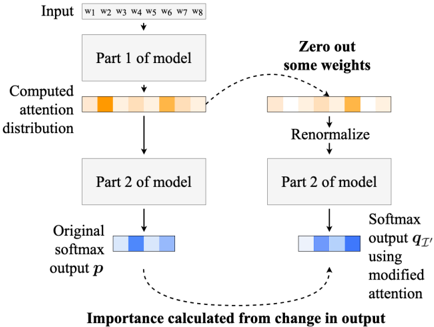
“Serrano and Smith (2019) modified attention weights in already-trained text classification models and analysed the resulting differences in their predictions.”
BackgroundAn Empirical Study on Explanations in Out-of-Domain Settings
Chrysostomou, G., & Αλέτρας, Ν. (2022) · Proceedings of the conference - Association for Computational Linguistics. Meeting · doi:10.18653/v1/2022.acl-long.477 · Cited by 30
Modarressi, A., Fayyaz, M., Yaghoobzadeh, Y., & Pilehvar, M. T. (2022) · Conference of the North American Chapter of the Association for Computational Linguistics: Human Language Technologies (NAACL-HLT) · doi:10.18653/v1/2022.naacl-main.19 · Cited by 64
Exploring Faithful Rationale for Multi-Hop Fact Verification via Salience-Aware Graph Learning
Si, J., Zhu, Y., & Zhou, D. (2023) · Proceedings of the AAAI Conference on Artificial Intelligence · doi:10.1609/aaai.v37i11.26591 · Cited by 40
Natural Language Processing and Text Mining (Turning Unstructured Data into Structured)
Bagheri, A., Giachanou, A., Mosteiro, P. J., & Verberne, S. (2023) · Springer eBooks · doi:10.1007/978-3-031-36678-9_5 · Cited by 21
ShapTime: A General XAI Approach for Explainable Time Series Forecasting
Zhang, Y., Sun, Q., Qi, D., Liu, J., Ma, R., & Petrosian, O. (2024) · Lecture notes in networks and systems · doi:10.1007/978-3-031-47721-8_45 · Cited by 33
Comparing expert systems and their explainability through similarity
Gwinner, F., Tomitza, C., & Winkelmann, A. (2024) · Decision Support Systems · doi:10.1016/j.dss.2024.114248 · Cited by 18
Machine-learning strategies for the accurate and efficient analysis of x-ray spectroscopy
Penfold, T. J., Watson, L., Middleton, C., David, T. W., Verma, S., Pope, T. J., Kaczmarek, J., & Rankine, C. D. (2024) · Machine Learning Science and Technology · doi:10.1088/2632-2153/ad5074 · Cited by 33
“However, some studies argue this is not the case [232, 233] and therefore further work is required, especially in x-ray spectroscopy, where such interpretation has not yet been applied.”
A Comprehensive Survey on Self-Interpretable Neural Networks
Ji, Y., Sun, Y., Zhang, Y., Wang, Z., Zhuang, Y., Gong, Z., Shen, D., Qin, C., Zhu, H., & Xiong, H. (2025) · Proceedings of the IEEE · doi:10.1109/jproc.2025.3635153 · Cited by 45
“Studies raise concerns about attention weights as explanatory mechanisms, highlighting their misalignment with actual feature importance [120], [121], [122], [123].”
Measuring and Improving Faithfulness of Attention in Neural Machine Translation
Moradi, P., Kambhatla, N., & Sarkar, A. (2021) · Conference of the European Chapter of the Association for Computational Linguistics · doi:10.18653/v1/2021.eacl-main.243 · Cited by 22
“From the faithfulness perspective, (Jain and Wal-lace, 2019; Serrano and Smith, 2019) show that for instances in a data set there can be adversarial attention heatmaps that do not change the output of the text classifier.”
BackgroundExplaining Neural Network Predictions on Sentence Pairs via Learning Word-Group Masks
Chen, H., Feng, S., Ganhotra, J., Wan, H., Gunasekara, C., Joshi, S., & Ji, Y. (2021) · Conference of the North American Chapter of the Association for Computational Linguistics: Human Language Technologies (NAACL-HLT) · doi:10.18653/v1/2021.naacl-main.306 · Cited by 20
Machine Learning for Detecting Data Exfiltration: A ReviewPreprint
Sabir, B., Ullah, F., Babar, M. A., & Gaire, R. (2020) · arXiv (Cornell University) · doi:10.48550/arxiv.2012.09344 · Cited by 13
“[8 2] In 2017 a mechanism for Deep Learning (DL) • Decrease development time • Not reliable [83], [84].”
BackgroundDISSECT: Disentangled Simultaneous Explanations via Concept TraversalsPreprint
Ghandeharioun, A., Kim, B., Li, C., Jou, B., Eoff, B. D., & Picard, R. W. (2021) · arXiv (Cornell University) · doi:10.48550/arxiv.2105.15164 · Cited by 52
“[1, 30, 61, 70, 84]) and determining when attention can be used as an explanation [84].”
BackgroundIntegrating deep learning model and virtual reality technology for motion prediction in emergencies
Li, M., Fanfan, P., Zhang, Y., Chen, T., & Du, H. (2024) · Safety Science · doi:10.1016/j.ssci.2024.106721 · Cited by 15
Neely, M., Schouten, S. F., Bleeker, M., & Lučić, A. (2022) · Frontiers in artificial intelligence and applications · doi:10.3233/faia220190 · Cited by 33
An Attention-Based Architecture for Hierarchical Classification With CNNs
Pizarro, I., Ñanculef, R., & Valle, C. (2023) · IEEE Access · doi:10.1109/access.2023.3263472 · Cited by 12
“Although some recent studies have suggested that attention scores can be inconsistent with other feature importance measures [51], [52], subsequent experiments have shown that attention weights can still help analyze the decision and learning mechanisms of otherwise black-box models [47], [53],…”
ResultTowards interpretability in fingerprint based indoor positioning: May attention be with us
Brunello, A., Montanari, A., & Saccomanno, N. (2023) · Expert Systems with Applications · doi:10.1016/j.eswa.2023.120679 · Cited by 12
ExpMRC: explainability evaluation for machine reading comprehension
Cui, Y., Liu, T., Che, W., Chen, Z., & Wang, S. (2022) · Heliyon · doi:10.1016/j.heliyon.2022.e09290 · Cited by 14
Flexible Instance-Specific Rationalization of NLP Models
Chrysostomou, G., & Αλέτρας, Ν. (2022) · Proceedings of the AAAI Conference on Artificial Intelligence · doi:10.1609/aaai.v36i10.21298 · Cited by 24
“• Scaled Attention (α∇α): Scales the attention scores αi with their corresponding gradients ∇αi = ∂ŷ ∂αi (Serrano and Smith 2019) .”
BackgroundMethodInfluentialUsing Self Attention DNNs to Discover Phonemic Features for Audio Deep Fake Detection
Dhamyal, H., Ali, A., Qazi, I. A., & Raza, A. A. (2021) · IEEE Workshop on Automatic Speech Recognition and Understanding (ASRU) · doi:10.1109/asru51503.2021.9688312 · Cited by 11
A multi-facet analysis of BERT-based entity matching models
Paganelli, M., Tiano, D., & Guerra, F. (2023) · The VLDB Journal · doi:10.1007/s00778-023-00824-x · Cited by 22
“[4, 20, 41] discovered that limited correlations exist between attention weights and the predictions of the model.”
ViTGuard: Attention-aware Detection against Adversarial Examples for Vision Transformer
Sun, S., Nwodo, K., Sugrim, S., Stavrou, A., & Wang, H. (2024) · Annual Computer Security Applications Conference · doi:10.1109/acsac63791.2024.00100 · Cited by 16
“At the end of the transformer encoder, only the CLS representation is directed to the MLP head for label prediction, while the representations of other image patches are not utilized.”
Guan, H., Novoa-Laurentiev, J., & Zhou, L. (2024) · Journal of Biomedical Informatics · doi:10.1016/j.jbi.2025.104830 · Cited by 14
Yuanyuan, Z., Bensahla, A., Bjelogrlic, M., Zaghir, J., Turbé, H., Bednarczyk, L., Gaudet-Blavignac, C., Ehrsam, J., Marchand‐Maillet, S., & Lovis, C. (2025) · npj Digital Medicine · doi:10.1038/s41746-025-01692-1 · Cited by 22
On Sample Based Explanation Methods for NLP: Faithfulness, Efficiency and Semantic Evaluation
Zhang, W., Huang, Z., Zhu, Y., Ye, G., Cui, X., & Zhang, F. (2021) · doi:10.18653/v1/2021.acl-long.419 · Cited by 27
“Different from other methods such as using input erasure (Li et al., 2016), saliency maps or attention matrices (Serrano and Smith, 2019; Jain and Wallace, 2019; Wiegreffe and Pinter, 2019) that only look at how a specific input or input sequence impacts the model decision, explaining with training…”
MethodTeaching Machines to Read, Answer and Explain
Cui, Y., Liu, T., Che, W., Chen, Z., & Wang, S. (2022) · IEEE/ACM Transactions on Audio Speech and Language Processing · doi:10.1109/taslp.2022.3156789 · Cited by 14
Dale, D. C., Voita, E., Lam, J., Hansanti, P., Ropers, C., Kalbassi, E., Gao, C., Barrault, L., & Costa‐jussà, M. R. (2023) · Conference on Empirical Methods in Natural Language Processing (EMNLP) · doi:10.18653/v1/2023.emnlp-main.42 · Cited by 50
Attention uncovers task-relevant semantics in emotional narrative understanding
Nguyen, T.-S., Wu, Z., & Ong, D. C. (2021) · Knowledge-Based Systems · doi:10.1016/j.knosys.2021.107162 · Cited by 12
“On the other hand, there are also dissenting papers showing that attention weights are not (or only weakly) correlated with feature importance measures such as gradientbased methods [26, 55], and that there exist alternative “counterfactual” attention distributions that yield equivalent model predictions [26, 44, 50,…”
BackgroundHow Does BERT Rerank Passages? An Attribution Analysis with Information Bottlenecks
Jiang, Z., Tang, R., Xin, J., & Lin, J. (2021) · BlackboxNLP Workshop on Analyzing and Interpreting Neural Networks for NLP (BlackboxNLP) · doi:10.18653/v1/2021.blackboxnlp-1.39 · Cited by 25
“Pointing out some shortfalls of these papers, Jain and Wallace (2019); Brunner et al. (2019); Serrano and Smith (2019) argue that attentions often do not reflect how models make predictions.”
BackgroundExplaining How Transformers Use Context to Build Predictions
Ferrando, J., Gállego, G. I., Tsiamas, I., & Costa‐jussà, M. R. (2023) · Proceedings of the conference - Association for Computational Linguistics. Meeting · doi:10.18653/v1/2023.acl-long.301 · Cited by 64
LioNets: a neural-specific local interpretation technique exploiting penultimate layer information
Mollas, I., Bassiliades, N., & Tsoumakas, G. (2022) · Applied Intelligence · doi:10.1007/s10489-022-03351-4 · Cited by 12
“However, studies have shown that such approaches can provide noisy factors of importance, identifying these types of techniques as unreliable methods [46].”
BackgroundRobustRMC: Robustness Interpretable Deep Neural Network for Radio Modulation Classification
Chen, J., Liao, D., Zheng, S., Ye, L., Jia, C., Zheng, H., & Xiang, S. (2024) · IEEE Transactions on Cognitive Communications and Networking · doi:10.1109/tccn.2024.3375521 · Cited by 12
Transformer Neural Networks for Behavior-Centric Production Forecasting in Unconventional Reservoir
Cornelio, J., Razak, S. M., Cho, Y., Liu, H., Vaidya, R. N., & Jafarpour, B. (2025) · SPE Journal · doi:10.2118/212953-pa · Cited by 13
Mining Actuarial Risk Predictors in Accident Descriptions Using Recurrent Neural Networks
Baillargeon, J.-T., Lamontagne, L., & Marceau, É. (2020) · Risks · doi:10.3390/risks9010007 · Cited by 16
“Many researchers in the NLP field, as mentioned by Serrano and Smith (2019) and Jain and Wallace (2019), interpret the importance of each word using attention as “lookup weights”.”
BackgroundHow Far Does BERT Look At: Distance-based Clustering and Analysis of BERT’s Attention
Guan, Y., Leng, J., Li, C., Chen, Q., & Guo, M. (2020) · International Conference on Computational Linguistics · doi:10.18653/v1/2020.coling-main.342 · Cited by 23
Boytsov, L., & Kolter, J. Z. (2021) · Lecture notes in computer science · doi:10.1007/978-3-030-72113-8_5 · Cited by 21
Heterogeneous Supervised Topic Models
Sridhar, D., Daumé, H., & Blei, D. M. (2022) · Transactions of the Association for Computational Linguistics · doi:10.1162/tacl_a_00487 · Cited by 17
“Even explanation methods such as saliency maps, rationales and analysis of attention mechanisms are not robust (Jain and Wallace, 2019; Kindermans et al., 2019; Serrano and Smith, 2019) and are often not faithful to the underlying prediction model (Jacovi and Goldberg, 2020).”
Hu, Y., Ma, L., Zhang, Y., Wu, Z., Wu, J., Zhang, J., & Zhang, X. (2023) · Remote Sensing · doi:10.3390/rs15133419 · Cited by 12
Fine-grained bird image classification based on counterfactual method of vision transformer model
Chen, T., Li, Y., & Qiao, Q. (2023) · The Journal of Supercomputing · doi:10.1007/s11227-023-05701-6 · Cited by 11
“The tokens of deep transformer layer carry strong semantic information but lack shallow-layer fine-grained details [43, 44].”
Yao, K., Ortiz, A., & Bonnin‐Pascual, F. (2021) · IEEE Access · doi:10.1109/access.2021.3077847 · Cited by 10
KW-ATTN: Knowledge Infused Attention for Accurate and Interpretable Text Classification
Jang, H., Bang, S., Xiao, W., Carenini, G., Ng, R. T., & Lee, Y. J. (2021) · Workshop on Knowledge Extraction and Integration for Deep Learning Architectures: Deep Learning Inside Out (DeeLIO) · doi:10.18653/v1/2021.deelio-1.10 · Cited by 13
“…ide as a(n) application, php as a(n) free_software” KW replacement “object-oriented_programming_language, application, free_software, swing, best, looking” We assume that attention can be used for prediction explanations based on (Wiegreffe and Pinter, 2019; Serrano and Smith, 2019).”
MethodAttention-Based Explanation in a Deep Learning Model For Classifying Radiology Reports
Putelli, L., Gerevini, A., Lavelli, A., Maroldi, R., & Serina, I. (2021) · Lecture notes in computer science · doi:10.1007/978-3-030-77211-6_42 · Cited by 10
ProtoTEx: Explaining Model Decisions with Prototype Tensors
Das, A., Gupta, C., Kovatchev, V., Lease, M., & Li, J. J. (2022) · Proceedings of the conference - Association for Computational Linguistics. Meeting · doi:10.18653/v1/2022.acl-long.213 · Cited by 35
HAM: Hybrid Associations Models for Sequential RecommendationPreprint
Peng, B., Ren, Z., Parthasarathy, S., & Ning, X. (2020) · arXiv (Cornell University) · doi:10.48550/arxiv.2002.11890 · Cited by 10
Neural Machine Translation: A ReviewPreprint
Stahlberg, F. (2019) · Journal of Artificial Intelligence Research · doi:10.48550/arxiv.1912.02047 · Cited by 459
Viehmann, C., Beck, T., Maurer, M., Quiring, O., & Gurevych, I. (2022) · Communication Methods and Measures · doi:10.1080/19312458.2022.2151579 · Cited by 15
“Leave-one-out (or Erasure) is another line of research which investigates the influence of a word by removing it from the input and observing the resulting effect on model prediction (Feng et al., 2018; Li et al., 2016; Serrano & Smith, 2019).”
BackgroundExplainability of Automated Fact Verification Systems: A Comprehensive Review
Vallayil, M., Nand, P., Yan, W., & Allende‐Cid, H. (2023) · Applied Sciences · doi:10.3390/app132312608 · Cited by 22
Towards Stable and Explainable Attention Mechanisms
Hu, L., Wang, X., Liu, Y., Liu, N., Huai, M., Sun, L., & Wang, D. (2025) · IEEE Transactions on Knowledge and Data Engineering · doi:10.1109/tkde.2025.3538583 · Cited by 18
“Dataset: Following the previous study [10], [25], we mainly focus on the experimental evaluation of binary classification tasks in this paper.”
Shao, K., Lele, A. D., Shi, Z., Miller, V. A., Ju, Y., & Mesbah, A. (2025) · EES Catalysis · doi:10.1039/d4ey00256c · Cited by 9
XueXin, C., Cai, R., Huang, Z., Li, Z., Zheng, J., & Wu, M. (2025) · Briefings in Bioinformatics · doi:10.1093/bib/bbaf142 · Cited by 11
“• Fidelity : the Infidelity of attention-based methods is relatively low, possibly due to the inherent instability and high-frequency biases of attention mechanisms [6, 7].”
A Comprehensive Review of Explainable AI in Deep Learning Algorithms for EEG Analysis
Presacan, O., Ojha, J., Yazidi, A., Monteiro, E., & Lind, P. G. (2026) · ACM Transactions on Computing for Healthcare · doi:10.1145/3785409 · Cited by 16
Robustifying Multi-hop QA through Pseudo-Evidentiality Training
Lee, K., Hwang, S.-W., Han, S.-E., & Lee, D. (2021) · doi:10.18653/v1/2021.acl-long.476 · Cited by 14
“However, follow-up works (Serrano and Smith, 2019; Jain and Wallace, 2019) argued that attention is limited as an explanation, because causality cannot be measured, without observing model behaviors in a counterfactual case of the same passage without S .”
Enhancing Multiple-choice Machine Reading Comprehension by Punishing Illogical Interpretations
Ju, Y., Zhang, Y., Tian, Z., Liu, K., Cao, X., Zhao, W., Li, J., & Zhao, J. (2021) · Conference on Empirical Methods in Natural Language Processing (EMNLP) · doi:10.18653/v1/2021.emnlp-main.295 · Cited by 10
“In gradient-based and attention-based methods, the magnitudes of the gradients and attention weights serve as feature importance scores, respectively (Serrano and Smith, 2019; Vashishth et al., 2019; Sundararajan et al., 2017; Shrikumar et al., 2017).”
Method
Metadata
- Authors
- Serrano, S., & Smith, N. A.
- Affiliations
- University of Washington (US)
- Venue
- Proceedings of the 57th Annual Meeting of the Association for Computational Linguistics
- Published
- 2019
- Pages
- 2931-2951
- ISSN
- 0736-587X (ISSN-L)
- OpenAlex
- W2948140294
- Cited by
- 690
- References
- 39
- Citations by year
- 2026: 63 · 2025: 85 · 2024: 82 · 2023: 102 · 2022: 119 · 2021: 143 · 2020: 80 · 2019: 15
- FWCI
- 34.15
- Type
- conference paper
- Language
- en
- Open access
- hybrid
- doi.org
- Licence
- cc-by
- Locations
- Proceedings of the conference - Association for Computational Linguistics. Meeting (publishedVersion, cc-by)
- arXiv (Cornell University) (submittedVersion)
- arXiv (Cornell University)
- Topics
- Physical Sciences › Computer Science › Artificial Intelligence › Explainable Artificial Intelligence (XAI)
- Physical Sciences › Computer Science › Artificial Intelligence › Topic Modeling
- Physical Sciences › Computer Science › Artificial Intelligence › Natural Language Processing Techniques
- Keywords
- attention mechanism, interpretability, text classification, model interpretability, feature importance, explainable AI
About these checks
Registry, retraction, Cites and statistics results are computed, not judged, with one exception: a printed reference that no index lists is read once by a model before it counts as a citation error. Claims are extracted by a model and kept only when their quote appears verbatim in the text; each cited source is then checked, with a model’s help, for whether it says what the claim relies on. Those verdicts can be wrong — read the claim’s quote and the cited source before relying on one.
Statistics and arithmetic are recomputed, not judged.
Confidence bands are shown only for fields calibrated on our annotated test set. None is calibrated yet, so no band is shown.
What counts as a claim ›How we measure confidence ›How we check this ›
Are you an author, or do you see a problem with this page? Request a review
Data sources
Bibliographic data: Semantic Scholar, OpenAlex, Crossref.
Contains information from the Semantic Scholar Academic Graph Datasets, made available under the ODC Attribution License (ODC-BY 1.0).
Semantic Scholar’s data is described in: Kinney, R., et al. (2023). The Semantic Scholar Open Data Platform. arXiv:2301.10140.
