

Is Attention Interpretable?
Open accessThe DOI matches its Crossref record; 43 of the 43 references it cites were found in a registry or an index.
Abstract
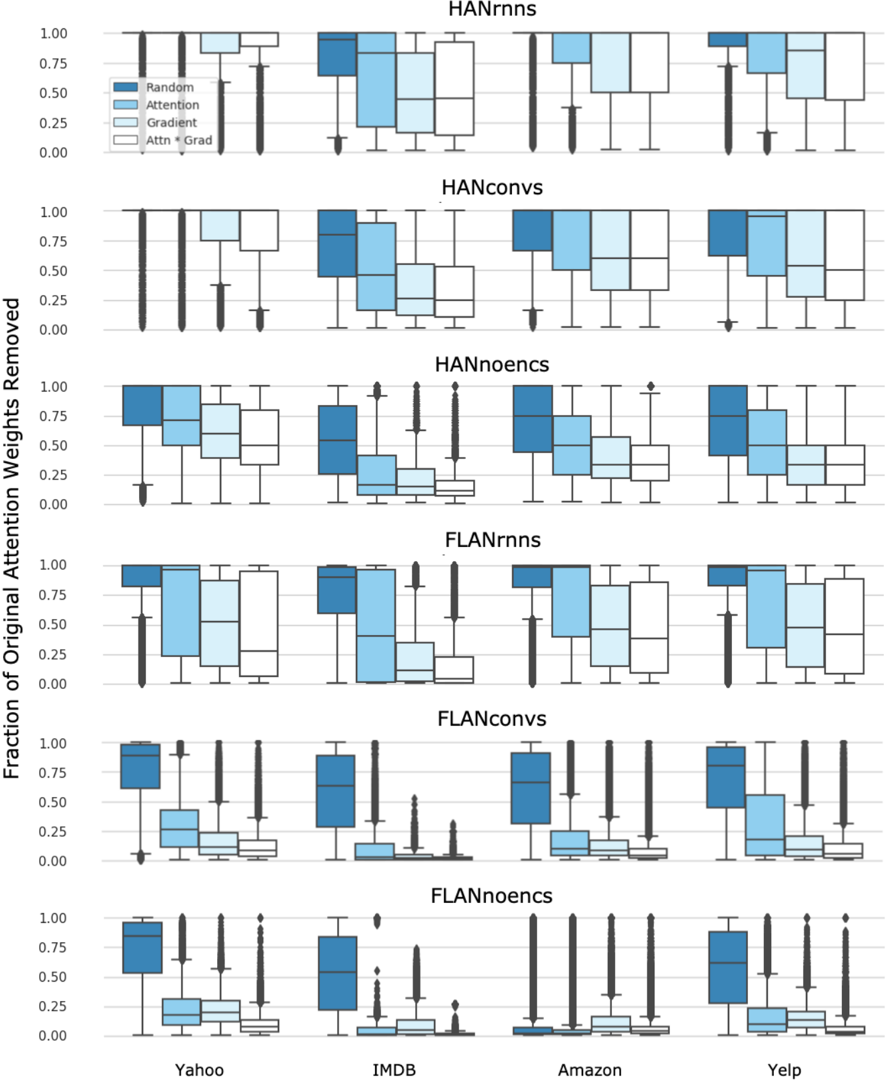
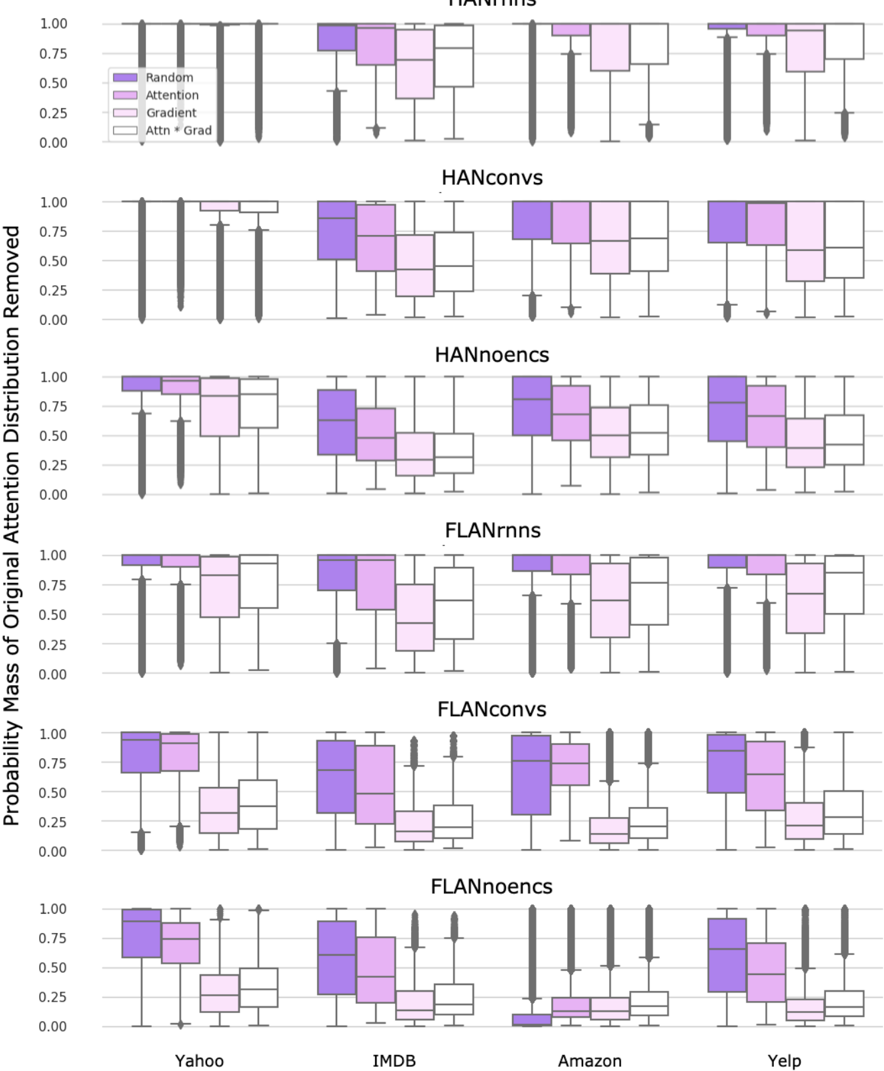
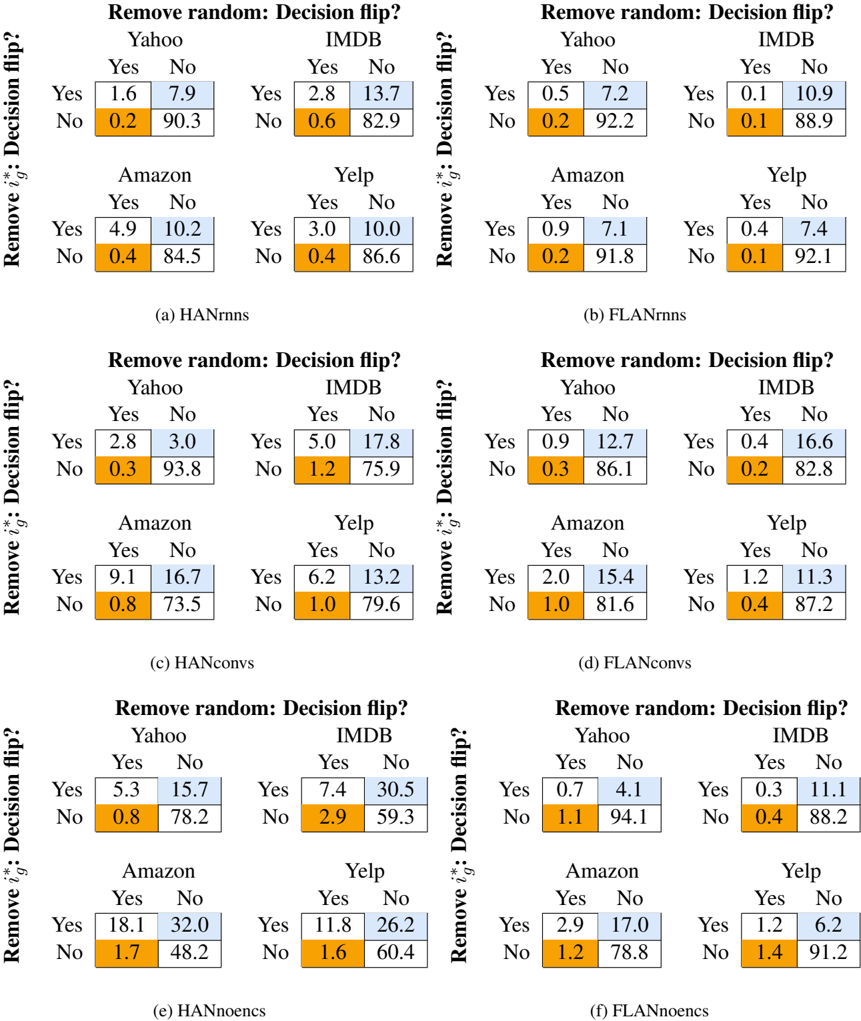
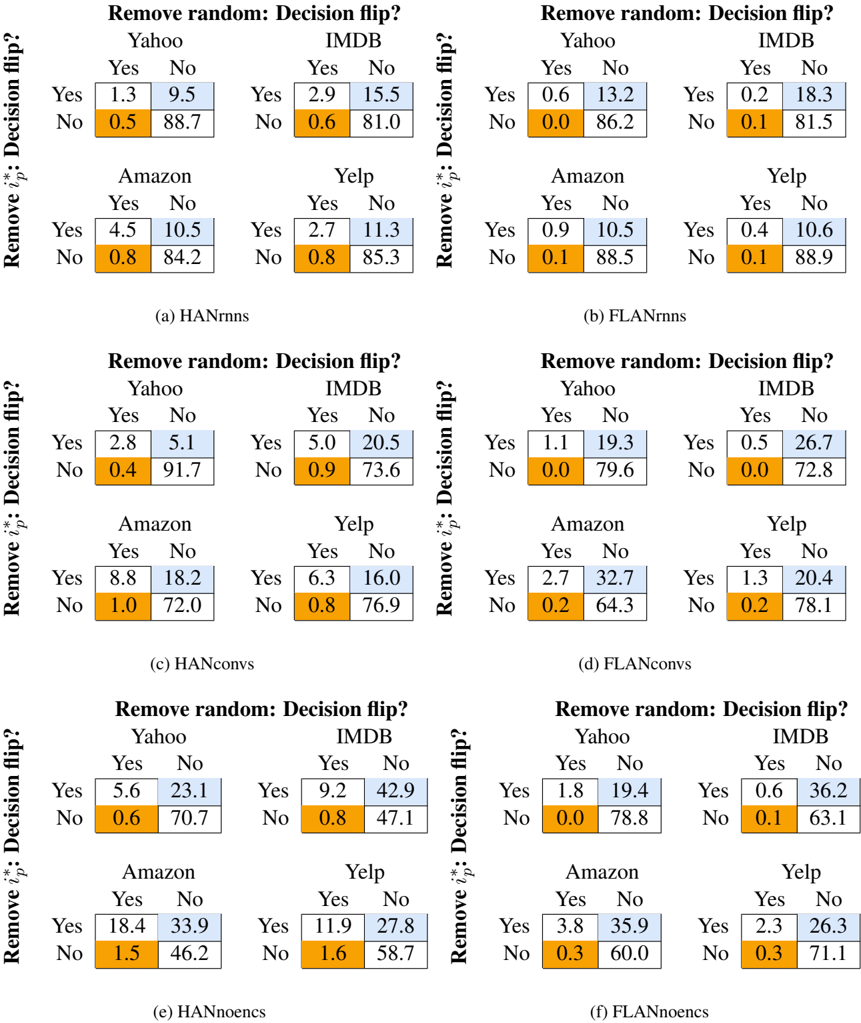
Attention mechanisms have recently boosted performance on a range of NLP tasks.Because attention layers explicitly weight input components' representations, it is also often assumed that attention can be used to identify information that models found important (e.g., specific contextualized word tokens).We test whether that assumption holds by manipulating attention weights in already-trained text classification models and analyzing the resulting differences in their predictions.While we observe some ways in which higher attention weights correlate with greater impact on model predictions, we also find many ways in which this does not hold, i.e., where gradient-based rankings of attention weights better predict their effects than their magnitudes.We conclude that while attention noisily predicts input components' overall importance to a model, it is by no means a fail-safe indicator.1
Overview
The claims and statistics of this paper haven’t been checked yet.
Free: it reads the open-access text and checks the first 5 claims that cite a source we can check. Create a free account to check every claim.
Integrity signals
Registry
Cites
Statistics
Figures
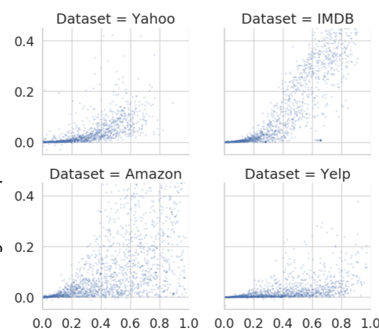
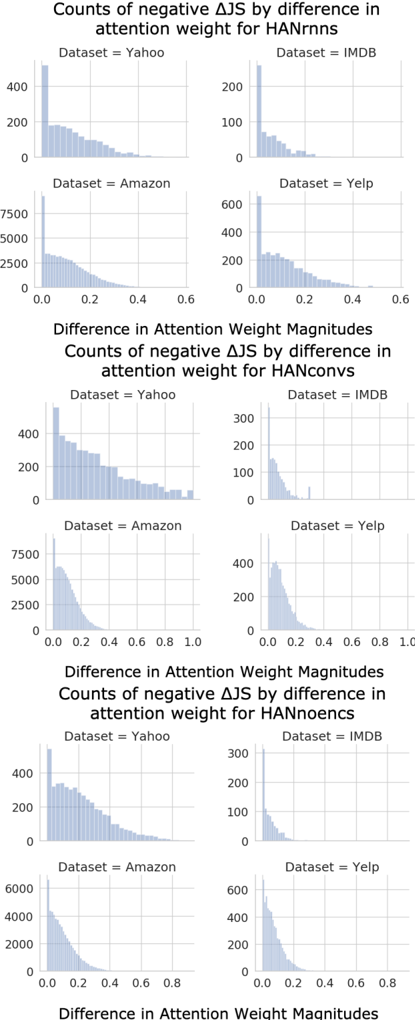
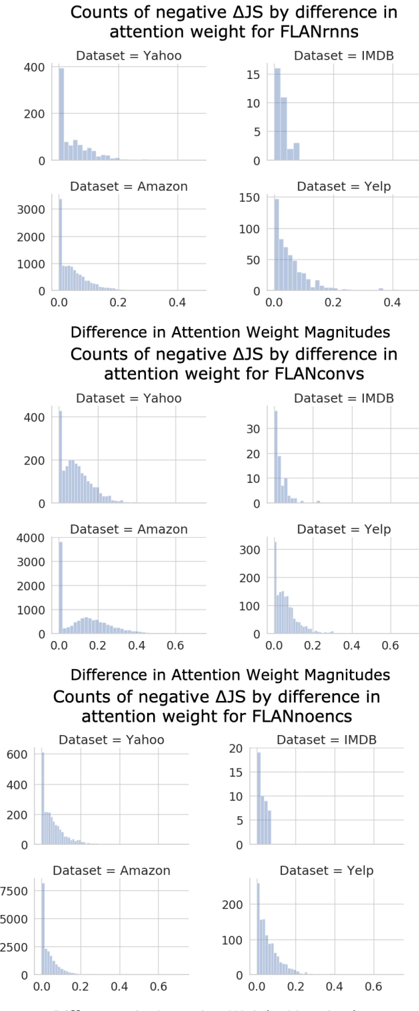
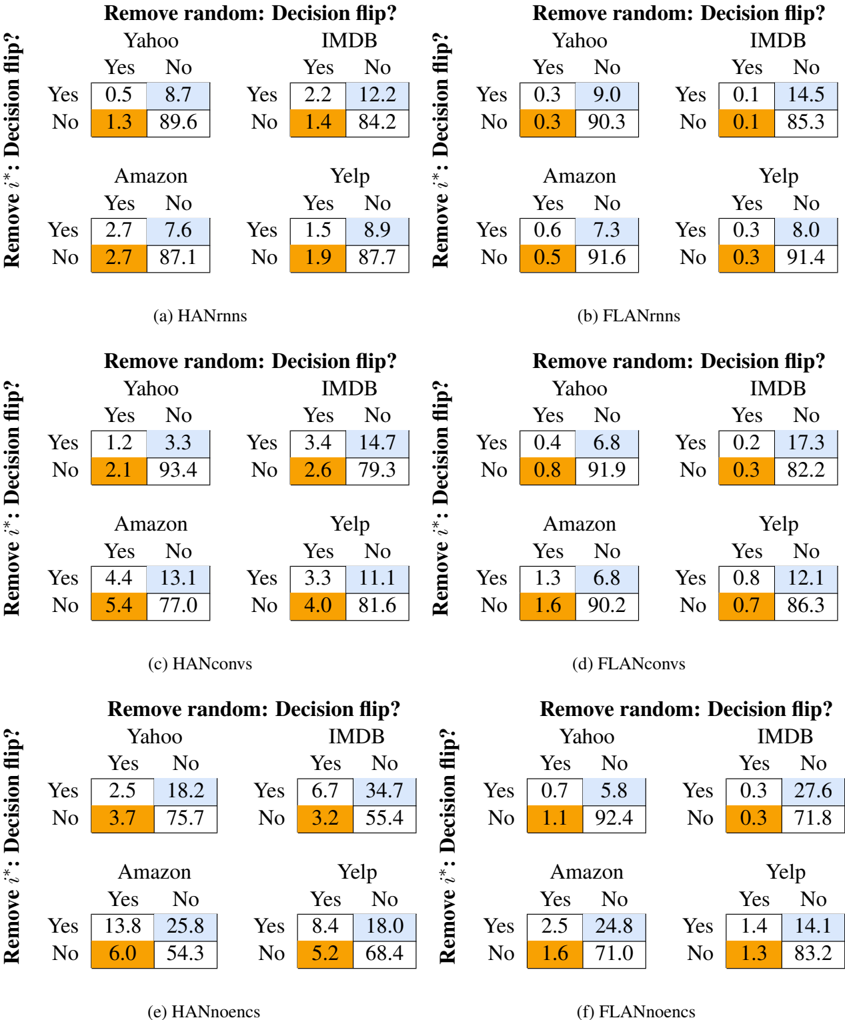
Verification
Claims the paper makes
The claims and statistics of this paper haven’t been checked yet.
Free: it reads the open-access text and checks the first 5 claims that cite a source we can check. Create a free account to check every claim.
Claims other papers make about this one
Each is checked against this paper’s own text: does it say what the citing paper says it does?
The source backs part of the claim, not all of it — or backs it for a different population, condition or comparison.
In the citing paper
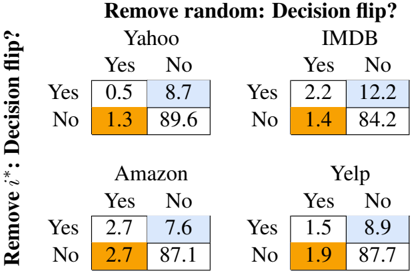
“Besides using Incremental Deletion/Addition to evaluate correctness and output-completeness, compactness can be evaluated by counting how many features of the explanation need to be removed, perturbed or added to change the decision of the predictive model [7,34,70,123,165,221].”
From From Anecdotal Evidence to Quantitative Evaluation Methods: A Systematic Review on Evaluating Explainable AI (2023) · cites this paper as [221]
Experimental — accuracy not yet measuredIn the citing paper
“In [85], the attention mechanism weights were seen as at best noisy predictors of the relative importance of specific regions of the input sequence, and they should not be treated as justifications for the model’s decisions.”
From Survey of Explainable AI Techniques in Healthcare (2023) · cites this paper as [85]
In the citing paper
“Although this is typically the case for softmax scores [221], there might be cases where this assumption is invalid.”
From From Anecdotal Evidence to Quantitative Evaluation Methods: A Systematic Review on Evaluating Explainable AI (2023) · cites this paper as [221]
Self-check
Percentages, sums and reported differences re-computed from the paper’s own numbers.
The self-check needs the paper’s full text.
Citations
Cites
Vaswani, A., Shazeer, N., Parmar, N., Uszkoreit, J., Jones, L., Gomez, A. N., Kaiser, L., & Polosukhin, I. (2017) · arXiv · doi:10.48550/arxiv.1706.03762 · Cited by 120,404
Adam: A Method for Stochastic Optimization
Kingma, D. P., & Ba, J. (2014) · arXiv · doi:10.48550/arxiv.1412.6980 · Cited by 98,946 · cited 1×
“Unless otherwise noted, to train each model, we used Adam (Kingma and Ba, 2014) with gradient clipping of 10.0 and a patience value of 5, so we would stop training a model if five epochs elapsed without any improvement in validation set accuracy.”
MethodInfluential"Why Should I Trust You?": Explaining the Predictions of Any Classifier
Ribeiro, M. T., Singh, S., & Guestrin, C. (2016) · Proceedings of the 22nd ACM SIGKDD International Conference on Knowledge Discovery and Data Mining · doi:10.1145/2939672.2939778 · Cited by 17,555 · cited 4×
“Note, however, that we still do not take either as a gold-standard indicator of importance to the model, as with the gradient in Ross et al. (2017) and Melis and Jaakkola (2018), but merely as an alternative ordering method.”
BackgroundMethodInfluentialNeural Machine Translation by Jointly Learning to Align and Translate
Bahdanau, D., Cho, K., & Bengio, Y. (2014) · arXiv · doi:10.48550/arxiv.1409.0473 · Cited by 16,213 · cited 2×
“Specifically, we use the additive formulation originally defined in Bahdanau et al. (2015).”
BackgroundMethodConvolutional Neural Networks for Sentence Classification
Kim, Y. (2014) · Proceedings of the 2014 Conference on Empirical Methods in Natural Language Processing (EMNLP) · doi:10.3115/v1/d14-1181 · Cited by 14,831 · cited 2×
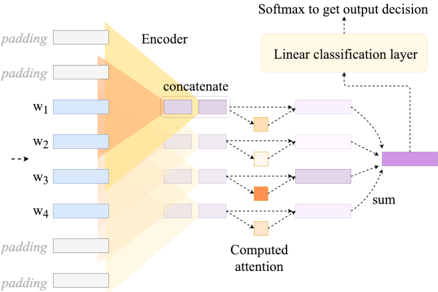
“Aside from biRNNs, we also experiment with models that instead contextualize word vectors by convolutions on only a token’s close neighbors, inspired by Kim (2014). See Figure 2 for a diagram of the FLAN architecture using a convolutional encoder.”
MethodEffective Approaches to Attention-based Neural Machine Translation
Luong, T., Pham, H., & Manning, C. D. (2015) · Proceedings of the 2015 Conference on Empirical Methods in Natural Language Processing · doi:10.18653/v1/d15-1166 · Cited by 8,382 · cited 1×
“For many different problems — to name a few, machine translation (Luong et al., 2015), syntactic parsing (Vinyals et al., 2015), reading comprehension (Hermann et al., 2015), and language modeling (Liu and Lapata, 2018) — incorporating attention mechanisms into models has proven beneficial for…”
BackgroundLipton, Z. C. (2018) · Queue · doi:10.1145/3236386.3241340 · Cited by 5,427 · cited 1×
“Lipton (2016) describes a model as “transparent” if “a person can contemplate the entire model at once.””
BackgroundHierarchical Attention Networks for Document Classification
Yang, Z., Yang, D., Dyer, C., He, X., Smola, A., & Hovy, E. (2016) · Proceedings of the 2016 Conference of the North American Chapter of the Association for Computational Linguistics: Human Language Technologies · doi:10.18653/v1/n16-1174 · Cited by 4,712 · cited 6×
“Our model architectures are inspired by the hierarchical attention network (HAN; Yang et al., 2016), a text classification model with two layers of attention, first to the word tokens in each sentence and then to the resulting sentence representations.”
BackgroundMethodResultInfluentialCharacter-level Convolutional Networks for Text Classification
Zhang, X., Zhao, J., & LeCun, Y. (2015) · arXiv (Cornell University) · doi:10.48550/arxiv.1509.01626 · Cited by 3,205 · cited 3×
“We investigate four model architectures on a topic classification dataset (Yahoo Answers; Zhang et al., 2015) and on three review ratings datasets: IMDB (Diao et al.”
MethodTeaching Machines to Read and Comprehend
Hermann, K. M., Kočiský, T., Grefenstette, E., Espeholt, L., Kay, W., Suleyman, M., & Blunsom, P. (2015) · arXiv (Cornell University) · doi:10.48550/arxiv.1506.03340 · Cited by 2,521 · cited 1×
“For many different problems—to name a few, machine translation (Luong et al., 2015), syntactic parsing (Vinyals et al., 2015), reading comprehension (Hermann et al., 2015), and language modeling (Liu and Lapata, 2018)—incorporating attention mechanisms into models has proven benefi-cial for…”
Background
Research works printed but not linked: 4
- Philipp Koehn and Rebecca Knowles. 2017. Six chal- lenges for neural machine translation. In Pro- ceedings of the First Workshop on Neural Machine Translation.
- Zachary C Lipton. 2016. The mythos of model inter- pretability. arXiv preprint arXiv:1606.03490. · arXiv
- Yang Liu and Mirella Lapata. 2018. Learning struc- tured text representations. Transactions of the Asso- ciation of Computational Linguistics, 6:63-75.
- Oriol Vinyals, Łukasz Kaiser, Terry Koo, Slav Petrov, Ilya Sutskever, and Geoffrey Hinton. 2015. Gram- mar as a foreign language. In Advances in Neural Information Processing Systems.
Cited by
Items 401–500 of 699
Providing Interpretability of Document Classification by Deep Neural Network with Self-attention
Tamekuri, A., Nakamura, K., Takahashi, Y., & Yamaguchi, S. (2022) · Journal of Information Processing · doi:10.2197/ipsjjip.30.397 · Cited by 7
Nguyen, T. H., & Rudra, K. (2023) · International World Wide Web Conference (WWW) · doi:10.1145/3543507.3583861 · Cited by 11
“Many previous works [14, 33, 42] have argued that attention is not explanation.”
BackgroundWu, S., Wang, Y., Lin, Z., & Xie, L. (2024) · IEEE Conference on Cybernetics and Intelligent Systems · doi:10.1109/cis-ram61939.2024.10672887 · Cited by 5
Label-Based Convolutional Neural Network for Text Classification
Wang, C., & Tan, C. (2021) · International Conference on Control Engineering and Artificial Intelligence (CCEAI) · doi:10.1145/3448218.3448235 · Cited by 6
“Besides, in [10–12], we find that the interpretability of attention is controversial.”
BackgroundLearning word representation by jointly using neighbor and syntactic contexts
Tian, C., Rong, W., Zhou, S., Zhang, J., Ouyang, Y., & Xiong, Z. (2021) · Neurocomputing · doi:10.1016/j.neucom.2021.03.130 · Cited by 5
Model-Agnostic Local Explanations with Genetic Algorithms for Text Classification
Du, Q. (2021) · Proceedings/Proceedings of the ... International Conference on Software Engineering and Knowledge Engineering · doi:10.18293/seke2021-040 · Cited by 5
Locally Aggregated Feature Attribution on Natural Language Model Understanding
Zhang, S., Wang, J., Jiang, H., & Song, R. (2022) · Conference of the North American Chapter of the Association for Computational Linguistics: Human Language Technologies (NAACL-HLT) · doi:10.18653/v1/2022.naacl-main.159 · Cited by 10
Do Deep Neural Nets Display Human-like Attention in Short Answer Scoring?
Zeng, Z., Li, X., Gašević, D., & Chen, G. (2022) · Conference of the North American Chapter of the Association for Computational Linguistics: Human Language Technologies (NAACL-HLT) · doi:10.18653/v1/2022.naacl-main.14 · Cited by 8
“However, it remains disputable to use attention weights to measure the importance of input text (Wiegreffe and Pinter, 2019; Serrano and Smith, 2019; Jain and Wallace, 2019).”
BackgroundMethodHungerGist: An Interpretable Predictive Model for Food Insecurity
Ahn, Y., Yan, M., Lin, Y., & Wang, Z. (2023) · IEEE International Conference on Big Data (BigData) · doi:10.1109/bigdata59044.2023.10386346 · Cited by 9
“The attention mechanism [38] is employed to identify the predictive and informative textual signals in order to facilitate interpretation.”
MethodFairness-Aware Vision Transformer via Debiased Self-Attention
Qiang, Y., Li, C., Khanduri, P., & Zhu, D. (2024) · Lecture notes in computer science · doi:10.1007/978-3-031-72913-3_20 · Cited by 13
Bayes-enhanced Lifelong Attention Networks for Sentiment Classification
Wang, H., Wang, S., Mazumder, S., Liu, B., Yang, Y. T., & Li, T. (2020) · International Conference on Computational Linguistics · doi:10.18653/v1/2020.coling-main.50 · Cited by 6
“In addition, whether attention is explainable (or interpretable) was recently discussed in (Jain and Wallace, 2019; Serrano and Smith, 2019; Wiegreffe and Pinter, 2019).”
BackgroundNoiER: An Approach for Training More Reliable Fine-Tuned Downstream Task Models
Jang, M., & Lukasiewicz, T. (2022) · IEEE/ACM Transactions on Audio Speech and Language Processing · doi:10.1109/taslp.2022.3193292 · Cited by 4
A Simple Framework for Uncertainty in Contrastive LearningPreprint
Wu, M., & Goodman, N. D. (2020) · arXiv (Cornell University) · doi:10.48550/arxiv.2010.02038 · Cited by 19
“Similarly, in natural language processing, attention is commonly visualized to pick out informative spans for a transfer task (Vashishth et al., 2019; Serrano & Smith, 2019).”
Series Saliency: Temporal Interpretation for Multivariate Time Series ForecastingPreprint
Pan, Q., Hu, W., & Zhu, J. (2020) · arXiv (Cornell University) · doi:10.48550/arxiv.2012.09324 · Cited by 16
“Attention mechanism calculates the related importance values among different time steps, so it is hard to capture the interdependence among features well at the same time (Serrano and Smith 2019; Jain and Wallace 2019).”
BackgroundInterpretable Deep Learning: Interpretations, Interpretability, Trustworthiness, and Beyond.Preprint
Li, X., Xiong, H., Li, X., Wu, X., Zhang, X., Liu, J., Bian, J., & Dou, D. (2021) · arXiv (Cornell University) · Cited by 5
Memariani, A., Glauer, M., Neuhaus, F., Mossakowski, T., & Hastings, J. (2021) · arXiv (Cornell University) · doi:10.48550/arxiv.2109.09202 · Cited by 11
“of attention visualization may be limited in explaining particular predictions, depending on the task, attention can be quite useful in explaining the model’s overall predictions [39, 40, 41].”
BackgroundInterpreting Attention Mechanisms in Genomic Transformer Models: A Framework for Biological InsightsPreprint
Consens, M. E., Díaz‐Navarro, A., Chu, V., Stein, L. D., He, H. H., Moses, A. M., & Wang, B. (2025) · bioRxiv (Cold Spring Harbor Laboratory) · doi:10.1101/2025.06.26.661544 · Cited by 8
“Despite this, attention has been previously used for interpretation 25,26 , and we build on this foundation.”
GradToken: Decoupling tokens with class-aware gradient for visual explanation of Transformer network
Cheng, L., Liang, Y., Lu, Y., & Cheung, Y. (2024) · Neural Networks · doi:10.1016/j.neunet.2024.106837 · Cited by 7
Multiplex network-based representation of vision transformers for visual explainability
Marchetti, M., Traini, D., Ursino, D., & Virgili, L. (2025) · Neural Computing and Applications · doi:10.1007/s00521-025-11591-x · Cited by 7
Noise-Filtering Enhanced Graph Transformer for Robust Fake News Detection
Zhu, J., Gao, C., Yin, Z., Li, X., Wang, Z., & Kurths, J. (2026) · IEEE Transactions on Knowledge and Data Engineering · doi:10.1109/tkde.2026.3677544 · Cited by 8
“While in general most Transformer architectures [19], including existing graph-based Transformer [20], [21], could theoretically alleviate such limitations by effectively capturing long-range relationships [16], [17], [18].”
Li, D., Hu, B., Chen, Q., & He, S. (2023) · Workshop on Trustworthy Natural Language Processing (TrustNLP) · doi:10.18653/v1/2023.trustnlp-1.1 · Cited by 13
“For example, considering the uncertainty of attention as an interpretable method (Serrano and Smith, 2019), the fidelity metrics of attention attribution are inferior to the baseline on all three Amazon Reviews datasets.”
MethodStop Overkilling Simple Tasks with Black-Box Models, Use More Transparent Models Instead
Rizzo, M., Marcuzzo, M., Zangari, A., Schiavinato, M., Albarelli, A., & Gasparetto, A. (2025) · Lecture notes in computer science · doi:10.1007/978-981-97-8702-9_19 · Cited by 4
Explainable prediction for business process activity with transformer neural networks
Wu, B., Hong, S., & Lin, R. (2025) · Knowledge and Information Systems · doi:10.1007/s10115-025-02501-7 · Cited by 4
“Theattentionmechanismcapturesfeatureimportance[12],allowingfortheidentification andadjustmentofsignificantfeaturecontributionsduringpracticalapplication.”
Disentangling Visual Transformers: Patch-Level Interpretability for Image Classification
Jeanneret, G., Simon, L., & Jurie, F. (2025) · IEEE/CVF Conference on Computer Vision and Pattern Recognition Workshops (CVPRW) · doi:10.1109/cvprw67362.2025.00252 · Cited by 9
“While attention maps are sometimes considered interpretable, many studies [26, 55] argue that they provide little to no insight into the actual decision-making process.”
Neural Machine Translation with Synchronous Latent Phrase Structure
Harada, S., & Watanabe, T. (2021) · doi:10.18653/v1/2021.acl-srw.33 · Cited by 4
“The prior study (Jain and Wallace, 2019; Serrano and Smith, 2019) conclude that the attentions have not explainability.”
BackgroundRight for the Right Reason: Evidence Extraction for Trustworthy Tabular Reasoning
Gupta, V., Zhang, S., Vempala, A., He, Y., Choji, T., & Srikumar, V. (2022) · Proceedings of the conference - Association for Computational Linguistics. Meeting · doi:10.18653/v1/2022.acl-long.231 · Cited by 19
Darkness can not drive out darkness: Investigating Bias in Hate SpeechDetection Models
Elsafoury, F. (2022) · Annual Meeting of the Association for Computational Linguistics: Student Research Workshop (ACL SRW) · doi:10.18653/v1/2022.acl-srw.4 · Cited by 8
“…few years, there have been published studies on the analysis of BERT’s attention weights on the GLUE tasks (Kovaleva et al., 2019; Rogers et al., 2021; Sun and Lu, 2020; Vashishth et al., 2019; Serrano and Smith, 2019) but none of them were employed for the task of hate speech and abuse detection.”
Faithful Knowledge Graph Explanations in Commonsense Question Answering
Aglionby, G., & Teufel, S. (2022) · Conference on Empirical Methods in Natural Language Processing (EMNLP) · doi:10.18653/v1/2022.emnlp-main.743 · Cited by 9
Semantic Interpretation and Validation of Graph Attention-Based Explanations for GNN Models
Panagiotaki, E., Martini, D. D., & Kunze, L. (2023) · International Conference on Advanced Robotics (ICAR) · doi:10.1109/icar58858.2023.10406370 · Cited by 8
“[ ˆ R | ˆ τ ] and ground-truth values [ R | τ ] , respectively.”
MethodFan, Y. B., Hu, Z., Li, R., Wang, Y. X., Zhang, G., Tan, H., & Liang, J. (2024) · Information Sciences · doi:10.1016/j.ins.2024.121763 · Cited by 7
Explainable Artificial Intelligence for Business and Economics: Methods, Applications and Challenges
Lyu, Q., & Wu, S. (2025) · Expert Systems · doi:10.1111/exsy.70017 · Cited by 10
“(Serrano and Smith 2019).”
Shi, J., Wei, Z., Nie, J., & Huang, L. (2025) · IEEE Transactions on Circuits and Systems for Video Technology · doi:10.1109/tcsvt.2025.3618279 · Cited by 7
“Inspired by previous studies [14], [15], [16], the multi-head attention mechanism [17] in a vision transformer (ViT) [18] can capture the important regions among a sequence of patches.”
Kim, M., Choi, H.-S., & Kim, J. (2025) · Proceedings · doi:10.1109/icdm65498.2025.00140 · Cited by 20
“While attention mechanisms effectively highlight key features, their explanations may not always reliably reflect the model’s true prediction processes [27]–[29].”
Attention Meets Normalization and Beyond
Ma, X., Guo, J., Chen, Q., Tang, S., Yang, Q. X., & Fu, S. (2020) · IEEE International Conference on Multimedia and Expo (ICME) · doi:10.1109/icme46284.2020.9102909 · Cited by 4
“However, recent studies on attention’s interpretability [4, 5, 6] in NLP”
BackgroundRANCC: Rationalizing Neural Networks via Concept Clustering
Bashier, H. K., Kim, M., & Goebel, R. G. (2020) · International Conference on Computational Linguistics · doi:10.18653/v1/2020.coling-main.286 · Cited by 6
“This is beyond the scope of this work and we refer the reader to the following papers (Serrano and Smith, 2019) and (Jain and Wallace, 2019).”
BackgroundCo-Attention Based Multi-contextual Fake News Detection
Kapadia, P., Saxena, A., Das, B., Pei, Y., & Pechenizkiy, M. (2022) · Springer proceedings in complexity · doi:10.1007/978-3-031-17658-6_7 · Cited by 5
Perturbation-Based Self-Supervised Attention for Attention Bias in Text Classification
Feng, H., Lin, Z., & Ma, Q. (2023) · IEEE/ACM Transactions on Audio Speech and Language Processing · doi:10.1109/taslp.2023.3302230 · Cited by 7
“We also try to use the gradient-based method [51] to generate supervision information.”
MethodIncorporating Attribution Importance for Improving Faithfulness Metrics
Zhao, Z., & Αλέτρας, Ν. (2023) · Proceedings of the conference - Association for Computational Linguistics. Meeting · doi:10.18653/v1/2023.acl-long.261 · Cited by 26
Context-Aware Feature Selection and Classification
Wang, J., & Bilgic, M. (2023) · International Joint Conference on Artificial Intelligence · doi:10.24963/ijcai.2023/480 · Cited by 6
Explainable Video Summarization for Advancing Media Content Production
Apostolidis, E., Balaouras, G., Patras, I., & Mezaris, V. (2023) · Advances in information quality and management · doi:10.4018/978-1-6684-7366-5.ch065 · Cited by 7
Using Interpretation Methods for Model Enhancement
Chen, Z., Jiang, C., & Tu, K. (2023) · Conference on Empirical Methods in Natural Language Processing (EMNLP) · doi:10.18653/v1/2023.emnlp-main.28 · Cited by 4
“…methods into four categories, namely gradient-based (Ross et al., 2017; Smilkov et al., 2017), attention-based (Vashishth et al., 2019; Serrano and Smith, 2019), erasure/replace-based (Prabhakaran et al., 2019; Kim et al., 2020) and extractor-based (De Cao et al., 2020; Chan et al.,…”
Tan, H., Wu, H., Shao, W., Zhang, X., Zhan, M., Hou, Z., Ding, L., & Song, L. (2023) · Conference on Empirical Methods in Natural Language Processing (EMNLP) · doi:10.18653/v1/2023.emnlp-main.812 · Cited by 8
“…et al., 2020; Kindermans et al., 2016; Atanasova et al., 2020; Sundararajan et al., 2017), we extract the importance scoring with scaled attention (Serrano and Smith, 2019) a ∇ a from the last cross-attention layer to determine the contribution of each token in contexts S [ max (0 ,i − w ): i −…”
BackgroundResultCan Neural Image Captioning be Controlled via Forced Attention?
Sadler, P., Scheffler, T., & Schlangen, D. (2019) · International Conference on Natural Language Generation · doi:10.18653/v1/w19-8653 · Cited by 4
“The implicit argument at least seems to be that this is informative, because there is a causal relation between where the attention is placed and what is being produced, which has been critically discussed recently (Serrano and Smith, 2019; Jain and Wallace, 2019).”
BackgroundSaliency-based Multi-View Mixed Language Training for Zero-shot Cross-lingual Classification
Lai, S., Huang, H., Jing, D., Chen, Y., Xu, J., & Liu, J. (2021) · Findings of the Association for Computational Linguistics: EMNLP (Findings of EMNLP) · doi:10.18653/v1/2021.findings-emnlp.55 · Cited by 8
IDC: quantitative evaluation benchmark of interpretation methods for deep text classification models
Khaleel, M., Qi, L., Tavanapong, W., Wong, J., Sukul, A., & Peterson, D. A. M. (2022) · Journal Of Big Data · doi:10.1186/s40537-022-00583-6 · Cited by 5
“Intrinsic validation was used to evaluate the performance of LRP and CAM.”
MethodAre Interpretations Fairly Evaluated? A Definition Driven Pipeline for Post-Hoc InterpretabilityPreprint
Liu, N., Meng, Y., Hu, X., Tie, W., & Long, B. (2020) · arXiv (Cornell University) · doi:10.48550/arxiv.2009.07494 · Cited by 6
“…Smilkov et al., 2017; Denil et al., 2014; Sundararajan et al., 2017), mimic learning based methods (Ribeiro et al., 2016; Che et al., 2016), erasure based meth-ods (Li et al., 2016; Serrano and Smith, 2019; Fong and Vedaldi, 2017), and a recent information theory based method (Guan et al., 2019).”
BackgroundMethodDistributed Word Representation in Tsetlin Machine.Preprint
Yadav, R. K., Jiao, L., Granmo, O., & Goodwin, M. (2021) · arXiv (Cornell University) · Cited by 4
Challenges for cognitive decoding using deep learning methodsPreprint
Thomas, A. W., Ré, C., & Poldrack, R. A. (2021) · arXiv (Cornell University) · doi:10.48550/arxiv.2108.06896 · Cited by 7
“Attention weights are often also interpreted as an estimate of relevance, such that 𝑟 " = 𝛼 " [32,42,43].”
BackgroundInfluence Patterns for Explaining Information Flow in BERT
Lu, K., Wang, Z., Mardziel, P., & Datta, A. (2021) · neural information processing systems · doi:10.48550/arxiv.2011.00740 · Cited by 4
“Attention weights as interpretation devices, however, have been controversial [36] and empirical analysis has shown that attention can be perturbed or pruned while retaining performance [21, 31, 46].”
BackgroundTransfer Ranking in Finance: Applications to Cross-Sectional Momentum with Data ScarcityPreprint
Poh, D., Roberts, S., & Zohren, S. (2022) · SSRN Electronic Journal · doi:10.2139/ssrn.4196563 · Cited by 6
ReAGent: A Model-agnostic Feature Attribution Method for Generative Language ModelsPreprint
Zhao, Z., & Shan, B. (2024) · doi:10.22541/au.170709121.16176681/v1 · Cited by 4
Fine-Tuning and Explaining FinBERT for Sector-Specific Financial News: A Reproducible Workflow
Cristescu, M. P., Brândaș, C., Mara, D. A., & Petrea, I. (2025) · Electronics · doi:10.3390/electronics14234680 · Cited by 9
Martin, S., Zhao, A., Qu, J., Imms, P. E., Irimia, A., Barkhof, F., Cole, J. H., & Initiative, A. D. N. (2026) · Human Brain Mapping · doi:10.1002/hbm.70456 · Cited by 18
A Trustworthy Approach to Classify and Analyze Epidemic-Related Information From Microblogs
Nguyen, T. H., Fisichella, M., & Rudra, K. (2024) · IEEE Transactions on Computational Social Systems · doi:10.1109/tcss.2024.3391395 · Cited by 4
“This observation is also on par with conclusions from some previous studies that attention is not an explanation [49], [50]. d) Our TACEI(-p1) generally obtains the best values in terms of both tweet label prediction and rationale extraction tasks.”
ResultLin, Y., Ma, J., Yuan, H., Chen, Z., Xu, X., Jiang, M., Zhu, J., Meng, W., Qiu, W., & Liu, Y. (2024) · Briefings in Bioinformatics · doi:10.1093/bib/bbae247 · Cited by 7
Velasco, A. (2024) · ACM/IEEE International Conference on Software Engineering: Companion Proceedings (ICSE-Companion) · doi:10.1145/3639478.3639815 · Cited by 5
“In recent years, a growing interest has emerged in not only evaluating LLMs for code but also providing interpretations about how these models arrive at generated predictions [5, 13, 19–21, 24, 25].”
BackgroundIdentifying Critical Tokens for Accurate Predictions in Transformer-Based Medical Imaging Models
Kang, S., Vankerschaver, J., & Özbulak, U. (2024) · Lecture notes in computer science · doi:10.1007/978-3-031-73290-4_17 · Cited by 4
Integrating mechanics and machine learning for build-up rate prediction
Li, Z., Song, X., Yu, Q., Gong, N., Jiang, Z., Zhu, Z., & Zhang, C. (2024) · Geoenergy Science and Engineering · doi:10.1016/j.geoen.2024.213594 · Cited by 4
ATKB-PID: an adaptive control method for micro tension under complex hot rolling conditions
Xu, X., Song, X., & Zheng, Q. (2025) · Scientific Reports · doi:10.1038/s41598-025-85960-w · Cited by 3
Pandey, A., Chen, W., & Keten, S. (2025) · Journal of Chemical Information and Modeling · doi:10.1021/acs.jcim.5c00205 · Cited by 4
Meta-supervision for Attention Using Counterfactual Estimation
Choi, S. L., Park, H., & Hwang, S.-W. (2020) · Data Science and Engineering · doi:10.1007/s41019-020-00119-z · Cited by 4
“Related concept in language tasks is faithfulness [26, 27], stating that attention weights of unsupervised attention are too poorly correlated with the contribution of each word for machine decision (or, unfaithful).”
BackgroundInvestigating alignment interpretability for low-resource NMT
Boito, M. Z., Villavicencio, A., & Besacier, L. (2020) · Machine Translation · doi:10.1007/s10590-020-09254-w · Cited by 4
Bao, L., Lambert, P., & Badía, T. (2022) · Natural Language Engineering · doi:10.1017/s1351324922000432 · Cited by 5
Towards an Intrinsic Interpretability Approach for Multimodal Hate Speech Detection
Du, P., Gao, Y., & Li, X. (2022) · International Journal of Pattern Recognition and Artificial Intelligence · doi:10.1142/s0218001422500409 · Cited by 3
Motokawa, Y., & Sugawara, T. (2023) · Applied Sciences · doi:10.3390/app13148454 · Cited by 4
Towards Explainable Table Interpretation Using Multi-view Explanations
Gao, Y., Wang, P., Zeng, X., Chen, L., Mao, Y., Wei, Z., & Li, M. (2023) · IEEE International Conference on Data Engineering (ICDE) · doi:10.1109/icde55515.2023.00094 · Cited by 3
“However, such explanations were shown to be unreliable [16] and unfaithful [17], as to be demonstrated by Example I.”
BackgroundDExT: Detector Explanation Toolkit
Padmanabhan, D. C., Plöger, P. G., Arriaga, O., & Valdenegro-Toro, M. (2023) · Communications in computer and information science · doi:10.1007/978-3-031-44067-0_23 · Cited by 5
Hyperpolyglot LLMs: Cross-Lingual Interpretability in Token Embeddings
Wen-Yi, A. W., & Mimno, D. (2023) · Conference on Empirical Methods in Natural Language Processing (EMNLP) · doi:10.18653/v1/2023.emnlp-main.71 · Cited by 27
“Previous work has found interpretable patterns in feed-forward layers (Geva et al., 2021, 2022), self-attention (Mrini et al., 2020; Clark et al., 2019; Serrano and Smith, 2019), and input embeddings from the perspective of adversarial perturbation (Sato et al., 2018).”
BackgroundRobust Representation Learning via Sparse Attention Mechanism for Similarity Models
Ermilova, A., Baramiia, N., Kornilov, V., Petrakov, S., & Zaytsev, A. (2024) · IEEE Access · doi:10.1109/access.2024.3418779 · Cited by 5
“According to [54] and [55], the attention weights seem to be uncorrelated with the gradients.”
BackgroundThe Interpretability of Quantum-Inspired Neural Network
Song, S., Hou, Y., & Liu, G. (2021) · International Conference on Artificial Intelligence and Big Data (ICAIBD) · doi:10.1109/icaibd51990.2021.9459009 · Cited by 3
Marginal Utility Diminishes: Exploring the Minimum Knowledge for BERT Knowledge Distillation
Liu, Y., Meng, F., Lin, Z., Wang, W., & Zhou, J. (2021) · doi:10.18653/v1/2021.acl-long.228 · Cited by 8
“However, prior work (Wiegreffe and Pinter, 2019; Serrano and Smith, 2019; Brunner et al., 2020; Hao et al., 2020) finds that attention weights usually fail to correlate well with their contributions to the final prediction.”
Learning to Rationalize for Nonmonotonic Reasoning with Distant Supervision
Brahman, F., Shwartz, V., Rudinger, R., & Choi, Y. (2021) · AAAI Publications (The Association for the Advancement of Artificial Intelligence (AAAI)) · doi:10.1609/aaai.v35i14.17492 · Cited by 31
Learning Predictive and Interpretable Timeseries Summaries from ICU DataPreprint
Johnson, N., Parbhoo, S., Ross, A. S., & Doshi‐Velez, F. (2021) · PubMed Central · doi:10.48550/arxiv.2109.11043 · Cited by 8
Controlling the Focus of Pretrained Language Generation Models
Ji, J., Kim, Y., Glass, J. R., & He, T. (2022) · Findings of the Association for Computational Linguistics: ACL (Findings of ACL) · doi:10.18653/v1/2022.findings-acl.260 · Cited by 6
Hate Sentiment Recognition System For Persian Language
Jey, P. S., Hemmati, A., Toosi, R., & Akhaee, M. A. (2022) · International Conference on Computer and Knowledge Engineering · doi:10.1109/iccke57176.2022.9959986 · Cited by 3
“In contrast, effective neuronal models are frequently opaque and challenging to comprehend [19], [20], [21].”
BackgroundExplainable Prediction of Adverse Outcomes Using Clinical NotesPreprint
Lovelace, J., Hurley, N. C., Haimovich, A. D., & Mortazavi, B. J. (2019) · arXiv (Cornell University) · doi:10.48550/arxiv.1910.14095 · Cited by 7
HAM: Hybrid Associations Model with Pooling for Sequential Recommendation.Preprint
Peng, B., Ren, Z., Parthasarathy, S., & Ning, X. (2020) · arXiv (Cornell University) · Cited by 4
Faithfully Explainable Recommendation via Neural Logic ReasoningPreprint
Zhu, Y., Xian, Y., Fu, Z., de Melo, G., & Zhang, Y. (2021) · arXiv (Cornell University) · doi:10.48550/arxiv.2104.07869 · Cited by 3
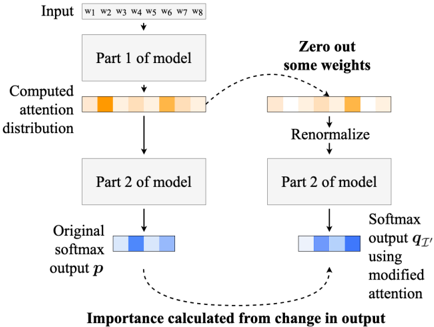
“Measuring Faithfulness Inspired by previous work (Maaten and Hinton, 2008; Serrano and Smith, 2019; Subramanian et al., 2020), we de-fine the faithfulness to be the Jensen–Shannon (JS) divergence of rule-related distributions from training and test sets.”
Zero-Shot Controlled Generation with Encoder-Decoder TransformersPreprint
Hazarika, D., Namazifar, M., & Hakkani-Tür, D. Z. (2021) · arXiv (Cornell University) · doi:10.48550/arxiv.2106.06411 · Cited by 7
“While zero-shot biases have been studied in the probing literature to understand the influence of attentions on model’s classifications (Serrano and Smith, 2019), to our knowledge, zero-shot attention biasing for controlled generation is an unexplored avenue.”
BackgroundAttention Flows are Shapley Value ExplanationsPreprint
Ethayarajh, K., & Jurafsky, D. (2021) · arXiv (Cornell University) · doi:10.48550/arxiv.2105.14652 · Cited by 3
“Unlike with attention weights, which have been criticized for allowing counterfactual explanations (Jain and Wallace, 2019; Serrano and Smith, 2019), there can thus be no counterfactual Shapley Value distribution for a given input and payoff function v .”
Kewenig, V. N., Lampinen, A. K., Nastase, S. A., Edwards, C., D'Elascombe, Q., Rechardt, A., Skipper, J. I., & Vigliocco, G. (2024) · Research Square · doi:10.21203/rs.3.rs-3913308/v1 · Cited by 6
On Measuring Faithfulness or Self-consistency of Natural Language Explanations
Parcalabescu, L., & Frank, A. (2023) · arXiv · doi:10.48550/arxiv.2311.07466 · Cited by 27
“…attacks in the input can mislead them. ii) Attention-based methods correlate high attention weights with high feature importance, which is debated (Serrano and Smith, 2019; Jain and Wallace, 2019; Wiegreffe and Pinter, 2019). iii) Perturbation methods like RISE (Petsiuk et al., 2018) and SHAP…”
Recent Progress in Understanding Transformer and Developing Its Surpasser: A Survey
Liu, M., Yang, D., Beyette, F. R., Wang, S., & Zhao, L. (2024) · IEEE Signal Processing in Medicine and Biology Symposium · doi:10.1109/spmb62441.2024.10842272 · Cited by 2
“As Transformers continue to be deployed in critical applications, from automated customer service to medical diagnosis, the need for transparency and interpretability becomes increasingly urgent [13][14][15][16].”
Learn to explain transformer via interpretation path by reinforcement learning
Niu, R., Wang, Q., Kong, H., Xing, Q., Chang, Y., & Yu, P. S. (2025) · Neural Networks · doi:10.1016/j.neunet.2025.107496 · Cited by 4
Explainable Multi-Hop Question Answering: A Rationale-Based Approach
Han, K., Jang, Y., & Kim, H. (2025) · Big Data and Cognitive Computing · doi:10.3390/bdcc9110273 · Cited by 3
Clustered Bootstrap Similarity Learning Framework: Time Series Forecasting
Kubheka, S., van Zyl, T. L., & Wang, H. (2025) · IEEE Access · doi:10.1109/access.2025.3630067 · Cited by 2
“While attention-based models have improved at capturing temporal dynamics, these models face several challenges and limitations including computational complexity [29], interpretability [30] and theoretical limitations [31].”
Kou, J., Lu, X., Yin, A., Zhang, W., Fang, X., Li, Y., Pan, T., Zhang, L., Cheng, G., Yuan, H., et al. (2024) · International Conference on Universal Village (UV) · doi:10.1109/uv63228.2024.11189154 · Cited by 7
He, H., Ying, Z., Li, B., Fan, Y., Wang, P., Lu, J., Wu, L., Zhao, H., Guo, Y., Wang, G., et al. (2026) · Communications Medicine · doi:10.1038/s43856-026-01449-1 · Cited by 3
Kaan, A. R. I. K. (2026) · Archives of Computational Methods in Engineering · doi:10.1007/s11831-026-10702-8 · Cited by 4
“While attention maps provide a seemingly transparent view into model behavior, they do not always reflect causal decision-making processes and may be sensitive to input perturbations [37, 38].”
Corro, L. D., & Hoffart, J. (2021) · Workshop on Economics and Natural Language Processing (ECONLP) · doi:10.18653/v1/2021.econlp-1.6 · Cited by 6
“Serrano and Smith (2019) and Jain and Wallace (2019) concluded that attention weights should not be used to explain a decision, and Wiegreffe and Pinter (2019) developed a set of tests to determine weight consistency.”
BackgroundCATAN: Chart-aware temporal attention network for adverse outcome prediction
Gero, Z., & Ho, J. C. (2021) · IEEE International Conference on Healthcare Informatics (ICHI) · doi:10.1109/ichi52183.2021.00024 · Cited by 2
Justifying Multi-label Text Classifications for Healthcare Applications
Figueira, J., Correia, G. M., Strzyz, M., & Mendes, A. (2023) · Lecture notes in computer science · doi:10.1007/978-3-031-28238-6_30 · Cited by 3
Understanding stance classification of BERT models: an attention-based framework
Sáenz, C. A. C., & Becker, K. E. (2023) · Knowledge and Information Systems · doi:10.1007/s10115-023-01962-y · Cited by 3
“Based on experiments, [16, 18] argue that the value of attention weights for interpretability is limited due to the variation of the results when altering the attention weights.”
Constituent Attention for Vision Transformers
Li, H., Xue, M., Song, J., Zhang, H., Huang, W., Liang, L., & Song, M. (2023) · Computer Vision and Image Understanding · doi:10.1016/j.cviu.2023.103838 · Cited by 3
Mariotti, E., Arias-Duart, A., Cafagna, M., Gatt, A., García-Gasulla, D., & Alonso, J. M. (2024) · IEEE Access · doi:10.1109/access.2024.3408062 · Cited by 2
“While in CV such perturbations often take the form of pixel manipulations, similar methods are used in NLP by manipulating (e.g., replacing, deleting or zeroing the embeddings of) tokens [17], [18], [19], [20].”
MethodCrossing the Divide: Designing Layers of Explainability
Zangari, A., Marcuzzo, M., Rizzo, M., Albarelli, A., & Gasparetto, A. (2025) · Lecture notes in computer science · doi:10.1007/978-3-031-84353-2_22 · Cited by 2
Pruning Literals for Highly Efficient Explainability at Word Level
Yadav, R. K., Bhattarai, B., Jana, A., Jiao, L., & Yimam, S. M. (2024) · International Symposium on the Tsetlin Machine (ISTM) · doi:10.1109/istm62799.2024.10931519 · Cited by 3
“Similarly, [4] suggests that the relevance of inputs does not always equate to attention weights.”
InfluentialLai, C., Lai, Y.-W., Chen, S.-Y., Lee, C.-H., & Chen, M. (2025) · IEEE Transactions on Fuzzy Systems · doi:10.1109/tfuzz.2025.3555523 · Cited by 3
“In the model, the attention scores of the multihead attention layers may not have a direct correlation with the fuzzy optimization features of the input image, especially in the higher layers that represent higher level abstractions [32], [33].”
Interpretability-Aware Vision Transformer
Qiang, Y., Li, C., Zhu, H., Khanduri, P., & Zhu, D. (2025) · International Joint Conference on Neural Networks (IJCNN) · doi:10.1109/ijcnn64981.2025.11227842 · Cited by 18
“This dual functionality can prove invaluable in various domains, including healthcare and finance, where the interpretability of learned models hold paramount importance.”
SLICE: Supersense-based Lightweight Interpretable Contextual Embeddings
Aloui, C., Ramisch, C., Nasr, A., & Barque, L. (2020) · International Conference on Computational Linguistics · doi:10.18653/v1/2020.coling-main.298 · Cited by 7
“Both models, but especially the latter, are increasingly complex and opaque (Rogers et al., 2020), requiring advanced techniques to help humans understand their strengths and limitations (Jawahar et al., 2019; Serrano and Smith, 2019).”
Background
Metadata
- Authors
- Serrano, S., & Smith, N. A.
- Affiliations
- University of Washington (US)
- Venue
- Proceedings of the 57th Annual Meeting of the Association for Computational Linguistics
- Published
- 2019
- Pages
- 2931-2951
- ISSN
- 0736-587X (ISSN-L)
- OpenAlex
- W2948140294
- Cited by
- 690
- References
- 39
- Citations by year
- 2026: 63 · 2025: 85 · 2024: 82 · 2023: 102 · 2022: 119 · 2021: 143 · 2020: 80 · 2019: 15
- FWCI
- 34.15
- Type
- conference paper
- Language
- en
- Open access
- hybrid
- doi.org
- Licence
- cc-by
- Locations
- Proceedings of the conference - Association for Computational Linguistics. Meeting (publishedVersion, cc-by)
- arXiv (Cornell University) (submittedVersion)
- arXiv (Cornell University)
- Topics
- Physical Sciences › Computer Science › Artificial Intelligence › Explainable Artificial Intelligence (XAI)
- Physical Sciences › Computer Science › Artificial Intelligence › Topic Modeling
- Physical Sciences › Computer Science › Artificial Intelligence › Natural Language Processing Techniques
- Keywords
- attention mechanism, interpretability, text classification, model interpretability, feature importance, explainable AI
About these checks
Registry, retraction, Cites and statistics results are computed, not judged, with one exception: a printed reference that no index lists is read once by a model before it counts as a citation error. Claims are extracted by a model and kept only when their quote appears verbatim in the text; each cited source is then checked, with a model’s help, for whether it says what the claim relies on. Those verdicts can be wrong — read the claim’s quote and the cited source before relying on one.
Statistics and arithmetic are recomputed, not judged.
Confidence bands are shown only for fields calibrated on our annotated test set. None is calibrated yet, so no band is shown.
What counts as a claim ›How we measure confidence ›How we check this ›
Are you an author, or do you see a problem with this page? Request a review
Data sources
Bibliographic data: Semantic Scholar, OpenAlex, Crossref.
Contains information from the Semantic Scholar Academic Graph Datasets, made available under the ODC Attribution License (ODC-BY 1.0).
Semantic Scholar’s data is described in: Kinney, R., et al. (2023). The Semantic Scholar Open Data Platform. arXiv:2301.10140.
