

Is Attention Interpretable?
Open accessThe DOI matches its Crossref record; 43 of the 43 references it cites were found in a registry or an index.
Abstract
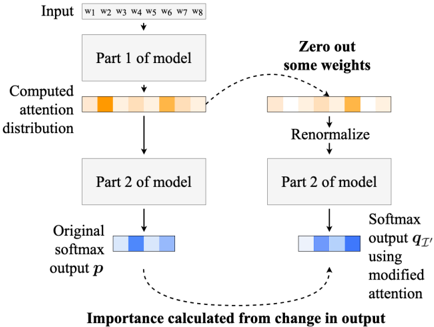
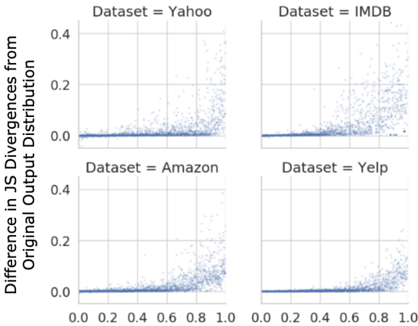
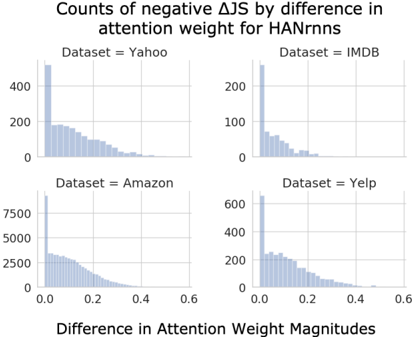
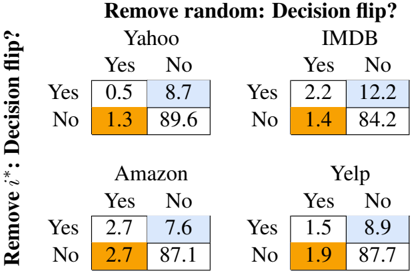
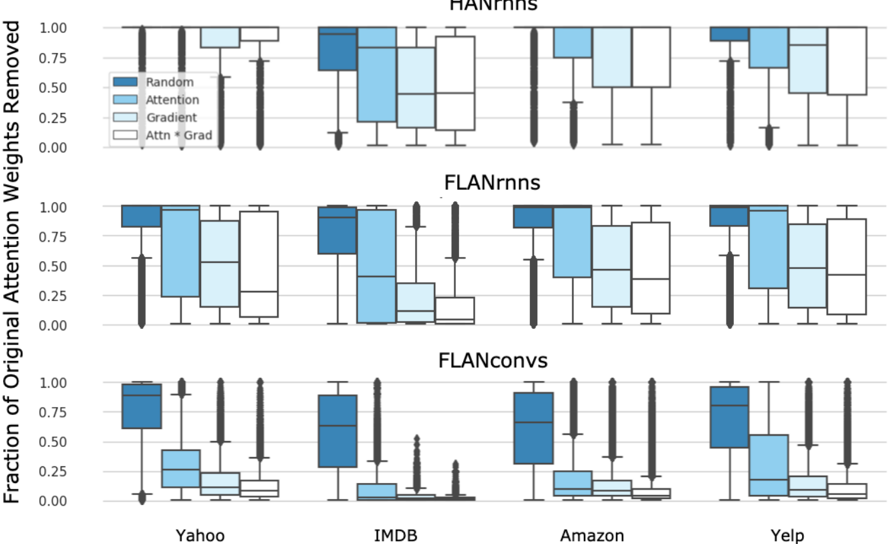
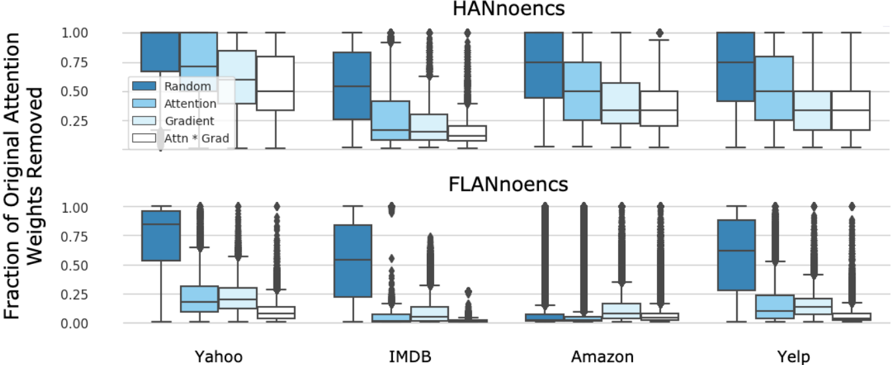
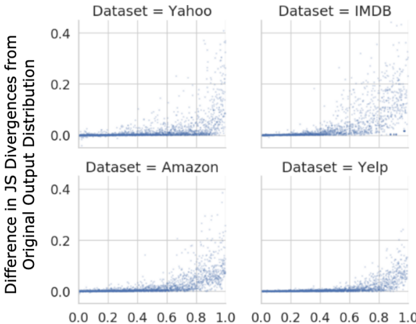
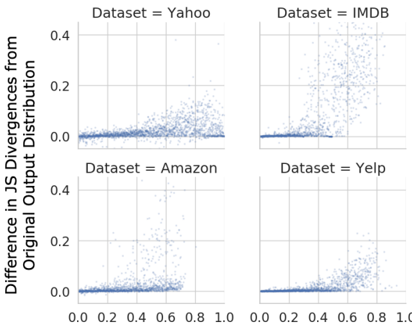
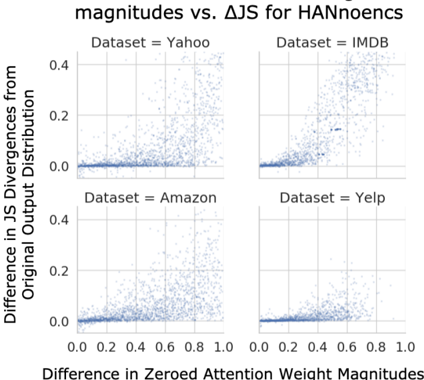
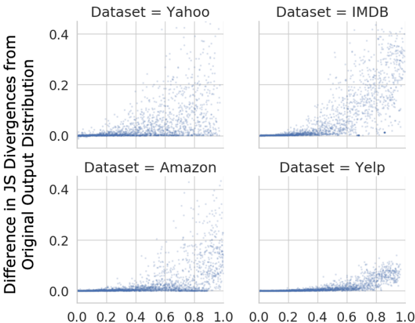
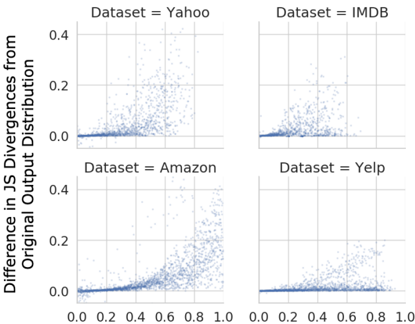
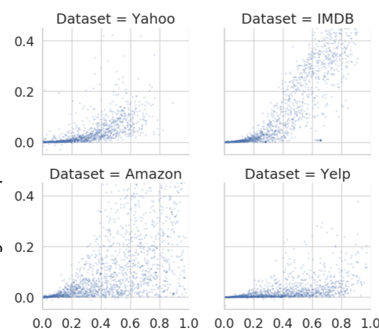
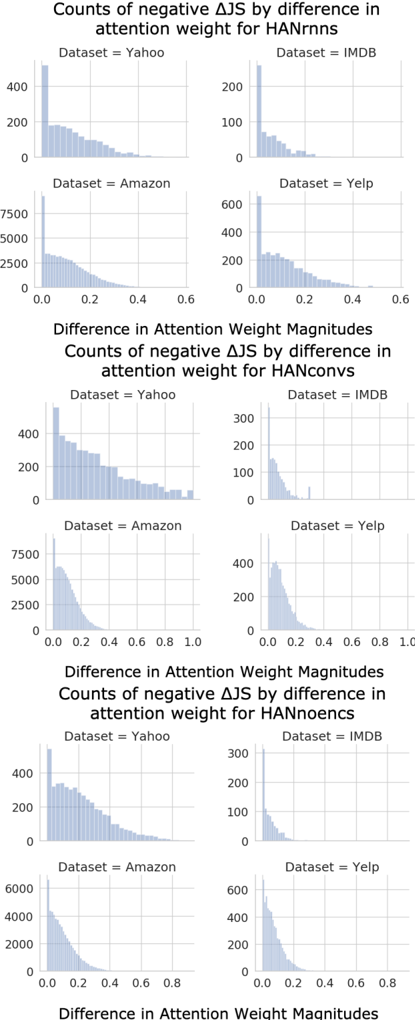
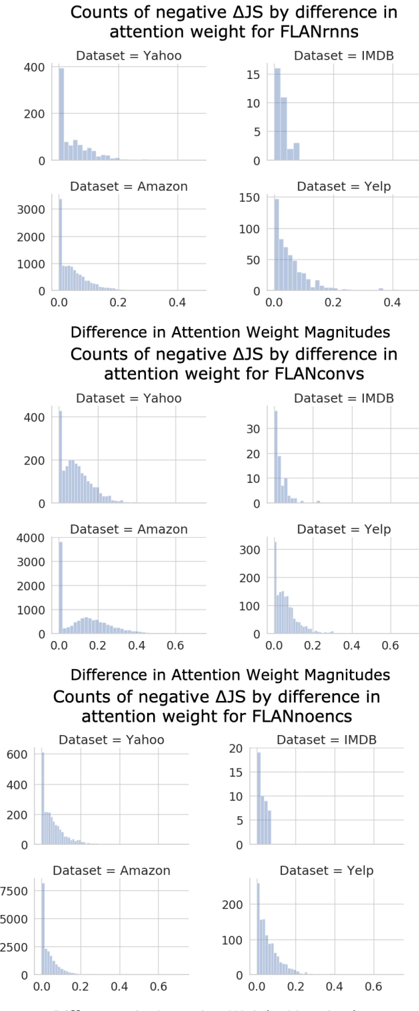
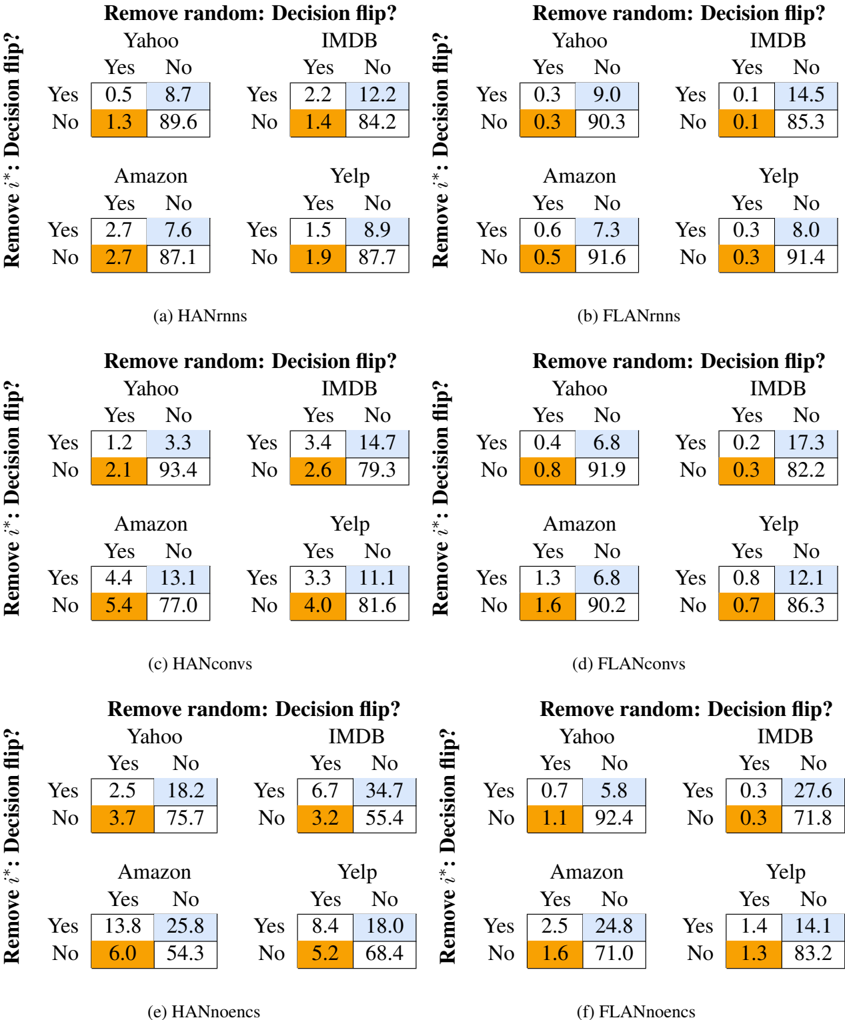
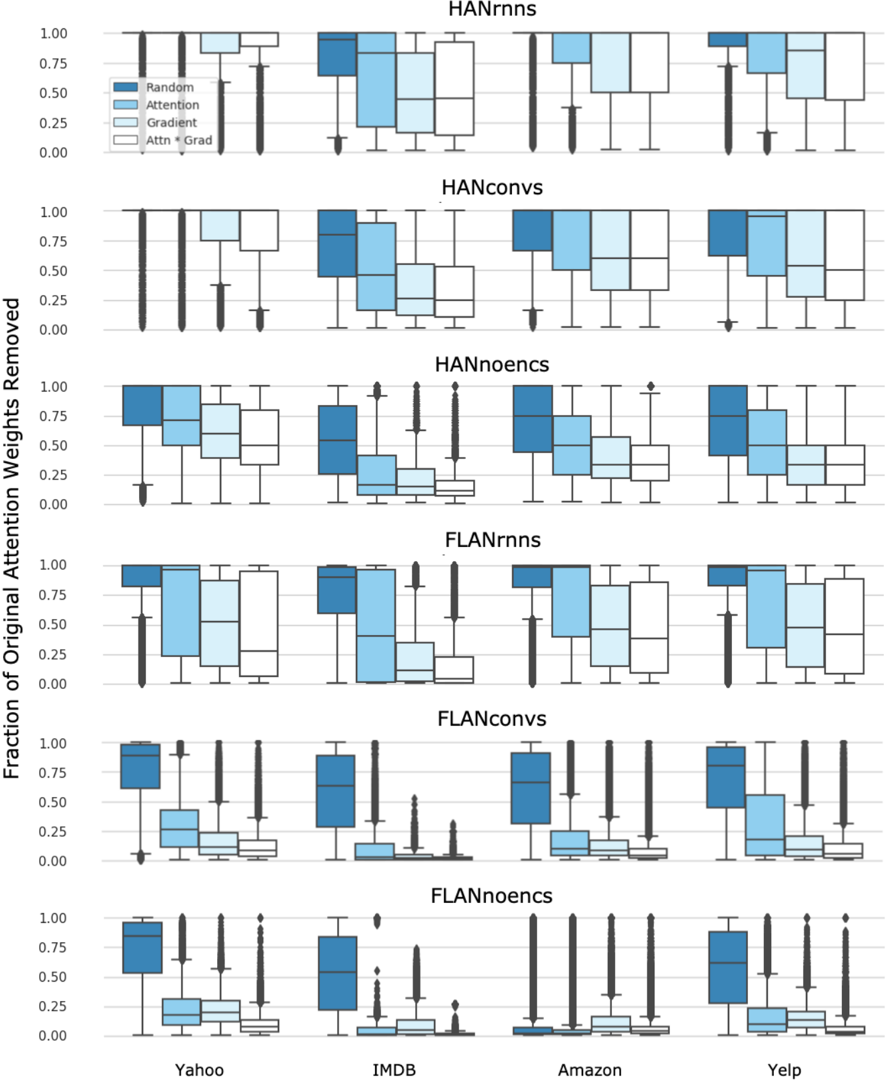
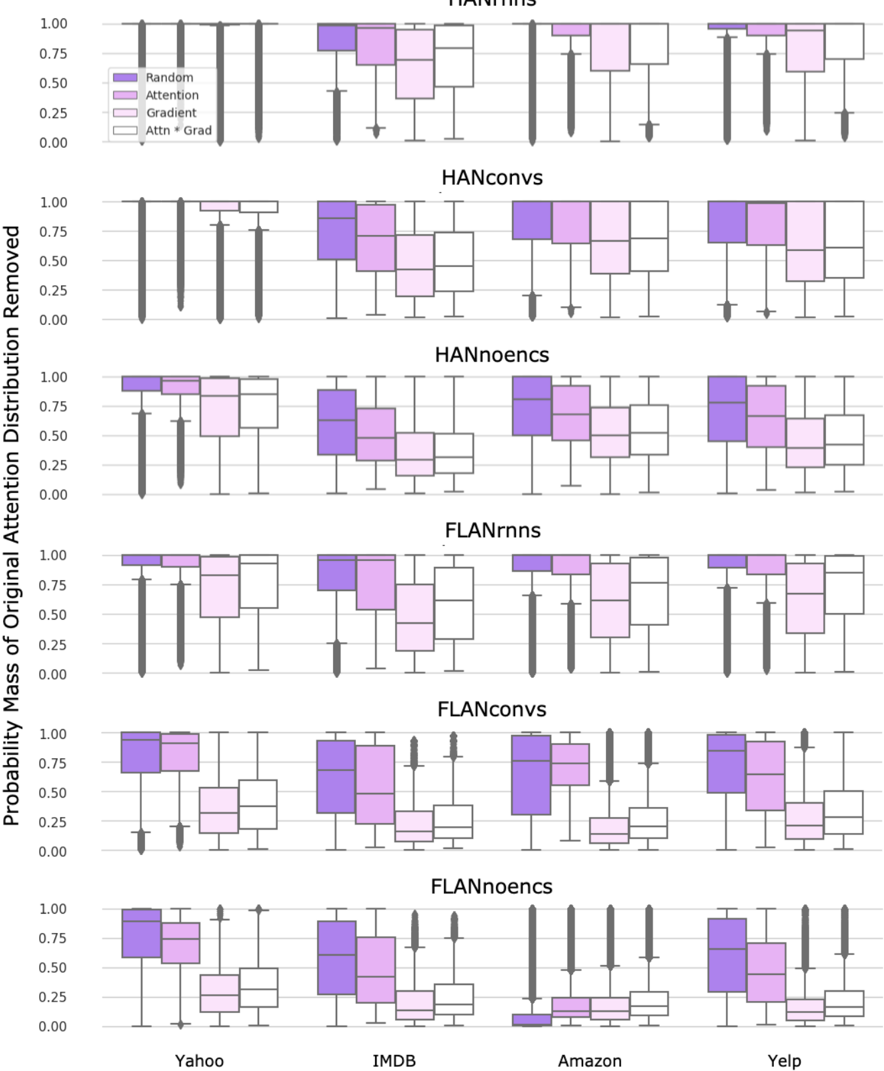
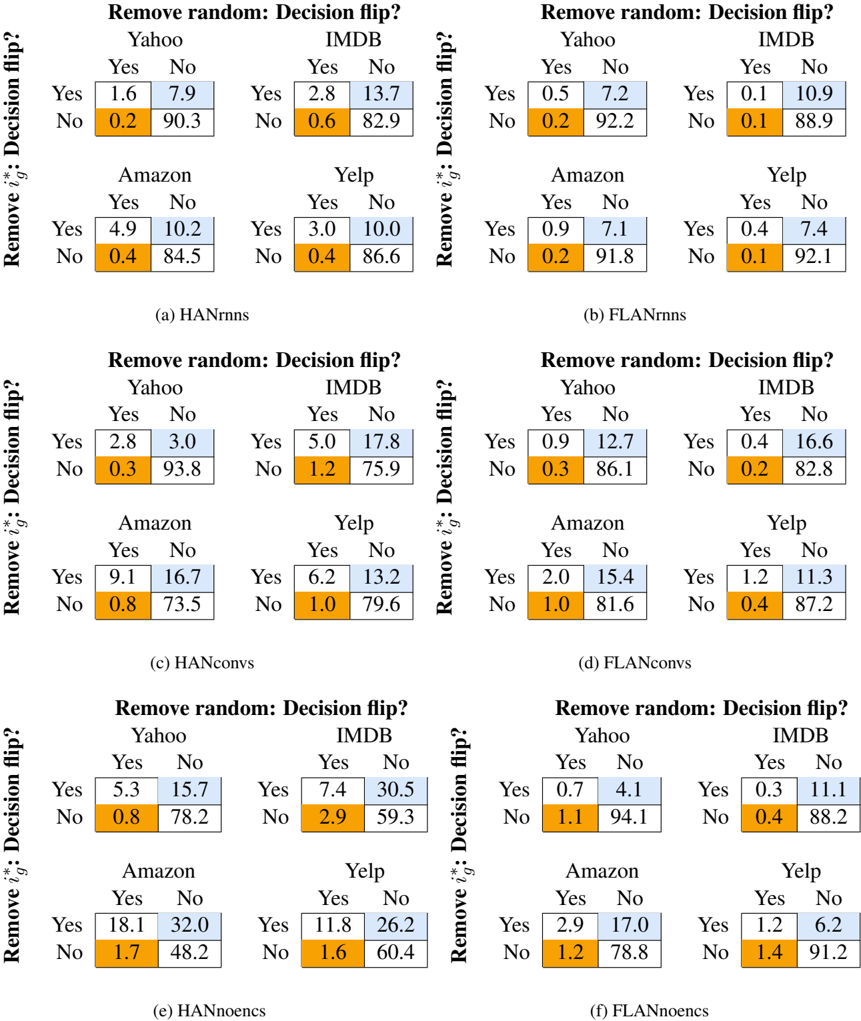
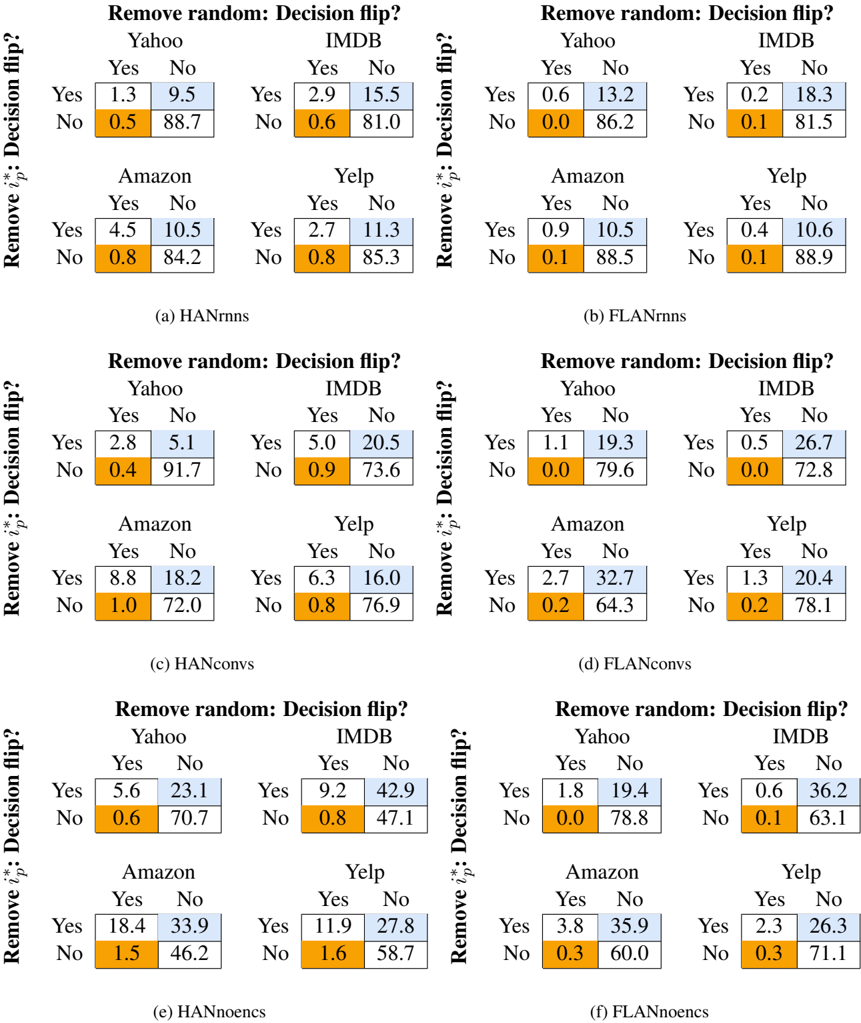
Attention mechanisms have recently boosted performance on a range of NLP tasks.Because attention layers explicitly weight input components' representations, it is also often assumed that attention can be used to identify information that models found important (e.g., specific contextualized word tokens).We test whether that assumption holds by manipulating attention weights in already-trained text classification models and analyzing the resulting differences in their predictions.While we observe some ways in which higher attention weights correlate with greater impact on model predictions, we also find many ways in which this does not hold, i.e., where gradient-based rankings of attention weights better predict their effects than their magnitudes.We conclude that while attention noisily predicts input components' overall importance to a model, it is by no means a fail-safe indicator.1
Overview
The claims and statistics of this paper haven’t been checked yet.
Free: it reads the open-access text and checks the first 5 claims that cite a source we can check. Create a free account to check every claim.
Integrity signals
Registry
Cites
Statistics
Figures
Verification
Claims the paper makes
The claims and statistics of this paper haven’t been checked yet.
Free: it reads the open-access text and checks the first 5 claims that cite a source we can check. Create a free account to check every claim.
Claims other papers make about this one
Each is checked against this paper’s own text: does it say what the citing paper says it does?
The source backs part of the claim, not all of it — or backs it for a different population, condition or comparison.
In the citing paper
“Besides using Incremental Deletion/Addition to evaluate correctness and output-completeness, compactness can be evaluated by counting how many features of the explanation need to be removed, perturbed or added to change the decision of the predictive model [7,34,70,123,165,221].”
From From Anecdotal Evidence to Quantitative Evaluation Methods: A Systematic Review on Evaluating Explainable AI (2023) · cites this paper as [221]
Experimental — accuracy not yet measuredIn the citing paper
“In [85], the attention mechanism weights were seen as at best noisy predictors of the relative importance of specific regions of the input sequence, and they should not be treated as justifications for the model’s decisions.”
From Survey of Explainable AI Techniques in Healthcare (2023) · cites this paper as [85]
In the citing paper
“Although this is typically the case for softmax scores [221], there might be cases where this assumption is invalid.”
From From Anecdotal Evidence to Quantitative Evaluation Methods: A Systematic Review on Evaluating Explainable AI (2023) · cites this paper as [221]
Self-check
Percentages, sums and reported differences re-computed from the paper’s own numbers.
The self-check needs the paper’s full text.
Citations
Cites
Vaswani, A., Shazeer, N., Parmar, N., Uszkoreit, J., Jones, L., Gomez, A. N., Kaiser, L., & Polosukhin, I. (2017) · arXiv · doi:10.48550/arxiv.1706.03762 · Cited by 120,404
Adam: A Method for Stochastic Optimization
Kingma, D. P., & Ba, J. (2014) · arXiv · doi:10.48550/arxiv.1412.6980 · Cited by 98,946 · cited 1×
“Unless otherwise noted, to train each model, we used Adam (Kingma and Ba, 2014) with gradient clipping of 10.0 and a patience value of 5, so we would stop training a model if five epochs elapsed without any improvement in validation set accuracy.”
MethodInfluential"Why Should I Trust You?": Explaining the Predictions of Any Classifier
Ribeiro, M. T., Singh, S., & Guestrin, C. (2016) · Proceedings of the 22nd ACM SIGKDD International Conference on Knowledge Discovery and Data Mining · doi:10.1145/2939672.2939778 · Cited by 17,555 · cited 4×
“Note, however, that we still do not take either as a gold-standard indicator of importance to the model, as with the gradient in Ross et al. (2017) and Melis and Jaakkola (2018), but merely as an alternative ordering method.”
BackgroundMethodInfluentialNeural Machine Translation by Jointly Learning to Align and Translate
Bahdanau, D., Cho, K., & Bengio, Y. (2014) · arXiv · doi:10.48550/arxiv.1409.0473 · Cited by 16,213 · cited 2×
“Specifically, we use the additive formulation originally defined in Bahdanau et al. (2015).”
BackgroundMethodConvolutional Neural Networks for Sentence Classification
Kim, Y. (2014) · Proceedings of the 2014 Conference on Empirical Methods in Natural Language Processing (EMNLP) · doi:10.3115/v1/d14-1181 · Cited by 14,831 · cited 2×
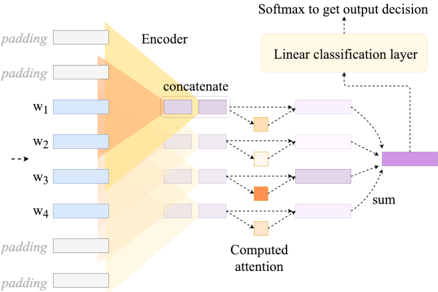
“Aside from biRNNs, we also experiment with models that instead contextualize word vectors by convolutions on only a token’s close neighbors, inspired by Kim (2014). See Figure 2 for a diagram of the FLAN architecture using a convolutional encoder.”
MethodEffective Approaches to Attention-based Neural Machine Translation
Luong, T., Pham, H., & Manning, C. D. (2015) · Proceedings of the 2015 Conference on Empirical Methods in Natural Language Processing · doi:10.18653/v1/d15-1166 · Cited by 8,382 · cited 1×
“For many different problems — to name a few, machine translation (Luong et al., 2015), syntactic parsing (Vinyals et al., 2015), reading comprehension (Hermann et al., 2015), and language modeling (Liu and Lapata, 2018) — incorporating attention mechanisms into models has proven beneficial for…”
BackgroundLipton, Z. C. (2018) · Queue · doi:10.1145/3236386.3241340 · Cited by 5,427 · cited 1×
“Lipton (2016) describes a model as “transparent” if “a person can contemplate the entire model at once.””
BackgroundHierarchical Attention Networks for Document Classification
Yang, Z., Yang, D., Dyer, C., He, X., Smola, A., & Hovy, E. (2016) · Proceedings of the 2016 Conference of the North American Chapter of the Association for Computational Linguistics: Human Language Technologies · doi:10.18653/v1/n16-1174 · Cited by 4,712 · cited 6×
“Our model architectures are inspired by the hierarchical attention network (HAN; Yang et al., 2016), a text classification model with two layers of attention, first to the word tokens in each sentence and then to the resulting sentence representations.”
BackgroundMethodResultInfluentialCharacter-level Convolutional Networks for Text Classification
Zhang, X., Zhao, J., & LeCun, Y. (2015) · arXiv (Cornell University) · doi:10.48550/arxiv.1509.01626 · Cited by 3,205 · cited 3×
“We investigate four model architectures on a topic classification dataset (Yahoo Answers; Zhang et al., 2015) and on three review ratings datasets: IMDB (Diao et al.”
MethodTeaching Machines to Read and Comprehend
Hermann, K. M., Kočiský, T., Grefenstette, E., Espeholt, L., Kay, W., Suleyman, M., & Blunsom, P. (2015) · arXiv (Cornell University) · doi:10.48550/arxiv.1506.03340 · Cited by 2,521 · cited 1×
“For many different problems—to name a few, machine translation (Luong et al., 2015), syntactic parsing (Vinyals et al., 2015), reading comprehension (Hermann et al., 2015), and language modeling (Liu and Lapata, 2018)—incorporating attention mechanisms into models has proven benefi-cial for…”
Background
Research works printed but not linked: 4
- Philipp Koehn and Rebecca Knowles. 2017. Six chal- lenges for neural machine translation. In Pro- ceedings of the First Workshop on Neural Machine Translation.
- Zachary C Lipton. 2016. The mythos of model inter- pretability. arXiv preprint arXiv:1606.03490. · arXiv
- Yang Liu and Mirella Lapata. 2018. Learning struc- tured text representations. Transactions of the Asso- ciation of Computational Linguistics, 6:63-75.
- Oriol Vinyals, Łukasz Kaiser, Terry Koo, Slav Petrov, Ilya Sutskever, and Geoffrey Hinton. 2015. Gram- mar as a foreign language. In Advances in Neural Information Processing Systems.
Cited by
Han (2023) · doi:10.1109/tpami.2022.3152247 · Cited by 4,682
“Transformer is originally applied on natural language processing (NLP) tasks and brings in significant improvement [123, 29, 10].”
BackgroundInfluentialA review on the attention mechanism of deep learning
Niu, Z., Zhong, G., & Yu, H. (2021) · Neurocomputing · doi:10.1016/j.neucom.2021.03.091 · Cited by 3,379
Pre-trained models for natural language processing: A survey
Qiu, X., Sun, T., Xu, Y., Shao, Y., Dai, N., & Huang, X. (2020) · Science China Technological Sciences · doi:10.1007/s11431-020-1647-3 · Cited by 1,591
“However, much work on model analysis depends on the attention mechanism, and the effectiveness of attention for interpretability is still controversial [71, 155].”
BackgroundA primer in BERTology: What we know about how BERT works
Rogers, A., Kovaleva, O., & Rumshisky, A. (2020) · Transactions of the Association for Computational Linguistics · doi:10.1162/tacl_a_00349 · Cited by 1,552
“However, there is ongoing debate on the merits of attention as a tool for interpreting deep learning models (Jain and Wallace, 2019; Serrano and Smith, 2019; Wiegreffe and Pinter, 2019; Brunner et al., 2020).”
MethodAn Attentive Survey of Attention Models
Chaudhari, S., Mithal, V., Polatkan, G., & Ramanath, R. (2021) · ACM Transactions on Intelligent Systems and Technology · doi:10.1145/3465055 · Cited by 689
Explainability for Large Language Models: A Survey
Zhao, H., Chen, H., Yang, F., Liu, N., Deng, H., Cai, H., Wang, S., Yin, D., & Du, M. (2024) · ACM Transactions on Intelligent Systems and Technology · doi:10.1145/3639372 · Cited by 681
“The basic idea behind classifier-based probing is to train a shallow classifier on top of the pre-trained or fine-tuned language models such as BERT [Devlin et al. 2019] and T5 [Raffel et al. 2020].”
Attention in Natural Language Processing
Galassi, A., Lippi, M., & Torroni, P. (2021) · IEEE Transactions on Neural Networks and Learning Systems · doi:10.1109/tnnls.2020.3019893 · Cited by 635
“Some recent studies [10], [11] suggest that attention cannot be considered a reliable mean to explain or even interpret neural”
BackgroundSurvey of Explainable AI Techniques in Healthcare
Chaddad, A., Peng, J., Xu, J., & Bouridane, A. (2023) · Sensors · doi:10.3390/s23020634 · Cited by 591
“In [85], the attention mechanism weights were seen as at best noisy predictors”
BackgroundHate speech detection: Challenges and solutions
MacAvaney, S., Yao, H.-R., Yang, E., Russell, K., Goharian, N., & Frieder, O. (2019) · PLOS ONE · doi:10.1371/journal.pone.0221152 · Cited by 566
ERASER: A Benchmark to Evaluate Rationalized NLP Models
DeYoung, J., Jain, S., Rajani, N. F., Lehman, E., Xiong, C., Socher, R., & Wallace, B. C. (2020) · Proceedings of the 58th Annual Meeting of the Association for Computational Linguistics · doi:10.18653/v1/2020.acl-main.408 · Cited by 561
Nauta, M., Trienes, J., Pathak, S., Nguyen, E., Peters, M., Schmitt, Y., Schlötterer, J., van Keulen, M., & Seifert, C. (2023) · ACM Computing Surveys · doi:10.1145/3583558 · Cited by 590
TransFG: A Transformer Architecture for Fine-Grained Recognition
He, J., Chen, J.-N., Liu, S., Kortylewski, A., Yang, C., Bai, Y., & Wang, C. (2022) · Proceedings of the AAAI Conference on Artificial Intelligence · doi:10.1609/aaai.v36i1.19967 · Cited by 551
Interpretable deep learning: interpretation, interpretability, trustworthiness, and beyond
Li, X., Xiong, H., Li, X., Wu, X., Zhang, X., Liu, J., Bian, J., & Dou, D. (2022) · Knowledge and Information Systems · doi:10.1007/s10115-022-01756-8 · Cited by 497
“Attention and gating are frequently used in NLP models, and there have been plenty of works aiming to understand the model through these weights, such as Rollout [2], Seq2Seq-Vis [157] and others [61, 158], or to investigate the reliability of using them as explanations [82, 148, 177].”
BackgroundA Survey on Automated Fact-Checking
Guo, Z., Schlichtkrull, M., & Vlachos, A. (2022) · Transactions of the Association for Computational Linguistics · doi:10.1162/tacl_a_00454 · Cited by 500
Explainable Deep Learning: A Field Guide for the Uninitiated
Ras, G., Xie, N., Van Gerven, M., & Doran, D. (2022) · Journal of Artificial Intelligence Research · doi:10.1613/jair.1.13200 · Cited by 446
Obtaining genetics insights from deep learning via explainable artificial intelligence
Novakovsky, G., Dexter, N., Libbrecht, M. W., Wasserman, W. W., & Mostafavi, S. (2023) · Nature Reviews Genetics · doi:10.1038/s41576-022-00532-2 · Cited by 386
“However, other studies caution against direct interpretation of attention weights 44 .”
BERTology Meets Biology: Interpreting Attention in Protein Language Models
Vig, J., Madani, A., Varshney, L. R., Xiong, C., Socher, R., & Rajani, N. F. (2020) · doi:10.1101/2020.06.26.174417 · Cited by 338
“Depending on the task and model architecture, attention may have more or less explanatory power for model predictions [35, 51, 57, 71, 79].”
BackgroundDeep Learning for Sensor-based Human Activity Recognition: Overview, Challenges and Opportunities
Chen, K., Zhang, D., Yao, L., Guo, B., Yu, Z., & Liu, Y. (2020) · arXiv · doi:10.48550/arxiv.2001.07416 · Cited by 314
“deep attention models is to weigh input components, components with higher weights are assumed to be more tightly related to the recognition task and show greater influence over the models’ decisions [133]. Some works employed attention mechanism to interpret deep model behaviors [178, 181, 183]. Back to human activit…”
BackgroundDeep Learning Methods for Vessel Trajectory Prediction Based on Recurrent Neural Networks
Capobianco, S., Millefiori, L. M., Forti, N., Braca, P., & Willett, P. (2021) · IEEE Transactions on Aerospace and Electronic Systems · doi:10.1109/taes.2021.3096873 · Cited by 307
“Inspired by prior work on attention interpretability [59]– [61], we can visualize the attention weights computed both by the unlabeled and labeled recurrent models on the same set of input/target sequences and attempt an interpretation of the importance the network gives to specific trajectory features.”
MethodAttention, please! A survey of neural attention models in deep learning
de Santana Correia, A., & Colombini, E. L. (2022) · Artificial Intelligence Review · doi:10.1007/s10462-022-10148-x · Cited by 298
“In Serrano and Smith (2019) the results showed that higher attentional weights generally contribute with a more significant impact to the model’s decision.”
BackgroundChou, Y.-L., Moreira, C., Bruza, P., Ouyang, C., & Jorge, J. (2022) · Information Fusion · doi:10.1016/j.inffus.2021.11.003 · Cited by 302
The role of machine learning in clinical research: transforming the future of evidence generation
Weissler, E. H., Naumann, T., Andersson, T., Ranganath, R., Elemento, O., Luo, Y., Freitag, D. F., Benoit, J., Hughes, M. C., Khan, F., et al. (2021) · Trials · doi:10.1186/s13063-021-05489-x · Cited by 280
“A large amount of research has been devoted to techniques to accomplish this, including attention scores and saliency maps, but concerns about the performance and suitability of these techniques persist [76 – 79].”
BackgroundFrom Zero to Hero: On the Limitations of Zero-Shot Language Transfer with Multilingual Transformers
Lauscher, A., Ravishankar, V., Vulić, I., & Glavaš, G. (2020) · Proceedings of the 2020 Conference on Empirical Methods in Natural Language Processing (EMNLP) · doi:10.18653/v1/2020.emnlp-main.363 · Cited by 236
MERLOT: Multimodal Neural Script Knowledge Models
Zellers, R., Lu, X., Hessel, J., Yu, Y., Park, J. S., Cao, J., Farhadi, A., & Choi, Y. (2021) · arXiv (Cornell University) · doi:10.48550/arxiv.2106.02636 · Cited by 53
“While we do not claim that these attention weights provide a full explanation of the model behavior [51, 98], they do play some role in the model’s decision [116], and we find that our masking strategy improves performance on downstream tasks by around 1% (Table 4), versus a SpanBERT baseline [54].”
BackgroundPost-hoc Interpretability for Neural NLP: A Survey
Madsen, A., Reddy, S., & Chandar, S. (2023) · ACM Computing Surveys · doi:10.1145/3546577 · Cited by 207
“Verifying this is often non-trivial, as has repeatedly been shown with Attention [9], where multiple papers have found contradicting conclusions regarding interpretability [54, 106, 122, 130].”
BackgroundResultSelf-Attention Attribution: Interpreting Information Interactions Inside Transformer
Hao, Y., Dong, L., Wei, F., & Xu, K. (2021) · Proceedings of the AAAI Conference on Artificial Intelligence · doi:10.1609/aaai.v35i14.17533 · Cited by 189
Learning to Deceive with Attention-Based Explanations
Pruthi, D., Gupta, M., Dhingra, B., Neubig, G., & Lipton, Z. C. (2020) · Proceedings of the 58th Annual Meeting of the Association for Computational Linguistics · doi:10.18653/v1/2020.acl-main.432 · Cited by 203
Explanation in AI and law: Past, present and future
Atkinson, K., Bench-Capon, T., & Bollegala, D. (2020) · Artificial Intelligence · doi:10.1016/j.artint.2020.103387 · Cited by 178
“However, it has been shown that attention alone is inadequate as a form of explanation especially when the number of layers in a deep neural network increases and multiple nonlinear activation functions are used after an attention layer [116, 134].”
BackgroundSelva, J., Johansen, A. S., Escalera, S., Nasrollahi, K., Moeslund, T. B., & Clapés, A. (2023) · IEEE Transactions on Pattern Analysis and Machine Intelligence · doi:10.1109/tpami.2023.3243465 · Cited by 169
“Restrictions apply. explanations on what the model deems relevant [199], [200], [201].”
BackgroundTransformers in single-cell omics: a review and new perspectives
Szałata, A., Hrovatin, K., Becker, S., Tejada-Lapuerta, A., Cui, H., Wang, B., & Theis, F. J. (2024) · Nature Methods · doi:10.1038/s41592-024-02353-z · Cited by 171
“Attention scores and feature importance have been shown to not always correlate 34 and are hence not necessarily reliable tools for identifying which input elements are responsible for an output.”
Fruit ripeness classification: A survey
Rizzo, M., Marcuzzo, M., Zangari, A., Gasparetto, A., & Albarelli, A. (2023) · Artificial Intelligence in Agriculture · doi:10.1016/j.aiia.2023.02.004 · Cited by 167
A Complete Process of Text Classification System Using State-of-the-Art NLP Models
Dogra, V., Verma, S., Kavita, Chatterjee, P., Shafi, J., Choi, J., & Ijaz, M. F. (2022) · Computational Intelligence and Neuroscience · doi:10.1155/2022/1883698 · Cited by 164
“…classification, the authors note several cases in which higher attention weights correlate with a greater impact on model predictions, they also notice several cases this does not hold, that is, where gradient-based attention weight rankings predict their effects better than their magnitudes [151].”
BackgroundExplainable Generative AI (GenXAI): a survey, conceptualization, and research agenda
Schneider, J. (2024) · Artificial Intelligence Review · doi:10.1007/s10462-024-10916-x · Cited by 156
Perturbed Masking: Parameter-free Probing for Analyzing and Interpreting BERT
Wu, Z., Chen, Y., Kao, B., & Liu, Q. (2020) · Proceedings of the 58th Annual Meeting of the Association for Computational Linguistics · doi:10.18653/v1/2020.acl-main.383 · Cited by 152
Bastings, J., & Filippova, K. (2020) · Proceedings of the Third BlackboxNLP Workshop on Analyzing and Interpreting Neural Networks for NLP · doi:10.18653/v1/2020.blackboxnlp-1.14 · Cited by 150
Attention is Not Only a Weight: Analyzing Transformers with Vector Norms
Kobayashi, G., Kuribayashi, T., Yokoi, S., & Inui, K. (2020) · Conference on Empirical Methods in Natural Language Processing (EMNLP) · doi:10.18653/v1/2020.emnlp-main.574 · Cited by 374
“the models (Jain and Wallace, 2019; Serrano and Smith, 2019; Wiegreffe and Pinter, 2019; Pruthi et al., 2020; Vashishth et al., 2019).”
BackgroundAttention Mechanisms and Their Applications to Complex Systems
Hernández, A., & Amigó, J. M. (2021) · Entropy · doi:10.3390/e23030283 · Cited by 138
“In [44], interpretability is further studied in detail, concluding that attention weights partially reflect the impact of the input elements on model prediction.”
BackgroundAn emotion and cognitive based analysis of mental health disorders from social media data
Uban, A. S., Chulvi, B., & Rosso, P. (2021) · Future Generation Computer Systems · doi:10.1016/j.future.2021.05.032 · Cited by 187
Multi-document Summarization via Deep Learning Techniques: A Survey
Ma, C., Zhang, W. E., Guo, M., Wang, H., & Sheng, Q. Z. (2022) · ACM Computing Surveys · doi:10.1145/3529754 · Cited by 227
“Recently, a large amount of works [109, 148] of explainable models are proposed to ease the non-interpretable concern of deep neural networks, within which model attention [114, 157] plays an especially important role in model interpretation.”
BackgroundWhen BERT Plays the Lottery, All Tickets Are Winning
Prasanna, S., Rogers, A., & Rumshisky, A. (2020) · Proceedings of the 2020 Conference on Empirical Methods in Natural Language Processing (EMNLP) · doi:10.18653/v1/2020.emnlp-main.259 · Cited by 131
A comprehensive review on financial explainable AI
Yeo, W. J., van der Heever, W., Mao, R., Cambria, E., Satapathy, R., & Mengaldo, G. (2025) · Artificial Intelligence Review · doi:10.1007/s10462-024-11077-7 · Cited by 279
“The inherent transparency is dependent on the achievable explanation goals and the explanation receiver, while there is much doubt surrounding truly inherently transparent models [108].”
Taylor, J. E. T., & Taylor, G. W. (2021) · Psychonomic Bulletin & Review · doi:10.3758/s13423-020-01825-5 · Cited by 130
“…the attentional bottleneck—are often uncorrelated with gradient-based feature importance, meaning those areas of input do not drive the model’s decision; and different attention patterns can lead to the same decision, questioning their diagnosticity (Jain & Wallace, 2019; Serrano & Smith, 2019).”
BackgroundTimeSHAP: Explaining Recurrent Models through Sequence Perturbations
Bento, J., Saleiro, P., Cruz, A. F., Figueiredo, M. A. T., & Bizarro, P. (2021) · ACM SIGKDD Conference on Knowledge Discovery and Data Mining (KDD) · doi:10.1145/3447548.3467166 · Cited by 249
“However, whether attention can in fact explain a model’s behavior is debatable and a known source of controversy in the ML community [31, 32, 33].”
BackgroundTowards Faithful Model Explanation in NLP: A Survey
Lyu, Q., Apidianaki, M., & Callison-Burch, C. (2024) · Computational Linguistics · doi:10.1162/coli_a_00511 · Cited by 120
“This type of evaluation has been widely adopted in both vision (Bach et al. 2015; Shrikumar, Greenside, and Kundaje 2017; Chen et al. 2018) and language (Arras et al. 2016; Chen et al. 2018; Serrano and Smith 2019; Jain and Wallace 2019; DeYoung et al. 2020; Atanasova et al. 2020).”
MethodAttention Interpretability Across NLP Tasks
Vashishth, S., Upadhyay, S., Tomar, G. S., & Faruqui, M. (2019) · arXiv (Cornell University) · doi:10.48550/arxiv.1909.11218 · Cited by 63
“This justifies the observation that for the single sequence tasks examined in Jain & Wallace (2019); Serrano & Smith (2019), attention weights do not correlate with feature importance measures and permuting them does not change the prediction of the model.”
BackgroundMethodResultInfluentialRethinking Self-Attention: Towards Interpretability in Neural Parsing
Mrini, K., Dernoncourt, F., Tran, Q., Bui, T., Chang, W. H., & Nakashole, N. (2020) · Findings of the Association for Computational Linguistics: EMNLP (Findings of EMNLP) · doi:10.18653/v1/2020.findings-emnlp.65 · Cited by 180
“While attention mechanisms can provide explanations for model predictions, Serrano and Smith (2019) challenge that assumption and find that attention weights only noisily predict overall importance with regard to the model.”
BackgroundToward Transparent AI: A Survey on Interpreting the Inner Structures of Deep Neural Networks
Räuker, T., Ho, A., Casper, S., & Hadfield-Menell, D. (2023) · 2023 IEEE Conference on Secure and Trustworthy Machine Learning (SaTML) · doi:10.1109/satml54575.2023.00039 · Cited by 122
“may not always suggest faithful explanations, and an overreliance on them for interpretation can be hazardous [138], [261], [300].”
BackgroundWhat the DAAM: Interpreting Stable Diffusion Using Cross Attention
Tang, R., Liu, L., Pandey, A., Jiang, Z., Yang, G., Kumar, K., Stenetorp, P., Lin, J., & Ture, F. (2023) · Proceedings of the 61st Annual Meeting of the Association for Computational Linguistics (Volume 1: Long Papers) · doi:10.18653/v1/2023.acl-long.310 · Cited by 118
Measuring Association Between Labels and Free-Text Rationales
Wiegreffe, S., Marasović, A., & Smith, N. A. (2021) · Proceedings of the 2021 Conference on Empirical Methods in Natural Language Processing · doi:10.18653/v1/2021.emnlp-main.804 · Cited by 119
“Analysis of NLP Models Structural tests for analyzing models’ internals include probing (Tenney et al., 2019) and attention analysis (Jain and Wal-lace, 2019; Serrano and Smith, 2019; Wiegreffe and Pinter, 2019; Tutek and Snajder, 2020).”
MethodSelf-citationChen, V., Yang, M., Cui, W., Kim, J. S., Talwalkar, A., & Ma, J. (2024) · Nature Methods · doi:10.1038/s41592-024-02359-7 · Cited by 115
Attention Flows: Analyzing and Comparing Attention Mechanisms in Language Models
DeRose, J. F., Wang, J., & Berger, M. (2021) · IEEE Transactions on Visualization and Computer Graphics · doi:10.1109/tvcg.2020.3028976 · Cited by 109
“We note that self-attention is not the only way to quantify classification influence, as gradient-based attribution schemes are also commonly employed [45].”
MethodInterpreting Graph Neural Networks for NLP With Differentiable Edge MaskingPreprint
Schlichtkrull, M., Cao, N. D., & Titov, I. (2020) · arXiv (Cornell University) · doi:10.48550/arxiv.2010.00577 · Cited by 312
“Another popular approach is to treat attention or gate scores as a measure of importance (Serrano & Smith, 2019).”
BackgroundMethodLearning Transactional Behavioral Representations for Credit Card Fraud Detection
Xie, Y., Liu, G., Yan, C., Jiang, C., Zhou, M., & Li, M. (2022) · IEEE Transactions on Neural Networks and Learning Systems · doi:10.1109/tnnls.2022.3208967 · Cited by 135
“Overall, since the researchers give different opinions on the interpretability of an attention module [69], [70], [71], and our purpose is to learn effective transactional behavioral representations to better detect frauds, we mainly focus on the following aspects.”
BackgroundMeasuring Association Between Labels and Free-Text Rationales
Wiegreffe, S., Marasović, A., & Smith, N. A. (2020) · arXiv · doi:10.48550/arxiv.2010.12762 · Cited by 106
Self-citationLanguage Model Behavior: A Comprehensive Survey
Chang, T. A., & Bergen, B. K. (2024) · Computational Linguistics · doi:10.1162/coli_a_00492 · Cited by 105
WT5?! Training Text-to-Text Models to Explain their Predictions
Narang, S., Raffel, C., Lee, K., Roberts, A., Fiedel, N., & Malkan, K. (2020) · arXiv (Cornell University) · doi:10.48550/arxiv.2004.14546 · Cited by 99
“…“for free” by examining the weight assigned by the neural network to different regions in the input (Graves, 2013; Raffel et al., 2017; Huang et al., 2018), but this introspection method has been shown to be unreliable (Jain & Wallace, 2019; Serrano & Smith, 2019; Pruthi et al., 2019).”
BackgroundMethodIs Attention Better Than Matrix Decomposition?
Geng, Z., Guo, M.-H., Chen, H., Li, X., Wei, K., & Lin, Z. (2021) · arXiv (Cornell University) · doi:10.48550/arxiv.2109.04553 · Cited by 47
“Some work tries to interpret the attention mechanism by visualizing or attacking attention weights (Serrano & Smith, 2019; Jain & Wallace, 2019; Wiegreffe & Pinter, 2019), while others formulate attention into non-local operation (Wang et al., 2018) or diffusion models (Tao et al., 2018; Lu et al.,…”
BackgroundTransformers for Tabular Data Representation: A Survey of Models and Applications
Badaro, G., Saeed, M., & Papotti, P. (2023) · Transactions of the Association for Computational Linguistics · doi:10.1162/tacl_a_00544 · Cited by 96
“One direction is to use the attention mechanism to derive interpretations (Serrano and Smith, 2019; Dong et al., 2021).”
BackgroundTransformers and genome language models
Consens, M. E., Dufault, C., Wainberg, M., Forster, D., Karimzadeh, M., Goodarzi, H., Theis, F. J., Moses, A. M., & Wang, B. (2025) · Nature Machine Intelligence · doi:10.1038/s42256-025-01007-9 · Cited by 195
On Identifiability in TransformersPreprint
Brunner, G., Liu, Y., Pascual, D., Richter, O., Ciaramita, M., & Wattenhofer, R. P. (2019) · arXiv (Cornell University) · doi:10.48550/arxiv.1908.04211 · Cited by 170
“Serrano & Smith (2019) find that zero-ing out attention weights based on gradient attribution changes the output of a multi-class prediction task more quickly than zero-ing out based on attention weights, thus showing that attention is not the best predictor of learned feature importance.”
BackgroundTowards Transparent and Explainable Attention Models
Mohankumar, A. K., Nema, P., Narasimhan, S., Khapra, M. M., Srinivasan, B. V., & Ravindran, B. (2020) · Proceedings of the 58th Annual Meeting of the Association for Computational Linguistics · doi:10.18653/v1/2020.acl-main.387 · Cited by 91
An Information Bottleneck Approach for Controlling Conciseness in Rationale Extraction
Paranjape, B., Joshi, M., Thickstun, J., Hajishirzi, H., & Zettlemoyer, L. (2020) · Proceedings of the 2020 Conference on Empirical Methods in Natural Language Processing (EMNLP) · doi:10.18653/v1/2020.emnlp-main.153 · Cited by 86
Making Sense of Machine Learning: A Review of Interpretation Techniques and Their Applications
Tursunalieva, A., Alexander, D. L., Dunne, R. A., Li, J., Riera, L., & Zhao, Y. (2024) · Applied Sciences · doi:10.3390/app14020496 · Cited by 119
Generating Hierarchical Explanations on Text Classification via Feature Interaction Detection
Chen, H., Zheng, G., & Ji, Y. (2020) · Proceedings of the conference - Association for Computational Linguistics. Meeting · doi:10.18653/v1/2020.acl-main.494 · Cited by 143
A Survey of Explainable Artificial Intelligence (XAI) in Financial Time Series Forecasting
Arsenault, P.-D., Wang, S., & Patenaude, J.-M. (2025) · ACM Computing Surveys · doi:10.1145/3729531 · Cited by 160
“The authors of this paper show that the attention weights contain some useful information about the feature importance, but the information may not be enough to correctly rank the features.”
Explainable Predictive Process Monitoring
Galanti, R., Coma-Puig, B., de Leoni, M., Carmona, J., & Navarin, N. (2020) · International Conference on Process Mining (ICPM) · doi:10.1109/icpm49681.2020.00012 · Cited by 123
“s are always correlated to feature importance. Jain et al. [18] find it “at best, questionable especially when a complex encoder is used, which may entangle inputs in the hidden space”, Serrano et al. [19] state that “attention weights often fail to identify the sets of representations most important to the models final…”
BackgroundDeep learning of contagion dynamics on complex networks
Murphy, C., Laurence, E., & Allard, A. (2021) · Nature Communications · doi:10.1038/s41467-021-24732-2 · Cited by 111
“Second, we argue in the Material and Methods section of the main paper that the parameters of our attention mechanism are partially interpretable [15, 16].”
Explainable AI: current status and future directionsPreprint
Gohel, P., Singh, P., & Mohanty, M. (2021) · arXiv (Cornell University) · doi:10.48550/arxiv.2107.07045 · Cited by 248
“Hence Explainable AI makes more sense for NLP-based applications of AI and Deep Learning [21] [22].”
BackgroundIs Attention Explanation? An Introduction to the Debate
Bibal, A., Cardon, R., Alfter, D., Wilkens, R., Wang, X., François, T., & Watrin, P. (2022) · Proceedings of the conference - Association for Computational Linguistics. Meeting · doi:10.18653/v1/2022.acl-long.269 · Cited by 225
“They add the information that mixed results have been obtained in the debate (Serrano and Smith, 2019; Baan et al., 2019).”
BackgroundHuman-Level Interpretable Learning for Aspect-Based Sentiment Analysis
Yadav, R. K., Jiao, L., Granmo, O., & Goodwin, M. (2021) · Proceedings of the AAAI Conference on Artificial Intelligence · doi:10.1609/aaai.v35i16.17671 · Cited by 110
Collaborative Graph Learning with Auxiliary Text for Temporal Event Prediction in Healthcare
Lu, C. H., Reddy, C. K. A., Chakraborty, P., Kleinberg, S., & Ning, Y. (2021) · International Joint Conference on Artificial Intelligence · doi:10.24963/ijcai.2021/486 · Cited by 117
Explainability in music recommender systems
Afchar, D., Melchiorre, A. B., Schedl, M., Hennequin, R., Epure, E. V., & Moussallam, M. (2022) · AI Magazine · doi:10.1002/aaai.12056 · Cited by 133
“Attention-based mechanisms are also a promising way of providing recommendations based on the selection of a reasonably small and contextual subset of neighbors (Kang and McAuley 2018), though claims on the interpretability of attention are disputed (Serrano and Smith 2019).”
BackgroundInterpretability and Explainability: A Machine Learning Zoo Mini-tour
Marcinkevičs, R., & Vogt, J. E. (2020) · arXiv (Cornell University) · doi:10.3929/ethz-b-000454597 · Cited by 78
Explaining Explanations: Axiomatic Feature Interactions for Deep Networks
Janizek, J. D., Sturmfels, P., & Lee, S. (2020) · arXiv (Cornell University) · doi:10.48550/arxiv.2002.04138 · Cited by 37
“However, more recent work suggests that examining attention weights may not be a reliable way to interpret models with attention layers (Serrano and Smith, 2019; Jain and Wallace, 2019; Brunner et al., 2019).”
BackgroundAn, J., Guo, L., Liu, W., Fu, Z., Ren, P., Liu, X., & Li, T. (2021) · Neural Networks · doi:10.1016/j.neunet.2021.05.035 · Cited by 82
Aligning Faithful Interpretations with their Social Attribution
Jacovi, A., & Goldberg, Y. (2021) · Transactions of the Association for Computational Linguistics · doi:10.1162/tacl_a_00367 · Cited by 73
“Recent work on the faithfulness of attention heat-maps (Baan et al., 2019; Pruthi et al., 2019; Serrano and Smith, 2019) or saliency distributions (AlvarezMelis and Jaakkola, 2018; Kindermans et al.”
BackgroundHow do Decisions Emerge across Layers in Neural Models? Interpretation with Differentiable Masking
De Cao, N., Schlichtkrull, M. S., Aziz, W., & Titov, I. (2020) · Proceedings of the 2020 Conference on Empirical Methods in Natural Language Processing (EMNLP) · doi:10.18653/v1/2020.emnlp-main.262 · Cited by 75
The state of human-centered NLP technology for fact-checking
Das, A., Liu, H., Kovatchev, V., & Lease, M. (2022) · Information Processing & Management · doi:10.1016/j.ipm.2022.103219 · Cited by 138
“Attention-based intelligibility Despite the debate about attention being a reliable intelligibility method (Bibal et al., 2022; Jain & Wallace, 2019; Serrano & Smith, 2019; Wiegreffe & Pinter, 2019), it remains a popular method in existing deep neural network approaches in fact-checking.”
Understanding Attention for Text Classification
Sun, X., & Lu, W. (2020) · Proceedings of the conference - Association for Computational Linguistics. Meeting · doi:10.18653/v1/2020.acl-main.312 · Cited by 94
“Serrano and Smith (2019) also carried out an analysis on the interpretability of the attention mechanism, with a focus on the text clas-sification task.”
BackgroundChen, Y., Gu, X., Liu, Z., & Jia, L. (2022) · Remote Sensing · doi:10.3390/rs14081877 · Cited by 92
Going Beyond XAI: A Systematic Survey for Explanation-Guided Learning
Gao, Y., Gu, S., Jiang, J., Hong, S.-S., Yu, D., & Zhao, L. (2024) · ACM Computing Surveys · doi:10.1145/3644073 · Cited by 121
“Inspired by previous works [104, 128], a common intuitive strategy to measure the faithfulness of the explanation used by existing works [27, 99, 165] is to track the degradation of model performance by removing importance features (often in decreasing order) from the input.”
MethodDeep learning-based intelligent detection of pavement distress
Zheng, L., Xiao, J., Wang, Y., Wu, W., Chen, Z., Yuan, D., & Jiang, W. (2024) · Automation in Construction · doi:10.1016/j.autcon.2024.105772 · Cited by 92
Guerreiro, N. M., Voita, E., & Martins, A. (2023) · Proceedings of the 17th Conference of the European Chapter of the Association for Computational Linguistics · doi:10.18653/v1/2023.eacl-main.75 · Cited by 63
Huang, G., Li, Y., Jameel, S., Long, Y., & Papanastasiou, G. (2024) · Computational and Structural Biotechnology Journal · doi:10.1016/j.csbj.2024.05.004 · Cited by 99
“Significant variability in the literature was observed across model, input-and output-based methodologies used (Table 1) and NLP and medical tasks addressed (Figures 2 and 3).”
MethodEnhanced aspect-based sentiment analysis models with progressive self-supervised attention learning
Su, J., Tang, J., Jiang, H., Lu, Z., Ge, Y., Song, L., Xiong, D., Sun, L., & Luo, J. (2021) · Artificial Intelligence · doi:10.1016/j.artint.2021.103477 · Cited by 70
Why Attentions May Not Be Interpretable?
Bai, B., Liang, J., Zhang, G., Li, H., Bai, K., & Wang, F. (2021) · ACM SIGKDD Conference on Knowledge Discovery and Data Mining (KDD) · doi:10.1145/3447548.3467307 · Cited by 99
“Serrano and Smith [26] applied a different analysis based on intermediate representation erasure and found that while attention noisily predicts input components’ overall importance to a model, it is by no means a fail-safe indicator.”
BackgroundA systematic survey on explainable AI applied to fake news detection
Athira, A. B., Kumar, S. D. M., & Chacko, A. M. (2023) · Engineering Applications of Artificial Intelligence · doi:10.1016/j.engappai.2023.106087 · Cited by 97
Human Attention Maps for Text Classification: Do Humans and Neural Networks Focus on the Same Words?
Şen, C., Hartvigsen, T., Yin, B., Kong, X., & Rundensteiner, E. A. (2020) · Proceedings of the conference - Association for Computational Linguistics. Meeting · doi:10.18653/v1/2020.acl-main.419 · Cited by 74
“Jain and Wallace (2019) and Serrano and Smith (2019) argue that if alternative attention distributions exist that produce similar results to those obtained by the original model, then the original model’s attention scores cannot be reliably used to explain the model’s prediction.”
BackgroundMethodResultInfluentialA Multi-Component Framework for the Analysis and Design of Explainable Artificial Intelligence
Kim, M.-Y., Atakishiyev, S., Babiker, H. K. B., Farruque, N., Goebel, R., Zaïane, O. R., Motallebi, M.-H., Rabelo, J., Syed, T., Yao, H., et al. (2021) · Machine Learning and Knowledge Extraction · doi:10.3390/make3040045 · Cited by 57
Entropy-based attention regularization frees unintended bias mitigation from lists
Attanasio, G., Nozza, D., Hovy, D., & Baralis, E. (2022) · Findings of the Association for Computational Linguistics: ACL 2022 · doi:10.18653/v1/2022.findings-acl.88 · Cited by 56
An explainable decision support system for predictive process analytics
Galanti, R., de Leoni, M., Monaro, M., Navarin, N., Marazzi, A., Stasi, B. D., & Maldera, S. (2023) · Engineering Applications of Artificial Intelligence · doi:10.1016/j.engappai.2023.105904 · Cited by 70
Visualizing and Understanding Patch Interactions in Vision Transformer
Ma, J., Bai, Y., Zhong, B., Zhang, W., Yao, T., & Mei, T. (2023) · IEEE Transactions on Neural Networks and Learning Systems · doi:10.1109/tnnls.2023.3270479 · Cited by 80
“Recent transformer works mainly [4, 23, 27, 29] focus on analyzing and interpreting attention scores to understand why the model performs so well.”
BackgroundToledo, C. A., Crawford, M. M., & Tuinstra, M. R. (2024) · Frontiers in Plant Science · doi:10.3389/fpls.2024.1408047 · Cited by 77
“Attention weights represent a distribution over input features, providing a tool for interpretation (Serrano and Smith, 2019).”
BackgroundAttention Is Not the Only Choice: Counterfactual Reasoning for Path-Based Explainable Recommendation
Li, Y., Sun, X., Chen, H., Zhang, S., Yang, Y., & Xu, G. (2024) · IEEE Transactions on Knowledge and Data Engineering · doi:10.1109/tkde.2024.3373608 · Cited by 71
“However,therearesomediscussionsabouttheshortcomings ofattention-basedexplainability[10],[11],[12],[13]andwe alsosummarizethepointsasfollows.”
BackgroundLocal Interpretations for Explainable Natural Language Processing: A Survey
Luo, S., Ivison, H., Han, S. C., & Poon, J. (2024) · ACM Computing Surveys · doi:10.1145/3649450 · Cited by 104
“For example, two evaluation metrics DFFOT [148] and SUFF [42] concludes opposite evaluation results on LIME method of the same dataset [27].”
BackgroundMethodInfluentialLosing Heads in the Lottery: Pruning Transformer Attention in Neural Machine Translation
Behnke, M., & Heafield, K. (2020) · Conference on Empirical Methods in Natural Language Processing (EMNLP) · doi:10.18653/v1/2020.emnlp-main.211 · Cited by 75
“Looking into an impact of attention on output, Serrano and Smith (2019) analysed a text classi-fication task whether “high attention weights correlate with greater impact on model predictions”.”
BackgroundGrad-SAM: Explaining Transformers via Gradient Self-Attention Maps
Barkan, O., Hauon, E., Caciularu, A., Katz, O., Malkiel, I., Armstrong, O., & Koenigstein, N. (2021) · ACM International Conference on Information and Knowledge Management (CIKM) · doi:10.1145/3459637.3482126 · Cited by 102
“Our second evaluation is based on the AreaOver the Perturbation Curve (AOPC) [34] metric that is designed to assess the faithfulness of explanations produced by Grad-SAM and the other methods.”
BackgroundMethodInfluentialText Modular Networks: Learning to Decompose Tasks in the Language of Existing Models
Khot, T., Khashabi, D., Richardson, K., Clark, P., & Sabharwal, A. (2021) · Proceedings of the 2021 Conference of the North American Chapter of the Association for Computational Linguistics: Human Language Technologies · doi:10.18653/v1/2021.naacl-main.99 · Cited by 48
A Survey on Symbolic Knowledge Distillation of Large Language Models
Acharya, K., Velasquez, A., & Song, H. (2024) · IEEE Transactions on Artificial Intelligence · doi:10.1109/tai.2024.3428519 · Cited by 80
“[162] also investigate attention in text classification, finding that while there is some correlation between attention weights and model predictions, attention weights alone are not definitive indicators of input importance and propose that gradient-based attention weight rankings provide a deeper…”
Background
Metadata
- Authors
- Serrano, S., & Smith, N. A.
- Affiliations
- University of Washington (US)
- Venue
- Proceedings of the 57th Annual Meeting of the Association for Computational Linguistics
- Published
- 2019
- Pages
- 2931-2951
- ISSN
- 0736-587X (ISSN-L)
- OpenAlex
- W2948140294
- Cited by
- 690
- References
- 39
- Citations by year
- 2026: 63 · 2025: 85 · 2024: 82 · 2023: 102 · 2022: 119 · 2021: 143 · 2020: 80 · 2019: 15
- FWCI
- 34.15
- Type
- conference paper
- Language
- en
- Open access
- hybrid
- doi.org
- Licence
- cc-by
- Locations
- Proceedings of the conference - Association for Computational Linguistics. Meeting (publishedVersion, cc-by)
- arXiv (Cornell University) (submittedVersion)
- arXiv (Cornell University)
- Topics
- Physical Sciences › Computer Science › Artificial Intelligence › Explainable Artificial Intelligence (XAI)
- Physical Sciences › Computer Science › Artificial Intelligence › Topic Modeling
- Physical Sciences › Computer Science › Artificial Intelligence › Natural Language Processing Techniques
- Keywords
- attention mechanism, interpretability, text classification, model interpretability, feature importance, explainable AI
About these checks
Registry, retraction, Cites and statistics results are computed, not judged, with one exception: a printed reference that no index lists is read once by a model before it counts as a citation error. Claims are extracted by a model and kept only when their quote appears verbatim in the text; each cited source is then checked, with a model’s help, for whether it says what the claim relies on. Those verdicts can be wrong — read the claim’s quote and the cited source before relying on one.
Statistics and arithmetic are recomputed, not judged.
Confidence bands are shown only for fields calibrated on our annotated test set. None is calibrated yet, so no band is shown.
What counts as a claim ›How we measure confidence ›How we check this ›
Are you an author, or do you see a problem with this page? Request a review
Data sources
Bibliographic data: Semantic Scholar, OpenAlex, Crossref.
Contains information from the Semantic Scholar Academic Graph Datasets, made available under the ODC Attribution License (ODC-BY 1.0).
Semantic Scholar’s data is described in: Kinney, R., et al. (2023). The Semantic Scholar Open Data Platform. arXiv:2301.10140.
