

Is Attention Interpretable?
Open accessThe DOI matches its Crossref record; 43 of the 43 references it cites were found in a registry or an index.
Abstract
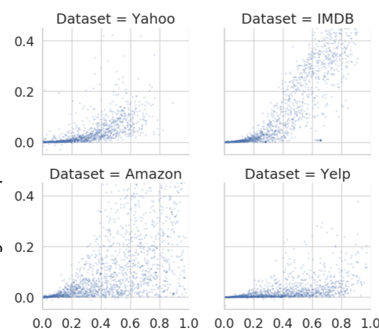
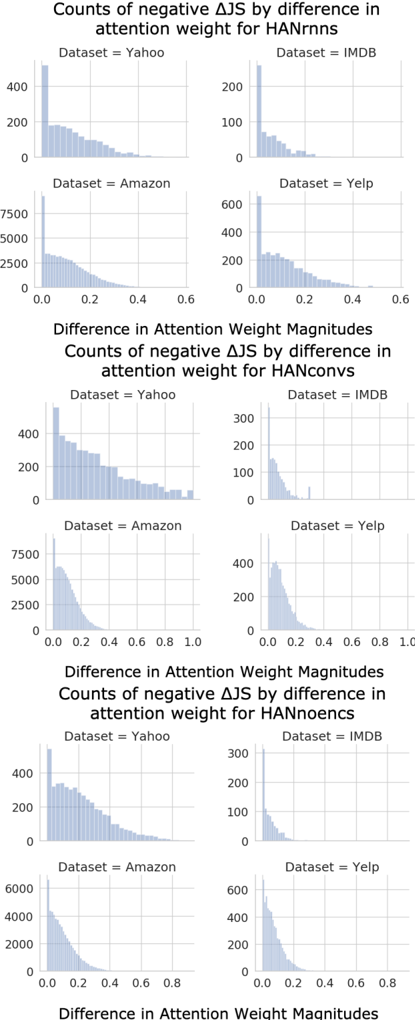
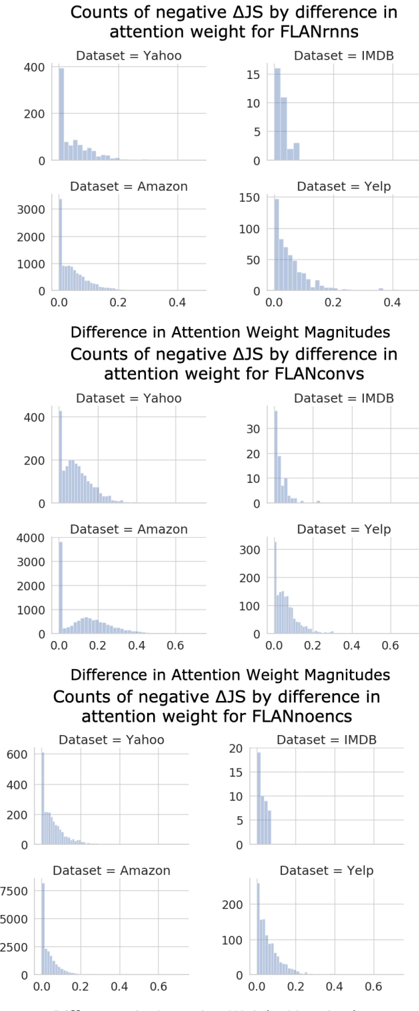
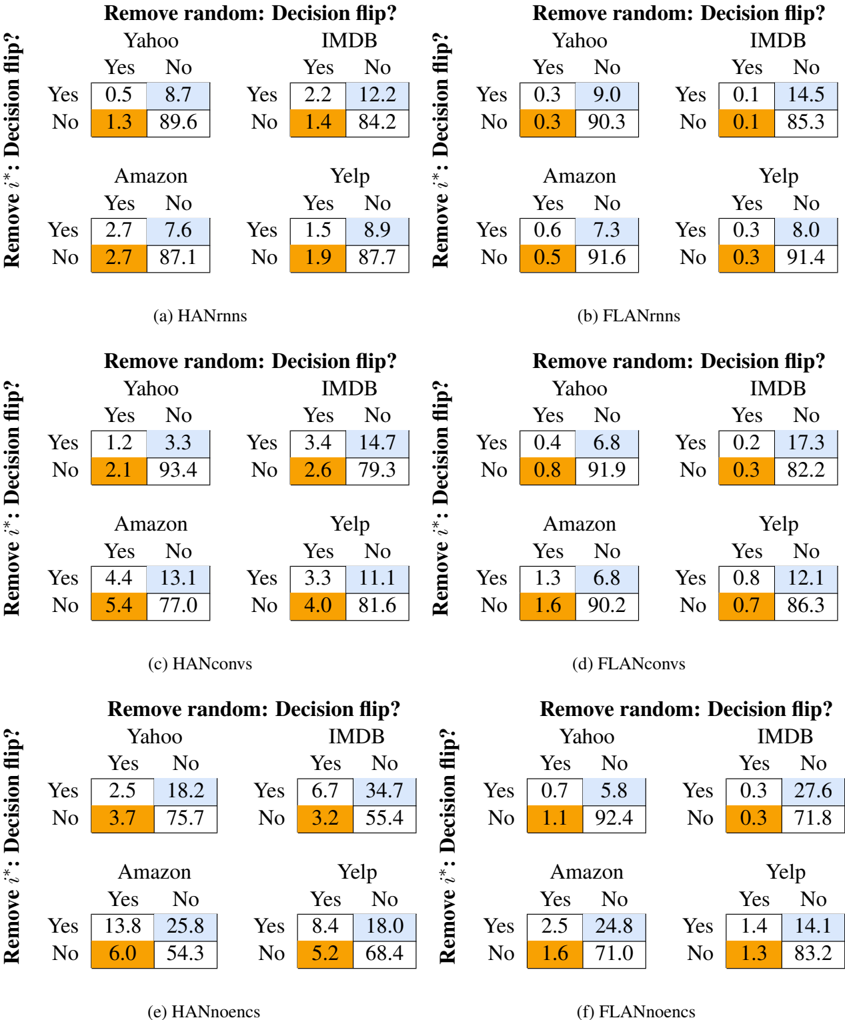
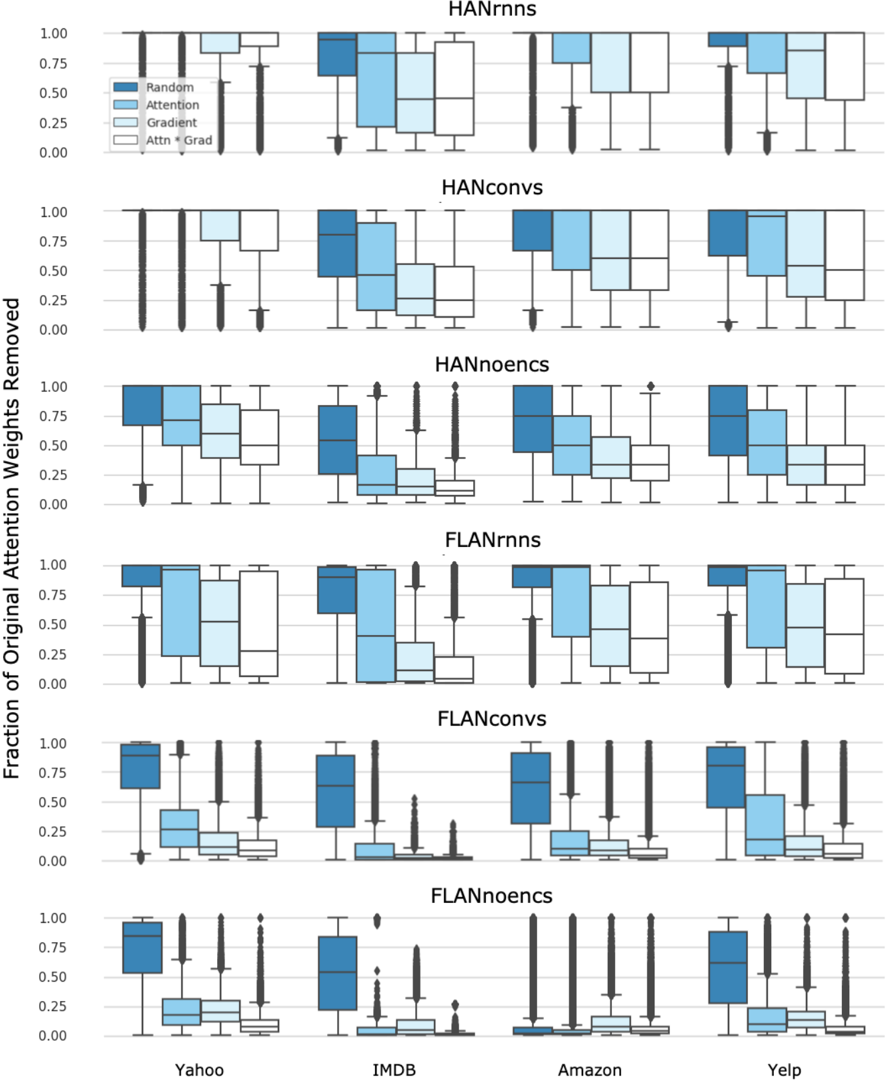
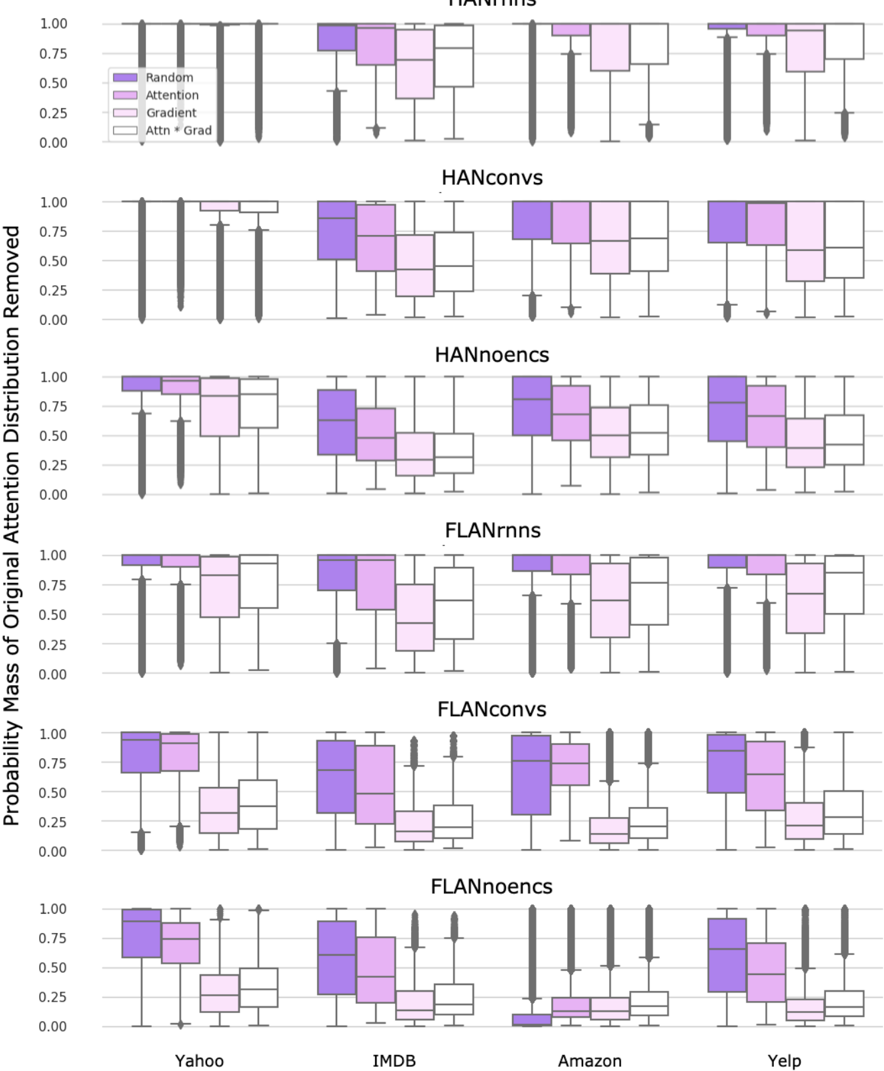
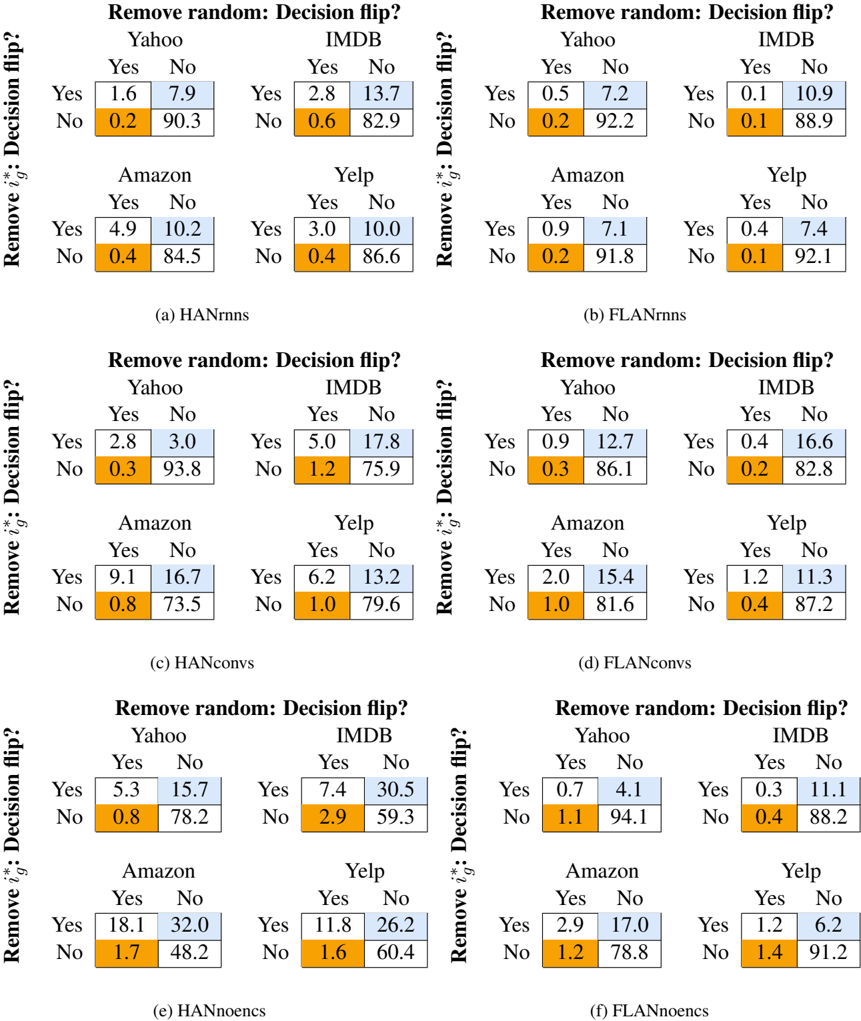
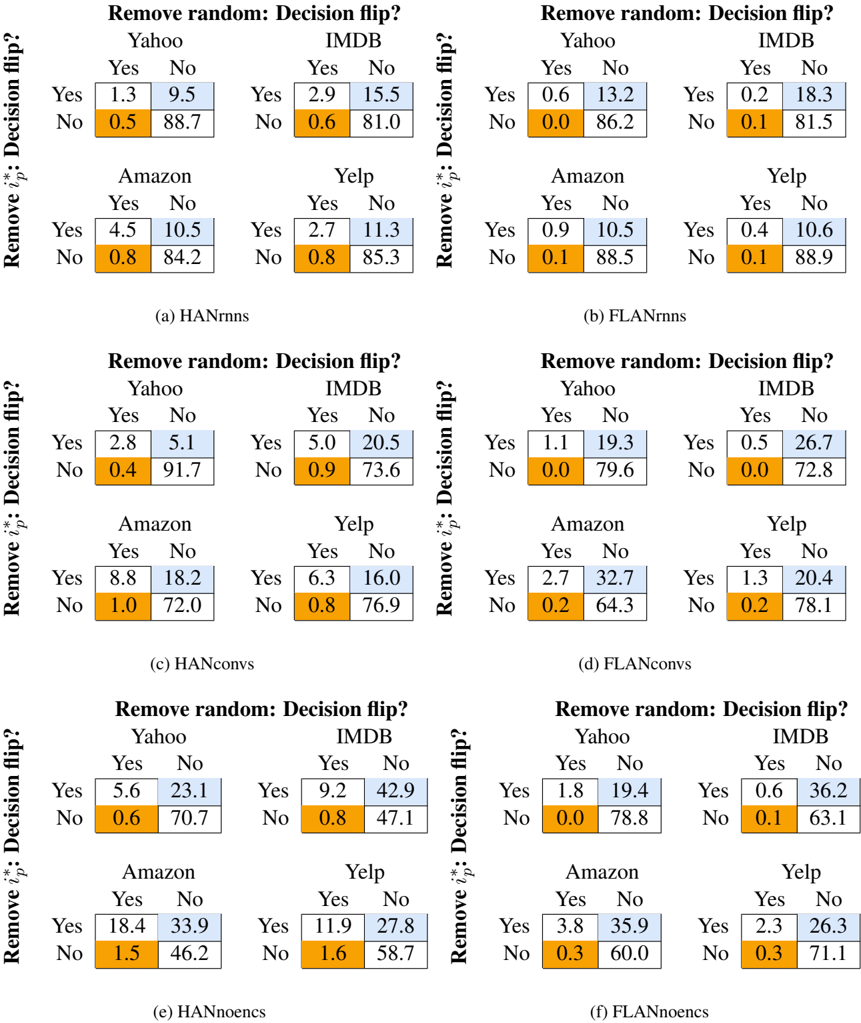
Attention mechanisms have recently boosted performance on a range of NLP tasks.Because attention layers explicitly weight input components' representations, it is also often assumed that attention can be used to identify information that models found important (e.g., specific contextualized word tokens).We test whether that assumption holds by manipulating attention weights in already-trained text classification models and analyzing the resulting differences in their predictions.While we observe some ways in which higher attention weights correlate with greater impact on model predictions, we also find many ways in which this does not hold, i.e., where gradient-based rankings of attention weights better predict their effects than their magnitudes.We conclude that while attention noisily predicts input components' overall importance to a model, it is by no means a fail-safe indicator.1
Overview
The claims and statistics of this paper haven’t been checked yet.
Free: it reads the open-access text and checks the first 5 claims that cite a source we can check. Create a free account to check every claim.
Integrity signals
Registry
Cites
Statistics
Figures
Verification
Claims the paper makes
The claims and statistics of this paper haven’t been checked yet.
Free: it reads the open-access text and checks the first 5 claims that cite a source we can check. Create a free account to check every claim.
Claims other papers make about this one
Each is checked against this paper’s own text: does it say what the citing paper says it does?
The source backs part of the claim, not all of it — or backs it for a different population, condition or comparison.
In the citing paper
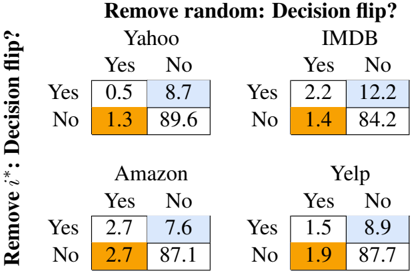
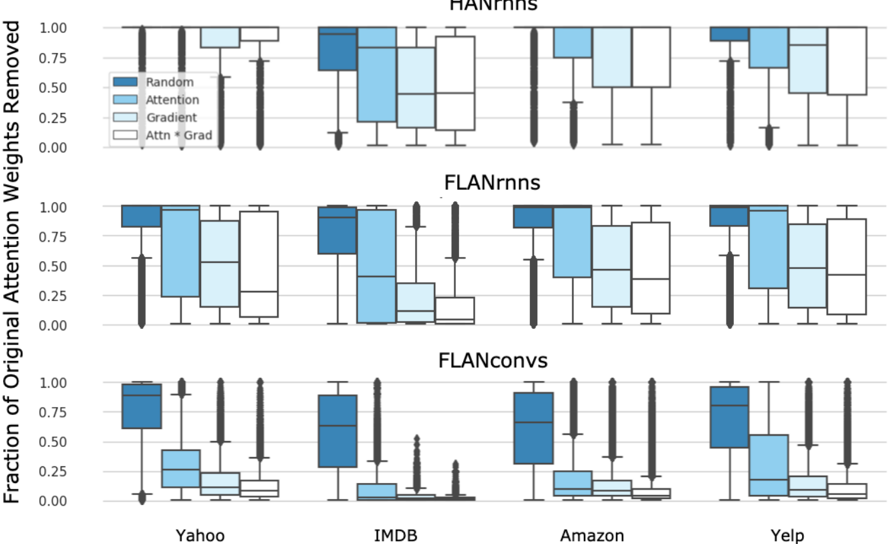
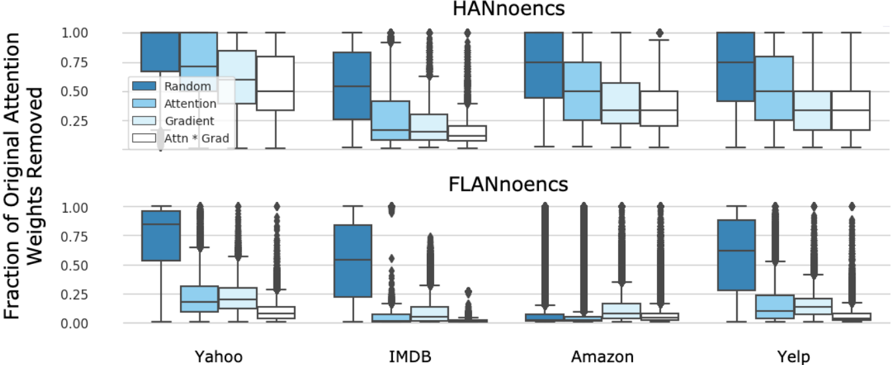
“Besides using Incremental Deletion/Addition to evaluate correctness and output-completeness, compactness can be evaluated by counting how many features of the explanation need to be removed, perturbed or added to change the decision of the predictive model [7,34,70,123,165,221].”
From From Anecdotal Evidence to Quantitative Evaluation Methods: A Systematic Review on Evaluating Explainable AI (2023) · cites this paper as [221]
Experimental — accuracy not yet measuredIn the citing paper
“In [85], the attention mechanism weights were seen as at best noisy predictors of the relative importance of specific regions of the input sequence, and they should not be treated as justifications for the model’s decisions.”
From Survey of Explainable AI Techniques in Healthcare (2023) · cites this paper as [85]
In the citing paper
“Although this is typically the case for softmax scores [221], there might be cases where this assumption is invalid.”
From From Anecdotal Evidence to Quantitative Evaluation Methods: A Systematic Review on Evaluating Explainable AI (2023) · cites this paper as [221]
Self-check
Percentages, sums and reported differences re-computed from the paper’s own numbers.
The self-check needs the paper’s full text.
Citations
Cites
Vaswani, A., Shazeer, N., Parmar, N., Uszkoreit, J., Jones, L., Gomez, A. N., Kaiser, L., & Polosukhin, I. (2017) · arXiv · doi:10.48550/arxiv.1706.03762 · Cited by 120,404
Adam: A Method for Stochastic Optimization
Kingma, D. P., & Ba, J. (2014) · arXiv · doi:10.48550/arxiv.1412.6980 · Cited by 98,946 · cited 1×
“Unless otherwise noted, to train each model, we used Adam (Kingma and Ba, 2014) with gradient clipping of 10.0 and a patience value of 5, so we would stop training a model if five epochs elapsed without any improvement in validation set accuracy.”
MethodInfluential"Why Should I Trust You?": Explaining the Predictions of Any Classifier
Ribeiro, M. T., Singh, S., & Guestrin, C. (2016) · Proceedings of the 22nd ACM SIGKDD International Conference on Knowledge Discovery and Data Mining · doi:10.1145/2939672.2939778 · Cited by 17,555 · cited 4×
“Note, however, that we still do not take either as a gold-standard indicator of importance to the model, as with the gradient in Ross et al. (2017) and Melis and Jaakkola (2018), but merely as an alternative ordering method.”
BackgroundMethodInfluentialNeural Machine Translation by Jointly Learning to Align and Translate
Bahdanau, D., Cho, K., & Bengio, Y. (2014) · arXiv · doi:10.48550/arxiv.1409.0473 · Cited by 16,213 · cited 2×
“Specifically, we use the additive formulation originally defined in Bahdanau et al. (2015).”
BackgroundMethodConvolutional Neural Networks for Sentence Classification
Kim, Y. (2014) · Proceedings of the 2014 Conference on Empirical Methods in Natural Language Processing (EMNLP) · doi:10.3115/v1/d14-1181 · Cited by 14,831 · cited 2×
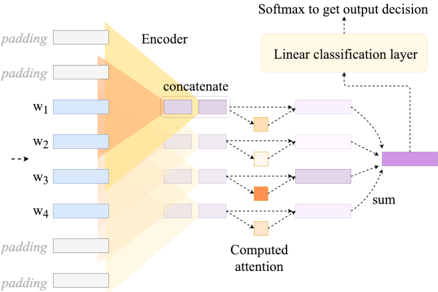
“Aside from biRNNs, we also experiment with models that instead contextualize word vectors by convolutions on only a token’s close neighbors, inspired by Kim (2014). See Figure 2 for a diagram of the FLAN architecture using a convolutional encoder.”
MethodEffective Approaches to Attention-based Neural Machine Translation
Luong, T., Pham, H., & Manning, C. D. (2015) · Proceedings of the 2015 Conference on Empirical Methods in Natural Language Processing · doi:10.18653/v1/d15-1166 · Cited by 8,382 · cited 1×
“For many different problems — to name a few, machine translation (Luong et al., 2015), syntactic parsing (Vinyals et al., 2015), reading comprehension (Hermann et al., 2015), and language modeling (Liu and Lapata, 2018) — incorporating attention mechanisms into models has proven beneficial for…”
BackgroundLipton, Z. C. (2018) · Queue · doi:10.1145/3236386.3241340 · Cited by 5,427 · cited 1×
“Lipton (2016) describes a model as “transparent” if “a person can contemplate the entire model at once.””
BackgroundHierarchical Attention Networks for Document Classification
Yang, Z., Yang, D., Dyer, C., He, X., Smola, A., & Hovy, E. (2016) · Proceedings of the 2016 Conference of the North American Chapter of the Association for Computational Linguistics: Human Language Technologies · doi:10.18653/v1/n16-1174 · Cited by 4,712 · cited 6×
“Our model architectures are inspired by the hierarchical attention network (HAN; Yang et al., 2016), a text classification model with two layers of attention, first to the word tokens in each sentence and then to the resulting sentence representations.”
BackgroundMethodResultInfluentialCharacter-level Convolutional Networks for Text Classification
Zhang, X., Zhao, J., & LeCun, Y. (2015) · arXiv (Cornell University) · doi:10.48550/arxiv.1509.01626 · Cited by 3,205 · cited 3×
“We investigate four model architectures on a topic classification dataset (Yahoo Answers; Zhang et al., 2015) and on three review ratings datasets: IMDB (Diao et al.”
MethodTeaching Machines to Read and Comprehend
Hermann, K. M., Kočiský, T., Grefenstette, E., Espeholt, L., Kay, W., Suleyman, M., & Blunsom, P. (2015) · arXiv (Cornell University) · doi:10.48550/arxiv.1506.03340 · Cited by 2,521 · cited 1×
“For many different problems—to name a few, machine translation (Luong et al., 2015), syntactic parsing (Vinyals et al., 2015), reading comprehension (Hermann et al., 2015), and language modeling (Liu and Lapata, 2018)—incorporating attention mechanisms into models has proven benefi-cial for…”
Background
Research works printed but not linked: 4
- Philipp Koehn and Rebecca Knowles. 2017. Six chal- lenges for neural machine translation. In Pro- ceedings of the First Workshop on Neural Machine Translation.
- Zachary C Lipton. 2016. The mythos of model inter- pretability. arXiv preprint arXiv:1606.03490. · arXiv
- Yang Liu and Mirella Lapata. 2018. Learning struc- tured text representations. Transactions of the Asso- ciation of Computational Linguistics, 6:63-75.
- Oriol Vinyals, Łukasz Kaiser, Terry Koo, Slav Petrov, Ilya Sutskever, and Geoffrey Hinton. 2015. Gram- mar as a foreign language. In Advances in Neural Information Processing Systems.
Cited by
Items 301–400 of 699
Uban, A. S., Chulvi, B., & Rosso, P. (2022) · Studies in computational intelligence · doi:10.1007/978-3-031-04431-1_13 · Cited by 23
Truthful meta-explanations for local interpretability of machine learning models
Mollas, I., Bassiliades, N., & Tsoumakas, G. (2023) · Applied Intelligence · doi:10.1007/s10489-023-04944-3 · Cited by 11
“Decision Flip (most informative token) removes the most informative token and awards the interpretation if and only if the prediction is changing [43], whereas Decision Flip (fraction of token) identifies the number of important tokens that must be removed to flip the model decision [44].”
BackgroundSchwenke, L., & Atzmueller, M. (2021) · IEEE International Conference on Data Science and Advanced Analytics (DSAA) · doi:10.1109/dsaa53316.2021.9564126 · Cited by 12
“A simple form of Attention was also previously used on time series data with RNNs. [20] found though, that the interpretability properties only work sub-optimally.”
MethodCorpus-level and Concept-based Explanations for Interpretable Document Classification
Shi, T. Z., Zhang, X., Wang, P., & Reddy, C. K. A. (2021) · ACM Transactions on Knowledge Discovery from Data · doi:10.1145/3477539 · Cited by 12
“In this section, we leverage the method proposed in Section 3.2.3 to respectively build an NBC for BERT-SAN and BERT-AAN on the training set.”
BackgroundMethodInfluentialNeumeier, M., Tollkühn, A., Dorn, S., Botsch, M., & Utschick, W. (2023) · IEEE Intelligent Vehicles Symposium · doi:10.1109/iv55152.2023.10186536 · Cited by 11
Dissecting Generation Modes for Abstractive Summarization Models via Ablation and Attribution
Xu, J., & Durrett, G. (2021) · doi:10.18653/v1/2021.acl-long.539 · Cited by 19
“Although attention has been questioned (Jain and Wallace, 2019), it still has some value as an explanation technique (Wiegreffe and Pinter, 2019; Serrano and Smith, 2019).”
BackgroundOn the Evaluation of the Plausibility and Faithfulness of Sentiment Analysis Explanations
Zini, J. E., Mansour, M., Mousi, B., & Awad, M. (2022) · IFIP advances in information and communication technology · doi:10.1007/978-3-031-08337-2_28 · Cited by 12
Cooperative Generator-Discriminator Networks for Abstractive Summarization with Narrative FlowPreprint
Gabriel, S., Bosselut, A., Holtzman, A., Lo, K., Çelikyılmaz, A., & Choi, Y. (2019) · arXiv (Cornell University) · Cited by 11
A multi-component framework for the analysis and design of explainable artificial intelligencePreprint
Atakishiyev, S., Babiker, H. K. B., Farruque, N., Goebel, R. G., Kima, M.-Y., Motallebi, M.-H., Rabelo, J. C. B., Syed, T., & Zai͏̈ane, O. R. (2020) · arXiv (Cornell University) · doi:10.48550/arxiv.2005.01908 · Cited by 9
“There is a debate in the literature on whether attention weights could be used as an explanation or not [49, 50].”
BackgroundPair the Dots: Jointly Examining Training History and Test Stimuli for Model InterpretabilityPreprint
Meng, Y., Fan, C. C., Sun, Z., Hovy, E. H., Wu, F., & Li, J. (2020) · arXiv (Cornell University) · doi:10.48550/arxiv.2010.06943 · Cited by 13
“The attention mechanism has been used for model interpretation (Jain and Wallace, 2019; Serrano and Smith, 2019; Wiegreffe and Pinter, 2019; Vashishth et al., 2019).”
MethodTowards a neuro-symbolic cycle for human-centered explainability
Mileo, A. (2025) · Neurosymbolic Artificial Intelligence · doi:10.3233/nai-240740 · Cited by 18
“The success of transformers in Natural Language Processing has initiated a debate in the research community on attention mechanisms and their role in explainability [21,43,49].”
Recipes and ingredients for deep learning models of 3D genome folding
Smaruj, P. N., Xiao, Y., & Fudenberg, G. (2025) · Current Opinion in Genetics & Development · doi:10.1016/j.gde.2024.102308 · Cited by 8
Benrachou, D. E., Glaser, S., Elhenawy, M. M. Z., & Rakotonirainy, A. (2025) · IEEE Transactions on Intelligent Transportation Systems · doi:10.1109/tits.2025.3588855 · Cited by 14
“Moreover, attention weights have been interpreted as indicators of relevance in graph data [35], [36], although recent analyses caution that high attention scores do not always align with true importance [36], [37], [38].”
Culturally responsive AI chatbots: From framework to field evidence
Naidoo, V., & CHADHA, K. K. (2025) · Computers in Human Behavior Artificial Humans · doi:10.1016/j.chbah.2025.100224 · Cited by 19
Rizzo, M., Veneri, A., Marcuzzo, M., Zangari, A., Albarelli, A., Lucchese, C., Nobile, M. S., & Conati, C. (2025) · BMC Medical Research Methodology · doi:10.1186/s12874-025-02703-1 · Cited by 13
“While formal proofs are still missing in the current literature, several tests for faithfulness have been recently proposed [12–14”
MURMUR: Modular Multi-Step Reasoning for Semi-Structured Data-to-Text Generation
Saha, S., Yu, X., Bansal, M., Pasunuru, R., & Çelikyılmaz, A. (2023) · Findings of the Association for Computational Linguistics: ACL (Findings of ACL) · doi:10.18653/v1/2023.findings-acl.704 · Cited by 19
Hong, J., Park, K. H., & Pavlic, T. P. (2024) · IEEE Winter Conference on Applications of Computer Vision · doi:10.1109/wacv57701.2024.00481 · Cited by 20
“In particular, the debate over what degree of interpretability can be ascribed to attention weights over input tokens still needs to be settled to help meet the need for interpretability of attention mechanisms [1, 9, 40, 71, 86].”
BackgroundMulti-Dimensional Explanation of Target Variables from Documents
Antognini, D., Musat, C., & Faltings, B. V. (2021) · Proceedings of the AAAI Conference on Artificial Intelligence · doi:10.1609/aaai.v35i14.17483 · Cited by 9
“2016; Montavon, Samek, and Müller 2018), attention weights (Jain and Wallace 2019; Serrano and Smith 2019; Pruthi et al. 2020), and learned sparse and interpretable word vectors (Faruqui et al.”
BackgroundInterpretable and Low-Resource Entity Matching via Decoupling Feature Learning from Decision Making
Yao, Z., Li, C., Dong, T., Lv, X., Yu, J., Hou, L., Li, J., Zhang, Y., & Dai, Z. (2021) · doi:10.18653/v1/2021.acl-long.215 · Cited by 9
Predicting Human Mobility with Reinforcement-Learning-Based Long-Term Periodicity Modeling
Tao, S., Jiang, J., Lian, D., Zheng, K., & Chen, E. (2021) · ACM Transactions on Intelligent Systems and Technology · doi:10.1145/3469860 · Cited by 8
Minun: evaluating counterfactual explanations for entity matching
Wang, J., & Li, Y. (2022) · Workshop on Data Management for End-to-End Machine Learning (DEEM) · doi:10.1145/3533028.3533304 · Cited by 15
“Some studies in the NLP field tried to explain the results of attention modules [33, 41] and Transformer-based language models [6, 37] with the distribution of attention weights.”
BackgroundHazarika, D., Namazifar, M., & Hakkani-Tur, D. Z. (2022) · Proceedings of the AAAI Conference on Artificial Intelligence · doi:10.1609/aaai.v36i10.21319 · Cited by 10
“Zero-shot biases have been studied in the probing literature to understand the influence of attention on model’s classifications (Serrano and Smith 2019), but to the best of our knowledge, zero-shot attention biasing for controlled generation is an unexplored avenue.”
BackgroundSato, T., Funayama, H., Hanawa, K., & Inui, K. (2022) · Lecture notes in computer science · doi:10.1007/978-3-031-11644-5_19 · Cited by 13
Zaman, K., & Belinkov, Y. (2022) · Conference on Empirical Methods in Natural Language Processing (EMNLP) · doi:10.18653/v1/2022.emnlp-main.101 · Cited by 16
Rethinking the Authorship Verification Experimental Setups
Brad, F., Manolache, A., Burceanu, E., Bărbălau, A., Ionescu, R. T., & Popescu, M. (2022) · Conference on Empirical Methods in Natural Language Processing (EMNLP) · doi:10.18653/v1/2022.emnlp-main.380 · Cited by 28
“Inspecting the attention scores is a common method of explaining a model’s prediction that has been called into question in recent years (Pruthi et al., 2020; Serrano and Smith, 2019).”
MethodOn the Impact of Temporal Concept Drift on Model Explanations
Zhao, Z., Chrysostomou, G., Bontcheva, K., & Αλέτρας, Ν. (2022) · Findings of the Association for Computational Linguistics: EMNLP (Findings of EMNLP) · doi:10.18653/v1/2022.findings-emnlp.298 · Cited by 27
Sang, Y., & Bao, Y. (2022) · Findings of the Association for Computational Linguistics: EMNLP (Findings of EMNLP) · doi:10.18653/v1/2022.findings-emnlp.117 · Cited by 23
Fine-Grained Grounding for Multimodal Speech Recognition
Srinivasan, T., Sanabria, R., Metze, F., & Elliott, D. (2020) · Findings of the Association for Computational Linguistics: EMNLP (Findings of EMNLP) · doi:10.18653/v1/2020.findings-emnlp.242 · Cited by 10
ForceReader: a BERT-based Interactive Machine Reading Comprehension Model with Attention Separation
Chen, Z., & Wu, K. (2020) · International Conference on Computational Linguistics · doi:10.18653/v1/2020.coling-main.241 · Cited by 10
“Despite all the arguments about the interpretability of attention(Jain and Wallace, 2019; Wiegreffe and Pinter, 2019; Serrano and Smith, 2019), we still start from the visual distribution of attention, propose an interactive reading comprehension model based on the idea of separate representation…”
Effective Attention Sheds Light On Interpretability
Sun, K., & Marasović, A. (2021) · Findings of the Association for Computational Linguistics: ACL (Findings of ACL) · doi:10.18653/v1/2021.findings-acl.361 · Cited by 23
Noun-based attention mechanism for Fine-grained Named Entity Recognition
Rodríguez, A. J. C., Castro, D. C., & Herold-García, S. (2022) · Expert Systems with Applications · doi:10.1016/j.eswa.2021.116406 · Cited by 9
Understanding Image Captioning Models beyond Visualizing AttentionPreprint
Sun, J., Lapuschkin, S., Samek, W., & Binder, A. (2020) · arXiv (Cornell University) · Cited by 8
What went wrong and when? Instance-wise Feature Importance for Time-series Models
Tonekaboni, S., Joshi, S. D., Campbell, K. R., Duvenaud, D., & Goldenberg, A. (2020) · neural information processing systems · doi:10.48550/arxiv.2003.02821 · Cited by 114
“Additionally, there are concerns regarding using attention weights as explanation because of consistency issues that have been observed (Jain & Wallace, 2019; Serrano & Smith, 2019).”
BackgroundLeveraging redundancy in attention with Reuse TransformersPreprint
Bhojanapalli, S., Chakrabarti, A., Veit, A., Łukasik, M., Jain, H., Liu, F., Chang, Y.-W., & Kumar, S. (2021) · arXiv (Cornell University) · doi:10.48550/arxiv.2110.06821 · Cited by 47
“…success, a considerable amount of research has focused on analyzing and interpreting the attention scores computed by trained Transformer models (Serrano & Smith, 2019; Jain & Wallace, 2019; Wiegreffe & Pinter, 2019; Clark et al., 2019; Rogers et al., 2020) to gain insight into how attention is…”
MethodPaaß, G., & Giesselbach, S. (2023) · Artificial intelligence: foundations, theory, and algorithms/Artificial intelligence: Foundations, theory, and algorithms · doi:10.1007/978-3-031-23190-2_2 · Cited by 13
Morality in the Mundane: Categorizing Moral Reasoning in Real-Life Social Situations
Xi, R., & Singh, M. P. (2024) · Proceedings of the International AAAI Conference on Web and Social Media · doi:10.1609/icwsm.v18i1.31415 · Cited by 12
Kolliyil, J. J., & Brindise, M. C. (2025) · Computers in Biology and Medicine · doi:10.1016/j.compbiomed.2025.109957 · Cited by 12
Enhancing memory retrieval in generative agents through LLM-trained cross attention networks
Hong, C., & He, Q. (2025) · Frontiers in Psychology · doi:10.3389/fpsyg.2025.1591618 · Cited by 7
“Furthermore, drawing upon research in explainable deep learning (Serrano and Smith, 2019), we innovatively decided to determine the output of the model, specifically the retrieved memories, not by the weighted memories vector m weighted , but rather through the model’s cross attention mechanism.”
Explaining transformer-based next activity prediction by using attention scores
Käppel, M., Ackermann, L., Jablonski, S., & Härtl, S. (2025) · Process Science · doi:10.1007/s44311-025-00018-4 · Cited by 8
“…seems obvious that attention scores are suitable, there is an ongoing debate in literature, whether attention scores are trustworthy for explanation purposes, concluding that it must be examined individually for each case (Wiegreffe and Pinter 2019; Jain and Wallace 2019; Serrano and Smith 2019).”
Liu, Z., Kou, J., Zhang, W., Gu, C., Fang, X., Huang, Z., Hao, Y., Li, H., Lu, X., Yin, A., et al. (2024) · International Conference on Universal Village (UV) · doi:10.1109/uv63228.2024.11189137 · Cited by 12
Emergent Structures and Training Dynamics in Large Language Models
Teehan, R., Clinciu, M., Serikov, O., Szczechla, E., Seelam, N., Mirkin, S., & Gokaslan, A. (2022) · Proceedings of BigScience Episode #5 -- Workshop on Challenges & Perspectives in Creating Large Language Models · doi:10.18653/v1/2022.bigscience-1.11 · Cited by 7
“However, these approaches have been criticized for their inability to produce meaningful and coherent interpretations (Wiegreffe and Pinter, 2019; Bastings and Filippova, 2020; Serrano and Smith, 2019).”
BackgroundLearning to Select Prototypical Parts for Interpretable Sequential Data Modeling
Zhang, Y., Gao, N., & Ma, C. (2023) · Proceedings of the AAAI Conference on Artificial Intelligence · doi:10.1609/aaai.v37i5.25812 · Cited by 12
IMBERT: Making BERT Immune to Insertion-based Backdoor Attacks
He, X., Wang, J., Rubinstein, B. I. P., & Cohn, T. (2023) · Workshop on Trustworthy Natural Language Processing (TrustNLP) · doi:10.18653/v1/2023.trustnlp-1.25 · Cited by 24
Modeling Visual Impairments with Artificial Neural Networks: a Review
Schiatti, L., Gori, M., Schrimpf, M., Cappagli, G., Morelli, F., Signorini, S. G., Katz, B., & Barbu, A. (2023) · IEEE International Conference on Computer Vision Workshops · doi:10.1109/iccvw60793.2023.00213 · Cited by 10
“However, this is not always the case: e.g. [92] found that attention weights are noisy predictors of the importance of the input’s intermediate representations in a text classification task.”
BackgroundEnjoy the Salience: Towards Better Transformer-based Faithful Explanations with Word Salience
Chrysostomou, G., & Αλέτρας, Ν. (2021) · Conference on Empirical Methods in Natural Language Processing (EMNLP) · doi:10.18653/v1/2021.emnlp-main.645 · Cited by 21
“Erasure (Serrano and Smith, 2019; Nguyen, 2018b): Jacovi and Goldberg (2018b) propose that an appropriate measure of faithfulness of an explanation can be obtained through input erasure (the most relevant parts of the input–according to the explanation–are removed).”
BackgroundMethodInfluentialLuo, T., Meng, R., Wang, X., & Liu, Y. (2022) · Findings of the Association for Computational Linguistics: ACL (Findings of ACL) · doi:10.18653/v1/2022.findings-acl.305 · Cited by 10
Dynamically Refined Regularization for Improving Cross-corpora Hate Speech Detection
Bose, T., Αλέτρας, Ν., Illina, I., & Fohr, D. (2022) · Findings of the Association for Computational Linguistics: ACL (Findings of ACL) · doi:10.18653/v1/2022.findings-acl.32 · Cited by 13
Attention Analysis and Calibration for Transformer in Natural Language Generation
Lu, Y., Zhang, J., Zeng, J., Wu, S., & Zong, C. (2022) · IEEE/ACM Transactions on Audio Speech and Language Processing · doi:10.1109/taslp.2022.3180678 · Cited by 14
“Serrano and Smith [6] flip the model’s decision by permuting some attention weights, which finds that high-weighted components not being the reason for the decision.”
BackgroundAttExplainer: Explain Transformer via Attention by Reinforcement Learning
Niu, R., Wei, Z., Wang, Y., & Wang, Q. (2022) · International Joint Conference on Artificial Intelligence · doi:10.24963/ijcai.2022/102 · Cited by 8
Evaluating Explanation Correctness in Legal Decision Making
Luo, C. F., Bhambhoria, R. V., Dahan, S., & Zhu, X. (2022) · doi:10.21428/594757db.8718dc8b · Cited by 13
“Methods that initially seemed inherently ante-hoc, such as attention mechanisms, have been found to have issues with faithfulness [9].”
BackgroundExplaining video summarization based on the focus of attention
Apostolidis, E., Balaouras, G., Mezaris, V., & Patras, I. (2022) · IEEE International Symposium on Multimedia (ISM) · doi:10.1109/ism55400.2022.00029 · Cited by 7
“3) Replacement functions: Based on works from the NLP domain [12], [15], to investigate the network’s input-output relationship we apply the following replacement functions on parts of the input corresponding to different video fragments: • Slice-out completely removes the specified part.”
MethodBhattarai, B., Granmo, O., & Jiao, L. (2023) · Lecture notes in computer science · doi:10.1007/978-3-031-28244-7_11 · Cited by 12
DecompX: Explaining Transformers Decisions by Propagating Token Decomposition
Modarressi, A., Fayyaz, M., Aghazadeh, E., Yaghoobzadeh, Y., & Pilehvar, M. T. (2023) · Proceedings of the conference - Association for Computational Linguistics. Meeting · doi:10.18653/v1/2023.acl-long.149 · Cited by 57
Cross-Align: Modeling Deep Cross-lingual Interactions for Word Alignment
Lai, S., Yang, Z., Meng, F., Chen, Y., Xu, J., & Zhou, J. (2022) · Conference on Empirical Methods in Natural Language Processing (EMNLP) · doi:10.18653/v1/2022.emnlp-main.244 · Cited by 9
SmokerViT: A Transformer-Based Method for Smoker Recognition
Khan, A. H., Khan, S., Hassan, B., Khan, R., & Zheng, Z. (2023) · Computers, materials & continua/Computers, materials & continua (Print) · doi:10.32604/cmc.2023.040251 · Cited by 10
Attention-like feature explanation for tabular data
Konstantinov, A. V., & Utkin, L. V. (2022) · International Journal of Data Science and Analytics · doi:10.1007/s41060-022-00351-y · Cited by 9
Evaluating Explanations for Reading Comprehension with Realistic Counterfactuals.Preprint
Ye, X., Nair, R., & Durrett, G. (2021) · arXiv (Cornell University) · Cited by 6
Towards Understanding Neural Machine Translation with Attention Heads’ Importance
Zhou, Z., Zhu, J., & Li, W. (2024) · Applied Sciences · doi:10.3390/app14072798 · Cited by 7
Zhou, Z. Y., Zhang, Y., Wang, S., San-Martin, D., Liu, Y., Liu, Y., Wang, C., & Xu, W. (2025) · Materials Genome Engineering Advances · doi:10.1002/mgea.85 · Cited by 5
TAD-Graph: Enhancing Whole Slide Image Analysis via Task-Aware Subgraph Disentanglement
Wang, F., Xin, J., Zhao, W., Jiang, Y., Yeung, M. C. F., Wang, L., & Yu, L. (2025) · IEEE Transactions on Medical Imaging · doi:10.1109/tmi.2025.3545680 · Cited by 10
“Traditional methods, such as those employing attention scores [7], [26], [27], [32], have faced challenges, including their inability to distinguish between positive and negative contributions in final predictions [33], [34], [35].”
Hong, C., & He, Q. (2025) · Applied Sciences · doi:10.3390/app15126893 · Cited by 9
Sierepeklis, O., & Cole, J. M. (2025) · Journal of Chemical Information and Modeling · doi:10.1021/acs.jcim.5c00840 · Cited by 7
“52,53 A possible limitation of this research lies in the very high scores achieved by all three BERT models in the unanswerable questions category, seen at >90%.”
Li, C., Wang, S., Zhang, Y., Zhang, J., & Zong, C. (2023) · Conference on Empirical Methods in Natural Language Processing (EMNLP) · doi:10.18653/v1/2023.emnlp-main.1026 · Cited by 20
Kunz, J. (2024) · Linköping studies in science and technology. Dissertations · doi:10.3384/9789180754712 · Cited by 8
BoostedDim attention: A novel data-driven approach to improving LiDAR-based lane detection
Patil, O., Nair, B. B., Soni, R., Thayyilravi, A., & Manoj, C. R. (2024) · Ain Shams Engineering Journal · doi:10.1016/j.asej.2024.102887 · Cited by 6
Attention Please: What Transformer Models Really Learn for Process Prediction
Käppel, M., Ackermann, L., Jablonski, S., & Härtl, S. (2024) · Lecture notes in computer science · doi:10.1007/978-3-031-70396-6_12 · Cited by 10
Dong, J., Hao, M., Ding, F., Chen, S., Wu, J., Zhuo, J., & Jiang, D. (2025) · Big Data and Cognitive Computing · doi:10.3390/bdcc9030063 · Cited by 11
Decoupled pixel-wise correction for abdominal multi-organ segmentation
Yu, X.-C., Ding, L.-J., Zhang, D., Wu, J.-Q., Liang, M.-M., Zheng, J., & Pang, W. (2025) · Complex & Intelligent Systems · doi:10.1007/s40747-025-01796-x · Cited by 6
“However, several studies [17–19] have demonstrated a weak correlation between attention maps and the importance of features.”
Zhu, J., Miao, S., Ying, R., & Li, P. (2025) · Nature Machine Intelligence · doi:10.1038/s42256-025-00998-9 · Cited by 13
“Most previous studies limit their scope to only one category, either post-hoc methods 21,27–33 or self-interpretable methods 34–38 .”
A Study of the Plausibility of Attention between RNN Encoders in Natural Language Inference
Nguyen, D. H., Gravier, G., & Sébillot, P. (2021) · International Conference on Machine Learning and Applications · doi:10.1109/icmla52953.2021.00259 · Cited by 12
“[12] has disproved that an attention map does not have the linear contribution to the final prediction, as it can mask out important words and still get the approximate prediction.”
A Review of Interpretable Deep Learning for Neurological Disease Classification
Katarya, R., Sharma, P., Soni, N., & Rath, P. (2022) · International Conference on Advanced Computing and Communication Systems (ICACCS) · doi:10.1109/icaccs54159.2022.9785321 · Cited by 7
Can Deep Learning Models Learn the Vulnerable Patterns for Vulnerability Detection?
Yan, G., Chen, S., Bail, Y., & Li, X. (2022) · IEEE Annual International Computer Software and Applications Conference (COMPSAC) · doi:10.1109/compsac54236.2022.00142 · Cited by 10
GraMDTA: Multimodal Graph Neural Networks for Predicting Drug-Target Associations
Yella, J., Ghandikota, S. K., & Jegga, A. G. (2022) · IEEE International Conference on Bioinformatics and Biomedicine (BIBM) · doi:10.1109/bibm55620.2022.9995245 · Cited by 6
“This suggests that although attention signifies the importance of the input modalities, it alone may not be enough for predicting DTAs or potential mechanism of action [36], [37].”
BackgroundIs Attention Interpretation? A Quantitative Assessment on Sets
Haab, J., Deutschmann, N., & Martínez, M. R. (2023) · Communications in computer and information science · doi:10.1007/978-3-031-23618-1_21 · Cited by 10
Towards Fine-Grained Localization of Privacy Behaviors
Jain, V., Ghanavati, S., Peddinti, S. T., & McMillan, C. (2023) · IEEE European Symposium on Security and Privacy · doi:10.1109/eurosp57164.2023.00024 · Cited by 6
“However, several studies indicate that attention is important [22, 23] and can be used for interpreting the results of a classification task.”
BackgroundJourdan, F., Picard, A. M., Fel, T., Risser, L., Loubes, J., & Asher, N. M. (2023) · Findings of the Association for Computational Linguistics: ACL (Findings of ACL) · doi:10.18653/v1/2023.findings-acl.317 · Cited by 15
SeqNovo: De Novo Peptide Sequencing Prediction in IoMT via Seq2Seq
Wang, K., Zhu, M., Boulila, W., Driss, M., Gadekallu, T. R., Chen, C., Wang, L., Kumari, S., & Yiu, S. (2023) · IEEE Journal of Biomedical and Health Informatics · doi:10.1109/jbhi.2023.3321780 · Cited by 6
“…research of Transformer on the multi-head attention mechanism is still inconclusive [31], [32], and some scholars even believe that it is impossible to directly explain the distribution of the attention mechanism [33], [34], [35], which makes the behavior of the model difficult to control.”
Multi-Layer Attention-Based Explainability via Transformers for Tabular Data
Gavito, A. T., Klabjan, D., & Utke, J. (2024) · International Conference on Machine Learning and Applications · doi:10.1109/icmla61862.2024.00010 · Cited by 7
Cross-Domain Transfer of Generative Explanations Using Text-to-Text Models
Erliksson, K. F., Arpteg, A., Matskin, M., & Payberah, A. H. (2021) · Lecture notes in computer science · doi:10.1007/978-3-030-80599-9_8 · Cited by 8
“However, the usefulness and validity of attention weights as explanations have been questioned [3, 19,38].”
BackgroundDo Models Learn the Directionality of Relations? A New Evaluation: Relation Direction Recognition
Lyu, S., Wu, X., Li, J., Chen, Q., & Chen, H. (2022) · IEEE Transactions on Emerging Topics in Computational Intelligence · doi:10.1109/tetci.2021.3136598 · Cited by 8
Kamath, U., & Liu, J. (2021) · Springer eBooks · doi:10.1007/978-3-030-83356-5_6 · Cited by 6
Differentiable programming and its applications to dynamical systemsPreprint
Hernández, A., & Amigó, J. M. (2019) · arXiv (Cornell University) · doi:10.48550/arxiv.1912.08168 · Cited by 13
“Interpretability is further studied in detail in [53], concluding that attention weights partially reflect the impact of the input elements on model prediction.”
Şen, C., Ye, B., Aslam, J. A., & Tahmasebi, A. M. (2021) · arXiv (Cornell University) · doi:10.48550/arxiv.2102.09136 · Cited by 11
Approximating How Single Head Attention LearnsPreprint
Snell, C., Zhong, R., Klein, D., & Steinhardt, J. (2021) · arXiv (Cornell University) · doi:10.48550/arxiv.2103.07601 · Cited by 48
“For example, in text classification, while standard models typically attend to salient (high gradient influence) words (Serrano and Smith, 2019a), recent work constructs accurate models that attend to irrelevant words instead (Wiegreffe and Pinter, 2019a; Pruthi et al., 2020).”
SalKG: Learning From Knowledge Graph Explanations for Commonsense ReasoningPreprint
Chan, A., Xu, J., Long, B., Sanyal, S., Gupta, T., & Ren, X. (2021) · arXiv (Cornell University) · doi:10.48550/arxiv.2104.08793 · Cited by 15
“How feature attribution methods should be chosen remains an open question and the subject of much recent debate [2, 59, 48, 20].”
BackgroundTowards Rigorous Interpretations: a Formalisation of Feature Attribution
Afchar, D., Hennequin, R., & Guigue, V. (2021) · International Conference on Machine Learning · doi:10.48550/arxiv.2104.12437 · Cited by 12
“In fact, many recent works (Adebayo et al., 2018; Serrano and Smith, 2019; Kindermans et al., 2019; Dombrowski et al., 2019; Sixt et al., 2020; Kumar et al., 2020) tend to suggest that well established interpretation methods may not provide much understandability after further inspection, while being coherent with the…”
BackgroundExplainable artificial intelligence for neuroimaging-based dementia diagnosis and prognosisPreprint
Martin, S. A., Zhao, A., Qu, J., Imms, P. E., Andrei Irimia, A., Barkhof, F., Cole, J. H., & Initiative, T. A. D. N. (2025) · medRxiv · doi:10.1101/2025.01.13.25320382 · Cited by 6
Machine learning approaches enable the discovery of therapeutics across domains
Chhibbar, P., & Das, J. (2025) · Molecular Therapy · doi:10.1016/j.ymthe.2025.04.001 · Cited by 7
“74 In certain contexts, rigorous evaluation settings do not exist, making it difficult to ascertain whether the observed inference is critical to the model’s decision-making process.”
Bui, H., & Le, B. H. (2025) · Expert Systems with Applications · doi:10.1016/j.eswa.2025.130220 · Cited by 8
Arous, I., Chehbouni, K., Cheng, Z., & Dossou, B. F. P. (2025) · Springer eBooks · doi:10.1007/978-981-97-8440-0_85-1 · Cited by 6
Tambwekar, P., & Gombolay, M. (2024) · Frontiers in Robotics and AI · doi:10.3389/frobt.2024.1375490 · Cited by 10
Salmi, S., Mérelle, S. Y. M., Gilissen, R., van der Mei, R., & Bhulai, S. (2024) · JMIR Mental Health · doi:10.2196/57362 · Cited by 6
M2Former: Multiscale Patch Selection for Fine-Grained Visual Recognition
Moon, J., & Park, S. (2024) · Applied Sciences · doi:10.3390/app14198710 · Cited by 10
“Attention roll-out [51] has been mainly used as a scoring function for SSPS [20,88].”
BackgroundMethodDai, Y. Q., Liu, J., Cao, L., Xue, Y., Wang, X., Ding, Y., Tian, J., & Feng, L. (2024) · IEEE Transactions on Affective Computing · doi:10.1109/taffc.2024.3494860 · Cited by 12
“…of the attention-based scores (i.e., the attention scores accurately imply the significance ranking of input parts on models decision-making [43]), beyond scaling the attention scores α and α with the gradient of prediction results f ( g ( x )) and F ( G ( u )) ((9)), we also quantify the…”
Toward Faithful Neural Network Intrinsic Interpretation With Shapley Additive Self-Attribution
Sun, Y., Zhu, H., & Xiong, H. (2025) · IEEE Transactions on Neural Networks and Learning Systems · doi:10.1109/tnnls.2025.3570692 · Cited by 9
“Moreover, the uncertain e ff ectiveness of attention in pinpointing significant features [10], [12], [13], [22] has led to the exploration of more straightforward nonattentional interpretations.”
Variable Instance-Level Explainability for Text Classification.
Chrysostomou, G., & Αλέτρας, Ν. (2021) · White Rose Research Online (University of Leeds, The University of Sheffield, University of York) · Cited by 5
Sources of Understanding in Supervised Machine Learning Models
Pirozelli, P. (2022) · Philosophy & Technology · doi:10.1007/s13347-022-00524-4 · Cited by 4
“Moreover, equally good performances can be achieved with different sets of attention (Sarthak & Wal-lace, 2019), and even when a large percentage of the weights is omitted (Serrano & Smith, 2019).”
BackgroundSupervised Attention in Sequence-to-Sequence Models for Speech Recognition
Yang, G.-P., & Tang, H. (2022) · IEEE International Conference on Acoustics Speech and Signal Processing · doi:10.1109/icassp43922.2022.9746310 · Cited by 8
“There is an ongoing debate whether attention can be interpreted as alignments [7, 6, 26].”
BackgroundReunamo, A., Peltonen, L., Mustonen, R., Saari, M., Salakoski, T., Salanterä, S., & Moen, H. (2022) · Studies in health technology and informatics · doi:10.3233/shti220154 · Cited by 9
Metadata
- Authors
- Serrano, S., & Smith, N. A.
- Affiliations
- University of Washington (US)
- Venue
- Proceedings of the 57th Annual Meeting of the Association for Computational Linguistics
- Published
- 2019
- Pages
- 2931-2951
- ISSN
- 0736-587X (ISSN-L)
- OpenAlex
- W2948140294
- Cited by
- 690
- References
- 39
- Citations by year
- 2026: 63 · 2025: 85 · 2024: 82 · 2023: 102 · 2022: 119 · 2021: 143 · 2020: 80 · 2019: 15
- FWCI
- 34.15
- Type
- conference paper
- Language
- en
- Open access
- hybrid
- doi.org
- Licence
- cc-by
- Locations
- Proceedings of the conference - Association for Computational Linguistics. Meeting (publishedVersion, cc-by)
- arXiv (Cornell University) (submittedVersion)
- arXiv (Cornell University)
- Topics
- Physical Sciences › Computer Science › Artificial Intelligence › Explainable Artificial Intelligence (XAI)
- Physical Sciences › Computer Science › Artificial Intelligence › Topic Modeling
- Physical Sciences › Computer Science › Artificial Intelligence › Natural Language Processing Techniques
- Keywords
- attention mechanism, interpretability, text classification, model interpretability, feature importance, explainable AI
About these checks
Registry, retraction, Cites and statistics results are computed, not judged, with one exception: a printed reference that no index lists is read once by a model before it counts as a citation error. Claims are extracted by a model and kept only when their quote appears verbatim in the text; each cited source is then checked, with a model’s help, for whether it says what the claim relies on. Those verdicts can be wrong — read the claim’s quote and the cited source before relying on one.
Statistics and arithmetic are recomputed, not judged.
Confidence bands are shown only for fields calibrated on our annotated test set. None is calibrated yet, so no band is shown.
What counts as a claim ›How we measure confidence ›How we check this ›
Are you an author, or do you see a problem with this page? Request a review
Data sources
Bibliographic data: Semantic Scholar, OpenAlex, Crossref.
Contains information from the Semantic Scholar Academic Graph Datasets, made available under the ODC Attribution License (ODC-BY 1.0).
Semantic Scholar’s data is described in: Kinney, R., et al. (2023). The Semantic Scholar Open Data Platform. arXiv:2301.10140.
