

Transformer-XL: Attentive Language Models beyond a Fixed-Length Context
Open accessThe DOI matches its Crossref record; 65 of the 67 references it cites were found in a registry or an index.
Abstract
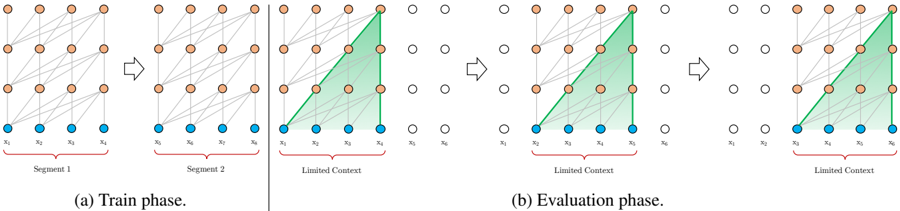
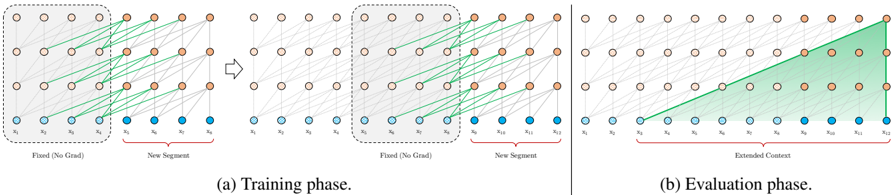
Transformers have a potential of learning longer-term dependency, but are limited by a fixed-length context in the setting of language modeling.We propose a novel neural architecture Transformer-XL that enables learning dependency beyond a fixed length without disrupting temporal coherence.It consists of a segment-level recurrence mechanism and a novel positional encoding scheme.Our method not only enables capturing longer-term dependency, but also resolves the context fragmentation problem.As a result, Transformer-XL learns dependency that is 80% longer than RNNs and 450% longer than vanilla Transformers, achieves better performance on both short and long sequences, and is up to 1,800+ times faster than vanilla Transformers during evaluation.Notably, we improve the state-ofthe-art results of bpc/perplexity to 0.99 on en-wiki8, 1.08 on text8, 18.3 on WikiText-103, 21.8 on One Billion Word, and 54.5 on Penn Treebank (without finetuning).When trained only on WikiText-103, Transformer-XL manages to generate reasonably coherent, novel text articles with thousands of tokens.Our code, pretrained models, and hyperparameters are available in both Tensorflow and PyTorch 1 .
Overview
The claims and statistics of this paper haven’t been checked yet.
Free: it reads the open-access text and checks the first 5 claims that cite a source we can check. Create a free account to check every claim.
Integrity signals
Registry
Cites
Statistics
Figures
Verification
Claims the paper makes
The claims and statistics of this paper haven’t been checked yet.
Free: it reads the open-access text and checks the first 5 claims that cite a source we can check. Create a free account to check every claim.
Claims other papers make about this one
Each is checked against this paper’s own text: does it say what the citing paper says it does?
The cited source doesn’t support the claim as written.
In the citing paper
“note that the Transformer XL model25 incorporates some form of recurrent processing within the transformer block, but it still takes the entire text as its input in parallel.”
From Incremental accumulation of linguistic context in artificial and biological neural networks (2025) · cites this paper as [25]
Checked by a reasoning model — may be wrong.
Experimental — accuracy not yet measuredThe source backs part of the claim, not all of it — or backs it for a different population, condition or comparison.
In the citing paper
“Directly extending the context length of transformers incurs a quadratic increase in computational time and memory cost due to the transformer architecture's self-attention mechanism, making the design of new long-context architectures a pressing research challenge (Dai et al., 2019; Kitaev et al., 2020; Beltagy et al., 2020).”
From MemGPT: Towards LLMs as Operating Systems (2023) · cites this paper as Dai et al., 2019
Experimental — accuracy not yet measuredThe source backs part of the claim, not all of it — or backs it for a different population, condition or comparison.
In the citing paper
“We believe that the different trends are caused by the truncation problem [59], [60].”
From What Makes Good In-Context Demonstrations for Code Intelligence Tasks with LLMs? (2023) · cites this paper as [59]
Experimental — accuracy not yet measuredThe source backs part of the claim, not all of it — or backs it for a different population, condition or comparison.
In the citing paper
“Fixed-window methods : including context windows of 4K, 8K, and 16K tokens with FIFO eviction [10, 2]”
From FadeMem: Biologically-Inspired Forgetting for Efficient Agent Memory (2026) · cites this paper as [10]
Experimental — accuracy not yet measuredThe source backs part of the claim, not all of it — or backs it for a different population, condition or comparison.
In the citing paper
“Thus, in practice, Transformer-XL and Compressive Transformer need huge memory size to achieve good performance.”
From Memformer: a memory-augmented transformer for sequence modeling (2020) · cites this paper as Dai et al., 2019
Experimental — accuracy not yet measured
12 more claims about this paper
Create a free account to see every claim other papers make about this one.
Self-check
Percentages, sums and reported differences re-computed from the paper’s own numbers.
The self-check needs the paper’s full text.
Citations
Cites
Vaswani, A., Shazeer, N., Parmar, N., Uszkoreit, J., Jones, L., Gomez, A. N., Kaiser, L., & Polosukhin, I. (2017) · arXiv · doi:10.48550/arxiv.1706.03762 · Cited by 120,404 · cited 7×
“On the other hand, the direct connections between long-distance word pairs baked in attention mechanisms might ease optimization and enable the learning of long-term dependency (Bahdanau et al., 2014; Vaswani et al., 2017).”
BackgroundMethodInfluentialHochreiter, S., & Schmidhuber, J. (1997) · Neural Computation · doi:10.1162/neco.1997.9.8.1735 · Cited by 102,318 · cited 2×
“Recurrent neural networks (RNNs), in particular Long Short-Term Memory (LSTM) networks (Hochreiter & Schmidhuber, 1997), have been a standard solution to language modeling and obtained strong results on multiple benchmarks.”
BackgroundExploiting Generative AI to Scale up Intelligent Tutoring Systems
Jakubův, J., Chvalovský, K., Goertzel, Z., Kaliszyk, C., Olšák, M., Piotrowski, B., Schulz, S., Suda, M., & Urban, J. (2023) · DROPS (Schloss Dagstuhl – Leibniz Center for Informatics) · doi:10.4230/lipics.itp.2023.19 · Cited by 76,658
BERT: Pre-training of Deep Bidirectional Transformers for Language Understanding
Devlin, J., Chang, M.-W., Lee, K., & Toutanova, K. (2018) · arXiv · doi:10.48550/arxiv.1810.04805 · Cited by 73,173 · cited 4×
“Second, though it is possible to use padding to respect the sentence or other semantic boundaries, in practice it has been standard practice to simply chunk long text into fixed-length segments due to improved efficiency (Peters et al., 2018; Devlin et al., 2018; Al-Rfou et al., 2018).”
BackgroundInfluentialBERT: Pre-training of Deep Bidirectional Transformers for Language Understanding
Devlin, J., Chang, M.-W., Lee, K., & Toutanova, K. (2019) · Proceedings of the 2019 Conference of the North American Chapter of the Association for Computational Linguistics: Human Language Technologies, Volume 1 (Long and Short Papers) · doi:10.18653/v1/n19-1423 · Cited by 54,325 · cited 4×
“Second, though it is possible to use padding to respect the sentence or other semantic boundaries, in practice it has been standard practice to simply chunk long text into fixed-length segments due to improved efficiency (Peters et al., 2018; Devlin et al., 2018; Al-Rfou et al., 2018).”
BackgroundInfluentialNeural Machine Translation by Jointly Learning to Align and Translate
Bahdanau, D., Cho, K., & Bengio, Y. (2014) · arXiv · doi:10.48550/arxiv.1409.0473 · Cited by 16,213 · cited 2×
“On the other hand, the direct connections between long-distance word pairs baked in attention mechanisms might ease optimization and enable the learning of long-term dependency (Bahdanau et al., 2014; Vaswani et al., 2017).”
BackgroundDeep Contextualized Word Representations
Peters, M., Neumann, M., Iyyer, M., Gardner, M., Clark, C., Lee, K., & Zettlemoyer, L. (2018) · Proceedings of the 2018 Conference of the North American Chapter of the Association for Computational Linguistics: Human Language Technologies, Volume 1 (Long Papers) · doi:10.18653/v1/n18-1202 · Cited by 11,983 · cited 4×
“Second, though it is possible to use padding to respect the sentence or other semantic boundaries, in practice it has been standard practice to simply chunk long text into fixed-length segments due to improved efficiency (Peters et al., 2018; Devlin et al., 2018; Al-Rfou et al., 2018).”
BackgroundInfluentialRecurrent neural network based language model
Mikolov, T., Karafiát, M., Burget, L., Černocký, J., & Khudanpur, S. (2010) · Interspeech 2010 · doi:10.21437/interspeech.2010-343 · Cited by 5,390 · cited 5×
“However, different from truncated BPTT, our method caches a sequence of hidden states instead of the last one, and should be applied together with the relative positional encoding technique described in Section 3.3.”
BackgroundMethodInfluentialAn Empirical Evaluation of Generic Convolutional and Recurrent Networks for Sequence Modeling
Bai, S., Kolter, J. Z., & Koltun, V. (2018) · arXiv · doi:10.48550/arxiv.1803.01271 · Cited by 4,655
Neural Architecture Search with Reinforcement Learning
Zoph, B., & Le, Q. V. (2016) · arXiv (Cornell University) · doi:10.48550/arxiv.1611.01578 · Cited by 3,974
Self-citation
Research works printed but not linked: 1
- Matthew E Peters, Mark Neumann, Mohit Iyyer, Matt Gardner, Christopher Clark, Kenton Lee, and Luke Zettlemoyer. 2018. Deep contextualized word rep- resentations. arXiv preprint arXiv:1802.05365. · arXiv
Cited by
Items 401–500 of 1,058
Soft Actor-Critic for Navigation of Mobile Robots
de Jesus, J. C., Kich, V. A., Kolling, A. H., Grando, R. B., Cuadros, M. A. D. S. L., & Gamarra, D. F. T. (2021) · Journal of Intelligent & Robotic Systems · doi:10.1007/s10846-021-01367-5 · Cited by 127
Vision Transformer and Deep Sequence Learning for Human Activity Recognition in Surveillance Videos
Hussain, A., Hussain, T., Ullah, W., & Baik, S. W. (2022) · Computational Intelligence and Neuroscience · doi:10.1155/2022/3454167 · Cited by 128
“Similarly, capturing long-range sequences dependency is a major problem in different domains such as natural language processing (NLP) inmachine translation [28, 29], autoregressive word generation [30], and question answering [31].”
BackgroundAdapting GPT, GPT-2 and BERT Language Models for Speech Recognition
Zheng, X., Zhang, C., & Woodland, P. C. (2021) · IEEE Workshop on Automatic Speech Recognition and Understanding (ASRU) · doi:10.1109/asru51503.2021.9688232 · Cited by 127
Text with Knowledge Graph Augmented Transformer for Video Captioning
Gu, X., Chen, G., Wang, Y., Zhang, L., Luo, T., & Wen, L. (2023) · IEEE Computer Society Conference on Computer Vision and Pattern Recognition/Proceedings - IEEE Computer Society Conference on Computer Vision and Pattern Recognition/Proceedings · doi:10.1109/cvpr52729.2023.01816 · Cited by 125
Reducing Sentiment Bias in Language Models via Counterfactual Evaluation
Huang, P.-S., Zhang, H., Jiang, R., Stanforth, R., Welbl, J., Rae, J., Maini, V., Yogatama, D., & Kohli, P. (2020) · Findings of the Association for Computational Linguistics: EMNLP 2020 · doi:10.18653/v1/2020.findings-emnlp.7 · Cited by 124
Using Local Knowledge Graph Construction to Scale Seq2Seq Models to Multi-Document Inputs
Fan, A., Gardent, C., Braud, C., & Bordes, A. (2019) · Proceedings of the 2019 Conference on Empirical Methods in Natural Language Processing and the 9th International Joint Conference on Natural Language Processing (EMNLP-IJCNLP) · doi:10.18653/v1/d19-1428 · Cited by 96
“Recent progress has improved the ability of language models to process longer sequences (Sukhbaatar et al., 2019; Dai et al., 2019), but models remain limited in their capacity to encode long documents.”
BackgroundTransformers in speech processing: Overcoming challenges and paving the future
Latif, S., Zaidi, S. A. M., Cuayáhuitl, H., Shamshad, F., Shoukat, M., Usama, M., & Qadir, J. (2025) · Computer Science Review · doi:10.1016/j.cosrev.2025.100768 · Cited by 126
Hungry Hungry Hippos: Towards Language Modeling with State Space Models
Fu, D. Y., Dao, T., Saab, K. K., Thomas, A. W., Rudra, A., & Ré, C. (2022) · arXiv · doi:10.48550/arxiv.2212.14052 · Cited by 123
“A number of algorithms for scaling attention to longer sequences have also been proposed, such as Transformer-XL [13], Reformer [39], Performer [9], and Perceiver AR [30].”
BackgroundMethodInfluentialFixed Encoder Self-Attention Patterns in Transformer-Based Machine Translation
Raganato, A., Scherrer, Y., & Tiedemann, J. (2020) · Findings of the Association for Computational Linguistics: EMNLP 2020 · doi:10.18653/v1/2020.findings-emnlp.49 · Cited by 86
On the Computational Power of Transformers and Its Implications in Sequence Modeling
Bhattamishra, S., Patel, A., & Goyal, N. (2020) · Proceedings of the 24th Conference on Computational Natural Language Learning · doi:10.18653/v1/2020.conll-1.37 · Cited by 32
Multigraph Transformer for Free-Hand Sketch Recognition
Xu, P., Joshi, C. K., & Bresson, X. (2022) · IEEE Transactions on Neural Networks and Learning Systems · doi:10.1109/tnnls.2021.3069230 · Cited by 99
Roudsari, A. H., Afshar, J., Lee, W., & Lee, S. (2021) · Scientometrics · doi:10.1007/s11192-021-04179-4 · Cited by 123
“XLNet is based upon Transformer-XL (Dai et al., 2019) architecture, not the vanilla Transformer, resulting in achieving better performance compared to the BERT model.”
BackgroundMethodRevisiting Transformer-based Models for Long Document Classification
Dai, X., Chalkidis, I., Darkner, S., & Elliott, D. (2022) · Findings of the Association for Computational Linguistics: EMNLP (Findings of EMNLP) · doi:10.18653/v1/2022.findings-emnlp.534 · Cited by 124
CLIP-guided Prototype Modulating for Few-shot Action Recognition
Wang, X., Zhang, S., Cen, J., Gao, C., Zhang, Y., Zhao, D., & Sang, N. (2023) · International Journal of Computer Vision · doi:10.1007/s11263-023-01917-4 · Cited by 123
“Extensive experiments on five commonly used benchmarks demonstrate that our CLIP-FSAR significantly outperforms current state-of-the-art methods.”
Correction of Automatic Speech Recognition with Transformer Sequence-To-Sequence Model
Hrinchuk, O., Popova, M., & Ginsburg, B. (2020) · IEEE International Conference on Acoustics Speech and Signal Processing · doi:10.1109/icassp40776.2020.9053051 · Cited by 122
“While simple N-gram language models (e.g., KenLM [6]) are extremely fast, they can not achieve the same level of performance as *Equal contribution, work done during an internship at NVIDIA heavier and more powerful neural language models, such as Transformers [7, 8, 9].”
BackgroundMethodInfluentialPrivacy Issues in Large Language Models: A SurveyPreprint
Neel, S., & Chang, P. (2023) · arXiv (Cornell University) · doi:10.48550/arxiv.2312.06717 · Cited by 124
Rethinking Document-level Neural Machine Translation
Sun, Z., Wang, M., Zhou, H., Zhao, C., Huang, S., Chen, J., & Li, L. (2022) · Findings of the Association for Computational Linguistics: ACL (Findings of ACL) · doi:10.18653/v1/2022.findings-acl.279 · Cited by 121
“Finally, our work is also related to a series of studies in long sequence generation like GPT (Rad-ford, 2018), GPT-2 (Radford et al., 2019), and Transformer-XL (Dai et al., 2019).”
BackgroundDing, Y., & Jia, M. (2022) · IEEE Transactions on Instrumentation and Measurement · doi:10.1109/tim.2022.3181933 · Cited by 120
Efficient Conformer: Progressive Downsampling and Grouped Attention for Automatic Speech Recognition
Burchi, M., & Vielzeuf, V. (2021) · IEEE Workshop on Automatic Speech Recognition and Understanding (ASRU) · doi:10.1109/asru51503.2021.9687874 · Cited by 120
Discop: Provably Secure Steganography in Practice Based on "Distribution Copies"
Ding, J., Chen, K., Wang, Y., Zhao, N., Zhang, W., & Yu, N. (2023) · IEEE Symposium on Security and Privacy (S&P) · doi:10.1109/sp46215.2023.10179287 · Cited by 122
“For GPT-2 [48], DistilGPT-2 [56], Transformer-XL [57], and Image GPT [58], we directly employ the pre-trained models provided by Hugging Face [61].”
Efficient Movie Scene Detection using State-Space Transformers
Islam, M. M., Hasan, M., Athrey, K. S., Braskich, T., & Bertasius, G. (2023) · IEEE Computer Society Conference on Computer Vision and Pattern Recognition/Proceedings - IEEE Computer Society Conference on Computer Vision and Pattern Recognition/Proceedings · doi:10.1109/cvpr52729.2023.01798 · Cited by 121
“Recently, transformers have been shown to effectively model short-range and long-range dependencies in various Natural Language Processing (NLP) tasks [1, 43, 15, 30, 44, 14, 7, 35].”
BackgroundSecurity Vulnerability Detection Using Deep Learning Natural Language Processing
Ziems, N., & Wu, S. (2021) · IEEE Conference on Computer Communications Workshops (INFOCOM WKSHPS) · doi:10.1109/infocomwkshps51825.2021.9484500 · Cited by 121
“This is also known as the "vanilla" method in [17].”
BackgroundMethodPei, X., Zheng, X., & Wu, J. (2021) · IEEE Transactions on Instrumentation and Measurement · doi:10.1109/tim.2021.3119137 · Cited by 119
A review on big data based on deep neural network approaches
Rithani, M., Kumar, R. P., & Doss, S. (2023) · Artificial Intelligence Review · doi:10.1007/s10462-023-10512-5 · Cited by 121
“English-German, English-French, and English-Chinese are the most frequently used language pairings in the dataset (Dai et al. 2019).”
BackgroundOnan, A. (2023) · Journal of King Saud University - Computer and Information Sciences · doi:10.1016/j.jksuci.2023.101610 · Cited by 123
“Other notable pre-trained models include the Generative Pre-trained Transformer 2 (GPT-2) (Radford et al., 2019), the Transformer-XL (Dai et al., 2019), and the Universal Language Model Fine-tuning (ULMFiT) (Howard and Ruder, 2018).”
Exploring the opportunities and challenges of ChatGPT in academia
Islam, I., & Islam, M. N. (2024) · Discover Education · doi:10.1007/s44217-024-00114-w · Cited by 122
“Several existing LLMs include BERT [11], Transformer-XL [12], Megatron [13], Jurassic-1 [14], ELECTRA (Efficiently Learning an Encoder that Classifies Token Replacements Accurately) [15], Gopher [16], etc.”
Autoregressive Knowledge Distillation through Imitation Learning
Lin, A., Wohlwend, J., Chen, H., & Lei, T. (2020) · Conference on Empirical Methods in Natural Language Processing (EMNLP) · doi:10.18653/v1/2020.emnlp-main.494 · Cited by 118
Retrofitting Structure-aware Transformer Language Model for End Tasks
Fei, H., Ren, Y., & Ji, D. (2020) · Conference on Empirical Methods in Natural Language Processing (EMNLP) · doi:10.18653/v1/2020.emnlp-main.168 · Cited by 125
SFRNet: Fine-Grained Oriented Object Recognition via Separate Feature Refinement
Cheng, G., Li, Q., Wang, G., Xie, X., Min, L., & Han, J. (2023) · IEEE Transactions on Geoscience and Remote Sensing · doi:10.1109/tgrs.2023.3277626 · Cited by 118
“Alineofworks have explored sparse attention in different ways to avoid redundant computations [21], [39], [40].”
BackgroundMustapha, K. B. (2024) · Advanced Engineering Informatics · doi:10.1016/j.aei.2024.103066 · Cited by 119
SeqDiffuSeq: Text Diffusion with Encoder-Decoder TransformersPreprint
Yuan, H., Yuan, Z., Tan, C., Huang, F., & Huang, S. (2022) · arXiv (Cornell University) · doi:10.48550/arxiv.2212.10325 · Cited by 117
“In recent practice, researchers resort to auto-regressive (AR) (Dai et al., 2019) or non-auto-regressive (NAR) (Gu et al., 2019) Transformers for the tasks, and achieve good generation performance.”
BackgroundEfficient Precision-Adjustable Architecture for Softmax Function in Deep Learning
Zhu, D., Lu, S., Wang, M., Lin, J., & Wang, Z. (2020) · IEEE Transactions on Circuits and Systems II: Express Briefs · doi:10.1109/tcsii.2020.3002564 · Cited by 115
“Also, as introduced in [12], it is up to 1800+ times faster than the vanilla Transformer during evaluations, which makes it more suitable for practical applications.”
BackgroundGeneralizing Question Answering System with Pre-trained Language Model Fine-tuning
Su, D., Xu, Y., Winata, G. I., Xu, P., Kim, H., Liu, Z., & Fung, P. (2019) · Proceedings of the 2nd Workshop on Machine Reading for Question Answering · doi:10.18653/v1/d19-5827 · Cited by 69
“Model XLNet (Yang et al., 2019) is a recently proposed generalized autoregressive pre-training model for language understanding which naively follows the Transformer(-XL) (Dai et al., 2019) architecture.”
BackgroundFinetuning Pretrained Transformers into RNNs
Kasai, J., Peng, H., Zhang, Y., Yogatama, D., Ilharco, G., Pappas, N., Mao, Y., Chen, W., & Smith, N. A. (2021) · Conference on Empirical Methods in Natural Language Processing (EMNLP) · doi:10.18653/v1/2021.emnlp-main.830 · Cited by 116
“…low rank approximation of the attention computation (Wang et al., 2020; Tay et al., 2021) and adding a memory module that can access multiple tokens at once (Liu et al., 2018; Dai et al., 2019; Lee et al., 2019; Ainslie et al., 2020; Rae et al., 2020; Beltagy et al., 2020; Zaheer et al., 2020).”
BackgroundContext-Guided BERT for Targeted Aspect-Based Sentiment Analysis
Wu, Z., & Ong, D. C. (2021) · Proceedings of the AAAI Conference on Artificial Intelligence · doi:10.1609/aaai.v35i16.17659 · Cited by 116
Pedestrian Behavior Prediction Using Deep Learning Methods for Urban Scenarios: A Review
Zhang, C., & Berger, C. (2023) · IEEE Transactions on Intelligent Transportation Systems · doi:10.1109/tits.2023.3281393 · Cited by 115
“Some other improvement versions of TFs such as the TransformerXL [110] and the compressive Transformer [111] could be used in the trajectory prediction or other sequence prediction tasks.”
MethodFull Page Handwriting Recognition via Image to Sequence Extraction
Singh, S. S., & Karayev, S. (2021) · Lecture notes in computer science · doi:10.1007/978-3-030-86334-0_4 · Cited by 116
MarkBot – A Language Model-Driven Chatbot for Interactive Marketing in Post-Modern World
Kushwaha, A. K., & Kar, A. K. (2021) · Information Systems Frontiers · doi:10.1007/s10796-021-10184-y · Cited by 118
“…processing (NLP) has evolved in the last few years from being a bare minimum lexical similarity, word vector representation (Mikolov et al., 2013), contextual presentation (Conneau & Lample, 2019), and finally memory and summarization mechanism encoder-decoder (Dai et al., 2019) frameworks.”
RPConvformer: A novel Transformer-based deep neural networks for traffic flow prediction
Wen, Y., Xu, P., Li, Z., Xu, W. A., & Wang, X. (2023) · Expert Systems with Applications · doi:10.1016/j.eswa.2023.119587 · Cited by 116
Contextualized Emotion Recognition in Conversation as Sequence Tagging
Yan, W., Zhang, J., Ma, J., Wang, S., & Xiao, J. Z. (2020) · Annual Meeting of the Special Interest Group on Discourse and Dialogue · doi:10.18653/v1/2020.sigdial-1.23 · Cited by 113
“Dai et al. (2019) introduces the notion of recurrence to address context fragmentation limitations of Transformer.”
BackgroundQuestion Answering with Long Multiple-Span Answers
Zhu, M., Ahuja, A., Juan, D.-C., Wei, W., & Reddy, C. K. (2020) · Findings of the Association for Computational Linguistics: EMNLP 2020 · doi:10.18653/v1/2020.findings-emnlp.342 · Cited by 57
“One of the main advantages of XLNet is that it is based on the Transformer-XL framework (Dai et al., 2019), which is specifically designed to deal with long documents.”
BackgroundMethodInfluentialAMSUnet: A neural network using atrous multi-scale convolution for medical image segmentation
Yin, Y. S., Han, Z., Jian, M., Wang, G., Chen, L., & Wang, R. (2023) · Computers in Biology and Medicine · doi:10.1016/j.compbiomed.2023.107120 · Cited by 115
Few-Shot Bot: Prompt-Based Learning for Dialogue SystemsPreprint
Madotto, A., Lin, Z., Winata, G. I., & Fung, P. (2021) · arXiv (Cornell University) · doi:10.48550/arxiv.2110.08118 · Cited by 114
“, TransformerXL(Dai et al., 2019), Longformer(Beltagy et al.”
BackgroundChallenges in Detoxifying Language Models
Welbl, J., Glaese, A., Uesato, J., Dathathri, S., Mellor, J., Hendricks, L. A., Anderson, K., Kohli, P., Coppin, B., & Huang, P.-S. (2021) · Findings of the Association for Computational Linguistics: EMNLP 2021 · doi:10.18653/v1/2021.findings-emnlp.210 · Cited by 112
Improving Transformer-based Speech Recognition Using Unsupervised Pre-training
Jiang, D., Lei, X., Li, W., Luo, N., Hu, Y., Zou, W., & Li, X. (2019) · arXiv (Cornell University) · doi:10.48550/arxiv.1910.09932 · Cited by 92
“We would like to explore the usefulness of other language model based pre-training objectives [28, 29] in speech tasks.”
BackgroundDocument-level Neural MT: A Systematic Comparison
Lopes, A. V., Farajian, M. A., Bawden, R., Zhang, M., & Martins, A. F. T. (2020) · HAL · Cited by 111
TrSeg: Transformer for semantic segmentation
Jin, Y., Han, D. K., & Ko, H. (2021) · Pattern Recognition Letters · doi:10.1016/j.patrec.2021.04.024 · Cited by 111
High-Resolution Optical Flow from 1D Attention and Correlation
Xu, H., Yang, J., Cai, J., Zhang, J., & Tong, X. (2021) · IEEE/CVF International Conference on Computer Vision (ICCV) · doi:10.1109/iccv48922.2021.01033 · Cited by 114
“Large volumes of work tries to reduce the complexity of attention by sparse connection patterns [7], low-rank approximations [40] or recurrent operations [9].”
BackgroundV-MPO: On-Policy Maximum a Posteriori Policy Optimization for Discrete and Continuous Control
Song, H., Abdolmaleki, A., Springenberg, J. T., Clark, A., Soyer, H., Rae, J. W., Noury, S., Ahuja, A., Liu, S., Tirumala, D., et al. (2019) · arXiv (Cornell University) · doi:10.48550/arxiv.1909.12238 · Cited by 50
“…by the argument in Kapturowski et al. (2019) that in a fully observable environment LSTMs enable the agent to utilize more useful representations than is available in the immediate observation, for the single-task setting we used a Transformer-XL (TrXL) (Dai et al., 2019) to replace the LSTM core.”
MethodCompleted Review of Various Solar Power Forecasting Techniques Considering Different Viewpoints
Wu, Y., Huang, C., Phan, Q., & Li, Y. (2022) · Energies · doi:10.3390/en15093320 · Cited by 110
“To enhance the performance of self-attention-based models, there are some research works such as: the Sparse Transformer [68], LogSparse Transformer [69], Longformer [70], the Reformer [71], Linformer [72], Transformer-XL [73], and Compressive Transformer [74].”
MethodCompilable Neural Code Generation with Compiler Feedback
Wang, X., Wang, Y., Wan, Y., Mi, F., Li, Y., Zhou, P., Liu, J., Wu, H., Jiang, X., & Liu, Q. (2022) · Findings of the Association for Computational Linguistics: ACL (Findings of ACL) · doi:10.18653/v1/2022.findings-acl.2 · Cited by 111
Token Pooling in Vision Transformers for Image Classification
Marin, D., Chang, J.-H. R., Ranjan, A., Prabhu, A., Rastegari, M., & Tuzel, O. (2023) · IEEE Winter Conference on Applications of Computer Vision · doi:10.1109/wacv56688.2023.00010 · Cited by 112
“In many NLP applications where every token represents a word or a character, N can be large, making attention a computation bottleneck [7, 32].”
BackgroundFoundation Models for Music: A SurveyPreprint
Ma, Y., Øland, A., Ragni, A., Sette, B. M. D., Saitis, C., Donahue, C., Lin, C., Plachouras, C., Benetos, E., Shatri, E., et al. (2024) · arXiv (Cornell University) · doi:10.48550/arxiv.2408.14340 · Cited by 113
Local Self-Attention over Long Text for Efficient Document Retrieval
Hofstätter, S., Zamani, H., Mitra, B., Craswell, N., & Hanbury, A. (2020) · Proceedings of the 43rd International ACM SIGIR Conference on Research and Development in Information Retrieval · doi:10.1145/3397271.3401224 · Cited by 90
Wang, L., Zhang, M., Gao, X., & Shi, W. (2024) · Remote Sensing · doi:10.3390/rs16050804 · Cited by 110
Towards Making the Most of Context in Neural Machine Translation
Zheng, Z., Yue, X., Huang, S., Chen, J., & Birch, A. (2020) · International Joint Conference on Artificial Intelligence · doi:10.24963/ijcai.2020/551 · Cited by 106
“For more specific details, please refer to [Dai et al., 2019].”
InfluentialGao, Y., Huang, R., Yang, Y., Zhang, J., Shao, K., Tao, C., Chen, Y., Metaxas, D., Li, H., & Chen, M. (2020) · Medical Image Analysis · doi:10.1016/j.media.2020.101831 · Cited by 109
“Relative position encoding (Dai et al., 2019) can be utilized to learn relative position information between and within organs.”
Self-citationCompressing Pre-trained Language Models by Matrix Decomposition
Noach, M. B., & Goldberg, Y. (2020) · Conference of the Asia-Pacific Chapter of the Association for Computational Linguistics and the International Joint Conference on Natural Language Processing (AACL-IJCNLP) · doi:10.18653/v1/2020.aacl-main.88 · Cited by 108
“…and computational heavy pre-trained language model (Howard and Ruder, 2018; Peters et al., 2018; Devlin et al., 2018; Radford, 2018; Radford et al., 2019; Dai et al., 2019; Yang et al., 2019; Lample and Con-neau, 2019; Liu et al., 2019b; Raffel et al., 2019; Lan et al., 2019; Lewis et al., 2019).”
BackgroundCode Completion by Modeling Flattened Abstract Syntax Trees as Graphs
Wang, Y., & Li, H. (2021) · Proceedings of the AAAI Conference on Artificial Intelligence · doi:10.1609/aaai.v35i16.17650 · Cited by 110
Prudviraj, J., Reddy, M. I., Vishnu, C., & Mohan, C. K. (2022) · IEEE Transactions on Image Processing · doi:10.1109/tip.2022.3195643 · Cited by 108
“Mainly, they investigated vanilla transformer [10], transformer-XL [22], and memory augmented transformer to generate coherent paragraph descriptions.”
MethodUniversal Spam Detection using Transfer Learning of BERT Model
Tida, V. S., & Hsu, S. (2022) · Hawaii International Conference on System Sciences (HICSS) · doi:10.24251/hicss.2022.921 · Cited by 112
“Many transformers based models have been invented [46][47][48][49][50][12][51][52].”
BackgroundKnowledge-Aware Language Model Pretraining
Rosset, C., Xiong, C., Phan, M., Song, X., Bennett, P. N., & Tiwary, S. (2020) · arXiv (Cornell University) · doi:10.48550/arxiv.2007.00655 · Cited by 40
“Sometimes the missing word can appear in the middle of a sentence, but for auto-regressive language models such as GPT-2 and Transformer-XL [27], LAMA only evaluates on those at the end.”
BackgroundWhat Makes Good In-Context Demonstrations for Code Intelligence Tasks with LLMs?
Gao, S., Wen, X.-C., Gao, C., Wang, W., Zhang, H., & Lyu, M. R. (2023) · 2023 38th IEEE/ACM International Conference on Automated Software Engineering (ASE) · doi:10.1109/ase56229.2023.00109 · Cited by 106
“We believe that the different trends are caused by the truncation problem [59], [60].”
BackgroundThe Devil is in the Detail: Simple Tricks Improve Systematic Generalization of Transformers
Csordás, R., Irie, K., & Schmidhuber, J. (2021) · Proceedings of the 2021 Conference on Empirical Methods in Natural Language Processing · doi:10.18653/v1/2021.emnlp-main.49 · Cited by 106
“Motivated by this assumption, various relative positional embedding methods (Shaw et al., 2018; Dai et al., 2019) have been proposed.”
BackgroundMethodInfluentialMaze Made Easy: Better and easier measurement of incremental processing difficulty
Boyce, V., Futrell, R., & Lévy, R. (2019) · Journal of Memory and Language · doi:10.1016/j.jml.2019.104082 · Cited by 108
“Future implementations could use other existing state-of-the-art language models such as Transformer-XL (Dai et al., 2019) or Recurrent Neural Network Grammars (Dyer, Kuncoro, Ballesteros, & Smith, 2016).”
MethodFreely scalable and reconfigurable optical hardware for deep learning
Bernstein, L., Sludds, A., Hamerly, R., Sze, V., Emer, J., & Englund, D. R. (2021) · Scientific Reports · doi:10.1038/s41598-021-82543-3 · Cited by 108
Understanding LLMs: A comprehensive overview from training to inference
Liu, Y., He, H., Han, T., Zhang, X., Liu, M., Tian, J., Zhang, Y., Wang, J., Gao, X., Zhong, T., et al. (2024) · Neurocomputing · doi:10.1016/j.neucom.2024.129190 · Cited by 111
Language Model Behavior: A Comprehensive Survey
Chang, T. A., & Bergen, B. K. (2024) · Computational Linguistics · doi:10.1162/coli_a_00492 · Cited by 105
Exploring Transformer Text Generation for Medical Dataset Augmentation.
Amin-Nejad, A., Ive, J., & Velupillai, S. U. (2020) · Research Portal (King's College London) · Cited by 108
MsTGANet: Automatic Drusen Segmentation From Retinal OCT Images
Wang, M., Zhu, W., Shi, F., Su, J., Chen, H., Yu, K., Zhou, Y., Peng, Y., Chen, Z., & Chen, X. (2021) · IEEE Transactions on Medical Imaging · doi:10.1109/tmi.2021.3112716 · Cited by 105
“And many variant models based on transformer have achieved excellent results in machine translation and NLP[42-44].”
BackgroundNeural Subgraph Isomorphism Counting
Liu, X., Fang, T., He, M., Song, Y., Jiang, X., & Shang, L. (2020) · ACM SIGKDD Conference on Knowledge Discovery and Data Mining (KDD) · doi:10.1145/3394486.3403247 · Cited by 104
“Prediction modules based on pooling are in general worse when the representation module is CNN or TXL.”
BackgroundInfluentialOn cross-lingual retrieval with multilingual text encoders
Litschko, R., Vulić, I., Ponzetto, S. P., & Glavaš, G. (2022) · Information Retrieval · doi:10.1007/s10791-022-09406-x · Cited by 104
“Recent work proposed pretraining procedures for encoding long documents [79, 19,4].”
BackgroundReducing Sentiment Bias in Language Models via Counterfactual Evaluation
Huang, P.-S., Zhang, H., Jiang, R., Stanforth, R., Welbl, J., Rae, J. W., Maini, V., Yogatama, D., & Kohli, P. (2019) · arXiv (Cornell University) · doi:10.48550/arxiv.1911.03064 · Cited by 22
“We train two TransformerXL (Dai et al., 2019) language models similar in scale to GPT-2 (Radford et al., 2019) on a medium-scale corpus of Wikipedia articles (i.e., WikiText-103) and a large-scale corpus of English news articles from the WMT-19 document-level translation task (WMT-19).5 We present dataset statistics,…”
BackgroundMethodInfluentialCode Summarization with Structure-induced Transformer
Wu, H., Zhao, H., & Zhang, M. (2021) · Findings of the Association for Computational Linguistics: ACL (Findings of ACL) · doi:10.18653/v1/2021.findings-acl.93 · Cited by 104
Automated Short Answer Grading Using Deep Learning: A Survey
Bonthu, S., Sree, S. R., & Prasad, M. H. M. K. (2021) · Lecture notes in computer science · doi:10.1007/978-3-030-84060-0_5 · Cited by 103
TRFM-LS: Transformer-Based Deep Learning Method for Vessel Trajectory Prediction
Jiang, D., Shi, G., Li, N., Ma, L., Li, W., & Shi, J. (2023) · Journal of Marine Science and Engineering · doi:10.3390/jmse11040880 · Cited by 104
Green AI: do deep learning frameworks have different costs?
Georgiou, S., Kechagia, M., Sharma, T., Sarro, F., & Zou, Y. (2022) · Proceedings of the 44th International Conference on Software Engineering · doi:10.1145/3510003.3510221 · Cited by 102
From static to dynamic word representations: a survey
Wang, Y., Hou, Y., Che, W., & Liu, T. (2020) · International Journal of Machine Learning and Cybernetics · doi:10.1007/s13042-020-01069-8 · Cited by 104
“To cope with such problems, Yang et al. [124] proposed XLNet, a generalized AE pretraining method based on Transformer-XL [24], which learns from bidirectional contexts by maximizing the expected likelihood over all permutations of the factorization order and breaks BERT’s limitations with its…”
MethodSymbolic Music Generation with Transformer-GANs
Muhamed, A., Li, L., Shi, X., Yaddanapudi, S., Chi, W., Jackson, D., Suresh, R., Lipton, Z. C., & Smola, A. J. (2021) · Proceedings of the AAAI Conference on Artificial Intelligence · doi:10.1609/aaai.v35i1.16117 · Cited by 103
“Transformer-XL uses the relative attention mechanism akin to Music Transformer which explains their similar performance on metrics.”
BackgroundMethodInfluentialA Self-Attentional Neural Architecture for Code Completion with Multi-Task Learning
Liu, F., Li, G., Wei, B., Xia, X., Fu, Z., & Jin, Z. (2020) · Proceedings of the 28th International Conference on Program Comprehension · doi:10.1145/3387904.3389261 · Cited by 84
“1 We adopt the Transformer-XL network [8] to encode the partial AST, which captures the long-range dependencies in the sequence.”
BackgroundMethodInfluentialA Survey of Automatic Source Code Summarization
Zhang, C., Wang, J., Zhou, Q., Xu, T. X., Tang, K., Gui, H., & Liu, F. (2022) · Symmetry · doi:10.3390/sym14030471 · Cited by 105
Efficient Transformers with Dynamic Token Pooling
Nawrot, P., Chorowski, J., Łańcucki, A., & Ponti, E. M. (2023) · Proceedings of the conference - Association for Computational Linguistics. Meeting · doi:10.18653/v1/2023.acl-long.353 · Cited by 101
“We use a post-norm architecture, GELU activation function (Hendrycks and Gimpel, 2016) in feed-forward layers and the relative attention parametrisation from Transformer XL (Dai et al., 2019).”
MethodGreco, C. M., & Tagarelli, A. (2023) · Artificial Intelligence and Law · doi:10.1007/s10506-023-09374-7 · Cited by 104
Code Search is All You Need? Improving Code Suggestions with Code Search
Chen, J., Hu, X., Li, Z., Gao, C., Xia, X., & Lo, D. (2024) · ACM/IEEE International Conference on Software Engineering: Companion Proceedings (ICSE-Companion) · doi:10.1145/3597503.3639085 · Cited by 102
“• We perform a comprehensive evaluation of our framework and results show that our framework improves Transformer-XL [12] by up to 53.8% and ChatGPT [4] by up to 130.8% in terms of BLEU-4 for the code completion and generation tasks, respectively.”
BackgroundMethodInfluentialA survey on chatbots and large language models: Testing and evaluation techniques
Singh, S. U., & Namin, A. S. (2025) · Natural Language Processing Journal · doi:10.1016/j.nlp.2025.100128 · Cited by 107
Embodied BERT: A Transformer Model for Embodied, Language-guided Visual Task CompletionPreprint
Suglia, A., Gao, Q., Thomason, J., Thattai, G., & Sukhatme, G. S. (2021) · arXiv (Cornell University) · doi:10.48550/arxiv.2108.04927 · Cited by 101
DeepSeek LLM: Scaling Open-Source Language Models with Longtermism
DeepSeek-AI, :, Bi, X., Chen, D., Chen, G., Chen, S., Dai, D., Deng, C., Ding, H., Dong, K., et al. (2024) · arXiv · doi:10.48550/arxiv.2401.02954 · Cited by 99
“By predicting the next word in continuous text, LLMs undergo self-supervised pre-training on massive datasets, enabling them to achieve various purposes and possess many abilities, such as novel creation, text summarization, code completion, and more.”
BackgroundInfluentialInterpreting Attention Models with Human Visual Attention in Machine Reading Comprehension
Sood, E., Tannert, S., Frassinelli, D., Bulling, A., & Vu, N. T. (2020) · Conference on Computational Natural Language Learning · doi:10.18653/v1/2020.conll-1.2 · Cited by 102
Mask Attention Networks: Rethinking and Strengthen Transformer
Fan, Z., Gong, Y., Liu, D., Wei, Z., Wang, S., Jiao, J., Duan, N., Zhang, R., & Huang, X. (2021) · Conference of the North American Chapter of the Association for Computational Linguistics: Human Language Technologies (NAACL-HLT) · doi:10.18653/v1/2021.naacl-main.135 · Cited by 99
A vision transformer for emphysema classification using CT images
Wu, Y., Qi, S., Sun, Y., Xia, S., Yao, Y., & Qian, W. (2021) · Physics in Medicine and Biology · doi:10.1088/1361-6560/ac3dc8 · Cited by 99
“…et al 2017 ) , which are mainly based on self-attention mechanisms, have been dominant in the natural language processing fi eld over the past few years and have been used in speech recognition ( Chen et al 2020 ) , machine translation ( Wang et al 2019 ) , and language modeling ( Dai et al 2019 ) .”
BackgroundBERT-deep CNN: state of the art for sentiment analysis of COVID-19 tweets
Joloudari, J. H., Hussain, S., Nematollahi, M. A., Bagheri, R., Fazl, F., Alizadehsani, R., Lashgari, R., & Talukder, A. (2023) · Social Network Analysis and Mining · doi:10.1007/s13278-023-01102-y · Cited by 98
Transformer technology in molecular science
Jian, J., Ke, L., Chen, L., Dou, B., Zhu, Y., Liu, J., Zhang, B., Zhou, T., & Wei, G. (2024) · Wiley Interdisciplinary Reviews Computational Molecular Science · doi:10.1002/wcms.1725 · Cited by 99
3D Siamese Transformer Network for Single Object Tracking on Point Clouds
Hui, L., Wang, L., Tang, L., Lan, K., Xie, J., & Yang, J. (2022) · Lecture notes in computer science · doi:10.1007/978-3-031-20086-1_17 · Cited by 100
Deep emotion recognition in textual conversations: a survey
Pereira, P., Moniz, H., & Carvalho, J. P. (2024) · Artificial Intelligence Review · doi:10.1007/s10462-024-11010-y · Cited by 98
Preserving Dynamic Attention for Long-Term Spatial-Temporal Prediction
Lin, H., Bai, R., Jia, W., Yang, X., & You, Y. (2020) · ACM SIGKDD Conference on Knowledge Discovery and Data Mining (KDD) · doi:10.1145/3394486.3403046 · Cited by 96
“The main reason is that spatial-temporal phenomena contain lots of inputs (more than one thousand in Taxi-NYC) that exceed the capability of attention calculation [5].”
Beyond word embeddings: A survey
Incitti, F., Urli, F., & Snidaro, L. (2022) · Information Fusion · doi:10.1016/j.inffus.2022.08.024 · Cited by 97
Masked Spectrogram Prediction for Self-Supervised Audio Pre-Training
Chong, D., Wang, H., Zhou, P., & Zeng, Q. (2023) · IEEE International Conference on Acoustics Speech and Signal Processing · doi:10.1109/icassp49357.2023.10095691 · Cited by 97
“On the premise of sufficient data and the same scale of parameters, transformer-based models achieve better results than convolutional neural networks (CNNs) [4] and recurrent neural networks (RNNs) [5] in various fields such as computer vision (CV) [2, 6], natural language processing (NLP) [7, 8] and automatic speech…”
BackgroundYu, D., Shen, L., Hao, H., Gong, W., Wu, H., Bian, J., Dai, L.-R., & Xiong, H. (2024) · IEEE Transactions on Services Computing · doi:10.1109/tsc.2024.3399654 · Cited by 96
“Its main objective is to adhere to pre-defined memory latency goals while operating within existing storage limits.”
BackgroundTag-assisted Multimodal Sentiment Analysis under Uncertain Missing Modalities
Zeng, J., Liu, T., & Zhou, J. (2022) · Proceedings of the 45th International ACM SIGIR Conference on Research and Development in Information Retrieval · doi:10.1145/3477495.3532064 · Cited by 94
“Transformer-XL [8], Reformer [19], etc.”
Exploiting Multi-Modal Features from Pre-Trained Networks for Alzheimer’s Dementia Recognition
Koo, J., Lee, J. H., Pyo, J., Jo, Y., & Lee, K. (2020) · Interspeech 2020 · doi:10.21437/interspeech.2020-3153 · Cited by 63
Metadata
- Authors
- Dai, Z., Yang, Z., Yang, Y., Carbonell, J., Le, Q., & Salakhutdinov, R.
- Affiliations
- Carnegie Mellon University (US)
- Google (United States) (US)
- Venue
- Proceedings of the 57th Annual Meeting of the Association for Computational Linguistics
- Published
- 2019
- Pages
- 2978-2988
- ISSN
- 0736-587X (ISSN-L)
- OpenAlex
- W2964110616
- Cited by
- 3,169
- References
- 67
- Citations by year
- 2026: 163 · 2025: 361 · 2024: 434 · 2023: 585 · 2022: 504 · 2021: 612 · 2020: 403 · 2019: 107
- FWCI
- 155.55
- Type
- conference paper
- Language
- en
- Open access
- hybrid
- doi.org
- Licence
- cc-by
- Locations
- Proceedings of the conference - Association for Computational Linguistics. Meeting (publishedVersion, cc-by)
- Funders
- National Science Foundation (1546329, 1763562)
- U.S. Department of Energy
- Nvidia
- Office of Science
- Office of Naval Research (N000141812861)
- Advanced Scientific Computing Research
- Topics
- Physical Sciences › Computer Science › Artificial Intelligence › Topic Modeling
- Physical Sciences › Computer Science › Artificial Intelligence › Natural Language Processing Techniques
- Physical Sciences › Computer Science › Artificial Intelligence › Speech Recognition and Synthesis
- Keywords
- Transformer-XL, long-range dependencies, positional encoding, language modeling, temporal coherence, sequence generation, pre-trained language models
About these checks
Registry, retraction, Cites and statistics results are computed, not judged, with one exception: a printed reference that no index lists is read once by a model before it counts as a citation error. Claims are extracted by a model and kept only when their quote appears verbatim in the text; each cited source is then checked, with a model’s help, for whether it says what the claim relies on. Those verdicts can be wrong — read the claim’s quote and the cited source before relying on one.
Statistics and arithmetic are recomputed, not judged.
Confidence bands are shown only for fields calibrated on our annotated test set. None is calibrated yet, so no band is shown.
What counts as a claim ›How we measure confidence ›How we check this ›
Are you an author, or do you see a problem with this page? Request a review
Data sources
Bibliographic data: Semantic Scholar, OpenAlex, Crossref.
Contains information from the Semantic Scholar Academic Graph Datasets, made available under the ODC Attribution License (ODC-BY 1.0).
Semantic Scholar’s data is described in: Kinney, R., et al. (2023). The Semantic Scholar Open Data Platform. arXiv:2301.10140.
