

Transformer-XL: Attentive Language Models beyond a Fixed-Length Context
Open accessThe DOI matches its Crossref record; 65 of the 67 references it cites were found in a registry or an index.
Abstract
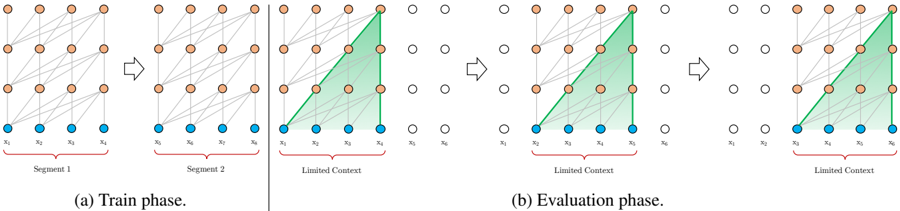
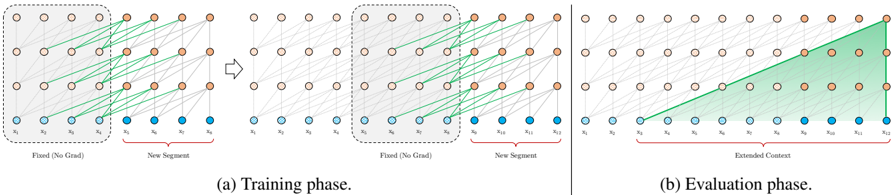
Transformers have a potential of learning longer-term dependency, but are limited by a fixed-length context in the setting of language modeling.We propose a novel neural architecture Transformer-XL that enables learning dependency beyond a fixed length without disrupting temporal coherence.It consists of a segment-level recurrence mechanism and a novel positional encoding scheme.Our method not only enables capturing longer-term dependency, but also resolves the context fragmentation problem.As a result, Transformer-XL learns dependency that is 80% longer than RNNs and 450% longer than vanilla Transformers, achieves better performance on both short and long sequences, and is up to 1,800+ times faster than vanilla Transformers during evaluation.Notably, we improve the state-ofthe-art results of bpc/perplexity to 0.99 on en-wiki8, 1.08 on text8, 18.3 on WikiText-103, 21.8 on One Billion Word, and 54.5 on Penn Treebank (without finetuning).When trained only on WikiText-103, Transformer-XL manages to generate reasonably coherent, novel text articles with thousands of tokens.Our code, pretrained models, and hyperparameters are available in both Tensorflow and PyTorch 1 .
Overview
The claims and statistics of this paper haven’t been checked yet.
Free: it reads the open-access text and checks the first 5 claims that cite a source we can check. Create a free account to check every claim.
Integrity signals
Registry
Cites
Statistics
Figures
Verification
Claims the paper makes
The claims and statistics of this paper haven’t been checked yet.
Free: it reads the open-access text and checks the first 5 claims that cite a source we can check. Create a free account to check every claim.
Claims other papers make about this one
Each is checked against this paper’s own text: does it say what the citing paper says it does?
The cited source doesn’t support the claim as written.
In the citing paper
“note that the Transformer XL model25 incorporates some form of recurrent processing within the transformer block, but it still takes the entire text as its input in parallel.”
From Incremental accumulation of linguistic context in artificial and biological neural networks (2025) · cites this paper as [25]
Checked by a reasoning model — may be wrong.
Experimental — accuracy not yet measuredThe source backs part of the claim, not all of it — or backs it for a different population, condition or comparison.
In the citing paper
“Directly extending the context length of transformers incurs a quadratic increase in computational time and memory cost due to the transformer architecture's self-attention mechanism, making the design of new long-context architectures a pressing research challenge (Dai et al., 2019; Kitaev et al., 2020; Beltagy et al., 2020).”
From MemGPT: Towards LLMs as Operating Systems (2023) · cites this paper as Dai et al., 2019
Experimental — accuracy not yet measuredThe source backs part of the claim, not all of it — or backs it for a different population, condition or comparison.
In the citing paper
“We believe that the different trends are caused by the truncation problem [59], [60].”
From What Makes Good In-Context Demonstrations for Code Intelligence Tasks with LLMs? (2023) · cites this paper as [59]
Experimental — accuracy not yet measuredThe source backs part of the claim, not all of it — or backs it for a different population, condition or comparison.
In the citing paper
“Fixed-window methods : including context windows of 4K, 8K, and 16K tokens with FIFO eviction [10, 2]”
From FadeMem: Biologically-Inspired Forgetting for Efficient Agent Memory (2026) · cites this paper as [10]
Experimental — accuracy not yet measuredThe source backs part of the claim, not all of it — or backs it for a different population, condition or comparison.
In the citing paper
“Thus, in practice, Transformer-XL and Compressive Transformer need huge memory size to achieve good performance.”
From Memformer: a memory-augmented transformer for sequence modeling (2020) · cites this paper as Dai et al., 2019
Experimental — accuracy not yet measured
12 more claims about this paper
Create a free account to see every claim other papers make about this one.
Self-check
Percentages, sums and reported differences re-computed from the paper’s own numbers.
The self-check needs the paper’s full text.
Citations
Cites
Vaswani, A., Shazeer, N., Parmar, N., Uszkoreit, J., Jones, L., Gomez, A. N., Kaiser, L., & Polosukhin, I. (2017) · arXiv · doi:10.48550/arxiv.1706.03762 · Cited by 120,404 · cited 7×
“On the other hand, the direct connections between long-distance word pairs baked in attention mechanisms might ease optimization and enable the learning of long-term dependency (Bahdanau et al., 2014; Vaswani et al., 2017).”
BackgroundMethodInfluentialHochreiter, S., & Schmidhuber, J. (1997) · Neural Computation · doi:10.1162/neco.1997.9.8.1735 · Cited by 102,318 · cited 2×
“Recurrent neural networks (RNNs), in particular Long Short-Term Memory (LSTM) networks (Hochreiter & Schmidhuber, 1997), have been a standard solution to language modeling and obtained strong results on multiple benchmarks.”
BackgroundExploiting Generative AI to Scale up Intelligent Tutoring Systems
Jakubův, J., Chvalovský, K., Goertzel, Z., Kaliszyk, C., Olšák, M., Piotrowski, B., Schulz, S., Suda, M., & Urban, J. (2023) · DROPS (Schloss Dagstuhl – Leibniz Center for Informatics) · doi:10.4230/lipics.itp.2023.19 · Cited by 76,658
BERT: Pre-training of Deep Bidirectional Transformers for Language Understanding
Devlin, J., Chang, M.-W., Lee, K., & Toutanova, K. (2018) · arXiv · doi:10.48550/arxiv.1810.04805 · Cited by 73,173 · cited 4×
“Second, though it is possible to use padding to respect the sentence or other semantic boundaries, in practice it has been standard practice to simply chunk long text into fixed-length segments due to improved efficiency (Peters et al., 2018; Devlin et al., 2018; Al-Rfou et al., 2018).”
BackgroundInfluentialBERT: Pre-training of Deep Bidirectional Transformers for Language Understanding
Devlin, J., Chang, M.-W., Lee, K., & Toutanova, K. (2019) · Proceedings of the 2019 Conference of the North American Chapter of the Association for Computational Linguistics: Human Language Technologies, Volume 1 (Long and Short Papers) · doi:10.18653/v1/n19-1423 · Cited by 54,325 · cited 4×
“Second, though it is possible to use padding to respect the sentence or other semantic boundaries, in practice it has been standard practice to simply chunk long text into fixed-length segments due to improved efficiency (Peters et al., 2018; Devlin et al., 2018; Al-Rfou et al., 2018).”
BackgroundInfluentialNeural Machine Translation by Jointly Learning to Align and Translate
Bahdanau, D., Cho, K., & Bengio, Y. (2014) · arXiv · doi:10.48550/arxiv.1409.0473 · Cited by 16,213 · cited 2×
“On the other hand, the direct connections between long-distance word pairs baked in attention mechanisms might ease optimization and enable the learning of long-term dependency (Bahdanau et al., 2014; Vaswani et al., 2017).”
BackgroundDeep Contextualized Word Representations
Peters, M., Neumann, M., Iyyer, M., Gardner, M., Clark, C., Lee, K., & Zettlemoyer, L. (2018) · Proceedings of the 2018 Conference of the North American Chapter of the Association for Computational Linguistics: Human Language Technologies, Volume 1 (Long Papers) · doi:10.18653/v1/n18-1202 · Cited by 11,983 · cited 4×
“Second, though it is possible to use padding to respect the sentence or other semantic boundaries, in practice it has been standard practice to simply chunk long text into fixed-length segments due to improved efficiency (Peters et al., 2018; Devlin et al., 2018; Al-Rfou et al., 2018).”
BackgroundInfluentialRecurrent neural network based language model
Mikolov, T., Karafiát, M., Burget, L., Černocký, J., & Khudanpur, S. (2010) · Interspeech 2010 · doi:10.21437/interspeech.2010-343 · Cited by 5,390 · cited 5×
“However, different from truncated BPTT, our method caches a sequence of hidden states instead of the last one, and should be applied together with the relative positional encoding technique described in Section 3.3.”
BackgroundMethodInfluentialAn Empirical Evaluation of Generic Convolutional and Recurrent Networks for Sequence Modeling
Bai, S., Kolter, J. Z., & Koltun, V. (2018) · arXiv · doi:10.48550/arxiv.1803.01271 · Cited by 4,655
Neural Architecture Search with Reinforcement Learning
Zoph, B., & Le, Q. V. (2016) · arXiv (Cornell University) · doi:10.48550/arxiv.1611.01578 · Cited by 3,974
Self-citation
Research works printed but not linked: 1
- Matthew E Peters, Mark Neumann, Mohit Iyyer, Matt Gardner, Christopher Clark, Kenton Lee, and Luke Zettlemoyer. 2018. Deep contextualized word rep- resentations. arXiv preprint arXiv:1802.05365. · arXiv
Cited by
Items 301–400 of 1,058
Developing Real-Time Streaming Transformer Transducer for Speech Recognition on Large-Scale Dataset
Chen, X., Wu, Y., Wang, Z., Liu, S., & Li, J. (2021) · ICASSP 2021 - 2021 IEEE International Conference on Acoustics, Speech and Signal Processing (ICASSP) · doi:10.1109/icassp39728.2021.9413535 · Cited by 169
Visual speech recognition for multiple languages in the wild
Ma, P., Petridis, S., & Pantic, M. (2022) · Nature Machine Intelligence · doi:10.1038/s42256-022-00550-z · Cited by 169
Selva, J., Johansen, A. S., Escalera, S., Nasrollahi, K., Moeslund, T. B., & Clapés, A. (2023) · IEEE Transactions on Pattern Analysis and Machine Intelligence · doi:10.1109/tpami.2023.3243465 · Cited by 169
“Relative PEs are generally added as an additional bias term (as in [42], [88], [89], [90]) in the dot-product betweenQ andK (modifying (1)).”
BackgroundSpan-Based Joint Entity and Relation Extraction with Transformer Pre-Training
Markus, E., & Adrian, U. (2020) · Frontiers in Artificial Intelligence and Applications · doi:10.3233/faia200321 · Cited by 168
“Transfomer networks such as BERT [8], GPT [26], Transformer-XL [7], RoBERTa [19] or MASS [30] have recently attracted strong attention in the NLP research community.”
BackgroundCausal Analysis of Syntactic Agreement Mechanisms in Neural Language Models
Finlayson, M., Mueller, A., Gehrmann, S., Shieber, S., Linzen, T., & Belinkov, Y. (2021) · Proceedings of the 59th Annual Meeting of the Association for Computational Linguistics and the 11th International Joint Conference on Natural Language Processing (Volume 1: Long Papers) · doi:10.18653/v1/2021.acl-long.144 · Cited by 40
“To investigate how differences in training across Transformer-based architectures manifest themselves in syntactic agreement mechanisms, we also investigate Transformer-XL (Dai et al., 2019) and XLNet (Yang et al.”
BackgroundMethodCompound Word Transformer: Learning to Compose Full-Song Music over Dynamic Directed Hypergraphs
Hsiao, W.-Y., Liu, J.-Y., Yeh, Y.-C., & Yang, Y.-H. (2021) · Proceedings of the AAAI Conference on Artificial Intelligence · doi:10.1609/aaai.v35i1.16091 · Cited by 166
Self-citationA survey on aspect-based sentiment classification
Brauwers, G., & Frasincar, F. (2023) · ACM Computing Surveys · doi:10.1145/3503044 · Cited by 165
“Transformer models will undoubtedly remain relevant as new transformer-based architectures are proposed that can be used for ABSC, such as the transformer-XL [41] and the reformer model [107].”
MethodTheoretical Limitations of Self-Attention in Neural Sequence Models
Hahn, M. (2020) · Transactions of the Association for Computational Linguistics · doi:10.1162/tacl_a_00306 · Cited by 165
“This enables them to scale to very long sequences (Vaswani et al., 2017; Dai et al., 2019; Child et al., 2019).”
BackgroundTowards Efficient Model Compression via Learned Global Ranking
Chin, T.-W., Ding, R., Zhang, C., & Marculescu, D. (2020) · 2020 IEEE/CVF Conference on Computer Vision and Pattern Recognition (CVPR) · doi:10.1109/cvpr42600.2020.00159 · Cited by 165
An End-to-End Blind Image Quality Assessment Method Using a Recurrent Network and Self-Attention
Zhou, M., Lan, X., Wei, X., Liao, X., Mao, Q., Li, Y., Wu, C., Xiang, T., & Fang, B. (2022) · IEEE Transactions on Broadcasting · doi:10.1109/tbc.2022.3215249 · Cited by 165
“Many studies on adding relative position information to the transformer model have been conducted [47], [48], [49].”
BackgroundCLIMATEBERT: A Pretrained Language Model for Climate-Related Text
Webersinke, N., Kraus, M., Bingler, J., & Leippold, M. (2022) · SSRN Electronic Journal · doi:10.2139/ssrn.4229146 · Cited by 164
A Complete Process of Text Classification System Using State-of-the-Art NLP Models
Dogra, V., Verma, S., Kavita, Chatterjee, P., Shafi, J., Choi, J., & Ijaz, M. F. (2022) · Computational Intelligence and Neuroscience · doi:10.1155/2022/1883698 · Cited by 164
“Transformer is based through the encoder and decoder on an attention process as shown in Figure 7.”
BackgroundMethodInfluentialEnd-to-End Transformer-Based Models in Textual-Based NLP
Rahali, A., & Akhloufi, M. A. (2023) · AI · doi:10.3390/ai4010004 · Cited by 164
Transformer models used for text-based question answering systems
Nassiri, K., & Akhloufi, M. (2023) · Applied Intelligence · doi:10.1007/s10489-022-04052-8 · Cited by 164
“Furthermore, XLNet employs the main concepts of Transformer-XL [154] to efficiently learn large texts.”
MethodTransformer-based World Models Are Happy With 100k InteractionsPreprint
Robine, J., Höftmann, M., Uelwer, T., & Harmeling, S. (2023) · arXiv (Cornell University) · doi:10.48550/arxiv.2303.07109 · Cited by 166
RealFormer: Transformer Likes Residual Attention
He, R., Ravula, A., Kanagal, B., & Ainslie, J. (2021) · Findings of the Association for Computational Linguistics: ACL (Findings of ACL) · doi:10.18653/v1/2021.findings-acl.81 · Cited by 164
Streaming Dense Video Captioning
Zhou, X., Arnab, A., Buch, S., Shen, Y., Myers, A., Xiong, X., Nagrani, A., & Schmid, C. (2024) · IEEE Computer Society Conference on Computer Vision and Pattern Recognition/Proceedings - IEEE Computer Society Conference on Computer Vision and Pattern Recognition/Proceedings · doi:10.1109/cvpr52733.2024.01727 · Cited by 165
“With transformers, memory can easily implemented by using tokens from past observations as inputs for the present time step [13, 36, 56].”
MethodZhang, Y., Park, D. S., Han, W., Qin, J., Gulati, A., Shor, J., Jansen, A., Xu, Y., Huang, Y., Wang, S., et al. (2022) · IEEE Journal of Selected Topics in Signal Processing · doi:10.1109/jstsp.2022.3182537 · Cited by 161
Self-citationTrain Short, Test Long: Attention with Linear Biases Enables Input Length Extrapolation
Press, O., Smith, N. A., & Lewis, M. (2021) · arXiv · doi:10.48550/arxiv.2108.12409 · Cited by 161
Knowledge Graph Based Synthetic Corpus Generation for Knowledge-Enhanced Language Model Pre-training
Agarwal, O., Ge, H., Shakeri, S., & Al-Rfou, R. (2021) · Proceedings of the 2021 Conference of the North American Chapter of the Association for Computational Linguistics: Human Language Technologies · doi:10.18653/v1/2021.naacl-main.278 · Cited by 161
PalmTree: Learning an Assembly Language Model for Instruction Embedding
Li, X., Qu, Y., & Yin, H. (2021) · Proceedings of the 2021 ACM SIGSAC Conference on Computer and Communications Security · doi:10.1145/3460120.3484587 · Cited by 161
“On the other hand, it is worth noting that most existing PTMs cannot deal with the sequence longer than 512 tokens [33] (PTMs that can process longer sequences, such as Transformer XL [8], will require more GPU memory), as a result, even if we directly train these PTMs on instruction sequences with MLM, it is hard for…”
BackgroundKheddar, H. (2025) · Information Fusion · doi:10.1016/j.inffus.2025.103347 · Cited by 161
A comprehensive review on deep learning approaches in wind forecasting applications
Wu, Z., Luo, G., Yang, Z., Guo, Y., Li, K., & Xue, Y. (2022) · CAAI Transactions on Intelligence Technology · doi:10.1049/cit2.12076 · Cited by 161
Self-citationNguyen, T. T. (2020) · doi:10.36227/techrxiv.12743933 · Cited by 161
TCCT: Tightly-coupled convolutional transformer on time series forecasting
Shen, L., & Wang, Y. (2022) · Neurocomputing · doi:10.1016/j.neucom.2022.01.039 · Cited by 162
“Deep neural network based model is a good candidate for solving aforementioned problems, especially Transformer models [8–11].”
Certified Data Removal from Machine Learning Models
Guo, C., Goldstein, T., Hannun, A., & van der Maaten, L. (2019) · arXiv · doi:10.48550/arxiv.1911.03030 · Cited by 160
“…extracted by a network pre-trained on a public dataset like ImageNet (Ren et al., 2015; He et al., 2017; Zhao et al., 2017; Carreira and Zisserman, 2017) for imaging, and a range of text classification tasks (De-vlin et al., 2019; Dai et al., 2019; Yang et al., 2019; Liu et al., 2019) for language.”
BackgroundExploring chemical space using natural language processing methodologies for drug discovery
Öztürk, H., Özgür, A., Schwaller, P., Laino, T., & Ozkirimli, E. (2020) · Drug Discovery Today · doi:10.1016/j.drudis.2020.01.020 · Cited by 160
“Generative Pre-Training or GPT) [136] and BERT [137], RoBERTa [138], GPT2 [139], Transformer-XL [140], and XLNet [141] models.”
Continuous Speech Separation with Conformer
Chen, S., Wu, Y., Chen, Z., Wu, J., Li, J., Yoshioka, T., Wang, C., Liu, S., & Zhou, M. (2021) · ICASSP 2021 - 2021 IEEE International Conference on Acoustics, Speech and Signal Processing (ICASSP) · doi:10.1109/icassp39728.2021.9413423 · Cited by 110
TransFlow: Transformer as Flow Learner
Lu, Y., Wang, Q., Ma, S., Geng, T., Chen, Y., Chen, H., & Liu, D. (2023) · IEEE Computer Society Conference on Computer Vision and Pattern Recognition/Proceedings - IEEE Computer Society Conference on Computer Vision and Pattern Recognition/Proceedings · doi:10.1109/cvpr52729.2023.01732 · Cited by 160
“While becoming the standard for natural language processing tasks [10, 12], a flurry of research has successfully introduced Transformers to computer vision.”
BackgroundLanguage models and Automated Essay ScoringPreprint
Rodriguez, P. U., Jafari, A., & Ormerod, C. M. (2019) · arXiv (Cornell University) · doi:10.48550/arxiv.1909.09482 · Cited by 161
Roshanzamir, A., Aghajan, H., & Soleymani Baghshah, M. (2021) · BMC Medical Informatics and Decision Making · doi:10.1186/s12911-021-01456-3 · Cited by 133
“[35] extended the model 195 using relative positional encoding and segment-level recurrence.”
MethodWang, D., & He, D. (2022) · Computers and Electronics in Agriculture · doi:10.1016/j.compag.2022.106864 · Cited by 161
Artificial intelligence-based diagnosis of Alzheimer's disease with brain MRI images
Yao, Z., Wang, H., Yan, W., Wang, Z., Zhang, W., Wang, Z., & Zhang, G. (2023) · European Journal of Radiology · doi:10.1016/j.ejrad.2023.110934 · Cited by 116
The NLP Cookbook: Modern Recipes for Transformer Based Deep Learning Architectures
Singh, S., & Mahmood, A. (2021) · IEEE Access · doi:10.1109/access.2021.3077350 · Cited by 158
“For greater sequence length processing the memory blocks are derived from Transformer-XL which can process longer than standard Transformer input sequence lengths.”
BackgroundInfluentialLAMBERT: Layout-Aware Language Modeling for Information Extraction
Garncarek, Ł., Powalski, R., Stanisławek, T., Topolski, B., Halama, P., Turski, M., & Graliński, F. (2021) · Lecture notes in computer science · doi:10.1007/978-3-030-86549-8_34 · Cited by 158
“In general, there are many ways to circumvent this limit, such as using predefined [28] or relative [4] sequential embeddings.”
BackgroundEffectiveness of self-supervised pre-training for speech recognition
Baevski, A., Auli, M., & Mohamed, A. (2019) · arXiv (Cornell University) · doi:10.48550/arxiv.1911.03912 · Cited by 93
“We add 128 relative positional embeddings at every multi-head attention block as formulated in (Dai et al., 2019) instead of fixed positional embeddings to ease handling longer examples.”
MethodA Survey on Green Deep LearningPreprint
Xu, J., Zhou, W., Fu, Z., Zhou, H., & Li, L. (2021) · arXiv (Cornell University) · doi:10.48550/arxiv.2111.05193 · Cited by 160
“It is the idea of sparse attention (Martins & Astudillo, 2016; Child et al., 2019; Correia et al., 2019; Dai et al., 2019; Zaheer et al., 2020).”
BackgroundBehrmann, N., Golestaneh, S. A., Kolter, J. Z., Gall, J., & Noroozi, M. (2022) · Lecture notes in computer science · doi:10.1007/978-3-031-19833-5_4 · Cited by 157
Miah, A. S. M., Hasan, M. A. M., & Shin, J. (2023) · IEEE Access · doi:10.1109/access.2023.3235368 · Cited by 155
“Query, Key and Values, which multiply the Query with Key in the first stage, divide by the key’s dimension and finally apply the SoftMax function to produce the weight vector [22], [30].”
BackgroundMethodRecognizing Long-Form Speech Using Streaming End-to-End Models
Narayanan, A., Prabhavalkar, R., Chiu, C., Rybach, D., Sainath, T. N., & Strohman, T. (2019) · IEEE Workshop on Automatic Speech Recognition and Understanding (ASRU) · doi:10.1109/asru46091.2019.9003913 · Cited by 152
“transformer-XL language models to learn long context [33].”
BackgroundExpanding the prediction capacity in long sequence time-series forecasting
Zhou, H., Li, J., Zhang, S., Zhang, S., Yan, M., & Xiong, H. (2023) · Artificial Intelligence · doi:10.1016/j.artint.2023.103886 · Cited by 156
Randomized Positional Encodings Boost Length Generalization of Transformers
Ruoss, A., Delétang, G., Genewein, T., Grau-Moya, J., Csordás, R., Bennani, M., Legg, S., & Veness, J. (2023) · Proceedings of the conference - Association for Computational Linguistics. Meeting · doi:10.18653/v1/2023.acl-short.161 · Cited by 156
A Survey of Active Learning for Text Classification using Deep Neural NetworksPreprint
Schröder, C., & Niekler, A. (2020) · arXiv (Cornell University) · doi:10.48550/arxiv.2008.07267 · Cited by 157
“…introduced a similar approach of pre-training and fine-tuning using an autoregressive language model, however, it overcame BERT’s limitation as it does not rely on masking data during pre-training [102], and moreover, successfully manages to integrate the recent TransformerXL architecture [17].”
MethodAsynchronous Interaction Aggregation for Action Detection
Tang, J., Xia, J., Mu, X., Pang, B., & Lu, C. (2020) · Lecture notes in computer science · doi:10.1007/978-3-030-58555-6_5 · Cited by 151
Using Computational Models to Test Syntactic Learnability
Wilcox, E. G., Futrell, R., & Levy, R. (2024) · Linguistic Inquiry · doi:10.1162/ling_a_00491 · Cited by 62
Galvatron: Efficient Transformer Training over Multiple GPUs Using Automatic Parallelism
Miao, X., Wang, Y. X., Jiang, Y., Shi, C., Nie, X., Zhang, H., & Cui, B. (2022) · Proceedings of the VLDB Endowment · doi:10.14778/3570690.3570697 · Cited by 151
“Different manners of using Transformer layers in NLP incur three mainly Transformer architectures, including encoder-only (for text classification, e.g., BERT and RoBERTa [20]), decoder-only (for text generation, e.g., GPT-2 and TransformerXL [8]), and encoder-decoder (for sequence-to-sequence tasks, e.g., T5 and BART…”
Revisiting the Uniform Information Density Hypothesis
Meister, C., Pimentel, T., Haller, P., Jäger, L. A., Cotterell, R., & Lévy, R. (2021) · Conference on Empirical Methods in Natural Language Processing (EMNLP) · doi:10.18653/v1/2021.emnlp-main.74 · Cited by 155
“For the TransformerXL, we use a version of the model (architecture described in Dai et al. (2019)) that has been finetuned on WikiText-103 (transfo-xl-wt103).”
BackgroundMethodA Mutual Information Maximization Perspective of Language Representation Learning
Kong, L., d’Autume, C. D. M., Wang, L., Yu, L., Dai, Z., & Yogatama, D. (2019) · arXiv (Cornell University) · doi:10.48550/arxiv.1910.08350 · Cited by 101
“In addition to replacing the Transformer encoder with Transformer XL (Dai et al., 2019), a key architectural innovation of XLNet is the two-stream self-attention.”
MethodSelf-citationTRIE: End-to-End Text Reading and Information Extraction for Document Understanding
Zhang, P., Xu, Y., Cheng, Z., Pu, S., Lu, J., Liang, Q., Niu, Y., & Wu, F. Q. (2020) · ACM International Conference on Multimedia (ACM MM) · doi:10.1145/3394171.3413900 · Cited by 149
Vision Transformers with Hierarchical Attention
Liu, Y., Wu, Y.-H., Sun, G., Zhang, L., Chhatkuli, A., & Gool, L. V. (2024) · Machine Intelligence Research · doi:10.1007/s11633-024-1393-8 · Cited by 214
“Meanwhile, in another field of natural language processing (NLP), the transformer architecture [12] has been the de-facto standard to handle long-range dependencies [13], [14].”
Efficient Attentions for Long Document Summarization
Huang, L., Cao, S., Parulian, N., Ji, H., & Wang, L. (2021) · Proceedings of the 2021 Conference of the North American Chapter of the Association for Computational Linguistics: Human Language Technologies · doi:10.18653/v1/2021.naacl-main.112 · Cited by 146
Transformers: “The End of History” for Natural Language Processing?
Chernyavskiy, A., Ilvovsky, D., & Nakov, P. (2021) · Lecture notes in computer science · doi:10.1007/978-3-030-86523-8_41 · Cited by 149
Hierarchical Transformers Are More Efficient Language Models
Nawrot, P., Tworkowski, S., Tyrolski, M., Kaiser, Ł., Wu, Y., Szegedy, C., & Michalewski, H. (2022) · Findings of the Association for Computational Linguistics: NAACL · doi:10.18653/v1/2022.findings-naacl.117 · Cited by 146
Hu, D., Giorgio-Serchi, F., Zhang, S., & Yang, Y. (2023) · Nature Machine Intelligence · doi:10.1038/s42256-023-00622-8 · Cited by 146
Self-citationSimDA: Simple Diffusion Adapter for Efficient Video Generation
Xing, Z., Dai, Q., Hu, H., Wu, Z., & Jiang, Y. (2024) · IEEE Computer Society Conference on Computer Vision and Pattern Recognition/Proceedings - IEEE Computer Society Conference on Computer Vision and Pattern Recognition/Proceedings · doi:10.1109/cvpr52733.2024.00748 · Cited by 149
“(b) Text-guided Video Editing”
A Practical Survey on Faster and Lighter Transformers
Fournier, Q., Caron, G. M., & Aloise, D. (2023) · ACM Computing Surveys · doi:10.1145/3586074 · Cited by 145
“Recurrence [10]: The block-wise approach splits the input sequence into small non-overlapping subsequences called windows, blocks, or chunks, which are processed independently; therefore, the maximum dependency length is equal to that of the subsequence.”
BackgroundCross-Modal Relation-Aware Networks for Audio-Visual Event Localization
Xu, H., Zeng, R., Wu, Q., Tan, M., & Gan, C. (2020) · ACM International Conference on Multimedia (ACM MM) · doi:10.1145/3394171.3413581 · Cited by 144
“In recent years, self-attention mechanism [32] has achieved great success in capturing intra-modality relations among words in NLP [5, 6].”
BackgroundA Better and Faster end-to-end Model for Streaming ASR
Li, B., Gulati, A., Yu, J., Sainath, T. N., Chiu, C., Narayanan, A., Chang, S.-Y., Pang, R., He, Y., Qin, J., et al. (2021) · IEEE International Conference on Acoustics Speech and Signal Processing · doi:10.1109/icassp39728.2021.9413899 · Cited by 145
“Instead, we reuse the existing convolution module that aggregates information from neighboring context to implicitly provide relative positional information [24, 25].”
MethodA review on emotion detection by using deep learning techniques
Chutia, T., & Baruah, N. (2024) · Artificial Intelligence Review · doi:10.1007/s10462-024-10831-1 · Cited by 149
Museformer: Transformer with Fine- And Coarse-Grained Attention for Music Generation
Yu, B., Liu, T., Wang, R., Hu, W., Tan, X., Ye, W., Zhang, S., Qin, T., & Liu, T.-Y. (2022) · neural information processing systems · doi:10.52202/068431-0101 · Cited by 152
Laconic deep learning inference acceleration
Sharify, S., Lascorz, A. D., Mahmoud, M., Nikolić, M., Siu, K., Stuart, D. M., Poulos, Z., & Moshovos, A. (2019) · Proceedings - International Symposium on Computer Architecture/Proceedings · doi:10.1145/3307650.3322255 · Cited by 142
“Presently, most natural language processing models use predominantly fully-connected layers [20], and others use a mix of both fully-connected and convolutional layers [21, 29].”
BackgroundEvaluation of Neural Architectures Trained with Square Loss vs Cross-Entropy in Classification TasksPreprint
Hui, L., & Belkin, M. (2020) · arXiv (Cornell University) · doi:10.48550/arxiv.2006.07322 · Cited by 143
Transformer-Based Online CTC/Attention End-To-End Speech Recognition Architecture
Miao, H., Cheng, G., Gao, C., Zhang, P., & Yan, Y. (2020) · IEEE International Conference on Acoustics Speech and Signal Processing · doi:10.1109/icassp40776.2020.9053165 · Cited by 142
“Inspired by Transformer-XL [17], we further propose the state reuse chunk-SAE which reuses the stored states of the previous chunks to reduce the computational cost.”
MethodToward autonomous laboratories: Convergence of artificial intelligence and experimental automation
Xie, Y., Sattari, K., Zhang, C., & Lin, J. (2022) · Progress in Materials Science · doi:10.1016/j.pmatsci.2022.101043 · Cited by 145
Effectiveness of Self-Supervised Pre-Training for ASR
Baevski, A., & Mohamed, A. (2020) · ICASSP 2020 - 2020 IEEE International Conference on Acoustics, Speech and Signal Processing (ICASSP) · doi:10.1109/icassp40776.2020.9054224 · Cited by 98
“We add 128 relative positional embeddings at every multi-head attention block [34] instead of fixed positional embeddings to make it easier to handle longer examples.”
MethodPatchFormer: An Efficient Point Transformer with Patch Attention
Zhang, C., Wan, H., Shen, X., & Wu, Z. (2022) · IEEE Computer Society Conference on Computer Vision and Pattern Recognition/Proceedings - IEEE Computer Society Conference on Computer Vision and Pattern Recognition/Proceedings · doi:10.1109/cvpr52688.2022.01150 · Cited by 141
“Motivated by the success of Transformers in NLP [6,14, 29,34,48], researchers designed visual Transformers for vision tasks to take advantage of their great attention mechanism.”
MethodPRCBERT: Prompt Learning for Requirement Classification using BERT-based Pretrained Language Models
Luo, X., Xue, Y., Xing, Z., & Sun, J. (2022) · Proceedings of the 37th IEEE/ACM International Conference on Automated Software Engineering · doi:10.1145/3551349.3560417 · Cited by 87
“Only based on the attention mechanism [5], the transformer can implement semantic interaction between all sequence text subwords (also called tokens) without any attenuation (due to the gradient vanishing and explosion caused by the long relative distance between subwords, previous LSTMbased language models can proces…”
MethodAI-based conversational agents: A scoping review from technologies to future directions
Kusal, S., Patil, S., Choudrie, J., Kotecha, K., Mishra, S., & Abraham, A. (2022) · IEEE Access · doi:10.1109/access.2022.3201144 · Cited by 140
“Transformer499 based language models such as BERT and its variations, 500 GPT, and transformer XL [46] utilize sentence-level recur501”
MethodSpatial Dependency Parsing for Semi-Structured Document Information Extraction
Hwang, W., Yim, J., Park, S., Yang, S., & Seo, M. (2021) · Findings of the Association for Computational Linguistics: ACL (Findings of ACL) · doi:10.18653/v1/2021.findings-acl.28 · Cited by 140
“Inspired by Transformer XL (Dai et al., 2019), the attention weights (between each key and query vector) is computed by”
MethodRepresentation Learning for Natural Language Processing
Liu, Z., Lin, Y., & Sun, M. (2020) · Springer eBooks · doi:10.1007/978-981-15-5573-2 · Cited by 144
MuseMorphose: Full-Song and Fine-Grained Piano Music Style Transfer With One Transformer VAE
Wu, S.-L., & Yang, Y. (2023) · IEEE/ACM Transactions on Audio Speech and Language Processing · doi:10.1109/taslp.2023.3270726 · Cited by 143
“To resolve this, Transformer-XL [16] leveraged segment-level recurrence and hidden states cache to allow tokens in the current segment to refer to those in the preceding segment.”
BackgroundMethodInfluentialSelf-citationPeng, Y., Dalmia, S., Lane, I. R., & Watanabe, S. (2022) · arXiv (Cornell University) · doi:10.48550/arxiv.2207.02971 · Cited by 139
“, 2017) with relative positional encoding (Dai et al., 2019).”
MethodPoint Spatio-Temporal Transformer Networks for Point Cloud Video Modeling
Fan, H., Yang, Y., & Kankanhalli, M. (2022) · IEEE Transactions on Pattern Analysis and Machine Intelligence · doi:10.1109/tpami.2022.3161735 · Cited by 141
“Impressive progress has been made on natural language processing due to the success of Transformer networks [6], [7], [46], [56].”
BackgroundSelf-citationLiu, V., & Yin, Y. (2024) · Discover Artificial Intelligence · doi:10.1007/s44163-024-00149-w · Cited by 138
“…safe practices while maintaining results will not only be necessary to reduce the environmental damage of large language model training, but it also promises new horizons for sustainable and robust, high-performing models in the NLP field through added benefits in model efficiency and speed.”
Saunders, B., Camgöz, N. C., & Bowden, R. (2021) · International Journal of Computer Vision · doi:10.1007/s11263-021-01457-9 · Cited by 141
“Transformers have achieved impressive results in many classic Natural Language Processing (NLP) tasks such as language modelling (Dai et al., 2019; Z. Zhang et al., 2019) and sentence representation (Devlin et al., 2018), alongside other domains including image captioning (Zhou et al., 2018) and…”
BackgroundParadigm Shift in Natural Language Processing
Sun, T.-X., Liu, X.-Y., Qiu, X.-P., & Huang, X.-J. (2022) · Machine Intelligence Research · doi:10.1007/s11633-022-1331-6 · Cited by 86
SpecTr: Spectral Transformer for Microscopic Hyperspectral Pathology Image Segmentation
Yun, B., Lei, B., Chen, J., Wang, H., Qiu, S., Shen, W., Li, Q., & Wang, Y. (2023) · IEEE Transactions on Circuits and Systems for Video Technology · doi:10.1109/tcsvt.2023.3326196 · Cited by 136
“Thereafter, benefiting from the self-attention mechanism, which can model long-term dependencies of words, the transformer model and its variants become very popular in NLP [38], [39], [40].”
BackgroundLocal-Global Context Aware Transformer for Language-Guided Video Segmentation
Liang, C., Wang, W., Zhou, T., Miao, J., Luo, Y., & Yang, Y. (2023) · IEEE Transactions on Pattern Analysis and Machine Intelligence · doi:10.1109/tpami.2023.3262578 · Cited by 135
“To address the efficiency issue, some studies exploit sparse attention [97], [98], linear attention [99], [100], and recurrence [101]–[103].”
BackgroundSelf-citationReal-Time Online Video Detection with Temporal Smoothing Transformers
Zhao, Y., & Krähenbühl, P. (2022) · Lecture notes in computer science · doi:10.1007/978-3-031-19830-4_28 · Cited by 137
A Systematic Assessment of Syntactic Generalization in Neural Language Models
Hu, J., Gauthier, J., Qian, P., Wilcox, E., & Levy, R. (2020) · Proceedings of the 58th Annual Meeting of the Association for Computational Linguistics · doi:10.18653/v1/2020.acl-main.158 · Cited by 134
Wang, S., Xu, Y., Fang, Y., Liu, Y., Sun, S., Xu, R., Zhu, C., & Zeng, M. (2022) · Proceedings of the 60th Annual Meeting of the Association for Computational Linguistics (Volume 1: Long Papers) · doi:10.18653/v1/2022.acl-long.226 · Cited by 83
DeLighT: Deep and Light-weight Transformer
Mehta, S., Ghazvininejad, M., Iyer, S. V., Zettlemoyer, L., & Hajishirzi, H. (2020) · arXiv (Cornell University) · doi:10.48550/arxiv.2008.00623 · Cited by 43
“Compared to the baseline network (Transformer-XL [9]), DeLighT delivers better performance (lower perplexity) with a smaller context length and fewer parameters.”
InfluentialLaskar, M. T. R., Huang, J. X., & Hoque, E. (2020) · Language Resources and Evaluation · Cited by 133
Mitigating Political Bias in Language Models through Reinforced Calibration
Liu, R., Jia, C., Wei, J., Xu, G., Wang, L., & Vosoughi, S. (2021) · Proceedings of the AAAI Conference on Artificial Intelligence · doi:10.1609/aaai.v35i17.17744 · Cited by 60
CMT-DeepLab: Clustering Mask Transformers for Panoptic Segmentation
Yu, Q., Wang, H., Kim, D., Qiao, S., Collins, M. D., Zhu, Y., Adam, H., Yuille, A., & Chen, L.-C. (2022) · IEEE Computer Society Conference on Computer Vision and Pattern Recognition/Proceedings - IEEE Computer Society Conference on Computer Vision and Pattern Recognition/Proceedings · doi:10.1109/cvpr52688.2022.00259 · Cited by 135
“Transformer [80] variants [2, 7, 22, 30, 48, 66, 84, 92] have advanced the state-of-the-art in many natural language processing tasks [25, 26, 75] by capturing relations across modalities [3] or in a single context (self-attention) [21, 80].”
BackgroundSitapure, N., & Kwon, J. S. (2023) · Chemical Engineering Research and Design · doi:10.1016/j.cherd.2023.04.028 · Cited by 132
VoCo-LLaMA: Towards Vision Compression with Large Language Models
Ye, X., Gan, Y., Huang, X., Ge, Y.-X., Ying, S., & Tang, Y.-S. (2024) · Computer Vision and Pattern Recognition · doi:10.1109/cvpr52734.2025.02777 · Cited by 102
“As the number of input images increases, the context window for text will be further bottle-1 necked.”
A Survey on Transfer Learning in Natural Language ProcessingPreprint
Alyafeai, Z., Al-shaibani, M. S., & Ahmad, I. (2020) · arXiv (Cornell University) · doi:10.48550/arxiv.2007.04239 · Cited by 135
“(Dai et al., 2019) introduced a new approach for preserving extra-long dependencies in language models (Transformer-XL).”
BackgroundSocietal Biases in Language Generation: Progress and Challenges
Sheng, E., Chang, K.-W., Natarajan, P., & Peng, N. (2021) · Proceedings of the 59th Annual Meeting of the Association for Computational Linguistics and the 11th International Joint Conference on Natural Language Processing (Volume 1: Long Papers) · doi:10.18653/v1/2021.acl-long.330 · Cited by 131
“Recent advances in techniques for language generation (e.g., GPT (Radford et al., 2018), GPT-2 (Radford et al., 2019), GPT-3 (Brown et al., 2020), TransformerXL (Dai et al., 2019), XLNet (Yang et al., 2019)) powered by Transformers (Vaswani et al., 2017) and an increasing repository of available data have created more…”
MethodInfluentialOn Transforming Reinforcement Learning With Transformers: The Development Trajectory
Hu, S., Shen, L., Zhang, Y., Chen, Y., & Tao, D. (2024) · IEEE Transactions on Pattern Analysis and Machine Intelligence · doi:10.1109/tpami.2024.3408271 · Cited by 135
“[23] built on Transformer-XL [100] and compressed old memories rather than discarding them; then, they used a compressive transformer as a drop-in replacement for the LSTM in the IMPALA algorithms [98], as this transformer successfully compresses and makes use of past observations.”
BackgroundMethodInfluentialSentiment Analysis for Software Engineering: How Far Can Pre-trained Transformer Models Go?
Zhang, T., Xu, B., Thung, F., Haryono, S. A., Lo, D., & Jiang, L. (2020) · 2020 IEEE International Conference on Software Maintenance and Evolution (ICSME) · doi:10.1109/icsme46990.2020.00017 · Cited by 129
“Since the introduction of Transformer architecture [11], a number of pre-trained Transformer-based models have been proposed (e.g., [13]–[16], [34]); these form another family, and many of its members have achieved state-of-the-art performance for a number of downstream NLP tasks.”
BackgroundMethodLambdaNetworks: Modeling Long-Range Interactions Without Attention
Bello, I. (2021) · arXiv · doi:10.48550/arxiv.2102.08602 · Cited by 129
“• local attention patterns (Dai et al., 2019; Parmar et al., 2018; Ramachandran et al., 2019) • axial attention patterns (Ho et al.”
BackgroundThe neural architecture of language: Integrative modeling converges on predictive processing
(2020) · doi:10.1101/2020.06.26.174482 · Cited by 129
“XLM-RoBERTa (Conneau et al., 2019) (n=2; xlm-roberta-base, xlm-roberta-large) combines RoBERTa masking with cross-lingual training in XLM. Transformer-XL-wt103 (Dai et al., 2020) adds a recurrence mechanism to GPT (see below) and trains on the smaller WikiText-103 corpus.”
BackgroundWang, Y.-A., & Chen, Y.-N. (2020) · Proceedings of the 2020 Conference on Empirical Methods in Natural Language Processing (EMNLP) · doi:10.18653/v1/2020.emnlp-main.555 · Cited by 78
Nguyen, T. T. (2020) · doi:10.36227/techrxiv.12743933.v1 · Cited by 122
“…networks), transfer learning, and NLG and NLP tools (e.g. NLTK [61], ELMo [62], ULMFiT [63], Transformer [64], Google’s BERT [65], Transformer-XL [66], XLNet [67], ERNIE [68], T5 [69], BPT [70] and OpenAI’s GPT-2 [71]) for various natural language related tasks such as terminology and…”
BackgroundMethodThe Hedgehog & the Porcupine: Expressive Linear Attentions with Softmax Mimicry
Zhang, M., Bhatia, K., Kumbong, H., & Ré, C. (2024) · International Conference on Learning Representations · doi:10.48550/arxiv.2402.04347 · Cited by 129
“When training from scratch, linear attentions achieve 4-6 worse perplexity (ppl) than softmax attention on standard benchmarks such as WikiText-103 (Schlag et al., 2021; Irie et al., 2021; Fu et al., 2023), the equivalent gap between 125M and 255M Transformers (Dai et al., 2019).”
BackgroundDynamic Sparse Attention for Scalable Transformer Acceleration
Liu, L., Qu, Z., Chen, Z., Tu, F., Ding, Y., & Xie, Y. (2022) · IEEE Transactions on Computers · doi:10.1109/tc.2022.3208206 · Cited by 129
“Some approaches are primary for memory footprint reduction during training while efficient inference is being understudied [6], [7], [8], [9].”
BackgroundSTEVE-1: A Generative Model for Text-to-Behavior in Minecraft
Lifshitz, S., Paster, K., Chan, H., Ba, J., & McIlraith, S. A. (2023) · neural information processing systems · doi:10.52202/075280-3064 · Cited by 133
Yang, L., Zhang, M., Li, C., Bendersky, M., & Najork, M. (2020) · Proceedings of the 29th ACM International Conference on Information & Knowledge Management · doi:10.1145/3340531.3411908 · Cited by 88
“Recently there are some related works on adapting Transformers for long text modeling [2, 5, 11, 16, 24, 27–29, 36, 40].”
BackgroundAdaptive Semiparametric Language Models
Yogatama, D., de Masson d’Autume, C., & Kong, L. (2021) · Transactions of the Association for Computational Linguistics · doi:10.1162/tacl_a_00371 · Cited by 56
“The top rows contain results taken from other papers: (a) transformerXL (Dai et al., 2019), (b) adaptive input embeddings (Baevski and Auli, 2019), (c) compressive transformer (Rae et al.”
BackgroundMethodInfluential
Metadata
- Authors
- Dai, Z., Yang, Z., Yang, Y., Carbonell, J., Le, Q., & Salakhutdinov, R.
- Affiliations
- Carnegie Mellon University (US)
- Google (United States) (US)
- Venue
- Proceedings of the 57th Annual Meeting of the Association for Computational Linguistics
- Published
- 2019
- Pages
- 2978-2988
- ISSN
- 0736-587X (ISSN-L)
- OpenAlex
- W2964110616
- Cited by
- 3,169
- References
- 67
- Citations by year
- 2026: 163 · 2025: 361 · 2024: 434 · 2023: 585 · 2022: 504 · 2021: 612 · 2020: 403 · 2019: 107
- FWCI
- 155.55
- Type
- conference paper
- Language
- en
- Open access
- hybrid
- doi.org
- Licence
- cc-by
- Locations
- Proceedings of the conference - Association for Computational Linguistics. Meeting (publishedVersion, cc-by)
- Funders
- National Science Foundation (1546329, 1763562)
- U.S. Department of Energy
- Nvidia
- Office of Science
- Office of Naval Research (N000141812861)
- Advanced Scientific Computing Research
- Topics
- Physical Sciences › Computer Science › Artificial Intelligence › Topic Modeling
- Physical Sciences › Computer Science › Artificial Intelligence › Natural Language Processing Techniques
- Physical Sciences › Computer Science › Artificial Intelligence › Speech Recognition and Synthesis
- Keywords
- Transformer-XL, long-range dependencies, positional encoding, language modeling, temporal coherence, sequence generation, pre-trained language models
About these checks
Registry, retraction, Cites and statistics results are computed, not judged, with one exception: a printed reference that no index lists is read once by a model before it counts as a citation error. Claims are extracted by a model and kept only when their quote appears verbatim in the text; each cited source is then checked, with a model’s help, for whether it says what the claim relies on. Those verdicts can be wrong — read the claim’s quote and the cited source before relying on one.
Statistics and arithmetic are recomputed, not judged.
Confidence bands are shown only for fields calibrated on our annotated test set. None is calibrated yet, so no band is shown.
What counts as a claim ›How we measure confidence ›How we check this ›
Are you an author, or do you see a problem with this page? Request a review
Data sources
Bibliographic data: Semantic Scholar, OpenAlex, Crossref.
Contains information from the Semantic Scholar Academic Graph Datasets, made available under the ODC Attribution License (ODC-BY 1.0).
Semantic Scholar’s data is described in: Kinney, R., et al. (2023). The Semantic Scholar Open Data Platform. arXiv:2301.10140.
