

Transformer-XL: Attentive Language Models beyond a Fixed-Length Context
Open accessThe DOI matches its Crossref record; 65 of the 67 references it cites were found in a registry or an index.
Abstract
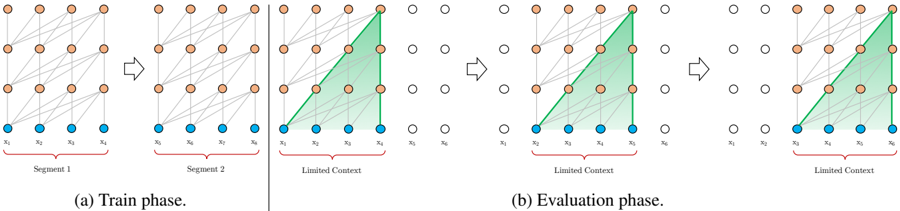
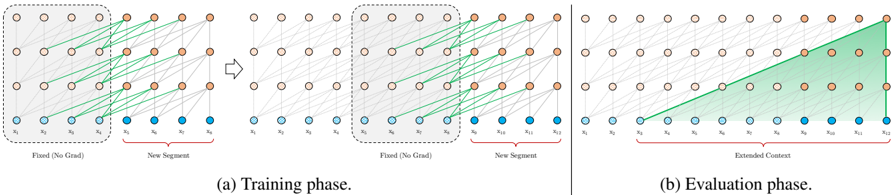
Transformers have a potential of learning longer-term dependency, but are limited by a fixed-length context in the setting of language modeling.We propose a novel neural architecture Transformer-XL that enables learning dependency beyond a fixed length without disrupting temporal coherence.It consists of a segment-level recurrence mechanism and a novel positional encoding scheme.Our method not only enables capturing longer-term dependency, but also resolves the context fragmentation problem.As a result, Transformer-XL learns dependency that is 80% longer than RNNs and 450% longer than vanilla Transformers, achieves better performance on both short and long sequences, and is up to 1,800+ times faster than vanilla Transformers during evaluation.Notably, we improve the state-ofthe-art results of bpc/perplexity to 0.99 on en-wiki8, 1.08 on text8, 18.3 on WikiText-103, 21.8 on One Billion Word, and 54.5 on Penn Treebank (without finetuning).When trained only on WikiText-103, Transformer-XL manages to generate reasonably coherent, novel text articles with thousands of tokens.Our code, pretrained models, and hyperparameters are available in both Tensorflow and PyTorch 1 .
Overview
The claims and statistics of this paper haven’t been checked yet.
Free: it reads the open-access text and checks the first 5 claims that cite a source we can check. Create a free account to check every claim.
Integrity signals
Registry
Cites
Statistics
Figures
Verification
Claims the paper makes
The claims and statistics of this paper haven’t been checked yet.
Free: it reads the open-access text and checks the first 5 claims that cite a source we can check. Create a free account to check every claim.
Claims other papers make about this one
Each is checked against this paper’s own text: does it say what the citing paper says it does?
The cited source doesn’t support the claim as written.
In the citing paper
“note that the Transformer XL model25 incorporates some form of recurrent processing within the transformer block, but it still takes the entire text as its input in parallel.”
From Incremental accumulation of linguistic context in artificial and biological neural networks (2025) · cites this paper as [25]
Checked by a reasoning model — may be wrong.
Experimental — accuracy not yet measuredThe source backs part of the claim, not all of it — or backs it for a different population, condition or comparison.
In the citing paper
“Directly extending the context length of transformers incurs a quadratic increase in computational time and memory cost due to the transformer architecture's self-attention mechanism, making the design of new long-context architectures a pressing research challenge (Dai et al., 2019; Kitaev et al., 2020; Beltagy et al., 2020).”
From MemGPT: Towards LLMs as Operating Systems (2023) · cites this paper as Dai et al., 2019
Experimental — accuracy not yet measuredThe source backs part of the claim, not all of it — or backs it for a different population, condition or comparison.
In the citing paper
“We believe that the different trends are caused by the truncation problem [59], [60].”
From What Makes Good In-Context Demonstrations for Code Intelligence Tasks with LLMs? (2023) · cites this paper as [59]
Experimental — accuracy not yet measuredThe source backs part of the claim, not all of it — or backs it for a different population, condition or comparison.
In the citing paper
“Fixed-window methods : including context windows of 4K, 8K, and 16K tokens with FIFO eviction [10, 2]”
From FadeMem: Biologically-Inspired Forgetting for Efficient Agent Memory (2026) · cites this paper as [10]
Experimental — accuracy not yet measuredThe source backs part of the claim, not all of it — or backs it for a different population, condition or comparison.
In the citing paper
“Thus, in practice, Transformer-XL and Compressive Transformer need huge memory size to achieve good performance.”
From Memformer: a memory-augmented transformer for sequence modeling (2020) · cites this paper as Dai et al., 2019
Experimental — accuracy not yet measured
12 more claims about this paper
Create a free account to see every claim other papers make about this one.
Self-check
Percentages, sums and reported differences re-computed from the paper’s own numbers.
The self-check needs the paper’s full text.
Citations
Cites
Vaswani, A., Shazeer, N., Parmar, N., Uszkoreit, J., Jones, L., Gomez, A. N., Kaiser, L., & Polosukhin, I. (2017) · arXiv · doi:10.48550/arxiv.1706.03762 · Cited by 120,404 · cited 7×
“On the other hand, the direct connections between long-distance word pairs baked in attention mechanisms might ease optimization and enable the learning of long-term dependency (Bahdanau et al., 2014; Vaswani et al., 2017).”
BackgroundMethodInfluentialHochreiter, S., & Schmidhuber, J. (1997) · Neural Computation · doi:10.1162/neco.1997.9.8.1735 · Cited by 102,318 · cited 2×
“Recurrent neural networks (RNNs), in particular Long Short-Term Memory (LSTM) networks (Hochreiter & Schmidhuber, 1997), have been a standard solution to language modeling and obtained strong results on multiple benchmarks.”
BackgroundExploiting Generative AI to Scale up Intelligent Tutoring Systems
Jakubův, J., Chvalovský, K., Goertzel, Z., Kaliszyk, C., Olšák, M., Piotrowski, B., Schulz, S., Suda, M., & Urban, J. (2023) · DROPS (Schloss Dagstuhl – Leibniz Center for Informatics) · doi:10.4230/lipics.itp.2023.19 · Cited by 76,658
BERT: Pre-training of Deep Bidirectional Transformers for Language Understanding
Devlin, J., Chang, M.-W., Lee, K., & Toutanova, K. (2018) · arXiv · doi:10.48550/arxiv.1810.04805 · Cited by 73,173 · cited 4×
“Second, though it is possible to use padding to respect the sentence or other semantic boundaries, in practice it has been standard practice to simply chunk long text into fixed-length segments due to improved efficiency (Peters et al., 2018; Devlin et al., 2018; Al-Rfou et al., 2018).”
BackgroundInfluentialBERT: Pre-training of Deep Bidirectional Transformers for Language Understanding
Devlin, J., Chang, M.-W., Lee, K., & Toutanova, K. (2019) · Proceedings of the 2019 Conference of the North American Chapter of the Association for Computational Linguistics: Human Language Technologies, Volume 1 (Long and Short Papers) · doi:10.18653/v1/n19-1423 · Cited by 54,325 · cited 4×
“Second, though it is possible to use padding to respect the sentence or other semantic boundaries, in practice it has been standard practice to simply chunk long text into fixed-length segments due to improved efficiency (Peters et al., 2018; Devlin et al., 2018; Al-Rfou et al., 2018).”
BackgroundInfluentialNeural Machine Translation by Jointly Learning to Align and Translate
Bahdanau, D., Cho, K., & Bengio, Y. (2014) · arXiv · doi:10.48550/arxiv.1409.0473 · Cited by 16,213 · cited 2×
“On the other hand, the direct connections between long-distance word pairs baked in attention mechanisms might ease optimization and enable the learning of long-term dependency (Bahdanau et al., 2014; Vaswani et al., 2017).”
BackgroundDeep Contextualized Word Representations
Peters, M., Neumann, M., Iyyer, M., Gardner, M., Clark, C., Lee, K., & Zettlemoyer, L. (2018) · Proceedings of the 2018 Conference of the North American Chapter of the Association for Computational Linguistics: Human Language Technologies, Volume 1 (Long Papers) · doi:10.18653/v1/n18-1202 · Cited by 11,983 · cited 4×
“Second, though it is possible to use padding to respect the sentence or other semantic boundaries, in practice it has been standard practice to simply chunk long text into fixed-length segments due to improved efficiency (Peters et al., 2018; Devlin et al., 2018; Al-Rfou et al., 2018).”
BackgroundInfluentialRecurrent neural network based language model
Mikolov, T., Karafiát, M., Burget, L., Černocký, J., & Khudanpur, S. (2010) · Interspeech 2010 · doi:10.21437/interspeech.2010-343 · Cited by 5,390 · cited 5×
“However, different from truncated BPTT, our method caches a sequence of hidden states instead of the last one, and should be applied together with the relative positional encoding technique described in Section 3.3.”
BackgroundMethodInfluentialAn Empirical Evaluation of Generic Convolutional and Recurrent Networks for Sequence Modeling
Bai, S., Kolter, J. Z., & Koltun, V. (2018) · arXiv · doi:10.48550/arxiv.1803.01271 · Cited by 4,655
Neural Architecture Search with Reinforcement Learning
Zoph, B., & Le, Q. V. (2016) · arXiv (Cornell University) · doi:10.48550/arxiv.1611.01578 · Cited by 3,974
Self-citation
Research works printed but not linked: 1
- Matthew E Peters, Mark Neumann, Mohit Iyyer, Matt Gardner, Christopher Clark, Kenton Lee, and Luke Zettlemoyer. 2018. Deep contextualized word rep- resentations. arXiv preprint arXiv:1802.05365. · arXiv
Cited by
Items 101–200 of 1,058
FLAT: Chinese NER Using Flat-Lattice Transformer
Li, X., Yan, H., Qiu, X., & Huang, X. (2020) · Proceedings of the 58th Annual Meeting of the Association for Computational Linguistics · doi:10.18653/v1/2020.acl-main.611 · Cited by 441
Graph-Bert: Only Attention is Needed for Learning Graph Representations
Zhang, J., Zhang, H., Xia, C., & Li, S. (2020) · arXiv (Cornell University) · doi:10.48550/arxiv.2001.05140 · Cited by 147
“FORMER and B ERT based learning approaches have been used extensively in various learning tasks [ Dai et al. , 2019; Lan et al. , 2019; Shang et al. , 2019 ] .”
MethodZhang, Q., Lu, H., Sak, H., Tripathi, A., McDermott, E., Koo, S., & Kumar, S. (2020) · ICASSP 2020 - 2020 IEEE International Conference on Acoustics, Speech and Signal Processing (ICASSP) · doi:10.1109/icassp40776.2020.9053896 · Cited by 433
“[8] Abdelrahman Mohamed, Dmytro Okhonko, and Luke Zettlemoyer, “Transformers with convolutional context for ASR,” CoRR, vol. abs/1904.11660, 2019.”
BackgroundMethodInfluentialSynthetic Data for Deep Learning
Nikolenko, S. I. (2021) · Springer Optimization and Its Applications · doi:10.1007/978-3-030-75178-4 · Cited by 423
“First, modern language models based on multi-head self-attention from the Transformer family, starting from the Transformer itself [611] and then further developed by BERT [145], OpenAI GPT [473], Transformer-XL [135], OpenAI GPT-2 [474], and GROVER [685], generate increasingly coherent text.”
MethodDeBERTa: Decoding-enhanced BERT with Disentangled Attention
He, P., Liu, X., Gao, J., & Chen, W. (2020) · arXiv (Cornell University) · doi:10.48550/arxiv.2006.03654 · Cited by 420
Involution: Inverting the Inherence of Convolution for Visual Recognition
Li, D., Hu, J., Wang, C., Li, X., She, Q., Zhu, L., Zhang, T., & Chen, Q. (2021) · 2021 IEEE/CVF Conference on Computer Vision and Pattern Recognition (CVPR) · doi:10.1109/cvpr46437.2021.01214 · Cited by 416
“The attention mechanism originates from the field of machine translation [41] and exhibits blossoming development in the arena of natural language processing [10, 48].”
BackgroundPerceiver: General Perception with Iterative Attention
Jaegle, A., Gimeno, F., Brock, A., Zisserman, A., Vinyals, O., & Carreira, J. (2021) · arXiv · doi:10.48550/arxiv.2103.03206 · Cited by 414
“More broadly, cross-attention has been used to augment Transformer architectures with attention to the longer-horizon past (Rae et al., 2020; Dai et al., 2019) and to produce architectures that write to and/or read from fixed-size arrays or memories (Santoro et al., 2018; Goyal et al., 2021), all…”
MethodAttention mechanism in neural networks: where it comes and where it goes
Soydaner, D. (2022) · Neural Computing and Applications · doi:10.1007/s00521-022-07366-3 · Cited by 414
LAVT: Language-Aware Vision Transformer for Referring Image Segmentation
Yang, Z., Wang, J., Tang, Y., Chen, K., Zhao, H., & Torr, P. H. S. (2022) · 2022 IEEE/CVF Conference on Computer Vision and Pattern Recognition (CVPR) · doi:10.1109/cvpr52688.2022.01762 · Cited by 406
“Transformer is first introduced as a sequence-to-sequence deep attention-based language model [55], and has dominated the natural language processing (NLP) field [10, 12, 59] due to its strong capability on global context modeling.”
BackgroundSelf-citationLongBench: A Bilingual, Multitask Benchmark for Long Context Understanding
Bai, Y., Lv, X., Zhang, J., Lyu, H., Tang, J., Huang, Z., Du, Z., Liu, X., Zeng, A., Hou, L., et al. (2024) · Proceedings of the 62nd Annual Meeting of the Association for Computational Linguistics (Volume 1: Long Papers) · doi:10.18653/v1/2024.acl-long.172 · Cited by 400
Large language models (LLMs): survey, technical frameworks, and future challenges
Kumar, P. (2024) · Artificial Intelligence Review · doi:10.1007/s10462-024-10888-y · Cited by 395
AlphaGenome: advancing regulatory variant effect prediction with a unified DNA sequence model
Avsec, Ž., Latysheva, N., Cheng, J., Novati, G., Taylor, K. R., Ward, T., Bycroft, C., Nicolaisen, L., Arvaniti, E., Pan, J., et al. (2025) · doi:10.1101/2025.06.25.661532 · Cited by 395
Traffic transformer: Capturing the continuity and periodicity of time series for traffic forecasting
Cai, L., Janowicz, K., Mai, G., Yan, B., & Zhu, R. (2020) · Transactions in GIS · doi:10.1111/tgis.12644 · Cited by 392
“Transformer and its variants have achieved significant success in natural language processing, including machine translation and text generation (Dai et al., 2019; Devlin, Chang, Lee, & Toutanova, 2018; Radford, Narasimhan, Salimans, & Sutskever, 2018).”
BackgroundLeveraging Pre-trained Checkpoints for Sequence Generation Tasks
Rothe, S., Narayan, S., & Severyn, A. (2020) · Transactions of the Association for Computational Linguistics · doi:10.1162/tacl_a_00313 · Cited by 391
He, P., Gao, J., & Chen, W. (2021) · arXiv (Cornell University) · doi:10.48550/arxiv.2111.09543 · Cited by 389
“Several studies have shown that relative position representations are more effective for natural language understanding and generation tasks (Dai et al., 2019; Shaw et al., 2018; He et al., 2020).”
Li, J., Chen, J., Tang, Y., Wang, C., Landman, B. A., & Zhou, S. K. (2023) · Medical Image Analysis · doi:10.1016/j.media.2023.102762 · Cited by 389
Overview of the Transformer-based Models for NLP Tasks
Gillioz, A., Casas, J., Mugellini, E., & Khaled, O. A. (2020) · Annals of Computer Science and Information Systems · doi:10.15439/2020f20 · Cited by 385
“To do so, it relies on transformer-XL [29], the state-of-the-art model for the auto-regressive network.”
BackgroundPre-Trained Language Models and Their Applications
Wang, H., Li, J., Wu, H., Hovy, E., & Sun, Y. (2023) · Engineering · doi:10.1016/j.eng.2022.04.024 · Cited by 385
Improving language models by retrieving from trillions of tokens
Borgeaud, S., Mensch, A., Hoffmann, J., Cai, T., Rutherford, E., Millican, K., Driessche, G. V. D., Lespiau, J.-B., Damoc, B., Clark, A., et al. (2021) · arXiv · doi:10.48550/arxiv.2112.04426 · Cited by 382
“, 2019), with some minimal changes: we replace LayerNorm with RMSNorm (Zhang and Sennrich, 2019) and use relative position encodings (Dai et al., 2019).”
MethodA Contrastive Framework for Neural Text Generation
Su, Y., Lan, T., Wang, Y., Yogatama, D., Kong, L., & Collier, N. (2022) · neural information processing systems · doi:10.52202/068431-1566 · Cited by 88
Long Range Language Modeling via Gated State SpacesPreprint
Mehta, H., Gupta, A., Cutkosky, A., & Neyshabur, B. (2022) · International Conference on Learning Representations · doi:10.48550/arxiv.2206.13947 · Cited by 399
“For example, the Transformer-3 XL [Dai et al., 2019] modifies attention to incorporate state via a sliding-window style approach, while the Block-Recurrent Transformer [Hutchins et al., 2022] directly parameterized the T and E functions using attention layers.”
MethodHadi, M. U., tashi, Q. A., Qureshi, R., Shah, A., muneer, A., Irfan, M., Zafar, A., Shaikh, M. B., Akhtar, N., Wu, J., et al. (2023) · doi:10.36227/techrxiv.23589741.v4 · Cited by 103
Structured Pruning of Large Language Models
Wang, Z., Wohlwend, J., & Lei, T. (2020) · Proceedings of the 2020 Conference on Empirical Methods in Natural Language Processing (EMNLP) · doi:10.18653/v1/2020.emnlp-main.496 · Cited by 95
Nyströmformer: A Nyström-based Algorithm for Approximating Self-Attention
Xiong, Y., Zeng, Z., Chakraborty, R., Tan, M., Fung, G., Li, Y., & Singh, V. (2021) · Proceedings of the AAAI Conference on Artificial Intelligence · doi:10.1609/aaai.v35i16.17664 · Cited by 376
Advancing regulatory variant effect prediction with AlphaGenome
Avsec, Ž., Latysheva, N., Cheng, J., Novati, G., Taylor, K. R., Ward, T., Bycroft, C., Nicolaisen, L., Arvaniti, E., Pan, J., et al. (2026) · Nature · doi:10.1038/s41586-025-10014-0 · Cited by 698
Rethinking and Improving Relative Position Encoding for Vision Transformer
Wu, K., Peng, H., Chen, M., Fu, J., & Chao, H. (2021) · 2021 IEEE/CVF International Conference on Computer Vision (ICCV) · doi:10.1109/iccv48922.2021.00988 · Cited by 371
Memory Enhanced Global-Local Aggregation for Video Object Detection
Chen, Y., Cao, Y., Hu, H., & Wang, L. (2020) · 2020 IEEE/CVF Conference on Computer Vision and Pattern Recognition (CVPR) · doi:10.1109/cvpr42600.2020.01035 · Cited by 358
Efficient Large Language Models: A Survey
Wan, Z.-W., Wang, X., Liu, C., Alam, S., Zheng, Y., Liu, J., Qu, Z., Yan, S., Zhu, Y., Zhang, Q., et al. (2023) · arXiv.org · doi:10.48550/arxiv.2312.03863 · Cited by 278
General Multi-label Image Classification with Transformers
Lanchantin, J., Wang, T., Ordonez, V., & Qi, Y. (2021) · 2021 IEEE/CVF Conference on Computer Vision and Pattern Recognition (CVPR) · doi:10.1109/cvpr46437.2021.01621 · Cited by 350
DeCLUTR: Deep Contrastive Learning for Unsupervised Textual Representations
Giorgi, J., Nitski, O., Wang, B., & Bader, G. (2021) · Proceedings of the 59th Annual Meeting of the Association for Computational Linguistics and the 11th International Joint Conference on Natural Language Processing (Volume 1: Long Papers) · doi:10.18653/v1/2021.acl-long.72 · Cited by 350
“Pretraining transformer-based language models has become the primary method for learning textual representations from unlabelled corpora (Radford et al., 2018; Devlin et al., 2019; Dai et al., 2019; Yang et al., 2019; Liu et al., 2019; Clark et al., 2020).”
MethodBai, S., Kolter, J. Z., & Koltun, V. (2019) · arXiv · doi:10.48550/arxiv.1909.01377 · Cited by 338
“Referring readers to [48, 16, 18] for more details, we write a weight-tied transformer in the DEQ form as ˜ x 1: T = Input injection (i.e., linearly transformed inputs by where W QKV ∈ R d × 3 d produces the Q, K, V for the multi-head self-attention, and LN stands for layer normalization [5].”
BackgroundMethodInfluentialRevisiting Stereo Depth Estimation From a Sequence-to-Sequence Perspective with Transformers
Li, Z., Liu, X., Drenkow, N., Ding, A., Creighton, F. X., Taylor, R. H., & Unberath, M. (2021) · 2021 IEEE/CVF International Conference on Computer Vision (ICCV) · doi:10.1109/iccv48922.2021.00614 · Cited by 335
“In that case, attention between the i-th and j-th pixel in Equation 2 can be expanded [10] (ignoring biases for simplicity) as”
BackgroundFlowFormer: A Transformer Architecture for Optical Flow
Huang, Z., Shi, X., Zhang, C., Wang, Q., Cheung, K. C., Qin, H., Dai, J., & Li, H. (2022) · Lecture Notes in Computer Science · doi:10.1007/978-3-031-19790-1_40 · Cited by 335
Query2Label: A Simple Transformer Way to Multi-Label ClassificationPreprint
Liu, S., Zhang, L., Yang, X., Su, H., & Zhu, J. (2021) · arXiv (Cornell University) · doi:10.48550/arxiv.2107.10834 · Cited by 348
“Transformer [45] was first proposed to model long-range dependencies in sequence learning problems, and has been widely used in natural language processing tasks [15, 32, 13, 2, 31, 55].”
CycleMLP: A MLP-Like Architecture for Dense Visual Predictions
Chen, S., Xie, E., Ge, C., Chen, R., Liang, D., & Luo, P. (2023) · IEEE Transactions on Pattern Analysis and Machine Intelligence · doi:10.1109/tpami.2023.3303397 · Cited by 331
Remaining useful life estimation via transformer encoder enhanced by a gated convolutional unit
Mo, Y., Wu, Q., Li, X., & Huang, B. (2021) · Journal of Intelligent Manufacturing · doi:10.1007/s10845-021-01750-x · Cited by 328
“It has achieved enormous success in the filed of machine translation (Dai et al. 2019), music generation (Huang et al.”
BackgroundLLMs4OL: Large Language Models for Ontology Learning
Giglou, H. B., D’Souza, J., & Auer, S. (2023) · Lecture notes in computer science · doi:10.1007/978-3-031-47240-4_22 · Cited by 334
Argmax Flows and Multinomial Diffusion: Learning Categorical Distributions
Hoogeboom, E., Nielsen, D., Jaini, P., Forré, P. D., & Welling, M. (2021) · arXiv (Cornell University) · doi:10.48550/arxiv.2102.05379 · Cited by 35
“Currently they are primarily modelled by autoregressive models, which are expensive to sample from (Cooijmans et al., 2017; Dai et al., 2019).”
BackgroundDiagnosisformer: An efficient rolling bearing fault diagnosis method based on improved Transformer
Hou, Y., Wang, J., Chen, Z., Ma, J., & Li, T. (2023) · Engineering Applications of Artificial Intelligence · doi:10.1016/j.engappai.2023.106507 · Cited by 321
A Survey of Controllable Text Generation Using Transformer-based Pre-trained Language Models
Zhang, H., Song, H., Li, S., Zhou, M., & Song, D. (2024) · ACM Computing Surveys · doi:10.1145/3617680 · Cited by 317
“The representative PLM infrastructures are now mainly based on Trans-former [137] or its variants, such as Transformer-XL [23], Longformer [5], and Reformer [61].”
MethodImproving Graph Neural Network Expressivity via Subgraph Isomorphism Counting
Bouritsas, G., Frasca, F., Zafeiriou, S., & Bronstein, M. M. (2023) · IEEE Transactions on Pattern Analysis and Machine Intelligence · doi:10.1109/tpami.2022.3154319 · Cited by 309
Evidence of a predictive coding hierarchy in the human brain listening to speech
Caucheteux, C., Gramfort, A., & King, J.-R. (2023) · Nature Human Behaviour · doi:10.1038/s41562-022-01516-2 · Cited by 308
Deduplicating Training Data Makes Language Models Better
Lee, K., Ippolito, D., Nystrom, A., Zhang, C., Eck, D., Callison-Burch, C., & Carlini, N. (2022) · Proceedings of the 60th Annual Meeting of the Association for Computational Linguistics (Volume 1: Long Papers) · doi:10.18653/v1/2022.acl-long.577 · Cited by 304
Recent Advances in Natural Language Inference: A Survey of Benchmarks, Resources, and Approaches
Storks, S., Gao, Q., & Chai, J. Y. (2019) · arXiv (Cornell University) · doi:10.48550/arxiv.1904.01172 · Cited by 56
Analyzing the Structure of Attention in a Transformer Language Model
Vig, J., & Belinkov, Y. (2019) · Proceedings of the 2019 ACL Workshop BlackboxNLP: Analyzing and Interpreting Neural Networks for NLP · doi:10.18653/v1/w19-4808 · Cited by 301
“We would also like to analyze attention patterns in text much longer than a single sentence, especially for new Trans-former variants such as the Transformer-XL (Dai et al., 2019) and Sparse Transformer (Child et al., 2019), which can handle very long contexts.”
MethodHagos, D. H., Battle, R., & Rawat, D. B. (2024) · IEEE Transactions on Artificial Intelligence · doi:10.1109/tai.2024.3444742 · Cited by 308
“As demonstrated in [114], this state reuse mechanism significantly accelerates evaluation and enables the model to maintain context from earlier segments, contributing to its ability to capture long-term dependencies in sequences.”
BackgroundMethodInfluentialAttention, please! A survey of neural attention models in deep learning
de Santana Correia, A., & Colombini, E. L. (2022) · Artificial Intelligence Review · doi:10.1007/s10462-022-10148-x · Cited by 298
Span-based Localizing Network for Natural Language Video Localization
Zhang, H., Sun, A., Jing, W., & Zhou, J. T. (2020) · Proceedings of the 58th Annual Meeting of the Association for Computational Linguistics · doi:10.18653/v1/2020.acl-main.585 · Cited by 297
Actor-Transformers for Group Activity Recognition
Gavrilyuk, K., Sanford, R., Javan, M., & Snoek, C. G. M. (2020) · IEEE Computer Society Conference on Computer Vision and Pattern Recognition/Proceedings - IEEE Computer Society Conference on Computer Vision and Pattern Recognition/Proceedings · doi:10.1109/cvpr42600.2020.00092 · Cited by 298
Wang, T., Huang, J., Zhang, H., & Sun, Q. (2020) · 2020 IEEE/CVF Conference on Computer Vision and Pattern Recognition (CVPR) · doi:10.1109/cvpr42600.2020.01077 · Cited by 291
Peng, H., Pappas, N., Yogatama, D., Schwartz, R., Smith, N. A., & Kong, L. (2021) · arXiv (Cornell University) · doi:10.48550/arxiv.2103.02143 · Cited by 110
“(13)Some transformer models use a text segment from the previous mini-batch as a prefix (Baevski & Auli, 2019; Dai et al., 2019).”
MethodLearning Dynamic and Hierarchical Traffic Spatiotemporal Features With Transformer
Yan, H., Ma, X., & Pu, Z. (2022) · IEEE Transactions on Intelligent Transportation Systems · doi:10.1109/tits.2021.3102983 · Cited by 290
“Some variants of the transformer, such as [43] and [44], are proposed recently.”
BackgroundKnowledge-Enriched Transformer for Emotion Detection in Textual Conversations
Zhong, P., Wang, D., & Miao, C. (2019) · Proceedings of the 2019 Conference on Empirical Methods in Natural Language Processing and the 9th International Joint Conference on Natural Language Processing (EMNLP-IJCNLP) · doi:10.18653/v1/d19-1016 · Cited by 289
“…Transformer has been applied to many NLP tasks due to its rich representation and fast computation, e.g., document machine translation (Zhang et al., 2018a), response matching in dialogue system (Zhou et al., 2018c), language modelling (Dai et al., 2019) and understanding (Radford et al., 2018).”
MethodInformation Retrieval: Recent Advances and Beyond
Hambarde, K., & Proença, H. P. M. C. (2023) · IEEE Access · doi:10.1109/access.2023.3295776 · Cited by 293
“To long document tasks, XLNet [214] utilizes TransformerXL [215] rather than BERT.”
MethodGLM-130B: An Open Bilingual Pre-trained Model
Zeng, A., Liu, X., Du, Z., Wang, Z., Lai, H., Ding, M., Yang, Z., Xu, Y., Zheng, W., Xia, X., et al. (2022) · arXiv · doi:10.48550/arxiv.2210.02414 · Cited by 281
“Positional Encoding Vanilla transformer adopts absolute (or sinuous) position encoding, and is later evolved into relative positional encoding (Dai et al., 2019).”
BackgroundSelf-citationAdaptive Attention Span in Transformers
Sukhbaatar, S., Grave, E., Bojanowski, P., & Joulin, A. (2019) · Proceedings of the 57th Annual Meeting of the Association for Computational Linguistics · doi:10.18653/v1/p19-1032 · Cited by 279
“2.2 to models of Al-Rfou et al. (2019) and Dai et al. (2019).”
MethodInfluentialA transformer-based approach to irony and sarcasm detection
Potamias, R. A., Siolas, G., & Stafylopatis, A. G. (2020) · Neural Computing and Applications · doi:10.1007/s00521-020-05102-3 · Cited by 278
“Although the NLP community have researched all aspects of FL independently, none of the proposed systems were evaluated on more than one type.”
BackgroundInfluentialQuartznet: Deep Automatic Speech Recognition with 1D Time-Channel Separable Convolutions
Kriman, S., Beliaev, S., Ginsburg, B., Huang, J., Kuchaiev, O., Lavrukhin, V., Leary, R., Li, J., & Zhang, Y. (2020) · ICASSP 2020 - 2020 IEEE International Conference on Acoustics, Speech and Signal Processing (ICASSP) · doi:10.1109/icassp40776.2020.9053889 · Cited by 278
“By combining our network with independently trained language models (i.e., n-gram language models and Transformer-XL (T-XL) [22]) we got WER comparable to the current SOTA.”
ResultInfluentialLawformer: A pre-trained language model for Chinese legal long documents
Xiao, C., Hu, X., Liu, Z., Tu, C., & Sun, M. (2021) · AI Open · doi:10.1016/j.aiopen.2021.06.003 · Cited by 278
ViTAEv2: Vision Transformer Advanced by Exploring Inductive Bias for Image Recognition and Beyond
Zhang, Q., Xu, Y., Zhang, J., & Tao, D. (2023) · International Journal of Computer Vision · doi:10.1007/s11263-022-01739-w · Cited by 277
CNN-Based Transformer Model for Fault Detection in Power System Networks
Thomas, J. B., Chaudhari, S. G., K. V., S., & Verma, N. K. (2023) · IEEE Transactions on Instrumentation and Measurement · doi:10.1109/tim.2023.3238059 · Cited by 275
“With the introduction of attention mechanisms in [26], one of the novel deep learning architectures called “Transformers” was proposed which obtained better accuracy with state-of-the-art (SOTA) results [27], [28].”
BackgroundA survey of state-of-the-art approaches for emotion recognition in text
Alswaidan, N., & Menai, M. E. B. (2020) · Knowledge and Information Systems · doi:10.1007/s10115-020-01449-0 · Cited by 273
ETC: Encoding Long and Structured Inputs in Transformers
Ainslie, J., Ontañón, S., Alberti, C., Cvicek, V., Fisher, Z., Pham, P., Ravula, A., Sanghai, S., Wang, Q., & Yang, L. (2020) · Proceedings of the 2020 Conference on Empirical Methods in Natural Language Processing (EMNLP) · doi:10.18653/v1/2020.emnlp-main.19 · Cited by 268
“Many approaches have been proposed to address this, like hierarchical processing (Zhang et al., 2019), sparse attention (Child et al., 2019), and segment-level recurrence (Dai et al., 2019).”
BackgroundMethodRecent advances in deep learning based dialogue systems: a systematic survey
Ni, J., Young, T., Pandelea, V., Xue, F., & Cambria, E. (2023) · Artificial Intelligence Review · doi:10.1007/s10462-022-10248-8 · Cited by 264
“There also evolve many Transformer variants (Zaheer et al., 2020; Dai et al., 2019; Guo et al., 2019), which are designed to reduce the model parameters/computational complexity, or improve performance of the original Transformer in diverse scenarios.”
BackgroundKim, J., Kim, H., Kim, H., Lee, D., & Yoon, S. (2025) · Artificial Intelligence Review · doi:10.1007/s10462-025-11223-9 · Cited by 263
Decoupled Spatial-Temporal Attention Network for Skeleton-Based Action-Gesture Recognition
Shi, L., Zhang, Y., Cheng, J., & Lu, H. (2021) · Lecture Notes in Computer Science · doi:10.1007/978-3-030-69541-5_3 · Cited by 262
“Self-attention mechanism is the basic block of transformer [10, 11], which is the mainstream method in the NLP field.”
BackgroundMethodPop Music Transformer: Beat-based Modeling and Generation of Expressive Pop Piano Compositions
Huang, Y.-S., & Yang, Y.-H. (2020) · Proceedings of the 28th ACM International Conference on Multimedia · doi:10.1145/3394171.3413671 · Cited by 261
“dependency [11, 12].”
BackgroundMethodInfluentialSelf-citationRecurrent Quantum Neural NetworksPreprint
Bausch, J. (2020) · arXiv (Cornell University) · doi:10.48550/arxiv.2006.14619 · Cited by 262
Understanding and Overcoming the Challenges of Efficient Transformer Quantization
Bondarenko, Y., Nagel, M., & Blankevoort, T. (2021) · Proceedings of the 2021 Conference on Empirical Methods in Natural Language Processing · doi:10.18653/v1/2021.emnlp-main.627 · Cited by 81
“Based on the original Transformer (Vaswani et al., 2017), language models pre-trained from large corpora of unlabeled text, such as BERT (Devlin et al., 2019), RoBERTa (Liu et al., 2019), XLNet (Yang ∗ Qualcomm AI Research is an initiative of Qualcomm Technologies, Inc. et al., 2019), Transformer-XL (Dai et al., 2019)…”
BackgroundCausal Mediation Analysis for Interpreting Neural NLP: The Case of Gender Bias
Vig, J., Gehrmann, S., Belinkov, Y., Qian, S., Nevo, D., Sakenis, S., Huang, J., Singer, Y., & Shieber, S. M. (2020) · arXiv (Cornell University) · doi:10.48550/arxiv.2004.12265 · Cited by 61
Neural Natural Language Processing for unstructured data in electronic health records: A review
Li, I., Pan, J., Goldwasser, J., Verma, N., Wong, W. P., Nuzumlalı, M. Y., Rosand, B., Li, Y., Zhang, M., Chang, D., et al. (2022) · Computer Science Review · doi:10.1016/j.cosrev.2022.100511 · Cited by 254
Vid2Seq: Large-Scale Pretraining of a Visual Language Model for Dense Video Captioning
Yang, A., Nagrani, A., Seo, P. H., Miech, A., Pont-Tuset, J., Laptev, I., Sivic, J., & Schmid, C. (2023) · 2023 IEEE/CVF Conference on Computer Vision and Pattern Recognition (CVPR) · doi:10.1109/cvpr52729.2023.01032 · Cited by 254
Large language models for human–robot interaction: A review
Zhang, C., Chen, J., Li, J., Peng, Y., & Mao, Z. (2023) · Biomimetic Intelligence and Robotics · doi:10.1016/j.birob.2023.100131 · Cited by 254
Zhang, S., Yang, Y., Chen, C., Zhang, X., Leng, Q., & Zhao, X. (2024) · Expert Systems with Applications · doi:10.1016/j.eswa.2023.121692 · Cited by 251
Self-citationA Survey on Document-level Neural Machine Translation: Methods and Evaluation
Maruf, S., Saleh, F., & Haffari, G. (2021) · ACM Computing Surveys · doi:10.1145/3441691 · Cited by 253
“They also capture the target-side history by using the Transformer-XL decoder [18], which caches and reuses the hidden states computed for the previous sentence translation while generating the current one.”
MethodAdversarial Watermarking Transformer: Towards Tracing Text Provenance with Data Hiding
Abdelnabi, S., & Fritz, M. (2021) · 2021 IEEE Symposium on Security and Privacy (SP) · doi:10.1109/sp40001.2021.00083 · Cited by 90
MoViNets: Mobile Video Networks for Efficient Video Recognition
Kondratyuk, D., Yuan, L., Li, Y., Zhang, L., Tan, M., Brown, M., & Gong, B. (2021) · 2021 IEEE/CVF Conference on Computer Vision and Pattern Recognition (CVPR) · doi:10.1109/cvpr46437.2021.01576 · Cited by 247
“We take inspiration from other works using causal convolutions [8, 10, 13, 12, 14] to design stream buffers for online video model inference, allowing frame-by-frame predictions with 3D kernels.”
MethodVILA: On Pre-training for Visual Language Models
Lin, J., Yin, H., Ping, W., Molchanov, P., Shoeybi, M., & Han, S. (2024) · 2024 IEEE/CVF Conference on Computer Vision and Pattern Recognition (CVPR) · doi:10.1109/cvpr52733.2024.02520 · Cited by 243
“They are achieving increasing capabilities by scaling up the model size and the pre-training corpus [1, 9, 15, 18, 20, 22, 27, 47, 51].”
Long Range Arena: A Benchmark for Efficient Transformers
Tay, Y., Dehghani, M., Abnar, S., Shen, Y., Bahri, D., Pham, P., Rao, J., Yang, L., Ruder, S., & Metzler, D. (2020) · arXiv · doi:10.48550/arxiv.2011.04006 · Cited by 241
“On the other hand, recent models such as the Transformer-XL (Dai et al., 2019) have been observed to be sensitive to a context of around 900 tokens and samples from large-scale models (Radford et al., 2019) maintain a consistent theme over much longer sequences.”
MethodHong, T., Kim, D., Ji, M., Hwang, W., Nam, D., & Park, S. (2022) · Proceedings of the AAAI Conference on Artificial Intelligence · doi:10.1609/aaai.v36i10.21322 · Cited by 243
“The latter, motivated by Dai et al. (2019), considers the relative spatial information of the target text block when the source context and location are given.”
BackgroundHierarchical Transformers for Long Document Classification
Pappagari, R., Zelasko, P., Villalba, J., Carmiel, Y., & Dehak, N. (2019) · 2019 IEEE Automatic Speech Recognition and Understanding Workshop (ASRU) · doi:10.1109/asru46091.2019.9003958 · Cited by 239
“While well-suited to dealing with relatively short sequences, Transformers suffer from a major issue that hinders their applicability in classification of long sequences, i.e. they are able to consume only a limited context of symbols as their input [3].”
BackgroundFoundation models in robotics: Applications, challenges, and the future
Firoozi, R., Tucker, J., Tian, S., Majumdar, A., Sun, J., Liu, W., Zhu, Y., Song, S., Kapoor, A., Hausman, K., et al. (2025) · The International Journal of Robotics Research · doi:10.1177/02783649241281508 · Cited by 238
“Transformer-XL [121] with some modification is used to enable long and variable-length context windows to increase the model memory to capture long-term dependencies.”
Dual Contrastive Prediction for Incomplete Multi-View Representation Learning
Lin, Y., Gou, Y., Liu, X., Bai, J., Lv, J., & Peng, X. (2022) · IEEE Transactions on Pattern Analysis and Machine Intelligence · doi:10.1109/tpami.2022.3197238 · Cited by 237
“Such variational distributions Q can be Gaussian [51] or Categorical distribution [52].”
Shi, Y., Wang, Y.-Q., Wu, C., Yeh, C.-F., Chan, J., Zhang, F., Le, D., & Seltzer, M. (2021) · IEEE International Conference on Acoustics Speech and Signal Processing · doi:10.1109/icassp39728.2021.9414560 · Cited by 237
Efficient Methods for Natural Language Processing: A Survey
Treviso, M., Lee, J.-U., Ji, T., van Aken, B., Cao, Q., Ciosici, M. R., Hassid, M., Heafield, K., Hooker, S., Raffel, C., et al. (2023) · Transactions of the Association for Computational Linguistics · doi:10.1162/tacl_a_00577 · Cited by 242
“Existing strategies include better using already-processed segments via recurrence to connect multiple segments (Dai et al., 2019), learning a network to compress a longer-term memory (Rae et al.”
Scalable Vision Transformers with Hierarchical Pooling
Pan, Z., Zhuang, B., Liu, J., He, H., & Cai, J. (2021) · 2021 IEEE/CVF International Conference on Computer Vision (ICCV) · doi:10.1109/iccv48922.2021.00043 · Cited by 137
“Equipped with the self-attention mechanism that has strong capability of capturing long-range dependencies, Transformer [37] based models have achieved significant breakthroughs in many computer vision (CV) and natural language processing (NLP) tasks, such as machine translation [10, 9], image classification [11, 36],…”
BackgroundSelective Structured State-Spaces for Long-Form Video Understanding
Wang, J., Zhu, W., Wang, P., Yu, X., Liu, L. L., Omar, M., & Hamid, R. (2023) · IEEE Computer Society Conference on Computer Vision and Pattern Recognition/Proceedings - IEEE Computer Society Conference on Computer Vision and Pattern Recognition/Proceedings · doi:10.1109/cvpr52729.2023.00618 · Cited by 235
Learning Progressive Joint Propagation for Human Motion Prediction
Cai, Y., Huang, L., Wang, Y., Cham, T., Cai, J., Yuan, J., Liu, J., Yang, X., Zhu, Y., Shen, X., et al. (2020) · Lecture notes in computer science · doi:10.1007/978-3-030-58571-6_14 · Cited by 232
“The transformer has become the state-of-the-art approach in Natural Language Processing (NLP), with extensive architectures such as Bert [12], GPT [37], XLNet [11].”
BackgroundDialogXL: All-in-One XLNet for Multi-Party Conversation Emotion Recognition
Shen, W., Chen, J., Quan, X., & Xie, Z. (2021) · Proceedings of the AAAI Conference on Artificial Intelligence · doi:10.1609/aaai.v35i15.17625 · Cited by 230
MambaOut: Do We Really Need Mamba for Vision?
Yu, W., & Wang, X. (2025) · 2025 IEEE/CVF Conference on Computer Vision and Pattern Recognition (CVPR) · doi:10.1109/cvpr52734.2025.00423 · Cited by 228
“To address this issue, a variety of token mixers with linear complexity to token length have been introduced [78], such as dynamic convolution [44, 90, 92], Linformer [84], Longformer [7], Big Bird [105], and Per-former [14].”
Synthetic Data for Deep LearningPreprint
Nikolenko, S. (2019) · arXiv (Cornell University) · doi:10.48550/arxiv.1909.11512 · Cited by 235
“First, modern language models based on multi-head self-attention from the Transformer family, starting from the Transformer itself [611] and then further developed by BERT [145], OpenAI GPT [473], Transformer-XL [135], OpenAI GPT-2 [474], and GROVER [685], generate increasingly coherent text.”
MethodAsynchronous pipelines for processing huge corpora on medium to low resource infrastructures
Suárez, P. O., Sagot, B., & Romary, L. (2019) · Publication Server of the Institute for German Language (Institute for German Language) · doi:10.14618/ids-pub-9021 · Cited by 227
TENER: Adapting Transformer Encoder for Named Entity Recognition
Yan, H. R., Deng, B., Li, X., & Qiu, X. (2019) · arXiv (Cornell University) · doi:10.48550/arxiv.1911.04474 · Cited by 227
“To endow the Trans-former with the ability of direction-and distance-awareness, we adopt the relative positional encoding (Shaw et al., 2018; Huang et al., 2019; Dai et al., 2019). instead of the absolute position encoding.”
BackgroundMethodInfluentialMeta-learning via Language Model In-context Tuning
Chen, Y., Zhong, R., Zha, S., Karypis, G., & He, H. (2022) · Proceedings of the 60th Annual Meeting of the Association for Computational Linguistics (Volume 1: Long Papers) · doi:10.18653/v1/2022.acl-long.53 · Cited by 72
Neural Networks and the Chomsky Hierarchy
Delétang, G., Ruoss, A., Grau-Moya, J., Genewein, T., Wenliang, L. K., Catt, E., Cundy, C., Hutter, M., Legg, S., Veness, J., et al. (2022) · arXiv · doi:10.48550/arxiv.2207.02098
“As described in Section 4, we evaluate five encodings (none, sin / cos , RoPE, ALiBi, and the relative positional encoding from Transformer-XL) and report the best-performing variant.”
BackgroundMethodInfluentialEnd-To-End Audio-Visual Speech Recognition with Conformers
Ma, P., Petridis, S., & Pantic, M. (2021) · ICASSP 2021 - 2021 IEEE International Conference on Acoustics, Speech and Signal Processing (ICASSP) · doi:10.1109/icassp39728.2021.9414567 · Cited by 224
Negated and Misprimed Probes for Pretrained Language Models: Birds Can Talk, But Cannot Fly
Kassner, N., & Schütze, H. (2020) · Proceedings of the 58th Annual Meeting of the Association for Computational Linguistics · doi:10.18653/v1/2020.acl-main.698 · Cited by 223
“PLMs like Transformer-XL (Dai et al., 2019), ELMo (Peters et al.”
BackgroundEnd-to-End Speech Recognition: A Survey
Prabhavalkar, R., Hori, T., Sainath, T. N., Schlüter, R., & Watanabe, S. (2024) · IEEE/ACM Transactions on Audio, Speech, and Language Processing · doi:10.1109/taslp.2023.3328283 · Cited by 223
“overcome this limitation, Transformer-XL [236] reuses already computed activations, which includes information on farther previous tokens, and the model is trained with a truncated back-propagation through time (BPTT) algorithm.”
MethodOW-DETR: Open-world Detection Transformer
Gupta, A., Narayan, S., Joseph, K. J., Khan, S., Khan, F. S., & Shah, M. (2022) · 2022 IEEE/CVF Conference on Computer Vision and Pattern Recognition (CVPR) · doi:10.1109/cvpr52688.2022.00902 · Cited by 223
“The recent advent of transformers for natural language processing [5,7,28,30] has inspired studies to investigate related ideas for vision tasks [9, 11], including standard object detection [2, 32].”
BackgroundFlowFormer++: Masked Cost Volume Autoencoding for Pretraining Optical Flow Estimation
Shi, X., Huang, Z., Li, D., Zhang, M., Cheung, K. C., See, S. C. W., Qin, H., Dai, J., & Li, H. (2023) · IEEE Computer Society Conference on Computer Vision and Pattern Recognition/Proceedings - IEEE Computer Society Conference on Computer Vision and Pattern Recognition/Proceedings · doi:10.1109/cvpr52729.2023.00160 · Cited by 223
Metadata
- Authors
- Dai, Z., Yang, Z., Yang, Y., Carbonell, J., Le, Q., & Salakhutdinov, R.
- Affiliations
- Carnegie Mellon University (US)
- Google (United States) (US)
- Venue
- Proceedings of the 57th Annual Meeting of the Association for Computational Linguistics
- Published
- 2019
- Pages
- 2978-2988
- ISSN
- 0736-587X (ISSN-L)
- OpenAlex
- W2964110616
- Cited by
- 3,169
- References
- 67
- Citations by year
- 2026: 163 · 2025: 361 · 2024: 434 · 2023: 585 · 2022: 504 · 2021: 612 · 2020: 403 · 2019: 107
- FWCI
- 155.55
- Type
- conference paper
- Language
- en
- Open access
- hybrid
- doi.org
- Licence
- cc-by
- Locations
- Proceedings of the conference - Association for Computational Linguistics. Meeting (publishedVersion, cc-by)
- Funders
- National Science Foundation (1546329, 1763562)
- U.S. Department of Energy
- Nvidia
- Office of Science
- Office of Naval Research (N000141812861)
- Advanced Scientific Computing Research
- Topics
- Physical Sciences › Computer Science › Artificial Intelligence › Topic Modeling
- Physical Sciences › Computer Science › Artificial Intelligence › Natural Language Processing Techniques
- Physical Sciences › Computer Science › Artificial Intelligence › Speech Recognition and Synthesis
- Keywords
- Transformer-XL, long-range dependencies, positional encoding, language modeling, temporal coherence, sequence generation, pre-trained language models
About these checks
Registry, retraction, Cites and statistics results are computed, not judged, with one exception: a printed reference that no index lists is read once by a model before it counts as a citation error. Claims are extracted by a model and kept only when their quote appears verbatim in the text; each cited source is then checked, with a model’s help, for whether it says what the claim relies on. Those verdicts can be wrong — read the claim’s quote and the cited source before relying on one.
Statistics and arithmetic are recomputed, not judged.
Confidence bands are shown only for fields calibrated on our annotated test set. None is calibrated yet, so no band is shown.
What counts as a claim ›How we measure confidence ›How we check this ›
Are you an author, or do you see a problem with this page? Request a review
Data sources
Bibliographic data: Semantic Scholar, OpenAlex, Crossref.
Contains information from the Semantic Scholar Academic Graph Datasets, made available under the ODC Attribution License (ODC-BY 1.0).
Semantic Scholar’s data is described in: Kinney, R., et al. (2023). The Semantic Scholar Open Data Platform. arXiv:2301.10140.
