

Transformer-XL: Attentive Language Models beyond a Fixed-Length Context
Open accessThe DOI matches its Crossref record; 65 of the 67 references it cites were found in a registry or an index.
Abstract
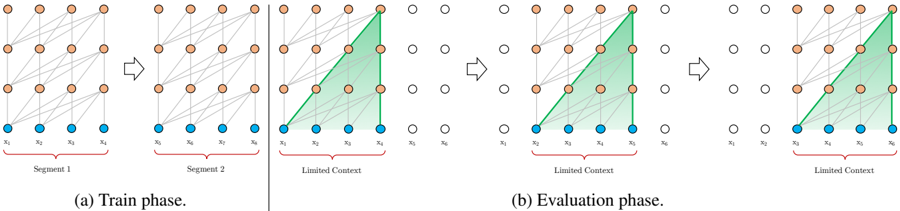
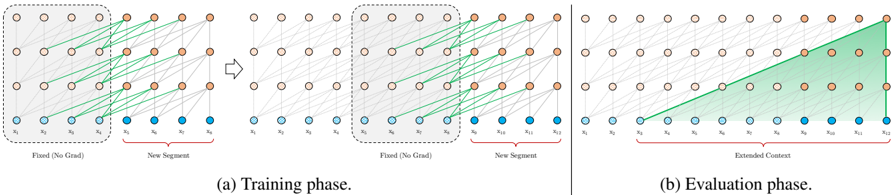
Transformers have a potential of learning longer-term dependency, but are limited by a fixed-length context in the setting of language modeling.We propose a novel neural architecture Transformer-XL that enables learning dependency beyond a fixed length without disrupting temporal coherence.It consists of a segment-level recurrence mechanism and a novel positional encoding scheme.Our method not only enables capturing longer-term dependency, but also resolves the context fragmentation problem.As a result, Transformer-XL learns dependency that is 80% longer than RNNs and 450% longer than vanilla Transformers, achieves better performance on both short and long sequences, and is up to 1,800+ times faster than vanilla Transformers during evaluation.Notably, we improve the state-ofthe-art results of bpc/perplexity to 0.99 on en-wiki8, 1.08 on text8, 18.3 on WikiText-103, 21.8 on One Billion Word, and 54.5 on Penn Treebank (without finetuning).When trained only on WikiText-103, Transformer-XL manages to generate reasonably coherent, novel text articles with thousands of tokens.Our code, pretrained models, and hyperparameters are available in both Tensorflow and PyTorch 1 .
Overview
The claims and statistics of this paper haven’t been checked yet.
Free: it reads the open-access text and checks the first 5 claims that cite a source we can check. Create a free account to check every claim.
Integrity signals
Registry
Cites
Statistics
Figures
Verification
Claims the paper makes
The claims and statistics of this paper haven’t been checked yet.
Free: it reads the open-access text and checks the first 5 claims that cite a source we can check. Create a free account to check every claim.
Claims other papers make about this one
Each is checked against this paper’s own text: does it say what the citing paper says it does?
The cited source doesn’t support the claim as written.
In the citing paper
“note that the Transformer XL model25 incorporates some form of recurrent processing within the transformer block, but it still takes the entire text as its input in parallel.”
From Incremental accumulation of linguistic context in artificial and biological neural networks (2025) · cites this paper as [25]
Checked by a reasoning model — may be wrong.
Experimental — accuracy not yet measuredThe source backs part of the claim, not all of it — or backs it for a different population, condition or comparison.
In the citing paper
“Directly extending the context length of transformers incurs a quadratic increase in computational time and memory cost due to the transformer architecture's self-attention mechanism, making the design of new long-context architectures a pressing research challenge (Dai et al., 2019; Kitaev et al., 2020; Beltagy et al., 2020).”
From MemGPT: Towards LLMs as Operating Systems (2023) · cites this paper as Dai et al., 2019
Experimental — accuracy not yet measuredThe source backs part of the claim, not all of it — or backs it for a different population, condition or comparison.
In the citing paper
“We believe that the different trends are caused by the truncation problem [59], [60].”
From What Makes Good In-Context Demonstrations for Code Intelligence Tasks with LLMs? (2023) · cites this paper as [59]
Experimental — accuracy not yet measuredThe source backs part of the claim, not all of it — or backs it for a different population, condition or comparison.
In the citing paper
“Fixed-window methods : including context windows of 4K, 8K, and 16K tokens with FIFO eviction [10, 2]”
From FadeMem: Biologically-Inspired Forgetting for Efficient Agent Memory (2026) · cites this paper as [10]
Experimental — accuracy not yet measuredThe source backs part of the claim, not all of it — or backs it for a different population, condition or comparison.
In the citing paper
“Thus, in practice, Transformer-XL and Compressive Transformer need huge memory size to achieve good performance.”
From Memformer: a memory-augmented transformer for sequence modeling (2020) · cites this paper as Dai et al., 2019
Experimental — accuracy not yet measured
12 more claims about this paper
Create a free account to see every claim other papers make about this one.
Self-check
Percentages, sums and reported differences re-computed from the paper’s own numbers.
The self-check needs the paper’s full text.
Citations
Cites
Vaswani, A., Shazeer, N., Parmar, N., Uszkoreit, J., Jones, L., Gomez, A. N., Kaiser, L., & Polosukhin, I. (2017) · arXiv · doi:10.48550/arxiv.1706.03762 · Cited by 120,404 · cited 7×
“On the other hand, the direct connections between long-distance word pairs baked in attention mechanisms might ease optimization and enable the learning of long-term dependency (Bahdanau et al., 2014; Vaswani et al., 2017).”
BackgroundMethodInfluentialHochreiter, S., & Schmidhuber, J. (1997) · Neural Computation · doi:10.1162/neco.1997.9.8.1735 · Cited by 102,318 · cited 2×
“Recurrent neural networks (RNNs), in particular Long Short-Term Memory (LSTM) networks (Hochreiter & Schmidhuber, 1997), have been a standard solution to language modeling and obtained strong results on multiple benchmarks.”
BackgroundExploiting Generative AI to Scale up Intelligent Tutoring Systems
Jakubův, J., Chvalovský, K., Goertzel, Z., Kaliszyk, C., Olšák, M., Piotrowski, B., Schulz, S., Suda, M., & Urban, J. (2023) · DROPS (Schloss Dagstuhl – Leibniz Center for Informatics) · doi:10.4230/lipics.itp.2023.19 · Cited by 76,658
BERT: Pre-training of Deep Bidirectional Transformers for Language Understanding
Devlin, J., Chang, M.-W., Lee, K., & Toutanova, K. (2018) · arXiv · doi:10.48550/arxiv.1810.04805 · Cited by 73,173 · cited 4×
“Second, though it is possible to use padding to respect the sentence or other semantic boundaries, in practice it has been standard practice to simply chunk long text into fixed-length segments due to improved efficiency (Peters et al., 2018; Devlin et al., 2018; Al-Rfou et al., 2018).”
BackgroundInfluentialBERT: Pre-training of Deep Bidirectional Transformers for Language Understanding
Devlin, J., Chang, M.-W., Lee, K., & Toutanova, K. (2019) · Proceedings of the 2019 Conference of the North American Chapter of the Association for Computational Linguistics: Human Language Technologies, Volume 1 (Long and Short Papers) · doi:10.18653/v1/n19-1423 · Cited by 54,325 · cited 4×
“Second, though it is possible to use padding to respect the sentence or other semantic boundaries, in practice it has been standard practice to simply chunk long text into fixed-length segments due to improved efficiency (Peters et al., 2018; Devlin et al., 2018; Al-Rfou et al., 2018).”
BackgroundInfluentialNeural Machine Translation by Jointly Learning to Align and Translate
Bahdanau, D., Cho, K., & Bengio, Y. (2014) · arXiv · doi:10.48550/arxiv.1409.0473 · Cited by 16,213 · cited 2×
“On the other hand, the direct connections between long-distance word pairs baked in attention mechanisms might ease optimization and enable the learning of long-term dependency (Bahdanau et al., 2014; Vaswani et al., 2017).”
BackgroundDeep Contextualized Word Representations
Peters, M., Neumann, M., Iyyer, M., Gardner, M., Clark, C., Lee, K., & Zettlemoyer, L. (2018) · Proceedings of the 2018 Conference of the North American Chapter of the Association for Computational Linguistics: Human Language Technologies, Volume 1 (Long Papers) · doi:10.18653/v1/n18-1202 · Cited by 11,983 · cited 4×
“Second, though it is possible to use padding to respect the sentence or other semantic boundaries, in practice it has been standard practice to simply chunk long text into fixed-length segments due to improved efficiency (Peters et al., 2018; Devlin et al., 2018; Al-Rfou et al., 2018).”
BackgroundInfluentialRecurrent neural network based language model
Mikolov, T., Karafiát, M., Burget, L., Černocký, J., & Khudanpur, S. (2010) · Interspeech 2010 · doi:10.21437/interspeech.2010-343 · Cited by 5,390 · cited 5×
“However, different from truncated BPTT, our method caches a sequence of hidden states instead of the last one, and should be applied together with the relative positional encoding technique described in Section 3.3.”
BackgroundMethodInfluentialAn Empirical Evaluation of Generic Convolutional and Recurrent Networks for Sequence Modeling
Bai, S., Kolter, J. Z., & Koltun, V. (2018) · arXiv · doi:10.48550/arxiv.1803.01271 · Cited by 4,655
Neural Architecture Search with Reinforcement Learning
Zoph, B., & Le, Q. V. (2016) · arXiv (Cornell University) · doi:10.48550/arxiv.1611.01578 · Cited by 3,974
Self-citation
Research works printed but not linked: 1
- Matthew E Peters, Mark Neumann, Mohit Iyyer, Matt Gardner, Christopher Clark, Kenton Lee, and Luke Zettlemoyer. 2018. Deep contextualized word rep- resentations. arXiv preprint arXiv:1802.05365. · arXiv
Cited by
Items 501–600 of 1,058
Murugadoss, K., Rajasekharan, A., Malin, B., Agarwal, V., Bade, S., Anderson, J. R., Ross, J. L., Faubion, W. A., Halamka, J. D., Soundararajan, V., et al. (2021) · Patterns · doi:10.1016/j.patter.2021.100255 · Cited by 72
Deep Transfer Learning & Beyond: Transformer Language Models in Information Systems Research
Gruetzemacher, R., & Paradice, D. (2022) · ACM Computing Surveys · doi:10.1145/3505245 · Cited by 95
Liu, Y., Wang, S., Chen, J., Chen, B., Wang, X., Hao, D., & Sun, L. (2022) · Remote Sensing · doi:10.3390/rs14195045 · Cited by 94
PowerNorm: Rethinking Batch Normalization in TransformersPreprint
Shen, S., Yao, Z., Gholami, A., Mahoney, M. W., & Keutzer, K. (2020) · arXiv (Cornell University) · doi:10.48550/arxiv.2003.07845 · Cited by 92
Estimating the Personality of White-Box Language ModelsPreprint
Karra, S. R., Nguyen, S. T., & Tulabandhula, T. (2023) · SSRN Electronic Journal · doi:10.2139/ssrn.4598766 · Cited by 94
Multi-Scale Self-Attention for Text Classification
Guo, Q., Qiu, X., Liu, P., Xue, X., & Zhang, Z. (2020) · Proceedings of the AAAI Conference on Artificial Intelligence · doi:10.1609/aaai.v34i05.6290 · Cited by 92
Cho, S. M., Park, E., & Yoo, S. (2020) · ACM Conference on Recommender Systems (RecSys) · doi:10.1145/3383313.3412216 · Cited by 94
MATE: Multi-view Attention for Table Transformer Efficiency
Eisenschlos, J., Gor, M., Müller, T., & Cohen, W. (2021) · Proceedings of the 2021 Conference on Empirical Methods in Natural Language Processing · doi:10.18653/v1/2021.emnlp-main.600 · Cited by 67
“(2020) introduce ETC, a framework for global memory and local sparse attention, and use the mechanism of relative positional attention (Dai et al., 2019) to encode hierarchy.”
MethodInfluentialMultimodal Phased Transformer for Sentiment Analysis
Cheng, J., Fostiropoulos, I., BOEHM, B. W., & Soleymani, M. (2021) · Conference on Empirical Methods in Natural Language Processing (EMNLP) · doi:10.18653/v1/2021.emnlp-main.189 · Cited by 93
“Other work reduce attention matrix size by iterative processing only a shorter segment of the original long sequence at a time (Dai et al., 2019; Rae et al., 2020).”
BackgroundInfluentialORCA: A Challenging Benchmark for Arabic Language Understanding
Elmadany, A., Nagoudi, E. B., & Abdul-Mageed, M. (2023) · Findings of the Association for Computational Linguistics: ACL (Findings of ACL) · doi:10.18653/v1/2023.findings-acl.609 · Cited by 94
Advancing microbial production through artificial intelligence-aided biology
Gong, X., Zhang, J., Gan, Q., Teng, Y., Hou, J., Lyu, Y., Liu, Z., Wu, Z., Dai, R., Zou, Y., et al. (2024) · Biotechnology Advances · doi:10.1016/j.biotechadv.2024.108399 · Cited by 93
Language Models as Agent Models
Andreas, J. (2022) · Findings of the Association for Computational Linguistics: EMNLP 2022 · doi:10.18653/v1/2022.findings-emnlp.423 · Cited by 92
Motion In-Betweening via Two-Stage Transformers
Qin, J., Zheng, Y., & Zhou, K. (2022) · ACM Transactions on Graphics · doi:10.1145/3550454.3555454 · Cited by 93
“Srel is the matrix introduced in [Dai et al. 2019], which is an efficient way to inject relative positional information into the attention.”
BackgroundHow Much Temporal Long-Term Context is Needed for Action Segmentation?
Bahrami, E., Francesca, G., & Gall, J. (2023) · IEEE/CVF International Conference on Computer Vision (ICCV) · doi:10.1109/iccv51070.2023.00950 · Cited by 94
“This has been addressed by many methods that improve the memory efficiency of transformers [5, 38, 10].”
MethodLanguage Models as Agent Models
Andreas, J. (2022) · arXiv · doi:10.48550/arxiv.2212.01681 · Cited by 92
“Preliminary work in this direction includes Henaff et al. (2016) and Dai et al. (2019).”
BackgroundFrom Word Embeddings to Pre-Trained Language Models: A State-of-the-Art Walkthrough
Mars, M. (2022) · Applied Sciences · doi:10.3390/app12178805 · Cited by 91
“Transformer-XL: Attentive Language Models Beyond a Fixed-Length Context [30].”
MethodGlobalizing BERT-based Transformer Architectures for Long Document Summarization
Grail, Q., Pérez, J., & Gaussier, É. (2021) · Conference of the European Chapter of the Association for Computational Linguistics · doi:10.18653/v1/2021.eacl-main.154 · Cited by 92
“Transformer-XL (Dai et al., 2019) introduced a recurrence between successive transformer windows which run from left to right through the document, preventing global information to bidirectionally flow through the document.”
BackgroundDynamic Memory based Attention Network for Sequential Recommendation
Tan, Q., Zhang, J., Liu, N., Huang, X. X., Yang, H., Zhou, J., & Xia, H. (2021) · Proceedings of the AAAI Conference on Artificial Intelligence · doi:10.1609/aaai.v35i5.16564 · Cited by 92
Michaelov, J. A., Coulson, S., & Bergen, B. K. (2022) · IEEE Transactions on Cognitive and Developmental Systems · doi:10.1109/tcds.2022.3176783 · Cited by 93
“04B 1B [35] Transformer-XL3 285M 103M [39]”
BackgroundMethodInfluentialGateHUB: Gated History Unit with Background Suppression for Online Action Detection
Chen, J., Mittal, G. K., Yu, Y., Kong, Y., & Chen, M. (2022) · IEEE Computer Society Conference on Computer Vision and Pattern Recognition/Proceedings - IEEE Computer Society Conference on Computer Vision and Pattern Recognition/Proceedings · doi:10.1109/cvpr52688.2022.01930 · Cited by 91
“As shown in Table 1 of the main paper, we compare GateHUB with existing state-of-the-art (SoTA) methods on the standard setting of using RGB and optical flow features from TSN [12] pretrained on Kinetics-400 [3].”
MethodInfluentialPrompting Large Language Models for Zero-Shot Domain Adaptation in Speech Recognition
Li, Y., Wu, Y., Li, J., & Liu, S. (2023) · IEEE Workshop on Automatic Speech Recognition and Understanding (ASRU) · doi:10.1109/asru57964.2023.10389732 · Cited by 91
“Although these approaches have shown promising results, it is worth noting that commonly used LMs, such as GPT-2 [18] and Transformer-XL [19], have relatively small scales and lack in-context learning capability.”
ResultMind the Gap: Assessing Temporal Generalization in Neural Language Models
Lazaridou, A., Kuncoro, A., Gribovskaya, E., Agrawal, D., Liska, A., Terzi, T., Gimenez, M., d'Autume, C. D. M., Kocisky, T., Ruder, S., et al. (2021) · arXiv · doi:10.48550/arxiv.2102.01951 · Cited by 90
“To assess how well these models can generalize across time, we design a time stratification evaluation protocol where Transformer-XL models (Dai et al., 2019) are trained on the past, but are asked to predict future articles that are published after the end of their training period.”
MethodWu, Y., Rabe, M. N., Hutchins, D., & Szegedy, C. (2022) · arXiv · doi:10.48550/arxiv.2203.08913 · Cited by 90
“In contrast to standard practice, we do not shuffle the subsequences; instead, each long document is fed into the transformer sequentially, from beginning to end, as is done with Transformer-XL (Dai et al., 2019).”
BackgroundMethodInfluentialiNLTK: Natural Language Toolkit for Indic Languages
Arora, G. (2020) · Workshop for NLP Open Source Software (NLP-OSS) · doi:10.18653/v1/2020.nlposs-1.10 · Cited by 91
Xu, H., Chai, L., Luo, Z., & Li, S. (2021) · Neurocomputing · doi:10.1016/j.neucom.2021.09.072 · Cited by 91
Deep Learning Meets Software Engineering: A Survey on Pre-Trained Models of Source Code
Niu, C., Li, C., Luo, B., & Ng, V. (2022) · International Joint Conference on Artificial Intelligence · doi:10.24963/ijcai.2022/775 · Cited by 91
Pfeffer, M. A., Ling, S. H., & Wong, J. K. W. (2024) · Computers in Biology and Medicine · doi:10.1016/j.compbiomed.2024.108705 · Cited by 91
Transformers for Molecular Property Prediction: Lessons Learned from the Past Five Years
Sultan, A., Sieg, J., Mathea, M., & Volkamer, A. (2024) · Journal of Chemical Information and Modeling · doi:10.1021/acs.jcim.4c00747 · Cited by 91
Pop Music Transformer: Beat-based Modeling and Generation of Expressive Pop Piano CompositionsPreprint
Huang, Y.-S., & Yang, Y. (2020) · arXiv (Cornell University) · doi:10.48550/arxiv.2002.00212 · Cited by 90
“Therefore, we adopt Transformer-XL as the back-bone model architecture in this study.”
BackgroundMethodInfluentialSelf-citationTable Search Using a Deep Contextualized Language Model
Chen, Z., Trabelsi, M., Heflin, J., Xu, Y., & Davison, B. D. (2020) · International ACM SIGIR Conference on Research and Development in Information Retrieval (SIGIR) · doi:10.1145/3397271.3401044 · Cited by 89
“Transformer-XL [12] solves the fixed-length issue with recursion and relative position encoding.”
BackgroundVideo Semantic Segmentation via Sparse Temporal Transformer
Li, J., Wang, W., Chen, J., Niu, L., Si, J., Qian, C., & Zhang, L. (2021) · ACM International Conference on Multimedia (ACM MM) · doi:10.1145/3474085.3475409 · Cited by 89
“Transformer [46], which has achieved great success in natural language processing (NLP) [13, 14] and”
BackgroundTrafformer: Unify Time and Space in Traffic Prediction
Jin, D., Shi, J., Wang, R., Li, Y., Huang, Y., & Yang, Y.-B. (2023) · Proceedings of the AAAI Conference on Artificial Intelligence · doi:10.1609/aaai.v37i7.25980 · Cited by 89
“Machine learning models for traffic prediction driven by big data have attracted great attention in academia and industry in recent years (Dai et al. 2019; Yao et al. 2019; Zhao et al. 2020).”
BackgroundSelf-citationMemory$^3$: Language Modeling with Explicit Memory
Yang, H., Lin, Z., Wang, W., Wu, H., Li, Z., Tang, B., Wei, W., Wang, J., Tang, Z., Song, S., et al. (2024) · Journal of Machine Learning · doi:10.4208/jml.240708 · Cited by 90
“People have been trying to reduce this cost through optimizations in various aspects, including architecture [40, 6, 30, 75, 89, 109], data quality [104, 58, 48, 66], operator [32, 63], parallelization [95, 103, 62, 91], optimizer [71, 124, 117], scaling laws [53, 127], generalization theory [132,…”
BackgroundStabilizing Equilibrium Models by Jacobian RegularizationPreprint
Bai, S., Koltun, V., & Kolter, J. Z. (2021) · arXiv (Cornell University) · doi:10.48550/arxiv.2106.14342 · Cited by 91
“This is a widely-studied problem in the NLP community (e.g., (Merity et al., 2017; 2018; Dai et al., 2019)), and has seen practical advancement in the last few years with development of GPT-3 (Brown et al., 2020; Radford et al., 2019).”
BackgroundInfluentialWhat Context Features Can Transformer Language Models Use?
O’Connor, J., & Andreas, J. (2021) · Proceedings of the 59th Annual Meeting of the Association for Computational Linguistics and the 11th International Joint Conference on Natural Language Processing (Volume 1: Long Papers) · doi:10.18653/v1/2021.acl-long.70 · Cited by 35
“A significant amount of recent work has focused on making use of even longer contexts computationally feasible (Rae et al., 2019; Wang et al., 2020; Child et al., 2019; Dai et al., 2019; Kitaev et al., 2020).”
BackgroundMisRoBÆRTa: Transformers versus Misinformation
Truică, C., & Apostol, E. (2022) · Mathematics · doi:10.3390/math10040569 · Cited by 89
“XLNet [34] is an extension of BERT that integrates ideas from the transformer-XL model [35].”
MethodWang, H., Liu, C. H., Yang, H., Wang, G., & Leung, K. K. (2023) · IEEE/ACM Transactions on Networking · doi:10.1109/tnet.2023.3289172 · Cited by 88
“First, we use two multi-layer perceptions MLP( · ) to embed observation o ut into a latent variable z ut , then we concatenate z ut with previous trajectories of length L to form an input for multi-head attention [54] as MHA ( · ) .”
MethodWhat do you mean, BERT? Assessing BERT as a Distributional Semantics ModelPreprint
Mickus, T., Paperno, D., Constant, M., & van Deemter, K. (2019) · arXiv (Cornell University) · doi:10.7275/t778-ja71 · Cited by 88
“On the other hand, BERT is a variant of the Transformer architecture (Vaswani et al., 2017) which has set a new state-of-the-art on a wide variety of tasks ranging from machine translation (Ott et al., 2018) to language modeling (Dai et al., 2019).”
BackgroundLearn to Dance with AIST++: Music Conditioned 3D Dance GenerationPreprint
Li, R., Yang, S., Ross, D. A., & Kanazawa, A. (2021) · arXiv (Cornell University) · Cited by 88
Combiner: Full Attention Transformer with Sparse Computation Cost
Ren, H., Dai, H., Dai, Z., Yang, M., Leskovec, J., Schuurmans, D., & Dai, B. (2021) · neural information processing systems · doi:10.48550/arxiv.2107.05768 · Cited by 88
“Generally, sparse attention requires more layers [14, 19, 22] to achieve full autoregressive or bidirectional dependencies (or receptive fields [19]) for each location in a long sequence.”
BackgroundSelf-citationAnnotating metabolite mass spectra with domain-inspired chemical formula transformers
Goldman, S., Wohlwend, J., Stražar, M., Haroush, G., Xavier, R. J., & Coley, C. W. (2023) · Nature Machine Intelligence · doi:10.1038/s42256-023-00708-3 · Cited by 87
Part-Guided Relational Transformers for Fine-Grained Visual Recognition
Zhao, Y., Li, J., Chen, X., & Tian, Y. (2021) · IEEE Transactions on Image Processing · doi:10.1109/tip.2021.3126490 · Cited by 90
“Here we adopt the relative positional encoding of Transformer-XL [64] to build different positional encoding for different pixels.”
MethodNeural natural language processing for long texts: A survey on classification and summarization
Tsirmpas, D., Gkionis, I., Papadopoulos, G. T., & Mademlis, I. (2024) · Engineering Applications of Artificial Intelligence · doi:10.1016/j.engappai.2024.108231 · Cited by 87
AniTalker: Animate Vivid and Diverse Talking Faces through Identity-Decoupled Facial Motion Encoding
Liu, T., Chen, F., Fan, S., Du, C., Chen, Q., Chen, X., & Yu, K. (2024) · ACM International Conference on Multimedia (ACM MM) · doi:10.1145/3664647.3681198 · Cited by 89
“Both the speech encoder and the diffusion motion generator use the Conformer [16] 6 , with configuration details presented in Table 6.”
BackgroundMethodAnsari, M. Y., Yaqoob, M., Ishaq, M., Flushing, E. F., Mangalote, I. A. C., Dakua, S. P., Aboumarzouk, O. M., Righetti, R., & Qaraqe, M. (2025) · Artificial Intelligence Review · doi:10.1007/s10462-025-11259-x · Cited by 88
“…encodings (Ken-ton et al. 2019; Lan et al. 2019; Clark et al. 2020), separate position parametrization (Ke et al. 2020), relative position encoding (Dai et al. 2019; Huang et al. 2020 ; Raffel et al. 2020), and rotary transformations (Su et al. 2024 ) could play a significant role in enhancing…”
Characteristics of Harmful Text: Towards Rigorous Benchmarking of Language Models
Rauh, M., Mellor, J., Uesato, J., Huang, P.-S., Welbl, J., Weidinger, L., Dathathri, S., Glaese, A., Irving, G., Gabriel, I., et al. (2022) · neural information processing systems · doi:10.52202/068431-1793 · Cited by 14
CoCon: A Self-Supervised Approach for Controlled Text GenerationPreprint
Chan, A., Ong, Y.-S., Pung, B. T. W., Zhang, A., & Fu, J. (2020) · arXiv (Cornell University) · doi:10.48550/arxiv.2006.03535 · Cited by 87
“Transformer-based [29, 28] pretrained language models (LMs) have led a wave of new advances in natural language processing tasks as a means to extract contextualized word embeddings [6, 4, 32] and as text generators [24].”
BackgroundYour Local GAN: Designing Two Dimensional Local Attention Mechanisms for Generative Models
Daras, G., Odena, A., Zhang, H., & Dimakis, A. G. (2020) · IEEE Computer Society Conference on Computer Vision and Pattern Recognition/Proceedings - IEEE Computer Society Conference on Computer Vision and Pattern Recognition/Proceedings · doi:10.1109/cvpr42600.2020.01454 · Cited by 86
“[7] separate inputs into chunks and associate a state vector with previous chunks of the input.”
BackgroundKeyphrase Extraction as Sequence Labeling Using Contextualized Embeddings
Sahrawat, D., Mahata, D., Zhang, H., Kulkarni, M., Sharma, A., Gosangi, R., Stent, A. J., Kumar, Y., Shah, R. R., & Zimmermann, R. (2020) · Lecture notes in computer science · doi:10.1007/978-3-030-45442-5_41 · Cited by 86
“…contextual embeddings: BERT [7] (small-cased, small-uncased, large-cased, large-uncased), SciBERT [4] (basevocab-cased, basevocab-uncased, scivocab-cased, scivocab-uncased), Ope-nAI GPT [22], ELMo [21], RoBERTa [17] (base, large), Transformer XL [5], and OpenAI GPT-2 [23] (small, medium).”
Learning Inner-Group Relations on Point Clouds
Ran, H., Zhuo, W., 刘, J. 军. L., & Lu, L. (2021) · IEEE/CVF International Conference on Computer Vision (ICCV) · doi:10.1109/iccv48922.2021.01519 · Cited by 86
“, self-attention [47]) has generally revolutionized natural language processing [8, 9].”
BackgroundA data-centric review of deep transfer learning with applications to text data
Bashath, S., Perera, N., Tripathi, S., Manjang, K., Dehmer, M., & Emmert‐Streib, F. (2021) · Information Sciences · doi:10.1016/j.ins.2021.11.061 · Cited by 87
“In order to accomplish this, Transformer-XL uses a recurrence mechanism and a new positional encoding system that allows the model to represent dependencies 80% longer than RNNs and 450% longer than simple transformers [34].”
MethodPoint Cloud Completion Via Skeleton-Detail Transformer
Zhang, W., Zhou, H., Dong, Z., Liu, J., Yan, Q., & Xiao, C. (2022) · IEEE Transactions on Visualization and Computer Graphics · doi:10.1109/tvcg.2022.3185247 · Cited by 86
“Transformer and self-attention models have revolutionized machine translation and natural language processing [17], [44], [45], [46], [47].”
BackgroundProcessing Long Legal Documents with Pre-trained Transformers: Modding LegalBERT and Longformer
Mamakas, D., Tsotsi, P., Androutsopoulos, I., & Chalkidis, I. (2022) · Natural Legal Language Processing Workshop (NLLP) · doi:10.18653/v1/2022.nllp-1.11 · Cited by 88
Nguyen, T. T., Nguyen, Q. V. H., Nguyen, D. T., Yang, S. S., Eklund, P., Huynh‐The, T., Nguyên, T. T., Pham, Q., Razzak, I., & Hsu, E. B. (2020) · arXiv (Cornell University) · doi:10.48550/arxiv.2008.07343 · Cited by 88
“…networks), transfer learning, and NLG and NLP tools (e.g. NLTK [61], ELMo [62], ULMFiT [63], Transformer [64], Google’s BERT [65], Transformer-XL [66], XLNet [67], ERNIE [68], T5 [69], BPT [70] and OpenAI’s GPT-2 [71]) for various natural language related tasks such as terminology and…”
BackgroundMethodTableFormer: Robust Transformer Modeling for Table-Text Encoding
Yang, J., Gupta, A., Upadhyay, S., He, L., Goel, R., & Paul, S. (2022) · Proceedings of the 60th Annual Meeting of the Association for Computational Linguistics (Volume 1: Long Papers) · doi:10.18653/v1/2022.acl-long.40 · Cited by 85
A Review of Natural Language Processing Techniques for Sentiment Analysis using Pre-trained Models
Mathew, L., & Bindu, V. R. (2020) · International Conference on Computing Methodologies and Communication (ICCMC) · doi:10.1109/iccmc48092.2020.iccmc-00064 · Cited by 85
Incorporating attentive multi-scale context information for image captioning
Prudviraj, J., Yenduri, S., & Mohan, C. K. (2022) · Multimedia Tools and Applications · doi:10.1007/s11042-021-11895-9 · Cited by 85
“However, other hard-wired attention mechanisms [3,40,15] can be adopted to the proposed model.”
BackgroundMahbub, S., & Bayzid, M. S. (2022) · Briefings in Bioinformatics · doi:10.1093/bib/bbab578 · Cited by 67
Learning from flowsheets: A generative transformer model for autocompletion of flowsheets
Vogel, G., Balhorn, L. S., & Schweidtmann, A. M. (2023) · Computers & Chemical Engineering · doi:10.1016/j.compchemeng.2023.108162 · Cited by 85
“In recent years, many model architectures for text generation and pre-trained models were published, such as GPT-2 [34], Transformer-XL [35], and XLNet [36].”
Papastefanopoulos, V., Linardatos, P., Panagiotakopoulos, T., & Kotsiantis, S. B. (2023) · Smart Cities · doi:10.3390/smartcities6050114 · Cited by 87
“This problem was addressed by the attention mechanism [49,50], originally used in transformer architectures for machine translation [51–53].”
Large Language Models for Blockchain Security: A Systematic Literature Review
He, Z., Li, Z., Yang, S., Ye, H., Qiao, A., Zhang, X., Luo, X., & Chen, T. (2024) · arXiv (Cornell University) · doi:10.48550/arxiv.2403.14280 · Cited by 86
“This contextual awareness is achieved through mechanisms such as attention mechanisms and positional encodings, which enable LLMs to attend to relevant parts of the input sequence and model long-range dependencies effectively [20].”
BackgroundEverMemOS: A Self-Organizing Memory Operating System for Structured Long-Horizon Reasoning
Hu, C., Gao, X., Zhou, Z., Xu, D., Bai, Y., Li, X., Zhang, H., Li, T., Zhang, C., Bing, L., et al. (2026) · Proceedings of the conference - Association for Computational Linguistics. Meeting · doi:10.18653/v1/2026.acl-long.2125 · Cited by 86
Natural Language Processing Methods for Language Modeling
Nemeskey, D. M. (2021) · Eötvös Loránd Tudományegyetem · doi:10.15476/elte.2020.066 · Cited by 88
Is Attention All That NeRF Needs?Preprint
Mukund Varma, T., Wang, P., Chen, X., Chen, T., Venugopalan, S., & Wang, Z. (2022) · arXiv (Cornell University) · doi:10.48550/arxiv.2207.13298 · Cited by 86
PoSE: Efficient Context Window Extension of LLMs via Positional Skip-wise Training
Zhu, D., Yang, N., Wang, L., Song, Y., Wu, W., Wei, F., & Li, S. (2023) · International Conference on Learning Representations · doi:10.48550/arxiv.2309.10400 · Cited by 126
“An alternative strategy for managing exceedingly lengthy input sequences involves the implementation of memory mechanisms [7, 3, 35, 34, 20].”
BackgroundHao, C., Mao, X., Ma, T., He, S., Li, B., Liu, H., Peng, F., & Zhang, L. (2023) · Advanced Engineering Informatics · doi:10.1016/j.aei.2023.102106 · Cited by 84
Foundations of Large Language ModelsPreprint
Xiao, T., & Zhu, J. (2025) · arXiv (Cornell University) · doi:10.48550/arxiv.2501.09223 · Cited by 88
Synchronous Transformers for end-to-end Speech Recognition
Tian, Z., Yi, J., Bai, Y., Tao, J., Zhang, S., & Wen, Z. (2020) · IEEE International Conference on Acoustics Speech and Signal Processing · doi:10.1109/icassp40776.2020.9054260 · Cited by 82
“On the other hand, similar to transformer-xl [15], the encoder of Sync-Transformer processes the input sequence chunk by chunk.”
MethodNguyen, X.-B., Bui, D. T., Duong, C. N., Bui, T. D., & Luu, K. (2021) · IEEE Computer Society Conference on Computer Vision and Pattern Recognition/Proceedings - IEEE Computer Society Conference on Computer Vision and Pattern Recognition/Proceedings · doi:10.1109/cvpr46437.2021.01070 · Cited by 83
“Following the success of Transformer, many Transformer-based architectures have been presented recently to obtain SOTA results in various NLP problems, e.g. GPT [28], BERT [9], Transformer-XL [6] , XLNet [41] and among others [20, 24, 13, 5].”
MethodExploiting deep transformer models in textual review based recommender systems
Gheewala, S., Xu, S., Yeom, S., & Maqsood, S. (2023) · Expert Systems with Applications · doi:10.1016/j.eswa.2023.121120 · Cited by 85
Buehler, M. J. (2023) · Journal of the Mechanics and Physics of Solids · doi:10.1016/j.jmps.2023.105454 · Cited by 66
TURINGBENCH: A Benchmark Environment for Turing Test in the Age of Neural Text Generation
Uchendu, A., Ma, Z., Le, T., Zhang, R., & Lee, D. (2021) · Findings of the Association for Computational Linguistics: EMNLP 2021 · doi:10.18653/v1/2021.findings-emnlp.172 · Cited by 82
ASTRAL: Adversarial Trained LSTM-CNN for Named Entity Recognition
Wang, J., Xu, W., Fu, X., Xu, G., & Wu, Y. (2020) · Knowledge-Based Systems · doi:10.1016/j.knosys.2020.105842 · Cited by 82
“XLNET [11] incorporates the TransformerXL [30] idea for relative segment encodings and expands the size of the dataset.”
BackgroundPseudo Relevance Feedback with Deep Language Models and Dense Retrievers: Successes and Pitfalls
Li, H., Mourad, A., Zhuang, S., Koopman, B., & Zuccon, G. (2023) · ACM Transactions on Information Systems · doi:10.1145/3570724 · Cited by 83
“Recently, Transformer [60] based deep language models [10, 13, 52, 53, 68] have been adopted with promising results in information retrieval [17, 69].”
BackgroundAn Overview of Language Models: Recent Developments and Outlook
Wei, C., Wang, Y.-C., Wang, B., & Kuo, C. ‐. J. (2024) · APSIPA Transactions on Signal and Information Processing · doi:10.1561/116.00000010 · Cited by 86
“Decoder-only models (Unidirectional) PaLM [83] GPT-1, 2 and 3 [84, 42, 85] Transformer XL [86] Encoder-Decoder models (Sequence to sequence) BART [87] T5 [88]”
A Unified Review of Deep Learning for Automated Medical Coding
Ji, S., Li, X., Sun, W., Dong, H., Taalas, A., Zhang, Y., Wu, H., Pitkänen, E., & Marttinen, P. (2024) · ACM Computing Surveys · doi:10.1145/3664615 · Cited by 84
“Several medical coding models use residual networks between stacked layers, which are denoted as: MultiResCNN [78] is the first to combine residual learning with the concatenation of multiple channels with different convolutional filters.”
BackgroundDeep Magnification-Flexible Upsampling Over 3D Point Clouds
Qian, Y., Hou, J., Kwong, S., & He, Y. (2021) · IEEE Transactions on Image Processing · doi:10.1109/tip.2021.3115385 · Cited by 83
Efficient self-attention mechanism and structural distilling model for Alzheimer’s disease diagnosis
Zhu, J., Tan, Y., Lin, R., Miao, J., Fan, X., Zhu, Y., Liang, P., Gong, J., & He, H. (2022) · Computers in Biology and Medicine · doi:10.1016/j.compbiomed.2022.105737 · Cited by 67
Thomas, M. C., O’Boyle, N. M., Bender, A., & de Graaf, C. (2022) · Journal of Cheminformatics · doi:10.1186/s13321-022-00646-z · Cited by 83
“the original adaption was applied to Transformer-XL [70] which contains a memory mechanism to expand context for larger language tasks.”
MethodLeveraging transformers‐based language models in proteome bioinformatics
Le, N. Q. K. (2023) · PROTEOMICS · doi:10.1002/pmic.202300011 · Cited by 81
“A scratch-trained model is a transformer model explicitly trained for a particular NLP task without using any pre-existing knowledge from other tasks or datasets [29–31].”
MethodWu, S.-L., & Yang, Y. (2020) · arXiv (Cornell University) · doi:10.48550/arxiv.2008.01307 · Cited by 81
“Therefore, we choose as the backbone sequence model the Transformer-XL [11], an improved variant of the Transformer which introduces recurrence to the architecture.”
MethodSelf-citationWang, P., Zheng, W., Chen, T., & Wang, Z. (2022) · arXiv · doi:10.48550/arxiv.2203.05962 · Cited by 80
“It has achieved a remarkable performance in natural language processing (Devlin et al., 2018; Dai et al., 2019; Brown et al., 2020) and many cross-disciplinary applications (Jumper et al., 2021; Ying et al., 2021; Zheng et al., 2021b).”
BackgroundInfluentialMemformer: a memory-augmented transformer for sequence modeling
Wu, Q., Lan, Z., Qian, K., Gu, J., Geramifard, A., & Yu, Z. (2020) · arXiv · doi:10.48550/arxiv.2010.06891 · Cited by 80
Why ADAM Beats SGD for Attention Models
Zhang, J., Karimireddy, S. P., Veit, A., Kim, S., Reddi, S. J., Kumar, S., & Sra, S. (2019) · Cited by 80
Yokoya, N., YAMANOI, K., He, W. P., Baier, G., Adriano, B., Miura, H., & Oishi, S. (2020) · IEEE Transactions on Geoscience and Remote Sensing · doi:10.1109/tgrs.2020.3035469 · Cited by 80
“Enormous efforts have been made to create synthetic data for training through simulation in various fields, including computer vision, bioinformatics [46], natural language processing [47], [48], and remote sensing [49].”
BackgroundMoffat, L., & Jones, D. T. (2021) · Bioinformatics · doi:10.1093/bioinformatics/btab491 · Cited by 65
Towards Lightweight Transformer Via Group-Wise Transformation for Vision-and-Language Tasks
Luo, G., Zhou, Y., Sun, X., Wang, Y., Cao, L., Wu, Y., Huang, F., & Ji, R. (2022) · IEEE Transactions on Image Processing · doi:10.1109/tip.2021.3139234 · Cited by 80
Constructing and analyzing domain-specific language model for financial text mining
Suzuki, M., Sakaji, H., Hirano, M., & Izumi, K. (2022) · Information Processing & Management · doi:10.1016/j.ipm.2022.103194 · Cited by 80
Mathematical Introduction to Deep Learning: Methods, Implementations, and TheoryPreprint
Jentzen, A., Kuckuck, B., & von Wurstemberger, P. (2023) · arXiv (Cornell University) · doi:10.48550/arxiv.2310.20360 · Cited by 83
Le, D.-V.-T., Bigo, L., Herremans, D., & Keller, M. (2025) · ACM Computing Surveys · doi:10.1145/3714457 · Cited by 80
“Another improvement of Transformers is Transformer-XL [39], also based on auto-regressive generation, which is able to take into account a much longer context than Transformers.”
Lakatos, R., Pollner, P., Hajdú, A., & Joó, T. (2025) · Machine Learning and Knowledge Extraction · doi:10.3390/make7010015 · Cited by 80
Clinical XLNet: Modeling Sequential Clinical Notes and Predicting Prolonged Mechanical Ventilation
Huang, K., Singh, A., Chen, S., Moseley, E., Deng, C.-Y., George, N., & Lindvall, C. (2020) · Proceedings of the 3rd Clinical Natural Language Processing Workshop · doi:10.18653/v1/2020.clinicalnlp-1.11 · Cited by 54
Machine Reading Comprehension: The Role of Contextualized Language Models and BeyondPreprint
Zhang, Z., Zhao, H., & Wang, R. (2020) · arXiv (Cornell University) · doi:10.48550/arxiv.2005.06249 · Cited by 80
“Transformer-XL (Dai et al. 2019) combines the advantages of RNN and Transformer,”
MethodJointly Learning Visual and Auditory Speech Representations from Raw DataPreprint
Haliassos, A., Ma, P., Mira, R., Petridis, S., & Pantić, M. (2022) · arXiv (Cornell University) · doi:10.48550/arxiv.2212.06246 · Cited by 80
“We use relative positional embeddings (Dai et al., 2019), and following Chen et al.”
MethodData Movement Is All You Need: A Case Study on Optimizing Transformers
Ivanov, A., Dryden, N., Ben-Nun, T., Li, S., & Hoefler, T. (2020) · arXiv · doi:10.48550/arxiv.2007.00072 · Cited by 78
“Transformer-XL [79] caches prior hidden states to learn long sequences.”
BackgroundState-of-the-Art Speech Recognition Using Multi-Stream Self-Attention with Dilated 1D Convolutions
Han, K. J., Prieto, R., & Ma, T. (2019) · IEEE Workshop on Automatic Speech Recognition and Understanding (ASRU) · doi:10.1109/asru46091.2019.9003730 · Cited by 81
Representation Learning for Natural Language Processing
Liu, Z., Lin, Y., & Sun, M. (2023) · Springer eBooks · doi:10.1007/978-981-99-1600-9 · Cited by 81
Global-and-Local Relative Position Embedding for Unsupervised Video Summarization
Jung, Y., Cho, D., Woo, S., & Kweon, I. S. (2020) · Lecture notes in computer science · doi:10.1007/978-3-030-58595-2_11 · Cited by 79
“Due mainly to its powerful distant relation modeling ability, it replaces commonly used recurrent architectures and is widely adopted in various natural language processing tasks [4,1,37].”
BackgroundERNIE-Doc: A Retrospective Long-Document Modeling Transformer
Ding, S., Shang, J., Wang, S., Sun, Y., Tian, H., Wu, H. R., & Wang, H. (2021) · doi:10.18653/v1/2021.acl-long.227 · Cited by 79
“(Merity et al., 2018) 151M 33.0 Transformer-XL Base (Dai et al., 2019) 151M 24.0 SegaTransformer-XL Base (Bai et al., 2020) English Data.”
BackgroundMethodInfluential
Metadata
- Authors
- Dai, Z., Yang, Z., Yang, Y., Carbonell, J., Le, Q., & Salakhutdinov, R.
- Affiliations
- Carnegie Mellon University (US)
- Google (United States) (US)
- Venue
- Proceedings of the 57th Annual Meeting of the Association for Computational Linguistics
- Published
- 2019
- Pages
- 2978-2988
- ISSN
- 0736-587X (ISSN-L)
- OpenAlex
- W2964110616
- Cited by
- 3,169
- References
- 67
- Citations by year
- 2026: 163 · 2025: 361 · 2024: 434 · 2023: 585 · 2022: 504 · 2021: 612 · 2020: 403 · 2019: 107
- FWCI
- 155.55
- Type
- conference paper
- Language
- en
- Open access
- hybrid
- doi.org
- Licence
- cc-by
- Locations
- Proceedings of the conference - Association for Computational Linguistics. Meeting (publishedVersion, cc-by)
- Funders
- National Science Foundation (1546329, 1763562)
- U.S. Department of Energy
- Nvidia
- Office of Science
- Office of Naval Research (N000141812861)
- Advanced Scientific Computing Research
- Topics
- Physical Sciences › Computer Science › Artificial Intelligence › Topic Modeling
- Physical Sciences › Computer Science › Artificial Intelligence › Natural Language Processing Techniques
- Physical Sciences › Computer Science › Artificial Intelligence › Speech Recognition and Synthesis
- Keywords
- Transformer-XL, long-range dependencies, positional encoding, language modeling, temporal coherence, sequence generation, pre-trained language models
About these checks
Registry, retraction, Cites and statistics results are computed, not judged, with one exception: a printed reference that no index lists is read once by a model before it counts as a citation error. Claims are extracted by a model and kept only when their quote appears verbatim in the text; each cited source is then checked, with a model’s help, for whether it says what the claim relies on. Those verdicts can be wrong — read the claim’s quote and the cited source before relying on one.
Statistics and arithmetic are recomputed, not judged.
Confidence bands are shown only for fields calibrated on our annotated test set. None is calibrated yet, so no band is shown.
What counts as a claim ›How we measure confidence ›How we check this ›
Are you an author, or do you see a problem with this page? Request a review
Data sources
Bibliographic data: Semantic Scholar, OpenAlex, Crossref.
Contains information from the Semantic Scholar Academic Graph Datasets, made available under the ODC Attribution License (ODC-BY 1.0).
Semantic Scholar’s data is described in: Kinney, R., et al. (2023). The Semantic Scholar Open Data Platform. arXiv:2301.10140.
