

Transformer-XL: Attentive Language Models beyond a Fixed-Length Context
Open accessThe DOI matches its Crossref record; 65 of the 67 references it cites were found in a registry or an index.
Abstract
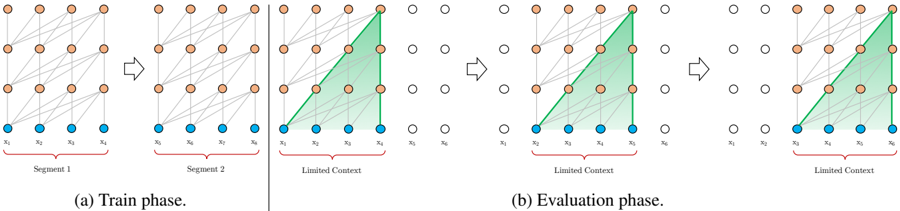
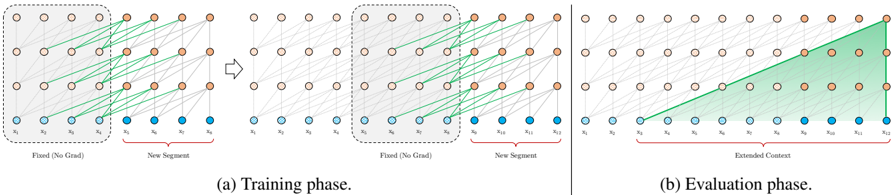
Transformers have a potential of learning longer-term dependency, but are limited by a fixed-length context in the setting of language modeling.We propose a novel neural architecture Transformer-XL that enables learning dependency beyond a fixed length without disrupting temporal coherence.It consists of a segment-level recurrence mechanism and a novel positional encoding scheme.Our method not only enables capturing longer-term dependency, but also resolves the context fragmentation problem.As a result, Transformer-XL learns dependency that is 80% longer than RNNs and 450% longer than vanilla Transformers, achieves better performance on both short and long sequences, and is up to 1,800+ times faster than vanilla Transformers during evaluation.Notably, we improve the state-ofthe-art results of bpc/perplexity to 0.99 on en-wiki8, 1.08 on text8, 18.3 on WikiText-103, 21.8 on One Billion Word, and 54.5 on Penn Treebank (without finetuning).When trained only on WikiText-103, Transformer-XL manages to generate reasonably coherent, novel text articles with thousands of tokens.Our code, pretrained models, and hyperparameters are available in both Tensorflow and PyTorch 1 .
Overview
The claims and statistics of this paper haven’t been checked yet.
Free: it reads the open-access text and checks the first 5 claims that cite a source we can check. Create a free account to check every claim.
Integrity signals
Registry
Cites
Statistics
Figures
Verification
Claims the paper makes
The claims and statistics of this paper haven’t been checked yet.
Free: it reads the open-access text and checks the first 5 claims that cite a source we can check. Create a free account to check every claim.
Claims other papers make about this one
Each is checked against this paper’s own text: does it say what the citing paper says it does?
The cited source doesn’t support the claim as written.
In the citing paper
“note that the Transformer XL model25 incorporates some form of recurrent processing within the transformer block, but it still takes the entire text as its input in parallel.”
From Incremental accumulation of linguistic context in artificial and biological neural networks (2025) · cites this paper as [25]
Checked by a reasoning model — may be wrong.
Experimental — accuracy not yet measuredThe source backs part of the claim, not all of it — or backs it for a different population, condition or comparison.
In the citing paper
“Directly extending the context length of transformers incurs a quadratic increase in computational time and memory cost due to the transformer architecture's self-attention mechanism, making the design of new long-context architectures a pressing research challenge (Dai et al., 2019; Kitaev et al., 2020; Beltagy et al., 2020).”
From MemGPT: Towards LLMs as Operating Systems (2023) · cites this paper as Dai et al., 2019
Experimental — accuracy not yet measuredThe source backs part of the claim, not all of it — or backs it for a different population, condition or comparison.
In the citing paper
“We believe that the different trends are caused by the truncation problem [59], [60].”
From What Makes Good In-Context Demonstrations for Code Intelligence Tasks with LLMs? (2023) · cites this paper as [59]
Experimental — accuracy not yet measuredThe source backs part of the claim, not all of it — or backs it for a different population, condition or comparison.
In the citing paper
“Fixed-window methods : including context windows of 4K, 8K, and 16K tokens with FIFO eviction [10, 2]”
From FadeMem: Biologically-Inspired Forgetting for Efficient Agent Memory (2026) · cites this paper as [10]
Experimental — accuracy not yet measuredThe source backs part of the claim, not all of it — or backs it for a different population, condition or comparison.
In the citing paper
“Thus, in practice, Transformer-XL and Compressive Transformer need huge memory size to achieve good performance.”
From Memformer: a memory-augmented transformer for sequence modeling (2020) · cites this paper as Dai et al., 2019
Experimental — accuracy not yet measured
12 more claims about this paper
Create a free account to see every claim other papers make about this one.
Self-check
Percentages, sums and reported differences re-computed from the paper’s own numbers.
The self-check needs the paper’s full text.
Citations
Cites
Vaswani, A., Shazeer, N., Parmar, N., Uszkoreit, J., Jones, L., Gomez, A. N., Kaiser, L., & Polosukhin, I. (2017) · arXiv · doi:10.48550/arxiv.1706.03762 · Cited by 120,404 · cited 7×
“On the other hand, the direct connections between long-distance word pairs baked in attention mechanisms might ease optimization and enable the learning of long-term dependency (Bahdanau et al., 2014; Vaswani et al., 2017).”
BackgroundMethodInfluentialHochreiter, S., & Schmidhuber, J. (1997) · Neural Computation · doi:10.1162/neco.1997.9.8.1735 · Cited by 102,318 · cited 2×
“Recurrent neural networks (RNNs), in particular Long Short-Term Memory (LSTM) networks (Hochreiter & Schmidhuber, 1997), have been a standard solution to language modeling and obtained strong results on multiple benchmarks.”
BackgroundExploiting Generative AI to Scale up Intelligent Tutoring Systems
Jakubův, J., Chvalovský, K., Goertzel, Z., Kaliszyk, C., Olšák, M., Piotrowski, B., Schulz, S., Suda, M., & Urban, J. (2023) · DROPS (Schloss Dagstuhl – Leibniz Center for Informatics) · doi:10.4230/lipics.itp.2023.19 · Cited by 76,658
BERT: Pre-training of Deep Bidirectional Transformers for Language Understanding
Devlin, J., Chang, M.-W., Lee, K., & Toutanova, K. (2018) · arXiv · doi:10.48550/arxiv.1810.04805 · Cited by 73,173 · cited 4×
“Second, though it is possible to use padding to respect the sentence or other semantic boundaries, in practice it has been standard practice to simply chunk long text into fixed-length segments due to improved efficiency (Peters et al., 2018; Devlin et al., 2018; Al-Rfou et al., 2018).”
BackgroundInfluentialBERT: Pre-training of Deep Bidirectional Transformers for Language Understanding
Devlin, J., Chang, M.-W., Lee, K., & Toutanova, K. (2019) · Proceedings of the 2019 Conference of the North American Chapter of the Association for Computational Linguistics: Human Language Technologies, Volume 1 (Long and Short Papers) · doi:10.18653/v1/n19-1423 · Cited by 54,325 · cited 4×
“Second, though it is possible to use padding to respect the sentence or other semantic boundaries, in practice it has been standard practice to simply chunk long text into fixed-length segments due to improved efficiency (Peters et al., 2018; Devlin et al., 2018; Al-Rfou et al., 2018).”
BackgroundInfluentialNeural Machine Translation by Jointly Learning to Align and Translate
Bahdanau, D., Cho, K., & Bengio, Y. (2014) · arXiv · doi:10.48550/arxiv.1409.0473 · Cited by 16,213 · cited 2×
“On the other hand, the direct connections between long-distance word pairs baked in attention mechanisms might ease optimization and enable the learning of long-term dependency (Bahdanau et al., 2014; Vaswani et al., 2017).”
BackgroundDeep Contextualized Word Representations
Peters, M., Neumann, M., Iyyer, M., Gardner, M., Clark, C., Lee, K., & Zettlemoyer, L. (2018) · Proceedings of the 2018 Conference of the North American Chapter of the Association for Computational Linguistics: Human Language Technologies, Volume 1 (Long Papers) · doi:10.18653/v1/n18-1202 · Cited by 11,983 · cited 4×
“Second, though it is possible to use padding to respect the sentence or other semantic boundaries, in practice it has been standard practice to simply chunk long text into fixed-length segments due to improved efficiency (Peters et al., 2018; Devlin et al., 2018; Al-Rfou et al., 2018).”
BackgroundInfluentialRecurrent neural network based language model
Mikolov, T., Karafiát, M., Burget, L., Černocký, J., & Khudanpur, S. (2010) · Interspeech 2010 · doi:10.21437/interspeech.2010-343 · Cited by 5,390 · cited 5×
“However, different from truncated BPTT, our method caches a sequence of hidden states instead of the last one, and should be applied together with the relative positional encoding technique described in Section 3.3.”
BackgroundMethodInfluentialAn Empirical Evaluation of Generic Convolutional and Recurrent Networks for Sequence Modeling
Bai, S., Kolter, J. Z., & Koltun, V. (2018) · arXiv · doi:10.48550/arxiv.1803.01271 · Cited by 4,655
Neural Architecture Search with Reinforcement Learning
Zoph, B., & Le, Q. V. (2016) · arXiv (Cornell University) · doi:10.48550/arxiv.1611.01578 · Cited by 3,974
Self-citation
Research works printed but not linked: 1
- Matthew E Peters, Mark Neumann, Mohit Iyyer, Matt Gardner, Christopher Clark, Kenton Lee, and Luke Zettlemoyer. 2018. Deep contextualized word rep- resentations. arXiv preprint arXiv:1802.05365. · arXiv
Cited by
Items 601–700 of 1,058
Discriminative Region-based Multi-Label Zero-Shot Learning
Narayan, S., Gupta, A., Khan, S. H., Khan, F. S., Shao, L., & Shah, M. A. (2021) · IEEE/CVF International Conference on Computer Vision (ICCV) · doi:10.1109/iccv48922.2021.00861 · Cited by 79
Sartran, L., Barrett, S., Kuncoro, A., Stanojević, M., Blunsom, P., & Dyer, C. (2022) · Transactions of the Association for Computational Linguistics · doi:10.1162/tacl_a_00526 · Cited by 80
Oliaee, A. H., Das, S., Liu, J., & Rahman, M. A. (2023) · Natural Language Processing Journal · doi:10.1016/j.nlp.2023.100007 · Cited by 78
Hierarchical Pre-training for Sequence Labelling in Spoken Dialog
Chapuis, É., Colombo, P., Manica, M., Labeau, M., & Clavel, C. (2020) · Findings of the Association for Computational Linguistics: EMNLP (Findings of EMNLP) · doi:10.18653/v1/2020.findings-emnlp.239 · Cited by 78
Denoising Multi-Source Weak Supervision for Neural Text Classification
Ren, W., Li, Y., Su, H., Kartchner, D., Mitchell, C. S., & Zhang, C. (2020) · Findings of the Association for Computational Linguistics: EMNLP (Findings of EMNLP) · doi:10.18653/v1/2020.findings-emnlp.334 · Cited by 76
Multi-Document Transformer for Personality Detection
Yang, F., Quan, X., Yang, Y., & Yu, J. (2021) · Proceedings of the AAAI Conference on Artificial Intelligence · doi:10.1609/aaai.v35i16.17673 · Cited by 77
“This encoder is similar to Transformer-XL while encoding the first segment without memory.”
BackgroundMethodInfluentialSelf-citationRelative molecule self-attention transformer
Maziarka, Ł., Majchrowski, D., Danel, T., Gaiński, P., Tabor, J., Podolak, I. T., Morkisz, P. M., & Jastrzȩbski, S. (2024) · Journal of Cheminformatics · doi:10.1186/s13321-023-00789-7 · Cited by 78
“Specifically, we adapt positional relative encoding to processing molecules [19, 20, 22, 25], which we note was already hinted at by Shaw et al. [19] as a high-level future direction.”
MethodMT-FlowFormer: A Semi-Supervised Flow Transformer for Encrypted Traffic Classification
Zhao, R., Deng, X., Yan, Z., Ma, J., Xue, Z., & Wang, Y. (2022) · ACM SIGKDD Conference on Knowledge Discovery and Data Mining (KDD) · doi:10.1145/3534678.3539314 · Cited by 78
“Subsequently, the Transformer network has been widely used in various tasks of natural language processing (NLP) and computer vision (CV) due to its excellent performance, and many variant networks [9, 25] have been produced.”
MethodMultimodal Pre-Training Based on Graph Attention Network for Document Understanding
Zhang, Z., Ma, J., Du, J., Wang, L., & Zhang, J. (2022) · IEEE Transactions on Multimedia · doi:10.1109/tmm.2022.3214102 · Cited by 78
“In addition, inspired by TransformerXL [37] and BROS [17], we explore a relative position encoding in 2D structure to improve the attention mechanism.”
Attribution and Obfuscation of Neural Text Authorship: A Data Mining Perspective
Uchendu, A., Le, T., & Lee, D. (2023) · ACM SIGKDD Explorations Newsletter · doi:10.1145/3606274.3606276 · Cited by 31
“TRANSFORMER_XL [24] Google Another Transformer model that learns long-term dependency to improve long coherent text generation PPLM [25] Uber The Plug and Play Language Models (PPLM) model upon GPT-2 by fusing the GPT-2 medium with a bag of words (BoW) models.”
MethodHu, L., He, H., Wang, D., Zhao, Z., Shao, Y., & Nie, L. (2024) · Proceedings of the AAAI Conference on Artificial Intelligence · doi:10.1609/aaai.v38i16.29782 · Cited by 77
“For example, Transformer-MD (Yang et al. 2021a) stores posts’ hidden states in the memory of Transformer-XL (Dai et al. 2019) in order to avoid introducing post-order bias.”
BackgroundTransformer ASR with Contextual Block Processing
Tsunoo, E., Kashiwagi, Y., Kumakura, T., & Watanabe, S. (2019) · IEEE Workshop on Automatic Speech Recognition and Understanding (ASRU) · doi:10.1109/asru46091.2019.9003749 · Cited by 77
Evaluating Saliency Methods for Neural Language Models
Ding, S., & Koehn, P. (2021) · Conference of the North American Chapter of the Association for Computational Linguistics: Human Language Technologies (NAACL-HLT) · doi:10.18653/v1/2021.naacl-main.399 · Cited by 75
Shen, T., Quach, V., Barzilay, R., & Jaakkola, T. (2020) · Proceedings of the 2020 Conference on Empirical Methods in Natural Language Processing (EMNLP) · doi:10.18653/v1/2020.emnlp-main.420 · Cited by 44
Natural Language Inference in Context - Investigating Contextual Reasoning over Long Texts
Liu, H., Cui, L., Liu, J., & Zhang, Y. (2021) · Proceedings of the AAAI Conference on Artificial Intelligence · doi:10.1609/aaai.v35i15.17580 · Cited by 76
Fallacious Argument Classification in Political Debates
Goffredo, P., Haddadan, S., Vorakitphan, V., Cabrio, E., & Villata, S. (2022) · International Joint Conference on Artificial Intelligence · doi:10.24963/ijcai.2022/575 · Cited by 77
“The transformer-based PLMs used in this setting are: BERT, RoBERTa, Longformer and Transformer-XL.”
BackgroundMethodInfluentialWhen Large Language Models Meet Evolutionary Algorithms: Potential Enhancements and Challenges
Wang, C., Zhao, J., Jiao, L., Li, L., Liu, F., & Yang, S. (2025) · Research · doi:10.34133/research.0646 · Cited by 77
“Several models like T5 [ 58 ], Transformer-XL [ 59 ], TENER [ 57 ], and DeBERTa [ 60 ] have integrated relative positional information into the attention matrix to address this limitation.”
Extreme Multi-Label Legal Text Classification: A Case Study in
Chalkidis, I., Fergadiotis, E., Malakasiotis, P., Αλέτρας, Ν., & Androutsopoulos, I. (2019) · Natural Legal Language Processing Workshop (NLLP) · doi:10.18653/v1/w19-2209 · Cited by 76
“Hence, we plan to investigate the use of Transformers (Vaswani et al., 2017; Dai et al., 2019) and dilated CNN s (Kalchbrenner et al., 2017) as alternative document encoders.”
“You are grounded!”: Latent Name Artifacts in Pre-trained Language Models
Shwartz, V., Rudinger, R., & Tafjord, O. (2020) · Proceedings of the 2020 Conference on Empirical Methods in Natural Language Processing (EMNLP) · doi:10.18653/v1/2020.emnlp-main.556 · Cited by 43
Named Entity Recognition by Using XLNet-BiLSTM-CRF
Yan, R., Jiang, X. F., & Dang, D. (2021) · Neural Processing Letters · doi:10.1007/s11063-021-10547-1 · Cited by 76
“In addition, XLNet applies the recurrence mechanism and relative position encoding in TransFormer-XL [9].”
Dual Contrastive Loss and Attention for GANs
Yu, N., Liu, G., Dündar, A., Tao, A., Catanzaro, B., Davis, L. S., & Fritz, M. (2021) · IEEE/CVF International Conference on Computer Vision (ICCV) · doi:10.1109/iccv48922.2021.00666 · Cited by 75
“Attention models have dominated the language modeling [78, 86, 17, 19, 89], and became popular among various computer vision problems from image recognition [16, 79, 31, 32, 104, 109, 30, 85] to image captioning [88, 90, 7] to video prediction [37, 83].”
BackgroundResFormer: Scaling ViTs with Multi-Resolution Training
Tian, R., Wu, Z., Dai, Q., Hu, H., Qiao, Y., & Jiang, Y. (2023) · IEEE Computer Society Conference on Computer Vision and Pattern Recognition/Proceedings - IEEE Computer Society Conference on Computer Vision and Pattern Recognition/Proceedings · doi:10.1109/cvpr52729.2023.02176 · Cited by 76
“Meanwhile, efficacy of relative position embeddings (RPB) is widely validated in both language [12, 45] and vision tasks [5, 35, 60].”
BackgroundSimple Hardware-Efficient Long Convolutions for Sequence ModelingPreprint
Fu, D. Y., Epstein, E. L., Nguyen, E., Thomas, A. W., Zhang, M., Dao, T., Rudra, A., & Ré, C. (2023) · arXiv (Cornell University) · doi:10.48550/arxiv.2302.06646 · Cited by 75
Video PreTraining (VPT): Learning to Act by Watching Unlabeled Online Videos
Baker, B., Akkaya, I., Zhokhov, P., Huizinga, J., Tang, J., Ecoffet, A., Houghton, B., Sampedro, R., & Clune, J. (2022) · arXiv · doi:10.48550/arxiv.2206.11795 · Cited by 75
“[76] Zihang Dai, Zhilin Yang, Yiming Yang, Jaime Carbonell, Quoc V Le, and Ruslan Salakhutdinov.”
BackgroundA Constructive Prediction of the Generalization Error Across Scales
Rosenfeld, J. S., Rosenfeld, A., Belinkov, Y., & Shavit, N. (2019) · arXiv · doi:10.48550/arxiv.1909.12673 · Cited by 74
“Transformer-XL is a recent language modeling architecture that is based on transformer self-attention (Vaswani et al., 2017), but modified to better learn dependencies beyond a fixed length by adding a segment-level recurrence mechanism.”
BackgroundMethodInfluentialAlternating Recurrent Dialog Model with Large-scale Pre-trained Language Models
Wu, Q., Zhang, Y., Li, Y., & Yu, Z. (2021) · Conference of the European Chapter of the Association for Computational Linguistics · doi:10.18653/v1/2021.eacl-main.110 · Cited by 74
Graph Hawkes Transformer for Extrapolated Reasoning on Temporal Knowledge Graphs
Sun, H., Geng, S., Zhong, J., Han, H., & He, K. (2022) · Conference on Empirical Methods in Natural Language Processing (EMNLP) · doi:10.18653/v1/2022.emnlp-main.507 · Cited by 74
“Although researchers have designed a variety of position encoding methods (Devlin et al., 2019; Shaw et al., 2018; Dai et al., 2019; Ke et al., 2021), most of them do not apply to our scenario due to the following two reasons: (1) These position encoding methods are performed in the discrete domain and are not suitabl…”
Lin, R., & Hu, H. (2023) · IEEE Transactions on Multimedia · doi:10.1109/tmm.2023.3303711 · Cited by 74
ShapeGPT: 3D Shape Generation With a Unified Multi-Modal Language Model
Yin, F., Chen, X., Zhang, C., Jiang, B., Zhao, Z., Liu, W., Yu, G., & Chen, T. (2025) · IEEE Transactions on Multimedia · doi:10.1109/tmm.2025.3535389 · Cited by 75
“Recent advancements in Large Language Models (LLMs) [3, 8–10, 32, 35, 40, 45, 62] have been pivotal in elevating natural language processing, powered by extensive datasets and significant increases in model size.”
BackgroundYour Transformer May Not Be as Powerful as You Expect
Luo, S., Li, S., Zheng, S., Liu, T.-Y., Wang, L., & He, D. (2022) · neural information processing systems · doi:10.52202/068431-0311 · Cited by 77
Functional Interpolation for Relative Positions Improves Long Context Transformers
Li, S.-D., You, C., Guruganesh, G., Ainslie, J., Ontanon, S., Zaheer, M., Sanghai, S. K., Yang, Y.-M., Kumar, S., & Bhojanapalli, S. (2024) · International Conference on Learning Representations · doi:10.48550/arxiv.2310.04418 · Cited by 97
“This form of additive RPE has proven to be highly effective in many applications (Dai et al., 2019; Liu et al., 2021; Ying et al., 2021).”
BackgroundSelf-citationTowards Automatic Generation of Shareable Synthetic Clinical Notes Using Neural Language Models
Melamud, O., & Shivade, C. (2019) · Clinical Natural Language Processing Workshop (ClinicalNLP) · doi:10.18653/v1/w19-1905 · Cited by 75
“…design used to implement LMs today used to be Recurrent Neural Networks (RNNs) due to their ability to capture long distance contexts (Jozefowicz et al., 2016), but recently, the attention-based Transformer architecture sur-passed state of the art results ( Radford et al., 2018; Dai et al., 2019).”
BackgroundMethodStreaming Transformer-Based Acoustic Models Using Self-Attention with Augmented Memory
Wu, C., Wang, Y.-Q., Shi, Y., Yeh, C.-F., & Zhang, F. (2020) · Interspeech (USB) · doi:10.21437/interspeech.2020-2079 · Cited by 73
Market-oriented job skill valuation with cooperative composition neural network
Sun, Y., Zhuang, F., Zhu, H., Zhang, Q., He, Q., & Xiong, H. (2021) · Nature Communications · doi:10.1038/s41467-021-22215-y · Cited by 73
“The fi rst group consists of well-adopted Natural Language Processing (NLP) network architectures trained in an end-to-end manner with our data, including Convolutional Neural Network (TextCNN) 31,32 , Hierarchical Attention Network (HAN) 33 , and the recently proposed Transformer-XL 34 .”
Natural Language Interfaces to Data
Quamar, A., Efthymiou, V., Lei, C., & Lei, C. (2022) · Foundations and Trends in Databases · doi:10.1561/1900000078 · Cited by 74
““Transformer-XL: Attentive Language Models beyond a Fixed-Length Context”.”
BackgroundInfluentialTakagi-Sugeno-Kang fuzzy system fusion: A survey at hierarchical, wide and stacked levels
Zhang, Y., Wang, G., Zhou, T., Huang, X., Lam, S., Sheng, J., Choi, K., Cai, J., & Ding, W. (2023) · Information Fusion · doi:10.1016/j.inffus.2023.101977 · Cited by 73
Balasubramaniam, S., Chirchi, V., Kadry, S., Agoramoorthy, M., Gururama Senthilvel, P., Satheesh Kumar, K., & Sivakumar, T. A. (2024) · International Journal of Intelligent Systems · doi:10.1155/2024/4013195 · Cited by 76
Ke, W., Zheng, Y., Li, Y., Xu, H., Nie, D., Wang, P., & He, Y. (2025) · ACM Transactions on Information Systems · doi:10.1145/3768156 · Cited by 73
SELFEXPLAIN: A Self-Explaining Architecture for Neural Text Classifiers
Rajagopal, D., Balachandran, V., Hovy, E. H., & Tsvetkov, Y. (2021) · Proceedings of the 2021 Conference on Empirical Methods in Natural Language Processing · doi:10.18653/v1/2021.emnlp-main.64 · Cited by 40
“, 2019) — a large-scale transformer model based on Transformer-XL (Dai et al., 2019) architecture and a permutation language modeling objective.”
MethodKünstner, F., Chen, J., Lavington, J. W., & Schmidt, M. (2023) · arXiv (Cornell University) · doi:10.48550/arxiv.2304.13960 · Cited by 74
“…Model pytorch.org/tutorials/beginner/transformer_tutorial.html WikiText-2, Transformer-XL (Merity et al., 2017; Dai et al., 2019) Word-level language modeling with sequences of length 128 with Transformer-XL, using the implementation of Dai et al. (2019) for the model and data preprocessing.”
MethodInfluentialHadi, M. U., tashi, Q. A., Qureshi, R., Shah, A., muneer, A., Irfan, M., Zafar, A., Shaikh, M. B., Akhtar, N., Wu, J., et al. (2023) · doi:10.36227/techrxiv.23589741.v3 · Cited by 53
Large Memory Layers with Product Keys
Lample, G., Sablayrolles, A., Ranzato, M., Denoyer, L., & Jégou, H. (2019) · arXiv · doi:10.48550/arxiv.1907.05242 · Cited by 72
“As noted in prior work [2, 9, 36], obtaining a good performance on this dataset requires tedious regularization as it is now too small for standard architectures.”
BackgroundAttribute-based regularization of latent spaces for variational auto-encoders
Pati, A. K., & Lerch, A. (2020) · Neural Computing and Applications · doi:10.1007/s00521-020-05270-2 · Cited by 72
“These models have been applied to tasks in several domains such as image generation [19, 34, 41, 51], text generation [15, 56], speech generation [2, 23], and music creation [24, 40, 45, 46].”
MethodNeural ranking models for document retrieval
Trabelsi, M., Chen, Z., Davison, B. D., & Heflin, J. (2021) · Information Retrieval · doi:10.1007/s10791-021-09398-0 · Cited by 73
“TransformerXL uses a relative positional encoding and segment recurrence mechanism to capture longer-term dependency.”
MethodCheng, J., Nandi, S., Natarajan, P., & AbdAlmageed, W. (2021) · IEEE/CVF International Conference on Computer Vision (ICCV) · doi:10.1109/iccv48922.2021.00942 · Cited by 73
“Please note that despite using the same name, our RPE is different from the ones [10, 23] used in natural language problems, which use pair-wise token relation for positional encoding and is fundamentally different from positional encoding for image features.”
MethodMulti-Scale Attention Flow for Probabilistic Time Series Forecasting
Feng, S., Miao, C., Xu, K., Wu, J., Wu, P., Zhang, Y., & Zhao, P. (2023) · IEEE Transactions on Knowledge and Data Engineering · doi:10.1109/tkde.2023.3319672 · Cited by 73
“Notably, different from [52], we set different learnable variables u T Θ l and v T Θ l at different scales, and therefore, the attention calculation at the same timestamp under different scales can learn accurate timing information.”
BackgroundMulti-task learning in under-resourced Dravidian languages
Hande, A., Hegde, S. U., Priyadharshini, R., Ponnusamy, R., Kumaresan, P. K., Thavareesan, S., & Chakravarthi, B. R. (2022) · Journal of Data Information and Management · doi:10.1007/s42488-022-00070-w · Cited by 71
“The architecture of the XLNet uses transformer XL as its baseline (Dai et al. 2019b).”
BackgroundMethodAbstractive Meeting Summarization: A Survey
Rennard, V., Shang, G., Hunter, J., & Vazirgiannis, M. (2023) · Transactions of the Association for Computational Linguistics · doi:10.1162/tacl_a_00578 · Cited by 73
“Multiple variants of adapting transformer-based approaches to address the lengthy input problem exist in the literature (Dai et al., 2019; Beltagy et al., 2020; Mar-tins et al., 2022).”
BackgroundKERMIT: Complementing Transformer Architectures with Encoders of Explicit Syntactic Interpretations
Zanzotto, F. M., Santilli, A., Ranaldi, L., Onorati, D., Tommasino, P., & Fallucchi, F. (2020) · Conference on Empirical Methods in Natural Language Processing (EMNLP) · doi:10.18653/v1/2020.emnlp-main.18 · Cited by 71
“Transformers (Devlin et al., 2018; Liu et al., 2019; Yang et al., 2019; Dai et al., 2019) seem to capture syntactic relations among words by “focusing the attention”.”
BackgroundStreaming Transformer Asr With Blockwise Synchronous Beam Search
Tsunoo, E., Kashiwagi, Y., & Watanabe, S. (2021) · IEEE Spoken Language Technology Workshop (SLT) · doi:10.1109/slt48900.2021.9383517 · Cited by 71
“…for streaming processing in Transformer, such as time-restricted Transformer [16, 17], Miao et al. [19] adopted chunkwise self-attention encoder (Chunk SAE), which was inspired by transformer XL [20], where not only the current chunk but also the previous chunk are used for streaming encoding.”
MethodLiRA: Learning Visual Speech Representations from Audio Through Self-Supervision
Ma, P., Mira, R., Petridis, S., Schuller, B. W., & Pantić, M. (2021) · Interspeech (USB) · doi:10.21437/interspeech.2021-1360 · Cited by 71
CNN‐Transformer for visual‐tactile fusion applied in road recognition of autonomous vehicles
Shi, R., Yang, S., Chen, Y., Wang, R., Zhang, M., Lu, J., & Cao, Y. (2022) · Pattern Recognition Letters · doi:10.1016/j.patrec.2022.11.023 · Cited by 71
Advancing bioinformatics with language models: components, applications, and perspectives
Liu, J., Yang, M., Yu, Y., Xu, H., Wang, T., Li, K., & Zhou, X. (2026) · Briefings in Bioinformatics · doi:10.1093/bib/bbag367 · Cited by 72
Towards Facet-Driven Generation of Clarifying Questions for Conversational Search
Sekulić, I., Aliannejadi, M., & Crestani, F. (2021) · ACM SIGIR International Conference on Theory of Information Retrieval (ICTIR) · doi:10.1145/3471158.3472257 · Cited by 71
“Current state-of-the-art methods for text generation are based on large-scale auto-regressive language models [8, 32].”
MethodCAPE: Encoding Relative Positions with Continuous Augmented Positional EmbeddingsPreprint
Likhomanenko, T., Xu, Q., Synnaeve, G., Collobert, R., & Rogozhnikov, A. (2021) · arXiv (Cornell University) · doi:10.48550/arxiv.2106.03143 · Cited by 72
“A number of approaches were thus proposed to encode relative positions in an explicit form [44, 11, 26, 42, 27], leading to improvements in modeling long sequences.”
BackgroundMethodInfluentialMcCoy, R. T., Smolensky, P., Linzen, T., Gao, J., & Celikyilmaz, A. (2023) · Transactions of the Association for Computational Linguistics · doi:10.1162/tacl_a_00567 · Cited by 70
“How can we tell which of these properties have been learned by a language model (LM)? One popular approach is to analyze text generated by the LM (Dai et al., 2019; Brown et al., 2020; Zhang et al., 2022).”
InfluentialMcCoy, R. T., Smolensky, P., Linzen, T., Gao, J., & Celikyilmaz, A. (2021) · arXiv · doi:10.48550/arxiv.2111.09509 · Cited by 70
“How can we tell which of these properties have been learned by a language model (LM)? One popular approach is to analyze text generated by the LM (Dai et al., 2019; Brown et al., 2020; Zhang et al., 2022).”
InfluentialA Survey of Agent Memory in the Second Half: Towards Self-Evolving and Long-Horizon Agents
Huang, W.-C., Zhang, W., Liang, Y., Bei, Y., Chen, Y., Feng, T., Pan, X., Tan, Z., Wang, Y., Wei, T., et al. (2026) · arXiv · doi:10.48550/arxiv.2602.06052 · Cited by 70
Rigid Formats Controlled Text Generation
Li, P., Zhang, H., Liu, X., & Shi, S. (2020) · Proceedings of the conference - Association for Computational Linguistics. Meeting · doi:10.18653/v1/2020.acl-main.68 · Cited by 70
Transformer-Based Approach Towards Music Emotion Recognition from Lyrics
Agrawal, Y., Shanker, R. G. R., & Alluri, V. (2021) · Lecture notes in computer science · doi:10.1007/978-3-030-72240-1_12 · Cited by 70
“XLNet improves upon BERT [10] by using the Transformer XL [8] as its base architecture.”
MethodSubformer: Exploring Weight Sharing for Parameter Efficiency in Generative Transformers
Reid, M., Marrese-Taylor, E., & Matsuo, Y. (2021) · Findings of the Association for Computational Linguistics: EMNLP (Findings of EMNLP) · doi:10.18653/v1/2021.findings-emnlp.344 · Cited by 70
Low Frequency Names Exhibit Bias and Overfitting in Contextualizing Language Models
Wolfe, R., & Caliskan, A. (2021) · Conference on Empirical Methods in Natural Language Processing (EMNLP) · doi:10.18653/v1/2021.emnlp-main.41 · Cited by 71
Deep Learning Methods for Sign Language Translation
Ananthanarayana, T., Srivastava, P., Chintha, A., Santha, A., Landy, B., Panaro, J., Webster, A., Kotecha, N., Sah, S., Sarchet, T., et al. (2021) · ACM Transactions on Accessible Computing · doi:10.1145/3477498 · Cited by 71
Graph Enhanced Contrastive Learning for Radiology Findings Summarization
Hu, J., Li, Z., Chen, Z., Li, Z., Wan, X., & Chang, T. (2022) · Proceedings of the conference - Association for Computational Linguistics. Meeting · doi:10.18653/v1/2022.acl-long.320 · Cited by 70
Thomas, J. B., & Shihabudheen, K. V. (2023) · Engineering Applications of Artificial Intelligence · doi:10.1016/j.engappai.2023.105890 · Cited by 71
KeyPoint Relative Position Encoding for Face Recognition
Kim, M., Su, Y., Liu, F., Jain, A. K., & Liu, X. (2024) · IEEE Computer Society Conference on Computer Vision and Pattern Recognition/Proceedings - IEEE Computer Society Conference on Computer Vision and Pattern Recognition/Proceedings · doi:10.1109/cvpr52733.2024.00031 · Cited by 70
Dong, Y., Meng, X., Yu, N., Li, Z., & Guo, S. (2025) · IEEE Symposium on Security and Privacy (S&P) · doi:10.1109/sp61157.2025.00119 · Cited by 70
“In addition, to further verify the dependency of LLM-Fuzzer on jailbreak templates and ensure the correctness of our implementation, we evalu-TABLE”
Progressive Generation of Long Text with Pretrained Language Models
Tan, B., Yang, Z., Al-Shedivat, M., Xing, E., & Hu, Z. (2021) · Proceedings of the 2021 Conference of the North American Chapter of the Association for Computational Linguistics: Human Language Technologies · doi:10.18653/v1/2021.naacl-main.341 · Cited by 69
“Another line of work instead focuses on extending the transformer architecture (Vaswani et al., 2017) to model longer text sequences (e.g., Dai et al., 2019; Wang et al., 2020; Choroman-ski et al., 2021, etc).”
BackgroundMethodSelf-citationRecurrent Neural Filters: Learning Independent Bayesian Filtering Steps for Time Series Prediction
Lim, B. Y., Zohren, S., & Roberts, S. (2020) · International Joint Conference on Neural Networks (IJCNN) · doi:10.1109/ijcnn48605.2020.9206906 · Cited by 69
“For instance, WaveNet [27] and Transformer [28], [29] networks use dilated CNNs and attention-based models to build predictive distributions.”
MethodEffective Pan-Sharpening With Transformer and Invertible Neural Network
Zhou, M., Fu, X., Huang, J., Zhao, F., Liu, A., & Wang, R. (2021) · IEEE Transactions on Geoscience and Remote Sensing · doi:10.1109/tgrs.2021.3137967 · Cited by 69
Double-Stream Position Learning Transformer Network for Image Captioning
Jiang, W., Zhou, W., & Hu, H. (2022) · IEEE Transactions on Circuits and Systems for Video Technology · doi:10.1109/tcsvt.2022.3181490 · Cited by 70
“The Transformer architecture dominates the natural language processing community through wide success in numerous tasks, such as machine translation [48] and language modeling [49].”
BackgroundXie, Y., Niu, J., Zhang, Y., & Ren, F. (2022) · IEEE Transactions on Intelligent Transportation Systems · doi:10.1109/tits.2022.3186707 · Cited by 69
“The well-known problems of RNNs are vanishing or exploding gradients [9], which is just caused by the longer length of traveling path.”
BackgroundMethodLLM-TAKE: Theme-Aware Keyword Extraction Using Large Language Models
Maragheh, R. Y., Fang, C., Irugu, C. C., Parikh, P., Cho, J. H. D., Xu, J., Sukumar, S., Patel, M., Körpeoğlu, E., Kumar, S., et al. (2023) · IEEE International Conference on Big Data (BigData) · doi:10.1109/bigdata59044.2023.10386476 · Cited by 69
“In other words, their usage can be limited when the language task is context dependent [8].”
BackgroundMegalodon: Efficient LLM Pretraining and Inference with Unlimited Context Length
Ma, X., Yang, X., Xiong, W., Chen, B., Yu, L., Zhang, H., May, J., Zettlemoyer, L., Levy, O., & Zhou, C. (2024) · neural information processing systems · doi:10.52202/079017-2294 · Cited by 71
Beyond Pick-and-Place: Tackling Robotic Stacking of Diverse ShapesPreprint
Lee, A. X., Devin, C., Zhou, Y., Lampe, T., Bousmalis, K., Springenberg, J. T., Byravan, A., Abdolmaleki, A., Gileadi, N., Khosid, D., et al. (2021) · arXiv (Cornell University) · doi:10.48550/arxiv.2110.06192 · Cited by 69
“We also chose to use 296 a Transformer model [31] after the ResNet vision encoder for the policy’s network architecture, 297 which gives the agent access to temporal information with an attention mechanism.”
MethodMassive Values in Self-Attention Modules are the Key to Contextual Knowledge UnderstandingPreprint
Jin, M., Mei, K., Xu, W., Sun, M., Tang, R., Du, M., Liu, Z., & Zhang, Y. (2025) · arXiv (Cornell University) · doi:10.48550/arxiv.2502.01563 · Cited by 70
Quantifying and alleviating political bias in language models
Liu, R., Jia, C., Wei, J., Xu, G., & Vosoughi, S. (2022) · Artificial Intelligence · doi:10.1016/j.artint.2021.103654 · Cited by 68
Aloysius, N., Geetha, M. K., & Nedungadi, P. (2021) · IEEE Access · doi:10.1109/access.2021.3122921 · Cited by 68
“The latest Transformer variants like Reformers [17] and Transformer-XL [18] is based on relative positioning schemes.”
BackgroundMethodTransPrompt: Towards an Automatic Transferable Prompting Framework for Few-shot Text Classification
Wang, C., Wang, J., Qiu, M., Huang, J., & Gao, M. Z. (2021) · Conference on Empirical Methods in Natural Language Processing (EMNLP) · doi:10.18653/v1/2021.emnlp-main.221 · Cited by 69
“Other transformer encoder-based PLMs include Transformer-XL (Dai et al., 2019), XL-Net (Yang et al., 2019), StructBERT (Wang et al., 2020b), Big Bird (Zaheer et al., 2020) and many others.”
MethodEfficient Memory-Enhanced Transformer for Long-Document Summarization in Low-Resource Regimes
Moro, G., Ragazzi, L., Valgimigli, L., Frisoni, G., Sartori, C., & Marfia, G. (2023) · Sensors · doi:10.3390/s23073542 · Cited by 68
“TRASFORMERXL [5] was the first to create a recurrent short-term layer-level memory.”
BackgroundWang, Q., & Gayed, J. M. (2024) · Computer Assisted Language Learning · doi:10.1080/09588221.2024.2371395 · Cited by 69
“In distinguishing the pre-trained and finetuned models, the former is usually referred to as foundation or base models, and nick-named ‘vanilla models’ (Dai et al., 2019).”
How Far Can Transformers Reason? The Globality Barrier and Inductive Scratchpad
Abbe, E. A., Bengio, S., Lotfi, A., Sandon, C., & Saremi, O. (2024) · neural information processing systems · doi:10.52202/079017-0874 · Cited by 68
“Jelassi et al. [36] show that encoder-only models with relative positional embedding can generalize to numbers with 15 digits when they are trained on numbers with up to 5 digits.”
BackgroundLearning from Teaching Regularization: Generalizable Correlations Should be Easy to Imitate
Jin, C., Che, T., Peng, H., Li, Y., Metaxas, D., & Pavone, M. (2024) · neural information processing systems · doi:10.52202/079017-0029 · Cited by 72
The Cascade Transformer: an Application for Efficient Answer Sentence Selection
Soldaini, L., & Moschitti, A. (2020) · Proceedings of the conference - Association for Computational Linguistics. Meeting · doi:10.18653/v1/2020.acl-main.504 · Cited by 69
Hao, Y., Mendelsohn, S., Sterneck, R., Martinez, R., & Frank, R. (2020) · Workshop on Cognitive Modeling and Computational Linguistics (CMCL) · doi:10.18653/v1/2020.cmcl-1.10 · Cited by 68
He, T., Zhang, J., Zhou, Z., & Glass, J. R. (2021) · Conference on Empirical Methods in Natural Language Processing (EMNLP) · doi:10.18653/v1/2021.emnlp-main.415 · Cited by 88
“We will experiment with two popular model architectures: LSTM LM (Hochreiter and Schmidhuber, 1997; Sundermeyer et al., 2012) and transformer LM (Vaswani et al., 2017; Dai et al., 2019).”
MethodTowards Crowdsourced Training of Large Neural Networks using Decentralized Mixture-of-Experts
Ryabinin, M., & Gusev, A. (2020) · arXiv · doi:10.48550/arxiv.2002.04013
“Specifically, we train TransformerXL [64] on the WikiText-2 [65] dataset.”
MethodWuDaoCorpora: A super large-scale Chinese corpora for pre-training language models
Yuan, S., Zhao, H., Du, Z., Ding, M., Liu, X., Cen, Y., Zou, X., Yang, Z., & Tang, J. (2021) · AI Open · doi:10.1016/j.aiopen.2021.06.001 · Cited by 67
“1) The language model Transformer is substituted with Transformer-XL to process longer series of tokens [21].”
MethodSelf-citationPiSLTRc: Position-Informed Sign Language Transformer With Content-Aware Convolution
Xie, P., Zhao, M., & Hu, X. (2021) · IEEE Transactions on Multimedia · doi:10.1109/tmm.2021.3109665 · Cited by 67
LOT: A Story-Centric Benchmark for Evaluating Chinese Long Text Understanding and Generation
Guan, J., Feng, Z., Chen, Y., He, R., Mao, X., Fan, C., & Huang, M. (2022) · Transactions of the Association for Computational Linguistics · doi:10.1162/tacl_a_00469 · Cited by 67
“Therefore, extra-long texts usually serve for computing perplexity of language models (Dai et al., 2019) but hardly provide fine-grained guidance for improving model designs.”
BackgroundTransformer Based Water Level Prediction in Poyang Lake, China
Xu, J., Fan, H., Luo, M., Li, P., Jeong, T., & Xu, L. (2023) · Water · doi:10.3390/w15030576 · Cited by 67
A systematic comparison of deep learning methods for EEG time series analysis
Walther, D., Viehweg, J., Haueisen, J., & Mäder, P. (2023) · Frontiers in Neuroinformatics · doi:10.3389/fninf.2023.1067095 · Cited by 68
“Based on Transformers, a multitude of extensions of the approach were proposed in recent years, e.g., Dai et al. (2019) and Zhou et al. (2021), which circumvent problems regarding the memory usage and the length of the input.”
BackgroundVideo description: A comprehensive survey of deep learning approaches
Rafiq, G., Rafiq, M. T., & Choi, G. S. (2023) · Artificial Intelligence Review · doi:10.1007/s10462-023-10414-6 · Cited by 67
Koishekenov, Y., Berard, A., & Nikoulina, V. (2023) · Proceedings of the conference - Association for Computational Linguistics. Meeting · doi:10.18653/v1/2023.acl-long.198 · Cited by 72
Wang, W., Tian, W.-C., Hu, X.-X., Hong, Y.-H., Chai, F., & Xu, D. (2024) · Journal of Hydrology · doi:10.1016/j.jhydrol.2024.131996 · Cited by 67
Cross-Domain Sentiment Classification With Bidirectional Contextualized Transformer Language Models
Myagmar, B., Li, J., & Kimura, S. (2019) · IEEE Access · doi:10.1109/access.2019.2952360 · Cited by 67
“Furthermore, XLNet integrates ideas from Transformer-XL [17], the state-of-the-art autoregressive model, into pretraining.”
MethodInfluentialPre-training Polish Transformer-Based Language Models at Scale
Dadas, S., Perełkiewicz, M., & Poświata, R. (2020) · Lecture notes in computer science · doi:10.1007/978-3-030-61534-5_27 · Cited by 68
Energy-Based Reranking: Improving Neural Machine Translation Using Energy-Based Models
Bhattacharyya, S., Rooshenas, A., Naskar, S., Sun, S., Iyyer, M., & McCallum, A. (2021) · Annual Meeting of the Association for Computational Linguistics · doi:10.18653/v1/2021.acl-long.349 · Cited by 67
“For the {De, Fr, It, Ro, Si, Ne}− →En tasks, we use a pretrained Transformer-XL (Dai et al., 2019) transfo-xl-wt103 and for the En− →De task we use a pretrained XLM (Lample and Conneau, 2019) xlm-mlm-ende-1024 from Huggingface (Wolf et al.”
MethodWhen Attention Meets Fast Recurrence: Training Language Models with Reduced Compute
Lei, T. (2021) · Conference on Empirical Methods in Natural Language Processing (EMNLP) · doi:10.18653/v1/2021.emnlp-main.602 · Cited by 66
“We use a cosine learning rate schedule following Dai et al. (2019).”
MethodInfluentialCUNI-KIT System for Simultaneous Speech Translation Task at IWSLT 2022
Polák, P., Pham, N.-Q., Nguyen, T. N., Liu, D., Mullov, C., Niehues, J., Bojar, O., & Waibel, A. H. (2022) · International Conference on Spoken Language Translation (IWSLT) · doi:10.18653/v1/2022.iwslt-1.24 · Cited by 67
Metadata
- Authors
- Dai, Z., Yang, Z., Yang, Y., Carbonell, J., Le, Q., & Salakhutdinov, R.
- Affiliations
- Carnegie Mellon University (US)
- Google (United States) (US)
- Venue
- Proceedings of the 57th Annual Meeting of the Association for Computational Linguistics
- Published
- 2019
- Pages
- 2978-2988
- ISSN
- 0736-587X (ISSN-L)
- OpenAlex
- W2964110616
- Cited by
- 3,169
- References
- 67
- Citations by year
- 2026: 163 · 2025: 361 · 2024: 434 · 2023: 585 · 2022: 504 · 2021: 612 · 2020: 403 · 2019: 107
- FWCI
- 155.55
- Type
- conference paper
- Language
- en
- Open access
- hybrid
- doi.org
- Licence
- cc-by
- Locations
- Proceedings of the conference - Association for Computational Linguistics. Meeting (publishedVersion, cc-by)
- Funders
- National Science Foundation (1546329, 1763562)
- U.S. Department of Energy
- Nvidia
- Office of Science
- Office of Naval Research (N000141812861)
- Advanced Scientific Computing Research
- Topics
- Physical Sciences › Computer Science › Artificial Intelligence › Topic Modeling
- Physical Sciences › Computer Science › Artificial Intelligence › Natural Language Processing Techniques
- Physical Sciences › Computer Science › Artificial Intelligence › Speech Recognition and Synthesis
- Keywords
- Transformer-XL, long-range dependencies, positional encoding, language modeling, temporal coherence, sequence generation, pre-trained language models
About these checks
Registry, retraction, Cites and statistics results are computed, not judged, with one exception: a printed reference that no index lists is read once by a model before it counts as a citation error. Claims are extracted by a model and kept only when their quote appears verbatim in the text; each cited source is then checked, with a model’s help, for whether it says what the claim relies on. Those verdicts can be wrong — read the claim’s quote and the cited source before relying on one.
Statistics and arithmetic are recomputed, not judged.
Confidence bands are shown only for fields calibrated on our annotated test set. None is calibrated yet, so no band is shown.
What counts as a claim ›How we measure confidence ›How we check this ›
Are you an author, or do you see a problem with this page? Request a review
Data sources
Bibliographic data: Semantic Scholar, OpenAlex, Crossref.
Contains information from the Semantic Scholar Academic Graph Datasets, made available under the ODC Attribution License (ODC-BY 1.0).
Semantic Scholar’s data is described in: Kinney, R., et al. (2023). The Semantic Scholar Open Data Platform. arXiv:2301.10140.
