

Transformer-XL: Attentive Language Models beyond a Fixed-Length Context
Open accessThe DOI matches its Crossref record; 65 of the 67 references it cites were found in a registry or an index.
Abstract
Transformers have a potential of learning longer-term dependency, but are limited by a fixed-length context in the setting of language modeling.We propose a novel neural architecture Transformer-XL that enables learning dependency beyond a fixed length without disrupting temporal coherence.It consists of a segment-level recurrence mechanism and a novel positional encoding scheme.Our method not only enables capturing longer-term dependency, but also resolves the context fragmentation problem.As a result, Transformer-XL learns dependency that is 80% longer than RNNs and 450% longer than vanilla Transformers, achieves better performance on both short and long sequences, and is up to 1,800+ times faster than vanilla Transformers during evaluation.Notably, we improve the state-ofthe-art results of bpc/perplexity to 0.99 on en-wiki8, 1.08 on text8, 18.3 on WikiText-103, 21.8 on One Billion Word, and 54.5 on Penn Treebank (without finetuning).When trained only on WikiText-103, Transformer-XL manages to generate reasonably coherent, novel text articles with thousands of tokens.Our code, pretrained models, and hyperparameters are available in both Tensorflow and PyTorch 1 .
Overview
The claims and statistics of this paper haven’t been checked yet.
Free: it reads the open-access text and checks the first 5 claims that cite a source we can check. Create a free account to check every claim.
Integrity signals
Registry
Cites
Statistics
Figures
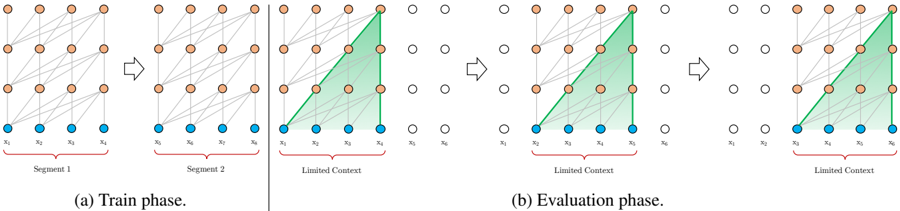
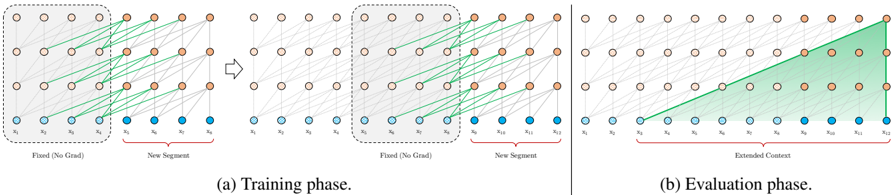
Verification
Claims the paper makes
The claims and statistics of this paper haven’t been checked yet.
Free: it reads the open-access text and checks the first 5 claims that cite a source we can check. Create a free account to check every claim.
Claims other papers make about this one
Each is checked against this paper’s own text: does it say what the citing paper says it does?
The cited source doesn’t support the claim as written.
In the citing paper
“note that the Transformer XL model25 incorporates some form of recurrent processing within the transformer block, but it still takes the entire text as its input in parallel.”
From Incremental accumulation of linguistic context in artificial and biological neural networks (2025) · cites this paper as [25]
Checked by a reasoning model — may be wrong.
Experimental — accuracy not yet measuredThe source backs part of the claim, not all of it — or backs it for a different population, condition or comparison.
In the citing paper
“Directly extending the context length of transformers incurs a quadratic increase in computational time and memory cost due to the transformer architecture's self-attention mechanism, making the design of new long-context architectures a pressing research challenge (Dai et al., 2019; Kitaev et al., 2020; Beltagy et al., 2020).”
From MemGPT: Towards LLMs as Operating Systems (2023) · cites this paper as Dai et al., 2019
Experimental — accuracy not yet measuredThe source backs part of the claim, not all of it — or backs it for a different population, condition or comparison.
In the citing paper
“We believe that the different trends are caused by the truncation problem [59], [60].”
From What Makes Good In-Context Demonstrations for Code Intelligence Tasks with LLMs? (2023) · cites this paper as [59]
Experimental — accuracy not yet measuredThe source backs part of the claim, not all of it — or backs it for a different population, condition or comparison.
In the citing paper
“Fixed-window methods : including context windows of 4K, 8K, and 16K tokens with FIFO eviction [10, 2]”
From FadeMem: Biologically-Inspired Forgetting for Efficient Agent Memory (2026) · cites this paper as [10]
Experimental — accuracy not yet measuredThe source backs part of the claim, not all of it — or backs it for a different population, condition or comparison.
In the citing paper
“Thus, in practice, Transformer-XL and Compressive Transformer need huge memory size to achieve good performance.”
From Memformer: a memory-augmented transformer for sequence modeling (2020) · cites this paper as Dai et al., 2019
Experimental — accuracy not yet measured
12 more claims about this paper
Create a free account to see every claim other papers make about this one.
Self-check
Percentages, sums and reported differences re-computed from the paper’s own numbers.
The self-check needs the paper’s full text.
Citations
Cites
Vaswani, A., Shazeer, N., Parmar, N., Uszkoreit, J., Jones, L., Gomez, A. N., Kaiser, L., & Polosukhin, I. (2017) · arXiv · doi:10.48550/arxiv.1706.03762 · Cited by 120,404 · cited 7×
“On the other hand, the direct connections between long-distance word pairs baked in attention mechanisms might ease optimization and enable the learning of long-term dependency (Bahdanau et al., 2014; Vaswani et al., 2017).”
BackgroundMethodInfluentialHochreiter, S., & Schmidhuber, J. (1997) · Neural Computation · doi:10.1162/neco.1997.9.8.1735 · Cited by 102,318 · cited 2×
“Recurrent neural networks (RNNs), in particular Long Short-Term Memory (LSTM) networks (Hochreiter & Schmidhuber, 1997), have been a standard solution to language modeling and obtained strong results on multiple benchmarks.”
BackgroundExploiting Generative AI to Scale up Intelligent Tutoring Systems
Jakubův, J., Chvalovský, K., Goertzel, Z., Kaliszyk, C., Olšák, M., Piotrowski, B., Schulz, S., Suda, M., & Urban, J. (2023) · DROPS (Schloss Dagstuhl – Leibniz Center for Informatics) · doi:10.4230/lipics.itp.2023.19 · Cited by 76,658
BERT: Pre-training of Deep Bidirectional Transformers for Language Understanding
Devlin, J., Chang, M.-W., Lee, K., & Toutanova, K. (2018) · arXiv · doi:10.48550/arxiv.1810.04805 · Cited by 73,173 · cited 4×
“Second, though it is possible to use padding to respect the sentence or other semantic boundaries, in practice it has been standard practice to simply chunk long text into fixed-length segments due to improved efficiency (Peters et al., 2018; Devlin et al., 2018; Al-Rfou et al., 2018).”
BackgroundInfluentialBERT: Pre-training of Deep Bidirectional Transformers for Language Understanding
Devlin, J., Chang, M.-W., Lee, K., & Toutanova, K. (2019) · Proceedings of the 2019 Conference of the North American Chapter of the Association for Computational Linguistics: Human Language Technologies, Volume 1 (Long and Short Papers) · doi:10.18653/v1/n19-1423 · Cited by 54,325 · cited 4×
“Second, though it is possible to use padding to respect the sentence or other semantic boundaries, in practice it has been standard practice to simply chunk long text into fixed-length segments due to improved efficiency (Peters et al., 2018; Devlin et al., 2018; Al-Rfou et al., 2018).”
BackgroundInfluentialNeural Machine Translation by Jointly Learning to Align and Translate
Bahdanau, D., Cho, K., & Bengio, Y. (2014) · arXiv · doi:10.48550/arxiv.1409.0473 · Cited by 16,213 · cited 2×
“On the other hand, the direct connections between long-distance word pairs baked in attention mechanisms might ease optimization and enable the learning of long-term dependency (Bahdanau et al., 2014; Vaswani et al., 2017).”
BackgroundDeep Contextualized Word Representations
Peters, M., Neumann, M., Iyyer, M., Gardner, M., Clark, C., Lee, K., & Zettlemoyer, L. (2018) · Proceedings of the 2018 Conference of the North American Chapter of the Association for Computational Linguistics: Human Language Technologies, Volume 1 (Long Papers) · doi:10.18653/v1/n18-1202 · Cited by 11,983 · cited 4×
“Second, though it is possible to use padding to respect the sentence or other semantic boundaries, in practice it has been standard practice to simply chunk long text into fixed-length segments due to improved efficiency (Peters et al., 2018; Devlin et al., 2018; Al-Rfou et al., 2018).”
BackgroundInfluentialRecurrent neural network based language model
Mikolov, T., Karafiát, M., Burget, L., Černocký, J., & Khudanpur, S. (2010) · Interspeech 2010 · doi:10.21437/interspeech.2010-343 · Cited by 5,390 · cited 5×
“However, different from truncated BPTT, our method caches a sequence of hidden states instead of the last one, and should be applied together with the relative positional encoding technique described in Section 3.3.”
BackgroundMethodInfluentialAn Empirical Evaluation of Generic Convolutional and Recurrent Networks for Sequence Modeling
Bai, S., Kolter, J. Z., & Koltun, V. (2018) · arXiv · doi:10.48550/arxiv.1803.01271 · Cited by 4,655
Neural Architecture Search with Reinforcement Learning
Zoph, B., & Le, Q. V. (2016) · arXiv (Cornell University) · doi:10.48550/arxiv.1611.01578 · Cited by 3,974
Self-citation
Research works printed but not linked: 1
- Matthew E Peters, Mark Neumann, Mohit Iyyer, Matt Gardner, Christopher Clark, Kenton Lee, and Luke Zettlemoyer. 2018. Deep contextualized word rep- resentations. arXiv preprint arXiv:1802.05365. · arXiv
Cited by
Items 701–800 of 1,058
Esmaeilzadeh, S., Williams, B., Shamsi, D., & Vikingstad, O. (2019) · Lecture notes in computer science · doi:10.1007/978-3-030-23207-8 · Cited by 68
Civil Rephrases Of Toxic Texts With Self-Supervised Transformers
Laugier, L., Pavlopoulos, J., Sorensen, J. S., & Dixon, L. (2021) · Conference of the European Chapter of the Association for Computational Linguistics · doi:10.18653/v1/2021.eacl-main.124 · Cited by 67
Sandglasset: A Light Multi-Granularity Self-Attentive Network for Time-Domain Speech Separation
Lam, M. W. Y., Wang, J., Su, D., & Yu, D. (2021) · IEEE International Conference on Acoustics Speech and Signal Processing · doi:10.1109/icassp39728.2021.9413837 · Cited by 66
MUSE: Parallel Multi-Scale Attention for Sequence to Sequence LearningPreprint
Zhao, G., Sun, X., Xu, J., Zhang, Z., & Luo, L. (2019) · arXiv (Cornell University) · doi:10.48550/arxiv.1911.09483 · Cited by 66
“In recent years, Transformer has been remarkably adept at sequence learning tasks like machine translation (Vaswani et al., 2017; Dehghani et al., 2018), text classification (Devlin et al., 2018; Yang et al., 2019), language modeling (Sukhbaatar et al., 2019b; Dai et al., 2019), etc.”
MethodTransformer in Convolutional Neural NetworksPreprint
Liu, Y., Sun, G., Qiu, Y., Zhang, L., Chhatkuli, A., & Gool, L. V. (2021) · arXiv (Cornell University) · Cited by 66
Quantity doesn’t buy quality syntax with neural language models
van Schijndel, M., Mueller, A., & Linzen, T. (2019) · Proceedings of the 2019 Conference on Empirical Methods in Natural Language Processing and the 9th International Joint Conference on Natural Language Processing (EMNLP-IJCNLP) · doi:10.18653/v1/d19-1592 · Cited by 65
“RNN LMs have been shown to favor the grammatical variant in the vast majority of cases sampled at random from a corpus (Linzen et al., 2016), but their accuracy decreases in the presence of distracting nouns intervening between the head of the subject and the verb, especially when those nouns are in relative clauses (…”
InfluentialRecollection versus Imagination: Exploring Human Memory and Cognition via Neural Language Models
Sap, M., Horvitz, E., Choi, Y., Smith, N. A., & Pennebaker, J. W. (2020) · Proceedings of the conference - Association for Computational Linguistics. Meeting · doi:10.18653/v1/2020.acl-main.178 · Cited by 66
“While our findings on linearity hold when using different language models trained on Wikipedia articles (Dai et al., 2019) or English web text (mostly news articles; Radford et al., 2019), a limitation of the findings is that GPT is trained on large corpus of fiction, which may boost linearity scores…”
BackgroundTGAN-AD: Transformer-Based GAN for Anomaly Detection of Time Series Data
Xu, L., Xu, K., Qin, Y., Li, Y., Huang, X., Lin, Z., Ye, N., & Ji, X. (2022) · Applied Sciences · doi:10.3390/app12168085 · Cited by 65
“[28] proposed Transformer-XL, introducing the segment-level recurrence mechanism to establish a connection between each text segment (segments) so that the model can capture more distant dependencies.”
MethodDeep learning for protein secondary structure prediction: Pre and post-AlphaFold
Ismi, D. P., Pulungan, R., & Afiahayati (2022) · Computational and Structural Biotechnology Journal · doi:10.1016/j.csbj.2022.11.012 · Cited by 65
“ProtTrans [49] trained six LMs in NLP, including T5 [145], Elec-tra [146], BERT [147], ALBERT [148], Transformer-XL [149], and XLNet [150] on protein sequences.”
MethodLength Extrapolation of Transformers: A Survey from the Perspective of Positional Encoding
Zhao, L., Feng, X., Feng, X., Zhong, W., Xu, D., Yang, Q., Liu, H., Qin, B., & Liu, T. (2024) · Findings of the Association for Computational Linguistics: EMNLP (Findings of EMNLP) · doi:10.18653/v1/2024.findings-emnlp.582 · Cited by 65
“To reduce memory and computational overhead during training, recurrent Transformer variances integrate recurrence with attention (Dai et al., 2019; Bulatov et al., 2022) while efficient Transformer variants (Tay et al., 2022; Fournier et al., 2023) mainly aim at improving the quadratic complexity…”
BackgroundMethodInfluentialIeremie, I., Ewing, R. M., & Niranjan, M. (2022) · Bioinformatics · doi:10.1093/bioinformatics/btac104 · Cited by 65
Improving Transformer Models by Reordering their Sublayers
Press, O., Smith, N. A., & Levy, O. (2020) · Proceedings of the 58th Annual Meeting of the Association for Computational Linguistics · doi:10.18653/v1/2020.acl-main.270 · Cited by 64
Shin, A., Ishii, M., & Narihira, T. (2022) · International Journal of Computer Vision · doi:10.1007/s11263-021-01547-8 · Cited by 65
“Transformer has first demonstrated its capacity in natural language processing (NLP), achieving state-of-the-art performances in countless number of NLP tasks (Peters et al. (2018); Dai et al. (2019); Yang et al. (2019b)), and has rapidly replaced recurrent neural networks.”
BackgroundDNDT: Infrared and Visible Image Fusion Via DenseNet and Dual-Transformer
Zhao, H., & Nie, R. (2021) · International Conference on Information Technology and Biomedical Engineering (ICITBE) · doi:10.1109/icitbe54178.2021.00025 · Cited by 64
Lane change trajectory prediction considering driving style uncertainty for autonomous vehicles
Chen, G., Gao, Z., Hua, M., Shuai, B., & Gao, Z. (2023) · Mechanical Systems and Signal Processing · doi:10.1016/j.ymssp.2023.110854 · Cited by 64
Deep Representation Learning: Fundamentals, Technologies, Applications, and Open Challenges
Payandeh, A., Baghaei, K. T., Fayyazsanavi, P., Ramezani, S. B., Chen, Z., & Rahimi, S. (2023) · IEEE Access · doi:10.1109/access.2023.3335196 · Cited by 64
“One of the most well-known extensions to the vanilla Transformer model is Transformer-XL [340].”
AI-Driven Safety and Security for UAVs: From Machine Learning to Large Language Models
Yang, Z., Zhang, Y., Zeng, J., Yang, Y., Jia, Y., Song, H., Lv, T., Sun, Q., & An, J. (2025) · Drones · doi:10.3390/drones9060392 · Cited by 66
Self-citationTNT-KID: Transformer-based neural tagger for keyword identification
Martinc, M., Škrlj, B., & Pollak, S. (2021) · Natural Language Engineering · doi:10.1017/s1351324921000127 · Cited by 66
“Note that we use relative positional embeddings for representing the positional information, same as in Dai et al. (2019), where the main idea is to only encode the relative positional information in the hidden states instead of the absolute.”
MethodWhen Text Embedding Meets Large Language Model: A Comprehensive SurveyPreprint
Nie, Z., Feng, Z., Li, M., Zhang, C., Zhang, Y., Long, D., & Zhang, R. (2024) · arXiv (Cornell University) · doi:10.48550/arxiv.2412.09165 · Cited by 64
Reed, S., Zolna, K., Parisotto, E., Colmenarejo, S. G., Novikov, A., Barth-Maron, G., Gimenez, M., Sulsky, Y., Kay, J., Springenberg, J. T., et al. (2022) · arXiv · doi:10.48550/arxiv.2205.06175 · Cited by 63
“We found it beneficial to use transformer XL memory during deployment, although it was not used during training (Dai et al., 2019).”
MethodLSG Attention: Extrapolation of Pretrained Transformers to Long Sequences
Condevaux, C., & Harispe, S. (2023) · Lecture notes in computer science · doi:10.1007/978-3-031-33374-3_35 · Cited by 66
DMGAN: Dynamic Multi-Hop Graph Attention Network for Traffic Forecasting
Li, R., Zhang, F., Li, T., Zhang, N., & Zhang, T. (2022) · IEEE Transactions on Knowledge and Data Engineering · doi:10.1109/tkde.2022.3221316 · Cited by 63
“Transformers have shown competitive performance in many domains, such as natural language processing [38], [39], [40], computer vision [41], [42], time-series forecasting [43] and speech processing [44] in recent years.”
BackgroundEstraNet: An Efficient Shift-Invariant Transformer Network for Side-Channel Analysis
Hajra, S., Chowdhury, S., & Mukhopadhyay, D. (2023) · IACR Transactions on Cryptographic Hardware and Embedded Systems · doi:10.46586/tches.v2024.i1.336-374 · Cited by 63
Dewaker, V., Morya, V. K., Kim, Y. H., Park, S. T., Kim, H. S., & Koh, Y. H. (2025) · Biomarker Research · doi:10.1186/s40364-025-00764-4 · Cited by 63
How Decoding Strategies Affect the Verifiability of Generated Text
Massarelli, L., Petroni, F., Piktus, A., Ott, M., Rocktäschel, T., Plachouras, V., Silvestri, F., & Riedel, S. (2020) · Findings of the Association for Computational Linguistics: EMNLP 2020 · doi:10.18653/v1/2020.findings-emnlp.22 · Cited by 38
Why Attention is Not Explanation: Surgical Intervention and Causal Reasoning about Neural Models.
Grimsley, C., Mayfield, E., & Bursten, J. R. S. (2020) · PhilPapers (PhilPapers Foundation) · Cited by 63
DA-Transformer: Distance-aware Transformer
Wu, C., Wu, F., & Huang, Y. (2021) · Proceedings of the 2021 Conference of the North American Chapter of the Association for Computational Linguistics: Human Language Technologies · doi:10.18653/v1/2021.naacl-main.166 · Cited by 35
Dynamic Language Models for Continuously Evolving Content
Hombaiah, S. A., Chen, T., Zhang, M., Bendersky, M., & Najork, M. (2021) · ACM SIGKDD Conference on Knowledge Discovery and Data Mining (KDD) · doi:10.1145/3447548.3467162 · Cited by 63
“The most relevant work is by [25] who demonstrate that Transformer-XL [10] (a left-to-right autoregressive language model) handles semantic shifts poorly in news and scientific domains, and highlight the importance of adapting language models to continuous stream of new information.”
BackgroundInfluentialScaling Laws for Deep LearningPreprint
Rosenfeld, J. S. (2021) · arXiv (Cornell University) · doi:10.48550/arxiv.2108.07686 · Cited by 63
Introduction to Transformers: an NLP PerspectivePreprint
Xiao, T., & Zhu, J. (2023) · arXiv (Cornell University) · doi:10.48550/arxiv.2311.17633 · Cited by 63
Gao, Y., Zhang, J., Wei, S., & Li, Z. (2024) · Biomedical Signal Processing and Control · doi:10.1016/j.bspc.2024.107154 · Cited by 63
Siano, F., & Wysocki, P. D. (2021) · Accounting Horizons · doi:10.2308/horizons-19-161 · Cited by 62
SyntaxGym: An Online Platform for Targeted Evaluation of Language Models
Gauthier, J., Hu, J., Wilcox, E., Qian, P., & Levy, R. (2020) · Proceedings of the 58th Annual Meeting of the Association for Computational Linguistics: System Demonstrations · doi:10.18653/v1/2020.acl-demos.10 · Cited by 61
“(2019) WebText (∼8B) Transformer XL Dai et al. (2019) WikiText-103 (103M) JRNN Jozefowicz et al.”
BackgroundThe Grammar-Learning Trajectories of Neural Language Models
Choshen, L., Hacohen, G., Weinshall, D., & Abend, O. (2022) · Proceedings of the conference - Association for Computational Linguistics. Meeting · doi:10.18653/v1/2022.acl-long.568 · Cited by 61
Metzler, H., Baginski, H., Niederkrotenthaler, T., & García, D. (2022) · Journal of Medical Internet Research · doi:10.2196/34705 · Cited by 63
Bayesian Surprise Predicts Human Event Segmentation in Story Listening
Kumar, M., Goldstein, A., Michelmann, S., Zacks, J. M., Hasson, U., & Norman, K. A. (2023) · Cognitive Science · doi:10.1111/cogs.13343 · Cited by 63
“Transformer models like GPT-2 outperform previous models in key benchmarks, including next-word prediction (Devlin, Chang, Lee, & Toutanova, 2019; see also Dai et al., 2019).”
Adam, M., Albaseer, A. M., Baroudi, U. A., & Abdallah, M. M. (2025) · IEEE Open Journal of the Communications Society · doi:10.1109/ojcoms.2025.3554537 · Cited by 63
An Adaptive and Momental Bound Method for Stochastic LearningPreprint
Ding, J., Ren, X., Luo, R., & Sun, X. (2019) · arXiv (Cornell University) · doi:10.48550/arxiv.1910.12249 · Cited by 61
“Similar phenomena are observed in other tasks such as Transformer-XL (Dai et al. 2019) language modeling.”
Training language models with memory augmentation
Zhong, Z., Lei, T., & Chen, D. (2022) · Proceedings of the 2022 Conference on Empirical Methods in Natural Language Processing · doi:10.18653/v1/2022.emnlp-main.382 · Cited by 60
Explainability in transformer models for functional genomics
Clauwaert, J., Menschaert, G., & Waegeman, W. (2021) · Briefings in Bioinformatics · doi:10.1093/bib/bbab060 · Cited by 60
“The model is built from the transformer-XL [7] architecture.”
MethodLinear Transformers Are Secretly Fast Weight Programmers
Schlag, I., Irie, K., & Schmidhuber, J. (2021) · arXiv · doi:10.48550/arxiv.2102.11174 · Cited by 60
“While performance does not yet match the one of prior models (Dai et al., 2019; Rae et al., 2020) specifically designed for this use case (we train the Transformer-XL in our medium configuration), the results are promising for future work on alternative Transformer models which can run for an unlimited number of steps.”
BackgroundResultInfluentialCruz-Benito, J., Vishwakarma, S., Martin-Fernandez, F., & Faro, I. (2021) · AI · doi:10.3390/ai2010001 · Cited by 43
An overview of domain-specific foundation model: key technologies, applications and challenges
Chen, H., Chen, H.-Z., Zhao, Z., Han, K.-F., Zhu, G., Zhao, Y.-C., Du, Y., Xu, W., & Shi, Q. (2024) · Science China Information Sciences · doi:10.1007/s11432-025-4498-2 · Cited by 41
“The trade-offs highlighted by this phenomenon are crucial for model deployment, offering significant insights for both model design and application.”
How Furiously Can Colorless Green Ideas Sleep? Sentence Acceptability in Context
Lau, J. H., Armendariz, C. S., Lappin, S., Purver, M., & Shu, C. (2020) · Transactions of the Association for Computational Linguistics · doi:10.1162/tacl_a_00315 · Cited by 65
“Another innovation of XLNET is that it incorporates the segment recurrence mechanism of Dai et al. (2019).”
BackgroundWittkuhn, L., Chien, S., Hall-McMaster, S., & Schuck, N. W. (2021) · Neuroscience & Biobehavioral Reviews · doi:10.1016/j.neubiorev.2021.08.002 · Cited by 60
Training Language Models with Memory Augmentation
Zhong, Z., Lei, T., & Chen, D. (2022) · arXiv · doi:10.48550/arxiv.2205.12674 · Cited by 60
A Length-Extrapolatable Transformer
Sun, Y., Dong, L., Patra, B., Ma, S., Huang, S., Benhaim, A., Chaudhary, V., Song, X., & Wei, F. (2023) · Proceedings of the 61st Annual Meeting of the Association for Computational Linguistics (Volume 1: Long Papers) · doi:10.18653/v1/2023.acl-long.816 · Cited by 59
Adapting Language Models to Compress Contexts
Chevalier, A., Wettig, A., Ajith, A., & Chen, D. (2023) · Proceedings of the 2023 Conference on Empirical Methods in Natural Language Processing · doi:10.18653/v1/2023.emnlp-main.232 · Cited by 59
Chen, S., Ren, S., Wang, G., Huang, M., & Xue, C. (2023) · IEEE Journal of Biomedical and Health Informatics · doi:10.1109/jbhi.2023.3247949 · Cited by 59
“Inspired by the outstanding results of Transformer for natural language processing (NLP) [43], [44], Vision Transformers (ViTs) [15] were proposed for encoding image token sequences.”
BackgroundOrders Are Unwanted: Dynamic Deep Graph Convolutional Network for Personality Detection
Yang, T., Deng, J., Quan, X., & Wang, Q. (2023) · Proceedings of the AAAI Conference on Artificial Intelligence · doi:10.1609/aaai.v37i11.26627 · Cited by 59
Tensor Decomposition for Model Reduction in Neural Networks: A Review [Feature]
Liu, X., & Parhi, K. K. (2023) · IEEE Circuits and Systems Magazine · doi:10.1109/mcas.2023.3267921 · Cited by 62
Liu, S., Mu, C., Jiang, H., Wang, Y., Zhang, J., Lin, F., Zhou, K., Liu, Q., & Chen, C. (2023) · IEEE Transactions on Very Large Scale Integration (VLSI) Systems · doi:10.1109/tvlsi.2023.3337777 · Cited by 60
“Compared to Transformer-XL [58], HARDSEA incurs a slight performance degradation on the Enwik-8 dataset.”
Conv-Transformer Transducer: Low Latency, Low Frame Rate, Streamable End-to-End Speech Recognition
Huang, W., Hu, W., Yeung, Y. T., & Chen, X. (2020) · Interspeech (USB) · doi:10.21437/interspeech.2020-2361 · Cited by 61
Transformer networks of human conceptual knowledge.
Bhatia, S., & Richie, R. (2024) · Psychological Review · doi:10.1037/rev0000319 · Cited by 59
CLEX: Continuous Length Extrapolation for Large Language Models
Chen, G., Li, X., Meng, Z., Liang, S., & Bing, L. (2024) · International Conference on Learning Representations · doi:10.48550/arxiv.2310.16450 · Cited by 59
“Prior work (Dai et al., 2019; Beltagy et al., 2020; Bulatov et al., 2022) has proposed circumventing full context length access via hierarchical architecture or sparse attention, albeit at the expense of forfeiting partial context information.”
MemGPT: Towards LLMs as Operating Systems
Packer, C., Wooders, S., Lin, K., Fang, V., Patil, S. G., Stoica, I., & Gonzalez, J. E. (2023) · arXiv · doi:10.48550/arxiv.2310.08560 · Cited by 64
“…length of transformers incurs a quadratic increase in computational time and memory cost due to the transformer architecture’s self-attention mechanism, making the design of new long-context architectures a pressing research challenge (Dai et al., 2019; Kitaev et al., 2020; Beltagy et al., 2020).”
BackgroundMAGMA: An Optimization Framework for Mapping Multiple DNNs on Multiple Accelerator Cores
Kao, S.-C., & Krishna, T. (2022) · 2022 IEEE International Symposium on High-Performance Computer Architecture (HPCA) · doi:10.1109/hpca53966.2022.00065 · Cited by 58
“Language models are often dominated by embedding lookup, MLPs, RNNs, and attention layers [21], [22], [72], [74].”
MethodRevisiting Transformer-based Models for Long Document Classification
Dai, X., Chalkidis, I., Darkner, S., & Elliott, D. (2022) · arXiv · doi:10.48550/arxiv.2204.06683 · Cited by 58
“The recurrent approach processes segments moving from left-to-right (Dai et al., 2019).”
BackgroundMethodInfluentialA Survey of Pretrained Language Models
Sun, K., Luo, X., & Luo, M. Y. (2022) · Lecture notes in computer science · doi:10.1007/978-3-031-10986-7_36 · Cited by 58
Accelerating Attention Mechanism on FPGAs based on Efficient Reconfigurable Systolic Array
Ye, W., Zhou, X., Zhou, J. T., Chen, C., & Li, K. (2023) · ACM Transactions on Embedded Computing Systems · doi:10.1145/3549937 · Cited by 58
“Many Transformer-based models have emerged, such as Transformer [29], BERT [17], Transformer-XL [4], Routing Transformers [26], and the like.”
MethodFPT: Fine-Grained Detection of Driver Distraction Based on the Feature Pyramid Vision Transformer
Wang, H., Chen, J., Huang, Z., Li, B., Lv, J., Xi, J., Wu, B., Zhang, J., & Wu, Z. (2022) · IEEE Transactions on Intelligent Transportation Systems · doi:10.1109/tits.2022.3219676 · Cited by 59
“Compared with PVT, Twins is greatly improved in position encoding, and experiments in [50] show that conditional position encoding (PEG) does improve the accuracy of the classification compared with relative position encoding [51], [52] and absolute position encoding.”
BackgroundEliminating Gradient Conflict in Reference-based Line-Art Colorization
Li, Z., Geng, Z., Kang, Z., Chen, W., & Yang, Y. (2022) · Lecture notes in computer science · doi:10.1007/978-3-031-19790-1_35 · Cited by 59
Self-citationKnowing Knowledge: Epistemological Study of Knowledge in Transformers
Ranaldi, L., & Pucci, G. (2023) · Applied Sciences · doi:10.3390/app13020677 · Cited by 58
“The knowledge they learn is very superficial [9,10], in fact, in hostile contexts - where an accep-tion can totally change the meaning of a sentence - they do not work; however, they perform well in long contexts, only in the presence of many resources [35].”
BackgroundAutomatic design of machine learning via evolutionary computation: A survey
Li, N., Ma, L., Xing, T., Yu, G., Wang, C., Wen, Y., Cheng, S., & Gao, S. (2023) · Applied Soft Computing · doi:10.1016/j.asoc.2023.110412 · Cited by 58
An Exploration of Data Augmentation and Sampling Techniques for Domain-Agnostic Question Answering
Longpre, S., Lu, Y., Tu, Z., & DuBois, C. (2019) · Proceedings of the 2nd Workshop on Machine Reading for Question Answering · doi:10.18653/v1/d19-5829 · Cited by 30
“Leveraging the Transformer-XL architecture (Dai et al., 2019), a “generalized autoregressive pretraining” method, and much more training data than BERT, its representation provided a strong source of transfer learning.”
MethodPawar, S., Towhidul, S. M., Zaman, S. M. M., Jain, V., Chadha, A. R., & Das, A. (2024) · arXiv (Cornell University) · doi:10.13140/rg.2.2.16805.06884 · Cited by 59
GENA-LM: A Family of Open-Source Foundational DNA Language Models for Long Sequences
Fishman, V., Kuratov, Y., Shmelev, A., Petrov, M., Penzar, D., Shepelin, D., Chekanov, N., Kardymon, O., & Burtsev, M. (2023) · doi:10.1101/2023.06.12.544594 · Cited by 137
“In the domain of recurrent models, inputs are segmented and sequentially processed, with inter-segment information relayed through prior hidden states [25, 26] or specialized memory [27–29].”
Zhai, S., Talbott, W., Srivastava, N., Huang, C., Goh, H., Zhang, R., & Susskind, J. (2021) · arXiv · doi:10.48550/arxiv.2105.14103 · Cited by 57
“We follow the standard preprocessing procedures and training/validation/test splits as in [32].”
MethodAutomated Scoring of Spontaneous Speech from Young Learners of English Using Transformers
Wang, X., Evanini, K., Qian, Y., & Mulholland, M. (2021) · IEEE Spoken Language Technology Workshop (SLT) · doi:10.1109/slt48900.2021.9383553 · Cited by 57
“Furthermore, XLNet incorporates Transformer-XL [16] into the pre-training framework with the relative positional encoding scheme and the segment recurrence mechanism.”
MethodDynaST: Dynamic Sparse Transformer for Exemplar-Guided Image Generation
Liu, S., Ye, J., Ren, S., & Wang, X. (2022) · Lecture notes in computer science · doi:10.1007/978-3-031-19787-1_5 · Cited by 57
VLTinT: Visual-Linguistic Transformer-in-Transformer for Coherent Video Paragraph Captioning
Yamazaki, K., Vo, K., Truong, Q. S., Raj, B., & Le, N. (2023) · Proceedings of the AAAI Conference on Artificial Intelligence · doi:10.1609/aaai.v37i3.25412 · Cited by 57
Towards Unified Prompt Tuning for Few-shot Text Classification
Wang, J., Wang, C., Luo, F., Tan, C., Qiu, M., Yang, F., Shi, Q., Huang, S., & Gao, M. (2022) · Findings of the Association for Computational Linguistics: EMNLP (Findings of EMNLP) · doi:10.18653/v1/2022.findings-emnlp.37 · Cited by 58
PROSE: Predicting Multiple Operators and Symbolic Expressions using multimodal transformers
Liu, Y., Zhang, Z., & Schaeffer, H. (2024) · Neural Networks · doi:10.1016/j.neunet.2024.106707 · Cited by 57
DAPE: Data-Adaptive Positional Encoding for Length Extrapolation
Zheng, C.-Y., Gao, Y.-H., Shi, H., Huang, M., Li, J.-Y., Xiong, J., Ren, X., Ng, M. K., Jiang, X., Li, Z.-G., et al. (2024) · Neural Information Processing Systems · doi:10.52202/079017-0838 · Cited by 43
Forecaster: A Graph Transformer for Forecasting Spatial and Time-Dependent Data
Li, Y., & Moura, J. M. F. (2020) · Frontiers in artificial intelligence and applications · doi:10.3233/faia200231 · Cited by 59
“The Transformer and its extensions [29, 3, 33, 4, 22] have been shown to significantly outperform RNN and CNN in NLP tasks, as they capture relations among data at distant positions, significantly improving the learning of longrange temporal dependency [29].”
BackgroundMethodHrinchuk, O., Khrulkov, V., Mirvakhabova, L., Orlova, E., & Oseledets, I. V. (2020) · Findings of the Association for Computational Linguistics: EMNLP (Findings of EMNLP) · doi:10.18653/v1/2020.findings-emnlp.436 · Cited by 57
“4854 Table 3: LM, Transformer-XL (Dai et al., 2019) on the WikiText-103 dataset.”
MethodPerformance vs. hardware requirements in state-of-the-art automatic speech recognition
Georgescu, A.-L., Pappalardo, A., Cucu, H., & Blott, M. (2021) · EURASIP Journal on Audio Speech and Music Processing · doi:10.1186/s13636-021-00217-4 · Cited by 57
Context-Aware Attentive Multilevel Feature Fusion for Named Entity Recognition
Yang, Z., Ma, J., Chen, H., Zhang, J., & Chang, Y. (2022) · IEEE Transactions on Neural Networks and Learning Systems · doi:10.1109/tnnls.2022.3178522 · Cited by 58
“Owing to the fixed lengths of the contexts, existing models do not effectively capture features beyond the current context, thereby preventing the utilization of previous contextual information [28].”
BackgroundSelf-citationRethinking Global Context in Crowd Counting
Sun, G., Liu, Y., Probst, T., Paudel, D. P., Popović, N., & Gool, L. V. (2024) · Machine Intelligence Research · doi:10.1007/s11633-023-1475-z · Cited by 57
From English To Foreign Languages: Transferring Pre-trained Language ModelsPreprint
Tran, K. M. (2020) · arXiv (Cornell University) · doi:10.48550/arxiv.2002.07306 · Cited by 57
“Although multilingual models are an important piece for building up language technology in many languages, recent research on improving pretrained models puts much emphasis on English (Radford et al., 2019; Dai et al., 2019; Yang et al., 2019).”
BackgroundTransformers in Reinforcement Learning: A SurveyPreprint
Agarwal, P., Rahman, A. A., St-Charles, P.-L., Prince, S. J. D., & Kahou, S. E. (2023) · arXiv (Cornell University) · doi:10.48550/arxiv.2307.05979 · Cited by 59
“c) Transformer XL [31] establishes a connection between past segments, incorporating information from”
BackgroundJacobs, G., & Hoste, V. (2021) · Language Resources and Evaluation · doi:10.1007/s10579-021-09562-4 · Cited by 56
“XLNet incorporates two key ideas from the TransformerXL architecture (Dai et al., 2019): relative positional embeddings and the recurrence mechanism.”
BackgroundCADTransformer: Panoptic Symbol Spotting Transformer for CAD Drawings
Fan, Z., Chen, T., Wang, P., & Wang, Z. (2022) · IEEE Computer Society Conference on Computer Vision and Pattern Recognition/Proceedings - IEEE Computer Society Conference on Computer Vision and Pattern Recognition/Proceedings · doi:10.1109/cvpr52688.2022.01071 · Cited by 58
“Transformers [10, 12, 23, 40, 51, 54, 55, 59, 61, 64] reason global relationships across tokens without pre-defined graph connectivity, by instead learning with self-attention.”
BackgroundEfficient Vision Transformer via Token Merger
Feng, Z., & Zhang, S. S. (2023) · IEEE Transactions on Image Processing · doi:10.1109/tip.2023.3293763 · Cited by 58
“T RANSFORMER, the dominant self-attention based model in Natural Language Processing (NLP) [1], [2], [3], [4], has been successfully adapted to Computer Vision tasks [5], [6], [7], [8], [9].”
MethodA BiLSTM–Transformer and 2D CNN Architecture for Emotion Recognition from Speech
Kim, S., & Lee, S.-P. (2023) · Electronics · doi:10.3390/electronics12194034 · Cited by 56
Reranking for Efficient Transformer-based Answer Selection
Matsubara, Y., Vu, T., & Moschitti, A. (2020) · International ACM SIGIR Conference on Research and Development in Information Retrieval (SIGIR) · doi:10.1145/3397271.3401266 · Cited by 56
“More recently, neural language models, e.g. , ELMO [13], GPT [14], BERT [5], RoBERTa [10], XLNet [3] have led to major advancements in NLP.”
BackgroundCompositional Demographic Word Embeddings
WELCH, C. A., Kummerfeld, J. K., Pérez‐Rosas, V., & Mihalcea, R. F. (2020) · Conference on Empirical Methods in Natural Language Processing (EMNLP) · doi:10.18653/v1/2020.emnlp-main.334 · Cited by 55
SMYRF: Efficient Attention using Asymmetric ClusteringPreprint
Daras, G., Kitaev, N., Odena, A., & Dimakis, A. G. (2020) · arXiv (Cornell University) · doi:10.48550/arxiv.2010.05315 · Cited by 57
“GLUE [25] is a standard multitask benchmark for Natural Language Processing.”
BackgroundInfluentialA Trainable Optimal Transport Embedding for Feature Aggregation and its Relationship to AttentionPreprint
Mialon, G., Chen, D., d’Aspremont, A., & Mairal, J. (2020) · arXiv (Cornell University) · doi:10.48550/arxiv.2006.12065 · Cited by 56
“For transformers, an absolute positional encoding was originally integrated to the word embeddings [40]; yet, relative positional encoding [12] is a current standard for integrating positional information: the position offset between the query element and a given key can be injected in the attention score [39], which…”
MethodShortformer: Better language modeling using shorter inputs
Press, O., Smith, N. A., & Lewis, M. (2021) · Proceedings of the 59th Annual Meeting of the Association for Computational Linguistics and the 11th International Joint Conference on Natural Language Processing (Volume 1: Long Papers) · doi:10.18653/v1/2021.acl-long.427 · Cited by 55
“Position-Infused Attention (§5) Second, we consider a natural way to avoid the early token curse during training and inference: attending to cached representations from the previously evaluated subsequence (Dai et al., 2019).”
BackgroundMethodInfluentialBulatov, A., Kuratov, Y., & Burtsev, M. S. (2022) · arXiv · doi:10.48550/arxiv.2207.06881 · Cited by 55
“Transformer-XL (Dai et al., 2019) extends Transformer model with state re-use cache mechanism for segment-level recurrence and relative position encoding.”
BackgroundMethodNovel Transformer Networks for Improved Sequence Labeling in genomics
Clauwaert, J., & Waegeman, W. (2022) · IEEE/ACM Transactions on Computational Biology and Bioinformatics · doi:10.1109/tcbb.2020.3035021 · Cited by 47
“(7) defined the transformer-XL, an improvement of the transformer unit for tasks constituting long sequences by introducing a recurrent mechanism that further extends the context of the predictive network.”
BackgroundLiu, J., Jin, H., Xu, G., Lin, M., Wu, T., Nour, M., Alenezi, F. S., Alhudhaif, A., & Polat, K. (2022) · Expert Systems with Applications · doi:10.1016/j.eswa.2022.119110 · Cited by 55
Shared-Private Memory Networks For Multimodal Sentiment Analysis
Zhao, X., Chen, Y., Liu, S., & Tang, B. (2022) · IEEE Transactions on Affective Computing · doi:10.1109/taffc.2022.3222023 · Cited by 55
“In addition, different pre-trained language representation models give multiple new contextual representations through building an auto-regressive model, such as XLNET [23], RoBerta [24], DeBerta [25], and Electra [26].”
BackgroundPointConvFormer: Revenge of the Point-based Convolution
Wu, W., Li, F., & Shan, Q. (2023) · IEEE Computer Society Conference on Computer Vision and Pattern Recognition/Proceedings - IEEE Computer Society Conference on Computer Vision and Pattern Recognition/Proceedings · doi:10.1109/cvpr52729.2023.02088 · Cited by 55
Speech and language processing with deep learning for dementia diagnosis: A systematic review
Shi, M., Cheung, G., & Shahamiri, S. R. (2023) · Psychiatry Research · doi:10.1016/j.psychres.2023.115538 · Cited by 56
“Other variations exist, such as transformers (Vaswani et al., 2017), transformer-XL (Dai et al., 2019), and Enhanced Representation through Knowledge Integration (ERNIE) (Sun et al., 2019).”
BackgroundLearning long sequences in spiking neural networks
Stan, M.-I., & Rhodes, O. (2024) · Scientific Reports · doi:10.1038/s41598-024-71678-8 · Cited by 55
“SNNs are built for deployment on neuromorphic computing platforms such as Intel Loihi [Davies et al., 2021], which can potentially enable orders of magnitude lower energy consumption compared to traditional computers.”
BackgroundGeng, T., Xu, Z., Qu, Y., & Wong, W. E. (2026) · Computers, Materials & Continua · doi:10.32604/cmc.2025.074081 · Cited by 16
Low Latency End-to-End Streaming Speech Recognition with a Scout Network
Wang, C., Wu, Y., Lu, L., Liu, S., Li, J., Ye, G., & Zhou, M. L. (2020) · Interspeech (USB) · doi:10.21437/interspeech.2020-1292 · Cited by 56
“Motivated by Transformer-XL [21], other works [12, 15, 16, 17, 22] use a chunk-wise approach, where the entire utterance is segmented into several fixed-length chunks as shown in Figure 1(b).”
MethodContextual Temperature for Language ModelingPreprint
Wang, P.-H., Hsieh, S.-I., Chang, S.-C., Chen, Y., Pan, J.-Y., Wei, W., & Juan, D.-C. (2020) · arXiv (Cornell University) · doi:10.48550/arxiv.2012.13575 · Cited by 57
“…various architectures as θ model , including the earlier feed-forward networks (Ben-gio et al. 2003), recent recurrent-based ones (Hochreiter and Schmidhuber 1997; Mikolov et al. 2010; Zilly et al. 2017), convolutional-based ones (Dauphin et al. 2017), and attention-based ones (Dai et al. 2019).”
Background
Metadata
- Authors
- Dai, Z., Yang, Z., Yang, Y., Carbonell, J., Le, Q., & Salakhutdinov, R.
- Affiliations
- Carnegie Mellon University (US)
- Google (United States) (US)
- Venue
- Proceedings of the 57th Annual Meeting of the Association for Computational Linguistics
- Published
- 2019
- Pages
- 2978-2988
- ISSN
- 0736-587X (ISSN-L)
- OpenAlex
- W2964110616
- Cited by
- 3,169
- References
- 67
- Citations by year
- 2026: 163 · 2025: 361 · 2024: 434 · 2023: 585 · 2022: 504 · 2021: 612 · 2020: 403 · 2019: 107
- FWCI
- 155.55
- Type
- conference paper
- Language
- en
- Open access
- hybrid
- doi.org
- Licence
- cc-by
- Locations
- Proceedings of the conference - Association for Computational Linguistics. Meeting (publishedVersion, cc-by)
- Funders
- National Science Foundation (1546329, 1763562)
- U.S. Department of Energy
- Nvidia
- Office of Science
- Office of Naval Research (N000141812861)
- Advanced Scientific Computing Research
- Topics
- Physical Sciences › Computer Science › Artificial Intelligence › Topic Modeling
- Physical Sciences › Computer Science › Artificial Intelligence › Natural Language Processing Techniques
- Physical Sciences › Computer Science › Artificial Intelligence › Speech Recognition and Synthesis
- Keywords
- Transformer-XL, long-range dependencies, positional encoding, language modeling, temporal coherence, sequence generation, pre-trained language models
About these checks
Registry, retraction, Cites and statistics results are computed, not judged, with one exception: a printed reference that no index lists is read once by a model before it counts as a citation error. Claims are extracted by a model and kept only when their quote appears verbatim in the text; each cited source is then checked, with a model’s help, for whether it says what the claim relies on. Those verdicts can be wrong — read the claim’s quote and the cited source before relying on one.
Statistics and arithmetic are recomputed, not judged.
Confidence bands are shown only for fields calibrated on our annotated test set. None is calibrated yet, so no band is shown.
What counts as a claim ›How we measure confidence ›How we check this ›
Are you an author, or do you see a problem with this page? Request a review
Data sources
Bibliographic data: Semantic Scholar, OpenAlex, Crossref.
Contains information from the Semantic Scholar Academic Graph Datasets, made available under the ODC Attribution License (ODC-BY 1.0).
Semantic Scholar’s data is described in: Kinney, R., et al. (2023). The Semantic Scholar Open Data Platform. arXiv:2301.10140.
