

Transformer-XL: Attentive Language Models beyond a Fixed-Length Context
Open accessThe DOI matches its Crossref record; 65 of the 67 references it cites were found in a registry or an index.
Abstract
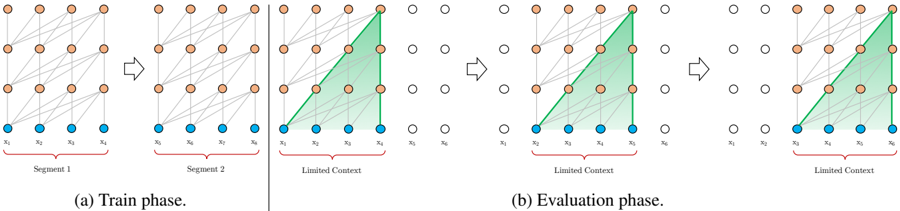
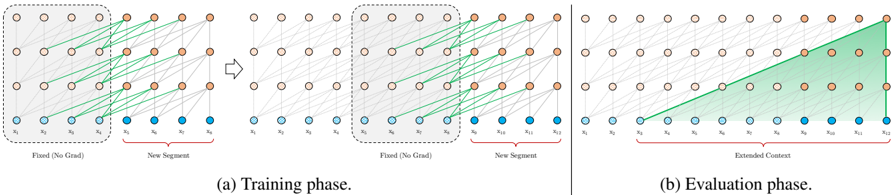
Transformers have a potential of learning longer-term dependency, but are limited by a fixed-length context in the setting of language modeling.We propose a novel neural architecture Transformer-XL that enables learning dependency beyond a fixed length without disrupting temporal coherence.It consists of a segment-level recurrence mechanism and a novel positional encoding scheme.Our method not only enables capturing longer-term dependency, but also resolves the context fragmentation problem.As a result, Transformer-XL learns dependency that is 80% longer than RNNs and 450% longer than vanilla Transformers, achieves better performance on both short and long sequences, and is up to 1,800+ times faster than vanilla Transformers during evaluation.Notably, we improve the state-ofthe-art results of bpc/perplexity to 0.99 on en-wiki8, 1.08 on text8, 18.3 on WikiText-103, 21.8 on One Billion Word, and 54.5 on Penn Treebank (without finetuning).When trained only on WikiText-103, Transformer-XL manages to generate reasonably coherent, novel text articles with thousands of tokens.Our code, pretrained models, and hyperparameters are available in both Tensorflow and PyTorch 1 .
Overview
The claims and statistics of this paper haven’t been checked yet.
Free: it reads the open-access text and checks the first 5 claims that cite a source we can check. Create a free account to check every claim.
Integrity signals
Registry
Cites
Statistics
Figures
Verification
Claims the paper makes
The claims and statistics of this paper haven’t been checked yet.
Free: it reads the open-access text and checks the first 5 claims that cite a source we can check. Create a free account to check every claim.
Claims other papers make about this one
Each is checked against this paper’s own text: does it say what the citing paper says it does?
The cited source doesn’t support the claim as written.
In the citing paper
“note that the Transformer XL model25 incorporates some form of recurrent processing within the transformer block, but it still takes the entire text as its input in parallel.”
From Incremental accumulation of linguistic context in artificial and biological neural networks (2025) · cites this paper as [25]
Checked by a reasoning model — may be wrong.
Experimental — accuracy not yet measuredThe source backs part of the claim, not all of it — or backs it for a different population, condition or comparison.
In the citing paper
“Directly extending the context length of transformers incurs a quadratic increase in computational time and memory cost due to the transformer architecture's self-attention mechanism, making the design of new long-context architectures a pressing research challenge (Dai et al., 2019; Kitaev et al., 2020; Beltagy et al., 2020).”
From MemGPT: Towards LLMs as Operating Systems (2023) · cites this paper as Dai et al., 2019
Experimental — accuracy not yet measuredThe source backs part of the claim, not all of it — or backs it for a different population, condition or comparison.
In the citing paper
“We believe that the different trends are caused by the truncation problem [59], [60].”
From What Makes Good In-Context Demonstrations for Code Intelligence Tasks with LLMs? (2023) · cites this paper as [59]
Experimental — accuracy not yet measuredThe source backs part of the claim, not all of it — or backs it for a different population, condition or comparison.
In the citing paper
“Fixed-window methods : including context windows of 4K, 8K, and 16K tokens with FIFO eviction [10, 2]”
From FadeMem: Biologically-Inspired Forgetting for Efficient Agent Memory (2026) · cites this paper as [10]
Experimental — accuracy not yet measuredThe source backs part of the claim, not all of it — or backs it for a different population, condition or comparison.
In the citing paper
“Thus, in practice, Transformer-XL and Compressive Transformer need huge memory size to achieve good performance.”
From Memformer: a memory-augmented transformer for sequence modeling (2020) · cites this paper as Dai et al., 2019
Experimental — accuracy not yet measured
12 more claims about this paper
Create a free account to see every claim other papers make about this one.
Self-check
Percentages, sums and reported differences re-computed from the paper’s own numbers.
The self-check needs the paper’s full text.
Citations
Cites
Vaswani, A., Shazeer, N., Parmar, N., Uszkoreit, J., Jones, L., Gomez, A. N., Kaiser, L., & Polosukhin, I. (2017) · arXiv · doi:10.48550/arxiv.1706.03762 · Cited by 120,404 · cited 7×
“On the other hand, the direct connections between long-distance word pairs baked in attention mechanisms might ease optimization and enable the learning of long-term dependency (Bahdanau et al., 2014; Vaswani et al., 2017).”
BackgroundMethodInfluentialHochreiter, S., & Schmidhuber, J. (1997) · Neural Computation · doi:10.1162/neco.1997.9.8.1735 · Cited by 102,318 · cited 2×
“Recurrent neural networks (RNNs), in particular Long Short-Term Memory (LSTM) networks (Hochreiter & Schmidhuber, 1997), have been a standard solution to language modeling and obtained strong results on multiple benchmarks.”
BackgroundExploiting Generative AI to Scale up Intelligent Tutoring Systems
Jakubův, J., Chvalovský, K., Goertzel, Z., Kaliszyk, C., Olšák, M., Piotrowski, B., Schulz, S., Suda, M., & Urban, J. (2023) · DROPS (Schloss Dagstuhl – Leibniz Center for Informatics) · doi:10.4230/lipics.itp.2023.19 · Cited by 76,658
BERT: Pre-training of Deep Bidirectional Transformers for Language Understanding
Devlin, J., Chang, M.-W., Lee, K., & Toutanova, K. (2018) · arXiv · doi:10.48550/arxiv.1810.04805 · Cited by 73,173 · cited 4×
“Second, though it is possible to use padding to respect the sentence or other semantic boundaries, in practice it has been standard practice to simply chunk long text into fixed-length segments due to improved efficiency (Peters et al., 2018; Devlin et al., 2018; Al-Rfou et al., 2018).”
BackgroundInfluentialBERT: Pre-training of Deep Bidirectional Transformers for Language Understanding
Devlin, J., Chang, M.-W., Lee, K., & Toutanova, K. (2019) · Proceedings of the 2019 Conference of the North American Chapter of the Association for Computational Linguistics: Human Language Technologies, Volume 1 (Long and Short Papers) · doi:10.18653/v1/n19-1423 · Cited by 54,325 · cited 4×
“Second, though it is possible to use padding to respect the sentence or other semantic boundaries, in practice it has been standard practice to simply chunk long text into fixed-length segments due to improved efficiency (Peters et al., 2018; Devlin et al., 2018; Al-Rfou et al., 2018).”
BackgroundInfluentialNeural Machine Translation by Jointly Learning to Align and Translate
Bahdanau, D., Cho, K., & Bengio, Y. (2014) · arXiv · doi:10.48550/arxiv.1409.0473 · Cited by 16,213 · cited 2×
“On the other hand, the direct connections between long-distance word pairs baked in attention mechanisms might ease optimization and enable the learning of long-term dependency (Bahdanau et al., 2014; Vaswani et al., 2017).”
BackgroundDeep Contextualized Word Representations
Peters, M., Neumann, M., Iyyer, M., Gardner, M., Clark, C., Lee, K., & Zettlemoyer, L. (2018) · Proceedings of the 2018 Conference of the North American Chapter of the Association for Computational Linguistics: Human Language Technologies, Volume 1 (Long Papers) · doi:10.18653/v1/n18-1202 · Cited by 11,983 · cited 4×
“Second, though it is possible to use padding to respect the sentence or other semantic boundaries, in practice it has been standard practice to simply chunk long text into fixed-length segments due to improved efficiency (Peters et al., 2018; Devlin et al., 2018; Al-Rfou et al., 2018).”
BackgroundInfluentialRecurrent neural network based language model
Mikolov, T., Karafiát, M., Burget, L., Černocký, J., & Khudanpur, S. (2010) · Interspeech 2010 · doi:10.21437/interspeech.2010-343 · Cited by 5,390 · cited 5×
“However, different from truncated BPTT, our method caches a sequence of hidden states instead of the last one, and should be applied together with the relative positional encoding technique described in Section 3.3.”
BackgroundMethodInfluentialAn Empirical Evaluation of Generic Convolutional and Recurrent Networks for Sequence Modeling
Bai, S., Kolter, J. Z., & Koltun, V. (2018) · arXiv · doi:10.48550/arxiv.1803.01271 · Cited by 4,655
Neural Architecture Search with Reinforcement Learning
Zoph, B., & Le, Q. V. (2016) · arXiv (Cornell University) · doi:10.48550/arxiv.1611.01578 · Cited by 3,974
Self-citation
Research works printed but not linked: 1
- Matthew E Peters, Mark Neumann, Mohit Iyyer, Matt Gardner, Christopher Clark, Kenton Lee, and Luke Zettlemoyer. 2018. Deep contextualized word rep- resentations. arXiv preprint arXiv:1802.05365. · arXiv
Cited by
Items 801–900 of 1,058
ZEN 2.0: Continue Training and Adaption for N-gram Enhanced Text EncodersPreprint
Song, Y., Zhang, T., Wang, Y., & Lee, K.-F. (2021) · arXiv (Cornell University) · doi:10.48550/arxiv.2105.01279 · Cited by 56
“Third, we utilize relative positional encoding (Dai et al., 2019) for the character encoder to model direction and distance information from the input text.”
BackgroundMethodInfluentialThe Piano Inpainting ApplicationPreprint
Hadjeres, G., & Crestel, L. (2021) · arXiv (Cornell University) · doi:10.48550/arxiv.2107.05944 · Cited by 55
“These recent models for expressive piano generation relied on the latest advances involving the Transformer architecture [25] and their variants [3, 24, 2, 16] to improve generation quality but seldom considered the inference speed as a key element.”
MethodShortformer: Better Language Modeling using Shorter Inputs
Press, O., Smith, N. A., & Lewis, M. (2020) · arXiv · doi:10.48550/arxiv.2012.15832 · Cited by 55
A survey of text classification based on pre-trained language model
Wu, Y., & Wan, J. (2024) · Neurocomputing · doi:10.1016/j.neucom.2024.128921 · Cited by 56
”I Never Said That”: A dataset, taxonomy and baselines on response clarity classification
Thomas, K., Filandrianos, G., Lymperaiou, M., Zerva, C., & Stamou, G. B. (2024) · Findings of the Association for Computational Linguistics: EMNLP (Findings of EMNLP) · doi:10.18653/v1/2024.findings-emnlp.300 · Cited by 55
Separate and Reconstruct: Asymmetric Encoder-Decoder for Speech Separation
Shin, U.-H., Lee, S., Kim, T., & Park, H. (2024) · neural information processing systems · doi:10.52202/079017-1655 · Cited by 54
“Then, B D stacks of global and local Transformer blocks process the J feature sequences as a weight-sharing network to discriminate between the separated features.”
BackgroundDeep learning-based cryptocurrency sentiment construction
Nasekin, S., & Chen, C. Y. (2020) · Digital Finance · doi:10.1007/s42521-020-00018-y · Cited by 54
“Lastly, the segment recurrence mechanism and relative encoding scheme of a state-of-the-art AR language model, Transformer-XL by Dai et al. (2019), are integrated into XLNet architecture.”
BackgroundKlafka, J., & Ettinger, A. (2020) · Proceedings of the conference - Association for Computational Linguistics. Meeting · doi:10.18653/v1/2020.acl-main.434 · Cited by 53
Better Document-Level Machine Translation with Bayes’ Rule
Yu, L., Sartran, L., Stokowiec, W., Ling, W., Kong, L., Blunsom, P., & Dyer, C. (2020) · Transactions of the Association for Computational Linguistics · doi:10.1162/tacl_a_00319 · Cited by 41
“There have been many recent demonstrations that neural language models based on transformers (Vaswani et al., 2017; Dai et al., 2019) are capable of learning to generate remarkably coherent documents with few (Zellers et al.”
BackgroundMethodInfluentialExtending latent semantic analysis to manage its syntactic blindness
Suleman, R. M., & Korkontzelos, I. (2020) · Expert Systems with Applications · doi:10.1016/j.eswa.2020.114130 · Cited by 54
“It also makes use of a transformer architecture, in particular Transformer XL (Dai et al., 2019), to learn long-term dependencies.”
MethodSurvey of Neural Text Representation Models
Babić, K., Martinčić-Ipšić, S., & Meštrović, A. (2020) · Information · doi:10.3390/info11110511 · Cited by 56
“R an ge D ep en de nc ie s R el at io n Ex tr ac ti on Pe rp le xi ty B B C C la ss ifi ca ti on TA SK S O th er N 5 3 21 5 17 10 9 19 6 4 11 3 2 5 2 3 1 1 3 1 13 9 ReSAN [93] 2018 2 X X BERT [54] 2018 6 X X X X X X Liu et al. [94] 2018 2 X X GPT-2 [3] 2019 6 X X X X X X XLM [95] 2019 3 X X X Star-Transformer [96] 201…”
MethodInfluentialSHAPE: Shifted Absolute Position Embedding for Transformers
Kiyono, S., Kobayashi, S., Suzuki, J., & Inui, K. (2021) · Conference on Empirical Methods in Natural Language Processing (EMNLP) · doi:10.18653/v1/2021.emnlp-main.266 · Cited by 55
“RPE, which was originally proposed by Shaw et al. (2018), has many variants in the literature (Dai et al., 2019; Raffel et al., 2020; Huang et al., 2020; Wang et al., 2021; Wu et al., 2021).”
BackgroundMQTransformer: Multi-Horizon Forecasts with Context Dependent and Feedback-Aware AttentionPreprint
Eisenach, C., Patel, Y., & Madeka, D. (2020) · arXiv (Cornell University) · doi:10.48550/arxiv.2009.14799 · Cited by 54
“Our work differs from previous work on relative position encodings (Dai et al., 2019; Huang et al., 2018; Shaw et al., 2018) in that we learn a representation from a time series of indicator variables which encode events relevant to the target application (such as holidays and promotions).”
BackgroundResultEfficient Long Sequence Modeling via State Space Augmented TransformerPreprint
Zuo, S., Liu, X., Jiao, J., Charles, D., Manavoglu, E., Zhao, T., & Gao, J. (2022) · arXiv (Cornell University) · doi:10.48550/arxiv.2212.08136 · Cited by 55
“Transformer models have achieved superior performance on various natural language processing tasks such as language modeling (Dai et al., 2019), natural language generation (Brown et al., 2020) and natural language understanding (Devlin et al., 2019; He et al., 2021).”
BackgroundThe Impact of Positional Encoding on Length Generalization in Transformers
Kazemnejad, A., Padhi, I., Ramamurthy, K. N., Das, P., & Reddy, S. (2023) · arXiv · doi:10.48550/arxiv.2305.19466 · Cited by 54
“(2018), which gave rise to a number of pre-trained LM with relative encodings such as TransformerXL (Dai et al., 2019) and T5 (Raffel et al.”
BackgroundControlling Dialogue Generation with Semantic Exemplars
Gupta, P., Bigham, J. P., Tsvetkov, Y., & Pavel, A. (2021) · Conference of the North American Chapter of the Association for Computational Linguistics: Human Language Technologies (NAACL-HLT) · doi:10.18653/v1/2021.naacl-main.240 · Cited by 53
Fine-Grained Interaction Modeling with Multi-Relational Transformer for Knowledge Tracing
Cui, J., Chen, Z., Zhou, A., Wang, J., & Zhang, W. (2023) · ACM Transactions on Information Systems · doi:10.1145/3580595 · Cited by 53
“[12] considered preserving semantic information from the last segment and proposed a segment-level recurrence technique.”
BackgroundSPT: Spatial Pyramid Transformer for Image Captioning
Zhang, H., Zeng, P., Gao, L., Lyu, X., Song, J., & Shen, H. T. (2023) · IEEE Transactions on Circuits and Systems for Video Technology · doi:10.1109/tcsvt.2023.3336371 · Cited by 55
“For instance, in NLP, [47] introduces a segment-level recurrence mechanism to learn long-term contexts.”
BackgroundGeneral generative AI-based image augmentation method for robust rooftop PV segmentation
Tan, H., Guo, Z., Lin, Z., Chen, Y., Huang, D., Yuan, W., Zhang, H., & Yan, J. (2024) · Applied Energy · doi:10.1016/j.apenergy.2024.123554 · Cited by 53
Language-Aware Vision Transformer for Referring Segmentation
Yang, Z., Wang, J., Ye, X., Tang, Y., Chen, K., Zhao, H., & Torr, P. H. S. (2024) · IEEE Transactions on Pattern Analysis and Machine Intelligence · doi:10.1109/tpami.2024.3468640 · Cited by 53
“The Transformer architecture is first introduced for the task of neural machine translation [20] and has since dominated the natural language processing (NLP) field [35], [63], [64] due to its strong capability of global context modeling.”
Self-citationSocialGen: Modeling Multi-Human Social Interaction with Language Models
Yu, H., Zhang, J., Chen, C., Xiang, T., Fang, Y., Niebles, J. C., & Adeli, E. (2026) · International Conference on 3D Vision (3DV) · doi:10.1109/3dv69130.2026.00175 · Cited by 55
Multimodal and Multiresolution Speech Recognition with Transformers
Paraskevopoulos, G., Parthasarathy, S., Khare, A., & Sundaram, S. (2020) · Proceedings of the conference - Association for Computational Linguistics. Meeting · doi:10.18653/v1/2020.acl-main.216 · Cited by 54
BW-EDA-EEND: streaming END-TO-END Neural Speaker Diarization for a Variable Number of Speakers
Han, E., Lee, C., & Stolcke, A. (2021) · IEEE International Conference on Acoustics Speech and Signal Processing · doi:10.1109/icassp39728.2021.9414371 · Cited by 53
“This approach was motivated by the segment-level recurrence with state reuse technique used in Transformer XL [20].”
BackgroundMethodInfluentialSentence Analogies: Linguistic Regularities in Sentence Embeddings
Zhu, X., & de Melo, G. (2020) · International Conference on Computational Linguistics · doi:10.18653/v1/2020.coling-main.300 · Cited by 57
Deep Learning for Automatic Image Segmentation in Stomatology and Its Clinical Application
Luo, D., Zeng, W., Chen, J., & Tang, W. D. (2021) · Frontiers in Medical Technology · doi:10.3389/fmedt.2021.767836 · Cited by 55
Färber, M., & Ao, L. (2022) · Quantitative Science Studies · doi:10.1162/qss_a_00183 · Cited by 54
“Newer autoregressive models such as XLNet (Yang, Dai et al., 2019) combine features from both categories and are able to achieve state-of-the-art performance.”
MethodNFLAT: Non-Flat-Lattice Transformer for Chinese Named Entity RecognitionPreprint
Wu, S., Song, X., Feng, Z., & Wu, X. (2022) · arXiv (Cornell University) · doi:10.48550/arxiv.2205.05832 · Cited by 53
“(3) is from Dai et al. [37]. mask() is the inter-attention score mask of characters and words, which is 2-dimensional for a single batch and 3-dimensional for a multi-batch.”
BackgroundProtein Language Models and Structure Prediction: Connection and ProgressionPreprint
Hu, B., Xia, J., Zheng, J., Tan, C., Huang, Y., Xu, Y., & Li, S. Z. (2022) · arXiv (Cornell University) · doi:10.48550/arxiv.2211.16742 · Cited by 54
“, 2018) Transformer Masked LM 340M the most commonly-used LM for predicting masked tokens Transformer-XL (Dai et al., 2019) Transformer Autoregressive LM 257M enabling learn dependencies beyond a fixed length XLM (Lample and Conneau, 2019) Transformer Multi-task 665M cross-lingual pre-training Udify (Kondratyuk and St…”
MethodCreative Writing with an AI-Powered Writing Assistant: Perspectives from Professional Writers
Ippolito, D., Yuan, A., Coenen, A., & Burnam, S. (2022) · arXiv · doi:10.48550/arxiv.2211.05030 · Cited by 52
“Various solutions have been proposed to better capture long document understanding with neural networks (Hutchins et al., 2022; Dai et al., 2019; Beltagy et al., 2020; Hawthorne et al., 2022).”
BackgroundODE Transformer: An Ordinary Differential Equation-Inspired Model for Sequence Generation
Li, B., Du, Q., Zhou, T., Yi, J., Zhou, S., Zeng, X., Xiao, T., Zhu, J., Liu, X., & Zhang, M. (2022) · Proceedings of the conference - Association for Computational Linguistics. Meeting · doi:10.18653/v1/2022.acl-long.571 · Cited by 52
The Plausibility of Sampling as an Algorithmic Theory of Sentence Processing
Hoover, J. L., Sonderegger, M., Piantadosi, S. T., & O’Donnell, T. J. (2023) · Open Mind · doi:10.1162/opmi_a_00086 · Cited by 53
“These include the following pre-trained Transformer-based LMs: Transformer-XL (TXL; Dai et al., 2019), GPT-2 (Radford et al., 2019), GPT-Neo (Black et al., 2021), GPT-J (Wang & Komatsuzaki, 2021), and GPT-3 (Brown et al., 2020).”
BackgroundAssessing ChatGPT's ability to pass the FRCS orthopaedic part A exam: A critical analysis
Saad, A., Iyengar, K. P., Kurisunkal, V., & Botchu, R. (2023) · The Surgeon · doi:10.1016/j.surge.2023.07.001 · Cited by 49
Learning Correlation Structures for Vision Transformers
Kim, M., Seo, P. H., Schmid, C., & Cho, M. (2024) · IEEE Computer Society Conference on Computer Vision and Pattern Recognition/Proceedings - IEEE Computer Society Conference on Computer Vision and Pattern Recognition/Proceedings · doi:10.1109/cvpr52733.2024.01792 · Cited by 54
“Furthermore, semantic segmentation results in Table 9 also shows the significant increase of mIOU over the baseline by 0.7 %p and 0.8 %p at both small and base scales, respectively.”
InfluentialMitigating Over-smoothing in Transformers via Regularized Nonlocal Functionals
Nguyen, T., Nguyen, T. N. N., & Baraniuk, R. (2023) · neural information processing systems · doi:10.52202/075280-3516 · Cited by 54
Low-Rank and Locality Constrained Self-Attention for Sequence Modeling
Guo, Q., Qiu, X., Xue, X., & Zhang, Z. (2019) · IEEE/ACM Transactions on Audio Speech and Language Processing · doi:10.1109/taslp.2019.2944078 · Cited by 52
“THE self-attention mechanism has become a popular building block for many natural language processing (NLP) tasks, such as machine translation [1] and language modeling [2].”
BackgroundLv, W., Xiong, J., Shi, J.-Q., Huang, Y.-H., & Qin, S. (2020) · Journal of Intelligent Manufacturing · doi:10.1007/s10845-020-01584-z · Cited by 44
“First, we want to do further exploration of other architectures to enhance our methodology, such as WGAN-GP and Transformer-XL (Dai et al. 2019).”
MethodSurvey on Automatic Text Summarization and Transformer Models Applicability
Guan, W., Smetannikov, I., & Tianxing, M. (2020) · International Conference on Control, Robotics and Intelligent System (CCRIS) · doi:10.1145/3437802.3437832 · Cited by 52
“To solve this problem, Google published TransformerXL [37] in 2019 to solve this problem, in this work, they proposed to use recurrent mechanism with memory to form the long-term dependencies between segments.”
MethodMukayese: Turkish NLP Strikes Back
Safaya, A., Kurtuluş, E., Goktogan, A., & Yüret, D. (2022) · Findings of the Association for Computational Linguistics: ACL (Findings of ACL) · doi:10.18653/v1/2022.findings-acl.69 · Cited by 56
Multi-scale local-temporal similarity fusion for continuous sign language recognition
Xie, P., Cui, Z. M., Du, Y., Zhao, M., Cui, J., Wang, B., & Hu, X. (2022) · Pattern Recognition · doi:10.1016/j.patcog.2022.109233 · Cited by 52
CLERC: A Dataset for U. S. Legal Case Retrieval and Retrieval-Augmented Analysis Generation
Hou, A., Weller, O., Qin, G., Yang, E., Lawrie, D., Holzenberger, N., Blair-Stanek, A., & Durme, B. V. (2025) · Findings of the Association for Computational Linguistics: NAACL · doi:10.18653/v1/2025.findings-naacl.441 · Cited by 53
“…to solve this problem, such as efficient attention (Beltagy et al., 2020; Choromanski et al., 2021; Qin et al., 2024a, inter alia), recurrence (Dai et al., 2019; Bulatov et al., 2022), context length generalization (Su et al., 2024; Chen et al., 2023), and RAG (Lewis et al., 2020), while some…”
XMusic: Towards a Generalized and Controllable Symbolic Music Generation Framework
Tian, S., Zhang, C., Yuan, W., Tan, W., & Zhu, W. (2025) · IEEE Transactions on Multimedia · doi:10.1109/tmm.2025.3590912 · Cited by 55
Math-word embedding in math search and semantic extraction
Greiner-Petter, A., Youssef, A. S., Ruas, T., Miller, B. R., Schubotz, M., Aizawa, A., & Gipp, B. (2020) · Scientometrics · doi:10.1007/s11192-020-03502-9 · Cited by 51
“Nonetheless, since some of our results are promising, we plan to include Transformer-based systems, such as BERT (Devlin et al. 2019), XLNet (Yang et al. 2019), RoBERTa (Liu et al. 2019), and Transformers-XL (Dai et al. 2019), in future work.”
MethodNeto, A. F. D. S., Bezerra, B. L. D., & Toselli, A. H. (2020) · Applied Sciences · doi:10.3390/app10217711 · Cited by 51
“The Attention mechanism is applied with the output of the Encoder and Decoder.”
BackgroundMethodInfluentialWake Word Detection with Streaming Transformers
Wang, Y., Lv, H., Povey, D., Xie, L., & Khudanpur, S. P. (2021) · IEEE International Conference on Acoustics Speech and Signal Processing · doi:10.1109/icassp39728.2021.9414777 · Cited by 51
Hierarchical multimodal transformers for Multi-Page DocVQAPreprint
Tito, R., Karatzas, D., & Valveny, E. (2022) · arXiv (Cornell University) · doi:10.48550/arxiv.2212.05935 · Cited by 51
“Different methods [1,5,30] have been proposed in the NLP domain to improve the modeling of long sequences without increasing the model complexity.”
MethodMemory Consolidation Enables Long-Context Video UnderstandingPreprint
Balažević, I., Shi, Y.-G., Papalampidi, P., Chaabouni, R., Koppula, S., & Hénaff, O. J. (2024) · International Conference on Machine Learning · doi:10.48550/arxiv.2402.05861 · Cited by 59
“Starting from standard pretrained video transformers (Arnab et al., 2021), we process videos in a streaming setting in order to bound their complexity by the length of short segments (Dai et al., 2019).”
BackgroundMethodExtending Context Window of Large Language Models via Positional Interpolation
Chen, S., Wong, S., Chen, L., & Tian, Y. (2023) · arXiv · doi:10.48550/arxiv.2306.15595 · Cited by 50
“Several works add memory capabilities to Transformers through recurrence, which increase the models’ capability of handling very long sequences (Bulatov et al., 2022; Wu et al., 2020; Dai et al., 2019; Wu et al., 2022; Martins et al., 2021; Mu et al., 2023).”
BackgroundEnd-to-End Speech Summarization Using Restricted Self-Attention
Sharma, R., Palaskar, S., Black, A. W., & Metze, F. (2022) · IEEE International Conference on Acoustics Speech and Signal Processing · doi:10.1109/icassp43922.2022.9747320 · Cited by 50
Spatial–temporal transformer for end-to-end sign language recognition
Cui, Z., Zhang, W., Li, Z., & Wang, Z. (2023) · Complex & Intelligent Systems · doi:10.1007/s40747-023-00977-w · Cited by 50
“In contrast, Transformer [12] has a strong semantic feature extraction capability and long-range feature capture capability, not only focusing on local information, but also seeing the global information from the low-level feature, and then constructing the global connection between key points.”
BackgroundLarge Language Models are legal but they are not: Making the case for a powerful LegalLLM
Jayakumar, T., Farooqui, F., & Farooqui, L. (2023) · Natural Legal Language Processing Workshop (NLLP) · doi:10.18653/v1/2023.nllp-1.22 · Cited by 51
AI-Driven precision in solar forecasting: Breakthroughs in machine learning and deep learning
Nadeem, A., Hanif, M. F., Naveed, M. S., Hassan, M. T., Gul, M., Husnain, N., & Mi, J. (2024) · AIMS Geosciences · doi:10.3934/geosci.2024035 · Cited by 53
DEJA-VU: Double Feature Presentation and Iterated Loss in Deep Transformer Networks
Tjandra, A., Liu, C., Zhang, F., Zhang, X., Wang, Y.-Q., Synnaeve, G., Nakamura, S., & Zweig, G. (2020) · IEEE International Conference on Acoustics Speech and Signal Processing · doi:10.1109/icassp40776.2020.9052964 · Cited by 50
Ivanisenko, T., Saik, O., Сергеевич, Д. П., Ivanisenko, N. V., Savostyanov, A. N., & Иванисенко, В. А. (2020) · BMC Bioinformatics · doi:10.1186/s12859-020-03557-8 · Cited by 52
“The success of deep learning in biomedical NLP is partly re-lated to the development of vector models of words, such as Word2Vec [39] and, more recently, ELMo [40], BERT [41], GPT [42], Transformer-XL [43], and GPT-2 [44].”
BackgroundLong-Span Summarization via Local Attention and Content Selection
Manakul, P., & Gales, M. (2021) · Annual Meeting of the Association for Computational Linguistics · doi:10.18653/v1/2021.acl-long.470 · Cited by 50
“They reduce the quadratic complexity of the full self-attention mechanism by using fixed attention patterns (Parmar et al., 2018; Dai et al., 2019; Child et al., 2019; Qiu et al., 2020; Ainslie et al., 2020; Zaheer et al., 2020; Beltagy et al., 2020), learnable patterns (Kitaev et al., 2020; Tay et…”
BackgroundFrequency-Aware Spatiotemporal Transformers for Video Inpainting Detection
Yu, B., Li, W., Li, X., Lu, J., & Zhou, J. (2021) · IEEE/CVF International Conference on Computer Vision (ICCV) · doi:10.1109/iccv48922.2021.00808 · Cited by 50
“Tranformers: Transformers have been successfully applied in natural language processing and machine translation [29, 8, 10, 34, 36].”
MethodTransformer Transducer: One Model Unifying Streaming and Non-streaming Speech RecognitionPreprint
Tripathi, A., Kim, J., Zhang, Q., Han, L., & Sak, H. (2020) · arXiv (Cornell University) · doi:10.48550/arxiv.2010.03192 · Cited by 52
“In the past few years, models employing self-attention mechanism have achieved state-of-art results for sequence modeling tasks [5, 6].”
BackgroundLearning To Retrieve: How to Train a Dense Retrieval Model Effectively and EfficientlyPreprint
Zhan, J., Mao, J., Liu, Y., Zhang, M., & Ma, S. (2020) · arXiv (Cornell University) · doi:10.48550/arxiv.2010.10469 · Cited by 51
“Recent language modeling advances [22, 32, 33, 34] provide many powerful representation tools.”
Less is More: Pretrain a Strong Siamese Encoder for Dense Text Retrieval Using a Weak Decoder
Lu, S., He, D., Xiong, C., Ke, G., Malik, W., Dou, Z., Bennett, P., Liu, T.-Y., & Overwijk, A. (2021) · Proceedings of the 2021 Conference on Empirical Methods in Natural Language Processing · doi:10.18653/v1/2021.emnlp-main.220 · Cited by 49
“…one vector per document from its first Model AUC MRR NDCG@5 NDCG@10 Transformer (Vaswani et al., 2017) 0.6776 0.3305 0.3594 0.4163 Transformer-XL (Dai et al., 2019) 0.6792 0.3315 0.3604 0.4170 TENER (Yan et al., 2019) 0.6770 0.3301 0.3589 0.4158 DA-Transformer (Wu et al., 2020a) passage, while…”
Influential6VecLM: Language Modeling in Vector Space for IPv6 Target Generation
Cui, T., Xiong, G., Gou, G., Shi, J., & Xia, W. (2021) · Lecture notes in computer science · doi:10.1007/978-3-030-67667-4_12 · Cited by 49
A-maze of Natural Stories: Comprehension and surprisal in the Maze task
Boyce, V., & Lévy, R. (2023) · Glossa Psycholinguistics · doi:10.5070/g6011190 · Cited by 51
“(2018), which we refer to as GRNN; Transformer-XL (Dai et al., 2019); and GPT-2 (Radford et al.”
BackgroundMethodContemporary Approaches in Evolving Language Models
Оралбекова, Д., Mamyrbayev, O. J., Othman, М., Kassymova, D., & Mukhsina, K. (2023) · Applied Sciences · doi:10.3390/app132312901 · Cited by 48
Spatial–temporal attention with graph and general neural network-based sign language recognition
Miah, A. S. M., Hasan, M. A. M., Okuyama, Y., Tomioka, Y., & Shin, J. (2024) · Pattern Analysis and Applications · doi:10.1007/s10044-024-01229-4 · Cited by 49
FlexSP: Accelerating Large Language Model Training via Flexible Sequence Parallelism
Wang, Y. X., Wang, S., Zhu, S., Fu, F., Liu, X., Xiao, X., Li, H., Li, J., Wu, F., & Cui, B. (2025) · International Conference on Architectural Support for Programming Languages and Operating Systems (ASPLOS) · doi:10.1145/3676641.3715998 · Cited by 49
“Therefore, long-context LLM training has garnered extensive attention from both the academia and industry [4, 6, 8, 24, 27, 29, 48].”
Facing Off World Model Backbones: RNNs, Transformers, and S4
Deng, F., Park, J., & Ahn, S. (2023) · neural information processing systems · doi:10.52202/075280-3188 · Cited by 49
Training Language Models for Long-Span Cross-Sentence Evaluation
Irie, K., Zeyer, A., Schlüter, R., & Ney, H. (2019) · IEEE Workshop on Automatic Speech Recognition and Understanding (ASRU) · doi:10.1109/asru46091.2019.9003788 · Cited by 48
Transformer-Based Long-Context End-to-End Speech Recognition
Hori, T., Moritz, N., Hori, C., & Roux, J. L. (2020) · Interspeech (USB) · doi:10.21437/interspeech.2020-2928 · Cited by 49
“Transformer-XL [24] is an extension of Transformer language model (LM), which learns dependency beyond a fixed-length context by reusing hidden vectors of the previous segment computed together with further previous segments.”
MethodZhang, W., Yang, G., Zhang, N., Xu, L., Wang, X., Zhang, Y., Zhang, H., Ser, J. D., & de Albuquerque, V. H. C. (2021) · Information Fusion · doi:10.1016/j.inffus.2021.01.009 · Cited by 49
Characterization of groundwater contamination: A transformer-based deep learning model
Bai, T., & Tahmasebi, P. (2022) · Advances in Water Resources · doi:10.1016/j.advwatres.2022.104217 · Cited by 49
Habbat, N., Anoun, H., & Hassouni, L. (2022) · IEEE Engineering Management Review · doi:10.1109/emr.2022.3208818 · Cited by 49
“XLNet [4] is an extension of the Transformer XL model [43].”
MethodA Survey of Transformer-based Language Models with Focus on EfficiencyPreprint
Ansar, W., Goswami, S., & Chakrabarti, A. (2024) · arXiv (Cornell University) · doi:10.48550/arxiv.2406.16893 · Cited by 49
CLERC: A Dataset for Legal Case Retrieval and Retrieval-Augmented Analysis GenerationPreprint
Hou, A. B., Weller, O., Qin, G., Yang, E., Lawrie, D., Holzenberger, N., Blair-Stanek, A., & Durme, B. V. (2024) · arXiv (Cornell University) · doi:10.48550/arxiv.2406.17186 · Cited by 52
“…methods were proposed to solve this problem, such as efficient attention (Beltagy et al., 2020; Choromanski et al., 2021, inter alia), recurrence (Dai et al., 2019; Bulatov et al., 2022), Query: ... Summary judgment should be granted where “the pleadings, depositions, answers to interrogatories…”
MethodOn the Ability and Limitations of Transformers to Recognize Formal Languages
Bhattamishra, S., Ahuja, K., & Goyal, N. (2020) · Proceedings of the 2020 Conference on Empirical Methods in Natural Language Processing (EMNLP) · doi:10.18653/v1/2020.emnlp-main.576 · Cited by 48
“We also examine the influence of providing positional information in different ways such as absolute encodings, relative encodings (Dai et al., 2019) and using only positional masking without any explicit encodings.”
BackgroundIncorporating Structural Information into Legal Case Retrieval
Ma, Y., Wu, Y., Ai, Q., Liu, Y., Shao, Y., Zhang, M., & Ma, S. (2023) · ACM Transactions on Information Systems · doi:10.1145/3609796 · Cited by 48
“[10] enables capturing long-term dependency by a recurrence mechanism.”
BackgroundUnleashing the transformers: NLP models detect AI writing in education
Campino, J. (2024) · Journal of Computers in Education · doi:10.1007/s40692-024-00325-y · Cited by 51
GRAM: Global Reasoning for Multi-Page VQA
Blau, T., Fogel, S., Ronen, R., Golts, A., Tsiper, S., Avraham, E. B., Aberdam, A., Ganz, R., & Litman, R. (2024) · IEEE Computer Society Conference on Computer Vision and Pattern Recognition/Proceedings - IEEE Computer Society Conference on Computer Vision and Pattern Recognition/Proceedings · doi:10.1109/cvpr52733.2024.01477 · Cited by 48
“The latter involves altering the positional embedding mechanism to improve performance on longer sequences, with minimal fine-tuning [11, 12, 27].”
BackgroundMethodInfluentialTransformers and audio detection tasks: An overview
Zaman, K., Li, K., Şah, M., Direkoğlu, C., Okada, S., & Unoki, M. (2024) · Digital Signal Processing · doi:10.1016/j.dsp.2024.104956 · Cited by 48
Fraud-BERT: transformer based context aware online recruitment fraud detection
Taneja, K. K., Vashishtha, J., & Ratnoo, S. (2025) · Discover Computing · doi:10.1007/s10791-025-09502-8 · Cited by 49
“For a given sentence s = ( s 1 , s 2 , … , s n ) , the joint probability can be calculated as follows: [29] After this, the conditional probability distribution is evaluated by neural network.”
Location Attention for Extrapolation to Longer Sequences
Dubois, Y., Dagan, G., Hupkes, D., & Bruni, E. (2020) · Proceedings of the conference - Association for Computational Linguistics. Meeting · doi:10.18653/v1/2020.acl-main.39 · Cited by 48
A Deep-Learning View of Chemical Space Designed to Facilitate Drug Discovery
Maragakis, P., Nisonoff, H. M., Cole, B., & Shaw, D. E. (2020) · Journal of Chemical Information and Modeling · doi:10.1021/acs.jcim.0c00321 · Cited by 48
Meghanani, A., Anoop, C. S., & Ramakrishnan, A. G. (2021) · Frontiers in Computer Science · doi:10.3389/fcomp.2021.624558 · Cited by 48
Advanced Long-Context End-to-End Speech Recognition Using Context-Expanded Transformers
Hori, T., Moritz, N., Hori, C., & Roux, J. L. (2021) · Interspeech (USB) · doi:10.21437/interspeech.2021-1643 · Cited by 47
Liu, X., & Song, Y. (2022) · Proceedings of the AAAI Conference on Artificial Intelligence · doi:10.1609/aaai.v36i7.20725 · Cited by 48
Generalized Classification of Satellite Image Time Series with Thermal Positional Encoding
Nyborg, J., Pelletier, C., & Assent, I. (2022) · IEEE/CVF Conference on Computer Vision and Pattern Recognition Workshops (CVPRW) · doi:10.1109/cvprw56347.2022.00145 · Cited by 48
BAT: Block and token self-attention for speech emotion recognition
Lei, J., Zhu, X., & Wang, Y. (2022) · Neural Networks · doi:10.1016/j.neunet.2022.09.022 · Cited by 49
P-Transformer: Towards Better Document-to-Document Neural Machine Translation
Li, Y., Li, J., Jiang, J., Tao, S., Yang, H., & Zhang, M. (2023) · IEEE/ACM Transactions on Audio Speech and Language Processing · doi:10.1109/taslp.2023.3313445 · Cited by 49
“The relative position [13] provides the relative pairwise distance of the input sequence, which has been successfully applied to the sentence-level NMT model [13] and other pretraining models [19].”
MethodAC/DC: Alternating Compressed/DeCompressed Training of Deep Neural Networks
Peşte, A., Iofinova, E., Vladu, A., & Alistarh, D. (2021) · neural information processing systems · doi:10.48550/arxiv.2106.12379 · Cited by 48
“We use TransformerXL [10], on the WikiText-103 dataset [42], with the standard model configuration with 18 layers and 285M parameters, trained using the Lamb optimizer [57] and standard hyper-parameters, which we describe in the Supplementary Material.”
BackgroundMethodInfluentialEfficient Training of Language Models to Fill in the Middle
Bavarian, M., Jun, H., Tezak, N., Schulman, J., McLeavey, C., Tworek, J., & Chen, M. (2022) · arXiv · doi:10.48550/arxiv.2207.14255 · Cited by 47
“The only architectural modification we introduce is the use of relative attention [Shaw et al., 2018, Dai et al., 2019] rather than learned positional embeddings.”
MethodVoting and Attention-Based Pose Relation Learning for Object Pose Estimation From 3D Point Clouds
Hoang, D.-C., Stork, J. A., & Stoyanov, T. (2022) · IEEE Robotics and Automation Letters · doi:10.1109/lra.2022.3189158 · Cited by 47
Transformer-Based Single-Cell Language Model: A Survey
Lan, W., He, G., Liu, M., Chen, Q., Cao, J., & Peng, W. (2024) · Big Data Mining and Analytics · doi:10.26599/bdma.2024.9020034 · Cited by 47
Recommender Systems Meet Large Language Model Agents: A Survey
Zhu, X., Wang, Y., Gao, H., Xu, W., Wang, C., Liu, Z., Wang, K., Jin, M., Pang, L. X., Weng, Q., et al. (2025) · Foundations and Trends® in Privacy and Security · doi:10.1561/3300000050 · Cited by 47
Back to recurrent processing at the crossroad of transformers and state-space models
Tiezzi, M., Casoni, M., Betti, A., Guidi, T., Gori, M., & Melacci, S. (2025) · Nature Machine Intelligence · doi:10.1038/s42256-025-01034-6 · Cited by 48
“…segment-level recurrence, which introduces the ability to temporally connect different contexts by means of a cache memory (Transformer-XL 56 , recurrent memory transformers 57 ); and chunk-level recurrence, in which the input sequence is divided into chunks before processing, opening to…”
SwitchHead: Accelerating Transformers with Mixture-of-Experts Attention
Csordás, R., Piękos, P., Irie, K., & Schmidhuber, J. (2024) · neural information processing systems · doi:10.52202/079017-2368 · Cited by 49
Learning Norms from Stories: A Prior for Value Aligned Agents
Nahian, M. S. A., Frazier, S., Riedl, M. O., & Harrison, B. E. (2020) · Proceedings of the AAAI/ACM Conference on AI Ethics and Society · doi:10.1145/3375627.3375825 · Cited by 48
“formerXL [9], which removes MASK tokens while incorporating permutation languagemodeling to capture the bidirectional context.”
BackgroundOn the Robustness of Language Encoders against Grammatical Errors
Yin, F., Long, Q., Meng, T., & Chang, K.-W. (2020) · Proceedings of the conference - Association for Computational Linguistics. Meeting · doi:10.18653/v1/2020.acl-main.310 · Cited by 47
Transformer Language Models with LSTM-Based Cross-Utterance Information Representation
Sun, G., Zhang, C., & Woodland, P. C. (2021) · IEEE International Conference on Acoustics Speech and Signal Processing · doi:10.1109/icassp39728.2021.9414477 · Cited by 47
“On the other hand, improvements in cross-utterance TLMs were mainly from efficient extension of attention spans, such as using segment-wise recurrence between two adjacent segments [11], adopting adaptive attention spans, or applying specially-designed masks to cope with much longer input sequences [24, 25].”
InfluentialAraXLNet: pre-trained language model for sentiment analysis of Arabic
Alduailej, A., & Alothaim, A. (2022) · Journal Of Big Data · doi:10.1186/s40537-022-00625-z · Cited by 47
“A deep neural network language model is based on neural networks that are pre-trained on a web-scale unlabeled text dataset with a general-purpose training objective before being fine-tuned on various downstream tasks [31].”
BackgroundOnline Neural Diarization of Unlimited Numbers of Speakers Using Global and Local Attractors
Horiguchi, S., Watanabe, S., Garcia, L. P., Takashima, Y., & Kawaguchi, Y. (2022) · IEEE/ACM Transactions on Audio Speech and Language Processing · doi:10.1109/taslp.2022.3233237 · Cited by 47
“[56] Z. Dai, Z. Yang, Y. Yang, J. Carbonell, Q. Le, and R. Salakhutdinov, “Transformer-XL: Attentive language models beyond a fixed-length context,” in Proc.”
MethodKarmakar, P., Teng, S. W., & Lu, G. (2024) · Intelligent Systems with Applications · doi:10.1016/j.iswa.2024.200406 · Cited by 47
Sliding Window Attention Training for Efficient Large Language ModelsPreprint
Fu, Z., Song, W., Wang, Y., Wu, X., Zheng, Y., Zhang, Y., Xu, D., Wei, X., Xu, T., & Zhao, X. (2025) · arXiv (Cornell University) · doi:10.48550/arxiv.2502.18845 · Cited by 47
“For example, Transformer-XL (Dai et al., 2019) pio-neered the use of cached computations from previous segments with relative positional embed-dings.”
An analysis of protein language model embeddings for fold prediction
Villegas-Morcillo, A., Gomez, A. M., & Sanchez, V. (2022) · Briefings in Bioinformatics · doi:10.1093/bib/bbac142 · Cited by 46
Metadata
- Authors
- Dai, Z., Yang, Z., Yang, Y., Carbonell, J., Le, Q., & Salakhutdinov, R.
- Affiliations
- Carnegie Mellon University (US)
- Google (United States) (US)
- Venue
- Proceedings of the 57th Annual Meeting of the Association for Computational Linguistics
- Published
- 2019
- Pages
- 2978-2988
- ISSN
- 0736-587X (ISSN-L)
- OpenAlex
- W2964110616
- Cited by
- 3,169
- References
- 67
- Citations by year
- 2026: 163 · 2025: 361 · 2024: 434 · 2023: 585 · 2022: 504 · 2021: 612 · 2020: 403 · 2019: 107
- FWCI
- 155.55
- Type
- conference paper
- Language
- en
- Open access
- hybrid
- doi.org
- Licence
- cc-by
- Locations
- Proceedings of the conference - Association for Computational Linguistics. Meeting (publishedVersion, cc-by)
- Funders
- National Science Foundation (1546329, 1763562)
- U.S. Department of Energy
- Nvidia
- Office of Science
- Office of Naval Research (N000141812861)
- Advanced Scientific Computing Research
- Topics
- Physical Sciences › Computer Science › Artificial Intelligence › Topic Modeling
- Physical Sciences › Computer Science › Artificial Intelligence › Natural Language Processing Techniques
- Physical Sciences › Computer Science › Artificial Intelligence › Speech Recognition and Synthesis
- Keywords
- Transformer-XL, long-range dependencies, positional encoding, language modeling, temporal coherence, sequence generation, pre-trained language models
About these checks
Registry, retraction, Cites and statistics results are computed, not judged, with one exception: a printed reference that no index lists is read once by a model before it counts as a citation error. Claims are extracted by a model and kept only when their quote appears verbatim in the text; each cited source is then checked, with a model’s help, for whether it says what the claim relies on. Those verdicts can be wrong — read the claim’s quote and the cited source before relying on one.
Statistics and arithmetic are recomputed, not judged.
Confidence bands are shown only for fields calibrated on our annotated test set. None is calibrated yet, so no band is shown.
What counts as a claim ›How we measure confidence ›How we check this ›
Are you an author, or do you see a problem with this page? Request a review
Data sources
Bibliographic data: Semantic Scholar, OpenAlex, Crossref.
Contains information from the Semantic Scholar Academic Graph Datasets, made available under the ODC Attribution License (ODC-BY 1.0).
Semantic Scholar’s data is described in: Kinney, R., et al. (2023). The Semantic Scholar Open Data Platform. arXiv:2301.10140.
