

The DOI matches its Crossref record; 99 of the 99 references it cites were found in a registry or an index.
Using Copper to Improve the Well-Being of the Skin
Open accessAbstract
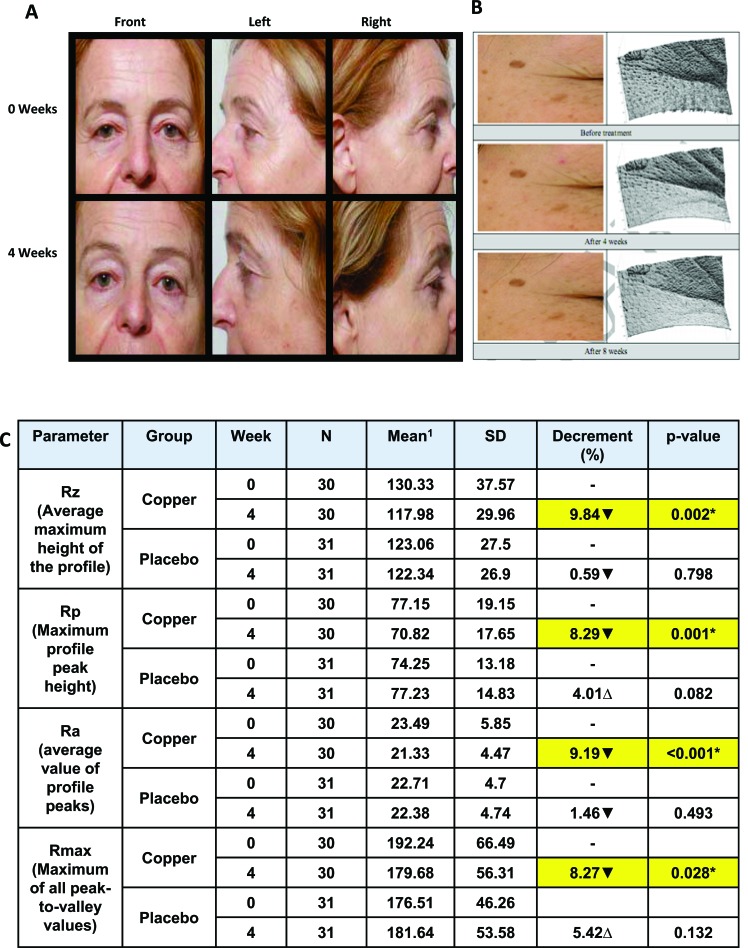
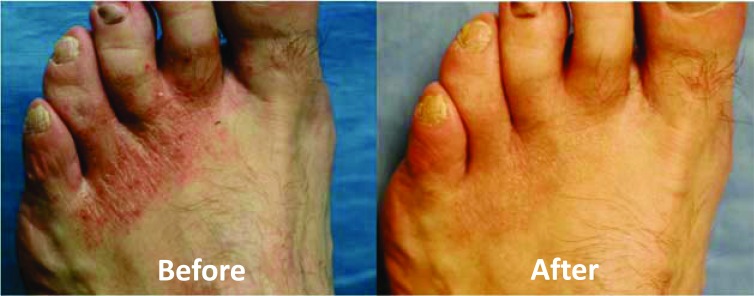
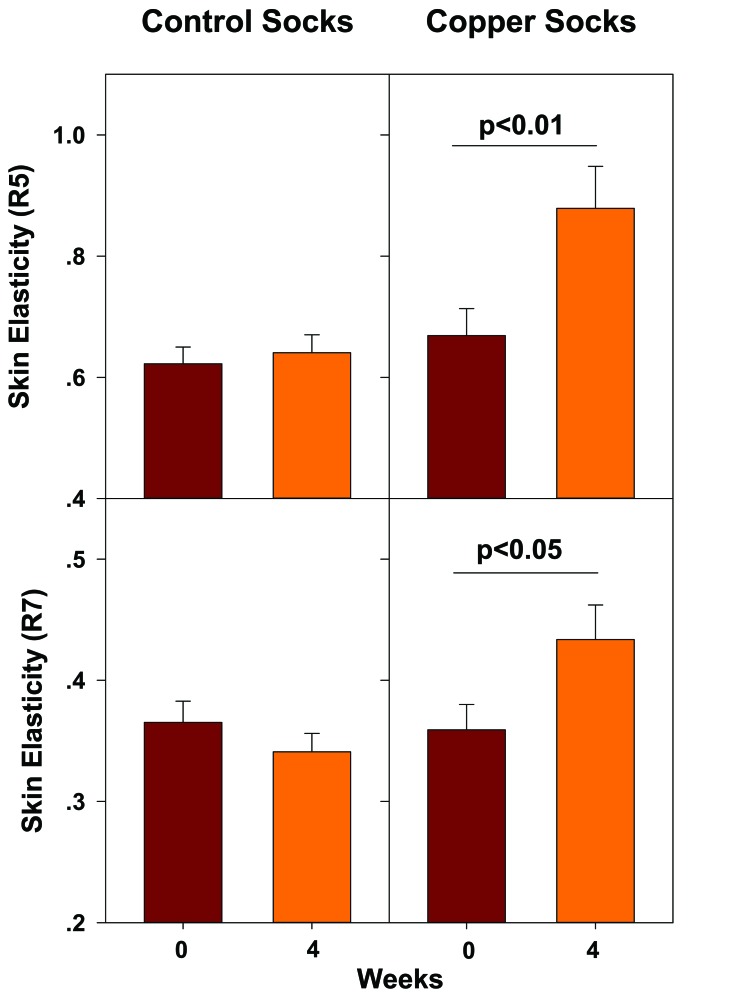
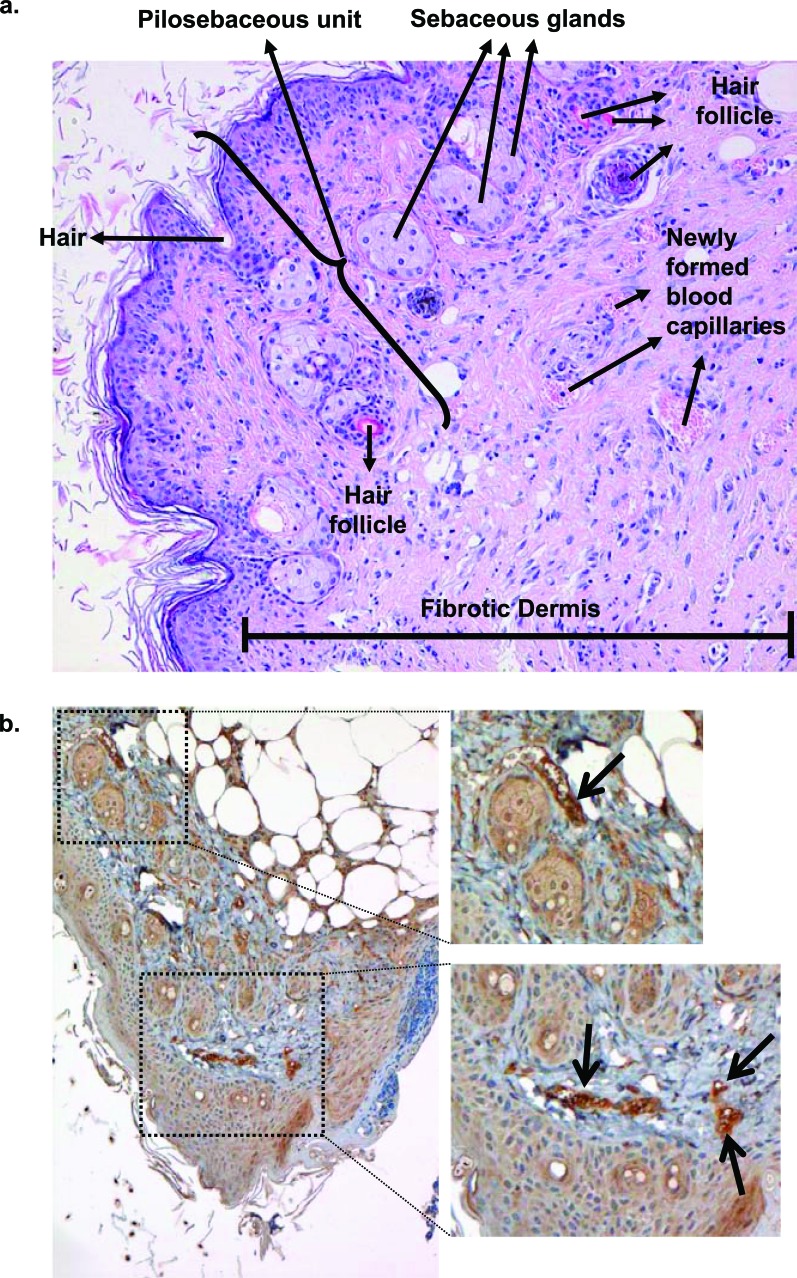
Copper has two key properties that are being exploited in consumer and medical device products in the last decade. On the one hand, copper has potent biocidal properties. On the other hand, copper is involved in numerous physiological and metabolic processes critical for the appropriate functioning of almost all tissues in the human body. In the skin, copper is involved in the synthesis and stabilization of extracellular matrix skin proteins and angiogenesis. This manuscript reviews clinical studies that show that the use of textile consumer and medical device products, embedded with microscopic copper oxide particles, improve the well-being of the skin. These include studies showing a) cure of athlete's foot infections and improvement in skin elasticity, especially important for individuals suffering from diabetes; b) reduction of facial fine line and wrinkles; and c) enhancement of wound healing; by copper oxide embedded socks, pillowcases and wound dressings, respectively. The manuscript also reviews and discusses the mechanisms by which the presence of copper in these products improves skin well-being.
Overview
The claims and statistics of this paper haven’t been checked yet.
Run the check — free, no account needed. It reads the open-access text and checks the sources it cites.
Integrity signals
Registry
Cites
Statistics
Figures
Verification
Claims the paper makes
The claims and statistics of this paper haven’t been checked yet.
Run the check — free, no account needed. It reads the open-access text and checks the sources it cites.
Claims other papers make about this one
Each is checked against this paper’s own text: does it say what the citing paper says it does?
In the citing paper
“It is a cofactor of superoxide dismutase (SOD), an enzyme involved in protecting the skin against the harmful effects of free radicals, and also prevents oxidative damage to cell membranes and lipid peroxidation [118,126].”
From Bioactive Compounds for Skin Health: A Review (2021) · cites this paper as [118]
In the citing paper
“Copper ions are commonly included in cosmetics. Cu is used as an active component of face creams, including those for the care of mature, tired, dull or oily skin [118,130].”
From Bioactive Compounds for Skin Health: A Review (2021) · cites this paper as [118]
In the citing paper
“Cu stimulates the proliferation of dermal fibroblasts and is involved in the synthesis and stabilization of extracellular matrix skin proteins and angiogenesis.”
From Bioactive Compounds for Skin Health: A Review (2021) · cites this paper as [118]
In the citing paper
“Copper ions reduce the risk of the fungal and bacterial infection of minor wounds and cuts, as well as enhancing wound healing [118].”
From Bioactive Compounds for Skin Health: A Review (2021) · cites this paper as [118]
In the citing paper
“Clinical studies have shown that copper aids in improving skin elasticity, reducing facial fine lines and wrinkles, and promoting wound healing [63].”
From Diet and Skin Aging—From the Perspective of Food Nutrition (2020) · cites this paper as [63]
Self-check
Percentages, sums and reported differences re-computed from the paper’s own numbers.
The self-check needs the paper’s full text.
Citations
Cites
Trumbo (2001) · doi:10.1016/s0002-8223(01)00078-5 · Cited by 4,852
Institute of Medicine (2001) · National Academies Press eBooks · doi:10.17226/10026 · Cited by 4,239
Metallic copper as an antimicrobial surface
Grass, G., Rensing, C., & Solioz, M. (2011) · Applied and Environmental Microbiology · doi:10.1128/aem.02766-10 · Cited by 1,640
Nichols, J. A., & Katiyar, S. K. (2010) · Archives of Dermatological Research · doi:10.1007/s00403-009-1001-3 · Cited by 1,103
Superoxide dismutases and superoxide reductases
Sheng, Y., Abreu, I. A., Cabelli, D. E., Maroney, M. J., Miller, A.-F., Teixeira, M., & Valentine, J. S. (2014) · Chemical Reviews · doi:10.1021/cr4005296 · Cited by 1,081
Essentiality of copper in humans
Uauy, R., Olivares, M., & Gonzalez, M. (1998) · The American Journal of Clinical Nutrition · doi:10.1093/ajcn/67.5.952s · Cited by 1,052
Oxidation events and skin aging
Kammeyer, A., & Luiten, R. M. (2015) · Ageing Research Reviews · doi:10.1016/j.arr.2015.01.001 · Cited by 980
A Delicate Balance: Homeostatic Control of Copper Uptake and Distribution
Peña, M. M. O., Lee, J., & Thiele, D. J. (1999) · Journal of Nutrition · doi:10.1093/jn/129.7.1251 · Cited by 733
Borkow, G., & Gabbay, J. (2005) · Current Medicinal Chemistry · doi:10.2174/0929867054637617 · Cited by 727
Self-citationNatural and Sun-Induced Aging of Human Skin
Rittie, L., & Fisher, G. J. (2015) · Cold Spring Harbor Perspectives in Medicine · doi:10.1101/cshperspect.a015370 · Cited by 600
Cited by
Sorted by citations
Bioactive Compounds for Skin Health: A Review
Michalak, M., Pierzak, M., Kręcisz, B., & Suliga, E. (2021) · Nutrients · doi:10.3390/nu13010203 · Cited by 345
The emerging role of nanotechnology in skincare
Salvioni, L., Morelli, L., Ochoa, E., Labra, M., Fiandra, L., Palugan, L., Prosperi, D., & Colombo, M. (2021) · Advances in Colloid and Interface Science · doi:10.1016/j.cis.2021.102437 · Cited by 344
Diet and Skin Aging—From the Perspective of Food Nutrition
Cao, C., Xiao, Z., Wu, Y., & Ge, C. (2020) · Nutrients · doi:10.3390/nu12030870 · Cited by 231
Natural Compounds and Products from an Anti-Aging Perspective
Bjørklund, G., Shanaida, M., Lysiuk, R., Butnariu, M., Peana, M., Sărac, I., Strus, O., Smetanina, K., & Chirumbolo, S. (2022) · Molecules · doi:10.3390/molecules27207084 · Cited by 234
Copper transporters and copper chaperones: roles in cardiovascular physiology and disease
Fukai, T., Ushio‐Fukai, M., & Kaplan, J. H. (2018) · American Journal of Physiology-Cell Physiology · doi:10.1152/ajpcell.00132.2018 · Cited by 192
Metadata
- Authors
- Borkow, G.
- Affiliations
- Cupron (Israel) (IL)
- Corresponding author
- Borkow, Gadi
- ORCID
- Borkow, Gadi
- Venue
- Current Chemical Biology
- Publisher
- Bentham Science Publishers Ltd.
- Published
- 2015-04-06
- Volume
- 8
- Issue
- 2
- Pages
- 89-102
- ISSN
- 1872-3136 (ISSN-L)
- 2212-7968
- PMC
- PMC4556990
- OpenAlex
- W2320500762
- Cited by
- 149
- References
- 97
- Citations by year
- 2026: 10 · 2025: 28 · 2024: 21 · 2023: 19 · 2022: 24 · 2021: 12 · 2020: 12 · 2019: 10 · 2018: 6 · 2017: 5 · 2016: 2
- FWCI
- 4.17
- Type
- journal article
- Language
- en
- Open access
- bronze
- doi.org
- Locations
- Current Chemical Biology (publishedVersion)
- Europe PMC (PubMed Central) (publishedVersion, cc-by-nc)
- PubMed Central (publishedVersion, cc-by-nc)
- PubMed (publishedVersion)
- Topics
- Health Sciences › Nursing › Nutrition and Dietetics › Trace Elements in Health
- Health Sciences › Medicine › Surgery › Wound Healing and Treatments
- Physical Sciences › Materials Science › Materials Chemistry › Nanoparticles: synthesis and applications
- Keywords
- copper, copper oxide, biocidal properties, extracellular matrix proteins, angiogenesis, tinea pedis, skin elasticity, diabetes mellitus, wrinkles, wound healing, wound dressings, medical devices
About these checks
Registry, retraction, Cites and statistics results are computed, not judged, with one exception: a printed reference that no index lists is read once by a model before it counts as a citation error. Claims are extracted by a model and kept only when their quote appears verbatim in the text; each cited source is then checked, with a model’s help, for whether it says what the claim relies on. Those verdicts can be wrong — read the claim’s quote and the cited source before relying on one.
Statistics and arithmetic are recomputed, not judged.
Confidence bands are shown only for fields calibrated on our annotated test set. None is calibrated yet, so no band is shown.
What counts as a claim ›How we measure confidence ›How we check this ›
Are you an author, or do you see a problem with this page? Request a review
