

The DOI matches its Crossref record; 35 of the 37 references it cites were found in a registry or an index; none of the 31 sources its claims cite is checked for support yet.
Disseminating Self-Help: Positive Psychology Exercises in an Online Trial
Open accessAbstract
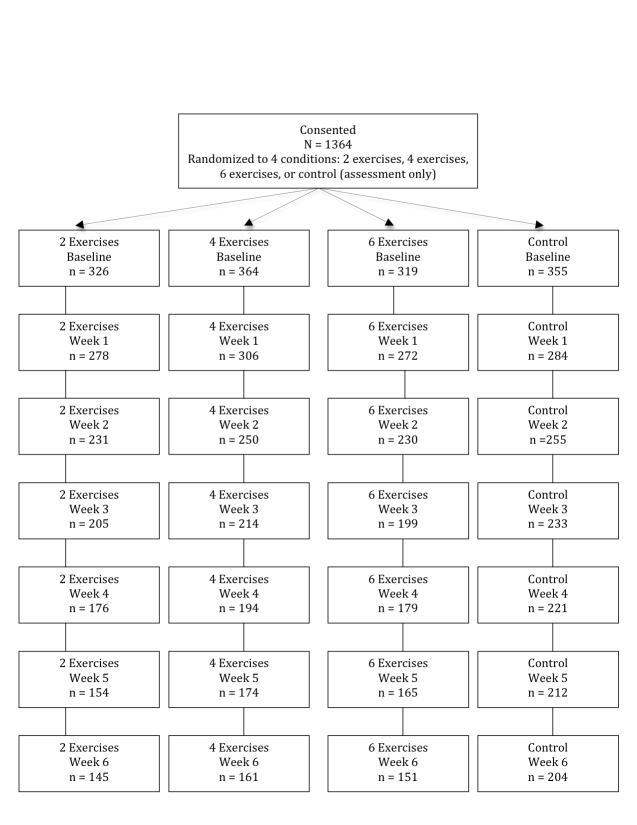
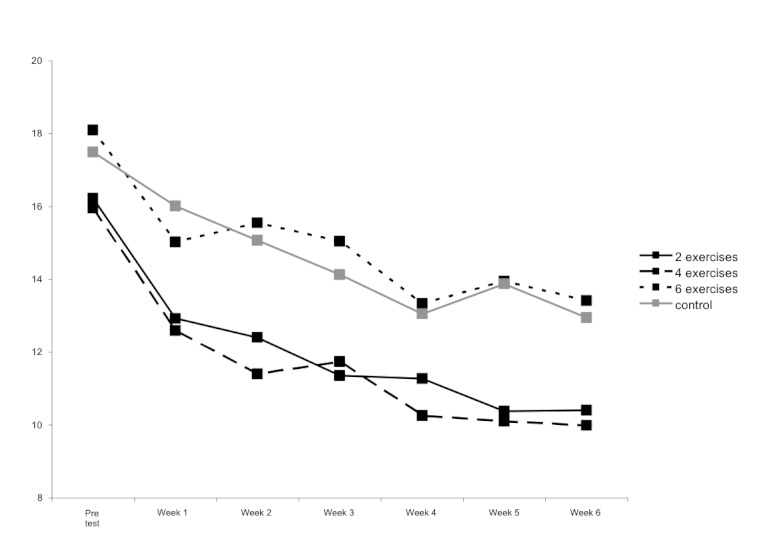
BACKGROUND: The recent growth of positive psychology has led to a proliferation in exercises to increase positive thoughts, behaviors, and emotions. Preliminary evidence suggests that these exercises hold promise as an approach for reducing depressive symptoms. These exercises are typically researched in isolation as single exercises. The current study examined the acceptability of several multi-exercise packages using online dissemination. OBJECTIVE: The purpose of this study was to investigate methods of dissemination that could increase the acceptability and effectiveness of positive psychology exercises. To achieve this goal, we compared the use of positive psychology exercises when delivered in packages of 2, 4, or 6 exercises. METHODS: Self-help-seeking participants enrolled in this study by visiting an online research portal. Consenting participants were randomly assigned to receive 2, 4, or 6 positive psychology exercises (or assessments only) over a 6-week period. These exercises drew from the content of group positive psychotherapy. Participants visited an automated website that distributed exercise instructions, provided email reminders, and contained the baseline and follow-up assessments. Following each exercise, participants rated their enjoyment of the exercise, answered how often they had used each technique, and completed outcome measures. RESULTS: In total, 1364 individuals consented to participate. Attrition rates across the 2-, 4-, and 6-exercise conditions were similar at 55.5% (181/326), 55.8% (203/364), and 52.7% (168/319) respectively but were significantly greater than the attrition rate of 42.5% (151/355) for the control condition (χ(2)(3) = 16.40, P < .001). Participants in the 6-exercise condition were significant more likely than participants in the 4-exercise condition to use both the third (F(1,312) = 5.61, P = .02) and fourth (F(1,313 )= 6.03, P = .02) exercises. For 5 of the 6 exercises, enjoyment was related to continued use of the exercise at 6-week follow-up (r's = .12 to .39). All conditions produced significant reductions in depressive symptoms (F(1,656) = 94.71, P < .001); however, a significant condition by time interaction (F(3,656) = 4.77, P = .003) indicated that this reduction was larger in the groups that received 2 or 4 exercises compared with the 6-exercise or control condition. CONCLUSION: Increasing the number of exercises presented to participants increased the use of the techniques and did not increase dropout. Participants may be more likely to use these skills when presented with a variety of options. Increasing the number of exercises delivered to participants produced a curvilinear relationship with those in the 2- and 4-exercise conditions reporting larger decreases in depressive symptoms than participants in the 6-exercise or control conditions. Although research generally offers a single exercise to test isolate effects, this study supports that studying variability in dissemination can produce important findings.
Overview
AI snapshot
Written from the paper’s full text.
TL;DR
This online randomized trial compared dissemination of 2, 4, or 6 positive psychology exercises versus assessment-only control over 6 weeks. More exercises increased use without increasing dropout, but depressive symptom reductions were larger in the 2- and 4-exercise conditions than in the 6-exercise or control conditions.
Key findings
- Of 1364 consenting participants, attrition was similar across active conditions—55.5% (181/326) for 2 exercises, 55.8% (203/364) for 4 exercises, and 52.7% (168/319) for 6 exercises—but significantly greater than the 42.5% (151/355) control attrition (χ²₃=16.40, P<.001).
- Participants in the 6-exercise condition were significantly more likely than those in the 4-exercise condition to use the third (F₁,₃₁₂=5.61, P=.02) and fourth (F₁,₃₁₃=6.03, P=.02) exercises; mean usage days were 6.1 (SD 3.56), 7.94 (SD 4.77), and 12.1 (SD 7.36) for the 2-, 4-, and 6-exercise conditions.
- For 5 of the 6 exercises, enjoyment was related to continued use at 6-week follow-up (r’s=.12 to .39, P’s<.05).
- All conditions produced significant reductions in depressive symptoms (F₁,₆₅₆=94.71, P<.001), but a significant condition-by-time interaction (F₃,₆₅₆=4.77, P=.003) indicated larger reductions in the 2- and 4-exercise conditions than in the 6-exercise or control conditions; estimated marginal CES-D means were 12.31, 11.95, 15.89, and 14.53 for the 2-, 4-, 6-exercise, and control groups.
Methods
- Self-help–seeking participants enrolled through an online research portal associated with the University of Pennsylvania’s Positive Psychology Center and Seligman’s *Authentic Happiness*; 1364 consented and were randomly assigned to receive 2, 4, or 6 positive psychology exercises or assessments only over 6 weeks.
- Exercises were drawn from group positive psychotherapy and delivered in a fixed order: three good things, strengths, gratitude visit, savoring, active-constructive responding, and life summary; participants completed baseline and weekly assessments, including the 20-item CES-D.
- Analyses included chi-square tests comparing attrition across conditions, repeated measures ANCOVA on completers controlling for baseline depressive symptoms, and regressions testing whether days of exercise use mediated changes in depressive symptoms.
Limitations
- Stated: the sample was overwhelmingly female, highly affluent, and well educated, and was not representative of the world population; recruitment through a positive psychology book website and the University of Pennsylvania Positive Psychology Center may have contributed to this.
- Stated: because content was delivered through an automated system, the authors could not be sure participants actually read and understood the instructions; exercises were also delivered one per week over subsequent weeks, whereas real-world users may receive several activities at once and use them at will.
- Evident from the text: high attrition and the use of completer-only efficacy analyses may bias results, and adherence was based on self-report rather than objective tracking.
Model-written summary. Check it against the paper before relying on it.
Integrity signals
Registry
Cites
Statistics
Figures
Verification
Claims the paper makes
29 Not checked yet · 23 Own result · 17 Own interpretation · 4 Own method
A result the paper reports from its own data — it cites no other source for it, so there is none to check. The quote shows it is in the paper.
In the paper
“All conditions produced significant reductions in depressive symptoms (F 1,656 = 94.71, P < .001); however, a significant condition by time interaction (F 3,656 = 4.77, P = .003) indicated that this reduction was larger in the groups that received 2 or 4 exercises compared with the 6-exercise or control condition.”
§ Disseminating Self-Help: Positive Psychology Exercises in an Online Trial > Abstract > Results
plaindirect- Asserted: passes — The authors put it forward as true.
- Checkable: passes — It can be checked against evidence.
- Load-bearing: passes — The paper’s conclusions depend on it.
- Based: passes — The paper gives a reason why it holds.
A result the paper reports from its own data — it cites no other source for it, so there is none to check. The quote shows it is in the paper.
In the paper
“All conditions produced significant reductions in depressive symptoms (F 1,656 = 94.71, P < .001); however, a significant condition by time interaction (F 3,656 = 4.77, P = .003) indicated that this reduction was larger in the groups that received 2 or 4 exercises compared with the 6-exercise or control condition.”
§ Disseminating Self-Help: Positive Psychology Exercises in an Online Trial > Abstract > Results
hedgedcorrelationaln = 1,364 ·- Asserted: passes — The authors put it forward as true.
- Checkable: passes — It can be checked against evidence.
- Load-bearing: passes — The paper’s conclusions depend on it.
- Based: passes — The paper gives a reason why it holds.
A result the paper reports from its own data — it cites no other source for it, so there is none to check. The quote shows it is in the paper.
In the paper
“For 5 of the 6 exercises, enjoyment was related to continued use of the exercise at 6-week follow-up (r’s = .12 to .39).”
§ Disseminating Self-Help: Positive Psychology Exercises in an Online Trial > Abstract > Results
plaincorrelational- Asserted: passes — The authors put it forward as true.
- Checkable: passes — It can be checked against evidence.
- Load-bearing: unclear — It is unclear whether the paper’s conclusions depend on it.
- Based: passes — The paper gives a reason why it holds.
A result the paper reports from its own data — it cites no other source for it, so there is none to check. The quote shows it is in the paper.
In the paper
“Estimated marginal means in the CES-D were 12.31, 11.95, 15.89, and 14.53 for the 2-, 4-, and 6-exercise groups and control condition, respectively.”
§ Disseminating Self-Help: Positive Psychology Exercises in an Online Trial > Results > Efficacy of Exercises
hedged- Asserted: passes — The authors put it forward as true.
- Checkable: passes — It can be checked against evidence.
- Load-bearing: passes — The paper’s conclusions depend on it.
- Based: passes — The paper gives a reason why it holds.
- Rests on an assumption: The completers (participants who completed the pretest and posttest measures) are representative of the randomized sample, so that analyses of completers yield unbiased estimates of intervention effects.
A result the paper reports from its own data — it cites no other source for it, so there is none to check. The quote shows it is in the paper.
In the paper
“At baseline, the average scores on the CES-D were consistent with mild-to-moderate levels of depressive symptoms (mean 16.93, SD 12.64).”
§ Disseminating Self-Help: Positive Psychology Exercises in an Online Trial > Results > Efficacy of Exercises
plain- Asserted: passes — The authors put it forward as true.
- Checkable: passes — It can be checked against evidence.
- Load-bearing: unclear — It is unclear whether the paper’s conclusions depend on it.
- Based: passes — The paper gives a reason why it holds.
A result the paper reports from its own data — it cites no other source for it, so there is none to check. The quote shows it is in the paper.
In the paper
“For 5 of the 6 exercises (all of the 6 with exception of the life summary), enjoyment was related to continued use of the exercise at the 6-week follow-up (r’s = .12 to .39, P’s < .05).”
§ Disseminating Self-Help: Positive Psychology Exercises in an Online Trial > Results > Use of Exercises
plaincorrelational- Asserted: passes — The authors put it forward as true.
- Checkable: passes — It can be checked against evidence.
- Load-bearing: unclear — It is unclear whether the paper’s conclusions depend on it.
- Based: passes — The paper gives a reason why it holds.
A result the paper reports from its own data — it cites no other source for it, so there is none to check. The quote shows it is in the paper.
In the paper
“There were no significant differences between the 6 exercises on use of the techniques.”
§ Disseminating Self-Help: Positive Psychology Exercises in an Online Trial > Results > Use of Exercises
plain- Asserted: passes — The authors put it forward as true.
- Checkable: passes — It can be checked against evidence.
- Load-bearing: unclear — It is unclear whether the paper’s conclusions depend on it.
- Based: passes — The paper gives a reason why it holds.
A result the paper reports from its own data — it cites no other source for it, so there is none to check. The quote shows it is in the paper.
In the paper
“Of the 1364 participants who consented to participate, 1140 (83.6%), 966 (70.8%), 851 (62.4%), 770 (56.4%), 705 (51.7%), and 661 (48.4%) completed measures each week at the week 1 through week 6 assessments respectively.”
§ Disseminating Self-Help: Positive Psychology Exercises in an Online Trial > Results > Attrition
plaincorrelationaln = 1,364- Asserted: passes — The authors put it forward as true.
- Checkable: passes — It can be checked against evidence.
- Load-bearing: unclear — It is unclear whether the paper’s conclusions depend on it.
- Based: passes — The paper gives a reason why it holds.
A result the paper reports from its own data — it cites no other source for it, so there is none to check. The quote shows it is in the paper.
In the paper
“At the end of the 6 weeks, the three active conditions differed significantly on the number of days that the techniques were used (F 2,358 = 33.84, P < .001).”
§ Disseminating Self-Help: Positive Psychology Exercises in an Online Trial > Results > Use of Exercises
plain- Asserted: passes — The authors put it forward as true.
- Checkable: passes — It can be checked against evidence.
- Load-bearing: unclear — It is unclear whether the paper’s conclusions depend on it.
- Based: passes — The paper gives a reason why it holds.
A result the paper reports from its own data — it cites no other source for it, so there is none to check. The quote shows it is in the paper.
In the paper
“A significant main effect of time (F 1,656 = 94.71, P < .001) demonstrates that depression scores dropped over time in all conditions.”
§ Disseminating Self-Help: Positive Psychology Exercises in an Online Trial > Results > Efficacy of Exercises
boostedcorrelational- Asserted: passes — The authors put it forward as true.
- Checkable: passes — It can be checked against evidence.
- Load-bearing: unclear — It is unclear whether the paper’s conclusions depend on it.
- Based: passes — The paper gives a reason why it holds.
- Rests on an assumption: The completers (participants who completed the pretest and posttest measures) are representative of the randomized sample, so that analyses of completers yield unbiased estimates of intervention effects.
- It may state two separate claims as one. 27
- Probably not a substantial claim. 15
A result the paper reports from its own data — it cites no other source for it, so there is none to check. The quote shows it is in the paper.
In the paper
“Attrition rates across the 2-, 4-, and 6-exercise conditions were similar at 55.5% (181/326), 55.8% (203/364), and 52.7% (168/319) respectively but were significantly greater than the attrition rate of 42.5% (151/355) for the control condition (χ2 3 = 16.40, P < .001).”
§ Disseminating Self-Help: Positive Psychology Exercises in an Online Trial > Abstract > Results
plainn = 1,364- Asserted: passes — The authors put it forward as true.
- Checkable: passes — It can be checked against evidence.
- Load-bearing: unclear — It is unclear whether the paper’s conclusions depend on it.
- Based: passes — The paper gives a reason why it holds.
It may state two separate claims as one.
A result the paper reports from its own data — it cites no other source for it, so there is none to check. The quote shows it is in the paper.
In the paper
“Participants in the 6-exercise condition were significant more likely than participants in the 4-exercise condition to use both the third (F 1,312 = 5.61, P = .02) and fourth (F 1,313 = 6.03, P = .02) exercises.”
§ Disseminating Self-Help: Positive Psychology Exercises in an Online Trial > Abstract > Results
plaindirect- Asserted: passes — The authors put it forward as true.
- Checkable: passes — It can be checked against evidence.
- Load-bearing: unclear — It is unclear whether the paper’s conclusions depend on it.
- Based: passes — The paper gives a reason why it holds.
It may state two separate claims as one.
A result the paper reports from its own data — it cites no other source for it, so there is none to check. The quote shows it is in the paper.
In the paper
“This was a highly educated sample with 77.2% (1053/1364) of participants reporting they had received a bachelor’s degree or higher.”
§ Disseminating Self-Help: Positive Psychology Exercises in an Online Trial > Results > Sample
plain- Asserted: passes — The authors put it forward as true.
- Checkable: passes — It can be checked against evidence.
- Load-bearing: fails — The paper’s conclusions may not depend on it.
- Based: passes — The paper gives a reason why it holds.
Probably not a substantial claim. The paper’s conclusions may not depend on it.
A result the paper reports from its own data — it cites no other source for it, so there is none to check. The quote shows it is in the paper.
In the paper
“Neither term was significant, suggesting that the number of days of engagement did not relate to changes in depressive symptoms.”
§ Disseminating Self-Help: Positive Psychology Exercises in an Online Trial > Results > Efficacy of Exercises
hedged- Asserted: passes — The authors put it forward as true.
- Checkable: passes — It can be checked against evidence.
- Load-bearing: unclear — It is unclear whether the paper’s conclusions depend on it.
- Based: passes — The paper gives a reason why it holds.
It may state two separate claims as one.
- Rests on an assumption: The completers (participants who completed the pretest and posttest measures) are representative of the randomized sample, so that analyses of completers yield unbiased estimates of intervention effects.
A result the paper reports from its own data — it cites no other source for it, so there is none to check. The quote shows it is in the paper.
In the paper
“Individuals in the 6-exercise condition were significant more likely than participants in the 4-exercise condition to use both the third (F 1,312 = 5.61, P = .02) and fourth (F 1,313 = 6.03, P = .02) exercises.”
§ Disseminating Self-Help: Positive Psychology Exercises in an Online Trial > Results > Use of Exercises
plaincorrelational- Asserted: passes — The authors put it forward as true.
- Checkable: passes — It can be checked against evidence.
- Load-bearing: unclear — It is unclear whether the paper’s conclusions depend on it.
- Based: passes — The paper gives a reason why it holds.
It may state two separate claims as one.
A result the paper reports from its own data — it cites no other source for it, so there is none to check. The quote shows it is in the paper.
In the paper
“For the 2-exercise condition, mean usage was 6.1 days (SD 3.56); for the 4-exercise condition, mean usage was 7.94 days (SD 4.77); and for the 6-exercise condition, mean usage was 12.1 days (SD 7.36).”
§ Disseminating Self-Help: Positive Psychology Exercises in an Online Trial > Results > Use of Exercises
plain- Asserted: passes — The authors put it forward as true.
- Checkable: passes — It can be checked against evidence.
- Load-bearing: unclear — It is unclear whether the paper’s conclusions depend on it.
- Based: passes — The paper gives a reason why it holds.
It may state two separate claims as one.
A result the paper reports from its own data — it cites no other source for it, so there is none to check. The quote shows it is in the paper.
In the paper
“These analyses showed that at the end of the intervention period, participants in both the 2-exercise condition and the 4-exercise condition reported significantly fewer depressive symptoms than those in the 6-exercise condition and numerically (but not significantly) lower than participants in the control condition.”
§ Disseminating Self-Help: Positive Psychology Exercises in an Online Trial > Results > Efficacy of Exercises
plain- Asserted: passes — The authors put it forward as true.
- Checkable: passes — It can be checked against evidence.
- Load-bearing: passes — The paper’s conclusions depend on it.
- Based: passes — The paper gives a reason why it holds.
It may state two separate claims as one.
- Rests on an assumption: The completers (participants who completed the pretest and posttest measures) are representative of the randomized sample, so that analyses of completers yield unbiased estimates of intervention effects.
A result the paper reports from its own data — it cites no other source for it, so there is none to check. The quote shows it is in the paper.
In the paper
“Participants were predominantly women (1038/1364, 76.1%) and middle aged with a mean age of 42.38 years (SD 12.08).”
§ Disseminating Self-Help: Positive Psychology Exercises in an Online Trial > Results > Sample
plain- Asserted: passes — The authors put it forward as true.
- Checkable: passes — It can be checked against evidence.
- Load-bearing: fails — The paper’s conclusions may not depend on it.
- Based: passes — The paper gives a reason why it holds.
Probably not a substantial claim. The paper’s conclusions may not depend on it. It may state two separate claims as one.
A result the paper reports from its own data — it cites no other source for it, so there is none to check. The quote shows it is in the paper.
In the paper
“At the end of the 6-week assessment period, attrition rates across the active treatment conditions were similar, that is, 55.5% (181/326) for 2 exercises, 55.8% (203/364) for 4 exercises, and 52.7% (168/319) for 6 exercises, but all were significantly greater than the 42.5% (151/355) attrition rate for the control condition (χ2 3 = 16.40, P < .001).”
§ Disseminating Self-Help: Positive Psychology Exercises in an Online Trial > Results > Attrition
plainn = 1,364- Asserted: passes — The authors put it forward as true.
- Checkable: passes — It can be checked against evidence.
- Load-bearing: unclear — It is unclear whether the paper’s conclusions depend on it.
- Based: passes — The paper gives a reason why it holds.
It may state two separate claims as one.
A result the paper reports from its own data — it cites no other source for it, so there is none to check. The quote shows it is in the paper.
In the paper
“The largest proportion of participants lived in the United States (743/1364, 54.5%), although many participants were from other countries (621/1364, 45.5%).”
§ Disseminating Self-Help: Positive Psychology Exercises in an Online Trial > Results > Sample
plain- Asserted: passes — The authors put it forward as true.
- Checkable: passes — It can be checked against evidence.
- Load-bearing: fails — The paper’s conclusions may not depend on it.
- Based: passes — The paper gives a reason why it holds.
Probably not a substantial claim. The paper’s conclusions may not depend on it. It may state two separate claims as one.
A result the paper reports from its own data — it cites no other source for it, so there is none to check. The quote shows it is in the paper.
In the paper
“Income was generally high as 24.7% (337/1364) reported earning over US $99,000, and only 11.7% (160/1364) reported earning under US $20,000.”
§ Disseminating Self-Help: Positive Psychology Exercises in an Online Trial > Results > Sample
plain- Asserted: passes — The authors put it forward as true.
- Checkable: passes — It can be checked against evidence.
- Load-bearing: fails — The paper’s conclusions may not depend on it.
- Based: passes — The paper gives a reason why it holds.
Probably not a substantial claim. The paper’s conclusions may not depend on it. It may state two separate claims as one.
In the paper
“Compared with students assigned to an assessment-only control group, students assigned to group PPT experienced significantly greater symptom reduction and improvements in life satisfaction, and these improvements remained at the 1-year follow-up [24].”
§ Disseminating Self-Help: Positive Psychology Exercises in an Online Trial > Introduction > The Efficacy of Positive Interventions
What the sources say
- Not checked yetcites [24] source
plaindirect- Asserted: passes — The authors put it forward as true.
- Checkable: passes — It can be checked against evidence.
- Load-bearing: passes — The paper’s conclusions depend on it.
- Based: passes — The paper gives a reason why it holds.
Probably not a substantial claim. It may state two separate claims as one.
A conclusion the paper draws from its own results — it cites no other source for it, so there is none to check. The quote shows it is in the paper.
In the paper
“Increasing the number of exercises presented to participants increased the use of the techniques and did not increase dropout.”
§ Disseminating Self-Help: Positive Psychology Exercises in an Online Trial > Abstract > Conclusion
plaindirect- Asserted: passes — The authors put it forward as true.
- Checkable: passes — It can be checked against evidence.
- Load-bearing: passes — The paper’s conclusions depend on it.
- Based: passes — The paper gives a reason why it holds.
It may state two separate claims as one.
- Rests on an assumption: The attrition rates in the exercise conditions being similar to each other, despite being higher than the control condition, can be interpreted as increasing the number of exercises did not increase dropout.
In the paper
“A recent meta-analysis demonstrated that compared with control conditions, positive interventions lead to reliable and moderate boosts in well-being and improvements in depressive symptoms [23].”
§ Disseminating Self-Help: Positive Psychology Exercises in an Online Trial > Introduction > The Efficacy of Positive Interventions
What the sources say
- Not checked yetcites [23] source
boosteddirect- Asserted: passes — The authors put it forward as true.
- Checkable: passes — It can be checked against evidence.
- Load-bearing: passes — The paper’s conclusions depend on it.
- Based: passes — The paper gives a reason why it holds.
It may state two separate claims as one.
In the paper
“Indeed, this effect remained even when controlling for baseline levels of depressive symptoms, suggesting that positive mental health is different from merely the absence of psychological distress [16].”
§ Disseminating Self-Help: Positive Psychology Exercises in an Online Trial > Introduction > The Potential of Positive Psychology
What the sources say
- Not checked yetcites [16] Keyes, CL, 2002, J Health Soc Behav source
hedgeddirect- Asserted: passes — The authors put it forward as true.
- Checkable: passes — It can be checked against evidence.
- Load-bearing: passes — The paper’s conclusions depend on it.
- Based: passes — The paper gives a reason why it holds.
It may state two separate claims as one.
In the paper
“The gratitude visit produced the largest initial gains in happiness; however, at three months, these participants were no happier than they had been at baseline.”
§ Disseminating Self-Help: Positive Psychology Exercises in an Online Trial > Introduction > Positive Psychology Interventions
What the sources say
- Not checked yetcites [20] source
plain- Asserted: passes — The authors put it forward as true.
- Checkable: passes — It can be checked against evidence.
- Load-bearing: passes — The paper’s conclusions depend on it.
- Based: passes — The paper gives a reason why it holds.
It may state two separate claims as one.
A conclusion the paper draws from its own results — it cites no other source for it, so there is none to check. The quote shows it is in the paper.
In the paper
“Thus, increasing well-being might not only increase positive factors but also reduce negative states and psychopathology.”
§ Disseminating Self-Help: Positive Psychology Exercises in an Online Trial > Introduction > The Potential of Positive Psychology
hedgedconditional- Asserted: passes — The authors put it forward as true.
- Checkable: passes — It can be checked against evidence.
- Load-bearing: passes — The paper’s conclusions depend on it.
- Based: passes — The paper gives a reason why it holds.
It may state two separate claims as one.
In the paper
“Participants who practiced using their signature strengths each day showed increase happiness and decreased depressive symptoms compared with participants in a placebo control group that wrote about early memories.”
§ Disseminating Self-Help: Positive Psychology Exercises in an Online Trial > Introduction > Positive Psychology Interventions
What the sources say
- Not checked yetcites [20] source
plaindirect- Asserted: passes — The authors put it forward as true.
- Checkable: passes — It can be checked against evidence.
- Load-bearing: unclear — It is unclear whether the paper’s conclusions depend on it.
- Based: passes — The paper gives a reason why it holds.
It may state two separate claims as one.
In the paper
“The gratitude journaling or the three good things exercise did not display benefits for participants until one month after the intervention, but these participants maintained these gains at 3- and 6-month follow-ups.”
§ Disseminating Self-Help: Positive Psychology Exercises in an Online Trial > Introduction > Positive Psychology Interventions
What the sources say
- Not checked yetcites [20] source
plain- Asserted: passes — The authors put it forward as true.
- Checkable: passes — It can be checked against evidence.
- Load-bearing: unclear — It is unclear whether the paper’s conclusions depend on it.
- Based: passes — The paper gives a reason why it holds.
It may state two separate claims as one.
In the paper
“Gratitude, for example, promotes both the formation and the upkeep of friendships [10].”
§ Disseminating Self-Help: Positive Psychology Exercises in an Online Trial > Introduction > The Potential of Positive Psychology
What the sources say
- Not checked yetcites [10] source
plaindirect- Asserted: passes — The authors put it forward as true.
- Checkable: passes — It can be checked against evidence.
- Load-bearing: fails — The paper’s conclusions may not depend on it.
- Based: passes — The paper gives a reason why it holds.
Probably not a substantial claim. The paper’s conclusions may not depend on it. It may state two separate claims as one.
A conclusion the paper draws from its own results — it cites no other source for it, so there is none to check. The quote shows it is in the paper.
In the paper
“Although research generally offers a single exercise to test isolate effects, this study supports that studying variability in dissemination can produce important findings.”
§ Disseminating Self-Help: Positive Psychology Exercises in an Online Trial > Abstract > Conclusion
plain- Asserted: passes — The authors put it forward as true.
- Checkable: passes — It can be checked against evidence.
- Load-bearing: passes — The paper’s conclusions depend on it.
- Based: passes — The paper gives a reason why it holds.
It may state two separate claims as one.
In the paper
“College students who noted good things reported increased levels of positive affect, increased levels of exercise, better sleep quality, and fewer physical symptoms compared with a control condition where participants wrote about daily hassles.”
§ Disseminating Self-Help: Positive Psychology Exercises in an Online Trial > Introduction > Positive Psychology Interventions
What the sources say
- Not checked yetcites [18] Emmons, RA, 2003, J Pers Soc Psychol source
plaindirect- Asserted: passes — The authors put it forward as true.
- Checkable: passes — It can be checked against evidence.
- Load-bearing: unclear — It is unclear whether the paper’s conclusions depend on it.
- Based: passes — The paper gives a reason why it holds.
It may state two separate claims as one.
In the paper
“The three good things exercise was even integrated into Facebook through an application that provided users with tools to complete the gratitude journaling online and share with friends in their network [29].”
§ Disseminating Self-Help: Positive Psychology Exercises in an Online Trial > Introduction > Taking Positive Psychology Online
What the sources say
- Not checked yetcites [29] source
plain- Asserted: passes — The authors put it forward as true.
- Checkable: passes — It can be checked against evidence.
- Load-bearing: fails — The paper’s conclusions may not depend on it.
- Based: passes — The paper gives a reason why it holds.
Probably not a substantial claim. The paper’s conclusions may not depend on it.
In the paper
“People who tended to reflect on the positive moments of their life reported increased ability to savor life and had higher levels of positive emotions [22].”
§ Disseminating Self-Help: Positive Psychology Exercises in an Online Trial > Introduction > Positive Psychology Interventions
What the sources say
- Not checked yetcites [22] source
plaincorrelational- Asserted: passes — The authors put it forward as true.
- Checkable: passes — It can be checked against evidence.
- Load-bearing: fails — The paper’s conclusions may not depend on it.
- Based: passes — The paper gives a reason why it holds.
Probably not a substantial claim. The paper’s conclusions may not depend on it. It may state two separate claims as one.
In the paper
“Indeed, the vast literature on choice suggests that although multiple options are beneficial, the relationship between choice and human happiness is curvilinear with too many options actually leading to various psychological and economic factors (time trade-offs, remorse, rumination, etc) that decrease psychological well-being [37].”
§ Disseminating Self-Help: Positive Psychology Exercises in an Online Trial > Discussion
What the sources say
- Not checked yetcites [37] Schwartz, B, 2002, J Pers Soc Psychol source
hedgeddirect- Asserted: passes — The authors put it forward as true.
- Checkable: passes — It can be checked against evidence.
- Load-bearing: passes — The paper’s conclusions depend on it.
- Based: passes — The paper gives a reason why it holds.
It may state two separate claims as one.
A conclusion the paper draws from its own results — it cites no other source for it, so there is none to check. The quote shows it is in the paper.
In the paper
“Disseminating these programs, however, is limited by the need to train personnel and the ability of the programs to reach others.”
§ Disseminating Self-Help: Positive Psychology Exercises in an Online Trial > Introduction > The Efficacy of Positive Interventions
plaindirect- Asserted: passes — The authors put it forward as true.
- Checkable: passes — It can be checked against evidence.
- Load-bearing: passes — The paper’s conclusions depend on it.
- Based: passes — The paper gives a reason why it holds.
It may state two separate claims as one.
A conclusion the paper draws from its own results — it cites no other source for it, so there is none to check. The quote shows it is in the paper.
In the paper
“This suggests a curvilinear relationship such that some exercises are better than none but that 6 exercises was associated with fewer gains.”
§ Disseminating Self-Help: Positive Psychology Exercises in an Online Trial > Discussion
hedgedcorrelational- Asserted: passes — The authors put it forward as true.
- Checkable: passes — It can be checked against evidence.
- Load-bearing: passes — The paper’s conclusions depend on it.
- Based: passes — The paper gives a reason why it holds.
It may state two separate claims as one.
- Rests on an assumption: The completers (participants who completed the pretest and posttest measures) are representative of the randomized sample, so that analyses of completers yield unbiased estimates of intervention effects.
In the paper
“Reminiscence interventions lead to a variety of emotional benefits, especially among elderly individuals.”
§ Disseminating Self-Help: Positive Psychology Exercises in an Online Trial > Introduction > Positive Psychology Interventions
What the sources say
- Not checked yetcites [22] source
plaindirect- Asserted: passes — The authors put it forward as true.
- Checkable: passes — It can be checked against evidence.
- Load-bearing: fails — The paper’s conclusions may not depend on it.
- Based: passes — The paper gives a reason why it holds.
Probably not a substantial claim. The paper’s conclusions may not depend on it.
A conclusion the paper draws from its own results — it cites no other source for it, so there is none to check. The quote shows it is in the paper.
In the paper
“The Internet allows dissemination of these techniques throughout the world, anywhere participants have Web access, rather than having to rely on trained professionals to provide access to these techniques.”
§ Disseminating Self-Help: Positive Psychology Exercises in an Online Trial > Introduction > Taking Positive Psychology Online
plaindirect- Asserted: passes — The authors put it forward as true.
- Checkable: passes — It can be checked against evidence.
- Load-bearing: passes — The paper’s conclusions depend on it.
- Based: fails — The paper may give no reason why it holds.
Probably not a substantial claim. The paper may give no reason why it holds.
None of the sources cited for this claim have been checked yet.
In the paper
“Past research in positive psychology interventions has found that variety is an important moderator of intervention gains and that several techniques are more effective than a single technique [23,36].”
§ Disseminating Self-Help: Positive Psychology Exercises in an Online Trial > Discussion
What the sources say
- Not checked yetcites [23] source
- Not checked yetcites [36] Tkach, CT, 2006, Dissertation Abstracts International: Section B: The Sciences and Engineering
plaindirect- Asserted: passes — The authors put it forward as true.
- Checkable: passes — It can be checked against evidence.
- Load-bearing: passes — The paper’s conclusions depend on it.
- Based: passes — The paper gives a reason why it holds.
It may state two separate claims as one.
A conclusion the paper draws from its own results — it cites no other source for it, so there is none to check. The quote shows it is in the paper.
In the paper
“Positive psychology techniques also lend themselves to Internet research, as these techniques might be less stigmatizing than other interventions that deal with difficulties and deficits.”
§ Disseminating Self-Help: Positive Psychology Exercises in an Online Trial > Introduction > Taking Positive Psychology Online
hedgedconditional- Asserted: passes — The authors put it forward as true.
- Checkable: fails — It may be too vague to check against evidence.
- Load-bearing: fails — The paper’s conclusions may not depend on it.
- Based: fails — The paper may give no reason why it holds.
Probably not a substantial claim. It may be too vague to check against evidence. The paper’s conclusions may not depend on it. The paper may give no reason why it holds.
What the paper did — it cites no source for this, so there is none to check. The quote shows it is in the paper.
In the paper
“After completing the baseline questionnaires that assessed demographics as well as mood and depressive symptoms, participants were randomly assigned to one of the four groups.”
§ Disseminating Self-Help: Positive Psychology Exercises in an Online Trial > Methods > Study Procedures
plain- Asserted: passes — The authors put it forward as true.
- Checkable: passes — It can be checked against evidence.
- Load-bearing: passes — The paper’s conclusions depend on it.
- Based: passes — The paper gives a reason why it holds.
Probably not a substantial claim.
None of the sources cited for this claim have been checked yet.
In the paper
“Other programs that have combined content from individual exercises into longer and more involved intervention packages have been delivered in a variety of settings including schools and have also been delivered to military personnel [25,26].”
§ Disseminating Self-Help: Positive Psychology Exercises in an Online Trial > Introduction > The Efficacy of Positive Interventions
plain- Asserted: passes — The authors put it forward as true.
- Checkable: passes — It can be checked against evidence.
- Load-bearing: fails — The paper’s conclusions may not depend on it.
- Based: passes — The paper gives a reason why it holds.
Probably not a substantial claim. The paper’s conclusions may not depend on it.
In the paper
“During the baseline assessment and at each weekly follow-up, participants also completed the Center for Epidemiological Studies-Depression scale (CES-D), a 20-item self-report scale designed to measure the current level of depressive symptoms [33].”
§ Disseminating Self-Help: Positive Psychology Exercises in an Online Trial > Methods > Measures
What the sources say
- Not checked yetcites [33] source
plain- Asserted: passes — The authors put it forward as true.
- Checkable: passes — It can be checked against evidence.
- Load-bearing: fails — The paper’s conclusions may not depend on it.
- Based: passes — The paper gives a reason why it holds.
Probably not a substantial claim. The paper’s conclusions may not depend on it.
What the paper did — it cites no source for this, so there is none to check. The quote shows it is in the paper.
In the paper
“Furthermore, instructions were delivered over subsequent weeks, and participants were asked to use one activity per week although in the real world, participants are more likely to receive several potential activities at once and use them at will.”
§ Disseminating Self-Help: Positive Psychology Exercises in an Online Trial > Discussion
hedged- Asserted: passes — The authors put it forward as true.
- Checkable: passes — It can be checked against evidence.
- Load-bearing: fails — The paper’s conclusions may not depend on it.
- Based: fails — The paper may give no reason why it holds.
Probably not a substantial claim. The paper’s conclusions may not depend on it. The paper may give no reason why it holds. It may state two separate claims as one.
The paper relies on this without support.
The positive psychology exercises used in group PPT can be effectively translated to an online self-help format.
“The design of the investigation that we report in this paper translated the individual exercises used in group PPT for online dissemination.”
The paper relies on this without support.
Self-help-seeking participants who enroll via an online research portal are an appropriate population for testing the acceptability and effectiveness of positive psychology exercises.
“Self-help–seeking participants enrolled in this study by visiting an online research portal.”
The paper relies on this without support.
The meta-analysis finding that packages with multiple positive psychology strategies have higher effect sizes applies to online self-help positive psychology exercises.
“consistent with the findings of the meta-analysis of positive interventions, we predicted that participants receiving more exercises would experience greater benefits.”
The paper relies on this without support.
The attrition rates in the exercise conditions being similar to each other, despite being higher than the control condition, can be interpreted as increasing the number of exercises did not increase dropout.
“Attrition rates across the 2-, 4-, and 6-exercise conditions were similar at 55.5% (181/326), 55.8% (203/364), and 52.7% (168/319) respectively but were significantly greater than the attrition rate of 42.5% (151/355) for the control condition (χ2 3 = 16.40, P < .001).”
The paper relies on this without support.
The package of positive psychology exercises used in the study had been previously validated.
“The main aim of this study was to translate a previously validated package of positive psychology exercises for online dissemination.”
The paper relies on this without support.
The completers (participants who completed the pretest and posttest measures) are representative of the randomized sample, so that analyses of completers yield unbiased estimates of intervention effects.
“Given the high rates of attrition in Internet-based studies, we conducted analyses of the completers, that is, participants who completed the pretest and posttest measures.”
Claims other papers make about this one
Each is checked against this paper’s own text: does it say what the citing paper says it does?
In the citing paper
“Importantly, positive psychological states are not simply the flipside of depression.”
From Positive Psychological Interventions for Patients with Type 2 Diabetes: Rationale, Theoretical Model, and Intervention Development (2015) · cites this paper as [34]
In the citing paper
“Constructs like optimism (r = 0.3) and gratitude (r = 0.2–0.3) are only somewhat correlated with depression [34, 35]”
From Positive Psychological Interventions for Patients with Type 2 Diabetes: Rationale, Theoretical Model, and Intervention Development (2015) · cites this paper as [34]
In the citing paper
“In contrast to complex multicomponent health behavior or psychology interventions, PP exercises are simple, can be delivered remotely (e.g., by phone), and require minimal training of providers [34, 41, 42].”
From Positive Psychological Interventions for Patients with Type 2 Diabetes: Rationale, Theoretical Model, and Intervention Development (2015) · cites this paper as [34]
In the citing paper
“Participants had relatively low baseline optimism (LOT-R = 13.0 ± 6.8, compared to general population mean of 15.2 ± 3.8 [34])”
From Positive Psychological Interventions for Patients with Type 2 Diabetes: Rationale, Theoretical Model, and Intervention Development (2015) · cites this paper as [34]
Self-check
Percentages, sums and reported differences re-computed from the paper’s own numbers.
Each contradiction between two passages listed here was confirmed by an independent check.
Rated major: it would touch a result — a value a result rests on, reported and recomputed p-values on opposite sides of the significance level, two passages that conflict with no sign which is right, or a cited work retracted before this paper was published.
In the paper
§ Disseminating Self-Help: Positive Psychology Exercises in an Online Trial > Discussion
“Participants who received 2 or 4 exercises, on the other hand, both experienced significant reductions compared with participants in the control group and those in the 6-exercise condition.”
§ Disseminating Self-Help: Positive Psychology Exercises in an Online Trial > Results > Efficacy of Exercises
“These analyses showed that at the end of the intervention period, participants in both the 2-exercise condition and the 4-exercise condition reported significantly fewer depressive symptoms than those in the 6-exercise condition and numerically (but not significantly) lower than participants in the control condition.”
Citations
Cites
The CES-D Scale: A Self-Report Depression Scale for Research in the General Population
Radloff, L. S. (1977) · Applied Psychological Measurement · doi:10.1177/014662167700100306 · Cited by 53,267
Positive psychology: An introduction.
Seligman, M. E. P., & Csikszentmihalyi, M. (2000) · American Psychologist · doi:10.1037/0003-066x.55.1.5 · Cited by 11,351 · cited 1×
“Positive psychology focuses on factors that help promote optimal well-being and investigates the functional consequences of these states [7].”
BackgroundSocial Relationships and Mortality Risk: A Meta-analytic Review
Holt-Lunstad, J., Smith, T. B., & Layton, J. B. (2010) · PLoS Medicine · doi:10.1371/journal.pmed.1000316 · Cited by 7,272 · cited 1×
“Consistent findings suggest that stronger social relationships reduce mortality and help us cope with life stressors [12].”
BackgroundThe benefits of frequent positive affect: Does happiness lead to success?
Lyubomirsky, S., King, L., & Diener, E. (2005) · Psychological Bulletin · doi:10.1037/0033-2909.131.6.803 · Cited by 7,143 · cited 1×
“Experimental and longitudinal studies have found that increased positive emotions lead to social, occupational, and health benefits [9].”
BackgroundCharacter Strengths and Virtues: A Handbook and Classification
Morrow, C. E. (2004) · Choice Reviews Online · doi:10.5860/choice.42-0624 · Cited by 6,166 · cited 1×
“” A signature strength is based on a classification of positive characteristics of individuals that are morally valued in general, that are fulfilling, and that are trait-like [21].”
BackgroundPositive Psychology Progress: Empirical Validation of Interventions.
Seligman, M. E. P., Steen, T. A., Park, N., & Peterson, C. (2005) · American Psychologist · doi:10.1037/0003-066x.60.5.410 · Cited by 5,947 · cited 4×
“One study comparing five different positive psychology exercises head-to-head used two different gratitude-boosting strategies [20].”
BackgroundInfluentialFlourish: A Visionary New Understanding of Happiness and Well-Being
(2011) · Choice Reviews Online · doi:10.5860/choice.48-7217 · Cited by 5,543
The mental health continuum: from languishing to flourishing in life.
Keyes, C. L. M. (2002) · Journal of Health and Social Behavior · doi:10.2307/3090197 · Cited by 5,133 · cited 1×
“Indeed, this effect remained even when controlling for baseline levels of depressive symptoms, suggesting that positive mental health is different from merely the absence of psychological distress [16].”
BackgroundResilient Individuals Use Positive Emotions to Bounce Back From Negative Emotional Experiences.
Tugade, M. M., & Fredrickson, B. L. (2004) · Journal of Personality and Social Psychology · doi:10.1037/0022-3514.86.2.320 · Cited by 3,947 · cited 1×
“Furthermore, psychological well-being in general, and positive emotion in particular, appear to promote meaning-making in stressful situations, which in turn leads to more effective coping [13].”
BackgroundEmmons, R. A., & McCullough, M. E. (2003) · Journal of Personality and Social Psychology · doi:10.1037//0022-3514.84.2.377 · Cited by 3,826 · cited 1×
“One exercise designed to increase gratitude asks participants to reflect each day on three good things that happened by writing these things down in a journal [18].”
Background
Research works printed but not linked: 3
- Seligman, ME, 2002, Authentic Happiness: Using the New Positive Psychology to Realize Your Potential for Lasting Fulfillment
- Parks, AC, 2012, Emotion, in press
- Tkach, CT, 2006, Dissertation Abstracts International: Section B: The Sciences and Engineering
Cited by
Sorted by citations
Positive psychology interventions: a meta-analysis of randomized controlled studies
Bolier, L., Haverman, M., Westerhof, G. J., Riper, H., Smit, F., & Bohlmeijer, E. (2013) · BMC Public Health · doi:10.1186/1471-2458-13-119 · Cited by 1,996
How Do Simple Positive Activities Increase Well-Being?
Lyubomirsky, S., & Layous, K. (2013) · Current Directions in Psychological Science · doi:10.1177/0963721412469809 · Cited by 1,197
“…participants in the naturalistic study reported performing almost eight different positive activities simultaneously (Parks et al., 2012), and participants in a Web-based study obtained the biggest benefits when practicing two or four positive activities concurrently (Schueller & Parks, 2012).”
BackgroundPositive Affect and Health: What Do We Know and Where Next Should We Go?
Pressman, S. D., Jenkins, B. N., & Moskowitz, J. T. (2019) · Annual Review of Psychology · doi:10.1146/annurev-psych-010418-102955 · Cited by 452
Howells, A., Ivtzan, I., & Eiroa-Orosa, F. J. (2016) · Journal of Happiness Studies · doi:10.1007/s10902-014-9589-1 · Cited by 407
“The potential exists to transport contemporary web-based delivery (e.g. Schueller and Parks 2012; Mitchell et al. 2010; Schueller 2010) to an even more accessible, cost-effective and user-friendly platform.”
BackgroundGarrido, S., Millington, C., Cheers, D., Boydell, K., Schubert, E., Meade, T., & Nguyen, Q. V. (2019) · Frontiers in Psychiatry · doi:10.3389/fpsyt.2019.00759 · Cited by 400
“Burckhardt and colleagues (2015) suggested that more structured settings and dose effects may have contributed to their negative results, since other studies have found that the number of activities participants are required to do can reach a saturation point (77).”
BackgroundPositive psychotherapy: A strength-based approach
Rashid, T. (2014) · The Journal of Positive Psychology · doi:10.1080/17439760.2014.920411 · Cited by 419
“In addition, a number of online studies have effectively used PPT-based interventions with promising results (e.g. Parks, Della Porta, Pierce, Zilca, & Lyubomirsky, 2012; Mitchell, Stanimirovic, Klein, & Vella-Brodrick, 2009; Schueller & Parks, 2012).”
BackgroundHendriks, T., Schotanus-Dijkstra, M., Hassankhan, A., de Jong, J. T. V. M., & Bohlmeijer, E. T. (2019) · Journal of Happiness Studies · doi:10.1007/s10902-019-00082-1 · Cited by 380
Dickens, L. R. (2017) · Basic and Applied Social Psychology · doi:10.1080/01973533.2017.1323638 · Cited by 297
“…interventions, switching from one intervention to another throughout the intervention period (e.g., Ho, Yeung, & Kwok, 2014; Lambert D’raven, Moliver, & Thompson, 2015; Layous, Lee, Choi, & Lyubomirsky, 2013; Proyer, Gander, Wellenzohn, & Ruch, 2014; Schueller, 2010, 2011; Schueller & Parks, 2012).”
White, C. A., Uttl, B., & Holder, M. D. (2019) · PLoS ONE · doi:10.1371/journal.pone.0216588 · Cited by 229
Proyer, R. T., Gander, F., Wellenzohn, S., & Ruch, W. (2014) · Aging & Mental Health · doi:10.1080/13607863.2014.899978 · Cited by 215
“…interventions may be effectively administered via the Internet (e.g., Abbott, Klein, Hamilton, & Rosenthal, 2009; Gander et al., 2013; Mitchell, Stanimirovic, Klein, & Vella-Brodrick, 2009; Mongrain & AnselmoMatthews, 2012; Schueller & Parks, 2012; Seligman et al., 2005; Shapira & Mongrain, 2010).”
Powell, J., Hamborg, T., Stallard, N., Burls, A., McSorley, J., Bennett, K., Griffiths, K. M., & Christensen, H. (2012) · Journal of Medical Internet Research · doi:10.2196/jmir.2240 · Cited by 156
“The Internet is also being used for positive psychology approaches [12].”
BackgroundPeters (2017) · doi:10.1097/ajp.0000000000000494 · Cited by 144
Kahler, C. W., Spillane, N. S., Day, A. M., Clerkin, E. M., Parks, A. C., Leventhal, A. M., & Brown, R. A. (2013) · The Journal of Positive Psychology · doi:10.1080/17439760.2013.826716 · Cited by 149
“Additional research also would be valuable to identify whether a smaller number of positive psychology exercises (e.g. Schueller & Parks, 2012) or allowing the participants to choose exercises (e.g. Schueller, Leykin, Perez-Stable, & Munoz, 2013) would improve the efficacy of PPT-S.”
BackgroundSelf-citationHuffman, J. C., DuBois, C. M., Millstein, R. A., Celano, C. M., & Wexler, D. (2015) · Journal of Diabetes Research · doi:10.1155/2015/428349 · Cited by 127
“, by phone), and require minimal training of providers [34, 41, 42].”
BackgroundSchotanus-Dijkstra, M., Drossaert, C. H. C., Pieterse, M. E., Boon, B. J. F., Walburg, J. A., & Bohlmeijer, E. T. (2017) · Internet Interventions · doi:10.1016/j.invent.2017.04.002 · Cited by 140
“…from methodological limitations such as a relatively small sample size in group therapies (Page and VellaBrodrick, 2012; Rashid, 2014; Ruini et al., 2014) or a low adherence rate in (web-based) self-help interventions (Bolier et al., 2013b; Mitchell et al., 2010; Schueller and Parks, 2012).”
BackgroundBolier, L., Haverman, M., Kramer, J., Westerhof, G. J., Riper, H., Walburg, J. A., Boon, B., & Bohlmeijer, E. (2013) · Journal of Medical Internet Research · doi:10.2196/jmir.2603 · Cited by 116
“This study distinguishes itself from former experimental research, which was limited to single-component interventions [27,29,30] or longer multiple and fixed-sequential interventions [26,28,33], in focusing on a multicomponent, flexible, online intervention.”
A pilot digital intervention targeting loneliness in young people with psychosis
Lim, M. H., Gleeson, J., Rodebaugh, T. L., Eres, R., Long, K. M., Casey, K., Abbott, J.-A., Thomas, N., & Penn, D. L. (2019) · Social Psychiatry and Psychiatric Epidemiology · doi:10.1007/s00127-019-01681-2 · Cited by 113
Hone, L. C., Jarden, A., & Schofield, G. M. (2015) · The Journal of Positive Psychology · doi:10.1080/17439760.2014.965267 · Cited by 105
“…2011; Huffman et al., 2014; Meyer, Johnson, Parks, Iwanski, & Penn, 2012; Parks & Szanto, 2013), others due to lack of positive outcome measure (Schueller & Parks, 2012), some due to the preponderance of psychology student among their samples (Khramstova & Glascock, 2010; Layous, Katherine…”
BackgroundThe Role of Positive Traits and Pain Catastrophizing in Pain Perception
Pulvers, K. M., & Hood, A. (2013) · Current Pain and Headache Reports · doi:10.1007/s11916-013-0330-2 · Cited by 108
“Online dissemination of positive psychology exercises has proven feasible and effective [102].”
BackgroundPurpose and Meaning in Career Development Applications
Dik, B. J., Duffy, R. D., Allan, B. A., O’Donnell, M. B., Shim, Y., & Steger, M. F. (2014) · The Counseling Psychologist · doi:10.1177/0011000014546872 · Cited by 121
“Second, individuals should engage in a handful of activities (between two and four; Schueller & Parks, 2012) to maximize the potential effect, while minimizing hassle.”
BackgroundWellenzohn, S., Proyer, R. T., & Ruch, W. (2016) · The Journal of Positive Psychology · doi:10.1080/17439760.2015.1137624 · Cited by 100
“There is robust evidence that moderators exist which contribute to the effectiveness of PPIs (e.g. Schueller, 2012; Schueller & Parks, 2012; Senf & Liau, 2013).”
BackgroundPeters, M. L., Meevissen, Y. M. C., & Hanssen, M. M. (2013) · Terapia psicológica · doi:10.4067/s0718-48082013000100009 · Cited by 102
“With the advance of the positive psychology movement, various exercises and interventions have been developed to increase the wellbeing of people, either delivered as single exercises (Seligman, Steen, Park & Peterson, 2005) or as a package (Schueller & Parks, 2012; Seligman, Rashid & Parks, 2006).”
Schueller, S. M., Kashdan, T. B., & Parks, A. C. (2014) · International Journal of Wellbeing · doi:10.5502/ijw.v4i1.5 · Cited by 95
“…new, unique populations (Froh, Kashdan, Ozimkowski, & Miller, 2009; Meyer, Johnson, Parks, Iwanski, & Penn, 2012), new settings (Huppert & Johnson, 2010; Reivich, Seligman, & McBride, 2011; Seligman, Rashid, & Parks, 2006), and new modes of delivery (Parks & Szanto, 2013; Schueller & Parks, 2012).”
Self-citationHappiness intervention decreases pain and depression, boosts happiness among primary care patients
Lambert, L., Moliver, N., & Thompson, D. (2014) · Primary Health Care Research & Development · doi:10.1017/s146342361300056x · Cited by 95
Reduction of bodily pain in response to an online positive activities intervention
Hausmann, L. R. M., Parks, A., Youk, A. O., & Kwoh, C. K. (2014) · The Journal of Pain · doi:10.1016/j.jpain.2014.02.004 · Cited by 82
“Data were drawn from a parent study designed to test the feasibility of disseminating a positive activities intervention online and to test whether the number of activities offered to participants (0, 2, 4, or 6) affected adherence and outcomes.(27) The online version of the intervention was adapted from an establishe…”
BackgroundMethodResultInfluentialSelf-citationParks, A. C., Williams, A. L., Tugade, M. M., Hokes, K. E., Honomichl, R. D., & Zilca, R. D. (2018) · International Journal of Wellbeing · doi:10.5502/ijw.v8i2.745 · Cited by 87
“…Seligman, Steen, Park, & Peterson, 2005; Sergeant & Mongrain, 2014; Shapira & Mongrain, 2010) and as packaged interventions (Cohn, Pietrucha, Saslow, Hult, & Moskowitz, 2014; Parks, Della Porta, Pierce, Zilca, & www.internationaljournalofwellbeing.org 43 Lyubomirsky, 2012; Schueller & Parks, 2012).”
BackgroundSelf-citationGaggioli, A., Riva, G., Peters, D., & Calvo, R. A. (2017) · Elsevier eBooks · doi:10.1016/b978-0-12-801851-4.00018-5 · Cited by 100
An online optimism intervention reduces depression in pessimistic individuals.
Sergeant, S., & Mongrain, M. (2014) · Journal of Consulting and Clinical Psychology · doi:10.1037/a0035536 · Cited by 94
“Other known predictors of greater effectiveness include enjoyment of the exercise (Schueller & Parks, 2012), sustained effort (Lyubomirsky et al., 2011; Sheldon et al., 2010), exercise variety (Schueller & Parks, 2012), and low to moderate exercise difficulty (Sheldon et al., 2010).”
BackgroundO’Connell, B. H., O’Shea, D. E., & Gallagher, S. M. (2017) · Journal of Clinical Psychology · doi:10.1002/jclp.22469 · Cited by 92
“High attrition rates are a common feature in PPI studies (Bolier et al., 2015; Mongrain & Anselmo-Matthews, 2005; Schueller & Parks, 2012).”
BackgroundSchotanus-Dijkstra, M., Drossaert, C. H. C., Pieterse, M. E., Walburg, J. A., & Bohlmeijer, E. T. (2015) · JMIR Research Protocols · doi:10.2196/resprot.4162 · Cited by 83
“Taken together, our results will contribute to a new field of multicomponent PPIs for enhancing well-being and flourishing in the general population and highlight a new target population for mental health promotion.”
BackgroundMethodInfluentialRuch, W., & McGhee, P. E. (2014) · Wiley eBooks · doi:10.1002/9781118315927.ch10 · Cited by 69
A web-based adolescent positive psychology program in schools: randomized controlled trial
Burckhardt, R., Manicavasagar, V., Batterham, P. J., Miller, L. M., Talbot, E., & Lum, A. (2015) · Journal of Medical Internet Research · doi:10.2196/jmir.4329 · Cited by 67
“Other research has found that in an online positive psychology intervention completing 2-4 exercises improved well-being but attempting to complete up to 6 exercises negated all benefits [32].”
Young, T., MacInnes, S., Jarden, A., & Colla, R. H. (2020) · Studies in Higher Education · doi:10.1080/03075079.2020.1793932 · Cited by 89
“The imbedded nature of the UWP is likely to explain the low dropout rates observed in the current studies compared to the high attrition seen in stand-alone interventions which can be as high as 55% (Schueller and Parks 2012) or even 80% (Ouweneel, Le Blanc, and Schaufeli 2013).”
ResultSchrank, B., Riches, S., Coggins, T., Rashid, T., Tylee, A. T., & Slade, M. (2014) · Trials · doi:10.1186/1745-6215-15-203 · Cited by 69
“Randomised controlled trials (RCTs) comparing PPT with no treatment show increased positive affect and life satisfaction and decreased depressive symptoms in undiagnosed students [16], in a self-referred online sample [8], in undiagnosed middle school students [17], and in students with a diagnosis of mild to moderate…”
BackgroundHow do simple positive activities increase well-being?
Layous, K., & Lyubomirsky, S. (2013) · PsycEXTRA Dataset · doi:10.1037/e574802013-182 · Cited by 73
Rashid, T., & Seligman, M. (2018) · doi:10.1093/med-psych/9780195325386.001.0001 · Cited by 77
Schrank, B., Bird, V., Tylee, A. T., Coggins, T., Rashid, T., & Slade, M. (2013) · Social Science & Medicine · doi:10.1016/j.socscimed.2013.05.011 · Cited by 65
Positive psychology: an approach to supporting recovery in mental illness.
Schrank, B., Brownell, T., Tylee, A. T., & Slade, M. (2014) · PubMed · Cited by 64
The Implementation of Internet Interventions for Depression: A Scoping Review
Drozd, F., Vaskinn, L., Bergsund, H. B., Haga, S. M., Slinning, K., & Bjørkli, C. A. (2016) · Journal of Medical Internet Research · doi:10.2196/jmir.5670 · Cited by 67
Neumeier, L. M., Brook, L., Ditchburn, G. J., & Sckopke, P. (2017) · European Journal of Work and Organizational Psychology · doi:10.1080/1359432x.2017.1320281 · Cited by 68
“The growing number of studies examining online PIs have yielded promising results regarding their effectiveness (e.g., Bolier et al., 2013a; Layous, Nelson, & Lyubomirsky, 2012a; Schueller & Parks, 2012).”
BackgroundCarpenter, J. M., Crutchley, P., Zilca, R., Schwartz, H. A., Smith, L. K., Cobb, A. M., & Parks, A. C. (2016) · Journal of Medical Internet Research · doi:10.2196/jmir.5725 · Cited by 58
“In line with previous work finding that Internet interventions are able to improve well-being effectively, we expected that users would exhibit higher well-being during periods in which they used the intervention more frequently [14,15].”
BackgroundSelf-citationTesting a Positive Psychological Intervention for Osteoarthritis
Hausmann, L. R. M., Youk, A. O., Kwoh, C. K., Ibrahim, S. A., Hannon, M. J., Weiner, D. K., Gallagher, R. M., & Parks, A. C. (2017) · Pain Medicine · doi:10.1093/pm/pnx141 · Cited by 62
Self-citationBraunwalder, C., Müller, R., Glisic, M., & Fekete, C. (2022) · Pain Medicine · doi:10.1093/pm/pnab247 · Cited by 56
Manthey, L., Vehreschild, V., & Renner, K. (2014) · Journal of Happiness Studies · doi:10.1007/s10902-014-9596-2 · Cited by 62
Better Days – A randomized controlled trial of an internet-based positive psychology intervention
Drozd, F., Mork, L., Nielsen, B., Raeder, S., & Bjørkli, C. A. (2014) · The Journal of Positive Psychology · doi:10.1080/17439760.2014.910822 · Cited by 56
“Assigning multiple and different positive activities is better than engaging in only one activity (see e.g. Fordyce, 1977), although a certain number of activities should not be exceeded (Schueller & Parks, 2012).”
BackgroundIndividual differences in the effects of a positive psychology intervention: Applied psychology
Antoine, P., Dauvier, B., Andreotti, E., & Congard, A. (2017) · Personality and Individual Differences · doi:10.1016/j.paid.2017.10.024 · Cited by 68
“…data to averages might result in a loss of information; for example, participant samples might be heterogeneous and contain several subgroups (Schueller & Parks, 2012; e.g., in terms of psychological distress; Parks et al., 2012), and adverse effects might not be taken into consideration…”
BackgroundHernandez, R., Burrows, B., Wilund, K., Cohn, M., Xu, S., & Moskowitz, J. T. (2018) · Social Work in Health Care · doi:10.1080/00981389.2018.1523268 · Cited by 54
“…successfully via remote distribution option, e.g., automated websites, phone apps, among others, with a proven track record for efficacy and cost-effectiveness (Bolier et al., 2014; Drozd, Mork, Nielsen, Raeder, & Bjørkli, 2014; Gander, Proyer, Ruch, & Wyss, 2013; Schueller & Parks, 2012).”
Brouzos, A., Vassilopoulos, S. P., Baourda, V. C., Tassi, C., Stavrou, V., Moschou, K., & Brouzou, K. O. (2021) · Current Psychology · doi:10.1007/s12144-021-01613-x · Cited by 63
Drozd, F., Haga, S. M., Brendryen, H., & Slinning, K. (2015) · JMIR Research Protocols · doi:10.2196/resprot.4858 · Cited by 58
“It has been suggested that disseminating a broad range of positive psychology interventions (PPIs) online, tends to increase their use and effectiveness [59,60].”
Mesurado, B., Distéfano, M. J., Robiolo, G., & Richaud, M. C. (2018) · Journal of Social and Personal Relationships · doi:10.1177/0265407518793224 · Cited by 62
Auyeung, L., & Mo, P. K. H. (2018) · Journal of Happiness Studies · doi:10.1007/s10902-018-0054-4 · Cited by 51
“Although the BPS group had higher person-activity fit, which was shown to be related to the continued use of PPI (Schueller and Parks 2012), the person-activity fit did not associate with the adherence in this study, perhaps due to the shorter duration of our intervention relative to Schueller and Parks (2012).”
ResultInfluentialOnline Positive Psychological Interventions:State of the Art and Future Directions
Bolier, L., & Abello, K. M. (2014) · The Wiley Blackwell Handbook of Positive Psychological Interventions · doi:10.1002/9781118315927.ch16 · Cited by 48
Parks, A. C., Williams, A. L., Kackloudis, G. M., Stafford, J. L., Boucher, E. M., & Honomichl, R. D. (2019) · Journal of Medical Internet Research · doi:10.2196/16211 · Cited by 52
Self-citationLiu, I., Liu, F., Xiao, Y., Huang, Y., Wu, S., & Ni, S. (2025) · International Journal of Human–Computer Interaction · doi:10.1080/10447318.2023.2300015 · Cited by 44
“However, such programs often administer a range of PPIs to participants without adequately differentiating their distinct effects, contexts, and durations (Schueller & Parks, 2012).”
DuBois, C. M., Millstein, R. A., Celano, C. M., Wexler, D. J., & Huffman, J. C. (2016) · The Primary Care Companion For CNS Disorders · doi:10.4088/pcc.15m01902 · Cited by 45
Hausmann, L. R. M., Youk, A. O., Kwoh, C. K., Gallagher, R. M., Weiner, D. K., Vina, E. R., Obrosky, D. S., Mauro, G. T., McInnes, S., & Ibrahim, S. A. (2018) · JAMA Network Open · doi:10.1001/jamanetworkopen.2018.2533 · Cited by 44
A conceptual framework for improving well-being in people with a diagnosis of psychosis
Schrank, B., Riches, S., Bird, V., Murray, J., Tylee, A. T., & Slade, M. (2013) · Epidemiology and Psychiatric Sciences · doi:10.1017/s2045796013000462 · Cited by 42
“…and practice is supported by research showing an association between well-being and improved functioning, increased resilience and life satisfaction (Fredrickson & Joiner, 2002), and suggesting its protective value against the onset or re-occurrence of mental illness (Schueller & Parks, 2012).”
BackgroundRashid, T., & Howes, R. N. (2016) · Wiley eBooks · doi:10.1002/9781118468197.ch22 · Cited by 42
WELLFOCUS PPT: Modifying positive psychotherapy for psychosis.
Riches, S., Schrank, B., Rashid, T., & Slade, M. (2015) · Psychotherapy · doi:10.1037/pst0000013 · Cited by 46
“…PPT with no treatment show decreased depressive symptoms in students (Lü, Wang, & Liu, 2013; Parks-Sheiner, 2009; Rashid & Anjum, 2008; 4 Seligman et al., 2006) and other non-clinical, community samples (Schueller & Parks, 2012; Seligman et al., 2006; Seligman, Steen, Park, & Peterson, 2005).”
BackgroundCelano, C. M., Gianangelo, T., Millstein, R. A., Chung, W., Wexler, D. J., Park, E. R., & Huffman, J. C. (2018) · The International Journal of Psychiatry in Medicine · doi:10.1177/0091217418791448 · Cited by 44
“In addition, they can be delivered remotely and require more limited provider training.(18,20,60) The focus of PP on wellness and strengths, rather than illness, is also highly patient-centered.”
An evaluation of a positive psychological intervention to reduce burnout among nurses
Luo, Y., Li, H., Plummer, V., Cross, W. M., Lam, L., Guo, Y., Yin, Y., & Zhang, J. (2019) · Archives of Psychiatric Nursing · doi:10.1016/j.apnu.2019.08.004 · Cited by 45
Promoting Psychological Wellbeing: Loftier Goals for New Technologies [Opinion]
Calvo, R. A., & Peters, D. (2013) · IEEE Technology and Society Magazine · doi:10.1109/mts.2013.2286429 · Cited by 40
Lopez‐Gomez, I., Chaves, C., Hervas, G., & Vazquez, C. (2017) · Clinical Psychology & Psychotherapy · doi:10.1002/cpp.2129 · Cited by 39
“Given the growing popularity of evidence-based PPI, and their demonstrated efficacy (Bolier et al., 2013; Sin & Lyubormirsky, 2009), it becomes relevant to address their acceptability in order to tailor treatments to clients’ needs and expectations, as the person-activity model has proposed (Layous & Lyubomirsky, 2013…”
BackgroundCalvo, R. A., Dinakar, K., Picard, R. W., & Maes, P. (2016) · CHI Conference Extended Abstracts on Human Factors in Computing Systems (CHI EA) · doi:10.1145/2851581.2856463 · Cited by 40
Chilver, M. R., & Gatt, J. M. (2021) · Journal of Happiness Studies · doi:10.1007/s10902-021-00449-3 · Cited by 44
Assessing the efficacy and effectiveness of a Positive Psychology-based self-help book
Parks, A. C., & Szanto, R. K. (2013) · Terapia psicológica · doi:10.4067/s0718-48082013000100013 · Cited by 35
“…option for individuals with limited financial means, as technology become more common and affordable, there is also great potential for the use of web-based (e.g. Schueller & Parks, 2012) and smartphone-based (e.g. Parks et al., 2012) self-help programs using positive psychology content.”
BackgroundSelf-citationOnline Support for Employed Informal Caregivers
Klemm, P. R., Hayes, E. R., Diefenbeck, C. A., & Milcarek, B. I. (2013) · CIN Computers Informatics Nursing · doi:10.1097/cin.0000000000000009 · Cited by 37
“Attrition is a common problem in longitudinal studies and in research that focuses on online interventions with repeated measures.(27,30,47,56) A systematic review of available evidence was conducted by researchers in Australia”
BackgroundMethodA case for the advancement of the design and study of online positive psychological interventions
Parks, A. C. (2014) · The Journal of Positive Psychology · doi:10.1080/17439760.2014.936969 · Cited by 32
“Schueller and Parks (2012), for example, reported group differences on average, but a cluster analysis of their baseline data (reported in Study 1 of Parks et al., 2012) revealed that the sample of online happiness seekers was heterogeneous.”
BackgroundResultInfluentialSelf-citationKimura, R., Mori, M., Tajima, M., Somemura, H., Sasaki, N., Yamamoto, M., Nakamura, S., Okanoya, J., Ito, Y., Otsubo, T., et al. (2015) · Journal of Occupational Health · doi:10.1539/joh.14-0208-oa · Cited by 30
López‐Gómez, I., Lorenzo‐Luaces, L., Chaves, C., Hervás, G., DeRubeis, R. J., & Vázquez, C. (2019) · General Hospital Psychiatry · doi:10.1016/j.genhosppsych.2019.07.004 · Cited by 33
Web-Based Positive Psychology Interventions: A Reexamination of Effectiveness
Woodworth, R. J., O’Brien-Malone, A., Diamond, M. R., & Schüz, B. (2016) · Journal of Clinical Psychology · doi:10.1002/jclp.22328 · Cited by 29
Menichetti, J., & Graffigna, G. (2016) · Frontiers in Psychology · doi:10.3389/fpsyg.2016.01405 · Cited by 27
“The results of these discussions were used to set up and gradually refine the resulting intervention.”
BackgroundTorniainen‐Holm, M., Pankakoski, M., Lehto, T., Saarelma, O., Mustonen, P., Joutsenniemi, K., & Suvisaari, J. (2016) · BMC Psychology · doi:10.1186/s40359-016-0125-4 · Cited by 26
“This finding accords with the central role of social relationships for positive mental health [42], and also with previous findings of the positive effect of having multiple exercises in an online positive psychological intervention [43].”
ResultEnhancing college students well-being: The psycho-spiritual well-being intervention
Singh, K. K., & Bandyopadhyay, S. (2021) · Journal of Human Behavior in the Social Environment · doi:10.1080/10911359.2020.1823294 · Cited by 29
“The efficacy of such “shotgun” intervention approaches that incorporate multiple components, strategies and exercises are well-documented in the extant literature (Schueller & Parks, 2012; Seligman et al., 2005).”
BackgroundNg, S. H. (2014) · Journal of Contemporary Psychotherapy · doi:10.1007/s10879-014-9291-y · Cited by 29
“Performing a variety of positive activities concurrently also yields greater benefits than simply practicing one single activity (Parks et al. 2012; Schueller and Parks 2012).”
BackgroundKelders, S. M., Kip, H., Jong, N. B.-D., & Köhle, N. (2024) · Digital Health · doi:10.1177/20552076241283530 · Cited by 22
“34 The results of the professional views on engagement mostly corroborated earlier studies (e.g. 6,7,35 ) and the results of the interviews with health app users.”
ResultHaga, S. M., Kinser, P. A., Wentzel‐Larsen, T., Lisøy, C., Garthus‐Niegel, S., Slinning, K., & Drozd, F. (2020) · The Journal of Positive Psychology · doi:10.1080/17439760.2020.1738535 · Cited by 22
Walsh, S., Kaselionyte, J., Taylor, S. J. C., & Priebe, S. (2018) · BMC Psychiatry · doi:10.1186/s12888-018-1812-x · Cited by 19
Kornfield, R., Mohr, D. C., Ranney, R. M., Lattie, E. G., Meyerhoff, J., Williams, J. J., & Reddy, M. C. (2022) · Proceedings of the ACM on Human-Computer Interaction · doi:10.1145/3512946 · Cited by 19
“In particular, many participants in our study developed or endorsed content supporting positive thinking, relaxation, and self-care strategies that have become broadly popular as “self-help” [32,90,103], and that can be effective for managing less severe mental health concerns [53].”
BackgroundMethodWalsh, S., Szymczyńska, P., Taylor, S. J., & Priebe, S. (2018) · Internet Interventions · doi:10.1016/j.invent.2018.07.003 · Cited by 19
“A second reason positive psychology interventions are deemed suitable for online dissemination is that they are viewed as inherently more appealing and may have fewer barriers to entry, compared to accessing traditional forms of therapy, or so-called problem-focused approaches (Layous et al., 2011; Schueller and Parks…”
BackgroundResultHeshmati, S., Muth, C., Roeser, R. W., Smyth, J. M., Jamalabadi, H., & Oravecz, Z. (2024) · Social and Personality Psychology Compass · doi:10.1111/spc3.12933 · Cited by 27
Görges, F., Oehler, C., von Hirschhausen, E., Hegerl, U., & Rummel‐Kluge, C. (2018) · Internet Interventions · doi:10.1016/j.invent.2018.03.001 · Cited by 19
Design for Engagement of Online Positive Psychology Interventions
Kelders, S. M. (2019) · Springer eBooks · doi:10.1007/978-3-030-20020-6_13 · Cited by 21
Gander, F., Proyer, R. T., & Ruch, W. (2017) · Journal of Happiness Studies · doi:10.1007/s10902-017-9909-3 · Cited by 20
“One of the most frequently used and well-validated positive psychology interventions is the “three good things”-interventions (Seligman, Steen, Park, & Peterson, 2005; see also Gander et al., 2013; Mongrain & Anselmo-Matthews, 2012; Proyer, Gander, Wellenzohn, & Ruch, 2014; Schueller & Parks, 2012).”
MethodMcGuire, A. P., Howard, B. A. N., Erickson, T. M., & Creech, S. K. (2023) · JMIR Formative Research · doi:10.2196/39894 · Cited by 18
“Research on the implementation of web-based positive psychology exercises has also demonstrated high levels of feasibility, acceptability, and positive outcomes [31,32].”
BackgroundInterventions efficaces en psychologie positive: Une revue systématique.
Sitbon, A., Shankland, R., & Martin‐Krumm, C. (2018) · Canadian Psychology/Psychologie canadienne · doi:10.1037/cap0000163 · Cited by 28
“Aucune conclusion définitive n’a été tirée sur la relation entre le nombre d’exercices et l’efficacité, qui reste complexe et demanderait des études supplémentaires (Schueller & Parks, 2012).”
BackgroundElyasi, F., Douki, H. E., & Hasanzadeh, R. (2019) · Journal of Nursing and Midwifery Sciences · doi:10.4103/jnms.jnms_33_18 · Cited by 18
Being good, doing good: The role of honesty and integrity for health
Węziak‐Białowolska, D., Białowolski, P., & Niemiec, R. M. (2021) · Social Science & Medicine · doi:10.1016/j.socscimed.2021.114494 · Cited by 26
van Zyl, L. E., Zondervan-Zwijnenburg, M. A. J., Dickens, L. R., & Hulshof, I. L. (2020) · International Review of Psychiatry · doi:10.1080/09540261.2020.1809357 · Cited by 20
“…design is similar to how “self-help books” present activities to readers in an attempt to provide structured guidelines on how to enhance their wellbeing; without therapeutic input or active guidance from a professional (Schueller & Parks, 2012; Sin & Lyubomirsky, 2009; Van Zyl & Rothmann, 2014).”
BackgroundYANIK, D., & Budak, F. K. (2023) · Journal of Reproductive and Infant Psychology · doi:10.1080/02646838.2023.2206853 · Cited by 17
“It was demonstrated that positive psychology interventions are effective in increasing subjective well-being and psychological well-Table being and in decreasing the depressive symptoms (Bolier et al., 2013; Schueller & Parks, 2012 Martínez-Martí et al., & World Health Organization, 2010).”
BackgroundPositive Psychotherapy: Clinical and Cross-cultural Applications of Positive Psychology
Rashid, T., & Baddar, M. K. A.-H. (2019) · Springer eBooks · doi:10.1007/978-3-030-13921-6_15 · Cited by 21
DuPont, C. M., Pressman, S. D., Reed, R. G., Manuck, S. B., Marsland, A. L., & Gianaros, P. J. (2023) · Affective Science · doi:10.1007/s42761-022-00148-z · Cited by 13
“Because there are individual differences in what makes people happy (e.g., Sin et al., 2011), allowing participants to choose their activities may maximize the benefits of the intervention (Schueller, 2011; Schueller & Parks, 2012) and increase task engagement (Schueller, 2010).”
BackgroundPositive Psychological Interventions and Information and Communication Technologies
Baños, R., Etchemendy, E., Carrillo, A., & Botella, C. (2016) · Advances in psychology, mental health, and behavioral studies (APMHBS) book series · doi:10.4018/978-1-4666-9986-1.ch002 · Cited by 14
Baourda, V. C., Brouzos, A., & Vassilopoulos, S. P. (2024) · International Journal of Applied Positive Psychology · doi:10.1007/s41042-024-00173-2 · Cited by 18
“…many different positive psychology techniques and diverse activities target - ing the intervention’s main and secondary goals described above, which research suggests may be more effective as opposed to implementing a singular approach (Ng, 2015; Schueller & Parks, 2012; Sin & Lyubomirsky, 2009).”
Hausmann, L. R. M., Ibrahim, S. A., Kwoh, C. K., Youk, A. O., Obrosky, D. S., Weiner, D. K., Vina, E. R., Gallagher, R. M., Mauro, G. T., & Parks, A. C. (2017) · Contemporary Clinical Trials · doi:10.1016/j.cct.2017.09.001 · Cited by 12
“Participants will be asked if they completed the previous week’s activity.(113) Participants who report completing the activity will be asked to rate how much they felt they benefited, how much they enjoyed, and how difficult they found each exercise using a 7point Likert-type scale.”
Self-citationOnline HOPE intervention on mental health literacy among youths in Singapore: An RCT protocol
Tay, J. L., Goh, Y. S., & Klainin‐Yobas, P. (2020) · Journal of Advanced Nursing · doi:10.1111/jan.14393 · Cited by 13
Positive Psychological Interventions and Information and Communication Technologies
Baños, R., Etchemendy, E., Carrillo, A., & Botella, C. (2020) · IGI Global eBooks · doi:10.4018/978-1-7998-3432-8.ch083 · Cited by 12
Lynn, S., Carroll, A., Nankervis, K. L., & Antrobus, E. (2024) · Review of Education · doi:10.1002/rev3.70019 · Cited by 20
Development of a graphic medicine-enabled social media-based intervention for youth social anxiety
Rice, S., O’Bree, B., Wilson, M., McEnery, C., Lim, M. H., Hamilton, M. P., Gleeson, J., Bendall, S., D’Alfonso, S., Russon, P., et al. (2021) · Clinical Psychologist · doi:10.1080/13284207.2021.1923128 · Cited by 12
Price, A. I., Vasanthan, L., Clarke, M. J., Liew, S. M., Brice, A., & Burls, A. (2018) · Journal of Clinical Epidemiology · doi:10.1016/j.jclinepi.2018.08.017 · Cited by 11
Metadata
- Authors
- Schueller, S. M., & Parks, A. C.
- Affiliations
- University of Pennsylvania (US)
- Hiram College (US)
- Corresponding author
- Schueller, Stephen M
- Venue
- Journal of Medical Internet Research
- Publisher
- JMIR Publications Inc.
- Published
- 2012-06-25
- Volume
- 14
- Issue
- 3
- Pages
- e63
- ISSN
- 1438-8871 (ISSN-L)
- PMC
- PMC3414858
- OpenAlex
- W2084068173
- Semantic Scholar
- 2dda3ab86fbc9b438f331e01cd997bd1a766165d
- Cited by
- 246
- References
- 37
- Citations by year
- 2026: 4 · 2025: 9 · 2024: 8 · 2023: 3 · 2022: 6 · 2021: 48 · 2020: 17 · 2019: 15 · 2018: 47 · 2017: 19 · 2016: 19 · 2015: 14 · 2014: 20 · 2013: 15 · 2012: 2
- FWCI
- 23.47
- Type
- journal article
- Language
- en
- Open access
- gold
- doi.org
- Licence
- cc-by
- Locations
- Journal of Medical Internet Research (publishedVersion, cc-by)
- PubMed Central (publishedVersion, cc-by)
- PubMed (publishedVersion)
- DOAJ (DOAJ: Directory of Open Access Journals) (submittedVersion, cc-by-sa)
- Funders
- University of Pennsylvania
- University of California, San Francisco
- Topics
- Social Sciences › Psychology › Applied Psychology › Digital Mental Health Interventions
- Social Sciences › Psychology › Social Psychology › Psychological Well-being and Life Satisfaction
- Social Sciences › Psychology › Clinical Psychology › Mindfulness and Compassion Interventions
- Keywords
- self-help, digital dissemination, depressive symptoms, attrition, exercise enjoyment, digital mental health interventions, dissemination of evidence-based interventions, email reminders, exercise duration, exercise frequency
- MeSH terms
- Online Systems, Psychology, Self Care
About these checks
Registry, retraction, Cites and statistics results are computed, not judged, with one exception: a printed reference that no index lists is read once by a model before it counts as a citation error. Claims are extracted by a model and kept only when their quote appears verbatim in the text; each cited source is then checked, with a model’s help, for whether it says what the claim relies on. Those verdicts can be wrong — read the claim’s quote and the cited source before relying on one.
A language model drew the claims from the paper on 2026-10-09, under version 3 of the claim definition (model deepseek-v4.1-flash, prompt extract-v3).
A second model labelled each claim on 2026-10-09 (model jev-1.13-20260917, definition revision gold-guideline-v0.2).
Statistics and arithmetic are recomputed, not judged.
Confidence bands are shown only for fields calibrated on our annotated test set. None is calibrated yet, so no band is shown.
What counts as a claim ›How we measure confidence ›How we check this ›
Are you an author, or do you see a problem with this page? Request a review
