

Reduced Hypoglycemia and Increased Time in Target Using Closed-Loop Insulin Delivery During Nights With or Without Antecedent Afternoon Exercise in Type 1 Diabetes
Open accessThe DOI matches its Crossref record; 27 of the 27 references it cites were found in a registry or an index.
Abstract
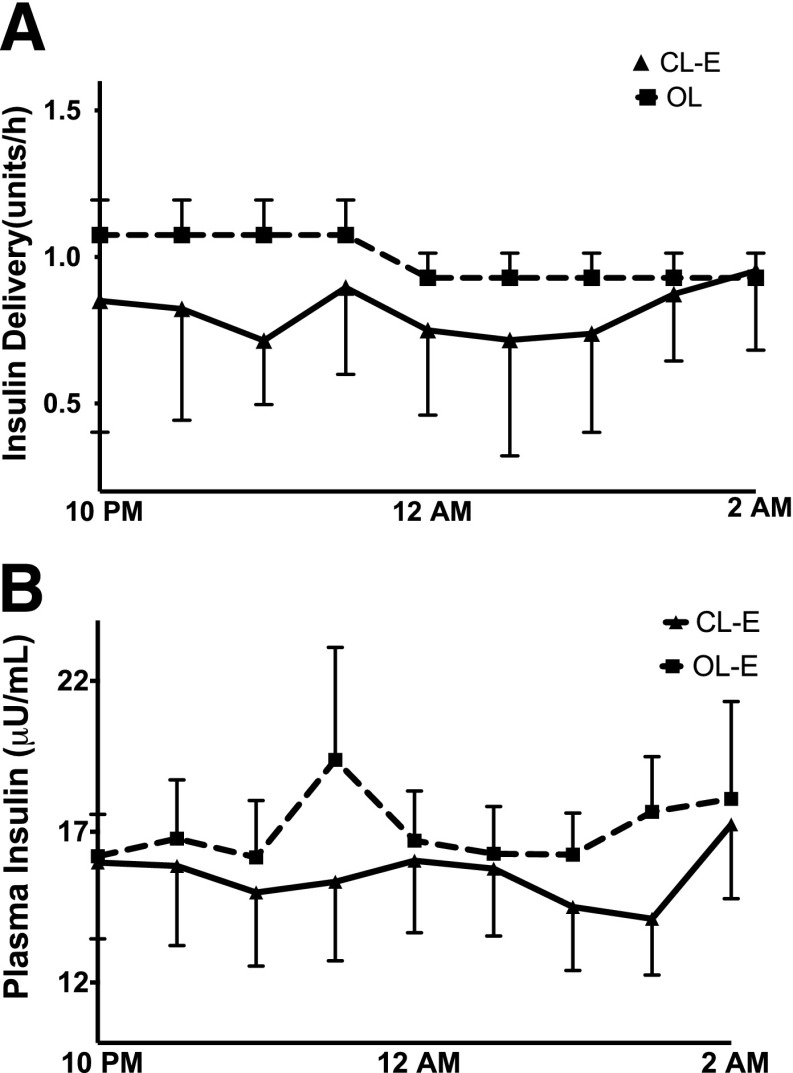
OBJECTIVE: Afternoon exercise increases the risk of nocturnal hypoglycemia (NH) in subjects with type 1 diabetes. We hypothesized that automated feedback-controlled closed-loop (CL) insulin delivery would be superior to open-loop (OL) control in preventing NH and maintaining a higher proportion of blood glucose levels within the target blood glucose range on nights with and without antecedent afternoon exercise. RESEARCH DESIGN AND METHODS: Subjects completed two 48-h inpatient study periods in random order: usual OL control and CL control using a proportional-integrative-derivative plus insulin feedback algorithm. Each admission included a sedentary day and an exercise day, with a standardized protocol of 60 min of brisk treadmill walking to 65–70% maximum heart rate at 3:00 p.m. RESULTS: Among 12 subjects (age 12–26 years, A1C 7.4 ± 0.6%), antecedent exercise increased the frequency of NH (reference blood glucose <60 mg/dL) during OL control from six to eight events. In contrast, there was only one NH event each on nights with and without antecedent exercise during CL control (P = 0.04 vs. OL nights). Overnight, the percentage of glucose values in target range was increased with CL control (P < 0.0001). Insulin delivery was lower between 10:00 p.m. and 2:00 a.m. on nights after exercise on CL versus OL, P = 0.008. CONCLUSIONS: CL insulin delivery provides an effective means to reduce the risk of NH while increasing the percentage of time spent in target range, regardless of activity level in the mid-afternoon. These data suggest that CL control could be of benefit to patients with type 1 diabetes even if it is limited to the overnight period.
Overview
The claims and statistics of this paper haven’t been checked yet.
Free: it reads the open-access text and checks the first 5 claims that cite a source we can check. Create a free account to check every claim.
Integrity signals
Registry
Cites
Statistics
Figures


Verification
Claims the paper makes
The claims and statistics of this paper haven’t been checked yet.
Free: it reads the open-access text and checks the first 5 claims that cite a source we can check. Create a free account to check every claim.
Claims other papers make about this one
Each is checked against this paper’s own text: does it say what the citing paper says it does?
The source backs part of the claim, not all of it — or backs it for a different population, condition or comparison.
In the citing paper
“These systems may also lower the risk of exercise-related hypoglycemia (219) and have been shown to have psychosocial benefits (221)(222)(223)(224)(225).”
From 7. Diabetes Technology: Standards of Care in Diabetes—2025 (2025) · cites this paper as [219]
Experimental — accuracy not yet measured
Self-check
Percentages, sums and reported differences re-computed from the paper’s own numbers.
The self-check needs the paper’s full text.
Citations
Cites
Continuous glucose monitoring and intensive treatment of type 1 diabetes
(2008) · New England Journal of Medicine · doi:10.1056/nejmoa0805017 · Cited by 1,559
Weinzimer, S. A., Steil, G. M., Swan, K. L., Dziura, J., Kurtz, N., & Tamborlane, W. V. (2008) · Diabetes Care · doi:10.2337/dc07-1967 · Cited by 567
Self-citationthe SWITCH Study Group, Battelino, T., Conget, I., Olsen, B., Schütz-Fuhrmann, I., Hommel, E., Hoogma, R., Schierloh, U., Sulli, N., & Bolinder, J. (2012) · Diabetologia · doi:10.1007/s00125-012-2708-9 · Cited by 494
Feasibility of Automating Insulin Delivery for the Treatment of Type 1 Diabetes
Steil, G. M., Rebrin, K., Darwin, C., Hariri, F., & Saad, M. F. (2006) · Diabetes · doi:10.2337/db06-0419 · Cited by 473 · cited 1×
“Steil and colleagues carried out the “first in man” studies of a closed-loop (CL) system using an external insulin pump, external glucose sensor, and a proportional-integrative-derivative (PID) algorithm in 10 adult patients with type 1 diabetes in a clinical research center setting (10).”
BackgroundThe T1D exchange clinic registry
Beck, R. W., Tamborlane, W. V., Bergenstal, R. M., Miller, K. M., DuBose, S. N., Hall, C. A., & for the T1D Exchange Clinic Network (2012) · The Journal of Clinical Endocrinology & Metabolism · doi:10.1210/jc.2012-1561 · Cited by 456
Self-citationHovorka, R., Allen, J. M., Elleri, D., Chassin, L. J., Harris, J., Xing, D., Kollman, C., Hovorka, T., Larsen, A. M. F., Nodale, M., et al. (2010) · The Lancet · doi:10.1016/s0140-6736(09)61998-x · Cited by 450 · cited 1×
“In those investigations, studies were carried out on sedentary days (10– 17) or days with shorter periods of physical activity (17,25,26).”
BackgroundNocturnal Glucose Control with an Artificial Pancreas at a Diabetes Camp
Phillip, M., Battelino, T., Atlas, E., Kordonouri, O., Bratina, N., Miller, S., Biester, T., Avbelj Stefanija, M., Muller, I., Nimri, R., et al. (2013) · New England Journal of Medicine · doi:10.1056/nejmoa1206881 · Cited by 435 · cited 1×
“Recently, the first outpatient testing of an artificial pancreas in a transitional setting of a camp demonstrated that use of such insulin delivery modalities can decrease NH while providing tighter glycemic control than could be achieved with SAP therapy (24).”
BackgroundA Bihormonal Closed-Loop Artificial Pancreas for Type 1 Diabetes
El-Khatib, F. H., Russell, S. J., Nathan, D. M., Sutherlin, R. G., & Damiano, E. R. (2010) · Science Translational Medicine · doi:10.1126/scitranslmed.3000619 · Cited by 403
Decreased Epinephrine Responses to Hypoglycemia during Sleep
Jones, T. W., Porter, P., Sherwin, R. S., Davis, E. A., O'Leary, P., Frazer, F., Byrne, G., Stick, S., & Tamborlane, W. V. (1998) · New England Journal of Medicine · doi:10.1056/nejm199806043382303 · Cited by 301 · cited 1×
“Using the hypoglycemic clamp technique, Jones and colleagues demonstrated that plasma epinephrine responses to hypoglycemia are markedly blunted in children and adolescents with and without diabetes during deep sleep at night (2).”
MethodSelf-citationImpact of Exercise on Overnight Glycemic Control in Children with Type 1 Diabetes Mellitus
Children, T. D. R. I. (2005) · The Journal of Pediatrics · doi:10.1016/j.jpeds.2005.04.065 · Cited by 264
Cited by
Weisman, A., Bai, J.-W., Cardinez, M., Kramer, C. K., & Perkins, B. A. (2017) · The Lancet Diabetes & Endocrinology · doi:10.1016/s2213-8587(17)30167-5 · Cited by 463
Closed-Loop Artificial Pancreas Systems: Engineering the Algorithms
Doyle, F. J., Huyett, L. M., Lee, J. B., Zisser, H. C., & Dassau, E. (2014) · Diabetes Care · doi:10.2337/dc13-2108 · Cited by 394
“The number of fully automated AP designs is increasing, with over 42% of clinical trials in 2013 including at least one unannounced meal challenge (2,6,14,15,20,21,23,26,29,34,35).”
BackgroundMethod7. Diabetes Technology: Standards of Medical Care in Diabetes—2022
American Diabetes Association Professional Practice Committee (2022) · Diabetes Care · doi:10.2337/dc22-s007 · Cited by 358
“glycemia (181) and may have psychosocial benefits (182–184).”
Background7. Diabetes Technology: Standards of Care in Diabetes—2025
American Diabetes Association Professional Practice Committee, ElSayed, N. A., McCoy, R. G., Aleppo, G., Balapattabi, K., Beverly, E. A., Briggs Early, K., Bruemmer, D., Echouffo-Tcheugui, J. B., Ekhlaspour, L., et al. (2025) · Diabetes Care · doi:10.2337/dc25-s007 · Cited by 348
7. Diabetes Technology: Standards of Care in Diabetes — 2023
ElSayed, N. A., Aleppo, G., Aroda, V. R., Bannuru, R. R., Brown, F. M., Bruemmer, D., Collins, B. S., Hilliard, M. E., Isaacs, D., Johnson, E. L., et al. (2023) · Diabetes Care · doi:10.2337/dc23-s007 · Cited by 301
7. Diabetes Technology: Standards of Care in Diabetes—2024
American Diabetes Association Professional Practice Committee, ElSayed, N. A., Aleppo, G., Bannuru, R. R., Bruemmer, D., Collins, B. S., Ekhlaspour, L., Hilliard, M. E., Johnson, E. L., Khunti, K., et al. (2024) · Diabetes Care · doi:10.2337/dc24-s007 · Cited by 281
7. Diabetes Technology: Standards of Medical Care in Diabetes—2020
American Diabetes Association (2020) · Diabetes Care · doi:10.2337/dc20-s007 · Cited by 250
“Emerging evidence suggests such systems may lower the risk of exerciserelated hypoglycemia (123) and may”
BackgroundHovorka, R., Elleri, D., Thabit, H., Allen, J. M., Leelarathna, L., El-Khairi, R., Kumareswaran, K., Caldwell, K., Calhoun, P., Kollman, C., et al. (2014) · Diabetes Care · doi:10.2337/dc13-2644 · Cited by 214
“Preliminary short-duration studies (up to 2 days in carefully controlled hospital settings) suggest the potential to safely improve glucose control with the model predictive control algorithm in youth (10,11), adults (12–14), and pregnant women (15) and with proportional-integral-derivative (16,17), fuzzy logic (18),…”
Background7. Diabetes Technology: Standards of Medical Care in Diabetes—2021
American Diabetes Association (2021) · Diabetes Care · doi:10.2337/dc21-s007 · Cited by 202
7. Diabetes Technology: Standards of Care in Diabetes—2026
Bajaj, M. S., McCoy, R. G., Balapattabi, K., Bannuru, R. R., Bellini, N. J., Bennett, A. K., Beverly, E. A., Early, K. B., ChallaSivaKanaka, S., Echouffo-Tcheugui, J. B., et al. (2025) · Diabetes Care · doi:10.2337/dc26-s007 · Cited by 279
ISPAD Clinical Practice Consensus Guidelines 2018: diabetes technologies
Sherr, J. L., Tauschmann, M., Battelino, T., de Bock, M., Forlenza, G., Roman, R., Hood, K. K., & Maahs, D. M. (2018) · Pediatric Diabetes · doi:10.1111/pedi.12731 · Cited by 197
Self-citationAdolfsson, P., Riddell, M. C., Taplin, C. E., Davis, E. A., Fournier, P. A., Annan, F., Scaramuzza, A. E., Hasnani, D., & Hofer, S. E. (2018) · Pediatric Diabetes · doi:10.1111/pedi.12755 · Cited by 191
“basal insulin to maintain euglycemia was approximately 20% lower after an exercise session compared with a sedentary day.(106) 13 | HYPERGLYCEMIA”
BackgroundBreton, M. D., Cherñavvsky, D. R., Forlenza, G. P., DeBoer, M. D., Robic, J., Wadwa, R. P., Messer, L. H., Kovatchev, B. P., & Maahs, D. M. (2017) · Diabetes Care · doi:10.2337/dc17-0883 · Cited by 179
7. Diabetes Technology: Standards of Medical Care in Diabetes—2019
American Diabetes Association (2019) · Diabetes Care · doi:10.2337/dc19-s007 · Cited by 179
“related hypoglycemia (117) and may have psychosocial benefits (118–121).”
BackgroundAdolfsson, P., Taplin, C. E., Zaharieva, D. P., Pemberton, J. S., Davis, E. A., Riddell, M. C., McGavock, J., Moser, O., Szadkowska, A., Lopez, P. E., et al. (2022) · Pediatric Diabetes · doi:10.1111/pedi.13452 · Cited by 198
“The efficacy of a 20% reduction has been corroborated in a closed-loop study where basal insulin was reduced on average 20% overnight following an exercise session.(127) If reducing insulin is not desired or practical, consuming a bedtime snack of 0.”
BackgroundPhysical Activity and Type 1 Diabetes: Time for a Rewire?
Colberg, S. R., Laan, R., Dassau, E., & Kerr, D. E. (2015) · Journal of Diabetes Science and Technology · doi:10.1177/1932296814566231 · Cited by 189
“In a recent study, adolescents and adults with T1D involved in a closedloop insulin delivery system participated in midafternoon exercise (brisk walking for 60 minutes, a moderate activity) and still exhibited a lower risk of nocturnal hypoglycemia following exercise and an increased percentage of time spent in their…”
BackgroundCastle, J. R., El Youssef, J., Wilson, L. M., Reddy, R., Resalat, N., Branigan, D., Ramsey, K., Leitschuh, J., Rajhbeharrysingh, U., Senf, B., et al. (2018) · Diabetes Care · doi:10.2337/dc18-0228 · Cited by 152
Thabit, H., Lubina-Solomon, A., Stadler, M., Leelarathna, L., Walkinshaw, E., Pernet, A., Allen, J. M., Iqbal, A., Choudhary, P., Kumareswaran, K., et al. (2014) · The Lancet Diabetes & Endocrinology · doi:10.1016/s2213-8587(14)70114-7 · Cited by 162
The Artificial Pancreas: How Closed-Loop Control Is Revolutionizing Diabetes
Haidar, A. (2016) · IEEE Control Systems · doi:10.1109/mcs.2016.2584318 · Cited by 164
“Other strategies, such as ingesting carbohydrate prior to the exercise [95] and feedforward control by announcing the exercise 20 min prior to its start [96], have also been clinically tested.”
Turksoy, K., Samadi, S., Feng, J., Littlejohn, E., Quinn, L., & Çınar, A. (2015) · IEEE Journal of Biomedical and Health Informatics · doi:10.1109/jbhi.2015.2446413 · Cited by 156
“In a hybrid AP system, meal information is used either as an announced disturbance [5], [7]–[10], or as an indicator for a constant bolus insulin infusion”
Leelarathna, L., Dellweg, S., Mader, J. K., Allen, J. M., Benesch, C., Doll, W., Ellmerer, M., Hartnell, S., Heinemann, L., Kojzar, H., et al. (2014) · Diabetes Care · doi:10.2337/dc13-2911 · Cited by 140
“These include evaluations using a randomized design by our group in youths (11,12), adults (13), and pregnant women (14) and by others using the model predictive control algorithm (15,16), the proportional-integral-derivative approach (17,18), and the fuzzy logic con-”
MethodBreton, M. D., Brown, S. A., Karvetski, C. H., Kollar, L., Topchyan, K. A., Anderson, S. M., & Kovatchev, B. P. (2014) · Diabetes Technology & Therapeutics · doi:10.1089/dia.2013.0333 · Cited by 128
Jacobs, P. G., El Youssef, J., Reddy, R., Resalat, N., Branigan, D., Condon, J., Preiser, N., Ramsey, K., Jones, M., Edwards, C., et al. (2016) · Diabetes, Obesity and Metabolism · doi:10.1111/dom.12707 · Cited by 116
Why should people with type 1 diabetes exercise regularly?
Codella, R., Terruzzi, I., & Luzi, L. (2017) · Acta Diabetologica · doi:10.1007/s00592-017-0978-x · Cited by 120
Danne, T., Tsioli, C., Kordonouri, O., Bläsig, S., Remus, K., Roy, A., Keenan, D. B., Lee, S. W., & KAUFMAN, F. R. (2014) · Diabetes Technology & Therapeutics · doi:10.1089/dia.2013.0327 · Cited by 93
Self-citationDovč, K., Macedoni, M., Bratina, N., Lepej, D., Nimri, R., Atlas, E., Muller, I., Kordonouri, O., Biester, T., Danne, T., et al. (2017) · Diabetologia · doi:10.1007/s00125-017-4395-z · Cited by 92
“There have been reports of no increase in the frequency of post-exercise nocturnal hypoglycaemia and overall hypoglycaemia frequency being comparable [19] or lower [20] during closed-loop delivery when compared with open-loop delivery as control.”
BackgroundJayawardene, D., McAuley, S. A., Horsburgh, J. C., Gerche, A. L., Jenkins, A. J., Ward, G. M., MacIsaac, R. J., Roberts, T. J., Grosman, B., Kurtz, N., et al. (2017) · Diabetes Technology & Therapeutics · doi:10.1089/dia.2016.0461 · Cited by 82
Self-citationAutomated closed-loop control of diabetes: the artificial pancreas
Kovatchev, B. P. (2018) · Bioelectronic Medicine · doi:10.1186/s42234-018-0015-6 · Cited by 91
A Century of Diabetes Technology: Signals, Models, and Artificial Pancreas Control
Kovatchev, B. (2019) · Trends in Endocrinology & Metabolism · doi:10.1016/j.tem.2019.04.008 · Cited by 80
Model Free iPID Control for Glycemia Regulation of Type-1 Diabetes
MohammadRidha, T., Ahmed, M. A., Chaillous, L., Krempf, M., Guilhem, I., Poirier, J.-Y., & Moog, C. H. (2017) · IEEE Transactions on Biomedical Engineering · doi:10.1109/tbme.2017.2698036 · Cited by 87
Switched LPV Glucose Control in Type 1 Diabetes
Colmegna, P. H., Sánchez‐Peña, R., Gondhalekar, R., Dassau, E., & Doyle, F. (2015) · IEEE Transactions on Biomedical Engineering · doi:10.1109/tbme.2015.2487043 · Cited by 84
“2487043 [12]–[18], proportional-integral-derivative control [19], [20], or fuzzy logic [21], [22] have been proposed and tested in human trials.”
Zaharieva, D. P., Messer, L. H., Paldus, B., O'Neal, D. N., Maahs, D. M., & Riddell, M. C. (2020) · Canadian Journal of Diabetes · doi:10.1016/j.jcjd.2020.06.003 · Cited by 84
Closed-Loop System in the Management of Diabetes: Past, Present, and Future
Shah, V. N., Shoskes, A., Tawfik, B., & Garg, S. K. (2014) · Diabetes Technology & Therapeutics · doi:10.1089/dia.2014.0193 · Cited by 84
“Sherr et al. 69 demonstrated a significant reduction in nocturnal hypoglycemia following daytime exercise in 12 subjects undergoing CL control, compared with an open-loop crossover.”
Dual‐hormone artificial pancreas: benefits and limitations compared with single‐hormone systems
Peters, T. M., & Haidar, A. (2018) · Diabetic Medicine · doi:10.1111/dme.13581 · Cited by 84
Petruželková, L., Šoupal, J., Plasova, V., Jiranova, P., Neuman, V., Plachý, L., Průhová, Š., Šumník, Z., & Obermannová, B. (2018) · Diabetes Technology & Therapeutics · doi:10.1089/dia.2018.0214 · Cited by 78
Cherñavvsky, D. R., DeBoer, M. D., Keith-Hynes, P., Mize, B., McElwee, M., Demartini, S., Dunsmore, S. F., Wakeman, C., Kovatchev, B. P., & Breton, M. D. (2016) · Pediatric Diabetes · doi:10.1111/pedi.12230 · Cited by 68
Multivariable Artificial Pancreas for Various Exercise Types and Intensities
Turksoy, K., Hajizadeh, I., Hobbs, N., Kilkus, J. M., Littlejohn, E., Samadi, S., Feng, J., Sevil, M., Lazaro, C., Ritthaler, J., et al. (2018) · Diabetes Technology & Therapeutics · doi:10.1089/dia.2018.0072 · Cited by 75
Classification of Physical Activity: Information to Artificial Pancreas Control Systems in Real Time
Turksoy, K., Paulino, T. M. L., Zaharieva, D. P., Yavelberg, L., Jamnik, V., Riddell, M. C., & Çınar, A. (2015) · Journal of Diabetes Science and Technology · doi:10.1177/1932296815609369 · Cited by 68
Real-time insulin bolusing for unannounced meals with artificial pancreas
Turksoy, K., Hajizadeh, I., Samadi, S., Feng, J., Sevil, M., Park, M., Quinn, L., Littlejohn, E., & Çınar, A. (2016) · Control Engineering Practice · doi:10.1016/j.conengprac.2016.08.001 · Cited by 57
Garcia‐Tirado, J., Brown, S. A., Laichuthai, N., Colmegna, P. H., Koravi, C. L. K., Özaslan, B., Corbett, J. P., Barnett, C. L., Pajewski, M., Oliveri, M. C., et al. (2020) · Diabetes Technology & Therapeutics · doi:10.1089/dia.2020.0516 · Cited by 53
Closed-loop insulin delivery: update on the state of the field and emerging technologies
Ware, J., & Hovorka, R. (2022) · Expert Review of Medical Devices · doi:10.1080/17434440.2022.2142556 · Cited by 47
Turksoy, K., Littlejohn, E., & Çınar, A. (2018) · IEEE Control Systems · doi:10.1109/mcs.2017.2766326 · Cited by 48
“A hybrid closed-loop AP system (in which the system is informed of the meal as an indicator for a set bolus infusion, [10], [11] or as a known glucose disturbance without outlining the specific bolus rate [12]–[16]) may decrease the number of postprandial hyperglycemic episodes [17].”
BackgroundClosed loop insulin delivery in diabetes
Battelino, T., Omladič, J. Š., & Phillip, M. (2015) · Best Practice & Research Clinical Endocrinology & Metabolism · doi:10.1016/j.beem.2015.03.001 · Cited by 42
A Review of Safety and Hazards Associated With the Artificial Pancreas
Ramkissoon, C. M., Aufderheide, B., Bequette, B. W., & Vehí, J. (2017) · IEEE Reviews in Biomedical Engineering · doi:10.1109/rbme.2017.2749038 · Cited by 46
Postprandial response improvement via safety layer in closed-loop blood glucose controllers
Vargas, F. M. L., Garelli, F., Battista, H. D., & Vehí, J. (2014) · Biomedical Signal Processing and Control · doi:10.1016/j.bspc.2014.10.003 · Cited by 42
Update on Management of Type 1 Diabetes and Type 2 Diabetes in Athletes
Yardley, J. E., & Colberg, S. R. (2017) · Current Sports Medicine Reports · doi:10.1249/jsr.0000000000000327 · Cited by 42
“Use of the closed loop system also was associated with an increased percentage of time spent in their target blood glucose range (49).”
BackgroundMoving toward the ideal insulin for insulin pumps
Cengiz, E., Bode, B., Van Name, M., & Tamborlane, W. V. (2016) · Expert Review of Medical Devices · doi:10.1586/17434440.2016.1109442 · Cited by 38
“[99] The Diabetes Research in Children Network (DirecNet) demonstrated that children and adolescents with T1D are at increased risk for nocturnal hypoglycemia following antecedent exercise in the afternoon,[100] which can be markedly reduced by a closed-loop insulin delivery system.[101] Although insulin pump therapy…”
BackgroundSelf-citationWake, A. D. (2022) · World Journal of Diabetes · doi:10.4239/wjd.v13.i3.161 · Cited by 36
Improving Glucose Prediction Accuracy in Physically Active Adolescents With Type 1 Diabetes
Hobbs, N., Hajizadeh, I., Rashid, M. M., Turksoy, K., Breton, M. D., & Çınar, A. (2019) · Journal of Diabetes Science and Technology · doi:10.1177/1932296818820550 · Cited by 38
Patel, N. S., Name, M. A. V., Cengiz, E., CARRIA, L. R., TICHY, E. M., Weyman, K., WEINZIMER, S. A., Tamborlane, W. V., & Sherr, J. L. (2016) · Diabetes Technology & Therapeutics · doi:10.1089/dia.2016.0311 · Cited by 38
“The exercise protocol utilized in this study was identical to that previously described in the DirecNet studies and our previous CL exercise study.(1,5,10) Briefly, exercise sessions were scheduled to commence at 3 PM.”
InfluentialSelf-citationUse of Wearable Sensors and Biometric Variables in an Artificial Pancreas System
Turksoy, K., Monforti, C., Park, M., Griffith, G., Quinn, L., & Çınar, A. (2017) · Sensors · doi:10.3390/s17030532 · Cited by 36
Closing the Loop on Managing Youth With Type 1 Diabetes: Children Are Not Just Small Adults
Sherr, J. L. (2018) · Diabetes Care · doi:10.2337/dci18-0003 · Cited by 35
“While closed-loop insulin delivery has been shown to reduce overnight hypoglycemia (36), automated insulin delivery without an exercise adaptation is not sufficient to mitigate hypoglycemia during physical activity.”
BackgroundSelf-citationPaldus, B., Morrison, D., Lee, M., Zaharieva, D. P., Riddell, M. C., & O'Neal, D. N. (2022) · Journal of Diabetes Science and Technology · doi:10.1177/19322968221088327 · Cited by 37
de Bock, M. I., Dart, J., Roy, A., Davey, R. J., Soon, W. H. K., Berthold, C. L., Retterath, A. J., Grosman, B., Kurtz, N., Davis, E. A., et al. (2016) · Journal of Diabetes Science and Technology · doi:10.1177/1932296816668876 · Cited by 31
“Inclusion criteria were (1) type 1 diabetes greater than 2 years, (2) insulin pump therapy for at least 6 months, (3) HbA1c <9%, and (4) age 12-50 years.”
BackgroundSelf-citationNawaz, M. S., Shah, K. U., Khan, T. M., Rehman, A. U., Rashid, H. U., Mahmood, S., Khan, S., & Farrukh, M. J. (2017) · Diabetes & Metabolic Syndrome Clinical Research & Reviews · doi:10.1016/j.dsx.2017.07.003 · Cited by 34
Insulin-and-Glucagon Artificial Pancreas Versus Insulin-Alone Artificial Pancreas: A Short Review
Haidar, A. (2019) · Diabetes Spectrum · doi:10.2337/ds18-0097 · Cited by 30
“Attempting to prevent hypoglycemia by suspending insulin delivery is not always effective because the glucose-lowering effect of physical activity is usually faster than the glucose-raising effect of insulin suspension (32,33).”
BackgroundA New Horizon for Glucose Monitoring
Dovč, K., Bratina, N., & Battelino, T. (2015) · Hormone Research in Paediatrics · doi:10.1159/000368924 · Cited by 30
van Dijk, J., Eijsvogels, T. M. H., Nyakayiru, J., Schreuder, T. H. A., Hopman, M. T. E., Thijssen, D. H. J., & van Loon, L. J. C. (2016) · Diabetes Research and Clinical Practice · doi:10.1016/j.diabres.2016.04.053 · Cited by 29
Closed-loop insulin delivery: current status of diabetes technologies and future prospects
Majeed, W., & Thabit, H. (2018) · Expert Review of Medical Devices · doi:10.1080/17434440.2018.1503530 · Cited by 27
“Several clinical studies have tested CLS application during exercise [107,108].”
BackgroundYu, X., Yang, Z., Sun, X., Liu, H., Li, H., Lu, J., Zhou, J. H., & Çınar, A. (2025) · AI · doi:10.3390/ai6050087 · Cited by 31
“…available AIDs are hybrid closed-loop AIDs that need manual entry of meal information for insulin bolusing to regulate postprandial BGC and exercise information for reducing insulin infusion to prevent hypoglycemia and increase the TIR [23,24]. based on only CGM and insulin infusion data.”
Viñals, C., Beneyto, A., José, J., Furió-Novejarque, C., Bertachi, A. H., Bondía, J., Vehí, J., Conget, I., & Giménez, M. (2020) · The Journal of Clinical Endocrinology & Metabolism · doi:10.1210/clinem/dgaa562 · Cited by 26
Sherr, J. L., Bergford, S., Gal, R. L., Clements, M. A., Patton, S. R., Calhoun, P. M., Beaulieu, L. C., & Riddell, M. C. (2024) · Diabetes Care · doi:10.2337/dc23-2212 · Cited by 23
Self-citationInsulin pump therapy in youth with type 1 diabetes: toward closed-loop systems
Tauschmann, M., & Hovorka, R. (2014) · Expert Opinion on Drug Delivery · doi:10.1517/17425247.2014.910192 · Cited by 24
“[85] demonstrated the benefits of overnight closed-loop insulin delivery following antecedent afternoon exercise in inpatient settings.”
BackgroundDo youth with type 1 diabetes exercise safely? A focus on patient practices and glycemic outcomes
Roberts, A. J. C., Yi‐Frazier, J. P., Aitken, K. E., Mitrovich, C., Pascual, M., & Taplin, C. E. (2016) · Pediatric Diabetes · doi:10.1111/pedi.12402 · Cited by 22
“Data suggest that closed-loop systems, either using insulin only or a bi-hormonal system using insulin and glucagon, can decrease rates of nocturnal hypoglycemia, including after exercise (39, 40).”
BackgroundMorrison, D., Paldus, B., Zaharieva, D. P., Lee, M. H., Vogrin, S., Jenkins, A. J., Gerche, A. L., MacIsaac, R. J., McAuley, S. A., Ward, G. M., et al. (2022) · Diabetes Technology & Therapeutics · doi:10.1089/dia.2022.0279 · Cited by 19
“31 The AID system used in this study was a first-generation hybrid closed-loop device and the manual insulin dosing for the exercise meal post-HIE, RE, MIE, and control was based upon bolus calculator determined doses.”
Self-citationAcute Metabolic Complications in Diabetes
Rewers, A. (2018) · Europe PMC (PubMed Central) · Cited by 37
Bringing closed-loop home: recent advances in closed-loop insulin delivery
Thabit, H., & Hovorka, R. (2014) · Current Opinion in Endocrinology Diabetes and Obesity · doi:10.1097/med.0000000000000048 · Cited by 20
MohammadRidha, T., & Moog, C. H. (2015) · IFAC-PapersOnLine · doi:10.1016/j.ifacol.2015.10.118 · Cited by 18
Artificial Pancreas: First Clinical Trials in Argentina
Sánchez‐Peña, R., Colmegna, P. H., Grosembacher, L., Breton, M. D., Battista, H. D., Garelli, F., Belloso, W. H., Campos-Náñez, E., Simonovich, V., Beruto, V., et al. (2017) · IFAC-PapersOnLine · doi:10.1016/j.ifacol.2017.08.1151 · Cited by 20
“Several control procedures based on the insulin-glucose dynamics have been used to minimize these issues (Cobelli et al., 2010; Sherr et al., 2013; Mauseth et al., 2013; Colmegna et al., 2016b).”
MethodGlycemic Status Assessment by the Latest Glucose Monitoring Technologies
Malandrucco, I., Russo, B., Picconi, F., Menduni, M., & Frontoni, S. (2020) · International Journal of Molecular Sciences · doi:10.3390/ijms21218243 · Cited by 17
“Moreover, it has been reported that the hybrid system delivery provides an effective means to reduce the risk of nocturnal hypoglycemia while increasing the percentage of time spent in target range after afternoon exercise in T1D [80].”
BackgroundDiabetes Technology: Monitoring, Analytics, and Optimal Control
Kovatchev, B. P. (2018) · Cold Spring Harbor Perspectives in Medicine · doi:10.1101/cshperspect.a034389 · Cited by 17
“During 2008–2012, promising results were reported by several groups (Weinzimer et al. 2008; Bruttomesso et al. 2009; Clarke et al. 2009; ElKhatib et al. 2010; Hovorka et al. 2010, 2011; Renard et al. 2010; Zisser et al. 2011, 2014; Breton et al. 2012; Russell et al. 2012; Luijf et al. 2013; Sherr et al. 2013).”
BackgroundResultInfluentialResearch Gaps, Challenges, and Opportunities in Automated Insulin Delivery Systems
Jacobs, P. G., Levy, C. J., Brown, S. A., Riddell, M. C., Çınar, A., Boughton, C. K., Breton, M. D., Dassau, E., Forlenza, G. P., Henderson, R. J., et al. (2025) · Journal of Diabetes Science and Technology · doi:10.1177/19322968251338754 · Cited by 24
Turner, L. V., Marak, M. C., Gal, R. L., Calhoun, P. M., Li, Z., Jacobs, P. G., Clements, M. A., Martin, C. K., Doyle, F. J., Patton, S. R., et al. (2024) · Diabetologia · doi:10.1007/s00125-024-06127-2 · Cited by 20
“…less insulin delivery overnight, between 22:00 and 02:00, in HCL users compared with standard insulin pump users (0.81±1.09 U/h vs 0.98±0.33 U/h, respectively; p =0.008) has been reported in 12 individuals with type 1 diabetes (ages 12–26 years) following 1 h of brisk walking on a treadmill [25].”
InfluentialAn Artificial Pancreas for Automated Blood Glucose Control in Patients With Type 1 Diabetes
Schmidt, S., Boiroux, D., Ranjan, A. G., J�rgensen, J., Madsen, H., & Nørgaard, K. (2015) · Therapeutic Delivery · doi:10.4155/tde.15.12 · Cited by 18
Recent advances in the precision control strategy of artificial pancreas
Ming, W., Guo, X., Zhang, G., Liu, Y., Wang, Y., Zhang, H., Liang, H., & Yang, Y. (2024) · Medical & Biological Engineering & Computing · doi:10.1007/s11517-024-03042-x · Cited by 17
“Sherr [50] added more data on exogenous parameters such as exercise, diet, etc. to build dynamic mathematical models to optimize PID control performance.”
Intra-patient dynamic variations in Type 1 Diabetes: A review
Moscoso-Vásquez, M., Colmegna, P. H., & Sánchez‐Peña, R. (2016) · The proceedings of the IEEE Conference on Control Applications/The proceedings of the ... IEEE Conference on Control Applications · doi:10.1109/cca.2016.7587866 · Cited by 16
“In order to automate the decision of how much insulin to infuse, several control algorithms have been tested in clinical trials, e.g., Model Predictive Control (MPC) [3], [4], Proportional-Integral-Derivative (PID) control [5], [6]; and in-silica, e.g., 1-loo robust control [7], [8].”
MethodChoi, M. S., Lee, S., Kim, J., Kim, G., Park, S., & Kim, J. H. (2021) · Diabetes & Metabolism Journal · doi:10.4093/dmj.2021.0011 · Cited by 13
“Previous studies showed that APS improves glycosylated hemoglobin (HbA1c) level and the percentage of time blood glucose level is within 70 to 180 mg/dL (time in range [TIR]) while preventing hypoglycemia in patients with type 1 diabetes mellitus (T1DM) [1-3].”
BackgroundFeasibility Studies of an Insulin-Only Bionic Pancreas in a Home-Use Setting
Ekhlaspour, L., Nally, L. M., El-Khatib, F. H., Ly, T. T., Clinton, P. K., Frank, E., Tanenbaum, M. L., Hanes, S. J., SELAGAMSETTY, R., Hood, K. K., et al. (2019) · Journal of Diabetes Science and Technology · doi:10.1177/1932296819872225 · Cited by 13
Leelarathna, L., Dellweg, S., Mader, J. K., Barnard, K. D., Benesch, C., Ellmerer, M., Heinemann, L., Kojzar, H., Thabit, H., Wilinska, M. E., et al. (2014) · BMJ Open · doi:10.1136/bmjopen-2014-006075 · Cited by 14
Automated Insulin Delivery—The Light at the End of the Tunnel
Turksoy, K., Frantz, N., Quinn, L., Dumin, M., Kilkus, J. M., Hibner, B. A., Çınar, A., & Littlejohn, E. (2017) · The Journal of Pediatrics · doi:10.1016/j.jpeds.2017.02.055 · Cited by 14
Molfetta, S. D., Rossi, A., Assaloni, R., Franceschi, R., Grancini, V., Guardasole, V., Scaramuzza, A. E., Scarpitta, A. M., Trombetta, M., Zanfardino, A., et al. (2025) · Diabetes Research and Clinical Practice · doi:10.1016/j.diabres.2025.112117 · Cited by 13
Sperling, M. A., Wolfsdorf, J. I., Menon, R. K., Tamborlane, W. V., Maahs, D. M., Battelino, T., & Phillip, M. (2021) · Elsevier eBooks · doi:10.1016/b978-0-323-62520-3.00021-x · Cited by 13
Self-citationMulti-level supervision and modification of artificial pancreas control system
Feng, J., Hajizadeh, I., Yu, X., Rashid, M. M., Turksoy, K., Samadi, S., Sevil, M., Hobbs, N., Brandt, R., Lazaro, C., et al. (2018) · Computers & Chemical Engineering · doi:10.1016/j.compchemeng.2018.02.002 · Cited by 11
Exercise and Dietary Restriction for Promotion of Neurohealth Benefits
Archer, T., & Garcia, D. (2015) · Health · doi:10.4236/health.2015.71016 · Cited by 12
“Fear of hypoglycemia among adolescent type I diabetics induces low levels of exercise although this activity is an important aspect of disease management [49] [50].”
BackgroundReal-Time Insulin Bolusing for Unannounced Meals Using CGM Measurements
Turksoy, K., & Çınar, A. (2015) · IFAC-PapersOnLine · doi:10.1016/j.ifacol.2015.10.142 · Cited by 10
Nutritional Management of Athletes with Type 1 Diabetes: A Narrative Review
Cavallo, M., Fano, M. D., Barana, L., Dozzani, I., Bianchini, E., Pellegrino, M., Cisternino, L., Migliarelli, S., Giulietti, C., Pippi, R., et al. (2024) · Nutrients · doi:10.3390/nu16060907 · Cited by 10
“…target” should be maintained for 1–2 h in recovery; the insulin basal rate should be reduced on average 20% overnight following an EXE session [64] and bolus must be reduced up to 50% at the post-EXE meal (the starting plan for post-EXE meal insulin is a 25% bolus reduction, irrespective of…”
BackgroundPositively invariant sets of a T1DM model: Hypoglycemia prediction and avoidance
MohammadRidha, T., Rivadeneira, P. S., Magdelaine, N., Cardelli, M., & Moog, C. H. (2019) · Journal of the Franklin Institute · doi:10.1016/j.jfranklin.2019.03.022 · Cited by 9
Garcia‐Tirado, J., Colmegna, P. H., Corbett, J. P., Özaslan, B., & Breton, M. D. (2019) · Proceedings of the ... American Control Conference/Proceedings of the American Control Conference · doi:10.23919/acc.2019.8814728 · Cited by 9
“Previous studies where participants exercised in the afternoon have shown reduced nocturnal hypoglycemia while using an AP [14], [15], but failed to significantly reduce glycemic risks during and immediately after the exercise bout [14].”
BackgroundAutomated Insulin Delivery in Children with Type 1 Diabetes.
Cengiz, E. (2020) · Endocrinology and metabolism clinics of North America (Print) · doi:10.1016/j.ecl.2019.10.012 · Cited by 7
Self-citationEvaluating the Performance of a Novel Embedded Closed-loop System
Leelarathna, L., Thabit, H., Allen, J. M., Nodale, M., Wilinska, M. E., Powell, K., Lane, S., Evans, M. L., & Hovorka, R. (2014) · Journal of Diabetes Science and Technology · doi:10.1177/1932296813519882 · Cited by 10
Performance Assessment of Model-Based Artificial Pancreas Control Systems
Feng, J., Turksoy, K., & Çınar, A. (2015) · Lecture notes in bioengineering · doi:10.1007/978-3-319-25913-0_13 · Cited by 9
“Various control strategies, ranging from proportionalintegral-derivative (PID) control [25, 27, 29, 30] to model-based techniques, such as model predictive control [11, 17, 20] and generalized predictive control [8, 9, 33–35] and knowledge-based systems with fuzzy logic [1, 21] have been used in developing the control…”
BackgroundPiotrowicz, A. K., McGill, M. J., Overland, J., Molyneaux, L. M., Johnson, N. A., & Twigg, S. M. (2019) · Journal of Diabetes and its Complications · doi:10.1016/j.jdiacomp.2019.05.011 · Cited by 9
Seckold, R., Smart, C. E., O'Neal, D. N., Riddell, M. C., Rafferty, J., Morrison, D., Obeyesekere, V. R., Gooley, J., Paldus, B., Valkenborghs, S. R., et al. (2025) · Diabetes Technology & Therapeutics · doi:10.1089/dia.2024.0254 · Cited by 6
Wu, Z., Yardley, J. E., Messier, V., Legault, L., Grou, C., & RABASA-LHORET, R. P. R. (2022) · Diabetes Technology & Therapeutics · doi:10.1089/dia.2022.0149 · Cited by 6
“21,22,32 Large unexplained within-subject and intersubject variability exists regarding glucose response to exercise.”
Modified control algorithms for patients with type 1 diabetes mellitus undergoing exercise
Liu, S.-W., Huang, H., Lin, C.-H., & Chien, I. (2014) · Journal of the Taiwan Institute of Chemical Engineers · doi:10.1016/j.jtice.2014.06.005 · Cited by 6
A Portable Low-Power Platform for Ambulatory Closed Loop Control of Blood Glucose in Type 1 Diabetes
El-Sharkawy, M., Daniels, J., Pesl, P., Reddy, M., Oliver, N. S., Herrero, P., & Georgiou, P. (2018) · IEEE International Symposium on Circuits and Systems proceedings · doi:10.1109/iscas.2018.8351695 · Cited by 6
“Several groups have used this control strategy [11]–[15].”
MethodMao, Y., Wen, S., Zhou, M., Zhu, S., & Zhou, L. (2019) · Endocrine Journal · doi:10.1507/endocrj.ej19-0153 · Cited by 7
Handling Exercise During Closed Loop Control
Breton, M. D. (2017) · Diabetes Technology & Therapeutics · doi:10.1089/dia.2017.0191 · Cited by 6
Research Gaps, Challenges, and Opportunities in Automated Insulin Delivery Systems
Jacobs, P. G., Levy, C. J., Brown, S. A., Riddell, M. C., Çınar, A., Boughton, C. K., Breton, M. D., Dassau, E., Forlenza, G. P., Henderson, R. J., et al. (2025) · Diabetes Technology & Therapeutics · doi:10.1089/dia.2025.0129 · Cited by 7
Ghosal, R., & Matabuena, M. (2024) · Biometrical Journal · doi:10.1002/bimj.202400042 · Cited by 5
Metadata
- Authors
- Sherr, J. L., Cengiz, E., Palerm, C. C., Clark, B., Kurtz, N., Roy, A., Carria, L., Cantwell, M., Tamborlane, W. V., & Weinzimer, S. A.
- Affiliations
- Yale University (US)
- Medtronic (United States) (US)
- Corresponding author
- Sherr, Jennifer L.
- ORCID
- Venue
- Diabetes Care
- Publisher
- American Diabetes Association
- Published
- 2013-09-14
- Volume
- 36
- Issue
- 10
- Pages
- 2909-2914
- ISSN
- 0149-5992 (ISSN-L)
- 1935-5548
- PMC
- PMC3781513
- OpenAlex
- W2035452578
- Cited by
- 125
- References
- 27
- Citations by year
- 2026: 1 · 2025: 10 · 2024: 9 · 2023: 1 · 2022: 7 · 2021: 5 · 2020: 8 · 2019: 13 · 2018: 16 · 2017: 16 · 2016: 11 · 2015: 14 · 2014: 14
- FWCI
- 10.23
- Type
- journal article
- Language
- en
- Open access
- hybrid
- doi.org
- Licence
- Locations
- Diabetes Care (publishedVersion, cc-by-nc-nd)
- Europe PMC (PubMed Central) (publishedVersion, cc-by-nc-nd)
- PubMed Central (publishedVersion, cc-by-nc-nd)
- PubMed (publishedVersion)
- Funders
- National Institute of Diabetes and Digestive and Kidney Diseases (K12DK094714, R01DK085618, P30DK045735)
- National Center for Research Resources (UL1RR024139)
- Topics
- Health Sciences › Medicine › Endocrinology, Diabetes and Metabolism › Diabetes Management and Research
- Health Sciences › Medicine › Endocrinology, Diabetes and Metabolism › Diabetes Management and Education
- Life Sciences › Biochemistry, Genetics and Molecular Biology › Genetics › Diabetes and associated disorders
- Keywords
- type 1 diabetes, nocturnal hypoglycemia, artificial pancreas, continuous glucose monitoring, time in range, insulin delivery, treadmill walking
- MeSH terms
- Adolescent, Adult, Blood Glucose, Child, Diabetes Mellitus, Type 1, Female, Humans, Hypoglycemia, Insulin, Male, Time Factors, Exercise, Young Adult
About these checks
Registry, retraction, Cites and statistics results are computed, not judged, with one exception: a printed reference that no index lists is read once by a model before it counts as a citation error. Claims are extracted by a model and kept only when their quote appears verbatim in the text; each cited source is then checked, with a model’s help, for whether it says what the claim relies on. Those verdicts can be wrong — read the claim’s quote and the cited source before relying on one.
Statistics and arithmetic are recomputed, not judged.
Confidence bands are shown only for fields calibrated on our annotated test set. None is calibrated yet, so no band is shown.
What counts as a claim ›How we measure confidence ›How we check this ›
Are you an author, or do you see a problem with this page? Request a review
Data sources
Bibliographic data: Semantic Scholar, OpenAlex, Crossref.
Contains information from the Semantic Scholar Academic Graph Datasets, made available under the ODC Attribution License (ODC-BY 1.0).
Semantic Scholar’s data is described in: Kinney, R., et al. (2023). The Semantic Scholar Open Data Platform. arXiv:2301.10140.
