

Time to get personal? The impact of researchers’ choices on the selection of treatment targets using the experience sampling methodology
Open accessThe DOI matches its Crossref record; 69 of the 70 references it cites were found in a registry or an index, and 1 are not checked yet.
Abstract
One of the promises of the experience sampling methodology (ESM) is that it could be used to identify relevant targets for treatment, based on a statistical analysis of an individual’s emotions, cognitions and behaviors in everyday-life. A requisite for clinical implementation is that outcomes of person-centered analyses are not wholly contingent on the researcher performing them. To evaluate how much researchers vary in their analytical approach and to what degree outcomes vary based on analytical choices, we crowdsourced the analysis of one individual patient’s ESM data to 12 prominent research teams, asking them what symptom(s) they would advise the treating clinician to target in subsequent treatment. The dataset was from a 25-year-old male with a primary diagnosis of major depressive disorder and comorbid generalized anxiety disorder, who completed momentary assessments related to depression and anxiety psychopathology prior to psychotherapy. Variation was evident at different stages of the analysis, from preprocessing steps (e.g., variable selection, clustering, handling of missing data) to the type of statistics. Most teams did include a type of vector autoregressive model, which examines relations between variables (e.g., symptoms) over time. Although most teams were confident their selected targets would provide useful information to the clinician, not one advice was similar: both the number (0-16) and nature of selected targets varied widely. This study makes transparent that the selection of treatment targets based on personalized models using ESM data is currently highly conditional on subjective analytical choices and highlights key methodological issues that need to be addressed in moving toward clinical implementation. Research proposal, data and materials: osf.io/h3djy/
Overview
The claims and statistics of this paper haven’t been checked yet.
Free: it reads the open-access text and checks the first 5 claims that cite a source we can check. Create a free account to check every claim.
Integrity signals
Registry
Cites
Statistics
Figures

Verification
Claims the paper makes
The claims and statistics of this paper haven’t been checked yet.
Free: it reads the open-access text and checks the first 5 claims that cite a source we can check. Create a free account to check every claim.
Claims other papers make about this one
Each is checked against this paper’s own text: does it say what the citing paper says it does?
In the citing paper
“They asked different research teams to recommend treatment targets based on the same ESM time-series data of one particular patient. Most research teams included a PSN in their analysis, but choices in the statistical analyses and recommendations for treatment varied widely.”
From Using person-specific networks in psychotherapy: challenges, limitations, and how we could use them anyway (2020) · cites this paper as [41]
Self-check
Percentages, sums and reported differences re-computed from the paper’s own numbers.
The self-check needs the paper’s full text.
Citations
Cites
Hamilton, M. (1960) · Journal of Neurology, Neurosurgery & Psychiatry · doi:10.1136/jnnp.23.1.56 · Cited by 32,817 · cited 1×
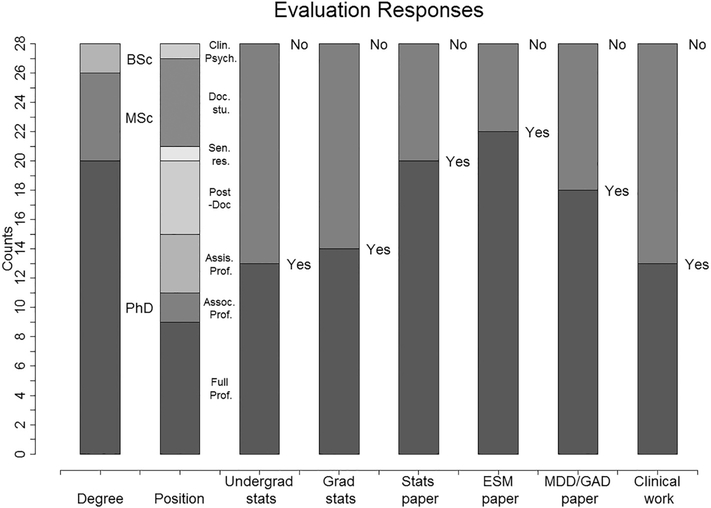
“His scores on the Hamilton Rating Scale for Depression [37] and the Hamilton Rating Scale for Anxiety [38] were 16 and 15, respectively.”
The assessment of anxiety states by rating
HAMILTON, M. (1959) · British Journal of Medical Psychology · doi:10.1111/j.2044-8341.1959.tb00467.x · Cited by 11,455 · cited 1×
“His scores on the Hamilton Rating Scale for Depression [37] and the Hamilton Rating Scale for Anxiety [38] were 16 and 15, respectively.”
Simmons, J. P., Nelson, L. D., & Simonsohn, U. (2011) · Psychological Science · doi:10.1177/0956797611417632 · Cited by 6,567 · cited 1×
“At many steps in the analysis process, choices between various reasonable (and unreasonable) options have to be made [62].”
New Introduction to Multiple Time Series Analysis
Lütkepohl, H. (2005) · Springer eBooks · doi:10.1007/978-3-540-27752-1 · Cited by 5,918
Network analysis: An integrative approach to the structure of psychopathology
Borsboom, D., & Cramer, A. O. J. (2013) · Annual Review of Clinical Psychology · doi:10.1146/annurev-clinpsy-050212-185608 · Cited by 4,359
Regression Shrinkage and Selection via The Lasso: A Retrospective
Tibshirani, R. (2011) · Journal of the Royal Statistical Society Series B: Statistical Methodology · doi:10.1111/j.1467-9868.2011.00771.x · Cited by 3,589
The Analysis of Time Series: An Introduction
Dickey, D. A., & Chatfield, C. (1991) · Technometrics · doi:10.2307/1268794 · Cited by 3,525
Detection of Abrupt Changes: Theory and Application
Riedel, K. S. (1994) · Technometrics · doi:10.1080/00401706.1994.10485821 · Cited by 3,518 · cited 1×
“, how structural changes in clusters during the ESM period preceded structural changes in other clusters) by means of a change point analysis [57].”
BackgroundA network theory of mental disorders
Borsboom, D. (2017) · World Psychiatry · doi:10.1002/wps.20375 · Cited by 3,482
A manifesto for reproducible science
Munafò, M. R., Nosek, B. A., Bishop, D. V. M., Button, K. S., Chambers, C. D., Percie du Sert, N., Simonsohn, U., Wagenmakers, E.-J., Ware, J. J., & Ioannidis, J. P. A. (2017) · Nature Human Behaviour · doi:10.1038/s41562-016-0021 · Cited by 3,397
Validity and reliability of the Experience-Sampling Method
CSIKSZENTMIHALYI, M., & LARSON, R. (1987) · The Journal of Nervous and Mental Disease · doi:10.1097/00005053-198709000-00004 · Cited by 2,544 · cited 1×
“…referred to as ecological momentary assessment or ambulatory assessment [11], is a structured method that can capture intraindividual changes in psychological processes across time and context through multiple in-the-moment assessments within one person (e.g., through electronic diaries, [19,20]).”
Handbook of research methods for studying daily life
(2012) · Choice Reviews Online · doi:10.5860/choice.50-1159 · Cited by 2,111
Molenaar, P. C. M. (2004) · Measurement: Interdisciplinary Research & Perspective · doi:10.1207/s15366359mea0204_1 · Cited by 1,943
Comorbidity: a network perspective
Cramer, A. O. J., Waldorp, L. J., van der Maas, H. L. J., & Borsboom, D. (2010) · Behavioral and Brain Sciences · doi:10.1017/s0140525x09991567 · Cited by 1,575
Increasing Transparency Through a Multiverse Analysis
Steegen, S., Tuerlinckx, F., Gelman, A., & Vanpaemel, W. (2016) · Perspectives on Psychological Science · doi:10.1177/1745691616658637 · Cited by 1,372 · cited 1×
“Instead, the multiplicity of plausible processing steps implies that there could be several sensible statistical results based on the same original dataset [61].”
What do centrality measures measure in psychological networks?
Bringmann, L. F., Elmer, T., Epskamp, S., Krause, R. W., Schoch, D., Wichers, M., Wigman, J. T. W., & Snippe, E. (2019) · Journal of Abnormal Psychology · doi:10.1037/abn0000446 · Cited by 1,345
Self-citationFaraway, J. J. (2005) · Cited by 1,343
Detection of Abrupt Changes: Theory and Application
Riedel, K. S., Basseville, M., Nikiforov, I. V., et al. (1994) · Technometrics · doi:10.2307/1269388 · Cited by 1,330
OpenMx: An Open Source Extended Structural Equation Modeling Framework
Boker, S., Neale, M., Maes, H., Wilde, M., Spiegel, M., Brick, T., Spies, J., Estabrook, R., Kenny, S., Bates, T., et al. (2011) · Psychometrika · doi:10.1007/s11336-010-9200-6 · Cited by 1,163 · cited 1×
“Stata (n = 1), and open source packages DyFa (n = 1, beta version 3.0 (unreleased)), and OpenMx (n = 1, version 2.9: [39]).”
InfluentialSelf-citationGallagher, C. (2007) · Journal of the American Statistical Association · doi:10.1198/jasa.2007.s238 · Cited by 1,070
Fried, E. I., & Nesse, R. M. (2015) · Journal of Affective Disorders · doi:10.1016/j.jad.2014.10.010 · Cited by 1,043 · cited 1×
“There are, for instance, 1030 unique symptom combinations that all qualify for a diagnosis of MDD and none of them is very common [4].”
Dynamic Structural Equation Models
Asparouhov, T., Hamaker, E. L., & Muthén, B. (2018) · Structural Equation Modeling: A Multidisciplinary Journal · doi:10.1080/10705511.2017.1406803 · Cited by 985
Self-citationState of the aRt personality research: A tutorial on network analysis of personality data in R
Costantini, G., Epskamp, S., Borsboom, D., Perugini, M., Mõttus, R., Waldorp, L. J., & Cramer, A. O. J. (2015) · Journal of Research in Personality · doi:10.1016/j.jrp.2014.07.003 · Cited by 982 · cited 1×
“To reduce data dimensionality these teams used data-driven techniques that reduce the number of parameters [48,49].”
Self-citationMoving Forward: Challenges and Directions for Psychopathological Network Theory and Methodology
Fried, E. I., & Cramer, A. O. J. (2017) · Perspectives on Psychological Science · doi:10.1177/1745691617705892 · Cited by 938 · cited 1×
“The need for transparency in person-specific analyses Fourth, our study underscores the need for transparency in science, particularly in this strongly data-driven and exploratory field, to avert “a lurking replicability crisis” ([60], p.”
Experience sampling research in psychopathology: opening the black box of daily life
Myin-Germeys, I., Oorschot, M., Collip, D., Lataster, J., Delespaul, P., & van Os, J. (2009) · Psychological Medicine · doi:10.1017/s0033291708004947 · Cited by 817
Many Analysts, One Data Set: Making Transparent How Variations in Analytic Choices Affect Results
Silberzahn, R., Uhlmann, E. L., Martin, D. P., Anselmi, P., Aust, F., Awtrey, E., Bahník, Š., Bai, F., Bannard, C., Bonnier, E., et al. (2018) · Advances in Methods and Practices in Psychological Science · doi:10.1177/2515245917747646 · Cited by 784
Trull, T. J., & Ebner-Priemer, U. (2013) · Annual Review of Clinical Psychology · doi:10.1146/annurev-clinpsy-050212-185510 · Cited by 761
Self-citationExperience sampling methodology in mental health research: new insights and technical developments.
Myin‐Germeys, I., Kasanova, Z., Vaessen, T., Vachon, H., Kirtley, O., Viechtbauer, W., & Reininghaus, U. (2018) · World Psychiatry · doi:10.1002/wps.20513 · Cited by 709 · cited 1×
“The experience sampling methodology (ESM) has been positioned as one of the best opportunities for personalized medicine in psychiatry [17,18].”
A Network Approach to Psychopathology: New Insights into Clinical Longitudinal Data
Bringmann, L. F., Vissers, N., Wichers, M., Geschwind, N., Kuppens, P., Peeters, F., Borsboom, D., & Tuerlinckx, F. (2013) · PLoS ONE · doi:10.1371/journal.pone.0060188 · Cited by 680 · cited 1×
“7 and 9) additionally performed a centrality analysis [50], which aims to identify the item(s) that had the overall highest influence on other items in a network [51,52,53].”
Self-citationHarnessing context sensing to develop a mobile intervention for depression
Burns, M. N., Begale, M., Duffecy, J., Gergle, D., Karr, C. J., Giangrande, E., & Mohr, D. C. (2011) · Journal of Medical Internet Research · doi:10.2196/jmir.1838 · Cited by 646 · cited 1×
“This idea has mainly been put into practice by experience sampling intervention (ESI) studies for, amongst others, individuals with depressive symptoms [26,27,28,29].”
PRACTICE GUIDELINE FOR THE Treatment of Patients With Major Depressive Disorder
Gelenberg, A. J., Freeman, P. B., Markowitz, J. C., Rosenbaum, J. F., Thase, M. E., Trivedi, M. H., & Rhoads, R. S. (2010) · Cited by 591
Why researchers should think "within-person": A paradigmatic rationale.
Hamaker, E. L. (2012) · Cited by 472
Self-citationInsel, T. R. (2009) · Archives of General Psychiatry · doi:10.1001/archgenpsychiatry.2008.540 · Cited by 459 · cited 1×
“By identifying individual characteristics that determine disease susceptibility as well as treatment response [6], personalized medicine promises to move from treatments that are effective on average towards identifying the best evidence-based treatment for any individual [7,8].”
Kauer, S. D., Reid, S. C., Crooke, A. H. D., Khor, A., Hearps, S. J. C., Jorm, A. F., Sanci, L., & Patton, G. (2012) · Journal of Medical Internet Research · doi:10.2196/jmir.1858 · Cited by 404 · cited 1×
“This idea has mainly been put into practice by experience sampling intervention (ESI) studies for, amongst others, individuals with depressive symptoms [26,27,28,29].”
Exploring the idiographic dynamics of mood and anxiety via network analysis
Fisher, A. J., Reeves, J. W., Lawyer, G., Medaglia, J. D., & Rubel, J. A. (2017) · Journal of Abnormal Psychology · doi:10.1037/abn0000311 · Cited by 385 · cited 2×
“The data were drawn from a multiphase personalized psychotherapy study [34,35].”
Self-citationPersonalized Medicine for Depression: Can We Match Patients With Treatments?
Simon, G. E., & Perlis, R. H. (2010) · American Journal of Psychiatry · doi:10.1176/appi.ajp.2010.09111680 · Cited by 365 · cited 1×
“By identifying individual characteristics that determine disease susceptibility as well as treatment response [6], personalized medicine promises to move from treatments that are effective on average towards identifying the best evidence-based treatment for any individual [7,8].”
Models for Intensive Longitudinal Data
(2006) · Oxford University Press eBooks · doi:10.1093/acprof:oso/9780195173444.001.0001 · Cited by 364 · cited 1×
“, time series do not change over time) or corrected for non-stationarity (detrending, [54]).”
BackgroundTrull, T. J., & Ebner-Priemer, U. W. (2020) · Journal of Abnormal Psychology · doi:10.1037/abn0000473 · Cited by 344
Self-citationKramer, I., Simons, C. J. P., Hartmann, J. A., Menne-Lothmann, C., Viechtbauer, W., Peeters, F., Schruers, K., van Bemmel, A. L., Myin-Germeys, I., Delespaul, P., et al. (2014) · World Psychiatry · doi:10.1002/wps.20090 · Cited by 306
Self-citationDon’t blame the model: Reconsidering the network approach to psychopathology.
Bringmann, L. F., & Eronen, M. I. (2018) · Psychological Review · doi:10.1037/rev0000108 · Cited by 297 · cited 1×
“7, 8 and 9) stated they took a network approach, in which items are typically not clustered but individually related to each other [44–46 , 47 ].”
Self-citationExperience sampling research in individuals with mental illness: reflections and guidance
Palmier-Claus, J. E., Myin-Germeys, I., Barkus, E., Bentley, L., Udachina, A., Delespaul, P. A. E. G., Lewis, S. W., & Dunn, G. (2011) · Acta Psychiatrica Scandinavica · doi:10.1111/j.1600-0447.2010.01596.x · Cited by 287 · cited 1×
“Person-specific analyses based on ESM time-series data could have great potential for use in clinical practice, because they could provide personalized and contextualized feedback to patients and clinicians [23,24,25].”
Personalized medicine in psychiatry: problems and promises
Ozomaro, U., Wahlestedt, C., & Nemeroff, C. B. (2013) · BMC Medicine · doi:10.1186/1741-7015-11-132 · Cited by 270 · cited 1×
“By identifying individual characteristics that determine disease susceptibility as well as treatment response [6], personalized medicine promises to move from treatments that are effective on average towards identifying the best evidence-based treatment for any individual [7,8].”
Personalized Models of Psychopathology
Wright, A. G. C., & Woods, W. C. (2020) · Annual Review of Clinical Psychology · doi:10.1146/annurev-clinpsy-102419-125032 · Cited by 264
Self-citationAn overview of self-monitoring research in assessment and treatment.
Korotitsch, W. J., & Nelson-Gray, R. O. (1999) · Psychological Assessment · doi:10.1037/1040-3590.11.4.415 · Cited by 241 · cited 2×
“Korotitsch and Nelson-Gray [32] already suggested two decades ago that self-monitoring data may be used specifically to “identify particular targets for treatment and help decide which aspects of treatment may be most beneficial to a particular patient” (1999, p.”
Why Can't We Be More Idiographic in Our Research?
Barlow, D. H., & Nock, M. K. (2009) · Perspectives on Psychological Science · doi:10.1111/j.1745-6924.2009.01088.x · Cited by 241 · cited 1×
“required to complement our current nomothetic focus [12,13,14,15,16], and as such facilitate personalized psychiatric treatments.”
Ecological momentary interventions in psychiatry
Myin-Germeys, I., Klippel, A., Steinhart, H., & Reininghaus, U. (2016) · Current Opinion in Psychiatry · doi:10.1097/yco.0000000000000255 · Cited by 220 · cited 1×
“The aim of these ESM-based interventions is to help patients get insight in their daily emotions, activities, thoughts, and behaviors, to ultimately induce behavioral change and decrease symptoms [30].”
Applied ambulatory assessment: Integrating idiographic and nomothetic principles of measurement.
Wright, A. G. C., & Zimmermann, J. (2019) · Psychological Assessment · doi:10.1037/pas0000685 · Cited by 205 · cited 2×
“, idiographic) research approach is required to complement our current nomothetic focus [12,13,14,15,16], and as such facilitate personalized psychiatric treatments.”
Self-citationEnhancing the Personalization of Psychotherapy With Dynamic Assessment and Modeling
Fisher, A. J., & Boswell, J. F. (2016) · Assessment · doi:10.1177/1073191116638735 · Cited by 204 · cited 5×
“The ESM data was then used to inform the selection and sequencing of specific psychotherapeutic intervention modules based on the idea that “interventions for symptoms shown to drive the behavior of other symptoms are preferentially delivered earlier in therapy” ([10], p.”
InfluentialSelf-citationCramer, A. O. J., Borsboom, D., Aggen, S. H., & Kendler, K. S. (2012) · Psychological Medicine · doi:10.1017/s003329171100211x · Cited by 168 · cited 1×
“7 and 9) additionally performed a centrality analysis [50], which aims to identify the item(s) that had the overall highest influence on other items in a network [51,52,53].”
Kirtley, O. J., Lafit, G., Achterhof, R., Hiekkaranta, A. P., & Myin‐Germeys, I. (2021) · Advances in Methods and Practices in Psychological Science · doi:10.1177/2515245920924686 · Cited by 163
`Nomothetic' and `Idiographic': Contrasting Windelband's Understanding with Contemporary Usage
Lamiell, J. T. (1998) · Theory & Psychology · doi:10.1177/0959354398081002 · Cited by 159
Open trial of a personalized modular treatment for mood and anxiety
Fisher, A. J., Bosley, H. G., Fernandez, K. C., Reeves, J. W., Soyster, P. D., Diamond, A. E., & Barkin, J. (2019) · Behaviour Research and Therapy · doi:10.1016/j.brat.2019.01.010 · Cited by 156 · cited 2×
“The data were drawn from a multiphase personalized psychotherapy study [34,35].”
BackgroundMethodSelf-citationLutz, W., Schwartz, B., Hofmann, S. G., Fisher, A. J., Husen, K., & Rubel, J. A. (2018) · Scientific Reports · doi:10.1038/s41598-018-25953-0 · Cited by 131 · cited 1×
“7 and 9) additionally performed a centrality analysis [50], which aims to identify the item(s) that had the overall highest influence on other items in a network [51,52,53].”
Self-citationvan Os, J., Delespaul, P., Wigman, J., Myin-Germeys, I., & Wichers, M. (2013) · World Psychiatry · doi:10.1002/wps.20046 · Cited by 126
Self-citationAdvancing the Assessment of Dynamic Psychological Processes
Wright, A. G. C., & Hopwood, C. J. (2016) · Assessment · doi:10.1177/1073191116654760 · Cited by 104 · cited 1×
“ESM studies have shown that many symptoms of patients with severe psychiatric disorders show person-specific, meaningful and widespread variation over time [20,21].”
Self-citationLatent Differential Equation Modeling with Multivariate Multi-Occasion Indicators
Boker, S. M., Neale, M. C., & Rausch, J. R. (2004) · Mathematical modelling: theory and applications · doi:10.1007/978-1-4020-1958-6_9 · Cited by 101 · cited 1×
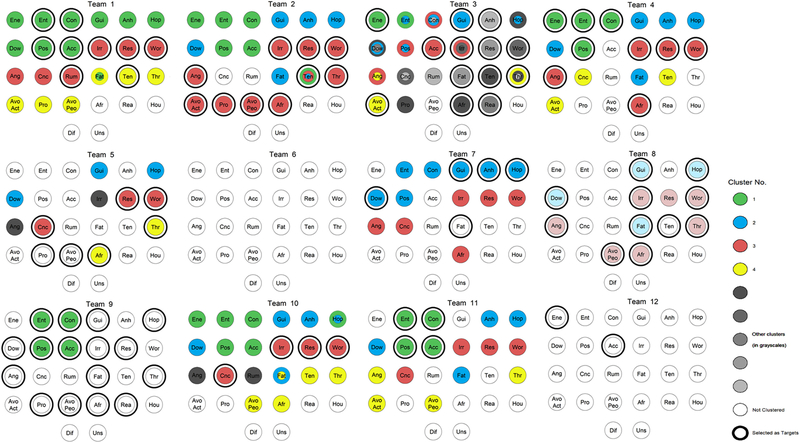
“For instance, team 3 relaxed the stationarity assumption in their time series factor analysis model [55,56].”
Self-citationPersonalized feedback on symptom dynamics of psychopathology: A proof-of-principle study
Kroeze, R., van der Veen, D. C., Servaas, M. N., Bastiaansen, J. A., Voshaar, R. C. O. V., Borsboom, D., Ruhe, H. G., Schoevers, R. A., & Riese, H. (2017) · Journal for Person-Oriented Research · doi:10.17505/jpor.2017.01 · Cited by 93
Self-citationGenes, Environment, and Individual Differences in Responding to Treatment for Depression
Uher, R. (2011) · Harvard Review of Psychiatry · doi:10.3109/10673229.2011.586551 · Cited by 92 · cited 1×
“In addition, patients vary widely in their response to treatments [5].”
Recent Developments on Structural Equation Models
van Montfort, K., Oud, J. H. L., & Satorra, A. (2004) · Mathematical modelling: theory and applications · doi:10.1007/978-1-4020-1958-6 · Cited by 88
Modeling psychotherapy process by time-series panel analysis (TSPA)
Tschacher, W., & Ramseyer, F. (2009) · Psychotherapy Research · doi:10.1080/10503300802654496 · Cited by 82 · cited 1×
“, idiographic) research approach is required to complement our current nomothetic focus [12,13,14,15,16], and as such facilitate personalized psychiatric treatments.”
Self-citationUsing Raw VAR Regression Coefficients to Build Networks can be Misleading
Bulteel, K., Tuerlinckx, F., Brose, A., & Ceulemans, E. (2016) · Multivariate Behavioral Research · doi:10.1080/00273171.2016.1150151 · Cited by 76 · cited 1×
“Target selection purely based on VAR-based models implies, however, that symptoms are important targets if they either correlate with themselves across time (auto-lag), correlate with other symptoms across time (cross-lag), or correlate with other symptoms at the same time point (contemporaneous effect), on top of all…”
Self-citationVerhagen, S. J. W., Berben, J. A., Leue, C., Marsman, A., Delespaul, P., van Os, J., & Lousberg, R. L. (2017) · PLoS ONE · doi:10.1371/journal.pone.0186294 · Cited by 58
Wichers, M., Hartmann, J. A., Kramer, I. M. A., Lothmann, C., Peeters, F., van Bemmel, L., Myin-Germeys, I., Delespaul, P., van Os, J., & Simons, C. J. P. (2011) · Acta Psychiatrica Scandinavica · doi:10.1111/j.1600-0447.2011.01684.x · Cited by 56
Self-citationvan Montfort, K. (2007) · Psychometrika · doi:10.1007/s11336-005-1537-5 · Cited by 48
Temporal dynamics of physical activity and affect in depressed and nondepressed individuals
Stavrakakis, N., Booij, S. H., Roest, A. M., de Jonge, P., Oldehinkel, A. J., & Bos, E. H. (2015) · Health Psychology · doi:10.1037/hea0000303 · Cited by 47 · cited 1×
“[22], for instance, analyzed temporal relationships between variables at the individual level and showed that the dynamic relationship between affect and physical activity varies considerably between patients with MDD.”
Bastiaansen, J. A., Meurs, M., Stelwagen, R., Wunderink, L., Schoevers, R. A., Wichers, M., & Oldehinkel, A. J. (2018) · BMC Psychiatry · doi:10.1186/s12888-018-1847-z · Cited by 42 · cited 1×
“This idea has mainly been put into practice by experience sampling intervention (ESI) studies for, amongst others, individuals with depressive symptoms [26,27,28,29].”
Self-citationElfeddali, I., Van der Feltz-Cornelis, C., Van Os, J., Knappe, S., Vieta, E., Wittchen, H.-U., Obradors-Tarragó, C., & Haro, J. (2014) · International Journal of Environmental Research and Public Health · doi:10.3390/ijerph111010915 · Cited by 25 · cited 1×
“However, if we were to actually tailor treatments to the individual patient [9], we need to look beyond differences between individuals and additionally examine processes within the individual [10,11].”
Deriving optimal data-analytic regimes from benchmarking studies
Doove, L. L., Wilderjans, T. F., Calcagnì, A., & Mechelen, I. V. (2016) · Computational Statistics & Data Analysis · doi:10.1016/j.csda.2016.10.016 · Cited by 9
Open Trial of a Personalized Modular Treatment for Mood and AnxietyPreprint
Fisher, A. J., Bosley, H. G., Fernandez, K. C., et al. (2019) · doi:10.31234/osf.io/8ezhm · Cited by 6
Self-citation
Research works printed but not linked: 2
- [2]National Institute for Health and Care Excellence, Depression in Adults: Recognition and Management (NICE Guideline 90), www.nice.org.uk/CG90, (2009). 31990491
- [63]Gelman A, Loken E, The Garden of Forking Paths: Why Multiple Comparisons can be a Problem, Even when there is no “Fishing Expedition” or “p-Hacking” and the Research Hypothesis was Posited ahead of Time, (2013), pp. 1– 17.
Cited by
Psychopathological networks: Theory, methods and practice
Bringmann, L. F., Albers, C., Bockting, C., Borsboom, D., Ceulemans, E., Cramer, A., Epskamp, S., Eronen, M. I., Hamaker, E., Kuppens, P., et al. (2022) · Behaviour Research and Therapy · doi:10.1016/j.brat.2021.104011 · Cited by 300
Self-citationPersonalized Models of Psychopathology
Wright, A. G. C., & Woods, W. C. (2020) · Annual Review of Clinical Psychology · doi:10.1146/annurev-clinpsy-102419-125032 · Cited by 264
Self-citationBreznau, N., Rinke, E. M., Wuttke, A., Nguyen, H. H. V., Adem, M., Adriaans, J., Alvarez-Benjumea, A., Andersen, H. K., Auer, D., Azevedo, F., et al. (2022) · Proceedings of the National Academy of Sciences · doi:10.1073/pnas.2203150119 · Cited by 220
“Thus far, most many-analysts studies have been small in scale or focused on narrow, field-specific analysis methods (15, 16).”
BackgroundA review of approaches and models in psychopathology conceptualization research
Eaton, N. R., Bringmann, L. F., Elmer, T., Fried, E. I., Forbes, M. K., Greene, A. L., Krueger, R. F., Kotov, R., McGorry, P. D., Mei, C., et al. (2023) · Nature Reviews Psychology · doi:10.1038/s44159-023-00218-4 · Cited by 198
“Larger samples, randomized controlled trials, and studies on the reliability and validity of person-specific networks are still needed to clarify the utility of psychological symptom networks for psychotherapy 120,229 .”
BackgroundSelf-citationA many-analysts approach to the relation between religiosity and well-being
Hoogeveen, S., Sarafoglou, A., Aczél, B., Aditya, Y., Alayan, A. J., Allen, P., Altay, S., Alzahawi, S., Amir, Y., Anthony, F.-V., et al. (2022) · Religion Brain & Behavior · doi:10.1080/2153599x.2022.2070255 · Cited by 176
“…end, we initiated a many-analysts project, in which several independent analysis teams analyze the same dataset in order to answer a speci fi c research question (e.g., Bastiaansen et al., 2020; Boehm et al., 2018; Botvinik-Nezer et al., 2020; Silberzahn & Uhlmann, 2015; van Don-gen et al., 2019).”
Metadata
- Authors
- Bastiaansen, J. A., Kunkels, Y. K., Blaauw, F., Boker, S. M., Ceulemans, E., Chen, M., Chow, S.-M., de Jonge, P., Emerencia, A. C., Epskamp, S., Fisher, A. J., Hamaker, E., Kuppens, P., Lutz, W., Meyer, M. J., Moulder, R. G., Oravecz, Z., Riese, H., Rubel, J., Ryan, O., Servaas, M., Sjobeck, G., Snippe, E., Trull, T. J., Tschacher, W., van der Veen, D. C., Wichers, M., Wood, P. K., Woods, W. C., Wright, A. G. C., Albers, C. J., & Bringmann, L. F.
- Affiliations
- University Medical Center Groningen (NL)
- University of Groningen (NL)
- University of Virginia (US)
- KU Leuven (BE)
- Pennsylvania State University (US)
- University of Amsterdam (NL)
- University of California, Berkeley (US)
- Utrecht University (NL)
- Universität Trier (DE)
- University of Virginia
- Justus-Liebig-Universität Gießen (DE)
- University of Missouri (US)
- University of Bern (CH)
- University of Pittsburgh (US)
- Corresponding author
- Bringmann, Laura Francina
- ORCID
- Bastiaansen, Jojanneke A.
- Kunkels, Yoram Kevin
- Blaauw, Frank
- Boker, Steven Marshall
- Ceulemans, Eva
- Chen, Meng
- Chow, Sy-Miin
- Emerencia, Ando C.
- Epskamp, Sacha
- Fisher, Aaron Jason
- Kuppens, Peter
- Lutz, Wolfgang
- Moulder, Robert Glenn
- Oravecz, Zita
- Riese, Harriette
- Rubel, Julian
- Ryan, Oisín
- Servaas, Michelle
- Sjobeck, Gustav
- Snippe, Evelien
- Trull, Timothy J
- Tschacher, Wolfgang
- van der Veen, Date C.
- Wichers, M.
- Wood, Phillip K
- Woods, William C.
- Wright, Aidan G.C.
- Albers, Casper J
- Bringmann, Laura Francina
- Venue
- Journal of Psychosomatic Research
- Publisher
- Center for Open Science
- Published
- 2019-03-21
- Volume
- 137
- Pages
- 110211-110211
- ISSN
- 0022-3999 (ISSN-L)
- PMC
- PMC8287646
- OpenAlex
- W3047574483
- Cited by
- 158
- References
- 69
- Citations by year
- 2026: 12 · 2025: 21 · 2024: 27 · 2023: 24 · 2022: 22 · 2021: 32 · 2020: 17 · 2019: 3
- FWCI
- 22.98
- Type
- journal article
- Language
- en
- Open access
- hybrid
- doi.org
- Licence
- Locations
- Journal of Psychosomatic Research (publishedVersion, cc-by-nc-nd)
- PubMed (publishedVersion)
- University of Groningen research database (University of Groningen / Centre for Information Technology) (publishedVersion, cc-by-nc-nd)
- PubMed Central (acceptedVersion, cc-by-nc-nd)
- UvA-DARE (University of Amsterdam) (submittedVersion, cc-by-nc-nd)
- Lirias (KU Leuven) (submittedVersion, other-oa)
- Utrecht University Repository (Utrecht University) (submittedVersion, other-oa)
- PsyArXiv (OSF Preprints) (submittedVersion)
- PsyArXiv (OSF Preprints) (submittedVersion, cc-by)
- University of Groningen research database (University of Groningen / Centre for Information Technology) (submittedVersion, cc-by-nc-nd)
- Data Archiving and Networked Services (DANS) (submittedVersion, other-oa)
- Funders
- National Science Foundation (1806874)
- European Commission (HORIZON2020)
- Fonds Wetenschappelijk Onderzoek (FWO G074319N, G066316N)
- Nederlandse Organisatie voor Wetenschappelijk Onderzoek (191G.037, 406\u201315-128, 406-15-128, NWO-Veni 191G.037)
- KU Leuven (GOA/15/003)
- Onderzoeksraad, KU Leuven (GOA/15/003)
- Universitair Medisch Centrum Groningen
- Stichting tot Steun Vereniging tot Christelijke Verzorging van Geestes- en Zenuwzieken
- Vlaamse regering
- National Institutes of Health (L30 MH101760)
- European Research Council
- Nationaal Regieorgaan Onderwijsonderzoek (644405\u201316-401)
- National Institute on Alcohol Abuse and Alcoholism (AA019546, R01AA024133, AA024133, U24AA027684, R01AA019546)
- National Institute of Mental Health (L30-MH101760, MH101760)
- Topics
- Social Sciences › Psychology › Experimental and Cognitive Psychology › Mental Health Research Topics
- Social Sciences › Psychology › Experimental and Cognitive Psychology › Anxiety, Depression, Psychometrics, Treatment, Cognitive Processes
- Social Sciences › Psychology › Clinical Psychology › Psychotherapy Techniques and Applications
- Keywords
- ecological momentary assessment, treatment target selection, personalized medicine, vector autoregression, symptom dynamics, clinical implementation, missing data handling, feature selection, clustering, reproducibility
About these checks
Registry, retraction, Cites and statistics results are computed, not judged, with one exception: a printed reference that no index lists is read once by a model before it counts as a citation error. Claims are extracted by a model and kept only when their quote appears verbatim in the text; each cited source is then checked, with a model’s help, for whether it says what the claim relies on. Those verdicts can be wrong — read the claim’s quote and the cited source before relying on one.
Statistics and arithmetic are recomputed, not judged.
Confidence bands are shown only for fields calibrated on our annotated test set. None is calibrated yet, so no band is shown.
What counts as a claim ›How we measure confidence ›How we check this ›
Are you an author, or do you see a problem with this page? Request a review
Data sources
Bibliographic data: Semantic Scholar, OpenAlex, Crossref.
Contains information from the Semantic Scholar Academic Graph Datasets, made available under the ODC Attribution License (ODC-BY 1.0).
Semantic Scholar’s data is described in: Kinney, R., et al. (2023). The Semantic Scholar Open Data Platform. arXiv:2301.10140.
