

The role of astroglia in neuroprotection
Open accessThe DOI matches its Crossref record; 165 of the 165 references it cites were found in a registry or an index.
Abstract
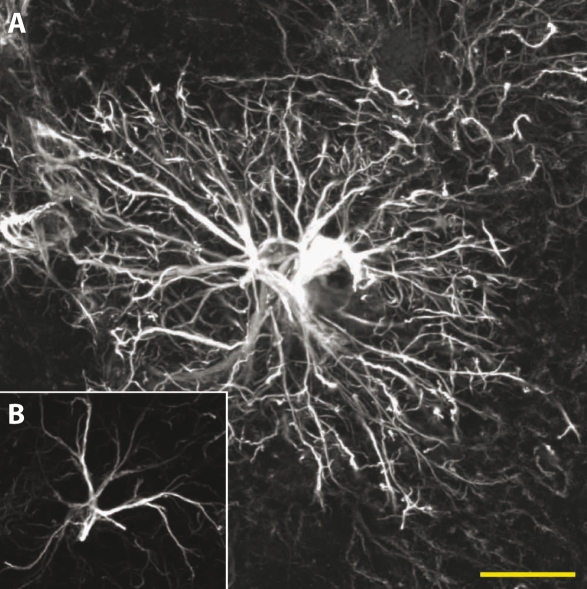
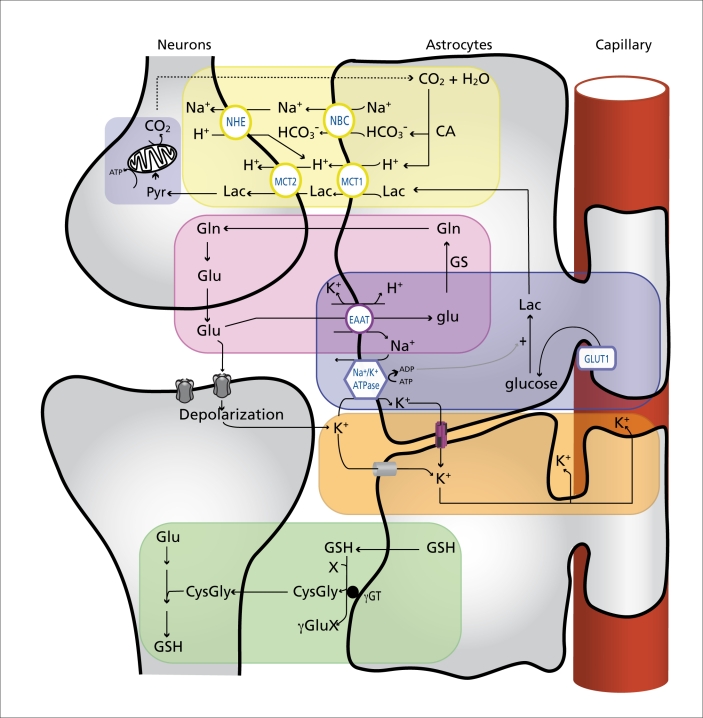
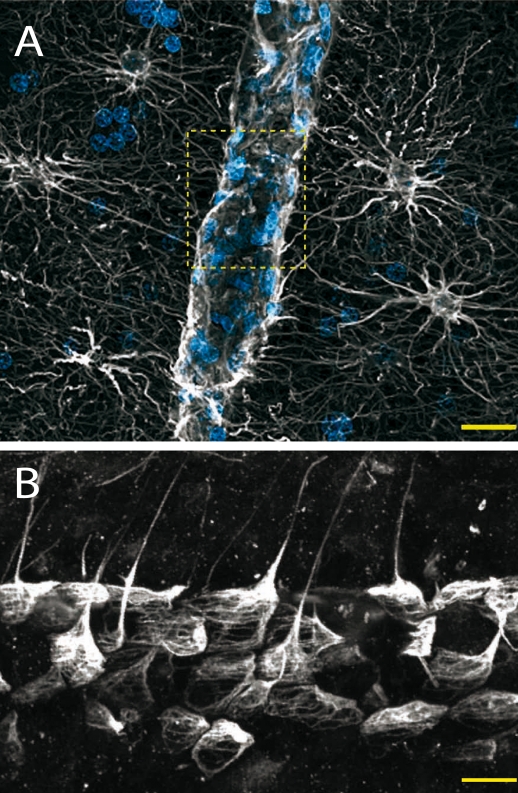
Astrocytes are the main neural cell type responsible for the maintenance of brain homeostasis. They form highly organized anatomical domains that are interconnected into extensive networks. These features, along with the expression of a wide array of receptors, transporters, and ion channels, ideally position them to sense and dynamically modulate neuronal activity. Astrocytes cooperate with neurons on several levels, including neurotransmitter trafficking and recycling, ion homeostasis, energy metabolism, and defense against oxidative stress. The critical dependence of neurons upon their constant support confers astrocytes with intrinsic neuroprotective properties which are discussed here. Conversely, pathogenic stimuli may disturb astrocytic function, thus compromising neuronal functionality and viability. Using neuroinflammation, Alzheimer's disease, and hepatic encephalopathy as examples, we discuss how astrocytic defense mechanisms may be overwhelmed in pathological conditions, contributing to disease progression.
Overview
The claims and statistics of this paper haven’t been checked yet.
Free: it reads the open-access text and checks the first 5 claims that cite a source we can check. Create a free account to check every claim.
Integrity signals
Registry
Cites
Statistics
Figures
Verification
Claims the paper makes
The claims and statistics of this paper haven’t been checked yet.
Free: it reads the open-access text and checks the first 5 claims that cite a source we can check. Create a free account to check every claim.
Claims other papers make about this one
Each is checked against this paper’s own text: does it say what the citing paper says it does?
The cited source doesn’t support the claim as written.
In the citing paper
“Astrocytes are the major producers of glutathione in the brain because they express a system xc-cyttine/glutamate antiporter, which does not exist in neurons; hence, neurons cannot synthesize glutathione.”
From Major depressive disorder: hypothesis, mechanism, prevention and treatment (2024) · cites this paper as [135]
Checked by a reasoning model — may be wrong.
Experimental — accuracy not yet measuredThe source backs part of the claim, not all of it — or backs it for a different population, condition or comparison.
In the citing paper
“Notably, astrocytes can protect nearby neurons against toxic dosages of NO, H 2 O 2 , and superoxide anion in combination with NO, iron, or 6-hydroxydopamine in coculture systems, 135”
From Major depressive disorder: hypothesis, mechanism, prevention and treatment (2024) · cites this paper as [135]
Experimental — accuracy not yet measuredThe check wasn’t confident either way, so it gives no verdict — never disputed.
In the citing paper
“As the major lipid carrier in the brain, secreted ApoE is generally presumed to be converted into HDL-like LNPs by astrocytes.”
From ApoE is Secreted as a Lipid Nanoparticle by Mammalian Cells: Implications for Alzheimer’s Disease Pathogenesis (2025) · cites this paper as [46]
Experimental — accuracy not yet measuredThe check wasn’t confident either way, so it gives no verdict — never disputed.
In the citing paper
“In turn, these LNPs undergo receptor-mediated endocytosis in neurons and glia cells where their lipid constituents are disassembled in lysosomes to supply these constituents to the recipient cells.22, 44–47”
From ApoE is Secreted as a Lipid Nanoparticle by Mammalian Cells: Implications for Alzheimer’s Disease Pathogenesis (2025) · cites this paper as [46]
Experimental — accuracy not yet measured
Self-check
Percentages, sums and reported differences re-computed from the paper’s own numbers.
The self-check needs the paper’s full text.
Citations
Cites
McKhann, G., Drachman, D., Folstein, M., Katzman, R., Price, D., & Stadlan, E. M. (1984) · Neurology · doi:10.1212/wnl.34.7.939 · Cited by 27,915
Danbolt, N. C. (2001) · Progress in Neurobiology · doi:10.1016/s0301-0082(00)00067-8 · Cited by 4,227 · cited 2×
“This is primarily achieved by the astrocyte-specific sodium-dependent high-affinity glutamate transporters GLT-1 and GLAST (corresponding to human EAAT2 and EAAT1, respectively) and to a lesser extent by the neuronal glutamate transporters EAAC1 (human EAAT3) and EAAT4.”
Microglia-mediated neurotoxicity: uncovering the molecular mechanisms
Block, M. L., Zecca, L., & Hong, J.-S. (2007) · Nature Reviews Neuroscience · doi:10.1038/nrn2038 · Cited by 4,110 · cited 1×
“Activated microglial cells release high levels of proinflammatory cytokines and toxic ROS which may negatively impact neuronal survival.(114) Several in vitro studies have demonstrated that astrocyte-conditioned medium or the presence of astrocytes attenuates microglial activation in response to various proinflammator…”
Rothstein, J. D., Dykes-Hoberg, M., Pardo, C. A., Bristol, L. A., Jin, L., Kuncl, R. W., Kanai, Y., Hediger, M. A., Wang, Y., Schielke, J. P., et al. (1996) · Neuron · doi:10.1016/s0896-6273(00)80086-0 · Cited by 2,534
Glutamate Induces Calcium Waves in Cultured Astrocytes: Long-Range Glial Signaling
Cornell-Bell, A. H., Finkbeiner, S. M., Cooper, M. S., & Smith, S. J. (1990) · Science · doi:10.1126/science.1967852 · Cited by 1,846 · cited 1×
“Indeed, astrocytes can respond to neurotransmitters with transient increases in their intracellular Ca levels, which can travel through the astrocytic syncytium in a wavelike fashion.(14,15) These Ca signals can trigger the release of neuroactive molecules from astrocytes (or gliotransmitters), such as glutamate, D-se…”
Reactive astrocytes: cellular and molecular cues to biological function
Ridet, J. L., Privat, A., Malhotra, S. K., & Gage, F. H. (1997) · Trends in Neurosciences · doi:10.1016/s0166-2236(97)01139-9 · Cited by 1,766 · cited 1×
“Like microglia, astrocytes can become activated— a process known as astrogliosis, which is characterized by altered gene expression, hypertrophy, and proliferation.(92) Activated astrocytes can release a wide array of immune mediators such as cytokines, chemokines, and growth factors, that may exert either neuroprotec…”
Epilepsy and Exacerbation of Brain Injury in Mice Lacking the Glutamate Transporter GLT-1
Tanaka, K., Watase, K., Manabe, T., Yamada, K., Watanabe, M., Takahashi, K., Iwama, H., Nishikawa, T., Ichihara, N., Kikuchi, T., et al. (1997) · Science · doi:10.1126/science.276.5319.1699 · Cited by 1,752
Metabolism and functions of glutathione in brain
Dringen, R. (2000) · Progress in Neurobiology · doi:10.1016/s0301-0082(99)00060-x · Cited by 1,702 · cited 1×
“This can be explained by the brain’s high rate of oxidative energy metabolism (which inevitably generates ROS), combined with a relatively low intrinsic antioxidant capacity.(67) Compared with neurons, astrocytes display a much more effective artillery against ROS.”
Reactive Astrocytes Protect Tissue and Preserve Function after Spinal Cord Injury
Faulkner, J. R., Herrmann, J. E., Woo, M. J., Tansey, K. E., Doan, N. B., & Sofroniew, M. V. (2004) · The Journal of Neuroscience · doi:10.1523/jneurosci.3547-03.2004 · Cited by 1,598
β-Lactam antibiotics offer neuroprotection by increasing glutamate transporter expression
Rothstein, J. D., Patel, S., Regan, M. R., Haenggeli, C., Huang, Y. H., Bergles, D. E., Jin, L., Dykes Hoberg, M., Vidensky, S., Chung, D. S., et al. (2005) · Nature · doi:10.1038/nature03180 · Cited by 1,518
Research works printed but not linked: 1
- Magistretti PJ. Brain energy metabolism. In: Squire LR, Bloom FE, McConnell SK, Roberts JL, Spitzer NC, Zigmond MJ, eds. Fundamental Neuroscience. 3rd ed. San Diego, CAL: Academic Press 2008 271 292
Cited by
Items 301–400 of 470
Glycolipids in Parkinson's disease: beyond neuronal function
Spanos, F., & Deleidi, M. (2023) · FEBS Open Bio · doi:10.1002/2211-5463.13651 · Cited by 8
Komorowska, J., Wątroba, M., Bednarzak, M., Grabowska, A. D., & Szukiewicz, D. (2023) · Medical Science Monitor · doi:10.12659/msm.941044 · Cited by 8
“…modulating and maintaining the barrier properties of the brain endothelial cells [12]; and secondly, because astrocytes cooperate with neurons on several levels, including neurotransmitter trafficking and recycling, ion homeostasis, energy metabolism, and defense against oxidative stress [13,14].”
Liang, K. X., Kianian, A., Chen, A., Kristiansen, C. K., Hong, Y., Furriol, J., Høyland, L. E., Ziegler, M., Kråkenes, T., Tzoulis, C., et al. (2020) · bioRxiv (Cold Spring Harbor Laboratory) · doi:10.1101/2020.12.20.423652 · Cited by 8
“Astrocytes are highly abundant [6] and play a crucial role in the support and modulation of neuronal function including regulating glutamate turnover, ion and water homeostasis, synapse formation and modulation, tissue repair, energy storage, and defense against oxidative stress [6,7].”
Wang, H., Qiao, Y., Lu, H., Xiao, L., & Cheng, Q. (2025) · Neuroscience · doi:10.1016/j.neuroscience.2025.10.036 · Cited by 7
Natarajaseenivasan, K., Garcia, A., Velusamy, P., Shanmughapriya, S., & Langford, D. (2022) · iScience · doi:10.1016/j.isci.2022.105407 · Cited by 8
Astrocytic mitochondrial frataxin—A promising target for ischemic brain injury
Hazra, R., Novelli, E. M., & Hu, X. (2022) · CNS Neuroscience & Therapeutics · doi:10.1111/cns.14068 · Cited by 7
Tang, K., Zhou, J., Yang, H., Tan, X., Xie, M., Tao, X., Ge, X., & Xu, J. (2010) · PubMed · Cited by 7
Regan, J. T., Mirczuk, S. M., Scudder, C., Stacey, E., Khan, S., Worwood, M., Powles, T., Dennis-Beron, J. S., Ginley-Hidinger, M., McGonnell, I. M., et al. (2021) · Cells · doi:10.3390/cells10020398 · Cited by 6
“Despite this, understanding of how the CNP/GC-B system in cells of the CNS is affected under pathological conditions remains limited.”
InfluentialLi, Y., Squillace, S., Schafer, R., Giancotti, L. A., Chen, Z., Egan, T. M., Hoft, S. G., DiPaolo, R. J., & Salvemini, D. (2025) · Pain · doi:10.1097/j.pain.0000000000003780 · Cited by 6
Jung, Y., Ahn, S.-H., Park, S. H., & Choi, Y. (2017) · Korean Journal of Physiology and Pharmacology · doi:10.4196/kjpp.2017.21.5.509 · Cited by 6
NEUROPROTECTIVE ACTIVITY OF NOVEL CUR-CA-THIONE AND ITS OXIDATIVE STRESS STUDY
Shelat, D. Y., & Acharya, S. R. (2016) · International Journal of Pharmacy and Pharmaceutical Sciences · doi:10.22159/ijpps.2016v8i12.15141 · Cited by 6
Intestinal hyperammonaemia in horses
Dunkel, B. (2010) · Equine Veterinary Education · doi:10.1111/j.2042-3292.2010.00047.x · Cited by 6
Dare, W. N., Avwioro, G. O., & Igbigbi, P. S. (2015) · Cited by 6
Cellular prion protein offers neuroprotection in astrocytes submitted to amyloid β oligomer toxicity
Marques, C. M. S., Gomes, R. N., Pedron, T., Batista, B. L., & Cerchiaro, G. (2022) · Molecular and Cellular Biochemistry · doi:10.1007/s11010-022-04631-w · Cited by 6
“Astrocytes act with neurons in the trafficking and recycling neurotransmitters, ion homeostasis, viability, and defense against oxidative stress [8, 9].”
Lipid Metabolism in Cerebral Ischemia: From Pathogenesis to Therapy
Wang, X., Liu, R., Chen, Z., Hu, W., & Jiang, L. (2025) · Current Neuropharmacology · doi:10.2174/011570159x389784250715064745 · Cited by 7
“Astrocytes, however, can form LDs and produce antioxidants, thereby managing oxidative stress [186].”
da Silva, P. R., Barbosa, N. M. M. V., Leite, J. M. D. S., Alves, L. P., de Andrade, J. C., Formiga, A. L. D., Uchôa, A. F. C., Neri, L. C. D., Dias, A. L., Golzio, A. M. F. D. O., et al. (2025) · Pharmaceutics · doi:10.3390/pharmaceutics18010027 · Cited by 5
Li, X., Li, X., Li, Y., Liu, Z., Cai, Y., Yao, Q., Zhao, S., & Yu, Q. (2026) · Frontiers in Nutrition · doi:10.3389/fnut.2026.1762061 · Cited by 5
Potential neurotoxins: Palytoxins
Fernández‐Sánchez, M. T., Cabrera-García, D., Pérez‐Gómez, A., & Novelli, A. (2021) · Advances in neurotoxicology · doi:10.1016/bs.ant.2021.04.002 · Cited by 5
Park, M.-J., Ha, J., Lee, Y., Choi, H., Kim, B. S., & Jeong, Y. K. (2023) · Neurobiology of Aging · doi:10.1016/j.neurobiolaging.2023.06.015 · Cited by 5
Cell–cell communications in the brain of hepatic encephalopathy: The neurovascular unit
Choi, K., Cho, Y., Chae, Y., & Cheon, S. Y. (2025) · Life Sciences · doi:10.1016/j.lfs.2025.123413 · Cited by 5
Hirata, K., Hattori, N., Katoh, C., Shiga, T., Kuroda, S., Kubo, N., Usui, R., Kuge, Y., & Tamaki, N. (2010) · Nuclear Medicine Communications · doi:10.1097/mnm.0b013e3283412106 · Cited by 5
“6 times greater than the neurons in the human brain [23].”
Wu, Y., Zhou, K., Liu, B., Xu, J., Lei, L., Hu, J., Cheng, X., Zhong, F., & Wang, S. (2023) · Neurotoxicity Research · doi:10.1007/s12640-023-00655-2 · Cited by 5
“Besides releasing nutrients and preventing oxidative stress and excitotoxicity, these cells also provide essential metabolites and remove harmful substances (Bélanger and Magistretti 2009; Chen and Trapp 2016; Kwon and Koh 2020).”
The role of glial cells in amyotrophic lateral sclerosis
Pandya, V. A., & Patani, R. (2024) · International review of neurobiology · doi:10.1016/bs.irn.2024.04.005 · Cited by 6
Cellular prion protein activates Caspase 3 for apoptotic defense mechanism in astrocytes
Marques, C. M. S., Pedron, T., Batista, B. L., & Cerchiaro, G. (2021) · Molecular and Cellular Biochemistry · doi:10.1007/s11010-021-04078-5 · Cited by 5
Effects of 3 weeks GMP oral administration on glutamatergic parameters in mice neocortex
Ganzella, M., Moreira, J. D., Almeida, R. F., Böhmer, A. E., Saute, J. A. M., Holmseth, S., & Souza, D. O. (2011) · Purinergic Signalling · doi:10.1007/s11302-011-9258-3 · Cited by 5
“There are strong evidences pointing that glutamatergic excitotoxicity may be prevented by astrocytic glutamate uptake, a process responsible for maintaining the extracellular glutamate below toxic levels [7, 8].”
Angarita-Rodríguez, A., Mejía, N. M., González, J., Papin, J. A., Aristizábal-Pachón, A. F., & Pinzón, A. M. (2025) · Frontiers in Systems Biology · doi:10.3389/fsysb.2024.1500710 · Cited by 4
Lipid droplets, an enigmatic organelle under the spotlight
Fu, L., Lu, H., Li, R., Liu, P., & Liang, B. (2026) · Protein & Cell · doi:10.1093/procel/pwag048 · Cited by 4
Necib, A., & Jarboui, A. (2023) · International Journal of Finance Insurance and Risk Management · doi:10.35808/ijfirm/358 · Cited by 4
“These studies focus on determinants of integrated reporting quality at the organizational level (Bélanger et al., 2022) for any industry, any company.”
Rycerz, K., Krawczyk, A. E., Jaworska-Adamu, J., Gołyński, M., Lutnicki, K., & Balicki, I. (2016) · Polish Journal of Veterinary Sciences · doi:10.1515/pjvs-2016-0102 · Cited by 4
“Glu enters the astrocytes by specific transporters: glutamate glial transporter 1 (GLT-1) and glial glutamate and aspartate transporter (GLAST) (Bélanger and Magistretti 2009).”
Pharmacokinetic and toxicological characterization of repellent DEET and sunscreen oxybenzone
Fediuk, D. J. (2011) · Mspace (University of Manitoba) · Cited by 4
Rubini, G., Altini, C., Iuele, F., Nappi, A. G., Sardaro, A., Sablone, S., Ferrari, C., & Introna, F. (2019) · PubMed · Cited by 4
Insufficient Sleep and Alzheimer’s Disease: Potential Approach for Therapeutic Treatment Methods
Trinh, D. Q., Nhu, H., & Pham, D. T. (2024) · Brain Sciences · doi:10.3390/brainsci15010021 · Cited by 3
Hamdan, Y. A., Rhazi, M., El‐Mansoury, B., Kabdy, H., Oukhrib, M., Aitbaba, A., Housseini, A. E., Ahmad, Z. H., & Oudadesse, H. (2023) · Advances in bioinformatics and biomedical engineering book series · doi:10.4018/978-1-6684-9675-6.ch008 · Cited by 3
Hypothalamic Microinflammation: New Paradigm In Obesity And Metabolic Disease
Meiliana, A., Dewi, N. M., & Wijaya, A. (2020) · The Indonesian Biomedical Journal · doi:10.18585/inabj.v12i3.1235 · Cited by 3
“(51) Regardless of its function to ensure normal brain development and neural functioning (78), recent studies showed increased attention in astrocytes role on both physiological and pathophysiological processes related to metabolic control (79-81).”
Heidari, H., Taylor, H., & Daghighi, Y. (2018) · Microfluidics, BioMEMS, and Medical Microsystems · doi:10.1117/12.2291838 · Cited by 3
Berabez, N. (2018) · theses.fr (ABES) · doi:10.70675/0d202b22z3a14z4181z8c0cz827e590501d2 · Cited by 3
Hernandez Arriaza, R., Reil, D., Fatuzzo, N., Fu, M., Dai, Y., Fernandez Martinez, D., Jiang, H., Holtzman, D. M., Greicius, M. D., & Khosla, C. (2025) · Biochemistry · doi:10.1021/acs.biochem.5c00503 · Cited by 2
Zhou, S., Xu, L., Dong, J., Zhang, X., Gao, W., Luo, H., & Fang, X. (2026) · Phytotherapy Research · doi:10.1002/ptr.70249 · Cited by 2
Kaur, K. K. (2026) · Journal of Advanced Clinical Neurology Research · doi:10.63721/26jacnr0114 · Cited by 2
Astrocytes and Development of Neuroendocrine Circuits
DonCarlos, L. L., & Chowen, J. A. (2020) · Masterclass in neuroendocrinology · doi:10.1007/978-3-030-40002-6_14 · Cited by 2
Extraadrenalis glükokortikoidszintézis
Szappanos, Á., Mészáros, K. V., Nagy, Z., Kövesdi, A., Likó, I., Kiss, E. V., Tóth, M., & Patócs, A. (2018) · Orvosi Hetilap · doi:10.1556/650.2018.31019 · Cited by 2
Neuroactive Steroids in Hypoxic–Ischemic Brain Injury: Overview and Future Directions
Toro-Urrego, N., Ávila-Rodriguez, M., Herrera, M. I., Aguilar, A., Udovin, L., & Luaces, J. P. (2020) · IntechOpen eBooks · doi:10.5772/intechopen.93956 · Cited by 2
“to an anti-estrogen activity [146]. SERMs may protect nervous tissue following spinal cord and traumatic brain injuries [168, 169]. Gonzales-Burgos et al. (2012) demonstrated that SERMs increase the number of dendritic spines in hippocampal neurons [170].”
Metabolic Plasticity of Astrocytes
Gorina, Y. V., Salmina, A. B., Erofeev, A. I., Can, Z., Bolshakova, A. V., Balaban, P. M., Борисович, Б. И., & Власова, О. Л. (2021) · Journal of Evolutionary Biochemistry and Physiology · doi:10.1134/s0022093021060016 · Cited by 2
Sakurai, L., Yoshimoto, R., Soya, S., & Sakurai, T. (2025) · Journal of Neuroscience · doi:10.1523/jneurosci.1035-25.2025 · Cited by 2
“Indeed, controlled gliosis plays a role in neuroprotection, metabolic support, and scar formation (Bélanger and Magistretti, 2009; Shinozaki et al., 2017; Beylerli et al., 2024).”
Shrestha, R., Millington, O. R., Brewer, J. M., & Bushell, T. J. (2015) · Kathmandu University Medical Journal · doi:10.3126/kumj.v11i2.12488 · Cited by 2
Effect of Interleukin-1Beta (IL-1β) on the Cortical Neurons Survival and Neurites Outgrowth
Abd‐El‐Basset, E. M. (2016) · Advances in Bioscience and Biotechnology · doi:10.4236/abb.2016.71004 · Cited by 2
“In addition, numerous studies have demonstrated the importance of astrocytes in a variety of neurophysiological processes such as the supply of energy metabolites, defense against oxidative stress or neurotransmitter reuptake and recycling [4]-[6].”
Therapeutic Strategies to Spinal Cord Injury
Jendelová, P. (2018) · MDPI eBooks · doi:10.3390/books978-3-03897-407-9 · Cited by 2
Mitochondrial functionalism in HIV-infected children receiving antiretroviral therapy
Núñez, C. M. (2012) · Dipòsit Digital de la Universitat de Barcelona (Universitat de Barcelona) · Cited by 2
Santos, V. D. S. (2014) · Digital Library of Theses and Dissertations (Universidade de São Paulo) · doi:10.11606/t.60.2014.tde-24012014-104902 · Cited by 2
Aguirre-Rueda, D. (2014) · Repository of Digital Objects for Teaching Research and Culture (University of Valencia) · doi:10.13140/rg.2.1.5099.6080 · Cited by 2
Prunet, A. (2020) · theses.fr (ABES) · doi:10.70675/d0678a3bz595fz415dzb97az49fb4c9b7630 · Cited by 2
Nwokwu, C. D. U., Nestorova, G. G., Walker, M. H., & Louis, S. J. (2025) · Molecular Biology Reports · doi:10.1007/s11033-025-11384-4 · Cited by 1
Баландин, А. А., Zheleznov, L. M., Баландина, И. А., Александрович, Б. В., & Kobaidze, E. L. (2020) · Medical news of the North Caucasus · doi:10.14300/mnnc.2020.15132 · Cited by 1
Xu, N., Huang, T., & Wang, L. (2025) · PubMed · doi:10.13702/j.1000-0607.20250552 · Cited by 1
Ureshino, R. P., de Sousa, L. A., Oliveira, R. B., Saullo, G. A., Zonaro, P. H., Newson, L. R., Prado, C. M., & Stilhano, R. S. (2026) · COVID · doi:10.3390/covid6050085 · Cited by 1
“For example, astrocytes use the excitatory amino acid transporter 2 (EAAT2) to reuptake the excess of glutamate released in the synaptic cleft [13,14], and its expression is regulated by NF-κ B [15].”
Wu, N., Zhang, X., Du, J., Li, Y., Zhang, J., & Cui, M. (2026) · Journal of Medicinal Chemistry · doi:10.1021/acs.jmedchem.6c00942 · Cited by 1
Associations among cognitive performance, VCAM-1, and GFAP in black adults: The ARCHES study
Singh, R. K., Bekena, S., Walker, A. I. B., Zhu, Y., Trani, J., & Babulal, G. M. (2026) · Neurobiology of Aging · doi:10.1016/j.neurobiolaging.2026.07.003 · Cited by 1
Rodríguez-Millan, L., Angarita-Rodríguez, A., Vargas-López, V., Pinzón, A., Tarifeño-Saldivia, E., & González, J. (2026) · Frontiers in Bioinformatics · doi:10.3389/fbinf.2026.1858866 · Cited by 1
“Such alterations have been interpreted as evidence of partial disruption the astrocyte–neuron lactate shuttle, a mechanism that contributes to neuronal energy support and metabolic homeostasis (Bélanger and Magistretti, 2009; Magistretti and Allaman, 2018).”
Kim, H., Park, S.-N., Moon, Y., Oh, S. H., & Rhyu, I. J. (2013) · Han-guk hyeonmigyeong hakoeji/Applied microscopy · doi:10.9729/am.2013.43.3.117 · Cited by 1
Towards a Cognitive Gliascience: A Brief Conceptual Framework
Spadaro, S. (2015) · Journal of Scientific Research and Reports · doi:10.9734/jsrr/2015/20247 · Cited by 1
Krawczyk, A. E., & Jaworska-Adamu, J. (2017) · Medycyna Weterynaryjna · doi:10.21521/mw.5675 · Cited by 1
Amuti, T., Ouko, I., Mukonjia, S., Cheruiyot, I., Munguti, J. K., Mwachaka, P., & Malek, A. (2018) · Anatomy Journal of Africa · doi:10.4314/aja.v7i1.169490 · Cited by 1
Exercício físico e capacidade cognitiva em idosos
Silva‐Grigoletto, M. E. D., de Resende–Neto, A. G., & Manso, J. M. G. (2019) · Revista FisiSenectus · doi:10.22298/rfs.v6i2.4742 · Cited by 2
Role of Reactive Astrocytes in Alzheimer’s Disease
Sarkar, S., Guha, S., & Biswas, S. C. (2022) · Springer eBooks · doi:10.1007/978-981-16-8313-8_9 · Cited by 1
Positron emission tomography imaging of neuroinflammation
(2023) · Advances in magnetic resonance technology and applications · doi:10.1016/b978-0-323-91771-1.00007-1 · Cited by 1
Chan, J. L. (2013) · VCU Scholars Compass (Virginia Commonwealth University) · doi:10.25772/7k99-km46 · Cited by 1
Lactate receptor HCAR1 in the protection against neuroinflammation in stroke
Brox, C. (2020) · NORA - Norwegian Open Research Archives · Cited by 1
Identifying and targeting metabolic vulnerabilities of IDH mutant gliomas
Cano-Galiano, A. (2021) · Open Repository and Bibliography (University of Luxembourg) · Cited by 1
Goulding, S. R. (2021) · doi:10.34719/fhhg1227 · Cited by 1
Editorial: Reviews in pharmacology of ion channels and channelopathies
Zhang, J., Sabatier, J., Chahine, M., & Tricarico, D. (2024) · Frontiers in Pharmacology · doi:10.3389/fphar.2024.1449967 · Cited by 1
Baeken, M. W. (2021) · Gutenberg Open Science · doi:10.25358/openscience-6093 · Cited by 1
Efeito neuroprotetor do flavanoide rutina em modelos de excitotoxicidade induzida por glutamato
Ferreira, R. S., & Ferreira, R. S. (2016) · Americanae (AECID Library) · Cited by 1
Haim, L. B. (2014) · theses.fr (ABES) · doi:10.70675/75a69111z994cz43dfzb795zfeae9ffc88ab · Cited by 1
Function of the coxsackie and adenovirus receptor (CAR) in adult neurogenesis
Wehbi, A. (2022) · theses.fr (ABES) · doi:10.70675/50d02569zc657z414fza722z72bf9a050289 · Cited by 1
Astroglia as a base for holographic short-term memoryPreprint
Shimkevich, A. L. (2026) · SSRN Electronic Journal · doi:10.2139/ssrn.6643678 · Cited by 1
DNA Damage and Oxidative Stress Induced-p53 Activity In Astrocytes causes Growth Arrest
Humphrey, S. A. (2012) · Scholarship@Western (Western University)
Mangione, A. S. (2014) · IrInSubria (University of Insubria)
Initial astrocyte response to electrospun poly-l-lactic acid fibers of varying nanoscale diameters
Johnson, C. D. L., Zuidema, J. M., Desmond, G. P., D’Amato, A. R., Schaub, N. J., & Gilbert, R. J. (2015) · Annual Northeast Biomedical Engineering Conference · doi:10.1109/nebec.2015.7117048
Holgado, L., & de Borja, F. (2012) · LA Referencia (Red Federada de Repositorios Institucionales de Publicaciones Científicas)
Moreira, J. D. (2011) · LA Referencia (Red Federada de Repositorios Institucionales de Publicaciones Científicas)
The role of microglia in methamphetamine exposure
Canedo, T. (2014) · Portuguese National Funding Agency for Science, Research and Technology (RCAAP Project by FCT) · doi:10.34626/0rv0-m465
Bobermin, L. D. (2014) · Americanae (AECID Library)
Wartchow, K. M. (2015) · LA Referencia (Red Federada de Repositorios Institucionales de Publicaciones Científicas)
Efeitos celulares, histológicos e comportamentais da hemorragia intracerebral experimental em ratos
Neves, J. D. (2015) · LA Referencia (Red Federada de Repositorios Institucionales de Publicaciones Científicas)
Astrocytes and Its Good Relation with Neurons
Vallés, S. L. (2016) · MOJ Anatomy & Physiology · doi:10.15406/mojap.2016.02.00069
“All indicate us that pathogenic situations produce changes in astrocytes and neurons function and cell viability, such as in Alzheimer’s disease and hepatic encephalopathy in where inflammation can be an important element of destruction of neurons [7].”
Metabolic modifications associated with memory deficits
Rial, A. C. F. D. L. (2016) · Portuguese National Funding Agency for Science, Research and Technology (RCAAP Project by FCT)
Hypoglycemia-induced changes in glucose metabolism in the hypothalamus
Mun, J. G.-H. (2014) · Illinois Digital Environment for Access to Learning and Scholarship (University of Illinois at Urbana-Champaign)
Yelkenli, İ. H. (2014) · ESOGU Academic Open Access System (Eskişehir Osmangazi University)
Chemical, electrical, hormonal and nutrient signaling in the mammalian central nervous system.
Pryor, J. T. (2026) · Warwick Research Archive Portal (University of Warwick) · doi:10.82444/warw.33742573
Killinger, B. A. (2017) · Human Biology
Role of Cofilin in Intracerebral Hemorrhage: in Vitro and in Vivo Studies
Alhadidi, Q. (2017) · OhioLink ETD Center (Ohio Library and Information Network)
Effect of Topography on Mouse Embryonic Stem Cells During Pluripotency and Neural Differentiation
Nasir, W. (2018) · OhioLink ETD Center (Ohio Library and Information Network)
Woody, S. K. (2017) · KU ScholarWorks (The University of Kansas)
Identifying stage-specific markers of Alzheimer's disease using quantitative proteomics
Yagensky, O. (2018) · eDiss (Georg-August-Universität Göttingen) · doi:10.53846/goediss-7052
Araujo, B. S. (2017) · Lume (Universidade Federal do Rio Grande do Sul)
Schäfer, T. (2018) · mediaTUM (Technical University of Munich)
Bonora, N. (2018) · Gredos (University of Salamanca) · doi:10.14201/gredos.137569
Suardi, L. Z. (2018) · Lume (Universidade Federal do Rio Grande do Sul)
Sepúlveda, C. M. (2018) · RIO (Universidad Pablo de Olavide)
Metadata
- Authors
- Bélanger, M., & Magistretti, P. J.
- Affiliations
- École Polytechnique Fédérale de Lausanne (CH)
- Centre Hospitalier Universitaire Vaudois (CH)
- Corresponding author
- Magistretti, Pierre J.
- Venue
- Dialogues in Clinical Neuroscience
- Publisher
- Informa UK Limited
- Published
- 2009-09-30
- Volume
- 11
- Issue
- 3
- Pages
- 281-295
- ISSN
- 1294-8322 (ISSN-L)
- 1958-5969
- PMC
- PMC3181926
- OpenAlex
- W1858755391
- Cited by
- 396
- References
- 161
- Citations by year
- 2026: 13 · 2025: 24 · 2024: 26 · 2023: 22 · 2022: 26 · 2021: 40 · 2020: 38 · 2019: 29 · 2018: 44 · 2017: 30 · 2016: 18 · 2015: 25 · 2014: 12 · 2013: 16 · 2012: 10
- FWCI
- 7.03
- Type
- journal article
- Language
- en
- Open access
- diamond
- doi.org
- Licence
- Locations
- Dialogues in Clinical Neuroscience (publishedVersion, cc-by-nc-nd)
- Europe PMC (PubMed Central) (publishedVersion, cc-by-nc-nd)
- PubMed Central (publishedVersion, cc-by-nc-nd)
- PubMed (publishedVersion)
- IRIS (submittedVersion)
- Infoscience (Ecole Polytechnique Fédérale de Lausanne) (submittedVersion)
- Infoscience (Ecole Polytechnique Fédérale de Lausanne) (submittedVersion, cc-by-nc-nd)
- SERVAL (Université de Lausanne) (submittedVersion, other-oa)
- Funders
- National Science Foundation
- Schweizerischer Nationalfonds zur Förderung der Wissenschaftlichen Forschung (3100AO, 108336)
- Topics
- Life Sciences › Neuroscience › Neurology › Neuroinflammation and Neurodegeneration Mechanisms
- Life Sciences › Neuroscience › Cellular and Molecular Neuroscience › Neuroscience and Neuropharmacology Research
- Health Sciences › Medicine › Clinical Neurology › Traumatic Brain Injury and Neurovascular Disturbances
- Keywords
- astrocytes, neuroprotection, brain homeostasis, astrocyte-neuron interaction, ion homeostasis, energy metabolism, oxidative stress, neuroinflammation, Alzheimer's disease, hepatic encephalopathy
- MeSH terms
- Animals, Astrocytes, Brain, Brain Diseases, Homeostasis, Humans, Models, Biological, Neurons, Neuroprotective Agents
About these checks
Registry, retraction, Cites and statistics results are computed, not judged, with one exception: a printed reference that no index lists is read once by a model before it counts as a citation error. Claims are extracted by a model and kept only when their quote appears verbatim in the text; each cited source is then checked, with a model’s help, for whether it says what the claim relies on. Those verdicts can be wrong — read the claim’s quote and the cited source before relying on one.
Statistics and arithmetic are recomputed, not judged.
Confidence bands are shown only for fields calibrated on our annotated test set. None is calibrated yet, so no band is shown.
What counts as a claim ›How we measure confidence ›How we check this ›
Are you an author, or do you see a problem with this page? Request a review
Data sources
Bibliographic data: Semantic Scholar, OpenAlex, Crossref.
Contains information from the Semantic Scholar Academic Graph Datasets, made available under the ODC Attribution License (ODC-BY 1.0).
Semantic Scholar’s data is described in: Kinney, R., et al. (2023). The Semantic Scholar Open Data Platform. arXiv:2301.10140.
