

The role of astroglia in neuroprotection
Open accessThe DOI matches its Crossref record; 165 of the 165 references it cites were found in a registry or an index.
Abstract
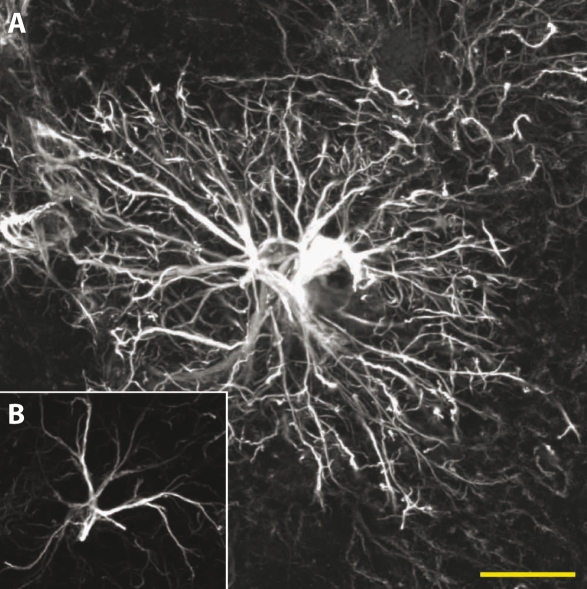
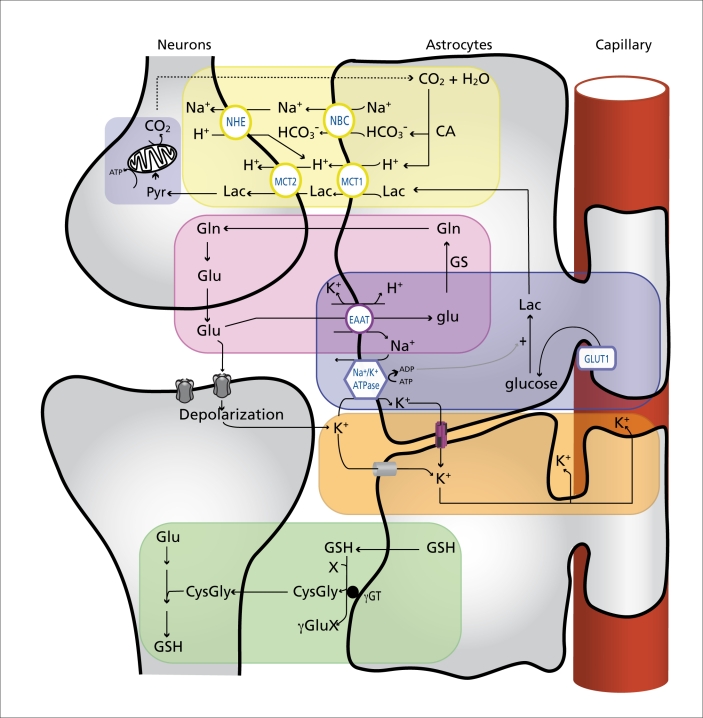
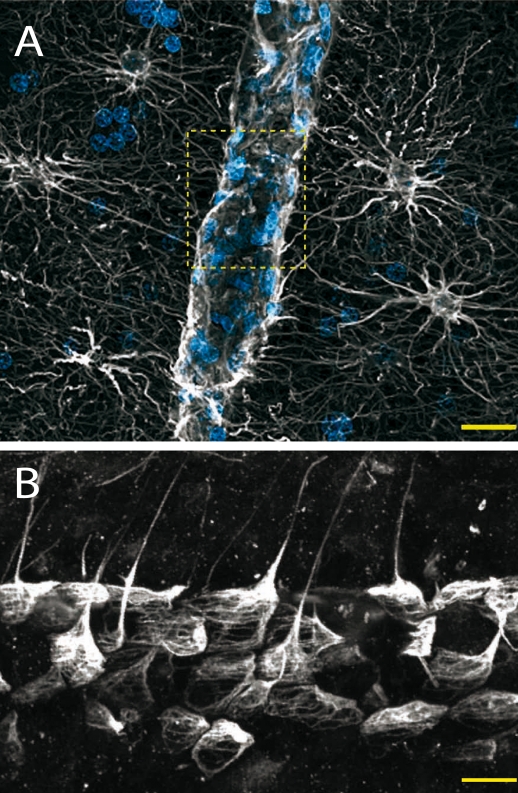
Astrocytes are the main neural cell type responsible for the maintenance of brain homeostasis. They form highly organized anatomical domains that are interconnected into extensive networks. These features, along with the expression of a wide array of receptors, transporters, and ion channels, ideally position them to sense and dynamically modulate neuronal activity. Astrocytes cooperate with neurons on several levels, including neurotransmitter trafficking and recycling, ion homeostasis, energy metabolism, and defense against oxidative stress. The critical dependence of neurons upon their constant support confers astrocytes with intrinsic neuroprotective properties which are discussed here. Conversely, pathogenic stimuli may disturb astrocytic function, thus compromising neuronal functionality and viability. Using neuroinflammation, Alzheimer's disease, and hepatic encephalopathy as examples, we discuss how astrocytic defense mechanisms may be overwhelmed in pathological conditions, contributing to disease progression.
Overview
The claims and statistics of this paper haven’t been checked yet.
Free: it reads the open-access text and checks the first 5 claims that cite a source we can check. Create a free account to check every claim.
Integrity signals
Registry
Cites
Statistics
Figures
Verification
Claims the paper makes
The claims and statistics of this paper haven’t been checked yet.
Free: it reads the open-access text and checks the first 5 claims that cite a source we can check. Create a free account to check every claim.
Claims other papers make about this one
Each is checked against this paper’s own text: does it say what the citing paper says it does?
The cited source doesn’t support the claim as written.
In the citing paper
“Astrocytes are the major producers of glutathione in the brain because they express a system xc-cyttine/glutamate antiporter, which does not exist in neurons; hence, neurons cannot synthesize glutathione.”
From Major depressive disorder: hypothesis, mechanism, prevention and treatment (2024) · cites this paper as [135]
Checked by a reasoning model — may be wrong.
Experimental — accuracy not yet measuredThe source backs part of the claim, not all of it — or backs it for a different population, condition or comparison.
In the citing paper
“Notably, astrocytes can protect nearby neurons against toxic dosages of NO, H 2 O 2 , and superoxide anion in combination with NO, iron, or 6-hydroxydopamine in coculture systems, 135”
From Major depressive disorder: hypothesis, mechanism, prevention and treatment (2024) · cites this paper as [135]
Experimental — accuracy not yet measuredThe check wasn’t confident either way, so it gives no verdict — never disputed.
In the citing paper
“As the major lipid carrier in the brain, secreted ApoE is generally presumed to be converted into HDL-like LNPs by astrocytes.”
From ApoE is Secreted as a Lipid Nanoparticle by Mammalian Cells: Implications for Alzheimer’s Disease Pathogenesis (2025) · cites this paper as [46]
Experimental — accuracy not yet measuredThe check wasn’t confident either way, so it gives no verdict — never disputed.
In the citing paper
“In turn, these LNPs undergo receptor-mediated endocytosis in neurons and glia cells where their lipid constituents are disassembled in lysosomes to supply these constituents to the recipient cells.22, 44–47”
From ApoE is Secreted as a Lipid Nanoparticle by Mammalian Cells: Implications for Alzheimer’s Disease Pathogenesis (2025) · cites this paper as [46]
Experimental — accuracy not yet measured
Self-check
Percentages, sums and reported differences re-computed from the paper’s own numbers.
The self-check needs the paper’s full text.
Citations
Cites
McKhann, G., Drachman, D., Folstein, M., Katzman, R., Price, D., & Stadlan, E. M. (1984) · Neurology · doi:10.1212/wnl.34.7.939 · Cited by 27,915
Danbolt, N. C. (2001) · Progress in Neurobiology · doi:10.1016/s0301-0082(00)00067-8 · Cited by 4,227 · cited 2×
“This is primarily achieved by the astrocyte-specific sodium-dependent high-affinity glutamate transporters GLT-1 and GLAST (corresponding to human EAAT2 and EAAT1, respectively) and to a lesser extent by the neuronal glutamate transporters EAAC1 (human EAAT3) and EAAT4.”
Microglia-mediated neurotoxicity: uncovering the molecular mechanisms
Block, M. L., Zecca, L., & Hong, J.-S. (2007) · Nature Reviews Neuroscience · doi:10.1038/nrn2038 · Cited by 4,110 · cited 1×
“Activated microglial cells release high levels of proinflammatory cytokines and toxic ROS which may negatively impact neuronal survival.(114) Several in vitro studies have demonstrated that astrocyte-conditioned medium or the presence of astrocytes attenuates microglial activation in response to various proinflammator…”
Rothstein, J. D., Dykes-Hoberg, M., Pardo, C. A., Bristol, L. A., Jin, L., Kuncl, R. W., Kanai, Y., Hediger, M. A., Wang, Y., Schielke, J. P., et al. (1996) · Neuron · doi:10.1016/s0896-6273(00)80086-0 · Cited by 2,534
Glutamate Induces Calcium Waves in Cultured Astrocytes: Long-Range Glial Signaling
Cornell-Bell, A. H., Finkbeiner, S. M., Cooper, M. S., & Smith, S. J. (1990) · Science · doi:10.1126/science.1967852 · Cited by 1,846 · cited 1×
“Indeed, astrocytes can respond to neurotransmitters with transient increases in their intracellular Ca levels, which can travel through the astrocytic syncytium in a wavelike fashion.(14,15) These Ca signals can trigger the release of neuroactive molecules from astrocytes (or gliotransmitters), such as glutamate, D-se…”
Reactive astrocytes: cellular and molecular cues to biological function
Ridet, J. L., Privat, A., Malhotra, S. K., & Gage, F. H. (1997) · Trends in Neurosciences · doi:10.1016/s0166-2236(97)01139-9 · Cited by 1,766 · cited 1×
“Like microglia, astrocytes can become activated— a process known as astrogliosis, which is characterized by altered gene expression, hypertrophy, and proliferation.(92) Activated astrocytes can release a wide array of immune mediators such as cytokines, chemokines, and growth factors, that may exert either neuroprotec…”
Epilepsy and Exacerbation of Brain Injury in Mice Lacking the Glutamate Transporter GLT-1
Tanaka, K., Watase, K., Manabe, T., Yamada, K., Watanabe, M., Takahashi, K., Iwama, H., Nishikawa, T., Ichihara, N., Kikuchi, T., et al. (1997) · Science · doi:10.1126/science.276.5319.1699 · Cited by 1,752
Metabolism and functions of glutathione in brain
Dringen, R. (2000) · Progress in Neurobiology · doi:10.1016/s0301-0082(99)00060-x · Cited by 1,702 · cited 1×
“This can be explained by the brain’s high rate of oxidative energy metabolism (which inevitably generates ROS), combined with a relatively low intrinsic antioxidant capacity.(67) Compared with neurons, astrocytes display a much more effective artillery against ROS.”
Reactive Astrocytes Protect Tissue and Preserve Function after Spinal Cord Injury
Faulkner, J. R., Herrmann, J. E., Woo, M. J., Tansey, K. E., Doan, N. B., & Sofroniew, M. V. (2004) · The Journal of Neuroscience · doi:10.1523/jneurosci.3547-03.2004 · Cited by 1,598
β-Lactam antibiotics offer neuroprotection by increasing glutamate transporter expression
Rothstein, J. D., Patel, S., Regan, M. R., Haenggeli, C., Huang, Y. H., Bergles, D. E., Jin, L., Dykes Hoberg, M., Vidensky, S., Chung, D. S., et al. (2005) · Nature · doi:10.1038/nature03180 · Cited by 1,518
Research works printed but not linked: 1
- Magistretti PJ. Brain energy metabolism. In: Squire LR, Bloom FE, McConnell SK, Roberts JL, Spitzer NC, Zigmond MJ, eds. Fundamental Neuroscience. 3rd ed. San Diego, CAL: Academic Press 2008 271 292
Cited by
Brain energy metabolism: focus on Astrocyte-neuron metabolic cooperation
Bélanger, M., Allaman, I., & Magistretti, P. J. (2011) · Cell Metabolism · doi:10.1016/j.cmet.2011.08.016 · Cited by 2,313
“…of NO, H2O2, superoxide anion combined with NO, iron, or 6-hydroxydopamine (Wilson, 1997; Vargas and Johnson, 2009; Dringen, 2000; Belanger and Magistretti, 2009), suggesting that neurons are dependent upon the high antioxidant potential of astrocytes for their own defense against oxidative…”
InfluentialSelf-citationCytokines and chemokines: At the crossroads of cell signalling and inflammatory disease
Turner, M. D., Nedjai, B., Hurst, T., & Pennington, D. J. (2014) · Biochimica et Biophysica Acta (BBA) - Molecular Cell Research · doi:10.1016/j.bbamcr.2014.05.014 · Cited by 2,162
“Microglia are particularly important in the CNS immune response and are generally thought to be neuroprotective, with resting microglia becoming activated in the presence of pathogens, damaged cells and cell debris, and functioning to clear perceived danger signals to protect neurons [211].”
Major depressive disorder: hypothesis, mechanism, prevention and treatment
Cui, L., Li, S., Wang, S., Wu, X., Liu, Y., Yu, W., Wang, Y., Tang, Y., Xia, M., & Li, B. (2024) · Signal Transduction and Targeted Therapy · doi:10.1038/s41392-024-01738-y · Cited by 1,244
“135 Astrocytes are the major producers of glutathione in the brain because they express a system xc-cyttine/glutamate antiporter, which does not exist in neurons; hence, neurons cannot synthesize glutathione.”
InfluentialNeuroinflammation and depression: A review
Troubat, R., Barone, P., Leman, S., Desmidt, T., Cressant, A., Atanasova, B., Brizard, B., El Hage, W., Surget, A., Belzung, C., et al. (2021) · European Journal of Neuroscience · doi:10.1111/ejn.14720 · Cited by 1,107
Inflammation in Alzheimer Disease--A Brief Review of the Basic Science and Clinical Literature
Wyss-Coray, T., & Rogers, J. (2012) · Cold Spring Harbor Perspectives in Medicine · doi:10.1101/cshperspect.a006346 · Cited by 975
“org) (Bertram et al. 2007). Changes in inflammatory pathways have also been noted in several microarray studies of gene expression profiles in AD brains or peripheral blood cells compared with those from healthy controls. In a review comparing several such transcriptome studies of the aging brain with those in AD, Bla…”
Neuron-Astrocyte Metabolic Coupling Protects against Activity-Induced Fatty Acid Toxicity
Ioannou, M. S., Jackson, J., Sheu, S.-H., Chang, C.-L., Weigel, A. V., Liu, H., Pasolli, H. A., Xu, C. S., Pang, S., Matthies, D., et al. (2019) · Cell · doi:10.1016/j.cell.2019.04.001 · Cited by 760
Redox regulation of FoxO transcription factors
Klotz, L.-O., Sánchez-Ramos, C., Prieto-Arroyo, I., Urbánek, P., Steinbrenner, H., & Monsalve, M. (2015) · Redox Biology · doi:10.1016/j.redox.2015.06.019 · Cited by 747
“Astrocytes, in collaborating with neurons in terms of antioxidant defense, contribute to the prevention of oxidative stressinduced neuronal damage and neurodegeneration [295].”
Astrocyte–neuron metabolic relationships: for better and for worse
Allaman, I., Bélanger, M., & Magistretti, P. J. (2011) · Trends in Neurosciences · doi:10.1016/j.tins.2010.12.001 · Cited by 639
Self-citationInflammation in intracerebral hemorrhage: From mechanisms to clinical translation
Zhou, Y., Wang, Y., Wang, J., Anne Stetler, R., & Yang, Q.-W. (2014) · Progress in Neurobiology · doi:10.1016/j.pneurobio.2013.11.003 · Cited by 628
Joshi, A. U., Minhas, P. S., Liddelow, S. A., Haileselassie, B., Andreasson, K. I., Dorn, G. W., & Mochly-Rosen, D. (2019) · Nature Neuroscience · doi:10.1038/s41593-019-0486-0 · Cited by 571
Methylglyoxal, the dark side of glycolysis
Allaman, I., Bélanger, M., & Magistretti, P. J. (2015) · Frontiers in Neuroscience · doi:10.3389/fnins.2015.00023 · Cited by 547
“Dienel, G. A. (2012). Brain lactate metabolism: the discoveries and the controversies.”
InfluentialSelf-citationMicroglia and Astrocytes in Alzheimer's Disease: Implications for Therapy
Fakhoury, M. (2018) · Current Neuropharmacology · doi:10.2174/1570159x15666170720095240 · Cited by 479
“Although astrocytes are mainly neuroprotective [89], they participate in perpetuating the self-destructive environment by secreting various chemokines and proinflammatory cytokines, including IL-1β and TNF-α [90, 91].”
How does adenosine control neuronal dysfunction and neurodegeneration?
Cunha, R. A. (2016) · Journal of Neurochemistry · doi:10.1111/jnc.13724 · Cited by 441
The role of astrocytes in amyloid production and Alzheimer's disease
Frost, G. R., & Li, Y.-M. (2017) · Open Biology · doi:10.1098/rsob.170228 · Cited by 435
Astrocytes in Neurodegenerative Disease: Table 1.
Phatnani, H., & Maniatis, T. (2015) · Cold Spring Harbor Perspectives in Biology · doi:10.1101/cshperspect.a020628 · Cited by 420
Morphological, cellular and molecular basis of brain infection in COVID-19 patients
Crunfli, F., Carregari, V. C., Veras, F. P., Vendramini, P. H., Valença, A. G. F., Antunes, A. S. L. M., Brandão-Teles, C., da Silva Zuccoli, G., Reis-de-Oliveira, G., Silva-Costa, L. C., et al. (2020) · doi:10.1101/2020.10.09.20207464 · Cited by 331
“Moreover, astrocytes are responsible for maintaining glutamate levels in the brain (Bélanger and Magistretti, 2009; Magistretti, 2009).”
Short Overview of ROS as Cell Function Regulators and Their Implications in Therapy Concepts
Milkovic, L., Cipak Gasparovic, A., Cindric, M., Mouthuy, P.-A., & Zarkovic, N. (2019) · Cells · doi:10.3390/cells8080793 · Cited by 330
“This fine astrocyte–neuron cooperation includes coordination of glucose metabolism and antioxidative protection, especially for neurons with diminished levels of antioxidants [49,50].”
Allaman, I., Gavillet, M., Bélanger, M., Laroche, T., Viertl, D., Lashuel, H. A., & Magistretti, P. J. (2010) · The Journal of Neuroscience · doi:10.1523/jneurosci.5098-09.2010 · Cited by 278
“Several essential functions have been demonstrated for astrocytes, in particular those related to their cooperation with neurons (Belanger and Magistretti, 2009).”
Self-citationFunctional polarization of neuroglia: Implications in neuroinflammation and neurological disorders
Jha, M. K., Lee, W.-H., & Suk, K. (2016) · Biochemical Pharmacology · doi:10.1016/j.bcp.2015.11.003 · Cited by 260
OXPHOS mutations and neurodegeneration
Koopman, W. J. H., Distelmaier, F., Smeitink, J. A., & Willems, P. H. (2013) · The EMBO Journal · doi:10.1038/emboj.2012.300 · Cited by 254
“Glial cells play an important role in many cellular processes including glutamate, ion and water homeostasis and ROS detoxification (Volterra and Meldolesi, 2005; Be´langer and Magistretti, 2009; Be´langer et al , 2011).”
Astrocytes: a double-edged sword in neurodegenerative diseases
Yan, Y.-Q., Ma, C.-G., Ding, Z.-B., Song, L.-J., Wang, Q., & Kumar, G. (2021) · Neural Regeneration Research · doi:10.4103/1673-5374.306064 · Cited by 241
The Role of Microglia and Astrocytes in Huntington’s Disease
Palpagama, T. H., Waldvogel, H. J., Faull, R. L. M., & Kwakowsky, A. (2019) · Frontiers in Molecular Neuroscience · doi:10.3389/fnmol.2019.00258 · Cited by 239
The Role of Astrocytes in Neuroprotection after Brain Stroke: Potential in Cell Therapy
Becerra-Calixto, A., & Cardona-Gómez, G. P. (2017) · Frontiers in Molecular Neuroscience · doi:10.3389/fnmol.2017.00088 · Cited by 226
“…pyruvate carboxylase, an enzyme involved in the anaplerotic pathway Frontiers in Molecular Neuroscience | www.frontiersin.org 3 April 2017 | Volume 10 | Article 88 in the brain, effectively allowing them to synthesize glutamate from glucose (Bélanger and Magistretti, 2009; Bé Langer et al., 2011).”
The “Neuro-Glial-Vascular” Unit: The Role of Glia in Neurovascular Unit Formation and Dysfunction
Kugler, E. C., Greenwood, J., & MacDonald, R. B. (2021) · Frontiers in Cell and Developmental Biology · doi:10.3389/fcell.2021.732820 · Cited by 209
Intracellular transport and regulation of transcytosis across the blood–brain barrier
Villaseñor, R., Lampe, J., Schwaninger, M., & Collin, L. (2019) · Cellular and Molecular Life Sciences · doi:10.1007/s00018-018-2982-x · Cited by 209
Astrocytes, the rising stars of the glioblastoma microenvironment
Brandao, M., Simon, T., Critchley, G., & Giamas, G. (2019) · Glia · doi:10.1002/glia.23520 · Cited by 208
Gaforio, J. J., Visioli, F., Alarcón-de-la-Lastra, C., Castañer, O., Delgado-Rodríguez, M., Fitó, M., Hernández, A. F., Huertas, J. R., Martínez-González, M. A., Menendez, J. A., et al. (2019) · Nutrients · doi:10.3390/nu11092039 · Cited by 187
“Astrocytes, the main neural glial cell type, play a dual role in modulating neuronal activity against oxidative stress but pathogenic stimuli may disturb astrocytic function stimulating the microglia in inflammatory processes, thus compromising neuronal functionality and viability in MS [193].”
Lipid metabolism and storage in neuroglia: role in brain development and neurodegenerative diseases
Yang, D., Wang, X., Zhang, L., Fang, Y., Zheng, Q., Liu, X., Yu, W., Chen, S., Ying, J., & Hua, F. (2022) · Cell & Bioscience · doi:10.1186/s13578-022-00828-0 · Cited by 179
“Contrary to neurons, astrocytes generate LDs and produce many antioxidants, and they exhibit intrinsic neuroprotective capacity by coupling metabolism with neurons [84].”
Nazıroğlu, M. (2012) · Journal of Receptors and Signal Transduction · doi:10.3109/10799893.2012.672994 · Cited by 177
“In the nervous system, ROS are produced mainly by microglia (18) and by astrocytes (19).”
Functional dissection of astrocyte-secreted proteins: Implications in brain health and diseases
Jha, M. K., Kim, J.-H., Song, G. J., Lee, W., Lee, I. K., Lee, H., An, S. S. A., Kim, S., & Suk, K. (2017) · Progress in Neurobiology · doi:10.1016/j.pneurobio.2017.12.003 · Cited by 168
“Ab deposition has been reported to be associated with local inflammatory responses that are initiated by microglial activation and astrocytic recruitment (Belanger and Magistretti, 2009; Cameron and Landreth, 2010; Fuller et al., 2010; Heppner et al., 2015; Sastre et al., 2006).”
Astrocytic metabolic and inflammatory changes as a function of age
Jiang, T., & Cadenas, E. (2014) · Aging Cell · doi:10.1111/acel.12268 · Cited by 158
“Because of the tight association between astrocytes and neurons in structural proximity, metabolic coupling and inflammatory responses (Belanger & Magistretti, 2009), it is intriguing to hypothesize that they switch from being neurotrophic to neurotoxic in aging and neurodegenerative diseases.”
Abdelhak, A., Hottenrott, T., Morenas-Rodríguez, E., Suárez-Calvet, M., Zettl, U. K., Haass, C., Meuth, S. G., Rauer, S., Otto, M., Tumani, H., et al. (2019) · Frontiers in Neurology · doi:10.3389/fneur.2019.00280 · Cited by 141
Haspula, D., & Clark, M. A. (2020) · International Journal of Molecular Sciences · doi:10.3390/ijms21207693 · Cited by 158
Role of the Glyoxalase System in Astrocyte-Mediated Neuroprotection
Bélanger, M., Yang, J., Petit, J.-M., Laroche, T., Magistretti, P. J., & Allaman, I. (2011) · The Journal of Neuroscience · doi:10.1523/jneurosci.1249-11.2011 · Cited by 135
“Astrocytes are key players in the maintenance of brain homeostasis, and several cooperative metabolic processes and interdependencies between astrocytes and neurons have been identified (Bélanger and Magistretti, 2009; Allaman et al., 2011).”
Self-citationArnone, D., Mumuni, A. N., Jauhar, S., Condon, B., & Cavanagh, J. (2015) · European Neuropsychopharmacology · doi:10.1016/j.euroneuro.2015.04.016 · Cited by 150
“…the primary glutamate systems essential in maintaining glutamate homeostasis in the synapse to glutamate-induced neurotoxic overstimulation (Bélanger and Magistretti, 2009)(Rothstein et al., 1996)(Rothstein et al., 199 a) result of diminished or aberrant conversion of glutamate to (a), on…”
Ovarian hormone loss induces bioenergetic deficits and mitochondrial β-amyloid
Yao, J., Irwin, R., Chen, S., Hamilton, R., Cadenas, E., & Brinton, R. D. (2012) · Neurobiology of Aging · doi:10.1016/j.neurobiolaging.2011.03.001 · Cited by 132
“Neurons have a greater bioenergetic demand based on the requirement to rapidly transport ions against their concentration gradient to re-establish membrane potential whereas astrocytes perform glycolysis and provide substrates for neurons (Bélanger and Magistretti, 2009; Magistretti, 2006).”
Brain Metabolic Alterations in Alzheimer’s Disease
Ardanaz, C. G., Ramírez, M. J., & Solas, M. (2022) · International Journal of Molecular Sciences · doi:10.3390/ijms23073785 · Cited by 125
“of gliotransmitters (that modulate neurotransmission), synapse formation and synapse remodeling, among other processes [53,54].”
Astrocyte dysfunction triggers neurodegeneration in a lysosomal storage disorder
Di Malta, C., Fryer, J. D., Settembre, C., & Ballabio, A. (2012) · Proceedings of the National Academy of Sciences · doi:10.1073/pnas.1209577109 · Cited by 123
“Indeed, they play critical roles in neurotransmitter trafficking and recycling, nutrient and ion metabolism, and protection against oxidative stress (28).”
Stem Cells Therapy for Spinal Cord Injury
Gazdic, M., Volarević, V., Harrell, C. R., Fellabaum, C., Jovicic, N. U., Arsenijević, N., & Stojković, M. (2018) · International Journal of Molecular Sciences · doi:10.3390/ijms19041039 · Cited by 132
Pharmacological approaches to mitigate neuroinflammation in Alzheimer’s disease
Uddin, M. S., Kabir, M. T., Mamun, A. A., Barreto, G. E., Rashid, M., Perveen, A., & Ashraf, G. M. (2020) · International Immunopharmacology · doi:10.1016/j.intimp.2020.106479 · Cited by 114
Rodríguez-Giraldo, M., González-Reyes, R. E., Ramírez-Guerrero, S., Bonilla-Trilleras, C. E., Guardo-Maya, S., & Nava-Mesa, M. O. (2022) · International Journal of Molecular Sciences · doi:10.3390/ijms232113630 · Cited by 111
“Moreover, astrocytes provide intrinsic neuroprotection to neurons [17], and currently, these neuroprotective features are being explored as potential therapeutic interventions in numerous conditions such as stroke and neurodegeneration [18,19].”
Newington, J. T., Harris, R. A., & Cumming, R. C. (2013) · Journal of Neurodegenerative Diseases · doi:10.1155/2013/234572 · Cited by 103
“Therefore, neurometabolism has traditionally been perceived as a process with a strict reliance on the oxidation of pyruvate in the mitochondria in order to meet the high energy needs of neurons.”
Astroglial type-1 cannabinoid receptor (CB1): A new player in the tripartite synapse
da Cruz, J. F. O., Robin, L. M., Drago, F., Marsicano, G., & Metna‐Laurent, M. (2015) · Neuroscience · doi:10.1016/j.neuroscience.2015.05.002 · Cited by 124
Zhang, H., Zhou, Y., Cui, B., Liu, Z., & Shen, H. (2020) · Biomedicine & Pharmacotherapy · doi:10.1016/j.biopha.2020.110086 · Cited by 122
Allaman, I., & Magistretti, P. J. (2013) · Elsevier eBooks · doi:10.1016/b978-0-12-385870-2.00012-3 · Cited by 120
Self-citationNeuroinflammation and sympathetic overactivity: Mechanisms and implications in hypertension
Haspula, D., & Clark, M. A. (2018) · Autonomic Neuroscience · doi:10.1016/j.autneu.2018.01.002 · Cited by 121
GSEA of mouse and human mitochondriomes reveals fatty acid oxidation in astrocytes
Eraso‐Pichot, A., Brasó‐Vives, M., Golbano, A., Menacho, C., Claro, E., Galea, E., & Masgrau, R. (2018) · Glia · doi:10.1002/glia.23330 · Cited by 105
“…glutamate taken up by astrocytes is converted in part to alpha-ketoglutarate by oxidative deamination and is incorporated into the TCA cycle (Belanger & Magistretti, 2009; McKenna, 2007; McKenna et al., 2016; Sonnewald, Westergaard, & Schousboe, 1997), to generate pyruvate and lactate by…”
Crosstalk between Neuron and Glial Cells in Oxidative Injury and Neuroprotection
Lee, K. H., Cha, M., & Lee, B. H. (2021) · International Journal of Molecular Sciences · doi:10.3390/ijms222413315 · Cited by 119
“of antioxidant molecules, including GSH, ascorbate, and vitamin E, and activate ROSdetoxifying enzymes, such as GSH S-transferase, GSH peroxidase, thioredoxin reductase, and catalase to improve neuronal survival [26,50,51].”
Cellular and Molecular Mechanisms Mediating Methylmercury Neurotoxicity and Neuroinflammation
Novo, J. P., Martins, B., Raposo, R. D. S., Pereira, F. C., Oriá, R. B., Malva, J. O., & Ribeiro, C. (2021) · International Journal of Molecular Sciences · doi:10.3390/ijms22063101 · Cited by 116
“Similarly to microglia, after an insult, astrocytes suffer biochemical and structural alterations and release a cocktail of pro-inflammatory mediators that may exert either neuroprotective or neurotoxic effects depending on the type, duration, and severity of insult [150].”
Mossink, B., Negwer, M., Schubert, D., & Nadif Kasri, N. (2021) · Cellular and Molecular Life Sciences · doi:10.1007/s00018-020-03714-5 · Cited by 114
“Glia play crucial roles in CNS homeostasis [394], including synaptic glutamate uptake [395], synaptogenesis [396], maintenance”
Inflammatory response in Parkinson’s disease (Review)
YAN, J., FU, Q., CHENG, L., ZHAI, M., WU, W., HUANG, L., & DU, G. (2014) · Molecular Medicine Reports · doi:10.3892/mmr.2014.2563 · Cited by 101
“Activation of astrocytes counteracts 6-OHDA-mediated toxicity in nigral DA cell bodies (30) and releases factors that are toxic to neurons in the inflammation-mediated pathogenesis of neurological diseases, such as AD and PD (31).”
Role of astrocytes in manganese mediated neurotoxicity
Sidoryk‐Wȩgrzynowicz, M., & Aschner, M. (2013) · BMC Pharmacology and Toxicology · doi:10.1186/2050-6511-14-23 · Cited by 115
“Lactate can be shuttled into neurons where it is used to meet their energy demand and works as a potent neuroprotective agent [51].”
Palmitoylethanolamide counteracts reactive astrogliosis induced by β-amyloid peptide
Scuderi, C., Esposito, G., Blasio, A., Valenza, M., Arietti, P., Steardo Jr, L., Carnuccio, R., De Filippis, D., Petrosino, S., Iuvone, T., et al. (2011) · Journal of Cellular and Molecular Medicine · doi:10.1111/j.1582-4934.2011.01267.x · Cited by 101
“And any compound able to modulate astrocyte activation might be considered as a novel drug of potential therapeutic relevance [16].”
Guerra, M. C., Tortorelli, L. S., Galland, F., Ré, C. D., Negri, E., Engelke, D. S., Rodrigues, L., Leite, M. C., & Gonçalves, C. (2011) · Journal of Neuroinflammation · doi:10.1186/1742-2094-8-128 · Cited by 108
“Astrocytes are the most abundant glial cells in the brain, where they play key roles in neurotransmitter metabolism, antioxidant defense and regulation of extracellular concentration of potassium [16].”
Rising stars: Modulation of brain functions by astroglial type‐1 cannabinoid receptors
Metna‐Laurent, M., & Marsicano, G. (2015) · Glia · doi:10.1002/glia.22773 · Cited by 92
“Indeed, they have been long studied mainly for their important roles as energy suppliers for neurons and as protective elements against neuronal damages (B elanger and Magistretti, 2009; Magistretti and Pellerin, 1999; Yi et al., 2011).”
Kobayashi, E., Nakano, M., Kubota, K., Himuro, N., Mizoguchi, S., Chikenji, T., Otani, M., Mizue, Y., Nagaishi, K., & Fujimiya, M. (2018) · Scientific Reports · doi:10.1038/s41598-018-19442-7 · Cited by 98
Fiebig, C., Keiner, S., Ebert, B., Schäffner, I., Jagasia, R., Lie, D. C., & Beckervordersandforth, R. (2019) · Frontiers in Molecular Neuroscience · doi:10.3389/fnmol.2019.00040 · Cited by 90
“, regulating glutamate, ion and water homeostasis, synapse formation and modulation, tissue repair, energy storage, and defense against oxidative stress (Volterra and Meldolesi, 2005; Belanger and Magistretti, 2009).”
Astrocytes autophagy in aging and neurodegenerative disorders
Wang, J.-L., & Xu, C.-J. (2020) · Biomedicine & Pharmacotherapy · doi:10.1016/j.biopha.2019.109691 · Cited by 88
Extra virgin olive oil: a key functional food for prevention of immune-inflammatory diseases
Aparicio‐Soto, M., Sánchéz‐Hidalgo, M., Rosillo, M. Á., Castejón, M. L., & Alarcón‐de‐la‐Lastra, C. (2016) · Food & Function · doi:10.1039/c6fo01094f · Cited by 98
The Role of Astrocytic Glycogen in Supporting the Energetics of Neuronal Activity
DiNuzzo, M., Mangia, S., Maraviglia, B., & Giove, F. (2012) · Neurochemical Research · doi:10.1007/s11064-012-0802-5 · Cited by 85
“Disruption of this ADP-recycling mechanism would be detrimental for neurons, as they have high rates of respiration and corresponding ROS production through electron transport chain, which makes them especially sensitive to oxidative stress (reviewed in [58]).”
Sticozzi, C., Belmonte, G., Meini, A., Carbotti, P., Grasso, G., & Palmi, M. (2013) · Neuroscience · doi:10.1016/j.neuroscience.2013.07.061 · Cited by 91
Glucose metabolism, neural cell senescence and Alzheimer's disease
Wang, Q., Duan, L., Li, X., Wang, Y., Guo, W., Guan, F., & Ma, S. (2022) · International Journal of Molecular Sciences · doi:10.3390/ijms23084351 · Cited by 90
“Thus, astrocytes are pivotal for maintaining ion homeostasis and synaptic activity as well as suppressing oxidative stress and providing a unique energy supply for neurons [47].”
Does neuroinflammation turn on the flame in Alzheimer's disease? Focus on astrocytes
Steardo, L., Bronzuoli, M. R., Iacomino, A., Esposito, G., Steardo, L., & Scuderi, C. (2015) · Frontiers in Neuroscience · doi:10.3389/fnins.2015.00259 · Cited by 79
“On the basis of all these considerations, it is reasonable to assume that alterations in some of these important neuro-supportive functions can result in injurious consequences for the brain (Bélanger and Magistretti, 2009).”
L'Episcopo, F., Tirolo, C., Serapide, M. F., Caniglia, S., Testa, N., Leggio, L., Vivarelli, S., Iraci, N., Pluchino, S., & Marchetti, B. (2018) · Frontiers in Aging Neuroscience · doi:10.3389/fnagi.2018.00012 · Cited by 84
“…contribute to a panel of key functions in the CNS, including the provision of trophic support to neurons, clearance of debris, as well as themodulation of synapse formation and function, energy metabolism, and in particular the defense against oxidative stress (see Bélanger and Magistretti, 2009).”
SARS-CoV-2 infects brain astrocytes of COVID-19 patients and impairs neuronal viabilityPreprint
Crunfli, F., Carregari, V. C., Veras, F. P., Vendramini, P. H., Valença, A. G. F., Antunes, A. S. L. M., Brandão‐Teles, C., Zuccoli, G. S., Reis‐de‐Oliveira, G., Silva-Costa, L. C., et al. (2020) · Research Square · doi:10.21203/rs.3.rs-104944/v1 · Cited by 90
Reyes-Ocampo, J. G., Ortega, D. R., Cervantes, G. I. V., Pineda, B., Balderas, P. M. D. O., González‐Esquivel, D. F., Sánchez‐Chapul, L., Lugo-Huitrón, R., Silva‐Adaya, D., Ríos, C., et al. (2015) · NeuroToxicology · doi:10.1016/j.neuro.2015.08.003 · Cited by 89
(2020) · International Review of Neurobiology · doi:10.1016/bs.irn.2020.02.006 · Cited by 87
L’Episcopo, F., Tirolo, C., Caniglia, S., Testa, N., Morale, M. C., Serapide, M. F., Pluchino, S., & Marchetti, B. (2014) · Journal of Molecular Cell Biology · doi:10.1093/jmcb/mjt053 · Cited by 88
“Reactive astrocytes upregulate molecules including glial fibrillary acidic protein (GFAP), S100, iNOS, and NF-kB and express Toll-like receptors (TLRs) involved in innate immune responses as well as other immune mediators (Table 2), thus participating in the regulation of astrocyte response to various stimuli (Dringen…”
Neurotoxicity of MDMA: Main effects and mechanisms
Costa, G., & Gołembiowska, K. (2021) · Experimental Neurology · doi:10.1016/j.expneurol.2021.113894 · Cited by 86
Astrocyte swelling in hepatic encephalopathy: molecular perspective of cytotoxic edema
Sepehrinezhad, A., Zarifkar, A., Namvar, G., Shahbazi, A., & Williams, R. L. (2020) · Metabolic Brain Disease · doi:10.1007/s11011-020-00549-8 · Cited by 85
A characterization of Gaucher iPS-derived astrocytes: Potential implications for Parkinson's disease
Aflaki, E., Stubblefield, B. K., McGlinchey, R. P., McMahon, B., Ory, D. S., & Sidransky, E. (2020) · Neurobiology of Disease · doi:10.1016/j.nbd.2019.104647 · Cited by 77
Extra-adrenal glucocorticoid synthesis: immune regulation and aspects on local organ homeostasis
Talabér, G., Jondal, M., & Okret, S. (2013) · Molecular and Cellular Endocrinology · doi:10.1016/j.mce.2013.05.007 · Cited by 80
Syeda, T., Sanchez-Tapia, M., Pinedo-Vargas, L., Granados, O., Cuervo-Zanatta, D., Rojas-Santiago, E., Díaz-Cintra, S., Torres, N., & Perez-Cruz, C. (2018) · Journal of Alzheimer's Disease · doi:10.3233/jad-180556 · Cited by 76
“Astrocytes and neurons interact actively, with astrocytes supporting neuronal metabolic requirements and clearing the excess glutamate (Glu) from extra-cellular space to prevent neuronal excitotoxicity [74].”
The Direct Contribution of Astrocytes and Microglia to the Pathogenesis of Hepatic Encephalopathy
Jaeger, V., DeMorrow, S., & McMillin, M. (2019) · Journal of Clinical and Translational Hepatology · doi:10.14218/jcth.2019.00025 · Cited by 79
“In the brain, neurons use lactate as their preferred oxidative energy source and lactate is primarily synthesized by astrocytes, where it can be transported to neurons via the astrocyte-neuron lactate shuttle.(70) In HE, there is possible derangement of this relationship leading to hyperlactatemia.”
Repar, N., Li, H., Aguilar, J. S., Li, Q. Q., Drobne, D., & Hong, Y. (2018) · Nanotoxicology · doi:10.1080/17435390.2018.1425497 · Cited by 79
“Several studies have shown that glial cells exert neuroprotective effects against pro-oxidant agents (B elanger and Magistretti 2009).”
Bélanger, M., Allaman, I., & Magistretti, P. J. (2011) · Journal of Neurochemistry · doi:10.1111/j.1471-4159.2010.07135.x · Cited by 66
Self-citationPathophysiology of Lipid Droplets in Neuroglia
Smolič, T., Zorec, R., & Vardjan, N. (2021) · Antioxidants · doi:10.3390/antiox11010022 · Cited by 78
“Unless neurons remove peroxidized FAs by transporting them to glial cells, which can form LDs from neuron-derived FFAs and possess a strong antioxidative response system [8,89], this can lead to neuronal cell death by apoptosis and neurodegeneration [90].”
Modifiable, Non-Modifiable, and Clinical Factors Associated with Progression of Alzheimer’s Disease
Loeffler, D. A. (2021) · Journal of Alzheimer s Disease · doi:10.3233/jad-201182 · Cited by 76
“While believed to exert primarily neuroprotective effects [122], they also secrete mediators of neurotoxicity including interleukin-1 (cid”
Inflammasome activation in traumatic brain injury and Alzheimer's disease
Johnson, N. H., Vaccari, J. P. D. R., Bramlett, H. M., Keane, R. W., & Dietrich, W. D. (2022) · Translational research · doi:10.1016/j.trsl.2022.08.014 · Cited by 77
“Astrocytes form complex networks of gap junctions and closely adhere to neurons, and through unique end-feet adhere to blood vessels forming the BBB.29,46 Astrocytes maintain homeostasis through crosstalk with neurons via glutamatergic and GABAergic neurotransmission, calcium signaling, and ionic buffering.45−47 In th…”
Zgórzyńska, E., Dziedzic, B., Gorzkiewicz, A., Stulczewski, D., Bielawska, K., Su, K., & Walczewska, A. (2017) · Pharmacological Reports · doi:10.1016/j.pharep.2017.04.009 · Cited by 75
de Souza, D. G., Almeida, R. F., Souza, D. O., & Zimmer, E. R. (2019) · Seminars in Cell and Developmental Biology · doi:10.1016/j.semcdb.2019.04.002 · Cited by 79
Zhao, W., Gasterich, N., Clarner, T., Voelz, C., Behrens, V., Beyer, C., Fragoulis, A., & Zendedel, A. (2022) · Journal of Neuroinflammation · doi:10.1186/s12974-022-02491-1 · Cited by 74
“Astrocytes play critical roles in the normal SC; they closely interact with neurons to provide structural, metabolic and trophic support and actively participate in the modulation of neuronal excitability and neurotransmission [14].”
Protection by Neuroglobin Expression in Brain Pathologies
Báez-Jurado, E., Echeverría, V., Cabezas, R., Ávila-Rodriguez, M., García‐Segura, L. M., & Barreto, G. E. (2016) · Frontiers in Neurology · doi:10.3389/fneur.2016.00146 · Cited by 74
“In addition to glutathione, astrocytes have a special antioxidant system that includes glutathione peroxidase, heme oxygenase I, and catalase, which are able to detoxify ROS in the brain (32, 34).”
Neuroprotective potential of astroglia
Liu, B., Teschemacher, A. G., & Kasparov, S. (2017) · Journal of Neuroscience Research · doi:10.1002/jnr.24140 · Cited by 75
“The unsaturated carbon–carbon bonds, needed to ensure sufficient fluidity of the fatty acid side chains of the phospholipids, are most susceptible to oxidative damage by ROS (Dringen, 2000).”
InfluentialInteractions of neuroimmune signaling and glutamate plasticity in addiction
Gipson, C. D., Rawls, S. M., Scofield, M. D., Siemsen, B. M., Bondy, E. O., & Maher, E. E. (2021) · Journal of Neuroinflammation · doi:10.1186/s12974-021-02072-8 · Cited by 74
“stress, and play a role in neuroimmune responses (for a review on astroglial functions, see [27]).”
Alkurd, R. A. F., Mahrous, L., Zeb, F., Khan, M. A., Alhaj, H. A., Khraiwesh, H. M., & Faris, M. E. (2024) · Medicina · doi:10.3390/medicina60010191 · Cited by 73
“Through their sophisticated network of processes, astroglia contributes to energy homeostasis, neurotransmitter synthesis, and neuroprotection [76].”
Gow, A. G. (2017) · Veterinary Clinics of North America Small Animal Practice · doi:10.1016/j.cvsm.2016.11.008 · Cited by 71
Therapeutic functions of astrocytes to treat α-synuclein pathology in Parkinson’s disease
Yang, Y., Song, J., Choi, Y. R., Kim, S. H., Seok, M., Wulansari, N., Darsono, W. H. W., Kwon, O., Chang, M., Park, S. M., et al. (2022) · Proceedings of the National Academy of Sciences · doi:10.1073/pnas.2110746119 · Cited by 71
“Astrocytes in the brain exert physiologic roles to protect neu- rons from toxic extra- and intracellular environments in multiple ways, such as scavenging neuronal ROS (76), releasing neurotrophic factors and antiinflammatory cytokines (77), and transferring healthy mitochondria from astrocytes to damaged neuronal cel…”
InfluentialBatarseh, Y. S., Mohamed, L. A., Rihani, S. B. A., Mousa, Y. M., Siddique, A. B., Sayed, K. A. E., & Kaddoumi, A. (2017) · Neuroscience · doi:10.1016/j.neuroscience.2017.03.059 · Cited by 72
“This observation supports the neuroprotective effect of astrocytes in reducing excess Aβ (Belanger and Magistretti, 2009), which was not altered by oleocanthal.”
Overexpression of α‐synuclein in an astrocyte cell line promotes autophagy inhibition and apoptosis
Erustes, A. G., Stefani, F. Y., Terashima, J. Y., Stilhano, R. S., Monteforte, P. T., da Silva Pereira, G. J., Han, S. W., Calgarotto, A. K., Hsu, Y., Ureshino, R. P., et al. (2018) · Journal of Neuroscience Research · doi:10.1002/jnr.24092 · Cited by 64
Rosito, M., Deflorio, C., Limatola, C., & Trettel, F. (2012) · Journal of Neuroscience · doi:10.1523/jneurosci.4046-11.2012 · Cited by 71
“It is known that astrocytes might exert a neuroprotective role upon brain insult by buffering extracellular Glu and releasing neuroprotective molecules (Bélanger and Magistretti, 2009).”
Bakshi, R., Zhang, H., Logan, R. A., Joshi, I., Xu, Y., Chen, X., & Schwarzschild, M. A. (2015) · Neurobiology of Disease · doi:10.1016/j.nbd.2015.08.022 · Cited by 70
A novel serum free primary astrocyte culture method that mimic quiescent astrocyte phenotype
Prah, J., Winters, A., Chaudhari, K., Hersh, J., Liu, R., & Yang, S. (2019) · Journal of Neuroscience Methods · doi:10.1016/j.jneumeth.2019.03.013 · Cited by 68
Brickler, T., Hazy, A., Correa, F. G., Dai, R., Kowalski, E., Dickerson, R., Chen, J., Wang, X., Morton, P. D., Whittington, A. R., et al. (2018) · Journal of Neuroscience · doi:10.1523/jneurosci.0914-18.2018 · Cited by 69
“Injury-induced astrogliosis, represented by increased astrocyte numbers and GFAP immunoreactivity, contributes to BBB func- tion and tissue health (Bélanger and Magistretti, 2009).”
Marchitti, S. A., Orlicky, D. J., Brocker, C. N., & Vasiliou, V. (2010) · Journal of Histochemistry & Cytochemistry · doi:10.1369/jhc.2010.955773 · Cited by 67
“…including the cerebellum, alcohol exposure leads to increased aldehyde production (Smith et al. 2005), and astrocytes are a critical cell type involved in homeostasis, oxidative stress defense (Belanger and Magistretti 2009), and the detoxification of LPOderived aldehydes (Kubatova et al. 2006).”
Saha, P., Sarkar, S., Paidi, R. K., & Biswas, S. C. (2020) · Brain, Behavior, and Immunity · doi:10.1016/j.bbi.2020.03.014 · Cited by 62
Koch, G., Di Lorenzo, F., Loizzo, S., Motta, C., Travaglione, S., Baiula, M., Rimondini, R., Ponzo, V., Bonnì, S., Toniolo, S., et al. (2017) · Scientific Reports · doi:10.1038/s41598-017-14204-3 · Cited by 64
Jayakumar, A. R., Tong, X. Y., Curtis, K. M., Ruiz‐Cordero, R., Shamaladevi, N., Abuzamel, M., Johnstone, J., Gaidosh, G., Rama Rao, K. V., & Norenberg, M. D. (2014) · Journal of Neurochemistry · doi:10.1111/jnc.12810 · Cited by 61
L'Episcopo, F., Tirolo, C., Peruzzotti-Jametti, L., Serapide, M. F., Testa, N., Caniglia, S., Balzarotti, B., Pluchino, S., & Marchetti, B. (2018) · Stem Cells · doi:10.1002/stem.2827 · Cited by 59
Neuroprotective Effect of Bexarotene in the SOD1G93A Mouse Model of Amyotrophic Lateral Sclerosis
Riancho, J., Ruiz-Soto, M., Berciano, M. T., Berciano, J., & Lafarga, M. (2015) · Frontiers in Cellular Neuroscience · doi:10.3389/fncel.2015.00250 · Cited by 56
“Perisynaptic glia plays an important role in maintaining synaptic homeostasis through different functions, such as neurotransmitter traffic regulation, energy recycle, and ion homeostasis (Belanger and Magistretti, 2009; Reichenbach et al., 2010).”
Metadata
- Authors
- Bélanger, M., & Magistretti, P. J.
- Affiliations
- École Polytechnique Fédérale de Lausanne (CH)
- Centre Hospitalier Universitaire Vaudois (CH)
- Corresponding author
- Magistretti, Pierre J.
- Venue
- Dialogues in Clinical Neuroscience
- Publisher
- Informa UK Limited
- Published
- 2009-09-30
- Volume
- 11
- Issue
- 3
- Pages
- 281-295
- ISSN
- 1294-8322 (ISSN-L)
- 1958-5969
- PMC
- PMC3181926
- OpenAlex
- W1858755391
- Cited by
- 396
- References
- 161
- Citations by year
- 2026: 13 · 2025: 24 · 2024: 26 · 2023: 22 · 2022: 26 · 2021: 40 · 2020: 38 · 2019: 29 · 2018: 44 · 2017: 30 · 2016: 18 · 2015: 25 · 2014: 12 · 2013: 16 · 2012: 10
- FWCI
- 7.03
- Type
- journal article
- Language
- en
- Open access
- diamond
- doi.org
- Licence
- Locations
- Dialogues in Clinical Neuroscience (publishedVersion, cc-by-nc-nd)
- Europe PMC (PubMed Central) (publishedVersion, cc-by-nc-nd)
- PubMed Central (publishedVersion, cc-by-nc-nd)
- PubMed (publishedVersion)
- IRIS (submittedVersion)
- Infoscience (Ecole Polytechnique Fédérale de Lausanne) (submittedVersion)
- Infoscience (Ecole Polytechnique Fédérale de Lausanne) (submittedVersion, cc-by-nc-nd)
- SERVAL (Université de Lausanne) (submittedVersion, other-oa)
- Funders
- National Science Foundation
- Schweizerischer Nationalfonds zur Förderung der Wissenschaftlichen Forschung (3100AO, 108336)
- Topics
- Life Sciences › Neuroscience › Neurology › Neuroinflammation and Neurodegeneration Mechanisms
- Life Sciences › Neuroscience › Cellular and Molecular Neuroscience › Neuroscience and Neuropharmacology Research
- Health Sciences › Medicine › Clinical Neurology › Traumatic Brain Injury and Neurovascular Disturbances
- Keywords
- astrocytes, neuroprotection, brain homeostasis, astrocyte-neuron interaction, ion homeostasis, energy metabolism, oxidative stress, neuroinflammation, Alzheimer's disease, hepatic encephalopathy
- MeSH terms
- Animals, Astrocytes, Brain, Brain Diseases, Homeostasis, Humans, Models, Biological, Neurons, Neuroprotective Agents
About these checks
Registry, retraction, Cites and statistics results are computed, not judged, with one exception: a printed reference that no index lists is read once by a model before it counts as a citation error. Claims are extracted by a model and kept only when their quote appears verbatim in the text; each cited source is then checked, with a model’s help, for whether it says what the claim relies on. Those verdicts can be wrong — read the claim’s quote and the cited source before relying on one.
Statistics and arithmetic are recomputed, not judged.
Confidence bands are shown only for fields calibrated on our annotated test set. None is calibrated yet, so no band is shown.
What counts as a claim ›How we measure confidence ›How we check this ›
Are you an author, or do you see a problem with this page? Request a review
Data sources
Bibliographic data: Semantic Scholar, OpenAlex, Crossref.
Contains information from the Semantic Scholar Academic Graph Datasets, made available under the ODC Attribution License (ODC-BY 1.0).
Semantic Scholar’s data is described in: Kinney, R., et al. (2023). The Semantic Scholar Open Data Platform. arXiv:2301.10140.
