

The role of astroglia in neuroprotection
Open accessThe DOI matches its Crossref record; 165 of the 165 references it cites were found in a registry or an index.
Abstract
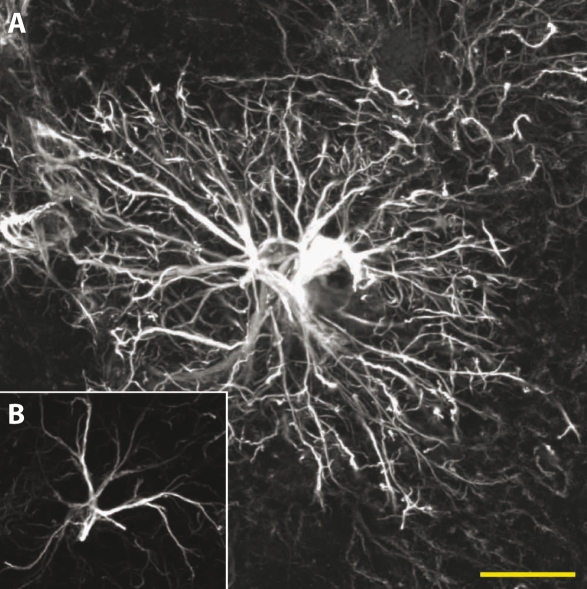
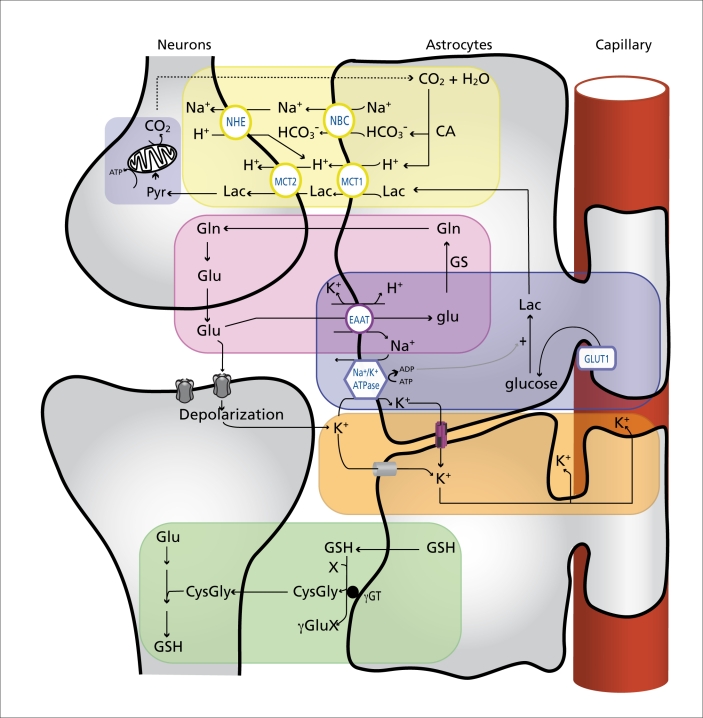
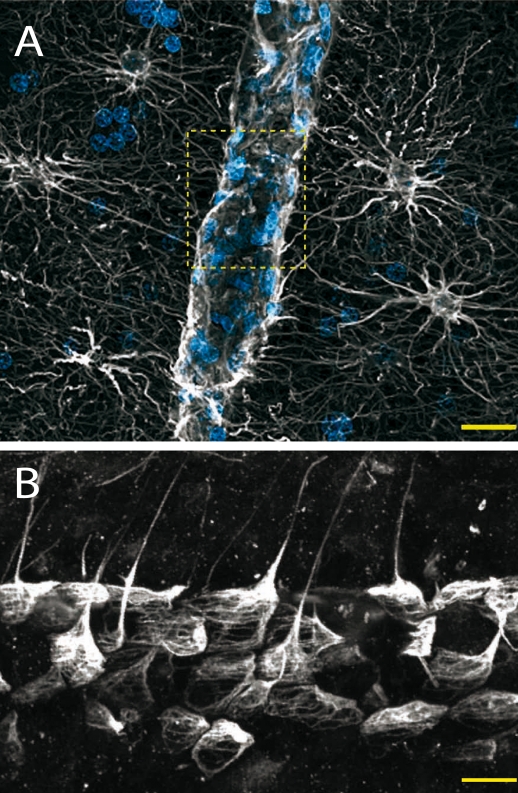
Astrocytes are the main neural cell type responsible for the maintenance of brain homeostasis. They form highly organized anatomical domains that are interconnected into extensive networks. These features, along with the expression of a wide array of receptors, transporters, and ion channels, ideally position them to sense and dynamically modulate neuronal activity. Astrocytes cooperate with neurons on several levels, including neurotransmitter trafficking and recycling, ion homeostasis, energy metabolism, and defense against oxidative stress. The critical dependence of neurons upon their constant support confers astrocytes with intrinsic neuroprotective properties which are discussed here. Conversely, pathogenic stimuli may disturb astrocytic function, thus compromising neuronal functionality and viability. Using neuroinflammation, Alzheimer's disease, and hepatic encephalopathy as examples, we discuss how astrocytic defense mechanisms may be overwhelmed in pathological conditions, contributing to disease progression.
Overview
The claims and statistics of this paper haven’t been checked yet.
Free: it reads the open-access text and checks the first 5 claims that cite a source we can check. Create a free account to check every claim.
Integrity signals
Registry
Cites
Statistics
Figures
Verification
Claims the paper makes
The claims and statistics of this paper haven’t been checked yet.
Free: it reads the open-access text and checks the first 5 claims that cite a source we can check. Create a free account to check every claim.
Claims other papers make about this one
Each is checked against this paper’s own text: does it say what the citing paper says it does?
The cited source doesn’t support the claim as written.
In the citing paper
“Astrocytes are the major producers of glutathione in the brain because they express a system xc-cyttine/glutamate antiporter, which does not exist in neurons; hence, neurons cannot synthesize glutathione.”
From Major depressive disorder: hypothesis, mechanism, prevention and treatment (2024) · cites this paper as [135]
Checked by a reasoning model — may be wrong.
Experimental — accuracy not yet measuredThe source backs part of the claim, not all of it — or backs it for a different population, condition or comparison.
In the citing paper
“Notably, astrocytes can protect nearby neurons against toxic dosages of NO, H 2 O 2 , and superoxide anion in combination with NO, iron, or 6-hydroxydopamine in coculture systems, 135”
From Major depressive disorder: hypothesis, mechanism, prevention and treatment (2024) · cites this paper as [135]
Experimental — accuracy not yet measuredThe check wasn’t confident either way, so it gives no verdict — never disputed.
In the citing paper
“As the major lipid carrier in the brain, secreted ApoE is generally presumed to be converted into HDL-like LNPs by astrocytes.”
From ApoE is Secreted as a Lipid Nanoparticle by Mammalian Cells: Implications for Alzheimer’s Disease Pathogenesis (2025) · cites this paper as [46]
Experimental — accuracy not yet measuredThe check wasn’t confident either way, so it gives no verdict — never disputed.
In the citing paper
“In turn, these LNPs undergo receptor-mediated endocytosis in neurons and glia cells where their lipid constituents are disassembled in lysosomes to supply these constituents to the recipient cells.22, 44–47”
From ApoE is Secreted as a Lipid Nanoparticle by Mammalian Cells: Implications for Alzheimer’s Disease Pathogenesis (2025) · cites this paper as [46]
Experimental — accuracy not yet measured
Self-check
Percentages, sums and reported differences re-computed from the paper’s own numbers.
The self-check needs the paper’s full text.
Citations
Cites
McKhann, G., Drachman, D., Folstein, M., Katzman, R., Price, D., & Stadlan, E. M. (1984) · Neurology · doi:10.1212/wnl.34.7.939 · Cited by 27,915
Danbolt, N. C. (2001) · Progress in Neurobiology · doi:10.1016/s0301-0082(00)00067-8 · Cited by 4,227 · cited 2×
“This is primarily achieved by the astrocyte-specific sodium-dependent high-affinity glutamate transporters GLT-1 and GLAST (corresponding to human EAAT2 and EAAT1, respectively) and to a lesser extent by the neuronal glutamate transporters EAAC1 (human EAAT3) and EAAT4.”
Microglia-mediated neurotoxicity: uncovering the molecular mechanisms
Block, M. L., Zecca, L., & Hong, J.-S. (2007) · Nature Reviews Neuroscience · doi:10.1038/nrn2038 · Cited by 4,110 · cited 1×
“Activated microglial cells release high levels of proinflammatory cytokines and toxic ROS which may negatively impact neuronal survival.(114) Several in vitro studies have demonstrated that astrocyte-conditioned medium or the presence of astrocytes attenuates microglial activation in response to various proinflammator…”
Rothstein, J. D., Dykes-Hoberg, M., Pardo, C. A., Bristol, L. A., Jin, L., Kuncl, R. W., Kanai, Y., Hediger, M. A., Wang, Y., Schielke, J. P., et al. (1996) · Neuron · doi:10.1016/s0896-6273(00)80086-0 · Cited by 2,534
Glutamate Induces Calcium Waves in Cultured Astrocytes: Long-Range Glial Signaling
Cornell-Bell, A. H., Finkbeiner, S. M., Cooper, M. S., & Smith, S. J. (1990) · Science · doi:10.1126/science.1967852 · Cited by 1,846 · cited 1×
“Indeed, astrocytes can respond to neurotransmitters with transient increases in their intracellular Ca levels, which can travel through the astrocytic syncytium in a wavelike fashion.(14,15) These Ca signals can trigger the release of neuroactive molecules from astrocytes (or gliotransmitters), such as glutamate, D-se…”
Reactive astrocytes: cellular and molecular cues to biological function
Ridet, J. L., Privat, A., Malhotra, S. K., & Gage, F. H. (1997) · Trends in Neurosciences · doi:10.1016/s0166-2236(97)01139-9 · Cited by 1,766 · cited 1×
“Like microglia, astrocytes can become activated— a process known as astrogliosis, which is characterized by altered gene expression, hypertrophy, and proliferation.(92) Activated astrocytes can release a wide array of immune mediators such as cytokines, chemokines, and growth factors, that may exert either neuroprotec…”
Epilepsy and Exacerbation of Brain Injury in Mice Lacking the Glutamate Transporter GLT-1
Tanaka, K., Watase, K., Manabe, T., Yamada, K., Watanabe, M., Takahashi, K., Iwama, H., Nishikawa, T., Ichihara, N., Kikuchi, T., et al. (1997) · Science · doi:10.1126/science.276.5319.1699 · Cited by 1,752
Metabolism and functions of glutathione in brain
Dringen, R. (2000) · Progress in Neurobiology · doi:10.1016/s0301-0082(99)00060-x · Cited by 1,702 · cited 1×
“This can be explained by the brain’s high rate of oxidative energy metabolism (which inevitably generates ROS), combined with a relatively low intrinsic antioxidant capacity.(67) Compared with neurons, astrocytes display a much more effective artillery against ROS.”
Reactive Astrocytes Protect Tissue and Preserve Function after Spinal Cord Injury
Faulkner, J. R., Herrmann, J. E., Woo, M. J., Tansey, K. E., Doan, N. B., & Sofroniew, M. V. (2004) · The Journal of Neuroscience · doi:10.1523/jneurosci.3547-03.2004 · Cited by 1,598
β-Lactam antibiotics offer neuroprotection by increasing glutamate transporter expression
Rothstein, J. D., Patel, S., Regan, M. R., Haenggeli, C., Huang, Y. H., Bergles, D. E., Jin, L., Dykes Hoberg, M., Vidensky, S., Chung, D. S., et al. (2005) · Nature · doi:10.1038/nature03180 · Cited by 1,518
Research works printed but not linked: 1
- Magistretti PJ. Brain energy metabolism. In: Squire LR, Bloom FE, McConnell SK, Roberts JL, Spitzer NC, Zigmond MJ, eds. Fundamental Neuroscience. 3rd ed. San Diego, CAL: Academic Press 2008 271 292
Cited by
Items 101–200 of 470
Modulation of neuroimmune cytokine networks by antidepressants: implications in mood regulation
Nava, R. G., Adri, A. S., Filgueiras, I. S., Nóbile, A. L., Barcelos, P. M., Corrêa, Y. L. G., de Oliveira, S. F., Cabral‐Miranda, G., Dias, H. D., Schimke, L. F., et al. (2025) · Translational Psychiatry · doi:10.1038/s41398-025-03532-y · Cited by 58
“Experimental models demonstrate that inhibition of astrocytic or microglial in fl amma-tory responses, or targeting of ROS production, can reverse depressive-like behaviors, reinforcing the notion that MDD may, in part, result from or cause chronic neuroin fl ammation and immune dysfunction [13 – 15].”
PRDX6 controls multiple sclerosis by suppressing inflammation and blood brain barrier disruption
Yun, H., Park, K., Kim, E.-C., & Hong, J. T. (2015) · Oncotarget · doi:10.18632/oncotarget.5205 · Cited by 58
“Several studies have indicated that astrocytes increase secretion of anti-inflammatory cytokines and scavengers of ROS, as well as the suppression of microglial activation is caused by astrocyte induced antiinflammatory function [3, 24-26].”
Aluminium chloride‐induced toxicity in zebrafish larvae
Monaco, A., Grimaldi, M. C., & Ferrandino, I. (2016) · Journal of Fish Diseases · doi:10.1111/jfd.12544 · Cited by 58
Mortal engines: Mitochondrial bioenergetics and dysfunction in neurodegenerative diseases
Joshi, A. U., & Mochly‐Rosen, D. (2018) · Pharmacological Research · doi:10.1016/j.phrs.2018.08.010 · Cited by 59
Madeira, J., Renschler, C., Mueller, B., Hashioka, S., Gibson, D. L., & Klegeris, A. (2013) · Life Sciences · doi:10.1016/j.lfs.2013.04.005 · Cited by 58
“Furthermore, astrocytes could affect neuronal health indirectly by secreting proinflammatory cytokines (Mrak and Griffin, 2005; Belanger and Magistretti, 2009); in the current study secretion of two such cytokines IL- 6 and IL-8wasmeasured.”
Chan, J. L., Reeves, T. M., & Phillips, L. L. (2014) · Experimental Neurology · doi:10.1016/j.expneurol.2014.08.015 · Cited by 54
“With the activation of local glia, dying axon terminals can be removed and regenerative terminal sprouting induced (Steward, 1989; Sofroniew, 2000; Belanger and Magistretti, 2009; Hamby and Sofroniew, 2010).”
Histamine and astrocyte function
Jurič, D. M., Kržan, M., & Lipnik‐Štangelj, M. (2016) · Pharmacological Research · doi:10.1016/j.phrs.2016.07.035 · Cited by 57
Jha, B. K., Joshi, H., & Dave, D. D. (2016) · Interdisciplinary Sciences Computational Life Sciences · doi:10.1007/s12539-016-0202-7 · Cited by 56
Onoda, A., Kawasaki, T., Tsukiyama∥, K., Takeda, K., & Umezawa, M. (2020) · Scientific Reports · doi:10.1038/s41598-020-66744-w · Cited by 56
Role of astrocytes in major neurological disorders: The evidence and implications
Scuderi, C., Stecca, C., Iacomino, A., & Steardo, L. (2013) · IUBMB Life · doi:10.1002/iub.1223 · Cited by 56
“Therefore, because of their crucial role in AD pathology, targeting neuroinflammation might be an effective therapeutic strategy in AD, so that astrocytes may be reasonably regarded as a promising new target for innovative treatments (25).”
Reactive Species in Huntington Disease: Are They Really the Radicals You Want to Catch?
Bono-Yagüe, J., Gómez-Escribano, A. P., Millán, J. M., & Vázquez‐Manrique, R. P. (2020) · Antioxidants · doi:10.3390/antiox9070577 · Cited by 55
Leggio, L., L'Episcopo, F., Magrì, A., Ulloa‐Navas, M. J., Paternò, G., Vivarelli, S., Bastos, C. A. P., Tirolo, C., Testa, N., Caniglia, S., et al. (2022) · Advanced Healthcare Materials · doi:10.1002/adhm.202201203 · Cited by 54
Zhang, L., Zhou, Y., Yang, Z., Jiang, L., Yan, X., Zhu, W., Shen, Y., Wang, B., Li, J., & Song, J. (2025) · Journal of Neuroinflammation · doi:10.1186/s12974-025-03334-5 · Cited by 56
“…with a plentiful reservoir of antioxidants, enabling them to effectively mitigate the oxidative stress induced by the β-oxidation of FAs [141, 161–163].. Astrocytes remain the predominant cellular population that facilitates β-oxidation of FFAs, despite their primary reliance on glycolysis…”
DJ-1 modulates aggregation and pathogenesis in models of Huntington's disease
Sajjad, M. U., Green, E. W., Miller‐Fleming, L., Hands, S. L., Herrera, F., Campesan, S., Khoshnan, A., Outeiro, T. F., Giorgini, F., & Wyttenbach, A. (2013) · Human Molecular Genetics · doi:10.1093/hmg/ddt466 · Cited by 54
“crucial roles in providing protection against oxidative insults (43,44).”
Insulin action on astrocytes: From energy homeostasis to behaviour
González‐García, I., Gruber, T., & García‐Cáceres, C. (2021) · Journal of Neuroendocrinology · doi:10.1111/jne.12953 · Cited by 52
Mathur, R., Ince, P. G., Minett, T., Garwood, C. J., Shaw, P. J., Matthews, F. E., Brayne, C., Simpson, J. E., Wharton, S. B., & on behalf of the MRC Cognitive Function and Ageing Neuropathology Study Group (2015) · PLOS ONE · doi:10.1371/journal.pone.0118463 · Cited by 52
“Furthermore, astrocytes can degrade, internalise and clear Aβ [13,28,59], and have been shown to regulate microglial phagocytosis of compact plaque cores [20].”
Astrocytes in Parkinson’s Disease: From Role to Possible Intervention
Wang, T., Sun, Y., & Dettmer, U. (2023) · Cells · doi:10.3390/cells12192336 · Cited by 53
Liu, M., Qin, L., Wang, L., Tan, J., Zhang, H., Tang, J., Shen, X., Tan, L., & Wang, C. (2018) · Molecular Medicine Reports · doi:10.3892/mmr.2018.9002 · Cited by 52
“It is believed that functions of astrocytes depend on the amounts of proteins synthesized and secreted by the normal ER-Golgi compartment (47).”
InfluentialDas, T. K., Dey, A., Sabesan, P., Javadzadeh, A., Théberge, J., Raduà, J., & Palaniyappan, L. K. (2018) · Frontiers in Psychiatry · doi:10.3389/fpsyt.2018.00438 · Cited by 52
Brüll, M. (2020) · ALTEX · doi:10.14573/altex.1911111 · Cited by 38
“Moreover, astrocytes may play important roles in toxicology: On the one hand, astrocytes have been shown to be neuroprotective (Bélanger and Magistretti, 2009; Chen et al., 2009; Gutbier et al., 2018b; Rathinam et al., 2012; Stary et al., 2015; Bylicky et al., 2018), while on the other hand, they…”
Nrf2/Wnt resilience orchestrates rejuvenation of glia-neuron dialogue in Parkinson's disease
Marchetti, B. (2020) · Redox Biology · doi:10.1016/j.redox.2020.101664 · Cited by 54
Exacerbation of Epilepsy by Astrocyte Alkalization and Gap Junction Uncoupling
Onodera, M., Meyer, J., Furukawa, K., Hiraoka, Y., Aida, T., Tanaka, K., Tanaka, K. F., Rose, C. R., & Matsui, K. (2021) · The Journal of Neuroscience · doi:10.1523/jneurosci.2365-20.2020 · Cited by 50
Non-Neuronal Cells in the Hypothalamic Adaptation to Metabolic Signals
Freire‐Regatillo, A., Argente-Arizón, P., Argente, J., García‐Segura, L. M., & Chowen, J. A. (2017) · Frontiers in Endocrinology · doi:10.3389/fendo.2017.00051 · Cited by 51
Salman, M. M., Kitchen, P., Woodroofe, M. N., Bill, R. M., Conner, A. C., Heath, P. R., & Conner, M. T. (2017) · Frontiers in Cellular Neuroscience · doi:10.3389/fncel.2017.00386 · Cited by 50
“Glial cells, in particular astrocytes, play a major role in maintaining CNS homeostasis and protection from various stresses, by providing metabolic and structural support (Bélanger and Magistretti, 2009).”
In Vitro Priming and Hyper-Activation of Brain Microglia: an Assessment of Phenotypes
Koss, K. M., Churchward, M. A., Tsui, C. T., & Todd, K. G. (2019) · Molecular Neurobiology · doi:10.1007/s12035-019-1529-y · Cited by 50
Complement Peptide C3a Promotes Astrocyte Survival in Response to Ischemic Stress
Shinjyo, N., de Pablo, Y., Pekny, M., & Pekna, M. (2015) · Molecular Neurobiology · doi:10.1007/s12035-015-9204-4 · Cited by 49
Tang, S. W., Helmeste, D., & Leonard, B. (2012) · The World Journal of Biological Psychiatry · doi:10.3109/15622975.2011.639800 · Cited by 42
Wróbel, M., Bronowicka-Adamska, P., & Bentke‐Imiolek, A. (2017) · Acta Biochimica Polonica · doi:10.18388/abp.2016_1394 · Cited by 48
Mechanistic comparison between MPTP and rotenone neurotoxicity in mice
Bhurtel, S., Katila, N., Srivastav, S., Neupane, S., & Choi, D. (2018) · NeuroToxicology · doi:10.1016/j.neuro.2018.12.009 · Cited by 48
Mitochondrial Injury in Human Acute Carbon Monoxide Poisoning: The Effect of Oxygen Treatment
GARRABOU, G., INORIZA, J. M., MORÉN, C., OLIU, G., MIRÓ, Ò., MARTÍ, M. J., & CARDELLACH, F. (2011) · Journal of Environmental Science and Health, Part C · doi:10.1080/10590501.2011.551316 · Cited by 28
“Neuron metabolism is typically oxidative and, additionally, does not have active antioxidant system against oxidative stress [42, 45].”
Microphysiological systems for recapitulating physiology and function of blood-brain barrier
Seo, S., Kim, H., Sung, J. H., Choi, N., Lee, K., & Kim, H. N. (2019) · Biomaterials · doi:10.1016/j.biomaterials.2019.119732 · Cited by 47
Quintana, D. D., Garcia, J. A., Sarkar, S. N., Jun, S., Engler-Chiurazzi, E. B., Russell, A. E., Cavendish, J. Z., & Simpkins, J. W. (2018) · Mitochondrion · doi:10.1016/j.mito.2018.12.004 · Cited by 46
“2010), more robust antioxidant buffering capacity (Dringen et al. 2000; Shih et al. 2003; Belanger and Magistretti 2009), and a lesser dependence of ATP production via oxidative phosphor-ylation (Marrif and Juurlink 1999; Solaini and Harris, 2005).”
Piotrowska, A., Rojewska, E., Pawlik, K., Kreiner, G., Ciechanowska, A., Makuch, W., Żychowska, M., & Mika, J. (2018) · Biochimica et Biophysica Acta (BBA) - Molecular Basis of Disease · doi:10.1016/j.bbadis.2018.07.032 · Cited by 45
Cell Rearrangement and Oxidant/Antioxidant Imbalance in Huntington’s Disease
D’Egidio, F., Castelli, V., Cimini, A., & d’Angelo, M. (2023) · Antioxidants · doi:10.3390/antiox12030571 · Cited by 46
Liuzzi, G. M., Latronico, T., Branà, M. T., Gramegna, P., Coniglio, M. G., Rossano, R., Larocca, M., & Riccio, P. (2011) · Neurochemical Research · doi:10.1007/s11064-010-0373-2 · Cited by 45
Astrocytic and neuronal apolipoprotein E isoforms differentially affect neuronal excitability
Konings, S. C., Torres-Garcia, L., Martinsson, I., & Gouras, G. K. (2021) · Frontiers in Neuroscience · doi:10.3389/fnins.2021.734001 · Cited by 43
Polo, Y., Luzuriaga, J., Iturri, J. J., Irastorza, I., Toca-Herrera, J. L., Ibarretxe, G., Unda, F. J., Sarasua, J.-R., Pineda, J. R., & Larrañaga, A. (2020) · Nanomedicine Nanotechnology Biology and Medicine · doi:10.1016/j.nano.2020.102314 · Cited by 43
Ramírez-Sánchez, J., Pires, E. N. S., Núñez-Figueredo, Y., Andreu, G. L. P., Fonseca-Fonseca, L. A., Ruiz-Reyes, A., Ochoa, E., Verdecia-Reyes, Y., Delgado, R., Souza, D. O., et al. (2015) · Neurochemistry International · doi:10.1016/j.neuint.2015.09.003 · Cited by 44
“This could be relevant for neurological diseases in which the neuroprotective mechanisms (metabolic support, growth factor and nutrient supply, and extracellular homeostasis) provided by astrocytes to neurons are eventually exhausted, especially in CA1 region where pyramidal neurons have shown increased vulnerability…”
InfluentialSowa, J. E., & Tokarski, K. (2021) · Pharmacological Reports · doi:10.1007/s43440-021-00323-2 · Cited by 42
Tsai, S., Chen, P., Calkins, M. J., Wu, S.-Y., & Kuo, Y. (2016) · Frontiers in Aging Neuroscience · doi:10.3389/fnagi.2016.00057 · Cited by 43
Planas-Fontánez, T. M., Dreyfus, C. F., & Saitta, K. S. (2020) · Neurochemical Research · doi:10.1007/s11064-020-02968-6 · Cited by 42
Bulli, I., Dettori, I., Coppi, E., Cherchi, F., Venturini, M., Mannelli, L. D. C., Ghelardini, C., Nocentini, A., Supuran, C. T., Pugliese, A. M., et al. (2021) · International Journal of Molecular Sciences · doi:10.3390/ijms22095029 · Cited by 41
Role of Purinergic Receptors in CNS Function and Neuroprotection
Tozaki‐Saitoh, H., Tsuda, M., & Inoue, K. (2011) · Advances in pharmacology · doi:10.1016/b978-0-12-385526-8.00015-1 · Cited by 41
“Astrocytic processes closely ensheath synapses and express a wide range of receptors for neurotransmitters (Belanger & Magistretti, 2009).”
Zhang, S.-S., Gao, Z., Feng, L., & Li, M. (2024) · Journal of Inflammation Research · doi:10.2147/jir.s483412 · Cited by 40
Cursano, S., Battaglia, C. R., Urrutia‐Ruiz, C., Grabrucker, S., Schön, M., Bockmann, J., Braumüller, S. T., Radermacher, P., Roselli, F., Huber-Lang, M. S., et al. (2020) · Molecular Psychiatry · doi:10.1038/s41380-020-0659-y · Cited by 41
Gupta, K., Chandran, S., & Hardingham, G. E. (2012) · British Journal of Clinical Pharmacology · doi:10.1111/bcp.12022 · Cited by 41
Astrocytes acquire resistance to iron-dependent oxidative stress upon proinflammatory activation
Macco, R., Pelizzoni, I., Consonni, A., Vitali, I., Giacalone, G., Boneschi, F. M., Codazzi, F., Grohovaz, F., & Zacchetti, D. (2013) · Journal of Neuroinflammation · doi:10.1186/1742-2094-10-130 · Cited by 40
“More recently, they have been shown to exert a critical role in the extracellular milieu homeostasis by controlling the concentration of ions, mediators and neurotransmitters, thereby contributing to bidirectional neuron-glia communication [2].”
Fediuk, D. J., Wang, T., Raizman, J. E., Parkinson, F. E., & Gu, X. (2010) · International Journal of Toxicology · doi:10.1177/1091581810380147 · Cited by 40
Conflicting Roles of Connexin43 in Tumor Invasion and Growth in the Central Nervous System
Uzu, M., Sin, W. C., Shimizu, A., & Sato, H. (2018) · International Journal of Molecular Sciences · doi:10.3390/ijms19041159 · Cited by 40
“Astrocytes residing around neurons play a key role for the maintenance of neuronal excitability: recycling neurotransmitters released into the synaptic cleft, buffering pH or K+, and supplying neurons with antioxidants and metabolites [105,106].”
Cholesterol sulfate alters astrocyte metabolism and provides protection against oxidative stress
Prah, J., Winters, A., Chaudhari, K., Hersh, J., Liu, R., & Yang, S. (2019) · Brain Research · doi:10.1016/j.brainres.2019.146378 · Cited by 39
Multiple Pathways Involved in Palmitic Acid-Induced Toxicity: A System Biology Approach
Osorio, D., Pinzón, A., Martín-Jiménez, C., Barreto, G. E., & González, J. (2020) · Frontiers in Neuroscience · doi:10.3389/fnins.2019.01410 · Cited by 33
“Additionally, astrocytes protect neurons against the glutamate-induced excitotoxicity through the astrocyte-specific sodium-dependent glutamate transporters such as GLT-1 and GLAST (Bélanger and Magistretti, 2009).”
Yu, S.-S., Li, Z.-Y., Xu, X.-Z., Yao, F., Luo, Y., Liu, Y.-C., Li, C., Zheng, M., & Jing, J. (2021) · Neural Regeneration Research · doi:10.4103/1673-5374.324858 · Cited by 39
“It is widely accepted that astrocytes play critical roles in maintaining homeostasis, regulating synaptic and neuronal function, repairing the blood-brain barrier, and alleviating neuronal injury (Bélanger and Magistretti, 2009; Cabezas et al., 2014; Allen and Eroglu, 2017).”
Glia-derived extracellular vesicles in parkinson’s disease.
Marchetti, B., Leggio, L., L’Episcopo, F., Vivarelli, S., Tirolo, C., Paternò, G., Giachino, C., Caniglia, S., Serapide, M. F., & Iraci, N. (2020) · Journal of Clinical Medicine · doi:10.3390/jcm9061941 · Cited by 38
Loss of Sigma‐1 Receptor Chaperone Promotes Astrocytosis and Enhances the Nrf2 Antioxidant Defense
Weng, T.-Y., Hung, D. T., Su, T., & Tsai, S. (2017) · Oxidative Medicine and Cellular Longevity · doi:10.1155/2017/4582135 · Cited by 38
“Astrocytes play critical roles in neuronal homeostasis including modulating glutamate uptake and recycling, regulating ion and energy production, and exerting oxidative stress protection [50].”
Neurodegenerative diseases and immune system: From pathogenic mechanism to therapy
Chen, Y., Yin, P., Chen, Q., Zhang, Y., Tang, Y., Jin, W., & Yu, L. (2025) · Neural Regeneration Research · doi:10.4103/nrr.nrr-d-25-00274 · Cited by 38
“Astrocytes have been observed many physiological functions, such as release of growth factors (McAlpine et al., 2021), regulation of synapses (Brandebura et al., 2023), neuroprotection (Bélanger and Magistretti, 2009), and involvement in the formation of the BBB (Heymans et al., 2020).”
Hamdi, Y., Kaddour, H., Vaudry, D., Leprince, J., Zarrouk, A., Hammami, M., Vaudry, H., Tonon, M., Amri, M., & Masmoudi‐Kouki, O. (2015) · Peptides · doi:10.1016/j.peptides.2015.06.010 · Cited by 37
Astrocytes in Down Syndrome Across the Lifespan
Ponroy Bally, B., & Murai, K. K. (2021) · Frontiers in Cellular Neuroscience · doi:10.3389/fncel.2021.702685 · Cited by 35
“Astrocyte reactivity is also a prominent feature in neurodegenerative conditions, such as Alzheimer’s disease (AD), Parkinson’s disease (PD), multiple sclerosis (MS), and amyotrophic lateral sclerosis (ALS) (Allan and Rothwell, 2003; Belanger and Magistretti, 2009; Sofroniew and Vinters, 2010).”
Arulsamy, A., Teng, J., Colton, H., Corrigan, F., & Collins‐Praino, L. E. (2018) · Behavioural Brain Research · doi:10.1016/j.bbr.2018.04.009 · Cited by 35
“Given that these cells have a number of beneficial functions, including release of neurotrophic factors, such as BDNF [54,55], modulation of neurotransmitter levels within the synapse [56] and supply of energy to neurons [57], this decrease may not be beneficial.”
Doke, M., Pendyala, G., & Samikkannu, T. (2021) · PLoS ONE · doi:10.1371/journal.pone.0252895 · Cited by 35
“Astrocytes play an essential role in energy metabolism, neurotransmission, and the inflammatory process [9].”
Laricchiuta, D., Papi, M., Decandia, D., Panuccio, A., Cutuli, D., Peciccia, M., Mazzeschi, C., & Petrosini, L. (2024) · Frontiers in Cellular Neuroscience · doi:10.3389/fncel.2024.1358450 · Cited by 35
“…et al., 2011), clearing extracellular glutamate from synaptic space (Schousboe et al., 2014), maintaining synaptic integrity, and supporting myelination (Volterra and Meldolesi, 2005; Bélanger and Magistretti, 2009), all critical processes in the mechanistic pathways suspected in schizophrenia.”
Brief alcohol exposure alters transcription in astrocytes via the heat shock pathway
Pignataro, L., Varodayan, F. P., Tannenholz, L., Protiva, P., & Harrison, N. L. (2013) · Brain and Behavior · doi:10.1002/brb3.125 · Cited by 36
“…E-mail: lpignataro@yahoo.com Funding Information This work was supported by National Institutes of Health (NIH)/NIAAA grants (R21 AA018783) to N. L. H. Received: 9 January 2012; Revised: 23 December 2012; Accepted: 7 January 2013 Brain and Behavior 2013; 3(2): 114–133 doi: 10.1002/brb3.”
InfluentialWu, X., Yang, X., Majumder, A., Swetenburg, R. L., Goodfellow, F. T., Bartlett, M. G., & Stice, S. L. (2017) · Toxicological Sciences · doi:10.1093/toxsci/kfx056 · Cited by 35
Li, L., Ni, L., Heary, R. F., & Elkabes, S. (2020) · Journal of Neuroinflammation · doi:10.1186/s12974-020-01748-x · Cited by 34
Neuroprotective role of lactate in a human in vitro model of the ischemic penumbra
Cerina, M., Levers, M., Keller, J. M., & Frega, M. (2024) · Scientific Reports · doi:10.1038/s41598-024-58669-5 · Cited by 35
Gau, Y. A., Hsu, E. T., Cha, R. J., Pak, R. W., Looger, L. L., Kang, J. U., & Bergles, D. E. (2024) · Nature Communications · doi:10.1038/s41467-024-47345-x · Cited by 34
“…array of metabotropic receptors that can increase intracellular levels of calcium and other second messengers, triggering pleotropic effects ranging from regulation of glycolysis 10 to release of “ gliotransmitters ” that can in fl uence neuronal activity patterns and synaptic strength 9,11 – 13 .”
Hippocampal neuroplasticity and inflammation: relevance for multiple sclerosis
Mancini, A., Gaetani, L., Gregorio, M. D., Tozzi, A., Ghiglieri, V., Calabresi, P., & Filippo, M. D. (2017) · Multiple Sclerosis and Demyelinating Disorders · doi:10.1186/s40893-017-0019-1 · Cited by 34
“A better understanding of the pathogenic process leading to this selective structural and functional hippocampal impairment appears fundamental to imagine new therapeutic approaches, targeted to preserve cognitive functions and quality of life in people with MS. Abbreviations AMPA: α-amino-3-hydroxy-5-methyl-4-isoxazo…”
InfluentialShao, Y., Tan, B., Shi, J., & Zhou, Q. (2018) · Toxicology Letters · doi:10.1016/j.toxlet.2018.11.016 · Cited by 34
Endosomal‐lysosomal dysfunctions in Alzheimer’s disease: Pathogenesis and therapeutic interventions
Lai, S. S. M., Ng, K. Y., Koh, R. Y., Chok, K. C., & Chye, S. M. (2021) · Metabolic Brain Disease · doi:10.1007/s11011-021-00737-0 · Cited by 34
2-arachidonyl glycerol modulates astrocytic glutamine synthetase via p38 and ERK1/2 pathways
Wang, S., Zhang, H., Geng, B., Xie, Q., Li, W., Deng, Y., Shi, W., Pan, Y., Kang, X., & Wang, J. (2018) · Journal of Neuroinflammation · doi:10.1186/s12974-018-1254-x · Cited by 34
Alhadidi, Q., Xu, L., Sun, X., Althobaiti, Y. S., Almalki, A. H., Alsaab, H. O., & Stary, C. M. (2022) · Neurochemical Research · doi:10.1007/s11064-022-03718-6 · Cited by 33
“Under normal physiological conditions, astrocytes maintain CNS homeostasis via multiple functions including maintenance of the blood–brain barrier, regulation of cerebral blood flow, maintaining mitochondrial function and supply of energy substrates to neurons, and production of neuroprotective factors [1].”
Serapide, M. F., L’Episcopo, F., Tirolo, C., Testa, N., Caniglia, S., Giachino, C., & Marchetti, B. (2020) · Frontiers in Aging Neuroscience · doi:10.3389/fnagi.2020.00024 · Cited by 33
Mitochondrial Dysfunction of Astrocytes Mediates Lipid Accumulation in Temporal Lobe Epilepsy
Su, Y., Tang, M., & Wang, M. (2023) · Aging and Disease · doi:10.14336/ad.2023.0624 · Cited by 33
“This ability can effectively alleviate the detrimental effects of lipid toxicity in astrocytes [7, 19].”
La neuro-inflammation: Dr Jekyll ou Mr Hyde ?
Renaud, J., Thérien, H.-M., Plouffe, M., & Martinoli, M. (2015) · médecine/sciences · doi:10.1051/medsci/20153111012 · Cited by 34
High Fidelity Cryopreservation and Recovery of Primary Rodent Cortical Neurons
Parker, S. S., Moutal, A., Cai, S., Chandrasekaran, S., Roman, M. R., Koshy, A. A., Khanna, R., Zinsmaier, K. E., & Mouneimne, G. (2018) · eNeuro · doi:10.1523/eneuro.0135-18.2018 · Cited by 33
“This demographic shift could alter paracrine support and neurotransmitter uptake, and thus influence neuron maturation and function (Bélanger and Magistretti, 2009).”
Emerging roles of bioactive peptides on brain health promotion
Katayama, S., & Nakamura, S. (2018) · International Journal of Food Science & Technology · doi:10.1111/ijfs.14076 · Cited by 34
Means, J. C., Lopez, A. A., & Koulen, P. (2020) · Cellular and Molecular Neurobiology · doi:10.1007/s10571-019-00781-6 · Cited by 35
Mitochondrial lactate metabolism is involved in antioxidative defense in human astrocytoma cells
Lemire, J. A., Auger, C., Mailloux, R. J., & Appanna, V. D. (2014) · Journal of Neuroscience Research · doi:10.1002/jnr.23338 · Cited by 31
Ranjit, S., Patters, B. J., Gerth, K. A., Haque, S., Choudhary, S., & Kumar, S. (2018) · Expert Opinion on Therapeutic Targets · doi:10.1080/14728222.2018.1501473 · Cited by 31
Cai, J., Chen, Y., She, Y., He, X., Feng, H., Sun, H., Yin, M., Gao, J., Sheng, C., Li, Q., et al. (2025) · Brain Pathology · doi:10.1111/bpa.13316 · Cited by 30
“In response to various pathogenic stimuli, astrocytes undergo activation and serve neuroprotective roles [37].”
Slota, J. A., Sajesh, B. V., Frost, K. F., Medina, S. J., & Booth, S. A. (2022) · Acta Neuropathologica Communications · doi:10.1186/s40478-022-01450-4 · Cited by 30
“protection against oxidative stress among other neuroprotective functions [6].”
Wallis, A., Ball, M., McKechnie, S., Butt, H., Lewis, D. P., & Bruck, D. (2017) · Journal of Translational Medicine · doi:10.1186/s12967-017-1229-1 · Cited by 31
“Astrocytes play a primary role in maintaining homeostasis in the brain, including regulating glutamate use and removal, neuronal energy, and neuronal pH [127].”
Marzocco, S., Adesso, S., Alilou, M., Stuppner, H., & Schwaiger, S. (2017) · Molecules · doi:10.3390/molecules22061003 · Cited by 30
“Therefore, the anti-inflammatory and anti-oxidant potential of the root extract (5–50 μg/mL) was evaluated for the impact on NO release, iNOS expression, and ROS levels in LPS + IFN-γ stimulated astrocytes primarily involved in central nervous system (CNS) homeostasis [18].”
Şovrea, A. S., & Boşca, A. B. (2013) · Journal of Molecular Psychiatry · doi:10.1186/2049-9256-1-18 · Cited by 31
“• Fluid, ion, pH and transmitter homeostasis [45] • Ion channels [7].”
Effects of a Diabetic Microenvironment on Neurodegeneration: Special Focus on Neurological Cells
Chavda, V. K., Yadav, D., Patel, S. S., & Song, M. (2024) · Brain Sciences · doi:10.3390/brainsci14030284 · Cited by 29
“As astrocytes benefit from this mechanism, they utilize their antioxidant competency to safeguard nearby neurons from toxic pro-oxidant compounds and oxidative stress [60,61].”
Kostuk, E. W., Cai, J., & Iacovitti, L. (2018) · Journal of Neuroinflammation · doi:10.1186/s12974-018-1181-x · Cited by 29
Waker, C. A., & Lober, R. M. (2019) · Advances in experimental medicine and biology · doi:10.1007/978-981-32-9636-7_18 · Cited by 29
Kamnaksh, A., Ahmed, F. A. K. M., Kövesdi, E., Barry, E. S., Grunberg, N. E., Long, J. B., & Agoston, D. V. (2013) · Translational Proteomics · doi:10.1016/j.trprot.2013.11.001 · Cited by 29
“This global glial response to injury is consistent with the numerous and somewhat diverse functions astroglia play in the normal and injured CNS [62–66].”
Patricio-Martínez, A., Patricio, F., Macuil-Chapuli, E., Martínez-Juárez, E. Á., Flores-Díaz, S., Cedillo-Ramirez, M. L., & Limón, I. D. (2025) · Frontiers in Neuroscience · doi:10.3389/fnins.2025.1598011 · Cited by 28
“They exhibit complex morphologies, with extended processes that interact with neighboring cells (Bélanger and Magistretti, 2009), contacting between 250,000 and 2 million synapses in the human brain (Oberheim et al., 2006).”
Neurotoxins released from interferon-gamma-stimulated human astrocytes
Lee, M., McGeer, E. G., & McGeer, P. L. (2012) · Neuroscience · doi:10.1016/j.neuroscience.2012.10.033 · Cited by 27
“Most of the toxicmaterials that were identified in theCM have previously been identified as products of astrocytes (reviewed by Belanger and Magistretti (2009)).”
InfluentialIn Situ Pluripotency Factor Expression Promotes Functional Recovery From Cerebral Ischemia
Seo, J. H., Lee, M.-Y., Yu, J. H., Kim, M., Song, M., Seo, C. H., Kim, S., & Cho, S. (2016) · Molecular Therapy · doi:10.1038/mt.2016.124 · Cited by 28
Chen, K.-Y., Chen, Y., Cheng, C.-J., Jhan, K.-Y., Chiu, C., & Wang, L.-C. (2020) · Biomedical Journal · doi:10.1016/j.bj.2020.11.008 · Cited by 28
“maintain homeostasis in the brain [47].”
Shrestha, R., Millington, O. R., Brewer, J. M., Dev, K. K., & Bushell, T. J. (2013) · Neuropharmacology · doi:10.1016/j.neuropharm.2013.06.025 · Cited by 28
Napoli, E., Ross‐Inta, C., Song, G., Wong, S., Hagerman, R. J., Gane, L. W., Smilowitz, J. T., Tassone, F., & Giulivi, C. (2016) · Frontiers in Neuroscience · doi:10.3389/fnins.2016.00159 · Cited by 28
“…mitochondrial fractions (Figure 2) can be bridged taking into account the absence of supporting cells (glia) in a neurononly culture system (Iwata-Ichikawa et al., 1999; Bélanger and Magistretti, 2009), which could be even more critical for neurons with an already compromised genetic background.”
Bennett, A. C., Camp, A. V., López, V., & Smith, C. (2018) · Journal of Physiology and Biochemistry · doi:10.1007/s13105-018-0620-6 · Cited by 28
Involvement of Astrocytes in Mediating the Central Effects of Ghrelin
Frago, L. M., & Chowen, J. A. (2017) · International Journal of Molecular Sciences · doi:10.3390/ijms18030536 · Cited by 27
“Astrocytes are involved in a wide range of functions that insure normal brain development and neural functioning [14] and are fundamental for processes of neuroprotection during both health and disease [15].”
Li, J., Wan, B., Zhou, L., Qian, X., Wang, F., Gu, S., Ma, X., & Huang, J. H. (2025) · Frontiers in Psychiatry · doi:10.3389/fpsyt.2025.1629182 · Cited by 27
“Astrocytes are also involved in neuroin fl ammation in MDD via interaction synergistically with microglia, for example, upon microglial activation, astrocytes can amplify in fl ammatory signals and produce neurotoxic factors (65 – 67).”
Astrocyte phenotypes: Emphasis on potential markers in neuroinflammation.
Bozic, I. D., Savić, D. Z., & Lavrnja, I. C. (2021) · PubMed · doi:10.14670/hh-18-284 · Cited by 28
“Indeed, due to neuronal excitability, astrocytes through Kv channel expression play a regulatory role in K+ clearance (Bélanger and Magistretti, 2009).”
Lavoie, S., Allaman, I., Petit, J.-M., Kim, Q., & Magistretti, P. J. (2011) · PLoS ONE · doi:10.1371/journal.pone.0022875 · Cited by 26
“Astrocytes are fundamental to both antioxidant defense and energy metabolism in the brain [21].”
Self-citationYelkenli, İ. H., Ulupınar, E., Korkmaz, O. T., Şener, E., Kuş, G., Filiz, Z., & Tunçel, N. (2016) · Journal of Molecular Neuroscience · doi:10.1007/s12031-016-0757-0 · Cited by 26
“…neuroinflammatory processes, astrocytes contribute to neuroprotection by releasing various neuroprotective and neurotrophic molecules, such as NGF, glial cell-line derived neurotrophic factor (GDNF), biliary neurotrophic factor (CNTF), and bFGF (Bélanger and Magistretti 2009; Liberto et al. 2004).”
InfluentialDarwish, S. S., Abdel‐Halim, M., ElHady, A. K., Salah, M., Abadi, A., Becker, W. B., & Engel, M. (2018) · European Journal of Medicinal Chemistry · doi:10.1016/j.ejmech.2018.08.097 · Cited by 26
Metadata
- Authors
- Bélanger, M., & Magistretti, P. J.
- Affiliations
- École Polytechnique Fédérale de Lausanne (CH)
- Centre Hospitalier Universitaire Vaudois (CH)
- Corresponding author
- Magistretti, Pierre J.
- Venue
- Dialogues in Clinical Neuroscience
- Publisher
- Informa UK Limited
- Published
- 2009-09-30
- Volume
- 11
- Issue
- 3
- Pages
- 281-295
- ISSN
- 1294-8322 (ISSN-L)
- 1958-5969
- PMC
- PMC3181926
- OpenAlex
- W1858755391
- Cited by
- 396
- References
- 161
- Citations by year
- 2026: 13 · 2025: 24 · 2024: 26 · 2023: 22 · 2022: 26 · 2021: 40 · 2020: 38 · 2019: 29 · 2018: 44 · 2017: 30 · 2016: 18 · 2015: 25 · 2014: 12 · 2013: 16 · 2012: 10
- FWCI
- 7.03
- Type
- journal article
- Language
- en
- Open access
- diamond
- doi.org
- Licence
- Locations
- Dialogues in Clinical Neuroscience (publishedVersion, cc-by-nc-nd)
- Europe PMC (PubMed Central) (publishedVersion, cc-by-nc-nd)
- PubMed Central (publishedVersion, cc-by-nc-nd)
- PubMed (publishedVersion)
- IRIS (submittedVersion)
- Infoscience (Ecole Polytechnique Fédérale de Lausanne) (submittedVersion)
- Infoscience (Ecole Polytechnique Fédérale de Lausanne) (submittedVersion, cc-by-nc-nd)
- SERVAL (Université de Lausanne) (submittedVersion, other-oa)
- Funders
- National Science Foundation
- Schweizerischer Nationalfonds zur Förderung der Wissenschaftlichen Forschung (3100AO, 108336)
- Topics
- Life Sciences › Neuroscience › Neurology › Neuroinflammation and Neurodegeneration Mechanisms
- Life Sciences › Neuroscience › Cellular and Molecular Neuroscience › Neuroscience and Neuropharmacology Research
- Health Sciences › Medicine › Clinical Neurology › Traumatic Brain Injury and Neurovascular Disturbances
- Keywords
- astrocytes, neuroprotection, brain homeostasis, astrocyte-neuron interaction, ion homeostasis, energy metabolism, oxidative stress, neuroinflammation, Alzheimer's disease, hepatic encephalopathy
- MeSH terms
- Animals, Astrocytes, Brain, Brain Diseases, Homeostasis, Humans, Models, Biological, Neurons, Neuroprotective Agents
About these checks
Registry, retraction, Cites and statistics results are computed, not judged, with one exception: a printed reference that no index lists is read once by a model before it counts as a citation error. Claims are extracted by a model and kept only when their quote appears verbatim in the text; each cited source is then checked, with a model’s help, for whether it says what the claim relies on. Those verdicts can be wrong — read the claim’s quote and the cited source before relying on one.
Statistics and arithmetic are recomputed, not judged.
Confidence bands are shown only for fields calibrated on our annotated test set. None is calibrated yet, so no band is shown.
What counts as a claim ›How we measure confidence ›How we check this ›
Are you an author, or do you see a problem with this page? Request a review
Data sources
Bibliographic data: Semantic Scholar, OpenAlex, Crossref.
Contains information from the Semantic Scholar Academic Graph Datasets, made available under the ODC Attribution License (ODC-BY 1.0).
Semantic Scholar’s data is described in: Kinney, R., et al. (2023). The Semantic Scholar Open Data Platform. arXiv:2301.10140.
