

The role of astroglia in neuroprotection
Open accessThe DOI matches its Crossref record; 165 of the 165 references it cites were found in a registry or an index.
Abstract
Astrocytes are the main neural cell type responsible for the maintenance of brain homeostasis. They form highly organized anatomical domains that are interconnected into extensive networks. These features, along with the expression of a wide array of receptors, transporters, and ion channels, ideally position them to sense and dynamically modulate neuronal activity. Astrocytes cooperate with neurons on several levels, including neurotransmitter trafficking and recycling, ion homeostasis, energy metabolism, and defense against oxidative stress. The critical dependence of neurons upon their constant support confers astrocytes with intrinsic neuroprotective properties which are discussed here. Conversely, pathogenic stimuli may disturb astrocytic function, thus compromising neuronal functionality and viability. Using neuroinflammation, Alzheimer's disease, and hepatic encephalopathy as examples, we discuss how astrocytic defense mechanisms may be overwhelmed in pathological conditions, contributing to disease progression.
Overview
The claims and statistics of this paper haven’t been checked yet.
Free: it reads the open-access text and checks the first 5 claims that cite a source we can check. Create a free account to check every claim.
Integrity signals
Registry
Cites
Statistics
Figures
Verification
Claims the paper makes
The claims and statistics of this paper haven’t been checked yet.
Free: it reads the open-access text and checks the first 5 claims that cite a source we can check. Create a free account to check every claim.
Claims other papers make about this one
Each is checked against this paper’s own text: does it say what the citing paper says it does?
The cited source doesn’t support the claim as written.
In the citing paper
“Astrocytes are the major producers of glutathione in the brain because they express a system xc-cyttine/glutamate antiporter, which does not exist in neurons; hence, neurons cannot synthesize glutathione.”
From Major depressive disorder: hypothesis, mechanism, prevention and treatment (2024) · cites this paper as [135]
Checked by a reasoning model — may be wrong.
Experimental — accuracy not yet measuredThe source backs part of the claim, not all of it — or backs it for a different population, condition or comparison.
In the citing paper
“Notably, astrocytes can protect nearby neurons against toxic dosages of NO, H 2 O 2 , and superoxide anion in combination with NO, iron, or 6-hydroxydopamine in coculture systems, 135”
From Major depressive disorder: hypothesis, mechanism, prevention and treatment (2024) · cites this paper as [135]
Experimental — accuracy not yet measuredThe check wasn’t confident either way, so it gives no verdict — never disputed.
In the citing paper
“As the major lipid carrier in the brain, secreted ApoE is generally presumed to be converted into HDL-like LNPs by astrocytes.”
From ApoE is Secreted as a Lipid Nanoparticle by Mammalian Cells: Implications for Alzheimer’s Disease Pathogenesis (2025) · cites this paper as [46]
Experimental — accuracy not yet measuredThe check wasn’t confident either way, so it gives no verdict — never disputed.
In the citing paper
“In turn, these LNPs undergo receptor-mediated endocytosis in neurons and glia cells where their lipid constituents are disassembled in lysosomes to supply these constituents to the recipient cells.22, 44–47”
From ApoE is Secreted as a Lipid Nanoparticle by Mammalian Cells: Implications for Alzheimer’s Disease Pathogenesis (2025) · cites this paper as [46]
Experimental — accuracy not yet measured
Self-check
Percentages, sums and reported differences re-computed from the paper’s own numbers.
The self-check needs the paper’s full text.
Citations
Cites
McKhann, G., Drachman, D., Folstein, M., Katzman, R., Price, D., & Stadlan, E. M. (1984) · Neurology · doi:10.1212/wnl.34.7.939 · Cited by 27,915
Danbolt, N. C. (2001) · Progress in Neurobiology · doi:10.1016/s0301-0082(00)00067-8 · Cited by 4,227 · cited 2×
“This is primarily achieved by the astrocyte-specific sodium-dependent high-affinity glutamate transporters GLT-1 and GLAST (corresponding to human EAAT2 and EAAT1, respectively) and to a lesser extent by the neuronal glutamate transporters EAAC1 (human EAAT3) and EAAT4.”
Microglia-mediated neurotoxicity: uncovering the molecular mechanisms
Block, M. L., Zecca, L., & Hong, J.-S. (2007) · Nature Reviews Neuroscience · doi:10.1038/nrn2038 · Cited by 4,110 · cited 1×
“Activated microglial cells release high levels of proinflammatory cytokines and toxic ROS which may negatively impact neuronal survival.(114) Several in vitro studies have demonstrated that astrocyte-conditioned medium or the presence of astrocytes attenuates microglial activation in response to various proinflammator…”
Rothstein, J. D., Dykes-Hoberg, M., Pardo, C. A., Bristol, L. A., Jin, L., Kuncl, R. W., Kanai, Y., Hediger, M. A., Wang, Y., Schielke, J. P., et al. (1996) · Neuron · doi:10.1016/s0896-6273(00)80086-0 · Cited by 2,534
Glutamate Induces Calcium Waves in Cultured Astrocytes: Long-Range Glial Signaling
Cornell-Bell, A. H., Finkbeiner, S. M., Cooper, M. S., & Smith, S. J. (1990) · Science · doi:10.1126/science.1967852 · Cited by 1,846 · cited 1×
“Indeed, astrocytes can respond to neurotransmitters with transient increases in their intracellular Ca levels, which can travel through the astrocytic syncytium in a wavelike fashion.(14,15) These Ca signals can trigger the release of neuroactive molecules from astrocytes (or gliotransmitters), such as glutamate, D-se…”
Reactive astrocytes: cellular and molecular cues to biological function
Ridet, J. L., Privat, A., Malhotra, S. K., & Gage, F. H. (1997) · Trends in Neurosciences · doi:10.1016/s0166-2236(97)01139-9 · Cited by 1,766 · cited 1×
“Like microglia, astrocytes can become activated— a process known as astrogliosis, which is characterized by altered gene expression, hypertrophy, and proliferation.(92) Activated astrocytes can release a wide array of immune mediators such as cytokines, chemokines, and growth factors, that may exert either neuroprotec…”
Epilepsy and Exacerbation of Brain Injury in Mice Lacking the Glutamate Transporter GLT-1
Tanaka, K., Watase, K., Manabe, T., Yamada, K., Watanabe, M., Takahashi, K., Iwama, H., Nishikawa, T., Ichihara, N., Kikuchi, T., et al. (1997) · Science · doi:10.1126/science.276.5319.1699 · Cited by 1,752
Metabolism and functions of glutathione in brain
Dringen, R. (2000) · Progress in Neurobiology · doi:10.1016/s0301-0082(99)00060-x · Cited by 1,702 · cited 1×
“This can be explained by the brain’s high rate of oxidative energy metabolism (which inevitably generates ROS), combined with a relatively low intrinsic antioxidant capacity.(67) Compared with neurons, astrocytes display a much more effective artillery against ROS.”
Reactive Astrocytes Protect Tissue and Preserve Function after Spinal Cord Injury
Faulkner, J. R., Herrmann, J. E., Woo, M. J., Tansey, K. E., Doan, N. B., & Sofroniew, M. V. (2004) · The Journal of Neuroscience · doi:10.1523/jneurosci.3547-03.2004 · Cited by 1,598
β-Lactam antibiotics offer neuroprotection by increasing glutamate transporter expression
Rothstein, J. D., Patel, S., Regan, M. R., Haenggeli, C., Huang, Y. H., Bergles, D. E., Jin, L., Dykes Hoberg, M., Vidensky, S., Chung, D. S., et al. (2005) · Nature · doi:10.1038/nature03180 · Cited by 1,518
Uniquely Hominid Features of Adult Human Astrocytes
Oberheim, N. A., Takano, T., Han, X., He, W., Lin, J. H. C., Wang, F., Xu, Q., Wyatt, J. D., Pilcher, W., Ojemann, J. G., et al. (2009) · The Journal of Neuroscience · doi:10.1523/jneurosci.4707-08.2009 · Cited by 1,488 · cited 2×
“In addition, they generate more robust intracellular Ca responses to neurotransmitter receptor agonists and display a 4-fold increase in Ca wave velocity.(2) In light of these evolution-driven modifications, it is tempting to hypothesize that the astrocytic contribution to the overall neural network complexity may in…”
Fine structural localization of glutamine synthetase in astrocytes of rat brain
Norenberg, M. D., & Martinez-Hernandez, A. (1979) · Brain Research · doi:10.1016/0006-8993(79)90071-4 · Cited by 1,348 · cited 2×
“In short, glutamate is converted to glutamine by the astrocytespecific enzyme glutamine synthetase (GS).(29) Glutamine is then transferred to neurons in a process most likely involving the amino acid transport systems N, L, and ASC in astrocytes and system A in neurons.”
New roles for astrocytes: redefining the functional architecture of the brain.
Nedergaard, M., Ransom, B., & Goldman, S. A. (2003) · Trends in Neurosciences · doi:10.1016/j.tins.2003.08.008 · Cited by 1,334 · cited 1×
“65 astrocytes per neuron in the human cortex.(3,17) Importantly, more than simply outnumbering their rodent counterparts, human astrocytes are also strikingly more complex, both morphologically and functionally.”
Astrocytes are active players in cerebral innate immunity
Farina, C., Aloisi, F., & Meinl, E. (2007) · Trends in Immunology · doi:10.1016/j.it.2007.01.005 · Cited by 1,304 · cited 2×
“Activated astrocytes can release a wide array of immune mediators such as cytokines, chemokines, and growth factors, that may exert either neuroprotective or neurotoxic effects.(93) Additionally, activated astrocytes can release potentially deleterious ROS and form a glial scar which may impede axon regeneration and n…”
Orkand, R. K., Nicholls, J. G., & Kuffler, S. W. (1966) · Journal of Neurophysiology · doi:10.1152/jn.1966.29.4.788 · Cited by 1,210
Magistretti, P. J., Pellerin, L., Rothman, D. L., & Shulman, R. G. (1999) · Science · doi:10.1126/science.283.5401.496 · Cited by 1,170
Self-citationGlial regulation of the cerebral microvasculature
Iadecola, C., & Nedergaard, M. (2007) · Nature Neuroscience · doi:10.1038/nn2003 · Cited by 1,153 · cited 2×
“In line with this, an increasing body of evidence suggests that astrocytes play a key role in the spatiotemporal coupling between neuronal activity and cerebral blood flow (known as functional hyperemia) in a process that involves transient neurotransmitterinduced increases of [Ca2+]i in astrocytes, the subsequent pro…”
Bush, T. G., Puvanachandra, N., Horner, C. H., Polito, A., Ostenfeld, T., Svendsen, C. N., Mucke, L., Johnson, M. H., & Sofroniew, M. V. (1999) · Neuron · doi:10.1016/s0896-6273(00)80781-3 · Cited by 1,116
Bak, L. K., Schousboe, A., & Waagepetersen, H. S. (2006) · Journal of Neurochemistry · doi:10.1111/j.1471-4159.2006.03913.x · Cited by 1,114 · cited 3×
“Glutamine is then transferred to neurons in a process most likely involving the amino acid transport systems N, L, and ASC in astrocytes and system A in neurons.(27) Glutamine is then converted back to glutamate via deamination by phosphate-activated glutaminase which is enriched in the neuronal compartment.”
The Time Course of Glutamate in the Synaptic Cleft
Clements, J. D., Lester, R. A. J., Tong, G., Jahr, C. E., & Westbrook, G. L. (1992) · Science · doi:10.1126/science.1359647 · Cited by 1,087 · cited 1×
“While basal extracellular glutamate levels are maintained in the low micromolar range, they increase dramatically during glutamatergic neurotransmission, reaching up to 1 mM for a few milliseconds in the synaptic cleft.(19) This concentration of glutamate would cause extensive neuronal injury in the absence of highly…”
El Khoury, J., Toft, M., Hickman, S. E., Means, T. K., Terada, K., Geula, C., & Luster, A. D. (2007) · Nature Medicine · doi:10.1038/nm1555 · Cited by 915 · cited 1×
“The physiological importance of Aβ clearance by glial cells in vivo is evidenced by the increased Aβ accumulation and premature death observed in a transgenic mouse model of AD when microglial activation was impaired.(131) Interestingly, glial cell activation and astrocytic accumulation of Aβ can be observed even prec…”
Adult mouse astrocytes degrade amyloid-β in vitro and in situ
Wyss-Coray, T., Loike, J. D., Brionne, T. C., Lu, E., Anankov, R., Yan, F., Silverstein, S. C., & Husemann, J. (2003) · Nature Medicine · doi:10.1038/nm838 · Cited by 909
Astroglial Metabolic Networks Sustain Hippocampal Synaptic Transmission
Rouach, N., Koulakoff, A., Abudara, V., Willecke, K., & Giaume, C. (2008) · Science · doi:10.1126/science.1164022 · Cited by 871
The tripartite synapse: roles for gliotransmission in health and disease
Halassa, M. M., Fellin, T., & Haydon, P. G. (2007) · Trends in Molecular Medicine · doi:10.1016/j.molmed.2006.12.005 · Cited by 852
Potassium buffering in the central nervous system
Kofuji, P., & Newman, E. A. (2004) · Neuroscience · doi:10.1016/j.neuroscience.2004.06.008 · Cited by 846 · cited 2×
“These features, in conjunction with the action of the Na/K ATPase, enable astrocytes to accumulate the excess extracellular K,(36) which can then travel in the astrocytic syncitium through gap junctions down its concentration gradient.(34,35) This allows for the spatial dispersion of K from areas of high concentration…”
Supply and demand in cerebral energy metabolism: the role of nutrient transporters
Simpson, I. A., Carruthers, A., & Vannucci, S. J. (2007) · Journal of Cerebral Blood Flow & Metabolism · doi:10.1038/sj.jcbfm.9600521 · Cited by 812 · cited 2×
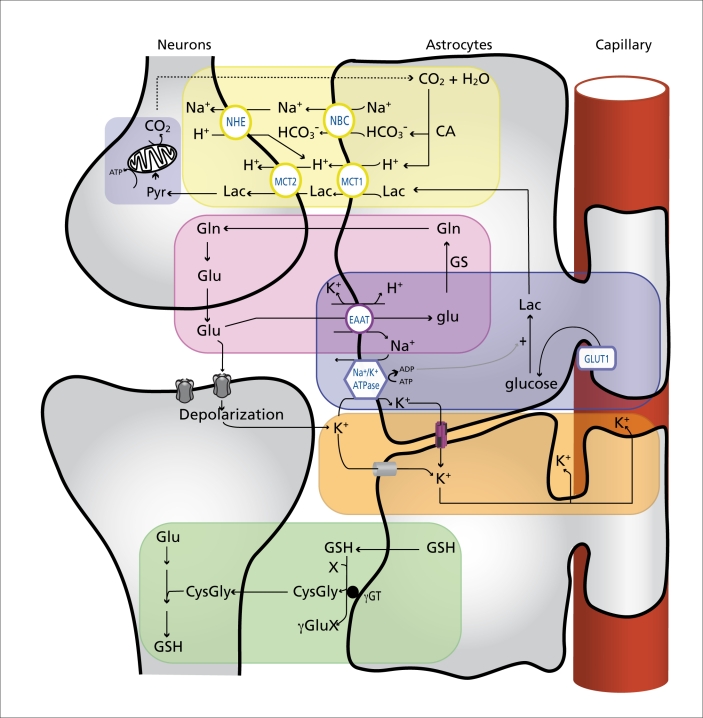
“In brief, according to the ANLS, glutamate uptake into astrocytes following synaptic release causes a stimulation of anaerobic glycolysis and glucose uptake from the circulation via GLUT1, a glucose transporter expressed specifically by glial and capillary endothelial cells in the brain.(42) Lactate produced by astroc…”
Activity-dependent regulation of energy metabolism by astrocytes: an update
Pellerin, L., Bouzier‐Sore, A., Aubert, A., Serres, S., Merle, M., Costalat, R., & Magistretti, P. J. (2007) · Glia · doi:10.1002/glia.20528 · Cited by 805 · cited 3×
“lactate.(41,61) As previously discussed, according to the ANLS hypothesis, this lactate can then be used as an energy substrate by neurons.”
Self-citationAstrocyte dysfunction in neurological disorders: a molecular perspective
Seifert, G., Schilling, K., & Steinhäuser, C. (2006) · Nature Reviews Neuroscience · doi:10.1038/nrn1870 · Cited by 799
Synaptic Islands Defined by the Territory of a Single Astrocyte
Halassa, M. M., Fellin, T., Takano, H., Dong, J.-H., & Haydon, P. G. (2007) · Journal of Neuroscience · doi:10.1523/jneurosci.1419-07.2007 · Cited by 767
Reactive Astrocytes in Neural Repair and Protection
Sofroniew, M. V. (2005) · The Neuroscientist · doi:10.1177/1073858405278321 · Cited by 742 · cited 2×
“Additionally, activated astrocytes can release potentially deleterious ROS and form a glial scar which may impede axon regeneration and neurite outgrowth.(94) This has led to considerable debate as to whether activation of astrocytes is beneficial or detrimental to neighbouring neurons.”
Synchronous Hyperactivity and Intercellular Calcium Waves in Astrocytes in Alzheimer Mice
Kuchibhotla, K. V., Lattarulo, C. R., Hyman, B. T., & Bacskai, B. J. (2009) · Science · doi:10.1126/science.1169096 · Cited by 729 · cited 2×
“These Ca transients were only observed after the mice developed senile plaques and were uncoupled from neuronal activity, suggesting that Aβ interacts directly with the astrocytic network.(133) The involvement of glial cells in the pathogenesis of AD is supported by several in vitro studies demonstrating that their in…”
Astrocytic Ca2+ signaling evoked by sensory stimulation in vivo
Wang, X., Lou, N., Xu, Q., Tian, G.-F., Peng, W. G., Han, X., Kang, J., Takano, T., & Nedergaard, M. (2006) · Nature Neuroscience · doi:10.1038/nn1703 · Cited by 685 · cited 1×
“Indeed, astrocytes can respond to neurotransmitters with transient increases in their intracellular Ca levels, which can travel through the astrocytic syncytium in a wavelike fashion.(14,15) These Ca signals can trigger the release of neuroactive molecules from astrocytes (or gliotransmitters), such as glutamate, D-se…”
Astrocyte glycogen and brain energy metabolism
Brown, A. M., & Ransom, B. R. (2007) · Glia · doi:10.1002/glia.20557 · Cited by 626 · cited 2×
“Indeed, in the CNS glycogen is almost exclusively present in astrocytes and virtually constitutes the only energy reserve.(37,49) Interestingly, it has recently been demonstrated that neurons also possess the enzymatic machinery to synthesize glycogen, but that it normally is tightly suppressed.”
Chronic inhibition of glutamate uptake produces a model of slow neurotoxicity.
Rothstein, J. D., Jin, L., Dykes-Hoberg, M., & Kuncl, R. W. (1993) · Proceedings of the National Academy of Sciences · doi:10.1073/pnas.90.14.6591 · Cited by 623
Felipo, V., & Butterworth, R. F. (2002) · Progress in Neurobiology · doi:10.1016/s0301-0082(02)00019-9 · Cited by 618 · cited 4×
“almost exclusively on glutamine synthesis for the detoxification of ammonia.(159) As mentioned before, this is accomplished by the enzyme glutamine synthetase (GS) which is exclusively localized in astrocytes.”
InfluentialEssential protective roles of reactive astrocytes in traumatic brain injury
Myer, D. J. (2006) · Brain · doi:10.1093/brain/awl165 · Cited by 617
Glutathione Pathways in the Brain
Dringen, R., & Hirrlinger, J. (2003) · Biological Chemistry · doi:10.1515/bc.2003.059 · Cited by 597 · cited 3×
“This is especially true for cysteine, the rate-limiting substrate for GSH synthesis, since neurons, unlike astrocytes, cannot use the cysteine-oxidation product cystine as a precursor.(83) The importance of this cooperative process for neuronal defense against oxidative stress is evidenced by the reduced ability of GS…”
InfluentialInterleukin 1 regulates synthesis of amyloid beta-protein precursor mRNA in human endothelial cells.
Goldgaber, D., Harris, H. W., Hla, T., Maciag, T., Donnelly, R. J., Jacobsen, J. S., Vitek, M. P., & Gajdusek, D. C. (1989) · Proceedings of the National Academy of Sciences · doi:10.1073/pnas.86.19.7606 · Cited by 595
Dringen, R., Pfeiffer, B., & Hamprecht, B. (1999) · The Journal of Neuroscience · doi:10.1523/jneurosci.19-02-00562.1999 · Cited by 589 · cited 1×
“However, neurons are highly dependent on astrocytes for their own GSH synthesis, as illustrated by the fact that GSH levels are higher in neurons when they are cultured in the presence of astrocytes.(84) Astrocytes release GSH in the extracellular space, where it is cleaved by the astrocytic ectoenzyme γ-glutamyl tran…”
Abramov, A. Y., Canevari, L., & Duchen, M. R. (2004) · The Journal of Neuroscience · doi:10.1523/jneurosci.4042-03.2004 · Cited by 587
Brambilla, R., Bracchi-Ricard, V., Hu, W.-H., Frydel, B., Bramwell, A., Karmally, S., Green, E. J., & Bethea, J. R. (2005) · The Journal of Experimental Medicine · doi:10.1084/jem.20041918 · Cited by 586 · cited 1×
“For instance, it has been demonstrated that the selective attenuation of astrocytic proinflammatory processes, through genetic inactivation of the transcription factor NF-κB specifically in this cell type, affords substantial neuroprotection following spinal cord injury.(110) By contrast, using a transgenic mouse mode…”
Interleukin-1 receptor antagonist inhibits ischaemic and excitotoxic neuronal damage in the rat
Relton, J. K., & Rothwell, N. J. (1992) · Brain Research Bulletin · doi:10.1016/0361-9230(92)90033-t · Cited by 546
Astrocytes protect neurons from hydrogen peroxide toxicity
Desagher, S., Glowinski, J., & Premont, J. (1996) · The Journal of Neuroscience · doi:10.1523/jneurosci.16-08-02553.1996 · Cited by 542 · cited 1×
“This neuroprotective capacity of astrocytes may derive from the fact that they possess significantly higher levels of a variety of antioxidant molecules (including glutathione, ascorbate, and vitamin E) and display greater activities for ROS-detoxifying enzymes (including glutathione S-transferase, glutathione peroxid…”
Molecular Mechanisms of Glutamate Receptor-Mediated Excitotoxic Neuronal Cell Death
Sattler, R., & Tymianski, M. (2001) · Molecular Neurobiology · doi:10.1385/mn:24:1-3:107 · Cited by 537 · cited 1×
“Indeed, although glutamate is the primary excitatory neurotransmitter in the brain, overstimulation of glutamate receptors is highly toxic to neurons (reviewed in detail by Sattler and Tymianski).(18) While basal extracellular glutamate levels are maintained in the low micromolar range, they increase dramatically duri…”
Glycogen in astrocytes: possible function as lactate supply for neighboring cells
Dringen, R., Gebhardt, R., & Hamprecht, B. (1993) · Brain Research · doi:10.1016/0006-8993(93)91429-v · Cited by 536
Interleukin-1β Promotes Repair of the CNS
Mason, J. L., Suzuki, K., Chaplin, D. D., & Matsushima, G. K. (2001) · The Journal of Neuroscience · doi:10.1523/jneurosci.21-18-07046.2001 · Cited by 502
ASTROCYTIC NEUROTRANSMITTER RECEPTORS IN SITU AND IN VIVO
PORTER, J. T., & MCCARTHY, K. D. (1997) · Progress in Neurobiology · doi:10.1016/s0301-0082(96)00068-8 · Cited by 498
Bolaños, J. P., Heales, S. J. R., Land, J. M., & Clark, J. B. (1995) · Journal of Neurochemistry · doi:10.1046/j.1471-4159.1995.64051965.x · Cited by 492
Verkhratsky, A., & Steinhäuser, C. (2000) · Brain Research Reviews · doi:10.1016/s0165-0173(99)00093-4 · Cited by 489
Shank, R. P., Bennett, G. S., Freytag, S. O., & Campbell, G. L. (1985) · Brain Research · doi:10.1016/0006-8993(85)90552-9 · Cited by 471 · cited 1×
“Astrocytes are responsible for the replenishment of brain glutamate, as they are the only neural cell type expressing pyruvate carboxylase, a key enzyme in the main anaplerotic pathway in the brain, effectively allowing them to synthesize glutamate from glucose.(30,31) This represents another level of cooperation betw…”
Pro‐regenerative properties of cytokine‐activated astrocytes
Liberto, C. M., Albrecht, P. J., Herx, L. M., Yong, V. W., & Levison, S. W. (2004) · Journal of Neurochemistry · doi:10.1111/j.1471-4159.2004.02420.x · Cited by 464
Role of astrocytes in the clearance of excess extracellular potassium
Walz, W. (2000) · Neurochemistry International · doi:10.1016/s0197-0186(99)00137-0 · Cited by 463 · cited 2×
“Without tight regulatory mechanisms, this could dramatically alter the neuronal membrane potential, leading to neuronal hyperexcitability and seriously compromising CNS function.(32) Such a scenario is prevented by the buffering of extracellular K by glial cells(33,34) (Figure 2, orange box).”
Astrocytes accumulate Aβ42 and give rise to astrocytic amyloid plaques in Alzheimer disease brains
Nagele, R. G., D’Andrea, M. R., Lee, H., Venkataraman, V., & Wang, H.-Y. (2003) · Brain Research · doi:10.1016/s0006-8993(03)02361-8 · Cited by 416
Makar, T. K., Nedergaard, M., Preuss, A., Gelbard, A. S., Perumal, A. S., & Cooper, A. J. L. (1994) · Journal of Neurochemistry · doi:10.1046/j.1471-4159.1994.62010045.x · Cited by 415
Pyruvate Carboxylase Activity in Primary Cultures of Astrocytes and Neurons
Yu, A. C. H., Drejer, J., Hertz, L., & Schousboe, A. (1983) · Journal of Neurochemistry · doi:10.1111/j.1471-4159.1983.tb00849.x · Cited by 406 · cited 1×
“Astrocytes are responsible for the replenishment of brain glutamate, as they are the only neural cell type expressing pyruvate carboxylase, a key enzyme in the main anaplerotic pathway in the brain, effectively allowing them to synthesize glutamate from glucose.(30,31) This represents another level of cooperation betw…”
Astroglia in dementia and Alzheimer's disease
Rodríguez, J. J., Olabarria, M., Chvatal, A., & Verkhratsky, A. (2009) · Cell Death & Differentiation · doi:10.1038/cdd.2008.172 · Cited by 397
Pathogenetic mechanisms of hepatic encephalopathy
Häussinger, D., & Schliess, F. (2008) · Gut · doi:10.1136/gut.2007.122176 · Cited by 389
Rosenberg, P. A., & Aizenman, E. (1989) · Neuroscience Letters · doi:10.1016/0304-3940(89)90569-7 · Cited by 387
Weber, J., Slemmer, J., Shacka, J., & Sweeney, M. (2008) · Current Medicinal Chemistry · doi:10.2174/092986708783497337 · Cited by 386
The glutamate‐glutamine cycle is not stoichiometric: Fates of glutamate in brain
McKenna, M. C. (2007) · Journal of Neuroscience Research · doi:10.1002/jnr.21444 · Cited by 382 · cited 2×
“This transfer is achieved by the well-described glutamate-glutamine cycle (Figure 2, pink box).(27,28) In short, glutamate is converted to glutamine by the astrocytespecific enzyme glutamine synthetase (GS).”
Mechanism suppressing glycogen synthesis in neurons and its demise in progressive myoclonus epilepsy
Vilchez, D., Ros, S., Cifuentes, D., Pujadas, L., Vallès, J., García-Fojeda, B., Criado-García, O., Fernández-Sánchez, E., Medraño-Fernández, I., Domínguez, J., et al. (2007) · Nature Neuroscience · doi:10.1038/nn1998 · Cited by 376 · cited 2×
“Failure to do so results in neuronal apoptosis, suggesting that intracellular glycogen is actually toxic to neurons.(50) In astrocytes, glycogen can be rapidly mobilized in response to neuronal activity.”
Energetics of Functional Activation in Neural Tissues
Sokoloff, L. (1999) · Neurochemical Research · doi:10.1023/a:1022534709672 · Cited by 373 · cited 1×
“This disproportionate energy need compared with other organs can be largely explained by the energetic cost of maintaining the steep ion gradients necessary for the transmission of action potentials.(38) For this reason, neurons in particular have very high energy requirements, and are therefore highly dependent upon…”
Antioxidant defense of the brain: a role for astrocytes
Wilson, J. X. (1997) · Canadian Journal of Physiology and Pharmacology · doi:10.1139/y97-146 · Cited by 349
Akama, K. T., Albanese, C., Pestell, R. G., & Van Eldik, L. J. (1998) · Proceedings of the National Academy of Sciences · doi:10.1073/pnas.95.10.5795 · Cited by 349
Inflammation in central nervous system injury
Allan, S. M., & Rothwell, N. J. (2003) · Philosophical Transactions of the Royal Society of London. Series B: Biological Sciences · doi:10.1098/rstb.2003.1358 · Cited by 345 · cited 1×
“Neuroinflammation has indeed been implicated in several neuropathologies including Alzheimer’s disease, Parkinson’s disease, amyotrophic lateral sclerosis, multiple sclerosis, and stroke.(91) While microglial cells are generally considered the main resident immune cells of the brain, it is important to note that astro…”
Peghini, P., Janzen, J., & Stoffel, W. (1997) · The EMBO Journal · doi:10.1093/emboj/16.13.3822 · Cited by 342 · cited 1×
“Indeed, knockout mice for GLT-1, considered the main astrocytic glutamate transporter, suffer lethal spontaneous seizures and selective hippocampal neuronal degeneration,(24) whereas knockout mice for the neuronal EAAC1 display no apparent neurodegeneration.(25) Interestingly, beta-lactam antibiotics have been shown t…”
Evolution of increased glia–neuron ratios in the human frontal cortex
Sherwood, C. C., Stimpson, C. D., Raghanti, M. A., Wildman, D. E., Uddin, M., Grossman, L. I., Goodman, M., Redmond, J. C., Bonar, C. J., Erwin, J. M., et al. (2006) · Proceedings of the National Academy of Sciences · doi:10.1073/pnas.0605843103 · Cited by 342 · cited 1×
“65 astrocytes per neuron in the human cortex.(3,17) Importantly, more than simply outnumbering their rodent counterparts, human astrocytes are also strikingly more complex, both morphologically and functionally.”
Abramov, A. Y., Canevari, L., & Duchen, M. R. (2003) · The Journal of Neuroscience · doi:10.1523/jneurosci.23-12-05088.2003 · Cited by 337
Neuroinflammation Associated with Aging Sensitizes the Brain to the Effects of Infection or Stress
Sparkman, N. L., & Johnson, R. W. (2008) · Neuroimmunomodulation · doi:10.1159/000156474 · Cited by 332 · cited 1×
“This may in part explain why age is the most important risk factor for developing AD since increased neuroinflammation is associated with normal aging.(150) This enhancement of the basal inflammatory state, together with the gradual accumulation of Aβ which is also seen in the normal aging brain, may provide the trigg…”
β-Amyloid Activates the O⨪2 Forming NADPH Oxidase in Microglia, Monocytes, and Neutrophils
Della Bianca, V., Dusi, S., Bianchini, E., Dal Prà, I., & Rossi, F. (1999) · Journal of Biological Chemistry · doi:10.1074/jbc.274.22.15493 · Cited by 324
Roles of BRCA1 and its interacting proteins
Deng, C.-X., & Brodie, S. G. (2000) · BioEssays · doi:10.1002/1521-1878(200008)22:8<728::aid-bies6>3.0.co;2-b · Cited by 320
Shih, A. Y., Erb, H., Sun, X., Toda, S., Kalivas, P. W., & Murphy, T. H. (2006) · The Journal of Neuroscience · doi:10.1523/jneurosci.3178-06.2006 · Cited by 315 · cited 1×
“Conversely, increasing the capacity to synthesize GSH specifically in astrocytes by increasing their capacity to uptake cystine significantly enhances the neuroprotective effect of astrocytes against oxidative stress.(87) The recycling of ascorbate is another example of cooperation between astrocytes and neurons for a…”
Praticò, D. (2008) · Annals of the New York Academy of Sciences · doi:10.1196/annals.1427.010 · Cited by 313
Heneka, M. T., Sastre, M., Dumitrescu-Ozimek, L., Dewachter, I., Walter, J., Klockgether, T., & Van Leuven, F. (2005) · Journal of Neuroinflammation · doi:10.1186/1742-2094-2-22 · Cited by 309 · cited 1×
“Examples include proinflammatory cytokines such as IL-1β and IL-6, and reactive oxygen and nitrogen species (RN/ROS) such as NO and O2 .(132,139-143) Proinflammatory cytokines have been shown to exacerbate the microglial response to Aβ and to enhance its neurotoxic effects.”
Cytokines: Powerful Regulators of Glial Cell Activation
John, G. R., Lee, S. C., & Brosnan, C. F. (2003) · The Neuroscientist · doi:10.1177/1073858402239587 · Cited by 300 · cited 3×
“Adding another level of complexity, astrocytes express several cytokine receptors and can therefore also be a target of cytokine signaling through autocrine or paracrine mechanisms.(11) While cytokines are categorized as proinflammatory or anti-inflammatory, understanding their exact individual effect is far more comp…”
pH regulation and proton signalling by glial cells
Deitmer, J. W., & Rose, C. R. (1996) · Progress in Neurobiology · doi:10.1016/0301-0082(95)00039-9 · Cited by 296 · cited 1×
“Several neuronal processes are strongly affected by relatively small shifts in pH, including energy metabolism, membrane conductance, neuronal excitability, synaptic transmission, and gap junction communication.(60,62) The main feature of glial cells, endowing them with a high pH buffering capacity, is their enriched…”
Impaired neuroglial activation in interleukin-6 deficient mice
Klein, M. A., M�ller, J. C., Jones, L. L., Bluethmann, H., Kreutzberg, G. W., & Raivich, G. (1997) · Glia · doi:10.1002/(sici)1098-1136(199703)19:3<227::aid-glia5>3.0.co;2-w · Cited by 289
Inhibition of brain glutamine accumulation prevents cerebral edema in hyperammonemic rats
Takahashi, H., Koehler, R. C., Brusilow, S. W., & Traystman, R. J. (1991) · American Journal of Physiology-Heart and Circulatory Physiology · doi:10.1152/ajpheart.1991.261.3.h825 · Cited by 262 · cited 1×
“This is supported by the demonstration that inhibition of GS with methionine sulfoxide prevents brain edema in experimental hyperammonemia.(160) Alternatively, glutamine may also induce astrocytic swelling via other mechanisms, including oxidative and nitrosative stress.”
Schurr, A., Payne, R. S., Miller, J. J., & Rigor, B. M. (1997) · Journal of Neurochemistry · doi:10.1046/j.1471-4159.1997.69010423.x · Cited by 262
Astrocytes Regulate Microglial Phagocytosis of Senile Plaque Cores of Alzheimer's Disease
DeWitt, D. A., Perry, G., Cohen, M., Doller, C., & Silver, J. (1998) · Experimental Neurology · doi:10.1006/exnr.1997.6738 · Cited by 261 · cited 1×
“In line with this, microglial phagocytosis was shown to be markedly suppressed in the presence of astrocytes, which resulted in increased persistence of senile plaques when presented to microglia in vitro.(158) In summary, the apparently conflicting roles of astrocytes in the progression of AD may be explained by the…”
Blasko, I., Veerhuis, R., Stampfer-Kountchev, M., Saurwein-Teissl, M., Eikelenboom, P., & Grubeck-Loebenstein, B. (2000) · Neurobiology of Disease · doi:10.1006/nbdi.2000.0321 · Cited by 258
Min, K.-J., Yang, M.-S., Kim, S.-U., Jou, I., & Joe, E.-H. (2006) · The Journal of Neuroscience · doi:10.1523/jneurosci.3696-05.2006 · Cited by 257
Forloni, G., Demicheli, F., Giorgi, S., Bendotti, C., & Angeretti, N. (1992) · Molecular Brain Research · doi:10.1016/0169-328x(92)90202-m · Cited by 256
Neuroprotective role of astrocytes in cerebral ischemia: Focus on ischemic preconditioning
Trendelenburg, G., & Dirnagl, U. (2005) · Glia · doi:10.1002/glia.20204 · Cited by 256 · cited 1×
“While cytokines are categorized as proinflammatory or anti-inflammatory, understanding their exact individual effect is far more complex, as many of them interact with each other (either antagonistically or synergistically) and may additionally have pleiotropic effects.(11,95) As a result, cytokines can potentially me…”
Astrocytes protect neurons from nitric oxide toxicity by a glutathione‐dependent mechanism
Chen, Y., Vartiainen, N. E., Ying, W., Chan, P. H., Koistinaho, J., & Swanson, R. A. (2001) · Journal of Neurochemistry · doi:10.1046/j.1471-4159.2001.00374.x · Cited by 252 · cited 1×
“The importance of this cooperative process for neuronal defense against oxidative stress is evidenced by the reduced ability of GSHdepleted astrocytes to protect neurons against oxidative injury.(85,86) Conversely, increasing the capacity to synthesize GSH specifically in astrocytes by increasing their capacity to upt…”
Dringen, R., Kussmaul, L., Gutterer, J. M., Hirrlinger, J., & Hamprecht, B. (1999) · Journal of Neurochemistry · doi:10.1046/j.1471-4159.1999.0722523.x · Cited by 243
Glycogen regulation and functional role in mouse white matter
Brown, A. M., Tekkök, S. B., & Ransom, B. R. (2003) · The Journal of Physiology · doi:10.1113/jphysiol.2003.042416 · Cited by 243 · cited 1×
“In astrocytes, glycogen can be rapidly mobilized in response to neuronal activity.(51,52) The glycosyl units resulting from glycogen breakdown are fed into the glycolytic pathway of astrocytes, and released into the extracellular space in the form of lactate which can be used to face the transiently elevated energy re…”
Fatty Acid Oxidation and Ketogenesis by Astrocytes in Primary Culture
Auestad, N., Korsak, R. A., Morrow, J. W., & Edmond, J. (1991) · Journal of Neurochemistry · doi:10.1111/j.1471-4159.1991.tb11435.x · Cited by 240
Sensory stimulation induces local cerebral glycogenolysis: Demonstration by autoradiography
Swanson, R. A., Morton, M. M., Sagar, S. M., & Sharp, F. R. (1992) · Neuroscience · doi:10.1016/0306-4522(92)90329-z · Cited by 237 · cited 1×
“In astrocytes, glycogen can be rapidly mobilized in response to neuronal activity.(51,52) The glycosyl units resulting from glycogen breakdown are fed into the glycolytic pathway of astrocytes, and released into the extracellular space in the form of lactate which can be used to face the transiently elevated energy re…”
D'Ambrosio, R., Gordon, D. S., & Winn, H. R. (2002) · Journal of Neurophysiology · doi:10.1152/jn.00240.2001 · Cited by 236
Inflammatory Aspects of Alzheimer Disease and Other Neurodegenerative Disorders
Schwab, C., & McGeer, P. L. (2008) · Journal of Alzheimer's Disease · doi:10.3233/jad-2008-13402 · Cited by 234
Dysfunctional astrocytes as key players in the pathogenesis of central nervous system disorders
De Keyser, J., Mostert, J. P., & Koch, M. W. (2008) · Journal of the Neurological Sciences · doi:10.1016/j.jns.2007.08.044 · Cited by 234
Prehn, J. H. M., Backhauß, C., & Krieglstein, J. (1993) · Journal of Cerebral Blood Flow & Metabolism · doi:10.1038/jcbfm.1993.67 · Cited by 226
Lüth, H.-J., Münch, G., & Arendt, T. (2002) · Brain Research · doi:10.1016/s0006-8993(02)03280-8 · Cited by 225 · cited 5×
“Because of their central role in neuroinflammation (see previous section), glial cells may provide a valuable therapeutic target for the treatment of AD.”
InfluentialAbramov, A. Y., Canevari, L., & Duchen, M. R. (2004) · Biochimica et Biophysica Acta (BBA) - Molecular Cell Research · doi:10.1016/j.bbamcr.2004.09.006 · Cited by 223
Astrocytes prevent neuronal death induced by reactive oxygen and nitrogen species
Tanaka, J., Toku, K., Zhang, B., Ishihara, K., Sakanaka, M., & Maeda, N. (1999) · Glia · doi:10.1002/(sici)1098-1136(199911)28:2<85::aid-glia1>3.0.co;2-y · Cited by 221 · cited 1×
“This is supported by a number of studies demonstrating that when cultured in the presence of astrocytes, neurons show increased resistance to toxic doses of nitric oxide,(69,70) hydrogen peroxide,(71-73) superoxide anion combined with nitric oxide,(69,74) or iron.(69,74) This neuroprotective capacity of astrocytes may…”
Neuroprotective and neurotoxic properties of glial cells in the pathogenesis of Alzheimer's disease
Farfara, D., Lifshitz, V., & Frenkel, D. (2008) · Journal of Cellular and Molecular Medicine · doi:10.1111/j.1582-4934.2008.00314.x · Cited by 216
Strijbos, P., & Rothwell, N. (1995) · The Journal of Neuroscience · doi:10.1523/jneurosci.15-05-03468.1995 · Cited by 214
The pivotal role of astrocytes in the metabolism of iron in the brain
Dringen, R., Bishop, G. M., Koeppe, M., Dang, T. N., & Robinson, S. R. (2007) · Neurochemical Research · doi:10.1007/s11064-007-9375-0 · Cited by 209
Alzheimer Disease: Mechanistic Understanding Predicts Novel Therapies
Selkoe, D. J. (2004) · Annals of Internal Medicine · doi:10.7326/0003-4819-140-8-200404200-00047 · Cited by 208
Henrich-Noack, P., Prehn, J. H. M., & Krieglstein, J. (1996) · Stroke · doi:10.1161/01.str.27.9.1609 · Cited by 202
Ceruloplasmin gene expression in the murine central nervous system.
Klomp, L. W., Farhangrazi, Z. S., Dugan, L. L., & Gitlin, J. D. (1996) · Journal of Clinical Investigation · doi:10.1172/jci118768 · Cited by 194
Interleukin-1 Mediates Induction of Tolerance to Global Ischemia in Gerbil Hippocampal CA1 Neurons
Ohtsuki, T., Ruetzler, C. A., Tasaki, K., & Hallenbeck, J. M. (1996) · Journal of Cerebral Blood Flow & Metabolism · doi:10.1097/00004647-199611000-00007 · Cited by 192
Sheng, J. G., Mrak, R. E., & Griffin, W. S. T. (1997) · Acta Neuropathologica · doi:10.1007/s004010050664 · Cited by 190
Herx, L. M., Rivest, S., & Yong, V. W. (2000) · The Journal of Immunology · doi:10.4049/jimmunol.165.4.2232 · Cited by 190
Frautschy, S. A., Cole, G. M., & Baird, A. (1992) · PubMed Central · Cited by 178
The role of neuronal signaling in controlling cerebral blood flow
DRAKE, C., & IADECOLA, C. (2007) · Brain and Language · doi:10.1016/j.bandl.2006.08.002 · Cited by 177 · cited 1×
“Importantly, the role of astrocytes in functional hyperemia does not preclude a concerted contribution of neurons via the release of vasoactive substances such as neurotransmitters, nitric oxide, H, and K to name a few.(39) Although neurons can import glucose directly from the extracellular space, astrocytes have been…”
New concepts in the mechanism of ammonia-induced astrocyte swelling
Norenberg, M. D., Jayakumar, A. R., Rama Rao, K. V., & Panickar, K. S. (2007) · Metabolic Brain Disease · doi:10.1007/s11011-007-9062-5 · Cited by 174 · cited 1×
“Alternatively, glutamine may also induce astrocytic swelling via other mechanisms, including oxidative and nitrosative stress.(161) Interestingly, glutamine efflux from asctrocytes through the system N transporter appears to be negatively regulated by elevated extracellular glutamine in hyperammonemic conditions.”
Ketone body synthesis in the brain: possible neuroprotective effects
Guzmán, M., & Blázquez, C. (2004) · Prostaglandins Leukotrienes and Essential Fatty Acids · doi:10.1016/j.plefa.2003.05.001 · Cited by 171 · cited 1×
“It has been suggested that this pathway may also serve a neuroprotective purpose by scavenging nonesterified phospholipids which can lead to the production of proapoptotic sphingolipids.(58,59)”
Lawrence, C. B., Allan, S. M., & Rothwell, N. J. (1998) · European Journal of Neuroscience · doi:10.1046/j.1460-9568.1998.00136.x · Cited by 171
Brown, A. M., Sickmann, H. M., Fosgerau, K., Lund, T. M., Schousboe, A., Waagepetersen, H. S., & Ransom, B. R. (2005) · Journal of Neuroscience Research · doi:10.1002/jnr.20335 · Cited by 169
Gegg, M. E., Beltran, B., Salas‐Pino, S., Bolanos, J. P., Clark, J. B., Moncada, S., & Heales, S. J. R. (2003) · Journal of Neurochemistry · doi:10.1046/j.1471-4159.2003.01821.x · Cited by 168
Astroglia as Metal Depots: Molecular Mechanisms for Metal Accumulation, Storage and Release
Tiffany-Castiglioni, E., & Qian, Y. (2001) · NeuroToxicology · doi:10.1016/s0161-813x(01)00050-x · Cited by 166 · cited 1×
“In addition, it appears that astrocytes may also play an active role in preventing the generation of free radicals by redox active metals, as they participate in metal sequestration in the brain.(79) This is achieved in part through their high expression levels of metallothioneins and ceruloplasmin, which are involved…”
Obara, M., Szeliga, M., & Albrecht, J. (2008) · Neurochemistry International · doi:10.1016/j.neuint.2007.10.015 · Cited by 164 · cited 2×
“Indeed, CA is preferentially expressed in astrocytes and oligodendrocytes,(63,64) although low activity levels are also observed in neurons and in the extracellular space.(62) A coupling mechanism which integrates synaptic transmission, pH regulation, and energy supply between neurons and glia has been proposed by J.”
Pihlaja, R., Koistinaho, J., Malm, T., Sikkilä, H., Vainio, S., & Koistinaho, M. (2008) · Glia · doi:10.1002/glia.20599 · Cited by 162 · cited 6×
“Because of their central role in neuroinflammation (see previous section), glial cells may provide a valuable therapeutic target for the treatment of AD.”
InfluentialSchurr, A., Payne, R. S., Miller, J. J., Tseng, M. T., & Rigor, B. M. (2001) · Brain Research · doi:10.1016/s0006-8993(01)02082-0 · Cited by 155
Thornton, P., Pinteaux, E., Gibson, R. M., Allan, S. M., & Rothwell, N. J. (2006) · Journal of Neurochemistry · doi:10.1111/j.1471-4159.2006.03872.x · Cited by 152
Glial transporters for glutamate, glycine, and GABA: II. GABA transporters
Gadea, A., & López‐Colomé, A. M. (2001) · Journal of Neuroscience Research · doi:10.1002/jnr.1040 · Cited by 150
The role of astrocytes in the physiology and pathology of the central nervous system
Markiewicz, I., & Lukomska, B. (2006) · Acta Neurobiologiae Experimentalis · doi:10.55782/ane-2006-1623 · Cited by 148
Ranaivo, H. R., Craft, J. M., Hu, W., Guo, L., Wing, L. K., Van Eldik, L. J., & Watterson, D. M. (2006) · The Journal of Neuroscience · doi:10.1523/jneurosci.4652-05.2006 · Cited by 137
Interleukin-1β is Required for the Early Evolution of Reactive Astrogliosis Following CNS Lesion
Herx, L. M., & Yong, V. W. (2001) · Journal of Neuropathology & Experimental Neurology · doi:10.1093/jnen/60.10.961 · Cited by 135
Huang, J., & Philbert, M. A. (1995) · Brain Research · doi:10.1016/0006-8993(95)00209-9 · Cited by 135
Ruocco, A., Nicole, O., Docagne, F., Ali, C., Chazalviel, L., Komesli, S., Yablonsky, F., Roussel, S., MacKenzie, E. T., Vivien, D., et al. (1999) · Journal of Cerebral Blood Flow & Metabolism · doi:10.1097/00004647-199912000-00008 · Cited by 128
MCNaught, K. S. P., & Jenner, P. (1999) · Journal of Neurochemistry · doi:10.1046/j.1471-4159.1999.0732469.x · Cited by 128 · cited 1×
“The importance of this cooperative process for neuronal defense against oxidative stress is evidenced by the reduced ability of GSHdepleted astrocytes to protect neurons against oxidative injury.(85,86) Conversely, increasing the capacity to synthesize GSH specifically in astrocytes by increasing their capacity to upt…”
Escartin, C., Pierre, K., Colin, A., Brouillet, E., Delzescaux, T., Guillermier, M., Dhenain, M., Déglon, N., Hantraye, P., Pellerin, L., et al. (2007) · The Journal of Neuroscience · doi:10.1523/jneurosci.0174-07.2007 · Cited by 126 · cited 1×
“It has been suggested that this pathway may also serve a neuroprotective purpose by scavenging nonesterified phospholipids which can lead to the production of proapoptotic sphingolipids.(58,59)”
Vincent, V. A. M., Tilders, F. J. H., & Van Dam, A.-M. (1997) · Glia · doi:10.1002/(sici)1098-1136(199703)19:3<190::aid-glia2>3.0.co;2-3 · Cited by 124
Regulation of GDNF expression in cultured astrocytes by inflammatory stimuli
Appel, E., Kolman, O., Kazimirsky, G., Blumberg, P. M., & Brodie, C. (1997) · NeuroReport · doi:10.1097/00001756-199710200-00023 · Cited by 123
Microglial reactivity to β-amyloid is modulated by astrocytes and proinflammatory factors
Rommy von Bernhardi, M., & Eugenín, J. L. (2004) · Brain Research · doi:10.1016/j.brainres.2004.07.084 · Cited by 115
Interleukm‐1 receptor antagonist suppresses neurotrophin response in injured rat brain
Dekosky, S. T., Styren, S. D., O'Malley, M. E., Goss, J. R., Kochanek, P., Marion, D., Evans, C. H., & Robbins, P. D. (1996) · Annals of Neurology · doi:10.1002/ana.410390118 · Cited by 113
Glia are the main source of lactate utilized by neurons for recovery of function posthypoxia
Schurr, A., Payne, R. S., Miller, J. J., & Rigor, B. M. (1997) · Brain Research · doi:10.1016/s0006-8993(97)81708-8 · Cited by 113
Fujita, T., Tozaki‐Saitoh, H., & Inoue, K. (2009) · Glia · doi:10.1002/glia.20749 · Cited by 112
Directed spatial potassium redistribution in rat neocortex
Holthoff, K., & Witte, O. W. (2000) · Glia · doi:10.1002/(sici)1098-1136(20000201)29:3<288::aid-glia10>3.0.co;2-8 · Cited by 107 · cited 1×
“These features, in conjunction with the action of the Na/K ATPase, enable astrocytes to accumulate the excess extracellular K,(36) which can then travel in the astrocytic syncitium through gap junctions down its concentration gradient.(34,35) This allows for the spatial dispersion of K from areas of high concentration…”
Aminopyridazines inhibit β-amyloid-induced glial activation and neuronal damage in vivo
Craft, J. M., Watterson, D. M., Frautschy, S. A., & Eldik, L. J. V. (2004) · Neurobiology of Aging · doi:10.1016/j.neurobiolaging.2004.01.006 · Cited by 101
Generation of Ketone Bodies from Leucine by Cultured Astroglial Cells
Bixel, M. G., & Hamprecht, B. (1995) · Journal of Neurochemistry · doi:10.1046/j.1471-4159.1995.65062450.x · Cited by 100
Craft, J. M., Watterson, D. M., Hirsch, E., & Van Eldik, L. J. (2005) · Journal of Neuroinflammation · doi:10.1186/1742-2094-2-15 · Cited by 96
Langeveld, C. H., Jongenelen, C. A. M., Schepens, E., Stoof, J. C., Bast, A., & Drukarch, B. (1995) · Neuroscience Letters · doi:10.1016/0304-3940(95)11596-o · Cited by 94
Hailer, N. P., Vogt, C., Korf, H., & Dehghani, F. (2005) · European Journal of Neuroscience · doi:10.1111/j.1460-9568.2005.04067.x · Cited by 90
Lucius, R., & Sievers, J. (1996) · Brain Research · doi:10.1016/s0006-8993(96)01029-3 · Cited by 88 · cited 1×
“This is supported by a number of studies demonstrating that when cultured in the presence of astrocytes, neurons show increased resistance to toxic doses of nitric oxide,(69,70) hydrogen peroxide,(71-73) superoxide anion combined with nitric oxide,(69,74) or iron.(69,74) This neuroprotective capacity of astrocytes may…”
Pyruvate and lactate protect striatal neurons against N‐methyl‐d‐aspartate‐induced neurotoxicity
Maus, M., Marin, P., Israël, M., Glowinski, J., & Prémont, J. (1999) · European Journal of Neuroscience · doi:10.1046/j.1460-9568.1999.00745.x · Cited by 88
Hailer, N. P., Wirjatijasa, F., Roser, N., Hischebeth, G. T. R., Korf, H., & Dehghani, F. (2001) · European Journal of Neuroscience · doi:10.1046/j.0953-816x.2001.01649.x · Cited by 83
Interferon-gamma increases neuronal death in response to amyloid-beta1-42.
Bate, C., Kempster, S. L., Last, V., & Williams, A. (2006) · Journal of Neuroinflammation · doi:10.1186/1742-2094-3-7 · Cited by 82
Brucklacher, R. M., Vannucci, R. C., & Vannucci, S. J. (2002) · Developmental Neuroscience · doi:10.1159/000069051 · Cited by 81 · cited 1×
“For example, it has been demonstrated that brain glycogen levels are increased following mild hypoxic preconditioning in vivo, resulting in significant protection from brain damage as a result of subsequent cerebral hypoxic-ischemic injury.(55) Beyond lactate, it is of interest to note that astrocytes may also transfe…”
Differential induction of chemokines in human microglia by type i and ii interferons
Mcmanus, C. M., Liu, J. S. H., Hahn, M. T., Hua, L. L., Brosnan, C. F., Berman, J. W., & Lee, S. C. (2000) · Glia · doi:10.1002/(sici)1098-1136(20000201)29:3<273::aid-glia8>3.0.co;2-9 · Cited by 71
Cater, H. L., Benham, C. D., & Sundstrom, L. E. (2001) · The Journal of Physiology · doi:10.1111/j.1469-7793.2001.0459i.x · Cited by 70
Kurt, M. A., Davies, D. C., & Kidd, M. (1999) · Experimental Neurology · doi:10.1006/exnr.1999.7096 · Cited by 69
Iron overload and antioxidative role of perivascular astrocytes in aceruloplasminemia
Oide, T., Yoshida, K., Kaneko, K., Ohta, M., & Arima, K. (2006) · Neuropathology and Applied Neurobiology · doi:10.1111/j.1365-2990.2006.00710.x · Cited by 69
Astrocyte modulation of in vitro β‐amyloid neurotoxicity
Paradisi, S., Sacchetti, B., Balduzzi, M., Gaudi, S., & Malchiodi‐Albedi, F. (2004) · Glia · doi:10.1002/glia.20005 · Cited by 68
Malchiodi‐Albedi, F., Domenici, M. R., Paradisi, S., Bernardo, A., Ajmone‐Cat, M. A., & Minghetti, L. (2001) · Glia · doi:10.1002/glia.1041 · Cited by 64
Ho, A., & Blum, M. (1997) · Experimental Neurology · doi:10.1006/exnr.1997.6659 · Cited by 62
Glial transporters for glutamate, glycine, and GABA III. Glycine transporters
Gadea, A., & López-Colomé, A. M. (2001) · Journal of Neuroscience Research · doi:10.1002/jnr.1069 · Cited by 60
Neurons set the tone of gap junctional communication in astrocytic networks
Rouach, N., Koulakoff, A., & Giaume, C. (2004) · Neurochemistry International · doi:10.1016/j.neuint.2003.07.004 · Cited by 59 · cited 1×
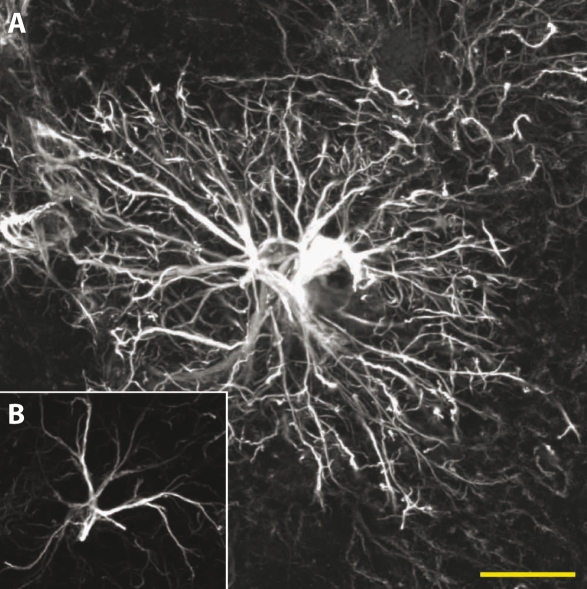
“Astrocytes are territorial cells: they extend several processes with little overlap between adjacent cells, forming highly organized anatomical domains(1-3) which are interconnected into functional syncytia via abundant gap junctions.(4) These astrocytic processes closely ensheath synapses and express a wide range of…”
Sáez, E. T., Pehar, M., Vargas, M. R., Barbeito, L., & Maccioni, R. B. (2006) · Journal of Neuroscience Research · doi:10.1002/jnr.20996 · Cited by 47
Jurič, D. M., & Čarman‐Kržan, M. (2001) · International Journal of Developmental Neuroscience · doi:10.1016/s0736-5748(01)00044-2 · Cited by 46
Activation of Human Macrophages by Amyloid-β Is Attenuated by Astrocytes
Smits, H. A., van Beelen, A. J., de Vos, N. M., Rijsmus, A., van der Bruggen, T., Verhoef, J., van Muiswinkel, F. L., & Nottet, H. S. L. M. (2001) · The Journal of Immunology · doi:10.4049/jimmunol.166.11.6869 · Cited by 46
Agnati, L. F., Tinner, B., Staines, W. A., Väänänen, K., & Fuxé, K. (1995) · Brain Research · doi:10.1016/0006-8993(95)00026-m · Cited by 42
SHAO, Y., GEARING, M., & MIRRA, S. S. (1997) · Journal of Neuropathology and Experimental Neurology · doi:10.1097/00005072-199704000-00006 · Cited by 41
Glial strategy for metabolic shuttling and neuronal function
Deitmer, J. W. (2000) · BioEssays · doi:10.1002/1521-1878(200008)22:8<747::aid-bies8>3.0.co;2-0 · Cited by 41 · cited 2×
“Deiter.(61,65) According to this model, during periods of high neuronal activity, the CO2 produced by elevated (mostly neuronal) oxidative metabolism diffuses into glial cells and is converted to H and HCO3 - by the action of glial CA.”
Cammer, W., & Tasey, F. A. (1988) · The Journal of Comparative Neurology · doi:10.1002/cne.902750106 · Cited by 39
Selkirk, J. V., Nottebaum, L. M., Vana, A. M., Verge, G. M., Mackay, K. B., Stiefel, T. H., Naeve, G. S., Pomeroy, J. E., Petroski, R. E., Moyer, J., et al. (2005) · European Journal of Neuroscience · doi:10.1111/j.1460-9568.2005.04162.x · Cited by 36
A role for CO2 and bicarbonate transporters in metabolic exchanges in the brain
Deitmer, J. W. (2002) · Journal of Neurochemistry · doi:10.1046/j.0022-3042.2002.00765.x · Cited by 36 · cited 4×
“Alternatively, protons released into the extracellular space may also be reconverted to CO2 and water by the action of extracellular CA at the expense of one HCO3 .(61) This model suggests that pH buffering taking place in glial cells during neuronal activation may also act cooperatively to: i) contribute, via the Na-…”
InfluentialRamírez, G., Rey, S., & von Bernhardi, R. (2008) · Journal of Alzheimer's Disease · doi:10.3233/jad-2008-15104 · Cited by 35
Glial cells participate in histamine inactivation in vivo
Huszti, Z., Prast, H., Tran, M. H., Fischer, H., & Philippu, A. (1997) · Naunyn-Schmiedeberg s Archives of Pharmacology · doi:10.1007/pl00005137 · Cited by 35
Kanamori, K., & Ross, B. D. (2005) · Journal of Neurochemistry · doi:10.1111/j.1471-4159.2005.03170.x · Cited by 32 · cited 1×
“Interestingly, glutamine efflux from asctrocytes through the system N transporter appears to be negatively regulated by elevated extracellular glutamine in hyperammonemic conditions.(162) Such a mechanism may contribute to trap glutamine in astrocytes and promote swelling.”
The presence of astrocytes enhances beta amyloid-induced neurotoxicity in hippocampal cell cultures
Domenici, M. R., Paradisi, S., Sacchetti, B., Gaudi, S., Balduzzi, M., Bernardo, A., Ajmone‐Cat, M. A., Minghetti, L., & Malchiodi‐Albedi, F. (2002) · Journal of Physiology-Paris · doi:10.1016/s0928-4257(02)00021-9 · Cited by 23
(1998) · doi:10.1002/(sici)1098-1136(199805)23:1<1::aid-glia1>3.0.co;2-b · cited 1×
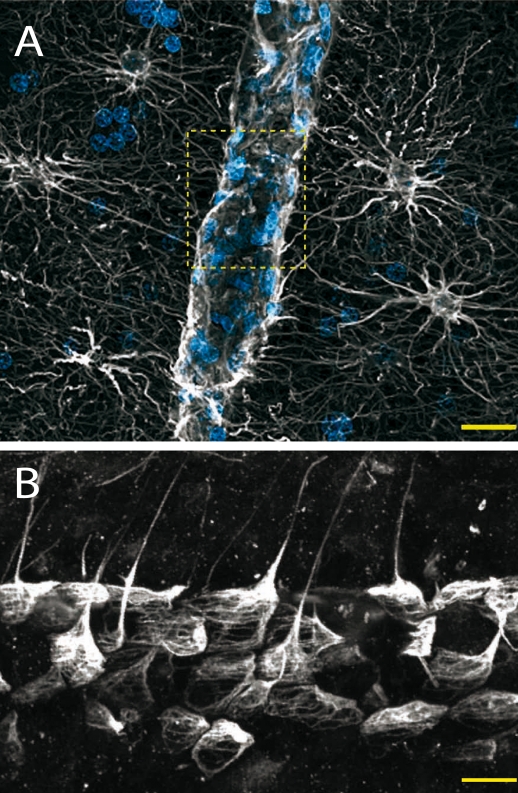
“In addition, astrocytes project specialized astrocytic endfeet which are in close contact with intraparenchymal blood vessels, almost entirely covering their surface.(12,13) Together, these cytoarchitectural and phenotypical features ideally position astrocytes to fulfill a pivotal role in brain homeostasis, allowing…”
Research works printed but not linked: 1
- Magistretti PJ. Brain energy metabolism. In: Squire LR, Bloom FE, McConnell SK, Roberts JL, Spitzer NC, Zigmond MJ, eds. Fundamental Neuroscience. 3rd ed. San Diego, CAL: Academic Press 2008 271 292
Cited by
Brain energy metabolism: focus on Astrocyte-neuron metabolic cooperation
Bélanger, M., Allaman, I., & Magistretti, P. J. (2011) · Cell Metabolism · doi:10.1016/j.cmet.2011.08.016 · Cited by 2,313
“…of NO, H2O2, superoxide anion combined with NO, iron, or 6-hydroxydopamine (Wilson, 1997; Vargas and Johnson, 2009; Dringen, 2000; Belanger and Magistretti, 2009), suggesting that neurons are dependent upon the high antioxidant potential of astrocytes for their own defense against oxidative…”
InfluentialSelf-citationCytokines and chemokines: At the crossroads of cell signalling and inflammatory disease
Turner, M. D., Nedjai, B., Hurst, T., & Pennington, D. J. (2014) · Biochimica et Biophysica Acta (BBA) - Molecular Cell Research · doi:10.1016/j.bbamcr.2014.05.014 · Cited by 2,162
“Microglia are particularly important in the CNS immune response and are generally thought to be neuroprotective, with resting microglia becoming activated in the presence of pathogens, damaged cells and cell debris, and functioning to clear perceived danger signals to protect neurons [211].”
Major depressive disorder: hypothesis, mechanism, prevention and treatment
Cui, L., Li, S., Wang, S., Wu, X., Liu, Y., Yu, W., Wang, Y., Tang, Y., Xia, M., & Li, B. (2024) · Signal Transduction and Targeted Therapy · doi:10.1038/s41392-024-01738-y · Cited by 1,244
“135 Astrocytes are the major producers of glutathione in the brain because they express a system xc-cyttine/glutamate antiporter, which does not exist in neurons; hence, neurons cannot synthesize glutathione.”
InfluentialNeuroinflammation and depression: A review
Troubat, R., Barone, P., Leman, S., Desmidt, T., Cressant, A., Atanasova, B., Brizard, B., El Hage, W., Surget, A., Belzung, C., et al. (2021) · European Journal of Neuroscience · doi:10.1111/ejn.14720 · Cited by 1,107
Inflammation in Alzheimer Disease--A Brief Review of the Basic Science and Clinical Literature
Wyss-Coray, T., & Rogers, J. (2012) · Cold Spring Harbor Perspectives in Medicine · doi:10.1101/cshperspect.a006346 · Cited by 975
“org) (Bertram et al. 2007). Changes in inflammatory pathways have also been noted in several microarray studies of gene expression profiles in AD brains or peripheral blood cells compared with those from healthy controls. In a review comparing several such transcriptome studies of the aging brain with those in AD, Bla…”
Metadata
- Authors
- Bélanger, M., & Magistretti, P. J.
- Affiliations
- École Polytechnique Fédérale de Lausanne (CH)
- Centre Hospitalier Universitaire Vaudois (CH)
- Corresponding author
- Magistretti, Pierre J.
- Venue
- Dialogues in Clinical Neuroscience
- Publisher
- Informa UK Limited
- Published
- 2009-09-30
- Volume
- 11
- Issue
- 3
- Pages
- 281-295
- ISSN
- 1294-8322 (ISSN-L)
- 1958-5969
- PMC
- PMC3181926
- OpenAlex
- W1858755391
- Cited by
- 396
- References
- 161
- Citations by year
- 2026: 13 · 2025: 24 · 2024: 26 · 2023: 22 · 2022: 26 · 2021: 40 · 2020: 38 · 2019: 29 · 2018: 44 · 2017: 30 · 2016: 18 · 2015: 25 · 2014: 12 · 2013: 16 · 2012: 10
- FWCI
- 7.03
- Type
- journal article
- Language
- en
- Open access
- diamond
- doi.org
- Licence
- Locations
- Dialogues in Clinical Neuroscience (publishedVersion, cc-by-nc-nd)
- Europe PMC (PubMed Central) (publishedVersion, cc-by-nc-nd)
- PubMed Central (publishedVersion, cc-by-nc-nd)
- PubMed (publishedVersion)
- IRIS (submittedVersion)
- Infoscience (Ecole Polytechnique Fédérale de Lausanne) (submittedVersion)
- Infoscience (Ecole Polytechnique Fédérale de Lausanne) (submittedVersion, cc-by-nc-nd)
- SERVAL (Université de Lausanne) (submittedVersion, other-oa)
- Funders
- National Science Foundation
- Schweizerischer Nationalfonds zur Förderung der Wissenschaftlichen Forschung (3100AO, 108336)
- Topics
- Life Sciences › Neuroscience › Neurology › Neuroinflammation and Neurodegeneration Mechanisms
- Life Sciences › Neuroscience › Cellular and Molecular Neuroscience › Neuroscience and Neuropharmacology Research
- Health Sciences › Medicine › Clinical Neurology › Traumatic Brain Injury and Neurovascular Disturbances
- Keywords
- astrocytes, neuroprotection, brain homeostasis, astrocyte-neuron interaction, ion homeostasis, energy metabolism, oxidative stress, neuroinflammation, Alzheimer's disease, hepatic encephalopathy
- MeSH terms
- Animals, Astrocytes, Brain, Brain Diseases, Homeostasis, Humans, Models, Biological, Neurons, Neuroprotective Agents
About these checks
Registry, retraction, Cites and statistics results are computed, not judged, with one exception: a printed reference that no index lists is read once by a model before it counts as a citation error. Claims are extracted by a model and kept only when their quote appears verbatim in the text; each cited source is then checked, with a model’s help, for whether it says what the claim relies on. Those verdicts can be wrong — read the claim’s quote and the cited source before relying on one.
Statistics and arithmetic are recomputed, not judged.
Confidence bands are shown only for fields calibrated on our annotated test set. None is calibrated yet, so no band is shown.
What counts as a claim ›How we measure confidence ›How we check this ›
Are you an author, or do you see a problem with this page? Request a review
Data sources
Bibliographic data: Semantic Scholar, OpenAlex, Crossref.
Contains information from the Semantic Scholar Academic Graph Datasets, made available under the ODC Attribution License (ODC-BY 1.0).
Semantic Scholar’s data is described in: Kinney, R., et al. (2023). The Semantic Scholar Open Data Platform. arXiv:2301.10140.
