

Corticostriatal circuitry
Open accessThe DOI matches its Crossref record; 117 of the 117 references it cites were found in a registry or an index.
Abstract
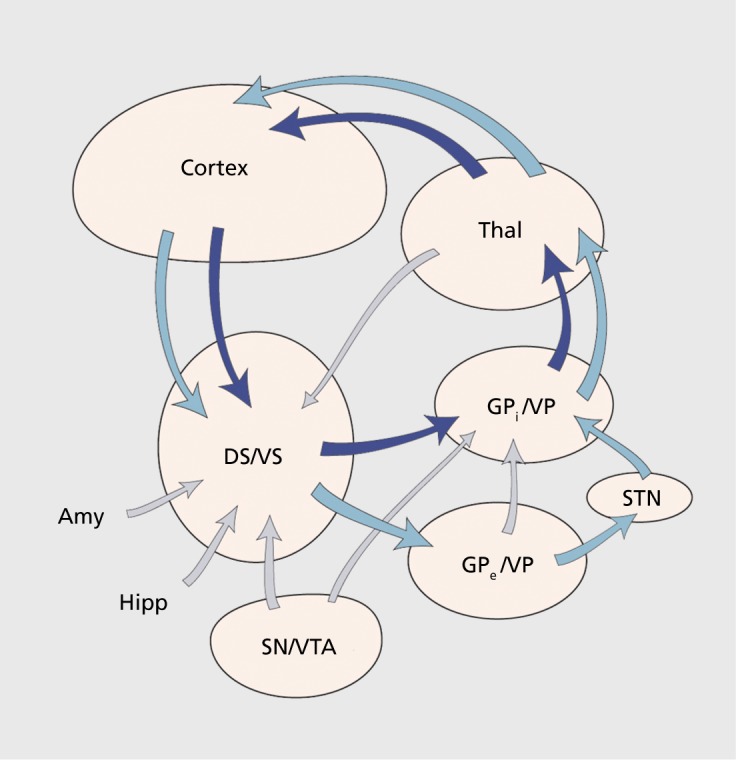
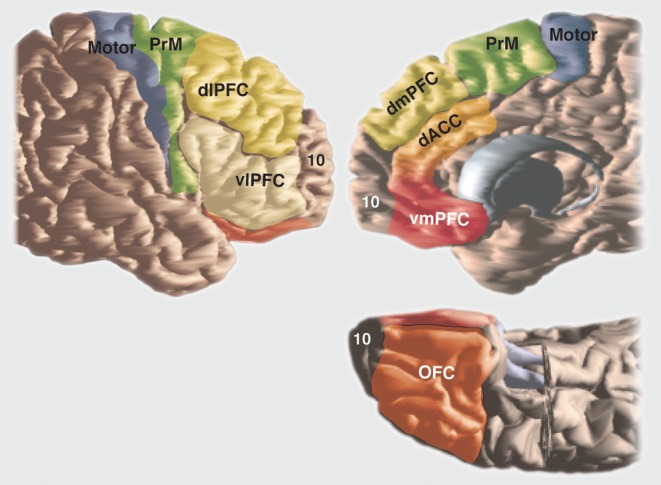
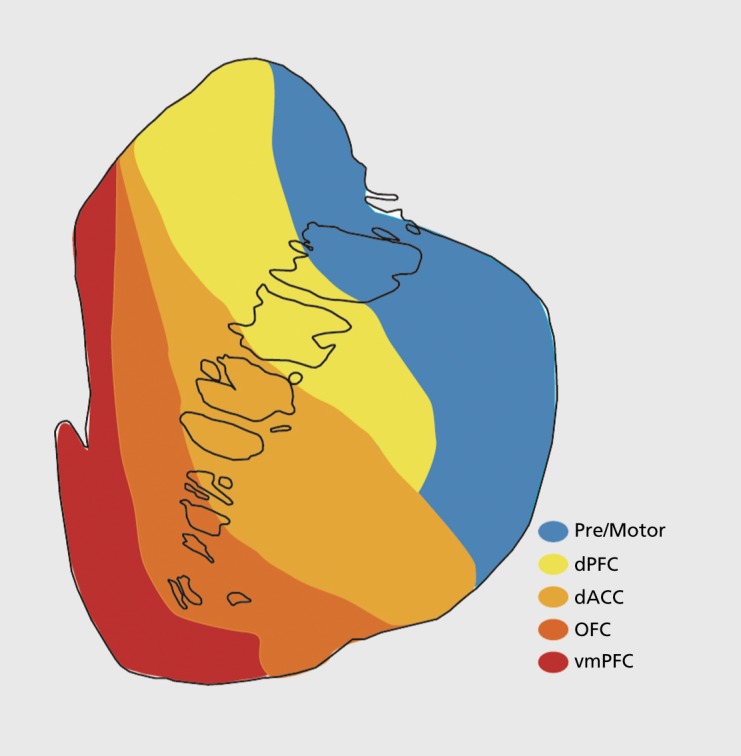
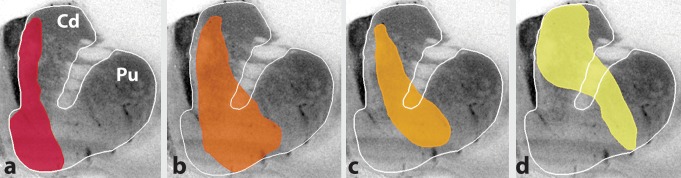
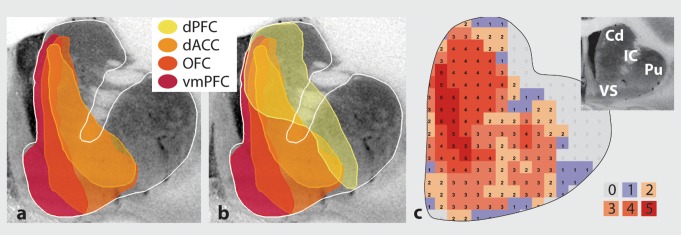
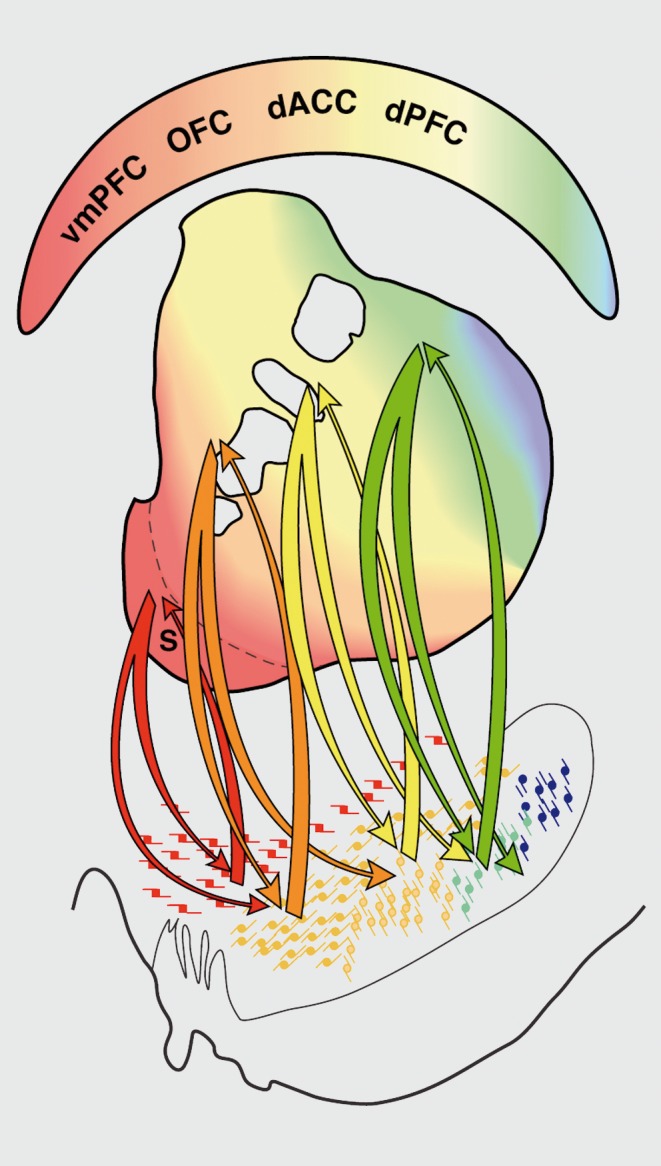
Corticostriatal connections play a central role in developing appropriate goal-directed behaviors, including the motivation and cognition to develop appropriate actions to obtain a specific outcome. The cortex projects to the striatum topographically. Thus, different regions of the striatum have been associated with these different functions: the ventral striatum with reward; the caudate nucleus with cognition; and the putamen with motor control. However, corticostriatal connections are more complex, and interactions between functional territories are extensive. These interactions occur in specific regions in which convergence of terminal fields from different functional cortical regions are found. This article provides an overview of the connections of the cortex to the striatum and their role in integrating information across reward, cognitive, and motor functions. Emphasis is placed on the interface between functional domains within the striatum.
Overview
The claims and statistics of this paper haven’t been checked yet.
Free: it reads the open-access text and checks the first 5 claims that cite a source we can check. Create a free account to check every claim.
Integrity signals
Registry
Cites
Statistics
Figures
Verification
Claims the paper makes
The claims and statistics of this paper haven’t been checked yet.
Free: it reads the open-access text and checks the first 5 claims that cite a source we can check. Create a free account to check every claim.
Claims other papers make about this one
Each is checked against this paper’s own text: does it say what the citing paper says it does?
The cited source says what the claim attributes to it.
In the citing paper
“For example, the substantia nigra makes extensive connections with the striatum, cortex, thalamus and neighboring brainstem regions, allowing dopaminergic outputs to exert far-reaching effects on the flow of CSTC information (Haber, 2016).”
From Cortico-striatal-thalamic loop circuits of the salience network: A central pathway in psychiatric disease and treatment (2016) · cites this paper as Haber, 2016
The cited source says what the claim attributes to it.
In the citing paper
“Importantly, the mesolimbic and nigrostriatal dopaminergic pathway have been implicated in the encoding of “saliency prediction errors”, underscoring their broader contributions to the attribution of salience to environmental stimuli (Kapur, 2003; Haber, 2016).”
From Cortico-striatal-thalamic loop circuits of the salience network: A central pathway in psychiatric disease and treatment (2016) · cites this paper as Haber, 2016
The cited source says what the claim attributes to it.
In the citing paper
“Corticostriatal circuitry is essential to processing reward, cognition, and movement (Haber, 2016)”
From Developmental origins of sex differences in the neural circuitry of play (2020) · cites this paper as Haber, 2016
In the citing paper
“Specifically, the dACC projects primarily to the dorsal caudate nucleus and ventral striatum, overlapping partially but not completely with frontostriatal projections from the dlPFC (Haber, 2016).”
From Cortico-striatal-thalamic loop circuits of the salience network: A central pathway in psychiatric disease and treatment (2016) · cites this paper as Haber, 2016
Self-check
Percentages, sums and reported differences re-computed from the paper’s own numbers.
The self-check needs the paper’s full text.
Citations
Cites
The Brain's Default Network: Anatomy, Function, and Relevance to Disease
Buckner, R. L., Andrews‐Hanna, J. R., & Schacter, D. L. (2008) · Annals of the New York Academy of Sciences · doi:10.1196/annals.1440.011 · Cited by 9,761
Koob, G. F., & Volkow, N. D. (2010) · Neuropsychopharmacology · doi:10.1038/npp.2009.110 · Cited by 5,340
Predictive reward signal of dopamine neurons
Schultz, W. (1998) · Journal of Neurophysiology · doi:10.1152/jn.1998.80.1.1 · Cited by 4,564
Functional architecture of basal ganglia circuits: neural substrates of parallel processing
Alexander, G. E., & Crutcher, M. D. (1990) · Trends in Neurosciences · doi:10.1016/0166-2236(90)90107-l · Cited by 4,131
Functional anatomy of the basal ganglia. I. The cortico-basal ganglia-thalamo-cortical loop
Parent, A., & Hazrati, L.-N. (1995) · Brain Research Reviews · doi:10.1016/0165-0173(94)00007-c · Cited by 2,161
Wise, R. A., & Rompre, P.-P. (1989) · Annual Review of Psychology · doi:10.1146/annurev.ps.40.020189.001203 · Cited by 1,968
Haber, S. N., Fudge, J. L., & McFarland, N. R. (2000) · The Journal of Neuroscience · doi:10.1523/jneurosci.20-06-02369.2000 · Cited by 1,610
Self-citationNeurons in the orbitofrontal cortex encode economic value
Padoa-Schioppa, C., & Assad, J. A. (2006) · Nature · doi:10.1038/nature04676 · Cited by 1,598
Neurotransmitters and neuromodulators in the basal ganglia
Graybiel, A. M. (1990) · Trends in Neurosciences · doi:10.1016/0166-2236(90)90104-i · Cited by 1,576
Specificity in the projection patterns of accumbal core and shell in the rat
Heimer, L., Zahm, D. S., Churchill, L., Kalivas, P. W., & Wohltmann, C. (1991) · Neuroscience · doi:10.1016/0306-4522(91)90202-y · Cited by 1,219
Research works printed but not linked: 7
- Robbins TW. Everitt BJ. Motivation and reward. In: Squire LR, Roberts JL, Spitzer NC, Zigmond MJ, McConnell SK, Bloom FE, eds. Fundamental Neuroscience. 2nd ed. San Diego, CA: Academic Press; 1999 1245 1259
- Koob GF. Drug reward and addiction. In: Fundamental Neuroscience. New York, NY: Academic Press; 1999 1261 1279
- Kalivas PW. Churchill L. Klitenick MA. The circuitry mediating the translation of motivational stimuli into adaptive motor responses. In: Kalivas PW, Barnes CD, eds. Limbic Motor Circuits and Neuropsychiatry. Boca Raton, FL: CRC Press, Inc; 1993 237 275
- Heimer L. Alheid GF. Zahm DS. Basal forebrain organization: an anatomical framework for motor aspects of drive and motivation. In: Kalivas PW, Barnes CD, eds. Limbic Motor Circuits and Neuropsychiatry. Boca Raton, FL: CRC Press, Inc; 1993 1 43
- Parent A. Comparative Neurobiology of the Basal Ganglia. New York, NY: John Wiley and Sons; 1986
- McFarland NR. Haber SN. The thalamostriataI projection and its relation to corticostriatal and cortiocthalamic inputs. Soc Neurosci Abst. 1996 22 412
- Fibiger HC. Phillips AG. Reward, motivation, cognition: psychobiology of mesotelencephalic dopamine systems. In: Mountcastle VB, Bloom F, Geiger SR, eds. Handbook of Physiology. Section I: the Nervous System. Vol 4. Bethesda,MD: American Physiological Society; 1986 647 674
Cited by
Items 801–900 of 1,000
Editorial: Reinforcement feedback in motor learning: neural underpinnings of skill refinement
Hill, C. M., Koppelmans, V., & Manto, M. U. (2025) · Frontiers in Behavioral Neuroscience · doi:10.3389/fnbeh.2025.1589738 · Cited by 1
“Anatomically, the brain structures playing a key role in reinforcement learning include the midbrain, striatum, prefrontal cortex and motor cortex (Vassiliadis et al., 2024; Haber, 2016).”
Cross-species Standardised Cortico-Subcortical TractographyPreprint
Assimopoulos, S., Warrington, S., Folloni, D., Bryant, K., Tang, W., Jbabdi, S., Heilbronner, S. R., Mars, R. B., & Sotiropoulos, S. N. (2025) · eLife · doi:10.7554/elife.107012.1 · Cited by 1
Nociception and Acute Pain: Neurotransmitters and NeuromodulatorsPreprint
Windhorst, U., & Dibaj, P. (2025) · Preprints.org · doi:10.20944/preprints202508.0487.v1 · Cited by 1
Basal ganglia subregion volume changes between acute-phase schizophrenia and bipolar disorderPreprint
Tang, Y., Zhu, R., Ling, Y., Wang, Y., Dong, Y., Cao, P., Li, Y., Si, Q., Xu, G., Jin, Z., et al. (2025) · Research Square · doi:10.21203/rs.3.rs-7607942/v1 · Cited by 1
Impaired reward processing and learning deficits after stroke
Maas, J. (2025) · Common Library Network (Der Gemeinsame Bibliotheksverbund) · doi:10.22032/dbt.66628 · Cited by 1
Treatment During Abstinence from Methamphetamine in a Rat Model of Methamphetamine Use Disorder
Baek, J. J. (2022) · Purdue University Indianapolis (Indiana University) · doi:10.7912/c2/3068 · Cited by 1
Subcortical circuits for procedural learning and memory
Thompson, E. (2024) · UCL Discovery (University College London) · Cited by 1
Bauer, E. (2023) · OakTrust (Texas A&M University Libraries) · Cited by 1
Resting-state fMRI and DTI Analysis of Prolonged Recovery following Mild Traumatic Brain Injury
Wong, J. K. Y. (2021) · TSpace (University of Toronto) · Cited by 1
Couty, P. (2024) · theses.fr (ABES) · doi:10.70675/d45031cez0811z4120z8c54z0db8d110101b · Cited by 1
Levitt, J. J., Zhang, F., Vangel, M. G., Nestor, P. G., Rathi, Y., Karayumak, S. C., Kubicki, M. R., Pasternak, O., Coleman, M. J., Lewandowski, K. E., et al. (2026) · Molecular Psychiatry · doi:10.1038/s41380-026-03719-9 · Cited by 1
“Using the caudate as our target zone, we believe, is suf fi cient for our purpose as it is a major component of the associative striatum, a region that is primarily targeted by the associative cortex (e.g., [27, 28]).”
Scartozzi, A., Polikowsky, H. G., Wang, T., Baker, J. T., Highland, H. M., Petty, L. E., Lin, P., Jones, R. M., Gamazon, E. R., Huff, C., et al. (2026) · medRxiv · doi:10.64898/2026.08.11.26359888 · Cited by 1
Differential subcortical-cortical circuit reorganization in autism and ADHDPreprint
Zhou, G., Xie, K., Ngo, A., Ding, R., Cabalo, D. G., Wang, Y., Smith, M., Nakamura, M., Royer, J., Serediuc, N., et al. (2026) · bioRxiv (Cold Spring Harbor Laboratory) · doi:10.64898/2026.10.13.758196 · Cited by 1
“In contrast, the striatum, comprising the caudate and putamen, is embedded in recurrent cortical-subcortical loops characterized by their topographic organization and intrinsic hierarchical dynamics, facilitating the integration of parallel cortical input (Choi et al., 2012; Haber, 2016).”
Neural mechanisms underlying cognitive inflexibility in obsessive-compulsive disorder: a review
Guo, W., Neo, P. S.-H., & McNaughton, N. (2026) · Frontiers in Psychiatry · doi:10.3389/fpsyt.2026.1795436
Modulation of receptors for advanced glycation endproducts network in Parkinson's disease
Viana, S. (2016) · Portuguese National Funding Agency for Science, Research and Technology (RCAAP Project by FCT)
Misiura, M. B. (2016) · Digital Archive @ GSU · doi:10.57709/9942983
Duprat, R. (2017) · Ghent University Academic Bibliography (Ghent University)
Levasseur‐Moreau, J. (2018) · Corpus Université Laval (Université Laval)
Neuroanatomy of Neuropsychiatry (with Treatment Implications)
Cavanna, A. E. (2018) · Springer eBooks · doi:10.1007/978-3-319-89330-3_5
If you give a mouse a mushroom: Behavioral effects of hallucinogens in mice
Klein, L. M. (2018) · eScholarship (California Digital Library)
Learning to focus and focusing to learn : more than a cortical trick
Dhawan, S. S. (2018) · St Andrews Research Repository (St Andrews Research Repository)
Alexander, L. (2019) · Apollo (University of Cambridge) · doi:10.17863/cam.35720
“Indeed, subsequent work has shown that beyond having similar cytoarchitecture and locations with the PFC, PL/BA32 and IL/BA25 have similar afferent/efferent connectivity (Haber, 2016; Passingham and Steven, 2012; Price, 2007).”
BackgroundNeural mechanisms of cognitive control of motivated behavior
Brandl, F. (2019) · mediaTUM (Technical University of Munich)
Plasticity of executive functions after traumatic brain injury in adolescents
Linden, C. V., Verhelst, H., Deblaere, K., Caeyenberghs, K., & Vingerhoets, G. (2019) · Belgian Journal of Paediatrics
Translational examination of the orbitofrontal cortex and striatum in obsessive compulsive disorder
Piantadosi, S. C. (2019) · D-Scholarship@Pitt (University of Pittsburgh)
Effects of Spinal Manipulation on Brain Activation in Individuals with Chronic Low Back Pain
Jordon, M. (2019) · Scholar Commons (University of South Carolina)
Mecanismos fisiopatólogicos del Trastorno de control de Impulsos en la enfermedad de Parkinson
Navalpotro‐Gómez, I. (2019) · Communities in ADDI (University of the Basque Country)
Ghahari, D. (2020) · Scholarship@Western (Western University)
Neuroimagerie anatomique dans le trouble comportemental en sommeil paradoxal idiopathique
Rahayel, S. (2019) · Archipel (Université du Québec à Montréal)
Capps, R. (2020) · Digital Archive @ GSU · doi:10.13140/rg.2.2.25273.60001
Wallis, M. D. (2020) · Nottingham ePrints (University of Nottingham)
Neural and Behavioral Dissociations in Aphasic Verb Retrieval
Dresang, H. C. (2020) · D-Scholarship@Pitt (University of Pittsburgh)
Glukose vermittelte Modulation der Aktivierung Salienz kodierender Gehirnregionen
Stauß, P. S. (2020) · OPen Access Repositorium der Universität Ulm (OPARU) (Ulm University) · doi:10.18725/oparu-33341
Mef2c in the development of the striatum
Quinn, D. L. (2020) · ORCA Online Research @Cardiff (Cardiff University)
Zhuang, Q., Xu, L., Zhou, F., Yao, S., Zheng, X., Zhou, X., Li, J., Xu, X., Fu, M., Li, K., et al. (2020) · bioRxiv (Cold Spring Harbor Laboratory) · doi:10.1101/2020.12.09.418830
Kwon, J. W., & Seo, J. P. (2020) · The Journal of Korean Physical Therapy · doi:10.18857/jkpt.2020.32.6.391
The role of frontal-striatal circuits in instrumental behaviour
Duan, Y. (2020) · Apollo (University of Cambridge) · doi:10.17863/cam.63544
Avila-Rieger, R. (2020) · UNM’s Digital Repository (University of New Mexico)
Learning from taste: Brain connectivity, adaptation, and behavioral correlates
Sadler, J. R. (2020) · Carolina Digital Repository (University of North Carolina at Chapel Hill) · doi:10.17615/k8ac-yx62
Mapping the structural connectivity fingerprints of corticostriatal circuits in Huntington’s disease
Acero-Pousa, I. (2020) · Repositori digital de la UPF (Universitat Pompeu Fabra)
Cooper, D. C. (2021) · University of Minnesota Digital Conservancy (University of Minnesota)
Linking Striatal Dopamine and Decision-Making to Adolescent Risk-Taking
Tervo‐Clemmens, B. (2021) · D-Scholarship@Pitt (University of Pittsburgh)
Cell assemblies : recruitment of heterogeneous networks and readout mechanisms
Boucly, C. J. (2020) · theses.fr (ABES) · doi:10.70675/4725c586z4722z482bz81afzc08a04d1c600
The Role of the Striatum in Organizing Voluntary Behavior
Ivlieva, N. Y. (2021) · Neuroscience and Behavioral Physiology · doi:10.1007/s11055-021-01170-7
“DOI 10.1007/s11055-021-01170-7 subthalamic nucleus [Haber, 2016].”
BackgroundInfluentialObsessive Compulsive Disorder: Neurobiology and Treatment
Hoffman, K. L. (2021) · Elsevier eBooks · doi:10.1016/b978-0-12-820472-6.00161-4
Marshall, C. A., & Kortagere, S. (2018) · iDEA - Drexel University Institutional Repository · doi:10.17918/806t-sc30
Faculty Opinions recommendation of The role of BTBD9 in striatum and restless legs syndrome.
Franken, P. (2020) · Faculty Opinions – Post-Publication Peer Review of the Biomedical Literature · doi:10.3410/f.736493320.793572510
Ο ρόλος του φλοιομεσομεταιχμιακού συστήματος σε πειραματικά πρότυπα στρες
Καφετζόπουλος, Β. (2018) · doi:10.12681/eadd/43691
Kaori, E., Isono, O., Goto, H., Ikeda, K., & Imura, M. (2021) · Higher Brain Function Research · doi:10.2496/hbfr.41.210
Altered spontaneous brain activity in maintenance hemodialysis patients with cognitive impairmentPreprint
Sun, Q., Zheng, J., Wu, X., Xu, L., Shi, H., & Liu, T. (2022) · Research Square · doi:10.21203/rs.3.rs-1928816/v1
Pathophysiology I: Basal Ganglia Architecture and the Standard Model
Albin, R. L. (2022) · Oxford University Press eBooks · doi:10.1093/med/9780190843014.003.0004
Marques, L. B. (2022) · Digital Library of Theses and Dissertations (Universidade de São Paulo) · doi:10.11606/d.46.2022.tde-06092022-130610
Zatorre, R. J. (2022) · Trends in Cognitive Sciences · doi:10.1016/j.tics.2022.08.011
Summerfield, C. (2022) · Oxford University Press eBooks · doi:10.1093/oso/9780192843883.003.0003
Summerfield, C. (2022) · Oxford University Press eBooks · doi:10.1093/oso/9780192843883.003.0007
Summerfield, C. (2022) · Oxford University Press eBooks · doi:10.1093/oso/9780192843883.003.0002
Summerfield, C. (2022) · Oxford University Press eBooks · doi:10.1093/oso/9780192843883.003.0004
Summerfield, C. (2022) · Oxford University Press eBooks · doi:10.1093/oso/9780192843883.002.0003
Summerfield, C. (2022) · Oxford University Press eBooks · doi:10.1093/oso/9780192843883.002.0004
Summerfield, C. (2022) · Oxford University Press eBooks · doi:10.1093/oso/9780192843883.002.0006
Summerfield, C. (2022) · Oxford University Press eBooks · doi:10.1093/oso/9780192843883.003.0005
Summerfield, C. (2022) · Oxford University Press eBooks · doi:10.1093/oso/9780192843883.003.0001
Anti-Seizure Medications in Children with Epilepsy Effects on Cognitive Functions: Systematic Review
Kart, P. Ö., & Cansu, A. (2023) · Turkiye Klinikleri Journal of Pediatrics · doi:10.5336/pediatr.2022-92208
Xia, X., Zeng, X., Gao, F., Hua, L., Huang, S., & Yuan, Z. (2023) · Human Brain Mapping · doi:10.1002/hbm.26402
“…(Zhang et al., 2017), and corresponded to tract-trace-defined indirect connections of these subregions, in which specific subcircuit of cortico-basal gangliathalamocortical loop was functionally involved in processing limbic, associative, and sensorimotor information separately (Haber, 2014, 2016).”
BackgroundGu, A. T., Han, V. Z., & Jiang, Y. (2023) · bioRxiv (Cold Spring Harbor Laboratory) · doi:10.1101/2023.09.15.558003
Ribas, E. C., & Wen, H. T. (2023) · Springer eBooks · doi:10.1007/978-981-99-3412-6_18
Hu, Y., Du, W., Qi, J., Luo, H., Zhang, Z., Luo, M., & Wang, Y. (2024) · eLife · doi:10.7554/elife.88420.4.sa3
Le rôle des interneurones à parvalbumine striataux dans la prise de décision perceptuelle
Lavielle, O. (2022) · theses.fr (ABES) · doi:10.70675/a42a0e59z676bz4f79z9905z5839ce85f0ce
Interactions gène-environnement pour la modélisation des phénotypes d'addictions complexes
Zerdazi, M. E. H. (2018) · theses.fr (ABES) · doi:10.70675/a7b2f8fbz4a9fz41c9zb6e4z5d0c11dd2ae5
Derousseaux, W. (2022) · theses.fr (ABES) · doi:10.70675/cec2226dzb562z4fb8zb136z06cf7b0a4cff
Keulers, E. H. H., Falbo, L., de Bruin, A. B. H., & Stiers, P. L. J. (2024) · Trends in Neuroscience and Education · doi:10.1016/j.tine.2024.100223
Neuroanatomical Systems Relevant to Neuropsychiatric Disorders
Holt, D. J., Öngür, D., Babadi, B., Wright, C. I., Dickerson, B. C., Camprodon, J. A., & Rauch, S. L. (2024) · Elsevier eBooks · doi:10.1016/b978-0-443-11844-9.00073-4
Silkis, I. G. (2024) · Успехи физиологических наук · doi:10.31857/s0301179824010074
Ascenzi, B. M., Caldas, G. D. C., Frati, A., Santoro, A., & Palmieri, M. (2024) · Elsevier eBooks · doi:10.1016/b978-0-12-822404-5.00021-8
Reynolds, W. T., Votava‐Smith, J. K., Gabriel, G. C., Lee, V., Rajagopalan, V., Wu, Y. L., Liu, X., Yagi, H., Slabicki, R., Gibbs, B., et al. (2024) · Journal of Clinical Medicine · doi:10.3390/jcm13195772
“As such, some of the preclinical brain regions were omitted from the analysis, resulting in missing data points.”
BackgroundReward Neurocircuitry Predicts Longitudinal Changes in Alcohol Use Following Trauma Exposure
Hinojosa, C. A., van Rooij, S. J. H., Fani, N., Ellis, R. A., Harnett, N. G., Lebois, L. A. M., Ely, T. D., Jovanović, T., Murty, V. P., House, S. L., et al. (2024) · Biological Psychiatry Cognitive Neuroscience and Neuroimaging · doi:10.1016/j.bpsc.2024.09.015
Erani, F. R., & Medaglia, J. D. (2024) · iDEA - Drexel University Institutional Repository · doi:10.17918/00010635
(2022) · American Psychiatric Association Publishing eBooks · doi:10.1176/appi.books.9781615379620.lg11
Striatal and hippocampal dynamics during time categorization
Rolando, F. (2022) · theses.fr (ABES) · doi:10.70675/220e3fb3z6586z41d9z8498z6f7f8246add2
Barrientos, S. A., Konradsson, E., Ceberg, C. P., & Petersson, P. (2024) · bioRxiv (Cold Spring Harbor Laboratory) · doi:10.1101/2024.12.19.629321
Pharmacological Basis of Cocaine Addiction
Bourin, M. (2024) · Springer eBooks · doi:10.1007/978-3-031-72219-6_16
Corticostriatal Pathways: From Evolution to Human Pathology
Guevara, M. A., Barrutieta-Arberas, I., Haralanova, E., Haralanov, S., MARTINEZ, G., Llano, L. H., Gargiulo, Á. J. M., Gargiulo, A. P. Í., Colombini, A. P., Gargiulo, M. M. L., et al. (2024) · Springer eBooks · doi:10.1007/978-3-031-72219-6_10
Sex Differences in GPER-1 Modulation of Reward and Dopamine Release
Turner, C. (2024) · Deep Blue (University of Michigan) · doi:10.7302/24974
Innocenti, G. M., & Rockland, K. S. (2025) · Elsevier eBooks · doi:10.1016/b978-0-12-818894-1.00033-1
Organization of forebrain circuitry in primates and its evolutionary antecedents
Giarrocco, F., & Averbeck, B. B. (2025) · Elsevier eBooks · doi:10.1016/b978-0-443-27380-3.00003-8
Cross-species standardised cortico-subcortical tractography
Assimopoulos, S., Warrington, S., Folloni, D., Bryant, K., Mohammadi-Nejad, A.-R., Tang, W., Jbabdi, S., Heilbronner, S. R., Mars, R. B., & Sotiropoulos, S. N. (2025) · eLife · doi:10.7554/elife.107012.3
Zhu, H. (2025) · OSF Preprints (OSF Preprints) · doi:10.31219/osf.io/vqadg_v2
Zhang, X., Liu, L., Wang, D., Chen, M., Lang, X., & Yang, M. (2025) · Research Square · doi:10.21203/rs.3.rs-6047108/v1
Kim, K.-I., Lee, J.-H., Ahn, W., & Kim, H. (2025) · NeuroImage · doi:10.1016/j.neuroimage.2025.121273
“These subregions are embedded in distinct cortico-striato-thalamic loops (Haber, 2016): the vmPFC interacts with the ventral striatum (VS) to support emotionally driven, intuitive valuations (Bouret and Richmond, 2010), while the dmPFC interacts with the dorsal striatum (DS) to support…”
Bennink, B. (2020) · Scholars Archive - University at Albany (University at Albany, State University of New York) · doi:10.54014/dtbx-cxzt
Chibany, L., Nicollin, E., Courtin, E., Bar, C., Michel, V., Penchet, G., & Aupy, J. (2025) · Epilepsia · doi:10.1111/epi.18510
“5,6 They play a crucial role in the integration and regulation of sensorimotor, cognitive, and emotional functions, by either inhibiting unwanted behaviors or facilitating appropriate ones.”
Identification of Rare Variants in Schizophrenia-relevant Pathways: A Computational Analysis
Slay, O. K. (2024) · Sheffield Hallam University · doi:10.7190/shu-thesis-00693
Muscarinic agonists for schizophrenia: Bridging preclinical evidence and clinical enthusiasm
Morris, B., & Pratt, J. A. (2026) · British Journal of Pharmacology · doi:10.1111/bph.70582
“…actions of muscarinic agonists for schizophrenia. accumulating evidence shows that afferent projections from functionally diverse cortical regions have overlapping distributions within the striatum and that hub regions facilitate cross-system communication (Haber, 2016; Haber et al., 2006).”
Asymmetric cortical projections to striatal direct and indirect pathways distinctly control actionsPreprint
Klug, J. R., Yan, X., Hoffman, H. A., Engelhardt, M. D., Osakada, F., Callaway, E. M., & Jin, X. (2025) · eLife · doi:10.7554/elife.92992.2
Metadata
- Authors
- Haber, S. N.
- Affiliations
- University of Rochester Medicine (US)
- Corresponding author
- Haber, Suzanne N.
- ORCID
- Haber, Suzanne N.
- Venue
- Dialogues in Clinical Neuroscience
- Publisher
- Informa UK Limited
- Published
- 2016-03-31
- Volume
- 18
- Issue
- 1
- Pages
- 7-21
- ISSN
- 1294-8322 (ISSN-L)
- 1958-5969
- PMC
- PMC4826773
- OpenAlex
- W4241221200
- Cited by
- 922
- References
- 116
- Citations by year
- 2026: 79 · 2025: 122 · 2024: 111 · 2023: 98 · 2022: 129 · 2021: 101 · 2020: 92 · 2019: 88 · 2018: 56 · 2017: 39 · 2016: 7
- FWCI
- 35.52
- Type
- journal article
- Language
- en
- Open access
- diamond
- doi.org
- Licence
- Locations
- Dialogues in Clinical Neuroscience (publishedVersion, cc-by-nc-nd)
- PubMed Central (publishedVersion, cc-by-nc-nd)
- PubMed (publishedVersion)
- Funders
- National Institute of Mental Health (R01MH045573, MH045573)
- Topics
- Life Sciences › Neuroscience › Cellular and Molecular Neuroscience › Neurotransmitter Receptor Influence on Behavior
- Life Sciences › Neuroscience › Cognitive Neuroscience › Neural and Behavioral Psychology Studies
- Health Sciences › Medicine › Clinical Neurology › Deep Brain Stimulation and Movement Disorders
- Keywords
- corticostriatal connections, striatum, ventral striatum, caudate nucleus, putamen, goal-directed behavior, reward, cognition, motor control, topographic projection, functional integration, terminal fields
- MeSH terms
- Animals, Cerebral Cortex, Cognition, Corpus Striatum, Humans, Nerve Net, Neural Pathways, Reward
About these checks
Registry, retraction, Cites and statistics results are computed, not judged, with one exception: a printed reference that no index lists is read once by a model before it counts as a citation error. Claims are extracted by a model and kept only when their quote appears verbatim in the text; each cited source is then checked, with a model’s help, for whether it says what the claim relies on. Those verdicts can be wrong — read the claim’s quote and the cited source before relying on one.
Statistics and arithmetic are recomputed, not judged.
Confidence bands are shown only for fields calibrated on our annotated test set. None is calibrated yet, so no band is shown.
What counts as a claim ›How we measure confidence ›How we check this ›
Are you an author, or do you see a problem with this page? Request a review
Data sources
Bibliographic data: Semantic Scholar, OpenAlex, Crossref.
Contains information from the Semantic Scholar Academic Graph Datasets, made available under the ODC Attribution License (ODC-BY 1.0).
Semantic Scholar’s data is described in: Kinney, R., et al. (2023). The Semantic Scholar Open Data Platform. arXiv:2301.10140.
