

Corticostriatal circuitry
Open accessThe DOI matches its Crossref record; 117 of the 117 references it cites were found in a registry or an index.
Abstract
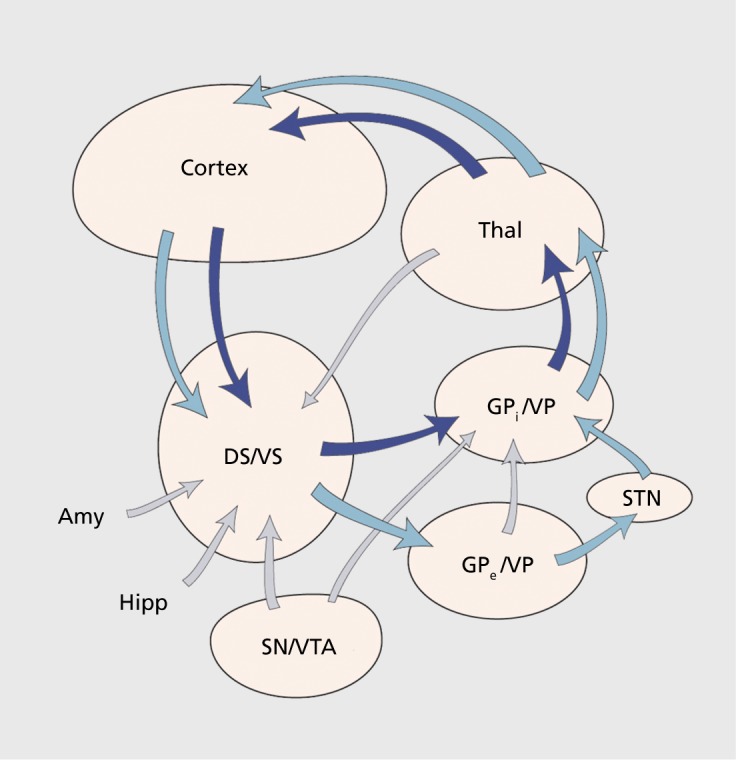
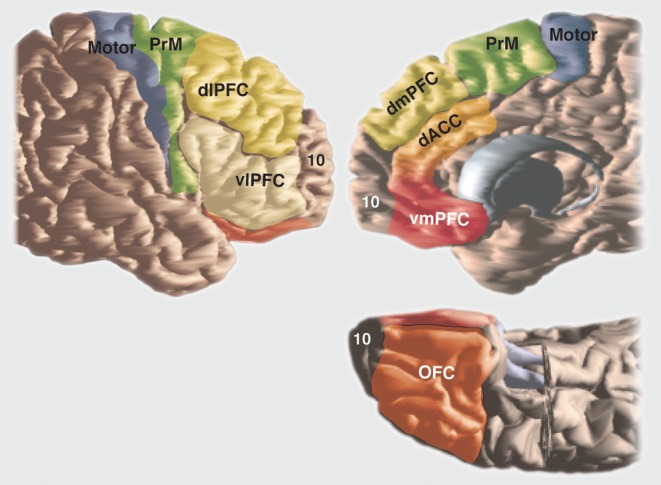
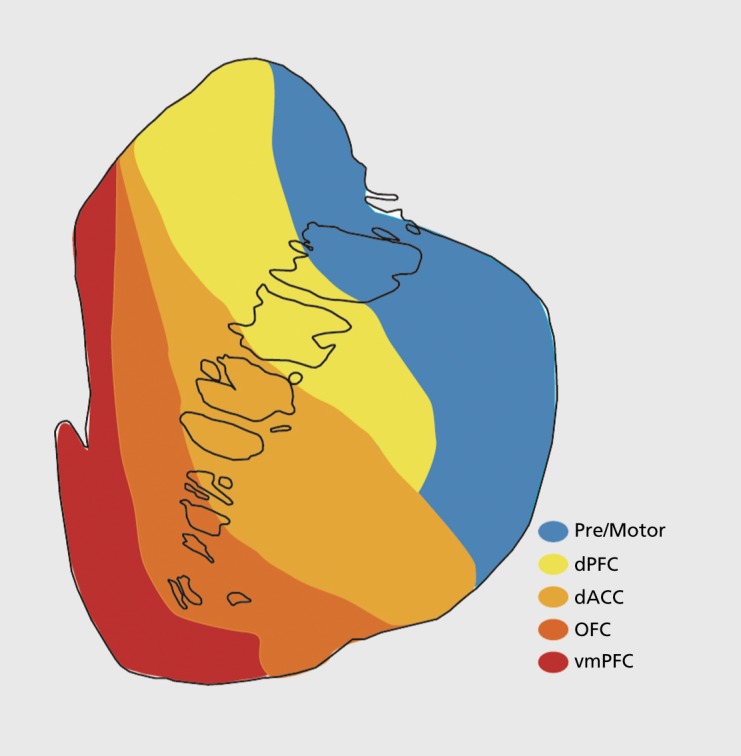
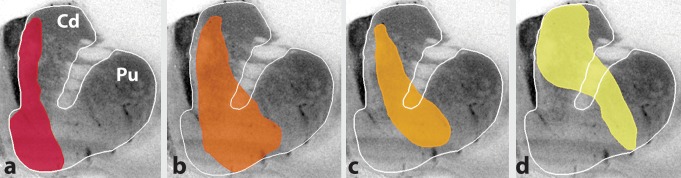
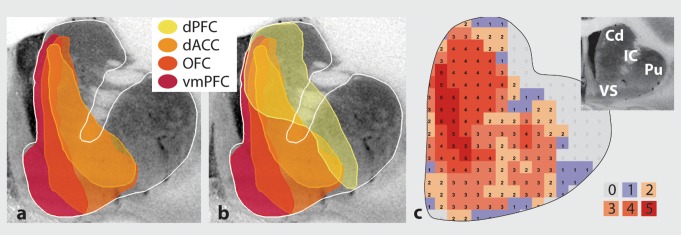
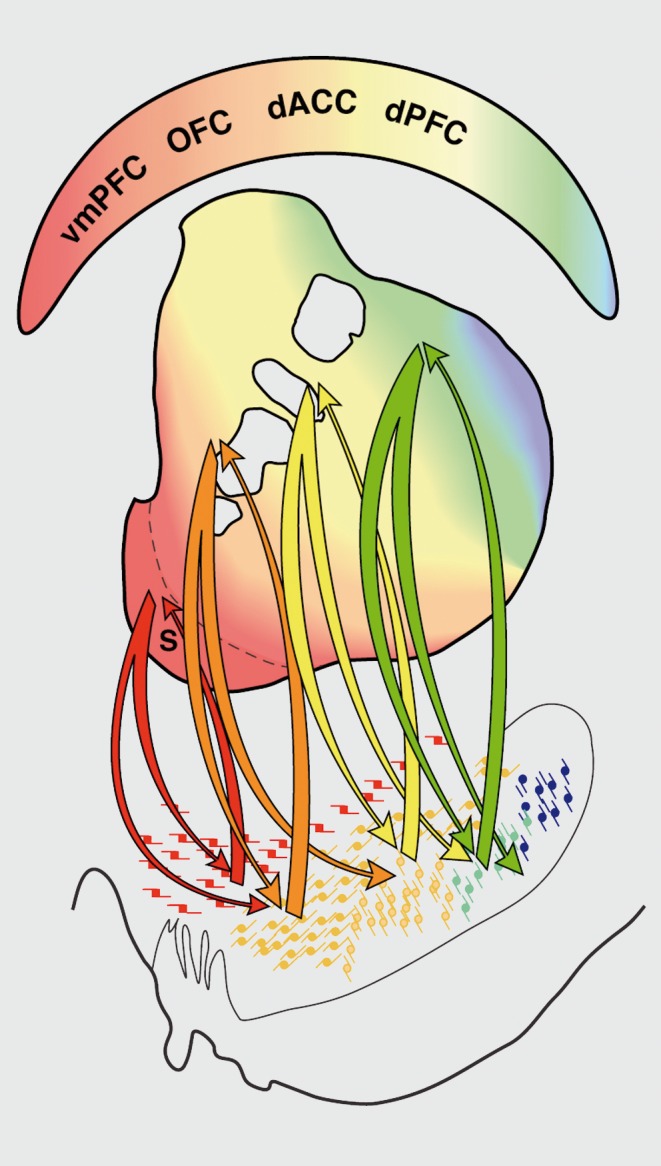
Corticostriatal connections play a central role in developing appropriate goal-directed behaviors, including the motivation and cognition to develop appropriate actions to obtain a specific outcome. The cortex projects to the striatum topographically. Thus, different regions of the striatum have been associated with these different functions: the ventral striatum with reward; the caudate nucleus with cognition; and the putamen with motor control. However, corticostriatal connections are more complex, and interactions between functional territories are extensive. These interactions occur in specific regions in which convergence of terminal fields from different functional cortical regions are found. This article provides an overview of the connections of the cortex to the striatum and their role in integrating information across reward, cognitive, and motor functions. Emphasis is placed on the interface between functional domains within the striatum.
Overview
The claims and statistics of this paper haven’t been checked yet.
Free: it reads the open-access text and checks the first 5 claims that cite a source we can check. Create a free account to check every claim.
Integrity signals
Registry
Cites
Statistics
Figures
Verification
Claims the paper makes
The claims and statistics of this paper haven’t been checked yet.
Free: it reads the open-access text and checks the first 5 claims that cite a source we can check. Create a free account to check every claim.
Claims other papers make about this one
Each is checked against this paper’s own text: does it say what the citing paper says it does?
The cited source says what the claim attributes to it.
In the citing paper
“For example, the substantia nigra makes extensive connections with the striatum, cortex, thalamus and neighboring brainstem regions, allowing dopaminergic outputs to exert far-reaching effects on the flow of CSTC information (Haber, 2016).”
From Cortico-striatal-thalamic loop circuits of the salience network: A central pathway in psychiatric disease and treatment (2016) · cites this paper as Haber, 2016
The cited source says what the claim attributes to it.
In the citing paper
“Importantly, the mesolimbic and nigrostriatal dopaminergic pathway have been implicated in the encoding of “saliency prediction errors”, underscoring their broader contributions to the attribution of salience to environmental stimuli (Kapur, 2003; Haber, 2016).”
From Cortico-striatal-thalamic loop circuits of the salience network: A central pathway in psychiatric disease and treatment (2016) · cites this paper as Haber, 2016
The cited source says what the claim attributes to it.
In the citing paper
“Corticostriatal circuitry is essential to processing reward, cognition, and movement (Haber, 2016)”
From Developmental origins of sex differences in the neural circuitry of play (2020) · cites this paper as Haber, 2016
In the citing paper
“Specifically, the dACC projects primarily to the dorsal caudate nucleus and ventral striatum, overlapping partially but not completely with frontostriatal projections from the dlPFC (Haber, 2016).”
From Cortico-striatal-thalamic loop circuits of the salience network: A central pathway in psychiatric disease and treatment (2016) · cites this paper as Haber, 2016
Self-check
Percentages, sums and reported differences re-computed from the paper’s own numbers.
The self-check needs the paper’s full text.
Citations
Cites
The Brain's Default Network: Anatomy, Function, and Relevance to Disease
Buckner, R. L., Andrews‐Hanna, J. R., & Schacter, D. L. (2008) · Annals of the New York Academy of Sciences · doi:10.1196/annals.1440.011 · Cited by 9,761
Koob, G. F., & Volkow, N. D. (2010) · Neuropsychopharmacology · doi:10.1038/npp.2009.110 · Cited by 5,340
Predictive reward signal of dopamine neurons
Schultz, W. (1998) · Journal of Neurophysiology · doi:10.1152/jn.1998.80.1.1 · Cited by 4,564
Functional architecture of basal ganglia circuits: neural substrates of parallel processing
Alexander, G. E., & Crutcher, M. D. (1990) · Trends in Neurosciences · doi:10.1016/0166-2236(90)90107-l · Cited by 4,131
Functional anatomy of the basal ganglia. I. The cortico-basal ganglia-thalamo-cortical loop
Parent, A., & Hazrati, L.-N. (1995) · Brain Research Reviews · doi:10.1016/0165-0173(94)00007-c · Cited by 2,161
Wise, R. A., & Rompre, P.-P. (1989) · Annual Review of Psychology · doi:10.1146/annurev.ps.40.020189.001203 · Cited by 1,968
Haber, S. N., Fudge, J. L., & McFarland, N. R. (2000) · The Journal of Neuroscience · doi:10.1523/jneurosci.20-06-02369.2000 · Cited by 1,610
Self-citationNeurons in the orbitofrontal cortex encode economic value
Padoa-Schioppa, C., & Assad, J. A. (2006) · Nature · doi:10.1038/nature04676 · Cited by 1,598
Neurotransmitters and neuromodulators in the basal ganglia
Graybiel, A. M. (1990) · Trends in Neurosciences · doi:10.1016/0166-2236(90)90104-i · Cited by 1,576
Specificity in the projection patterns of accumbal core and shell in the rat
Heimer, L., Zahm, D. S., Churchill, L., Kalivas, P. W., & Wohltmann, C. (1991) · Neuroscience · doi:10.1016/0306-4522(91)90202-y · Cited by 1,219
Research works printed but not linked: 7
- Robbins TW. Everitt BJ. Motivation and reward. In: Squire LR, Roberts JL, Spitzer NC, Zigmond MJ, McConnell SK, Bloom FE, eds. Fundamental Neuroscience. 2nd ed. San Diego, CA: Academic Press; 1999 1245 1259
- Koob GF. Drug reward and addiction. In: Fundamental Neuroscience. New York, NY: Academic Press; 1999 1261 1279
- Kalivas PW. Churchill L. Klitenick MA. The circuitry mediating the translation of motivational stimuli into adaptive motor responses. In: Kalivas PW, Barnes CD, eds. Limbic Motor Circuits and Neuropsychiatry. Boca Raton, FL: CRC Press, Inc; 1993 237 275
- Heimer L. Alheid GF. Zahm DS. Basal forebrain organization: an anatomical framework for motor aspects of drive and motivation. In: Kalivas PW, Barnes CD, eds. Limbic Motor Circuits and Neuropsychiatry. Boca Raton, FL: CRC Press, Inc; 1993 1 43
- Parent A. Comparative Neurobiology of the Basal Ganglia. New York, NY: John Wiley and Sons; 1986
- McFarland NR. Haber SN. The thalamostriataI projection and its relation to corticostriatal and cortiocthalamic inputs. Soc Neurosci Abst. 1996 22 412
- Fibiger HC. Phillips AG. Reward, motivation, cognition: psychobiology of mesotelencephalic dopamine systems. In: Mountcastle VB, Bloom F, Geiger SR, eds. Handbook of Physiology. Section I: the Nervous System. Vol 4. Bethesda,MD: American Physiological Society; 1986 647 674
Cited by
Items 501–600 of 1,000
Indoor Air Pollution and Decision-Making Behavior: An Interdisciplinary Review
Torres, G., Mourad, M., & Leheste, J. R. (2022) · Cureus · doi:10.7759/cureus.26247 · Cited by 9
Gentenaar, M., Meulmeester, F. L., van der Burg, X. R., Hoekstra, A. T., Hunt, H., Kroon, J., van Roon‐Mom, W., & Meijer, O. C. (2024) · Experimental Neurology · doi:10.1016/j.expneurol.2024.114675 · Cited by 9
Mattia, G. M., Villain, E., Nemmi, F., Lann, M. V. L., Franceries, X., & Péran, P. (2024) · Artificial Intelligence in Medicine · doi:10.1016/j.artmed.2024.102897 · Cited by 9
Plante, D. T., Birn, R. M., Walsh, E. C., Hoks, R. M., Cornejo, M. D., & Abercrombie, H. C. (2017) · Journal of Affective Disorders · doi:10.1016/j.jad.2017.11.054 · Cited by 9
Decreased density of cholinergic interneurons in striatal territories in Williams syndrome
Hanson, K. L., Lew, C. H., Hrvoj-Mihić, B., Cuevas, D., Greiner, D. M. Z., Groeniger, K. M., Edler, M. K., Halgren, E., Bellugi, U., Raghanti, M. A., et al. (2020) · Brain Structure and Function · doi:10.1007/s00429-020-02055-0 · Cited by 9
“2012; Haber 2016).”
Straub, K. T., Hua, J. P. Y., Karcher, N. R., & Kerns, J. G. (2020) · Psychiatry Research Neuroimaging · doi:10.1016/j.pscychresns.2020.111089 · Cited by 9
“Most cortical areas, especially the prefrontal cortex (Tziortzi et al., 2014), project via white matter tracts to the striatum, then with connections from the basal ganglia projecting back to the cortex via the thalamus (Haber, 2003, 2016; Nelson and Kreitzer, 2014).”
BackgroundBansal, R., Hellerstein, D. J., Sawardekar, S., O’Neill, J., & Peterson, B. S. (2019) · PLOS ONE · doi:10.1371/journal.pone.0219679 · Cited by 8
Acosta‐Rodriguez, H., Bobba, P. S., Zeevi, T., Ment, L. R., & Payabvash, S. (2025) · American Journal of Neuroradiology · doi:10.3174/ajnr.a8774 · Cited by 8
Fonteneau, C., Mérida, I., Redouté, J., Haesebaert, F., Lancelot, S., Costes, N., Mondino, M., & Brunelin, J. (2025) · Brain stimulation · doi:10.1016/j.brs.2025.05.006 · Cited by 8
“Neuroimaging studies have shown that the altered frontal and temporal regions targeted by frontotemporal tDCS are closely linked to dopamine networks [18].”
Zheng, Y., Wang, W., Xia, S., Jiang, T., Li, R., Yang, M., Liu, W., Chen, L., & Tao, J. (2025) · Neuroscience · doi:10.1016/j.neuroscience.2025.09.012 · Cited by 8
Morphoelectric diversity and specialization of primate striatal neuron types
Liu, X.-P., Dalley, R. A., Johansen, N., Budzillo, A., Thijssen, J., Miller, J. A., Walling-Bell, S., Sawchuk, S., Waleboer, F., Alfiler, L., et al. (2026) · Cell · doi:10.64898/2026.02.26.708019 · Cited by 8
Cao, X., Li, Q., Liu, S., Li, Z., Wang, Y., Cheng, L., Yang, C., & Xu, Y. J. (2022) · Frontiers in Neuroscience · doi:10.3389/fnins.2022.844519 · Cited by 8
“According to the evidence from primate research and human studies (Postuma and Dagher, 2006; Cauda et al., 2011; Haber, 2016), NAc receives cortical afferent projections from OFC, medial prefrontal cortex (MPFC), and ACC and has anatomical interconnections with subcortical areas, including…”
BackgroundKoob, J. L., Viswanathan, S., Mustin, M., Mallick, I., Krick, S., Fink, G. R., Grefkes, C., & Rehme, A. K. (2023) · NeuroImage Clinical · doi:10.1016/j.nicl.2023.103360 · Cited by 8
“Corticostriatal projections have been shown to be involved in goal-directed behaviors, including the motivation and cognitions leading to these actions (Haber, 2016).”
Kuo, H., Yang, Y.-H., Chen, S., Kuo, T.-H., Lin, W.-T., & Liu, F. (2023) · eNeuro · doi:10.1523/eneuro.0366-22.2023 · Cited by 8
“We categorized the morphology of dendritic spines into six types according to Harris et al., with slight modifications (Harris et al., 1992).”
MethodPeterson, R. K., Duvall, P., Crocetti, D., Palin, T., Robinson, J., Mostofsky, S. H., & Rosch, K. S. (2023) · Brain Imaging and Behavior · doi:10.1007/s11682-023-00795-1 · Cited by 9
“A prominent model of fronto-striatal structural brain circuitry developed by Haber (2003;, 2016) over the past 20 years describes the topographical projections from the cortex to the striatum in relation to different functions of reward, cognition, and motor control.”
Feng, Z., Zheng, Y., Wang, P., Xue, L., Yu, M., Deng, Z., Lei, X., & Chen, G. (2023) · Scientific Reports · doi:10.1038/s41598-023-43055-4 · Cited by 8
Zhukovsky, P., Ironside, M., Duda, J. M., Moser, A. D., Null, K. E., Dhaynaut, M., Normandin, M. D., Guehl, N. J., Fakhri, G. E., Alexander, M., et al. (2024) · Biological Psychiatry · doi:10.1016/j.biopsych.2024.02.005 · Cited by 8
“Increased thalamocortical connectivity (67) during stress also supports our fi nding of increased striato-cortical connectivity because the thalamus is a key region in the cortico-basal-ganglia circuits (68).”
Backgroundvan Beest, E. H., Abdelwahab, M. A. O., Cazemier, J. L., Baltira, C., Maes, M. C., Peri, B. D., Self, M. W., Willuhn, I., & Roelfsema, P. R. (2024) · iScience · doi:10.1016/j.isci.2024.110753 · Cited by 8
Dugre, J. R., Hopfer, C. J., & Winters, D. E. (2025) · Aggression and Violent Behavior · doi:10.1016/j.avb.2025.102035 · Cited by 8
“The extensive projections from the dACC to the striatum (Haber, 2016) (Kolling et al., 2016) suggests that the former may be implicated in the selection of an appropriate action (Rudebeck et al., 2008) and may enable activity of brain regions involved in motor planning and execution such as the…”
Basal ganglia contributions to social cognition: evidence from movement disorders
Eddy, C. M. (2025) · Cognitive Neuropsychiatry · doi:10.1080/13546805.2025.2490054 · Cited by 8
“Second, by virtue of fronto-striatal circuitry (Alexander et al., 1986; Haber, 2016; Tekin & Cummings, 2002), there is potential for tasks or abilities implicating connected prefrontal regions to also be compromised.”
Manning, E. E., & Ahmari, S. E. (2018) · Brain and Neuroscience Advances · doi:10.1177/2398212818783896 · Cited by 8
Rewarding safe choices in peer contexts: Adolescent brain activity during decision making
Hinnant, J. B., McWood, L. M., Yanes, J. A., McCormick, M., Murphy, J. E., Erath, S. A., & Robinson, J. L. (2019) · Biological Psychology · doi:10.1016/j.biopsycho.2019.01.008 · Cited by 8
Makowski, C., Lewis, J. D., Lepage, C., MALLA, A. K., Joober, R., Evans, A. C., & Lepage, M. (2019) · Psychological Medicine · doi:10.1017/s0033291719002071 · Cited by 8
Evolving a new neuropsychiatry
Fricchione, G. L. (2018) · Dialogues in Clinical Neuroscience · doi:10.31887/dcns.2018.20.2/gfricchione · Cited by 8
Misconfigured striatal connectivity profiles in smokers
Korponay, C. H., Stein, E. A., & Ross, T. J. (2022) · Neuropsychopharmacology · doi:10.1038/s41386-022-01366-6 · Cited by 8
Ochi, R., Tarumi, R., Noda, Y., Tsugawa, S., Plitman, E., Wada, M., Honda, S., Matsushita, K., Chakravarty, M. M., Guerrero, A. G., et al. (2020) · Schizophrenia Bulletin Open · doi:10.1093/schizbullopen/sgaa057 · Cited by 8
Miranda, G. G., Rodrigue, K. M., & Kennedy, K. M. (2020) · Brain Structure and Function · doi:10.1007/s00429-020-02169-5 · Cited by 8
Protective effect of a spider recombinant toxin in a murine model of Huntington's disease
Joviano‐Santos, J. V., Valadão, P. A. C., Magalhães-Gomes, M. P. S., Fernandes, L. F., Diniz, D. M., Machado, T. C. G., Soares, K. B., Ladeira, M. S., de Miranda, A. S., Massensini, A. R., et al. (2020) · Neuropeptides · doi:10.1016/j.npep.2020.102111 · Cited by 8
Nishijima, H., Kimura, T., Mori, F., Wakabayashi, K., Kinoshita, I., Nakamura, T., Kon, T., Suzuki, C., & Tomiyama, M. (2021) · Frontiers in Aging Neuroscience · doi:10.3389/fnagi.2021.650350 · Cited by 8
“In the 2000s, an L-dopa-sparing strategy was recommended to prevent the onset of motor complications, especially in patients with early-onset PD (Rascol et al., 2000; Holloway et al., 2004; Hauser et al., 2007).”
BackgroundSchoenberg, H. L., Evans, C., Bausch, L., Wootton, A., Kirshenbaum, A. P., & Toufexis, D. J. (2021) · Behavioural Brain Research · doi:10.1016/j.bbr.2021.113636 · Cited by 8
Lai, C., Shih, C.-W., & Chang, C. (2022) · Journal of Neurophysiology · doi:10.1152/jn.00127.2022 · Cited by 8
Crane, N. A., Burkhouse, K. L., Gorka, S. M., Klumpp, H., & Phan, K. L. (2022) · Psychophysiology · doi:10.1111/psyp.14118 · Cited by 8
Oscillation/Coincidence-Detection Models of Reward-Related Timing in Corticostriatal Circuits
Yin, B., Shi, Z., Wang, Y., & Meck, W. H. (2022) · Timing & Time Perception · doi:10.1163/22134468-bja10057 · Cited by 8
Abnormal Structural Network Communication Reflects Cognitive Deficits in Schizophrenia
Zorlu, N., Bayrakçı, A., Karakılıç, M., Zalesky, A., Seguin, C., Tian, Y., Gülyüksel, F., Yalınçetin, B., Oral, E., Gelal, F. M., et al. (2023) · Brain Topography · doi:10.1007/s10548-023-00954-z · Cited by 8
“2018) and receives rich inputs from the dorsolateral prefrontal cortex, anterior cingulate cortex, and orbitofrontal cortex (Haber 2016).”
BackgroundLee, E. (2023) · Journal of Clinical Medicine · doi:10.3390/jcm12144594 · Cited by 8
Cano-Ramírez, H., & Hoffman, K. L. (2018) · Behavioural Brain Research · doi:10.1016/j.bbr.2018.05.034 · Cited by 8
“Functional connectivity studies in humans indicate a similar organization of corticostriatal projections [23,27,28,29].”
InfluentialMoszczyńska, A. (2020) · Genes · doi:10.3390/genes11040364 · Cited by 8
Wang, N., Guo, L., Gao, Y., Sui, C., Zhang, X., Wang, Y., Fu, Y., Zhang, N., Che, Y., Liang, C., et al. (2025) · CNS Neuroscience & Therapeutics · doi:10.1111/cns.70604 · Cited by 7
“On the other hand, the MFG belongs to the dorsal prefrontal cortex, which is involved in executive functions and higher cognitive processes [47].”
Liu, Q., Davey, D. K., Jimmy, J., Ajilore, O., & Klumpp, H. (2023) · Biological Psychiatry Cognitive Neuroscience and Neuroimaging · doi:10.1016/j.bpsc.2023.08.006 · Cited by 8
Comparative rhythmic transcriptome profiling of human and mouse striatal subregions
Petersen, K. A., Zong, W., DePoy, L. M., Scott, M. R., Shankar, V. G., Burns, J. N., Cerwensky, A. J., Kim, S.-M., Ketchesin, K. D., Tseng, G. C., et al. (2024) · Neuropsychopharmacology · doi:10.1038/s41386-023-01788-w · Cited by 7
“In general, the ventral striatum (primarily the nucleus accumbens (NAc)) is involved in reward and motivation, the caudate nucleus is associated with cognition and habitual behavior, and the putamen is largely associated with motor learning and control [1].”
Gabriel, D. B. K., Havugimana, F., Liley, A. E., Aguilar, I. D., Yeasin, M., & Simon, N. W. (2025) · Cerebral Cortex · doi:10.1093/cercor/bhaf146 · Cited by 7
Altered functional connectivity during performance feedback processing in multiple sclerosis
Cagna, C. J., Ceceli, A. O., Sandry, J. D., Bhanji, J. P., Tricomi, E. M., & Dobryakova, E. (2022) · NeuroImage Clinical · doi:10.1016/j.nicl.2022.103287 · Cited by 7
“These same cortico-striatal regions and connections also overlap with circuitry that regulates reward processing, reinforcement learning, and goal-directed behavior in NT individuals (Haber & Knutson, 2010; Haber, 2016; Liljeholm & O ’ Doherty, 2012).”
Brain evolution and the meaning of catatonia - An update
Fricchione, G. L. (2023) · Schizophrenia Research · doi:10.1016/j.schres.2023.01.026 · Cited by 7
Distinct neural adaptations to time demand in the striatum and the hippocampus
Rolando, F., Kononowicz, T. W., Duhamel, J., Doyère, V., & Wirth, S. (2023) · Current Biology · doi:10.1016/j.cub.2023.11.066 · Cited by 7
Cerebello-Parietal Functional Connectivity in Amnestic Mild Cognitive Impairment
Lin, C.-Y. R., Yonce, S. S., Pacini, N. J., Yu, M. M., Bishop, J., Pavlik, V., & Salas, R. (2024) · Journal of Alzheimer s Disease · doi:10.3233/jad-240368 · Cited by 7
“…inADwhichisstronglyconnectedwithcognitivecor-tical regions, especially dorsolateral and orbitofrontal cortex via the striato-cortical circuitry [29, 30], and 3) lobule VIIb and the posterior cingulate gyrus, a cortical region well known affected early in AD [31] when the worse short-term…”
Yin, H. J., Liu, K., Chen, G., Ren, S.-Y., Zhu, Y., Yu, T., Tian, P., Li, C., Xi, Y., Wang, Z.-Y., et al. (2019) · Neural Regeneration Research · doi:10.4103/1673-5374.249233 · Cited by 7
“The motor and premotor areas mediate different aspects of motor behavior, which are in turn reflected both anatomically and physiologically in the caudate nucleus and putamen (Alexander et al., 1990; Haber et al., 2016).”
BackgroundRelationship between trust in neighbors and regional brain volumes in a population-based study
Sadhu, M., Nicholson, T. D. F., Garcia, R., Lampley, S. F., Rain, M., Fritz, A., Jalalizadeh, B., Enkevort, E. A. V., Palka, J. M., & Brown, E. S. (2019) · Psychiatry Research Neuroimaging · doi:10.1016/j.pscychresns.2019.03.002 · Cited by 7
Hayate, T., Yoneda, M., TABATA, Y., Echigo, R., Kikuchi, Y., Yamazaki, M., Kishimoto, Y., Sakimura, K., Kano, M., & Ohno‐Shosaku, T. (2019) · Neuroscience · doi:10.1016/j.neuroscience.2019.09.040 · Cited by 7
Xing, Y., Zhang, A., Li, C., Han, J., wang, J., Luo, L., Chang, X., Tian, Z., & Bai, Y. (2022) · Molecular Neurobiology · doi:10.1007/s12035-022-03181-y · Cited by 7
Verduzco-Mendoza, A., Mota-Rojas, D., Olmos Hernández, S. A., Gálvez-Rosas, A., Aguirre-Pérez, A., Cortes-Altamirano, J. L., Alfaro-Rodríguez, A., Parra-Cid, C., Avila-Luna, A., & Bueno-Nava, A. (2023) · Frontiers in Neuroscience · doi:10.3389/fnins.2023.1304440 · Cited by 6
“…the basal ganglia output nuclei (internal segment of the globus pallidus and substantia nigra pars reticulata) send efferent outputs to the thalamus, which is a deep-seated brain structure that acts as a relay center for sensory and motor signals (Bolam and Ellender, 2016; Haber, 2016).”
BackgroundYang, B., Zhou, Z., Chen, Y., Devakonda, V., Cai, T., Lee, T., & Qu, Y. (2024) · Journal of Research on Adolescence · doi:10.1111/jora.12949 · Cited by 6
Matthews, T. E., Lumaca, M., Witek, M. A. G., Penhune, V. B., & Vuust, P. (2024) · Brain Structure and Function · doi:10.1007/s00429-024-02836-x · Cited by 6
“Classic models of CBGT circuits suggest that striatal regions receive input from the cortex then, after processing within other basal ganglia nuclei, these signals are output back to the cortex from the thalamus (Alexander et al. 1986; Haber 2016 ; Par - ent and Hazrati 1995).”
InfluentialVázquez, D., Peña-Flores, N., Maulhardt, S., Solway, A., Charpentier, C. J., & Roesch, M. R. (2024) · Cerebral Cortex · doi:10.1093/cercor/bhae332 · Cited by 6
Cheng, Z., Yang, L., Li, M., Zhang, Q., Li, J., Zhang, N., Che, Y., Chen, Y., Liang, P., Wang, Y., et al. (2025) · Human Brain Mapping · doi:10.1002/hbm.70263 · Cited by 6
“The dorsal striatum, also referred to as the new striatum, is composed of the CAU nucleus and PUT (Haber 2016).”
A decision-space model explains context-specific decision-making
Beck, D. W., Heaton, C. N., Davila, L. D., Rakocevic, L. I., Drammis, S. M., Tyulmankov, D., Giri, A., Beck, S. U., Zhang, Q., Pokojovy, M., et al. (2025) · Nature Communications · doi:10.1038/s41467-025-61466-x · Cited by 6
Suñol, M., Alemany, S., Bustamante, M., Diez, I. P., Contreras‐Rodríguez, O., Laudo, B., Macià, D., Martínez‐Vilavella, G., Martínez‐Zalacaín, I., Menchón, J. M., et al. (2021) · Biological Psychiatry Global Open Science · doi:10.1016/j.bpsgos.2021.11.009 · Cited by 6
Kolomeets, N. S., & Uranova, N. A. (2023) · S S Korsakov Journal of Neurology and Psychiatry · doi:10.17116/jnevro2023123011103 · Cited by 6
Peattie, A. R. D., Manktelow, A. E., Sahakian, B. J., Menon, D. K., & Stamatakis, E. A. (2024) · Journal of Clinical Medicine · doi:10.3390/jcm13030771 · Cited by 6
Cognitive outcome and its neural correlates after cardiorespiratory arrest in childhood
Geva, S., Hoskote, A. U., Saini, M., Clark, C. A., Banks, T., Chong, W. K., Baldeweg, T., de Haan, M. D. H., & Vargha‐Khadem, F. (2024) · Developmental Science · doi:10.1111/desc.13501 · Cited by 6
“However,we note that (i) it is widely accepted that the dorsal striatum is involved in various types of learning, beyond mere motor learning (Haber, 2016; Janacsek et al., 2022”
Kolomeets, N. S., & Uranova, N. A. (2024) · European Archives of Psychiatry and Clinical Neuroscience · doi:10.1007/s00406-024-01869-x · Cited by 6
“The caudate nucleus (CN) accumulates cortical projections from most neural networks and is the central hub of these networks [26, 27].”
Wang, B., Zhang, M., Fan, F., Yuan, C., Wang, Z., Tan, Y., & Tan, S. (2024) · Asian Journal of Psychiatry · doi:10.1016/j.ajp.2024.104298 · Cited by 6
Hu, S., Wang, Y., Wang, X., Ji, Y., Li, C., & Qiu, B. (2025) · Translational Psychiatry · doi:10.1038/s41398-025-03260-3 · Cited by 6
Progovac, L., & Benítez‐Burraco, A. (2025) · Autism & Developmental Language Impairments · doi:10.1177/23969415251379995 · Cited by 6
“Based on imaging studies in humans, Haber (2016) points out that activity speci fi cally in the lateral putamen is associated with repetitive and well-learned movements that require little cognitive effort.”
InfluentialAcute Striato-Cortical Synchronization Induces Focal Motor Seizures in Primates
Aupy, J., Ribot, B., Doveró, S., Biendon, N., Nguyen, T., Porras, G., Deffains, M., Guehl, D., & Burbaud, P. (2020) · Cerebral Cortex · doi:10.1093/cercor/bhaa212 · Cited by 6
Garner, K., Garrido, M. I., & Dux, P. E. (2020) · eNeuro · doi:10.1523/eneuro.0139-20.2020 · Cited by 6
Valle-Bautista, R., Márquez‐Valadez, B., Herrera‐López, G., Griego, E., Galván, E. J., Díaz, N. F., Arias‐Montaño, J., & Molina‐Hernández, A. (2022) · Frontiers in Neuroscience · doi:10.3389/fnins.2021.740282 · Cited by 6
“The frontal cortex and the basal ganglia operate together to execute movements and modulate the behaviors that lead to this execution, including emotions and motivation, cognition, and planning (Haber, 2016).”
BackgroundSmith, M. (2021) · Elsevier eBooks · doi:10.1016/b978-0-12-821913-3.00004-4 · Cited by 7
Zhao, R., Chu, X., Ge, Y., Guo, X., & Xue, Y. (2022) · Frontiers in Neurology · doi:10.3389/fneur.2022.1003578 · Cited by 6
Wang, L., Wei, L., Jin, L. H., Li, Y., Wei, Y., He, W., Shi, L. M., Sun, Q., Li, W., Li, Q., et al. (2022) · American Journal of Neuroradiology · doi:10.3174/ajnr.a7707 · Cited by 6
Yan, Y., Hu, H., Zhang, Y.-J., Wang, L., Pan, Y., Lui, S. S. Y., Huang, J., & Chan, R. C. K. (2023) · European Archives of Psychiatry and Clinical Neuroscience · doi:10.1007/s00406-023-01640-8 · Cited by 6
“A wide connection was found between the substantia nigra and the thalamus, which provided a structural basis for the functional connectivity between them [14, 18, 27].”
Hengenius, J. B., Ehrenkranz, R. C., Zhu, X., Glynn, N. W., Huppert, T. J., & Rosano, C. (2024) · Experimental Gerontology · doi:10.1016/j.exger.2024.112388 · Cited by 6
“…Signs, and Hunting-ton ’ s Disease) (Hengenius et al., 2022; Veldman and Yang, 2018; Tes-sitore et al., 2016b; O ’ Callaghan et al., 2014) and in fatigue, motivation, and cognitive function (Haber, 2016; Shepherd, 2013), we investigated the associations between each network with fatigue and SEL.”
Transcription factor Pitx3 mutant mice as a model for Parkinson’s disease
Zhou, F.-M., Li, L., Yue, J., & Dani, J. A. (2016) · Frontiers in Biology · doi:10.1007/s11515-016-1429-8 · Cited by 6
“Ballard P A, Tetrud J W, Langston J W (1985). Permanent human parkinsonism due to 1-methyl-4-phenyl-1,2,3,6-tetrahydropyridine 434 Transcription factor Pitx3 mutant mice as a model for Parkinson’s disease”
BackgroundInfluentialYawning induced by focal electrical stimulation in the human brain
Joshi, S. S., Bayat, A., Gagnon, L., Shields, D. C., & Koubeissi, M. Z. (2016) · Epilepsy & Behavior · doi:10.1016/j.yebeh.2016.09.006 · Cited by 6
“Among the basal ganglia, the putamen has been most associated with motor control, and it is possible that putaminal stimulation activates the motor network of yawning [15].”
BackgroundFunctional Dysconnectivity in Ventral Striatocortical Systems in 22q11.2 Deletion Syndrome
Tepper, Á., Cuiza, A., Alliende, L. M., Mena, C., Ramírez-Mahaluf, J. P., Iruretagoyena, B., Ornstein, C., Fritsch, R., Nachar, R., González‐Valderrama, A., et al. (2021) · Schizophrenia Bulletin · doi:10.1093/schbul/sbab139 · Cited by 6
Gestational and postnatal age associations for striatal tissue iron deposition in early infancy
Cabral, L. M., Calabro, F. J., Rasmussen, J. M., Foran, W., Moore, L. A., Graham, A. M., O’Connor, T. G., Wadhwa, P. D., Entringer, S., Fair, D. A., et al. (2023) · Developmental Cognitive Neuroscience · doi:10.1016/j.dcn.2023.101286 · Cited by 6
“The putamen plays a role in motor initiation and reversal learning (Groman et al., 2013; Haber, 2016), which may particularly be relevant in the first days and months of postnatal life as infants have the space and opportunity to perform more complex and voluntary movements.”
Siemes, D., Vancamp, P., Markova, B., Spangenberg, P., Shevchuk, O., Siebels, B., Schlüter, H., Mayerl, S. E., Heuer, H., & Engel, D. R. (2023) · Cells · doi:10.3390/cells12202487 · Cited by 6
Villamil, F., Varela, F., Caffaratti, G., Ricciardi, M., Cammarota, Á., & Cervio, A. (2021) · Clinical Neurology and Neurosurgery · doi:10.1016/j.clineuro.2021.107098 · Cited by 6
Loss of Corticostriatal Mu-Opioid Receptors in α-Synuclein Transgenic Mouse Brains
Grigoletto, J., Schechter, M., & Sharon, R. (2022) · Life · doi:10.3390/life12010063 · Cited by 6
“An additional major input to the striatum is the glutamatergic input from cortical and thalamic regions [2,3].”
BackgroundAsymmetric cortical projections to striatal direct and indirect pathways distinctly control actionsPreprint
Klug, J. R., Yan, X., Hoffman, H. A., Engelhardt, M. D., Osakada, F., Callaway, E. M., & Jin, X. (2023) · eLife · doi:10.7554/elife.92992 · Cited by 6
“…circuits are critically involved in sensory, cognition, and the learning and control of actions ( Aoki et al., 2019 ; Graybiel, 1998 ; Haber, 2016 ; Hikosaka et al., 1998 ; Jin and Costa, 2010 ; Jin and Costa, 2015 ; Kupferschmidt et al., 2017 ; Stephenson-Jones et al., 2011 ; Tanji,…”
Error-related brain activity associated with obsessive-compulsive symptoms in youth
Becker, H., Liu, Y., Hanna, G. L., Bilek, E., Block, S. R., Hardee, J. E., Heitzeg, M. M., Pagliaccio, D., Marsh, R., & Fitzgerald, K. D. (2023) · Brain and Behavior · doi:10.1002/brb3.2941 · Cited by 5
“, 2008) and linked to cognitive control functions (Haber, 2016).”
BackgroundLi, H., Yuan, S., Dai, L., Huang, H., Lin, Z., Zhan, S., Luo, J., Liu, W., & Sun, B. (2023) · Stereotactic and Functional Neurosurgery · doi:10.1159/000534312 · Cited by 5
“For the ventromedial Li/Yuan/Dai/Huang/Lin/Zhan/Luo/ Liu/Sun prefrontal (vmPFC) pathway, the target ROI included Brodmann areas 11, 12, the ventromedial part of 10, and the most ventral part of 25, 32.”
BackgroundMethodSelective striatal fast‐spiking interneuron inhibition induces cortical seizure
Aupy, J., Ribot, B., Guehl, D., Nguyen, T., & Burbaud, P. (2023) · Journal of Neuroscience Research · doi:10.1002/jnr.25270 · Cited by 5
“These glutamatergic projections from the cortex and the thalamus to the striatum are essential for modulating striatal activity and influencing motor and cognitive functions (Haber, 2016).”
BackgroundSong, H., Zhu, S., Pan, Z., Yu, X., Xiong, B., & Dai, X. (2024) · Frontiers in Human Neuroscience · doi:10.3389/fnhum.2024.1457823 · Cited by 5
Sex and regional differences in gene expression across the striatum in psychosis
Perez, M. S., Yin, R., Scott, M. R., Zong, W., Seney, M. L., Xue, X., Hildebrand, M. A., Shankar, V. G., Glausier, J. R., Lewis, D. A., et al. (2025) · Translational Psychiatry · doi:10.1038/s41398-025-03395-3 · Cited by 5
“Both play a role in associative and sensorimotor processing, but the caudate is more associated with anxiety, working memory, and conscious movement while the putamen is the epicenter of repetitive behavior and motor control [3, 4].”
Disrupted glymphatic system and brain network reorganization in age-related hearing loss
Li, S., Wang, Z., Xia, Y., Yao, J., Xu, X., Wu, Y., Che, Z., & Chen, Y. (2025) · Neuroscience · doi:10.1016/j.neuroscience.2025.07.022 · Cited by 5
Altered Striatal Functional Gradients in Obsessive-Compulsive Disorder
Webb, L., Hearne, L. J., Tian, Y., Zalesky, A., Robinson, C., Hall, C. V., Sonkusare, S., Burgher, B., Breakspear, M. J., Meyer, G. M., et al. (2025) · Biological Psychiatry Cognitive Neuroscience and Neuroimaging · doi:10.1016/j.bpsc.2025.07.006 · Cited by 5
Localization and connections of the tail of caudate and caudal putamen in mouse brain
Ma, R.-Z., Chen, S., Zhu, G., Cai, H.-R., Zhang, J.-Y., Peng, Y., Lian, D., & Ding, S. (2025) · Frontiers in Neural Circuits · doi:10.3389/fncir.2025.1611199 · Cited by 5
“The VS, DLS (Pu) and DMS (Ca) have some overlap and some distinct functions, with the VS (mainly NAC) related to rewards and motivation, the Ca related to cognition and working memory, and the Pu mainly related to motor control (Haber, 2016).”
Quantifying motor–cognitive reserve using a novel multi-modal stress test
Kozlovski, T., Maidan, I., Gazit, E., Droby, A., Thaler, A., Hausdorff, J. M., Giladi, N., Benjamini, Y., & Mirelman, A. (2025) · Brain Communications · doi:10.1093/braincomms/fcaf412 · Cited by 5
“32-35 MRI studies that explored associations between structural brain areas and motor or cognitive reserve showed positive correlations in total brain volume, head circumference, 36 and caudate nucleus, 37,38 putamen, 39 hippocampus, 40,41 amygdala and pallidum volumes.”
Lou, J., Tian, X., Sun, Y., Xian, J., Lei, W., Wang, M., & Liu, B. (2025) · Translational Psychiatry · doi:10.1038/s41398-025-03687-8 · Cited by 5
“In the striatum, neurochemical and connectivity gradients emerge from developmental patterns of cell migration and signaling [20], and are topographically organized through corticostriatal projections [23, 24].”
Zhang, W., Ding, W., Li, K., Chang, L., Klein, A., Báez-Becerra, C. T., Rink, J. A., Bartlett, A., Chen, H., Schenker-Ahmed, N. M., et al. (2026) · Cell Reports Methods · doi:10.64898/2026.01.29.702575 · Cited by 5
Harmonized brain ontology and 3D atlases for human, macaque, and marmoset basal ganglia
Ding, S., Bhandiwad, A. A., Rosen, B. Q., Seeman, S. C., Long, B., Johansen, N., Bayindir, U., Facer, B. A. C., Fu, Y., Halimi, Y., et al. (2026) · Cell · doi:10.64898/2026.07.30.741796 · Cited by 5
Positron Emission Tomography Assessments of Phosphodiesterase 10A in Patients With Schizophrenia
Kubota, M., Takahata, K., Matsuoka, K., Sano, Y., Yamamoto, Y., Tagai, K., Tarumi, R., Suzuki, H., Kurose, S., Nakajima, S., et al. (2022) · Schizophrenia Bulletin · doi:10.1093/schbul/sbac181 · Cited by 5
Duarte, I. C., Dionísio, A., Oliveira, J. M., Simões, M. A., Correia, R., Dias, J. A., Caldeira, S., Redondo, J., & Castelo-Branco, M. S. (2024) · Scientific Reports · doi:10.1038/s41598-024-63469-y · Cited by 5
“This region is an integral component of cortico-basal ganglia-thalamo-cortical loops, which includes receiving projections form the prefrontal cortex, including the dorsolateral prefrontal cortex and the ventromedial prefrontal cortex 57,58 .”
BackgroundCentral neurodegeneration in Kennedy’s disease accompanies peripheral motor dysfunction
Tu, S., Li, T., Carroll, A. S., Mahoney, C., Huynh, W., Park, S. B., Henderson, R. D., Vucic, S., Kiernan, M. C., & Lin, C. S.-Y. (2024) · Scientific Reports · doi:10.1038/s41598-024-69393-5 · Cited by 5
Kiss, A., Koprdová, R., Osacká, J., & Pečeňák, J. (2019) · Neurochemistry International · doi:10.1016/j.neuint.2019.03.015 · Cited by 5
“…parts (shACC and coACC) that are implicated in the emotional processings and salience, the anterior and lateral parts that are involved in the learning, and the dorsolateral caudate-putmen (known as extrapyramidal region) that is involved in the motor control (Nakano et al., 2000; Haber, 2016).”
BackgroundAberrant Striatal Value Representation in Huntington's Disease Gene Carriers 25 Years Before Onset
Nair, A., Johnson, E. B., Gregory, S., Osborne‐Crowley, K., Zeun, P., Scahill, R. I., Lowe, J., Papoutsi, M., Palminteri, S., Rutledge, R. B., et al. (2021) · Biological Psychiatry Cognitive Neuroscience and Neuroimaging · doi:10.1016/j.bpsc.2020.12.015 · Cited by 5
Varul, J., Eskla, K., Piirsalu, M., Innos, J., Philips, M., Visnapuu, T., Plaas, M., & Vasar, E. (2021) · Brain Sciences · doi:10.3390/brainsci11060725 · Cited by 5
“DA systems in the dorsal and ventral striatum are under the influence of cortical glutamatergic projections [15].”
BackgroundTan, A. P., Ngoh, Z. M., Yeo, S. S. P., Koh, D. X. P., Gluckman, P. D., Chong, Y. S., Daniel, L. M., Rifkin‐Graboi, A., Fortier, M. V., Qiu, A., et al. (2021) · European Journal of Neuroscience · doi:10.1111/ejn.15347 · Cited by 5
“Aside from its role in language development, the caudate is also involved in various aspects of cognitive functioning, including working memory and executive functioning (Haber, 2016).”
BackgroundKrstonošić, B., Milošević, N. T., & Gudović, R. (2022) · Annals of Anatomy - Anatomischer Anzeiger · doi:10.1016/j.aanat.2022.152040 · Cited by 5
Effects of gastric bypass surgery on brain connectivity responses to hypoglycemia
Fanni, G., Kagios, C., Roman, E., Sundbom, M., Wikström, J., Haller, S., & Eriksson, J. W. (2022) · Endocrine · doi:10.1007/s12020-022-03253-y · Cited by 5
Metadata
- Authors
- Haber, S. N.
- Affiliations
- University of Rochester Medicine (US)
- Corresponding author
- Haber, Suzanne N.
- ORCID
- Haber, Suzanne N.
- Venue
- Dialogues in Clinical Neuroscience
- Publisher
- Informa UK Limited
- Published
- 2016-03-31
- Volume
- 18
- Issue
- 1
- Pages
- 7-21
- ISSN
- 1294-8322 (ISSN-L)
- 1958-5969
- PMC
- PMC4826773
- OpenAlex
- W4241221200
- Cited by
- 922
- References
- 116
- Citations by year
- 2026: 79 · 2025: 122 · 2024: 111 · 2023: 98 · 2022: 129 · 2021: 101 · 2020: 92 · 2019: 88 · 2018: 56 · 2017: 39 · 2016: 7
- FWCI
- 35.52
- Type
- journal article
- Language
- en
- Open access
- diamond
- doi.org
- Licence
- Locations
- Dialogues in Clinical Neuroscience (publishedVersion, cc-by-nc-nd)
- PubMed Central (publishedVersion, cc-by-nc-nd)
- PubMed (publishedVersion)
- Funders
- National Institute of Mental Health (R01MH045573, MH045573)
- Topics
- Life Sciences › Neuroscience › Cellular and Molecular Neuroscience › Neurotransmitter Receptor Influence on Behavior
- Life Sciences › Neuroscience › Cognitive Neuroscience › Neural and Behavioral Psychology Studies
- Health Sciences › Medicine › Clinical Neurology › Deep Brain Stimulation and Movement Disorders
- Keywords
- corticostriatal connections, striatum, ventral striatum, caudate nucleus, putamen, goal-directed behavior, reward, cognition, motor control, topographic projection, functional integration, terminal fields
- MeSH terms
- Animals, Cerebral Cortex, Cognition, Corpus Striatum, Humans, Nerve Net, Neural Pathways, Reward
About these checks
Registry, retraction, Cites and statistics results are computed, not judged, with one exception: a printed reference that no index lists is read once by a model before it counts as a citation error. Claims are extracted by a model and kept only when their quote appears verbatim in the text; each cited source is then checked, with a model’s help, for whether it says what the claim relies on. Those verdicts can be wrong — read the claim’s quote and the cited source before relying on one.
Statistics and arithmetic are recomputed, not judged.
Confidence bands are shown only for fields calibrated on our annotated test set. None is calibrated yet, so no band is shown.
What counts as a claim ›How we measure confidence ›How we check this ›
Are you an author, or do you see a problem with this page? Request a review
Data sources
Bibliographic data: Semantic Scholar, OpenAlex, Crossref.
Contains information from the Semantic Scholar Academic Graph Datasets, made available under the ODC Attribution License (ODC-BY 1.0).
Semantic Scholar’s data is described in: Kinney, R., et al. (2023). The Semantic Scholar Open Data Platform. arXiv:2301.10140.
