

Defining “Normal” basal serum tryptase levels: a context-dependent approach to improve diagnostics in systemic mastocytosis
Open accessThe DOI matches its Crossref record; 70 of the 72 references it cites were found in a registry or an index; 65 of the 134 sources its claims cite were checked for support.
Abstract
Serum tryptase level has long been used as a biomarker in clinical practice to suspect mast-cell associated disorders. Basal serum tryptase (BST) above 20 ng/ml represents a minor criterion according to WHO and ICC for the diagnosis of systemic mastocytosis (SM) although normal BST value does not exclude the diagnosis. Nevertheless, BST can be elevated also due to non-SM related diseases as well as hereditary alpha-tryptasemia (H α T), an autosomal dominant germline condition that consists in the increase of the number of copies of the TPSAB1 gene encoding the alpha isoform of tryptase. The prevalence of H α T is estimated at around 5% of the general population. Individuals with H α T genotype can be asymptomatic; however, some of them can experience a range of symptoms with a large variability in type and severity, posing a problem of differential diagnosis with SM. The increasing awareness on a potentially SM underlying diverse clinical manifestations has led to excessive BST testing by several specialists, a trend that risks over interpreting some borderline results. The interpretation of elevated BST should thus be carefully appraised in specific clinical contexts on individual basis. This review is intended to examine the existing literature on this topic and offers a guide for interpreting the BST to rationalize the application of invasive diagnostic procedures.
Overview
CoChat Summary
TL;DR
This review argues that basal serum tryptase (BST) must be interpreted in clinical context because hereditary alpha-tryptasemia (HαT) and other conditions can elevate BST, confounding systemic mastocytosis (SM) diagnosis. It proposes using REMA score, peripheral blood KIT D816V testing, and HαT genotyping to rationalize invasive diagnostics, while noting BST >20 ng/ml is a minor WHO/ICC criterion but normal BST does not exclude SM.
Key findings
- BST normal values have been reported as 1–11.5 ng/ml, while ECNM/AIM proposed a normal range of 1–15 ng/ml including asymptomatic HαT individuals; BST >20 ng/ml is a minor diagnostic criterion for SM and >200 ng/ml is a B-finding for smoldering SM. HαT prevalence is estimated at around 5% in the general population and up to 12%–20% in SM patients, with each extra TPSAB1 copy adding approximately 9–10 ng/ml to BST.
- HαT can confound BST interpretation; several empirical correction formulae exist (Valent, Lyons, Chollet, Chovanec), but all are still to be validated prospectively. HαT may act as a clinical amplifier in SM: severe episodes were twice more frequent in individuals with both SM and HαT than in those with SM without HαT.
- KIT D816V is present in over 90% of SM cases. Peripheral blood testing shows a discordance rate of 5%–10% versus bone marrow; in a PIONEER post hoc analysis, central ddPCR detected KIT D816V in 37/39 (95%) PB samples versus 11/39 (28%) by NGS and 30/39 (80%) locally. Negative predictive value was approximately 40% in patients with BST levels between 5 and 30 ng/ml.
- Scoring systems include REMA, NICAS, Fuchs, and OSTEO. For patients without mastocytosis in the skin, ECNM recommends bone marrow biopsy when BST is greater than 25–30 ng/ml, REMA score is ≥2, or KIT D816V is detected in PB; in low REMA score (<2), no clear mediator-related symptoms, and elevated BST alone, initial PB KIT D816V and HαT testing are suggested, with SM reasonably excluded if KIT is negative and HαT genotype is confirmed.
Methods
- Narrative review of existing literature on BST interpretation in suspected SM, HαT, KIT D816V testing, and scoring models; no primary patient cohort or systematic search is described.
- Synthesizes diagnostic criteria from the 2022 ICC and WHO 5th edition, HαT genetics, tryptase thresholds, KIT assay performance, and scoring systems including REMA, NICAS, Fuchs, and OSTEO.
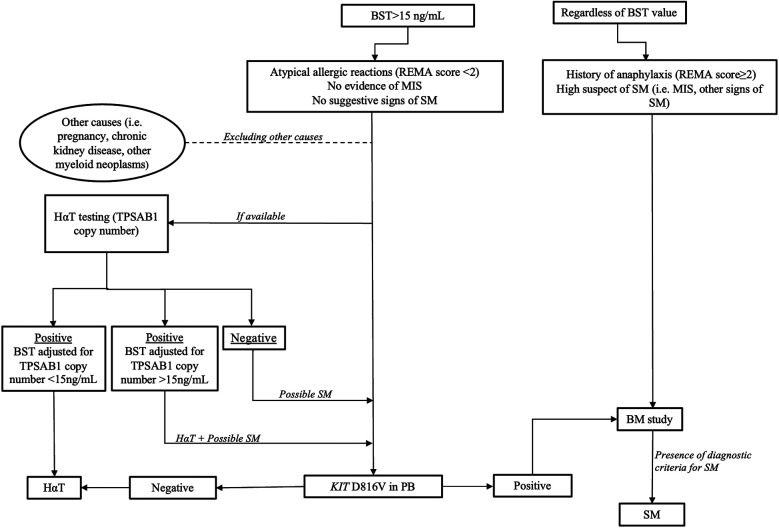
- Proposes a basic algorithm for suspected SM based on REMA score, typical skin lesions, BST >15 ng/ml, PB KIT D816V testing, and HαT testing.
Limitations
- Stated: all attempts to adjust BST for HαT are empirical and still to be validated prospectively; correlations between HαT and severe anaphylaxis are debated and need confirmation in larger datasets; urinary mediator findings require further validation.
- Stated: despite improved KIT variant detection in PB, major limitations remain, and patients with very low disease burden classified as MMAS/cMCAS show the greatest BM/PB KIT discrepancies and remain a grey zone.
- Evident: as a narrative review, no systematic search or quantitative synthesis is reported, and recommendations rely on cited literature and expert consensus rather than new primary data.
Model-written summary. Check it against the paper before relying on it.
Integrity signals
Registry
Cites
Statistics
Figures
Verification
Claims the paper makes
49 Valid · 3 Not valid · 26 Not checked · 12 Own results and interpretations
The cited sources support only part of this claim — read each source’s verdict below.
In the paper
“severe episodes were twice more frequent in individuals with both SM and HαT than in those with SM but without HαT (17, 18).”
§ Defining “Normal” basal serum tryptase levels: a context-dependent approach to improve diagnostics in systemic mastocytosis > Hereditary alpha tryptasemia and mastocytosis: a clinical interaction?
What the sources say
- Not checked — no full text of the sourcecites [17] Lyons JJ Chovanec J O’Connell MP Liu Y Šelb J Zanotti R Heritable risk for severe anaphylaxis associated with increased α-tryptase–encoding germline copy number at TPSAB1. J Allergy Clin Immunol. (2021) 147: 622– 32. 10.1016/j.jaci.2020.06.035 32717252 source
- Partly supportedcites [18] Li JY Ryder CB Zhang H Cockey SG Hyjek E Moscinski LC Review and updates on systemic mastocytosis and related entities. Cancers. (2023) 15: 5626. 10.3390/cancers15235626 38067330 PMC10705510 sourceExperimental — accuracy not yet measured
Section 2.2 (page not available) says concurrent HαT predisposes patients with mastocytosis to severe mediator-related symptoms. It does not report that severe episodes are twice as frequent in patients with both SM and HαT as in patients with SM alone. (LLM, conf=0.84)
plainstates an association- Asserted: passes — The authors put it forward as true.
- Checkable: passes — It can be checked against evidence.
- Load-bearing: unclear — It is unclear whether the paper’s conclusions depend on it.
- Based: passes — The paper gives a reason why it holds.
The cited sources support only part of this claim — read each source’s verdict below.
In the paper
“Basal serum tryptase (BST) above 20 ng/ml represents a minor criterion according to WHO and ICC for the diagnosis of systemic mastocytosis (SM)”
- Also stated in: § Tryptase in suspected SM: the interference by HαT · plain
“BST is used as one of the main biomarkers in the suspicion of SM and represents a minor criterion for diagnosis when its value exceeds 20 ng/ml (7, 8).”
§ Defining “Normal” basal serum tryptase levels: a context-dependent approach to improve diagnostics in systemic mastocytosis > Abstract
What the sources say
- Not checked — no full text of the sourcecites [7] Arber DA Orazi A Hasserjian RP Borowitz MJ. International consensus classification of myeloid neoplasms and acute leukemias: integrating morphologic, clinical, and genomic data. Blood. (2022) 140: 1200– 28. 10.1182/blood.2022015850 35767897 PMC9479031 source
- Partly supportedcites [8] Khoury JD Solary E Abla O Akkari Y Alaggio R Apperley JF The 5th edition of the world health organization classification of haematolymphoid tumours: myeloid and histiocytic/dendritic neoplasms. Leukemia. (2022) 36: 1703– 19. 10.1038/s41375-022-01613-1 35732831 PMC9252913 sourceExperimental — accuracy not yet measured
The Mastocytosis section states that basal serum tryptase >20 ng/ml is a minor criterion for systemic mastocytosis in the WHO classification, with adjustment in cases of hereditary alpha-tryptasaemia. This WHO paper does not establish the claim about ICC criteria. (LLM, conf=0.88)
plain- Asserted: passes — The authors put it forward as true.
- Checkable: passes — It can be checked against evidence.
- Load-bearing: passes — The paper’s conclusions depend on it.
- Based: passes — The paper gives a reason why it holds.
- Also stated in: § Tryptase in suspected SM: the interference by HαT · plain
The sources with a verdict support this claim; the rest weren’t checked yet, have no full text we could read, or their verdicts aren’t rated yet.
In the paper
“although normal BST value does not exclude the diagnosis”
- Also stated in: § Analysis of KIT D816V variant in peripheral blood · plain
“a normal BST value does not exclude a diagnosis of SM, as evidenced by patients with BMM, who often present with normal BST levels (50–52).”
§ Defining “Normal” basal serum tryptase levels: a context-dependent approach to improve diagnostics in systemic mastocytosis > Abstract
What the sources say
- Not checked — no full text of the sourcecites [50] Álvarez-Twose I Zanotti R González-De-Olano D Bonadonna P Vega A Matito A Nonaggressive systemic mastocytosis (SM) without skin lesions associated with insect-induced anaphylaxis shows unique features versus other indolent SM. J Allergy Clin Immunol. (2014) 133: 520– 8. 10.1016/j.jaci.2013.06.020 23921094 source
- Supportedcites [51] Zanotti R Bonifacio M Lucchini G Sperr WR Scaffidi L van Anrooij B Refined diagnostic criteria for bone marrow mastocytosis: a proposal of the European competence network on mastocytosis. Leukemia. (2022) 36: 516– 24. 10.1038/s41375-021-01406-y 34545185 source
The Discussion proposes diagnosing bone marrow mastocytosis, a variant of systemic mastocytosis, using SM criteria and a serum tryptase level below 125 ng/mL. That proposed criterion does not require elevated tryptase, so a normal value would not by itself exclude the diagnosis. (LLM, conf=0.84)
- Supportedcites [52] Zanotti R Bonadonna P Bonifacio M Artuso A Schena D Rossini M Isolated bone marrow mastocytosis: an underestimated subvariant of indolent systemic mastocytosis. Haematologica. (2011) 96: 482– 4. 10.3324/haematol.2010.034553 21193416 PMC3046284 source
The Abstract states that bone marrow mastocytosis, a subvariant of indolent systemic mastocytosis, can occur even with normal tryptase levels. It also lists elevated serum tryptase as only one of several possible minor diagnostic criteria for systemic mastocytosis. (LLM, conf=0.92)
plain- Asserted: passes — The authors put it forward as true.
- Checkable: passes — It can be checked against evidence.
- Load-bearing: passes — The paper’s conclusions depend on it.
- Based: passes — The paper gives a reason why it holds.
- Also stated in: § Analysis of KIT D816V variant in peripheral blood · plain
The cited sources support only part of this claim — read each source’s verdict below.
In the paper
“growing knowledge of hereditary alpha-tryptasemia (HαT), a germline condition causing increase in BST with not fully elucidated clinical consequences (4–6).”
§ Defining “Normal” basal serum tryptase levels: a context-dependent approach to improve diagnostics in systemic mastocytosis > Introduction
What the sources say
- Supportedcites [4] Lyons JJ. Hereditary alpha tryptasemia: genotyping and associated clinical features. Immunol Allergy Clin North Am. (2018) 38: 483– 95. 10.1016/J.IAC.2018.04.003 30007465 PMC6411063 source
The Future Considerations / Summary section describes HαT as an inherited genetic trait caused by increased TPSAB1 copies and says affected individuals have elevated BST. It also states that questions remain about the associated clinical phenotypes and whether the trait causes or modifies them. (LLM, conf=0.94)
- Partly supportedcites [5] Lyons JJ. Inherited and acquired determinants of serum tryptase levels in humans. Ann Allergy Asthma Immunol. (2021) 127: 420– 6. 10.1016/j.anai.2021.06.019 34175497 PMC8919864 sourceExperimental — accuracy not yet measured
The section “Hereditary Alpha-Tryptasemia: the Most Common Cause for BST Elevation” (page not provided) identifies HαT as an autosomal dominant genetic trait caused by increased TPSAB1 copy number and links it to higher BST. The paper describes some associated clinical findings, but the passages reviewed do not say that HαT’s clinical consequences remain incompletely elucidated. (LLM, conf=0.83)
- Supportedcites [6] Beyens M Toscano A Ebo D Gülen T Sabato V. Diagnostic significance of tryptase for suspected mast cell disorders. Diagnostics. (2023) 13: 3662. 10.3390/diagnostics13243662 38132246 PMC10742504 source
The Discussion describes HαT as an inherited genetic trait and a common cause of elevated baseline serum tryptase. It says more research is needed on its pathological effects and notes debate and conflicting findings about its clinical presentation. (LLM, conf=0.92)
plain- Asserted: passes — The authors put it forward as true.
- Checkable: passes — It can be checked against evidence.
- Load-bearing: passes — The paper’s conclusions depend on it.
- Based: passes — The paper gives a reason why it holds.
- Supported
The sources with a verdict support this claim; the rest weren’t checked yet, have no full text we could read, or their verdicts aren’t rated yet.
In the paper
“hereditary alpha-tryptasemia (HαT), an autosomal dominant germline condition that consists in the increase of the number of copies of the TPSAB1 gene encoding the alpha isoform of tryptase”
- Also stated in: § Hereditary alpha tryptasemia and mastocytosis: a clinical interaction? · plain
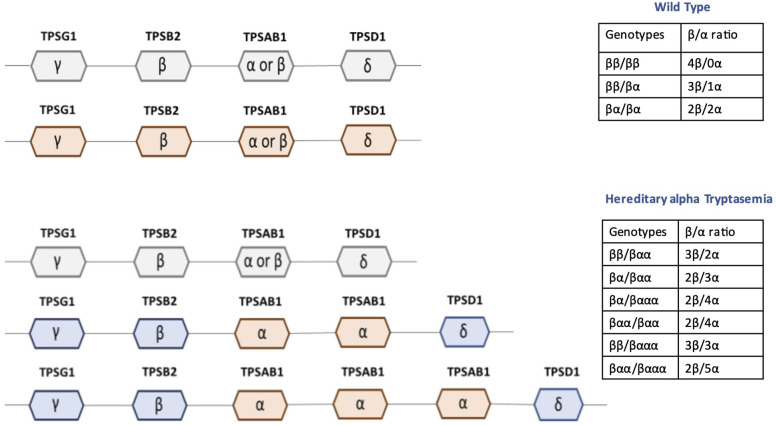
“HαT, an autosomal dominant condition resulting from the multiplication of the TPSAB1 gene (Figure 1) encoding the alpha isoform of tryptase”
§ Defining “Normal” basal serum tryptase levels: a context-dependent approach to improve diagnostics in systemic mastocytosis > Abstract
What the sources say
- Supportedcites [4] Lyons JJ. Hereditary alpha tryptasemia: genotyping and associated clinical features. Immunol Allergy Clin North Am. (2018) 38: 483– 95. 10.1016/J.IAC.2018.04.003 30007465 PMC6411063 source
The Future Considerations / Summary section states that hereditary alpha tryptasemia is caused by increased copies of TPSAB1 encoding alpha-tryptase and is inherited in an autosomal dominant manner. The paper also identifies the extra copies as germline copies. (LLM, conf=0.95)
- Not checked — no full text of the sourcecites [11] Lyons JJ Yu X Hughes JD Le QT Jamil A Bai Y Elevated basal serum tryptase identifies a multisystem disorder associated with increased TPSAB1 copy number. Nat Genet. (2016) 48: 1564– 9. 10.1038/ng.3696 27749843 PMC5397297 source
plainstates a cause- Asserted: passes — The authors put it forward as true.
- Checkable: passes — It can be checked against evidence.
- Load-bearing: passes — The paper’s conclusions depend on it.
- Based: passes — The paper gives a reason why it holds.
- Also stated in: § Hereditary alpha tryptasemia and mastocytosis: a clinical interaction? · plain
19 more claims · 8 with their cited sources checked
Create a free account to see all 90 claims and to verify the 11 references still open.
- It may state two separate claims as one. 27
- Probably not a substantial claim. 56
Self-check
Percentages, sums and reported differences re-computed from the paper’s own numbers.
Rated minor: it would not touch a result — a value no result rests on, a p-value that stays on the same side of the significance level, or a conflict that is clerical, resolved elsewhere in the paper, or outside its own findings.
In the paper
“37/39 (95%) of PB samples compared with 11/39 (28%) analyzed by NGS and 30/39 (80%) of PB samples analyzed locally”
§ Defining “Normal” basal serum tryptase levels: a context-dependent approach to improve diagnostics in systemic mastocytosis > Analysis of KIT D816V variant in peripheral blood
Reported 80 · recomputed 76.923077
Citations
Cites
Khoury, J. D., Solary, E., Abla, O., Akkari, Y., Alaggio, R., Apperley, J. F., Bejar, R., Berti, E., Busque, L., Chan, J. K. C., et al. (2022) · Leukemia · doi:10.1038/s41375-022-01613-1 · Cited by 4,274
Arber, D. A., Orazi, A., Hasserjian, R. P., Borowitz, M. J., Calvo, K. R., Kvasnicka, H.-M., Wang, S. A., Bagg, A., Barbui, T., Branford, S., et al. (2022) · Blood · doi:10.1182/blood.2022015850 · Cited by 2,945
Tryptase levels as an indicator of mast-cell activation in systemic anaphylaxis and mastocytosis
Schwartz, L. B., Metcalfe, D. D., Miller, J. S., Earl, H., & Sullivan, T. (1987) · New England Journal of Medicine · doi:10.1056/nejm198706253162603 · Cited by 784
Valent, P., Akin, C., Escribano, L., Födinger, M., Hartmann, K., Brockow, K., Castells, M., Sperr, W. R., Kluin‐Nelemans, H. C., Hamdy, N. A. T., et al. (2007) · European Journal of Clinical Investigation · doi:10.1111/j.1365-2362.2007.01807.x · Cited by 750
Valent, P., Akin, C., Arock, M., Brockow, K., Butterfield, J. H., Carter, M. C., Castells, M., Escribano, L., Hartmann, K., Lieberman, P., et al. (2012) · International Archives of Allergy and Immunology · doi:10.1159/000328760 · Cited by 654
Brockow, K., Jofer, C., Behrendt, H., & Ring, J. (2008) · Allergy · doi:10.1111/j.1398-9995.2007.01569.x · Cited by 523
Schwartz, L. B., Yunginger, J. W., Miller, J., Bokhari, R., & Dull, D. (1989) · Journal of Clinical Investigation · doi:10.1172/jci114051 · Cited by 456
Considerations for Digital PCR as an Accurate Molecular Diagnostic Tool
Huggett, J. F., Cowen, S., & Foy, C. A. (2015) · Clinical Chemistry · doi:10.1373/clinchem.2014.221366 · Cited by 444
Valent, P., Spanblochl, E., Sperr, W., Sillaber, C., Zsebo, K., Agis, H., Strobl, H., Geissler, K., Bettelheim, P., & Lechner, K. (1992) · Blood · doi:10.1182/blood.v80.9.2237.2237 · Cited by 439
Lyons, J. J., Yu, X., Hughes, J. D., Le, Q. T., Jamil, A., Bai, Y., Ho, N., Zhao, M., Liu, Y., O'Connell, M. P., et al. (2016) · Nature Genetics · doi:10.1038/ng.3696 · Cited by 394
Updated Diagnostic Criteria and Classification of Mast Cell Disorders: A Consensus Proposal
Valent, P., Akin, C., Hartmann, K., Alvarez-Twose, I., Brockow, K., Hermine, O., Niedoszytko, M., Schwaab, J., Lyons, J. J., Carter, M. C., et al. (2021) · HemaSphere · doi:10.1097/hs9.0000000000000646 · Cited by 317
Arock, M., Sotlar, K., Akin, C., Broesby-Olsen, S., Hoermann, G., Escribano, L., Kristensen, T. K., Kluin-Nelemans, H. C., Hermine, O., Dubreuil, P., et al. (2015) · Leukemia · doi:10.1038/leu.2015.24 · Cited by 290
Lyons, J. J., Chovanec, J., O’Connell, M. P., Liu, Y., Šelb, J., Zanotti, R., Bai, Y., Kim, J., Le, Q. T., DiMaggio, T., et al. (2021) · Journal of Allergy and Clinical Immunology · doi:10.1016/j.jaci.2020.06.035 · Cited by 230
Proposed Diagnostic Algorithm for Patients with Suspected Mast Cell Activation Syndrome
Valent, P., Akin, C., Bonadonna, P., Hartmann, K., Brockow, K., Niedoszytko, M., Nedoszytko, B., Siebenhaar, F., Sperr, W. R., Oude Elberink, J. N. G., et al. (2019) · The Journal of Allergy and Clinical Immunology: In Practice · doi:10.1016/j.jaip.2019.01.006 · Cited by 225
Kristensen, T., Vestergaard, H., & Møller, M. B. (2011) · The Journal of Molecular Diagnostics · doi:10.1016/j.jmoldx.2010.10.004 · Cited by 208
Greiner, G., Sprinzl, B., Górska, A., Ratzinger, F., Gurbisz, M., Witzeneder, N., Schmetterer, K. G., Gisslinger, B., Uyanik, G., Hadzijusufovic, E., et al. (2021) · Blood · doi:10.1182/blood.2020006157 · Cited by 189
Alvarez-Twose, I., González-de-Olano, D., Sánchez-Muñoz, L., Matito, A., Jara-Acevedo, M., Teodosio, C., García-Montero, A., Morgado, J. M., Orfao, A., & Escribano, L. (2012) · International Archives of Allergy and Immunology · doi:10.1159/000329856 · Cited by 184
Lyons, J. J. (2018) · Immunology and Allergy Clinics of North America · doi:10.1016/j.iac.2018.04.003 · Cited by 179
Valent, P., Bonadonna, P., Hartmann, K., Broesby-Olsen, S., Brockow, K., Butterfield, J. H., Triggiani, M., Lyons, J. J., Oude Elberink, J. N. G., Arock, M., et al. (2019) · International Archives of Allergy and Immunology · doi:10.1159/000501079 · Cited by 146
The mastocytosis society survey on mast cell disorders: patient experiences and perceptions
Jennings, S., Russell, N., Jennings, B., Slee, V., Sterling, L., Castells, M., Valent, P., & Akin, C. (2014) · The Journal of Allergy and Clinical Immunology: In Practice · doi:10.1016/j.jaip.2013.09.004 · Cited by 143
Álvarez-Twose, I., Zanotti, R., González-de-Olano, D., Bonadonna, P., Vega, A., Matito, A., Sánchez-Muñoz, L., Morgado, J. M., Perbellini, O., García-Montero, A., et al. (2014) · Journal of Allergy and Clinical Immunology · doi:10.1016/j.jaci.2013.06.020 · Cited by 142
Hartmann, K., & Metcalfe, D. D. (2000) · Hematology/Oncology Clinics of North America · doi:10.1016/s0889-8588(05)70299-9 · Cited by 136
High prevalence of fractures and osteoporosis in patients with indolent systemic mastocytosis
van der Veer, E., van der Goot, W., de Monchy, J. G. R., Kluin‐Nelemans, H. C., & van Doormaal, J. J. (2012) · Allergy · doi:10.1111/j.1398-9995.2011.02780.x · Cited by 135
Systemic mastocytosis in adults: 2023 update on diagnosis, risk stratification and management
Pardanani, A. (2023) · American Journal of Hematology · doi:10.1002/ajh.26962 · Cited by 132
Le, Q. T., Lyons, J. J., Naranjo, A. N., Olivera, A., Lazarus, R. A., Metcalfe, D. D., Milner, J. D., & Schwartz, L. B. (2019) · Journal of Experimental Medicine · doi:10.1084/jem.20190701 · Cited by 126 · cited 1×
“Recent studies have shown that in individuals with H α T, these heterotetramers increase vascular permeability by cleaving and activating protease-activated receptor-2 (PAR2) on endothelial cells, resulting in increased vascular leakage (14, 15).”
Schwartz, L. B., Min, H.-K., Ren, S., Xia, H.-Z., Hu, J., Zhao, W., Moxley, G., & Fukuoka, Y. (2003) · The Journal of Immunology · doi:10.4049/jimmunol.170.11.5667 · Cited by 120
Jara-Acevedo, M., Teodosio, C., Sanchez-Muñoz, L., Álvarez-Twose, I., Mayado, A., Caldas, C., Matito, A., Morgado, J. M., Muñoz-González, J. I., Escribano, L., et al. (2015) · Modern Pathology · doi:10.1038/modpathol.2015.72 · Cited by 114
Baretto, R. L., Beck, S., Heslegrave, J., Melchior, C., Mohamed, O., Ekbote, A., Huissoon, A. P., & Krishna, M. T. (2017) · Allergy · doi:10.1111/all.13226 · Cited by 111 · cited 1×
“This so-called “ 20% + 2 formula ” was subsequently validated by several studies (31 – 33).”
Adult-onset mastocytosis in the skin is highly suggestive of systemic mastocytosis
Berezowska, S., Flaig, M. J., Ruëff, F., Walz, C., Haferlach, T., Krokowski, M., Kerler, R., Petat-Dutter, K., Horny, H.-P., & Sotlar, K. (2014) · Modern Pathology · doi:10.1038/modpathol.2013.117 · Cited by 109
New Insights into the Pathogenesis of Mastocytosis: Emerging Concepts in Diagnosis and Therapy
Valent, P., Akin, C., Sperr, W. R., Horny, H., Arock, M., Metcalfe, D. D., & Galli, S. J. (2022) · Annual Review of Pathology Mechanisms of Disease · doi:10.1146/annurev-pathmechdis-031521-042618 · Cited by 108
Álvarez-Twose, I., Jara-Acevedo, M., Morgado, J. M., García-Montero, A., Sánchez-Muñoz, L., Teodósio, C., Matito, A., Mayado, A., Caldas, C., Mollejo, M., et al. (2016) · Journal of Allergy and Clinical Immunology · doi:10.1016/j.jaci.2015.05.008 · Cited by 102
Pardanani, A. (2013) · Blood · doi:10.1182/blood-2013-01-453183 · Cited by 101
Carter, M. C., Desai, A., Komarow, H. D., Bai, Y., Clayton, S. T., Clark, A. S., Ruiz-Esteves, K. N., Long, L. M., Cantave, D., Wilson, T. M., et al. (2018) · Journal of Allergy and Clinical Immunology · doi:10.1016/j.jaci.2017.05.036 · Cited by 97
Paired acute‐baseline serum tryptase levels in perioperative anaphylaxis: An observational study
Vitte, J., Amadei, L., Gouitaa, M., Mezouar, S., Zieleskiewicz, L., Albanese, J., Bruder, N., Lagier, D., Mertès, P. M., Mège, J., et al. (2019) · Allergy · doi:10.1111/all.13752 · Cited by 94
Defining baseline variability of serum tryptase levels improves accuracy in identifying anaphylaxis
Mateja, A., Wang, Q., Chovanec, J., Kim, J., Wilson, K. J., Schwartz, L. B., Glover, S. C., Carter, M. C., Metcalfe, D. D., Brittain, E., et al. (2022) · Journal of Allergy and Clinical Immunology · doi:10.1016/j.jaci.2021.08.007 · Cited by 91
Hereditary alpha tryptasemia is not associated with specific clinical phenotypes
Chollet, M. B., & Akin, C. (2022) · Journal of Allergy and Clinical Immunology · doi:10.1016/j.jaci.2021.06.017 · Cited by 90
How much specific is the association between hymenoptera venom allergy and mastocytosis?
Bonadonna, P., Zanotti, R., Pagani, M., Caruso, B., Perbellini, O., Colarossi, S., Olivieri, E., Dama, A., Schiappoli, M., Senna, G., et al. (2009) · Allergy · doi:10.1111/j.1398-9995.2009.02108.x · Cited by 87
Digital PCR: A Sensitive and Precise Method for KIT D816V Quantification in Mastocytosis
Greiner, G., Gurbisz, M., Ratzinger, F., Witzeneder, N., Simonitsch-Klupp, I., Mitterbauer-Hohendanner, G., Mayerhofer, M., Müllauer, L., Sperr, W. R., Valent, P., et al. (2018) · Clinical Chemistry · doi:10.1373/clinchem.2017.277897 · Cited by 83
(1990) · PubMed · Cited by 68
The international consensus classification of mastocytosis and related entities
Leguit, R. J., Wang, S. A., George, T. I., Tzankov, A., & Orazi, A. (2023) · Virchows Archiv · doi:10.1007/s00428-022-03423-3 · Cited by 65
Chovanec, J., Tunc, I., Hughes, J., Halstead, J., Mateja, A., Liu, Y., O’Connell, M. P., Kim, J., Park, Y. H., Wang, Q., et al. (2023) · Blood Advances · doi:10.1182/bloodadvances.2022007936 · Cited by 62
Isolated bone marrow mastocytosis: an underestimated subvariant of indolent systemic mastocytosis
Zanotti, R., Bonadonna, P., Bonifacio, M., Artuso, A., Schena, D., Rossini, M., Perbellini, O., Colarossi, S., Chilosi, M., & Pizzolo, G. (2011) · Haematologica · doi:10.3324/haematol.2010.034553 · Cited by 61
Zanotti, R., Bonifacio, M., Lucchini, G., Sperr, W. R., Scaffidi, L., van Anrooij, B., Oude Elberink, H. N., Rossignol, J., Hermine, O., Gorska, A., et al. (2022) · Leukemia · doi:10.1038/s41375-021-01406-y · Cited by 56
Inherited and acquired determinants of serum tryptase levels in humans
Lyons, J. J. (2021) · Annals of Allergy, Asthma & Immunology · doi:10.1016/j.anai.2021.06.019 · Cited by 52
Anaphylaxis as a clinical manifestation of clonal mast cell disorders
Matito, A., Alvarez-Twose, I., Morgado, J. M., Sánchez-Muñoz, L., Orfao, A., & Escribano, L. (2014) · Current Allergy and Asthma Reports · doi:10.1007/s11882-014-0450-8 · Cited by 51
Sprinzl, B., Greiner, G., Uyanik, G., Arock, M., Haferlach, T., Sperr, W. R., Valent, P., & Hoermann, G. (2021) · International Journal of Molecular Sciences · doi:10.3390/ijms22052458 · Cited by 51
Sordi, B., Vanderwert, F., Crupi, F., Gesullo, F., Zanotti, R., Bonadonna, P., Crosera, L., Elena, C., Fiorelli, N., Ferrari, J., et al. (2023) · Journal of Allergy and Clinical Immunology · doi:10.1016/j.jaci.2022.09.038 · Cited by 51 · cited 2×
“These aspects must be considered given the signi fi cant prevalence of H α T in the general population, estimated at around 5% (20, 21) and in patients with SM, where it can reach up to 12% – 20% (17, 19, 22, 23).”
Self-citationElevated Basal Serum Tryptase: Disease Distribution and Variability in a Regional Health System
Waters, A. M., Park, H. J., Weskamp, A. L., Mateja, A., Kachur, M. E., Lyons, J. J., Rosen, B. J., & Boggs, N. A. (2022) · The Journal of Allergy and Clinical Immunology In Practice · doi:10.1016/j.jaip.2021.12.031 · Cited by 46
Prevalence and risk factors for fragility fracture in systemic mastocytosis
Degboé, Y., Eischen, M., Nigon, D., Apoil, P.-A., Mailhol, C., Tournier, E., Laurent, C., Hanssens, K., Hermine, O., Paul, C., et al. (2017) · Bone · doi:10.1016/j.bone.2017.09.005 · Cited by 44 · cited 1×
“Among these, osteoporosis is probably the most easily identi fi able and showed a prevalence of 15% – 30% (67, 68). data have justi fi ed the development of a score speci fi c for this setting (OSTEO-score) with increased sensitivity when BST levels were corrected for the presence of H α T (69).”
Hereditary alpha-tryptasemia: a commonly inherited modifier of anaphylaxis
Wu, R., & Lyons, J. J. (2021) · Current Allergy and Asthma Reports · doi:10.1007/s11882-021-01010-1 · Cited by 43
Kristensen, T., Vestergaard, H., Bindslev‐Jensen, C., Mortz, C. G., Kjaer, H. F., Ollert, M., Møller, M. B., Broesby‐Olsen, S., & the Mastocytosis Centre Odense University Hospital (MastOUH) (2017) · Allergy · doi:10.1111/all.13187 · Cited by 38
Elevated Serum Tryptase in Non-Anaphylaxis Cases: A Concise Review
Lee, A. Y. S. (2020) · International Archives of Allergy and Immunology · doi:10.1159/000506199 · Cited by 36
Navarro‐Navarro, P., Álvarez‐Twose, I., Pérez‐Pons, A., Henriques, A., Mayado, A., García‐Montero, A. C., Sánchez‐Muñoz, L., González‐López, O., Matito, A., Caldas, C., et al. (2023) · Allergy · doi:10.1111/all.15584 · Cited by 35
Review and updates on systemic mastocytosis and related entities
Li, J. Y., Ryder, C. B., Zhang, H., Cockey, S. G., Hyjek, E., Moscinski, L. C., Sagatys, E., & Song, J. (2023) · Cancers · doi:10.3390/cancers15235626 · Cited by 31
Scoring the Risk of Having Systemic Mastocytosis in Adult Patients with Mastocytosis in the Skin
Fuchs, D., Kilbertus, A., Kofler, K., von Bubnoff, N., Shoumariyeh, K., Zanotti, R., Bonadonna, P., Scaffidi, L., Doubek, M., Elberink, H. O., et al. (2021) · The Journal of Allergy and Clinical Immunology: In Practice · doi:10.1016/j.jaip.2020.12.022 · Cited by 30 · cited 1×
“Fuchs et al. proposed a model for patients with MIS incorporating BST values as well as the presence of mediator-related symptoms (66).”
Pyatilova, P., Akin, C., Alvarez-Twose, I., Arock, M., Bonadonna, P., Brockow, K., Butterfield, J. H., Broesby-Olsen, S., Carter, M. C., Castells, M., et al. (2022) · The Journal of Allergy and Clinical Immunology In Practice · doi:10.1016/j.jaip.2022.05.037 · Cited by 27
Differential mast cell mediators in systemic mastocytosis and hereditary α-tryptasemia
Giannetti, M. P., Godwin, G., Weller, E., Butterfield, J. H., & Castells, M. (2022) · Journal of Allergy and Clinical Immunology · doi:10.1016/j.jaci.2022.04.025 · Cited by 25 · cited 1×
“Although promising for their potential aid in a debated matter, these results require further validation (70).”
(2023) · The Journal of Allergy and Clinical Immunology: In Practice · doi:10.1016/j.jaip.2023.07.001 · Cited by 25
Alpha-tryptase as a risk-modifying factor for mast cell–mediated reactions
Shin, H., & Lyons, J. J. (2024) · Current Allergy and Asthma Reports · doi:10.1007/s11882-024-01136-y · Cited by 24
Diagnostic Significance of Tryptase for Suspected Mast Cell Disorders
Beyens, M., Toscano, A., Ebo, D., Gülen, T., & Sabato, V. (2023) · Diagnostics · doi:10.3390/diagnostics13243662 · Cited by 22
Psychological functioning and quality of life in patients with mastocytosis
Vermeiren, M. R., Kranenburg, L. W., van Daele, P. L. A., Gerth van Wijk, R., & Hermans, M. A. W. (2020) · Annals of Allergy, Asthma & Immunology · doi:10.1016/j.anai.2019.12.020 · Cited by 21 · cited 1×
“In all these cases, the recommendations for testing BST are not standardized (53 – 55, 65).”
Bonadonna, P., Nalin, F., & Olivieri, F. (2022) · Current Opinion in Allergy & Clinical Immunology · doi:10.1097/aci.0000000000000849 · Cited by 18 · cited 2×
“These aspects must be considered given the signi fi cant prevalence of H α T in the general population, estimated at around 5% (20, 21) and in patients with SM, where it can reach up to 12% – 20% (17, 19, 22, 23).”
Basal serum tryptase: A critical reconsideration of reference values
Francois, F., Mauff, B. L., Waeckel, L., de Chaisemartin, L., Tabary, T., Dumontet, E., Lecron, J. C., Delamare, B., Boumediene, A., Chauvineau‐Grenier, A., et al. (2023) · Allergy · doi:10.1111/all.15790 · Cited by 15 · cited 1×
“BST normal values have been established in the range of 1 to 11.5 ng/ml (20, 24), maintaining a consistent level in healthy individuals due to the balance between storage and release from MCs (25, 26).”
InfluentialSystemic Mastocytosis: Current Status and Challenges in 2024
Ustun, C., Keklik Karadag, F., Linden, M. A., Valent, P., & Akin, C. (2025) · Blood Advances · doi:10.1182/bloodadvances.2024012612 · Cited by 14
González-de-Olano, D., Esteban-López, M. I., Alonso-Díaz-de-Durana, M. D., González-Mancebo, E., Prieto-García, A., Gandolfo-Cano, M., Mohedano-Vicente, E., Balugo-López, V., Fiandor, A., Mielgo-Ballesteros, R., et al. (2019) · The Journal of Allergy and Clinical Immunology: In Practice · doi:10.1016/j.jaip.2019.05.027 · Cited by 13
Diagnosis of Primary Mast Cell Disorders in Anaphylaxis: Value of KIT D816V in Peripheral Blood
De Puysseleyr, L. P., Ebo, D. G., Elst, J., Faber, M. A., Poorten, M.-L. V. D., Van Gasse, A. L., Bridts, C. H., Mertens, C., Van Houdt, M., Hagendorens, M. M., et al. (2021) · The Journal of Allergy and Clinical Immunology In Practice · doi:10.1016/j.jaip.2021.04.062 · Cited by 13
Underlying systemic mastocytosis in patients with unexplained osteoporosis: score proposal
Tanasi, I., Crosera, L., Taus, F., Orsolini, G., Adami, G., Olivieri, F., Bernardelli, A., Bonadonna, P., Nalin, F., Sella, S., et al. (2024) · Bone · doi:10.1016/j.bone.2024.117141 · Cited by 12 · cited 1×
“Among these, osteoporosis is probably the most easily identi fi able and showed a prevalence of 15% – 30% (67, 68). data have justi fi ed the development of a score speci fi c for this setting (OSTEO-score) with increased sensitivity when BST levels were corrected for the presence of H α T (69).”
Self-citationMcMurray, J. C., Pacheco, C. S., Schornack, B. J., Sun, X., Brunader, J. A., Scott, A. E., Ariza, J. S., Kou, C.-T. J., Costantino, R. C., Pittman, L. M., et al. (2024) · Blood · doi:10.1182/blood.2023023347 · Cited by 11
George, T. I., Hoehn, G., Lin, H.-M., Miller, S., & Akin, C. (2020) · Blood · doi:10.1182/blood-2020-136930 · Cited by 10
Pyatilova, P., Bernstein, J. A., Aulenbacher, F., Borges, M. S., Dimitrijević, S., Hoehn, G., Maurer, M., Kolkhir, P., & Siebenhaar, F. (2023) · World Allergy Organization Journal · doi:10.1016/j.waojou.2023.100838 · Cited by 9
Alvarez-Twose, I., González-de-Olano, D., Sánchez-Muñoz, L., Matito, A., Morgado, J., Jara-Acevedo, M., Teodosio, C., García-Montero, A., Orfao, A., & Escribano, L. (2011) · Journal of Allergy and Clinical Immunology · doi:10.1016/j.jaci.2010.12.988 · Cited by 3
Cited by
Role of Mast Cells and Their Mediators in Chronic Kidney Diseases
Tziastoudi, M., Cholevas, C., Eleftheriadis, T., Stefanidis, I., & Theoharides, T. C. (2025) · International Journal of Molecular Sciences · doi:10.3390/ijms26209981 · Cited by 8
“Recent publications increased the cut off limit to 20 ng/mL [100,101].”
Kapçay, O., Şahin, F. D., & Kılıç, M. (2026) · Dicle Medical Journal / Dicle Tip Dergisi · doi:10.5798/dicletip.1963920
Metadata
- Authors
- Crupi, F., Caroprese, J., & Mannelli, F.
- Affiliations
- Azienda Ospedaliero-Universitaria Careggi (IT)
- Corresponding author
- Mannelli, Francesco
- Venue
- Frontiers in Allergy
- Publisher
- Frontiers Media SA
- Published
- 2025-05-12
- Volume
- 6
- Pages
- 1592001-1592001
- ISSN
- 2673-6101 (ISSN-L)
- PMC
- PMC12104249
- OpenAlex
- W4410282155
- Cited by
- 2
- References
- 72
- Citations by year
- 2026: 1 · 2025: 1
- FWCI
- 0.18
- Type
- journal article
- Language
- en
- Open access
- gold
- doi.org
- Licence
- Locations
- Frontiers in Allergy (publishedVersion, cc-by)
- Europe PMC (PubMed Central) (publishedVersion, cc-by)
- PubMed Central (publishedVersion, cc-by)
- PubMed (publishedVersion)
- DOAJ (DOAJ: Directory of Open Access Journals) (submittedVersion, cc-by-sa)
- Florence Research (University of Florence) (submittedVersion, other-oa)
- Topics
- Life Sciences › Immunology and Microbiology › Immunology › Mast cells and histamine
- Health Sciences › Medicine › Gastroenterology › Gastrointestinal Tumor Research and Treatment
- Health Sciences › Medicine › Hematology › Platelet Disorders and Treatments
- Keywords
- systemic mastocytosis, hereditary alpha-tryptasemia, differential diagnosis, diagnostic criteria, overuse of diagnostic testing, mast cell disease
About these checks
Registry, retraction, Cites and statistics results are computed, not judged, with one exception: a printed reference that no index lists is read once by a model before it counts as a citation error. Claims are extracted by a model and kept only when their quote appears verbatim in the text; each cited source is then checked, with a model’s help, for whether it says what the claim relies on. Those verdicts can be wrong — read the claim’s quote and the cited source before relying on one.
The claim verdicts this report counts are experimental: their accuracy is not yet measured.
A language model drew the claims from the paper on 2026-10-10, under version 3 of the claim definition (model deepseek-v4.1-flash, prompt extract-v3).
A second model labelled each claim on 2026-10-10 (model jev-1.13-20260917, definition revision gold-guideline-v0.2).
Cited sources are checked with a language model’s help (gpt-6-sol).
Statistics and arithmetic are recomputed, not judged.
Confidence bands are shown only for fields calibrated on our annotated test set. None is calibrated yet, so no band is shown.
What counts as a claim ›How we measure confidence ›How we check this ›
Are you an author, or do you see a problem with this page? Request a review
Data sources
Bibliographic data: Semantic Scholar, OpenAlex, Crossref.
Contains information from the Semantic Scholar Academic Graph Datasets, made available under the ODC Attribution License (ODC-BY 1.0).
Semantic Scholar’s data is described in: Kinney, R., et al. (2023). The Semantic Scholar Open Data Platform. arXiv:2301.10140.
