

The DOI matches its Crossref record; 115 of the 115 references it cites were found in a registry or an index.
Gut-Lung Crosstalk in Sepsis-Induced Acute Lung Injury
Open accessAbstract
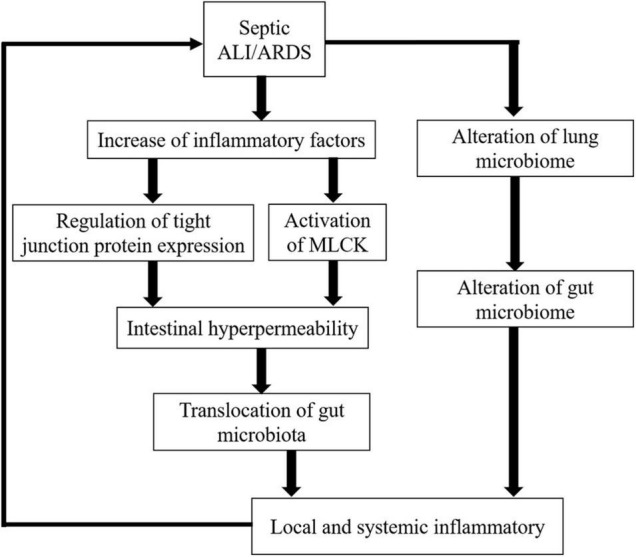
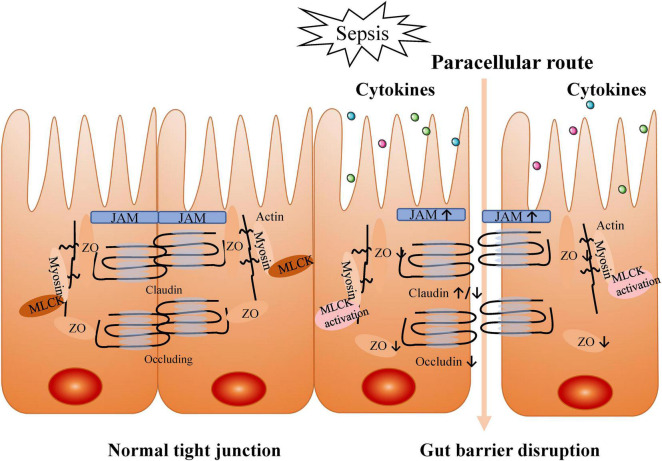
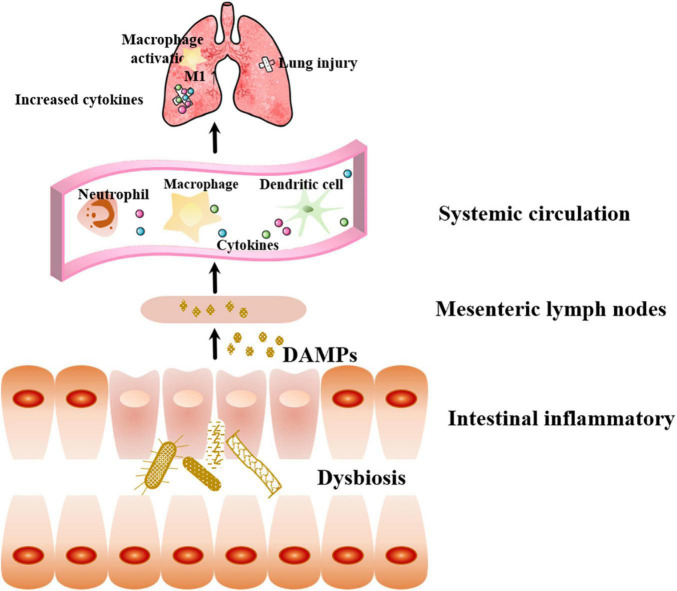
Acute lung injury (ALI) and acute respiratory distress syndrome (ARDS) are common acute and severe cases of the respiratory system with complicated pathogenesis and high mortality. Sepsis is the leading indirect cause of ALI/ARDS in the intensive care unit (ICU). The pathogenesis of septic ALI/ARDS is complex and multifactorial. In the development of sepsis, the disruption of the intestinal barrier function, the alteration of gut microbiota, and the translocation of the intestinal microbiome can lead to systemic and local inflammatory responses, which further alter the immune homeostasis in the systemic environment. Disruption of homeostasis may promote and propagate septic ALI/ARDS. In turn, when ALI occurs, elevated levels of inflammatory cytokines and the shift of the lung microbiome may lead to the dysregulation of the intestinal microbiome and the disruption of the intestinal mucosal barrier. Thus, the interaction between the lung and the gut can initiate and potentiate sepsis-induced ALI/ARDS. The gut–lung crosstalk may be a promising potential target for intervention. This article reviews the underlying mechanism of gut-lung crosstalk in septic ALI/ARDS.
Overview
The claims and statistics of this paper haven’t been checked yet.
Run the check — free, no account needed. It reads the open-access text and checks the sources it cites.
Integrity signals
Registry
Cites
Statistics
Figures
Verification
Claims the paper makes
The claims and statistics of this paper haven’t been checked yet.
Run the check — free, no account needed. It reads the open-access text and checks the sources it cites.
Claims other papers make about this one
Each is checked against this paper’s own text: does it say what the citing paper says it does?
The cited source says what the claim attributes to it.
In the citing paper
“The inflammatory cascade stemming from GI-released bacteria and endotoxins can exacerbate pulmonary dysfunction, leading to acute respiratory distress syndrome (ARDS) [27], worsening pulmonary outcomes [28].”
From Gastrointestinal function and nutritional interventions in septic shock (2025) · cites this paper as [27]
Self-check
Percentages, sums and reported differences re-computed from the paper’s own numbers.
The self-check needs the paper’s full text.
Citations
Cites
Bellani, G., Laffey, J. G., Pham, T., Fan, E., Brochard, L., Esteban, A., Gattinoni, L., van Haren, F., Larsson, A., McAuley, D. F., et al. (2016) · JAMA · doi:10.1001/jama.2016.0291 · Cited by 5,766 · cited 9×
“Sepsis is the leading indirect cause of ALI/ARDS in the intensive care unit (ICU).”
BackgroundInfluentialMacrophage plasticity, polarization, and function in health and disease
Shapouri‐Moghaddam, A., Mohammadian, S., Vazini, H., Taghadosi, M., Esmaeili, S., Mardani, F., Seifi, B., Mohammadi, A., Afshari, J. T., & Sahebkar, A. (2018) · Journal of Cellular Physiology · doi:10.1002/jcp.26429 · Cited by 4,930 · cited 1×
“Macrophages, commonly polarized into M1 (proinflammatory) and M2 (anti-inflammatory) types according to responses to environmental stimuli, are key orchestrators in the pathogenesis of ALI/ARDS (Shapouri-Moghaddam et al., 2018).”
BackgroundHost-gut microbiota metabolic interactions
Nicholson, J. K., Holmes, E., Kinross, J., Burcelin, R., Gibson, G., Jia, W., & Pettersson, S. (2012) · Science · doi:10.1126/science.1223813 · Cited by 4,760
Parada Venegas, D., De la Fuente, M. K., Landskron, G., González, M. J., Quera, R., Dijkstra, G., Harmsen, H. J. M., Faber, K. N., & Hermoso, M. A. (2019) · Frontiers in Immunology · doi:10.3389/fimmu.2019.00277 · Cited by 3,820
The human microbiome: at the interface of health and disease
Cho, I., & Blaser, M. J. (2012) · Nature Reviews Genetics · doi:10.1038/nrg3182 · Cited by 3,449 · cited 1×
“Notably, the differential immune responses to sepsis are determined by the microbiome (Cho and Blaser, 2012).”
BackgroundAcute respiratory distress syndrome
Matthay, M. A., Zemans, R. L., Zimmerman, G. A., Arabi, Y. M., Beitler, J. R., Mercat, A., Herridge, M. S., Randolph, A. G., & Calfee, C. S. (2019) · Nature Reviews Disease Primers · doi:10.1038/s41572-019-0069-0 · Cited by 2,514
A microbial symbiosis factor prevents intestinal inflammatory disease
Mazmanian, S. K., Round, J. L., & Kasper, D. L. (2008) · Nature · doi:10.1038/nature07008 · Cited by 2,340
The gut microbiota–brain axis in behaviour and brain disorders
Morais, L. H., Schreiber, H. L., & Mazmanian, S. K. (2021) · Nature Reviews Microbiology · doi:10.1038/s41579-020-00460-0 · Cited by 2,149
The microbiota in adaptive immune homeostasis and disease
Honda, K., & Littman, D. R. (2016) · Nature · doi:10.1038/nature18848 · Cited by 1,846
Bacteria as vitamin suppliers to their host: A gut microbiota perspective
LeBlanc, J. G., Milani, C., de Giori, G. S., Sesma, F., van Sinderen, D., & Ventura, M. (2013) · Current Opinion in Biotechnology · doi:10.1016/j.copbio.2012.08.005 · Cited by 1,613
Cited by
Sorted by citations
Items 101–153 of 153
Zhu, W., Wu, Y. S., Huang, X., Qiu, S., & Shao, H. (2025) · The FASEB Journal · doi:10.1096/fj.202403391rrr · Cited by 3
“However, the potential for effectively intervening in ARDS by modulating the gut microbiota remains an area requiring further research [24–26].”
Yu, J., Meng, J., Shi, Z., Zou, J., & Lai, Z. (2026) · Gut Microbes · doi:10.1080/19490976.2026.2689168 · Cited by 3
“2,125,126 Interpretation of microbiome signatures in this setting is further complicated by ICU-specific exposures, including broad-spectrum antibiotics, parenteral nutrition, vasopressors, sedation, and mechanical ventilation, all of which may independently reshape bacterial, fungal, and viral…”
Zhang, C., Ma, J., Liu, C., & Yan, X. (2024) · Chemical Biology & Drug Design · doi:10.1111/cbdd.14579 · Cited by 3
“Sepsis is a systemic response to infection and when it leads to ALI, it means that the infection has significantly affected the lungs (Zhou & Liao, 2021).”
Liao, Q., Su, X., Tao, Z., Li, Z., Wang, H., & Yuan, Y. (2023) · The Journal of Gene Medicine · doi:10.1002/jgm.3650 · Cited by 3
Xia, Q., Liu, G., Zhang, L., Xie, B., & Deng, L. (2025) · The FASEB Journal · doi:10.1096/fj.202401987rr · Cited by 3
Kaempferol Ameliorates Sepsis‐Acute Lung Injury by Promoting Succinylation of SRPK1
Zhang, Y., Liu, H., & Jin, Y. (2025) · Clinical and Experimental Pharmacology and Physiology · doi:10.1111/1440-1681.70077 · Cited by 2
Bao, D., Shao, S., Wang, Y., Chen, X., Ren, Y., Zhou, C., & Mao, Q. (2025) · Journal of Inflammation Research · doi:10.2147/jir.s546492 · Cited by 2
“3 Similarly, increased intestinal permeability facilitates the passage of harmful substances to the liver, where they activate hepatic immune cells and impair metabolic function.”
Cao, L., Wu, Z., Gao, Y., Geng, X.-Y., Yang, W.-T., Yin, Q.-R., Liu, Q., Wang, C., Ji, C., Chen, Y., et al. (2026) · Phytomedicine · doi:10.1016/j.phymed.2026.157776 · Cited by 2
Lin, S., Ding, X., Dang, X., Luo, D., Cao, D., Gong, Z., & Zhan, Q. (2026) · Journal of Nanobiotechnology · doi:10.1186/s12951-026-04362-w · Cited by 2
β-glucan reprograms alveolar macrophages via neutrophil/IFNγ axis to promote lung injuryPreprint
Prével, R., Pernet, E., Tran, K. A., Sadek, A., Sadeghi, M., Lapshina, E., Jurado, L. F., Kristof, A. S., Moumni, M., Poschmann, J., et al. (2024) · eLife · doi:10.7554/elife.102068.1 · Cited by 2
Peng, Q., Zhang, M., Zhang, A., Guo, M., Luo, R.-J., Zeng, L., Chen, G., Lin, S., Xu, F., & Xie, K. (2025) · International Immunology · doi:10.1093/intimm/dxaf041 · Cited by 1
Fan, X., Fan, S., Dong, B.-Y., Zhang, C.-M., Zuo, J., Zhang, D., Xiong, X., Luo, D., & Fan, X. (2025) · Infection Genetics and Evolution · doi:10.1016/j.meegid.2025.105810 · Cited by 1
Ji, L., Hu, Z., & Guo, W. (2025) · European journal of medical research · doi:10.1186/s40001-025-03109-x · Cited by 1
“Sepsis, a potentially fatal condition characterized by systemic organ failure, arises from dysregulated host responses to infectious agents [1, 2].”
Wang, J., Huang, Y., Li, Z., Li, X., Chen, J., Wan, Y., & Liang, H. (2025) · Intensive Care Research · doi:10.1007/s44231-025-00087-w · Cited by 2
“This framework highlights the need to connect mechanistic insights with translational applications, positioning the gut-lung axis as a vital link for understand - ing systemic inflammatory cascades in sepsis [80].”
Wang, K., Liu, J., Li, C. M., Li, Y. J., Shen, D., & Li, C. (2026) · Applied and Environmental Microbiology · doi:10.1128/aem.01841-25 · Cited by 1
“…inflammatory changes coincided with increased gut microbial α-diversity but a skewed community composition—expansion of pro-inflammatory Alistipes and Rikenellaceae , and depletion of Parabacteroides and B. uniformis —mirroring gut–lung axis disturbances observed in sepsis and ARDS models (25, 26).”
Guan, T., Dela, A., Jin, Y., Song, J., Wang, T., Zhu, Y., Dong, J., & Zhao, P. (2026) · Biochemical Pharmacology · doi:10.1016/j.bcp.2026.117934 · Cited by 1
Wang, J., Zhang, S., Zhao, Q., Yu, K., Zhao, J., Li, S., Yang, M., Han, B., Ai, X., & Peng, Q. (2026) · Journal of Ethnopharmacology · doi:10.1016/j.jep.2026.121740 · Cited by 1
Li, J., Xia, X., Wang, K., Xu, X., & Li, C. (2026) · Frontiers in Pharmacology · doi:10.3389/fphar.2026.1785916 · Cited by 1
“The lungs are the first and most vulnerable organs affected during sepsis (Zhou and Liao, 2021).”
Huang, Z., Zhong, J., Zhang, L., Huang, X., Liang, S., Zhu, Y., Zhang, R., He, H., Xu, C., Chen, W., et al. (2026) · Cell Death Discovery · doi:10.1038/s41420-026-03119-6 · Cited by 1
“Lung injury is the earliest and most common complication of sepsis and can rapidly progress to acute respiratory distress syndrome (ARDS), severely affecting patient outcomes [4, 5].”
The Gut–Lung Microbiome Axis in Alveolar Stem Cell Regeneration and Lung Repair
Liu, A., Ran, D., Shen, Z., Rojba, M., & Zhang, J. (2026) · Microorganisms · doi:10.3390/microorganisms14071572 · Cited by 1
“As we mentioned earlier, the GLA is a bidirectional communication where intestinal hyperpermeability both results from and exacerbates lung inflammation, as discussed in reviews of sepsis, ARDS, COPD, COVID-19, and pulmonary fibrosis [26,28,92,98–100].”
Parekh, S., Burstiner, L. S., Romero, K., Reddy, A. D., Garcia, G. D., Vaezi, A., Mirsaeidi, M. S., Stemboroski, L. N., & Sulbaran, M. (2026) · Crohn s & Colitis 360 · doi:10.1093/crocol/otag085 · Cited by 1
“6,7 Theories attribute this cross-talk to innate lymphoid cells (ILCs), which can be induced to migrate out of the gut to distant tissues including the lung, and toll-like receptor (TLR) signaling, 6,8–10 all of which may contribute to causing inflammation within the lungs.”
Wu, W., Wang, Z., Li, Y., Luo, N., Chen, R., Zeng, R., & Li, J. (2026) · Seminars in Immunopathology · doi:10.1007/s00281-026-01081-0 · Cited by 1
“As an organ with extensive immune and metabolic functions, the gut’s barrier integrity, microecological composition, and metabolic output are often disrupted in critically ill patients [4, 5].”
Ischemic Postconditioning Mitigates Lipopolysaccharide-induced Acute Lung Injury in Rats
Kaya, B. S., YILDIZ, S., Ersoy, O., ERGE, Ü., Taştekin, E., Gündüz, Ö., & Kaya, O. (2024) · In Vivo · doi:10.21873/invivo.13748 · Cited by 1
“It has been reported that the mortality rate of ALI patients with sepsis in intensive care units is higher than that of those without sepsis (3, 4).”
BackgroundActivación de muerte celular en sepsis y Síndrome de Dificultad Respiratoria Aguda (SDRA)
Sanclemente-Cardoza, V., Heredia, L. Y. T., Payán-Salcedo, H. A., & Estela-Zape, J. L. (2025) · Medicina · doi:10.56050/01205498.2409 · Cited by 1
Li, Y., Zhang, J., & Zhao, Z. (2022) · SSRN Electronic Journal · doi:10.2139/ssrn.4156614
Research on Risk Factors Affecting Sepsis Outcomes
Wang, G., Zhang, Y., He, B., & Zhang, X. (2023) · MEDS Clinical Medicine · doi:10.23977/medsc.2023.040401
“will lead to damage to the intestinal barrier and increase intestinal permeability, causing intestinal microorganisms, bacteria, endotoxins or their products to cross the mucosal barrier and transfer to systemic circulation through mesenteric lymphatic vessels, exacerbating the host inflammatory response, inducing acu…”
Background何, 思., yang, L., Wei, A., Wang, X., He, L., Cui, L., Zhang, S., Zhong, C., zhuo, Y., & Wang, X. (2024) · SSRN Electronic Journal · doi:10.2139/ssrn.4805739
Obesity, the Microbiome, and Lung Disease
Ingram, J. L., & Huang, Y. J. (2024) · Respiratory medicine · doi:10.1007/978-3-031-52696-1_3
shang, X., Sun, Z., Wang, H. H., Liu, Y., Yang, F., & Zhu, Y. (2024) · Research Square · doi:10.21203/rs.3.rs-4935468/v1
β-glucan reprograms alveolar macrophages via neutrophil/IFNγ axis to promote lung injuryPreprint
Prével, R., Pernet, E., Tran, K. A., Sadek, A., Sadeghi, M., Lapshina, E., Jurado, L. F., Kristof, A. S., Moumni, M., Poschmann, J., et al. (2025) · eLife · doi:10.7554/elife.102068.2
Li, Y., Tan, Y., Ma, Z., & Qian, W. (2025) · Frontiers in Medicine · doi:10.3389/fmed.2025.1577203
“Additionally, ALI often deteriorates and progresses to ARDS (4, 5).”
Kanmani, P., & Hu, H. (2025) · Springer eBooks · doi:10.1007/978-3-031-55254-0_19-1
Ding, L., Haiyan, S., Xu, X.-Y., Zhang, Y., Liao, A.-M., Hou, Y.-C., Huang, J.-H., & Pan, L. (2026) · Food Bioscience · doi:10.1016/j.fbio.2026.108353
Liao, X., & Zhang, H. (2026) · The International Journal of Biochemistry & Cell Biology · doi:10.1016/j.biocel.2026.106941
Qin, C., Wang, W., Du, Q., Kong, L., & Li, G. X. (2026) · Frontiers in Medicine · doi:10.3389/fmed.2026.1831340
“…barrier collapse but also as an initiating driver of downstream pulmonary injury, so that worsening acute gastrointestinal injury or paralytic ileus is often accompanied by increased risk of acute respiratory distress syndrome, deteriorating oxygenation, and escalating respiratory support (54).”
Impact of proton pump inhibitors on infectious and wound outcomes in burn patients
Wang, S., Dao, M. Q., Won, P., Stanton, E. W., Gillenwater, J. T., Johnson, M. B., & Yenikomshian, H. A. (2026) · Journal of Plastic Reconstructive & Aesthetic Surgery · doi:10.1016/j.bjps.2026.05.022
Chen, Y., Yu, S., Chen, Z., Yin, L., Li, L., Han, L., Lu, Z.-Y., Han, B., Yu, W., Wei, T., et al. (2026) · ChemBioChem · doi:10.1002/cbic.70379
Feng, X., Xu, P., Li, H., Peng, L.-N., Li, S., Ma, J., Ma, J.-B., Ma, Z.-J., Ma, L., Li, K., et al. (2026) · Frontiers in Microbiology · doi:10.3389/fmicb.2026.1820338
“This imbalance not only can trigger sepsis but also perpetuates a vicious cycle that exacerbates disease severity (Jin et al., 2020; Zhou and Liao, 2021).”
Fu, S., Liao, W., He, B., Wu, H., Huang, J., & Jiang, W. (2026) · Frontiers in Pharmacology · doi:10.3389/fphar.2026.1803336
Microbiota del eje intestino-pulmón en el paciente con sepsis: una revisión narrativa
Marín, C. V., Vanegas, J. M., & Saldarriaga, F. J. M. (2026) · Acta Colombiana de Cuidado Intensivo · doi:10.1016/j.acci.2026.100637
Ji, R. S., Yang, Y., Wu, C. Y., Yang, Z. J., Du, J. Z., Huangfu, J., Yao, L., & Wang, W. M. (2026) · Food Bioscience · doi:10.1016/j.fbio.2026.109440
Wei, J., Xiong, R., Zhang, T., Liang, F. Y., Chen, J., Zhao, Y., Huang, Y., Huang, Z., & Peng, C. (2026) · iScience · doi:10.1016/j.isci.2026.116771
Wu, R., Liu, S., Ran, Y., Jin, Z., Qin, M., He, Y., & Liu, H. (2026) · Fitoterapia · doi:10.1016/j.fitote.2026.107401
Zhang, T., Wang, Q., Qiu, W., Zhang, D. H., & Shang, Y. (2026) · Frontiers in Microbiology · doi:10.3389/fmicb.2026.1886655
“In particular, dysbiosis reduces the production of beneficial metabolites such as SCFAs (Adelman et al., 2020; Zhou and Liao, 2021).”
田丽霞, & Wang, H. (2026) · Research Square · doi:10.21203/rs.3.rs-10165727/v1
Beyond the lung: How intestinal microbiota shape pulmonary immunity in critical illness
Bao, C., Wang, L., Qin, W., & Qin, W. (2026) · Intensive Care Science · doi:10.1016/j.iics.2026.07.004
Parolin, C., Gentile, E., Pellegrino, C., Spada, V., Bassi, C., Sabbioni, S., Vitali, B., Pinton, P., & Rimessi, A. (2026) · Biomedicines · doi:10.3390/biomedicines14091965
“…systemic inflammatory response can disrupt intestinal microbial homeostasis, impair epithelial tight-junction integrity, and increase gut permeability, thereby facilitating the translocation of microorganisms, microbial products, and inflammatory mediators into the systemic circulation [142,143].”
Sui, J., Chen, M., Qiu, L., Ni, B., Wang, S., & Liu, B. (2026) · Frontiers in Immunology · doi:10.3389/fimmu.2026.1858653
Neumann, C. M., Hickl, F., Kemnitzer, J., Leitner, M., Giamarellos‐Bourboulis, E. J., & Rubio, I. (2026) · Critical Care · doi:10.1186/s13054-026-06315-z
“Several inflammatory axes involved in numerous conditions have been described, linking different organs: the liver and the brain [139, 151–157], the lungs and the gut [151, 152], the heart and the kidneys [158], and the kidney, the heart and the lungs [159, 160].”
The gut–lung axis in early life: microbiome-associated mechanisms and clinical relevance
Klischke, L., Rahn, A., Fortmann, I., Dammann, M.-T., Ricklefs, I., Sugihara, F., Glaser, K., Klingenberg, C., Härtel, C., & Pirr, S. M. (2026) · European Respiratory Review · doi:10.1183/16000617.0147-2026
“Gut-derived pathogens and microbial products trigger systemic inflammation, characterised by elevated cytokines including IL-6, TNF-α and IL-1 β , which not only propagate sepsis but also disrupt distal organ development including the lung [101, 102].”
Dai, P., Liu, J., Zhao, F., Xiao, X., & Chen, J. (2026) · Microbial Pathogenesis · doi:10.1016/j.micpath.2026.108856
The role of the respiratory microbiome in acute and chronic respiratory diseases
Heinzinger, L. R., Segal, L. N., & Dickson, R. P. (2026) · Nature Reviews Microbiology · doi:10.1038/s41579-026-01377-w
Wang, X., Li, K., Dong, W., Li, M., Qin, S., Zhang, J., & Liu, D. (2026) · Chinese Herbal Medicines · doi:10.1016/j.chmed.2026.10.013
Metadata
- Authors
- Zhou, X., & Liao, Y.
- Affiliations
- Wuhan University (CN)
- Corresponding author
- Zhou, Xin
- ORCID
- Zhou, Xin
- Venue
- Frontiers in Microbiology
- Publisher
- Frontiers Media SA
- Published
- 2021-12-23
- Volume
- 12
- Pages
- 779620-779620
- ISSN
- 1664-302X (ISSN-L)
- PMC
- PMC8733643
- OpenAlex
- W4200159901
- Cited by
- 153
- References
- 115
- Citations by year
- 2026: 36 · 2025: 48 · 2024: 38 · 2023: 25 · 2022: 6
- FWCI
- 2.64
- Type
- journal article
- Language
- en
- Open access
- gold
- doi.org
- Licence
- Locations
- Frontiers in Microbiology (publishedVersion, cc-by)
- PubMed Central (publishedVersion, cc-by)
- PubMed (publishedVersion)
- DOAJ (DOAJ: Directory of Open Access Journals) (submittedVersion, cc-by-sa)
- Topics
- Health Sciences › Medicine › Critical Care and Intensive Care Medicine › Sepsis Diagnosis and Treatment
- Health Sciences › Medicine › Pulmonary and Respiratory Medicine › Respiratory Support and Mechanisms
- Life Sciences › Biochemistry, Genetics and Molecular Biology › Molecular Biology › Gut microbiota and health
- Keywords
- sepsis, acute lung injury, acute respiratory distress syndrome, intestinal barrier dysfunction, gut microbiota, lung microbiome, inflammatory cytokines, immune dysregulation, sepsis pathogenesis
About these checks
Registry, retraction, Cites and statistics results are computed, not judged, with one exception: a printed reference that no index lists is read once by a model before it counts as a citation error. Claims are extracted by a model and kept only when their quote appears verbatim in the text; each cited source is then checked, with a model’s help, for whether it says what the claim relies on. Those verdicts can be wrong — read the claim’s quote and the cited source before relying on one.
Statistics and arithmetic are recomputed, not judged.
Confidence bands are shown only for fields calibrated on our annotated test set. None is calibrated yet, so no band is shown.
What counts as a claim ›How we measure confidence ›How we check this ›
Are you an author, or do you see a problem with this page? Request a review
