

Optimal exercise interventions for enhancing cognitive function in older adults: a network meta-analysis
Open accessThe DOI matches its Crossref record; 73 of the 82 references it cites were found in a registry or an index; 12 of the 24 sources its claims cite were checked for support.
Abstract
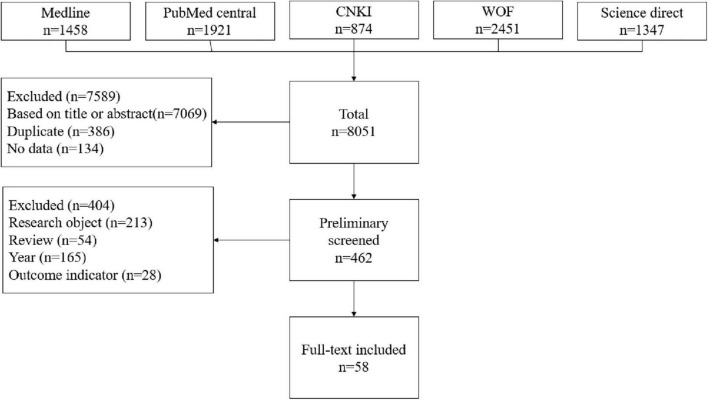
Background: Cognitive decline poses a significant challenge to healthy aging. While exercise is widely recognized for its cognitive benefits, the comparative efficacy of different exercise modalities and optimal intervention protocols for specific cognitive domains in older adults remains unclear. Objective: This network meta-analysis aimed to systematically compare the effects of five exercise modalities—resistance training, aerobic exercise, mind-body exercise, multicomponent exercise, and high-intensity interval training (HIIT)—on global cognitive function and major cognitive domains in cognitively healthy older adults, and to identify optimal intervention protocols and population subgroups most likely to benefit. Methods: A total of 58 randomized controlled trials (RCTs) were included, encompassing 4,349 healthy older adults from diverse geographical regions. Comprehensive searches were conducted in major electronic databases for RCTs evaluating exercise interventions on cognitive outcomes in adults aged 60 years and older. A network meta-analysis assessed the relative effects of each exercise modality on global cognition, executive function (including inhibitory control, task-switching ability, and working memory), and memory function. Subgroup analyses were performed based on intervention frequency, duration, participant age, and geographic region. Results: Resistance training demonstrated the greatest improvement in global cognitive function (SMD = 0.55) and inhibitory control (SMD = 0.31, SUCRA = 82.1%), particularly with twice-weekly sessions of 45 min over 12 weeks. Mind-body exercise was most effective for executive function, especially task-switching ability (SMD = −0.58, SUCRA = 85.1%) and working memory (SMD = 2.45), with high-frequency, moderate-duration protocols yielding optimal results. Aerobic exercise was the most effective modality for enhancing memory function (SMD = 0.42). The largest cognitive benefits were observed in participants aged 65–75 years and in studies conducted in Asia. Conclusion: Different exercise modalities provide domain-specific cognitive benefits in healthy older adults. Personalized exercise prescriptions—emphasizing resistance training for global cognition, mind-body exercise for executive function, and aerobic exercise for memory—should be considered in clinical and public health settings. These findings support the integration of structured exercise interventions into aging and dementia prevention strategies, with particular attention to optimal protocol design and population targeting.
Overview
CoChat Summary
## TL;DR
This network meta-analysis of 58 randomized controlled trials found that exercise benefits cognition in cognitively healthy older adults, but the best modality depends on the cognitive domain. Resistance training was best for global cognition and inhibitory control, mind-body exercise for executive function, and aerobic exercise for memory.
## Key findings
- The review included 58 RCTs with 4,349 healthy older adults; the studies spanned Asia, Europe, North America, South America, Africa, and the Middle East.
- For overall cognitive function, all four reported modalities were beneficial: mind-body exercise had the largest effect (SMD = 0.62, 95% CI 0.38–0.86, P < 0.001), followed by resistance training (SMD = 0.55, 95% CI 0.21–0.89, P = 0.002), aerobic exercise (SMD = 0.49, 95% CI 0.23–0.75, P < 0.001), and multicomponent exercise (SMD = 0.38, 95% CI 0.05–0.71, P = 0.030).
- For inhibitory control, mind-body exercise had the largest effect size (SMD = −0.45, 95% CI −0.72 to −0.18, P < 0.001), but resistance training ranked highest by SUCRA (82.1%) and was highlighted as the preferred intervention in the discussion/conclusion.
- For task-switching ability, mind-body exercise showed the strongest benefit (SMD = −0.58, 95% CI −0.89 to −0.27, P < 0.001; SUCRA = 85.1%). For working memory, both aerobic exercise (SMD = 0.58, 95% CI 0.12–1.04, P = 0.01) and especially mind-body exercise (SMD = 2.45, 95% CI 1.48–3.42, P < 0.001) were beneficial.
- For memory function, all modalities were positive, with mind-body exercise again largest (SMD = 0.58, 95% CI 0.34–0.82, P < 0.001), followed by aerobic exercise (SMD = 0.42, P < 0.001) and resistance training (SMD = 0.35, P = 0.003).
- The most effective protocols were generally high frequency (≥3 times/week), 45–60 min sessions, and 12–24 week interventions; the paper repeatedly notes the greatest benefits in adults aged 65–75 years and in Asian studies.
## Methods
- Design: Network meta-analysis/systematic review conducted according to the Cochrane Handbook and PRISMA guidelines.
- Data/sample: Searches of PubMed, Web of Science, ScienceDirect, CNKI, and Wanfang Data for RCTs published before January 1, 2024; included 58 randomized controlled trials of healthy older adults.
- Analysis: Compared five exercise modalities using network meta-analysis, with effect sizes as SMDs, ranking by SUCRA, and consistency/heterogeneity assessed using node-splitting, DIC, and I².
## Limitations
- The paper states that cognitive assessment tools varied across studies (for example, MoCA and Stroop Test), which may limit comparability.
- It states that the analysis did not cover all cognitive domains, specifically noting that attention and language fluency were not considered.
- It states that exercise intensity was not examined in detail.
- Evident from the text: although the abstract mentions identifying “population subgroups most likely to benefit,” the subgrouping reported is limited to frequency, session duration, intervention duration, age, and region, so other potentially relevant moderators were not evaluated in the provided text.
Model-written summary. Check it against the paper before relying on it.
Integrity signals
Registry
Cites
Statistics
Figures
Verification
Claims the paper makes
8 Valid · 4 Not valid · 7 Not checked · 102 Own results and interpretations
The cited sources support only part of this claim — read each source’s verdict below.
In the paper
“However, these parameters are often inconsistently reported or analyzed across studies, limiting the ability to recommend optimized protocols (Liu-Ambrose et al., 2010; Falck et al., 2019).”
§ Optimal exercise interventions for enhancing cognitive function in older adults: a network meta-analysis > 1 Introduction With increasing life expectancy and declining birth rates worldwide, the proportion of older adults is growing rapidly, presenting critical challenges to public health systems. Cognitive decline, even in the absence of clinical dementia, can lead to diminished quality of life, impaired independence, and greater risk for institutionalization (Livingston et al., 2020). While pharmacological treatments for cognitive impairment remain limited in efficacy and carry potential adverse effects, physical exercise has emerged as a promising non-pharmacological intervention for promoting brain health (Northey et al., 2018). Numerous randomized controlled trials (RCTs) and meta-analyses have demonstrated the positive effects of physical activity on global cognition in older adults (Sofi et al., 2011). Proposed mechanisms include enhanced cerebral blood flow, increased expression of neurotrophic factors such as brain-derived neurotrophic factor (BDNF), reduced systemic inflammation, and improved neurovascular coupling (Kirk-Sanchez and McGough, 2014). Despite this growing body of evidence, several knowledge gaps remain. First, most prior studies treat cognition as a single composite construct, neglecting its domain-specific organization. Cognitive functioning in older adults encompasses multiple subdomains—such as inhibitory control, task switching, working memory, episodic memory, verbal fluency, and attention—each of which may respond differently to various types of exercise (Gheysen et al., 2018). For example, resistance training has been linked to improved executive function, whereas mind–body practices such as Tai Chi may offer greater benefits for memory and attention (Zhang et al., 2023). Second, intervention efficacy may be modulated by exercise dosage, including frequency, session duration, and total program length. However, these parameters are often inconsistently reported or analyzed across studies, limiting the ability to recommend optimized protocols (Liu-Ambrose et al., 2010; Falck et al., 2019). In addition, regional and cultural factors may influence the acceptability and efficacy of certain exercise types, especially in non-Western populations where mind–body exercises are more commonly practiced (Cheng et al., 2016). To address these gaps, we conducted an updated and comprehensive meta-analysis integrating network and pairwise comparisons based on 58 unique RCTs involving 3,943 cognitively healthy older adults. This study aims to (1) evaluate and rank the effects of different exercise interventions on both global and domain-specific cognitive outcomes; (2) investigate the moderating role of intervention parameters including frequency, session length, and duration; and (3) offer evidence-based recommendations for domain-specific and culturally tailored exercise prescriptions in aging populations.
What the sources say
- Partly supportedcites Liu-Ambrose et al., 2010 matched to “Resistance Training and Executive Functions: A 12-Month Randomized Controlled Trial” (2010) sourceExperimental — accuracy not yet measured
The Introduction (page unavailable) says no prior study had examined the minimum resistance-training frequency needed for cognitive benefits and that evidence of a minimally effective dose would improve exercise-prescription options. This supports a gap in dose evidence, but not the claim that dosage parameters are often inconsistently reported or analyzed across studies. (LLM, conf=0.77)
- Not checked — no full text of the sourcecites Falck et al., 2019 matched to “Impact of exercise training on physical and cognitive function among older adults: A systematic review and meta-analysis.” (2019) source
plainstates a cause- Asserted: passes — The authors put it forward as true.
- Checkable: passes — It can be checked against evidence.
- Load-bearing: passes — The paper’s conclusions depend on it.
- Based: passes — The paper gives a reason why it holds.
- Partly supported
The cited sources that could be checked couldn’t confirm or dispute this claim.
In the paper
“In addition, regional and cultural factors may influence the acceptability and efficacy of certain exercise types, especially in non-Western populations where mind–body exercises are more commonly practiced (Cheng et al., 2016).”
§ Optimal exercise interventions for enhancing cognitive function in older adults: a network meta-analysis > 1 Introduction With increasing life expectancy and declining birth rates worldwide, the proportion of older adults is growing rapidly, presenting critical challenges to public health systems. Cognitive decline, even in the absence of clinical dementia, can lead to diminished quality of life, impaired independence, and greater risk for institutionalization (Livingston et al., 2020). While pharmacological treatments for cognitive impairment remain limited in efficacy and carry potential adverse effects, physical exercise has emerged as a promising non-pharmacological intervention for promoting brain health (Northey et al., 2018). Numerous randomized controlled trials (RCTs) and meta-analyses have demonstrated the positive effects of physical activity on global cognition in older adults (Sofi et al., 2011). Proposed mechanisms include enhanced cerebral blood flow, increased expression of neurotrophic factors such as brain-derived neurotrophic factor (BDNF), reduced systemic inflammation, and improved neurovascular coupling (Kirk-Sanchez and McGough, 2014). Despite this growing body of evidence, several knowledge gaps remain. First, most prior studies treat cognition as a single composite construct, neglecting its domain-specific organization. Cognitive functioning in older adults encompasses multiple subdomains—such as inhibitory control, task switching, working memory, episodic memory, verbal fluency, and attention—each of which may respond differently to various types of exercise (Gheysen et al., 2018). For example, resistance training has been linked to improved executive function, whereas mind–body practices such as Tai Chi may offer greater benefits for memory and attention (Zhang et al., 2023). Second, intervention efficacy may be modulated by exercise dosage, including frequency, session duration, and total program length. However, these parameters are often inconsistently reported or analyzed across studies, limiting the ability to recommend optimized protocols (Liu-Ambrose et al., 2010; Falck et al., 2019). In addition, regional and cultural factors may influence the acceptability and efficacy of certain exercise types, especially in non-Western populations where mind–body exercises are more commonly practiced (Cheng et al., 2016). To address these gaps, we conducted an updated and comprehensive meta-analysis integrating network and pairwise comparisons based on 58 unique RCTs involving 3,943 cognitively healthy older adults. This study aims to (1) evaluate and rank the effects of different exercise interventions on both global and domain-specific cognitive outcomes; (2) investigate the moderating role of intervention parameters including frequency, session length, and duration; and (3) offer evidence-based recommendations for domain-specific and culturally tailored exercise prescriptions in aging populations.
What the sources say
- Could not verifycites Cheng et al., 2016 matched to “Absence of Rtt109p, a fungal-specific histone acetyltransferase, results in improved acetic acid tolerance of Saccharomyces cerevisiae” (2016) sourceExperimental — accuracy not yet measured
The Introduction and Discussion address acetic-acid tolerance in Saccharomyces cerevisiae, not exercise in human populations. Searches for regional and cultural factors, mind–body exercise, and non-Western populations found no passage addressing the claim. Page numbers were not available in our copy. (LLM, conf=0.78)
hedgedstates a possible cause- Asserted: passes — The authors put it forward as true.
- Checkable: passes — It can be checked against evidence.
- Load-bearing: unclear — It is unclear whether the paper’s conclusions depend on it.
- Based: passes — The paper gives a reason why it holds.
- Could not verify
The cited sources support only part of this claim — read each source’s verdict below.
In the paper
“Second, intervention efficacy may be modulated by exercise dosage, including frequency, session duration, and total program length.”
§ Optimal exercise interventions for enhancing cognitive function in older adults: a network meta-analysis > 1 Introduction With increasing life expectancy and declining birth rates worldwide, the proportion of older adults is growing rapidly, presenting critical challenges to public health systems. Cognitive decline, even in the absence of clinical dementia, can lead to diminished quality of life, impaired independence, and greater risk for institutionalization (Livingston et al., 2020). While pharmacological treatments for cognitive impairment remain limited in efficacy and carry potential adverse effects, physical exercise has emerged as a promising non-pharmacological intervention for promoting brain health (Northey et al., 2018). Numerous randomized controlled trials (RCTs) and meta-analyses have demonstrated the positive effects of physical activity on global cognition in older adults (Sofi et al., 2011). Proposed mechanisms include enhanced cerebral blood flow, increased expression of neurotrophic factors such as brain-derived neurotrophic factor (BDNF), reduced systemic inflammation, and improved neurovascular coupling (Kirk-Sanchez and McGough, 2014). Despite this growing body of evidence, several knowledge gaps remain. First, most prior studies treat cognition as a single composite construct, neglecting its domain-specific organization. Cognitive functioning in older adults encompasses multiple subdomains—such as inhibitory control, task switching, working memory, episodic memory, verbal fluency, and attention—each of which may respond differently to various types of exercise (Gheysen et al., 2018). For example, resistance training has been linked to improved executive function, whereas mind–body practices such as Tai Chi may offer greater benefits for memory and attention (Zhang et al., 2023). Second, intervention efficacy may be modulated by exercise dosage, including frequency, session duration, and total program length. However, these parameters are often inconsistently reported or analyzed across studies, limiting the ability to recommend optimized protocols (Liu-Ambrose et al., 2010; Falck et al., 2019). In addition, regional and cultural factors may influence the acceptability and efficacy of certain exercise types, especially in non-Western populations where mind–body exercises are more commonly practiced (Cheng et al., 2016). To address these gaps, we conducted an updated and comprehensive meta-analysis integrating network and pairwise comparisons based on 58 unique RCTs involving 3,943 cognitively healthy older adults. This study aims to (1) evaluate and rank the effects of different exercise interventions on both global and domain-specific cognitive outcomes; (2) investigate the moderating role of intervention parameters including frequency, session length, and duration; and (3) offer evidence-based recommendations for domain-specific and culturally tailored exercise prescriptions in aging populations.
What the sources say
- Partly supportedcites Liu-Ambrose et al., 2010 matched to “Resistance Training and Executive Functions: A 12-Month Randomized Controlled Trial” (2010) sourceExperimental — accuracy not yet measured
The Results report cognitive benefits after 12 months but not six months and discuss training frequency as a possible reason for differences between studies. The Methods specify 60-minute sessions, but the paper does not test whether session duration modulates efficacy. (LLM, conf=0.85)
- Not checked — no full text of the sourcecites Falck et al., 2019 matched to “Impact of exercise training on physical and cognitive function among older adults: A systematic review and meta-analysis.” (2019) source
hedgedstates a possible cause- Asserted: passes — The authors put it forward as true.
- Checkable: passes — It can be checked against evidence.
- Load-bearing: passes — The paper’s conclusions depend on it.
- Based: passes — The paper gives a reason why it holds.
- Partly supported
The cited sources support only part of this claim — read each source’s verdict below.
In the paper
“Numerous randomized controlled trials (RCTs) and meta-analyses have demonstrated the positive effects of physical activity on global cognition in older adults (Sofi et al., 2011).”
§ Optimal exercise interventions for enhancing cognitive function in older adults: a network meta-analysis > 1 Introduction With increasing life expectancy and declining birth rates worldwide, the proportion of older adults is growing rapidly, presenting critical challenges to public health systems. Cognitive decline, even in the absence of clinical dementia, can lead to diminished quality of life, impaired independence, and greater risk for institutionalization (Livingston et al., 2020). While pharmacological treatments for cognitive impairment remain limited in efficacy and carry potential adverse effects, physical exercise has emerged as a promising non-pharmacological intervention for promoting brain health (Northey et al., 2018). Numerous randomized controlled trials (RCTs) and meta-analyses have demonstrated the positive effects of physical activity on global cognition in older adults (Sofi et al., 2011). Proposed mechanisms include enhanced cerebral blood flow, increased expression of neurotrophic factors such as brain-derived neurotrophic factor (BDNF), reduced systemic inflammation, and improved neurovascular coupling (Kirk-Sanchez and McGough, 2014). Despite this growing body of evidence, several knowledge gaps remain. First, most prior studies treat cognition as a single composite construct, neglecting its domain-specific organization. Cognitive functioning in older adults encompasses multiple subdomains—such as inhibitory control, task switching, working memory, episodic memory, verbal fluency, and attention—each of which may respond differently to various types of exercise (Gheysen et al., 2018). For example, resistance training has been linked to improved executive function, whereas mind–body practices such as Tai Chi may offer greater benefits for memory and attention (Zhang et al., 2023). Second, intervention efficacy may be modulated by exercise dosage, including frequency, session duration, and total program length. However, these parameters are often inconsistently reported or analyzed across studies, limiting the ability to recommend optimized protocols (Liu-Ambrose et al., 2010; Falck et al., 2019). In addition, regional and cultural factors may influence the acceptability and efficacy of certain exercise types, especially in non-Western populations where mind–body exercises are more commonly practiced (Cheng et al., 2016). To address these gaps, we conducted an updated and comprehensive meta-analysis integrating network and pairwise comparisons based on 58 unique RCTs involving 3,943 cognitively healthy older adults. This study aims to (1) evaluate and rank the effects of different exercise interventions on both global and domain-specific cognitive outcomes; (2) investigate the moderating role of intervention parameters including frequency, session length, and duration; and (3) offer evidence-based recommendations for domain-specific and culturally tailored exercise prescriptions in aging populations.
What the sources say
- Partly supportedcites Sofi et al., 2011 matched to “Physical activity and risk of cognitive decline: a meta-analysis of prospective studies” (2011) sourceExperimental — accuracy not yet measured
The Meta-analysis section (page not given) reports that physical activity was associated with a lower risk of cognitive decline, and the study-selection section says most included studies assessed cognition with the MMSE. But the paper pooled prospective studies, not randomized controlled trials; its findings do not establish the trial-demonstrated effects claimed in the citing sentence. (LLM, conf=0.88)
boostedstates a cause- Asserted: passes — The authors put it forward as true.
- Checkable: passes — It can be checked against evidence.
- Load-bearing: passes — The paper’s conclusions depend on it.
- Based: passes — The paper gives a reason why it holds.
- Partly supported
Every source the paper cites for this claim was checked and supports it.
In the paper
“physical exercise has emerged as a promising non-pharmacological intervention for promoting brain health (Northey et al., 2018).”
§ Optimal exercise interventions for enhancing cognitive function in older adults: a network meta-analysis > 1 Introduction With increasing life expectancy and declining birth rates worldwide, the proportion of older adults is growing rapidly, presenting critical challenges to public health systems. Cognitive decline, even in the absence of clinical dementia, can lead to diminished quality of life, impaired independence, and greater risk for institutionalization (Livingston et al., 2020). While pharmacological treatments for cognitive impairment remain limited in efficacy and carry potential adverse effects, physical exercise has emerged as a promising non-pharmacological intervention for promoting brain health (Northey et al., 2018). Numerous randomized controlled trials (RCTs) and meta-analyses have demonstrated the positive effects of physical activity on global cognition in older adults (Sofi et al., 2011). Proposed mechanisms include enhanced cerebral blood flow, increased expression of neurotrophic factors such as brain-derived neurotrophic factor (BDNF), reduced systemic inflammation, and improved neurovascular coupling (Kirk-Sanchez and McGough, 2014). Despite this growing body of evidence, several knowledge gaps remain. First, most prior studies treat cognition as a single composite construct, neglecting its domain-specific organization. Cognitive functioning in older adults encompasses multiple subdomains—such as inhibitory control, task switching, working memory, episodic memory, verbal fluency, and attention—each of which may respond differently to various types of exercise (Gheysen et al., 2018). For example, resistance training has been linked to improved executive function, whereas mind–body practices such as Tai Chi may offer greater benefits for memory and attention (Zhang et al., 2023). Second, intervention efficacy may be modulated by exercise dosage, including frequency, session duration, and total program length. However, these parameters are often inconsistently reported or analyzed across studies, limiting the ability to recommend optimized protocols (Liu-Ambrose et al., 2010; Falck et al., 2019). In addition, regional and cultural factors may influence the acceptability and efficacy of certain exercise types, especially in non-Western populations where mind–body exercises are more commonly practiced (Cheng et al., 2016). To address these gaps, we conducted an updated and comprehensive meta-analysis integrating network and pairwise comparisons based on 58 unique RCTs involving 3,943 cognitively healthy older adults. This study aims to (1) evaluate and rank the effects of different exercise interventions on both global and domain-specific cognitive outcomes; (2) investigate the moderating role of intervention parameters including frequency, session length, and duration; and (3) offer evidence-based recommendations for domain-specific and culturally tailored exercise prescriptions in aging populations.
What the sources say
- Supportedcites Northey et al., 2018 matched to “Exercise interventions for cognitive function in adults older than 50: a systematic review with meta-analysis” (2018) source
The Introduction describes physical exercise as promising for reducing dementia risk and cognitive decline. The clinical-practice section reports positive evidence that aerobic and resistance exercise benefit cognitive function, particularly in adults over 50. This supports the broad characterization of exercise as a promising non-pharmacological approach to brain health. (LLM, conf=0.90)
plainstates a possible cause- Asserted: passes — The authors put it forward as true.
- Checkable: passes — It can be checked against evidence.
- Load-bearing: passes — The paper’s conclusions depend on it.
- Based: passes — The paper gives a reason why it holds.
- Supported
65 more claims
Create a free account to see all 121 claims and every source verdict.
- Probably not a substantial claim. 19
- It may state two separate claims as one. 40
Self-check
Percentages, sums and reported differences re-computed from the paper’s own numbers.
Each contradiction between two passages listed here was confirmed by an independent check.
Rated major: it would touch a result — a value a result rests on, reported and recomputed p-values on opposite sides of the significance level, two passages that conflict with no sign which is right, or a cited work retracted before this paper was published.
In the paper
§ Optimal exercise interventions for enhancing cognitive function in older adults: a network meta-analysis > 3 Results > 3.2 Characteristics of included studies
“A total of 58 randomized controlled trials (RCTs) were included in this meta-analysis, encompassing 4,349 healthy older adults”
§ Optimal exercise interventions for enhancing cognitive function in older adults: a network meta-analysis > 1 Introduction
“integrating network and pairwise comparisons based on 58 unique RCTs involving 3,943 cognitively healthy older adults.”
Rated major: it would touch a result — a value a result rests on, reported and recomputed p-values on opposite sides of the significance level, two passages that conflict with no sign which is right, or a cited work retracted before this paper was published.
In the paper
§ Optimal exercise interventions for enhancing cognitive function in older adults: a network meta-analysis > 3 Results > 3.4 Meta-analysis results
“Mind-body exercise yielded the greatest effect (SMD = 0.62, 95% CI: 0.38–0.86, P < 0.001), followed by resistance training (SMD = 0.55, 95% CI: 0.21–0.89, P = 0.002) and aerobic exercise (SMD = 0.49, 95% CI: 0.23–0.75, P < 0.001).”
§ Optimal exercise interventions for enhancing cognitive function in older adults: a network meta-analysis > Abstract
“Resistance training demonstrated the greatest improvement in global cognitive function (SMD = 0.55) and inhibitory control (SMD = 0.31, SUCRA = 82.1%), particularly with twice-weekly sessions of 45 min over 12 weeks.”
Rated minor: it would not touch a result — a value no result rests on, a p-value that stays on the same side of the significance level, or a conflict that is clerical, resolved elsewhere in the paper, or outside its own findings.
In the paper
§ Optimal exercise interventions for enhancing cognitive function in older adults: a network meta-analysis > 3 Results > 3.4 Meta-analysis results
“Mind-body exercise demonstrated the largest effect size (SMD = −0.45, 95% CI: −0.72 to −0.18, P < 0.001), followed by HIIT (SMD = −0.35, 95% CI: −0.81 to 0.11, P = 0.13), resistance training (SMD = −0.32, 95% CI: −0.65 to −0.01, P = 0.04), and aerobic exercise (SMD = −0.28, 95% CI: −0.49 to −0.07, P = 0.008).”
§ Optimal exercise interventions for enhancing cognitive function in older adults: a network meta-analysis > 4 Discussion > 4.1 Impact of resistance training on cognitive function
“resistance training was the most effective intervention for improving global cognitive function in cognitively healthy older adults, with a pooled effect size of SMD = 0.55. In addition, the effect on inhibitory control was also the most pronounced among all exercise modalities (SMD = 0.31, SUCRA = 82.1%).”
Cited works that were retracted
Works this paper cites that were later retracted, from the retraction notices publishers deposit. Major when the notice came out before this paper was published.
Rated major: it would touch a result — a value a result rests on, reported and recomputed p-values on opposite sides of the significance level, two passages that conflict with no sign which is right, or a cited work retracted before this paper was published.
In the paper
“Cognitive decline, even in the absence of clinical dementia, can lead to diminished quality of life, impaired independence, and greater risk for institutionalization (Livingston et al., 2020).”
Cited work 10.1016/s0140-6736(20)30367-6 · retracted 2023-05-01 · notice 10.1016/s2468-2667(23)00083-x · this paper published 2025-07-11
Citations
Cites
1 retracted
Dementia prevention, intervention, and care: 2020 report of the Lancet Commission
Livingston, G., Huntley, J., Sommerlad, A., Ames, D., Ballard, C., Banerjee, S., Brayne, C., Burns, A., Cohen-Mansfield, J., Cooper, C., et al. (2020) · The Lancet · doi:10.1016/s0140-6736(20)30367-6 · Cited by 10,430 · cited 2×
“Cognitive decline, even in the absence of clinical dementia, can lead to diminished quality of life, impaired independence, and greater risk for institutionalization (Livingston et al., 2020).”
RetractedPreferred Reporting Items for Systematic Reviews and Meta-Analyses: The PRISMA Statement
Moher, D., Liberati, A., Tetzlaff, J., Altman, D. G., & The PRISMA Group (2009) · PLoS Medicine · doi:10.1371/journal.pmed.1000097 · Cited by 64,042 · cited 2×
“…et al., 2010; Livingston et al., 2020; Loprinzi et al., 2019; Lu et al., 2016; Maki et al., 2012; Markov et al., 2023; Miyazaki et al., 2022; Moher et al., 2009; Moreira et al., 2018; Mortimer et al., 2012; Muscari et al., 2010; Nagamatsu et al., 2012; Nguyen and Kruse, 2012; Nishiguchi et…”
Bias in meta-analysis detected by a simple, graphical test
Egger, M., Smith, G. D., Schneider, M., & Minder, C. (1997) · BMJ · doi:10.1136/bmj.315.7109.629 · Cited by 56,722
Mild Cognitive Impairment: Clinical Characterization and Outcome
Petersen, R. C., Smith, G. E., Waring, S. C., Ivnik, R. J., Tangalos, E. G., & Kokmen, E. (1999) · Archives of Neurology · doi:10.1001/archneur.56.3.303 · Cited by 8,980
Fitness Effects on the Cognitive Function of Older Adults: A Meta-Analytic Study
Colcombe, S., & Kramer, A. F. (2003) · Psychological Science · doi:10.1111/1467-9280.t01-1-01430 · Cited by 3,782
Potential for primary prevention of Alzheimer's disease: an analysis of population-based data
Norton, S., Matthews, F. E., Barnes, D. E., Yaffe, K., & Brayne, C. (2014) · The Lancet Neurology · doi:10.1016/s1474-4422(14)70136-x · Cited by 2,466 · cited 2×
“Widespread promotion of these evidence-based exercise interventions could yield significant public health gains—not only by delaying cognitive decline and reducing dementia risk, but also by lowering healthcare costs and enhancing quality of life (Blondell et al., 2014; Norton et al., 2014).”
Smith, P. J., Blumenthal, J. A., Hoffman, B. M., Cooper, H., Strauman, T. A., Welsh-Bohmer, K., Browndyke, J. N., & Sherwood, A. (2010) · Psychosomatic Medicine · doi:10.1097/psy.0b013e3181d14633 · Cited by 1,714
Mild cognitive impairment: a concept in evolution
Petersen, R. C., Caracciolo, B., Brayne, C., Gauthier, S., Jelic, V., & Fratiglioni, L. (2014) · Journal of Internal Medicine · doi:10.1111/joim.12190 · Cited by 1,694 · cited 1×
“…Nagamatsu et al., 2012; Nguyen and Kruse, 2012; Nishiguchi et al., 2015; Northey et al., 2018; Norton et al., 2014; Oken et al., 2006; Peng, 2021; Petersen et al., 2014a; Predovan et al., 2012; Riske et al., 2017; Schley et al., 2006; Smith et al., 2010; Sofi et al., 2011; Sun et al., 2011; Sun…”
Northey, J. M., Cherbuin, N., Pumpa, K. L., Smee, D. J., & Rattray, B. (2018) · British Journal of Sports Medicine · doi:10.1136/bjsports-2016-096587 · Cited by 1,380
Physical activity and risk of cognitive decline: a meta-analysis of prospective studies
Sofi, F., Valecchi, D., Bacci, D., Abbate, R., Gensini, G. F., Casini, A., & Macchi, C. (2011) · Journal of Internal Medicine · doi:10.1111/j.1365-2796.2010.02281.x · Cited by 1,210
Choosing effect measures and computing estimates of effect
Higgins, J. P., Li, T., & Deeks, J. J. (2019) · Cochrane Handbook for Systematic Reviews of Interventions · doi:10.1002/9781119536604.ch6 · Cited by 977
Blondell, S. J., Hammersley-Mather, R., & Veerman, J. L. (2014) · BMC Public Health · doi:10.1186/1471-2458-14-510 · Cited by 928
Physical Exercise as a Preventive or Disease-Modifying Treatment of Dementia and Brain Aging
Ahlskog, J. E., Geda, Y. E., Graff-Radford, N. R., & Petersen, R. C. (2011) · Mayo Clinic Proceedings · doi:10.4065/mcp.2011.0252 · Cited by 885
Supervised Machine Learning: A Brief Primer
Jiang, T., Gradus, J. L., & Rosellini, A. J. (2020) · Behavior Therapy · doi:10.1016/j.beth.2020.05.002 · Cited by 847 · cited 1×
“…et al., 2016; Coelho-Júnior et al., 2020; Kimura et al., 2010; Kirk-Sanchez and McGough, 2014; Kovacevic et al., 2020; Lachman et al., 2006; Lavretsky et al., 2011; Legault et al., 2011; Li, 2019; Lim et al., 2024; Liu et al., 2018; Liu, 2021; Liu D. M. et al., 2023; Jiang, 2020; Study selection.”
Resistance Training and Executive Functions: A 12-Month Randomized Controlled Trial
Liu-Ambrose, T. (2010) · Archives of Internal Medicine · doi:10.1001/archinternmed.2009.494 · Cited by 775
The Impact of Resistance Exercise on the Cognitive Function of the Elderly
CASSILHAS, R. C., VIANA, V. A. R., GRASSMANN, V., SANTOS, R. T., SANTOS, R. F., TUFIK, S., & MELLO, M. T. (2007) · Medicine & Science in Sports & Exercise · doi:10.1249/mss.0b013e318060111f · Cited by 770
Oken, B., Zajdel, D. P., Kishiyama, S. S., Flegal, K. E., Dehen, C., Haas, M., Kraemer, D. F., Lawrence, J., & Leyva, J. (2006) · PubMed · Cited by 589
Physical exercise and cognitive performance in the elderly: Current perspectives.
Kirk-Sanchez, N., & McGough, E. (2013) · Clinical Interventions in Aging · doi:10.2147/cia.s39506 · Cited by 465
Falck, R. S., Davis, J. C., Best, J. R., Crockett, R. A., & Liu-Ambrose, T. (2019) · Neurobiology of Aging · doi:10.1016/j.neurobiolaging.2019.03.007 · Cited by 437
Fabre, C., Chamari, K., Mucci, P., Massé-Biron, J., & Préfaut, C. (2002) · International Journal of Sports Medicine · doi:10.1055/s-2002-33735 · Cited by 416
Huang, X., Zhao, X., Li, B., Cai, Y., Zhang, S., Wan, Q., & Yu, F. (2022) · Journal of Sport and Health Science · doi:10.1016/j.jshs.2021.05.003 · Cited by 392
Nagamatsu, L. S. (2012) · Archives of Internal Medicine · doi:10.1001/archinternmed.2012.379 · Cited by 385
Gavelin, H. M., Dong, C., Minkov, R., Bahar-Fuchs, A., Ellis, K. A., Lautenschlager, N. T., Mellow, M. L., Wade, A. T., Smith, A. E., Finke, C., et al. (2021) · Ageing Research Reviews · doi:10.1016/j.arr.2020.101232 · Cited by 371
The relationship of mean platelet volume with the risk and prognosis of cardiovascular diseases
Vizioli, L., Muscari, S., & Muscari, A. (2009) · International Journal of Clinical Practice · doi:10.1111/j.1742-1241.2009.02070.x · Cited by 369
Gheysen, F., Poppe, L., DeSmet, A., Swinnen, S., Cardon, G., De Bourdeaudhuij, I., Chastin, S., & Fias, W. (2018) · International Journal of Behavioral Nutrition and Physical Activity · doi:10.1186/s12966-018-0697-x · Cited by 343
Mechanisms to explain the reverse perivascular transport of solutes out of the brain
Schley, D., Carare-Nnadi, R., Please, C. P., Perry, V. H., & Weller, R. O. (2006) · Journal of Theoretical Biology · doi:10.1016/j.jtbi.2005.07.005 · Cited by 293
Fitness Effects on the Cognitive Function of Older Adults: A Meta-Analytic Study—Revisited
Kramer, A. F., & Colcombe, S. (2018) · Perspectives on Psychological Science · doi:10.1177/1745691617707316 · Cited by 285
Mortimer, J. A., Ding, D., Borenstein, A. R., DeCarli, C., Guo, Q., Wu, Y., Zhao, Q., & Chu, S. (2012) · Journal of Alzheimer's Disease · doi:10.3233/jad-2012-120079 · Cited by 281
Lavretsky, H., Alstein, L. L., Olmstead, R. E., Ercoli, L. M., Riparetti-Brown, M., St. Cyr, N., & Irwin, M. R. (2011) · The American Journal of Geriatric Psychiatry · doi:10.1097/jgp.0b013e31820ee9ef · Cited by 268
Gallardo-Gómez, D., del Pozo-Cruz, J., Noetel, M., Álvarez-Barbosa, F., Alfonso-Rosa, R. M., & del Pozo Cruz, B. (2022) · Ageing Research Reviews · doi:10.1016/j.arr.2022.101591 · Cited by 268
Vaughan, S., Wallis, M., Polit, D., Steele, M., Shum, D., & Morris, N. (2014) · Age and Ageing · doi:10.1093/ageing/afu010 · Cited by 228
Jonasson, L. S., Nyberg, L., Kramer, A. F., Lundquist, A., Riklund, K., & Boraxbekk, C.-J. (2017) · Frontiers in Aging Neuroscience · doi:10.3389/fnagi.2016.00336 · Cited by 222
Effects of Open Versus Closed Skill Exercise on Cognitive Function: A Systematic Review
Gu, Q., Zou, L., Loprinzi, P. D., Quan, M., & Huang, T. (2019) · Frontiers in Psychology · doi:10.3389/fpsyg.2019.01707 · Cited by 222
Nishiguchi, S., Yamada, M., Tanigawa, T., Sekiyama, K., Kawagoe, T., Suzuki, M., Yoshikawa, S., Abe, N., Otsuka, Y., Nakai, R., et al. (2015) · Journal of the American Geriatrics Society · doi:10.1111/jgs.13481 · Cited by 216
Nguyen, M. H., & Kruse, A. (2012) · Clinical Interventions in Aging · doi:10.2147/cia.s32600 · Cited by 199
Tao, J., Liu, J., Chen, X., Xia, R., Li, M., Huang, M., Li, S., Park, J., Wilson, G., Lang, C., et al. (2019) · NeuroImage: Clinical · doi:10.1016/j.nicl.2019.101834 · Cited by 187
Williamson, J. D., Espeland, M., Kritchevsky, S. B., Newman, A. B., King, A. C., Pahor, M., Guralnik, J. M., Pruitt, L. A., Miller, M. E., & for the LIFE Study Investigators (2009) · The Journals of Gerontology Series A: Biological Sciences and Medical Sciences · doi:10.1093/gerona/glp014 · Cited by 185
Muscari, A., Giannoni, C., Pierpaoli, L., Berzigotti, A., Maietta, P., Foschi, E., Ravaioli, C., Poggiopollini, G., Bianchi, G., Magalotti, D., et al. (2010) · International Journal of Geriatric Psychiatry · doi:10.1002/gps.2462 · Cited by 158
Maki, Y., Ura, C., Yamaguchi, T., Murai, T., Isahai, M., Kaiho, A., Yamagami, T., Tanaka, S., Miyamae, F., Sugiyama, M., et al. (2012) · Journal of the American Geriatrics Society · doi:10.1111/j.1532-5415.2011.03838.x · Cited by 153
Coetsee, C., & Terblanche, E. (2017) · European Review of Aging and Physical Activity · doi:10.1186/s11556-017-0183-5 · Cited by 142
Iuliano, E., di Cagno, A., Aquino, G., Fiorilli, G., Mignogna, P., Calcagno, G., & Costanzo, A. D. (2015) · Experimental Gerontology · doi:10.1016/j.exger.2015.07.008 · Cited by 135
the SHARP-P Study Group, Legault, C., Jennings, J. M., Katula, J. A., Dagenbach, D., Gaussoin, S. A., Sink, K. M., Rapp, S. R., Rejeski, W. J., Shumaker, S. A., et al. (2011) · BMC Geriatrics · doi:10.1186/1471-2318-11-27 · Cited by 126
van de Rest, O., van der Zwaluw, N. L., Tieland, M., Adam, J. J., Hiddink, G. J., van Loon, L. J. C., & de Groot, C. P. G. M. (2014) · Mechanisms of Ageing and Development · doi:10.1016/j.mad.2013.12.005 · Cited by 121
García-Garro, P. A., Hita‐Contreras, F., Martínez‐Amat, A., Achalandabaso‐Ochoa, A., Jiménez‐García, J. D., Cruz‐Díaz, D., & Aibar‐Almazán, A. (2020) · International Journal of Environmental Research and Public Health · doi:10.3390/ijerph17103580 · Cited by 120
Kimura, K., Obuchi, S., Arai, T., Nagasawa, H., Shiba, Y., Watanabe, S., & Kojima, M. (2010) · Journal of PHYSIOLOGICAL ANTHROPOLOGY · doi:10.2114/jpa2.29.95 · Cited by 114
Comparison of time‐matched aerobic, resistance, or concurrent exercise training in older adults
Timmons, J. F., Minnock, D., Hone, M., Cogan, K. E., Murphy, J. C., & Egan, B. (2018) · Scandinavian Journal of Medicine & Science in Sports · doi:10.1111/sms.13254 · Cited by 109
Urback, A. L., MacIntosh, B. J., & Goldstein, B. I. (2017) · Neuroscience & Biobehavioral Reviews · doi:10.1016/j.neubiorev.2017.05.003 · Cited by 96 · cited 2×
“…Nishiguchi et al., 2015; Northey et al., 2018; Norton et al., 2014; Oken et al., 2006; Peng, 2021; Petersen et al., 2014a; Predovan et al., 2012; Riske et al., 2017; Schley et al., 2006; Smith et al., 2010; Sofi et al., 2011; Sun et al., 2011; Sun et al., 2015; Sun, 2021; Talar et al., 2022;…”
Tsai, C.-L., Pan, C.-Y., Chen, F.-C., & Tseng, Y.-T. (2017) · Frontiers in Aging Neuroscience · doi:10.3389/fnagi.2017.00294 · Cited by 93
The Effects of Strength Training on Memory in Older Adults
Lachman, M. E., Neupert, S. D., Bertrand, R., & Jette, A. M. (2006) · Journal of Aging and Physical Activity · doi:10.1123/japa.14.1.59 · Cited by 91
Witte, K., Kropf, S., Darius, S., Emmermacher, P., & Böckelmann, I. (2015) · Journal of sport and health science/Journal of Sport and Health Science · doi:10.1016/j.jshs.2015.09.006 · Cited by 77
The Effect of Three Months of Aerobic Training on Stroop Performance in Older Adults
Predovan, D., Fraser, S. A., Renaud, M., & Bherer, L. (2012) · Journal of Aging Research · doi:10.1155/2012/269815 · Cited by 76
Positive Effects of Physical Training in Activity of Daily Living–Dependent Older Adults
Venturelli, M., Lanza, M., Muti, E., & Schena, F. (2010) · Experimental Aging Research · doi:10.1080/03610731003613771 · Cited by 74
Gothe, N. P., Kramer, A. F., & McAuley, E. (2017) · The Journal of Alternative and Complementary Medicine: Paradigm, Practice, and Policy Advancing Integrative Health · doi:10.1089/acm.2016.0185 · Cited by 74
Tai chi improves cognitive and physical function in the elderly: a randomized controlled trial
Sun, J., Kanagawa, K., Sasaki, J., Ooki, S., Xu, H., & Wang, L. (2015) · Journal of Physical Therapy Science · doi:10.1589/jpts.27.1467 · Cited by 73
Baklouti, S., Fekih‐Romdhane, F., Guelmami, N., Bonsaksen, T., Baklouti, H., Aloui, A., Masmoudi, L., Souissi, N., & Jarraya, M. (2022) · Complementary Therapies in Clinical Practice · doi:10.1016/j.ctcp.2022.101715 · Cited by 70
Courel-Ibáñez, J., Vetrovsky, T., Dadova, K., Pallarés, J. G., & Steffl, M. (2019) · Nutrients · doi:10.3390/nu11092082 · Cited by 69
Markov, A., Hauser, L., & Chaabene, H. (2023) · Sports Medicine · doi:10.1007/s40279-022-01764-2 · Cited by 66
Coelho-Júnior, H. J., Oliveira Gonçalves, I. D., Sampaio, R. A. C., Sampaio, P. Y. S., Lusa Cadore, E., Calvani, R., Picca, A., Izquierdo, M., Marzetti, E., & Uchida, M. C. (2020) · International Journal of Environmental Research and Public Health · doi:10.3390/ijerph17103435 · Cited by 64
Talar, K., Vetrovsky, T., van Haren, M., Négyesi, J., Granacher, U., Váczi, M., Martín-Arévalo, E., Del Olmo, M. F., Kałamacka, E., & Hortobágyi, T. (2022) · Ageing Research Reviews · doi:10.1016/j.arr.2022.101738 · Cited by 59
Effects of Tai Chi Chuan on Inhibitory Control in Elderly Women: An fNIRS Study
Yang, Y., Chen, T., Shao, M., Yan, S., Yue, G. H., & Jiang, C. (2020) · Frontiers in Human Neuroscience · doi:10.3389/fnhum.2019.00476 · Cited by 57
Root Pruning and Stability of Young Willow Oak
Smiley, E. T. (2008) · Arboriculture & Urban Forestry · doi:10.48044/jauf.2008.016 · Cited by 55
Miyazaki, A., Okuyama, T., Mori, H., Sato, K., Kumamoto, K., & Hiyama, A. (2022) · International Journal of Environmental Research and Public Health · doi:10.3390/ijerph19106202 · Cited by 52
Wei, L., Chai, Q., Chen, J., Wang, Q., Bao, Y., Xu, W., & Ma, E. (2022) · Disability and Rehabilitation · doi:10.1080/09638288.2020.1830311 · Cited by 50
Moreira, N. B., Gonçalves, G., da Silva, T., Zanardini, F. E. H., & Bento, P. C. B. (2018) · Physiotherapy Research International · doi:10.1002/pri.1708 · Cited by 49
Farinha, C. M. N., Teixeira, A. M., Serrano, J., Santos, H., Campos, M. J., Oliveiros, B., Silva, F. M., Rusenhack, M. C., Paulo, L., & Ferreira, J. P. (2021) · International Journal of Environmental Research and Public Health · doi:10.3390/ijerph18178963 · Cited by 47
Lu, X., Siu, K., Fu, S. N., Hui-Chan, C. W. Y., & Tsang, W. W. N. (2016) · Journal of Complementary and Integrative Medicine · doi:10.1515/jcim-2015-0084 · Cited by 42
Taylor‐Piliae, R. E., Silva, E., & Peachey, S. E. (2010) · European Journal of Cardiovascular Nursing · doi:10.1016/j.ejcnurse.2010.11.001 · Cited by 39
Cheng, C., Zhao, X., Zhang, M., & Bai, F. (2016) · FEMS Yeast Research · doi:10.1093/femsyr/fow010 · Cited by 37
Frequency-Dependent Altered Functional Connections of Default Mode Network in Alzheimer’s Disease
Li, Y., Yao, H., Lin, P., Zheng, L., Li, C., Zhou, B., Wang, P., Zhang, Z., Wang, L., An, N., et al. (2017) · Frontiers in Aging Neuroscience · doi:10.3389/fnagi.2017.00259 · Cited by 33
Varela, S., Carral, J. M. C., Seijo‐Martínez, M., & Ayán, C. (2018) · Journal of Aging and Physical Activity · doi:10.1123/japa.2017-0135 · Cited by 26
Fluoride related changes in behavioral outcomes may relate to increased serotonin
Lu, F., Zhang, Y., Trivedi, A. A., Jiang, X., Chandra, D., Zheng, J., Nakano, Y., Uyghurturk, D. A., Jalai, R., Onur, Ş. G., et al. (2019) · Physiology & Behavior · doi:10.1016/j.physbeh.2019.02.017 · Cited by 24
Detecting tau in serum of transgenic animal models after tau immunotherapy treatment
d’Abramo, C., Acker, C. M., Schachter, J. B., Terracina, G., Wang, X., Forest, S. K., & Davies, P. (2015) · Neurobiology of Aging · doi:10.1016/j.neurobiolaging.2015.09.017 · Cited by 22
Foot care using green tea paste for behavioral and psychological symptoms in dementia patients
Kudoh, H., Hatakeyama, A., Yamamoto, T., Satoh, J., Kameya, Y., Shirai, S., Fujii, M., & Sasaki, H. (2009) · Geriatrics and gerontology international/Geriatrics & gerontology international · doi:10.1111/j.1447-0594.2009.00545.x · Cited by 20 · cited 1×
“…et al., 2022; García-Garro et al., 2020; Gavelin et al., 2021; Gheysen et al., 2018; Gothe et al., 2017; Gu et al., 2019; Guo et al., 2024; Hanley et al., 2010; Higgins et al., 2019; Huang et al., 2022; Iuliano et al., 2015; Jiang et al., 2020; Jonasson et al., 2016; Coelho-Júnior et al.,…”
Guo, H., Wang, Z., Chu, C. H., Chan, A. K. Y., Lo, E. C. M., & Jiang, C. M. (2024) · BMC Oral Health · doi:10.1186/s12903-024-04750-4 · Cited by 17
Retrograde root canal treatment: a prospective case series
Jonasson, P., Lennholm, C., & Kvist, T. (2016) · International Endodontic Journal · doi:10.1111/iej.12656 · Cited by 14
Peardon, L., Yellowlees, D., Pratt, R. J., et al. (2010) · European Journal of Cardiovascular Nursing · doi:10.1016/j.ejcnurse.2009.12.001 · Cited by 13
Zhang, Y., Wu, J., Wang, X., & Zheng, G. (2022) · BMC Complementary Medicine and Therapies · doi:10.1186/s12906-022-03764-1 · Cited by 12
Early laparoscopic cholecystectomy for acute cholecystitis: Does age matter?
Barka, M., Jarrar, M. S., Abdessalem, Z. B., Hamila, F., & Youssef, S. (2023) · Geriatrics and gerontology international/Geriatrics & gerontology international · doi:10.1111/ggi.14643 · Cited by 9
Li, Q., Gong, B., Zhao, Y., & Wu, C. (2022) · Journal of Aging and Physical Activity · doi:10.1123/japa.2021-0475 · Cited by 8
(2023) · PubMed · Cited by 7
Research works printed but not linked: 20
- Ansai J. H. Rebelatto J. R. Forjaz C. L. M. (2015). Resistance training improves dynamic balance in older community-dwelling men: A randomized controlled trial. Clin. Interventions Aging 10 1319– 1323. 10.2147/CIA.S84637 · doi:10.2147/cia.s84637
- Brown A. D. McMorris C. A. Longman R. S. Ryujin D. T. (2009). Effects of resistance training on cognitive function in older adults. J. Aging Phys. Activity 17 439– 452. 10.1123/japa.17.4.439 · doi:10.1123/japa.17.4.439
- Carral J. M. del Valle M. de Paz J. A. Pereira D. (2007). Resistance exercise improves cognitive function in Spanish older adults. Eur. J. Sport Sci. 7 81– 89. 10.1080/17461390701643072 · doi:10.1080/17461390701643072
- Castaño S. D. Pérez M. R. Rodríguez M. S. García P. A. González L. R. Pérez J. M. (2022). Effects of physical activity on the cognitive function in older adults: A randomized controlled trial. J. Cogn. Enhanc. 6, 30– 40.
- Chen S. Liu J. Song Y. (2020). Effects of combined aerobic and mind-body exercise on cognitive function in older adults: A randomized controlled study. Chinese J. Sports Med. 39 135– 142. 10.3760/cma.j.cn121430-20191224-00721 30704229 · doi:10.3760/cma.j.cn121430-20191224-00721
- Chen Z. Q. Zhang S. H. Wang L. (2014). Effects of aerobic exercise on cognitive function in older adults: A randomized controlled trial. Chinese J. Gerontol. 34 3986– 3988. 10.3969/j.issn.1005-9202.2014.14.056 · doi:10.3969/j.issn.1005-9202.2014.14.056
- Coelho F. M. Siqueira A. M. Silva G. B. Souza L. D. Costa D. R. (2012). Resistance training and cognitive function in older adults. J. Aging. Phys. Act. 20, 77– 85. 10.1123/japa.20.1.77 · doi:10.1123/japa.20.1.77
- Engeroff T. Vogt L. Banzer W. (2022). Resistance training and neuroprotection: A systematic review and meta-analysis of randomized controlled trials. J. Sci. Med. Sport 25 506– 512. 10.1016/j.jsams.2022.01.012 · doi:10.1016/j.jsams.2022.01.012
- Jiang A. Y. (2020). The effects of mind-body exercise on executive function in older adults: A randomized controlled trial. Chinese J. Rehabil. Med. 35 524– 529. 10.26961/d.cnki.gbjtu.2020.000271 · doi:10.26961/d.cnki.gbjtu.2020.000271
- Kovacevic A. Mavros Y. Heisz J. J. Fiatarone Singh M. A. (2020). The effect of resistance exercise on cognitive function in healthy older adults: A systematic review and meta-analysis. Sports Med. 50 1161– 1177. 10.1007/s40279-020-01236-9 · doi:10.1007/s40279-020-01236-9
- Li S. H. (2019). Effects of mind-body exercise on cognitive function in older adults: A randomized controlled trial. Chinese J. Sports Med. 38, 501– 506. 10.27315/d.cnki.gstyx.2019.000091 · doi:10.27315/d.cnki.gstyx.2019.000091
- Liu J. Zhang X. Xiao Y. (2023). Effects of exercise interventions on cognitive functions in healthy older adults: A systematic review and meta-analysis. Front. Aging Neurosci. 15: 103. 10.3389/fnagi.2023.000103 · doi:10.3389/fnagi.2023.000103
- Liu J. Y. Liu X. D. Chen P. J. Wang R. (2018). Effect of Yijin Jing on cognitive function and peripheral blood BDNF level in the elderly. Chinese J. Gerontol. 38 2525– 2530. 10.16099/j.sus.2018.02.015 · doi:10.16099/j.sus.2018.02.015
- Liu T. T. (2021). A Study on the effect of 24-Style Tai Chi exercises on maintaining executive function in the elderly. Chinese J. Rehabil. Med. 36 1056– 1061. 10.26961/d.cnki.gbjtu.2021.000049 · doi:10.26961/d.cnki.gbjtu.2021.000049
- Peng X. Q. (2021). A Study on the effect of health qigong and baduanjin on executive function and mood state in the elderly. Chinese J. Rehabil. Med. 36 422– 426. 10.26961/d.cnki.gbjtu.2021.000241 · doi:10.26961/d.cnki.gbjtu.2021.000241
- Sun J. Wang I Zhang X. Y. Yan H. Li H. Y. (2011). The improvement effect of Tai Chi exercise on brain function and physical strength of the elderly. Chinese J. Gero. 31 4688– 4689.
- Sun R. F. (2021). Effect of rouli ball exercise on cognitive function in the elderly. Chinese J. Gerontol. 41 618– 623. 10.26961/d.cnki.gbjtu.2021.000282 · doi:10.26961/d.cnki.gbjtu.2021.000282
- Xu W. H. (2022). Effect of short-term dance sport training on cognitive function in older adults.. Chinese J. Rehabil. Med. 37 316– 321. 10.27247/d.cnki.gnjtc.2022.000106 · doi:10.27247/d.cnki.gnjtc.2022.000106
- Zhang J. Ye W. Wu Z. (2023). Mind-body exercise and cognitive function in older adults: A randomized controlled study. J. Aging Phys. Activity 31 185– 193. 10.1123/japa.2022-0123 · doi:10.1123/japa.2022-0123
- Zheng H. Zhang T. Liu G. Wang Z. Li S. Liu T. (2023). Cognitive benefits of aerobic exercise in aging populations: A meta-analysis of randomized controlled trials. Front. Aging Neurosci. 15: 105. 10.3389/fnagi.2023.000105 · doi:10.3389/fnagi.2023.000105
Cited by
Ergothioneine and exercise: A match made in (cognitive) heaven?
Wazny, V. K., Grgić, J., Valenzuela, P. L., Feng, L., & Maier, A. B. (2025) · Ageing Research Reviews · doi:10.1016/j.arr.2025.102993 · Cited by 7
Carcelén‐Fraile, M. D. C., Hita‐Contreras, F., Mesas-Aróstegui, M. A., & Aibar‐Almazán, A. (2025) · Healthcare · doi:10.3390/healthcare13192415 · Cited by 18
“For example, Ludyga et al. [60] and Ham et al. [61] reported consistent improvements in executive functions after aerobic and strength training programs in older adults, including those with mild cognitive impairment.”
Acute exercise‐induced improvements in cognition: Role of cerebral blood flow and metabolism
Hashimoto, T., & Ogoh, S. (2025) · Experimental Physiology · doi:10.1113/ep092670 · Cited by 11
Gkintoni, E., Sortwell, A., & Vantarakis, A. (2026) · Brain Sciences · doi:10.3390/brainsci16010116 · Cited by 8
“…whether combined mind–body exercise benefits cognitive functioning over aerobic and resistance exercise in athletic individuals, based on research conducted with older adults [192], may be applicable when implementing contemplative practices with traditional swimming exercise regimens [193].”
Lu, C.-W., Ng, T.-C., Cheng, Y.-C., & Su, C.-H. (2026) · Healthcare · doi:10.3390/healthcare14050689 · Cited by 3
“Future research would benefit from pre-specifying clinically meaningful dose categories to avoid sparse strata and from applying non-linear modeling approaches, such as spline-based meta-regression, while avoiding simultaneous inclusion of mathematically redundant dose indicators [22,31].”
Influential
Metadata
- Authors
- Han, H., Zhang, J., Zhang, F., Li, F., & Wu, Z.
- Affiliations
- Jiangsu Police Officer College (CN)
- Nanjing Normal University (CN)
- Corresponding author
- Li, Fanghui
- Wu, Zhijian
- Venue
- Frontiers in Aging Neuroscience
- Publisher
- Frontiers Media SA
- Published
- 2025-07-11
- Volume
- 17
- Pages
- 1510773-1510773
- ISSN
- 1663-4365 (ISSN-L)
- PMC
- PMC12289702
- OpenAlex
- W4412185052
- Cited by
- 21
- References
- 82
- Citations by year
- 2026: 16 · 2025: 5
- FWCI
- 3.72
- Type
- journal article
- Language
- en
- Open access
- gold
- doi.org
- Licence
- Locations
- Frontiers in Aging Neuroscience (publishedVersion, cc-by)
- PubMed Central (publishedVersion, cc-by)
- PubMed (publishedVersion)
- DOAJ (DOAJ: Directory of Open Access Journals) (submittedVersion, cc-by-sa)
- Funders
- Government of Jiangsu Province
- National Social Science Fund of China (23CTY018)
- Topics
- Health Sciences › Medicine › Psychiatry and Mental health › Dementia and Cognitive Impairment Research
- Health Sciences › Medicine › Public Health, Environmental and Occupational Health › Physical Activity and Health
- Social Sciences › Psychology › Experimental and Cognitive Psychology › Cognitive Functions and Memory
- Keywords
- exercise intervention, cognitive function, older adults, resistance training, aerobic exercise, mind-body exercise, multicomponent exercise, high-intensity interval training, executive function, inhibitory control, task switching, working memory, memory function, cognitive decline, healthy aging, individualized exercise prescription, dementia prevention
About these checks
Registry, retraction, Cites and statistics results are computed, not judged, with one exception: a printed reference that no index lists is read once by a model before it counts as a citation error. Claims are extracted by a model and kept only when their quote appears verbatim in the text; each cited source is then checked, with a model’s help, for whether it says what the claim relies on. Those verdicts can be wrong — read the claim’s quote and the cited source before relying on one.
The claim verdicts this report counts are experimental: their accuracy is not yet measured.
A language model drew the claims from the paper on 2026-10-10, under version 3 of the claim definition (model deepseek-v4.1-flash, prompt extract-v3).
A second model labelled each claim on 2026-10-10 (model jev-1.13-20260917, definition revision gold-guideline-v0.2).
Cited sources are checked with a language model’s help (gpt-6-sol).
Statistics and arithmetic are recomputed, not judged.
Confidence bands are shown only for fields calibrated on our annotated test set. None is calibrated yet, so no band is shown.
What counts as a claim ›How we measure confidence ›How we check this ›
Are you an author, or do you see a problem with this page? Request a review
Data sources
Bibliographic data: Semantic Scholar, OpenAlex, Crossref.
Contains information from the Semantic Scholar Academic Graph Datasets, made available under the ODC Attribution License (ODC-BY 1.0).
Semantic Scholar’s data is described in: Kinney, R., et al. (2023). The Semantic Scholar Open Data Platform. arXiv:2301.10140.
