

Free-living competitive racewalkers and runners with energy availability estimates of <35 kcal·kg fat-free mass−1·day−1 exhibit peak serum progesterone concentrations indicative of ovulatory disturbances: a pilot study
The DOI matches its Crossref record; 32 of the 32 references it cites were found in a registry or an index.
Abstract
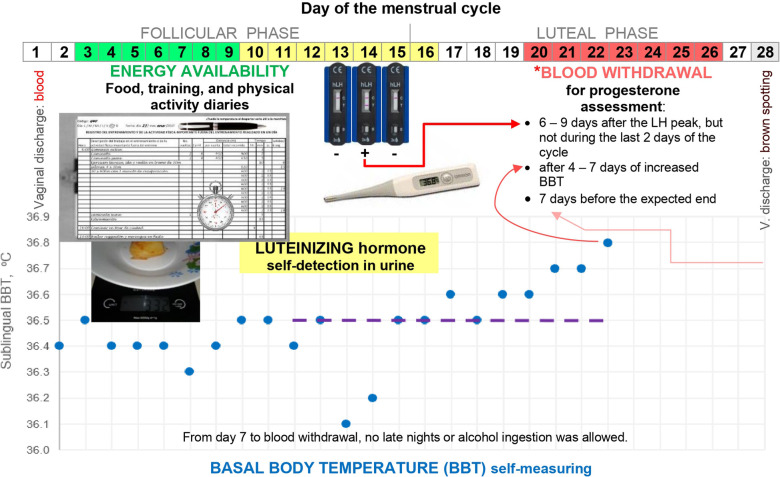
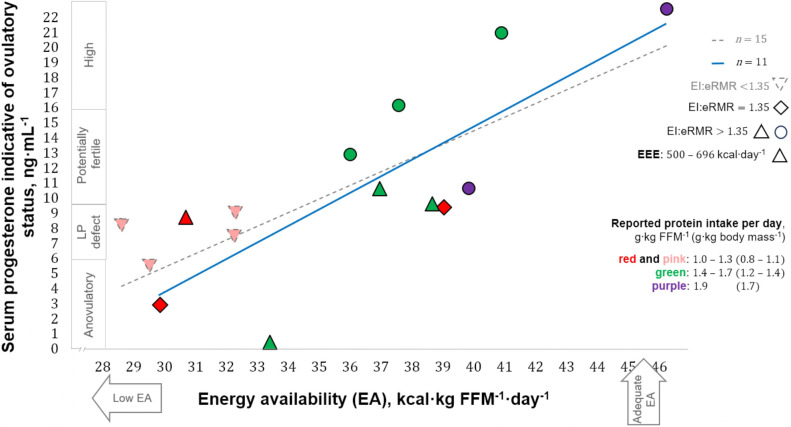
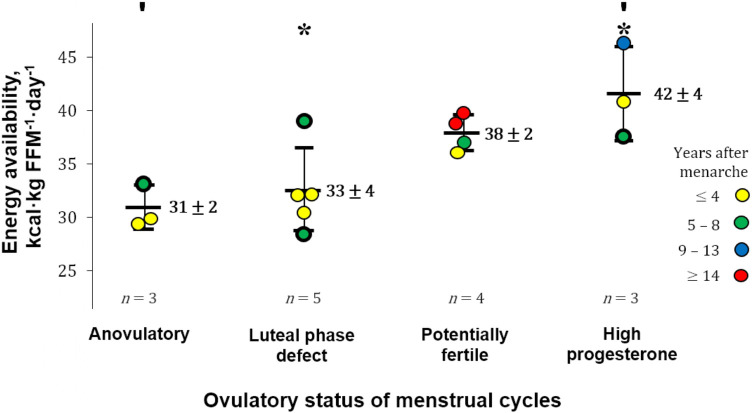
Introduction: The release of luteinising hormone (LH) before ovulation is disrupted during a state of low energy availability (EA). However, it remains unknown whether a threshold EA exists in athletic populations to trigger ovulatory disturbances (anovulation and luteal phase deficiency) as indicated by peak/mid-luteal serum progesterone concentration (Pk-PRG) during the menstrual cycle. Methods: We assessed EA and Pk-PRG in 15 menstrual cycles to investigate the relationship between EA and Pk-PRG in free-living, competitive (trained-elite) Guatemalan racewalkers (n = 8) and runners (n = 7) [aged: 20 (14–41) years; post-menarche: 5 (2–26) years; height: 1.53 ± 0.09 m; mass: 49 ± 6 kg (41 ± 5 kg fat-free mass “FFM”)]. EA was estimated over 7 consecutive days within the follicular phase using food, training, and physical activity diaries. A fasted blood sample was collected during the Pk-PRG period, 6–8 days after the LH peak, but before the final 2 days of each cycle. Serum progesterone concentration was quantified using electrochemiluminescence immunoassay. Results: Participants that reported an EA of <35 kcal·kg FFM−1·day−1 (n = 7) exhibited ovulatory disturbances (Pk-PRG ≤9.40 ng·mL−1). Athletes with EA ≥36 kcal·kg FFM−1·day−1 (n = 8) recorded “normal”/“potentially fertile” cycles (Pk-PRG >9.40 ng·mL−1), except for a single racewalker with the lowest reported protein intake (1.1 g·kg body mass−1·day−1). EA was positively associated with Pk-PRG [r(9) = 0.79, 95% confidence interval (CI): 0.37–0.94; p = 0.003; 1 − β = 0.99] after excluding participants (n = 4) that likely under-reported/reduced their dietary intake. Conclusions: The result from the linear regression analysis suggests that an EA ≥ 36 kcal·kg FFM−1·day−1 is required to achieve “normal ovulation.” The threshold EA associated with ovulatory disturbances in athletes and non-invasive means of monitoring the ovulatory status warrant further research.
Overview
The claims and statistics of this paper haven’t been checked yet.
Free: it reads the open-access text and checks the first 5 claims that cite a source we can check. Create a free account to check every claim.
Integrity signals
Registry
Cites
Statistics
Figures
Verification
Claims the paper makes
The claims and statistics of this paper haven’t been checked yet.
Free: it reads the open-access text and checks the first 5 claims that cite a source we can check. Create a free account to check every claim.
Claims other papers make about this one
Each is checked against this paper’s own text: does it say what the citing paper says it does?
In the citing paper
“It is also noteworthy that even though field-based EA assessment is fraught with error, a significant number of observational studies adopt field-based EA assessment [38–43].”
From Does relative energy deficiency in sport (REDs) syndrome exist? (2024) · cites this paper as [39]
Self-check
Percentages, sums and reported differences re-computed from the paper’s own numbers.
The self-check needs the paper’s full text.
Citations
Cites
Defining Training and Performance Caliber: A Participant Classification Framework
McKay, A. K. A., Stellingwerff, T., Smith, E. S., Martin, D. T., Mujika, I., Goosey-Tolfrey, V. L., Sheppard, J., & Burke, L. M. (2022) · International Journal of Sports Physiology and Performance · doi:10.1123/ijspp.2021-0451 · Cited by 3,093
(2007) · Medicine & Science in Sports & Exercise · doi:10.1249/mss.0b013e318149f111 · Cited by 1,554
Mountjoy, M., Ackerman, K. E., Bailey, D. M., Burke, L. M., Constantini, N., Hackney, A. C., Heikura, I. A., Melin, A., Pensgaard, A. M., Stellingwerff, T., et al. (2023) · British Journal of Sports Medicine · doi:10.1136/bjsports-2023-106994 · Cited by 974
Loucks, A. B., & Thuma, J. R. (2003) · The Journal of Clinical Endocrinology & Metabolism · doi:10.1210/jc.2002-020369 · Cited by 760 · cited 6×
“…regarding assessments of EEE, body composition, and RMR. Reed et al. (6) assessed EI over a 3-day period that was not standardised to a cycle phase, while we estimated EI and EEE simultaneously during the follicular phase with a similar timing of EA restriction in previous studies (1, 4).”
InfluentialElliott-Sale, K. J., Minahan, C. L., de Jonge, X. A. K. J., Ackerman, K. E., Sipilä, S., Constantini, N. W., Lebrun, C. M., & Hackney, A. C. (2021) · Sports Medicine · doi:10.1007/s40279-021-01435-8 · Cited by 731
The validity of self-reported energy intake as determined using the doubly labelled water technique
Hill, R. J., & Davies, P. S. W. (2001) · British Journal of Nutrition · doi:10.1079/bjn2000281 · Cited by 589 · cited 3×
“Moreover, the degree of error explained by undereating, underreporting, and/or dietary analysis drawbacks remains unknown (69).”
InfluentialLow energy availability, not stress of exercise, alters LH pulsatility in exercising women
Loucks, A. B., Verdun, M., Heath, E. M., & (With the Technical Assistance of T. Law, S. A. J. R. T. (1998) · Journal of Applied Physiology · doi:10.1152/jappl.1998.84.1.37 · Cited by 539
Dose-Response Relationships Between Energy Availability and Bone Turnover in Young Exercising Women
Ihle, R., & Loucks, A. B. (2004) · Journal of Bone and Mineral Research · doi:10.1359/jbmr.040410 · Cited by 523
Melin, A., Tornberg, Å. B., Skouby, S., Faber, J., Ritz, C., Sjödin, A., & Sundgot-Borgen, J. (2014) · British Journal of Sports Medicine · doi:10.1136/bjsports-2013-093240 · Cited by 435
A Youth Compendium of Physical Activities: Activity Codes and Metabolic Intensities
BUTTE, N. F., WATSON, K. B., RIDLEY, K., ZAKERI, I. F., MCMURRAY, R. G., PFEIFFER, K. A., CROUTER, S. E., HERRMANN, S. D., BASSETT, D. R., LONG, A., et al. (2018) · Medicine & Science in Sports & Exercise · doi:10.1249/mss.0000000000001430 · Cited by 365
Energy balance and body composition in sports and exercise
Loucks, A. B. (2004) · Journal of Sports Sciences · doi:10.1080/0264041031000140518 · Cited by 344
Heikura, I. A., Uusitalo, A. L. T., Stellingwerff, T., Bergland, D., Mero, A. A., & Burke, L. M. (2018) · International Journal of Sport Nutrition and Exercise Metabolism · doi:10.1123/ijsnem.2017-0313 · Cited by 318
De Souza, M. J., Miller, B. E., Loucks, A. B., Luciano, A. A., Pescatello, L. S., Campbell, C. G., & Lasley, B. L. (1998) · The Journal of Clinical Endocrinology & Metabolism · doi:10.1210/jcem.83.12.5334 · Cited by 315
Energy availability and the female athlete triad in elite endurance athletes
Melin, A., Tornberg, Å. B., Skouby, S., Møller, S. S., Sundgot‐Borgen, J., Faber, J., Sidelmann, J. J., Aziz, M., & Sjödin, A. (2015) · Scandinavian Journal of Medicine & Science in Sports · doi:10.1111/sms.12261 · Cited by 296
Pitfalls of conducting and interpreting estimates of energy availability in free-living athletes
Burke, L. M., Lundy, B., Fahrenholtz, I. L., & Melin, A. K. (2018) · International Journal of Sport Nutrition and Exercise Metabolism · doi:10.1123/ijsnem.2018-0142 · Cited by 244 · cited 4×
“The challenges of estimating EA in a fi eld setting are well recognised (5, 67); hence, care was taken in the present study to minimise the chance of possible errors, with special emphasis on the estimation of EI and the total energy cost of training and physical activity ( Methods and Supplementary…”
InfluentialBehre, H. M., Kuhlage, J., Gaβner, C., Sonntag, B., Schem, C., Schneider, H. P. G., & Nieschlag, E. (2000) · Human Reproduction · doi:10.1093/humrep/15.12.2478 · Cited by 238
Menstrual cycle and basal metabolic rate in women
Solomon, S., Kurzer, M., & Calloway, D. (1982) · The American Journal of Clinical Nutrition · doi:10.1093/ajcn/36.4.611 · Cited by 231
Areta, J. L., Taylor, H. L., & Koehler, K. (2021) · European Journal of Applied Physiology · doi:10.1007/s00421-020-04516-0 · Cited by 214
Garthe, I., Raastad, T., Refsnes, P. E., Koivisto, A., & Sundgot-Borgen, J. (2011) · International Journal of Sport Nutrition and Exercise Metabolism · doi:10.1123/ijsnem.21.2.97 · Cited by 209
Ovarian Suppression Impairs Sport Performance in Junior Elite Female Swimmers
VanHeest, J. L., Rodgers, C. D., Mahoney, C. E., & De Souza, M. J. (2014) · Medicine & Science in Sports & Exercise · doi:10.1249/mss.0b013e3182a32b72 · Cited by 203
Hull, M. G. R., Savage, P. E., Bromham, D. R., Ismail, A. A. A., & Morris, A. F. (1982) · Fertility and Sterility · doi:10.1016/s0015-0282(16)46095-4 · Cited by 178
Low Energy Availability in the Marathon and Other Endurance Sports
Loucks, A. B. (2007) · Sports Medicine · doi:10.2165/00007256-200737040-00019 · Cited by 176
Menstrual disruption with exercise is not linked to an energy availability threshold
LIEBERMAN, J. L., DE SOUZA, M. J., WAGSTAFF, D. A., & WILLIAMS, N. I. (2018) · Medicine & Science in Sports & Exercise · doi:10.1249/mss.0000000000001451 · Cited by 127
Viner, R. T., Harris, M., Berning, J. R., & Meyer, N. L. (2015) · International Journal of Sport Nutrition and Exercise Metabolism · doi:10.1123/ijsnem.2015-0073 · Cited by 118 · cited 13×
“We provide further evidence of anovulation ( n = 2) and luteal phase de fi ciency ( n = 1) with progesterone concentrations during the expected peak or peak period in trained-to-highly-trained athletes who reported LEA (28 – 30 kcal·kg FFM − 1 ·day − 1 ) during 7 consecutive days within the follicular phase of the same…”
InfluentialHyperandrogenism may explain reproductive dysfunction in Olympic athletes
HAGMAR, M., BERGLUND, B., BRISMAR, K., & HIRSCHBERG, A. L. (2009) · Medicine & Science in Sports & Exercise · doi:10.1249/mss.0b013e318195a21a · Cited by 114 · cited 1×
“However, there could be exceptions in terms of ovulatory or menstrual disturbances without obvious indications of chronic energy de fi ciency, such as in polycystic ovary syndrome (66).”
Energy availability discriminates clinical menstrual status in exercising women
Reed, J. L., De Souza, M. J., Mallinson, R. J., Scheid, J. L., & Williams, N. I. (2015) · Journal of the International Society of Sports Nutrition · doi:10.1186/s12970-015-0072-0 · Cited by 86
Low energy availability in female athletes: from the lab to the field
Heikura, I. A., Stellingwerff, T., & Areta, J. L. (2022) · European Journal of Sport Science · doi:10.1080/17461391.2021.1915391 · Cited by 84
Heather, A. K., Thorpe, H., Ogilvie, M., Sims, S. T., Beable, S., Milsom, S., Schofield, K. L., Coleman, L., & Hamilton, B. (2021) · Frontiers in Sports and Active Living · doi:10.3389/fspor.2021.601420 · Cited by 69
Hutson, M. J., O’Donnell, E., Brooke-Wavell, K., Sale, C., & Blagrove, R. C. (2021) · Sports Medicine · doi:10.1007/s40279-020-01396-4 · Cited by 64
Reduced Catecholamine Response to Exercise in Amenorrheic Athletes
SCHAAL, K., VAN LOAN, M. D., & CASAZZA, G. A. (2011) · Medicine & Science in Sports & Exercise · doi:10.1249/mss.0b013e3181e91ece · Cited by 45
Baird, D. T., Bäckström, T., McNeilly, A. S., Smith, S. K., & Wathen, C. G. (1984) · Reproduction · doi:10.1530/jrf.0.0700615 · Cited by 44
Schaal, K., VanLoan, M. D., Hausswirth, C., & Casazza, G. A. (2021) · Applied Physiology, Nutrition, and Metabolism · doi:10.1139/apnm-2020-0880 · Cited by 42
Research works printed but not linked: 43
- Mulligan K Butterfield G. Discrepancies between energy intake and expenditure in physically active women. Br J Nutr. (1990) 64(1): 23– 36. 10.1079/BJN19900006 2400763 · DOI · Paper page
- Reed BG Carr BR. (2015). The normal menstrual cycle and the control of ovulation. [updated May 22, 2015]. In: De Groot L.J. Chrousos G. Dungan K., editors. Endotext. South Dartmouth, MA: MDText.com, Inc. (2000). p. 14–23. Available at: https://www.ncbi.nlm.nih.gov/books/NBK279054 (Accessed January 2017).
- Prior JC Naess M Langhammer A Forsmo S. Ovulation prevalence in women with spontaneous normal-length menstrual cycles—a population-based cohort from HUNT3, Norway. PLoS One. (2015) 10(8): e0134473. 10.1371/journal.pone.0134473 26291617 PMC4546331 · DOI · Paper page
- Niethammer B Körner C Schmidmayr M Luppa PB Seifert-Klauss VR. Non-reproductive effects of anovulation: bone metabolism in the luteal phase of premenopausal women differs between ovulatory and anovulatory cycles. Geburtshilfe Frauenheilkd. (2015) 75(12): 1250– 7. 10.1055/s-0035-1558298 26726266 PMC4686368 · DOI
- Schliep KC Mumford SL Hammoud AO Stanford JB Kissell KA Sjaarda LA Luteal phase deficiency in regularly menstruating women: prevalence and overlap in identification based on clinical and biochemical diagnostic criteria. J Clin Endocrinol Metab. (2014) 99(6): E1007– 14. 10.1210/jc.2013-3534 24606080 PMC4037737 · DOI
- De Souza MJ Miller BE Sequenzia LC Luciano AA Ulreich S Stier S Bone health is not affected by luteal phase abnormalities and decreased ovarian progesterone production in female runners. J Clin Endocrinol Metab. (1997) 82(9): 2867– 76. 10.1210/jcem.82.9.4201 9284712 · DOI
- Prior JC Vigna YM Schechter MT Burgess AE. Spinal bone loss and ovulatory disturbances. N Engl J Med. (1990) 323(18): 1221– 7. 10.1056/NEJM199011013231801 2215605 · DOI · Paper page
- Li D Hitchcock CL Barr SI Yu T Prior JC. Negative spinal bone mineral density changes and subclinical ovulatory disturbances—prospective data in healthy premenopausal women with regular menstrual cycles. Epidemiol Rev. (2014) 36: 137– 47. 10.1093/epirev/mxt012 24275546 · DOI · Paper page
- Thein-Nissenbaum JM Rauh MJ Carr KE Loud KJ McGuine TA. Menstrual irregularity and musculoskeletal injury in female high school athletes. J Athl Train. (2012) 47(1): 74– 82. 10.4085/1062-6050-47.1.74 22488233 PMC3418118 · DOI · Paper page
- Pallone SR Bergus GR. Fertility awareness-based methods: another option for family planning. J Am Board Fam Med. (2009) 22(2): 147– 57. 10.3122/jabfm.2009.02.080038 19264938 · DOI · Paper page
- Kesner JS Knecht EA Krieg EF Jr Wilcox AJ O’Connor JF. Detecting pre-ovulatory luteinizing hormone surges in urine. Hum Reprod. (1998) 13(1): 15– 21. 10.1093/humrep/13.1.15 9512221 · DOI
- Direito A Bailly S Mariani A Ecochard R. Relationships between the luteinizing hormone surge and other characteristics of the menstrual cycle in normally ovulating women. Fertil Steril. (2013) 99(1): 279– 85.e3. 10.1016/j.fertnstert.2012.08.047 22999798 · DOI
- Capling L Beck KL Gifford JA Slater G Flood VM O’Connor H. Validity of dietary assessment in athletes: a systematic review. Nutrients. (2017) 9(12): 1313. 10.3390/nu9121313 29207495 PMC5748763 · DOI · Paper page
- Harris JA Benedict FG. A biometric study of human basal metabolism. Proc Natl Acad Sci U S A. (1918) 4(12): 370– 3. 10.1073/pnas.4.12.370 16576330 PMC1091498 · DOI · Paper page
- Schofield WN. Predicting basal metabolic rate, new standards and review of previous work. Hum Nutri Clin Nutr. (1985) 39(Suppl 1): 5– 41. PMID:. 4044297
- Ainsworth BE Haskell WL Herrmann SD Meckes N Bassett DR Jr Tudor-Locke C 2011 Compendium of physical activities: a second update of codes and MET values. Med Sci Sports Exerc. (2011) 43(8): 1575– 81. 10.1249/MSS.0b013e31821ece12 21681120 · DOI · Paper page
- Yuhasz MS. Physical fitness manual. London, Ontario: University of Western Ontario (1974).
- Wong JE Poh BK Nik-Shanita S Izham MM Chan KQ Tai MD Predicting basal metabolic rates in Malaysian adult elite athletes. Singapore Med J. (2012) 53(11): 744– 9. PMID:. 23192502
- Carlsohn A Scharhag-Rosenberger F Cassel M Mayer F. Resting metabolic rate in elite rowers and canoeists: difference between indirect calorimetry and prediction. Ann Nutr Metab. (2011) 58(3): 239– 44. 10.1159/000330119 21811063 · DOI · Paper page
- Torún B Menchú MT Elias LG. Recomendaciones dietéticas diarias del INCAP. Edición XLV aniversario. Publicación INCAP ME/057. Guatemala: INCAP-OPS (1994).
- WHO. Energy and protein requirements. Report of a joint FAO/WHO/UNU expert consultation. World Health Organ Tech Rep Ser. (1985) 724: 1– 206. PMID:. 3937340
- Guebels CP Kam LC Maddalozzo GF Manore MM. Active women before/after an intervention designed to restore menstrual function: resting metabolic rate and comparison of four methods to quantify energy expenditure and energy availability. Int J Sport Nutr Exerc Metab. (2014) 24(1): 37– 46. 10.1123/ijsnem.2012-0165 23918617 · DOI · Paper page
- Hagber JM Coyle EF. Physiologic comparison of competitive race-walking and running. Int J Sports Med. (1984) 5: 74– 7. 10.1055/s-2008-1025883 6715100 · DOI
- Mora-Rodriguez R Ortega JF Hamouti N. In a hot-dry environment racewalking increases the risk of hyperthermia in comparison to when running at a similar velocity. Eur J Appl Physiol. (2011) 111(6): 1073– 80. 10.1007/s00421-010-1733-y 21113615 · DOI
- White CP Hitchcock CL Vigna YM Prior JC. Fluid retention over the menstrual cycle: 1-year data from the prospective ovulation cohort. Obstet Gynecol Int. (2011) 2011: 138451. 10.1155/2011/138451 21845193 PMC3154522 · DOI · Paper page
- Goldberg GR Black AE Jebb SA Cole TJ Murgatroyd PR Coward WA Critical evaluation of energy intake data using fundamental principles of energy physiology: 1. Derivation of cut-off limits to identify under-recording. Eur J Clin Nutr. (1991) 45(12): 569– 81. PMID:. 1810719
- Faul F Erdfelder E Buchner A Lang AG. Statistical power analyses using G*power 3.1: tests for correlation and regression analyses. Behav Res Methods. (2009) 41(4): 1149– 60. 10.3758/BRM.41.4.1149 19897823 · DOI · Paper page
- Anckaert E Jank A Petzold J Rohsmann F Paris R Renggli M Extensive monitoring of the natural menstrual cycle using the serum biomarkers estradiol, luteinizing hormone and progesterone. Pract Lab Med. (2021) 25: e00211. 10.1016/j.plabm.2021.e00211 33869706 PMC8042396 · DOI
- Sliwowska JH Fergani C Gawałek M Skowronska B Fichna P Lehman MN. Insulin: its role in the central control of reproduction. Physiol Behav. (2014) 133: 197– 206. 10.1016/j.physbeh.2014.05.021 24874777 PMC4084551 · DOI
- Williams NI Leidy HJ Hill BR Lieberman JL Legro RS De Souza MJ. Magnitude of daily energy deficit predicts frequency but not severity of menstrual disturbances associated with exercise and caloric restriction. Am J Physiol Endocrinol Metab. (2015) 308(1): E29– 39. 10.1152/ajpendo.00386.2013 25352438 PMC4281686 · DOI · Paper page
- Park SJ Goldsmith LT Skurnick JH Wojtczuk A Weiss G. Characteristics of the urinary luteinizing hormone surge in young ovulatory women. Fertil Steril. (2007) 88(3): 684– 90. 10.1016/j.fertnstert.2007.01.045 17434509 · DOI
- Williams NI Bullen BA McArthur JW Skrinar GS Turnbull BA. Effects of short-term strenuous endurance exercise upon corpus luteum function. Med Sci Sports Exerc. (1999) 31(7): 949– 58. 10.1097/00005768-199907000-00006 10416555 · DOI · Paper page
- Loucks AB Redman LM. The effect of stress on menstrual function. Trends Endocrinol Metab. (2004) 15(10): 466– 71. 10.1016/j.tem.2004.10.005 15541645 · DOI
- Schmalenberger KM Eisenlohr-Moul TA Jarczok MN Eckstein M Schneider E Brenner IG Menstrual cycle changes in vagally-mediated heart rate variability are associated with progesterone: evidence from two within-person studies. J Clin Med. (2020) 9(3): 617. 10.3390/jcm9030617 32106458 PMC7141121 · DOI
- Davidsen L Vistisen B Astrup A. Impact of the menstrual cycle on determinants of energy balance: a putative role in weight loss attempts. Int J Obes (Lond). (2007) 31: 1777– 85. 10.1038/sj.ijo.0803699 17684511 · DOI · Paper page
- Oxfeldt M Phillips SM Andersen OE Johansen FT Bangshaab M Risikesan J Low energy availability reduces myofibrillar and sarcoplasmic muscle protein synthesis in trained females. J Physiol. (2023) 601(16): 3481– 97. 10.1113/JP284967 37329147 · DOI · Paper page
- Pettitt C Liu J Kwasnicki R Yang G Preston T Frost G. A pilot study to determine whether using a lightweight, wearable micro-camera improves dietary assessment accuracy and offers information on macronutrients and eating rate. Br J Nutr. (2016) 115(1): 160– 7. 10.1017/S0007114515004262 26537614 · DOI · Paper page
- Sjödin AM Andersson AB Högberg JM Westerterp KR. Energy balance in cross-country skiers: a study using doubly labeled water. Med Sci Sports Exerc. (1994) 26(6): 720– 4. 10.1249/00005768-199406000-00011 8052113 · DOI · Paper page
- Silva AM Matias CN Santos DA Thomas D Bosy-Westphal A Müller MJ Compensatory changes in energy balance regulation over one athletic season. Med Sci Sports Exerc. (2017) 49(6): 1229– 35. 10.1249/MSS.0000000000001216 28121799 · DOI
- Edwards JE Lindeman AK Mikesky AE Stager JM. Energy balance in highly trained female endurance runners. Med Sci Sports Exerc. (1993) 25 (12): 1398– 1404. PMID:. 8107549 · DOI · Paper page
- Schulz LO Alger S Harper I Wilmore JH Ravussin E. Energy expenditure of elite female runners measured by respiratory chamber and doubly labeled water. J Appl Physiol (1985). (1992) 72(1): 23– 8. 10.1152/jappl.1992.72.1.23 1537719 · DOI · Paper page
- Loucks AB. The response of luteinizing hormone pulsatility to 5 days of low energy availability disappears by 14 years of gynecological age. J Clin Endocrinol Metab. (2006) 91(8): 3158– 64. 10.1210/jc.2006-0570 16720651 · DOI · Paper page
- Castellanos-Mendoza MC. Energy availability estimated in free-living conditions positively correlates with peak progesterone concentration in the menstrual cycle of race walkers and runners not using hormonal contraception. In: abstracts from the December 2019 international sport + exercise nutrition conference in Newcastle upon Tyne. Int J Sport Nutr Exerc Metab. (2020) 30(S1): 1– 14. 10.1123/ijsnem.2020-006531945739 · doi:10.1123/ijsnem.2020-006531945739
Cited by
Does relative energy deficiency in sport (REDs) syndrome exist?
Jeukendrup, A. E., Areta, J. L., Van Genechten, L., Langan-Evans, C., Pedlar, C. R., Rodas, G., Sale, C., & Walsh, N. P. (2024) · Sports Medicine · doi:10.1007/s40279-024-02108-y · Cited by 100
Metadata
- Authors
- Castellanos-Mendoza, M. C., Galloway, S. D. R., & Witard, O. C.
- Venue
- Frontiers in Sports and Active Living
- Publisher
- Frontiers Media SA
- Published
- 2023-11-17
- Volume
- 5
- ISSN
- 2624-9367
- PMC
- PMC10690956
- Cited by
- 5
- References
- 32
About these checks
Registry, retraction, Cites and statistics results are computed, not judged, with one exception: a printed reference that no index lists is read once by a model before it counts as a citation error. Claims are extracted by a model and kept only when their quote appears verbatim in the text; each cited source is then checked, with a model’s help, for whether it says what the claim relies on. Those verdicts can be wrong — read the claim’s quote and the cited source before relying on one.
Statistics and arithmetic are recomputed, not judged.
Confidence bands are shown only for fields calibrated on our annotated test set. None is calibrated yet, so no band is shown.
What counts as a claim ›How we measure confidence ›How we check this ›
Are you an author, or do you see a problem with this page? Request a review
Data sources
Bibliographic data: Semantic Scholar, OpenAlex, Crossref.
Contains information from the Semantic Scholar Academic Graph Datasets, made available under the ODC Attribution License (ODC-BY 1.0).
Semantic Scholar’s data is described in: Kinney, R., et al. (2023). The Semantic Scholar Open Data Platform. arXiv:2301.10140.
