

Repeat Element Activation-Driven Inflammation: Role of NFκB and Implications in Normal Development and Cancer?
Open accessThe DOI matches its Crossref record; 74 of the 76 references it cites were found in a registry or an index.
Abstract
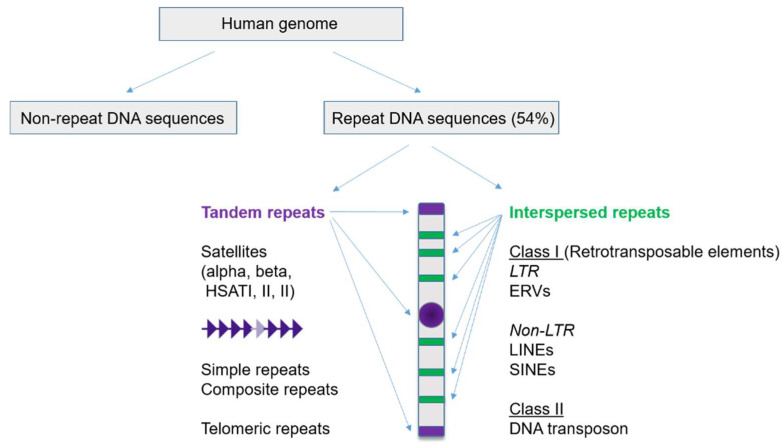
The human genome is composed of unique DNA sequences that encode proteins and unique sequence noncoding RNAs that are essential for normal development and cellular differentiation. The human genome also contains over 50% of genome sequences that are repeat in nature (tandem and interspersed repeats) that are now known to contribute dynamically to genetic diversity in populations, to be transcriptionally active under certain physiological conditions, and to be aberrantly active in disease states including cancer, where consequences are pleiotropic with impact on cancer cell phenotypes and on the tumor immune microenvironment. Repeat element-derived RNAs play unique roles in exogenous and endogenous cell signaling under normal and disease conditions. A key component of repeat element-derived transcript-dependent signaling occurs via triggering of innate immune receptor signaling that then feeds forward to inflammatory responses through interferon and NFκB signaling. It has recently been shown that cancer cells display abnormal transcriptional activity of repeat elements and that this is linked to either aggressive disease and treatment failure or to improved prognosis/treatment response, depending on cell context and the amplitude of the so-called ‘viral mimicry’ response that is engaged. ‘Viral mimicry’ refers to a cellular state of active antiviral response triggered by endogenous nucleic acids often derived from aberrantly transcribed endogenous retrotransposons and other repeat elements. In this paper, the literature regarding transcriptional activation of repeat elements and engagement of inflammatory signaling in normal (focusing on hematopoiesis) and cancer is reviewed with an emphasis on the role of innate immune receptor signaling, in particular by dsRNA receptors of the RIG-1 like receptor family and interferons/NFκB. How repeat element-derived RNA reprograms cell identity through RNA-guided chromatin state modulation is also discussed.
Overview
The claims and statistics of this paper haven’t been checked yet.
Free: it reads the open-access text and checks the first 5 claims that cite a source we can check. Create a free account to check every claim.
Integrity signals
Registry
Cites
Statistics
Figures
Verification
Claims the paper makes
The claims and statistics of this paper haven’t been checked yet.
Free: it reads the open-access text and checks the first 5 claims that cite a source we can check. Create a free account to check every claim.
Claims other papers make about this one
Each is checked against this paper’s own text: does it say what the citing paper says it does?
The cited source says what the claim attributes to it.
In the citing paper
“Previous studies suggest an inverse correlation between repetitive sequence expression and cell cycle progression14,15 and a positive correlation with immune responses16,17.”
From Multi-omics analysis identifies glioblastoma dependency on H3K9me3 methyltransferase activity (2025) · cites this paper as [16]
Self-check
Percentages, sums and reported differences re-computed from the paper’s own numbers.
The self-check needs the paper’s full text.
Citations
Cites
Function and information content of DNA methylation
Schübeler, D. (2015) · Nature · doi:10.1038/nature14192 · Cited by 2,060 · cited 1×
“Mechanisms involved in either scheduled or unscheduled de-silencing of repeat elements are not fully understood, but—at least in cancer—disordered H3Kme3 signaling to chromatin is implicated [3], as is aberrant DNA methylation [5,14].”
BackgroundChiappinelli, K. B., Strissel, P. L., Desrichard, A., Li, H., Henke, C., Akman, B., Hein, A., Rote, N. S., Cope, L. M., Snyder, A., et al. (2015) · Cell · doi:10.1016/j.cell.2015.07.011 · Cited by 2,022
RIG-I-like receptors: their regulation and roles in RNA sensing
Rehwinkel, J., & Gack, M. U. (2020) · Nature Reviews Immunology · doi:10.1038/s41577-020-0288-3 · Cited by 1,699 · cited 3×
“Activation of these RIG-I-like receptors (RLRs) results in their binding to MAVS, a transmembrane protein on the surface of mitochondria that serves as an adapter between the sensors and the kinase TBK1, and downstream effectors such as the IRF3/7 transcription factors, or regulators of NFκB, thus activating type I IF…”
BackgroundInfluentialRoulois, D., Loo Yau, H., Singhania, R., Wang, Y., Danesh, A., Shen, S. Y., Han, H., Liang, G., Jones, P. A., Pugh, T. J., et al. (2015) · Cell · doi:10.1016/j.cell.2015.07.056 · Cited by 1,527 · cited 3×
“Importantly, cytosolic retroelement-derived dsRNA has been shown to activate RLRs in hematopoietic development where inflammatory signaling by interferons and NFκB is induced [9,11], and in various solid cancers [3,53,54] where it can shape the cancer immune microenvironment and thus responses to immune checkpoint inh…”
BackgroundL1 drives IFN in senescent cells and promotes age-associated inflammation
De Cecco, M., Ito, T., Petrashen, A. P., Elias, A. E., Skvir, N. J., Criscione, S. W., Caligiana, A., Brocculi, G., Adney, E. M., Boeke, J. D., et al. (2019) · Nature · doi:10.1038/s41586-018-0784-9 · Cited by 1,255
Regulatory evolution of innate immunity through co-option of endogenous retroviruses
Chuong, E. B., Elde, N. C., & Feschotte, C. (2016) · Science · doi:10.1126/science.aad5497 · Cited by 1,008 · cited 2×
“Regarding RE activity in chromatin organization and regulation of gene activity, it is now known that can contribute to DNA regulatory sequences, such as transcription factor bindi g sites, that directly regulate neighboring genes and gene networks in i nate immunity [29] and in embryogenesis [26].”
BackgroundMitochondrial double-stranded RNA triggers antiviral signalling in humans
Dhir, A., Dhir, S., Borowski, L. S., Jimenez, L., Teitell, M., Rötig, A., Crow, Y. J., Rice, G. I., Duffy, D., Tamby, C., et al. (2018) · Nature · doi:10.1038/s41586-018-0363-0 · Cited by 631 · cited 1×
“Indeed, mitochondrial RNA [52] and endogenous repetitive element-derived transcripts can activate RLRs.”
BackgroundComplete genomic and epigenetic maps of human centromeres
Altemose, N., Logsdon, G. A., Bzikadze, A. V., Sidhwani, P., Langley, S. A., Caldas, G. V., Hoyt, S. J., Uralsky, L., Ryabov, F. D., Shew, C. J., et al. (2022) · Science · doi:10.1126/science.abl4178 · Cited by 618 · cited 1×
“2% of the human genome, according to the recent Telomere-toTelomere Consortium study [19].”
BackgroundTransposable elements in cancer
Burns, K. H. (2017) · Nature Reviews Cancer · doi:10.1038/nrc.2017.35 · Cited by 572 · cited 1×
“Among the retrotransposons, most are inactive for retrotransposition due to accumulation of mutations along the coding region and epigenetic silencing; however, some remain active and can be a source of genome instability, particularly in cancer [23].”
BackgroundThe evolving translational potential of small extracellular vesicles in cancer
Möller, A., & Lobb, R. J. (2020) · Nature Reviews Cancer · doi:10.1038/s41568-020-00299-w · Cited by 544 · cited 1×
“An additional avenue of high potential for ‘repeatome’ exploration concerns extracellular vesicles, which are now known to transport and deliver critical molecules, including repeat RNAs, to other cells [74].”
BackgroundAberrant Overexpression of Satellite Repeats in Pancreatic and Other Epithelial Cancers
Ting, D. T., Lipson, D., Paul, S., Brannigan, B. W., Akhavanfard, S., Coffman, E. J., Contino, G., Deshpande, V., Iafrate, A. J., Letovsky, S., et al. (2011) · Science · doi:10.1126/science.1200801 · Cited by 540 · cited 4×
“As an example, regardless of transposition competence, RTE-derived RNA has been shown to be transcribed in early development [25,26], cell differentiation [9,11], stress [7], aging and autoimmunity [24], and cancer [3,27,28], where it is shown to play a role in shaping chromatin organization, regulation of protein-cod…”
BackgroundInfluentialStromal Microenvironment Shapes the Intratumoral Architecture of Pancreatic Cancer
Ligorio, M., Sil, S., Malagon-Lopez, J., Nieman, L. T., Misale, S., Di Pilato, M., Ebright, R. Y., Karabacak, M. N., Kulkarni, A. S., Liu, A., et al. (2019) · Cell · doi:10.1016/j.cell.2019.05.012 · Cited by 528
Padeken, J., Methot, S. P., & Gasser, S. M. (2022) · Nature Reviews Molecular Cell Biology · doi:10.1038/s41580-022-00483-w · Cited by 514 · cited 2×
“Mechanisms involved in either scheduled or unscheduled de-silencing of repeat elements are not fully understood, but—at least in cancer—disordered H3Kme3 signaling to chromatin is implicated [3], as is aberrant DNA methylation [5,14].”
BackgroundBRCA1 tumour suppression occurs via heterochromatin-mediated silencing
Zhu, Q., Pao, G. M., Huynh, A. M., Suh, H., Tonnu, N., Nederlof, P. M., Gage, F. H., & Verma, I. M. (2011) · Nature · doi:10.1038/nature10371 · Cited by 485 · cited 3×
“It is also of note that p53 and BRCA tumor suppressor proteins function in repeat element silencing [15,16], as does pRB/EZH2 [17] and the transcription factor PLZF [18].”
BackgroundMicroenvironmental niches in the bone marrow required for B-cell development
Nagasawa, T. (2006) · Nature Reviews Immunology · doi:10.1038/nri1780 · Cited by 477
The role of retrotransposable elements in ageing and age-associated diseases
Gorbunova, V., Seluanov, A., Mita, P., McKerrow, W., Fenyö, D., Boeke, J. D., Linker, S. B., Gage, F. H., Kreiling, J. A., Petrashen, A. P., et al. (2021) · Nature · doi:10.1038/s41586-021-03542-y · Cited by 446 · cited 7×
“Disturbances in this evolutionary balance are associated with aging and cancer [24].”
BackgroundInfluentialThe emerging role of epigenetic therapeutics in immuno-oncology
Topper, M. J., Vaz, M., Marrone, K. A., Brahmer, J. R., & Baylin, S. B. (2020) · Nature Reviews Clinical Oncology · doi:10.1038/s41571-019-0266-5 · Cited by 433 · cited 2×
“Thus, identification and therapeutic intervention of epigenetic malfunction in cancer is an attractive option for personalized patient treatment, particularly in immunooncology [2].”
BackgroundFrom telomere to telomere: The transcriptional and epigenetic state of human repeat elements
Hoyt, S. J., Storer, J. M., Hartley, G. A., Grady, P. G. S., Gershman, A., de Lima, L. G., Limouse, C., Halabian, R., Wojenski, L., Rodriguez, M., et al. (2022) · Science · doi:10.1126/science.abk3112 · Cited by 411
The language of chromatin modification in human cancers
Zhao, S., Allis, C. D., & Wang, G. G. (2021) · Nature Reviews Cancer · doi:10.1038/s41568-021-00357-x · Cited by 402 · cited 2×
“Epigenetic plasticity and dysregulated cell fate decisions are increasingly recognized as major drivers of malignant transformation, clonal evolution and treatment resistance in cancer [1].”
BackgroundEpigenetic silencing by SETDB1 suppresses tumour intrinsic immunogenicity
Griffin, G. K., Wu, J., Iracheta-Vellve, A., Patti, J. C., Hsu, J., Davis, T., Dele-Oni, D., Du, P. P., Halawi, A. G., Ishizuka, J. J., et al. (2021) · Nature · doi:10.1038/s41586-021-03520-4 · Cited by 370 · cited 3×
“It should also be noted that evasion of the viral mimicry response is an acquired characteristic of certain cancers, such as acute myeloid leukemia (via SETDB1) [12] and treatment-resistant triple-negative breast cancer (via EZH2) [13], thus evoking new therapeutic vulnerabilities in these malignancies.”
BackgroundThe enemy within: endogenous retroelements and autoimmune disease
Volkman, H. E., & Stetson, D. B. (2014) · Nature Immunology · doi:10.1038/ni.2872 · Cited by 333 · cited 1×
“Likewise, RE RNA that has been retrotranscribed by endogenous reverse transcription activity into double-stranded DNA (dsDNA) in the cytosol can trigger signaling by dsDNA-binding innate immune receptor pathways, such as the cyclic GMP-AMP synthase (cGAS) stimulator of IFN genes (STING) pathway [37,38].”
BackgroundProinflammatory Signaling Regulates Hematopoietic Stem Cell Emergence
Espín-Palazón, R., Stachura, D. L., Campbell, C. A., García-Moreno, D., Del Cid, N., Kim, A. D., Candel, S., Meseguer, J., Mulero, V., & Traver, D. (2014) · Cell · doi:10.1016/j.cell.2014.10.031 · Cited by 333
Probst, A. V., Okamoto, I., Casanova, M., El Marjou, F., Le Baccon, P., & Almouzni, G. (2010) · Developmental Cell · doi:10.1016/j.devcel.2010.09.002 · Cited by 323 · cited 3×
“For example, a burst of pericentric repeat expre sion has b en shown to permit assembly of structures called chromocenters, which are masses of heterochromatin—densely packed DNA and proteins—that come together during the interphase of the cell cycle in very early development, and this is required for developmental pr…”
BackgroundGut stem cell necroptosis by genome instability triggers bowel inflammation
Wang, R., Li, H., Wu, J., Cai, Z.-Y., Li, B., Ni, H., Qiu, X., Chen, H., Liu, W., Yang, Z.-H., et al. (2020) · Nature · doi:10.1038/s41586-020-2127-x · Cited by 314 · cited 1×
“Similar mechanisms operate in oncogene-induced senescence [55], are aberrantly activated, at least in colon cancer [37], as discussed below, and may be responsible for the autoimmune signaling in diseases such as systemic lupus, where LINE-1 elements have been shown to be transcriptionally active [56] or in Setdb1-def…”
BackgroundRole of H3K9me3 heterochromatin in cell identity establishment and maintenance
Nicetto, D., & Zaret, K. S. (2019) · Current Opinion in Genetics & Development · doi:10.1016/j.gde.2019.04.013 · Cited by 312 · cited 1×
“Establishment of heterochromatin that is chemically ‘marked’ by histone H3 lysine 9 trimethylation (H3K9me3) is a major pathway in the suppression of unscheduled repeat element activation and is a significant barrier to cellular reprogramming and genome instability [4].”
BackgroundEpigenetic therapy induces transcription of inverted SINEs and ADAR1 dependency
Mehdipour, P., Marhon, S. A., Ettayebi, I., Chakravarthy, A., Hosseini, A., Wang, Y., de Castro, F. A., Loo Yau, H., Ishak, C., Abelson, S., et al. (2020) · Nature · doi:10.1038/s41586-020-2844-1 · Cited by 304 · cited 2×
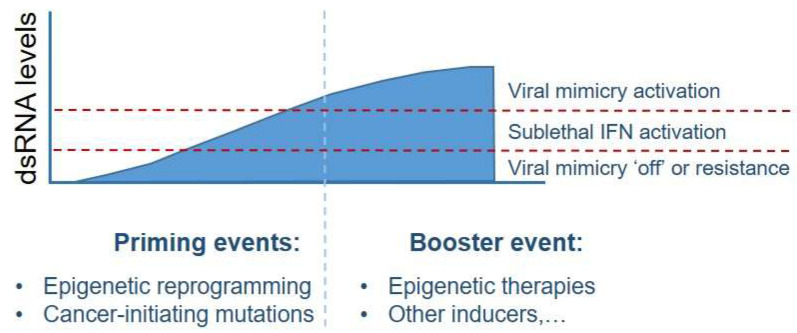
“Anticancer treatments, particularly by epigenetic strategies, can derepress repeat element transcription, which—if associated with the so-called viral mimicry response—have either positive or negative impact on treatment with immune modulating agents [53,54,60].”
BackgroundInflammatory signaling regulates embryonic hematopoietic stem and progenitor cell production
Li, Y., Esain, V., Teng, L., Xu, J., Kwan, W., Frost, I. M., Yzaguirre, A. D., Cai, X., Cortes, M., Maijenburg, M. W., et al. (2014) · Genes & Development · doi:10.1101/gad.253302.114 · Cited by 261
Leonova, K. I., Brodsky, L., Lipchick, B., Pal, M., Novototskaya, L., Chenchik, A. A., Sen, G. C., Komarova, E. A., & Gudkov, A. V. (2013) · Proceedings of the National Academy of Sciences · doi:10.1073/pnas.1216922110 · Cited by 261 · cited 5×
“Remarkably, this subtype showed TP53 family member anomalies (TP53, TP63 and TP73), epigenome deregulation, and repression of endogenous retrotransposons ((LINEs, SINEs, and ERVs) and viral defense signaling.”
BackgroundInfluentialHow transcription factors drive choice of the T cell fate
Hosokawa, H., & Rothenberg, E. V. (2021) · Nature Reviews Immunology · doi:10.1038/s41577-020-00426-6 · Cited by 247
Silencing of retrotransposons by SETDB1 inhibits the interferon response in acute myeloid leukemia
Cuellar, T. L., Herzner, A.-M., Zhang, X., Goyal, Y., Watanabe, C., Friedman, B. A., Janakiraman, V., Durinck, S., Stinson, J., Arnott, D., et al. (2017) · Journal of Cell Biology · doi:10.1083/jcb.201612160 · Cited by 227 · cited 2×
“It should also be noted that evasion of the viral mimicry response is an acquired characteristic of certain cancers, such as acute myeloid leukemia (via SETDB1) [12] and treatment-resistant triple-negative breast cancer (via EZH2) [13], thus evoking new therapeutic vulnerabilities in these malignancies.”
BackgroundMEK inhibition overcomes chemoimmunotherapy resistance by inducing CXCL10 in cancer cells
Limagne, E., Nuttin, L., Thibaudin, M., Jacquin, E., Aucagne, R., Bon, M., Revy, S., Barnestein, R., Ballot, E., Truntzer, C., et al. (2022) · Cancer Cell · doi:10.1016/j.ccell.2021.12.009 · Cited by 224
Self-citationMechanisms of Interplay between Transcription Factors and the 3D Genome
Kim, S., & Shendure, J. (2019) · Molecular Cell · doi:10.1016/j.molcel.2019.08.010 · Cited by 206 · cited 1×
“Indeed, H3K9me3 chromatin domains assemble into nuclear foci (frequently referred to as ‘condensates’) through a process termed liquid–liquid phase separation (LLPS), These nuclear domains are intimately involved in gene and repeat element silencing [5] and are thus an important facet of the organization of the nuclea…”
BackgroundEndogenous Retroelements and the Viral Mimicry Response in Cancer Therapy and Cellular Homeostasis
Chen, R., Ishak, C. A., & De Carvalho, D. D. (2021) · Cancer Discovery · doi:10.1158/2159-8290.cd-21-0506 · Cited by 205 · cited 10×
“Mechanisms involved in either scheduled or unscheduled de-silencing of repeat elements are not fully understood, but—at least in cancer—disordered H3Kme3 signaling to chromatin is implicated [3], as is aberrant DNA methylation [5,14].”
BackgroundInfluentialp53 genes function to restrain mobile elements
Wylie, A., Jones, A. E., D'Brot, A., Lu, W.-J., Kurtz, P., Moran, J. V., Rakheja, D., Chen, K. S., Hammer, R. E., Comerford, S. A., et al. (2016) · Genes & Development · doi:10.1101/gad.266098.115 · Cited by 198 · cited 5×
“Remarkably, this subtype showed TP53 family member anomalies (TP53, TP63 and TP73), epigenome deregulation, and repression of endogenous retrotransposons ((LINEs, SINEs, and ERVs) and viral defense signaling.”
BackgroundInfluentialInterferon Gamma Signaling Positively Regulates Hematopoietic Stem Cell Emergence
Sawamiphak, S., Kontarakis, Z., & Stainier, D. Y. R. (2014) · Developmental Cell · doi:10.1016/j.devcel.2014.11.007 · Cited by 188
Pericentromeric satellite repeat expansions through RNA-derived DNA intermediates in cancer
Bersani, F., Lee, E., Kharchenko, P. V., Xu, A. W., Liu, M., Xega, K., MacKenzie, O. C., Brannigan, B. W., Wittner, B. S., Jung, H., et al. (2015) · Proceedings of the National Academy of Sciences · doi:10.1073/pnas.1518008112 · Cited by 181 · cited 3×
“Early studies implicated SATII-derived RNA as substrates for RT activity which results in the formation of dsDNA-RNA hybrids that subsequently reintegrate the genome to induce pericentromeric satellite expansions and genome instability [58].”
BackgroundInflammatory signaling regulates hematopoietic stem and progenitor cell emergence in vertebrates
He, Q., Zhang, C., Wang, L., Zhang, P., Ma, D., Lv, J., & Liu, F. (2015) · Blood · doi:10.1182/blood-2014-09-601542 · Cited by 170
Zhou, X., Singh, M., Sanz Santos, G., Guerlavais, V., Carvajal, L. A., Aivado, M., Zhan, Y., Oliveira, M. M. S., Westerberg, L. S., Annis, D. A., et al. (2021) · Cancer Discovery · doi:10.1158/2159-8290.cd-20-1741 · Cited by 169 · cited 3×
“Additional approaches include targeting of endogenous reverse transcriptase activities, as recently shown in colorectal cancer [37] or indeed, somewhat paradoxically (given its role in RE suppression), induction of p53 that triggers the viral mimicry response by allowing p53 to bind and activate a subset of ERVs [72].”
BackgroundAn RB-EZH2 Complex Mediates Silencing of Repetitive DNA Sequences
Ishak, C. A., Marshall, A. E., Passos, D. T., White, C. R., Kim, S. J., Cecchini, M. J., Ferwati, S., MacDonald, W. A., Howlett, C. J., Welch, I. D., et al. (2016) · Molecular Cell · doi:10.1016/j.molcel.2016.10.021 · Cited by 167 · cited 3×
“It is also of note that p53 and BRCA tumor suppressor proteins function in repeat element silencing [15,16], as does pRB/EZH2 [17] and the transcription factor PLZF [18].”
BackgroundBurton, A., Brochard, V., Galan, C., Ruiz-Morales, E. R., Rovira, Q., Rodriguez‐Terrones, D., Kruse, K., Gras, S. L., Vishnu, U. S., Chin, H. G., et al. (2020) · Nature Cell Biology · doi:10.1038/s41556-020-0536-6 · Cited by 162 · cited 6×
“In keeping with these findings, the Biomedicines 2022, 10, 3101 7 of 17 Torres–Padilla laboratory has shown that de novo heterochromatin establishment during preimplantation mammalian development (starting in the male pronucleus, immediately after fertilization) is regulated by pericentromeric RNA and its ability to n…”
BackgroundInfluentialGenomic Repeats Categorize Genes with Distinct Functions for Orchestrated Regulation
Lu, J. Y., Shao, W., Chang, L., Yin, Y., Li, T., Zhang, H., Hong, Y., Percharde, M., Guo, L., Wu, Z., et al. (2020) · Cell Reports · doi:10.1016/j.celrep.2020.02.048 · Cited by 156 · cited 10×
“Later in mammalian development, RE-derived RNA is implicated in the definition of chromatin states that ‘mark’ or directly orchestrate regulation of developmental stage-specific protein-coding genes with specific functions [26].”
BackgroundMethodInfluentialEpigenetic Switch–Induced Viral Mimicry Evasion in Chemotherapy-Resistant Breast Cancer
Deblois, G., Tonekaboni, S. A. M., Grillo, G., Martinez, C., Kao, Y. I., Tai, F., Ettayebi, I., Fortier, A.-M., Savage, P., Fedor, A. N., et al. (2020) · Cancer Discovery · doi:10.1158/2159-8290.cd-19-1493 · Cited by 147 · cited 3×
“It should also be noted that evasion of the viral mimicry response is an acquired characteristic of certain cancers, such as acute myeloid leukemia (via SETDB1) [12] and treatment-resistant triple-negative breast cancer (via EZH2) [13], thus evoking new therapeutic vulnerabilities in these malignancies.”
BackgroundPRMT inhibition induces a viral mimicry response in triple-negative breast cancer
Wu, Q., Nie, D. Y., Ba-Alawi, W., Ji, Y., Zhang, Z., Cruickshank, J., Haight, J., Ciamponi, F. E., Chen, J., Duan, S., et al. (2022) · Nature Chemical Biology · doi:10.1038/s41589-022-01024-4 · Cited by 141 · cited 4×
“Triple Negative Breast Cancer (TNBC) By a chemical screening approach to systematically investigate the epigenetic dependence of TNBC, a specific vulnerability to the inhibition by MS023 of type I PRMTs (protein arginine methyltransferases) has been identified [70].”
BackgroundInfluentialPorter, R. L., Magnus, N. K. C., Thapar, V., Morris, R., Szabolcs, A., Neyaz, A., Kulkarni, A. S., Tai, E., Chougule, A., Hillis, A., et al. (2019) · Proceedings of the National Academy of Sciences · doi:10.1073/pnas.1914915116 · Cited by 129 · cited 8×
“Because of the emerging importance of molecular classifications in PDAC [64,65], investigators performed cell-of-origin and molecular subtyping investigations.”
BackgroundInfluentialEspinet, E., Gu, Z., Imbusch, C. D., Giese, N. A., Büscher, M., Safavi, M., Weisenburger, S., Klein, C., Vogel, V., Falcone, M., et al. (2021) · Cancer Discovery · doi:10.1158/2159-8290.cd-20-1202 · Cited by 122 · cited 4×
“These analyses indicated MC2 PDAC tumors to be likely of ductal origin and to at least partially overlap with previously the described squamous-/basal-/quasi-mesenchymal-like subtype signature.”
BackgroundMethodInfluentialHypertranscription in Development, Stem Cells, and Regeneration
Percharde, M., Bulut-Karslioglu, A., & Ramalho-Santos, M. (2017) · Developmental Cell · doi:10.1016/j.devcel.2016.11.010 · Cited by 115
Hall, L. L., Byron, M., Carone, D. M., Whitfield, T. W., Pouliot, G. P., Fischer, A., Jones, P., & Lawrence, J. B. (2017) · Cell Reports · doi:10.1016/j.celrep.2017.02.072 · Cited by 115 · cited 2×
“Likewise, genomic RE sequences themselves or RE-derived transcripts can contribute to transcriptional control of nearby genes, either in cis or in trans, via gene recruitment into defined nuclear neighborhoods [24,26], and this process appears to be co-opted in cancer cells to regulate gene expression programs and can…”
BackgroundThe NF-κB family: Key players during embryonic development and HSC emergence
Espín-Palazón, R., & Traver, D. J. (2016) · Experimental Hematology · doi:10.1016/j.exphem.2016.03.010 · Cited by 108
Solovyov, A., Vabret, N., Arora, K. S., Snyder, A., Funt, S. A., Bajorin, D. F., Rosenberg, J. E., Bhardwaj, N., Ting, D. T., & Greenbaum, B. D. (2018) · Cell Reports · doi:10.1016/j.celrep.2018.03.042 · Cited by 102 · cited 9×
“In particular, it is necessary to consider use of total RNA sequencing to fully capture all potentially relevant repeat element transcripts alongside coding genes [27].”
BackgroundInfluentialChemotherapy-induced transposable elements activate MDA5 to enhance haematopoietic regeneration
Clapes, T., Polyzou, A., Prater, P., Sagar, Morales‐Hernández, A., Ferrarini, M. G., Kehrer, N., Lefkopoulos, S., Bergo, V., Hummel, B., et al. (2021) · Nature Cell Biology · doi:10.1038/s41556-021-00707-9 · Cited by 94 · cited 7×
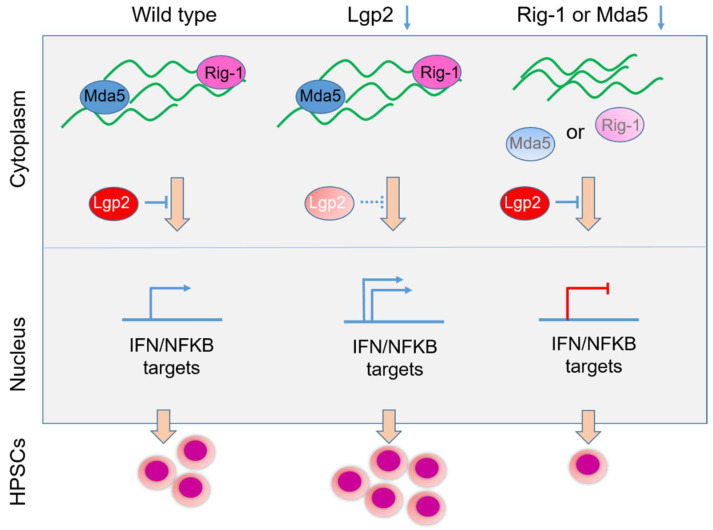
“Here we discuss in detail some major recent findings showing that IFN and NFκBdependent inflammatory signaling, triggered by RE-derived dsRNA activation of RIG receptor signaling, is required for hematopoietic stem and progenitor cell (HSPC) normal development and HSPC recovery from chemotherapy [9,11].”
BackgroundInfluentialLefkopoulos, S., Polyzou, A., Derecka, M., Bergo, V., Clapes, T., Cauchy, P., Jerez-Longres, C., Onishi-Seebacher, M., Yin, N., Martagon-Calderón, N.-A., et al. (2020) · Immunity · doi:10.1016/j.immuni.2020.10.007 · Cited by 84 · cited 10×
“Here we discuss in detail some major recent findings showing that IFN and NFκBdependent inflammatory signaling, triggered by RE-derived dsRNA activation of RIG receptor signaling, is required for hematopoietic stem and progenitor cell (HSPC) normal development and HSPC recovery from chemotherapy [9,11].”
BackgroundMethodInfluentialBadal, B., Solovyov, A., Cecilia, S. D., Chan, J. M., Chang, L., Iqbal, R., Aydin, I. T., Rajan, G. S., Chen, C., Abbate, F., et al. (2017) · JCI Insight · doi:10.1172/jci.insight.92102 · Cited by 77 · cited 2×
“In a study designed to describe the transcriptional landscape changes of primary melanomas of early-, intermediate-, and late-stage tumors and benign precursor lesions, the Greenbaum laboratory identified a distinct, previously unrecognized subset representing high-risk melanomas with poor survival characteristics [69…”
BackgroundDistinguishing the immunostimulatory properties of noncoding RNAs expressed in cancer cells
Tanne, A., Muniz, L. R., Puzio-Kuter, A., Leonova, K. I., Gudkov, A. V., Ting, D. T., Monasson, R., Cocco, S., Levine, A. J., Bhardwaj, N., et al. (2015) · Proceedings of the National Academy of Sciences · doi:10.1073/pnas.1517584112 · Cited by 74 · cited 5×
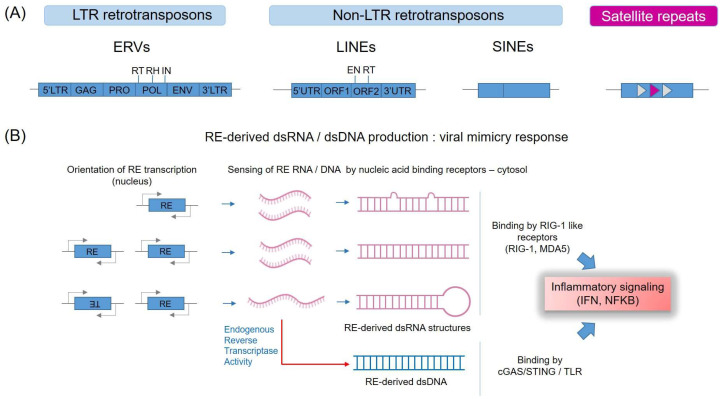
“responses through the presence in RE sequences of pathogen-associated features that are more typically found in immunostimulatory viral RNA and DNA [34,35] (Figure 2).”
BackgroundInfluentialP53 and the defenses against genome instability caused by transposons and repetitive elements
Levine, A. J., Ting, D. T., & Greenbaum, B. D. (2016) · BioEssays · doi:10.1002/bies.201600031 · Cited by 72 · cited 1×
“It is also of note that p53 and BRCA tumor suppressor proteins function in repeat element silencing [15,16], as does pRB/EZH2 [17] and the transcription factor PLZF [18].”
BackgroundStress and non-stress roles of inflammatory signals during HSC Emergence and maintenance
Clapes, T., Lefkopoulos, S., & Trompouki, E. (2016) · Frontiers in Immunology · doi:10.3389/fimmu.2016.00487 · Cited by 62
Suppression of Transposable Elements in Leukemic Stem Cells
Colombo, A., Zubair, A., Thiagarajan, D., Nuzhdin, S. V., Triche, T. J., & Ramsingh, G. (2017) · Scientific Reports · doi:10.1038/s41598-017-07356-9 · Cited by 61 · cited 1×
“This is in keeping with previous work indicating that TE suppression might be a means for immune evasion in high-risk AML and myelodysplastic syndrome [71].”
ResultReverse Transcriptase Inhibition Disrupts Repeat Element Life Cycle in Colorectal Cancer.
Rajurkar, M., Parikh, A. R., Solovyov, A., You, E., Kulkarni, A. S., Chu, C., Xu, K. H., Jaicks, C., Taylor, M. S., Wu, C., et al. (2022) · Cancer Discovery · doi:10.1158/2159-8290.cd-21-1117 · Cited by 61 · cited 7×
“In a human phase II trial of single-agent 3TC treatment in metastatic colorectal cancer, clinical benefit was demonstrated in 9 of 32 patients [37].”
BackgroundInfluentialA classical revival: Human satellite DNAs enter the genomics era
Altemose, N. (2022) · Seminars in Cell and Developmental Biology · doi:10.1016/j.semcdb.2022.04.012 · Cited by 59
The epigenetic regulator PLZF represses L1 retrotransposition in germ and progenitor cells
Puszyk, W. M., Down, T. A., Grimwade, D. J., Chomienne, C., Oakey, R. J., Solomon, E., & Guidez, F. (2013) · The EMBO Journal · doi:10.1038/emboj.2013.118 · Cited by 56 · cited 3×
“It is also of note that p53 and BRCA tumor suppressor proteins function in repeat element silencing [15,16], as does pRB/EZH2 [17] and the transcription factor PLZF [18].”
BackgroundSelf-citationThe Source and Dynamics of Adult Hematopoiesis: Insights from Lineage Tracing
Pucella, J. N., Upadhaya, S., & Reizis, B. (2020) · Annual Review of Cell and Developmental Biology · doi:10.1146/annurev-cellbio-020520-114601 · Cited by 53
Fournier, A., Leer, A. M., Lefebvre, C., Duley, S., Barki‐Celli, L., Ribeyron, J., Kassambara, A., Hamaidia, S., Granjon, A., Gressin, R., et al. (2010) · EMBO Molecular Medicine · doi:10.1002/emmm.201000067 · Cited by 46 · cited 2×
“Likewise, genomic RE sequences themselves or RE-derived transcripts can contribute to transcriptional control of nearby genes, either in cis or in trans, via gene recruitment into defined nuclear neighborhoods [24,26], and this process appears to be co-opted in cancer cells to regulate gene expression programs and can…”
BackgroundSelf-citationRecent Advances in Developmental Hematopoiesis: Diving Deeper With New Technologies
Weijts, B. G. M. W., Yvernogeau, L., & Robin, C. (2021) · Frontiers in Immunology · doi:10.3389/fimmu.2021.790379 · Cited by 46 · cited 1×
“Following the primitive hematopoietic wave that produces the first erythrocytes and myeloid cells, HSPCs emerge during the definitive wave in the aorta–gonad–mesonephros region [43,44].”
BackgroundSequence-Specific Sensing of Nucleic Acids
Vabret, N., Bhardwaj, N., & Greenbaum, B. D. (2017) · Trends in Immunology · doi:10.1016/j.it.2016.10.006 · Cited by 45 · cited 4×
“Regarding immune signaling, it has become evident that once exported to the cytoplasm, RE-derived RNA (or indeed DNA, produced consequently to endogenous retrotranscriptase activity) can directly trigger innate immune receptor signaling and inflammatory Biomedicines 2022, 10, 3101 5 of 17 responses through the presenc…”
BackgroundInfluentialA tumor-specific endogenous repetitive element is induced by herpesviruses
Nogalski, M. T., Solovyov, A., Kulkarni, A. S., Desai, N., Oberstein, A., Levine, A. J., Ting, D. T., Shenk, T., & Greenbaum, B. D. (2019) · Nature Communications · doi:10.1038/s41467-018-07944-x · Cited by 41
Desai, N., Sajed, D. P., Arora, K. S., Solovyov, A., Rajurkar, M., Bledsoe, J. R., Sil, S., Amri, R., Tai, E. C., Mackenzie, O., et al. (2017) · JCI Insight · doi:10.1172/jci.insight.91078 · Cited by 33 · cited 3×
“Subsequently, repeatome profiling in colon cancer cell lines and primary colorectal tumors revealed high expression of LINE-1 and HERV-H repeats and their expression patterns were distinct and associated with different histopathological, genetic, and clinical features [66].”
BackgroundPorter, R. L., Sun, S., Flores, M. N., Berzolla, E., You, E., Phillips, I. E., KC, N., Desai, N., Tai, E. C., Szabolcs, A., et al. (2022) · Journal of Clinical Investigation · doi:10.1172/jci155931 · Cited by 24 · cited 6×
“Importantly, the relationship of HSATII expression with high EMT and low IFN response genes was also found in RNA-seq of primary ovarian cancers and was associated with significantly shorter survival [30].”
BackgroundInfluentialImplications of Endogenous Retroelements in the Etiopathogenesis of Systemic Lupus Erythematosus
Ukadike, K. C., & Mustelin, T. (2021) · Journal of Clinical Medicine · doi:10.3390/jcm10040856 · Cited by 23 · cited 1×
“Similar mechanisms operate in oncogene-induced senescence [55], are aberrantly activated, at least in colon cancer [37], as discussed below, and may be responsible for the autoimmune signaling in diseases such as systemic lupus, where LINE-1 elements have been shown to be transcriptionally active [56] or in Setdb1-def…”
BackgroundVourc’h, C., Dufour, S., Timcheva, K., Seigneurin‐Berny, D., & Verdel, A. (2022) · Genes · doi:10.3390/genes13040597 · Cited by 22
Onishi‐Seebacher, M., Erikson, G. A., Sawitzki, Z., Ryan, D., Greve, G., Lübbert, M., & Jenuwein, T. (2021) · BMC Medical Genomics · doi:10.1186/s12920-021-01003-z · Cited by 19
Sugden, W. W., & North, T. E. (2021) · Life · doi:10.3390/life11101027 · Cited by 19
Disrupting Mechanisms that Regulate Genomic Repeat Elements to Combat Cancer and Drug Resistance
Kermi, C., Lau, L., Shahmirzadi, A. A., & Classon, M. (2022) · Frontiers in Cell and Developmental Biology · doi:10.3389/fcell.2022.826461 · Cited by 16 · cited 4×
“Likewise, genomic RE sequences themselves or RE-derived transcripts can contribute to transcriptional control of nearby genes, either in cis or in trans, via gene recruitment into defined nuclear neighborhoods [24,26], and this process appears to be co-opted in cancer cells to regulate gene expression programs and can…”
BackgroundInfluentialHall, C. J., Crosier, P. S., & Crosier, K. E. (2015) · Molecular Immunology · doi:10.1016/j.molimm.2015.10.020 · Cited by 14
Breaking satellite silence: human satellite II RNA expression in ovarian cancer
Ganesan, S. (2022) · Journal of Clinical Investigation · doi:10.1172/jci161981 · Cited by 7 · cited 1×
“Exactly why HSATII RNA expression leads to an immunosuppressive phenotype was not examined, but one possibility is that HSATII RNA might be sequestered in the nucleus in these cases, thereby circumventing induction of viral mimicry responses [68].”
BackgroundClapes, T., & Trompouki, E. (2020) · Current Opinion in Hematology · doi:10.1097/moh.0000000000000585 · Cited by 5
Cited by
PAMPs and DAMPs in Sepsis: A Review of Their Molecular Features and Potential Clinical Implications
Cicchinelli, S., Pignataro, G., Gemma, S., Piccioni, A., Picozzi, D., Ojetti, V., Franceschi, F., & Candelli, M. (2024) · International Journal of Molecular Sciences · doi:10.3390/ijms25020962 · Cited by 159
Wang, R., Dong, X., Zhang, X., Liao, J., Cui, W., & Li, W. (2025) · International Journal of Biological Sciences · doi:10.7150/ijbs.103877 · Cited by 41
“These studies suggest that viral mimicry is an intermediate mediator in linking epigenetic therapy and immunotherapy, providing new ideas for developing antitumor drugs and studying antitumor mechanisms[228, 265].”
Sun, Y., Wang, C., Wen, L., Ling, Z., Xia, J., Cheng, B., & Peng, J. (2024) · International Journal of Molecular Medicine · doi:10.3892/ijmm.2024.5445 · Cited by 32
“Endogenous cytosolic self‑nucleic acids can directly trigger innate immune receptor signaling and induce inflammatory responses via recognition of RNA or dNA (15,20).”
BackgroundThe Roles of H3K9me3 Writers, Readers, and Erasers in Cancer Immunotherapy
Oleksiewicz, U., Kuciak, M., Jaworska, A. M., Adamczak, D., Bisok, A., Mierzejewska, J., Sadowska, J., Czerwińska, P., & Mackiewicz, A. A. (2024) · International Journal of Molecular Sciences · doi:10.3390/ijms252111466 · Cited by 24
“Indeed, increasing data demonstrate that aberrant expression of REs renders tumors more immunogenic and more susceptible to immunotherapy (Figure 2) [63,65].”
BackgroundA-T neurodegeneration and DNA damage-induced transcriptional stress
Paull, T. T., & Woolley, P. R. (2024) · DNA repair · doi:10.1016/j.dnarep.2024.103647 · Cited by 18
Metadata
- Authors
- Dumetier, B., Sauter, C., Hajmirza, A., Pernon, B., Aucagne, R., Fournier, C., Row, C., Guidez, F., Rossi, C., Lepage, C., Delva, L., & Callanan, M. B.
- Affiliations
- Faculty of Medicine, INSERM1231, University of Burgundy, 21000 Dijon, France
- Inserm (FR)
- Institute for Research in Immunology and Cancer (CA)
- Stanford Medicine (US)
- Corresponding author
- Callanan, Mary B.
- ORCID
- Venue
- Biomedicines
- Publisher
- MDPI AG
- Published
- 2022-12-01
- Volume
- 10
- Issue
- 12
- Pages
- 3101
- ISSN
- 2227-9059 (ISSN-L)
- PMC
- PMC9775655
- OpenAlex
- W4311054707
- Semantic Scholar
- ec835dbf225345576490fec789e5be4c8301a703
- Cited by
- 9
- References
- 76
- Citations by year
- 2026: 1 · 2025: 2 · 2024: 5 · 2022: 1
- FWCI
- 0.21
- Type
- journal article
- Language
- en
- Open access
- gold
- doi.org
- Licence
- Locations
- Biomedicines (publishedVersion, cc-by)
- PubMed Central (publishedVersion, cc-by)
- PubMed (publishedVersion)
- DOAJ (DOAJ: Directory of Open Access Journals) (submittedVersion, cc-by-sa)
- Funders
- Fondation ARC
- ANR-Labex ‘Lipstic’, the Région Bourgogne Franche Comté
- Fonds Feder (ReHETlym)
- French ministry for research and higher education
- Fondation pour la Recherche Médicale
- French Society for Hematology
- Topics
- Life Sciences › Immunology and Microbiology › Immunology › interferon and immune responses
- Life Sciences › Biochemistry, Genetics and Molecular Biology › Genetics › Chromosomal and Genetic Variations
- Life Sciences › Biochemistry, Genetics and Molecular Biology › Cancer Research › NF-κB Signaling Pathways
- Keywords
- repetitive elements, transposable elements, endogenous retrotransposons, NF-κB signaling, interferon signaling, inflammation, cancer, hematopoiesis, viral mimicry, antiviral response, tumor immune microenvironment, cancer prognosis
About these checks
Registry, retraction, Cites and statistics results are computed, not judged, with one exception: a printed reference that no index lists is read once by a model before it counts as a citation error. Claims are extracted by a model and kept only when their quote appears verbatim in the text; each cited source is then checked, with a model’s help, for whether it says what the claim relies on. Those verdicts can be wrong — read the claim’s quote and the cited source before relying on one.
Statistics and arithmetic are recomputed, not judged.
Confidence bands are shown only for fields calibrated on our annotated test set. None is calibrated yet, so no band is shown.
What counts as a claim ›How we measure confidence ›How we check this ›
Are you an author, or do you see a problem with this page? Request a review
Data sources
Bibliographic data: Semantic Scholar, OpenAlex, Crossref.
Contains information from the Semantic Scholar Academic Graph Datasets, made available under the ODC Attribution License (ODC-BY 1.0).
Semantic Scholar’s data is described in: Kinney, R., et al. (2023). The Semantic Scholar Open Data Platform. arXiv:2301.10140.
