

Challenging Cognitive Load Theory: The Role of Educational Neuroscience and Artificial Intelligence in Redefining Learning Efficacy
Open accessThe DOI matches its Crossref record; 255 of the 259 references it cites were found in a registry or an index, and 1 are not checked yet.
Abstract
Background/Objectives: This systematic review integrates Cognitive Load Theory (CLT), Educational Neuroscience (EdNeuro), Artificial Intelligence (AI), and Machine Learning (ML) to examine their combined impact on optimizing learning environments. It explores how AI-driven adaptive learning systems, informed by neurophysiological insights, enhance personalized education for K-12 students and adult learners. This study emphasizes the role of Electroencephalography (EEG), Functional Near-Infrared Spectroscopy (fNIRS), and other neurophysiological tools in assessing cognitive states and guiding AI-powered interventions to refine instructional strategies dynamically. Methods: This study reviews n = 103 papers related to the integration of principles of CLT with AI and ML in educational settings. It evaluates the progress made in neuroadaptive learning technologies, especially the real-time management of cognitive load, personalized feedback systems, and the multimodal applications of AI. Besides that, this research examines key hurdles such as data privacy, ethical concerns, algorithmic bias, and scalability issues while pinpointing best practices for robust and effective implementation. Results: The results show that AI and ML significantly improve Learning Efficacy due to managing cognitive load automatically, providing personalized instruction, and adapting learning pathways dynamically based on real-time neurophysiological data. Deep Learning models such as Convolutional Neural Networks (CNNs), Recurrent Neural Networks (RNNs), and Support Vector Machines (SVMs) improve classification accuracy, making AI-powered adaptive learning systems more efficient and scalable. Multimodal approaches enhance system robustness by mitigating signal variability and noise-related limitations by combining EEG with fMRI, Electrocardiography (ECG), and Galvanic Skin Response (GSR). Despite these advances, practical implementation challenges remain, including ethical considerations, data security risks, and accessibility disparities across learner demographics. Conclusions: AI and ML are epitomes of redefinition potentials that solid ethical frameworks, inclusive design, and scalable methodologies must inform. Future studies will be necessary for refining pre-processing techniques, expanding the variety of datasets, and advancing multimodal neuroadaptive learning for developing high-accuracy, affordable, and ethically responsible AI-driven educational systems. The future of AI-enhanced education should be inclusive, equitable, and effective across various learning populations that would surmount technological limitations and ethical dilemmas.
Overview
The claims and statistics of this paper haven’t been checked yet.
Free: it reads the open-access text and checks the first 5 claims that cite a source we can check. Create a free account to check every claim.
Integrity signals
Registry
Cites
Statistics
Figures
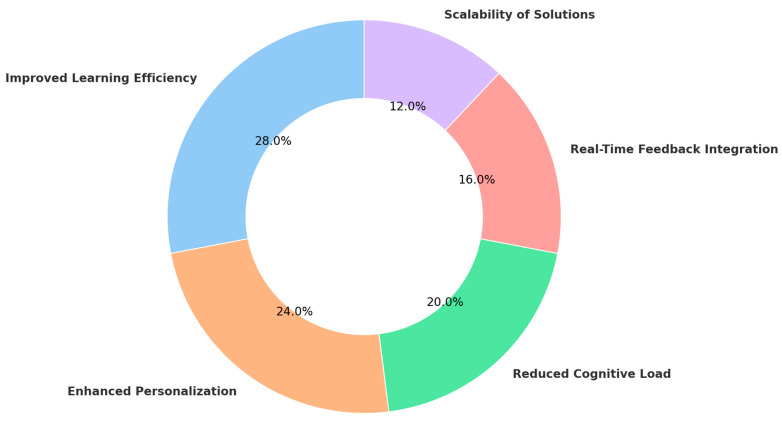
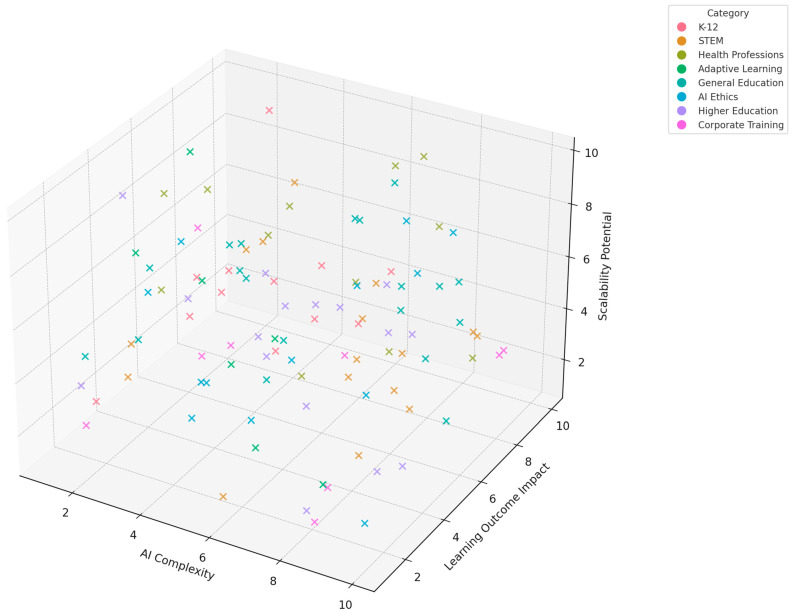
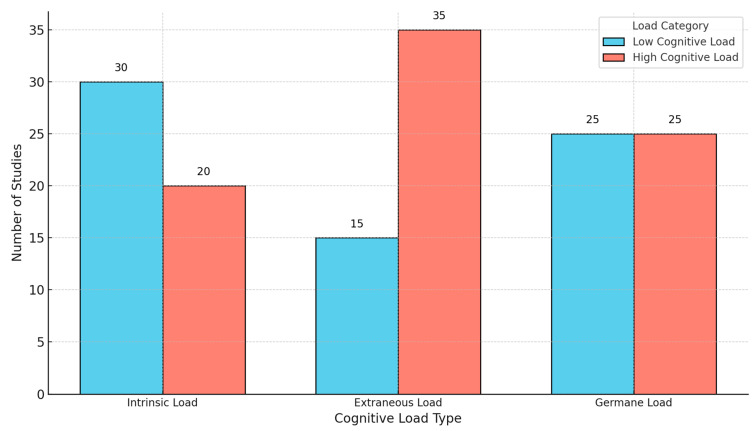
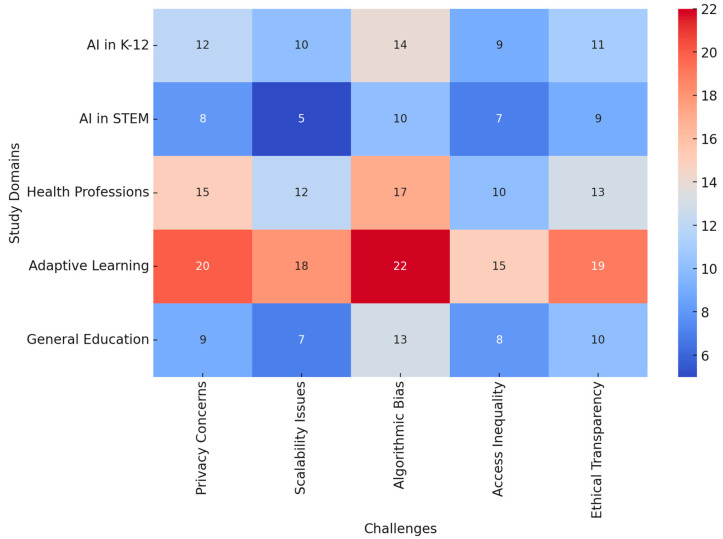
Verification
Claims the paper makes
The claims and statistics of this paper haven’t been checked yet.
Free: it reads the open-access text and checks the first 5 claims that cite a source we can check. Create a free account to check every claim.
Claims other papers make about this one
Each is checked against this paper’s own text: does it say what the citing paper says it does?
The cited source doesn’t support the claim as written.
In the citing paper
“In the language of Cognitive Load Theory, uncritical AI use minimizes the germane cognitive load -the productive mental effort required for deep learning-while often increasing the extraneous cognitive load -the unproductive effort spent navigating a tool's interface or correcting its flawed output (Gkintoni et al., 2025).”
From Paying the Cognitive Debt: An Experiential Learning Framework for Integrating AI in Social Work Education (2025) · cites this paper as Gkintoni et al., 2025
Checked by a reasoning model — may be wrong.
Experimental — accuracy not yet measuredThe cited source says what the claim attributes to it.
In the citing paper
“The educational form of cognitive debt, in contrast, is an opportunity cost accrued through the absence of a beneficial internal process-namely, the effortful thinking, deep processing, and schema-building that constitute genuine learning (Gkintoni et al., 2025; Sweller, 1988).”
From Paying the Cognitive Debt: An Experiential Learning Framework for Integrating AI in Social Work Education (2025) · cites this paper as Gkintoni et al., 2025
The cited source says what the claim attributes to it.
In the citing paper
“In CLT terms, this pattern is consistent with reduced extraneous effort (less syntax/search churn) while retaining or increasing germane processing (reasoning about structure and tests) (Debue & Van De Leemput, 2014; Gkintoni et al., 2025).”
From Tool, tutor, or crutch?: A grounded theory of cognitive scaffolding and offloading in AI-assisted programming education (2026) · cites this paper as Gkintoni et al., 2025
Self-check
Percentages, sums and reported differences re-computed from the paper’s own numbers.
The self-check needs the paper’s full text.
Citations
Cites
ChatGPT for good? On opportunities and challenges of large language models for education
Kasneci, E., Sessler, K., Küchemann, S., Bannert, M., Dementieva, D., Fischer, F., Gasser, U., Groh, G., Günnemann, S., Hüllermeier, E., et al. (2023) · Learning and Individual Differences · doi:10.1016/j.lindif.2023.102274 · Cited by 15,365
ChatGPT for Good? On Opportunities and Challenges of Large Language Models for Education
Kasneci, E., Seßler, K., Küchemann, S., Bannert, M., Dementieva, D., Fischer, F., Gasser, U., Groh, G., Günnemann, S., Hüllermeier, E., et al. (2023) · doi:10.35542/osf.io/5er8f · Cited by 7,552
Haddaway, N. R., Page, M. J., Pritchard, C. C., & McGuinness, L. A. (2022) · Campbell Systematic Reviews · doi:10.1002/cl2.1230 · Cited by 3,486
Implications for educational practice of the science of learning and development
Darling-Hammond, L., Flook, L., Cook-Harvey, C., Barron, B., & Osher, D. (2020) · Applied Developmental Science · doi:10.1080/10888691.2018.1537791 · Cited by 2,733
Cognitive load theory and educational technology
Sweller, J. (2020) · Educational Technology Research and Development · doi:10.1007/s11423-019-09701-3 · Cited by 1,688
Makransky, G., & Petersen, G. B. (2021) · Educational Psychology Review · doi:10.1007/s10648-020-09586-2 · Cited by 1,438
State of the art and practice in AI in education
Holmes, W., & Tuomi, I. (2022) · European Journal of Education · doi:10.1111/ejed.12533 · Cited by 1,093
Grassini, S. (2023) · Education Sciences · doi:10.3390/educsci13070692 · Cited by 1,048
Revolutionizing education with AI: Exploring the transformative potential of ChatGPT
Adiguzel, T., Kaya, M. H., & Cansu, F. K. (2023) · Contemporary Educational Technology · doi:10.30935/cedtech/13152 · Cited by 975
Szymkowiak, A., Melović, B., Dabić, M., Jeganathan, K., & Kundi, G. S. (2021) · Technology in Society · doi:10.1016/j.techsoc.2021.101565 · Cited by 893
Research works printed but not linked: 1
- Lovell O. Sherrington T. Sweller’s Cognitive Load Theory in Action John Catt Woodbridge, UK 2020 10.4324/9781003023715 · DOI
Cited by
Items 201–300 of 485
Yin, X., & Chen, F. N. (2026) · Frontiers in Psychology · doi:10.3389/fpsyg.2026.1802856 · Cited by 1
Putri, A. R., Hartono, R., & Pratama, H. (2026) · Language Teaching Research Quarterly · doi:10.32038/ltrq.2026.54.13 · Cited by 1
Dai, S., & Peng, X. (2026) · The Educational Review USA · doi:10.26855/er.2026.03.006 · Cited by 1
Putra, Y. A., Arwandi, J., Burhan, K., Sujadesman, B., Setiawan, Y., Mariati, S., Ramaita, R., Kurniawan, R., Effendi, R., & Putra, A. R. (2026) · Pedagogy of Physical Culture and Sports · doi:10.15561/26649837.2026.0406 · Cited by 1
“This may potentially limit learning efficiency despite improvements in technical execution [27, 28, 29].”
Sumartini, T. S., Rahman, M. A., & Arumaisya, S. H. (2026) · PaKMas Jurnal Pengabdian Kepada Masyarakat · doi:10.54259/pakmas.v6i1.5591 · Cited by 1
“Temuan ini mendukung argumen Gkintoni et al. (2025) yang menekankan bahwa integrasi AI dapat menantang teori beban kognitif tradisional dengan cara menghadirkan model pembelajaran yang lebih efisien melalui dukungan neurosains pendidikan.”
Shobirin, M., Rokhman, F., Zulaeha, I., & Utomo, U. (2026) · Journal of Educational Technology and Learning Creativity · doi:10.37251/jetlc.v4i1.2663 · Cited by 2
“By utilizing dual visual and auditory channels, these technologies reduce extraneous cognitive load and facilitate the construction of mental models for complex environmental phenomena [29]-[31].”
Exploring Usability Heuristics, Evaluation Practices and Issues in Fleet Management Systems
Bhalalusesa, N. P., Maro, S., & Chambua, J. (2026) · International Journal of Human-Computer Interaction · doi:10.1080/10447318.2026.2689521 · Cited by 1
Kurnihayati, K., Nurkholidah, E. S., & Phatthanawiwat, A. (2026) · International Journal of Educational Qualitative Quantitative Research · doi:10.58418/ijeqqr.v5i1.200 · Cited by 2
“However, recent empirical evidence warns that raw authentic data can induce severe cognitive overload if deployed without structured pedagogical scaffolding (Alamri, 2025; Gkintoni et al., 2025).”
Ghanamah, R., Adi‐Japha, E., & Leukel, C. (2026) · Current Psychology · doi:10.1007/s12144-026-09741-y · Cited by 1
“This aligns with research suggesting that strategy use enhances motor efficiency by reducing cognitive load and promoting procedural automatization (Gkintoni et al., 2025 ; Sweller et al., 2011 ).”
Fraser, G. R. L., de Wit, G. A., van Exel, J. N. A., Sloot, P. M. A., Ostelo, R., van Harreveld, F., & Lambooij, M. (2026) · International Journal of Health Policy and Management · doi:10.34172/ijhpm.9099 · Cited by 1
“37,38 After the in-depth discussions in each GMB session, the authors drafted a CLD based on the transcript of each discussion (step 1).”
Pramanik, A., Sahoo, A. K., Rani, A., & Bajpai, A. (2026) · Asian Journal of Education and Social Studies · doi:10.9734/ajess/2026/v52i73199 · Cited by 1
Heidari, M. R., Iranpour, A., RahimiNejad, M., & Baghsheikhi, D. (2026) · Safety Science · doi:10.1016/j.ssci.2026.107369 · Cited by 1
An empirical study of ChatGPT use in engineering education: Prompting and performance
Domínguez, L. G. I., Robles-Gómez, A., & Pastor-Vargas, R. (2026) · The Internet and Higher Education · doi:10.1016/j.iheduc.2026.101105 · Cited by 3
Simo, L., & Lina, S. (2026) · Frontiers in Psychology · doi:10.3389/fpsyg.2026.1921158 · Cited by 2
Hernández, P. T., Haines, A. M., Mousseau, V., Elbourne, M., & Hanna, T. (2026) · Forensic Science International Synergy · doi:10.1016/j.fsisyn.2026.100723 · Cited by 2
“…of AI as a frictionless educational support tool that can seamlessly be integrated to enhance student performance and knowledge retention [37], instead positioning the use of GenAI as a potential source of cognitive and attentional disruption, particularly when used in practical,…”
InfluentialEmpirical Study of AI Scaffolding and Self-Regulation for Quantum Literacy
Oikonomou, A. V., & Savvas, I. Κ. (2026) · International Conference on Electrical, Computer and Energy Technologies (ICECET) · doi:10.1109/icecet65726.2026.11633062 · Cited by 1
“Emerging research explores AI’s interaction with cognitive load processes [13], while recent comparative work in physics education highlights contextual variability in AI instructional performance [14].”
Working memory and generative AI tools in higher education: A systematic review
Almudara, S. B., Alshehri, O., Alzahrani, S. Y., Abdellatif, M. S., Idris, A., & Ibrahim, A. R. (2026) · Research Journal in Advanced Humanities · doi:10.58256/ca66cf85 · Cited by 2
Sriati, Fanani, A., & Qoyyimah, U. (2026) · ELite Journal International Journal of Education Language and Literature · doi:10.26740/elitejournal.v6n3.p52-63 · Cited by 1
Suri, D., Wicaksono, A., Siska, Y., Murtika, W. A., & Ryeo, P. J. (2026) · Jurnal Pendidikan Progresif · doi:10.23960/jpp.v16i1.pp158-172 · Cited by 1
Pascual, D. C., Macabbabad, C., & Mojica, R. M. (2025) · Futurity Education · doi:10.57125/fed.2025.09.25.02 · Cited by 1
Lestari, P., & Laelasari, I. (2025) · INSECTA Integrative Science Education and Teaching Activity Journal · doi:10.21154/insecta.v6i2.11104 · Cited by 1
“Similar gaps have been reported in science textbooks in other countries, where early conceptual overload without continuity hampers long-term scientific understanding (Gkintoni et al., 2025).”
Banquez-Maturana, A.-G. (2026) · Journal of Trends and Challenges in Artificial Intelligence · doi:10.61552/jai.2026.03.002 · Cited by 1
CONVERGÊNCIAS EDUCACIONAIS: NEUROAPRENDIZAGEM E INTELIGÊNCIA ARTIFICIALPreprint
Matias, A. G. C., Rocha, S. L. N., & Dorotea, N. M. T. C. (2025) · doi:10.1590/scielopreprints.12100 · Cited by 1
Designing Inclusive Hybrid Learning Using Eye-Tracking and Adaptive UX: A Neuroadaptive Framework
Ntahonkiriye, A., Ndikumana, C., & Mutoni, D. (2025) · Journal Emerging Technologies in Education · doi:10.70177/jete.v3i3.2233
“Gaze behavior analysis confirmed that the adaptive UX interface promoted smoother visual processing and sustained attentional focus (Florence et al., 2022; Gkintoni et al., 2025).”
Reimagining Tourism in the Post-covid Era: Insights from Milos Island's Tourism Workforce
Demiris, C., Elezi, L., Kyritsi, J., & Adamopoulos, N. (2025) · Springer proceedings in business and economics · doi:10.1007/978-3-031-78471-2_1
Niknejad, S., & Rastegar, M. (2024) · Journal of Cognition Behavior Learning · doi:10.61838/jcbl.1.2.16
An Analysis of Leadership Knowledge Acquisition Strategies of New Leaders
Dymacz, S. (2025) · Open Journal of Leadership · doi:10.4236/ojl.2025.142017 · Cited by 1
Chacko, E. (2025) · SSRN Electronic Journal · doi:10.2139/ssrn.5339810
Корчажкина, О. М. (2025) · Sovremennye informacionnye tehnologii i IT-obrazovanie. · doi:10.25559/sitito.021.202501.127-143
A Delay-Driven Dynamic Learning Model with Cognitive Transitions and Technological InfluencesPreprint
Elfouly, M. A., Abouelenien, R., & Elghawy, Z. F. (2025) · Research Square · doi:10.21203/rs.3.rs-7173551/v1
Designing Learning Experiences With Affectagogy: Bridging Emotion and Cognition
Chee, K. N. (2025) · IGI Global eBooks · doi:10.4018/979-8-3373-0184-6.ch004
КОГНІТИВНЕ ПЕРЕВАНТАЖЕННЯ: ОГЛЯД ОСНОВНИХ ПСИХОЛОГІЧНИХ ДОСЛІДЖЕНЬ
Жук, В. (2025) · Перспективи та інновації науки · doi:10.52058/2786-4952-2025-7(53)-1289-1299
Bo, D., Ma’rof, A. A., Zaremohzzabieh, Z., Rongfeng, L., & Danhe, Z. (2025) · Frontiers in Psychology · doi:10.3389/fpsyg.2025.1596330
КОГНІТИВНЕ ПЕРЕВАНТАЖЕННЯ: ОСНОВНІ ПРИЧИНИ ТА СПОСОБИ ПОДОЛАННЯ
Жук, В. (2025) · Наукові перспективи (Naukovì perspektivi) · doi:10.52058/2708-7530-2025-7(61)-1114-1127
Students’ Perceptions on Mobile Phone Use for Knowledge Construction in Chinese Higher Education
Li, X., Li, M., Chen, Q., Ji, J., & Chen, Y. (2025) · Journal of educational theory and practice. · doi:10.62177/jetp.v2i3.515
Wu, Y., Meng, J., Liu, P., Xiong, Y., Chen, S., Yin, H., Wang, S., & Gao, S. (2025) · doi:10.2196/preprints.83291
Sangwa, S., & Emmanuel, E. (2025) · EdArXiv (OSF Preprints) · doi:10.35542/osf.io/qb9hk_v1
Using Large Language Models to Classify Test Case Complexity with Explainability
Custódio, T., Carvalho, A. L. D. C., Santos, M., Soares, Y., Melo, H., Ferreira, N. B. F., & Marques, R. (2025) · Simpósio Brasileiro de Engenharia de Software (SBES) · doi:10.5753/sbes.2025.11575
Daylight Performance in University Classrooms: A Case Study in the Context of Saudi Arabia
Hussein, A. (2025) · Civil Engineering and Architecture · doi:10.13189/cea.2025.130532
Exploring the power of virtual reality in reducing pain and stress in pediatric surgery
Siregar, N. I., Isdianto, A., Azhar, A. W., Daka, R., Putri, R. D., Ramadhani, E., & Nurbaiti, N. (2025) · Journal of Pediatric Surgery · doi:10.1016/j.jpedsurg.2025.162761
Leader Analytics: A Framework for Measuring Leadership in Crisis and ChangePreprint
Link, S. I. (2025) · SSRN Electronic Journal · doi:10.2139/ssrn.5680025
Yoğun Bakım ve Resüsitasyon Yönetiminde Yapay Zekâ
Bora, E. S. (2025) · Akademisyen Kitabevi eBooks · doi:10.37609/akya.63.c677
Muslić, M., & Bjelan, S. (2025) · Zbornik Odseka za pedagogiju · doi:10.19090/zop.2025.34.51-70
“Međutim, novija istraživanja i saznanja do kojih se došlo proširi la su opseg teorije, integrišući uvide iz neuronauke , tehnologije i raznolikih okruženja za učenje ( Gkintoni et al., 2025).”
Transforming Curriculum Design with AI Learning Analytics in the University Context
Eskandarzadeh, A., & Gogia, Y. (2025) · Advances in computational intelligence and robotics book series · doi:10.4018/979-8-3373-7729-2.ch004
Zhu, Q., Li, Y., & Jung, E. (2025) · IEEE Access · doi:10.1109/access.2025.3629067
“By framing the problem through MRT and CLT, we seek to provide a mechanistic understanding of how continuous vs. discrete auditory prompts (affecting resource switching cost) and gradient vs. boomerang visuals (affecting information processing load) coordinate resources for optimal safety [29].”
Kesaulya, N., Parno, Purwaningsih, E., & Sunaryono (2025) · Journal of Carcinogenesis · doi:10.64149/j.carcinog.24.9s.313-323
Sangwa, S., & Ekosse, E. (2025) · International Journal of Research and Innovation in Social Science · doi:10.47772/ijriss.2025.910000402
AI as a Tool Against Misinformation
Rudroff, T. (2025) · Neurocultural health and wellbeing · doi:10.1007/978-3-032-11596-6_13
Developing Minds with Digital Classrooms: The Role of IT in Cognitive and Educational Growth
Khurana, P., Thakral, S., & Kapoor, R. (2025) · Advances in economics, business and management research/Advances in Economics, Business and Management Research · doi:10.2991/978-94-6463-894-3_19
“Reducing unnecessary load is the aim of good instructional design (Gkintoni et al., 2025).”
Neuro–Pedagogical Alignment: A Theoretical Model for Learning Efficiency
Hao, Z., & YougHo, H. (2025) · International Theory and Practice in Humanities and Social Sciences · doi:10.70693/itphss.v2i11.1495
Yıldırım, E., & Demirkaya, H. (2025) · The Social Studies · doi:10.1080/00377996.2025.2592209
An, Z., & Wang, Y. (2025) · IEEE Access · doi:10.1109/access.2025.3638665
“Related research in neuro-education also provides some explanatory perspectives for this concern, indicating that excessive reliance on external cognitive aids over time may affect the development of related neural networks in the brain [102], [104].”
Savaengkan, O., & Chaijaroen, S. (2025) · Journal of Education and Learning · doi:10.5539/jel.v15n2p195
Milawati, Aliah, N., Puspitasari, M., Suparti, & Rasyidah, U. (2025) · Indonesian EFL Journal · doi:10.25134/9w6rfh25
Cipriano, A. L., & Bauyot, M. (2025) · International Journal of Multidisciplinary Educational Research and Innovation · doi:10.64637/660804
“2023) state that cognitive Flexibility could be integrated into a positive AI usage, which allows students to adapt their learning strategies and thinking processes depending on the cognitive demand and load of an AI-supported task (Gkintoni et al., 2025).”
Jiang, X., & Peng, L. (2025) · International Symposium on Artificial Intelligence and Computational Social Sciences (AICSS) · doi:10.1145/3776759.3776836
“Second, Cognitive Load Theory highlights that the difficulty level of instructional materials directly influences learning engagement and persistence, providing theoretical support for incorporating course difficulty as an essential factor [7].”
Al‐Smadi, O. A., Hurzaid, A., Alkasirah, N. A. M., & Omar, M. T. C. (2025) · International Journal of Instruction · doi:10.29333/iji.2026.19124a
“Unlike face-to-face settings, where instructors provide real-time guidance and peer collaboration supports engagement, online environments place greater demands on students’ cognitive processing ( Leppink, 2017; Gkintoni et al., 2025).”
陈, 佳., Yang, Q., Liu, X., Lu, C., & Wang, Y. (2025) · doi:10.2196/preprints.83484
Herramientas educativas del siglo XXI: sinergia entre inteligencia artificial (IA) y neurociencia.
Carrasco, R. B., & Almedina, M. I. A. (2025) · IUL Research · doi:10.57568/iulresearch.v6i12.768
Insegnanti 4.0: Come l'IA sta rivoluzionando la formazione del personale scolastico
Maglione, A. G. (2025) · IUL Research · doi:10.57568/iulresearch.v6i12.829
Investigating the Readiness of Schools to Adopt AI Technologies: A Case Study Approach
Poniman, P., & Irawan, W. D. (2025) · AI and Developmental Insights in Education · doi:10.58524/aidie.v1i2.86 · Cited by 1
“This issue is particularly important because the ways AI is deployed in classrooms can influence students’ cognitive, social, and emotional development, especially in contexts where structural inequalities or resource gaps shape school environments (Gkintoni et al., 2025).”
Saputra, R. H., & Putra, F. G. (2025) · AI and Developmental Insights in Education · doi:10.58524/aidie.v1i2.77 · Cited by 1
“Second, the study’s divergence in monitoring challenges assumptions embedded in models of adaptive learning systems that posit automatic feedback will necessarily improve regulatory decisions (Gkintoni et al., 2025; Naser, 2025).”
do Nascimento, L. A., & Reis, P. (2025) · Sustainability · doi:10.3390/su18010400
Troussas, C., Krouska, A., Phivos Mylonas, B., & Sgouropoulou, C. (2025) · International Workshop on Semantic and Social Media Adaptation and Personalization (SMAP) · doi:10.1109/smap66932.2025.00028
“Yet educational research has shown that learners’ cognitive load, motivation, and confidence can fluctuate significantly within a single learning session, influenced by success or failure on a task, emotional response to feedback, or evolving interest in the content [13, 14].”
Dikmen, S., & Bahçeci, F. (2025) · e-Kafkas Eğitim Araştırmaları Dergisi · doi:10.30900/kafkasegt.1581027 · Cited by 1
Makhanya, M. T. B. (2026) · International Journal of Research in Business and Social Science (2147-4478) · doi:10.20525/ijrbs.v14i9.4616
“Employees' cognitive and emotional preferences can be considered when designing learning programs, which will enhance information retention and application (Gkintoni, Antonopoulou, Sortwell, & Halkiopoulos, 2025).”
The Bottom-Up Approach to Developer Experience: Empowering Engineers to Drive Change
Belgrade, S. S. E., & Mukhin, A. A. (2026) · The American Journal of Engineering And Technology · doi:10.37547/tajet/volume08issue01-07
RESEARCH IN APPLIED LINGUISTICS AND LANGUAGE EDUCATION: Design, Methods, and Analysis
Popescu, T. (2025) · doi:10.29302/researchapplling_langeduc.popescu.t · Cited by 2
Gkintoni, E., Kanellopoulou, H. A., Pouris, C., Vassilopoulos, S. P., Nikolaou, G., & Halkiopoulos, C. (2026) · Brain Sciences · doi:10.3390/brainsci16020161 · Cited by 1
“These findings are consistent with the principles outlined in educational neuroscience that emphasize that extended periods of learning will alter the structure and function of the brain in ways that go beyond what was originally learned [44].”
InfluentialSelf-citationОСОБЛИВОСТІ МАНІПУЛЯТИВНОГО ВПЛИВУ З МЕТОЮ ШАХРАЙСТВА В АНОНІМНІЙ ТЕЛЕФОННІЙ КОМУНІКАЦІЇ
Горянська, А. М., Пісоцький, В. П., & Тіхонов, А. М. (2025) · Науковий вісник Львівського державного університету внутрішніх справ (серія психологічна) · doi:10.32782/2311-8458/2025-2-3
Maharani, P. A., Rienovita, E., & Ikanubun, L. E. (2025) · Jurnal Media dan Teknologi Pendidikan · doi:10.23887/jmt.v5i4.96865
Classroom Stress Indicator Analysis Using Principal Component Analysis in Cognitive Load Evaluation
Madhavan, S. P. (2025) · International Conference on Intelligent Innovations in Engineering and Technology (ICIIET) · doi:10.1109/iciiet65921.2025.11377844
“By using neurophysiological instruments such as EEG, fNIRS, ECG, and GSR, one may see the brain activity of learners while they work in real-time [13].”
Green education for sustainable development goals: Environmental, social, and economic resilience
Padhy, A., & Rane, J. (2026) · International Journal of Applied Resilience and Sustainability · doi:10.70593/deepsci.0202004
“Intergenerational learning projects combine youth, adults and elders in community projects of sustainability which exchange their knowledge, generation viewpoints, and community resilience [68-70].”
Pedagogy with generative artificial intelligence: Opportunities and challenges in education
Adewale, O. A., Rane, J., Ogbonna, M. O., & Rane, N. L. (2026) · International Journal of Applied Resilience and Sustainability · doi:10.70593/deepsci.0202013 · Cited by 2
The effect of conversational chatbots on social innovation: mediation through entrepreneurial grit
Boussema, S., & Manzli, Y. S. (2026) · EuroMed Journal of Business · doi:10.1108/emjb-08-2025-0312
Le, L. T., Nguyen, T. T., Vu, H. T. T., & Ha, L. T. K. (2026) · Journal of Education and e-Learning Research · doi:10.20448/jeelr.v13i1.8214
“This curricular overload may result in cognitive strain and diminish opportunities for substantive engagement with the material, thereby compromising learning outcomes (Gkintoni, Antonopoulou, Sortwell, & Halkiopoulos, 2025).”
NEUROSCIENCE, ATTENTIONAL CONNECTOME, AND INTELLIGENT TECHNOLOGIES IN THE EDUCATIONAL CONTEXT
Matias, A. G. C., & Dorotea, N. M. T. C. (2026) · Revista Ibero-Americana de Humanidades, Ciências e Educação · doi:10.51891/rease.v12i2.24269
Monteros, M. D. P. L. E. D. L., & Almeida, R. R. (2026) · Yachana Revista Científica · doi:10.62325/10.62325/yachana.v15.n1.2026.1048
Bodily maps of subject-specific feelings and academic emotions among high school students
Zhong, S., Tang, X., Cheng, X., & Pan, Y. (2026) · BMC Psychology · doi:10.1186/s40359-026-04283-1
“Future research should employ longitudinal and multimodal designs, combining physiological, behavioral, and classroom data, to elucidate the dynamic interplay between embodiment, emotion, and cognition in real-world educational settings [60, 61].”
Therasa, P. R., Al-Milli, N., Krishnaraj, J., Dinesh, M., Vijayanandh, T., & Sangeetha Priya., B. (2025) · Asia Pacific Conference on Innovation in Technology (APCIT) · doi:10.1109/apcit65661.2025.11411121
“In AR environments, extraneous load can be increased by superfluous visual information or a no straightforward tool [13,14].”
Comparing Human and Machine Cognition: A Scoping Review with Implications for AI in Education
Panxhi, M., & Liçenji, L. (2026) · Journal of Educational and Social Research · doi:10.36941/jesr-2026-0281
“The interaction between sensory input and cognitive processing is significantly dependent on attentional processes (Gkintoni et al., 2025), (Magosso & Ursino, 2023).”
Peran Teknologi dalam Prestasi Akademik Siswa: Tinjauan Literatur
Nur, I. D. M., Yoenanto, N. H., & Andriani, F. (2026) · Perspektif Ilmu Pendidikan · doi:10.21009/pip.392.9
Translating Graduate Level Engineering Methods for K12 Students
Bshennaty, A., Marano, J., & Hatoum, H. (2026) · Biomedical Engineering Education · doi:10.1007/s43683-026-00218-9
“These observations are consistent with cognitive load theory, which predicts that sustained exposure to novel, complex tasks such as coding, image processing, and CFD setup can exceed students’ working-memory capacity and reduce perceived learning efficiency [27, 28].”
Stutzman, D. N. (2026) · Scholars Crossing (Liberty University) · Cited by 1
Din, A. M. G. E. (2026) · Advances in computational intelligence and robotics book series · doi:10.4018/979-8-3373-4908-4.ch001
Li, H., & Pan, W. (2026) · Interactive Learning Environments · doi:10.1080/10494820.2026.2627360 · Cited by 1
“AI agents reduce the psychological cost of interaction through semantic simplification and task decomposition, enabling older adults to experience a sense of understanding and control during digital interactions, thereby indirectly improving their emotional states (Gkintoni et al., 2025).”
InfluentialEnhancing CAP Education with a multi-guideline knowledge graph: a mixed-methods study
Liu, F., Xiong, Z., Gao, P., Lu, M., & Li, P. (2026) · BMC Medical Education · doi:10.1186/s12909-026-09028-7
“This aligns with established cognitive load theory and supports existing literature on the use of concept mapping and spatial learning aids to enhance clinical reasoning [26, 27].”
НАПН, У., України, М. У. М. О. І. Н., освіти, І. Ц. О. С. В. З. С., педагогіки, Н. У. І., Крянге, В. К. (. М. Д. П. У. І. І., університет, І. К. В. П. В. О. (. П. М. Д., наук, В. Л. (. П. М. А. П., наук, У. В. (. П. У. П., україністики, В. У. (. П. І., технологій, (. Р. Р. А., et al. (2026) · doi:10.32751/svit_dydaktyky2025
GenAI as a Cognitive Co-Pilot in Learning Design: An Integrative Review
Kyriakea, G., Avgerinou, M. D., & Stetson-Tiligadas, S. (2026) · Διεθνές Συνέδριο για την Ανοικτή & εξ Αποστάσεως Εκπαίδευση · doi:10.12681/icodl.8618
Din, A. M. G. E. (2026) · Advances in computational intelligence and robotics book series · doi:10.4018/979-8-3373-4222-1.ch009
The impact of artificial intelligence and learning analytics on students’ academic performance
Shuyeb, M., Kumar, S., Kumar, M., & Jain, A. (2026) · International Journal of Applied Resilience and Sustainability · doi:10.70593/deepsci.0202032
“The data-driven learning algorithms common to the data-driven learning environment are typically clustering, classification, regression, and association rule mining algorithms that are used to identify the patterns in the student engagement, participation, and achievement [9,16-18].”
Navas, C. D. H., Poenitz, A. V., & Moreira, F. S. M. (2026) · Edutec Revista Electrónica de Tecnología Educativa · doi:10.21556/edutec.2026.95.4425
Sankarganesh, P., Bhavisetti, R., Almarashdi, F., Rao, V. S., Pratheesha, S. V. A., & Sabeenian, R. S. (2026) · IEEE International Conference on Interdisciplinary Approaches in Technology and Management for Social Innovation (IATMSI) · doi:10.1109/iatmsi68868.2026.11465858
“The interdisciplinary field of neuroeducation incorporates cognitive neuroscience, educational psychology and data-driven modelling in an effort to discover how real-time neural and behavioural measures can be used to infer underlying cognitive states [2].”
Understanding Gen Z Social Behavior in Virtual Classrooms: Factors That Shape Student Engagement
Ponciano, L. H., Greer, C., Marsh, M.-J. O., & Ponciano, D. (2026) · IGI Global eBooks · doi:10.4018/979-8-2600-0934-5.ch009
Yang, Y., Wang, Z., Ma, R., & Schaub, F. (2026) · CHI Conference on Human Factors in Computing Systems · doi:10.1145/3772318.3790881
Nurafni, N., Kusumah, Y. S., Juandi, D., Jupri, A., Ninawati, M., Natalia, S., & Faizati, P. S. D. (2026) · F1000Research · doi:10.12688/f1000research.178839.1
Maung, E. P. (2026) · Educational Role of Language Journal · doi:10.36534/erlj.2025.02.09
Guillermo, J., Chavez, O. E. C., Delgado, C. P. Y., Rivas, F. R. M., Cueva, D. C. E. N., Cueva, M. R. N., & Morales, D. C. R. (2026) · doi:10.17613/2vzd1-hnk42
Enhancing Mathematical Dexterity of Eleventh Grade Humanities Students Through Social Media Videos
Hilario, L. N. (2025) · Indonesian Journal Of Educational Research and Review · doi:10.23887/ijerr.v8i3.101034
Metadata
- Authors
- Gkintoni, E., Antonopoulou, H., Sortwell, A., & Halkiopoulos, C.
- Affiliations
- University of Patras (GR)
- University of Beira Interior (PT)
- Corresponding author
- Gkintoni, Evgenia
- Venue
- Brain Sciences
- Publisher
- MDPI AG
- Published
- 2025-02-15
- Volume
- 15
- Issue
- 2
- Pages
- 203
- ISSN
- 2076-3425 (ISSN-L)
- PMC
- PMC11852728
- OpenAlex
- W4407657137
- Semantic Scholar
- 3813deab1d3cdfe24fc0daeda81f0df5dda9f7bc
- Cited by
- 309
- References
- 251
- Citations by year
- 2026: 203 · 2025: 106
- FWCI
- 51.50
- Type
- journal article
- Language
- en
- Open access
- gold
- doi.org
- Licence
- Locations
- Brain Sciences (publishedVersion, cc-by)
- PubMed Central (publishedVersion, cc-by)
- PubMed (publishedVersion)
- DOAJ (DOAJ: Directory of Open Access Journals) (submittedVersion, cc-by-sa)
- Funders
- Research Council of the University of Patras, Greece
- Topics
- Life Sciences › Neuroscience › Cognitive Neuroscience › Neuroscience, Education and Cognitive Function
- Physical Sciences › Computer Science › Artificial Intelligence › Intelligent Tutoring Systems and Adaptive Learning
- Social Sciences › Education › Artificial Intelligence in Education
- Keywords
- cognitive load theory, neuroeducation, artificial intelligence in education, adaptive learning systems, personalized learning, EEG, functional near-infrared spectroscopy, personalized feedback, algorithmic bias, data privacy, K-12 education, adult learners, learning effectiveness
About these checks
Registry, retraction, Cites and statistics results are computed, not judged, with one exception: a printed reference that no index lists is read once by a model before it counts as a citation error. Claims are extracted by a model and kept only when their quote appears verbatim in the text; each cited source is then checked, with a model’s help, for whether it says what the claim relies on. Those verdicts can be wrong — read the claim’s quote and the cited source before relying on one.
Statistics and arithmetic are recomputed, not judged.
Confidence bands are shown only for fields calibrated on our annotated test set. None is calibrated yet, so no band is shown.
What counts as a claim ›How we measure confidence ›How we check this ›
Are you an author, or do you see a problem with this page? Request a review
Data sources
Bibliographic data: Semantic Scholar, OpenAlex, Crossref.
Contains information from the Semantic Scholar Academic Graph Datasets, made available under the ODC Attribution License (ODC-BY 1.0).
Semantic Scholar’s data is described in: Kinney, R., et al. (2023). The Semantic Scholar Open Data Platform. arXiv:2301.10140.
