

Challenging Cognitive Load Theory: The Role of Educational Neuroscience and Artificial Intelligence in Redefining Learning Efficacy
Open accessThe DOI matches its Crossref record; 255 of the 259 references it cites were found in a registry or an index, and 1 are not checked yet.
Abstract
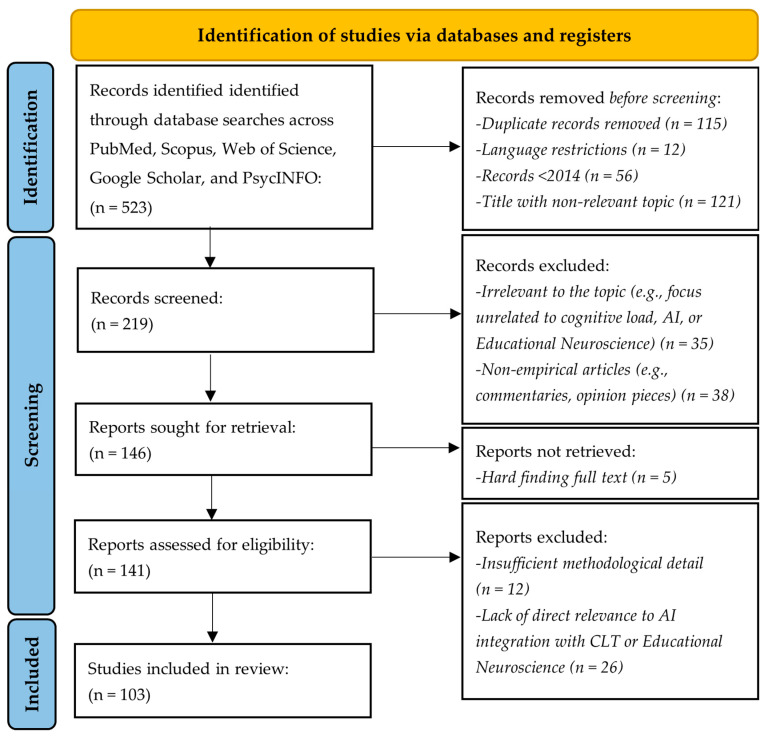
Background/Objectives: This systematic review integrates Cognitive Load Theory (CLT), Educational Neuroscience (EdNeuro), Artificial Intelligence (AI), and Machine Learning (ML) to examine their combined impact on optimizing learning environments. It explores how AI-driven adaptive learning systems, informed by neurophysiological insights, enhance personalized education for K-12 students and adult learners. This study emphasizes the role of Electroencephalography (EEG), Functional Near-Infrared Spectroscopy (fNIRS), and other neurophysiological tools in assessing cognitive states and guiding AI-powered interventions to refine instructional strategies dynamically. Methods: This study reviews n = 103 papers related to the integration of principles of CLT with AI and ML in educational settings. It evaluates the progress made in neuroadaptive learning technologies, especially the real-time management of cognitive load, personalized feedback systems, and the multimodal applications of AI. Besides that, this research examines key hurdles such as data privacy, ethical concerns, algorithmic bias, and scalability issues while pinpointing best practices for robust and effective implementation. Results: The results show that AI and ML significantly improve Learning Efficacy due to managing cognitive load automatically, providing personalized instruction, and adapting learning pathways dynamically based on real-time neurophysiological data. Deep Learning models such as Convolutional Neural Networks (CNNs), Recurrent Neural Networks (RNNs), and Support Vector Machines (SVMs) improve classification accuracy, making AI-powered adaptive learning systems more efficient and scalable. Multimodal approaches enhance system robustness by mitigating signal variability and noise-related limitations by combining EEG with fMRI, Electrocardiography (ECG), and Galvanic Skin Response (GSR). Despite these advances, practical implementation challenges remain, including ethical considerations, data security risks, and accessibility disparities across learner demographics. Conclusions: AI and ML are epitomes of redefinition potentials that solid ethical frameworks, inclusive design, and scalable methodologies must inform. Future studies will be necessary for refining pre-processing techniques, expanding the variety of datasets, and advancing multimodal neuroadaptive learning for developing high-accuracy, affordable, and ethically responsible AI-driven educational systems. The future of AI-enhanced education should be inclusive, equitable, and effective across various learning populations that would surmount technological limitations and ethical dilemmas.
Overview
The claims and statistics of this paper haven’t been checked yet.
Free: it reads the open-access text and checks the first 5 claims that cite a source we can check. Create a free account to check every claim.
Integrity signals
Registry
Cites
Statistics
Figures
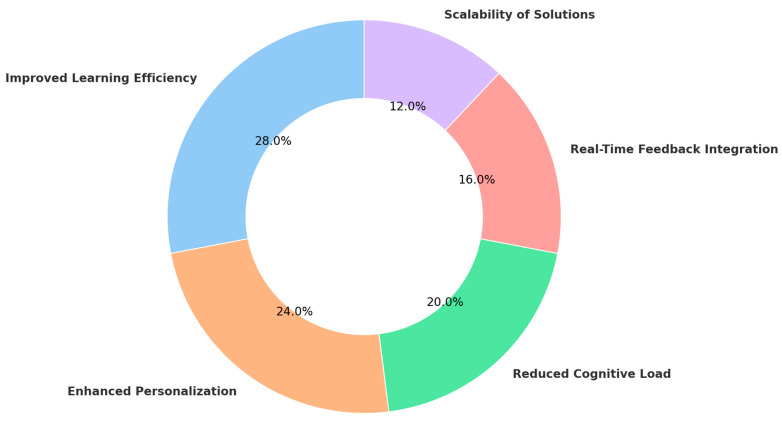
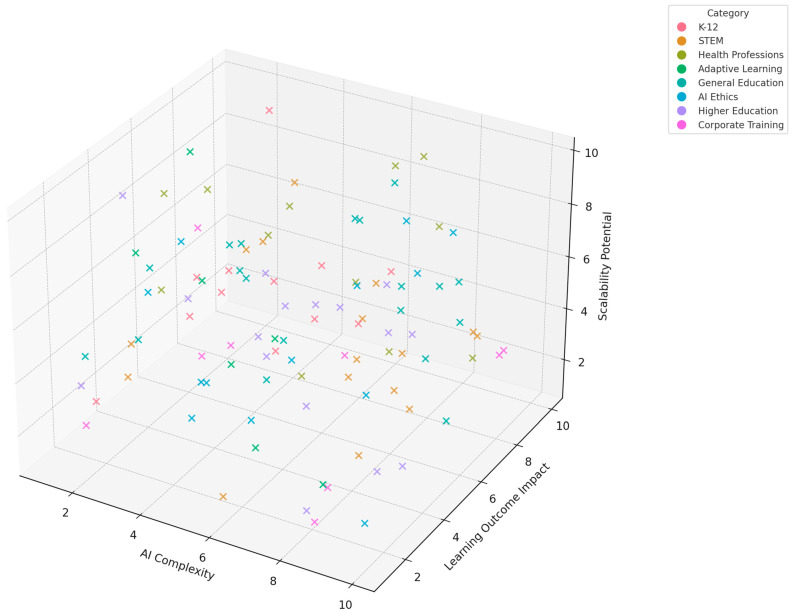
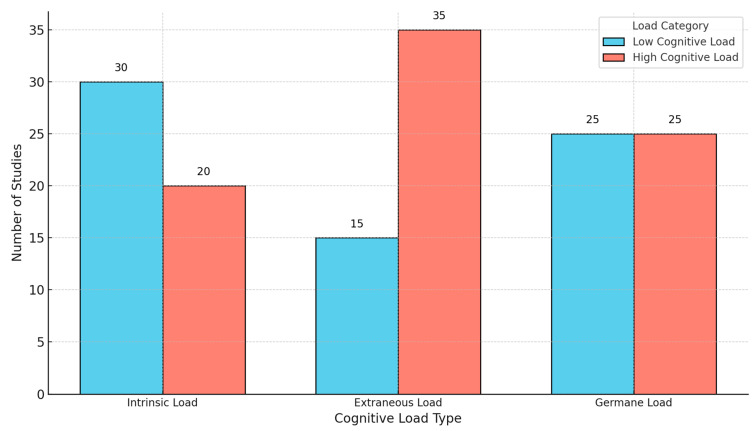
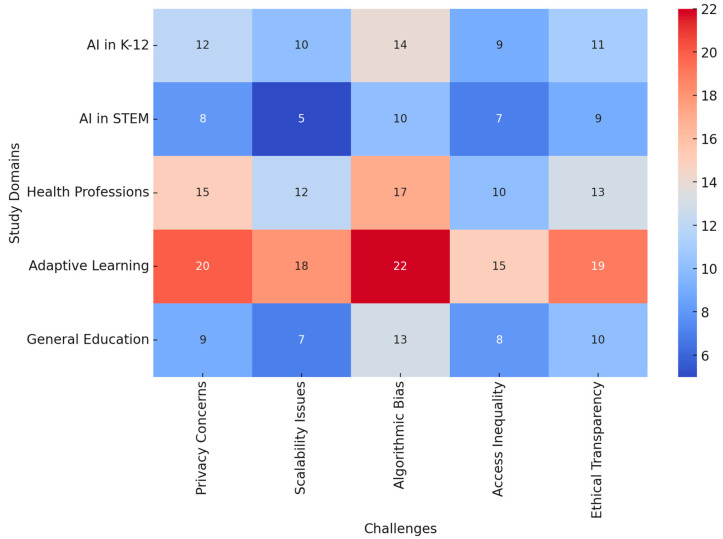
Verification
Claims the paper makes
The claims and statistics of this paper haven’t been checked yet.
Free: it reads the open-access text and checks the first 5 claims that cite a source we can check. Create a free account to check every claim.
Claims other papers make about this one
Each is checked against this paper’s own text: does it say what the citing paper says it does?
The cited source doesn’t support the claim as written.
In the citing paper
“In the language of Cognitive Load Theory, uncritical AI use minimizes the germane cognitive load -the productive mental effort required for deep learning-while often increasing the extraneous cognitive load -the unproductive effort spent navigating a tool's interface or correcting its flawed output (Gkintoni et al., 2025).”
From Paying the Cognitive Debt: An Experiential Learning Framework for Integrating AI in Social Work Education (2025) · cites this paper as Gkintoni et al., 2025
Checked by a reasoning model — may be wrong.
Experimental — accuracy not yet measuredThe cited source says what the claim attributes to it.
In the citing paper
“The educational form of cognitive debt, in contrast, is an opportunity cost accrued through the absence of a beneficial internal process-namely, the effortful thinking, deep processing, and schema-building that constitute genuine learning (Gkintoni et al., 2025; Sweller, 1988).”
From Paying the Cognitive Debt: An Experiential Learning Framework for Integrating AI in Social Work Education (2025) · cites this paper as Gkintoni et al., 2025
The cited source says what the claim attributes to it.
In the citing paper
“In CLT terms, this pattern is consistent with reduced extraneous effort (less syntax/search churn) while retaining or increasing germane processing (reasoning about structure and tests) (Debue & Van De Leemput, 2014; Gkintoni et al., 2025).”
From Tool, tutor, or crutch?: A grounded theory of cognitive scaffolding and offloading in AI-assisted programming education (2026) · cites this paper as Gkintoni et al., 2025
Self-check
Percentages, sums and reported differences re-computed from the paper’s own numbers.
The self-check needs the paper’s full text.
Citations
Cites
ChatGPT for good? On opportunities and challenges of large language models for education
Kasneci, E., Sessler, K., Küchemann, S., Bannert, M., Dementieva, D., Fischer, F., Gasser, U., Groh, G., Günnemann, S., Hüllermeier, E., et al. (2023) · Learning and Individual Differences · doi:10.1016/j.lindif.2023.102274 · Cited by 15,365
ChatGPT for Good? On Opportunities and Challenges of Large Language Models for Education
Kasneci, E., Seßler, K., Küchemann, S., Bannert, M., Dementieva, D., Fischer, F., Gasser, U., Groh, G., Günnemann, S., Hüllermeier, E., et al. (2023) · doi:10.35542/osf.io/5er8f · Cited by 7,552
Haddaway, N. R., Page, M. J., Pritchard, C. C., & McGuinness, L. A. (2022) · Campbell Systematic Reviews · doi:10.1002/cl2.1230 · Cited by 3,486
Implications for educational practice of the science of learning and development
Darling-Hammond, L., Flook, L., Cook-Harvey, C., Barron, B., & Osher, D. (2020) · Applied Developmental Science · doi:10.1080/10888691.2018.1537791 · Cited by 2,733
Cognitive load theory and educational technology
Sweller, J. (2020) · Educational Technology Research and Development · doi:10.1007/s11423-019-09701-3 · Cited by 1,688
Makransky, G., & Petersen, G. B. (2021) · Educational Psychology Review · doi:10.1007/s10648-020-09586-2 · Cited by 1,438
State of the art and practice in AI in education
Holmes, W., & Tuomi, I. (2022) · European Journal of Education · doi:10.1111/ejed.12533 · Cited by 1,093
Grassini, S. (2023) · Education Sciences · doi:10.3390/educsci13070692 · Cited by 1,048
Revolutionizing education with AI: Exploring the transformative potential of ChatGPT
Adiguzel, T., Kaya, M. H., & Cansu, F. K. (2023) · Contemporary Educational Technology · doi:10.30935/cedtech/13152 · Cited by 975
Szymkowiak, A., Melović, B., Dabić, M., Jeganathan, K., & Kundi, G. S. (2021) · Technology in Society · doi:10.1016/j.techsoc.2021.101565 · Cited by 893
Research works printed but not linked: 1
- Lovell O. Sherrington T. Sweller’s Cognitive Load Theory in Action John Catt Woodbridge, UK 2020 10.4324/9781003023715 · DOI
Cited by
Items 401–485 of 485
Bekešienė, S. (2026) · Sustainability · doi:10.3390/su18178758
Sembiring, A. S., Telaumbanua, E. H., & Widiastuti, U. (2026) · Journal La Edusci · doi:10.37899/journallaedusci.v7i5.5777
Behavior, Perception, and Physiological Responses to AI-Generated Safety Training Materials
Shu, Y., Sammour, F., Zhang, Z., Wang, X., & Hu, M. (2026) · ASCE Construction Research Congress (CRC) · doi:10.1061/9780784486993.001
Ibrayeva, Z., Temirkhan, Z., & Yelubay, A. (2026) · Frontiers in Education · doi:10.3389/feduc.2026.1849750
Hidayah, N. A. N., Tuningsih, S., Nugroho, K. A. H. S., Nugroho, H. S., & Wahyuningsih, P. I. (2026) · Assoeltan Indonesian Journal of Community Research and Engagement · doi:10.70610/edujavare.v4i02.1896
Mohammed, H. O., Eid, E. M., & Younes, E. R. (2026) · Journal of Neuropsychology · doi:10.1111/jnp.70075
Portes, K. P., Oliveira, G. C. D., Maia, R. B. S., Porto, B. C., Artifon, E. L., Otoch, J. P., & da Cruz, J. A. S. (2026) · Journal of surgical education · doi:10.1016/j.jsurg.2026.104129
Chen, J., Gao, T., Li, R., Yang, Z., & Li, Y. (2026) · Journal of Intelligence · doi:10.3390/jintelligence14090194
“With its high temporal resolution, EEG provides a unique window for capturing temporally localized neural responses and characterizing learning-related changes in functional connectivity and neural complexity (Gkintoni et al., 2025).”
Chen, S., Wu, Y., & Chen, G. (2026) · International Symposium on E-CARGO and Applications (E-CARGO) · doi:10.1109/e-cargo70110.2026.11671079
“…implementation; insufficient convergence of multiple theories, with no exploration of pathways to integrate E-CARGO with two major educational theories; and the absence of systematic coordination mechanisms, hindering precise alignment between technology and needs [4], [1], [5], [2], [10], [9].”
InfluentialGenerative Artificial Intelligence Application in Occupational Therapy Education
Wersal, J., Mason, J., & Shotwell, M. (2026) · Journal of Occupational Therapy Education · doi:10.26681/jote.2026.100120 · Cited by 1
Nurmalina, N., Asilestari, P., Gusman, D., & Bujdosó, G. (2026) · Research Square · doi:10.21203/rs.3.rs-10567186/v1
Kritika, E. (2026) · International Journal of Digital Law and Governance · doi:10.1515/ijdlg-2026-0011
“The CBM establishes digital dependency as a dual relationship which reveals itself both as an e ff ect of juvenile psychological weakness in cyber space and as its root cause (Gkintoni et al. 2025).”
Sivasankar, A. (2026) · International Journal For Multidisciplinary Research · doi:10.36948/ijfmr.2026.v08i05.86915
“Gkintoni et al. (2025a) extended this framework by linking excessive extraneous load to reduced prefrontal cortex activation, giving the familiar theory a neural correlate and a plausible mechanism for why poorly designed multimedia actively harms learning rather than merely annoying learners.”
InfluentialGENERATIVE AI REDUCES PERIPHERAL BUT NOT MENTAL COGNITIVE LOAD IN PROGRAMMING EDUCATION
Аркабаев, Н. К., Ойчуева, Р., & Ajibekova, A. (2026) · Jurnal Ilmiah Ilmu Terapan Universitas Jambi|JIITUJ| · doi:10.22437/jiituj.v10i4.58071
Kesaulya, N., Parno, P., Purwaningsih, E., & Sunaryono, S. (2026) · Multidisciplinary Science Journal · doi:10.31893/multiscience.2027239
“Metacognitive scaffolding helps students organize and integrate information systematically, resulting in a more robust conceptual framework for understanding concepts such as amplitude, frequency, period, and phase (Gkintoni et al., 2025; Pozuelos et al., 2019; Prasetya, 2022).”
Learning Through Interaction: Designing Adaptive AI to Enhance AI and Information Literacy
Mendez, I. V., Shaffer, H., Shaikh, A., & Xie, J. (2026) · Proceedings of the Human Factors and Ergonomics Society Annual Meeting · doi:10.1177/10711813261485176
Digital Saturation and Psychological Evolution: Interdisciplinary Insights Into the AI Generation
Priya, S., & Santhoshkumar, S. P. (2026) · Advances in computational intelligence and robotics book series · doi:10.4018/979-8-3373-9109-0.ch002
Fluid Mechanics and the Ways Pupils Think
Červeňová, D., & Demkanin, P. (2026) · Journal of Physics Conference Series · doi:10.1088/1742-6596/3280/1/012009
Altınışık, M. S. (2026) · Current Psychology · doi:10.1007/s12144-026-09999-2
“AI tools can provide speed, practicality, and efficiency by reducing cognitive load and helping users generate alternatives in uncertain situations (Canbek & Mutlu, 2016; Gkintoni et al., 2025 ).”
МОДЕЛЬ ЗРІЛОСТІ УПРАВЛІННЯ КОРОТКОСТРОКОВИМИ ОСВІТНІМИ ПРОЄКТАМИ У ЗАКЛАДАХ ВИЩОЇ ОСВІТИ
Станішовський, А. С. (2026) · Economic scope
Isnaini, N. H., Darmawan, D., Sadilia, S., & Erniwati, E. (2026) · Journal of English Language and Education · doi:10.31004/jele.v11i4.3177
“John Sweller (1988, as cited in Gkintoni et al., 2025) explains that working memory has a limited capacity, while excessive cognitive load can hinder information processing.”
Qi, Z., Zhang, R., & Feng, Y. (2026) · Electronics · doi:10.3390/electronics15184212
Wang, Q. (2026) · PLoS ONE · doi:10.1371/journal.pone.0358596
“These technologies may offer potential to improve educational efficiency, reduce repetitive workloads, and support personalized and scalable learning environments [5].”
Tang, C., Cao, Y., Shen, Q., Kang, S., Yang, Y., Chang, P., & Fan, M. (2026) · Frontiers in Psychology · doi:10.3389/fpsyg.2026.1944626
Salari, E., & Soni, A. (2026) · Advances in computational intelligence and robotics book series · doi:10.4018/979-8-3373-8352-1.ch013
Dunsfield, M. (2026) · Digital Commons (Liberty University)
Pilot Validation of a Large Language Model Facilitator for Peer-to-Peer Learning
Hollingsworth, S., McIntyre, T. V., Ahmed, S., Tahir, M., O'Duffy, G., & Ridgway, P. F. (2026) · Journal of surgical education · doi:10.1016/j.jsurg.2026.104179
Santoso, N. C. A., & Abidin, M. (2026) · Al Qodiri Jurnal Pendidikan Sosial dan Keagamaan · doi:10.53515/alqodiri.v24i2.205
“…the emerging use of artificial intelligence in higher education has predominantly been examined from perspectives of learning efficiency, productivity, or instructional innovation, leaving its psychological function in students' learning adaptation relatively unexplored (Gkintoni et al., 2025).”
Wang, Y., Zhang, H., & Cui, Y. (2026) · SAGE Open · doi:10.1177/21582440261491028
Chaipanha, B., Jungate, K., & Chuanprakhon, S. (2026) · International Journal of Information and Education Technology · doi:10.18178/ijiet.2026.16.9.2703
“…Journal of Information and Education Technology, Vol. 16, No. 9, 2026 neuroscience theories, suggesting that AI-driven tools can successfully reduce “ cognitive load, ” thereby allowing students to devote more mental resources to higher-order creative tasks and aesthetic expression [19, 29].”
Артыкбаевна, К. Д., Myrzabayev, A., Mamirova, K., Kuandykova, E., Yerekeyeva, S., SAULEMBAYEV, A. T., Amerbekov, E., Nazarova, G., Токтаганова, Г. Б., & Avezov, M. M. (2026) · Frontiers in Education · doi:10.3389/feduc.2026.1894372
Haverila, M. J., & Currie, R. (2026) · International Journal of Information and Learning Technology · doi:10.1108/ijilt-12-2025-0390
Bansimba, J.-R. M., Ngoie, R.-B. M., Kasereka, S. K., Metho, E. N., Kinyoka, G. K., & Isumbisho, P. M. (2026) · Procedia Computer Science · doi:10.1016/j.procs.2026.08.439
A Critique of Retro-Mimesis in the Convergence of AI and EducationPreprint
anon, M. (2026) · SSRN Electronic Journal · doi:10.2139/ssrn.7524261
Renata, T. F., & Rikayanti (2026) · MANDALIKA Mathematics and Educations Journal · doi:10.29303/jm.v8i3.12543
“Di samping itu, implementasi model ini terbukti efektif dalam memelihara konsistensi evaluasi tanpa membebani kapasitas kognitif para pendidik (Al-Kandari & Alajmi, 2025; Gkintoni et al., 2025).”
Quiz-Based Mechanics for Long-Term Retention in Game-Based Learning
Jain, T., & Yang, Z. (2026) · European Conference on Games Based Learning · doi:10.34190/ecgbl.20.1.5397
“Cognitive Load Theory (CLT) further suggests that interactive elements can impose extraneous load on deeper processing (Gkintoni et al., 2025), and novelty effects can inflate early gains that fade with familiarity (Sanchez et al., 2020).”
Predictive governance: The management dilemmas of AI-driven anti-doping education
Getu, Z., Mengistu, S., & Tadesse, T. (2026) · Emerging Trends in Drugs Addictions and Health · doi:10.1016/j.etdah.2026.100281
Chico, A. E. C., Farinango, J. E. S., Farinango, V. V. S., Yauli, K. M. C., & Pazmiño, D. D. C. (2026) · Revista Científica de Salud y Desarrollo Humano · doi:10.61368/r.s.d.h.v7i3.1140
Nuraida, I., & Wulan, A. R. (2026) · BIODIK · doi:10.22437/biodik.v12i02.51892
Leppla, L. C., Spanier, M., & Seibert, J. (2026) · Frontiers in Education · doi:10.3389/feduc.2026.1952302
Grames, N., & Landon, L. E. (2026) · Medical Science Educator · doi:10.1007/s40670-026-02908-z
Learning from Novice Programmers’ Metaphors of Generative Artificial Intelligence
Smit, I., & du Plessis, L. (2026) · International Journal of Learning Teaching and Educational Research · doi:10.26803/ijlter.25.9.7
Donoso, A. M., AGUIRRECHE, J. B., Neira-Calama, M., & Sánchez-Huete, J. C. (2026) · Youth · doi:10.3390/youth6040144
“Consistent with this, recent evidence on AI-based adaptive learning systems shows that such tools can dynamically adjust the cognitive demand of the content presented, thereby optimising individual learning (Gkintoni et al., 2025).”
Zambrano-García, A. T., & Pincay, G. H. Z. (2026) · Revista Científica Multidisciplinaria HEXACIENCIAS
Luhwera, M. G. (2026) · JOURNAL OF PUBLIC SECTOR MANAGEMENT
Zaidi, N. I. A., Mohamad, F., Sheffri, S. A. A. A., & Osmiray, Q. (2026) · International Journal of Research and Innovation in Social Science · doi:10.47772/ijriss.2026.102100140
SCAFFOLDED PROBLEM-BASED LEARNING WITH AUGMENTED REALITY IN PRIMARY EDUCATION
Estimurti, E. S., Pantiwati, Y., Latipun, L., & Bulkani, B. (2026) · International online journal of education and teaching
The future of Human Resource Management: Predictive Insights through Machine Learning
Siddiqua, A., Morshed, M. A., Akter, F., & Rahman, F. (2026) · doi:10.65676/brzvsh13
Wang, Z., Ren, X., Wang, Y., Du, L., Tang, Z., Dong, Q., Cui, X., Jiang, Z., & Gong, C. (2026) · International Journal of Human-Computer Studies · doi:10.1016/j.ijhcs.2026.103951
Zolkifli, Z. F. B. M., & Rahman, N. S. B. A. (2025) · i-MaTRiX Conference Proceedings
Manurung, A. A. (2026) · IJEMS Indonesian Journal of Education and Mathematical Science · doi:10.30596/ijems.v7i2.30200
Nurbaiti, I., & Gunawan, G. (2026) · IJEMS Indonesian Journal of Education and Mathematical Science · doi:10.30596/ijems.v7i2.29439
Graphic Memory Matrix as a Pedagogical Tool for Enhancing Iraqi EFL Learners’ Reading Comprehension
Hassani, W. S., & Al-Jabbawi, M. F. (2026) · مجلة الباحث · doi:10.63797/2sbzye70
Alifah, S., Arthur, R., Supriyati, Y., Salman, I., & Ramdhan, T. W. (2026) · International Research Journal of Multidisciplinary Scope · doi:10.47857/irjms.2026.v07i04.011912
“Difficulties in these domains may limit students’ ability to interpret energy systems, understand technological applications and engage with sustainability-related issues (4).”
Al‐Barakat, A. A., Al-Hassan, O. M., AlAli, R. M., & Abdullatif, A. K. A. (2026) · GeoJournal of Tourism and Geosites · doi:10.30892/gtg.68412-1893
Influencia de la carga cognitiva en el aprendizaje profundo de estudiantes de ciencias de la salud
Rodriguez, M. D. L. A. C., Olivera, A. I. L., Jaramillo, E. V. M., Quintero, B. B., & Pardillo, T. B. (2026) · Revista Interdisciplinaria de Educación, Salud, Actividad Física y Deporte. · doi:10.70262/riesafd.v3i3.2026.116
Tino, H., & Febriana, B. A. (2025) · Jurnal Inovasi Fisika dan Edukasi
Mauliah, R., Sumarno, S., & Gusnardi, G. (2026) · Harmoni Sosial Jurnal Pendidikan IPS · doi:10.21831/hsjpi.v13i2.93602
Rusike, H. (2025) · IJARKE Science & Technology Journal · doi:10.32898/istj.03/8.1article01
Zambrano, V. R. J., Solórzano, E., Torres, M. V. A., & Saltos, R. E. M. (2026) · doi:10.63415/saga.2026.129
Sihotang, D. S., Suhud, U., & Handaru, A. W. (2026) · IGI Global eBooks · doi:10.4018/979-8-2600-0186-8.ch001
The AI Mirror: A Qualitative Study of Student Autonomy and Dependence in ESL Writing
Chulkstan, M., Hashim, M., & Vasheena, Y. (2026) · International Journal of TESOL & Education · doi:10.54855/ijte.26641
“This behavior clearly reflects the "cognitive offloading" Gkintoni et al. (2025) warn against, where the tool's convenience lets students bypass the very processes necessary for skill acquisition.”
Villalobos, A. R. S., Godoy, M. V. C., Pareja, Z. M., & Arias, M. G. I. (2026) · Revista Simón Rodríguez · doi:10.62319/simonrodriguez.v.6i13.232
“Desde la perspectiva de Gkintoni et al. (2025), se examinó la teoría de la carga cognitiva y señalaron que los recursos de apoyo visual adecuadamente diseñados pueden optimizar la eficiencia del aprendizaje al reducir la carga cognitiva innecesaria.”
Liu, Y. (2026) · Frontiers in Psychology · doi:10.3389/fpsyg.2026.1930030
“Attention is the most fundamental cognitive resource in the learning process, and its allocation efficiency directly affects the encoding, processing, and storage of information, thereby determining the quality of academic performance (Wang and Kao, 2022; Yin et al., 2023; Gkintoni et al., 2025).”
Sun, D., Wong, I. A., & Li, S. (2026) · Tourism Management Perspectives · doi:10.1016/j.tmp.2026.101542
Ruiz, C. V. (2026) · Psychology and Education A Multidisciplinary Journal · doi:10.70838/pemj.640103
Khursheed, M. I., Sedano, C. I., & Järvi, J. (2026) · arXiv (Cornell University) · doi:10.48550/arxiv.2610.21971
“Cognitive load theory, originally developed by Sweller [18], has been widely applied in HCI to understand how interface complexity affects user performance [19, 20].”
Razak, A. A., Jamalludin, N. H., Razak, A. A., & Shaari, A. A. H. (2026) · International Journal of Modern Education · doi:10.35631/ijmoe.831018
LuRuiJing, Warpala, I. W. S., & Parwati, N. N. (2026) · Jurnal Paedagogy · doi:10.33394/jp.v13i4.21822
“Modern LMS also provide real-time data that enable educators to monitor students' progress, identify learning difficulties, and implement targeted instructional interventions to improve academic performance(Gkintoni et al., 2025; Sun & Song, 2026).”
A Dual-Agent Adaptive Arcade Mode for Rapid Code Evaluation in Programming Education
Martins, W., Barbosa, K. B., da Cruz, A. K. B. S., Câmara, S., & Neto, C. D. S. S. (2026) · Simpósio Brasileiro de Jogos e Entretenimento Digital (SBGames) · doi:10.5753/sbgames.2026.26217
“Recent work has explored real-time difficulty adjustment, learner modeling, personalized pathways, intelligent feedback, and adaptive game features [Idika e Saihi 2025, Gkintoni et al. 2025, Loor et al. 2024, Zhong e Zhou 2024].”
Wu, L., & Ni, X. (2026) · Computer Applications in Engineering Education · doi:10.1002/cae.70289
AI Integration in Learning: Its Impact on Students' Metacognitive Awareness and Regulation
Salim, Mustaji, M., Kholidya, C. F., Alam, B. T., Jannah, N., & Kusen, M. (2026) · Jurnal Penelitian dan Pengembangan Pendidikan · doi:10.23887/jppp.v10i2.107898
Graph-Enhanced Knowledge Tracing for Explainable Learner Modeling: A Systematic Literature Review
Nurfaizah, Isnanto, R. R., & Tahyudin, I. (2026) · Journal of Information Systems and Informatics · doi:10.63158/journalisi.v8i5.1844
Mardin, A., & Jalinus, N. (2026) · Jurnal Pendidikan Teknologi Kejuruan · doi:10.24036/jptk.v9i3.52123
“…projects therefore require explicit roles, authentic and cognitively demanding problems, continuous monitoring, appropriate scaffolding, formative feedback, individual accountability, and opportunities for reflection and revision (Gkintoni et al., 2025; Perzolli et al., 2026; Schutte et al., 2026).”
Mekdad, A. K., Kotp, M. H., Elauoty, R. M., Bassyouny, H. A. A., Ismail, H. A., Hafez, A. A., Hamed, A. E. M., Aly, M. A., & Attia, A. S. (2026) · BMC Nursing · doi:10.1186/s12912-026-05357-6
“These findings are consistent with prior research demonstrating that poorly designed multimedia learning environments can hinder rather than enhance cognitive processing, particularly among novice learners in complex fields such as nursing [47, 48].”
The Impact of AI Prompts on Learners' Cognitive Load in a Digital Educational Environment
Арлаков, Е. А. (2026) · Almanac Institute of special education · doi:10.66435/almanac.ise.63.03
Salerno, V. (2026) · Multicultural Education Review · doi:10.1080/2005615x.2026.2748802
Bases de la neuroeducación: funcionamiento del cerebro en el aprendizaje
Meneses, F. C. P., Bonilla, L. S. C., Armijos, V. P. L., Contreras, A. M. H., & Molina, K. K. C. (2026) · Star of Sciences Multidisciplinary Journal · doi:10.63969/r0yyk319
Sarmini (2026) · Artificial Intelligence in Learning · doi:10.63913/ail.v2i3.64
الهوبي, إ. ج. م. (2026) · مجلة كلية فلسطين التقنية للأبحاث والدراسات · doi:10.47641/jrs.2026-13-1.04
Talukder, M. S., & Rabbi, M. S. H. (2026) · Interdisciplinary Perspectives of Education · doi:10.65525/ipe.v3i2.131
Tuan, K. M., Nguyen, L. P., Nguyen, B. N., Khuyen, M. T., & Phan, T. T. (2026) · SAGE Open · doi:10.1177/21582440261503658
Musole, E., & Kantini, S. (2026) · Research Square · doi:10.21203/rs.3.rs-9385556/v1
Conceptual and Neurocognitive Foundations of Cognitive Stamina
Sanduleac, L., & Glavan, A. (2026) · Didactica Danubiensis
Metadata
- Authors
- Gkintoni, E., Antonopoulou, H., Sortwell, A., & Halkiopoulos, C.
- Affiliations
- University of Patras (GR)
- University of Beira Interior (PT)
- Corresponding author
- Gkintoni, Evgenia
- Venue
- Brain Sciences
- Publisher
- MDPI AG
- Published
- 2025-02-15
- Volume
- 15
- Issue
- 2
- Pages
- 203
- ISSN
- 2076-3425 (ISSN-L)
- PMC
- PMC11852728
- OpenAlex
- W4407657137
- Semantic Scholar
- 3813deab1d3cdfe24fc0daeda81f0df5dda9f7bc
- Cited by
- 309
- References
- 251
- Citations by year
- 2026: 203 · 2025: 106
- FWCI
- 51.50
- Type
- journal article
- Language
- en
- Open access
- gold
- doi.org
- Licence
- Locations
- Brain Sciences (publishedVersion, cc-by)
- PubMed Central (publishedVersion, cc-by)
- PubMed (publishedVersion)
- DOAJ (DOAJ: Directory of Open Access Journals) (submittedVersion, cc-by-sa)
- Funders
- Research Council of the University of Patras, Greece
- Topics
- Life Sciences › Neuroscience › Cognitive Neuroscience › Neuroscience, Education and Cognitive Function
- Physical Sciences › Computer Science › Artificial Intelligence › Intelligent Tutoring Systems and Adaptive Learning
- Social Sciences › Education › Artificial Intelligence in Education
- Keywords
- cognitive load theory, neuroeducation, artificial intelligence in education, adaptive learning systems, personalized learning, EEG, functional near-infrared spectroscopy, personalized feedback, algorithmic bias, data privacy, K-12 education, adult learners, learning effectiveness
About these checks
Registry, retraction, Cites and statistics results are computed, not judged, with one exception: a printed reference that no index lists is read once by a model before it counts as a citation error. Claims are extracted by a model and kept only when their quote appears verbatim in the text; each cited source is then checked, with a model’s help, for whether it says what the claim relies on. Those verdicts can be wrong — read the claim’s quote and the cited source before relying on one.
Statistics and arithmetic are recomputed, not judged.
Confidence bands are shown only for fields calibrated on our annotated test set. None is calibrated yet, so no band is shown.
What counts as a claim ›How we measure confidence ›How we check this ›
Are you an author, or do you see a problem with this page? Request a review
Data sources
Bibliographic data: Semantic Scholar, OpenAlex, Crossref.
Contains information from the Semantic Scholar Academic Graph Datasets, made available under the ODC Attribution License (ODC-BY 1.0).
Semantic Scholar’s data is described in: Kinney, R., et al. (2023). The Semantic Scholar Open Data Platform. arXiv:2301.10140.
