

Plant Milk-Clotting Enzymes for Cheesemaking
Open accessThe DOI matches its Crossref record; 117 of the 121 references it cites were found in a registry or an index; 6 of the 27 sources its claims cite were checked for support.
Abstract
Nowadays, several plant-derived milk-clotting enzymes are available for cheesemaking technology.
Overview
CoChat Summary
## TL;DR
This review surveys plant-derived milk-clotting enzymes used in cheesemaking and argues that they are promising rennet substitutes, but their widespread use is limited mainly by high proteolytic activity and resulting bitterness. It also summarizes strategies to improve performance, including standardization of extracts, recombinant enzymes, adjunct cultures, milk ultrafiltration, and post-coagulation inactivation.
## Key findings
- Calf rennet now covers only 20–30% of the world demand for milk coagulants, which helps explain the search for plant-based alternatives.
- Most plant-derived clotting enzymes have high proteolytic activity (PA), which can generate bitter peptides and reduce suitability for many cheeses; the review states they are still mainly suitable for soft and creamy unripened cheese types.
- The paper highlights several promising plant enzymes and reports specific examples: actinidin had the highest MCA/PA ratio among ginger, melon, and kiwifruit proteases, and kiwi coagulant produced mozzarella with cheese properties similar to calf-rennet cheese without bitter flavors.
- The review reports quantitative cheese effects from plant coagulants, including 0.3–0.7% lower curd yield after long protease exposure, 86.45 U/mL caseinolytic activity and 450 U/mL MCA for Calotropis procera latex, and a 20.71% yield for cheese made with kiwi extract in camel milk.
## Methods
- This is a literature review of plant milk-clotting enzymes used in cheese technology, organized by protease class and by their effects on cheesemaking.
- It synthesizes prior studies on enzyme properties, including milk-clotting activity (MCA), proteolytic activity (PA), pH/temperature optima, cleavage specificity, and cheese outcomes such as texture, yield, and sensory quality.
- The main analysis is comparative narrative synthesis across plant coagulants, cheese types, and mitigation strategies; no new experimental sample or original dataset is reported in the text provided.
## Limitations
- The paper states that vegetable clotting enzymes are only partially suitable for cheesemaking because of excessive proteolytic activity, which can cause bitter flavor development.
- It also notes that extract variability in composition makes standardization difficult and limits industrial implementation.
- Evident from the text: as a review, it depends on previously published studies, so the conclusions are only as strong as the underlying heterogeneous literature; the paper itself does not report a uniform experimental design or pooled quantitative meta-analysis.
Model-written summary. Check it against the paper before relying on it.
Integrity signals
Registry
Cites
Statistics
Figures
Verification
Claims the paper makes
5 Valid · 0 Not valid · 20 Not checked · 3 Own results and interpretations
Every source the paper cites for this claim was checked and supports it.
In the paper
“The data reported that kiwi extract determined the highest yield (20.71%).”
§ Plant Milk-Clotting Enzymes for Cheesemaking > 2. Types and Characteristics of Vegetable Proteases > 2.2. Cysteine Proteases
What the sources say
- Supportedcites [59] Fguiri I. Atigui M. Sboui A. Samira A. Marzougui C. Dbara M. Khorchani T. Camel Milk-Clotting Using Plant Extracts as a Substitute to Commercial Rennet J. Chem. 2021 2021 6680246 10.1155/2021/6680246 source
Section 3.4, “Cheese Curd Yield,” reports that kiwifruit produced the highest curd yield, 20.71%, compared with chymosin and the other plant coagulants in camel milk. (LLM, conf=0.95)
plainstates a cause- Asserted: passes — The authors put it forward as true.
- Checkable: passes — It can be checked against evidence.
- Load-bearing: unclear — It is unclear whether the paper’s conclusions depend on it.
- Based: passes — The paper gives a reason why it holds.
- Supported
The cited sources support only part of this claim — read each source’s verdict below.
In the paper
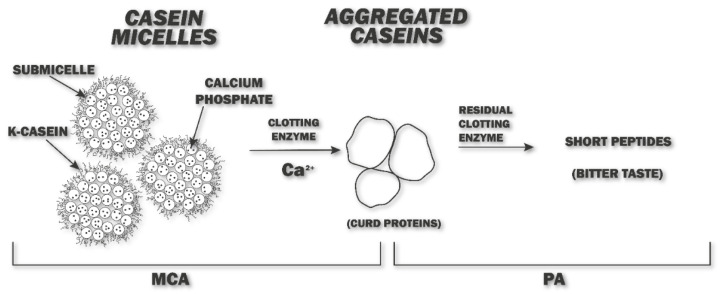
“The high PA characterizes most of the vegetable proteases, which, especially during beginning of cheeses ripening, continue to hydrolyze the caseins causing the appearance of short peptides, which can have a bitter taste [80].”
- Also stated in: § 6. Conclusions and Future Perspective · plain
“Based on the literature, most plant-derived clotting enzymes showed high PA, resulting in bitter compounds in the final products.”
§ Plant Milk-Clotting Enzymes for Cheesemaking > 3. Proteolytic Activity and Bitter Taste by Plant Derived Coagulant in Cheese
What the sources say
- Partly supportedcites [80] Visser S. Proteolytic Enzymes and Their Relation to Cheese Ripening and Flavor: An Overview J. Dairy Sci. 1993 76 329 350 10.3168/jds.S0022-0302(93)77354-3 sourceExperimental — accuracy not yet measured
The Introduction (page unavailable) says residual clotting enzyme contributes to casein breakdown during initial ripening, and the ‘Bitter Flavor Formation and Debittering’ section (page unavailable) links bitter peptides to residual clotting enzyme and bacterial proteinases. The passages do not establish that most plant-derived clotting enzymes have high proteolytic activity or specifically cause this effect. (LLM, conf=0.84)
plainstates a cause- Asserted: passes — The authors put it forward as true.
- Checkable: passes — It can be checked against evidence.
- Load-bearing: passes — The paper’s conclusions depend on it.
- Based: passes — The paper gives a reason why it holds.
- Also stated in: § 6. Conclusions and Future Perspective · plain
The cited sources support only part of this claim — read each source’s verdict below.
In the paper
“In particular, low molecular weight peptides can have hydrophobic groups at C-terminal end, which give them a high Q value and therefore bitterness [24,91].”
§ Plant Milk-Clotting Enzymes for Cheesemaking > 4. Effect of Plant Coagulants on Cheeses
What the sources say
- Not checked — no full text of the sourcecites [24] Mazorra-Manzano M.A. Moreno-Hernández J.M. Ramírez-Suarez J.C. Milk-clotting plant proteases for cheesemaking Biotechnological Applications of Plant Proteolytic Enzymes Springer International Publishing Cham, Switzerland 2018 21 41 9783319971322 source
- Partly supportedcites [91] Lemieux L. Simard R.E. Bitter flavour in dairy products. I. A Review of the Factors Likely to Influence its Development, Mainly in Cheese Manufacture Le Lait 1991 71 599 636 10.1051/lait:1991647 sourceExperimental — accuracy not yet measured
The BITTERNESS-HYDROPHOBICITY section describes the Q-hypothesis as a relationship between peptide amino-acid composition and bitterness, and says terminal amino acids can affect bitter-taste intensity. The BITTER FLAVOUR DEVELOPMENT IN CHEESE section also notes that reducing peptides initially too large to taste bitter may produce bitter peptides. Neither passage establishes the specific chain that hydrophobic groups at a low-molecular-weight peptide’s C-terminal end give it a high Q value and therefore bitterness; page numbers are unavailable in our copy. (LLM, conf=0.84)
plainstates a cause- Asserted: passes — The authors put it forward as true.
- Checkable: passes — It can be checked against evidence.
- Load-bearing: unclear — It is unclear whether the paper’s conclusions depend on it.
- Based: passes — The paper gives a reason why it holds.
In the paper
“A ratio similar to chymosin (that is considered as a reference) corresponds to a high-quality coagulant, reflecting a high curd yield and low cheese defects, such as bitter flavors and an excellent final product with desirable firmness [7].”
§ Plant Milk-Clotting Enzymes for Cheesemaking > 1. Introduction
What the sources say
- Not matchedcites [7] Nitu S. Geicu-Cristea M. Matei F. Milk-Clotting Enzymes Obtained from Plants in Cheesemaking—A Review Sci. Bull. Ser. F Biotechnol. 2021 25 66 75
We searched by its title and found no matching paper.
plainstates a cause- Asserted: passes — The authors put it forward as true.
- Checkable: passes — It can be checked against evidence.
- Load-bearing: passes — The paper’s conclusions depend on it.
- Based: passes — The paper gives a reason why it holds.
- Not matched
In the paper
“Moreover, Puglisi et al. [54] showed that actinidin has an excellent MCA/PA ratio in production of mozzarella with kiwi juice as a coagulant without the onset of bitter flavors.”
§ Plant Milk-Clotting Enzymes for Cheesemaking > 2. Types and Characteristics of Vegetable Proteases > 2.2. Cysteine Proteases
What the sources say
- Not checked — no full text of the sourcecites [54] Puglisi I. Petrone G. Piero A.R.L. A Kiwi Juice Aqueous Solution as Coagulant of Bovine Milk and Its Potential in Mozzarella Cheese Manufacture Food Bioprod. Process. 2014 92 67 72 10.1016/j.fbp.2013.07.011 source
boostedstates a cause- Asserted: passes — The authors put it forward as true.
- Checkable: passes — It can be checked against evidence.
- Load-bearing: passes — The paper’s conclusions depend on it.
- Based: passes — The paper gives a reason why it holds.
12 more claims
Create a free account to see all 28 claims and every source verdict.
- It may state two separate claims as one. 10
- Probably not a substantial claim. 1
Self-check
Percentages, sums and reported differences re-computed from the paper’s own numbers.
Rated major: it would touch a result — a value a result rests on, reported and recomputed p-values on opposite sides of the significance level, two passages that conflict with no sign which is right, or a cited work retracted before this paper was published.
In the paper
“the protease obtained from R. pusillus consists of 437 amino acids, 22 of which are signal peptides; the following 44 amino acids are propeptide, and 361 amino acids constitute a mature protease.”
§ Plant Milk-Clotting Enzymes for Cheesemaking > 1. Introduction
Reported 437 · recomputed 427
Citations
Cites
The Structure and Function of the Aspartic Proteinases
Davies, D. R. (1990) · Annual Review of Biophysics and Biophysical Chemistry · doi:10.1146/annurev.bb.19.060190.001201 · Cited by 658 · cited 1×
“Most aspartic proteases consist of single-chain enzymes with a molecular weight of about 35 kDa and a length of about 330 amino acids [35,36].”
BackgroundPeptidases and amino acid catabolism in lactic acid bacteria
Christensen, J. E., Dudley, E. G., Pederson, J. A., & Steele, J. L. (1999) · Antonie van Leeuwenhoek · doi:10.1023/a:1002001919720 · Cited by 630
[2] Families of serine peptidases
Rawlings, N. D., & Barrett, A. J. (1994) · Methods in Enzymology · doi:10.1016/0076-6879(94)44004-2 · Cited by 629 · cited 1×
“They are present in many plant tissues, but more abundantly in fruits, and take part in many metabolic pathways of the plant [61].”
BackgroundImportance of Calcium and Phosphate in Cheese Manufacture: A Review
Lucey, J. A., & Fox, P. F. (1993) · Journal of Dairy Science · doi:10.3168/jds.s0022-0302(93)77504-9 · Cited by 454
Structure of human procathepsin L reveals the molecular basis of inhibition by the prosegment.
Coulombe, R., Grochulski, P., Sivaraman, J., Ménard, R., Mort, J. S., & Cygler, M. (1996) · The EMBO Journal · doi:10.1002/j.1460-2075.1996.tb00934.x · Cited by 388
A cut above the rest: the regulatory function of plant proteases
Schaller, A. (2004) · Planta · doi:10.1007/s00425-004-1407-2 · Cited by 384 · cited 1×
“Proteases are enzymes present uniformly in the tissues of plants; they take on various functions from germination to senescence processes [23].”
BackgroundPapain protects papaya trees from herbivorous insects: role of cysteine proteases in latex
Konno, K., Hirayama, C., Nakamura, M., Tateishi, K., Tamura, Y., Hattori, M., & Kohno, K. (2004) · The Plant Journal · doi:10.1046/j.1365-313x.2003.01968.x · Cited by 376 · cited 1×
“One of the most studied cysteine proteases is papain from Carica papaya [51], but other cysteine proteases have been extracted from ginger rhizomes [52], from the root latex of Jacaratia corumbensis [53], and from Actinidia chinensis [54].”
BackgroundProteolytic Enzymes and Their Relation to Cheese Ripening and Flavor: An Overview
Visser, S. (1993) · Journal of Dairy Science · doi:10.3168/jds.s0022-0302(93)77354-3 · Cited by 305 · cited 1×
“The high PA characterizes most of the vegetable proteases, which, especially during beginning of cheeses ripening, continue to hydrolyze the caseins causing the appearance of short peptides, which can have a bitter taste [80].”
BackgroundRecent Advances in Milk Clotting Enzymes
JACOB, M., JAROS, D., & ROHM, H. (2011) · International Journal of Dairy Technology · doi:10.1111/j.1471-0307.2010.00633.x · Cited by 295 · cited 2×
“a reverse transcriptase process, the mRNA of chymosin from the animal abomasum is transferred to cDNA and subsequently grafted into the DNA of a Generally recognized as safe (GRAS) microorganism that will be able to produce chymosin through fermentation [8].”
Background[33] Catalytic mechanism in papain family of cysteine peptidases
Cstorer, A., & Ménard, R. (1994) · Methods in Enzymology · doi:10.1016/0076-6879(94)44035-2 · Cited by 265 · cited 1×
“The active catalytic domain contains three catalytic residues (Cys-His-Asn) that have specific functions: the Cys residue acts as a nucleophile while the His residue acts as a general base for proton shuttling [49].”
Background(2010) · doi:10.1002/9781444323740 · Cited by 237
Debittering of protein hydrolyzates
Saha, B. C., & Hayashi, K. (2001) · Biotechnology Advances · doi:10.1016/s0734-9750(01)00070-2 · Cited by 229 · cited 1×
“, the presence of hydrophobic amino acids inside the chain [81]; the presence in percentage of hydrophobic amino acids in the peptide side chains [82].”
BackgroundPlant proteases as milk-clotting enzymes in cheesemaking: a review
Shah, M. A., Mir, S. A., & Paray, M. A. (2014) · Dairy Science & Technology · doi:10.1007/s13594-013-0144-3 · Cited by 209
(2007) · CRC Press eBooks · doi:10.1201/9781439823859 · Cited by 200
Cheesemaking with vegetable coagulants—the use of Cynara L. for the production of ovine milk cheeses
Roseiro, L. B., Barbosa, M., Ames, J. M., & Wilbey, R. A. (2003) · International Journal of Dairy Technology · doi:10.1046/j.1471-0307.2003.00080.x · Cited by 200 · cited 14×
“Lorente et al. [72] showed how the parameters related to brining time can affect the flavor of the Gouda-type cheese using the Cynara scolymus flower extract as milk coagulant.”
BackgroundInfluentialSensomics Mapping and Identification of the Key Bitter Metabolites in Gouda Cheese
Toelstede, S., & Hofmann, T. (2008) · Journal of Agricultural and Food Chemistry · doi:10.1021/jf7036533 · Cited by 173 · cited 1×
“αS1-CN (f11–14) Leu-Pro-Gln-Glu 1367 [84] αS1-CN (f1–7) Arg-Pro-Lys-His-Pro-Ile-Lys 1771 [84] αS1-CN (f191–197) Lys-Pro-Trp-Ile-Gln-Pro-Lys 2010 [84] β-CN (f73–76) Ile-Pro-Pro-Leu 2658 [87] β-CN (f60–68) Tyr-Pro-Phe-Pro-Gly-Pro-Ile-His-Asn 1871 [87] β-CN (f8–16) Val-Pro-Gly-Glu-Ile-Val-Glu-Ser-Leu 1390 [84] β-CN (f200…”
Szecsi, P. B. (1992) · Scandinavian Journal of Clinical and Laboratory Investigation · doi:10.1080/00365519209104650 · Cited by 169 · cited 1×
“Most aspartic proteases consist of single-chain enzymes with a molecular weight of about 35 kDa and a length of about 330 amino acids [35,36].”
BackgroundChymosin and Other Milk Coagulants: Sources and Biotechnological Interventions
Kumar, A., Grover, S., Sharma, J., & Batish, V. K. (2010) · Critical Reviews in Biotechnology · doi:10.3109/07388551.2010.483459 · Cited by 160 · cited 2×
“4), an aspartic protease, which can hydrolyze a specific peptide bond (Phe105-Met106) present in κ-casein [1].”
BackgroundBitterness of peptides: Amino acid composition and chain length
NEY, K. H. (1979) · ACS Symposium Series · doi:10.1021/bk-1979-0115.ch006 · Cited by 152 · cited 2×
“When this value exceeds 1400, the peptide is to be considered bitter, while below 1300, the peptide is not bitter, but the bitterness of a peptide that has a Q value between 1300 and 1400 cannot be predicted [82].”
BackgroundVer�ssimo, P., Esteves, C., Faro, C., & Pires, E. (1995) · Biotechnology Letters · doi:10.1007/bf00129389 · Cited by 148 · cited 1×
“The most abundant are cardosin A and cardosin B; although, more recently, four additional cardosins have been isolated from flowers (cardosins E, F, G, and H) [42,43].”
BackgroundEgito, A. S., Girardet, J.-M., Laguna, L. E., Poirson, C., Mollé, D., Miclo, L., Humbert, G., & Gaillard, J.-L. (2007) · International Dairy Journal · doi:10.1016/j.idairyj.2006.09.012 · Cited by 138 · cited 1×
“One problem is the stringent regulations of some countries towards genetically engineered foods; in fact, FPC is banned in Germany, Netherlands, and France [16].”
BackgroundEffect of Insoluble Calcium Concentration on Rennet Coagulation Properties of Milk
Choi, J., Horne, D. S., & Lucey, J. A. (2007) · Journal of Dairy Science · doi:10.3168/jds.2006-814 · Cited by 130
Ben Amira, A., Besbes, S., Attia, H., & Blecker, C. (2017) · International Journal of Food Properties · doi:10.1080/10942912.2017.1289959 · Cited by 129
Secreted fungal aspartic proteases: A review
Mandujano-González, V., Villa‐Tanaca, L., Anducho-Reyes, M. Á., & Mercado-Flores, Y. (2016) · Revista Iberoamericana de Micología · doi:10.1016/j.riam.2015.10.003 · Cited by 129 · cited 1×
“Aspartic proteases have two aspartic acid residues in the catalytic site, they involve a water molecule that acts as a nucleophile in the hydrolysis reaction [34].”
BackgroundLemieux, L., & Simard, R. E. (1991) · Le Lait · doi:10.1051/lait:1991647 · Cited by 126 · cited 1×
“In particular, low molecular weight peptides can have hydrophobic groups at C-terminal end, which give them a high Q value and therefore bitterness [24,91].”
BackgroundBiotechnological Methods to Accelerate Cheddar Cheese Ripening
Azarnia, S., Robert, N., & Lee, B. (2006) · Critical Reviews in Biotechnology · doi:10.1080/07388550600840525 · Cited by 120 · cited 1×
“For this reason, the Q value turns out to be an important parameter for the identification of these peptides that are generated by the extended proteolysis of clotting enzymes and other endogenous proteases even by starter proteases [86].”
BackgroundComparison of the Milk-Clotting Properties of Three Plant Extracts
Mazorra-Manzano, M. A., Perea-Gutiérrez, T. C., Lugo-Sánchez, M. E., Ramirez-Suarez, J. C., Torres-Llanez, M. J., González-Córdova, A. F., & Vallejo-Cordoba, B. (2013) · Food Chemistry · doi:10.1016/j.foodchem.2013.05.042 · Cited by 117 · cited 2×
“On the contrary, curds obtained using melon extracts had different textural properties as reflected by the low values of hardness, cohesiveness, chewiness, and springiness, possibly due to the higher PA and the lower MCA/PA ratio [58].”
BackgroundChazarra, S., Sidrach, L., López-Molina, D., & Rodríguez-López, J. N. (2007) · International Dairy Journal · doi:10.1016/j.idairyj.2007.04.010 · Cited by 110
Overview of Pepsin‐like Aspartic Peptidases
Dunn, B. M. (2001) · Current Protocols in Protein Science · doi:10.1002/0471140864.ps2103s25 · Cited by 106 · cited 1×
“Serine proteases form covalent enzyme/substrate complexes, they have strong nucleophilic amino acid residues in their catalytic site so perform a nucleophilic attack on the carbonyl group of the peptide bond of the substrate [60].”
BackgroundCharacterisation of partially purified milk-clotting enzyme from Solanum dubium Fresen seeds
Ahmed, I. A. M., Morishima, I., Babiker, E. E., & Mori, N. (2009) · Food Chemistry · doi:10.1016/j.foodchem.2008.11.072 · Cited by 100 · cited 1×
“0) as well as a wide range of temperature (20–90 ◦C) [62].”
BackgroundCarbonell, M., Nuñez, M., & Fernández-García, E. (2002) · Le Lait · doi:10.1051/lait:2002042 · Cited by 95 · cited 1×
“cardunculus extract used for La Serena cheese giving soft consistency and a slightly bitter, sometimes spicy aftertaste [24,101].”
BackgroundAspartic proteinases from Mucor spp. in cheese manufacturing
Yeğin, S., Fernández‐Lahore, M., Salgado, A. J. G., Güvenç, U., Göksungur, Y., & Tarı, C. (2010) · Applied Microbiology and Biotechnology · doi:10.1007/s00253-010-3020-6 · Cited by 93
How FDA Approved Chymosin: A Case History
Flamm, E. L. (1991) · Nature Biotechnology · doi:10.1038/nbt0491-349 · Cited by 88 · cited 2×
“One of the most innovative methods to solve the lack of animal rennet is represented by the Fermentation Produced Chymosin (FPC) or genetic chymosin, which is obtained from a host microorganism such as Escherichia coli, Bacillus subtilis, and Lactococcus lactis, in which the gene for the protease is expressed [14].”
MethodMetagenomic profiles of different types of Italian high-moisture Mozzarella cheese
Marino, M., Dubsky de Wittenau, G., Saccà, E., Cattonaro, F., Spadotto, A., Innocente, N., Radovic, S., Piasentier, E., & Marroni, F. (2019) · Food Microbiology · doi:10.1016/j.fm.2018.12.007 · Cited by 85 · cited 1×
“According to the International Dairy Federation (IDF), cheeses have been classified based on their firmness into: extremely hard, hard, semi-hard, semi-soft, and soft cheese [93].”
MethodSousa, M. J., & Malcata, F. X. (2002) · Le Lait · doi:10.1051/lait:2002001 · Cited by 84 · cited 2×
“However, a comparison between chymosin and cardosins shows that the latter have a greater PA, which leads to the onset of bitter flavors [44,45].”
BackgroundInfluence of vegetable and animal rennet on proteolysis during ripening in ewes’ milk cheese
Fernández-Salguero, J., & Sanjuán, E. (1999) · Food Chemistry · doi:10.1016/s0308-8146(98)00149-6 · Cited by 83 · cited 1×
“During the cheese ripening, changes in the microbiological and physico-chemical parameters take place, giving a slightly spicy taste and a soft texture to the cheese [90].”
BackgroundGinger rhizome as a potential source of milk coagulating cysteine protease
Hashim, M. M., Mingsheng, D., Iqbal, M. F., & Xiaohong, C. (2011) · Phytochemistry · doi:10.1016/j.phytochem.2010.12.002 · Cited by 82 · cited 2×
“[52] using ginger extract (Zingiber officinale) in the preparation of Peshawari cheese (semi-hard, fresh cheese made from whole or semi-skimmed buffalo or cow’s milk).”
BackgroundMethodMultiplicity of aspartic proteinases from Cynara cardunculus L.
Sarmento, A. C., Lopes, H. J. A., Oliveira, C. S., Vitorino, R. M. P., Samyn, B., Sergeant, K., Debyser, G., BEEUMEN, J. V., Domingues, P. M., Amado, F. M. L., et al. (2009) · Planta · doi:10.1007/s00425-009-0948-9 · Cited by 80 · cited 1×
“The most abundant are cardosin A and cardosin B; although, more recently, four additional cardosins have been isolated from flowers (cardosins E, F, G, and H) [42,43].”
BackgroundPurification and characterization of a milk-clotting aspartic protease from Withania coagulans fruit
Salehi, M., Aghamaali, M. R., Sajedi, R. H., Asghari, S. M., & Jorjani, E. (2017) · International Journal of Biological Macromolecules · doi:10.1016/j.ijbiomac.2017.02.034 · Cited by 79 · cited 1×
“These proteases have been found in many vegetable tissues, such as: Citrus aurantium flowers [20], Withania coagulans fruit [40], and Cirisium vulgare flowers [41].”
BackgroundRennet coagulation of heated milk: A review
Britten, M., & Giroux, H. J. (2022) · International Dairy Journal · doi:10.1016/j.idairyj.2021.105179 · Cited by 78 · cited 1×
“It covers the casein micelles forming a layer that provides the stability of the micelles through steric hindrance and electrostatic repulsion, once hydrolyzed, the first phase of renneting begins [2].”
BackgroundMilk clotting and proteolytic activity of an enzyme preparation from Bromelia hieronymi fruits
Bruno, M. A., Lazza, C. M., Errasti, M. E., López, L. M. I., Caffini, N. O., & Pardo, M. F. (2010) · LWT - Food Science and Technology · doi:10.1016/j.lwt.2009.12.003 · Cited by 77
Proteolysis in Goats’ Milk Cheese Made with Calf Rennet and Plant Coagulant
Tejada, L., Abellán, A., Cayuela, J. M., Martínez-Cacha, A., & Fernández-Salguero, J. (2008) · International Dairy Journal · doi:10.1016/j.idairyj.2007.08.010 · Cited by 75
Llorente, B. E., Brutti, C. B., & Caffini, N. O. (2004) · Journal of Agricultural and Food Chemistry · doi:10.1021/jf049006o · Cited by 75
Llorente, B. E., Obregón, W. D., Avilés, F. X., Caffini, N. O., & Cavalli, S. V. (2014) · Food Chemistry · doi:10.1016/j.foodchem.2014.03.007 · Cited by 75
A novel milk-clotting cysteine protease from Ficus johannis: Purification and characterization
Afsharnezhad, M., Shahangian, S. S., & Sariri, R. (2019) · International Journal of Biological Macromolecules · doi:10.1016/j.ijbiomac.2018.10.006 · Cited by 72
Specificity of milk-clotting enzymes towards bovine κ-casein
Drøhse, H. B., & Foltmann, B. (1989) · Biochimica et Biophysica Acta (BBA) - Protein Structure and Molecular Enzymology · doi:10.1016/0167-4838(89)90039-3 · Cited by 72 · cited 1×
“The hydrolysis of κ-casein, which is essential to initiate the coagulation process during cheesemaking, directly affects the milk-clotting activity (MCA) of the enzyme, which is not influenced by the difference in the cleavage point [29].”
BackgroundMacedo, I. Q., Faro, C. J., & Pires, E. M. (1996) · Journal of Agricultural and Food Chemistry · doi:10.1021/jf9406929 · Cited by 70 · cited 1×
“However, a comparison between chymosin and cardosins shows that the latter have a greater PA, which leads to the onset of bitter flavors [44,45].”
BackgroundReligiosin B, a milk-clotting serine protease from Ficus religiosa
Kumari, M., Sharma, A., & Jagannadham, M. V. (2012) · Food Chemistry · doi:10.1016/j.foodchem.2011.09.122 · Cited by 69 · cited 1×
“Other plant serine proteases capable of coagulating milk are cucumisin from Cucumis melo [63], religiosin from Ficus religiosa [64] and streblin from Streblus Asper [65].”
BackgroundAdvances in research on calf rennet substitutes and their effects on cheese quality
Liu, X., Wu, Y., Guan, R., Jia, G., Ma, Y., & Zhang, Y. (2021) · Food Research International · doi:10.1016/j.foodres.2021.110704 · Cited by 68
Sanjuán, E., de Larriva, R. M., Saavedra, P., Carmona, M. A., Gómez, R., & FERNÁNDEZ‐SALGUERO, J. (2002) · Food Chemistry · doi:10.1016/s0308-8146(02)00098-5 · Cited by 67
Cardinali, F., Ferrocino, I., Milanović, V., Belleggia, L., Corvaglia, M. R., Garofalo, C., Foligni, R., Mannozzi, C., Mozzon, M., Cocolin, L., et al. (2021) · Food Research International · doi:10.1016/j.foodres.2021.110537 · Cited by 65
Wieser, H., & Belitz, H.-D. (1975) · Zeitschrift f�r Lebensmittel-Untersuchung und -Forschung · doi:10.1007/bf01135779 · Cited by 64 · cited 1×
“Specifically, the bitter taste is reduced when the hydrophobic amino acid is in a terminal position or it is completely free [83].”
BackgroundVolatile fraction of DOP “Castelo Branco” cheese: Influence of breed
Ferreira, I. M. P. L. V. O., Pinho, O., & Sampaio, P. A. D. C. A. (2008) · Food Chemistry · doi:10.1016/j.foodchem.2008.06.048 · Cited by 64
Anusha, R., Singh, M. K., & Bindhu, O. S. (2014) · European Food Research and Technology · doi:10.1007/s00217-014-2177-0 · Cited by 63 · cited 2×
“21 [68] Zingiber officinale 314 (unit/mg) 0.”
BackgroundMohamed Ahmed, I. A., Babiker, E. E., & Mori, N. (2010) · LWT - Food Science and Technology · doi:10.1016/j.lwt.2009.12.011 · Cited by 62 · cited 1×
“Similar to chymosin, many vegetable proteases selectively hydrolyze the Phe105-Met106 κ-casein bond, while others hydrolyze different sites, such as protease extracted from Solanum dubium hydrolyses Ser104Phe105 bond of bovine κ-casein while actinidin (protease from Actinidia chinensis), which probably hydrolyses the…”
BackgroundPurification and biochemical characterisation of a novel protease streblin
Tripathi, P., Tomar, R., & Jagannadham, M. V. (2011) · Food Chemistry · doi:10.1016/j.foodchem.2010.09.108 · Cited by 62 · cited 1×
“Other plant serine proteases capable of coagulating milk are cucumisin from Cucumis melo [63], religiosin from Ficus religiosa [64] and streblin from Streblus Asper [65].”
BackgroundCardoon-Based Rennets for Cheese Production
Almeida, C. M., & Simões, I. (2018) · Applied Microbiology and Biotechnology · doi:10.1007/s00253-018-9032-3 · Cited by 61
Lee, K. D., Lo, C. G., & Warthesen, J. J. (1996) · Journal of Dairy Science · doi:10.3168/jds.s0022-0302(96)76512-8 · Cited by 60 · cited 3×
“Hydrophobic amino acids are readily observed from both the Cand N-terminus of the peptide; all of them originated from α- or β-casein, as the result of secondary proteolysis [84].”
BackgroundProduction and Sensory Characterization of a Bitter Peptide from β-Casein
Singh, T. K., Young, N. D., Drake, M., & Cadwallader, K. R. (2005) · Journal of Agricultural and Food Chemistry · doi:10.1021/jf049058d · Cited by 60 · cited 1×
“αS1-CN (f11–14) Leu-Pro-Gln-Glu 1367 [84] αS1-CN (f1–7) Arg-Pro-Lys-His-Pro-Ile-Lys 1771 [84] αS1-CN (f191–197) Lys-Pro-Trp-Ile-Gln-Pro-Lys 2010 [84] β-CN (f73–76) Ile-Pro-Pro-Leu 2658 [87] β-CN (f60–68) Tyr-Pro-Phe-Pro-Gly-Pro-Ile-His-Asn 1871 [87] β-CN (f8–16) Val-Pro-Gly-Glu-Ile-Val-Glu-Ser-Leu 1390 [84] β-CN (f200…”
Sour orange Citrus aurantium L. flowers: A new vegetable source of milk-clotting proteases
Mazorra-Manzano, M. A., Moreno-Hernández, J. M., Ramírez‐Suárez, J. C., Torres‐Llanez, M. J., González-Córdova, A. F., & Vallejo‐Córdoba, B. (2013) · LWT · doi:10.1016/j.lwt.2013.07.009 · Cited by 60 · cited 2×
“These proteases have been found in many vegetable tissues, such as: Citrus aurantium flowers [20], Withania coagulans fruit [40], and Cirisium vulgare flowers [41].”
BackgroundCharacterization of the purified actinidin as a plant coagulant of bovine milk
Piero, A. R. L., Puglisi, I., & Petrone, G. (2011) · European Food Research and Technology · doi:10.1007/s00217-011-1543-4 · Cited by 60 · cited 2×
“In addition, the preparation of an aqueous extract from kiwifruit is easier, faster, and cheaper than other plant coagulants [26].”
BackgroundSelf-citationCavalli, S. V., Silva, S. V., Cimino, C. V., Malcata, F. X., & Priolo, N. S. (2007) · Food Chemistry · doi:10.1016/j.foodchem.2007.07.015 · Cited by 60 · cited 1×
“Silybum marianum Flower AP Proteases extracted from Silybum marianum clot bovine, caprine, and ovine milks NR NA NA [71]”
Vairo-Cavalli, S., Claver, S., Priolo, N., & Natalucci, C. (2005) · Journal of Dairy Research · doi:10.1017/s0022029905000749 · Cited by 54
Kumari, M., Sharma, A., & Jagannadham, M. V. (2010) · Journal of Agricultural and Food Chemistry · doi:10.1021/jf101020u · Cited by 53
Production of novel dairy products using actinidin and high pressure as enzyme activity regulator
Katsaros, G. I., Tavantzis, G., & Taoukis, P. S. (2010) · Innovative Food Science & Emerging Technologies · doi:10.1016/j.ifset.2009.08.007 · Cited by 50
Rawlings, N. D., & Bateman, A. G. (2009) · BMC Genomics · doi:10.1186/1471-2164-10-437 · Cited by 48 · cited 2×
“These types of proteases are most active at acid pH (pH value 3–5) [37] and consist of two lobes containing the aspartic acid residues mentioned above, which are essential for carrying out the catalytic function of the enzyme [38].”
BackgroundCharacterisation of a milk-clotting extract from Balanites aegyptiaca fruit pulp
Beka, R. G., Krier, F., Botquin, M., Guiama, V. D., Donn, P., Libouga, D. G., Mbofung, C. M., Dimitrov, K., Slomianny, M., Guillochon, D., et al. (2013) · International Dairy Journal · doi:10.1016/j.idairyj.2013.06.013 · Cited by 46
The effects of using a starter culture, lipase, and protease enzymes on ripening of Mihalic cheese
Özcan, T., & Kurdal, E. (2012) · International Journal of Dairy Technology · doi:10.1111/j.1471-0307.2012.00868.x · Cited by 45
Puglisi, I., Petrone, G., & Lo Piero, A. R. (2014) · Food and Bioproducts Processing · doi:10.1016/j.fbp.2013.07.011 · Cited by 44 · cited 3×
“This enzyme exhibited promising characteristics as a milk-clotting agent in cheese technology [54].”
BackgroundSelf-citationJacaratia corumbensis O. Kuntze a new vegetable source for milk-clotting enzymes
Duarte, A. R., Duarte, D. M. R., Moreira, K. A., Cavalcanti, M. T. H., Lima-Filho, J. L. D., & Porto, A. L. F. (2009) · Brazilian Archives of Biology and Technology · doi:10.1590/s1516-89132009000100001 · Cited by 43 · cited 1×
“One of the most studied cysteine proteases is papain from Carica papaya [51], but other cysteine proteases have been extracted from ginger rhizomes [52], from the root latex of Jacaratia corumbensis [53], and from Actinidia chinensis [54].”
BackgroundPurification and properties of a milk-clotting enzyme produced by Bacillus amyloliquefaciens D4
He, X., Ren, F., Guo, H., Zhang, W., Song, X., & Gan, B. (2010) · Korean Journal of Chemical Engineering · doi:10.1007/s11814-010-0347-8 · Cited by 43 · cited 1×
“It is advisable that the proteases have low thermal stability, in this way, by regulating the post-cheesemaking temperatures, the residual enzyme survival is reduced, avoiding unwanted proteolysis and, therefore, the development of defects [12].”
BackgroundA review on microbiological and technological aspects of Serpa PDO cheese: An ovine raw milk cheese
Araújo-Rodrigues, H., Tavaria, F. K., Santos, M. T., de Alvarenga, N. B., & Pintado, M. (2019) · International Dairy Journal · doi:10.1016/j.idairyj.2019.104561 · Cited by 43
Lufrano, D., Faro, R., Castanheira, P., Parisi, G. D., Veríssimo, P., Cavalli, S. V., Simões, I., & Faro, C. (2012) · Phytochemistry · doi:10.1016/j.phytochem.2012.05.028 · Cited by 43 · cited 1×
“These proteases have been found in many vegetable tissues, such as: Citrus aurantium flowers [20], Withania coagulans fruit [40], and Cirisium vulgare flowers [41].”
BackgroundProperties and applications of phytepsins from thistle flowers
Vairo Cavalli, S., Lufrano, D., Colombo, M. L., & Priolo, N. (2013) · Phytochemistry · doi:10.1016/j.phytochem.2013.04.013 · Cited by 41 · cited 3×
“The protease from cock’s eggs (Salpichroa origanifolia) hydrolyses the Phe23-Phe24 and Trp164-Tyr165 bonds in α-casein and the Leu192-Tyr193 bond in β-casein [32].”
BackgroundMilk-clotting activity of cucumisin, a plant serine protease from melon fruit
Uchikoba, T., & Kaneda, M. (1996) · Applied Biochemistry and Biotechnology · doi:10.1007/bf02786962 · Cited by 41 · cited 1×
“Other plant serine proteases capable of coagulating milk are cucumisin from Cucumis melo [63], religiosin from Ficus religiosa [64] and streblin from Streblus Asper [65].”
BackgroundRecent Patents on Microbial Proteases for the Dairy Industry
Feijoo-Siota, L., Blasco, L., Rama, J. L. R., et al. (2014) · Recent Advances in DNA & Gene Sequences (Formerly Recent Patents on DNA & Gene Sequences) · doi:10.2174/2352092208666141013231720 · Cited by 41
Noni (Morinda citrifolia L.) fruit as a new source of milk-clotting cysteine proteases
de Farias, V. A., Lima, A. D. D. R., Costa, A. S., Freitas, C. D. T., Araújo, Í. M. D. S., Garruti, D. D. S., de Figueiredo, E. A. T., & de Oliveira, H. D. (2019) · Food Research International · doi:10.1016/j.foodres.2019.108689 · Cited by 41
Gutiérrez-Méndez, N., Balderrama-Carmona, A., García-Sandoval, S. E., Ramírez-Vigil, P., Leal-Ramos, M. Y., & García-Triana, A. (2019) · Foods · doi:10.3390/foods8020044 · Cited by 39
Characterization and milk coagulating properties of Cynanchum otophyllum Schneid. proteases
Luo, J., Xiao, C., Zhang, H., Ren, F., Lei, X. G., Yang, Z., & Yu, Z. (2018) · Journal of Dairy Science · doi:10.3168/jds.2017-13888 · Cited by 39 · cited 1×
“Moreover, the extract from the ginger rhizome (Zingiber officinale) can hydrolyze κ-casein at two different sites: Ala90-Glu91 and His102-Leu103, instead of proteases from Cynanchum otophyllum Schneid hydrolyses specifically the Ser132-Thr133 bond [27,28].”
BackgroundCardinali, F., Taccari, M., Milanović, V., Osimani, A., Polverigiani, S., Garofalo, C., Foligni, R., Mozzon, M., Zitti, S., Raffaelli, N., et al. (2016) · Yeast · doi:10.1002/yea.3168 · Cited by 35
Aspartic Proteases Used in Cheese Making
Claverie-MartÌn, F., & Vega-Hernàndez, M. C. (2007) · Industrial Enzymes · doi:10.1007/1-4020-5377-0_13 · Cited by 34 · cited 2×
“quality than control cheeses produced using animal chymosin [13].”
BackgroundMoreno-Hernández, J. M., Hernández-Mancillas, X. D., Coss-Navarrete, E. L., Mazorra-Manzano, M. A., Osuna‐Ruíz, I., Rodríguez-Tirado, V. A., & Salazar‐Leyva, J. A. (2016) · Applied Biochemistry and Biotechnology · doi:10.1007/s12010-016-2319-x · Cited by 32
Beigomi, M., Mohammadifar, M. A., Hashemi, M., rohani, M. G., Senthil, K., & Valizadeh, M. (2014) · Food Science and Biotechnology · doi:10.1007/s10068-014-0247-5 · Cited by 30
González-Velázquez, D. A., Mazorra-Manzano, M. A., Martínez‐Porchas, M., Huerta‐Ocampo, J. Á., Vallejo‐Córdoba, B., Mora-Cortes, W. G., Moreno-Hernández, J. M., & Ramírez‐Suárez, J. C. (2020) · Applied Biochemistry and Biotechnology · doi:10.1007/s12010-020-03432-5 · Cited by 29
Camel Milk-Clotting Using Plant Extracts as a Substitute to Commercial Rennet
Fguiri, I., Atigui, M., Sboui, A., Samira, A., Marzougui, C., Dbara, M., Hammadi, M., & Khorchani, T. (2021) · Journal of Chemistry · doi:10.1155/2021/6680246 · Cited by 28 · cited 1×
“[59], where the coagulating properties of kiwi extract were compared to those of ginger and pineapple extracts in camel (Camelus dromedarius) milk cheesemaking.”
BackgroundEvaluation of gas holes in “Queijo de Nisa” PDO cheese using computer vision
Dias, J. M., Lage, P., Garrido, A. M., Machado, E., Conceição, C., Gomes, S., Martins, A. P. L., Paulino, A. F. C., Duarte, M. F., & de Alvarenga, N. B. (2020) · Journal of Food Science and Technology · doi:10.1007/s13197-020-04621-0 · Cited by 28
Milk-Clotting Plant Proteases for Cheesemaking
Mazorra-Manzano, M. A., Moreno-Hernández, J. M., & Ramírez-Suarez, J. C. (2018) · Biotechnological Applications of Plant Proteolytic Enzymes · doi:10.1007/978-3-319-97132-2_2 · Cited by 28 · cited 4×
“cardunculus extract than ovine caseins [24].”
BackgroundInfluentialBarracosa, P., Simões, I., Martins, A. P. L., Barros, M., & Pires, E. (2020) · Food Bioscience · doi:10.1016/j.fbio.2020.100805 · Cited by 27
Tito, F. R., Pepe, A., Tonón, C. V., Daleo, G. R., & Guevara, M. G. (2020) · International Dairy Journal · doi:10.1016/j.idairyj.2020.104645 · Cited by 27 · cited 1×
“[47] discovered two innovative aspartic proteases in Solanum tuberosum capable of hydrolyzing milk caseins; specifically, the preferred substrate is represented by β-casein followed by α- and κ-casein.”
BackgroundThe non-edible parts of fennel ( Fœniculum vulgare ) as a new milk-clotting protease source
Bey, N., Debbabi, H., Abidi, F., Marzouki, M. N., & Salah, A. B. (2017) · Industrial Crops and Products · doi:10.1016/j.indcrop.2017.10.050 · Cited by 26
Effect of different thistle flower ecotypes as milk-clotting in Serra da Estrela cheese
Correia, P., Vitor, A. D. C. P., Tenreiro, M. I. C., Correia, A. C., Madanelo, J., & Guiné, R. P. F. (2016) · Nutrition & Food Science · doi:10.1108/nfs-12-2015-0157 · Cited by 25
Bueno-Gavilá, E., Abellán, A., Bermejo, M. S., Salazar, E., Cayuela, J. M., Prieto‐Merino, D., & Tejada, L. C. (2020) · Animals · doi:10.3390/ani10050914 · Cited by 24 · cited 1×
“Recently great attention has increasingly shifted to coagulants of vegetable origin such as proteases present in various plant tissues such as cardoon flower [18], Cynara scolymus’ artichoke [19], and Citrus aurantium flowers [20].”
BackgroundDebittering of Protein Hydrolysates byLactobacillusLBL-4 Aminopeptidase
Tchorbanov, B., Marinova, M. D., & Grozeva, L. (2011) · Enzyme Research · doi:10.4061/2011/538676 · Cited by 23 · cited 1×
“As mentioned above, completely bond-free hydrophobic amino acids do not have a bitter taste, but the presence of prolinerich oligopeptides in the side chains confers bitter taste during cheese ripening [85].”
BackgroundImpact of environmental conditions on the ripening of Queijo de Évora PDO cheese
Dias, J. M., Lage, P., de Alvarenga, N. B., Garcia, J., Borrega, J., Santos, M. T., Lampreia, C., Coelho, L., Pássaro, J., Martins, J. C., et al. (2020) · Journal of Food Science and Technology · doi:10.1007/s13197-020-04856-x · Cited by 22
Colombo, M. L., Fernández, A., Cimino, C. V., Liggieri, C. S., Bruno, M. A., Faro, C., Veríssimo, P., & Cavalli, S. V. (2018) · Food Chemistry · doi:10.1016/j.foodchem.2018.06.007 · Cited by 21
Serra, A., Conte, G., Corrales‐Retana, L., Casarosa, L., Ciucci, F., & Mele, M. L. (2020) · Foods · doi:10.3390/foods9050637 · Cited by 19 · cited 1×
“There are many advantages derived from the use of actinidin as a coagulant enzyme in the cheesemaking: high MCA/PA ratio; the ability of specific hydrolyzing; and developing less off-flavor notes, attributed to bitter peptides [57].”
BackgroundApplication of ultrasound for quality control of Torta del Casar cheese ripening
Crespo, A., Martı́n, A., Ruiz‐Moyano, S., Benito, M. J., Rufo, M., Paniagua, J. M., & Jiménez, A. (2020) · Journal of Dairy Science · doi:10.3168/jds.2020-18160 · Cited by 17 · cited 1×
“Soft Torta del Casar Ewe Cynara cardunculus [94]”
BackgroundPapaya (Carica papaya) latex- an alternative to rennet for cottage cheese preparation
Rana, M., Hoque, M. R., Rahman, M., Habib, R., & Siddiki, M. S. R. (2017) · Journal of Advanced Veterinary and Animal Research · doi:10.5455/javar.2017.d218 · Cited by 17
Rocha, G. F., Cotabarren, J., Obregón, W. D., Fernández, G., Rosso, A. M., & Parisi, M. G. (2021) · International Journal of Biological Macromolecules · doi:10.1016/j.ijbiomac.2021.10.004 · Cited by 16 · cited 2×
“The protease from cock’s eggs (Salpichroa origanifolia) hydrolyses the Phe23-Phe24 and Trp164-Tyr165 bonds in α-casein and the Leu192-Tyr193 bond in β-casein [32].”
BackgroundZikiou, A., Esteves, A. C., Esteves, E., Rosa, N. D. N., Gomes, S., Martins, A. P. L., Zidoune, M. N., & Barros, M. (2020) · International Dairy Journal · doi:10.1016/j.idairyj.2020.104689 · Cited by 16 · cited 1×
“Recently great attention has increasingly shifted to coagulants of vegetable origin such as proteases present in various plant tissues such as cardoon flower [18], Cynara scolymus’ artichoke [19], and Citrus aurantium flowers [20].”
BackgroundPlant Aspartic Proteases for Industrial Applications: Thistle Get Better
Folgado, A., & Abranches, R. (2020) · Plants · doi:10.3390/plants9020147 · Cited by 16
Hairy root cultures of Cynara cardunculus L. as a valuable source of hydroxycinnamic acid compounds
Folgado, A., Serra, T., Prazeres, I. D., Bento‐Silva, A., Bronze, M. R., & Abranches, R. (2021) · Plant Cell Tissue and Organ Culture (PCTOC) · doi:10.1007/s11240-021-02102-6 · Cited by 15 · cited 1×
“Cynara cardunculus Hairy root cultures AP, SP, CP Cynara cardunculus roots can produce proteases such as cardosin A with MCA, the phenotypic characteristic of high growth could lead to continuous supply from an application point of view The low concentration of these proteases prevents industrial implementation NA NA…”
BackgroundFaheem, M. Q., Martins-de-Sa, D., Vidal, J. F. D., Álvares, A. D. C. M., Brandão-Neto, J., Bird, L. E., Tully, M. D., von Delft, F., Souto, B. M., Quirino, B. F., et al. (2016) · Scientific Reports · doi:10.1038/srep38031 · Cited by 13 · cited 1×
“Cysteine-type proteases have Cys and His residues in their catalytic site and comprises of a total of 108 different families [48].”
BackgroundZhao, Q., Zhao, C., Shi, Y., Wei, G., Yang, K., Wang, X., & Huang, A. (2021) · Food Research International · doi:10.1016/j.foodres.2021.110340 · Cited by 13 · cited 1×
“However, it showed an optimum temperature of 80 ◦C, which is not used in dairy preparations [56].”
BackgroundZhang, Y., Xia, Y., Liu, X., Xiong, Z., Wang, S., Zhang, N., & Ai, L. (2019) · Journal of Agricultural and Food Chemistry · doi:10.1021/acs.jafc.9b06114 · Cited by 13 · cited 1×
“can influence the flavor and texture of the cheese [30].”
BackgroundProline iminopeptidase PepI overexpressingLactobacillus caseias an adjunct starter in Edam cheese
Navidghasemizad, S., Takala, T. M., Alatossava, T., & Saris, P. E. J. (2013) · Bioengineered · doi:10.4161/bioe.25543 · Cited by 12
PROTEOLYTIC ENZYMES IN CHEESE MAKING
Aktayeva, S., Akishev, Z. D., & Khassenov, B. (2018) · Eurasian journal of applied biotechnology · doi:10.11134/btp.1.2018.2 · Cited by 12 · cited 2×
“Among the most commercially used substitutes for animal rennet, there are microbial coagulants: aspartic proteases produced by Rhizomucor miehei and Rhizomucor pusillus, which have a threedimensional structure similar to chymosin, capable of hydrolyzing, in the same way, the Phe105-Met106 bond of κ-casein [9].”
BackgroundEvaluation of texture in Serra da Estrela cheese manufactured in different dairies
Guiné, R. P. F., Fontes, L., & Lima, M. J. (2019) · Open Agriculture · doi:10.1515/opag-2019-0048 · Cited by 11
Novel Bacillus Milk-Clotting Enzyme Produces Diverse Functional Peptides in Semihard Cheese
Meng, F., Zhao, H., Lu, F., Bie, X., Lu, Z., & Lu, Y. (2021) · Journal of Agricultural and Food Chemistry · doi:10.1021/acs.jafc.0c08120 · Cited by 11
Darwish, M. S. (2016) · Journal of Food and Dairy Sciences · doi:10.21608/jfds.2016.46072 · Cited by 11 · cited 1×
“In addition, Domiati cheese in the work of Darwish [96] was characterized by particular texture and flavor due to the action of vegetable proteases from Abizia lebbeck and Helianthus annuus seeds.”
BackgroundMartínez–Ruiz, N. D. R., Enriquez, S. F., Vázquez-Nájera, R. E., & López‐Díaz, J. A. (2013) · Food and Nutrition Sciences · doi:10.4236/fns.2013.47a009 · Cited by 11
Nugent, P. G., Albert, A., Orprayoon, P., et al. (1996) · Protein Engineering Design and Selection · doi:10.1093/protein/9.10.885 · Cited by 10 · cited 1×
“Aspartic proteases have a structure that consists almost entirely of β-sheet and minimally of α-helix [39].”
BackgroundРудольфович, Л. Л., Kosogova, T. A., Teplyakova, Т. V., Кригер, А. В., Elchaninov, V. V., Belov, A. N., & Koval, A. D. (2016) · Foods and raw materials · doi:10.21179/2308-4057-2016-2-58-65 · Cited by 9 · cited 2×
“and more chances of bitterness in resultant cheese [11].”
BackgroundThe Role of Ca Equilibrium on the Functional Properties of Cheese: A Review
Lee, M.-R., & Lee, W.-J. (2009) · Korean Journal for Food Science of Animal Resources · doi:10.5851/kosfa.2009.29.5.545 · Cited by 6 · cited 1×
“Casein micelle core is formed by submicells of α- and β-caseins linked together by hydrophobic interactions and by insoluble calcium phosphate, which represents a cross-linking agent [3].”
BackgroundHatta, W., Sudirman, I., & Malaka, R. (2013) · Cited by 6
Studies on chemical quality of ginger (Zingiber officinale L.) milk shake
Jadhav, S. R. M. P. S., Patil, V. N., Naik, P., & Kadam, R. M. (2018) · Asian Journal of Dairy and Food Research · doi:10.18805/ajdfr.dr-1249 · Cited by 4
A study of vegetable (thistle) rennet in the production of Flor de Guía cheese
Carrascosa, C., de Larriva, R. M., Saavedra, P., Raposo, A., Saraiva, A., & Velázquez, E. S. (2020) · Biomedical and Biopharmaceutical Research · doi:10.19277/bbr.17.1.226 · Cited by 2
Research works printed but not linked: 3
- Nitu S. Geicu-Cristea M. Matei F. Milk-Clotting Enzymes Obtained from Plants in Cheesemaking—A Review Sci. Bull. Ser. F Biotechnol. 2021 25 66 75
- Hussein J.B. Suleiman A. Ilesanmi J.Y.O. Sanusi S.A. Chemical Composition and Sensory Qualities of West African Soft Cheese (Warankashi) Produced from Blends of Cow Milk and Soy Milk Niger. J. Trop. Agric. 2016 16 79 89
- Agboola S. Cheesmaking from Ultrafiltered Milk Using Plant Rennet Aust. J. Dairy Technol. 2002 57 143
Cited by
Bioengineered Enzymes and Precision Fermentation in the Food Industry
Boukid, F., Ganeshan, S., Wang, Y., Tulbek, M. C., & Nickerson, M. T. (2023) · International Journal of Molecular Sciences · doi:10.3390/ijms241210156 · Cited by 132
Ayuso, P., Quizhpe, J., Rosell, M. D. L. Á., Peñalver, R., & Nieto, G. (2024) · Applied Sciences · doi:10.3390/app14114940 · Cited by 68
Nicosia, F. D., Pino, A., Maciel, G. L. R., Sanfilippo, R. R., Caggia, C., de Carvalho, A. F., & Randazzo, C. L. (2023) · Foods · doi:10.3390/foods12061154 · Cited by 44
“Moreover, X-prolyl-dipeptidyl aminopeptidase (PepX) is an additional peptidase with the ability to hydrolyze proline in specific peptide sites mitigating the bitter taste of the cheese [14].”
BackgroundSelf-citationExploring the applications of plant-based coagulants in cheese production: A review
Mohsin, A. Z., Norsah, E., Marzlan, A. A., Rahim, M. H. A., & Hussin, A. S. M. (2023) · International Dairy Journal · doi:10.1016/j.idairyj.2023.105792 · Cited by 54
Choudhary, R., Kaushik, R., Chawla, P., et al. (2024) · Journal of the Science of Food and Agriculture · doi:10.1002/jsfa.13776 · Cited by 34
Metadata
- Authors
- Nicosia, F. D., Puglisi, I., Pino, A., Caggia, C., & Randazzo, C. L.
- Affiliations
- University of Catania (IT)
- Corresponding author
- Randazzo, Cinzia Lucia
- Venue
- Foods
- Publisher
- MDPI AG
- Published
- 2022-03-18
- Volume
- 11
- Issue
- 6
- Pages
- 871
- ISSN
- 2304-8158 (ISSN-L)
- PMC
- PMC8949083
- OpenAlex
- W4221134610
- Cited by
- 95
- References
- 121
- Citations by year
- 2026: 19 · 2025: 21 · 2024: 36 · 2023: 13 · 2022: 6
- FWCI
- 2.24
- Type
- journal article
- Language
- en
- Open access
- gold
- doi.org
- Licence
- Locations
- Foods (publishedVersion, cc-by)
- PubMed Central (publishedVersion, cc-by)
- PubMed (publishedVersion)
- DOAJ (DOAJ: Directory of Open Access Journals) (submittedVersion, cc-by-sa)
- Topics
- Life Sciences › Biochemistry, Genetics and Molecular Biology › Biotechnology › Enzyme Production and Characterization
- Life Sciences › Agricultural and Biological Sciences › Food Science › Proteins in Food Systems
- Life Sciences › Agricultural and Biological Sciences › Food Science › Advanced Scientific Research Methods
- Keywords
- cheese production, protease classification, proteolytic activity, cheese rheology, cheese sensory properties
About these checks
Registry, retraction, Cites and statistics results are computed, not judged, with one exception: a printed reference that no index lists is read once by a model before it counts as a citation error. Claims are extracted by a model and kept only when their quote appears verbatim in the text; each cited source is then checked, with a model’s help, for whether it says what the claim relies on. Those verdicts can be wrong — read the claim’s quote and the cited source before relying on one.
The claim verdicts this report counts are experimental: their accuracy is not yet measured.
A language model drew the claims from the paper on 2026-10-11, under version 3 of the claim definition (model deepseek-v4.1-flash, prompt extract-v3).
A second model labelled each claim on 2026-10-11 (model jev-1.13-20260917, definition revision gold-guideline-v0.2).
Cited sources are checked with a language model’s help (gpt-6-sol).
Statistics and arithmetic are recomputed, not judged.
Confidence bands are shown only for fields calibrated on our annotated test set. None is calibrated yet, so no band is shown.
What counts as a claim ›How we measure confidence ›How we check this ›
Are you an author, or do you see a problem with this page? Request a review
Data sources
Bibliographic data: Semantic Scholar, OpenAlex, Crossref.
Contains information from the Semantic Scholar Academic Graph Datasets, made available under the ODC Attribution License (ODC-BY 1.0).
Semantic Scholar’s data is described in: Kinney, R., et al. (2023). The Semantic Scholar Open Data Platform. arXiv:2301.10140.
