

A Review of Coffee By-Products Including Leaf, Flower, Cherry, Husk, Silver Skin, and Spent Grounds as Novel Foods within the European Union
Open accessThe DOI matches its Crossref record; 94 of the 96 references it cites were found in a registry or an index.
Abstract
The coffee plant Coffea spp. offers much more than the well-known drink made from the roasted coffee bean. During its cultivation and production, a wide variety of by-products are accrued, most of which are currently unused, thermally recycled, or used as animal feed. The aim of this review is to provide an overview of novel coffee products in the food sector and their current legal classification in the European Union (EU). For this purpose, we have reviewed the literature on the composition and safety of coffee flowers, leaves, pulp, husk, parchment, green coffee, silver skin, and spent coffee grounds. Some of these products have a history of consumption in Europe (green coffee), while others have already been used as traditional food in non-EU-member countries (coffee leaves, notification currently pending), or an application for authorization as novel food has already been submitted (husks, flour from spent coffee grounds). For the other products, toxicity and/or safety data appear to be lacking, necessitating further studies to fulfill the requirements of novel food applications.
Overview
The claims and statistics of this paper haven’t been checked yet.
Free: it reads the open-access text and checks the first 5 claims that cite a source we can check. Create a free account to check every claim.
Integrity signals
Registry
Cites
Statistics
Figures
Verification
Claims the paper makes
The claims and statistics of this paper haven’t been checked yet.
Free: it reads the open-access text and checks the first 5 claims that cite a source we can check. Create a free account to check every claim.
Claims other papers make about this one
Each is checked against this paper’s own text: does it say what the citing paper says it does?
The cited source says what the claim attributes to it.
In the citing paper
“its by-products, including coffee flowers, leaves, pulp, husk, parchment, green coffee, silver skin, and SCGs, have become an attractive potential source of ingredients for new functional foods [251].”
From Effects of Coffee and Its Components on the Gastrointestinal Tract and the Brain–Gut Axis (2020) · cites this paper as [251]
Self-check
Percentages, sums and reported differences re-computed from the paper’s own numbers.
The self-check needs the paper’s full text.
Citations
Cites
Sustainable management of coffee industry by-products and value addition—a review
Murthy, P. S., & Madhava Naidu, M. (2012) · Resources, Conservation and Recycling · doi:10.1016/j.resconrec.2012.06.005 · Cited by 1,055 · cited 9×
“Using fermentation, the production of citric acid, gibberellic acid, and enzymes has been realized [11,38].”
BackgroundInfluentialChemical, Functional, and Structural Properties of Spent Coffee Grounds and Coffee Silverskin
Ballesteros, L. F., Teixeira, J. A., & Mussatto, S. I. (2014) · Food and Bioprocess Technology · doi:10.1007/s11947-014-1349-z · Cited by 870 · cited 3×
“Polysaccharides are the main component of spent coffee grounds, with hemicelluloses accounting for approximately 39 g/100 g dry weight and celluloses for 12 g/100 g dry weight [43,131,132].”
BackgroundFunctional Properties of Coffee and Coffee By-Products
Esquivel, P., & Jiménez, V. M. (2012) · Food Research International · doi:10.1016/j.foodres.2011.05.028 · Cited by 847 · cited 2×
“After dry or wet processing, the obtained product is green coffee, which is the standardized trading form [3].”
BackgroundSpent coffee grounds: A review on current research and future prospects
Campos-Vega, R., Loarca-Piña, G., Vergara-Castañeda, H. A., & Oomah, B. D. (2015) · Trends in Food Science & Technology · doi:10.1016/j.tifs.2015.04.012 · Cited by 679 · cited 1×
“Besides sugars, proteins, and minerals, spent coffee grounds also contain fat, which can be extracted as coffee oil and contains the diterpenes kahweol and cafestol [133,134].”
BackgroundScientific Opinion on the safety of caffeine
EFSA Panel on Dietetic Products, N. A. A. (. (2015) · EFSA Journal · doi:10.2903/j.efsa.2015.4102 · Cited by 613
Chlorogenic Acids from Green Coffee Extract Are Highly Bioavailable in Humans
Farah, A., Monteiro, M., Donangelo, C. M., & Lafay, S. (2008) · The Journal of Nutrition · doi:10.3945/jn.108.095554 · Cited by 578
An annotated taxonomic conspectus of the genus Coffea (Rubiaceae)
DAVIS, A. P., GOVAERTS, R., BRIDSON, D. M., & STOFFELEN, P. (2006) · Botanical Journal of the Linnean Society · doi:10.1111/j.1095-8339.2006.00584.x · Cited by 495 · cited 1×
“canephora being the most economically exploited species [13].”
BackgroundA study on chemical constituents and sugars extraction from spent coffee grounds
Mussatto, S. I., Carneiro, L. M., Silva, J. P. A., Roberto, I. C., & Teixeira, J. A. (2011) · Carbohydrate Polymers · doi:10.1016/j.carbpol.2010.07.063 · Cited by 444 · cited 1×
“For each kg of instant coffee, 2 kg of wet spent coffee grounds waste are produced, which corresponds to an annual amount of about 6,000,000 t worldwide [11,130].”
BackgroundThe safety of green tea and green tea extract consumption in adults – Results of a systematic review
Hu, J., Webster, D., Cao, J., & Shao, A. (2018) · Regulatory Toxicology and Pharmacology · doi:10.1016/j.yrtph.2018.03.019 · Cited by 405
An Outlook on Chlorogenic Acids—Occurrence, Chemistry, Technology, and Biological Activities
Upadhyay, R., & Mohan Rao, L. J. (2013) · Critical Reviews in Food Science and Nutrition · doi:10.1080/10408398.2011.576319 · Cited by 386
Research works printed but not linked: 8
- Belitz H.-D. Grosch W. Schieberle P. Lehrbuch der Lebensmittelchemie 6th ed. Springer Berlin/Heidelberg, Germany 2008
- Ratanamarno S. Surbkar S. Caffeine and catechins in fresh coffee leaf (Coffea arabica) and coffee leaf tea Maejo Int. J. Sci. Technol. 2017 11 211 218
- Maxwell G.W. Poor man’s coffee? Yemeni qishr, qahwa, and qat Tea Coffee Trade J. 1996 168 64 68
- Campos-Vega R. Vázquez-Sánchez K. Martinez-Saez N. Castillo M. Antioxidant coffee dietary fiber for gastrointestinal health and diabetes Proceedings of the 20th International Conference of FFC and 8th International Symposium of Academic Society of Functional Foods and Bioactive Compounds Boston, MA, USA 22–23 September 2016
- Wintgens J.N. The coffee plant Coffee: Growing, Processing, Sustainable Production: A Guidebook for Growers, Processors, Traders and Researchers Wintgens J.N. Wiley-VCH Weinheim, Germany 2008 1 24
- Franca A.S. Oliveira L.S. Coffee processing solid wastes: Current uses and future perspectives (chapter 8) Agricultural Wastes Ashworth G.S. Azevedo P. Nova Science New York, NY, USA 2009
- Oestreich-Janzen S. Chemistry of coffee Comprehensive Natural Products II: Chemistry and Biology Mander L. Elsevier Amsterdam, The Netherlands 2010 1085 1117
- Neumann C. Lectiones Publicae von vier Subiectis Diaeteticis: Vom Thée, Caffée, Bier, und Wein Palala Press Berlin, Germany 1735
Cited by
Value-Added Products from Coffee Waste: A Review
Lee, Y.-G., Cho, E., Maskey, S., Nguyen, D., & Bae, H. (2023) · Molecules · doi:10.3390/molecules28083562 · Cited by 214
“Therefore, value-added products derived from coffee flowers could be profitably produced, provided that the flowers can be harvested without affecting the production yield of coffee cherries [15].”
BackgroundCoffee by-products in topical formulations: A review
Santos, É. M. D., Macedo, L. M. D., Tundisi, L. L., Ataide, J. A., Camargo, G. A., Alves, R. C., Oliveira, M. B. P. P., & Mazzola, P. G. (2021) · Trends in Food Science & Technology · doi:10.1016/j.tifs.2021.02.064 · Cited by 156
The wastes of coffee bean processing for utilization in food: a review
Arya, S. S., Venkatram, R., More, P. R., & Vijayan, P. (2021) · Journal of Food Science and Technology · doi:10.1007/s13197-021-05032-5 · Cited by 196
Barrea, L., Pugliese, G., Frías-Toral, E., Ghoch, M. E., Castellucci, B., Chapela, S. P., Carignano, M. D. L. A., Laudisio, D., Savastano, S., Colao, A., et al. (2021) · Critical Reviews in Food Science and Nutrition · doi:10.1080/10408398.2021.1963207 · Cited by 190
“…much more to offer than the traditional beverage, and it is possible to develop functional foods from coffee byproducts: coffee flowers, parchment, green coffee, leaves, pulp, husk, silver skin, and spent coffee grounds (IriondoDeHond, Iriondo-DeHond, and Del Castillo 2020; Klingel et al. 2020).”
BackgroundSustainability issues along the coffee chain: From the field to the cup
Peixoto, J. A. B., Silva, J. F., Oliveira, M. B. P. P., & Alves, R. C. (2022) · Comprehensive Reviews in Food Science and Food Safety · doi:10.1111/1541-4337.13069 · Cited by 173
Applications of Compounds from Coffee Processing By-Products
Iriondo-DeHond, A., Iriondo-DeHond, M., & del Castillo, M. D. (2020) · Biomolecules · doi:10.3390/biom10091219 · Cited by 167
Gemechu, F. G. (2020) · Trends in Food Science & Technology · doi:10.1016/j.tifs.2020.08.005 · Cited by 164
Coffee By-Products and Their Suitability for Developing Active Food Packaging Materials
Oliveira, G., Passos, C. P., Ferreira, P., Coimbra, M. A., & Gonçalves, I. (2021) · Foods · doi:10.3390/foods10030683 · Cited by 147
Chemical Characterization of Coffee Husks, a By-Product of Coffea arabica Production
Cangussu, L. B., Melo, J. C., França, A. S., & Oliveira, L. S. (2021) · Foods · doi:10.3390/foods10123125 · Cited by 146
Melini, V., Melini, F., Luziatelli, F., & Ruzzi, M. (2020) · Antioxidants · doi:10.3390/antiox9121216 · Cited by 148
The Potential of Spent Coffee Grounds in Functional Food Development
Bevilacqua, E., Cruzat, V. F., Singh, I., Rose’Meyer, R. B., Panchal, S. K., & Brown, L. (2023) · Nutrients · doi:10.3390/nu15040994 · Cited by 134
Effects of Coffee and Its Components on the Gastrointestinal Tract and the Brain–Gut Axis
Iriondo-DeHond, A., Uranga, J. A., del Castillo, M. D., & Abalo, R. (2020) · Nutrients · doi:10.3390/nu13010088 · Cited by 126
Mushroom Quality Related with Various Substrates’ Bioaccumulation and Translocation of Heavy Metals
Rhaman, S. M. S. A., Naher, L., & Siddiquee, S. (2021) · Journal of Fungi · doi:10.3390/jof8010042 · Cited by 106
Campos, G. A. F., Perez, J. P. H., Block, I., Sagu, S. T., Celis, P. C. S., Taubert, A., & Rawel, H. M. (2021) · Processes · doi:10.3390/pr9081396 · Cited by 105
“The dry method consists of drying the coffee cherries right after harvesting, eliminating the coffee layers in one fraction, called the coffee husk [4].”
BackgroundMethodInfluentialRisk Assessment of Trigonelline in Coffee and Coffee By-Products
Konstantinidis, N., Franke, H., Schwarz, S., & Lachenmeier, D. W. (2023) · Molecules · doi:10.3390/molecules28083460 · Cited by 101
Self-citationRebollo‐Hernanz, M., Cañas, S., Taladrid, D., Benítez, V., Bartolomé, B., Aguilera, Y., & Martin-Cabrejas, M. A. (2021) · Foods · doi:10.3390/foods10030653 · Cited by 94
Scientometric Overview of Coffee By-Products and Their Applications
Durán-Aranguren, D. D., Robledo, S., Restrepo, E. G., Valencia, J. W. A., & Tarazona, N. A. (2021) · Molecules · doi:10.3390/molecules26247605 · Cited by 92
“Other studies were reported in the literature with more specific applications, such as in the food industry (tea, jam, juice, jelly, and others) [13].”
Gottstein, V., Bernhardt, M., Dilger, E., Keller, J., Breitling-Utzmann, C. M., Schwarz, S., Kuballa, T., Lachenmeier, D. W., & Bunzel, M. (2021) · Foods · doi:10.3390/foods10081705 · Cited by 88
Self-citationCharacterization of Coffee Silver Skin as Potential Food-Safe Ingredient
Martuscelli, M., Esposito, L., Mattia, C. D., Ricci, A., & Mastrocola, D. (2021) · Foods · doi:10.3390/foods10061367 · Cited by 86
Valorization of coffee pulp as bioactive food ingredient by sustainable extraction methodologies
Hu, S., Gil‐Ramírez, A., Martín-Trueba, M., Benítez, V., Aguilera, Y., & Martin-Cabrejas, M. A. (2023) · Current Research in Food Science · doi:10.1016/j.crfs.2023.100475 · Cited by 80
Coffee by-products: An underexplored source of prebiotic ingredients
Machado, M., Ferreira, H., Oliveira, M. B. P. P., & Alves, R. C. (2023) · Critical Reviews in Food Science and Nutrition · doi:10.1080/10408398.2023.2181761 · Cited by 79
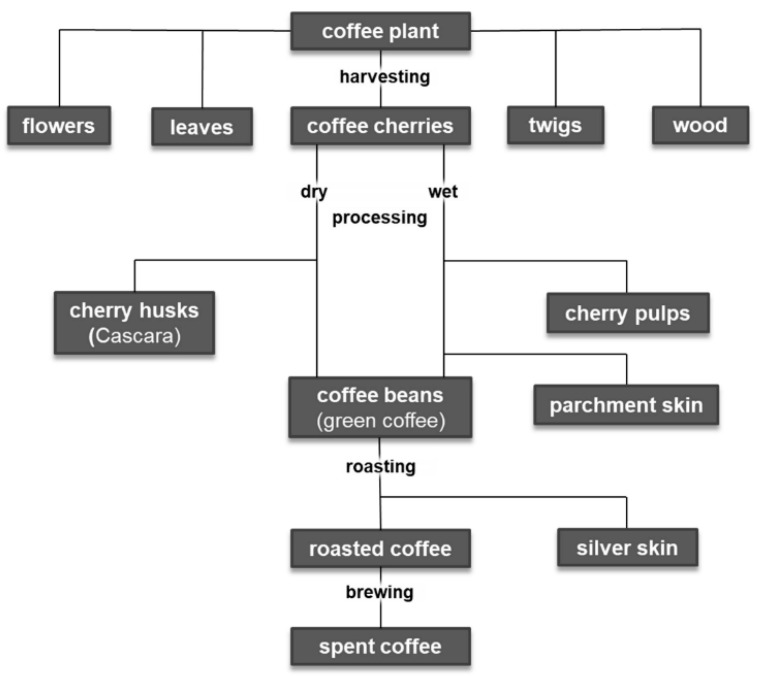
“The dry method is recognized for being the simplest and most ecologically responsible, with the major by-product being coffee husk (Figure 1), which includes the outer skin, pulp, mucilage, parchment, and portions of the silverskin (Hoseini et al. 2021; Klingel et al. 2020).”
MethodNolasco, A., Squillante, J., Velotto, S., D’Auria, G., Ferranti, P., Mamone, G., Errico, M. E., Avolio, R., Castaldo, R., Cirillo, T., et al. (2022) · Journal of Cleaner Production · doi:10.1016/j.jclepro.2022.133520 · Cited by 75
Blockchain for Ecologically Embedded Coffee Supply Chains
Trollman, H., Garcia‐Garcia, G., Jagtap, S., & Trollman, F. (2022) · Logistics · doi:10.3390/logistics6030043 · Cited by 75
Pongsiriyakul, K., Wongsurakul, P., Kiatkittipong, W., Premashthira, A., Kuldilok, K., Najdanovic‐Visak, V., Adhikari, S., Cognet, P., Kida, T., & Assabumrungrat, S. (2024) · Processes · doi:10.3390/pr12122851 · Cited by 73
Thermal Contaminants in Coffee Induced by Roasting: A Review
da Costa, D. S., Albuquerque, T. G., Costa, H. S., & Bragotto, A. P. A. (2023) · International Journal of Environmental Research and Public Health · doi:10.3390/ijerph20085586 · Cited by 71
Risk Assessment of Chlorogenic and Isochlorogenic Acids in Coffee By-Products
Behne, S., Franke, H., Schwarz, S., & Lachenmeier, D. W. (2023) · Molecules · doi:10.3390/molecules28145540 · Cited by 70
“It is known that tea-like infusions can be made from coffee by-products [4,10,15].”
BackgroundInfluentialSelf-citationPua, A., Choo, W. X. D., Goh, R. M. V., Liu, S., Cornuz, M., Ee, K.-H., Sun, J., Lassabliere, B., & Yu, B. (2020) · LWT · doi:10.1016/j.lwt.2020.110630 · Cited by 68
Swastika, D. K. S., Priyanti, A., Hasibuan, A. M., Sahara, D., Arya, N. N., Malik, A., Ilham, N., Sayekti, A. L., Triastono, J., Asnawi, R., et al. (2024) · Journal of Agriculture and Food Research · doi:10.1016/j.jafr.2024.101269 · Cited by 66
Microbial Characteristics and Functions in Coffee Fermentation: A Review
Shen, X., Wang, Q., Wang, H., Fang, G., Li, Y., Zhang, J., & Liu, K. (2024) · Fermentation · doi:10.3390/fermentation11010005 · Cited by 66
Coffee by-products as the source of antioxidants: a systematic review
Lestari, W., Hasballah, K., Listiawan, M. Y., & Sofia, S. (2022) · F1000Research · doi:10.12688/f1000research.107811.1 · Cited by 63
“In fact, foods and beverages derived from coffee by-product have been introduced and recorded in scientific report a long time ago.(12) In dermatology, the antioxidant properties from coffee by-products could provide skin protection against UV lightinduced damages.”
BackgroundInfluentialTamilselvan, K., Sundarrajan, S., Ramakrishna, S., Amirul, A.-A. A., & Vigneswari, S. (2024) · Food and Bioproducts Processing · doi:10.1016/j.fbp.2024.03.008 · Cited by 62
Spent coffee ground: transformation from environmental burden into valuable bioactive metabolites
Singh, T. A., Pal, N., Sharma, P., & Passari, A. K. (2023) · Reviews in Environmental Science and Bio/Technology · doi:10.1007/s11157-023-09669-w · Cited by 58
“It is for use as a novel food ingredient in sweet recipes, baked items, snacks, and ready-to-eat products (Klingel et al. 2020).”
BackgroundOrtiz-Barajas, D. L., Arévalo-Prada, J. A., Fenollar, O., Rueda-Ordóñez, Y. J., & Torres‐Giner, S. (2020) · Applied Sciences · doi:10.3390/app10186468 · Cited by 59
Vulnerability of coffee (Coffea spp.) genetic resources in the United States
Krishnan, S., Matsumoto, T. K., Nagai, C., Falconer, J., Shriner, S., Long, J., Medrano, J. F. F., & Vega, F. E. (2021) · Genetic Resources and Crop Evolution · doi:10.1007/s10722-021-01217-1 · Cited by 57
Data on chemical composition of coffee husks and lignin microparticles as their extracted product
Nguyen, D. V., Duong, C. T. T., Vu, C. N. M., Nguyen, H. M., Pham, T. T., Tran‐Thuy, T., & Long, N. Q. (2023) · Data in Brief · doi:10.1016/j.dib.2023.109781 · Cited by 56
Rebollo‐Hernanz, M., Aguilera, Y., Gil‐Ramírez, A., Benítez, V., Cañas, S., Braojos, C., & Martin-Cabrejas, M. A. (2023) · Applied Sciences · doi:10.3390/app13148326 · Cited by 53
Lachenmeier, D. W., Schwarz, S., Rieke-Zapp, J., Cantergiani, E., Rawel, H. M., Martin-Cabrejas, M. A., Martuscelli, M., Gottstein, V., & Angeloni, S. (2021) · Foods · doi:10.3390/foods11010003 · Cited by 53
Self-citationMartuscelli, M., Esposito, L., & Mastrocola, D. (2021) · Foods · doi:10.3390/foods10081833 · Cited by 51
Coffee cell walls—composition, influence on cup quality and opportunities for coffee improvements
Li, Z., Zhang, C., Zhang, Y., Zeng, W., & Cesarino, I. (2021) · Food Quality and Safety · doi:10.1093/fqsafe/fyab012 · Cited by 50
Utilization of coffee husk ash for soil stabilization: A systematic review
Munirwan, R. P., Taib, A. M., Taha, M. R., Rahman, N. A., & Munirwansyah, M. (2022) · Physics and Chemistry of the Earth Parts A/B/C · doi:10.1016/j.pce.2022.103252 · Cited by 49
Green coffee: economic relevance and a systematic review of the effects on human health
Bosso, H., Barbalho, S. M., Goulart, R. D. Á., & Otoboni, A. M. M. B. (2021) · Critical Reviews in Food Science and Nutrition · doi:10.1080/10408398.2021.1948817 · Cited by 47
“The green beans In a recent study on coffee by-products, Klingel et al (Klingel et al. 2020) cited toxicity no side effects of green coffee.”
BackgroundInfluentialLu, T., Sun, Y., Huang, Y., & Chen, X. (2023) · Journal of Food Science · doi:10.1111/1750-3841.16516 · Cited by 47
Blumenthal, P., Steger, M. C., Einfalt, D., Rieke-Zapp, J., Bellucci, A. Q., Sommerfeld, K., Schwarz, S., & Lachenmeier, D. W. (2021) · Molecules · doi:10.3390/molecules26092585 · Cited by 46
“In conclusion, apart from the lack of novel food approval [86], none of the coffee cherry spirits presented so far would have been compliant with the EU spirits regulation.”
BackgroundSelf-citationEckhardt, S., Franke, H., Schwarz, S., & Lachenmeier, D. W. (2022) · Molecules · doi:10.3390/molecules27238435 · Cited by 29
Self-citationCavanagh, Q., Brooks, M. S., & Rupasinghe, H. P. V. (2023) · Future Foods · doi:10.1016/j.fufo.2023.100255 · Cited by 45
Comparative Analysis of Selected Chemical Parameters of Coffea arabica, from Cascara to Silverskin
Bobková, A., Poláková, K., Demianová, A., Belej, Ľ., Bobko, M., Jurčaga, L., Gálik, B., Novotná, I., Iriondo‐DeHond, A., & del Castillo, M. D. (2022) · Foods · doi:10.3390/foods11081082 · Cited by 44
“(2020) [18] had similar results when focusing on the fiber in Silverskin and Cascara.”
BackgroundResultInfluentialEvaluation of the Use of a Coffee Industry By-Product in a Cereal-Based Extruded Food Product
Beltrán-Medina, E. A., Guatemala-Morales, G. M., Padilla‐Camberos, E., Corona‐González, R. I., Mondragón-Cortez, P. M., & Arriola-Guevara, E. (2020) · Foods · doi:10.3390/foods9081008 · Cited by 45
Nolasco, A., Squillante, J., Esposito, F., Velotto, S., Romano, R., Aponte, M., Giarra, A., Toscanesi, M., Montella, E., & Cirillo, T. (2022) · Foods · doi:10.3390/foods11182834 · Cited by 41
“The European Commission is responsible for authorizing novel foods and, as part of the procedure, may ask the European Food Safety Authority (EFSA) to conduct a scientific risk assessment to establish their safety [18].”
BackgroundZhang, Y., Fu, J., Zhou, Q., Li, F., Shen, Y., Ye, Z., Tang, D., Chi, N., Li, L., Ma, S., et al. (2022) · Journal of Agricultural and Food Chemistry · doi:10.1021/acs.jafc.1c06886 · Cited by 41
Coffee Cherry on the Top: Disserting Valorization of Coffee Pulp and Husk
Král, E., Rukov, J. L., & Mendes, A. C. (2023) · Food Engineering Reviews · doi:10.1007/s12393-023-09352-4 · Cited by 39
França, A. S., Basilio, E. P., Resende, L. M., Fante, C. A., & Oliveira, L. S. (2024) · Foods · doi:10.3390/foods13233935 · Cited by 39
Salvatore, I., Rüegg, R., Beretta, C., & Müller‐Fischer, N. (2024) · Future Foods · doi:10.1016/j.fufo.2024.100325 · Cited by 38
Sun, Y., Ji, D., Ma, H., & Chen, X. (2022) · Food Chemistry · doi:10.1016/j.foodchem.2022.132646 · Cited by 38
Thermogravimetric analysis of co-combustion of a bituminous coal and coffee industry by-products
Garcia, E., Ejim, I. F., & Liu, H. (2022) · Thermochimica Acta · doi:10.1016/j.tca.2022.179296 · Cited by 37
Reuse of Spent Coffee Grounds: Alternative Applications, Challenges, and Prospects—A Review
Sidło, W., & Latosińska, J. (2024) · Applied Sciences · doi:10.3390/app15010137 · Cited by 36
López-Parra, M. B., Gómez-Domínguez, I., Iriondo-DeHond, M., Merino, E. V., Sánchez-Martín, V., Mendiola, J. A., Iriondo‐DeHond, A., & del Castillo, M. D. (2024) · Foods · doi:10.3390/foods13071114 · Cited by 35
Wan, L., Wang, H., Mo, X., Wang, Y., Song, L., Liu, L.-Y., & Liang, W.-J. (2023) · LWT · doi:10.1016/j.lwt.2023.115675 · Cited by 35
Coffee Husk By-Product as Novel Ingredients for Cascara Kombucha Production
Le, B. X. N., Van, T. P., Phan, Q. K., Pham, G. B., Quang, H. P., & Do, A. D. (2023) · Journal of Microbiology and Biotechnology · doi:10.4014/jmb.2310.10004 · Cited by 34
“Cascara, the dried coffee cherry husk, is rich in antioxidants and represents an intriguing candidate ingredient [4].”
BackgroundRecovery of Biomolecules from Agroindustry by Solid-Liquid Enzyme-Assisted Extraction: a Review
Becerra, E. H., López, E. D. J. P., & Sossa, J. W. Z. (2021) · Food Analytical Methods · doi:10.1007/s12161-021-01974-w · Cited by 34
Buck, N., Wohlt, D., Winter, A. R., & Ortner, E. (2021) · Molecules · doi:10.3390/molecules26133925 · Cited by 34
Lorbeer, L., Schwarz, S., Franke, H., & Lachenmeier, D. W. (2022) · Molecules · doi:10.3390/molecules27206839 · Cited by 34
“In the process of producing coffee, several by-products accumulate [7].”
BackgroundSelf-citationOstovar, N., Mohammadi, N., & Khodadadeh, F. (2023) · Inorganic and Nano-Metal Chemistry · doi:10.1080/24701556.2023.2187419 · Cited by 34
“[18] SCG are the vital waste of coffee powder extracted by hot water and soluble coffee industry in restaurants, coffee shops, or at home.”
Littardi, P., Rinaldi, M., Grimaldi, M. G., Cavazza, A., & Chiavaro, E. (2020) · Foods · doi:10.3390/foods10010005 · Cited by 33
“Moreover, parchment was suggested as an antifungal additive with potential uses for food preservation [8].”
BackgroundHuang, Y., Sun, Y., Lu, T., & Chen, X. (2022) · Journal of Food Science · doi:10.1111/1750-3841.16431 · Cited by 32
Coffea arabica: An Emerging Active Ingredient in Dermato-Cosmetic Applications
Ruse, G., Jîjie, A.-R., Moacă, E.-A., Pătrașcu, D., Ardelean, F., Jojic, A.-A., Ardelean, S., & Antal, D. (2025) · Pharmaceuticals · doi:10.3390/ph18020171 · Cited by 32
Coffee waste: a source of valuable technologies for sustainable development
Mirón-Mérida, V. A., Barragán‐Huerta, B. E., & Gutiérrez-Macías, P. (2021) · Elsevier eBooks · doi:10.1016/b978-0-12-824044-1.00009-x · Cited by 32
Cadmium and lead adsorption and desorption by coffee waste-derived biochars
Carnier, R., Coscione, A. R., de Abreu, C. A., Melo, L. C. A., & da Silva, A. F. (2022) · Bragantia · doi:10.1590/1678-4499.20210142 · Cited by 32
“, in the food industry) (Klingel et al. 2020), their proper final disposal is still challenging, and thus, the use of coffee wastes for biochar production to immobilize heavy metals becomes even more meaningful.”
BackgroundQuality Properties of Bakery Products and Pasta Containing Spent Coffee Grounds (SCGs): A Review
Ahanchi, M., Sugianto, E. C., Chau, A., & Khoddami, A. (2024) · Foods · doi:10.3390/foods13223576 · Cited by 31
Useful Extracts from Coffee By-Products: A Brief Review
Pyrzyńska, K. (2024) · Separations · doi:10.3390/separations11120334 · Cited by 31
“The attractive compositions of coffee processing wastes, high availability, and low cost represent a good source of several bioactive compounds with nutritional value. carbohydrates, proteins, sugars, and caffeine [11,17,18,20,21].”
Steger, M. C., Rigling, M., Blumenthal, P., Segatz, V., Bellucci, A. Q., Beisel, J. M., Rieke-Zapp, J., Schwarz, S., Lachenmeier, D. W., & Zhang, Y. (2022) · Foods · doi:10.3390/foods11172553 · Cited by 31
“Further mentioned in the literature are the countries Ethiopia, West Sumatra, Jamaica, Java, and South Sudan [7,8].”
BackgroundSelf-citationMaxiselly, Y., Anusornwanit, P., Rugkong, A., Chiarawipa, R., & Chanjula, P. (2022) · International Journal of Plant Biology · doi:10.3390/ijpb13020011 · Cited by 30
“, chlorogenic acid, carotenoids, catechins, and anthocyanins), which have benefits for human health [6,7].”
BackgroundShen, X., Nie, F.-Q., Fang, H., Liu, K., Li, Z., Li, X., Chen, Y., Chen, R., Zheng, T., & Fan, J. (2022) · Food Science & Nutrition · doi:10.1002/fsn3.3126 · Cited by 30
“Some coffee by- products are already used as food in Europe and non- EU- member countries, or have been applied for authorization as novel food already (Klingel et al., 2020).”
BackgroundNaik, B. J., Kim, S., Seenaiah, R., Basha, P. A., & Song, E. Y. (2021) · Journal of Plant Biotechnology · doi:10.5010/jpb.2021.48.4.207 · Cited by 30
“Through the green process, the flower can use for the production of bioactive compounds, melanoidins, and bio-sugars (Nguyen et al. 2019) and Coffee blossom tea can prepare with dried flowers (Tizian et al. 2020).”
BackgroundMohamed, A. I., Erukainure, O. L., Salau, V. F., & Islam, M. S. (2024) · Diabetes & Metabolic Syndrome Clinical Research & Reviews · doi:10.1016/j.dsx.2024.103075 · Cited by 29
Cañas, S., Rebollo‐Hernanz, M., Cano‐Muñoz, P., Aguilera, Y., Benítez, V., Braojos, C., Gila-Díaz, A., Rodríguez‐Rodríguez, P., Cobeta, I. M., de Pablo, Á. L. L., et al. (2020) · International Electronic Conference on Foods (Foods) · doi:10.3390/foods_2020-07623 · Cited by 29
Spent Coffee Grounds as a Source of Chlorogenic Acid
Pyrzyńska, K. (2025) · Molecules · doi:10.3390/molecules30030613 · Cited by 29
“Klingel et al. reviewed novel coffee products in the food sector (with the use of coffee by-products) and their current legal classification in the European Union [60].”
Karmakar, R., Aggarwal, S., Kathuria, D., Singh, N., Tripathi, V. S., Sharma, P. K., Mitra, D., Kumar, S., & Bhattacharya, S. (2025) · Food Bioscience · doi:10.1016/j.fbio.2025.106833 · Cited by 27
Patil, S. A., Vedashree, M., & Murthy, P. S. (2022) · Planta · doi:10.1007/s00425-022-03846-x · Cited by 27
Robusta coffee cherry fermentation: Physicochemical and sensory evaluation of fermented cascara tea
Kristanti, D., Setiaboma, W., Ratnawati, L., & Sagita, D. (2022) · Journal of Food Processing and Preservation · doi:10.1111/jfpp.17054 · Cited by 27
Risk Assessment of Caffeine and Epigallocatechin Gallate in Coffee Leaf Tea
Tritsch, N., Steger, M. C., Segatz, V., Blumenthal, P., Rigling, M., Schwarz, S., Zhang, Y., Franke, H., & Lachenmeier, D. W. (2022) · Foods · doi:10.3390/foods11030263 · Cited by 27
“Finally, the value is recalculated from 100 mL to 1 L [3].”
BackgroundSelf-citationGil-Ramírez, A., Rebollo-Hernanz, M., Cañas, S., Monedero Cobeta, I., Rodríguez-Rodríguez, P., Gila-Díaz, A., Benítez, V., Arribas, S. M., Aguilera, Y., & Martín-Cabrejas, M. A. (2024) · Foods · doi:10.3390/foods13183006 · Cited by 19
“The coffee pulp has traditionally been regarded as a waste product, with around 1 ton generated for every 2 tons of green coffee beans produced [4].”
BackgroundNudda, A., Carta, S., Correddu, F., Caratzu, M. F., Cesarani, A., Hidalgo, J., Pulina, G., & Lunesu, M. F. (2025) · animal · doi:10.1016/j.animal.2025.101522 · Cited by 26
Enhancing biopolymer materials with coffee waste‐derived reinforcements
Bairwan, R. D., Khalil, H. P. S. A., Nuryawan, A., Ahmad, M. I., Kassim, M. H. M., & Azfaralariff, A. (2024) · Polymer Engineering and Science · doi:10.1002/pen.27046 · Cited by 25
Efficacy of green coffee as an antioxidant in beef meatballs compared with ascorbic acid
Mostafa, H. S., & Azab, E. F. E. (2022) · Food Chemistry X · doi:10.1016/j.fochx.2022.100336 · Cited by 25
Production of Coffee Cherry Spirits from Coffea arabica Varieties
Blumenthal, P., Steger, M. C., Bellucci, A. Q., Segatz, V., Rieke-Zapp, J., Sommerfeld, K., Schwarz, S., Einfalt, D., & Lachenmeier, D. W. (2022) · Foods · doi:10.3390/foods11121672 · Cited by 25
Self-citationCoffee By-Products: Economic Opportunities for Sustainability and Innovation in the Coffee Industry
Peluso, M. (2023) · doi:10.3390/icc2023-14834 · Cited by 25
“Some common coffee by-products include [1,4–6]: Coffee grounds: The most recognizable by-product, coffee grounds are the leftover coffee after brewing.”
Stefano, V. A. D., Buzzanca, C., Ruvutuso, F., Scuderi, D., Palazzolo, E., Gugliuzza, G., Tinebra, I., & Farina, V. (2023) · Food Bioscience · doi:10.1016/j.fbio.2023.103349 · Cited by 25
An Update on Sustainable Valorization of Coffee By-Products as Novel Foods within the European Union
Lachenmeier, D. W., de Rezende, T. R., & Schwarz, S. (2021) · International Electronic Conference on Foods (Foods) · doi:10.3390/foods2021-10969 · Cited by 25
“All parts of a coffee plant, including the cherry, the leaves, and the wood could be used for various applications, but are currently wasted [1].”
BackgroundInfluentialSelf-citationHu, S., Martin-Cabrejas, M. A., Hernández, D. M., Martín-Trueba, M., Cañas, S., Rebollo‐Hernanz, M., Aguilera, Y., Benítez, V., & Gil‐Ramírez, A. (2024) · Food Research International · doi:10.1016/j.foodres.2024.115433 · Cited by 24
Beyond Peat: Wood Fiber and Two Novel Organic Byproducts as Growing Media—A Systematic Review
Sdao, A. E., Gruda, N. S., & Lucia, B. D. (2025) · Plants · doi:10.3390/plants14131945 · Cited by 24
“About 400,000 tons of this waste is generated each year [75,76].”
Urugo, M. M., Getachew, P., Lambe, B. T., Yohannis, E., Afework, A., Meteke, N., Yasin, S., Milkias, M., Tola, Y. B., Teka, T. A., et al. (2025) · Applied Food Research · doi:10.1016/j.afres.2025.101181 · Cited by 24
Physical characteristics of Gayo arabica coffee with semi-washed processing
Sinaga, S. H., & Julianti, E. (2021) · IOP Conference Series Earth and Environmental Science · doi:10.1088/1755-1315/782/3/032093 · Cited by 24
Prospects of Coffee Leaf against SARS-CoV-2 Infection
Wu, C.-S., Chiang, H., Chen, Y., Chen, C., Chen, H., Su, W., Wang, W., Chou, Y., Chang, W., Wang, S., et al. (2022) · International Journal of Biological Sciences · doi:10.7150/ijbs.76058 · Cited by 23
“For a long time, in India, Jamaica, and Java, the coffee leaf has been used to improve health as ethnomedicine, animal feed, lactobacillus proliferators, and organic fungicides [26].”
BackgroundMendonça, M. Z. M., de Oliveira, F. M., Petroni, J. M., Lucca, B. G., da Silva, R. A. B., Cardoso, V. L., & de Melo, E. I. (2023) · Journal of Applied Electrochemistry · doi:10.1007/s10800-023-01853-8 · Cited by 23
“Aiming to minimize these environmental impacts and add value to coffee husk residues, the raw material has been reused in animal feed [26], and the production of organic compost [14], whereas the biochar (pyrolyzed residue) has been used as nutrient source for soil and water amendment [27–29], as biosorbent for ammoni…”
MethodTerroba-Delicado, E., Fiori, S., Gómez-Caturla, J., Muñoz, N. M., Sánchez‐Nacher, L., & Torres‐Giner, S. (2022) · Foods · doi:10.3390/foods11081162 · Cited by 23
“In this regard, large quantities of by-products and wastes are generated during the ‘fruit-to-cup’ transformation of coffee beans, not only including leaf, flower, and cherry, but also coffee husks, coffee silver skin (CSS), and spent coffee grounds (SCGs) [23,24].”
Background(EFSA), E. F. S. A. (2021) · EFSA Supporting Publications · doi:10.2903/sp.efsa.2021.en-6657 · Cited by 23
Benyelles, M., Merzouk, H., Merzouk, A. Z., Imessaoudene, A., Medjdoub, A., & Mebarki, A. (2023) · Waste and Biomass Valorization · doi:10.1007/s12649-023-02144-1 · Cited by 22
“However, these by-products are rich in bio-active molecules, are easily collected and stored, and can be used as a promising alternative for new products development with high added value [2, 3].”
Đorđević, Đ., Gablo, N., Zelenkova, L., Dordević, S., & Tremlová, B. (2024) · Foods · doi:10.3390/foods13121833 · Cited by 21
Valorisation of coffee husk as replacement of sand in alkali-activated bricks
Biswas, S., Hossiney, N., Mohan, M. K., & Kumar, S. L. (2024) · Case Studies in Construction Materials · doi:10.1016/j.cscm.2024.e03440 · Cited by 21
Núñez-Pérez, J., Arias, B. S. C., DelaVega-Quintero, J. C., Zárate-Baca, S., & Pais-Chanfrau, J.-M. (2022) · Fermentation · doi:10.3390/fermentation8040170 · Cited by 21
Metadata
- Authors
- Klingel, T., Kremer, J. I., Gottstein, V., Rajcic de Rezende, T., Schwarz, S., & Lachenmeier, D. W.
- Affiliations
- Chemisches und Veterinäruntersuchungsamt Karlsruhe (DE)
- Chemisches und Veterinäruntersuchungsamt (CVUA) Karlsruhe, Weissenburger Strasse 3, 76187 Karlsruhe, Germany
- Coffee Consulate (Germany) (DE)
- Corresponding author
- Lachenmeier, Dirk W.
- Venue
- Foods
- Publisher
- MDPI AG
- Published
- 2020-05-21
- Volume
- 9
- Issue
- 5
- Pages
- 665
- ISSN
- 2304-8158 (ISSN-L)
- PMC
- PMC7278860
- OpenAlex
- W3027187726
- Semantic Scholar
- f2837c499ca9db4586d0153c3a1ec3554528cfda
- Cited by
- 264
- References
- 96
- Citations by year
- 2026: 32 · 2025: 45 · 2024: 43 · 2023: 54 · 2022: 45 · 2021: 35 · 2020: 10
- FWCI
- 4.72
- Type
- journal article
- Language
- en
- Open access
- gold
- dx.doi.org
- Licence
- Locations
- Foods (publishedVersion, cc-by)
- PubMed Central (publishedVersion, cc-by)
- PubMed (publishedVersion)
- DOAJ (DOAJ: Directory of Open Access Journals) (submittedVersion, cc-by-sa)
- Topics
- Health Sciences › Medicine › Pharmacology (medical) › Coffee research and impacts
- Life Sciences › Agricultural and Biological Sciences › Food Science › Agricultural safety and regulations
- Life Sciences › Agricultural and Biological Sciences › Food Science › Food Nutrient Composition and Product Development
- Keywords
- coffee by-products, novel foods, coffee leaves, coffee husk, parchment, green coffee beans, spent coffee grounds, food safety, food toxicity, EU food law, traditional food
About these checks
Registry, retraction, Cites and statistics results are computed, not judged, with one exception: a printed reference that no index lists is read once by a model before it counts as a citation error. Claims are extracted by a model and kept only when their quote appears verbatim in the text; each cited source is then checked, with a model’s help, for whether it says what the claim relies on. Those verdicts can be wrong — read the claim’s quote and the cited source before relying on one.
Statistics and arithmetic are recomputed, not judged.
Confidence bands are shown only for fields calibrated on our annotated test set. None is calibrated yet, so no band is shown.
What counts as a claim ›How we measure confidence ›How we check this ›
Are you an author, or do you see a problem with this page? Request a review
Data sources
Bibliographic data: Semantic Scholar, OpenAlex, Crossref.
Contains information from the Semantic Scholar Academic Graph Datasets, made available under the ODC Attribution License (ODC-BY 1.0).
Semantic Scholar’s data is described in: Kinney, R., et al. (2023). The Semantic Scholar Open Data Platform. arXiv:2301.10140.
