

A Review of Coffee By-Products Including Leaf, Flower, Cherry, Husk, Silver Skin, and Spent Grounds as Novel Foods within the European Union
Open accessThe DOI matches its Crossref record; 93 of the 96 references it cites were found in a registry or an index.
Abstract
The coffee plant Coffea spp. offers much more than the well-known drink made from the roasted coffee bean. During its cultivation and production, a wide variety of by-products are accrued, most of which are currently unused, thermally recycled, or used as animal feed. The aim of this review is to provide an overview of novel coffee products in the food sector and their current legal classification in the European Union (EU). For this purpose, we have reviewed the literature on the composition and safety of coffee flowers, leaves, pulp, husk, parchment, green coffee, silver skin, and spent coffee grounds. Some of these products have a history of consumption in Europe (green coffee), while others have already been used as traditional food in non-EU-member countries (coffee leaves, notification currently pending), or an application for authorization as novel food has already been submitted (husks, flour from spent coffee grounds). For the other products, toxicity and/or safety data appear to be lacking, necessitating further studies to fulfill the requirements of novel food applications.
Overview
The claims and statistics of this paper haven’t been checked yet.
Free: it reads the open-access text and checks the first 5 claims that cite a source we can check. Create a free account to check every claim.
Integrity signals
Registry
Cites
Statistics
Figures
Verification
Claims the paper makes
The claims and statistics of this paper haven’t been checked yet.
Free: it reads the open-access text and checks the first 5 claims that cite a source we can check. Create a free account to check every claim.
Claims other papers make about this one
Each is checked against this paper’s own text: does it say what the citing paper says it does?
The cited source says what the claim attributes to it.
In the citing paper
“its by-products, including coffee flowers, leaves, pulp, husk, parchment, green coffee, silver skin, and SCGs, have become an attractive potential source of ingredients for new functional foods [251].”
From Effects of Coffee and Its Components on the Gastrointestinal Tract and the Brain–Gut Axis (2020) · cites this paper as [251]
Self-check
Percentages, sums and reported differences re-computed from the paper’s own numbers.
The self-check needs the paper’s full text.
Citations
Cites
Sustainable management of coffee industry by-products and value addition—a review
Murthy, P. S., & Madhava Naidu, M. (2012) · Resources, Conservation and Recycling · doi:10.1016/j.resconrec.2012.06.005 · Cited by 1,055 · cited 9×
“Using fermentation, the production of citric acid, gibberellic acid, and enzymes has been realized [11,38].”
BackgroundInfluentialChemical, Functional, and Structural Properties of Spent Coffee Grounds and Coffee Silverskin
Ballesteros, L. F., Teixeira, J. A., & Mussatto, S. I. (2014) · Food and Bioprocess Technology · doi:10.1007/s11947-014-1349-z · Cited by 870 · cited 3×
“Polysaccharides are the main component of spent coffee grounds, with hemicelluloses accounting for approximately 39 g/100 g dry weight and celluloses for 12 g/100 g dry weight [43,131,132].”
BackgroundFunctional Properties of Coffee and Coffee By-Products
Esquivel, P., & Jiménez, V. M. (2012) · Food Research International · doi:10.1016/j.foodres.2011.05.028 · Cited by 847 · cited 2×
“After dry or wet processing, the obtained product is green coffee, which is the standardized trading form [3].”
BackgroundSpent coffee grounds: A review on current research and future prospects
Campos-Vega, R., Loarca-Piña, G., Vergara-Castañeda, H. A., & Oomah, B. D. (2015) · Trends in Food Science & Technology · doi:10.1016/j.tifs.2015.04.012 · Cited by 679 · cited 1×
“Besides sugars, proteins, and minerals, spent coffee grounds also contain fat, which can be extracted as coffee oil and contains the diterpenes kahweol and cafestol [133,134].”
BackgroundScientific Opinion on the safety of caffeine
EFSA Panel on Dietetic Products, N. A. A. (. (2015) · EFSA Journal · doi:10.2903/j.efsa.2015.4102 · Cited by 613
Chlorogenic Acids from Green Coffee Extract Are Highly Bioavailable in Humans
Farah, A., Monteiro, M., Donangelo, C. M., & Lafay, S. (2008) · The Journal of Nutrition · doi:10.3945/jn.108.095554 · Cited by 578
An annotated taxonomic conspectus of the genus Coffea (Rubiaceae)
DAVIS, A. P., GOVAERTS, R., BRIDSON, D. M., & STOFFELEN, P. (2006) · Botanical Journal of the Linnean Society · doi:10.1111/j.1095-8339.2006.00584.x · Cited by 495 · cited 1×
“canephora being the most economically exploited species [13].”
BackgroundA study on chemical constituents and sugars extraction from spent coffee grounds
Mussatto, S. I., Carneiro, L. M., Silva, J. P. A., Roberto, I. C., & Teixeira, J. A. (2011) · Carbohydrate Polymers · doi:10.1016/j.carbpol.2010.07.063 · Cited by 444 · cited 1×
“For each kg of instant coffee, 2 kg of wet spent coffee grounds waste are produced, which corresponds to an annual amount of about 6,000,000 t worldwide [11,130].”
BackgroundThe safety of green tea and green tea extract consumption in adults – Results of a systematic review
Hu, J., Webster, D., Cao, J., & Shao, A. (2018) · Regulatory Toxicology and Pharmacology · doi:10.1016/j.yrtph.2018.03.019 · Cited by 405
An Outlook on Chlorogenic Acids—Occurrence, Chemistry, Technology, and Biological Activities
Upadhyay, R., & Mohan Rao, L. J. (2013) · Critical Reviews in Food Science and Nutrition · doi:10.1080/10408398.2011.576319 · Cited by 386
Chemical composition and value-adding applications of coffee industry by-products: A review
Janissen, B., & Huynh, T. (2018) · Resources, Conservation and Recycling · doi:10.1016/j.resconrec.2017.10.001 · Cited by 382 · cited 1×
“Polysaccharides are the main component of spent coffee grounds, with hemicelluloses accounting for approximately 39 g/100 g dry weight and celluloses for 12 g/100 g dry weight [43,131,132].”
BackgroundKy, C.-L., Louarn, J., Dussert, S., Guyot, B., Hamon, S., & Noirot, M. (2001) · Food Chemistry · doi:10.1016/s0308-8146(01)00204-7 · Cited by 371
Recovery of Phenolic Antioxidants and Functional Compounds from Coffee Industry By-Products
Murthy, P. S., & Naidu, M. M. (2012) · Food and Bioprocess Technology · doi:10.1007/s11947-010-0363-z · Cited by 319
Scientific opinion on the safety of green tea catechins
(ANS), E. P. O. F. A. A. N. S. A. T. F., Younes, M., Aggett, P., Aguilar, F., Crebelli, R., Dusemund, B., Filipič, M., Frutos, M. J., Galtier, P., Gott, D., et al. (2018) · EFSA Journal · doi:10.2903/j.efsa.2018.5239 · Cited by 317
Thom, E. (2007) · Journal of International Medical Research · doi:10.1177/147323000703500620 · Cited by 280 · cited 1×
“produced by extraction with hot water [119], alcohol [120], or mixtures thereof [107].”
BackgroundJoët, T., Laffargue, A., Descroix, F., Doulbeau, S., Bertrand, B., kochko, A. D., & Dussert, S. (2010) · Food Chemistry · doi:10.1016/j.foodchem.2009.05.048 · Cited by 278 · cited 1×
“In a further, optional polishing step, this silver skin can also be removed [105,106].”
BackgroundCharacterization of a New Potential Functional Ingredient: Coffee Silverskin
Borrelli, R. C., Esposito, F., Napolitano, A., Ritieni, A., & Fogliano, V. (2004) · Journal of Agricultural and Food Chemistry · doi:10.1021/jf034974x · Cited by 259
Bioactives of coffee cherry pulp and its utilisation for production of Cascara beverage
Heeger, A., Kosińska-Cagnazzo, A., Cantergiani, E., & Andlauer, W. (2017) · Food Chemistry · doi:10.1016/j.foodchem.2016.11.067 · Cited by 259 · cited 1×
“The beverage cascara contains 226 mg/L of caffeine and 283 mg/L of gallic acid equivalents, which represents the total polyphenol content [25].”
BackgroundAndrade, K. S., Gonçalvez, R. T., Maraschin, M., Ribeiro-do-Valle, R. M., Martínez, J., & Ferreira, S. R. S. (2012) · Talanta · doi:10.1016/j.talanta.2011.11.031 · Cited by 249 · cited 1×
“The caffeine content depends on coffee variety and extraction process [135,136].”
Background(EFSA), E. F. S. A. (2006) · EFSA Journal · doi:10.2903/j.efsa.2006.365 · Cited by 248
Watanabe, T., Arai, Y., Mitsui, Y., Kusaura, T., Okawa, W., Kajihara, Y., & Saito, I. (2006) · Clinical and Experimental Hypertension · doi:10.1080/10641960600798655 · Cited by 242 · cited 1×
“The subjects received an extract containing 140 mg of chlorogenic acid per day for 12 weeks [121].”
MethodUse of spent coffee grounds as food ingredient in bakery products
Martinez-Saez, N., García, A. T., Pérez, I. D., Rebollo-Hernanz, M., Mesías, M., Morales, F. J., Martín-Cabrejas, M. A., & del Castillo, M. D. (2017) · Food Chemistry · doi:10.1016/j.foodchem.2016.07.173 · Cited by 240 · cited 1×
“4 mg/kg of hydroxymethylfurfural (dry weight), respectively [52].”
Onakpoya, I., Terry, R., & Ernst, E. (2011) · Gastroenterology Research and Practice · doi:10.1155/2011/382852 · Cited by 238
Revalorization of coffee by-products. Prebiotic, antimicrobial and antioxidant properties
Jiménez-Zamora, A., Pastoriza, S., & Rufián-Henares, J. A. (2015) · LWT - Food Science and Technology · doi:10.1016/j.lwt.2014.11.031 · Cited by 230
Chemical and Physical Aspects of Green Coffee and Coffee Products
Clifford, M. N. (1985) · Coffee · doi:10.1007/978-1-4615-6657-1_13 · Cited by 215
Validation of Coffee By-Products as Novel Food Ingredients
Iriondo-DeHond, A., Aparicio García, N., Fernandez-Gomez, B., Guisantes-Batan, E., Velázquez Escobar, F., Blanch, G. P., San Andres, M. I., Sanchez-Fortun, S., & del Castillo, M. D. (2019) · Innovative Food Science & Emerging Technologies · doi:10.1016/j.ifset.2018.06.010 · Cited by 214 · cited 9×
“3 μg/kg) in the insoluble fraction of husks [32].”
BackgroundInfluentialBioactivities of low-grade green coffee and spent coffee in different in vitro model systems
Ramalakshmi, K., Rao, L. J. M., Takano-Ishikawa, Y., & Goto, M. (2009) · Food Chemistry · doi:10.1016/j.foodchem.2008.11.063 · Cited by 193 · cited 1×
“The caffeine content depends on coffee variety and extraction process [135,136].”
BackgroundFeasibility of ethanol production from coffee husks
Gouvea, B. M., Torres, C., Franca, A. S., Oliveira, L. S., & Oliveira, E. S. (2009) · Biotechnology Letters · doi:10.1007/s10529-009-0023-4 · Cited by 190 · cited 1×
“claimed that cherry husks are a potential residue-based ethanol production source [102].”
BackgroundFibers of coffee husk and hulls for the production of particleboard
Bekalo, S. A., & Reinhardt, H.-W. (2010) · Materials and Structures · doi:10.1617/s11527-009-9565-0 · Cited by 189
Phytochemical overview and medicinal importance of Coffea species from the past until now
Patay, É. B., Bencsik, T., & Papp, N. (2016) · Asian Pacific Journal of Tropical Medicine · doi:10.1016/j.apjtm.2016.11.008 · Cited by 187
Chen, X.-M., Ma, Z., & Kitts, D. D. (2018) · Food Chemistry · doi:10.1016/j.foodchem.2017.12.073 · Cited by 183 · cited 1×
“Especially in West Sumatra, Ethiopia, Jamaica, India, Java, and South Sudan, the infusion is consumed as a traditional food [18,62,63].”
BackgroundSUZUKI, A., KAGAWA, D., OCHIAI, R., TOKIMITSU, I., & SAITO, I. (2002) · Hypertension Research · doi:10.1291/hypres.25.99 · Cited by 174 · cited 1×
“produced by extraction with hot water [119], alcohol [120], or mixtures thereof [107].”
BackgroundCoffee parchment as a new dietary fiber ingredient: Functional and physiological characterization
Benitez, V., Rebollo-Hernanz, M., Hernanz, S., Chantres, S., Aguilera, Y., & Martin-Cabrejas, M. A. (2019) · Food Research International · doi:10.1016/j.foodres.2019.04.002 · Cited by 172 · cited 1×
“Recent literature shows the potential of this by-product as a promising low-calorie functional ingredient for dietary fiber enrichment in foods to regulate blood glucose and reduce the concentration of serum lipids [97].”
BackgroundStudies on extraction and antioxidant potential of green coffee
Naidu, M. M., Sulochanamma, G., Sampathu, S. R., & Srinivas, P. (2007) · Food Chemistry · doi:10.1016/j.foodchem.2007.08.056 · Cited by 169
Chemical composition and health properties of coffee and coffee by-products
(2020) · Advances in Food and Nutrition Research · doi:10.1016/bs.afnr.2019.10.002 · Cited by 166
Review on utilization and composition of coffee silverskin
Narita, Y., & Inouye, K. (2014) · Food Research International · doi:10.1016/j.foodres.2014.01.023 · Cited by 164 · cited 1×
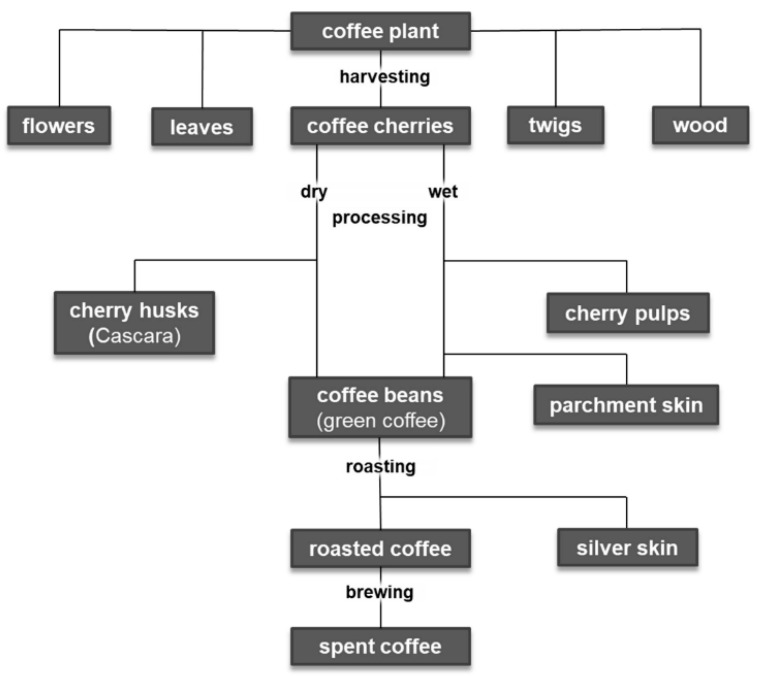
“During roasting of the coffee beans, which usually no longer takes place in the countries of origin, the remaining silver skin still adhering to the beans accrues as waste [15].”
BackgroundCosta, A. S. G., Alves, R. C., Vinha, A. F., Costa, E., Costa, C. S. G., Nunes, M. A., Almeida, A. A., Santos-Silva, A., & Oliveira, M. B. P. P. (2018) · Food Chemistry · doi:10.1016/j.foodchem.2017.03.106 · Cited by 161
An Impression of Coffee Carbohydrates
Arya, M., & Rao, L. J. M. (2007) · Critical Reviews in Food Science and Nutrition · doi:10.1080/10408390600550315 · Cited by 158
Bonilla-Hermosa, V. A., Duarte, W. F., & Schwan, R. F. (2014) · Bioresource Technology · doi:10.1016/j.biortech.2014.05.031 · Cited by 153 · cited 1×
“Cherry pulp is a by-product of all wet processing methods [11,94].”
BackgroundA review on coffee leaves: Phytochemicals, bioactivities and applications
Chen, X. (2018) · Critical Reviews in Food Science and Nutrition · doi:10.1080/10408398.2018.1546667 · Cited by 152 · cited 4×
“The composition of coffee leaves was recently reviewed by Chen [61].”
BackgroundInfluentialA novel antioxidant beverage for body weight control based on coffee silverskin
Martínez-Sáez, N., Ullate, M., Martin-Cabrejas, M. A., Martorell, P., Genovés, S., Ramón, D., & del Castillo, M. D. (2013) · Food Chemistry · doi:10.1016/j.foodchem.2013.10.100 · Cited by 146 · cited 3×
“Dietary fiber source [38–43]; bakery products (breads, biscuits) [44–47]; beverages (tea) [48,49]; smoke flavor additive”
BackgroundBiosynthesis of Caffeine in Leaves of Coffee
Ashihara, H., Monteiro, A., Gillies, F. M., & Crozier, A. (1996) · PLANT PHYSIOLOGY · doi:10.1104/pp.111.3.747 · Cited by 145
Mangiferin: A review of sources and interventions for biological activities
Jyotshna, Khare, P., & Shanker, K. (2016) · BioFactors · doi:10.1002/biof.1308 · Cited by 141
HPLC analysis of tocopherols and triglycerides in coffee and their use as authentication parameters
González, A. G., Pablos, F., Martín, M. J., León‐Camacho, M., & Valdenebro, M. S. (2001) · Food Chemistry · doi:10.1016/s0308-8146(00)00282-x · Cited by 140 · cited 1×
“In a further, optional polishing step, this silver skin can also be removed [105,106].”
BackgroundPourfarzad, A., Mahdavian-Mehr, H., & Sedaghat, N. (2013) · LWT - Food Science and Technology · doi:10.1016/j.lwt.2012.08.001 · Cited by 136 · cited 2×
“Furthermore, coffee silver skin may improve the quality, shelf life, and sensory quantities of barbari bread [44].”
BackgroundCampa, C., Mondolot, L., Rakotondravao, A., Bidel, L., Gargadennec, A., Couturon, E., Fisca, P. L., Rakotomalala, J.-J., Jay‐Allemand, C., & Davis, A. P. (2012) · Annals of Botany · doi:10.1093/aob/mcs119 · Cited by 136
Coffee Silverskin: Characterization, Possible Uses, and Safety Aspects
Toschi, T. G., Cardenia, V., Bonaga, G., Mandrioli, M., & Rodriguez-Estrada, M. T. (2014) · Journal of Agricultural and Food Chemistry · doi:10.1021/jf503200z · Cited by 135
Qualitative relationship between caffeine and chlorogenic acid contents among wild species
Campa, C., Doulbeau, S., Dussert, S., Hamon, S., & Noirot, M. (2004) · Food Chemistry · doi:10.1016/j.foodchem.2004.10.015 · Cited by 123
Lang, R., Yagar, E. F., Eggers, R., & Hofmann, T. (2008) · Journal of Agricultural and Food Chemistry · doi:10.1021/jf802838s · Cited by 117
Napolitano, A., Fogliano, V., Tafuri, A., & Ritieni, A. (2007) · Journal of Agricultural and Food Chemistry · doi:10.1021/jf071959+ · Cited by 106
Biochemical diversity in the genus Coffea L.: chlorogenic acids, caffeine and mozambioside contents
Anthony, F., Clifford, M. N., & Noirot, M. (1993) · Genetic Resources and Crop Evolution · doi:10.1007/bf00052636 · Cited by 104
Rebollo-Hernanz, M., Zhang, Q., Aguilera, Y., Martín-Cabrejas, M. A., & Gonzalez de Mejia, E. (2019) · Food and Chemical Toxicology · doi:10.1016/j.fct.2019.110672 · Cited by 102 · cited 1×
“While studying the in vitro biological activity of aqueous extracts of cherry husks, associations with biomarkers of inflammation, oxidative stress, adipogenesis, and insulin resistance were detected [100,101].”
BackgroundCoffee: Production, Quality and Chemistry
(2019) · Royal Society of Chemistry eBooks · doi:10.1039/9781782622437 · Cited by 101
Production and Application of Xylanase from Penicillium sp. Utilizing Coffee By-products
Murthy, P. S., & Naidu, M. M. (2012) · Food and Bioprocess Technology · doi:10.1007/s11947-010-0331-7 · Cited by 97 · cited 1×
“Using fermentation, the production of citric acid, gibberellic acid, and enzymes has been realized [11,38].”
MethodUse of Coffee Silverskin and Stevia to Improve the Formulation of Biscuits
Garcia-Serna, E., Martinez-Saez, N., Mesias, M., Morales, F., & Castillo, M. (2014) · Polish Journal of Food and Nutrition Sciences · doi:10.2478/pjfns-2013-0024 · Cited by 97 · cited 2×
“In addition to the abovementioned amounts of caffeine, coffee silver skin also contains acrylamide, as this contaminant is produced during roasting [32,45].”
BackgroundSampaio, A., Dragone, G., Vilanova, M., Oliveira, J. M., Teixeira, J. A., & Mussatto, S. I. (2013) · LWT · doi:10.1016/j.lwt.2013.05.042 · Cited by 93 · cited 3×
“In the food industry, coffee grounds could be used as a source of dietary fiber [54,55] or in bakery products [51–53], as well as to produce alcoholic distillates [50].”
BackgroundMirón-Mérida, V. A., Yáñez-Fernández, J., Montañez-Barragán, B., & Barragán Huerta, B. E. (2019) · LWT · doi:10.1016/j.lwt.2018.11.013 · Cited by 90 · cited 3×
“Parchment was suggested as an antifungal additive with potential uses for food preservation [57].”
BackgroundInfluentialCoffee, mycotoxins and climate change
Paterson, R. R. M., Lima, N., & Taniwaki, M. H. (2014) · Food Research International · doi:10.1016/j.foodres.2014.03.037 · Cited by 88 · cited 1×
“described that ochratoxin A was formed in coffee cherry pericarp while sun-drying and found its highest contaminations in husks [103].”
BackgroundLachenmeier, D. W., Schwarz, S., Teipel, J., Hegmanns, M., Kuballa, T., Walch, S. G., & Breitling-Utzmann, C. M. (2018) · Toxics · doi:10.3390/toxics7010001 · Cited by 88 · cited 1×
“The two food processing contaminants acrylamide and hydroxymethylfurfural result from the Maillard reaction during coffee roasting [137].”
BackgroundSelf-citationVázquez-Sánchez, K., Martinez-Saez, N., Rebollo-Hernanz, M., del Castillo, M. D., Gaytán-Martínez, M., & Campos-Vega, R. (2018) · Food Chemistry · doi:10.1016/j.foodchem.2018.04.064 · Cited by 85
Alkylpyridiniums. 1. Formation in Model Systems via Thermal Degradation of Trigonelline
Stadler, R. H., Varga, N., Hau, J., Vera, F. A., & Welti, D. H. (2002) · Journal of Agricultural and Food Chemistry · doi:10.1021/jf011234k · Cited by 83
Orientalism in Early Modern France
McCabe, I. B. (2008) · doi:10.5040/9781350048744 · Cited by 83
Phenols and caffeine in wet-processed coffee beans and coffee pulp
Clifford, M. N., & Ramirez‐Martinez, J. R. (1991) · Food Chemistry · doi:10.1016/0308-8146(91)90017-i · Cited by 82 · cited 1×
“3%) are also present in considerable amounts [96].”
BackgroundRebollo‐Hernanz, M., Zhang, Q., Aguilera, Y., Martin-Cabrejas, M. A., & de Mejía, E. G. (2019) · Antioxidants · doi:10.3390/antiox8080279 · Cited by 82 · cited 1×
“While studying the in vitro biological activity of aqueous extracts of cherry husks, associations with biomarkers of inflammation, oxidative stress, adipogenesis, and insulin resistance were detected [100,101].”
BackgroundChlorogenic acids and caffeine as possible taxonomic criteria in Coffea and Psilanthus
Clifford, M. N., Williams, T., & Bridson, D. M. (1989) · Phytochemistry · doi:10.1016/0031-9422(89)80124-4 · Cited by 81 · cited 1×
“Coffee belongs to the family Rubiaceae and the tribe Coffeeae [12].”
BackgroundGreen coffee infusion as a source of caffeine and chlorogenic acid
Macheiner, L., Schmidt, A., Schreiner, M., & Mayer, H. K. (2019) · Journal of Food Composition and Analysis · doi:10.1016/j.jfca.2019.103307 · Cited by 78 · cited 3×
“Dietary supplement [33–35]; beverages (tea): “white coffee” [36,37]”
BackgroundVáclavík, L., Václavíková, M., Begley, T. H., Krynitsky, A. J., & Rader, J. I. (2013) · Journal of Agricultural and Food Chemistry · doi:10.1021/jf401139u · Cited by 77 · cited 1×
“0 μg/kg of mycophenolic acid in green coffee extracts [124].”
BackgroundA functional role for the colleters of coffee flowers
Mayer, J. L. S., Carmello‐Guerreiro, S. M., & Mazzafera, P. (2013) · AoB Plants · doi:10.1093/aobpla/plt029 · Cited by 75 · cited 1×
“Because of colleters, which produce a glue-like secretion, the flowers protect the plant from dehydration and insects [58].”
BackgroundAteş, G., & Elmacı, Y. (2018) · LWT · doi:10.1016/j.lwt.2018.01.003 · Cited by 67
Alkylpyridiniums. 2. Isolation and Quantification in Roasted and Ground Coffees
Stadler, R. H., Varga, N., Milo, C., Schilter, B., Vera, F. A., & Welti, D. H. (2002) · Journal of Agricultural and Food Chemistry · doi:10.1021/jf011235c · Cited by 65
Ateş, G., & Elmacı, Y. (2018) · Journal of Food Measurement & Characterization · doi:10.1007/s11694-018-9988-9 · Cited by 62
Dessalegn, Y., Labuschagne, M. T., Osthoff, G., & Herselman, L. (2008) · Journal of the Science of Food and Agriculture · doi:10.1002/jsfa.3271 · Cited by 56
Coffee Silverskin Extract: Nutritional Value, Safety and Effect on Key Biological Functions
Iriondo-DeHond, A., Rios, M. B., Herrera, T., Rodriguez-Bertos, A., Nuñez, F., San Andres, M. I., Sanchez-Fortun, S., & del Castillo, M. D. (2019) · Nutrients · doi:10.3390/nu11112693 · Cited by 56 · cited 1×
“In a subacute toxicity study, in which rats received 1 g/kg bw of aqueous coffee silver skin extract orally, no negative effects on hormone secretion and antioxidant or anti-inflammatory biomarkers were observed [129].”
BackgroundA Toxicological Evaluation of Mango Leaf Extract (Mangifera indica) Containing 60% Mangiferin
Reddeman, R. A., Glávits, R., Endres, J. R., Clewell, A. E., Hirka, G., Vértesi, A., Béres, E., & Szakonyiné, I. P. (2019) · Journal of Toxicology · doi:10.1155/2019/4763015 · Cited by 54 · cited 1×
“However, this could not be confirmed in an in vivo mammalian micronucleus test with a dose up to 2000 mg/kg bw/day [91].”
BackgroundRodrigues, F., Gaspar, C., Palmeira-de-Oliveira, A., Sarmento, B., Helena Amaral, M., & P. P. Oliveira, M. B. (2016) · Drug Development and Industrial Pharmacy · doi:10.3109/03639045.2015.1035279 · Cited by 52 · cited 1×
“assays in HaCaT and HFF-1 cells, no in vitro cytotoxic effects could be detected [128].”
BackgroundKahwa daun: traditional knowledge of a coffee leaf herbal tea from West Sumatera, Indonesia
Novita, R., Kasim, A., Anggraini, T., & Putra, D. P. (2018) · DOAJ (DOAJ: Directory of Open Access Journals) · doi:10.1016/j.jef.2018.11.005 · Cited by 50 · cited 4×
“Regarding species, C. arabica leaves have probably been used in Ethiopia, while C. canephora leaves have been used in India and West Sumatra.”
InfluentialMangiferin: A promising therapeutic agent for rheumatoid arthritis treatment
Łuczkiewicz, P., Kokotkiewicz, A., Dampc, A., & Łuczkiewicz, M. (2014) · Medical Hypotheses · doi:10.1016/j.mehy.2014.08.021 · Cited by 45
Iriondo‐DeHond, A., Haza, A. I., Ávalos, A., del Castillo, M. D., & Morales, P. (2017) · Food Research International · doi:10.1016/j.foodres.2017.08.012 · Cited by 44 · cited 3×
“The comet assay for in vitro genotoxicity testing in HepG2 cells showed that at concentrations up to 1000 μg/mL of coffee silver skin extract, no relevant strand breaks or oxidized bases were induced [126].”
BackgroundMethodNguyen, T. M. T., Cho, E. J., Song, Y., Oh, C. H., Funada, R., & Bae, H. (2019) · Food Chemistry · doi:10.1016/j.foodchem.2019.125120 · Cited by 43 · cited 3×
“Husks, cascara, dried coffee cherries Beverages (tea) [25–27]; spirits [28,29]; qishr (mixture with spices) [30,31]; dietary fiber source [11,32]; extraction of caffeine [24] Beverages (t a): “coffee blossom tea” [16]”
BackgroundPrado, Y., Merino, N., Acosta, J., Herrera, J. A., Luque, Y., Hernández, I., Prado, E., Garrido, G., Delgado, R., & Rodeiro, I. (2015) · Journal of Pharmacy & Pharmacognosy Research · doi:10.56499/jppres14.050_3.1.13 · Cited by 38
Coffee By-Products: Nowadays and Perspectives
Torres‐Valenzuela, L. S., Serna‐Jiménez, J. A., & Martínez, K. (2020) · IntechOpen eBooks · doi:10.5772/intechopen.89508 · Cited by 35 · cited 6×
“Husks, cascara, dried coffee cherries Beverages (tea) [25–27]; spirits [28,29]; qishr (mixture with spices) [30,31]; dietary fiber source [11,32]; extraction of caffeine [24] Beverages (t a): “coffee leaf tea” [17–21]”
BackgroundInfluentialCaffeine content variation in single green Arabica coffee seeds
Mazzafera, P., & Silvarolla, M. B. (2010) · Seed Science Research · doi:10.1017/s0960258510000140 · Cited by 30
de Oliveira, N. A., Sandini, T. M., Cornelio-Santiago, H. P., Martinelli, E. C. L., Raspantini, L. E. R., Raspantini, P. C. F., Momo, C., de Oliveira, A. L., & Fukumasu, H. (2019) · Regulatory Toxicology and Pharmacology · doi:10.1016/j.yrtph.2019.104517 · Cited by 30 · cited 1×
“The acute administration of 2000 mg/kg bw and the subacute administration of up to 75 mg/kg bw exhibited no toxicological effects, but the relative weight of heart and thymus increased without histopathological changes [122].”
BackgroundLachenmeier, D. W., Teipel, J., Scharinger, A., Kuballa, T., Walch, S. G., Grosch, F., Bunzel, M., Okaru, A. O., & Schwarz, S. (2020) · Journal of AOAC International · doi:10.1093/jaocint/qsz020 · Cited by 28 · cited 1×
“Coffee is one of the most popular beverages and largest traded commodities worldwide [1].”
BackgroundSelf-citation(EFSA), E. F. S. A. (2020) · EFSA Supporting Publications · doi:10.2903/sp.efsa.2020.en-1783 · Cited by 28
Achieving sustainable cultivation of coffee
(2018) · Burleigh Dodds series in agricultural science · doi:10.19103/as.2017.0022 · Cited by 27
Bioaccesibility, Metabolism, and Excretion of Lipids Composing Spent Coffee Grounds
Iriondo-DeHond, A., Cornejo, F. S., Fernandez-Gomez, B., Vera, G., Guisantes-Batan, E., Alonso, S. G., Andres, M. I. S., Sanchez-Fortun, S., Lopez-Gomez, L., Uranga, J. A., et al. (2019) · Nutrients · doi:10.3390/nu11061411 · Cited by 26
Martínez-Sáez, N., & del Castillo, M. D. (2018) · Elsevier eBooks · doi:10.1016/b978-0-08-100596-5.22136-7 · Cited by 20 · cited 2×
“Dietary fiber source [38–43]; bakery products (breads, biscuits) [44–47]; beverages (tea) [48,49]; smoke flavor additive”
BackgroundMedicinal Plants of the World, Volume 3
(2005) · Humana Press eBooks · doi:10.1007/978-1-59259-887-8 · Cited by 19
SENSORY ATTRIBUTES PROFILING OF DAMPIT ROBUSTA COFFEE LEAF TEA (Coffea canephora)
(2019) · Carpathian Journal of Food Science and Technology · doi:10.34302/crpjfst/2019.11.2.13 · Cited by 16
Marcason, W. (2013) · Journal of the Academy of Nutrition and Dietetics · doi:10.1016/j.jand.2012.12.004 · Cited by 15 · cited 1×
“Due to the high content of chlorogenic acids, which would be partially lost during roasting, the extracts are sold with reference to their potential, diverse, health-promoting effects, some of which have yet to be proven [35].”
BackgroundKremer, J. I., Pickard, S., Stadlmair, L. F., Glaß‐Theis, A., Buckel, L., Bakuradze, T., Eisenbrand, G., & Richling, E. (2019) · Molecular Nutrition & Food Research · doi:10.1002/mnfr.201801341 · Cited by 15 · cited 1×
“In humans, alkyl pyrazines are metabolized to their corresponding carboxylic acids and almost completely excreted renally [139].”
BackgroundSelf-citationPickard, S., Wilms, H., & Richling, E. (2014) · LWT · doi:10.1016/j.lwt.2014.02.049 · Cited by 14 · cited 1×
“Of alkyl pyrazines, which are formed during roasting by the Maillard reaction, about 70%–80% pass into the domestically prepared coffee beverage [138].”
BackgroundThe Technology of Converting Green Coffee into the Beverage
Clarke, R. J. (1985) · Springer eBooks · doi:10.1007/978-1-4615-6657-1_14 · Cited by 13
Coffee as a Global Beverage before 1700
Ota, K. (2018) · Journal of international economic studies · doi:10.15002/00014518 · Cited by 13
Research works printed but not linked: 8
- Belitz H.-D. Grosch W. Schieberle P. Lehrbuch der Lebensmittelchemie 6th ed. Springer Berlin/Heidelberg, Germany 2008
- Ratanamarno S. Surbkar S. Caffeine and catechins in fresh coffee leaf (Coffea arabica) and coffee leaf tea Maejo Int. J. Sci. Technol. 2017 11 211 218
- Maxwell G.W. Poor man’s coffee? Yemeni qishr, qahwa, and qat Tea Coffee Trade J. 1996 168 64 68
- Campos-Vega R. Vázquez-Sánchez K. Martinez-Saez N. Castillo M. Antioxidant coffee dietary fiber for gastrointestinal health and diabetes Proceedings of the 20th International Conference of FFC and 8th International Symposium of Academic Society of Functional Foods and Bioactive Compounds Boston, MA, USA 22–23 September 2016
- Wintgens J.N. The coffee plant Coffee: Growing, Processing, Sustainable Production: A Guidebook for Growers, Processors, Traders and Researchers Wintgens J.N. Wiley-VCH Weinheim, Germany 2008 1 24
- Franca A.S. Oliveira L.S. Coffee processing solid wastes: Current uses and future perspectives (chapter 8) Agricultural Wastes Ashworth G.S. Azevedo P. Nova Science New York, NY, USA 2009
- Oestreich-Janzen S. Chemistry of coffee Comprehensive Natural Products II: Chemistry and Biology Mander L. Elsevier Amsterdam, The Netherlands 2010 1085 1117
- Neumann C. Lectiones Publicae von vier Subiectis Diaeteticis: Vom Thée, Caffée, Bier, und Wein Palala Press Berlin, Germany 1735
Cited by
Value-Added Products from Coffee Waste: A Review
Lee, Y.-G., Cho, E., Maskey, S., Nguyen, D., & Bae, H. (2023) · Molecules · doi:10.3390/molecules28083562 · Cited by 214
“Therefore, value-added products derived from coffee flowers could be profitably produced, provided that the flowers can be harvested without affecting the production yield of coffee cherries [15].”
BackgroundCoffee by-products in topical formulations: A review
Santos, É. M. D., Macedo, L. M. D., Tundisi, L. L., Ataide, J. A., Camargo, G. A., Alves, R. C., Oliveira, M. B. P. P., & Mazzola, P. G. (2021) · Trends in Food Science & Technology · doi:10.1016/j.tifs.2021.02.064 · Cited by 156
The wastes of coffee bean processing for utilization in food: a review
Arya, S. S., Venkatram, R., More, P. R., & Vijayan, P. (2021) · Journal of Food Science and Technology · doi:10.1007/s13197-021-05032-5 · Cited by 196
Barrea, L., Pugliese, G., Frías-Toral, E., Ghoch, M. E., Castellucci, B., Chapela, S. P., Carignano, M. D. L. A., Laudisio, D., Savastano, S., Colao, A., et al. (2021) · Critical Reviews in Food Science and Nutrition · doi:10.1080/10408398.2021.1963207 · Cited by 190
“…much more to offer than the traditional beverage, and it is possible to develop functional foods from coffee byproducts: coffee flowers, parchment, green coffee, leaves, pulp, husk, silver skin, and spent coffee grounds (IriondoDeHond, Iriondo-DeHond, and Del Castillo 2020; Klingel et al. 2020).”
BackgroundSustainability issues along the coffee chain: From the field to the cup
Peixoto, J. A. B., Silva, J. F., Oliveira, M. B. P. P., & Alves, R. C. (2022) · Comprehensive Reviews in Food Science and Food Safety · doi:10.1111/1541-4337.13069 · Cited by 173
Metadata
- Authors
- Klingel, T., Kremer, J. I., Gottstein, V., Rajcic de Rezende, T., Schwarz, S., & Lachenmeier, D. W.
- Affiliations
- Chemisches und Veterinäruntersuchungsamt Karlsruhe (DE)
- Chemisches und Veterinäruntersuchungsamt (CVUA) Karlsruhe, Weissenburger Strasse 3, 76187 Karlsruhe, Germany
- Coffee Consulate (Germany) (DE)
- Corresponding author
- Lachenmeier, Dirk W.
- Venue
- Foods
- Publisher
- MDPI AG
- Published
- 2020-05-21
- Volume
- 9
- Issue
- 5
- Pages
- 665
- ISSN
- 2304-8158 (ISSN-L)
- PMC
- PMC7278860
- OpenAlex
- W3027187726
- Cited by
- 264
- References
- 96
- Citations by year
- 2026: 32 · 2025: 45 · 2024: 43 · 2023: 54 · 2022: 45 · 2021: 35 · 2020: 10
- FWCI
- 4.72
- Type
- journal article
- Language
- en
- Open access
- gold
- dx.doi.org
- Licence
- Locations
- Foods (publishedVersion, cc-by)
- PubMed Central (publishedVersion, cc-by)
- PubMed (publishedVersion)
- DOAJ (DOAJ: Directory of Open Access Journals) (submittedVersion, cc-by-sa)
- Topics
- Health Sciences › Medicine › Pharmacology (medical) › Coffee research and impacts
- Life Sciences › Agricultural and Biological Sciences › Food Science › Agricultural safety and regulations
- Life Sciences › Agricultural and Biological Sciences › Food Science › Food Nutrient Composition and Product Development
- Keywords
- coffee by-products, novel foods, coffee leaves, coffee husk, parchment, green coffee beans, spent coffee grounds, food safety, food toxicity, EU food law, traditional food
About these checks
Registry, retraction, Cites and statistics results are computed, not judged, with one exception: a printed reference that no index lists is read once by a model before it counts as a citation error. Claims are extracted by a model and kept only when their quote appears verbatim in the text; each cited source is then checked, with a model’s help, for whether it says what the claim relies on. Those verdicts can be wrong — read the claim’s quote and the cited source before relying on one.
Statistics and arithmetic are recomputed, not judged.
Confidence bands are shown only for fields calibrated on our annotated test set. None is calibrated yet, so no band is shown.
What counts as a claim ›How we measure confidence ›How we check this ›
Are you an author, or do you see a problem with this page? Request a review
Data sources
Bibliographic data: Semantic Scholar, OpenAlex, Crossref.
Contains information from the Semantic Scholar Academic Graph Datasets, made available under the ODC Attribution License (ODC-BY 1.0).
Semantic Scholar’s data is described in: Kinney, R., et al. (2023). The Semantic Scholar Open Data Platform. arXiv:2301.10140.
