

A Review of Coffee By-Products Including Leaf, Flower, Cherry, Husk, Silver Skin, and Spent Grounds as Novel Foods within the European Union
Open accessThe DOI matches its Crossref record; 94 of the 96 references it cites were found in a registry or an index.
Abstract
The coffee plant Coffea spp. offers much more than the well-known drink made from the roasted coffee bean. During its cultivation and production, a wide variety of by-products are accrued, most of which are currently unused, thermally recycled, or used as animal feed. The aim of this review is to provide an overview of novel coffee products in the food sector and their current legal classification in the European Union (EU). For this purpose, we have reviewed the literature on the composition and safety of coffee flowers, leaves, pulp, husk, parchment, green coffee, silver skin, and spent coffee grounds. Some of these products have a history of consumption in Europe (green coffee), while others have already been used as traditional food in non-EU-member countries (coffee leaves, notification currently pending), or an application for authorization as novel food has already been submitted (husks, flour from spent coffee grounds). For the other products, toxicity and/or safety data appear to be lacking, necessitating further studies to fulfill the requirements of novel food applications.
Overview
The claims and statistics of this paper haven’t been checked yet.
Free: it reads the open-access text and checks the first 5 claims that cite a source we can check. Create a free account to check every claim.
Integrity signals
Registry
Cites
Statistics
Figures
Verification
Claims the paper makes
The claims and statistics of this paper haven’t been checked yet.
Free: it reads the open-access text and checks the first 5 claims that cite a source we can check. Create a free account to check every claim.
Claims other papers make about this one
Each is checked against this paper’s own text: does it say what the citing paper says it does?
The cited source says what the claim attributes to it.
In the citing paper
“its by-products, including coffee flowers, leaves, pulp, husk, parchment, green coffee, silver skin, and SCGs, have become an attractive potential source of ingredients for new functional foods [251].”
From Effects of Coffee and Its Components on the Gastrointestinal Tract and the Brain–Gut Axis (2020) · cites this paper as [251]
Self-check
Percentages, sums and reported differences re-computed from the paper’s own numbers.
The self-check needs the paper’s full text.
Citations
Cites
Sustainable management of coffee industry by-products and value addition—a review
Murthy, P. S., & Madhava Naidu, M. (2012) · Resources, Conservation and Recycling · doi:10.1016/j.resconrec.2012.06.005 · Cited by 1,055 · cited 9×
“Using fermentation, the production of citric acid, gibberellic acid, and enzymes has been realized [11,38].”
BackgroundInfluentialChemical, Functional, and Structural Properties of Spent Coffee Grounds and Coffee Silverskin
Ballesteros, L. F., Teixeira, J. A., & Mussatto, S. I. (2014) · Food and Bioprocess Technology · doi:10.1007/s11947-014-1349-z · Cited by 870 · cited 3×
“Polysaccharides are the main component of spent coffee grounds, with hemicelluloses accounting for approximately 39 g/100 g dry weight and celluloses for 12 g/100 g dry weight [43,131,132].”
BackgroundFunctional Properties of Coffee and Coffee By-Products
Esquivel, P., & Jiménez, V. M. (2012) · Food Research International · doi:10.1016/j.foodres.2011.05.028 · Cited by 847 · cited 2×
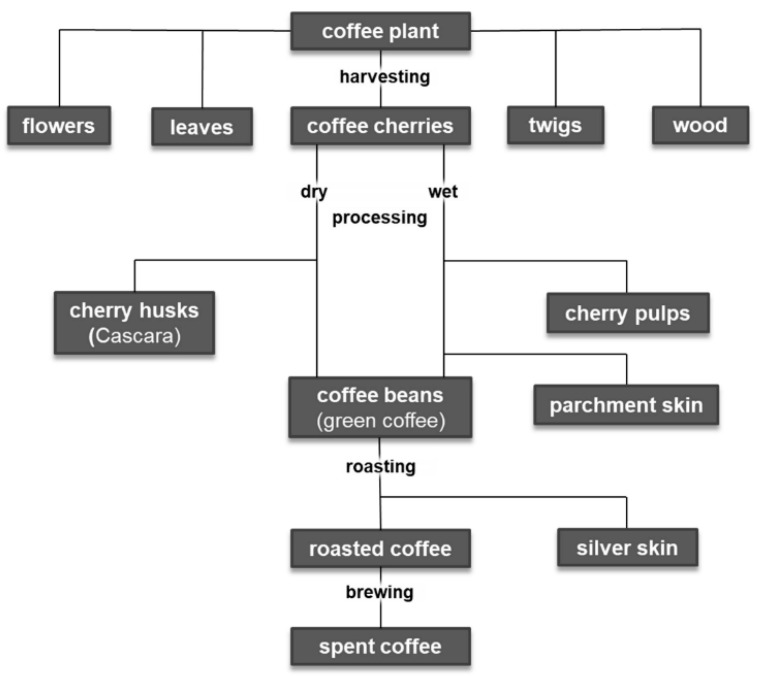
“After dry or wet processing, the obtained product is green coffee, which is the standardized trading form [3].”
BackgroundSpent coffee grounds: A review on current research and future prospects
Campos-Vega, R., Loarca-Piña, G., Vergara-Castañeda, H. A., & Oomah, B. D. (2015) · Trends in Food Science & Technology · doi:10.1016/j.tifs.2015.04.012 · Cited by 679 · cited 1×
“Besides sugars, proteins, and minerals, spent coffee grounds also contain fat, which can be extracted as coffee oil and contains the diterpenes kahweol and cafestol [133,134].”
BackgroundScientific Opinion on the safety of caffeine
EFSA Panel on Dietetic Products, N. A. A. (. (2015) · EFSA Journal · doi:10.2903/j.efsa.2015.4102 · Cited by 613
Chlorogenic Acids from Green Coffee Extract Are Highly Bioavailable in Humans
Farah, A., Monteiro, M., Donangelo, C. M., & Lafay, S. (2008) · The Journal of Nutrition · doi:10.3945/jn.108.095554 · Cited by 578
An annotated taxonomic conspectus of the genus Coffea (Rubiaceae)
DAVIS, A. P., GOVAERTS, R., BRIDSON, D. M., & STOFFELEN, P. (2006) · Botanical Journal of the Linnean Society · doi:10.1111/j.1095-8339.2006.00584.x · Cited by 495 · cited 1×
“canephora being the most economically exploited species [13].”
BackgroundA study on chemical constituents and sugars extraction from spent coffee grounds
Mussatto, S. I., Carneiro, L. M., Silva, J. P. A., Roberto, I. C., & Teixeira, J. A. (2011) · Carbohydrate Polymers · doi:10.1016/j.carbpol.2010.07.063 · Cited by 444 · cited 1×
“For each kg of instant coffee, 2 kg of wet spent coffee grounds waste are produced, which corresponds to an annual amount of about 6,000,000 t worldwide [11,130].”
BackgroundThe safety of green tea and green tea extract consumption in adults – Results of a systematic review
Hu, J., Webster, D., Cao, J., & Shao, A. (2018) · Regulatory Toxicology and Pharmacology · doi:10.1016/j.yrtph.2018.03.019 · Cited by 405
An Outlook on Chlorogenic Acids—Occurrence, Chemistry, Technology, and Biological Activities
Upadhyay, R., & Mohan Rao, L. J. (2013) · Critical Reviews in Food Science and Nutrition · doi:10.1080/10408398.2011.576319 · Cited by 386
Research works printed but not linked: 8
- Belitz H.-D. Grosch W. Schieberle P. Lehrbuch der Lebensmittelchemie 6th ed. Springer Berlin/Heidelberg, Germany 2008
- Ratanamarno S. Surbkar S. Caffeine and catechins in fresh coffee leaf (Coffea arabica) and coffee leaf tea Maejo Int. J. Sci. Technol. 2017 11 211 218
- Maxwell G.W. Poor man’s coffee? Yemeni qishr, qahwa, and qat Tea Coffee Trade J. 1996 168 64 68
- Campos-Vega R. Vázquez-Sánchez K. Martinez-Saez N. Castillo M. Antioxidant coffee dietary fiber for gastrointestinal health and diabetes Proceedings of the 20th International Conference of FFC and 8th International Symposium of Academic Society of Functional Foods and Bioactive Compounds Boston, MA, USA 22–23 September 2016
- Wintgens J.N. The coffee plant Coffee: Growing, Processing, Sustainable Production: A Guidebook for Growers, Processors, Traders and Researchers Wintgens J.N. Wiley-VCH Weinheim, Germany 2008 1 24
- Franca A.S. Oliveira L.S. Coffee processing solid wastes: Current uses and future perspectives (chapter 8) Agricultural Wastes Ashworth G.S. Azevedo P. Nova Science New York, NY, USA 2009
- Oestreich-Janzen S. Chemistry of coffee Comprehensive Natural Products II: Chemistry and Biology Mander L. Elsevier Amsterdam, The Netherlands 2010 1085 1117
- Neumann C. Lectiones Publicae von vier Subiectis Diaeteticis: Vom Thée, Caffée, Bier, und Wein Palala Press Berlin, Germany 1735
Cited by
Items 201–300 of 348
Sensory quality of cascara brewing with ginger extract addition
Rozali, Z. F., Muzaifa, M., Muliana, M., & Rahmi, F. (2024) · AGROINTEK · doi:10.21107/agrointek.v18i3.15992 · Cited by 3
“Cascara contains 58%–85% of total carbohydrates, 8%–11% of protein, 3%–7% of minerals, 0.5%–3% of lipids, 1% of caffeine and 5% of tannins (Klingel et al. 2020).”
BackgroundInfluentialRizkiyani, S. S., & Yan El Rizal Unzilatirrizqi, D. (2021) · Journal of Technology and Food Processing (JTFP) · doi:10.46772/jtfp.v1i01.337 · Cited by 3
“The level of grind size is coarse (coarse), medium (medium), fine (fine), very fine (very fine) [31].”
BackgroundZuhra, N. H., Yusriana, Y., & Muzaifa, M. (2022) · IOP Conference Series Earth and Environmental Science · doi:10.1088/1755-1315/951/1/012086 · Cited by 3
Maxiselly, Y., Anusornwanit, P., Chanjula, P., & Chiarawipa, R. (2022) · Advances in biological sciences research/Advances in Biological Sciences Research · doi:10.2991/absr.k.220309.091 · Cited by 3
“Coffee husk is the dominant solid waste on coffee processing because the husk composed skin, pulp, parchment of coffee fruit after drying [7].”
BackgroundPuari, A. T., Rusnam, R., & Yanti, N. R. (2022) · Jurnal Teknik Pertanian Lampung (Journal of Agricultural Engineering) · doi:10.23960/jtep-l.v11i2.242-252 · Cited by 3
“However, the production of commercially available activated carbon does entail several challenges; one of them being the high manufacturing costs (Michalak et al., 2013; Tan et al., 2015).”
BackgroundMetabolite Signature of Fresh and Long-term Stored Coffee Pulp and Husk
Lestari, W., Hasballah, K., Muhammad, Y., & Sofia, S. (2022) · Makara Journal of Science · doi:10.7454/mss.v26i3.1354 · Cited by 3
Utilizing the Antioxidant Properties of Coffee By-Products to Stabilize Bioplastics
Rennert, M. (2023) · doi:10.3390/icc2023-14847 · Cited by 3
Production of high dietary fiber and antioxidant activity bread from coffee parchment skin flour
Rizkaprilisa, W., Hapsari, M. W., Paramastuti, R., & Santosa, K. M. (2023) · Coffee Science · doi:10.25186/.v18i.2121 · Cited by 3
The effect of soaking time on mucilage removal from the coffee bean using pectinase enzyme
Fitri, Tawali, A. B., & Laga, A. (2021) · IOP Conference Series Earth and Environmental Science · doi:10.1088/1755-1315/807/2/022053 · Cited by 3
“Bacteria, yeast, and fungi break down sugars and pectins within the mucilage, producing acids and alcohol [7].”
BackgroundConsumer study of Indonesian coffee leaves tea as traditional drinks
Fibrianto, K., Muthifalyza, R., & Yuwono, S. S. (2021) · IOP Conference Series Earth and Environmental Science · doi:10.1088/1755-1315/924/1/012030 · Cited by 3
“Thus, coffee leaves tea products pose an economic potential to be further explored [2].”
BackgroundSantos-Cruz, R., Castro-Díaz, E. I., Rodríguez-Lozano, A., Domínguez, Z., Yáñez-Pizaña, A., & Sánchez-Salcedo, J. A. (2025) · Agro Productividad · doi:10.32854/veb9b610 · Cited by 2
Santos, B. G., Ancillotti, G. T., de Figueiredo, C. H., Rodrigues, M. A., Castelo‐Branco, V. N., & Uekane, T. M. (2025) · Journal of Food Science · doi:10.1111/1750-3841.70673 · Cited by 2
“Additionally, this coffee pulp has great potential for use in foods, due to the high content of fibers, minerals, bioactive compounds, and antioxidants, and its valorization as a food ingredient usable by the food industry is of interest (Klingel et al. 2020).”
Medjdoub, A., Imessaoudene, A., Chelihi, A., Daoud, I., Saker, M., Merzouk, A. Z., Mebarki, A., Benamar, H., & Merzouk, H. (2025) · Chemistry & Biodiversity · doi:10.1002/cbdv.202502274 · Cited by 2
Ribeiro, R. C., Alves, R. C., Santo, L. E., Costa, A. S. G., Machado, S., Oliveira, M. B. P. P., Teixeira, R. S. S., & Rezende, C. M. (2025) · ACS Omega · doi:10.1021/acsomega.5c07362 · Cited by 2
Valorization of Green Arabica Coffee Coproducts for Mannanase Production and Carbohydrate Recovery
Ribeiro, R. C., de Barros, L. J. B. D. M., de Menezes, L. B., Rezende, C. M., da Silva, A. S., Bon, E. P. S., & Teixeira, R. S. S. (2025) · Processes · doi:10.3390/pr13123874 · Cited by 2
Unveiling the chemical profile of Sicilian Coffea arabica L. leaves
Rovelli, D., Campmajó, G., Torrijos, R., Cirlini, M., Nucci, A., Serito, B., & Dall’Asta, C. (2025) · Future Foods · doi:10.1016/j.fufo.2025.100880 · Cited by 2
Tien, N. N. T., Ha, T. H., Khuong, B. H., Thuan, C. M., Anh, M. N. T., Ishmayana, S., & Hung, P. V. (2025) · Journal of Food Measurement & Characterization · doi:10.1007/s11694-025-03821-6 · Cited by 2
Divyashri, G., Sindhu, O. K., & Anagha, M. (2026) · Waste as a resource · doi:10.1007/978-3-031-96805-1_8 · Cited by 2
Awoke, A., Gibo, M. G., & Tilahun, A. (2026) · Journal of Ethnobiology and Ethnomedicine · doi:10.1186/s13002-026-00863-y · Cited by 2
“Cooperative organization could support hygienic processing, branding, and fair benefit sharing, aligning with Ethio-pia’s green economy and Access and Benefit-Sharing frameworks [27, 28].”
Munasir, M., Maulana, S. A., Nurlaili, R. A., Faaizatunnisa, N., Ariesta, M. N., Fasha, G. N. A., & Widiyanto, S. (2026) · Bioresource Technology Reports · doi:10.1016/j.biteb.2026.102679 · Cited by 2
Siriparu, P., Ratha, J., & Puthongking, P. (2026) · Journal of Pharmacy & Pharmacognosy Research · doi:10.56499/jppres_14.2.2332 · Cited by 2
Srinual, O., Srinual, P., Khetanun, K., Loungmoon, P., Pintalerd, N., Chaiyaso, T., Yakul, K., Kanmanee, C., & Tapingkae, W. (2026) · Animals · doi:10.3390/ani16060965 · Cited by 2
“Coffee cherry pulp (CCP) is an abundant by-product of coffee processing that contains dietary fiber and diverse bioactive compounds, including polyphenols and caffeine, with recognized antioxidant potential [1,4,13].”
Indigenous coffee leaf brew and Engere brewing practices, and consumption patterns in South Ethiopia
Yohannis, E., Teka, T. A., Tola, Y. B., & Teferra, T. F. (2026) · Discover Food · doi:10.1007/s44187-026-00927-8 · Cited by 2
Yanti, N. R., Puari, A. T., Rusnam, R., & Putri, I. (2025) · Recent Innovations in Chemical Engineering (Formerly Recent Patents on Chemical Engineering) · doi:10.2174/0124055204340243241230055026 · Cited by 2
From Waste to Taste: Developing Upcycled Coffee Ground Cookies for Sustainable Consumption
Peralta, K. A., Nebrida, J. M., Agcaoili, C. A. S., de Jesus, J. A., Enrique, C.-J. G., & Nebrida, A. P. (2025) · International Journal of Multidisciplinary Applied Business and Education Research · doi:10.11594/ijmaber.06.02.29 · Cited by 2
Valorization of Coffee By-Products: An Overview
Diaz-Gómez, R., Chávez‐González, M. L., Cortes, J. S., Wong‐Paz, J. E., Ascacio‐Valdés, J. A., Aguilar-González, M. Á., & Aguilar, C. N. (2023) · Sustainable development and biodiversity · doi:10.1007/978-981-19-8774-8_9 · Cited by 2
Bantang, J. P. O., Abadiano, R. K., VIRON, K. P., Tugahan, C. T., Payag, Z. F., Camacho, D. H., Santos, G. N. C., & Leaño, J. L. (2023) · Diffusion and defect data, solid state data. Part B, Solid state phenomena/Solid state phenomena · doi:10.4028/p-thnn4w · Cited by 2
“The aqueous extracts from coffee pulp were utilized as a reducing and stabilizing agent of silver nanoparticles [12].”
MethodAli, R. F. M., & El-Anany, A. M. (2025) · npj Science of Food · doi:10.1038/s41538-025-00572-y · Cited by 2
“Coffee pulp (CP), a signi fi cant byproduct of coffee processing, constitutes about 28% of the dry weight of coffee cherries, generating approximately two tons of CP for every ton of coffee produced 7,14 .”
Caetano, J. A. (2021) · Digital Library of Theses and Dissertations (Universidade de São Paulo) · doi:10.11606/t.18.2021.tde-03092021-165011 · Cited by 2
Repurposing Coffee Husk By-Products (Cascara) for the Production of Kombucha BeveragePreprint
Van, T. P., Phan, Q. K., Pham, G. B., & Do, A. D. (2023) · Research Square · doi:10.21203/rs.3.rs-3041292/v1 · Cited by 4
Repurposing Coffee Husk By-Products (Cascara) for the Production of Kombucha BeveragePreprint
Van, T. P., Phan, Q. K., Pham, G. B., Quang, H. P., & Do, A. D. (2023) · Research Square · doi:10.21203/rs.3.rs-3041292/v2 · Cited by 2
Rondón, D. G. E., Meza, N. T., Ocampo, J. C. C., López, D. Y. O., & Calderón, C. L. L. (2023) · MRS Advances · doi:10.1557/s43580-023-00722-y · Cited by 1
Unveiling the Compositional Analysis of Green Coffee Beans with and without Silver Skin
Tripathi, S., Mishra, N., Malaviya, R., Ansari, A., Shrimali, S., & Mishra, N. (2024) · Recent Advances in Food Nutrition & Agriculture · doi:10.2174/012772574x293155240226095030 · Cited by 1
Rovelli, D., Righetti, L., Nucci, A., Pugliese, M. B., Serito, B., Bruni, R., & Dall’Asta, C. (2024) · ACS Food Science & Technology · doi:10.1021/acsfoodscitech.4c00054 · Cited by 1
Hernández-López, G., & Barrera‐Necha, L. L. (2025) · Resources · doi:10.3390/resources14030048 · Cited by 1
“The high production of coffee generates a large quantity of waste that has a wide application due to its physical and chemical properties, bioavailability, and potential in food production, making it useful in various fields [8].”
Valorization of red Coffea arabica var. Caturra pulp: Development of a kombucha beverage
Rojas-Orduña, E., Hernández‐Carrión, M., & Sánchez‐Camargo, A. D. P. (2025) · Agrociencia Uruguay · doi:10.31285/agro.29.1589 · Cited by 1
Amotoe‐Bondzie, A., Osei, E. D., Ivanišová, E., Dávidová, K., Harangozo, Ľ., Čech, M., Árvay, J., Kunecová, D., Kucharski, J. J., & Kowalczewski, P. Ł. (2025) · Acta Scientiarum Polonorum Technologia Alimentaria · doi:10.17306/j.afs.2.1319 · Cited by 1
INCORPORATION OF COFFEE SILVER SKIN FOR DEVELOPMENT OF A SMOOTHIE AND A NUTRACEUTICAL PRODUCT
Tiwari, P., & Mhatre, B. A. (2025) · International Journal of Biological Innovations · doi:10.46505/ijbi.2025.7202 · Cited by 1
Меnkinoska, М., Pavlova, T., Goranova, Z. T., Bozhinov, A., Zlatev, Z., Koraqi, H., & Petkoska, A. T. (2025) · Chemical Industry and Chemical Engineering Quarterly · doi:10.2298/ciceq241014021m · Cited by 1
Unveiling lipid and oxylipin composition in the coffee leaves throughout coffee cherry maturation
Figueroa‐Espinoza, M., Guzmán-Rosales, D., Mas-Normand, L., Vigor, C., Durand, T., Oger, C., Galano, J., Gros, V., Réversat, G., Maldonado-Veneroso, J., et al. (2025) · Food Chemistry · doi:10.1016/j.foodchem.2025.145746 · Cited by 1
Development and characterization of edible cups made from wheat, sorghum, and coffee pulp flour
Quiñonez, C. C., Quispe, A., Tacca, A. M. L., & Medina, W. T. (2025) · Coffee Science · doi:10.25186/.v20i.2378 · Cited by 1
Makangali, K., Ospankulova, G., Tokysheva, G., Muldasheva, A., & Dairova, K. (2025) · Processes · doi:10.3390/pr13103167 · Cited by 1
Kunarto, B., Larasati, D., Haslina, Rohadi, R., & Azkia, M. N. (2025) · Food Research · doi:10.26656/fr.2017.9(6).222 · Cited by 1
Fayissa, G. R., & Gemeda, A. A. (2025) · Berhan International Research Journal of Science and Humanities · doi:10.61593/dbu.birjsh.01.09.15 · Cited by 1
RS, I. G. A. Y. R., Antares, A., Prawitasari, I. A. A., & Putra, I. M. A. S. (2026) · JURNAL PIJAR MIPA · doi:10.29303/jpm.v21i1.11458 · Cited by 1
Guadalupe, G. A., Grández-Yoplac, D. E., García, L., & Doménech, E. (2026) · Applied Food Research · doi:10.1016/j.afres.2026.102200 · Cited by 1
Valorization of spent coffee grounds for enhanced food sustainability
Ito, J. V. M., Apalowo, O. E., Smith, S. W., Bushong, A., & Schilling, M. W. (2026) · Food and Humanity · doi:10.1016/j.foohum.2026.101287
Piotrowicz, A., Fabiszewska, A. U., Jasińska, K., & Wierzchowska, K. (2026) · Molecules · doi:10.3390/molecules31132382 · Cited by 1
“However, without pretreatment, a significant part of this carbon remains structurally unavailable because it is embedded in a lignocellulosic matrix [11,17,26,36].”
InfluentialWang, Z., Chen, X., Chiu, T., Li, Q., Yang, Y., Aziz, T. A., Cui, H., & Lin, L. (2026) · Journal of Food Process Engineering · doi:10.1111/jfpe.70702 · Cited by 1
Le, C. L. C., Trần, T. T. T., & Lê, V. V. M. (2026) · Food Chemistry Advances · doi:10.1016/j.focha.2026.101387 · Cited by 1
Schwarz, S., Rieke-Zapp, J., & Lachenmeier, D. W. (2026) · doi:10.14293/icc000031.v1.paper · Cited by 1
Self-citation3% in the Cup, 97% in the Loop: Cascading Coffee By-Products for Circular Materials
Rennert, M. (2026) · doi:10.14293/icc000006.v1.paper · Cited by 1
Lachenmeier, D. W., & Sproll, C. (2026) · doi:10.14293/icc000029.v1.paper · Cited by 1
Self-citationThermal treatments affected to quality attributes of Solanum procumbens Lour.
Minh, N. P. (2021) · Plant Science Today · doi:10.14719/pst.1370 · Cited by 1
Young coffee leaves biotransformed by aspergillus oryzae in enriched source of caffeic acid
Hernandez, C. E., Mencía-Guevara, A., & Rojas-Rojas, K. (2021) · Coffee Science · doi:10.25186/cs.v16i.1863 · Cited by 1
Lifestyle‐Produkte statt Lebensmittel
Lachenmeier, D. W., & Walch, S. G. (2023) · Nachrichten aus der Chemie · doi:10.1002/nadc.20234134390 · Cited by 1
Self-citationМакас, А., Krusir, G., Брайтенмозер, Л., Hugi, C., Pylypenko, L., Севастьянова, О., Здорик, О. А., & Мальований, М. (2024) · Journal of Chemistry and Technologies · doi:10.15421/jchemtech.v31i4.287313 · Cited by 1
Beverages of Coffee and Phytochemicals Present in Coffea arabica and Coffea canephora – A Review
Dulmini, A. D. T., & Perera, S. D. (2023) · OUSL Journal · doi:10.4038/ouslj.v18i2.7620 · Cited by 1
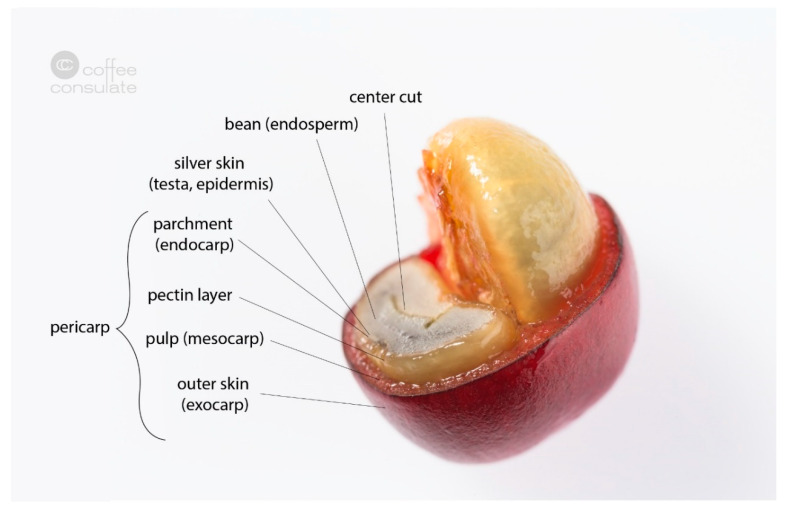
“The endocarp is the innermost layer of the pericarp, which is also called parchment or hull (Klingel et al, 2020).”
BackgroundBiofuel From Coffee Waste and Its Role in Achieving Sustainable Development Goals (SDGs)
Khaled, K. A. M., Olabi, A. G., & Aboel-Ainin, M. A. (2024) · Elsevier eBooks · doi:10.1016/b978-0-443-15738-7.00066-0 · Cited by 1
Perancangan Produk Aksesoris Interior dari Limbah Ampas Kopi dan Sabut Kelapa
Payangan, I., & Kattu, G. S. (2025) · Jurnal Desain Produk Nasional · doi:10.26760/jdpn.v2i2.54 · Cited by 1
Chemical Profiling and in vitro Testing for PCSK9 Inhibition of Coffee Cascara Extract
Dolsophon, K., Samosorn, S., Sungwienwong, I., Apiratikul, N., Watanapokasin, R. Y., Poorahong, W., & Krajangsang, S. (2021) · Science Essence Journal · Cited by 1
Mangiwa, S., & Abulais, D. M. (2025) · AVOGADRO · Cited by 1
Phytochemicals and Functional Properties of Coffee
Saldaña‐Mendoza, S. A., Pacios‐Michelena, S., Chávez‐González, M. L., Valencia‐Hernández, L. J., Palácios-Ponce, S., & Aguilar, C. N. (2022) · Wiley eBooks · doi:10.1002/9781119804055.ch10 · Cited by 1
Indigenous Coffee Leaf Brew And Engere Brewing Practices, and Consumption Patterns in South EthiopiaPreprint
Yohannis, E., Teka, T. A., Tola, Y. B., & Teferra, T. F. (2025) · SSRN Electronic Journal · doi:10.2139/ssrn.5377291 · Cited by 1
Salsabila, A. P. (2024) · Repository at Universitas Pendidikan Indonesia (Universitas Pendidikan Indonesia) · Cited by 1
Adaptation of tropical horticultural species to a changing Mediterranean climate
Farina, V., Bagarello, V, & Scuderi, D. (2024) · IRIS UniPA (University of Palermo) · Cited by 1
valorisation biotechnologique de la parche de café :revue scientifique
Amel, A., & Sabrina, K. (2020) · Dépôt Institutionnel de lUniversité de Tlemcen · Cited by 1
Pflanzenfasern in essbaren Besteckalternativen
Kuntz, M., Schorb, S., & Gleiss, K. (2023) · Lebensmittelchemie · doi:10.1002/lemi.202352116
Quality of Fermented Coffee Skin Waste with Several Types of Probiotics and Fermentation Time
Sudita, I. D. N., & Sanjaya, I. G. A. M. P. (2023) · AJARCDE (Asian Journal of Applied Research for Community Development and Empowerment) · doi:10.29165/ajarcde.v7i2.258
Utami, N. F., Elya, B., Hayun, H., & Kusmardi, K. (2024) · Journal of Pharmacy & Pharmacognosy Research · doi:10.56499/jppres23.1735_12.1.73
“Recently, processed cascara has been produced as food and supplement products because it contains proteins, polysaccharides, and active compounds (Klingel et al., 2020).”
BackgroundGreen coffee and green tea as alternative medicines for the treatment of hyperglycemia
Wijesooriya, W. D. T. H., & Gunathilaka, M. D. T. L. (2024) · Sri Lankan Journal of Biology · doi:10.4038/sljb.v9i2.141
Origin, properties, and possibilities of the use and reuse of spent coffee grounds
Cervera‐Mata, A., Fernández‐Arteaga, A., Pastoriza, S., Delgado, G. A., & Rufián‐Henares, J. Á. (2024) · Elsevier eBooks · doi:10.1016/b978-0-443-13868-3.00082-x
Awodoyin, O. R., Adediran, O. A., Abedor, A. I., & Ogundadegbe, A. O. (2024) · Nigerian Journal of Animal Production · doi:10.51791/njap.vi.6128
“Coffee is a rich source of dietary antioxidants whose antioxidant property is attributed to its high concentration of polyphenols (Acidri et al., 2020) such as hydroxycinnamic acids, caffeic and chlorogenic acid derivatives (Klingel et al., 2020).”
Innovation in the Production of Coffee Tree Leaf Beverages
Paula, N. B., Santana, A. F. M., de Oliveira, A. C., de Paula, D., Begnini, M. L., & Finzer, J. R. D. (2025) · Revista de Gestão Social e Ambiental · doi:10.24857/rgsa.v19n1-173
Modeling the flow of a thermal agent through a coffee production waste layer
Іващук, О. С., Atamanyuk, V., & Chyzhovych, R. (2025) · Voprosy Khimii i Khimicheskoi Tekhnologii · doi:10.32434/0321-4095-2025-158-1-103-110
Morgan, H. M., Ye, Y., Tsai, H. H., Hua, W. J., & Tsai, W. (2025) · Preprints.org · doi:10.20944/preprints202505.0118.v1
He, J., Shan, L., Yu, L., Yu, L., Jiang, X., Shen, Y., Du, Z., Yu, R., Zhao, C., Du, X., et al. (2025) · SSRN Electronic Journal · doi:10.2139/ssrn.5239458
DESENVOLVIMENTO DE BEBIDAS ALCOÓLICAS A PARTIR DE CASCAS DE CAFÉ TIPO ARÁBICA POR INFUSÃO A FRIO
de Oliveira, C. H. F., Nascimento, C. D. M. S., de Espíndola, N. L., & Camelo, M. C. D. S. (2025) · doi:10.31692/viciagro.0167
Opportunities and Constraints of Coffee Byproducts in Ethiopia: Review
Etana, D., & Merga, D. (2025) · Trends in Agricultural Sciences · doi:10.17311/tas.2025.278.286
He, J., Shan, L., Yu, L., Yu, L., Jiang, X., Shen, Y., Du, Z., Yu, R., Zhao, C., Du, X., et al. (2025) · SSRN Electronic Journal · doi:10.2139/ssrn.5381069
Obtención de un ingrediente alimentario a partir de pulpa de café
Ramírez, B. D. G., Gómez-Gutiérrez, A. M., Ramírez, S. C., Calle, D. P. C., Hincapié, D. L. H., & Ortiz, D. R. (2025) · Acta Agronómica · doi:10.15446/acag.v72n4.113635
“El contenido de cafeina en la harina fina de pulpa de café es mayor a lo reportado por Klingel et al .”
Utilization of coffee pulp extract and honey for the development of functional cube candies
Jiamjariyatam, R., Phucharoenrak, P., Samosorn, S., Dolsophon, K., Lorliam, W., & Krajangsang, S. (2025) · Coffee Science · doi:10.25186/.v20i.2292
Sukmanov, V., Komar, O. A., Сукманов, О. В., & Likholip, I. (2025) · Human and nation s health · doi:10.31548/humanhealth.3.2025.80
Détermination du statut redox chez les rats obèses traités Par l’extrait aqueux de la parche de café
Chaib Dra Tani, A., & Boukli, H. F. (2023) · Dépôt Institutionnel de lUniversité de Tlemcen
He, Y. (2024) · ScholarSpace (University of Hawaii at Manoa)
Vieira, R. Í. M. (2023) · RIUnB Institutional Repository (University of Brasília) · doi:10.26512/2023.07.d.48307
SEDUHAN CASCARA ARABIKA TERFORTIFIKASI TANAMAN OBAT SEBAGAI MINUMAN FUNGSIONAL
Syabila, F. A. (2024) · Repository at Universitas Pendidikan Indonesia (Universitas Pendidikan Indonesia)
Taleb Bendiab, D. (2023) · Dépôt Institutionnel de lUniversité de Tlemcen
Kávové třešně jako materiál pro přípravu nápoje za studena
Pulchartová, M. (2023) · Digital library - University of Pardubice (University of Pardubice)
Sururi, Z. F. (2024) · Repository at Universitas Pendidikan Indonesia (Universitas Pendidikan Indonesia)
Diseño y evaluación de una bebida con un derivado de cascarilla de café para adultas mayores
Peña Díaz, B. (2024) · Vitela (Pontificia Universidad Javeriana Cali) · doi:10.71618/wcsf-w065
Indigenous Coffee Leaf Brew and Engere Brewing Practices, and Consumption Patterns in South EthiopiaPreprint
Yohannis, E., Teka, T. A., Tola, Y. B., & Teferra, T. F. (2025) · Research Square · doi:10.21203/rs.3.rs-8133352/v1
Therapeutic Potential and Utilization of Fruit Derived Waste: A Review
Panda, B. B., Biswal, P., & Moharana, M. S. (2025) · International Journal of Current Research and Review · doi:10.31782/ijcrr.2025.172102
Rivera-Torres, A. P., Cruz-González, X., Acevedo-Alfaro, J., Resto, T. O., Rodríguez-Rivera, A. J., Arroyo‐González, N., & Chompré, G. (2026) · Current Agriculture Research Journal · doi:10.12944/carj.13.3.24
Metadata
- Authors
- Klingel, T., Kremer, J. I., Gottstein, V., Rajcic de Rezende, T., Schwarz, S., & Lachenmeier, D. W.
- Affiliations
- Chemisches und Veterinäruntersuchungsamt Karlsruhe (DE)
- Chemisches und Veterinäruntersuchungsamt (CVUA) Karlsruhe, Weissenburger Strasse 3, 76187 Karlsruhe, Germany
- Coffee Consulate (Germany) (DE)
- Corresponding author
- Lachenmeier, Dirk W.
- Venue
- Foods
- Publisher
- MDPI AG
- Published
- 2020-05-21
- Volume
- 9
- Issue
- 5
- Pages
- 665
- ISSN
- 2304-8158 (ISSN-L)
- PMC
- PMC7278860
- OpenAlex
- W3027187726
- Semantic Scholar
- f2837c499ca9db4586d0153c3a1ec3554528cfda
- Cited by
- 264
- References
- 96
- Citations by year
- 2026: 32 · 2025: 45 · 2024: 43 · 2023: 54 · 2022: 45 · 2021: 35 · 2020: 10
- FWCI
- 4.72
- Type
- journal article
- Language
- en
- Open access
- gold
- dx.doi.org
- Licence
- Locations
- Foods (publishedVersion, cc-by)
- PubMed Central (publishedVersion, cc-by)
- PubMed (publishedVersion)
- DOAJ (DOAJ: Directory of Open Access Journals) (submittedVersion, cc-by-sa)
- Topics
- Health Sciences › Medicine › Pharmacology (medical) › Coffee research and impacts
- Life Sciences › Agricultural and Biological Sciences › Food Science › Agricultural safety and regulations
- Life Sciences › Agricultural and Biological Sciences › Food Science › Food Nutrient Composition and Product Development
- Keywords
- coffee by-products, novel foods, coffee leaves, coffee husk, parchment, green coffee beans, spent coffee grounds, food safety, food toxicity, EU food law, traditional food
About these checks
Registry, retraction, Cites and statistics results are computed, not judged, with one exception: a printed reference that no index lists is read once by a model before it counts as a citation error. Claims are extracted by a model and kept only when their quote appears verbatim in the text; each cited source is then checked, with a model’s help, for whether it says what the claim relies on. Those verdicts can be wrong — read the claim’s quote and the cited source before relying on one.
Statistics and arithmetic are recomputed, not judged.
Confidence bands are shown only for fields calibrated on our annotated test set. None is calibrated yet, so no band is shown.
What counts as a claim ›How we measure confidence ›How we check this ›
Are you an author, or do you see a problem with this page? Request a review
Data sources
Bibliographic data: Semantic Scholar, OpenAlex, Crossref.
Contains information from the Semantic Scholar Academic Graph Datasets, made available under the ODC Attribution License (ODC-BY 1.0).
Semantic Scholar’s data is described in: Kinney, R., et al. (2023). The Semantic Scholar Open Data Platform. arXiv:2301.10140.
