

A Review of Coffee By-Products Including Leaf, Flower, Cherry, Husk, Silver Skin, and Spent Grounds as Novel Foods within the European Union
Open accessThe DOI matches its Crossref record; 94 of the 96 references it cites were found in a registry or an index.
Abstract
The coffee plant Coffea spp. offers much more than the well-known drink made from the roasted coffee bean. During its cultivation and production, a wide variety of by-products are accrued, most of which are currently unused, thermally recycled, or used as animal feed. The aim of this review is to provide an overview of novel coffee products in the food sector and their current legal classification in the European Union (EU). For this purpose, we have reviewed the literature on the composition and safety of coffee flowers, leaves, pulp, husk, parchment, green coffee, silver skin, and spent coffee grounds. Some of these products have a history of consumption in Europe (green coffee), while others have already been used as traditional food in non-EU-member countries (coffee leaves, notification currently pending), or an application for authorization as novel food has already been submitted (husks, flour from spent coffee grounds). For the other products, toxicity and/or safety data appear to be lacking, necessitating further studies to fulfill the requirements of novel food applications.
Overview
The claims and statistics of this paper haven’t been checked yet.
Free: it reads the open-access text and checks the first 5 claims that cite a source we can check. Create a free account to check every claim.
Integrity signals
Registry
Cites
Statistics
Figures
Verification
Claims the paper makes
The claims and statistics of this paper haven’t been checked yet.
Free: it reads the open-access text and checks the first 5 claims that cite a source we can check. Create a free account to check every claim.
Claims other papers make about this one
Each is checked against this paper’s own text: does it say what the citing paper says it does?
The cited source says what the claim attributes to it.
In the citing paper
“its by-products, including coffee flowers, leaves, pulp, husk, parchment, green coffee, silver skin, and SCGs, have become an attractive potential source of ingredients for new functional foods [251].”
From Effects of Coffee and Its Components on the Gastrointestinal Tract and the Brain–Gut Axis (2020) · cites this paper as [251]
Self-check
Percentages, sums and reported differences re-computed from the paper’s own numbers.
The self-check needs the paper’s full text.
Citations
Cites
Sustainable management of coffee industry by-products and value addition—a review
Murthy, P. S., & Madhava Naidu, M. (2012) · Resources, Conservation and Recycling · doi:10.1016/j.resconrec.2012.06.005 · Cited by 1,055 · cited 9×
“Using fermentation, the production of citric acid, gibberellic acid, and enzymes has been realized [11,38].”
BackgroundInfluentialChemical, Functional, and Structural Properties of Spent Coffee Grounds and Coffee Silverskin
Ballesteros, L. F., Teixeira, J. A., & Mussatto, S. I. (2014) · Food and Bioprocess Technology · doi:10.1007/s11947-014-1349-z · Cited by 870 · cited 3×
“Polysaccharides are the main component of spent coffee grounds, with hemicelluloses accounting for approximately 39 g/100 g dry weight and celluloses for 12 g/100 g dry weight [43,131,132].”
BackgroundFunctional Properties of Coffee and Coffee By-Products
Esquivel, P., & Jiménez, V. M. (2012) · Food Research International · doi:10.1016/j.foodres.2011.05.028 · Cited by 847 · cited 2×
“After dry or wet processing, the obtained product is green coffee, which is the standardized trading form [3].”
BackgroundSpent coffee grounds: A review on current research and future prospects
Campos-Vega, R., Loarca-Piña, G., Vergara-Castañeda, H. A., & Oomah, B. D. (2015) · Trends in Food Science & Technology · doi:10.1016/j.tifs.2015.04.012 · Cited by 679 · cited 1×
“Besides sugars, proteins, and minerals, spent coffee grounds also contain fat, which can be extracted as coffee oil and contains the diterpenes kahweol and cafestol [133,134].”
BackgroundScientific Opinion on the safety of caffeine
EFSA Panel on Dietetic Products, N. A. A. (. (2015) · EFSA Journal · doi:10.2903/j.efsa.2015.4102 · Cited by 613
Chlorogenic Acids from Green Coffee Extract Are Highly Bioavailable in Humans
Farah, A., Monteiro, M., Donangelo, C. M., & Lafay, S. (2008) · The Journal of Nutrition · doi:10.3945/jn.108.095554 · Cited by 578
An annotated taxonomic conspectus of the genus Coffea (Rubiaceae)
DAVIS, A. P., GOVAERTS, R., BRIDSON, D. M., & STOFFELEN, P. (2006) · Botanical Journal of the Linnean Society · doi:10.1111/j.1095-8339.2006.00584.x · Cited by 495 · cited 1×
“canephora being the most economically exploited species [13].”
BackgroundA study on chemical constituents and sugars extraction from spent coffee grounds
Mussatto, S. I., Carneiro, L. M., Silva, J. P. A., Roberto, I. C., & Teixeira, J. A. (2011) · Carbohydrate Polymers · doi:10.1016/j.carbpol.2010.07.063 · Cited by 444 · cited 1×
“For each kg of instant coffee, 2 kg of wet spent coffee grounds waste are produced, which corresponds to an annual amount of about 6,000,000 t worldwide [11,130].”
BackgroundThe safety of green tea and green tea extract consumption in adults – Results of a systematic review
Hu, J., Webster, D., Cao, J., & Shao, A. (2018) · Regulatory Toxicology and Pharmacology · doi:10.1016/j.yrtph.2018.03.019 · Cited by 405
An Outlook on Chlorogenic Acids—Occurrence, Chemistry, Technology, and Biological Activities
Upadhyay, R., & Mohan Rao, L. J. (2013) · Critical Reviews in Food Science and Nutrition · doi:10.1080/10408398.2011.576319 · Cited by 386
Research works printed but not linked: 8
- Belitz H.-D. Grosch W. Schieberle P. Lehrbuch der Lebensmittelchemie 6th ed. Springer Berlin/Heidelberg, Germany 2008
- Ratanamarno S. Surbkar S. Caffeine and catechins in fresh coffee leaf (Coffea arabica) and coffee leaf tea Maejo Int. J. Sci. Technol. 2017 11 211 218
- Maxwell G.W. Poor man’s coffee? Yemeni qishr, qahwa, and qat Tea Coffee Trade J. 1996 168 64 68
- Campos-Vega R. Vázquez-Sánchez K. Martinez-Saez N. Castillo M. Antioxidant coffee dietary fiber for gastrointestinal health and diabetes Proceedings of the 20th International Conference of FFC and 8th International Symposium of Academic Society of Functional Foods and Bioactive Compounds Boston, MA, USA 22–23 September 2016
- Wintgens J.N. The coffee plant Coffee: Growing, Processing, Sustainable Production: A Guidebook for Growers, Processors, Traders and Researchers Wintgens J.N. Wiley-VCH Weinheim, Germany 2008 1 24
- Franca A.S. Oliveira L.S. Coffee processing solid wastes: Current uses and future perspectives (chapter 8) Agricultural Wastes Ashworth G.S. Azevedo P. Nova Science New York, NY, USA 2009
- Oestreich-Janzen S. Chemistry of coffee Comprehensive Natural Products II: Chemistry and Biology Mander L. Elsevier Amsterdam, The Netherlands 2010 1085 1117
- Neumann C. Lectiones Publicae von vier Subiectis Diaeteticis: Vom Thée, Caffée, Bier, und Wein Palala Press Berlin, Germany 1735
Cited by
Items 101–200 of 348
Gondim, F. F., Rodrigues, J. G. P., Aguiar, V. D. O., Marques, M. D. F. V., & Monteiro, S. N. (2024) · Polymers · doi:10.3390/polym16030314 · Cited by 20
“Brazil is the global leader in coffee production, followed by countries such as Vietnam, Colombia, and Indonesia [2–4].”
BackgroundGrassino, A. N., Jerković, I., Pedišić, S., & Dent, M. (2024) · Sustainable Chemistry and Pharmacy · doi:10.1016/j.scp.2024.101592 · Cited by 20
Innovative of cascara as potential in beverage, food and their functional impact: a review
Wibowo, N. A., Wanita, Y. P., Novitasari, E., Amri, A. F., Purwanto, E., Yulianti, Y., & Aurum, F. S. (2024) · International Journal of Food Science & Technology · doi:10.1111/ijfs.17562 · Cited by 20
Can coffee silverskin be a useful tool to fight metabolic syndrome?
Andrade, N., Peixoto, J. A. B., Oliveira, M. B. P. P., Martel, F., & Alves, R. C. (2022) · Frontiers in Nutrition · doi:10.3389/fnut.2022.966734 · Cited by 18
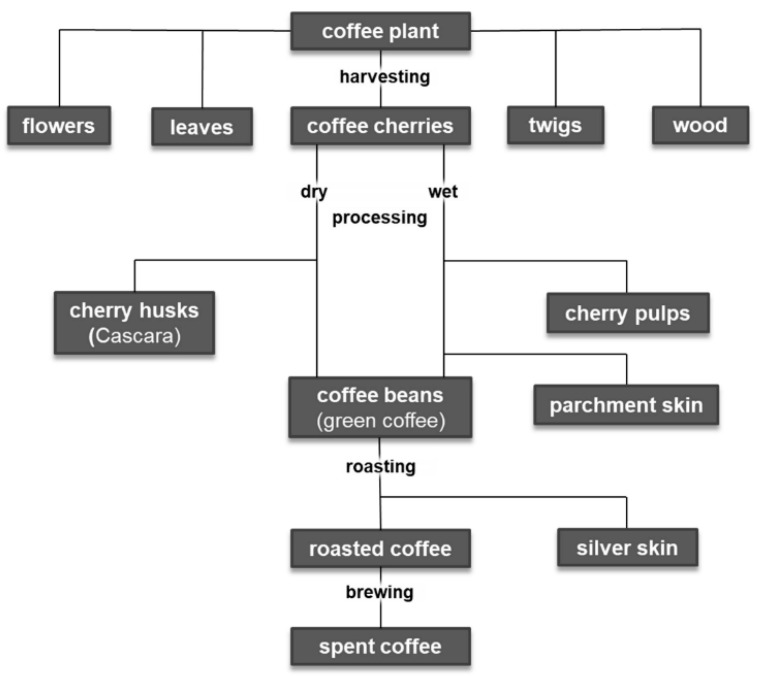
“On the other hand, coffee processing involves different serial operations which generate distinct by-products (husks, pulp, mucilage, parchment, silverskin, and spent coffee grounds) (15).”
BackgroundChacón-Figueroa, I. H., Medrano-Ruiz, L. G., Moreno-Vásquez, M. J., Ovando‐Martínez, M., Gámez‐Meza, N., Del‐Toro‐Sánchez, C. L., Castro‐Enríquez, D. D., López‐Ahumada, G. A., & Dórame‐Miranda, R. F. (2022) · Molecules · doi:10.3390/molecules27227755 · Cited by 18
Bojórquez-Quintal, E., Xotlanihua-Flores, D., Bacchetta, L., Diretto, G., Maccioni, O., Frusciante, S., Rojas-Abarca, L. M., & Sánchez-Rodríguez, E. (2024) · Plants · doi:10.3390/plants13192741 · Cited by 18
Innovative Circular Biowaste Valorisation—State of the Art and Guidance for Cities and Regions
Valdés, M. Á. S., Soriano‐Disla, J. M., Gambuzzi, E., & Martínez, G. C. (2024) · Sustainability · doi:10.3390/su16208963 · Cited by 18
DePaula, J., Cunha, S. C., Ferreira, I. M. P. L. V. O., Porto, A. C. V., da Cruz, A. G., Petrarca, M. H., Trevisan, M. T. S., Revi, I., & Farah, A. (2023) · Food Research International · doi:10.1016/j.foodres.2023.113361 · Cited by 17
Loryuenyong, V., Nakhlo, W., Srikaenkaew, P., Yaidee, P., Buasri, A., & Eiad‐ua, A. (2024) · International Journal of Molecular Sciences · doi:10.3390/ijms25168916 · Cited by 17
“These steps include hulling, drying, milling, polishing, and roasting [37].”
BackgroundExtraction of Biomolecules from Coffee and Cocoa Agroindustry Byproducts Using Alternative Solvents
Prado, J. P. Z., Basso, R. C., & Rodrigues, C. E. D. C. (2025) · Foods · doi:10.3390/foods14030342 · Cited by 17
“SS is obtained from the roasting stage, in which the green bean is subjected to a temperature close to 200 ◦ C to yield the roasted coffee bean [9].”
InfluentialZhang, J., Sun, X., Liu, P., Zhang, T., Jelderks, J. A., & Corke, H. (2022) · Foods · doi:10.3390/foods11121710 · Cited by 16
“Therefore, food industrial applications of coffee cascara have also been developed [23].”
BackgroundCalderon, N., Jiang, G., Gibney, P. A., & Dando, R. (2023) · Fermentation · doi:10.3390/fermentation9100865 · Cited by 16
Innovation and Networks in the Bioeconomy: A Case Study from the German Coffee Value Chain
Venus, T. E., Beale, C., & Villalba, R. (2024) · Circular Economy and Sustainability · doi:10.1007/s43615-024-00357-7 · Cited by 16
“The coffee silverskin is a thin layer which encloses the two coffee beans and detaches during the roasting process [21].”
A REVIEW OF ULTRASOUND-ASSISTED EXTRACTION OF BIOACTIVE COMPOUNDS FROM COFFEE WASTE
Özdemir, M., YILDIRIM, R. S., Yurttaş, R., Başargan, D., & Hakcı, M. B. (2025) · GIDA / THE JOURNAL OF FOOD · doi:10.15237/gida.gd24094 · Cited by 16
Estrada-Flores, J. G., Beltrán, P. E. P., Yong-Ángel, G., Nova, F. A., Rayas-Amor, A. A., Méndez, A., González-Ronquillo, M., Vázquez-Carrillo, M. F., & Ortega, O. A. C. (2021) · Agriculture · doi:10.3390/agriculture11050416 · Cited by 15
Morphological Changes and Component Characterization of Coffee Silverskin
Wang, X., Hong, D., Hu, G., Li, Z., Peng, X., Shi, Q., & Qiu, M. (2021) · Molecules · doi:10.3390/molecules26164914 · Cited by 15
“Therefore, in recent years, many studies have begun to pay attention to the application of the wastes from coffee bean processing, and these studies have been summarized [2,3].”
BackgroundUtilisation of Exhausted Coffee Husk as Low-Cost Bio-Sorbent for Adsorption of Pb2+
Rusnam, Puari, A. T., Yanti, N. R., & Efrizal, E. (2022) · Tropical Life Sciences Research · doi:10.21315/tlsr2022.33.3.12 · Cited by 15
Rennert, M., & Hiller, B. T. (2023) · Polymers · doi:10.3390/polym15142985 · Cited by 15
Non-Wood paper from coffee pulp Waste: How its performance as coffee filter
Rizkiansyah, R. R., Mardiyati, Y., Hariyanto, A., Steven, S., & Dirgantara, T. (2024) · Cleaner Materials · doi:10.1016/j.clema.2024.100241 · Cited by 14
Geopolymer composites reinforced with silverskin fibers from the coffee industry waste
Ramos, F. J. H. T. V., Marques, M. D. F. V., Aguiar, V. D. O., Gondim, F. F., Gomes, L. D. S., & Gomes, P. H. D. O. (2024) · Journal of Materials Research and Technology · doi:10.1016/j.jmrt.2024.07.074 · Cited by 14
Casula, M., Scano, P., Manis, C., Tolle, G., Nudda, A., Carta, S., Pulina, G., & Caboni, P. (2023) · Applied Sciences · doi:10.3390/app13042477 · Cited by 14
Coffee Silver Skin—Health Safety, Nutritional Value, and Microwave Extraction of Proteins
Fučkar, V. B., Božić, A., Jukić, A., Krivohlavek, A., Jurak, G., Tot, A., Serdar, S., Žuntar, I., & Jambrak, A. R. (2023) · Foods · doi:10.3390/foods12030518 · Cited by 13
“Regarding the classification of CS by the European Union (EU) as a novel food [58] and considering that applications must meet legal requirements regarding composition and toxicity data [59,60], studies on its mutagenic potential are still lacking [58] and many studies nowadays have made scientific efforts to fulfil t…”
BackgroundRizkiansyah, R. R., Mardiyati, Y., Hariyanto, A., & Dirgantara, T. (2023) · BIO Web of Conferences · doi:10.1051/bioconf/20237701001 · Cited by 13
Yin, H., Jiang, Y., Zhong, Y., & Deng, Y. (2026) · Comprehensive Reviews in Food Science and Food Safety · doi:10.1111/1541-4337.70401 · Cited by 13
Saccani, A., Fiorini, M., & Burzotta, G. (2022) · Recycling · doi:10.3390/recycling7060089 · Cited by 13
Maxiselly, Y., Maulana, H., Chumthong, A., & Chiarawipa, R. (2023) · Biodiversitas Journal of Biological Diversity · doi:10.13057/biodiv/d241026 · Cited by 13
Valorization of Coffee Silverskin Using Extraction Cycles and Water as a Solvent: Design of Process
Chemat, A., Touraud, D., Müller, R., Kunz, W., & Fabiano‐Tixier, A. (2024) · Molecules · doi:10.3390/molecules29061318 · Cited by 12
“…copious waste can be used for animal feed [1,3,8], developing new materials [1,3,12], producing biofuels [1,3,6,8], formulating natural aromas [7,8], or isolating active compounds, which can further be used as ingredients for the food, cosmetic, nutraceutical, or pharmaceutical industries [1,7,13].”
BackgroundMethodInfluentialBraojos, C., Rebollo‐Hernanz, M., Cañas, S., Aguilera, Y., Gil‐Ramírez, A., Martin-Cabrejas, M. A., & Benítez, V. (2024) · Current Research in Food Science · doi:10.1016/j.crfs.2024.100804 · Cited by 12
Dias, É. C. P. P., Macêdo, G. A., Camargo, G. A., Macedo, J. A., & Chiocchetti, G. D. M. E. (2024) · ACS Sustainable Chemistry & Engineering · doi:10.1021/acssuschemeng.4c02718 · Cited by 12
DePaula, J., Cunha, S. C., Partelli, F. L., Fernandes, J. O., & Farah, A. (2025) · Foods · doi:10.3390/foods14060911 · Cited by 12
Grassino, A. N., Šušić, I., & Fiket, Ž. (2022) · International Journal of Environmental & Analytical Chemistry · doi:10.1080/03067319.2022.2076220 · Cited by 12
D’Amore, T., Chaari, M., Falco, G., Gregorio, G. D., Jaouadi, N. Z., Ali, D. S., Sarkar, T., & Smaoui, S. (2024) · Biocatalysis and Agricultural Biotechnology · doi:10.1016/j.bcab.2024.103163 · Cited by 11
Nakyinsige, K., Mugerwa, F., Tabula, A., Mugampoza, D., Matovu, M., & Bamuwamye, M. (2025) · LWT · doi:10.1016/j.lwt.2025.117343 · Cited by 11
Monazzah, M., & Lachenmeier, D. W. (2025) · Toxics · doi:10.3390/toxics13050409 · Cited by 11
“European legislation provides a rigorous framework for the validation of novel foods or ingredients, such as many coffee by-products [9], which includes a thorough chemical characterization (encompassing toxicity and health-promoting compounds), proposed applications, in vitro testing, in vivo…”
Self-citationAntioxidant and pro-apoptosis activities of coffee husk (Coffea arabica) anthocyanins
Fu, X., Shen, X., Yin, X., Zhang, Y. H., Wang, X., Han, Z., Lin, Q., & Fan, J. (2021) · International Food Research Journal · doi:10.47836/ifrj.28.6.10 · Cited by 11
Salim, H., Ahmed, C. S., Mokhtari-Soulimane, N. A., Bekhti, F., Souna, M., & Merzouk, H. (2023) · Biomass Conversion and Biorefinery · doi:10.1007/s13399-023-05207-4 · Cited by 11
Garcia, E., Mejía, M. F., & Liu, H. (2022) · Fuel · doi:10.1016/j.fuel.2022.125008 · Cited by 11
Tsai, C., Morgan, H. M., & Tsai, W. (2025) · Catalysts · doi:10.3390/catal15080712 · Cited by 10
Coffee Silverskin: nontraditional natural antioxidant for the meat industry
Mesárošová, A., Jurčaga, L., Bobková, A., Kročko, M., Demianová, A., Poláková, K., Lidiková, J., Mendelová, A., Švecová, T., Baluch, M., et al. (2025) · Applied Food Research · doi:10.1016/j.afres.2025.101185 · Cited by 10
Chaiyaso, T., Yakul, K., Jirarat, W., Tapingkae, W., Srinual, O., Doan, H. V., & Rachtanapun, P. (2025) · Animals · doi:10.3390/ani15152311 · Cited by 10
“Among these, coffee cherry pulp (CCP), the outer skin and mucilage of the coffee fruit removed during bean processing, is often discarded despite its rich composition of carbohydrates (~50%), protein (~10%), fiber (~20%), fat (~2.5%), caffeine (~1.3%), and phenolic compounds [3–5].”
InfluentialPrakash, V., Subasree, N., Arul, V., Saravanan, P., Lakshmi, G., Radhakrishnan, K., Kumar, J. V., Munusamy, S., Inbaraj, B. S., & Rajkumar, S. (2026) · Journal of Food Process Engineering · doi:10.1111/jfpe.70525 · Cited by 10
Coffee By-Products: An Overview of Their Antimicrobial Properties
Maia, S., Ferreira, H., Oliveira, M. B. P. P., & Alves, R. C. (2026) · Molecules · doi:10.3390/molecules31101768 · Cited by 10
Darwin, D., Muliawati, A., & Bulan, R. (2022) · Current Research in Nutrition and Food Science Journal · doi:10.12944/crnfsj.10.3.9 · Cited by 10
Rungraung, N., Muangpracha, N., & Trachootham, D. (2023) · Nutrients · doi:10.3390/nu15071602 · Cited by 10
“Since components of coffee pulp, such as caffeine and tannins, or contaminants, such as mycotoxins, can pose a safety concern [15], it is important to evaluate the long-term safety of coffee pulp products.”
BackgroundValente, S. A., Lopes, G. R., Ferreira, I., Galrinho, M. F., Almeida, M. M., Ferreira, P., Cruz, M. T., Coimbra, M. A., & Passos, C. P. (2023) · Pharmaceutics · doi:10.3390/pharmaceutics15041213 · Cited by 10
Mesfin, K., Gemechu, F. G., Asfaw, T. B., & Tessema, H. A. (2023) · ACS Food Science & Technology · doi:10.1021/acsfoodscitech.3c00064 · Cited by 10
Jiamjariyatam, R., Phucharoenrak, P., Samosorn, S., Dolsophon, K., Lorliam, W., Krajangsang, S., & Tantayotai, P. (2023) · The Scientific World JOURNAL · doi:10.1155/2023/6698056 · Cited by 9
Sandeep, N. C., Abishad, P., Vinod, V. K., Karthikeyan, A., Juliet, S., Kurkure, N. V., Barbuddhe, S. B., Rawool, D. B., & Vergis, J. (2024) · Journal of Drug Delivery Science and Technology · doi:10.1016/j.jddst.2024.105675 · Cited by 9
Extrusion pretreatment of green Arabica coffee beans for lipid enhance extraction
Ribeiro, R. C., Teixeira, R. S. S., & Rezende, C. M. (2024) · Industrial Crops and Products · doi:10.1016/j.indcrop.2024.119318 · Cited by 9
Comprehensive Update on European Union Labeling Standards for Coffee and Its By-Products
Kull, A.-K., & Lachenmeier, D. W. (2024) · doi:10.3390/icc2024-17350 · Cited by 9
Self-citationMartínez-Ruiz, Y., Duque, D. F. M., Gómez, J. C. O., & Ramírez-Malule, H. (2022) · Sustainability · doi:10.3390/su14105884 · Cited by 9
Yepes, W. U., & Pernalete, M. J. G. (2021) · Prospectiva · doi:10.15665/rp.v19i2.2590 · Cited by 9
Monfaredi, M., Mohajer, M. H., Khademi, A., Salavati, M., Ramezan, Y., & Ghomi, H. (2024) · Food and Bioprocess Technology · doi:10.1007/s11947-024-03605-8 · Cited by 8
“Nevertheless, it also produces significant quantities of by-products, including coffee silver skin, which have traditionally been regarded as waste with limited economic value (Gottstein et al., 2021; Klingel et al., 2020).”
Turning Waste into Taste: Effective Upcycling of By-Products for Innovative Food Solutions
Sree, M. S., Mudawath, S., Butti, P., Kanneboina, S., Tattepalli, S. D., Supraja, T., Rathod, N. R., Kuna, A., Krishna, L., Chary, D. S., et al. (2025) · Food Technology and Biotechnology · doi:10.17113/ftb.63.02.25.8962 · Cited by 8
“The reseachers reported that CS is one of the functional ingredients of snacks, breakfast cereals, bread and biscuits and produced a report proposing coffee by-products as a new food in the European Union ( 53 , 54 ).”
Bojórquez-Quintal, E., Maccioni, O., Zaza, F., Procacci, S., Serena, G., & Bacchetta, L. (2025) · Biomass · doi:10.3390/biomass5030053 · Cited by 8
“The industrial coffee cherry production, including dry or wet processing, generates by-products and post-harvest waste such as hull, pulp, parchment, and silverskin [7], which represent approximately 50% of the fruit’s dry weight.”
Coffee and Coffee By-Products as Multifunctional Foods and Ingredients
Nemzer, B. V., Al-Taher, F., Abshiru, N. A., & de Mejía, E. G. (2025) · Annual Review of Food Science and Technology · doi:10.1146/annurev-food-052924-114847 · Cited by 8
Rizkaprilisa, W., Hapsari, M. W., Paramastuti, R., & Pebrianti, S. A. (2023) · Food ScienTech Journal · doi:10.33512/fsj.v5i2.20216 · Cited by 8
Comparative Evaluation of Flavor and Sensory Quality of Coffee Pulp Wines
Hu, R., Xu, F., Zhao, L., Dong, W., Xiao, X., & Chen, X. (2024) · Molecules · doi:10.3390/molecules29133060 · Cited by 8
“The nutrient profile of coffee pulp encompasses carbohydrates (45~89% of the dry matter), proteins (4~12% of the dry matter), lipids (1~2% of the dry matter), and minerals (6~10% of the dry matter) [5].”
BackgroundSuppressive Effect of Coffee Leaves on Lipid Digestion and Absorption In Vitro
Sansri, V., Sroyraya, M., Phisalprapa, P., Yosboonruang, A., Ontawong, A., Saokaew, S., Goh, B. H., Trisat, K., Phewchan, P., Rawangkan, A., et al. (2024) · Foods · doi:10.3390/foods13152445 · Cited by 8
“Coffee leaves have been used traditionally in India, Jamaica, and Java for various purposes, such as promoting lactobacillus growth, serving as organic fungicides, improving animal feed, and as ethnomedicine to enhance health [4].”
BackgroundTapingkae, W., Srinual, P., Khamtavee, P., Pintalerd, N., Chaiyaso, T., Yachai, M., Kanmanee, C., Lumsangkul, C., & Srinual, O. (2025) · Animals · doi:10.3390/ani15020244 · Cited by 8
Polyphenols applications in food industry sector
Nazzaro, F., Fratianni, F., Feo, V. D., Pimentel, T. C., Coppola, R., & da Cruz, A. G. (2022) · Elsevier eBooks · doi:10.1016/b978-0-323-85273-9.00002-8 · Cited by 8
Unlocking xylan’s potential: Coffee husk-derived xylanolytic blend for sustainable bioprocessing
Ribeiro, T. A., Sampaio, I. C. F., Tavares, I. M. D. C., de Moura, I. V. L., Silva, F. N., Sena, L. D. O., Costa, F. S., de Jesus, G. L. S., Emmerich, I. T., Cezar, K. S., et al. (2024) · Biomass Conversion and Biorefinery · doi:10.1007/s13399-024-06150-8 · Cited by 9
“[3].”
Preliminary Physical and Chemical Characterization of By-Products from Cuban Coffee Production
Mesa, D., Figueroa, J. P., Leyes, E. A. R., Castillo, C., Collazo, A., Núñez, H. M., Viltres, D., Mirabal‐Gallardo, Y., & Coll, Y. (2024) · Foods · doi:10.3390/foods13213348 · Cited by 7
Fatmawati, U., Sari, D. P., Indrowati, M., Santosa, S., Wiraswati, S. M., & Harlita, H. (2022) · Journal of Tropical Biodiversity and Biotechnology · doi:10.22146/jtbb.69274 · Cited by 7
Acevedo, M.-A., Quintero, I. P., & Morales-Fonseca, D. (2021) · Gestión y Ambiente · doi:10.15446/ga.v24nsupl3.99983 · Cited by 7
ПОТЕНЦІАЛ ВИКОРИСТАННЯ КАВОВОЇ ГУЩІ У ТЕХНОЛОГІЯХ ФУНКЦІОНАЛЬНИХ ПРОДУКТІВ ХАРЧУВАННЯ. ОГЛЯД
Sukmanov, V., Сукманов, О. В., Комар, О. М., & Yudina, T. (2024) · Journal of Chemistry and Technologies · doi:10.15421/jchemtech.v32i3.309754 · Cited by 6
Mangiwa, S., Abulais, D. M., Patiung, O. R., & Nisa, Q. A. (2023) · JURNAL BIOLOGI PAPUA · doi:10.31957/jbp.2371 · Cited by 6
Gondim, F. F., Rodrigues, J. G. P., Tienne, L. G. P., Aguiar, V. D. O., & Marques, M. D. F. V. (2024) · Journal of Applied Polymer Science · doi:10.1002/app.55287 · Cited by 6
Benefits of Coffee Consumption for Human Health: An Overview
Pereira, J. P. C., Pereira, F. A. C., & Pimenta, C. J. (2022) · Current Nutrition & Food Science · doi:10.2174/1573401318666220111151531 · Cited by 6
Ramadhan, I., & Murtini, E. S. (2022) · Jurnal Teknologi Pertanian · doi:10.21776/ub.jtp.2022.023.03.1 · Cited by 6
Jiménez-Mendoza, J. A., Feria-Reyes, R., García-Montalvo, I. A., Pérez-Santiago, A. D., Sánchez-Medina, M. A., Caballero-Caballero, M., Varapizuela-Sánchez, C. F., Martínez-López, M., & Robledo–Taboada, L. H. (2025) · Quality Assurance and Safety of Crops & Foods · doi:10.15586/qas.v17i2.1528 · Cited by 5
“Coffee is one of the world’s most popular and consumed beverages, which has stimulant effects determined by its composition in the green bean and post-harvest stages (Ceoromila et al ., 2020; Klingel et al ., 2020).”
Xing, Y., Liu, W., Li, Y., Yang, M., & Su, X. (2025) · Water Air & Soil Pollution · doi:10.1007/s11270-025-07990-4 · Cited by 5
Pishro, K. A., Silva, L. S., Lamarca, R. S., Amaral, C. D. B., & Gonzalez, M. H. (2025) · ACS Omega · doi:10.1021/acsomega.5c05673 · Cited by 5
Ramos, F. J. H. T. V., Marques, M. D. F. V., Aguiar, V. D. O., Gondim, F. F., Gomes, L. D. S., & Gomes, P. H. D. O. (2026) · Ceramics International · doi:10.1016/j.ceramint.2026.01.129 · Cited by 5
Jaiswal, K. K., Alam, I., & Sharma, C. (2024) · Biomass Conversion and Biorefinery · doi:10.1007/s13399-024-06367-7 · Cited by 5
Minh, N. P., & Chanh, N. M. (2022) · Food Research · doi:10.26656/fr.2017.6(2).741 · Cited by 5
“Roasting also enhances the favour of herbal tea (Tizian et al., 2020).”
BackgroundHerbal infusion – processing techniques, bioactivity, quality, and safety
Zayapor, M. N., & Syahida, M. (2023) · Food Research · doi:10.26656/fr.2017.6(s2).019 · Cited by 5
The Impact of Chitosan at the Physical Performance of the Coffee Skin-Based Edible Film
Suriati, L., Mangku, I. G. P., Krisnawati, G. A. S. W., & Girindra, A. A. N. S. (2023) · Journal of Agriculture and Crops · doi:10.32861/jac.92.156.163 · Cited by 5
Setiawan, S. C. E., Yuliantara, A., Rizkaprilisa, W., & Paramastuti, R. (2024) · Science Technology and Management Journal · doi:10.53416/stmj.v4i1.224 · Cited by 5
Solano, M. A. Q., Flores, D. D. C., Chuquilín-Goicochea, R., Silva, C. R. E., Lapa, B. F. C., Cruz, A. R. H. D. L., & Cervantes, G. M. M. (2022) · Journal of Southwest Jiaotong University · doi:10.35741/issn.0258-2724.57.1.54 · Cited by 5
Terroba-Delicado, E., Fiori, S., Torres‐Giner, S., Gómez-Caturla, J., Muñoz, N. M., & Sánchez‐Nacher, L. (2021) · Research Square · doi:10.21203/rs.3.rs-1035447/v1 · Cited by 5
“In this regard, huge quantities of by-products and wastes are generated during the ‘fruit-to-cup’ transformation of coffee beans, including not only leaf, ower, and cherry, but also coffee husks, coffee silver skin (CSS), and spent coffee grounds (SCGs) [23, 24].”
BackgroundApplications of Plant Secondary Metabolites in the Food Industry
Petropoulos, S. A. (2023) · Springer eBooks · doi:10.1007/978-3-031-18587-8_23 · Cited by 4
Maier, B., Franke, H., Schwarz, S., & Lachenmeier, D. W. (2025) · Molecules · doi:10.3390/molecules30142951 · Cited by 4
“Considering the necessary data for the authorization procedure, this review article summarizes the available toxicological literature on coffee oil, including cafestol and kahweol [19,20], and concludes with a judgement about possibly missing data according to the EFSA guidelines.”
Self-citationOktay, N., Özkan, G., Sakarya, F. B., & Çapanoğlu, E. (2025) · Food Chemistry Advances · doi:10.1016/j.focha.2025.101083 · Cited by 4
Paradigm Shift to the Cross Economy: Transforming Waste Into Innovative Material Platforms
Kim, H., Song, Y., Park, Y., & Cho, N. (2026) · Advanced Sustainable Systems · doi:10.1002/adsu.202501440 · Cited by 4
EXPLORING THE POTENTIAL OF SPENT COFFEE GROUNDS 100 % COFFEA ARABICA REGARDING CHEMICAL COMPOUNDS
Švecová, T., Bobková, A., Demianová, A., Bobko, M., Mesárošová, A., Jurčaga, L., Lidiková, J., & Belej, Ľ. (2025) · Journal of Microbiology Biotechnology and Food Sciences · doi:10.55251/jmbfs.12112 · Cited by 4
Effects of coffee pulp in the diets of growing lambs on growth, meat quality, and blood parameters
Obeidat, B. S., Al-Khaza’leh, J. M., & Subih, H. S. (2026) · Animal Feed Science and Technology · doi:10.1016/j.anifeedsci.2026.116688 · Cited by 4
Montefrio, J., Galvan, C., Dionela, S., Guillermo, I., & Caipang, C. M. A. (2025) · Journal of Biological Studies · doi:10.62400/jbs.v8i1.13537 · Cited by 4
Cantaragiu, A., Ivan, A. S., Alexe, P., Dragomir, C. M. B., & Stoica, M. (2020) · Journal of Science and Arts · doi:10.46939/j.sci.arts-20.4-b01 · Cited by 4
Alterary, S. S., Amina, M., & El-Tohamy, M. F. (2023) · Environmental Science and Pollution Research · doi:10.1007/s11356-023-27941-y · Cited by 4
Applications And Uses of Coffee Silver Skin (CSS): A Systematic Analysis
Galvão, H. L., Righi, E., Neumann, D., Putti, G. L., da Silva, D. R., & Machado, F. (2024) · Revista de Gestão Social e Ambiental · doi:10.24857/rgsa.v18n11-243 · Cited by 4
Potential of Herbal Extracts as Sunscreens and Antihyperpigmentation Treatment
Kothapalli, L., Bhosale, K., Thomas, A. B., & Sawant, P. (2023) · Current Drug Therapy · doi:10.2174/1574885518666230330114431 · Cited by 4
The Novel Food Regulation: A Major Obstacle to Sustainability in the Coffee Industry
Lachenmeier, D. W., & Walch, S. G. (2023) · doi:10.3390/icc2023-14840 · Cited by 4
Self-citationArnthong, J., U-thai, P., Plupjeen, S.-N., Bussadee, P., Lorliam, W., Krajangsang, S., Champreda, V., & Suwannarangsee, S. (2025) · Journal of Microbiology and Biotechnology · doi:10.4014/jmb.2412.12061 · Cited by 3
Adoyo, G. O., Owino, W., Wafula, E., Engelsen, S. B., Abong, G. O., & Nyonje, W. A. (2025) · Discover Sustainability · doi:10.1007/s43621-025-02293-4 · Cited by 3
“Equally, the relatively high caffeine level of silverskin falls within the range reported (0.3–14 mg/g) in the literature [78, 79] as well as that of the coffee husk (10–12 mg/g) [78–80] However, the caffeine level of parchment was slightly below the available data (8–14 mg/g) [81].”
InfluentialAurum, F. S., Wibowo, N. A., Purwanto, E., Wanita, Y. P., Novitasari, E., Amri, A. F., Yulianti, Y., Karim, M. A., Zainal, P. W., & Praseptiangga, D. (2026) · Journal of Multidisciplinary Applied Natural Science · doi:10.47352/jmans.2774-3047.359 · Cited by 3
Establishment of in vitro cell culture and caffeine production from coffee (Coffea arabica L.)
Kim, H., Yun, C. M., Lee, S., Gu, H. S., Kim, Y.-H., Kim, J.-H., Kim, K. K., Kim, S. B., Lee, K. M., Hong, C., et al. (2025) · Journal of Applied Biological Chemistry · doi:10.3839/jabc.2025.004 · Cited by 3
Münch, A., & Lachenmeier, D. W. (2022) · International Electronic Conference on Foods (Foods) · doi:10.3390/foods2022-13012 · Cited by 3
Self-citationThe effect of coffee skin type and cornstarch concentration on characteristics of jam
Suriati, L., Mangku, I. G. P., Ardana, I. D. G. Y., & Putra, I. W. W. P. (2023) · Food Research · doi:10.26656/fr.2017.7(3).979 · Cited by 3
Yance, M. Y. P., Perez, G., Valenzuela, M. E. A. G. D., & Pariona-Velarde, D. (2023) · Coffee Science · doi:10.25186/.v18i.2136 · Cited by 3
“Coffee is one of the most widely consumed beverages in the world, an important cash crop for many countries and the second most traded commodity worldwide (Klingel et al., 2020).”
Metadata
- Authors
- Klingel, T., Kremer, J. I., Gottstein, V., Rajcic de Rezende, T., Schwarz, S., & Lachenmeier, D. W.
- Affiliations
- Chemisches und Veterinäruntersuchungsamt Karlsruhe (DE)
- Chemisches und Veterinäruntersuchungsamt (CVUA) Karlsruhe, Weissenburger Strasse 3, 76187 Karlsruhe, Germany
- Coffee Consulate (Germany) (DE)
- Corresponding author
- Lachenmeier, Dirk W.
- Venue
- Foods
- Publisher
- MDPI AG
- Published
- 2020-05-21
- Volume
- 9
- Issue
- 5
- Pages
- 665
- ISSN
- 2304-8158 (ISSN-L)
- PMC
- PMC7278860
- OpenAlex
- W3027187726
- Semantic Scholar
- f2837c499ca9db4586d0153c3a1ec3554528cfda
- Cited by
- 264
- References
- 96
- Citations by year
- 2026: 32 · 2025: 45 · 2024: 43 · 2023: 54 · 2022: 45 · 2021: 35 · 2020: 10
- FWCI
- 4.72
- Type
- journal article
- Language
- en
- Open access
- gold
- dx.doi.org
- Licence
- Locations
- Foods (publishedVersion, cc-by)
- PubMed Central (publishedVersion, cc-by)
- PubMed (publishedVersion)
- DOAJ (DOAJ: Directory of Open Access Journals) (submittedVersion, cc-by-sa)
- Topics
- Health Sciences › Medicine › Pharmacology (medical) › Coffee research and impacts
- Life Sciences › Agricultural and Biological Sciences › Food Science › Agricultural safety and regulations
- Life Sciences › Agricultural and Biological Sciences › Food Science › Food Nutrient Composition and Product Development
- Keywords
- coffee by-products, novel foods, coffee leaves, coffee husk, parchment, green coffee beans, spent coffee grounds, food safety, food toxicity, EU food law, traditional food
About these checks
Registry, retraction, Cites and statistics results are computed, not judged, with one exception: a printed reference that no index lists is read once by a model before it counts as a citation error. Claims are extracted by a model and kept only when their quote appears verbatim in the text; each cited source is then checked, with a model’s help, for whether it says what the claim relies on. Those verdicts can be wrong — read the claim’s quote and the cited source before relying on one.
Statistics and arithmetic are recomputed, not judged.
Confidence bands are shown only for fields calibrated on our annotated test set. None is calibrated yet, so no band is shown.
What counts as a claim ›How we measure confidence ›How we check this ›
Are you an author, or do you see a problem with this page? Request a review
Data sources
Bibliographic data: Semantic Scholar, OpenAlex, Crossref.
Contains information from the Semantic Scholar Academic Graph Datasets, made available under the ODC Attribution License (ODC-BY 1.0).
Semantic Scholar’s data is described in: Kinney, R., et al. (2023). The Semantic Scholar Open Data Platform. arXiv:2301.10140.
