

Machine-Learning-Based Disease Diagnosis: A Comprehensive Review
Open accessThe DOI matches its Crossref record; 135 of the 135 references it cites were found in a registry or an index.
Abstract
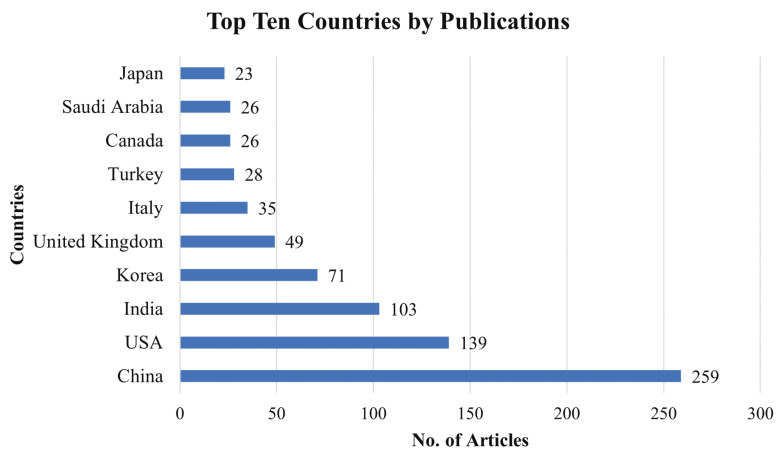
Globally, there is a substantial unmet need to diagnose various diseases effectively. The complexity of the different disease mechanisms and underlying symptoms of the patient population presents massive challenges in developing the early diagnosis tool and effective treatment. Machine learning (ML), an area of artificial intelligence (AI), enables researchers, physicians, and patients to solve some of these issues. Based on relevant research, this review explains how machine learning (ML) is being used to help in the early identification of numerous diseases. Initially, a bibliometric analysis of the publication is carried out using data from the Scopus and Web of Science (WOS) databases. The bibliometric study of 1216 publications was undertaken to determine the most prolific authors, nations, organizations, and most cited articles. The review then summarizes the most recent trends and approaches in machine-learning-based disease diagnosis (MLBDD), considering the following factors: algorithm, disease types, data type, application, and evaluation metrics. Finally, in this paper, we highlight key results and provides insight into future trends and opportunities in the MLBDD area.
Overview
The claims and statistics of this paper haven’t been checked yet.
Free: it reads the open-access text and checks the first 5 claims that cite a source we can check. Create a free account to check every claim.
Integrity signals
Registry
Cites
Statistics
Figures
Verification
Claims the paper makes
The claims and statistics of this paper haven’t been checked yet.
Free: it reads the open-access text and checks the first 5 claims that cite a source we can check. Create a free account to check every claim.
Claims other papers make about this one
Each is checked against this paper’s own text: does it say what the citing paper says it does?
The source backs part of the claim, not all of it — or backs it for a different population, condition or comparison.
In the citing paper
“While the advancement of manual diagnosis through the Placenta Accreta Index (PAI) process does improve the accuracy of diagnosis, it does not improve upon the PAS diagnostic issues of manual time consumption, proper symptom identification, and other complexities introduced via human error [10]”
From Machine Learning in Maternity: Early Diagnosis of Placenta Accreta Spectrum (2026) · cites this paper as [10]
Experimental — accuracy not yet measured
Self-check
Percentages, sums and reported differences re-computed from the paper’s own numbers.
The self-check needs the paper’s full text.
Citations
Cites
1 retracted
Saw, M., Saxena, T. K., Kaithwas, S., Yadav, R., & Lal, N. (2020) · International Conference on Computer Communication and Informatics (ICCCI) · doi:10.1109/iccci48352.2020.9104210 · Cited by 73 · cited 1×
“[41, 134, 135, 42, 43, 44, 45] Heart disease Cleveland database https://archive.”
RetractedSome Studies in Machine Learning Using the Game of Checkers
Samuel, A. L. (1959) · IBM Journal of Research and Development · doi:10.1147/rd.33.0210 · Cited by 4,443 · cited 1×
“The core principle of ML is to learn from data in order to forecast or make decisions depending on the assigned task [9].”
BackgroundWang, L., Lin, Z. Q., & Wong, A. (2020) · Scientific Reports · doi:10.1038/s41598-020-76550-z · Cited by 3,113 · cited 1×
“However, the model’s network activity and region of interest were poorly explained [93] .”
BackgroundDiscriminatory Analysis. Nonparametric Discrimination: Consistency Properties
Fix, E., & Hodges, J. L. (1989) · International Statistical Review / Revue Internationale de Statistique · doi:10.2307/1403797 · Cited by 2,516 · cited 10×
“They demonstrated that by fine-tuning the settings, it is feasible to get 94.35% accuracy, whereas the default KNN achieved around 90% accuracy [61].”
MethodInfluentialApostolopoulos, I. D., & Mpesiana, T. A. (2020) · Physical and Engineering Sciences in Medicine · doi:10.1007/s13246-020-00865-4 · Cited by 2,338
Green supply chain management: A review and bibliometric analysis
Fahimnia, B., Sarkis, J., & Davarzani, H. (2015) · International Journal of Production Economics · doi:10.1016/j.ijpe.2015.01.003 · Cited by 2,131 · cited 1×
“Due to their high quality and peer review paper index, Scopus and WOS are prominent databases for article searching, as many academics and scholars utilized them for systematic review [25,26].”
BackgroundNarin, A., Kaya, C., & Pamuk, Z. (2021) · Pattern Analysis and Applications · doi:10.1007/s10044-021-00984-y · Cited by 2,054 · cited 2×
“Several studies investigated and advised screening COVID-19 patients utilizing chest X-ray images in parallel, with major contributions in [95, 96, 97].”
BackgroundMethodEffective Heart Disease Prediction Using Hybrid Machine Learning Techniques
Mohan, S., Thirumalai, C., & Srivastava, G. (2019) · IEEE Access · doi:10.1109/access.2019.2923707 · Cited by 1,951 · cited 1×
“(2019) [29] Effective Heart disease prediction Using hybrid Machine Learning techniques 214”
BackgroundLi, L., Qin, L., Xu, Z., Yin, Y., Wang, X., Kong, B., Bai, J., Lu, Y., Fang, Z., Song, Q., et al. (2020) · Radiology · doi:10.1148/radiol.2020200905 · Cited by 1,927 · cited 1×
“Li et al. (2020) suggested the COVNet model and obtain 96% accuracy utilizing a large dataset of 4356 chest CT images of Pneumonia patients, 1296 of which were verified COVID-19 cases [94].”
MethodLevey, A. S., & Coresh, J. (2012) · The Lancet · doi:10.1016/s0140-6736(11)60178-5 · Cited by 1,841 · cited 1×
“The recent advancement of ML and DL-based kidney disease diagnosis may provide a possibility for those countries that are unable to handle the kidney disease diagnostic related tests [49].”
Background
Research works printed but not linked: 8
- McPhee, S.J.; Papadakis, M.A.; Rabow, M.W. (Eds.) Current Medical Diagnosis & Treatment; McGraw-Hill Medical: New York, NY, USA, 2010.
- Brownlee, J. Machine learning mastery with Python. Mach. Learn. Mastery Pty Ltd. 2016, 527, 100-120.
- Goodfellow, I.; Bengio, Y.; Courville, A. Deep Learning; MIT Press: Cambridge, MA, USA, 2016.
- Qtea, H.; Awad, M. Using Hybrid Model of Particle Swarm Optimization and Multi-Layer Perceptron Neural Networks for Classification of Diabete. Int. J. Intell. Eng. Syst. 2021, 14, 11-22.
- Sriram, T.V.; Rao, M.V.; Narayana, G.S.; Kaladhar, D.; Vital, T.P.R. Intelligent Parkinson disease prediction using machine learning algorithms. Int. J. Eng. Innov. Technol. (IJEIT) 2013, 3, 1568-1572.
- Ghoshal, B., and Tucker, A. (2020). Estimating uncertainty and interpretability in deep learning for coronavirus (COVID-19) detection. arXiv.
- Vidushi, A.R.; Shrivastava, A.K. Diagnosis of Alzheimer disease using machine learning approaches. Int. J. Adv. Sci. Technol. 2019, 29, 7062-7073. 107.
- Gill, N.S.; Mittal, P. A computational hybrid model with two level classification using SVM and neural network for predicting the diabetes disease. J. Theor. Appl. Inf. Technol 2016, 87, 1-10. 137.
Cited by
Items 101–200 of 721
Hamida, S., Gannour, O. E., Lamalem, Y., Saleh, S., Lamrani, D., & Cherradi, B. (2023) · International Conference on Innovative Research in Applied Science, Engineering and Technology (IRASET) · doi:10.1109/iraset57153.2023.10152883 · Cited by 23
“The RF classifier is used to extract the most important features from the input data, while the DNN classifier is used to classify the data based on the extracted features [10].”
MethodDjaroudib, K., Lorenz, P., Bouzida, R. B., & Merzougui, H. (2024) · Applied Sciences · doi:10.3390/app14177447 · Cited by 22
Integration of Federated Learning and Blockchain in Healthcare: A TutorialPreprint
Shahsavari, Y., Dambri, O. A., Baseri, Y., Hafid, A. S., & Makrakis, D. (2024) · TechRxiv · doi:10.36227/techrxiv.171340632.25905526/v1 · Cited by 27
Kao, K., & Alocilja, E. C. (2025) · Genes · doi:10.3390/genes16070794 · Cited by 20
“The use of machine learning (ML) has increased in the field of disease diagnosis in healthcare, due to the costly, time-consuming, and error-prone nature of traditional diagnostic techniques [124,125].”
Das, A., Agarwal, V., & Shetty, N. P. (2025) · Frontiers in Artificial Intelligence · doi:10.3389/frai.2025.1608837 · Cited by 22
Lee, J., Yoon, Y., Kim, J., & Kim, Y.-H. (2024) · Biomimetics · doi:10.3390/biomimetics9030179 · Cited by 21
“While efforts to introduce explainable AI aim to address these concerns [58], their impact on meaningful human decision-making still needs to be improved [59].”
BackgroundComparative performance analysis of ensemble learning methods for fetal health classification
Zannah, T. B., Tonni, S. I., Sheakh, M. A., Tahosin, M. S., Sarower, A. H., & Begum, M. (2025) · Informatics in Medicine Unlocked · doi:10.1016/j.imu.2025.101656 · Cited by 19
Vaidya, S. S., Ali, R. H., Faiz, S., Ahmad, I., & Khan, T. A. (2025) · Algorithms · doi:10.3390/a18100624 · Cited by 19
Khan, G. Z., Shah, I. A., Ullah, F., Hassan, M. A., Junaid, H., & Sardar, F. (2023) · International Conference on Computing, Mathematics and Engineering Technologies (iCoMET) · doi:10.1109/icomet57998.2023.10099260 · Cited by 19
“al[12] Survey Compared various models Further study needed N/A N/A”
BackgroundHan, M., Li, A., Gao, Z., Mu, D., & Liu, S. (2023) · Applied Sciences · doi:10.3390/app13105924 · Cited by 18
Mizrahi, L., Choudhary, A., Ofer, P., Goldberg, G., Milanesi, E., Kelsoe, J. R., Gurwitz, D., Alda, M., Gage, F. H., & Stern, S. (2023) · Molecular Psychiatry · doi:10.1038/s41380-023-02183-z · Cited by 21
An Overview of Fish Disease Diagnosis and Treatment in Aquaculture in Bangladesh
Mahmud, M. N., Ansary, A. A., Ritu, F. Y., Hasan, N. A., & Haque, M. M. (2025) · Aquaculture Journal · doi:10.3390/aquacj5040018 · Cited by 17
Tracking Health, Performance and Recovery in Athletes Using Machine Learning
Petrovskiy, D. V., Pustovoyt, V. I., Nikolsky, K. S., Malsagova, K. A., Kopylov, A. T., Stepanov, A. A., Rudnev, V. R., Balakin, E. I., & Kaysheva, A. L. (2022) · Sports · doi:10.3390/sports10100160 · Cited by 19
“Depending on the task and the dimension of the dataset under study, the most popular machine learning approaches are logistic regression, support vector classifier, decision tree, multinomial naive Bayes, random forest, and multinomial regression [10,11,14,15].”
MethodYılmaz, M., Cakir, M. C., Oral, M. A., Kazancı, H. Ö., & Oral, O. (2023) · Saudi Journal of Biological Sciences · doi:10.1016/j.sjbs.2023.103625 · Cited by 18
Lefkovitz, I., Walsh, S., Blank, L. J., Jetté, N., & Kummer, B. R. (2024) · JMIR Neurotechnology · doi:10.2196/51822 · Cited by 18
“…forest and SVM (18/31, 58% and 15/31, 48%, respectively) may have been related to the fact that SVM together with random forest models generally represented the dominant ML techniques prior to the advent of neural networks [68] in diagnostic and clinical decision support applications [63,69,70].”
Al‐Quraishi, T., Chee Keong, N. G., Mahdi, O. A., Gyasi, A., & Al-Quraishi, N. (2024) · Applied Data Science and Analysis · doi:10.58496/adsa/2024/006 · Cited by 18
“The application of machine learning for disease classification is gaining traction [17]. able 1 offers a concise overview of recent studies related to predicting osteosarcoma development using machine learning methods.”
BackgroundDholariya, S. J., Dutta, S., Sonagra, A. D., Kaliya, M., Singh, R., Parchwani, D. N., & Motiani, A. (2024) · Current Medical Research and Opinion · doi:10.1080/03007995.2024.2423737 · Cited by 18
“In ML approach, multiple algorithm selection is pivotal, as no single method universally excels 102 .”
Quadri, T. W., Akpan, E. D., Elugoke, S. E., Olasunkanmi, L. O., Sheetal, Singh, A. K., Pani, B., Tuteja, J., Shukla, S. K., Verma, C., et al. (2025) · Applied Physics Reviews · doi:10.1063/5.0228503 · Cited by 22
Application of machine learning in early childhood development research: a scoping review
Benson, F. N., Chelangat, D., Brink, W., Mwangala, P. N., Waljee, A. K., Moyer, C. A., & Abubakar, A. A. (2025) · BMJ Open · doi:10.1136/bmjopen-2025-100358 · Cited by 16
“Despite ML’s potential for identifying health outcomes, 10 its role in ECD research remains underexplored.”
Sanida, T., Tabakis, I.-M., Sanida, M. V., Sideris, A., & Dasygenis, M. (2023) · Information · doi:10.3390/info14060310 · Cited by 17
Ashraf, K., Nawar, S., Hosen, M. H., Islam, M. T., & Uddin, M. N. (2024) · International Conference on Advances in Computing, Communication, Electrical, and Smart Systems (iCACCESS) · doi:10.1109/icaccess61735.2024.10499522 · Cited by 23
“This paper [14] offers a comprehensive review of machine learning (ML) for the early detection of multiple diseases.”
BackgroundApplication of machine learning for material prediction and design in the environmental remediation
Zheng, Y., Sun, S., Liu, J., Zhao, Q., Zhang, H., Zhang, J., Zhou, P., Xiong, Z., He, C.-S., & Lai, B. (2024) · Chinese Chemical Letters · doi:10.1016/j.cclet.2024.110722 · Cited by 19
Hernandez, J. G., Saini, A. K., Ghosh, A., & Moore, J. H. (2025) · Patterns · doi:10.1016/j.patter.2025.101314 · Cited by 20
“9,10,11,12 The increasing availability of computational resources and the rapid accumulation of medical data create an optimal environment for ML to advance and drive innovation in healthcare.”
An Information Theoretic Perspective on Conformal Prediction
Correia, A. H. C., Massoli, F. V., Louizos, C., & Behboodi, A. (2024) · neural information processing systems · doi:10.52202/079017-3203 · Cited by 37
Chang, C., Shi, W., Wang, Y., Zhang, Z., Huang, X., & Jiao, Y. (2024) · Computers in Biology and Medicine · doi:10.1016/j.compbiomed.2024.108258 · Cited by 16
MALrisk: a machine-learning–based tool to predict imported malaria in returned travellers with fever
Balerdi-Sarasola, L., Fleitas, P., Bottieau, E., Genton, B., Petrone, P., Muñóz, J., & Camprubí-Ferrer, D. (2024) · Journal of Travel Medicine · doi:10.1093/jtm/taae054 · Cited by 17
Esfandiari, E., Kalroozi, F., Mehrabi, N., & Hosseini, Y. (2024) · Journal of Education and Health Promotion · doi:10.4103/jehp.jehp_898_23 · Cited by 17
“[10] Many studies have been conducted on the applications of medical AI in the military, for example, Svenmarck et al .”
BackgroundShetty, N. P., Shetty, J., Hegde, V., Dharne, S. D., & Kv, M. (2024) · Journal of Ayurveda and Integrative Medicine · doi:10.1016/j.jaim.2024.101051 · Cited by 20
Contrasting rule and machine learning based digital self triage systems in the USA
Naved, B. A., & Luo, Y. (2024) · npj Digital Medicine · doi:10.1038/s41746-024-01367-3 · Cited by 22
“Combine these with the ability for computers to process natural language input by users (Natural Language Processing — NLP) and the building blocks for more powerful differential diagnostic enginesanddiseasecharacterizationabilitiesweresetinplace 23,24 .”
The Diagnostic Classification of the Pathological Image Using Computer Vision
Matsuzaka, Y., & Yashiro, R. (2025) · Algorithms · doi:10.3390/a18020096 · Cited by 19
Advancements in the application of artificial intelligence in the field of colorectal cancer
Zhu, M., Zhai, Z., Wang, Y., Chen, F., Liu, R., Yang, X., & Zhao, G. (2025) · Frontiers in Oncology · doi:10.3389/fonc.2025.1499223 · Cited by 17
“Using advanced algorithms and ML, AI processes large-scale medical data to uncover patterns that support early diagnosis and disease prevention (9).”
Choi, H., Hong, J., Kang, H. G., Park, M.-H., Ha, S., Lee, J., Yoon, S., Kim, D., Park, Y. R., & Cheon, K.-A. A. (2025) · npj Digital Medicine · doi:10.1038/s41746-025-01547-9 · Cited by 21
“We developed four ML models — random forest classi fi er (RF), extreme gradient boosting classi fi er (XGBoost), extra trees classi fi er (EXT), and logisticregression(LR) 78 — forscreeningADHDfromTDandpredictingEF subdomains in ADHD using CAT scores.”
Chen, J., Liu, L., Chang, S., & Lu, C.-P. (2023) · Machine Learning with Applications · doi:10.1016/j.mlwa.2023.100494 · Cited by 16
Pallavi, P., Basumatary, B., Shukla, R., Kumar, R., Das, B., & Sahani, A. K. (2023) · IETE Technical Review · doi:10.1080/02564602.2023.2242318 · Cited by 14
Multiple Diseases Forecast Through AI and IoMT Techniques: Systematic Literature Review
Merabet, A., Saighi, A., Laboudi, Z., & Ferradji, M. A. (2023) · Communications in computer and information science · doi:10.1007/978-3-031-46335-8_15 · Cited by 15
Predicting malnutrition‐based anemia in geriatric patients using machine learning methods
Göl, M., Aktürk, C., Talan, T., Vural, M. S., & Türkbeyler, İ. H. (2024) · Journal of Evaluation in Clinical Practice · doi:10.1111/jep.14142 · Cited by 15
“6 The use of ML in the field of medicine has brought many innovations such as improving disease diagnosis processes, early detection of life ‐ threatening diseases such as cancer, and personalisation of treatment plans.”
Zhou, X., Chen, X., Song, H., Lv, X., Gu, J., Chen, C., & Chen, C. (2025) · Microchemical Journal · doi:10.1016/j.microc.2025.112870 · Cited by 15
Prediction and detection of terminal diseases using Internet of Medical Things: A review
Otapo, A. T., Othmani, A., Khodabandelou, G., & Ming, Z. (2025) · Computers in Biology and Medicine · doi:10.1016/j.compbiomed.2025.109835 · Cited by 18
Shuja, M. H., Shakil, F., Shuja, S. H., Hasan, M., Edhi, M., Abbasi, A. F., Jawaid, A., & Shakil, S. (2024) · Heart Views · doi:10.4103/heartviews.heartviews_103_24 · Cited by 17
“[24] Artificial intelligence in personalized treatment plans – Integrating artificial intelligence with genomics based on their unique characteristics.”
Moldt, J.-A., Wietek, T. F., Fuhl, W., Zabel, S., Claassen, M., Wagner, S., Nieselt, K., & Herrmann‐Werner, A. (2025) · BMJ Open · doi:10.1136/bmjopen-2024-096208 · Cited by 17
A Deep Convolution Network-Based Pneumonia Identification from Thoracic X-Ray Imagery Scans
Upreti, K., Mishra, P., Maheshwari, M., Vats, P., Dhankar, A., Batra, R., Yadav, S. L., Chawla, T., & Bhardwaj, J. (2023) · Lecture notes in networks and systems · doi:10.1007/978-981-19-7660-5_64 · Cited by 14
Mohamed, A., Abdelrehim, M., & Al-Barazie, R. (2025) · Scientific Reports · doi:10.1038/s41598-025-26855-8 · Cited by 19
Ansari, Z. A., Kumar, K. K., Fatima, S., Siddiqui, S., & Mohsin, S. W. (2026) · Discover Computing · doi:10.1007/s10791-026-10061-9 · Cited by 13
Kaushik, P., Rani, M., Khurana, N., Pandey, P., Payal, P., & Kapoor, S. (2024) · The Natural Products Journal · doi:10.2174/0122103155302871240527094915 · Cited by 17
Development and assessment of machine learning models for predicting fatigue response in AA2024
Jatavallabhula, J. K., Gaonnwe, T., Nginda, S., & Veeredhi, V. R. (2024) · Materials Research Express · doi:10.1088/2053-1591/ada41c · Cited by 14
Panneerselvam, R., Balasubramaniam, S., Sureshkumar, V., Ravi, V., & Maidin, S. S. (2025) · The Open Bioinformatics Journal · doi:10.2174/0118750362358444250120070327 · Cited by 14
Rashed, B. M., & Popescu, N. (2023) · Computation · doi:10.3390/computation11030063 · Cited by 13
“Because it uses subspaces of the real data size, this method is extremely advantageous because smaller parts can be better trained.”
Assessing Autistic Traits in Toddlers Using a Data-Driven Approach with DSM-5 Mapping
Abdelhamid, N., Thind, R., Mohammad, H., & Thabtah, F. (2023) · Bioengineering · doi:10.3390/bioengineering10101131 · Cited by 14
“Medical-related datasets that are processed using artificial intelligence (AI) and data analytics techniques can be vital in the discovery of useful insights that can be utilized in diagnosing patients and improving their treatments [9].”
BackgroundJie, H. J., Tang, X., Chen, Z., Li, X., Zhang, Y., Huang, X., Zhang, D., An, G., & Lee, H. J. (2023) · Biomedical Optics Express · doi:10.1364/boe.501623 · Cited by 13
Implementation of Chatbot that Predicts an Illness Dynamically using Machine Learning Techniques
Shabari Shedthi, B., Shetty, V., Chadaga, R., Bhat, R., Preethi, B., & K., P. K. (2023) · International Journal of Engineering · doi:10.5829/ije.2024.37.02b.08 · Cited by 13
Towards digital diagnosis of malaria: How far have we reached?
Aqeel, S., Haider, Z., & Khan, W. (2022) · Journal of Microbiological Methods · doi:10.1016/j.mimet.2022.106630 · Cited by 12
Flevaris, K., Davies, J., Nakai, S., Vučković, F., Lauc, G., Dunlop, M. G., & Kontoravdi, C. (2024) · Computational and Structural Biotechnology Journal · doi:10.1016/j.csbj.2024.03.008 · Cited by 13
“Furthermore, RF and SVM have been widely used in ML-based disease diagnosis tasks in the literature [55,56], and XGB is considered one of the most effective algorithms for classification tasks based on tabular data [57] having garnered a lot of attention due to its success in recent ML challenges…”
MethodSadegh‐Zadeh, S., Khezerlouy‐Aghdam, N., Sakha, H., Toufan, M., Behravan, M., Vahedi, A., Rahimi, M., Hosseini, H., Khanjani, S., Bayat, B., et al. (2024) · Informatics in Medicine Unlocked · doi:10.1016/j.imu.2024.101544 · Cited by 13
Telemedicine: how to achieve interoperability without compromising data security
Sahu, K., & Kumar, R. (2025) · British Journal of Healthcare Management · doi:10.12968/bjhc.2024.0029 · Cited by 12
Liu, H., Hou, C., Wei, M., Lu, K., Liu, Y., Du, P., Sun, L., & Tang, J. (2025) · BMC Medical Imaging · doi:10.1186/s12880-025-01551-1 · Cited by 12
Huang, H., Lyu, W., Hasan, M. M., & Houser, S. H. (2025) · Journal of Medical Internet Research · doi:10.2196/76126 · Cited by 14
Application of artificial intelligence in oral health management: challenges and opportunities
Li, H., Chen, S., Chang, B., Wang, X., He, Y., Xu, B., Sun, G., Yang, C., Li, G., Li, S., et al. (2026) · Frontiers in Medicine · doi:10.3389/fmed.2026.1700529 · Cited by 16
“Deep learning (DL), convolutional neural networks (CNN), and data mining technologies, which assist in identifying patterns within data, can be eectively utilized in healthcare systems for the diagnosis, prediction, and classification of diseases (100).”
Systematic Review for Phonocardiography Classification Based on Machine Learning
Altaf, A., Mahdin, H., Alive, A. M., Ninggal, M. I. H., Altaf, A., & Javid, I. (2023) · International Journal of Advanced Computer Science and Applications · doi:10.14569/ijacsa.2023.0140889 · Cited by 17
“By considering these factors, ML algorithms can predict the effectiveness of different treatment options, helping physicians make informed decisions that are specifically catered to each patient's needs [56].”
BackgroundChowdhury, M. R., Hone, K. G. M. S., Prévost, K., Balthazar, P., Avino, M., Arguin, M., Beaudoin, J., Malick, M., Desgagné, M., Robert, G., et al. (2023) · Clinical Colorectal Cancer · doi:10.1016/j.clcc.2023.10.004 · Cited by 13
Paranjape, P. R., Thai-Paquette, V., Miamidian, J. L., Parr, J., Kazin, E. A., McLaren, A. C., Toler, K., & Deirmengian, C. A. (2023) · Cureus · doi:10.7759/cureus.51036 · Cited by 14
A method for predicting mortality in acute mesenteric ischemia: Machine learning
Harmantepe, A. T., Dülger, U. C., Gönüllü, E., Dikicier, E., Şentürk, A., & Eröz, E. (2024) · Turkish Journal of Trauma and Emergency Surgery · doi:10.14744/tjtes.2024.48074 · Cited by 13
“[27] 28-31] However, each algorithm has its advantages and disadvantages.”
BackgroundResearch on Multimodal Fusion of Temporal Electronic Medical Records
Ma, M., Wang, M., Gao, B., Li, Y., Huang, J., & Chen, H. (2024) · Bioengineering · doi:10.3390/bioengineering11010094 · Cited by 12
“F1 and AUPRC are utilized to provide insights into the performance of AUROC on imbalanced datasets [26,31,32].”
MethodPredictive Modeling of Osteoporosis Risk Factors using XGBoost and Bagging Ensemble Technique
Irmawati, I., Juningsih, E. H., & Yanto, Y. (2024) · Journal Medical Informatics Technology · doi:10.37034/medinftech.v2i1.27 · Cited by 12
“Previous studies have shown that ML algorithms like XGBoost and ensemble approaches have potential in several medical fields, such as disease diagnosis [13], [14], [15] prognosis [16], [17], and therapy response prediction [18].”
ResultLella, K. K., Suma, K. G., Udayaraju, P., Gundu, V., Mantena, S. V., & Jagadesh, B. N. (2025) · Scientific Reports · doi:10.1038/s41598-025-85561-7 · Cited by 11
Revealing sleep and pain reciprocity with wearables and machine learning
Kim, S., Zeitzer, J. M., Mackey, S., & Darnall, B. D. (2025) · Communications Medicine · doi:10.1038/s43856-025-00886-8 · Cited by 11
“Recent advances in wearable PSG devices and machine learning pre-sent a promising avenue for addressing these challenges 28 – 35 .”
Naghib, S. M., Khorasani, M. A., Sharifianjazi, F., & Tavamaishvili, K. (2025) · TrAC Trends in Analytical Chemistry · doi:10.1016/j.trac.2025.118412 · Cited by 12
Faustini, P., McIver, A. K., Sullivan, R., & Dras, M. (2025) · International Journal of Medical Informatics · doi:10.1016/j.ijmedinf.2025.106225 · Cited by 12
Artificial intelligence in modern clinical practice
Galiana, L. I., Martin, F., & Espinosa, P. (2025) · Medical Research Archives · doi:10.18103/mra.v13i8.6887 · Cited by 14
An Integrated Multimodal Deep Learning Framework for Accurate Skin Disease Classification
Hamida, S., Lamrani, D., Bouqentar, M. A., Gannour, O. E., & Cherradi, B. (2024) · International Journal of Online and Biomedical Engineering (iJOE) · doi:10.3991/ijoe.v20i02.43795 · Cited by 11
The Use of Machine Learning to Predict Prevalence of Subclinical Mastitis in Dairy Sheep Farms
Kiouvrekis, Y., Vasileiou, N. G. C., Katsarou, E. I., Lianou, D. T., Michael, C. K., Zikas, S., Katsafadou, A. I., Bourganou, M. V., Liagka, D. V., Chatzopoulos, D. C., et al. (2024) · Animals · doi:10.3390/ani14162295 · Cited by 11
“More often, for the creation of models for disease diagnosis based on machine learning, data in tabular or visual form may be employed [7].”
BackgroundChen, Q., Yin, S., Shao, M., Yi, F., & Shi, H. (2025) · Respiratory Research · doi:10.1186/s12931-025-03253-2 · Cited by 12
“Numerous studies have applied the machine learning as a tool to the early diagnosis of diseases and it showed a promising value in the identification of diseases [13].”
Artificial Intelligence for Infectious Disease Detection: Prospects and Challenges
Siddique, M. M., Seraj, M. M. B., Adnan, M. N., & Galib, S. M. (2024) · Springer eBooks · doi:10.1007/978-3-031-59967-5_1 · Cited by 19
Lakshmi, K. L., Umadevi, M., & Bellamkonda, L. P. (2024) · Biomedical Signal Processing and Control · doi:10.1016/j.bspc.2024.107010 · Cited by 13
Cutting-edge deep-learning based tools for metagenomic research
Karin, E. L., & Steinegger, M. (2025) · National Science Review · doi:10.1093/nsr/nwaf056 · Cited by 12
“Other notable applications include the use of DL for gene expression and regulation [6 ,7 ], drug discovery [8 ] and disease diagnosis [9 ,10 ].”
Shamma, S. N., Hussein, M. A., El-Nahrery, E. M. A., Shahat, A., Shoeib, T., & Abdelnaser, A. (2025) · Scientific Reports · doi:10.1038/s41598-025-94827-z · Cited by 11
“Machine learning (ML) models have emerged in medicine, offering irreplaceable tools for disease diagnosis and classifications, which could enhance better and more accurate early disease diagnosis 27 .”
Salawu, G. A., & Glen, B. (2026) · Technologies · doi:10.3390/technologies14030143 · Cited by 11
Machine Learning Models for News Article Classification
Naseeba, B., Challa, N. P., Doppalapudi, A., Chirag, S., & Nair, N. S. (2023) · International Conference on Smart Systems and Inventive Technology (ICSSIT) · doi:10.1109/icssit55814.2023.10061095 · Cited by 10
“The news is classified into 4 categories which are: ● Business [3] ● Science and Technology [4] The class index feature is the label of that particular news, that is, it represents which category it belongs to.”
BackgroundMachine Learning and IoT in Precision Healthcare
Paul, S., & Latha, C. B. C. (2024) · Studies in computational intelligence · doi:10.1007/978-981-97-5624-7_6 · Cited by 10
Mechano-assisted strategies to improve cancer chemotherapy
Zhu, S., Jin, G., He, X., Li, Y., Xu, F., & Guo, H. (2024) · Life Sciences · doi:10.1016/j.lfs.2024.123178 · Cited by 10
Early detection of pore clogging in microfluidic systems with 3D convolutional neural network
Yi, W., Kim, D. Y., Jin, H., Yoon, S., & Ahn, K. H. (2024) · Separation and Purification Technology · doi:10.1016/j.seppur.2024.130428 · Cited by 10
Lei, H., Ge, Y., & Zhu, Q. (2024) · IEEE Military Communications Conference (MILCOM) · doi:10.1109/milcom61039.2024.10774038 · Cited by 10
“In healthcare, they have shown the potential to help healthcare infrastructure in patient scheduling [1], [2], pathological analysis [3], and care management [4].”
Nilashi, M., Abumalloh, R. A., Ahmadi, H., Samad, S., AlYami, S. S., Alghamdi, A., Alrizq, M., & Yusuf, S. Y. M. (2024) · International Journal of Fuzzy Systems · doi:10.1007/s40815-023-01665-0 · Cited by 11
Mykhalko, Y. O., Filak, Y. F., Дуткевич-Іванська, Ю. В., Сабадош, М. В., & Rubtsova, Y. I. (2024) · Wiadomości Lekarskie · doi:10.36740/wlek/195125 · Cited by 11
Pranandi, I., & Tjhay, F. (2025) · International Journal of Computational and Experimental Science and Engineering · doi:10.22399/ijcesen.2634 · Cited by 13
Wenzheng, H., Agyemang, E. F., Srivastav, S. K., Shaffer, J. G., & Kakraba, S. (2025) · JMIR Aging · doi:10.2196/70272 · Cited by 12
“AI and ML models have also found their place in disease prediction and risk analysis [54,63,64] for various diseases (neurodegenerative disorders, cardiovascular diseases, renal diseases, infectious diseases, diabetes, chronic diseases, neurological and psychiatric disorders, obesity, COVID-19,…”
Artamonov, D. V., Popova, P. I., Korf, E. A., Voitenko, N. G., Chernysheva, A. A., Avdonin, P., Jenkins, R. O., & Goncharov, N. V. (2026) · International Journal of Molecular Sciences · doi:10.3390/ijms27041805 · Cited by 9
“…clinical data, with various supervised learning methods including linear discriminant analysis (LDA), random forest (RF), support vector machines (SVM), logistic regression (LR), k-nearest neighbors (kNN), and decision trees (DT) showing strong performance across diverse clinical applications [21].”
Iskrov, G. G., Raycheva, R., Kostadinov, K. R., Gillner, S., Blankart, C. R., Gross, E. S., Gumus, G., Митова, Е., Stefanov, S. A., Стефанов, Г., et al. (2024) · Orphanet Journal of Rare Diseases · doi:10.1186/s13023-024-03047-7 · Cited by 9
“ML-based RD diagnosis seems to be a promising technology, and the reported positive attitudes could be easily transformed into routine clinical application [27].”
BackgroundPriyadarshni, V., Sharma, S. K., Rahmani, M. K. I., Kaushik, B., & Almajalid, R. (2024) · Computers, materials & continua/Computers, materials & continua (Print) · doi:10.32604/cmc.2024.044963 · Cited by 11
Sadeghi, P., Karimi, H., Lavafian, A., Rashedi, R., Samieefar, N., Shafiekhani, S., & Rezaei, N. (2024) · Expert Review of Clinical Immunology · doi:10.1080/1744666x.2024.2359019 · Cited by 10
“This method is implemented in projecting likelihood instead of prediction [34].”
Empowering Medical Diagnosis: A Machine Learning Approach for Symptom-Based Health Checker
Ferhi, L. A., Amar, M. B., Choubani, F., & Bouallègue, R. (2024) · Mobile Networks and Applications · doi:10.1007/s11036-024-02369-x · Cited by 9
“…most commonly used ML algorithms for diseases predictions or diagnoses are supervised algorithms including Decision Tree (DT) [43, 44], Random Forest (RF) [43, 44], Support Vector Machines (SVMs) [42], K-Nearest Neighbor (KNN) [43, 44], Naïve Bayes (NB) [42, 43], Logistic Regression (LR) [44], etc.”
Ji, K., Shi, L., Feng, Y., Wang, L., Guo, H., Li, H. Z., Xing, J., Xia, S., Xu, B., Liu, E., et al. (2024) · World Journal of Surgical Oncology · doi:10.1186/s12957-024-03550-y · Cited by 10
“ML has the ability to process large volumes of complex medical data and extract patterns and trends that are helpful for diagnosis and treatment decision-making [10, 11].”
BackgroundPereira, M. G., Vilaça, M., Braga, D., Madureira, A. M., Silva, J. D., Santos, D., & Carvalho, E. (2023) · Wound Repair and Regeneration · doi:10.1111/wrr.13141 · Cited by 10
Prediction of Lupus Classification Criteria via Generative AI Medical Record Profiling
Nair, S., Lushington, G. H., Purushothaman, M., Rubin, B., Jupe, E., & Gattam, S. (2025) · BioTech · doi:10.3390/biotech14010015 · Cited by 8
“…target metrics within the larger framework of an existing clinical standard for evaluating patients, potentially in terms of symptoms or metrics suggestive of hitherto unclassified SLE [9–11] or, in the case of patients with known SLE, measures potentially indicative of disease state [22–24].”
Deloitte Consulting, L. L. P., & Hampiholi, N. (2023) · International Journal of Engineering Applied Sciences and Technology · doi:10.33564/ijeast.2023.v08i05.005 · Cited by 8
Harnessing machine learning for improved diagnosis, drug discovery, and patient care
Paul, J. K., Azmal, M., Talukder, O. F., Haque, A. S. N. B., Meem, M., & Ghosh, A. (2025) · Computational and Structural Biotechnology Reports · doi:10.1016/j.csbr.2025.100051 · Cited by 10
Artificial Intelligence in Landslide Susceptibility: A Bibliometric Analysis
Konakoğlu, B., & KONAKOĞLU, S. S. K. (2025) · Transactions in GIS · doi:10.1111/tgis.70099 · Cited by 10
“While some studies advocate for the combined usage of both platforms to maximize coverage (Cascajares et al. 2021; Ahsan et al. 2022), others prefer to work with a single database (Herrera-Franco et al. 2020; Sarkar et al. 2022).”
Maurya, S., Khatoon, A., Hassan, A., Badhan, A. K., Rakhra, M., & Sarkar, T. (2025) · International Conference on Networks and Cryptology (NETCRYPT) · doi:10.1109/netcrypt65877.2025.11102555 · Cited by 8
Jang, M., Na, W., Lee, M., Jung, S., Woo, Y., Yoo, H. Y., Lee, T., & Min, J. (2025) · Materials Today Bio · doi:10.1016/j.mtbio.2025.102281 · Cited by 10
“However, traditional diagnostic technologies require highly skilled professionals [11], sophisticated equipment [12], considerable time [13], and enormous expense [14], making them unsuitable for point-of-care or early diagnosis applications.”
Ajay, A., Karthik, R., Bisht, A. S., & Uppuluri, P. (2025) · Computerized Medical Imaging and Graphics · doi:10.1016/j.compmedimag.2025.102668 · Cited by 8
Chaturvedi, V. (2025) · International Journal of Emerging Research in Engineering and Technology · doi:10.63282/3050-922x.ijeret-v6i4p125 · Cited by 9
Metadata
- Authors
- Ahsan, M. M., Luna, S. A., & Siddique, Z.
- Affiliations
- University of Oklahoma (US)
- Dhaka Medical College and Hospital (BD)
- Corresponding author
- Ahsan, Md Manjurul
- Venue
- Healthcare
- Publisher
- MDPI AG
- Published
- 2022-03-15
- Volume
- 10
- Issue
- 3
- Pages
- 541
- ISSN
- 2227-9032 (ISSN-L)
- PMC
- PMC8950225
- OpenAlex
- W4220862305
- Semantic Scholar
- 870da55ec826bcfeae42ca0f72e06be3660ebcea
- Cited by
- 603
- References
- 131
- Citations by year
- 2026: 102 · 2025: 203 · 2024: 182 · 2023: 91 · 2022: 24
- FWCI
- 18.24
- Type
- journal article
- Language
- en
- Open access
- gold
- doi.org
- Licence
- Locations
- Healthcare (publishedVersion, cc-by)
- PubMed Central (publishedVersion, cc-by)
- PubMed (publishedVersion)
- arXiv (Cornell University) (submittedVersion)
- arXiv (Cornell University) (cc-by)
- Topics
- Health Sciences › Health Professions › Health Information Management › Artificial Intelligence in Healthcare
- Health Sciences › Medicine › Health Informatics › Artificial Intelligence in Healthcare and Education
- Physical Sciences › Computer Science › Artificial Intelligence › AI in cancer detection
- Keywords
- machine learning, disease diagnosis, early diagnosis, artificial intelligence in healthcare, diagnostic algorithm, evaluation metrics, bibliometric analysis
About these checks
Registry, retraction, Cites and statistics results are computed, not judged, with one exception: a printed reference that no index lists is read once by a model before it counts as a citation error. Claims are extracted by a model and kept only when their quote appears verbatim in the text; each cited source is then checked, with a model’s help, for whether it says what the claim relies on. Those verdicts can be wrong — read the claim’s quote and the cited source before relying on one.
Statistics and arithmetic are recomputed, not judged.
Confidence bands are shown only for fields calibrated on our annotated test set. None is calibrated yet, so no band is shown.
What counts as a claim ›How we measure confidence ›How we check this ›
Are you an author, or do you see a problem with this page? Request a review
Data sources
Bibliographic data: Semantic Scholar, OpenAlex, Crossref.
Contains information from the Semantic Scholar Academic Graph Datasets, made available under the ODC Attribution License (ODC-BY 1.0).
Semantic Scholar’s data is described in: Kinney, R., et al. (2023). The Semantic Scholar Open Data Platform. arXiv:2301.10140.
