

Machine-Learning-Based Disease Diagnosis: A Comprehensive Review
Open accessThe DOI matches its Crossref record; 135 of the 135 references it cites were found in a registry or an index.
Abstract
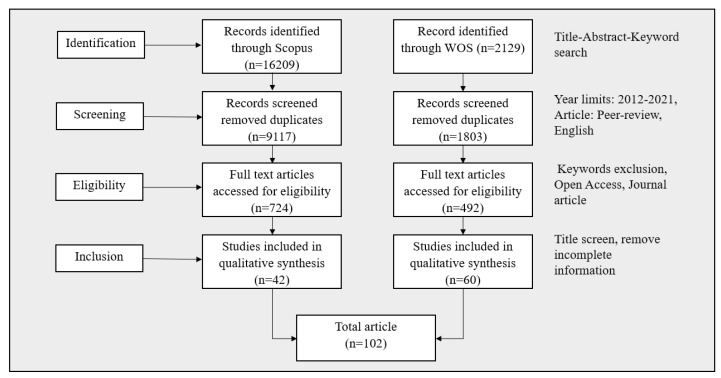
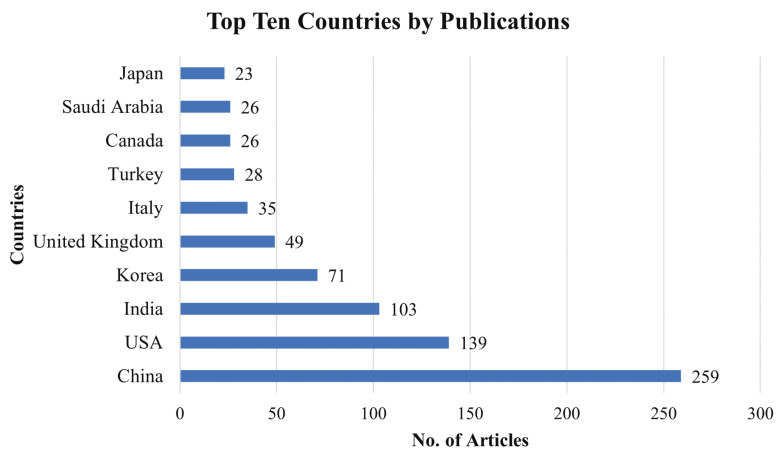
Globally, there is a substantial unmet need to diagnose various diseases effectively. The complexity of the different disease mechanisms and underlying symptoms of the patient population presents massive challenges in developing the early diagnosis tool and effective treatment. Machine learning (ML), an area of artificial intelligence (AI), enables researchers, physicians, and patients to solve some of these issues. Based on relevant research, this review explains how machine learning (ML) is being used to help in the early identification of numerous diseases. Initially, a bibliometric analysis of the publication is carried out using data from the Scopus and Web of Science (WOS) databases. The bibliometric study of 1216 publications was undertaken to determine the most prolific authors, nations, organizations, and most cited articles. The review then summarizes the most recent trends and approaches in machine-learning-based disease diagnosis (MLBDD), considering the following factors: algorithm, disease types, data type, application, and evaluation metrics. Finally, in this paper, we highlight key results and provides insight into future trends and opportunities in the MLBDD area.
Overview
The claims and statistics of this paper haven’t been checked yet.
Free: it reads the open-access text and checks the first 5 claims that cite a source we can check. Create a free account to check every claim.
Integrity signals
Registry
Cites
Statistics
Figures
Verification
Claims the paper makes
The claims and statistics of this paper haven’t been checked yet.
Free: it reads the open-access text and checks the first 5 claims that cite a source we can check. Create a free account to check every claim.
Claims other papers make about this one
Each is checked against this paper’s own text: does it say what the citing paper says it does?
The source backs part of the claim, not all of it — or backs it for a different population, condition or comparison.
In the citing paper
“While the advancement of manual diagnosis through the Placenta Accreta Index (PAI) process does improve the accuracy of diagnosis, it does not improve upon the PAS diagnostic issues of manual time consumption, proper symptom identification, and other complexities introduced via human error [10]”
From Machine Learning in Maternity: Early Diagnosis of Placenta Accreta Spectrum (2026) · cites this paper as [10]
Experimental — accuracy not yet measured
Self-check
Percentages, sums and reported differences re-computed from the paper’s own numbers.
The self-check needs the paper’s full text.
Citations
Cites
1 retracted
Saw, M., Saxena, T. K., Kaithwas, S., Yadav, R., & Lal, N. (2020) · International Conference on Computer Communication and Informatics (ICCCI) · doi:10.1109/iccci48352.2020.9104210 · Cited by 73 · cited 1×
“[41, 134, 135, 42, 43, 44, 45] Heart disease Cleveland database https://archive.”
RetractedSome Studies in Machine Learning Using the Game of Checkers
Samuel, A. L. (1959) · IBM Journal of Research and Development · doi:10.1147/rd.33.0210 · Cited by 4,443 · cited 1×
“The core principle of ML is to learn from data in order to forecast or make decisions depending on the assigned task [9].”
BackgroundWang, L., Lin, Z. Q., & Wong, A. (2020) · Scientific Reports · doi:10.1038/s41598-020-76550-z · Cited by 3,113 · cited 1×
“However, the model’s network activity and region of interest were poorly explained [93] .”
BackgroundDiscriminatory Analysis. Nonparametric Discrimination: Consistency Properties
Fix, E., & Hodges, J. L. (1989) · International Statistical Review / Revue Internationale de Statistique · doi:10.2307/1403797 · Cited by 2,516 · cited 10×
“They demonstrated that by fine-tuning the settings, it is feasible to get 94.35% accuracy, whereas the default KNN achieved around 90% accuracy [61].”
MethodInfluentialApostolopoulos, I. D., & Mpesiana, T. A. (2020) · Physical and Engineering Sciences in Medicine · doi:10.1007/s13246-020-00865-4 · Cited by 2,338
Green supply chain management: A review and bibliometric analysis
Fahimnia, B., Sarkis, J., & Davarzani, H. (2015) · International Journal of Production Economics · doi:10.1016/j.ijpe.2015.01.003 · Cited by 2,131 · cited 1×
“Due to their high quality and peer review paper index, Scopus and WOS are prominent databases for article searching, as many academics and scholars utilized them for systematic review [25,26].”
BackgroundNarin, A., Kaya, C., & Pamuk, Z. (2021) · Pattern Analysis and Applications · doi:10.1007/s10044-021-00984-y · Cited by 2,054 · cited 2×
“Several studies investigated and advised screening COVID-19 patients utilizing chest X-ray images in parallel, with major contributions in [95, 96, 97].”
BackgroundMethodEffective Heart Disease Prediction Using Hybrid Machine Learning Techniques
Mohan, S., Thirumalai, C., & Srivastava, G. (2019) · IEEE Access · doi:10.1109/access.2019.2923707 · Cited by 1,951 · cited 1×
“(2019) [29] Effective Heart disease prediction Using hybrid Machine Learning techniques 214”
BackgroundLi, L., Qin, L., Xu, Z., Yin, Y., Wang, X., Kong, B., Bai, J., Lu, Y., Fang, Z., Song, Q., et al. (2020) · Radiology · doi:10.1148/radiol.2020200905 · Cited by 1,927 · cited 1×
“Li et al. (2020) suggested the COVNet model and obtain 96% accuracy utilizing a large dataset of 4356 chest CT images of Pneumonia patients, 1296 of which were verified COVID-19 cases [94].”
MethodLevey, A. S., & Coresh, J. (2012) · The Lancet · doi:10.1016/s0140-6736(11)60178-5 · Cited by 1,841 · cited 1×
“The recent advancement of ML and DL-based kidney disease diagnosis may provide a possibility for those countries that are unable to handle the kidney disease diagnostic related tests [49].”
Background
Research works printed but not linked: 8
- McPhee, S.J.; Papadakis, M.A.; Rabow, M.W. (Eds.) Current Medical Diagnosis & Treatment; McGraw-Hill Medical: New York, NY, USA, 2010.
- Brownlee, J. Machine learning mastery with Python. Mach. Learn. Mastery Pty Ltd. 2016, 527, 100-120.
- Goodfellow, I.; Bengio, Y.; Courville, A. Deep Learning; MIT Press: Cambridge, MA, USA, 2016.
- Qtea, H.; Awad, M. Using Hybrid Model of Particle Swarm Optimization and Multi-Layer Perceptron Neural Networks for Classification of Diabete. Int. J. Intell. Eng. Syst. 2021, 14, 11-22.
- Sriram, T.V.; Rao, M.V.; Narayana, G.S.; Kaladhar, D.; Vital, T.P.R. Intelligent Parkinson disease prediction using machine learning algorithms. Int. J. Eng. Innov. Technol. (IJEIT) 2013, 3, 1568-1572.
- Ghoshal, B., and Tucker, A. (2020). Estimating uncertainty and interpretability in deep learning for coronavirus (COVID-19) detection. arXiv.
- Vidushi, A.R.; Shrivastava, A.K. Diagnosis of Alzheimer disease using machine learning approaches. Int. J. Adv. Sci. Technol. 2019, 29, 7062-7073. 107.
- Gill, N.S.; Mittal, P. A computational hybrid model with two level classification using SVM and neural network for predicting the diabetes disease. J. Theor. Appl. Inf. Technol 2016, 87, 1-10. 137.
Cited by
Items 501–600 of 721
Castaño, M. C., Garcia, J., Serna, W. S., Orozco, A. A., & Peña, D. A. C. (2024) · Revista EIA · doi:10.24050/reia.v21i42.1775
Vyas, A., Singh, A. P., Dave, A., & Dave, S. (2024) · Advanced technologies and societal change · doi:10.1007/978-981-97-3312-5_5
A Review of Traffic Flow Prediction Models in 5G Using Machine Learning Techniques
Malik, K. S., Rohilla, T. R., & Kumar, S. (2024) · International Journal for Research in Applied Science and Engineering Technology · doi:10.22214/ijraset.2024.63612
Insights in Healthcare Professions Education: 2023
(2024) · Frontiers research topics · doi:10.3389/978-2-8325-5189-9
Brain Tumour Detection Using Advance Machine Learning: A Literature Review
Yadav, S., & Upadhyay, S. K. (2024) · International Conference for Emerging Technology (INCET) · doi:10.1109/incet61516.2024.10593121
Forecasting Health: Machine Learning Approaches to Disease Prediction
Santhosh, N., Tushar, P., Gomez, R. G., & Devanarayanan, V. (2024) · International Journal of Science and Research (IJSR) · doi:10.21275/sr24722114709
Impact of Data Heterogeneity on AI/ML Model Accuracy in Assisting Pneumonia Type Prediction
Pinnaka, M., Parvataneni, K., & Zaidi, S. (2024) · IEEE International Conference on Industry 4.0, Artificial Intelligence, and Communications Technology (IAICT) · doi:10.1109/iaict62357.2024.10617531
“…methods and algorithms, including their significance, limitations, as well as advantages and disadvantages, as analyzing the results of these designs can aid in the development of a model that will predict the disease for future patients if accurate symptoms and diagnostic results are provided [9].”
BackgroundClassification of Cardiovascular Diseases from Magnetic Resonance Imaging using Classifiers
Sowmiya, M., Rekha, B. B., Dheepak, S., Hari Krishna, R., & Athish, R. S. (2024) · International Conference on Smart Systems for Electrical, Electronics, Communication and Computer Engineering (ICSSEECC) · doi:10.1109/icsseecc61126.2024.10649426
“Their method achieved an impressive accuracy of 93%, demonstrating the potential of MRI and machine learning for automated diagnosis [11].”
MethodCOVID Geliştirme Duyarlılığını Tahmin Etmek için Makine Öğrenimi Modellerinin Geliştirilmesi
Ertem, Z. (2024) · Fırat Üniversitesi Mühendislik Bilimleri Dergisi · doi:10.35234/fumbd.1535830
Predictive analysis in healthcare using data science: leveraging big data for improved patient care
Mazumdar, H., & Khondakar, K. R. (2024) · Elsevier eBooks · doi:10.1016/b978-0-443-24028-7.00009-x
Programmatic forecasting of treatment and diagnostic measures for congenital cleft lip and/or palate
Tutova, K. S., & Muzychina, A. A. (2024) · Pediatric dentistry and dental prophylaxis · doi:10.33925/1683-3031-2024-826
Mental Health Assessment Using EEG Sensor and Machine Learning
Singh, M., Vyas, C., & Mazumdar, B. D. (2024) · Lecture notes in networks and systems · doi:10.1007/978-981-97-4152-6_13
Applications of Machine Learning Practices in Human Healthcare Management Systems
Satija, A., Pahuja, P., Singh, D., & Hussain, A. (2024) · BENTHAM SCIENCE PUBLISHERS eBooks · doi:10.2174/9789815305128124010007
Kafi, M. A. A., Basak, P., Sarower, A. H., & Liza, S. A. (2024) · Lecture notes in networks and systems · doi:10.1007/978-981-97-3937-0_31
JUNIOR, N. A., DIAS, M. S., SANTOS, H. S., Lima, R. H. P., & dos Santos, B. S. (2024) · Anais ... Encontro Nacional de Engenharia de Produção/Anais do Encontro Nacional de Engenharia de Produção · doi:10.14488/enegep2024_tn_st_413_2034_47859
Prateek, Maurya, H., Singh, S., Khullar, A., & Mehta, A. (2024) · CRC Press eBooks · doi:10.1201/9781003559085-20
Studying the cases of heart and arteries nutrition for cardiac patients using bioinformatics toolsPreprint
Alashoush, B., Alkuddsi, Y. A., Aleinikovas, M., Šilinskas, B., Almogdad, M., Škėma, M., & Almukdad, M. (2024) · Research Square · doi:10.21203/rs.3.rs-5303077/v1
Analysis of Insomnia for Old Aged People Using Machine Learning Algorithms
Renukadevi, N. T., Saraswathi, K., & Vignesh, S. (2024) · Advances in healthcare information systems and administration book series · doi:10.4018/979-8-3693-7277-7.ch010
Artificial Intelligence Identifies Cancer and Viral Infections with Nanoscale
Svanishvili, G. (2024) · Premier journal of science. · doi:10.70389/pjs.100032 · Cited by 1
Genome-wide machine learning analysis of anosmia and ageusia with COVID-19
Pietan, L., Phillippi, E. S., Melo, M., El‐Shanti, H., Smith, B. J., Darbro, B. W., Braun, T. A., & Casavant, T. L. (2026) · PLoS ONE · doi:10.1371/journal.pone.0355832
“Multiple well-established and validated ML models were tested and had previously been demonstrated to produce insightful results on biological datasets [14].”
A Bibliometric Analysis of Leveraging Artificial Intelligence Technology for Global Pandemics
Lin, L., Weng, H., Yan, E., Zhan, C., Wang, F. L., & Hao, T. (2024) · International Conference on Behavioral, Economic, and Socio-Cultural Computing · doi:10.1109/besc64747.2024.10780715
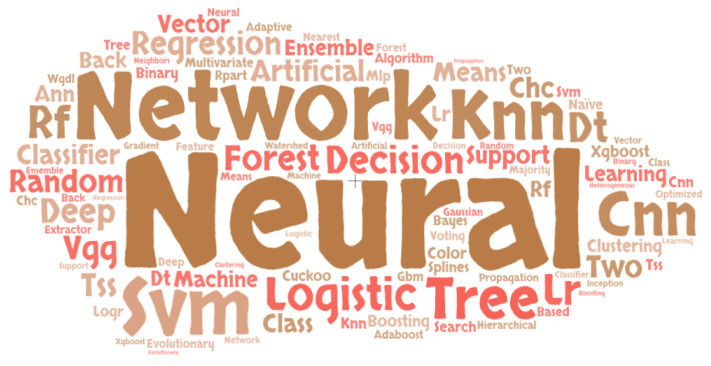
“Word clouds visually highlight keywords that occur frequently in articles, for example by creating keyword cloud maps, to rapidly and intuitively capture important information [31].”
Leveraging Keras for Early Detection of Diabetes: A Multi-Layer Perceptron Model
Swain, K., Mohapatra, S. K., Mohanty, S. P., Mali, S., & Ali, F. A. (2024) · Odisha International Conference on Electrical Power Engineering, Communication and Computing Technology (ODICON) · doi:10.1109/odicon62106.2024.10797471
“Across various ML approaches, the Multi-Layer Perception (MLP) is trending in fast forward artificial neural network and seems very promising in healthcare [8-10].”
Tripathi, A., Gupta, R. K., & Sharma, M. (2024) · Lecture notes in networks and systems · doi:10.1007/978-981-97-6995-7_34
Prediction of Schizophrenia Using Feature Extraction Methods with EEG Data
Küçük, O., & Cantürk, İ. (2024) · Orclever Proceedings of Research and Development · doi:10.56038/oprd.v5i1.528
Bhatti, E., Kaur, P., Kaur, K., & Arzoo (2025) · Algorithms for intelligent systems · doi:10.1007/978-981-97-8669-5_14
Deep Learning Based Diagnosis Of Melanoma On Dermatoscopic Images
Prasad, N., Bhan, A., Jadon, B., & Vijay, T. (2024) · International Conference on Advancements and Key Challenges in Green Energy and Computing (AKGEC) · doi:10.1109/akgec62572.2024.10869088
Kumar, N., Lakhnotra, A., Akram, W., & Manhas, J. (2025) · International Journal of All Research Education & Scientific Methods · doi:10.56025/ijaresm.2025.130225432
AyurPharma: Ayurvedic Drug Recommendation System
-, P. B. V. K., -, A. P., -, P. G., -, Y. B., & -, S. B. (2025) · International Journal For Multidisciplinary Research · doi:10.36948/ijfmr.2025.v07i01.37337
Disease Classes Identification and Association Rules Extraction Using Medical Records
Aishwarya, L., Pooja, V., & Rameswaran, S. (2025) · Lecture notes in networks and systems · doi:10.1007/978-981-97-5703-9_45
Smart Diagnosis Using Symptoms for Seeking a Specialist Doctor
Das, B., & Kumar, R. (2025) · Communications in computer and information science · doi:10.1007/978-3-031-81935-3_5
Xu, X., Zheng, S., Yang, L. F., hao, J., Wang, X., Kang, H., Ma, C., Lü, X., & Li, J. (2025) · Research Square · doi:10.21203/rs.3.rs-5606661/v1
Artificial Intelligence and Machine Learning Approaches for Flood Prediction in Medan City
Ginting, R. U., & Leonardo, F. (2024) · International Conference on Informatics and Computing (ICIC) · doi:10.1109/icic64337.2024.10957018
Cure AI - AI-Powered Care at Your Fingertips
Vishwakarma, A. (2025) · INTERANTIONAL JOURNAL OF SCIENTIFIC RESEARCH IN ENGINEERING AND MANAGEMENT · doi:10.55041/ijsrem48363
Integration of Transfer Learning with Image Segmentation for Automated Medical Diagnostics
Jawad, L. M. A. (2025) · Procedia Computer Science · doi:10.1016/j.procs.2025.03.176
Driever, J., Lentzen, M., Madan, S., & Fröhlich, H. (2025) · medRxiv · doi:10.1101/2025.06.02.25328621
“[1] Because EHRs provide a comprehensive account of a patient’s medical history that is routinely collected in many healthcare 1 systems, they offer a promising data source for developing ML-based prediction models.”
Pious, I. K., Lydia, A., Saravanan, S., Kumar, M. S., Mallik, S., Li, A., & Ray, K. (2025) · Lecture notes in networks and systems · doi:10.1007/978-981-96-0185-1_34
https://dergipark.org.tr/tr/pub/tamde/issue/92196/1674425
Thaariq, Z. Z. A., Surahman, E., Jaradat, M. F., & Mellyana, I. M. (2025) · TAM Akademi Dergisi · doi:10.58239/tamde.2025.01.006.x
Diagnosis—An Art of Identifying Disease
Dhabarde, D. M., Maske, M. P., Kamble, M. A., Baheti, J., & Dulhare, U. N. (2025) · Algorithms for intelligent systems · doi:10.1007/978-981-96-3648-8_5
Machine learning in pandemic: transformative applications, models, and future directions
Verma, S., Pandey, S. K., Rajpoot, P., & Yadav, A. K. (2025) · Elsevier eBooks · doi:10.1016/b978-0-443-33871-7.00013-1
Importance of Artificial Intelligence in Healthcare
Sai, S. N., Sai Baba, C. H., Sai, Y., & Reddy, T. S. (2025) · doi:10.38124/ijisrt/24jul1574
Complexity Engineering: How Subjective Issues Become Objective
Piqueira, J. R. C., de Mattos, S. H. V. L., & Ceccato, R. C. (2025) · Complexity · doi:10.1155/cplx/9728576
“Concerning ML applications, many knowledge areas, in addition to engineering, are contemplated as, for instance: medical diagnosis [96], business [97], and urban planning [98].”
Njeru, A. M., Wario, R. D., Njagi, R., Nyaga, C. N., & Gitonga, L. K. (2025) · IST-Africa Conference (IST-Africa) · doi:10.23919/ist-africa67297.2025.11060522
“Traditionally, diagnosis has relied on clinical tests; however, advancements in machine learning now offer a powerful tool to improve diagnostic accuracy by processing extensive datasets [18].”
Towards Automated Medical Pre-Diagnosis: Disease Prediction Chatbot Using Ensemble Learning
Babar, A. A., Argiddi, R. V., & Mahant, M. A. (2025) · International Conference on Inventive Computing and Informatics (ICICI) · doi:10.1109/icici65870.2025.11069671
“Additionally, the study explores performance metrics and offers insights into future trends, including explainable AI and ensemble methods [5].”
Attallah, H. A., Al‐Asadi, A., & Doctor, S. S. (2025) · ITEGAM- Journal of Engineering and Technology for Industrial Applications (ITEGAM-JETIA) · doi:10.5935/jetia.v11i54.1718
Image Steganography of MRI Using 2D Wavelet Transform
Sedaghatian, M., & Karami, M. (2022) · Transactions on Machine Intelligence · doi:10.47176/tmi.2022.248
Swathi, A., Dilip, G., & Vathsala, A. V. (2025) · Multidisciplinary Reviews · doi:10.31893/multirev.2026039
Hegde, S. K., Hegde, R., & Thangavel, M. (2025) · Lecture notes in electrical engineering · doi:10.1007/978-981-96-3105-6_38
Hybrid Machine Learning Optimization Models for Disease Prediction
Kotha, K. K., Rajasekhar, E. S. K., Bukke, S. P. N., Veluru, H., & Kumarachari, R. K. (2025) · Advances in computational intelligence and robotics book series · doi:10.4018/979-8-3373-5137-7.ch003
Issa, S. F., Yousefi, S., & Weichelt, B. P. (2025) · SSRN Electronic Journal · doi:10.2139/ssrn.5355801
A Smartphone Based Robust Model for Intelligent Prediction of Thyroid Disease
Jha, C., Sharma, V., Singh, V., Aditi, A., Mishra, S., & Alkhyyat, A. (2025) · Lecture notes in networks and systems · doi:10.1007/978-981-96-6066-7_3
Gender Classification in Panoramic Dental X-Rays using few-shot learning and Ensemble models
Essam, A., Gamal, M., & Atia, A. (2025) · International Conference on Activity and Behavior Computing (ABC) · doi:10.1109/abc64332.2025.11118422
“This technology has demonstrated significant success in many different fields, including healthcare, where it has been effectively applied to medical imaging diagnostics [2].”
Innovations in imaging technologies for disease modeling and monitoring
Zaidi, S., Singh, P., & Kumar, P. (2025) · Elsevier eBooks · doi:10.1016/b978-0-443-33877-9.00013-6
Impact of High Altitude on Military Operations: An Overview
Yadav, R. B., Yadav, A. K., Kuntalam, V., Yadav, V. K., Singhal, A., Kapoor, P., & Arora, R. (2025) · Springer eBooks · doi:10.1007/978-981-96-8642-1_1
Paediatrics Respiratory Diseases Diagnostic and Prediction System Using Deep Learning Model
Joseph, O. K., Adegun, I. P., & Adebayo, O. S. (2025) · International Journal of Applied Information Systems · doi:10.5120/ijais2025452011
Symptom Based Disease Prediction
M, P. K. P., Dr. Kumar Siddamallappa., U., & Sowmya., P. (2025) · Iconic Research and Engineering Journals · doi:10.64388/irev9i3-1710625-352
Evaluating the Impact of Class Imbalance on Breast Ultrasound Image Classification
Cabeza, N., Fajardo, C. A., & Pertuz, S. D. (2025) · Symposium on Image, Signal Processing and Artificial Vision (STSIVA) · doi:10.1109/stsiva66383.2025.11156656 · Cited by 2
“These findings are relevant considering that machine learning has been used as a supportive tool in medical tasks, particularly in epidemiological outcomes with very different incidence rates [24].”
Application of Machine Learning for Early Disease Diagnosis in Healthcare
Asad, S. M., Hussain, M., Monim, R. M., & Islam, K. (2022) · Cuestiones de Fisioterapia · doi:10.48047/bp9aw408 · Cited by 8
“Additionally, ongoing research aims to make ML algorithms more interpretable so that physicians can comprehend and have confidence in the advice these systems produce [3].”
Kural, S., Kumar, L., Pathak, A. K., Singh, S., Jain, G., Yadav, M., Singh, Y., Kumar, U., Trivedi, S., Gupta, M., et al. (2026) · BMC Cancer · doi:10.1186/s12885-026-16217-6
“Logistic regression, in contrast, is a widely used supervised model that performs effectively on binary classification tasks, such as identifying diseased versus healthy conditions [38].”
Automated Diagnosis of Dental Conditions in Panoramic X-Rays with Ensemble Deep Learning Models
Gamal, M., Essam, A., & Atia, A. (2025) · Intelligent Methods, Systems, and Applications (IMSA) · doi:10.1109/imsa65733.2025.11167097
AI Based Disease Diagnosis Platform
Bharti, Mehta, P., Deb, P., Watts, V., Singh, T., & Lal, P. (2025) · IEEE Guwahati Subsection Conference (GCON) · doi:10.1109/gcon65540.2025.11173396
Machine Learning-based Models for the Early Detection of Autism Spectrum Disorder
Krishnaveni, N., Arunshanmugam, D., Kirupananthavalli, K., Rajeswari, G., Amutha, S., & Vincy, K. A. J. (2025) · Lecture notes in networks and systems · doi:10.1007/978-981-96-5370-6_21
Making Better Medical Decisions Using Machine Learning: A Bayesian Model
Terán-Bustamante, A., & Martínez-Velasco, A. (2025) · Studies in computational intelligence · doi:10.1007/978-3-031-96328-5_13
Swetha, D., Kavitha, P. S., Soman, P., Muthuvel, I., Sudha, A., Kokilavani, S., & Vanitha, G. (2025) · Plant Science Today · doi:10.14719/pst.9796
Causal networks guiding large language models: application to COVID-19
Alemi, F., Lybarger, K., Vang, J., Lin, Y., Elyazori, H. R. A., & Cardenas, V. F. (2025) · Health Care Management Science · doi:10.1007/s10729-025-09724-8
AI Algorithms in Medical Diagnostics: Trends, Validation, and Challenges
Belmouss, H., & Aamouche, A. (2025) · Lecture notes in networks and systems · doi:10.1007/978-3-032-01970-7_11
CONVENTIONAL AND HYBRID RESAMPLING TECHNIQUES IN MACHINE LEARNING FOR HEALTHCARE DATA
AlMahadin, G. (2025) · International Journal of Apllied Mathematics · doi:10.12732/ijam.v38i8s.553
Beig, M. M., Mehmood, S., Farooq, H. M. A., & Subhan, A. (2025) · Engineering cyber-physical systems and critical infrastructures · doi:10.1007/978-3-031-95240-1_3 · Cited by 1
Culturally Relevant AI Strategies for Geriatric Care in Low-Resource Settings
Stolakis, K. (2025) · Advances in computational intelligence and robotics book series · doi:10.4018/979-8-3373-5462-0.ch007
Patino-Mateus, J. D., Quiroga-Gutierrez, N., & Saldana, C. S. (2025) · touchREVIEWS in Infectious Diseases · doi:10.17925/id.2025.4.1.2
SYMPTOM-BASED HEALTH GUIDE WITH DOCTOR ASSIGNMENT AND WELLNESS PLANS
(2025) · International Research Journal of Modernization in Engineering Technology and Science · doi:10.56726/irjmets84151
Leveraging machine learning techniques for early detection of Parkinson's disease
Singh, R. V., Gulati, S., Mohan, A., & Tyagi, Y. (2025) · AIP conference proceedings · doi:10.1063/5.0297738
Development of a Machine Learning-Based Symptom Checker for Early Disease Diagnosis
Jyothi, A. P., Bhansali, M., Mayur, M. S., & Shariff, M. T. (2025) · IEEE International Conference on Contemporary Computing and Communications (InC4) · doi:10.1109/inc465408.2025.11256217
“This predicament is aggravated by the emergence of worldwide pandemics like COVID-19, which placed enormous demand on healthcare systems.”
InfluentialBERTDiseComp: A Clinical Language Model for Detecting Disease Complications in EHRs
Alnazzawi, N. (2025) · International Conference on Electrical, Communication, and Computer Engineering (ICECCE) · doi:10.1109/icecce67514.2025.11257959
A comparative analysis of machine learning classifiers for chronic liver disease prediction in rats
Nadeem, A., Bisht, S., Kaushal, A., & Gupta, S. (2025) · Journal of Pharmacy and Pharmacology · doi:10.1093/jpp/rgaf121 · Cited by 1
Yang, S., Yang, K., Wang, L., Pu, J., & Wang, P. (2026) · Journal of Thoracic Disease · doi:10.21037/jtd-2025-1742
“ML, a branch of AI, has been increasingly applied to facilitate the early identification of various diseases (12).”
An Intensive Review Identification and Classification of Eye Diseases Using Vision Transformers
Mathariya, S. K., Kaur, M., Goyal, S., Sandesh, R., Deotale, D., & Jain, M. (2025) · IEEE International Conference on Advances in Computing Research on Science Engineering and Technology (ACROSET) · doi:10.1109/acroset66531.2025.11280906
Prasad, K., Griffiths, A., Agrawal, K., McEwan, M., Macci, F., Ghisoni, M., Stopher, M., Napleton, M., Strickland, J., Keating, D., et al. (2024) · Figshare · doi:10.6084/m9.figshare.26322714
Hoendermis, D. (. (2023) · Research Repository (Delft University of Technology)
lu, B. (2024) · eScholarship (California Digital Library) · Cited by 1
AI-driven automatisering av kosttillskottsrekommendationer
Svenberg, O., & Halfar, L. (2025) · Diva portal (Dalarna University Library)
Sarkar, T., & Rakhra, M. (2025) · International Conference on Reliability, Infocom Technologies and Optimization (Trends and Future Directions) (ICRITO) · doi:10.1109/icrito66076.2025.11241521
Impact of Optimizer on the MLP-Based Models for Student Performance Classification
Osman, F. N., Aziz, M. A. A., Yassin, I. M., & Taib, M. N. (2025) · Journal of Electrical & Electronic Systems Research · doi:10.24191/jeesr.v27i1.012
Logistics 4.0 in clinical trials: Selecting the best technology
Tadić, S. R., Graovac, B., Krstić, M. D., & Veljović, M. (2025) · doi:10.5937/vi25111t
Feasibility of MLOps-based healthcare pipelines in ensuring the Cybersecurity Framework
Robustelli, A., Marfoglia, A., D’Errico, C., Mellone, S., & Carbonaro, A. (2025) · Archivio istituzionale della ricerca (Alma Mater Studiorum Università di Bologna) · Cited by 3
EMERGING DISEASES IN GINGER CULTIVATION: CHALLENGES, DETECTION, AND CONTROL
Faiz, P. B. M., Azizi, M. M. F., Romeli, S., Lau, H. Y., & Agrotechnology and Biosciences Division, M. N. A. (2025) · Malaysian Journal of Sustainable Agricultural · doi:10.26480/mjsa.02.2025.103.109
Jämförande analys av förklarande modeller för kliniska beslutsstödsystem
Ahmed, S. S. (2025) · Doria (University of Helsinki)
Dynamic Inquiry System for Hospital Department Recommendation
Jirarattanametharkornt, A., Puangtabtim, J., Archirapatkave, V., Ridtiya, N., & Wattanapongsakorn, N. (2025) · International Joint Conference on Computer Science and Software Engineering · doi:10.1109/jcsse67377.2025.11297924
“Luna et al. [5] 139 machine learning-based disease diagnosis.”
AI in Early Diagnosis and Risk Prediction
Vashishtha, A., Singh, A. K., Kaushik, G., Sharma, P., Kumar, V., Singh, S., & Sah, A. K. (2025) · Advances in computational intelligence and robotics book series · doi:10.4018/979-8-3373-3196-6.ch002
Application of Statistical Information Extraction Method on Patient Complaints
Ratnasari, C. I., & Oktaviani, N. P. (2026) · Lecture notes in networks and systems · doi:10.1007/978-981-96-9275-0_43
Jaber, H. A. (2026) · Lecture notes in networks and systems · doi:10.1007/978-981-96-8793-0_22
A Comprehensive Framework for Heart Disease Prediction: From Data Preprocessing to Model Deployment
Begum, S. S., Swamy, A., & Dhanka, S. (2025) · International Symposium on Advanced Electrical and Communication Technologies (ISAECT) · doi:10.1109/isaect68904.2025.11318812 · Cited by 2
“This will allow physicians to diagnose patients more reliably and efficiently, and also aid in teaching medical students and non-specialists through the use of intelligent analysis of real-time statistics[1], [2].”
A Colour-Statistical Feature Based Machine Learning Framework for Mango Disease Classification
Pandey, A., Bhadoriya, I., Kothari, A., Sharma, S., & Mishra, D. (2025) · IEEE International Conference on ICT in Business Industry & Government (ICTBIG) · doi:10.1109/ictbig68706.2025.11323623
“General reviews on ML-based disease diagnosis highlight the growing effectiveness of classical and ensemble learning methods for interpreting image-based symptoms across medical and agricultural domains [12].”
Atillo, G. N. A., & Calumpang, Z. D. (2025) · Journal of ICT Research and Applications · doi:10.5614/itbj.ict.res.appl.2025.19.2.5
(2026) · Frontiers research topics · doi:10.3389/978-2-8325-7369-3
From deterministic to predictive modeling
Oliva, A. O., & Seshaiyer, P. (2026) · Elsevier eBooks · doi:10.1016/b978-0-44-327452-7.00018-x
Atmadji, E. S. J., Wibowo, A. P., & Faizal, E. (2025) · International Journal of Artificial Intelligence in Medical Issues · doi:10.56705/ijaimi.v3i2.361
“Prior works often focus on binary or limited disease sets, underrepresenting the complexity of real-world symptoms and their linguistic variability [1], [2], [3].”
Diabetes Detection with Hybrid Deep Learning Models
Iqbal, H., Gillani, B., & Ilyas, A. (2025) · Horizons of Information Technology and Engineering (HITE) · doi:10.1109/hite68444.2025.11363981
“They struggle to meet the necessary standards for objectivity, sensitivity, speed, and accessibility, highlighting the need for more effective solutions [5].”
Yue, Z.-Y., Li, C.-H., Zhang, Z.-X., Zhao, M., Zhao, T., Zeng, X.-K., Liu, Y.-H., Su, Y., Li, J., Pan, H.-W., et al. (2026) · BMC Public Health · doi:10.1186/s12889-026-26420-6
“Machine learning (ML) has emerged as a robust tool for automated diagnosis and prognostic evaluation [16].”
Fostering Healthcare through Artificial Intelligence: A High-Performance Computing Approach
Khare, K., Aizaz, Z., & Khare, N. (2025) · CRC Press eBooks · doi:10.1201/9781003503033 · Cited by 1
Explainable AI Based Multi-Class Pneumonia Classification and Anomaly Detection from Chest X-ray
Mahfuz, S., Israt, T., Anannya, M., Hosen, M. B., & Mazumder, R. (2025) · IEEE International Conference on Computing, Applications and Systems (COMPAS) · doi:10.1109/compas67506.2025.11381871
“The majority of deep learning models can only be trained in accordance with the known categories of the disease and are not able to identify rare or unknown ones and thus being overconfident in their approaches to the misclassification [5]–[7] .”
Metadata
- Authors
- Ahsan, M. M., Luna, S. A., & Siddique, Z.
- Affiliations
- University of Oklahoma (US)
- Dhaka Medical College and Hospital (BD)
- Corresponding author
- Ahsan, Md Manjurul
- Venue
- Healthcare
- Publisher
- MDPI AG
- Published
- 2022-03-15
- Volume
- 10
- Issue
- 3
- Pages
- 541
- ISSN
- 2227-9032 (ISSN-L)
- PMC
- PMC8950225
- OpenAlex
- W4220862305
- Semantic Scholar
- 870da55ec826bcfeae42ca0f72e06be3660ebcea
- Cited by
- 603
- References
- 131
- Citations by year
- 2026: 102 · 2025: 203 · 2024: 182 · 2023: 91 · 2022: 24
- FWCI
- 18.24
- Type
- journal article
- Language
- en
- Open access
- gold
- doi.org
- Licence
- Locations
- Healthcare (publishedVersion, cc-by)
- PubMed Central (publishedVersion, cc-by)
- PubMed (publishedVersion)
- arXiv (Cornell University) (submittedVersion)
- arXiv (Cornell University) (cc-by)
- Topics
- Health Sciences › Health Professions › Health Information Management › Artificial Intelligence in Healthcare
- Health Sciences › Medicine › Health Informatics › Artificial Intelligence in Healthcare and Education
- Physical Sciences › Computer Science › Artificial Intelligence › AI in cancer detection
- Keywords
- machine learning, disease diagnosis, early diagnosis, artificial intelligence in healthcare, diagnostic algorithm, evaluation metrics, bibliometric analysis
About these checks
Registry, retraction, Cites and statistics results are computed, not judged, with one exception: a printed reference that no index lists is read once by a model before it counts as a citation error. Claims are extracted by a model and kept only when their quote appears verbatim in the text; each cited source is then checked, with a model’s help, for whether it says what the claim relies on. Those verdicts can be wrong — read the claim’s quote and the cited source before relying on one.
Statistics and arithmetic are recomputed, not judged.
Confidence bands are shown only for fields calibrated on our annotated test set. None is calibrated yet, so no band is shown.
What counts as a claim ›How we measure confidence ›How we check this ›
Are you an author, or do you see a problem with this page? Request a review
Data sources
Bibliographic data: Semantic Scholar, OpenAlex, Crossref.
Contains information from the Semantic Scholar Academic Graph Datasets, made available under the ODC Attribution License (ODC-BY 1.0).
Semantic Scholar’s data is described in: Kinney, R., et al. (2023). The Semantic Scholar Open Data Platform. arXiv:2301.10140.
