

Online Health Information Seeking Behavior: A Systematic Review
Open accessThe DOI matches its Crossref record; 40 of the 40 references it cites were found in a registry or an index.
Abstract
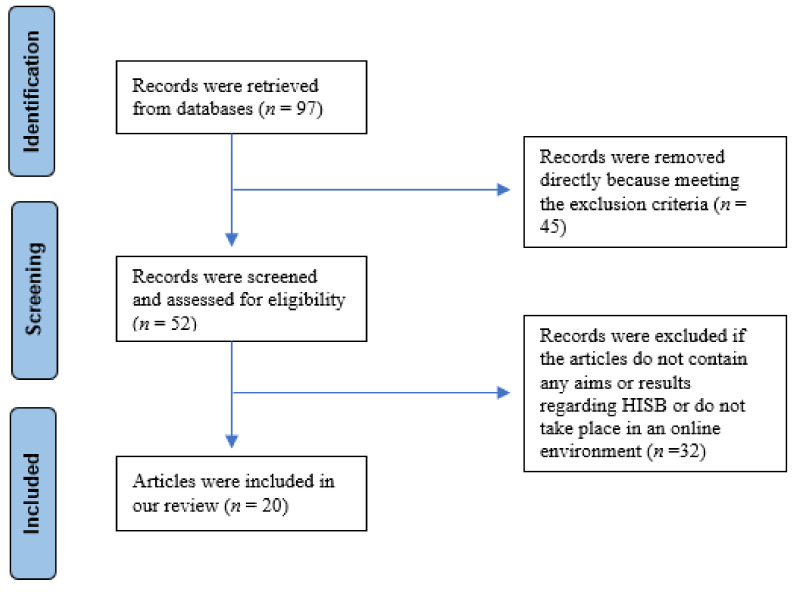
The last five years have seen a leap in the development of information technology and social media. Seeking health information online has become popular. It has been widely accepted that online health information seeking behavior has a positive impact on health information consumers. Due to its importance, online health information seeking behavior has been investigated from different aspects. However, there is lacking a systematic review that can integrate the findings of the most recent research work in online health information seeking, and provide guidance to governments, health organizations, and social media platforms on how to support and promote this seeking behavior, and improve the services of online health information access and provision. We therefore conduct this systematic review. The Google Scholar database was searched for existing research on online health information seeking behavior between 2016 and 2021 to obtain the most recent findings. Within the 97 papers searched, 20 met our inclusion criteria. Through a systematic review, this paper identifies general behavioral patterns, and influencing factors such as age, gender, income, employment status, literacy (or education) level, country of origin and places of residence, and caregiving role. Facilitators (i.e., the existence of online communities, the privacy feature, real-time interaction, and archived health information format), and barriers (i.e., low health literacy, limited accessibility and information retrieval skills, low reliable, deficient and elusive health information, platform censorship, and lack of misinformation checks) to online health information seeking behavior are also discovered.
Overview
The claims and statistics of this paper haven’t been checked yet.
Free: it reads the open-access text and checks the first 5 claims that cite a source we can check. Create a free account to check every claim.
Integrity signals
Registry
Cites
Statistics
Figures

Verification
Claims the paper makes
The claims and statistics of this paper haven’t been checked yet.
Free: it reads the open-access text and checks the first 5 claims that cite a source we can check. Create a free account to check every claim.
Claims other papers make about this one
Each is checked against this paper’s own text: does it say what the citing paper says it does?
The cited source says what the claim attributes to it.
In the citing paper
“This finding is consistent with current evidence demonstrating age-dependent differences in health information-seeking behavior [44].”
From Sociodemographic differences in dementia prevention knowledge in Germany: Implications for targeted health communication (2026) · cites this paper as [44]
Self-check
Percentages, sums and reported differences re-computed from the paper’s own numbers.
The self-check needs the paper’s full text.
Citations
Cites
Internet Health Information Seeking and the Patient-Physician Relationship: A Systematic Review
Tan, S. S.-L., & Goonawardene, N. (2017) · Journal of Medical Internet Research · doi:10.2196/jmir.5729 · Cited by 1,101
Health Information—Seeking Behavior
Lambert, S. D., & Loiselle, C. G. (2007) · Qualitative Health Research · doi:10.1177/1049732307305199 · Cited by 894 · cited 1×
“Seeking health information online allows health information consumers to obtain knowledge about their health issues, deal with health problems, and make health decisions, and have behavior change [11,12].”
BackgroundConsumer health information seeking in social media: a literature review
Zhao, Y., & Zhang, J. (2017) · Health Information & Libraries Journal · doi:10.1111/hir.12192 · Cited by 607 · cited 1×
“On the one hand, only involving papers published recently ensures that the findings integrated into our systematic review are up to date; on the other hand, it could avoid repetitive review work on online HISB [18,20].”
BackgroundPowell, J., Inglis, N., Ronnie, J., & Large, S. (2011) · Journal of Medical Internet Research · doi:10.2196/jmir.1600 · Cited by 493
Finney Rutten, L. J., Blake, K. D., Greenberg-Worisek, A. J., Allen, S. V., Moser, R. P., & Hesse, B. W. (2019) · Public Health Reports® · doi:10.1177/0033354919874074 · Cited by 426 · cited 1×
“A recent study indicated that in 2008, 61.2% of the population sought health information online first for their most recent search, while in 2017, the percentage had reached 74.4% [15].”
BackgroundInfluentialA Comprehensive Model of Cancer-Related Information Seeking Applied to Magazines
JOHNSON, J. D., & MEISCHKE, H. (1993) · Human Communication Research · doi:10.1111/j.1468-2958.1993.tb00305.x · Cited by 406 · cited 1×
“Four relevant models have been identified as follows: Comprehensive model of information seeking (CMIS) has been widely used to investigate factors determining individuals’ information seeking behavior [36–38].”
MethodOnline Health Information Seeking: A Review and Meta-Analysis
Wang, X., Shi, J., & Kong, H. (2021) · Health Communication · doi:10.1080/10410236.2020.1748829 · Cited by 370 · cited 1×
“For example, the percentages in mainland China, Philippines, Hong Kong, Indonesia and Vietnam are 79%, 80%, 85%, 85% and 86%, respectively [6,16].”
BackgroundWho Searches the Internet for Health Information?
Bundorf, M. K., Wagner, T. H., Singer, S. J., & Baker, L. C. (2006) · Health Services Research · doi:10.1111/j.1475-6773.2006.00510.x · Cited by 313
How, When and Why People Seek Health Information Online: Qualitative Study in Hong Kong
Chu, J. T., Wang, M. P., Shen, C., Viswanath, K., Lam, T. H., & Chan, S. S. C. (2017) · Interactive Journal of Medical Research · doi:10.2196/ijmr.7000 · Cited by 181 · cited 2×
“There has been a continuous increase in online health information seeking activities lately [6].”
BackgroundLongo, D. R. (2005) · Health Expectations · doi:10.1111/j.1369-7625.2005.00339.x · Cited by 180 · cited 1×
“Four relevant models have been identified as follows: Comprehensive model of information seeking (CMIS) has been widely used to investigate factors determining individuals’ information seeking behavior [36–38].”
Method
Research works printed but not linked: 1
- Wei X. Du Z. Zhang S. Analysis of barriers to health information seeking and utilizing in patients with diabetes Cross-Cult. Commun. 2016 12 48 51
Cited by
Items 101–200 of 698
A Risk Taxonomy and Reflection Tool for Large Language Model Adoption in Public Health
Zhou, J., Chen, A. Z., Shah, D., Schwab‐Reese, L. M., & Choudhury, M. D. (2025) · Proceedings of the ACM on Human-Computer Interaction · doi:10.1145/3757544 · Cited by 12
Health information-seeking using short video platforms
Priyambodo, A. Z., Zhafirah, N. A., Shabur, R., Handayani, P. W., & Fitriani, H. (2025) · Digital Health · doi:10.1177/20552076251394619 · Cited by 14
“14 Widiar et al. 32 found that perceived usefulness in fl uences behavioral intention, and Jia et al. 16 found that the perception of the usefulness of health information found online can encourage further information-seeking behavior, as users feel supported in understanding their health conditions, making decisions,…”
InfluentialAdkins, A. S., Jarry, C. R., & Chauvel, A. M. (2024) · Journal of the California Dental Association · doi:10.1080/19424396.2024.2324979 · Cited by 12
Manasyan, A., Lasky, S., Jolibois, M. I., Moshal, T., Roohani, I., Munabi, N. C. O., Urata, M. M., & Hammoudeh, J. A. (2024) · The Cleft Palate-Craniofacial Journal · doi:10.1177/10556656241281453 · Cited by 12
“11 Given the prevalence of alveolar clefts and the value of alveolar bone grafting (ABG) in a timely fashion, accessible and reliable patient education materials (PEMs) to explain the procedure and its necessity are of the utmost importance.”
Anees, M., Shaikh, F. A., Shaikh, H., Siddiqui, N. A., & Rehman, Z. U. (2024) · Journal of Vascular Surgery Venous and Lymphatic Disorders · doi:10.1016/j.jvsv.2024.101985 · Cited by 12
“There is a notable increase in online activity seeking health information, 26 as demonstrated by Harsha et al ’ s fi ndings 14 on the increasing trend of searches related to varicose vein treatment.”
Social Media Use in Dermatology in Turkey: Challenges and Tips for Patient Health
Karadağ, A. S., Kandi, B., Şanlı, B., Ulusal, H., Basusta, H., Sener, S., & Calıka, S. (2024) · JMIR Dermatology · doi:10.2196/51267 · Cited by 11
“Therefore, seeking health information on the internet has become the predominant trend for patients in the digital age due to convenience, easy accessibility, anonymity, cost-effectiveness, and promotion of health equity [3,6].”
BackgroundBruxism treatment on Youtube: evaluating reliability and information accuracy
Odabaşı, O., Erbaşar, G. N. H., & Sancak, K. (2024) · BMC Oral Health · doi:10.1186/s12903-024-04571-5 · Cited by 11
“Nowadays, an increasing number of users are utilizing the internet to obtain health-related information, [1, 2] and searching for health information online is among the most popular online activities [3] Indeed, a 2012 survey conducted in the United States revealed that 72% of internet users had…”
BackgroundHao, H., Lee, Y. W., Sharko, M., Li, Q., & Zhang, Y. (2024) · JMIR Formative Research · doi:10.2196/60862 · Cited by 11
Richlitzki, C., Mansoorian, S., Käsmann, L., Stoleriu, M. G., Kovács, J., Sienel, W. G. R., Kauffmann-Guerrero, D. E., Duell, T., Schmidt-Hegemann, N.-S., Belka, C., et al. (2025) · JMIR Cancer · doi:10.2196/69783 · Cited by 11
“Given the critical implications of this diagnosis with its complex treatment modalities, such as radiotherapy, patients often seek comprehensive, reliable, and easily accessible information online [15].”
Synthetic Sources?: Auditing Generative Search Engine Citations for Evidence of AI-Generated Sources
Allaham, M., & Diakopoulos, N. A. (2026) · Proceedings of the AAAI/ACM Conference on AI Ethics and Society · doi:10.1609/aies.v9i1.43129 · Cited by 14
Paimre, M., Virkus, S., & Osula, K. (2023) · Journal of Documentation · doi:10.1108/jd-10-2022-0217 · Cited by 11
Assessing ChatGPT responses to frequently asked questions regarding total shoulder arthroplasty
Adelstein, J. M., Sinkler, M. A., Li, L. T., Chen, R. E., Gillespie, R. J., & Calcei, J. G. (2024) · Seminars in Arthroplasty JSES · doi:10.1053/j.sart.2024.01.003 · Cited by 11
Wecker, H., Ziehfreund, S., Sitaru, S., Johansson, E. K., Elberling, J., Doll, A., Nicolaidou, E., Scala, E., Boffa, M. J., Schmidt, L., et al. (2024) · Journal of the European Academy of Dermatology and Venereology · doi:10.1111/jdv.19989 · Cited by 11
“37 The SV estimates are provided by the search engine company itself, so the data cannot be verified.”
Ramadan, M. M., Aboalola, D. A., Aouabdi, S., Alghamdi, T., Alsolami, M., Samkari, A. M. N., & Alsiary, R. (2024) · JMIR Cancer · doi:10.2196/49197 · Cited by 11
Oliveira, L., Zandonadi, R. P., Nakano, E. Y., Almutairi, S. S., Alzghaibi, H., Lima, M. J., Teixeira‐Lemos, E., Saraiva, A., & Raposo, A. (2024) · Healthcare · doi:10.3390/healthcare12161626 · Cited by 13
“With over half of the global population connected to the internet, ICTs can potentially empower individuals to become informed consumers of health information [7,8].”
BackgroundQi, M., Cui, J., Li, X., & Han, Y. (2023) · Journal of Medical Internet Research · doi:10.2196/40993 · Cited by 11
“They only need to provide disease and symptom information to doctors, and then, the online doctors screen the information provided by the patients and make judgments via e-consultation [1].”
Clancy, B., Bonevski, B., English, C., & Guillaumier, A. (2024) · JMIR Formative Research · doi:10.2196/54827 · Cited by 10
“General population surveys have found up to 86% of people have accessed the internet for the purpose of seeking health information [8].”
InfluentialJin, X., Zhang, Y., Zhou, M., Zhang, X., Mei, Q., Bai, Y., Wei, W., & Ma, F. (2024) · Journal of Medical Internet Research · doi:10.2196/57115 · Cited by 10
Influencing factors of maternal online health information-seeking behavior
Xu, H., Zhou, Y., & Wang, X. (2025) · Frontiers in Public Health · doi:10.3389/fpubh.2025.1592093 · Cited by 10
“Compared to offline consultations, the Internet provides immediate and low-barrier access to information (50), making it particularly suitable for pregnant women under high-stress conditions.”
Liu, Z., Whitener, G., & Hwang, C. (2022) · Geriatric Nursing · doi:10.1016/j.gerinurse.2022.11.004 · Cited by 10
Is Arabic Information on YouTube About Erectile Dysfunction Based on Scientific Evidence?
Alzahrani, M. A., Khan, M. A., Hakami, B., Alahmadi, A., Alzahrani, M. H., Alsaleh, F., Almurayyi, M., Safar, O., & Ahmad, M. S. (2023) · Research and Reports in Urology · doi:10.2147/rru.s410127 · Cited by 10
Usman, J. E., Childs, C., Rogerson, D., & Klonizakis, M. (2024) · Healthcare · doi:10.3390/healthcare12090897 · Cited by 10
“However, using the Internet to seek health information has its challenges, as the potential for information overload and the risk of misinformation pose significant concerns that can lead to poor health decisions [15].”
BackgroundGokmen, O., GÜRBÜZ, T., Devranoğlu, B., & Karaman, M. İ. (2024) · Andrology · doi:10.1111/andr.13693 · Cited by 10
Fappa, E., & Micheli, M. (2024) · Journal of Human Nutrition and Dietetics · doi:10.1111/jhn.13395 · Cited by 10
Slavik, C. E., Chapman, D. A., Cleland, S. E., & Peters, E. M. (2025) · Population and Environment · doi:10.1007/s11111-025-00491-w · Cited by 10
“Based on our findings, online tools like existing websites and mobile apps could be used to increase AQHI engagement, at least among groups like parents who are more likely to use smart-phones to seek health-related information online than other groups (e.g., seniors) (Jia et al., 2021).”
Link, E., Baumann, E., & Klimmt, C. (2022) · Communications · doi:10.1515/commun-2021-0117 · Cited by 11
Lanfer, H. L., Reifegerste, D., Berg, A., Memenga, P., Baumann, E., Weber, W., Geulen, J., Müller, A., Hahne, A., & Weg‐Remers, S. (2023) · Journal of Medical Internet Research · doi:10.2196/44707 · Cited by 10
“Although several studies have shown that generally women search more often for health information on the internet [57,58], the studies under review did not provide distinct insights into the intersections of other sociodemographic characteristics in relation to gender and trust in web-based health…”
Alotaibi, K. A. (2025) · Journal of Multidisciplinary Healthcare · doi:10.2147/jmdh.s520357 · Cited by 9
“46 Evidence suggests that individuals are more likely to adhere to health recommendations when they perceive the information to be credible, 47,48 which aligns with the results of the current study.”
Assessing the response quality and readability of ChatGPT in stuttering
Saeedi, S., & Bakhtiar, M. (2025) · Journal of Fluency Disorders · doi:10.1016/j.jfludis.2025.106149 · Cited by 9
Ishizuki, S., & Hirano, M. (2024) · Nursing and Health Sciences · doi:10.1111/nhs.13098 · Cited by 9
Birnbaum, M. L., Garrett, C., Baumel, A., Germano, N., Sosa, D., Ngo, H., John, M., Dixon, L. B., & Kane, J. M. (2024) · Schizophrenia Bulletin · doi:10.1093/schbul/sbae018 · Cited by 9
Liu, R., Huang, Y. C., & Sun, J. (2024) · Health Communication · doi:10.1080/10410236.2024.2327878 · Cited by 9
“Over the past decade, there has been a remarkable surge in the development of information technology, resulting in the wide-spread adoption of information seeking on these platforms (Jia et al., 2021).”
Trending ticks: using Google Trends data to understand tickborne disease prevention
Cheng-xian, Y., Baker, L. M., & McLeod-Morin, A. (2024) · Frontiers in Public Health · doi:10.3389/fpubh.2024.1410713 · Cited by 9
“…that targeting people’s Google search results is a feasible and appropriate communication strategy to improve their health, which echoes previous suggestions on applying people’s search behaviors to design communication strategies and make information access easier and more efficient (17, 19).”
BackgroundEmpowering Medical Diagnosis: A Machine Learning Approach for Symptom-Based Health Checker
Ferhi, L. A., Amar, M. B., Choubani, F., & Bouallègue, R. (2024) · Mobile Networks and Applications · doi:10.1007/s11036-024-02369-x · Cited by 9
“Navigating on the web to check about health symptoms is very challenging for some people due to the use of highly technical jargon, the complex structure of many websites, and the lack of standards to publish online content [5–7].”
Blank, C. A., Biedka, S., Montalmant, A., Saft, K., Lape, M., Mao, K., Bradt, J., & Liou, K. T. (2024) · JMIR Cancer · doi:10.2196/53440 · Cited by 9
“Behavioral frameworks, such as the TPB, can help identify the key pieces of information that drive patients’ treatment decision-making and their willingness to seek MBIs [70].”
Dao, H. M., Bui, M. L., Hoang, D., & Martinez, L. F. (2025) · Journal of Marketing Analytics · doi:10.1057/s41270-025-00411-9 · Cited by 9
“Since the early 2020s, seeking health information online has become increasingly popular, driven by advancements in technology and the widespread adoption of social media platforms (Jia et al. 2021).”
McKinley, C. J., Luo, Y., & Brennan, J. (2023) · Western Journal of Communication · doi:10.1080/10570314.2023.2294711 · Cited by 9
“Consequently, the combination of health consciousness and health information seeking are instrumental in shaping individuals’ health knowledge and initiating changes in health behavior (Guo et al., 2021, Jia et al., 2021).”
Gao, F., Zhao, X., Xia, D., Zhou, Z., Yang, R., Lu, J., Jiang, H., Park, C., & Li, I. (2025) · arXiv (Cornell University) · doi:10.48550/arxiv.2504.14594 · Cited by 10
“Early work shows that users commonly rely on search engines (e.g., Google and Yahoo) or social media platforms such as Quora and Reddit to obtain health information [25, 44].”
Lu, Q., Jiao, W., Chang, A., & Schulz, P. J. (2026) · Journal of Medical Internet Research · doi:10.2196/78836 · Cited by 8
“With patients increasingly turning to online resources as their first source of health information prior to consultations [23], it is essential to understand not only their search behaviors but also what influences their decision to disclose or withhold these findings during medical encounters.”
Cai, Y. (2026) · Digital Health · doi:10.1177/20552076261427777 · Cited by 9
“7 10 – 12 Through these mechanisms, digital access has the potential to support preventive behaviors, enhance health knowledge, and improve health management capabilities.”
Guo, H., Lim, H. Y., & Chow, A. L. (2022) · Antibiotics · doi:10.3390/antibiotics11060769 · Cited by 8
“, the Ministry of Health and the Health Promotion Board), hospitals and clinics to utilise one-stop online platforms to periodically push out accurate, consistent and comprehensive health information, including that on appropriate antibiotic use [15] to avoid the need for these younger adults to have to take the extra…”
BackgroundInfluentialHealth information seeking in the digital age: a national survey of women with disabilities
Robinson‐Whelen, S., Hughes, R. B., Alhusen, J. L., Beers, L. M., Minard, C. G., & Davidson, D. (2022) · Disability and Rehabilitation · doi:10.1080/09638288.2022.2105960 · Cited by 8
Karimian, Z., Moradi, M., Zarifsanaiey, N., & Kashefian‐Naeeini, S. (2024) · BMC Public Health · doi:10.1186/s12889-023-17400-1 · Cited by 8
Ren, L., Li, Z., Wu, J. W., Duan, L., & Gao, J. (2024) · Journal of Multidisciplinary Healthcare · doi:10.2147/jmdh.s463043 · Cited by 8
“29,30 Conversely, the lower percentage (32.75”
InfluentialPaimre, M., Virkus, S., & Osula, K. (2024) · Health Education & Behavior · doi:10.1177/10901981241249972 · Cited by 9
“The earlier research underlines the importance of having access to HI that is both accurate and relevant, empowering individuals to make choices that positively impact their health and well-being (Ghahramani & Wang, 2020; Jia et al., 2021; Lambert & Loiselle, 2007).”
BackgroundResultLoh, X. Y., Woo, A. L., Haris, A., Pereira, C. S., & Tan, B. K. (2024) · Journal of Medical Internet Research · doi:10.2196/56591 · Cited by 8
Usman, J. E., Morley, A., Childs, C., Rogerson, D., & Klonizakis, M. (2024) · Healthcare · doi:10.3390/healthcare12191969 · Cited by 8
“Another limitation to consider is social desirability bias, where participants may have given responses that appear more socially acceptable or aligned with the interviewer’s perceived expectations [63].”
BackgroundKurapati, S. S., Barnett, D. J., Yaghy, A., Sabet, C. J., Younessi, D. N., Nguyen, D., Lin, J. C. H., & Scott, I. U. (2025) · Ophthalmologica · doi:10.1159/000544917 · Cited by 8
A Risk Taxonomy and Reflection Tool for Large Language Model Adoption in Public HealthPreprint
Zhou, J., Chen, A. Z., Shah, D., Schwab‐Reese, L. M., & Choudhury, M. D. (2024) · arXiv (Cornell University) · doi:10.48550/arxiv.2411.02594 · Cited by 8
Admane, S., Kim, M. J., Reddy, A. S., Tang, M., Chang, Y. K., Shih, K. K., de la Cruz, M., Cepeda, S. J., Bruera, E. D., & Hui, D. (2025) · Journal of Palliative Medicine · doi:10.1089/jpm.2024.0526 · Cited by 7
Aldousari, E., Al-Hajeri, M., & Kithinji, D. (2025) · International Journal of Environmental Research and Public Health · doi:10.3390/ijerph22101560 · Cited by 7
“Since people are projected to increasingly seek health information online [28], healthcare professionals in training should prepare to discuss the credibility of various information sources with patients and community members to optimize their online health-seeking behaviors.”
Towards Better Health Conversations: The Benefits of Context-seeking
Sayres, R., Hao, Y., Ward, A., Wang, A., Freeman, B., Zhan, S., Ardila, D., Li, J., Lee, I., Iurchenko, A., et al. (2025) · International Conference on Human Factors in Computing Systems · doi:10.1145/3772318.3793199 · Cited by 3
“Individuals’ pursuit of health information is often driven by personal, emotional, and motivational factors and has been shown to take place within information ecosystems [51], rather than simply constituting a detached quest for facts [33, 37, 54].”
Literature review on sexuality in the elderly: What is being taught and with what technologies
Ayala, J. W. A., del Sol, A. S., Concha, M. A., & Román, D. T. (2024) · Medwave · doi:10.5867/medwave.2024.03.2710 · Cited by 7
Puspita, N., Kurniawan, A. H., & Tias, C. A. N. (2024) · Pharmacy Education · doi:10.46542/pe.2024.241.304310 · Cited by 7
Patane, N., Eades, O., Morris, J. M., Mac, O. A., McCaffery, K. J., & McGuinness, S. L. (2025) · Tropical Medicine and Infectious Disease · doi:10.3390/tropicalmed10010016 · Cited by 7
Kruse, S. P., D’Souza, L., Young, J., & Tuncer, H. G. G. (2025) · Frontiers in Communication · doi:10.3389/fcomm.2025.1527164 · Cited by 7
Online resources and educational materials relating to autism spectrum disorder
Slavych, B. K., Oliver, C., McIntyre, N. S., & Zraick, R. I. (2025) · Health Education Journal · doi:10.1177/00178969251328913 · Cited by 7
“Parents and caregivers frequently seek online resources (e.g. Jia et al., 2021; Kim et al., 2017), while healthcare professionals also rely on a mix of reputable sources and less reliable platforms, such as YouTube and social media (Batt-Rawden et al., 2014).”
Shi, G., Yu, J., Zhang, J., Zhao, J., Peng, Z., & Shang, L. (2025) · PLoS ONE · doi:10.1371/journal.pone.0321791 · Cited by 7
“Perceived benefits significantly affect patient OHISB [23].”
Zhao, X., & Wong, C.-W. (2025) · Telematics and Informatics · doi:10.1016/j.tele.2025.102305 · Cited by 8
Chavda, H., Sontam, T. R., Skinner, W. C., Ingall, E. M., & Zide, J. R. (2025) · Journal of the American Academy of Orthopaedic Surgeons · doi:10.5435/jaaos-d-25-00260 · Cited by 7
Türe, N., Tahir, E., & Enver, N. (2025) · European Archives of Oto-Rhino-Laryngology · doi:10.1007/s00405-025-09628-x · Cited by 7
“Patients increasingly prefer the Internet and large language models (LLMs) to obtain information [12].”
Kristoffersen, A. E., & Stub, T. (2025) · BMC Complementary Medicine and Therapies · doi:10.1186/s12906-025-05151-y · Cited by 7
“Additionally, social media and digital platforms contributed to their growing appeal by disseminating information and fostering communities centered on natural health practices [56–58].”
Cerejo, C. (2024) · Current Medical Research and Opinion · doi:10.1080/03007995.2024.2383732 · Cited by 7
“However, the medical system is specialized by discipline and designed to address single diseases 27 .”
Li, Y., Li, J., Zhou, C., Huang, C., Luo, B., Hu, Y., Huang, X., & Fang, J. (2024) · Frontiers in Psychiatry · doi:10.3389/fpsyt.2024.1489961 · Cited by 7
“A systematic review reported that approximately 79.0% of the population in mainland China engages in online health information seeking (22), with nearly half of these individuals experiencing increased health anxiety as a consequence (23).”
InfluentialModel Of Rational And Emotional Decision Making In The First Purchase Of Cosmetics
Gunatirin, E. Y., Wijonarko, G., Amaliyah, & Deli, M. M. (2023) · TIJAB (The International Journal of Applied Business) · doi:10.20473/tijab.v7.i2.2023.43225 · Cited by 7
“Jia et al. (2021) found that information comes from the closest people.”
BackgroundLim, H. M., Ng, C. J., Abdullah, A. B., & Dunn, A. G. (2023) · BMC Family Practice · doi:10.1186/s12875-023-02182-7 · Cited by 7
“Over 70% of people from developed countries seek health information from the Internet [1].”
BackgroundHealth Promotion MOOCs (hpMOOCs): A Dual Lens for Assessing Quality
Escobedo, I. M., Doherty, K., & Eccleston, C. E. A. (2024) · American Journal of Distance Education · doi:10.1080/08923647.2024.2325845 · Cited by 7
“People who undertake the PDMOOC tend to be mostly female, middle-aged, highly educated, working in aged care, and residing in English speaking countries (Farrow et al., 2022), but this user profile is representative of populations seeking online health information (Jia et al., 2021).”
BackgroundSymptomAI: Toward a Conversational AI Agent for Everyday Symptom AssessmentPreprint
Breda, J., Yousif, F., Hawkins, B., Cotoi, M., Liu, M., Luo, R., Chen, P.-H. C., Schaekermann, M., Schmidgall, S., Liu, X., et al. (2026) · arXiv (Cornell University) · doi:10.48550/arxiv.2605.04012 · Cited by 7
Sherif, R. E., Pluye, P., Paquet, V., Ibekwe-Sanjuan, F., & Grad, R. M. (2023) · JMIR Pediatrics and Parenting · doi:10.2196/40043 · Cited by 6
“Although they are considered important influences in the lives of young children, few studies have explored the OHI-seeking behavior of these professionals, as reported in a recent systematic review [50].”
BackgroundBratland, K. M., Wien, C. N., & Sandanger, T. M. (2024) · BMJ Open · doi:10.1136/bmjopen-2023-074894 · Cited by 6
Online information about oral health in autism spectrum disorder: Is it good enough?
Flaifl, Y., Hassona, Y. M., Altoum, D., Flaifl, N., & Taimeh, D. (2024) · Special Care in Dentistry · doi:10.1111/scd.13045 · Cited by 6
Implications of the health information pollution for society, health professionals, and science
Lotto, M., Jorge, O. S., Cruvinel, A. F. P., & Cruvinel, T. (2024) · Journal of Applied Oral Science · doi:10.1590/1678-7757-2024-0222 · Cited by 6
Lila, M. A., Ryan, C. D., & Diekman, C. B. (2025) · Annual Review of Food Science and Technology · doi:10.1146/annurev-food-111523-121925 · Cited by 6
Willis, E., & Friedel, K. (2025) · Journal of Health Psychology · doi:10.1177/13591053251335728 · Cited by 6
“As more patients turn to social media for health information and support (Jia et al., 2021), trusting others’ experiences (Iftikhar and Abaalkhail, 2017; Kjærulff et al., 2023), and more patient influencers emerge—it makes sense that health promotion would explore peer communication and social…”
Ovarian Cancer Screening: Recommendations and Future Prospects
Chiu, S., Staley, H., Jeevananthan, P., Mascarenhas, S., Fotopoulou, C., & Rockall, A. (2025) · RöFo - Fortschritte auf dem Gebiet der Röntgenstrahlen und der bildgebenden Verfahren · doi:10.1055/a-2589-5696 · Cited by 6
Amrullah, S. A., Suprapto, S. I., & Indasah, I. (2025) · Innovative Approaches in Health Science Journal · doi:10.64871/2b7d7q62 · Cited by 6
Topic Mining-Based Knowledge Discovery of User Health Information Needs
Harahap, D. K., Tania, K. D., & Sevtiyuni, P. E. (2025) · Indonesian Journal of Electronics Electromedical Engineering and Medical Informatics · doi:10.35882/ijeeemi.v7i4.270 · Cited by 6
“Online searches for health information are increasingly popular, along with the rapid growth of information technology [1][2].”
Ramesh, S. H., Daneshzand, F., Rashidi, B., Raj, S., Subramonyam, H., & Rajabiyazdi, F. (2026) · CHI Conference on Human Factors in Computing Systems · doi:10.1145/3772318.3791647 · Cited by 6
“…information seeking behavior has shown that people are increasingly turning to online resources [33, 41] because of their availability [47], breadth of information [29], affordability [47], interactivity (e.g., participating in discussions or asking questions online) [50], and anonymity [24].”
Mishra, S. K., Hamadou, M., Gurung, K., Subba, A., Mukhia, P., Chhetri, T., Roy, A., Rai, P., & Georrge, J. J. (2026) · Archives of Computational Methods in Engineering · doi:10.1007/s11831-026-10617-4 · Cited by 6
Reliability and readability of AI platforms for pediatric health advice: a comparative analysis
Lahut, D., Bilgin, D. D., Başıbüyük, M., Büke, Ö., & Karabayır, N. (2026) · Scientific Reports · doi:10.1038/s41598-026-54812-6 · Cited by 6
Trust in nutrition information sources used by university students
Pavlović, N. P., Juric, M., & Kolarić, A. (2023) · Education for Information · doi:10.3233/efi-230064 · Cited by 6
“The Internet is an essential source of information in different contexts, including health-related ones (Jia et al., 2021), especially because of the rise of social media and smartphone use.”
Pizzoli, S. F. M., Durosini, I., Strika, M., & Pravettoni, G. (2024) · Elsevier eBooks · doi:10.1016/b978-0-443-13671-9.00008-9 · Cited by 7
Raj, N., Joy, T. M., Olickal, J. J., & Thankappan, K. R. (2024) · Clinical Epidemiology and Global Health · doi:10.1016/j.cegh.2024.101656 · Cited by 6
Online Health Information-Seeking Behavior Scale Development and Validation
Ünal, Ö., & Deniz, S. (2024) · Journal of Consumer Health on the Internet · doi:10.1080/15398285.2024.2382615 · Cited by 6
“Information-related factors include accuracy, reliability, timeliness, usefulness, comprehensibility, and the scope of the information (Jia, Pang & Liu, 2021; Zhao, Zhao & Song, 2022; Osei Asibey, Agyemang & Boakye Dankwah, 2017).”
Utilization of Artificial Intelligence in the Creation of Patient Information on Laryngology Topics
Tran, Q., Huynh, P. P., Le, B., & Jiang, N. (2024) · The Laryngoscope · doi:10.1002/lary.31891 · Cited by 6
Interventional Glaucoma: Improving the Patient-Provider Educational Exchange
Katz, L. J., Myers, J. S., Herndon, L. W., Kresch, Y. S., & Hengerer, F. H. (2024) · Clinical ophthalmology · doi:10.2147/opth.s491287 · Cited by 6
Mahajan, A., Podugu, P., Beattie, N., Zalewski, A., Simpson, M., Sweeney, S. A., & Ho, V. P. (2025) · Trauma Surgery & Acute Care Open · doi:10.1136/tsaco-2024-001665 · Cited by 6
Hörold, M., Apfelbacher, C., Gerhardinger, K., Rohr, M., Schimmelpfennig, M., Weigt, J., & Brandstetter, S. (2023) · JMIR Research Protocols · doi:10.2196/41436 · Cited by 6
“In particular, those with limited access and information-seeking skills, as well as a lack of critical evaluation skills, have been identified as being disadvantaged when searching for health information on the internet [16,17].”
BackgroundMin, S., & Han, J. (2023) · Healthcare · doi:10.3390/healthcare11131871 · Cited by 6
“According to a previous study, people who mostly use online health information are people who play the role of caregiver at home, such as married women [57,58].”
BackgroundApproaches for Science Illustration and Communication
Roughley, M. (2023) · Biomedical visualization · doi:10.1007/978-3-031-41652-1 · Cited by 6
Erbas, M. E., Ziehfreund, S., Wecker, H., Biedermann, T., & Zink, A. (2024) · Journal of Medical Internet Research · doi:10.2196/57823 · Cited by 6
“Furthermore, it strengthens the physician-patient relationship and enables affected individuals to find answers, explore sensitive topics, and ask additional questions, from the comfort of their homes [14,15].”
Öntaş, E., Bahar-Özvarış, Ş., & Şimşek, B. (2024) · Frontiers in Public Health · doi:10.3389/fpubh.2024.1370343 · Cited by 7
Alqahtani, Y. A., Shati, A. A., Alalyani, R. T. H., Alolah, T. A., Alshahrani, M. A., Asiri, G. B., Alneami, A. M., Asiri, F., Abumilha, S. K., & Alshahrani, A. (2023) · International Journal of General Medicine · doi:10.2147/ijgm.s426943 · Cited by 6
Tang, Z., Su, Y., Hansen, P., & Zhang, P. (2026) · Information Processing & Management · doi:10.1016/j.ipm.2026.104668 · Cited by 5
Retrieval-augmented systems can be dangerous medical communicators
Wong, L., Ali, A., Xiong, R., Shen, S. Z., Kim, Y., & Agrawal, M. (2025) · arXiv · doi:10.48550/arxiv.2502.14898 · Cited by 5
“Patients have been looking up medical information online for decades, to supplement or even replace advice they receive from real clinicians (Jia et al., 2021).”
Krenn, C., Semlitsch, T., Zipp, C., Lengauer, S., Shao, L., Schreck, T., Bedek, M. A., Kupfer, C., Albert, D., Kubicek, B., et al. (2024) · Frontiers in Public Health · doi:10.3389/fpubh.2024.1252244 · Cited by 5
“Therefore, the provision of understandable health information is essential to improving health literacy (1–6).”
BackgroundBreaking Down Barriers to a Suicide Prevention Helpline: Web-Based Randomized Controlled Trial
van der Burgt, M. C. A., Mérelle, S. Y. M., Brinkman, W., Beekman, A. T. F., & Gilissen, R. (2024) · JMIR Mental Health · doi:10.2196/56396 · Cited by 5
“Due to its accessibility and anonymity, the internet is often the first place individuals turn to when seeking information on delicate subjects [1,2].”
BackgroundAdelstein, J. M., Sinkler, M. A., Li, L. T., Fortier, L. M., Vakharia, A. M., & Salata, M. J. (2024) · Clinical Journal of Sport Medicine · doi:10.1097/jsm.0000000000001327 · Cited by 5
Kramer, M., Medina‐Polo, J., Kumar, N., Mulgirigama, A., & Benkiran, A. (2025) · Journal of Medical Internet Research · doi:10.2196/58882 · Cited by 5
“Patients seeking information related to health online is becoming increasingly popular [32]; this need is emphasized by the fact that many patients lack preexisting knowledge regarding the cause, diagnosis, and treatment of UTIs [33].”
A comparative analysis of CDC and AI-generated health information using computer-aided text analysis
Young, A., & Omosun, F. (2025) · Journal of Communications In Healthcare · doi:10.1080/17538068.2025.2487378 · Cited by 5
“Online health information seeking has been on the rise since the advent of the digital age, particularly because of the ease, convenience, and confidentiality offered by the Internet [1,2].”
Metadata
- Authors
- Jia, X., Pang, Y., & Liu, L. S.
- Affiliations
- Foshan University (CN)
- Central South University of Forestry and Technology (CN)
- Massey University (NZ)
- Corresponding author
- Pang, Yan
- Venue
- Healthcare
- Publisher
- MDPI AG
- Published
- 2021-12-16
- Volume
- 9
- Issue
- 12
- Pages
- 1740
- ISSN
- 2227-9032 (ISSN-L)
- PMC
- PMC8701665
- OpenAlex
- W4200535791
- Cited by
- 547
- References
- 40
- Citations by year
- 2026: 149 · 2025: 162 · 2024: 140 · 2023: 74 · 2022: 22
- FWCI
- 12.20
- Type
- journal article
- Language
- en
- Open access
- gold
- doi.org
- Licence
- Locations
- Healthcare (publishedVersion, cc-by)
- PubMed Central (publishedVersion, cc-by)
- PubMed (publishedVersion)
- DOAJ (DOAJ: Directory of Open Access Journals) (submittedVersion)
- Massey Research Online (Massey University) (submittedVersion, cc-by)
- Funders
- Hunan Key Laboratory of Intelligent Logistics Technology (2019TP1015)
- Topics
- Health Sciences › Health Professions › General Health Professions › Health Literacy and Information Accessibility
- Physical Sciences › Computer Science › Information Systems › Information Retrieval and Search Behavior
- Social Sciences › Health › Social Media in Health Education
- Keywords
- online health information seeking, health information behavior, social media, health literacy, online communities, health misinformation, information search skills, caregiver role, online health information quality
About these checks
Registry, retraction, Cites and statistics results are computed, not judged, with one exception: a printed reference that no index lists is read once by a model before it counts as a citation error. Claims are extracted by a model and kept only when their quote appears verbatim in the text; each cited source is then checked, with a model’s help, for whether it says what the claim relies on. Those verdicts can be wrong — read the claim’s quote and the cited source before relying on one.
Statistics and arithmetic are recomputed, not judged.
Confidence bands are shown only for fields calibrated on our annotated test set. None is calibrated yet, so no band is shown.
What counts as a claim ›How we measure confidence ›How we check this ›
Are you an author, or do you see a problem with this page? Request a review
Data sources
Bibliographic data: Semantic Scholar, OpenAlex, Crossref.
Contains information from the Semantic Scholar Academic Graph Datasets, made available under the ODC Attribution License (ODC-BY 1.0).
Semantic Scholar’s data is described in: Kinney, R., et al. (2023). The Semantic Scholar Open Data Platform. arXiv:2301.10140.
