

Online Health Information Seeking Behavior: A Systematic Review
Open accessThe DOI matches its Crossref record; 40 of the 40 references it cites were found in a registry or an index.
Abstract
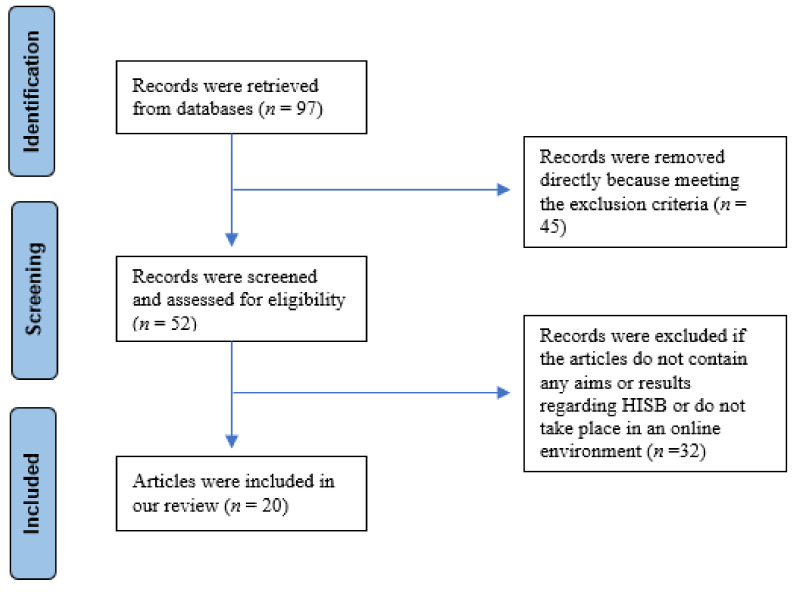
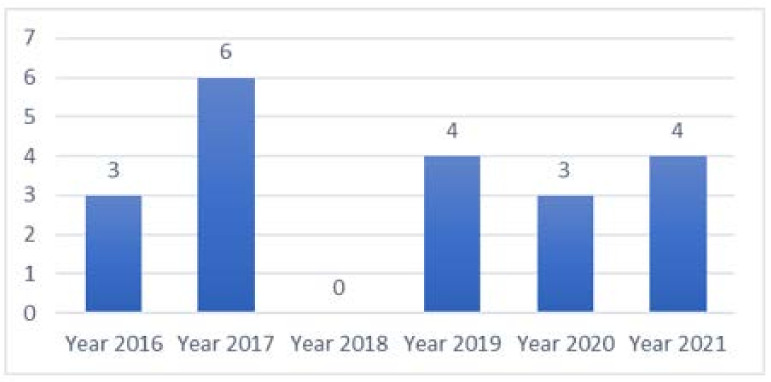
The last five years have seen a leap in the development of information technology and social media. Seeking health information online has become popular. It has been widely accepted that online health information seeking behavior has a positive impact on health information consumers. Due to its importance, online health information seeking behavior has been investigated from different aspects. However, there is lacking a systematic review that can integrate the findings of the most recent research work in online health information seeking, and provide guidance to governments, health organizations, and social media platforms on how to support and promote this seeking behavior, and improve the services of online health information access and provision. We therefore conduct this systematic review. The Google Scholar database was searched for existing research on online health information seeking behavior between 2016 and 2021 to obtain the most recent findings. Within the 97 papers searched, 20 met our inclusion criteria. Through a systematic review, this paper identifies general behavioral patterns, and influencing factors such as age, gender, income, employment status, literacy (or education) level, country of origin and places of residence, and caregiving role. Facilitators (i.e., the existence of online communities, the privacy feature, real-time interaction, and archived health information format), and barriers (i.e., low health literacy, limited accessibility and information retrieval skills, low reliable, deficient and elusive health information, platform censorship, and lack of misinformation checks) to online health information seeking behavior are also discovered.
Overview
The claims and statistics of this paper haven’t been checked yet.
Free: it reads the open-access text and checks the first 5 claims that cite a source we can check. Create a free account to check every claim.
Integrity signals
Registry
Cites
Statistics
Figures

Verification
Claims the paper makes
The claims and statistics of this paper haven’t been checked yet.
Free: it reads the open-access text and checks the first 5 claims that cite a source we can check. Create a free account to check every claim.
Claims other papers make about this one
Each is checked against this paper’s own text: does it say what the citing paper says it does?
The cited source says what the claim attributes to it.
In the citing paper
“This finding is consistent with current evidence demonstrating age-dependent differences in health information-seeking behavior [44].”
From Sociodemographic differences in dementia prevention knowledge in Germany: Implications for targeted health communication (2026) · cites this paper as [44]
In the citing paper
“Caregivers for whom English is not the first language, or who have lower levels of education or health literacy, may experience particularly high barriers [98].”
Self-check
Percentages, sums and reported differences re-computed from the paper’s own numbers.
The self-check needs the paper’s full text.
Citations
Cites
Internet Health Information Seeking and the Patient-Physician Relationship: A Systematic Review
Tan, S. S.-L., & Goonawardene, N. (2017) · Journal of Medical Internet Research · doi:10.2196/jmir.5729 · Cited by 1,101
Health Information—Seeking Behavior
Lambert, S. D., & Loiselle, C. G. (2007) · Qualitative Health Research · doi:10.1177/1049732307305199 · Cited by 894 · cited 1×
“Seeking health information online allows health information consumers to obtain knowledge about their health issues, deal with health problems, and make health decisions, and have behavior change [11,12].”
BackgroundConsumer health information seeking in social media: a literature review
Zhao, Y., & Zhang, J. (2017) · Health Information & Libraries Journal · doi:10.1111/hir.12192 · Cited by 607 · cited 1×
“On the one hand, only involving papers published recently ensures that the findings integrated into our systematic review are up to date; on the other hand, it could avoid repetitive review work on online HISB [18,20].”
BackgroundPowell, J., Inglis, N., Ronnie, J., & Large, S. (2011) · Journal of Medical Internet Research · doi:10.2196/jmir.1600 · Cited by 493
Finney Rutten, L. J., Blake, K. D., Greenberg-Worisek, A. J., Allen, S. V., Moser, R. P., & Hesse, B. W. (2019) · Public Health Reports® · doi:10.1177/0033354919874074 · Cited by 426 · cited 1×
“A recent study indicated that in 2008, 61.2% of the population sought health information online first for their most recent search, while in 2017, the percentage had reached 74.4% [15].”
BackgroundInfluentialA Comprehensive Model of Cancer-Related Information Seeking Applied to Magazines
JOHNSON, J. D., & MEISCHKE, H. (1993) · Human Communication Research · doi:10.1111/j.1468-2958.1993.tb00305.x · Cited by 406 · cited 1×
“Four relevant models have been identified as follows: Comprehensive model of information seeking (CMIS) has been widely used to investigate factors determining individuals’ information seeking behavior [36–38].”
MethodOnline Health Information Seeking: A Review and Meta-Analysis
Wang, X., Shi, J., & Kong, H. (2021) · Health Communication · doi:10.1080/10410236.2020.1748829 · Cited by 370 · cited 1×
“For example, the percentages in mainland China, Philippines, Hong Kong, Indonesia and Vietnam are 79%, 80%, 85%, 85% and 86%, respectively [6,16].”
BackgroundWho Searches the Internet for Health Information?
Bundorf, M. K., Wagner, T. H., Singer, S. J., & Baker, L. C. (2006) · Health Services Research · doi:10.1111/j.1475-6773.2006.00510.x · Cited by 313
How, When and Why People Seek Health Information Online: Qualitative Study in Hong Kong
Chu, J. T., Wang, M. P., Shen, C., Viswanath, K., Lam, T. H., & Chan, S. S. C. (2017) · Interactive Journal of Medical Research · doi:10.2196/ijmr.7000 · Cited by 181 · cited 2×
“There has been a continuous increase in online health information seeking activities lately [6].”
BackgroundLongo, D. R. (2005) · Health Expectations · doi:10.1111/j.1369-7625.2005.00339.x · Cited by 180 · cited 1×
“Four relevant models have been identified as follows: Comprehensive model of information seeking (CMIS) has been widely used to investigate factors determining individuals’ information seeking behavior [36–38].”
Method
Research works printed but not linked: 1
- Wei X. Du Z. Zhang S. Analysis of barriers to health information seeking and utilizing in patients with diabetes Cross-Cult. Commun. 2016 12 48 51
Cited by
Items 601–698 of 698
Beets, G., Jansen, A., Hommes, S., Vromans, R., Westerbeek, L., Sankaran, S., van Weert, J. C. M., Krahmer, E., & Bol, N. (2026) · arXiv (Cornell University) · doi:10.48550/arxiv.2607.09253
“Jia et al. (2021) found that individual characteristics, such as age, gender, literacy, and education, were related to online health-information seeking.”
Prevention Needs a Translator: Why Medical Journalism Matters
Malhotra, R. (2026) · AJPM Focus · doi:10.1016/j.focus.2026.100528
Evaluation of the Quality of Online Resources for Scanxiety: YouTube and Major Websites
Lee, J., Zahid, S., Petillo, C., & Shusterman, M. (2026) · Journal of Cancer Education · doi:10.1007/s13187-026-02950-w
Beyond Binary Detection: A Multi-Dimensional Taxonomy of Cancer Misinformation on Reddit
Pessianzadeh, A., Jamie, P., Sultana, N., Himmelstein, G., Zektser, Y., Ganz, P., Hosseinmardi, H., Ghasemian, A., & Rezapour, R. (2026) · Findings of the Association for Computational Linguistics: EMNLP (Findings of EMNLP) · doi:10.18653/2026.findings-emnlp.1896
Adewojo, A. A., & Adefila, E. K. (2026) · Information Services & Use · doi:10.1177/18758789261468726
You, K. H., Yoon, H. Y., Kim, D., Lim, J. H., Choi, W., Lee, H. W., & Lee, S. (2026) · Journal of Medical Internet Research · doi:10.2196/90335
Birkun, A. A., & Gautam, A. (2026) · Journal of Consumer Health on the Internet · doi:10.1080/15398285.2026.2688042
“As digitalization rapidly transforms modern society and online health-seeking behavior becomes increasingly prevalent (Jia et al. 2021), the rise of technology-driven misinformation in resuscitation requires urgent attention and decisive action.”
Kaur, S., & Kaur, N. (2026) · International Journal of Information Studies and Libraries · doi:10.21863/ijisl/2026.11.1.008
Helbing, A., & Heise, J. (2026) · Research Square · doi:10.21203/rs.3.rs-9990814/v1
Abbas, K. F., Malvankar‐Mehta, M. S., Juncal, V., Hooper, P. L., & Sheidow, T. G. (2026) · Journal of VitreoRetinal Diseases · doi:10.1177/24741264261460669
Wang, T., & Bashir, M. N. (2026) · Computers · doi:10.3390/computers15090551
Artificial intelligence–mediated health communication on social media: A scoping review
Kayral, İ. H., Tanweer, A., Yılmaz, S. T., & Iqbal, U. (2026) · Health Policy and Technology · doi:10.1016/j.hlpt.2026.101293
A Google Trend analysis of online searches for stroke
Kinsella, D., Ferguson, C., Bingham, G., & Allida, S. M. (2026) · Contemporary Nurse · doi:10.1080/10376178.2026.2706779
Kedia, S. A., Sirohi, S., Entwistle, C., Kim, H., Boykins, A. M., & Mahmood, A. (2026) · Journal of Racial and Ethnic Health Disparities · doi:10.1007/s40615-026-03141-5
Lück, P., Schmid, J. P., Naef, R., Fringer, A., Kirk, S. A., & Schlüer, A. (2026) · International Journal of Nursing Studies Advances · doi:10.1016/j.ijnsa.2026.100646
“HCPs are actively involved in providing advice and instructions (Jia et al., 2021).”
Cao, J., Zhang, P., Zheng, L., 李麗惠, & Lu, Z. (2026) · Asia-Pacific Journal of Oncology Nursing · doi:10.1016/j.apjon.2026.101015
“10 Prior surveys indicate that a substantial proportion of people affected by cancer engage in OHISB; for example, approximately 46% of patients with gynecologic cancer have been reported to actively seek health information online, while 82% of caregivers seek cancer information from any source.”
Roivas, M., & Tammi, T. (2026) · Osuva (University of Vaasa)
How accurate and useful are AI chatbots in interpreting pediatric intraoral photographs?
Özdemir, M., & Altun, D. (2026) · BMC Oral Health · doi:10.1186/s12903-026-09554-2
Ay, B. K., & Tuna, M. (2026) · International Journal of Digital Rehabilitation & Therapy · doi:10.67015/ijdrt.342
Wen, L., Kim, J., & Lim, S. (2026) · Humanities and Social Sciences Communications · doi:10.1057/s41599-026-08632-8
Quality of nutrition information for breast cancer: A mixed-methods analysis of online information
Amin, N., Lush, K. R., Ahinkorah, B., Bowen, J., Ingman, W. V., & Crotti, T. N. (2026) · Patient Education and Counseling · doi:10.1016/j.pec.2026.109814
Ullah, S., Farooq, S., Haq, F. U., Shahnaz, A., Manzoor, U., Atif, M., & Rehman, A. U. (2026) · Physical Education Health and Social Sciences · doi:10.63163/jpehss.v4i2.1668
Seo, H., Burkett, K. M., Morales, O., Rossel, J., Liu, H., Hossain, B., & Muzhingi, S. A. (2026) · Frontiers in Communication · doi:10.3389/fcomm.2026.1895866
Özsezer, G., & Dağhan, Ş. (2026) · Turkish Journal of Family Medicine & Primary Care · doi:10.21763/tjfmpc.1880521
MAKSIMENKO, A. A., & Забелина, Е. В. (2026) · Международный научно-исследовательский журнал · doi:10.60797/irj.2026.170.90
Результаты факторного анализа утверждений опросника медиаграмотности
MAKSIMENKO, A. A., & Забелина, Е. В. (2026) · Cifra LLC Journals · doi:10.60797/irj.2026.170.90.1
Kızılkaya, S., Uslu, D., & İyisoylu, M. (2026) · Ankara Hacı Bayram Veli Üniversitesi İktisadi ve İdari Bilimler Fakültesi Dergisi · doi:10.26745/ahbvuibfd.1834136
Kramer, M., Serio, B., Ho, A. K., & Finlay, K. A. (2026) · Health Expectations · doi:10.1111/hex.70836
“Beyond dedicated online health service delivery platforms, a more general rise in online health information seeking behaviour has occurred, particularly in areas of women's health and chronic illness where diagnosis is often delayed [4–6].”
El-Osta, A. A. R., Altalib, S., Sasco, E. R., Rees, J., & Drake, M. J. (2026) · BMJ Open · doi:10.1136/bmjopen-2026-117157
“Future research should explore strategies to optimise early detection and intervention, ultimately improving outcomes for those affected.”
Siyahtaş, G. F., Erdal, K., & YILDIZ, S. (2026) · Turkiye Klinikleri Journal of Health Sciences · doi:10.5336/healthsci.2025-116678
A descriptive content analysis of TikTok videos for postnatal perineal wound care education
O'Kelly, S. M., Patton, D., & Watson, C. L. (2026) · British Journal of Midwifery · doi:10.12968/bjom.2025.0128
King, S. (2026) · UWE Research Repository (UWE Bristol)
Zhu, W., Ouyang, P., Li, S., Lan, J., & Ke, X. (2026) · Digital Health · doi:10.1177/20552076261484764
“1,6,8 However, with the embedding of AI recommendation systems in online healthcare platforms, platforms are no longer passive carriers of information but actively participate in the filtering, ranking, and presentation of health information through algorithmic mechanisms.”
Yanık, S., Polat, M. E., & Özdemir, Ş. (2026) · JOURNAL OF BIOTECHNOLOGY AND STRATEGIC HEALTH RESEARCH · doi:10.34084/bshr.1990753
Unat, D. S., Unat, Ö. S., Güçsav, M. O., Karakoç, B. C., Ayrancı, A., & Erbaycu, A. E. (2026) · The Anatolian Journal of General Medical Research · doi:10.4274/anatoljmed.2026.67044
Maya, N., Tulus, R., Diana, N. E., Hayurani, H., Utami, S. P., & Sandra, Y. (2026) · INOVTEK Polbeng - Seri Informatika · doi:10.35314/y1v81j78
“However, understanding scientific articles within a short time remain challenging, especially for health information seekers with limited health literacy or educational backgrounds [1].”
Zhu, B., Yang, L., Liu, M., Jin, H., Xu, Y., Fang, S., & Hu, H. (2026) · Journal of Multidisciplinary Healthcare · doi:10.2147/jmdh.s633607
“12 These dynamics are increasingly shaped by the digital environment.”
Alzghaibi, H. (2026) · International Journal of Medical Informatics · doi:10.1016/j.ijmedinf.2026.106708
Zhang, Y., Yang, B., Wang, Y., & Cheng, K. (2026) · Journal of Health Population and Nutrition · doi:10.1186/s41043-026-01447-y
“Internet expansion broadened older adults’ knowledge channels, yet diverse, uneven information often caused misunderstanding of activity scope, duration and mode, reducing willingness to travel afar [54].”
Yurtseven, C. N., & Canbaz, M. (2026) · Healthcare · doi:10.3390/healthcare14172862
“Although the Internet provides accessible and convenient health information, frequent reliance on online sources may reinforce repeated health information seeking and increase exposure to information overload, particularly among individuals with health-related concerns [30].”
Autism and ADHD social media short-form video content: A systematic review protocol
Karasavva, V., & Mikami, A. Y. (2026) · PLoS ONE · doi:10.1371/journal.pone.0357837
“However, although women may be more likely to seek health information online, there is limited evidence of gender differences in how individuals evaluate this information [13,14].”
Ellks, C., Zangari, S., & Coro, D. G. (2026) · Journal of Psychosocial Oncology · doi:10.1080/07347332.2026.2725960
Gao, F., Li, Y., Li, R., Li, Y., Huang, Y., Deng, R., & Yan, C. (2026) · doi:10.2196/preprints.108709
SISTEMA WEB PARA LOCALIZAÇÃO DE MÉDICOS UTILIZANDO GEOCODIFICAÇÃO E MAPAS INTERATIVOS
Cabrio, L., & Dallilo, F. D. (2026) · RECIMA21 - Revista Científica Multidisciplinar · doi:10.47820/recima21.v7i9.9006 · Cited by 1
Liu, X., Zhuang, Y., Wang, Y., Gong, Z., & Wu, D. (2026) · Research Square · doi:10.21203/rs.3.rs-10847421/v1
Evaluation of chatbots as educational tools in sports dentistry
Ramos, I. O., Rocha, A. D. O., Goebel, M. C., Dias, M. K. M., dos Anjos, L. M., Santos, P. S., Vitali, F. C., & Cardoso, M. (2026) · JADA Foundational Science · doi:10.1016/j.jfscie.2026.100086
Trust, Satisfaction, and Digital Health Management: Mothers’ Use of Pediatric Facebook Groups
Colí, E., Montani, F., & Falcone, R. (2026) · Future · doi:10.3390/future4030029
“Online health resources can improve health literacy, facilitate participation in medical decision making, enhance communication with healthcare professionals, and provide informational and emotional support, particularly through online communities [12,13].”
Kang, Z., Zhao, J., Xue, S., Liang, Y. Y., Zhang, H., Liu, C., Ma, Q., & Du, L. (2026) · Digital Health · doi:10.1177/20552076261490734
“13 This could motivate individuals to learn about disease symptoms, diagnosis, and treatment, thereby enhancing their health literacy.”
Quinlan, R., Pacey, V., Thomas, R., Gray, K., & Davies, L. M. (2026) · Journal of Paediatrics and Child Health · doi:10.1111/jpc.70578
Wang, Y., Prybutok, G. T., Gulzari, A., Peng, X., Prybutok, V. R., Lu, Y., & Cheng, F. (2026) · Information Systems Frontiers · doi:10.1007/s10796-026-10819-y
Martin, K. J. (2026) · Scholars Crossing (Liberty University)
LLM-driven Retrieval Framework for Consumer Healthcare
Khan, S. (2026) · The Atrium (University of Guelph)
Takizawa, Y., Abedin, E., Glover, J., & Bastani, P. (2026) · Journal of Medical Internet Research · doi:10.2196/92971
Evaluating the Readability of Online Patient Education Materials for Avascular Necrosis
Smith, G. B., Hofmann, G., Gussner, A. V., Segovia, N. A., Duru, N. O., & Shea, K. G. (2026) · Journal of patient-centered research and reviews · doi:10.17294/2330-0698.2229
Katsiroumpa, A., Kolisiati, A., Moisoglou, I., Nystazaki, M., & Galanis, P. (2026) · Frontiers in Psychology · doi:10.3389/fpsyg.2026.1935732
“The main topics searched include diet and nutrition, exercise and fitness, specific diseases, medication or treatment options, mental health issues, health promotion, and sexual and reproductive health information (Jia et al., 2021; Zhao et al., 2022).”
Ni, C., Park, J., Li, Y., Qadir, S., Huang, S. S., Powers, J. S., Hiner, J. A., Leung, V., Commiskey, P., Song, L., et al. (2026) · Proceedings of the ACM on Human-Computer Interaction · doi:10.1145/3816980
“In caregiving forums, perceived emotional quality can shape whether caregivers feel understood and whether they continue to engage with support sources [51].”
Yuan, X., Zhao, X., Zhang, M., Duan, Y., & Shui, Y. (2026) · JMIR mhealth and uhealth · doi:10.2196/92481
“This increase may reflect the growing availability of online resources and broader shifts toward digital help seeking [37].”
Mubin, A. H. B. A., Mustafa, A., Laugu, N., Maryam, S. N., Abdullah, J. M. J., & Ariff, N. Z. Z. M. (2026) · International Journal of Research and Innovation in Social Science · doi:10.47772/ijriss.2026.100800985
Ikihele, A., Pole, K., & Gentles, D. (2026) · Journal of Primary Health Care · doi:10.1071/hc26205
Data Integration In Health Information Systems: Implications For Quality Care And Decision Making
Abdulaziz Alrasheed, S. F. B. Z., & Mohammed Moraya Alshahrani, K. M. A. T. (2025) · The Review of Diabetic Studies · doi:10.70082/a8arxa60
Exploring Public Perceptions of Genetic Risk in Substance Use Disorders
Goodenow, B. A. (2026) · TigerPrints (Clemson University)
Sirabarameesith, N., & Nelson, W. (2025) · The Southern College Network Journal of Nursing and Public Health
Siddika, A. (2025) · Library, Museums and Press - UDSpace (University of Delaware)
Abdallah, A. (2025) · K-State Research Exchange (Kansas State University)
Pragmatik Disclaimer pada Konten Edukasi Kesehatan: Antara Perlindungan Hukum dan Kejelasan Makna
Hardi, S., Safitri, D., & Arhim, F. (2025) · Journal of Modern Social and Humanities · doi:10.71094/jmsh.v1i6.262
Household Food Insecurity and Digital Health-Related Activities Among Lower-Earning Chinese Adults
Zhou, J., Qiao, Z., Li, Z., Xu, K., & Men, F. (2026) · Health Policy and Technology · doi:10.1016/j.hlpt.2026.101331
Peng, X. (2025) · International Journal of Social Sciences and Pedagogical Innovations · doi:10.63480/efv94789
Health Literacy in the Age of Digitalization in Switzerland: Cross-Sectional Representative Study
Guggiari, E., Jaks, R., Beese, A.-S., & Gani, S. M. D. (2026) · Journal of Medical Internet Research · doi:10.2196/80373
Liu, Q., Liang, G., Liu, X., Song, Y., & Wu, H. (2026) · Frontiers in Nutrition · doi:10.3389/fnut.2026.1893597
“Websites, mobile applications, and conversational artificial intelligence systems have expanded the range of patient-facing information sources (11–13).”
Ay, B. K., & Yıldır, C. Z. (2026) · Journal of Back and Musculoskeletal Rehabilitation · doi:10.1177/10538127261492778
Yang, R., Du, R., & Zhang, S. (2026) · Behavioral Sciences · doi:10.3390/bs16101841
“Digital media have become an important source of health knowledge, making online health information seeking an increasingly routine practice (Jia et al., 2021; Wang et al., 2021).”
Lakshmanan, K. S., & Shanmugavel, N. (2026) · IIMT Journal of Management · doi:10.1108/iimtjm-10-2025-0085
Foot and Ankle Care in the News: Media Representation Across Provider Types
Garemani, R., Czarnecki, J., Kumar, I., & Parekh, S. G. (2026) · Foot & Ankle Specialist · doi:10.1177/19386400261491414
When AI gives dental advice: managing patient risk in a new diagnostic landscape
Bader, T. (2026) · BDJ · doi:10.1038/s41415-026-0194-6
“1,2 In this article, AI refers to patient‑facing tools such as chatbots, large language models and symptom checkers, rather than online searching in general.”
Chen, Z., Liu, W., Zhang, J., Zheng, T., Li, Y., Bao, Q., Ji, P., Yao, H., & He, Y. (2026) · Frontiers in Public Health · doi:10.3389/fpubh.2026.1945318
Rachmadhani, I. A., Astafour, B. A. Z., Ningrum, A. S., Putri, K. N., Hibatullah, S. M., Swaraswati, Y., & Ariyanti, M. (2026) · Jurnal Pengabdian Masyarakat Bhinneka · doi:10.58266/jpmb.v5i1.1683
“…media digital menjadi salah satu sumber informasi kesehatan yang mudah diakses oleh peserta, sehingga kemampuan untuk mencari, memahami, dan mengevaluasi informasi kesehatan digital menjadi aspek yang penting dalam mendukung pengambilan keputusan Kesehatan (Jafar et al., 2023; Jia et al., 2021).”
Odumegwu, J. N., Peprah, E. K., Barth, J., Goodman, M. S., & Kaphingst, K. A. (2026) · Healthcare · doi:10.3390/healthcare14203437
“This finding aligns with extensive literature showing that higher educational attainment is associated with greater health literacy, digital literacy, and confidence in evaluating health information [33].”
Gajdács, M., Ilić, I., Szabó-Kurucz, D., Molnár, R., Paulik, E., Elmer, D., Csákvári, T., & Kívés, Z. (2026) · Medical Sciences · doi:10.3390/medsci14060681
“At the same time, online health information seeking has become especially widespread among young adults, further emphasizing the importance of investigating the digital health information environment as the future cancer burden continues to increase [32,33].”
Alexandar, V., Wood, W., Marzolini, C., Chiong, J., Hodge, D., Gibbons, S., Seddon, D., Martin, J., Khoo, S., & Waker, L. E. (2026) · HIV Medicine · doi:10.1111/hiv.70332
Siew, T. W., Suwanchinda, A., Cui, H., Lin, F. G., Ong, O., Park, J. Y., Tseng, F., Wu, R., & Pavicic, T. (2026) · doi:10.2196/preprints.114287
Collocational Patterns of 'Depression': a Corpus-Based Study on Health Digital Platforms
Setyaningsih, N., Suhandano, & Firmonasari, A. (2026) · International Seminar on Application for Technology of Information and Communication (iSemantic) · doi:10.1109/isemantic71495.2026.11742600
Doğan, M., & Doğan, B. D. (2026) · Health Sciences Quarterly · doi:10.26900/hsq.3188
Kırşan, F. Z., Senturk, H. N. C., & Açıkel, S. B. (2026) · Health Sciences Quarterly · doi:10.26900/hsq.3128
Evaluation of Audiovisual Resources for Patient Communication in Nuclear Medicine Examinations
Melo, I. B., Furquim, J. F. V., Goldchmit, S., Buchpiguel Carlos, A., & Sado, H. N. (2026) · Journal of Nuclear Medicine Technology · doi:10.2967/jnmt.126.272630
Graph and Language Models for Biomedical Inference Across Networks and Text
Yu, E. (2026) · Digital Commons-TMC (Texas Medical Center)
Long, D., & Thi, T. N. (2026) · Journal of Hospital Librarianship · doi:10.1080/15323269.2026.2752505
Medication knowledge in psychiatric day hospital patients: The role of polypharmacy
Queck, L. S., Heck, J., Krause, O., Klietz, M., Kümpers, F., Vagi, R., Groh, A., Westhoff, M. S., & Schröder, S. (2026) · Therapeutic Advances in Drug Safety · doi:10.1177/20420986261496193
Grass, E., von Schweinitz, B. A., Walter, L. A., Palmer, M., Hicks, S., Greene, C., & Shufflebarger, E. F. (2026) · Patient Education and Counseling · doi:10.1016/j.pec.2026.110361
Horne-Robinson, H. (2023) · Oxford University Research Archive (ORA) (University of Oxford) · doi:10.5287/ora-2ajmm2zab
Kramer, M., Ho, A. K., Lamprecht, E., Bradbury, M., Krämer, C., & Finlay, K. A. (2026) · Health Marketing Quarterly · doi:10.1080/07359683.2026.2758042
Abdi, A. S., Latu, S., & Hardiyono, H. (2026) · Journal of Asian-African Focus in Health · doi:10.71435/743316
Impacto del marketing digital en la decisión de compra de medicamentos over the counter (OTC).
Pifarré, P. G., & Arcas, P. B. (2026) · Zaguan (Universidad de Zaragoza)
Haupt, L., & Karstens, S. (2026) · physioscience · doi:10.1055/a-2946-6532
Lu, J., He, Q., Xu, M., Yang, H., Yang, X., & Chen, L. (2026) · AIDS and Behavior · doi:10.1007/s10461-026-05331-y
Zhao, J., Guo, F., Liu, Y., Yu, P., Zhang, Y., 杨, 青., & Sun, S. (2026) · Frontiers in Public Health · doi:10.3389/fpubh.2026.1983835
Moe-Byrne, T., Evans, E., Benhebil, N., & Knapp, P. (2022) · doi:10.3389/fdgth.2022.1010779.s001
An update on YouTube as a source of information related to smoking cessation
Pebley, K., Bracci, R. L., Morris, J. D., & Rojewski, A. M. (2026) · Translational Behavioral Medicine · doi:10.1093/tbm/ibag087
Metadata
- Authors
- Jia, X., Pang, Y., & Liu, L. S.
- Affiliations
- Foshan University (CN)
- Central South University of Forestry and Technology (CN)
- Massey University (NZ)
- Corresponding author
- Pang, Yan
- Venue
- Healthcare
- Publisher
- MDPI AG
- Published
- 2021-12-16
- Volume
- 9
- Issue
- 12
- Pages
- 1740
- ISSN
- 2227-9032 (ISSN-L)
- PMC
- PMC8701665
- OpenAlex
- W4200535791
- Semantic Scholar
- 2eb338e185dfb1bf2d2c74039276802a0932097a
- Cited by
- 547
- References
- 40
- Citations by year
- 2026: 149 · 2025: 162 · 2024: 140 · 2023: 74 · 2022: 22
- FWCI
- 12.20
- Type
- journal article
- Language
- en
- Open access
- gold
- doi.org
- Licence
- Locations
- Healthcare (publishedVersion, cc-by)
- PubMed Central (publishedVersion, cc-by)
- PubMed (publishedVersion)
- DOAJ (DOAJ: Directory of Open Access Journals) (submittedVersion)
- Massey Research Online (Massey University) (submittedVersion, cc-by)
- Funders
- Hunan Key Laboratory of Intelligent Logistics Technology (2019TP1015)
- Topics
- Health Sciences › Health Professions › General Health Professions › Health Literacy and Information Accessibility
- Physical Sciences › Computer Science › Information Systems › Information Retrieval and Search Behavior
- Social Sciences › Health › Social Media in Health Education
- Keywords
- online health information seeking, health information behavior, social media, health literacy, online communities, health misinformation, information search skills, caregiver role, online health information quality
About these checks
Registry, retraction, Cites and statistics results are computed, not judged, with one exception: a printed reference that no index lists is read once by a model before it counts as a citation error. Claims are extracted by a model and kept only when their quote appears verbatim in the text; each cited source is then checked, with a model’s help, for whether it says what the claim relies on. Those verdicts can be wrong — read the claim’s quote and the cited source before relying on one.
Statistics and arithmetic are recomputed, not judged.
Confidence bands are shown only for fields calibrated on our annotated test set. None is calibrated yet, so no band is shown.
What counts as a claim ›How we measure confidence ›How we check this ›
Are you an author, or do you see a problem with this page? Request a review
Data sources
Bibliographic data: Semantic Scholar, OpenAlex, Crossref.
Contains information from the Semantic Scholar Academic Graph Datasets, made available under the ODC Attribution License (ODC-BY 1.0).
Semantic Scholar’s data is described in: Kinney, R., et al. (2023). The Semantic Scholar Open Data Platform. arXiv:2301.10140.
