

Online Health Information Seeking Behavior: A Systematic Review
Open accessThe DOI matches its Crossref record; 40 of the 40 references it cites were found in a registry or an index.
Abstract
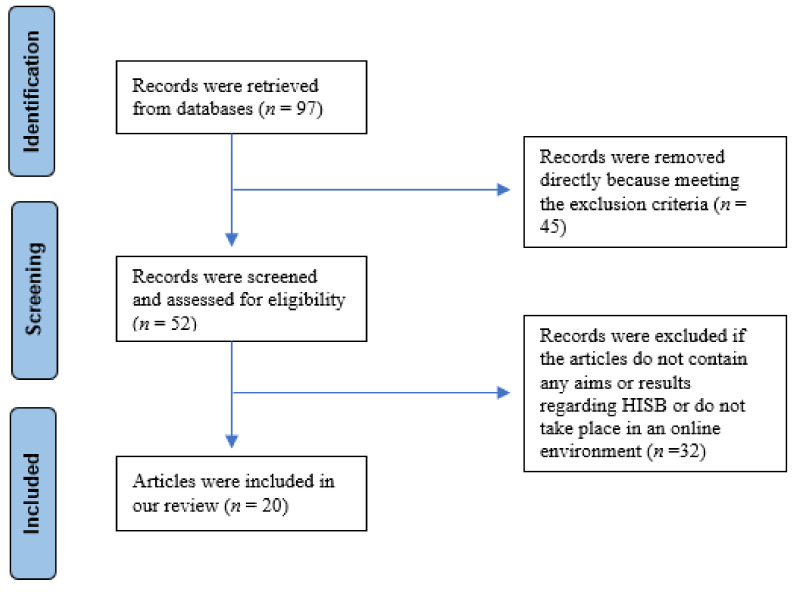
The last five years have seen a leap in the development of information technology and social media. Seeking health information online has become popular. It has been widely accepted that online health information seeking behavior has a positive impact on health information consumers. Due to its importance, online health information seeking behavior has been investigated from different aspects. However, there is lacking a systematic review that can integrate the findings of the most recent research work in online health information seeking, and provide guidance to governments, health organizations, and social media platforms on how to support and promote this seeking behavior, and improve the services of online health information access and provision. We therefore conduct this systematic review. The Google Scholar database was searched for existing research on online health information seeking behavior between 2016 and 2021 to obtain the most recent findings. Within the 97 papers searched, 20 met our inclusion criteria. Through a systematic review, this paper identifies general behavioral patterns, and influencing factors such as age, gender, income, employment status, literacy (or education) level, country of origin and places of residence, and caregiving role. Facilitators (i.e., the existence of online communities, the privacy feature, real-time interaction, and archived health information format), and barriers (i.e., low health literacy, limited accessibility and information retrieval skills, low reliable, deficient and elusive health information, platform censorship, and lack of misinformation checks) to online health information seeking behavior are also discovered.
Overview
The claims and statistics of this paper haven’t been checked yet.
Free: it reads the open-access text and checks the first 5 claims that cite a source we can check. Create a free account to check every claim.
Integrity signals
Registry
Cites
Statistics
Figures

Verification
Claims the paper makes
The claims and statistics of this paper haven’t been checked yet.
Free: it reads the open-access text and checks the first 5 claims that cite a source we can check. Create a free account to check every claim.
Claims other papers make about this one
Each is checked against this paper’s own text: does it say what the citing paper says it does?
The cited source says what the claim attributes to it.
In the citing paper
“This finding is consistent with current evidence demonstrating age-dependent differences in health information-seeking behavior [44].”
From Sociodemographic differences in dementia prevention knowledge in Germany: Implications for targeted health communication (2026) · cites this paper as [44]
In the citing paper
“Caregivers for whom English is not the first language, or who have lower levels of education or health literacy, may experience particularly high barriers [98].”
Self-check
Percentages, sums and reported differences re-computed from the paper’s own numbers.
The self-check needs the paper’s full text.
Citations
Cites
Internet Health Information Seeking and the Patient-Physician Relationship: A Systematic Review
Tan, S. S.-L., & Goonawardene, N. (2017) · Journal of Medical Internet Research · doi:10.2196/jmir.5729 · Cited by 1,101
Health Information—Seeking Behavior
Lambert, S. D., & Loiselle, C. G. (2007) · Qualitative Health Research · doi:10.1177/1049732307305199 · Cited by 894 · cited 1×
“Seeking health information online allows health information consumers to obtain knowledge about their health issues, deal with health problems, and make health decisions, and have behavior change [11,12].”
BackgroundConsumer health information seeking in social media: a literature review
Zhao, Y., & Zhang, J. (2017) · Health Information & Libraries Journal · doi:10.1111/hir.12192 · Cited by 607 · cited 1×
“On the one hand, only involving papers published recently ensures that the findings integrated into our systematic review are up to date; on the other hand, it could avoid repetitive review work on online HISB [18,20].”
BackgroundPowell, J., Inglis, N., Ronnie, J., & Large, S. (2011) · Journal of Medical Internet Research · doi:10.2196/jmir.1600 · Cited by 493
Finney Rutten, L. J., Blake, K. D., Greenberg-Worisek, A. J., Allen, S. V., Moser, R. P., & Hesse, B. W. (2019) · Public Health Reports® · doi:10.1177/0033354919874074 · Cited by 426 · cited 1×
“A recent study indicated that in 2008, 61.2% of the population sought health information online first for their most recent search, while in 2017, the percentage had reached 74.4% [15].”
BackgroundInfluentialA Comprehensive Model of Cancer-Related Information Seeking Applied to Magazines
JOHNSON, J. D., & MEISCHKE, H. (1993) · Human Communication Research · doi:10.1111/j.1468-2958.1993.tb00305.x · Cited by 406 · cited 1×
“Four relevant models have been identified as follows: Comprehensive model of information seeking (CMIS) has been widely used to investigate factors determining individuals’ information seeking behavior [36–38].”
MethodOnline Health Information Seeking: A Review and Meta-Analysis
Wang, X., Shi, J., & Kong, H. (2021) · Health Communication · doi:10.1080/10410236.2020.1748829 · Cited by 370 · cited 1×
“For example, the percentages in mainland China, Philippines, Hong Kong, Indonesia and Vietnam are 79%, 80%, 85%, 85% and 86%, respectively [6,16].”
BackgroundWho Searches the Internet for Health Information?
Bundorf, M. K., Wagner, T. H., Singer, S. J., & Baker, L. C. (2006) · Health Services Research · doi:10.1111/j.1475-6773.2006.00510.x · Cited by 313
How, When and Why People Seek Health Information Online: Qualitative Study in Hong Kong
Chu, J. T., Wang, M. P., Shen, C., Viswanath, K., Lam, T. H., & Chan, S. S. C. (2017) · Interactive Journal of Medical Research · doi:10.2196/ijmr.7000 · Cited by 181 · cited 2×
“There has been a continuous increase in online health information seeking activities lately [6].”
BackgroundLongo, D. R. (2005) · Health Expectations · doi:10.1111/j.1369-7625.2005.00339.x · Cited by 180 · cited 1×
“Four relevant models have been identified as follows: Comprehensive model of information seeking (CMIS) has been widely used to investigate factors determining individuals’ information seeking behavior [36–38].”
Method
Research works printed but not linked: 1
- Wei X. Du Z. Zhang S. Analysis of barriers to health information seeking and utilizing in patients with diabetes Cross-Cult. Commun. 2016 12 48 51
Cited by
Items 201–300 of 698
Choi, S. K., Moon, Y., & Jung, H. (2025) · Digital Health · doi:10.1177/20552076251361381 · Cited by 5
Değirmencioğlu, D., & TEMEL, A. N. (2025) · Cureus · doi:10.7759/cureus.96436 · Cited by 5
Wang, W., Gao, S., Chen, Q., & Ma, S. (2025) · Behavioral Sciences · doi:10.3390/bs15121646 · Cited by 5
“When equipped with adequate information about their health status, individuals are more likely to make informed and rational treatment decisions (X. Jia et al., 2021).”
Comparing large language models and search engine responses to common orthodontic questions
Ren, Y., & Sun, J. (2026) · PLoS ONE · doi:10.1371/journal.pone.0339908 · Cited by 5
“Search engines deliver health information by retrieving and ranking existing web content through keyword-based algorithms [8], which were used by approximately 83% of health-information seekers from 2016 to 2021, and 75% report that the results influence their self-management decisions [9].”
Vourtsis, S. A., Alevrogianni, K., & Simou, E. (2026) · Aesthetic Surgery Journal · doi:10.1093/asj/sjag023 · Cited by 5
Chen, X., Jian-jun, L., & Ryoo, J. (2026) · Quality Assurance in Education · doi:10.1108/qae-02-2025-0040 · Cited by 5
Tiao, P.-H., Chan, H., & Huang, Y. (2026) · Journal of Medical Internet Research · doi:10.2196/82081 · Cited by 5
“Similar or higher rates have been reported in parts of Asia [4].”
Shah, M., Miller, L., Casquejo, R., Chao, T., DiRuggiero, D., Gautier, K., Glover, H., Kucera, K. J., Nguyen, A., Pansch, L. A., et al. (2024) · SKIN The Journal of Cutaneous Medicine · doi:10.25251/skin.8.1.2 · Cited by 5
Κωσταγιόλας, Π., Platis, C. G., Belitsas, A., Psomiadi, M.-E., & Niakas, D. A. (2024) · Aslib Journal of Information Management · doi:10.1108/ajim-01-2023-0023 · Cited by 5
Cancer incidence and digital information seeking in Germany: a retrospective observational study
Wecker, H., Maier, D., Ziehfreund, S., Fox, F. A. U., Erhard, I., Vehreschild, J. J., & Zink, A. (2024) · Scientific Reports · doi:10.1038/s41598-024-60267-4 · Cited by 5
“Previous research finds that young, female, and highly educated adults are more likely to use the internet to search for health information than older, male, and less educated individuals 16,30,51,53 .”
BackgroundBarnacoat, J. M., Lewis, J., Stewart, K., Mohammad, S. S., & Paget, S. (2024) · Disability and Rehabilitation · doi:10.1080/09638288.2024.2397078 · Cited by 5
Ewing, A. P., Tounkara, F., Marshall, D., Henry, A. V., Abdel‐Rasoul, M., McElwain, S., Clark, J., Hefner, J. L., Zaire, P. J., Nolan, T. S., et al. (2024) · JMIR Cancer · doi:10.2196/53229 · Cited by 5
“More than ever, there exists an ideal opportunity to expand culturally inclusive client communication to promote age-appropriate CRC screenings beyond conventional, print-based materials typically offered from health care centers [22,54-58].”
Arini, M., Puspitosari, W. A., Primastuti, H. I., & Mamat, W. H. W. (2025) · Media Publikasi Promosi Kesehatan Indonesia (MPPKI) · doi:10.56338/mppki.v8i4.7003 · Cited by 5
“In addition, this age range has a significant influence on searching for health information online, due to habits regarding the use of digital devices (21).”
The Odyssey Journey: Top-Tier Medical Resource Seeking for Specialized Disorder in China
Chan, K. I., Hu, S., Wang, Y., Xu, X., Lu, Z., & Shi, Y. (2025) · CHI Conference on Human Factors in Computing Systems · doi:10.1145/3706598.3713315 · Cited by 5
“However, barriers to on-line health information-seeking include low health literacy, limited information retrieval skills, unreliable information, platform censorship, and misinformation [7, 47].”
Prasad, S., Köseoğlu, M., Antonopoulou, S., Huber, H. M., Azarbal, A., Kurniawan, S., & Sukotjo, C. (2025) · Journal of Prosthodontics · doi:10.1111/jopr.70022 · Cited by 5
Influences on treatment-seeking and antibiotic use for common illnesses in eastern China
Zhang, T., Lin, H., Zhao, X., Wang, W., Yan, F., & Lambert, H. (2023) · BMC Public Health · doi:10.1186/s12889-023-16700-w · Cited by 5
“…of AMR public information and education campaigns over recent years in China, as well as the increased pathways to get access to health information, including the trend that young adults in China and worldwide seek health information and antibiotic related information from Internet [45–47].”
BackgroundAccess and use of digital technology by patients with psychosis at a hospital in South Africa
Sharma-Misra, S., Maru, M., Tomita, A. M., & Paruk, S. (2023) · South African Journal of Psychiatry · doi:10.4102/sajpsychiatry.v29i0.2151 · Cited by 5
Information Professionals’ Use of Social Networking Sites in the time of Medical Emergency
Naeem, O., Hashmi, F. S., & Farid, G. (2023) · Pakistan Journal of Medical and Health Sciences · doi:10.53350/pjmhs20231788 · Cited by 5
Diabetes Prediction and Recommendation Model Using Machine Learning Techniques and MapReduce
Bateja, R., Dubey, S. K., & Bhatt, A. K. (2024) · Indian Journal of Science and Technology · doi:10.17485/ijst/v17i26.530 · Cited by 5
Hassan, F., Hatah, E., Chong, W. W., & Ali, A. M. (2024) · Therapeutics and Clinical Risk Management · doi:10.2147/tcrm.s442026 · Cited by 5
Balhaddad, A., Alkhalifah, I., Albuhmdouh, D., AlSheikh, R., Dehailan, L. A., AlQuorain, H., & Alsulaiman, A. A. (2024) · Operative Dentistry · doi:10.2341/24-118-l · Cited by 5
Taha, S., Taha, M. M. E., & Zyoud, S. H. (2025) · Journal of Cosmetic Dermatology · doi:10.1111/jocd.16775 · Cited by 5
Public interest in online searching of asthma information: insights from a Google trends analysis
Gholamzadeh, M., Gharabaghi, M. A., & Abtahi, H. (2025) · BMC Pulmonary Medicine · doi:10.1186/s12890-025-03545-9 · Cited by 5
“According to Jia et al., 83% of health information consumers retrieve relevant information using a general search engine, such as Google [29].”
Xue, Z., Liu, G., Zhang, C., Wei, K., Zeng, Q., Hu, S., Hua, W., Fan, L., Zhang, Y., & Li, L. (2026) · Communications in computer and information science · doi:10.1007/978-981-95-9877-9_19 · Cited by 5
Gezer, A. E., Siber, V., Yazla, M., Sarcan, E., Şahin, T., Kurek, K., Pruc, M., Smereka, J., & Katipoğlu, B. (2023) · Disaster and Emergency Medicine Journal · doi:10.5603/demj.97460 · Cited by 5
Sommers, J., Dizon, D. S., Lewis, M. A., Stone, E., Andreoli, R., & Henderson, V. (2025) · JMIR Cancer · doi:10.2196/56098 · Cited by 4
“Digital media is a dominant source of health information, with 50% to 80% of internet users searching for health information on the web [3-5].”
Rafiq, S., Ya, C., Wu, J., & Waqas, M. (2025) · Aslib Journal of Information Management · doi:10.1108/ajim-08-2024-0702 · Cited by 4
SERPENT-Brasil: a technological tool for snakebite management
Sachett, J. D. A. G., Rocha, G. D. S., Silva, E., Marques, A. G. A. D. C., Bisneto, P. F., Pereira, H. D. S., da Silva, V. C. P. R., Carvalho, K. M. P., Silva, L. L., Pucca, M. B., et al. (2025) · Revista Panamericana de Salud Pública · doi:10.26633/rpsp.2025.39 · Cited by 4
Chang, Y., Hsu, C.-H., Tseng, Y., Yang, W.-C., & Chiou, H. (2025) · BMC Health Services Research · doi:10.1186/s12913-025-12814-6 · Cited by 4
“The usefulness of IS depends on factors like perceived credibility, ease of access, and health literacy [56–58], but concerns about information accuracy are common, especially with online content [42], which offers immediacy and privacy when seeking information on sensitive issues [59].”
Rincon, M. A., Moser, R. P., & Blake, K. D. (2025) · Journal of Medical Internet Research · doi:10.2196/69606 · Cited by 4
“Previous work on health-information seeking perceptions has assessed effort, frustration, quality of the resources, and challenges to understand health information within the context of different types of literacy, including health and e-Health literacy [33,34].”
Keeley, J., Yeap, Z., Skoss, R., Nevill, T., Hunt, S., Saldaris, J. M., & Downs, J. A. (2025) · Journal of Intellectual Disability Research · doi:10.1111/jir.70028 · Cited by 4
“The internet is a commonly used source of health-related information (Jia et al. 2021).”
Clicks, trust, and care: Digital health engagement among university students in Pakistan
Hussain, S. A., Nshom, E., & Jie, L. (2025) · Telematics and Informatics Reports · doi:10.1016/j.teler.2025.100264 · Cited by 4
Hill, M. A., Haskell, H. W., Dainty, K. N., Kuluski, K., Shea, C., Heimlich, L., Kazi, S., Sochaniwskyj, M., Priore, A., Mason, T. L. M., et al. (2025) · BMJ Quality & Safety · doi:10.1136/bmjqs-2025-019145 · Cited by 5
Holmstrom, J. A., Braithwaite, C. L., Alhankawi, A. R., Moore, M. L., Patel, K. A., & Miller, B. H. (2026) · Journal of Orthopaedic Trauma · doi:10.1097/bot.0000000000003166 · Cited by 4
Sochacka, K., Kotowska, A., & Lachowicz, S. (2026) · Nutrients · doi:10.3390/nu18091363 · Cited by 5
“Similar gaps between awareness and behaviour have been described in Polish adolescents and young adults, who often fail to meet national food-based dietary guidelines, particularly with respect to whole-grain products, legumes, and fish [3,11,24,25].”
Hashtag Stay Healthy: Digital Media for Health Communication
Werder, O. (2024) · Springer eBooks · doi:10.1007/978-981-99-9606-3_8 · Cited by 4
Onyechi, N. J. (2023) · NIU journal of social sciences. · doi:10.58709/niujss.v9i1.1595 · Cited by 4
Şener, Ş., & Göger, S. (2024) · Saudi Medical Journal · doi:10.15537/smj.2024.45.6.20240158 · Cited by 4
Viktorsson, L., Törnvall, E., Falk, M., & Yngman‐Uhlin, P. (2024) · Scandinavian Journal of Primary Health Care · doi:10.1080/02813432.2024.2408610 · Cited by 4
“…centers (Phcs), a preference for going online for answers to health questions or concerns is not surprising [4]. the possibilities of using the internet when searching for symptoms are numerous [2,5,6], but there are some important factors to consider before using online information [7].”
Information Behavior Model of e-Health Literacy for Online Health Information-seeking Effectiveness
Xuewen, W., Murad, M. A. A., Zhangli, W., Ismail, I. A., & Shaffril, H. A. M. (2024) · JOIV International Journal on Informatics Visualization · doi:10.62527/joiv.8.4.3642 · Cited by 4
“Research indicates that despite the abundance of health information available on the Internet, only 8% of respondents believed they could find information that ultimately met their needs [5].”
Mason, A. M., Spencer, E. A., Livingston, K., & Meyers, T. (2025) · Journal of Communications In Healthcare · doi:10.1080/17538068.2025.2487376 · Cited by 4
Wang, Y., He, C., Chen, W., Jiang, X., Xie, Y., Zhao, Y.-M., & Yuan, L. (2025) · Frontiers in Neurology · doi:10.3389/fneur.2025.1559851 · Cited by 4
“Individuals with higher education not only possess better reading, comprehension, and reasoning abilities but are also more inclined to search for health information through online channels and have a stronger ability to discern the credibility of health information (27).”
Okud, A., Zareen, H., AlSaif, H., Alsayil, H., Alrashed, M., Alhejji, A., BoSaleh, M., Almuhaini, M. A., & Ali, S. I. (2023) · Cureus · doi:10.7759/cureus.49737 · Cited by 4
“…more children, 155 (51.2%), and had more than 10,000 SAR of monthly income, 76 (25.1%), are similar to the same previous study, which showed that the knowledge of EC among participants was significantly better among working women, who have had multiple births, and who have had a higher income [13].”
BackgroundMethodResultInfluentialQuality, Reliability, and Readability of Online Information on Idiopathic Intracranial Hypertension
Hassan, A. K., Eleiwa, T. K., Hassan, M. A., Sallam, A. B., Ali, H. T., Abdelnaem, S., Gise, R. A., Phillips, P. H., & Elhusseiny, A. M. (2024) · Journal of Neuro-Ophthalmology · doi:10.1097/wno.0000000000002130 · Cited by 4
Almeida, L. M. C. G., Münzer, S., & Kühl, T. (2024) · Journal of Computer Assisted Learning · doi:10.1111/jcal.13026 · Cited by 4
“There is a growing interest in seeking health-related information through digital media (Jia et al., 2021).”
BackgroundiHealthFacts: a health fact-checking website for the public
Byrne, P., Daly, A., Loughlin, D. M., Madden, C., Donnell, T. M., O'Connell, C., Pope, J. S., Saif‐Ur‐Rahman, K., Taneri, P. E., Tierney, M., et al. (2024) · BMJ Evidence-Based Medicine · doi:10.1136/bmjebm-2023-112611 · Cited by 4
“Reliable and trustworthy information is likely to have a positive impact on health information consumers, 18 yet citizens around the world find themselves confronted with misinformation.”
BackgroundKurtzman, R. T., Mikesell, L., & Crabtree, B. F. (2024) · Journal of the National Comprehensive Cancer Network · doi:10.6004/jnccn.2024.7017 · Cited by 4
The Health Information Seeking Behavior of Punjabi Elders During the COVID-19 Pandemic in Canada
Thandi, A., Chowdhury, M., Chowdhury, N. A., & Turin, T. C. (2024) · Journal of Primary Care & Community Health · doi:10.1177/21501319241277576 · Cited by 4
“34,35 Overall, it is important to consider the unique challenges experienced by Punjabi elders, particularly vulnerable low socioeconomic groups who are at greater disadvantage of poor health, when disseminating public health information.”
BackgroundEvaluating Online YouTube Videos for Cervical Cancer Brachytherapy Patient Education
Keyes, S., Chai, B. S., & Ingledew, P. (2024) · Journal of Cancer Education · doi:10.1007/s13187-024-02546-2 · Cited by 4
“Some studies have recommended that more professional health organizations should produce and share high quality educational content online [12, 23].”
InfluentialAn Evaluation of the Usage of Internet Resources by Patients with Lung Cancer
Lum-Wang, S., Ingledew, P., Carolan, H., Dunne, E. M., Chan, E., Wang, Y., Liu, M., & Chai, B. S. (2024) · Journal of Cancer Education · doi:10.1007/s13187-024-02537-3 · Cited by 4
“The Internet has become widely used to obtain health information, with continuously rising rates of online health information-seeking behaviour (HISB) reinforcing its role in supporting patient care [2].”
Pohl, N. B., Tarawneh, O. H., Johnson, E., Aita, D. J., Tadley, M., & Fletcher, D. J. (2024) · Hand surgery & rehabilitation · doi:10.1016/j.hansur.2024.102073 · Cited by 4
Health Information on Breast Cancer Surgery on YouTube®
Cousins, L., Darragh, L., & Kerr, B. (2025) · Clinical Breast Cancer · doi:10.1016/j.clbc.2025.01.003 · Cited by 4
Awagu, I. V. (2025) · Springer eBooks · doi:10.1007/978-3-031-75221-6_15 · Cited by 4
Mensah, P., Newton, E., Sakyi-Darko, M., & Mensah, R. O. (2025) · Discover Social Science and Health · doi:10.1007/s44155-025-00177-6 · Cited by 4
Forster, F., Ermel, L., Riesmeyer, C., Jung, R., Lüthy, K., Wullinger, P., & Weinmann, T. (2023) · Radioprotection · doi:10.1051/radiopro/2023038 · Cited by 4
“Furthermore, future studies may collect information on the technology acceptance of GPs as this may be a determinant of their attitudes towards the use of phones and other devices and as health-related information is increasingly searched online (Jia et al. , 2021).”
BackgroundFarič, N., POTTS, H. W. W., & Heilman, J. (2024) · Journal of Medical Internet Research · doi:10.2196/47562 · Cited by 4
“The most preferred way of obtaining health information is seeking it on the web because of fewer barriers to accessing content, affordability, coverage of information, interactivity, privacy, and confidentiality [11,12].”
Qualifying public perceptions of art therapy: A mixed methods study of community discussion forums
Lith, T. V., & Geldenhuys, A. (2024) · The Arts in Psychotherapy · doi:10.1016/j.aip.2024.102186 · Cited by 4
Burzyńska, J., Jakubus, K., Bartosiewicz, A., & Kruk, W. (2023) · Research Square · doi:10.21203/rs.3.rs-3042719/v1 · Cited by 4
Perceptions of Clients on a University-based Drug Information Service affecting Medication Safety
Ngo, F. L. U., Garcia, K. E. S., Loquias, M. M., Robles, Y., & Capule, F. R. (2023) · Acta Medica Philippina · doi:10.47895/amp.vi0.7672 · Cited by 3
Factors predicting eHealth literacy: A profile of California, USA
Berkowsky, R. W., Almanza, B., Garcia, J., & Graza, N. (2025) · PEC Innovation · doi:10.1016/j.pecinn.2025.100410 · Cited by 3
“Given the known associations between education level and health information-seeking behaviors [38], it may be that education is important but there are other variables (e.g., technology use-related characteristics) that are stronger drivers in predicting eHEALS scores among California residents.”
Trust typologies and HPV awareness in the U.S.: a latent class analysis
Stimpson, J. P., Tamirisa, K., Morenz, A. M., Adhikari, E. H., & Francis, J. (2025) · Vaccine · doi:10.1016/j.vaccine.2025.127606 · Cited by 3
Maroyi, R., Espoir, C. M., Chrispin, U. M., Gloire, M. N., Rolande, M. M., Ganywamulume, B., Mukanga, O., Cirholo, M., & Mukwege, D. (2025) · BMC Women s Health · doi:10.1186/s12905-025-04057-8 · Cited by 3
“In addition, a comprehensive review showed that in our century, certain barriers to accessing information have also been broken down by the media, especially among people with a certain level of education [26].”
Shi, W., DaoPeng, D., Dong, S., Yu, Z., & Li, J. (2025) · Journal of Medical Internet Research · doi:10.2196/72297 · Cited by 3
Wang, D., Jiang, W., Chen, H., Chen, M., Gong, G., Sun, Y., Wu, Y., Wang, X., & Li, X. (2025) · Frontiers in Public Health · doi:10.3389/fpubh.2025.1670106 · Cited by 4
“…number of items concerning the content of the information and its accuracy, comprehensiveness, currency, information source and its credibility, and the design of online information were explored and identified as affecting consumers’ online health information based on previous studies (3, 21, 22).”
Alabdalhussein, A., Al-Khafaji, M. H., Nadeem, S., Basharat, M., Aldallal, H., Elnibras, M., Alghnaimawi, S., Yousif, A., Baban, J., Hamad, S., et al. (2025) · Current Oncology · doi:10.3390/curroncol32120668 · Cited by 3
“It is very popular nowadays to seek health information from online resources such as the NHS and Macmillan websites [5].”
Beyond Autonomy: A Plastic Surgeon's Responsibility in the Face of AI-Driven Misinformation
Rajaram, P., Lane, M. E., Andalibi, N., Haimson, O. L., Hooper, R. C., & Prescher, H. (2025) · Annals of Plastic Surgery · doi:10.1097/sap.0000000000004608 · Cited by 3
Wang, J., Xun, J.-J., & Zhao, F.-F. (2026) · Frontiers in Public Health · doi:10.3389/fpubh.2025.1724546 · Cited by 3
Wei, Y., Lin, Z., Ou, B., Wu, J., Chen, G., Xu, G., Lin, X., Zheng, J., & Xiao, H. (2026) · Asia-Pacific Journal of Oncology Nursing · doi:10.1016/j.apjon.2026.100852 · Cited by 3
“50 Our study underscores the importance of the HCD methodology in developing the NiS © .”
Geracitano, J., Mendis, K., & Khairat, S. (2026) · The Permanente Journal · doi:10.7812/tpp/25.168 · Cited by 2
“41 In contrast, most of the general population turns to Reddit and TikTok to find answers to their health questions, although researchers only mentioned using Reddit.”
Evaluating ChatGPT’s Ability to Answer Common Parent Questions on Avascular Necrosis in Children
Smith, G. B., Hofmann, G., Gussner, A. V., Duru, N. O., Laureano, T., Meadows, M. C., Chan, C. M., & Shea, K. G. (2026) · HSS Journal® The Musculoskeletal Journal of Hospital for Special Surgery · doi:10.1177/15563316251408833 · Cited by 3
Xu, Z., Jia, J., & Wu, C. (2026) · Journal of Medical Internet Research · doi:10.2196/91115 · Cited by 3
“Potential confounding variables were controlled based on established methodological approaches [12], encompassing age, educational attainment, annual household income, employment status, chronic disease status, self-rated health, weekly breakfast frequency, smoking status, alcohol consumption,…”
Jamiu, M. O., Ozoeze, U. N., Gbonjubola, Y. T., & Muhammad, D. G. (2023) · Sri Ramachandra Journal of Health Sciences · doi:10.25259/srjhs_38_2022 · Cited by 3
Panchendrabose, K., Bal, D. S., Iderstine, M. G. V., & Patel, P. (2023) · International Journal of Impotence Research · doi:10.1038/s41443-023-00790-6 · Cited by 3
“As a result, individuals may seek health information through various sources, including social media platforms, online forums, and other informal channels [8].”
Perception and Usage of Telemedicine Among National Health Insurance Participants in Padang City
Roza, S. H., & Sari, A. F. (2023) · Jurnal Ilmu Kesehatan Masyarakat · doi:10.26553/jikm.2023.14.2.281-292 · Cited by 3
“24,25 Easy to use is related to the degree of difficulty in technological services, including how to apply telemedicine, how to use it, and how to learn about it.”
BackgroundAustin, R. R., Jantraporn, R., Schulz, C. A., & Zhang, R. (2024) · CIN Computers Informatics Nursing · doi:10.1097/cin.0000000000001138 · Cited by 3
Zhu, S. J., Nelligan, R. K., Hinman, R. S., Kimp, A. J., Li, P., Silva, A. P. D., Harrison, J., & Bennell, K. L. (2024) · Osteoarthritis and Cartilage Open · doi:10.1016/j.ocarto.2024.100536 · Cited by 3
Consumers’ expected information search behavior for a pharmaceutical treatment
Liu, Y., Fincham, J. E., & Sperry, M. L. (2025) · Frontiers in Pharmacology · doi:10.3389/fphar.2025.1466352 · Cited by 3
“Third, whether antecedents are in fact mediated by utilities remains unclear, since it is reported demographics directly affect online health information search (Jia et al., 2021).”
Hummel, B., van Schalkwijk, D. L., Mommersteeg, P. M. C., & van Valkengoed, I. G. M. (2025) · Journal of Primary Care & Community Health · doi:10.1177/21501319251332048 · Cited by 3
“24 Discrepancies in HISB may in part be explained by differences in literacy, health literacy, and digital literacy, 20,25 as well as variation in access to health information and whether available health information aligns with people’s preferences.”
Global ChatGPT interest across healthcare and education access
Kirpalani, A. (2025) · Health Policy and Technology · doi:10.1016/j.hlpt.2025.101061 · Cited by 3
Human vs. AI: Assessing the Quality of Weight Loss Dietary Information Published on the Web
Fappa, E., Micheli, M., Panaretos, D., Skordis, M., Tsirpanli, P., & Panoutsopoulos, G. I. (2025) · Information · doi:10.3390/info16070526 · Cited by 3
“These include easy access to and availability of a broad array of updated content, interactivity among patients or healthcare providers, affordability, and anonymity [4].”
Lee, J. (2022) · Journal of Student Research · doi:10.47611/jsrhs.v11i4.3296 · Cited by 3
Health information seeking patterns among medical and non-medical university students in Egypt
Sabry, H. A., Ezzat, F. M., & Salem, M. R. (2023) · International Journal of Public Health Science (IJPHS) · doi:10.11591/ijphs.v12i3.22649 · Cited by 3
Jones, L. M., Piscotty, R., Sullivan, S. P., Mitrzyk, B. M., Ploutz-Snyder, R. J., Ghosh, B., & Veinot, T. C. (2023) · Journal of Medical Internet Research · doi:10.2196/44772 · Cited by 3
Alibudbud, R. C. (2023) · The Journal of Nervous and Mental Disease · doi:10.1097/nmd.0000000000001691 · Cited by 3
Niethamer, N., Roughley, M. A., & D’Sa, R. A. (2023) · Biomedical visualization · doi:10.1007/978-3-031-41652-1_9 · Cited by 3
What information about choosing a nursing home is available on YouTube?
Moon, S., Oh, J., & You, S. Y. (2022) · Geriatric Nursing · doi:10.1016/j.gerinurse.2022.10.020 · Cited by 3
The Complex Nature of Information Behavior
Given, L. M., Case, D. O., & Willson, R. (2023) · Studies in information · doi:10.1108/s2055-53772023003 · Cited by 3
Leslie, S. E., Durden, J. A., & Tevis, S. E. A. (2024) · Cancer · doi:10.1002/cncr.35651 · Cited by 3
“13 The American College of Radiology offers tem-plated responses in lay terms for the various levels of mammography results to provide patients with more useful information after their imaging since the Mammography Quality Standards Act was signed.”
Kolesnik, Y. (2025) · Preprints.org · doi:10.20944/preprints202506.2481.v1 · Cited by 3
Kaneda, Y., Ozaki, A., Murakami, M., Sawano, T., Nomura, S., Bhandari, D., Saito, H., Tsubokura, M., Yamaoka, K., Nakata, Y., et al. (2024) · JMIR Cancer · doi:10.2196/49897 · Cited by 2
“Indeed, family members are reported to be key providers of health information for patients with cancer [34], and more likely to seek web-based health-related information, which behavior can even predict family health outcomes [35].”
Quality and readability of online information on Keratoconus in Portugal and Brazil
da Costa, C. M., Oliveira, R. S., Gil, J., Costa, E., Tavares, C., Rosa, A. M., Quadrado, M. J., & Murta, J. (2024) · European Journal of Ophthalmology · doi:10.1177/11206721241306142 · Cited by 2
Patterns of Online Stress Management Information-Seeking Behavior in Hungary
Jóna, G., & Fedor, A. R. (2025) · International Journal of Environmental Research and Public Health · doi:10.3390/ijerph22040473 · Cited by 2
“In contrast, lower percentages were observed in Romania (28%), Bulgaria (29%), and Italy (35% in 2019) [10,11].”
Perspectives of people with chronic illness about plain language summaries: a qualitative analysis
Gainey, K. M., McCaffery, K. J., & Muscat, D. M. (2025) · Health Promotion International · doi:10.1093/heapro/daaf044 · Cited by 2
Health information disorders types and origins in health communication: A qualitative study
Zalpour, A., Geraei, E., Hashemian, M., & Zare‐Farashbandi, F. (2025) · Journal of Education and Health Promotion · doi:10.4103/jehp.jehp_2091_23 · Cited by 2
“The subcategories of “receiver” such as health and media literacy align similarly with some studies, [18] presenting facilitators and barriers in receiving valid health information, while the present study found more factors such as communicative language and comprehension related to receivers.”
Representation of Psoriasis on the Web for Patients With Skin of Color
Nguyen, D., Le, V., Nguyen, D., & Han, V. (2025) · JMIR Dermatology · doi:10.2196/69026 · Cited by 2
“Among web-based platforms, social media has emerged as a widely used educational tool for accessing health-related information [2].”
Exploring eHealth Literacy and Its Impact on Mental Health Among Korean American Older Adults
Park, H. (2025) · Journal of Gerontological Nursing · doi:10.3928/00989134-20250521-02 · Cited by 2
Rahman, A., Lima, N. J., Nurunnabi, A. S. M., Rukon, R., Hassan, A., & Sultana, H. (2025) · Journal of the Medical College for Women & Hospital · doi:10.3329/jmcwh.v21i1.80080 · Cited by 2
Dyda, A., Stanceski, K., Dakiniewich, A., Pan, A., & Dunn, A. G. (2025) · Public Health · doi:10.1016/j.puhe.2025.105876 · Cited by 2
Enhancing Medication Recommendations Through Multi-Criteria Collaborative Filtering
Hiari, M. O., & Shambour, Q. Y. (2025) · Engineering Technology & Applied Science Research · doi:10.48084/etasr.12239 · Cited by 2
Sun, X., Zhang, J., Wu, Y., Duan, T., & Min, H. (2025) · Journal of Applied Gerontology · doi:10.1177/07334648251398602 · Cited by 2
“Moreover, previous studies have consistently shown a general user preference for high-quality information, which limits its discriminative power as an attribute in preference modeling (Jia et al., 2021; Moorhead et al., 2013; Scantlebury et al., 2017; Wollmann et al., 2021; Zhao et al., 2022).”
Metadata
- Authors
- Jia, X., Pang, Y., & Liu, L. S.
- Affiliations
- Foshan University (CN)
- Central South University of Forestry and Technology (CN)
- Massey University (NZ)
- Corresponding author
- Pang, Yan
- Venue
- Healthcare
- Publisher
- MDPI AG
- Published
- 2021-12-16
- Volume
- 9
- Issue
- 12
- Pages
- 1740
- ISSN
- 2227-9032 (ISSN-L)
- PMC
- PMC8701665
- OpenAlex
- W4200535791
- Semantic Scholar
- 2eb338e185dfb1bf2d2c74039276802a0932097a
- Cited by
- 547
- References
- 40
- Citations by year
- 2026: 149 · 2025: 162 · 2024: 140 · 2023: 74 · 2022: 22
- FWCI
- 12.20
- Type
- journal article
- Language
- en
- Open access
- gold
- doi.org
- Licence
- Locations
- Healthcare (publishedVersion, cc-by)
- PubMed Central (publishedVersion, cc-by)
- PubMed (publishedVersion)
- DOAJ (DOAJ: Directory of Open Access Journals) (submittedVersion)
- Massey Research Online (Massey University) (submittedVersion, cc-by)
- Funders
- Hunan Key Laboratory of Intelligent Logistics Technology (2019TP1015)
- Topics
- Health Sciences › Health Professions › General Health Professions › Health Literacy and Information Accessibility
- Physical Sciences › Computer Science › Information Systems › Information Retrieval and Search Behavior
- Social Sciences › Health › Social Media in Health Education
- Keywords
- online health information seeking, health information behavior, social media, health literacy, online communities, health misinformation, information search skills, caregiver role, online health information quality
About these checks
Registry, retraction, Cites and statistics results are computed, not judged, with one exception: a printed reference that no index lists is read once by a model before it counts as a citation error. Claims are extracted by a model and kept only when their quote appears verbatim in the text; each cited source is then checked, with a model’s help, for whether it says what the claim relies on. Those verdicts can be wrong — read the claim’s quote and the cited source before relying on one.
Statistics and arithmetic are recomputed, not judged.
Confidence bands are shown only for fields calibrated on our annotated test set. None is calibrated yet, so no band is shown.
What counts as a claim ›How we measure confidence ›How we check this ›
Are you an author, or do you see a problem with this page? Request a review
Data sources
Bibliographic data: Semantic Scholar, OpenAlex, Crossref.
Contains information from the Semantic Scholar Academic Graph Datasets, made available under the ODC Attribution License (ODC-BY 1.0).
Semantic Scholar’s data is described in: Kinney, R., et al. (2023). The Semantic Scholar Open Data Platform. arXiv:2301.10140.
