

Online Health Information Seeking Behavior: A Systematic Review
Open accessThe DOI matches its Crossref record; 40 of the 40 references it cites were found in a registry or an index.
Abstract
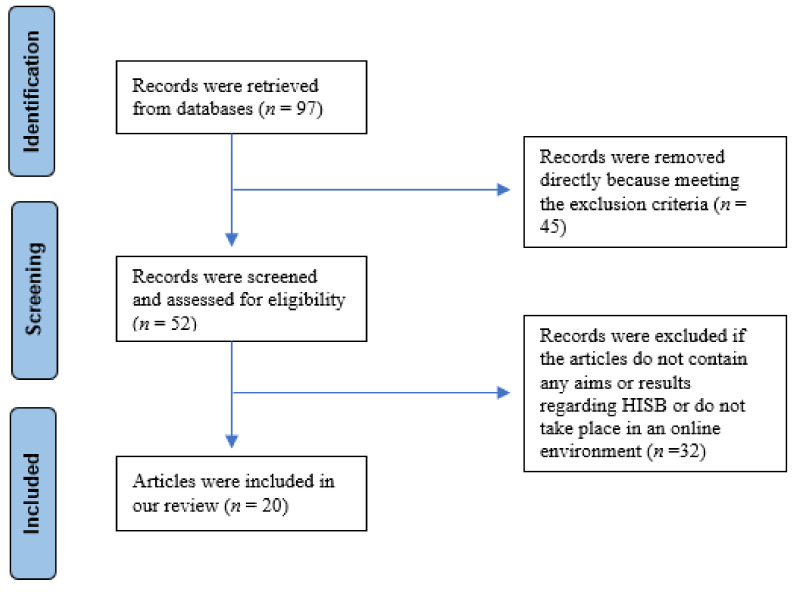
The last five years have seen a leap in the development of information technology and social media. Seeking health information online has become popular. It has been widely accepted that online health information seeking behavior has a positive impact on health information consumers. Due to its importance, online health information seeking behavior has been investigated from different aspects. However, there is lacking a systematic review that can integrate the findings of the most recent research work in online health information seeking, and provide guidance to governments, health organizations, and social media platforms on how to support and promote this seeking behavior, and improve the services of online health information access and provision. We therefore conduct this systematic review. The Google Scholar database was searched for existing research on online health information seeking behavior between 2016 and 2021 to obtain the most recent findings. Within the 97 papers searched, 20 met our inclusion criteria. Through a systematic review, this paper identifies general behavioral patterns, and influencing factors such as age, gender, income, employment status, literacy (or education) level, country of origin and places of residence, and caregiving role. Facilitators (i.e., the existence of online communities, the privacy feature, real-time interaction, and archived health information format), and barriers (i.e., low health literacy, limited accessibility and information retrieval skills, low reliable, deficient and elusive health information, platform censorship, and lack of misinformation checks) to online health information seeking behavior are also discovered.
Overview
The claims and statistics of this paper haven’t been checked yet.
Free: it reads the open-access text and checks the first 5 claims that cite a source we can check. Create a free account to check every claim.
Integrity signals
Registry
Cites
Statistics
Figures

Verification
Claims the paper makes
The claims and statistics of this paper haven’t been checked yet.
Free: it reads the open-access text and checks the first 5 claims that cite a source we can check. Create a free account to check every claim.
Claims other papers make about this one
Each is checked against this paper’s own text: does it say what the citing paper says it does?
The cited source says what the claim attributes to it.
In the citing paper
“This finding is consistent with current evidence demonstrating age-dependent differences in health information-seeking behavior [44].”
From Sociodemographic differences in dementia prevention knowledge in Germany: Implications for targeted health communication (2026) · cites this paper as [44]
Self-check
Percentages, sums and reported differences re-computed from the paper’s own numbers.
The self-check needs the paper’s full text.
Citations
Cites
Internet Health Information Seeking and the Patient-Physician Relationship: A Systematic Review
Tan, S. S.-L., & Goonawardene, N. (2017) · Journal of Medical Internet Research · doi:10.2196/jmir.5729 · Cited by 1,101
Health Information—Seeking Behavior
Lambert, S. D., & Loiselle, C. G. (2007) · Qualitative Health Research · doi:10.1177/1049732307305199 · Cited by 894 · cited 1×
“Seeking health information online allows health information consumers to obtain knowledge about their health issues, deal with health problems, and make health decisions, and have behavior change [11,12].”
BackgroundConsumer health information seeking in social media: a literature review
Zhao, Y., & Zhang, J. (2017) · Health Information & Libraries Journal · doi:10.1111/hir.12192 · Cited by 607 · cited 1×
“On the one hand, only involving papers published recently ensures that the findings integrated into our systematic review are up to date; on the other hand, it could avoid repetitive review work on online HISB [18,20].”
BackgroundPowell, J., Inglis, N., Ronnie, J., & Large, S. (2011) · Journal of Medical Internet Research · doi:10.2196/jmir.1600 · Cited by 493
Finney Rutten, L. J., Blake, K. D., Greenberg-Worisek, A. J., Allen, S. V., Moser, R. P., & Hesse, B. W. (2019) · Public Health Reports® · doi:10.1177/0033354919874074 · Cited by 426 · cited 1×
“A recent study indicated that in 2008, 61.2% of the population sought health information online first for their most recent search, while in 2017, the percentage had reached 74.4% [15].”
BackgroundInfluentialA Comprehensive Model of Cancer-Related Information Seeking Applied to Magazines
JOHNSON, J. D., & MEISCHKE, H. (1993) · Human Communication Research · doi:10.1111/j.1468-2958.1993.tb00305.x · Cited by 406 · cited 1×
“Four relevant models have been identified as follows: Comprehensive model of information seeking (CMIS) has been widely used to investigate factors determining individuals’ information seeking behavior [36–38].”
MethodOnline Health Information Seeking: A Review and Meta-Analysis
Wang, X., Shi, J., & Kong, H. (2021) · Health Communication · doi:10.1080/10410236.2020.1748829 · Cited by 370 · cited 1×
“For example, the percentages in mainland China, Philippines, Hong Kong, Indonesia and Vietnam are 79%, 80%, 85%, 85% and 86%, respectively [6,16].”
BackgroundWho Searches the Internet for Health Information?
Bundorf, M. K., Wagner, T. H., Singer, S. J., & Baker, L. C. (2006) · Health Services Research · doi:10.1111/j.1475-6773.2006.00510.x · Cited by 313
How, When and Why People Seek Health Information Online: Qualitative Study in Hong Kong
Chu, J. T., Wang, M. P., Shen, C., Viswanath, K., Lam, T. H., & Chan, S. S. C. (2017) · Interactive Journal of Medical Research · doi:10.2196/ijmr.7000 · Cited by 181 · cited 2×
“There has been a continuous increase in online health information seeking activities lately [6].”
BackgroundLongo, D. R. (2005) · Health Expectations · doi:10.1111/j.1369-7625.2005.00339.x · Cited by 180 · cited 1×
“Four relevant models have been identified as follows: Comprehensive model of information seeking (CMIS) has been widely used to investigate factors determining individuals’ information seeking behavior [36–38].”
Method
Research works printed but not linked: 1
- Wei X. Du Z. Zhang S. Analysis of barriers to health information seeking and utilizing in patients with diabetes Cross-Cult. Commun. 2016 12 48 51
Cited by
Items 301–400 of 698
Tekin, Y. E., Güneş, A., & Eren, E. (2025) · Nursing and Health Sciences · doi:10.1111/nhs.70255 · Cited by 2
“Online health information search is nowadays frequently preferred due to the availability of information and content, ease of access, cheapness of access, interactivity, and anonymity (Jia et al. 2021).”
Impact of user-generated YouTube videos on knowledge and beliefs in contact lens wearers
Yeo, S., Samuels, A., Keay, L. J., Faasse, K., & Carnt, N. A. (2025) · Clinical and Experimental Optometry · doi:10.1080/08164622.2025.2589386 · Cited by 2
Confused Learner. Online Health Information Seeking by Breast Cancer Patients
Mazurek, E., Martinec, R., & Vilč, B. (2025) · Nauki o Wychowaniu Studia Interdyscyplinarne · doi:10.18778/2450-4491.21.07 · Cited by 2
How Do We Seek Mental Health Information?
Olmo, C. P. D., & Coyle, D. (2025) · International Conference on Information, Intelligence, Systems & Applications (IISA) · doi:10.1109/iisa66859.2025.11311282 · Cited by 2
“Online health information is widely regarded as valuable, with 75% of users reporting that it influenced their health decisions, self-care strategies, or perceptions of health for themselves and others [13].”
Yıldırım, A., Genç, Y. S., Erdem, R., Boylu, D., Boylu, Ö. F., & Büyük, S. K. (2025) · American Journal of Orthodontics and Dentofacial Orthopedics · doi:10.1016/j.ajodo.2025.11.013 · Cited by 2
Albert, M., Tapia, R., Montero, J. F., Lorca, A. V., Muñoz, S., López‐Toribio, M., Carrasco, J. M., Sanchez, A. D. B., Fuller, M., Barrett, N. F., et al. (2026) · BMC Medical Ethics · doi:10.1186/s12910-026-01388-5 · Cited by 2
“B2-InF • Be Better Informed About Fertility. of the main bases for making a decision about whether to undergo fertility treatment, which clinic to choose, and which services to use [3, 4].”
Sarcopenia and Nutrition on YouTube: A Content Quality and Reliability Assessment
Trost, C., Crevenna, R., Heisinger, J., Popp, D., Perl, A., Marchard, E.-M., & Heisinger, S. (2026) · Nutrients · doi:10.3390/nu18040619 · Cited by 3
“…internet to seek health information, with studies identifying common behavioral patterns and a range of influencing factors such as literacy levels, demographic characteristics, and accessibility barriers and facilitators (e.g., online communities, privacy features, and real-time interaction) [19].”
Culturally and Linguistically Diverse Fathers' Experiences of Early Parenting: A Qualitative Study
Elmir, R., Ormsby, S., Leahy‐Warren, P., Philpott, L. F., Kothari, A., & Schmied, V. A. (2026) · Journal of Advanced Nursing · doi:10.1111/jan.70565 · Cited by 2
“The convenience of accessing instant and confidential up- to-date online information (Giallo et al. 2017; Jia et al. 2021), ease of content sharing and being able to have real-time interactions with peers, has likewise been reported to be a facilitator of health-related seeking behaviour amongst…”
Sriram, N., Bajaj, A., Li, M., Adam, T. H., Nguyen, A., Chon, J., & Galiano, R. D. (2026) · Archives of Plastic Surgery · doi:10.1055/a-2794-9984 · Cited by 2
Chou, Y.-J., Chiang, K., Huang, H., Chang, H., Hung, Y., & Tzeng, W. (2026) · JMIR Mental Health · doi:10.2196/88700 · Cited by 2
“Effective digital engagement requires search strategy knowledge and skills, familiarity with credible sources, and general health literacy [35,36].”
Kaňková, J., Vranken, S., Matthes, J., Lazić, A., Hodzic, S., Seki, M., Kawano, Y., 伊藤, 晃., Sakagami, Y., & Iwakuma, M. (2026) · SSM - Mental Health · doi:10.1016/j.ssmmh.2026.100630 · Cited by 2
Examining user-AI interaction patterns in health-Information queries
Wang, J. T., Chung, H. W., Do, G. N., & Yang, A. (2026) · International Journal of Medical Informatics · doi:10.1016/j.ijmedinf.2026.106453 · Cited by 2
Structural Inequalities in Online Health Information Seeking: Cross-National Multilevel Study
Raudenská, P., & Link, E. (2026) · Journal of Medical Internet Research · doi:10.2196/88110 · Cited by 2
“Existing studies have primarily focused on individual-level determinants, while the role of macro-level contexts has received comparatively less systematic attention in large-scale cross-national analyses [9, 48].”
Geniş, C., & Emeksiz, Z. Ş. (2026) · Turkish Archives of Pediatrics · doi:10.65717/turkarchpediatr.2026.25487 · Cited by 2
“26 However, the sustained adherence to physicians’ recommendations during final decision-making suggests that while accessibility shapes short-term behavior, reliability ultimately determines long-term choices.”
Zhao, J., Sun, S., Zhao, A., Liang, R., Peng, L., Peng, X., & Li, R. (2026) · Annals of Surgical Oncology · doi:10.1245/s10434-026-20266-3 · Cited by 3
“4,5 This is particularly relevant for testicular cancer, where common public concerns include symptom recognition, self-examination, diagnostic testing, prognosis, and differentiation from other scrotal conditions.”
Kang, Y., Yan, Y., Wang, T., Yu, Z., Hu, Y., Wang, Z., Zhang, J., Latour, J. M., & Zhang, Y. (2026) · Journal of Medical Internet Research · doi:10.2196/82746 · Cited by 2
“Nevertheless, such behavior sometimes may entail potential risks such as exacerbating anxiety and inappropriate self-management due to unverified information [5].”
Binbai, S., & Chiangkhong, A. (2024) · Journal of Information and Learning · Cited by 2
PRIMARY HEALTHCARE ACCESS AND UTILISATION IN THE JERE LOCAL GOVERNMENT AREA OF BORNO STATE, NIGERIA
Mukhtar, F., Ishaq, A. B., Daniel, T. A., Lawan, A. M., Lawan, H. M., Bukar, B., & Kuchichi, A. B. (2024) · African Journal of Social and Behavioural Sciences · Cited by 2
Dou, X., Liu, Y., Liao, A., Zhong, Y., Fu, R., Liu, L., Cui, C., Wang, X., & Lu, J. (2023) · JMIR Formative Research · doi:10.2196/44420 · Cited by 2
“The emergence of social media platforms has significantly changed the means of communication, and social listening is a novel strategy for understanding users’ needs [12,13].”
BackgroundSelf-citationZhu, J., Shi, Y., Cui, Y., & Yan, W. (2024) · Health Policy and Technology · doi:10.1016/j.hlpt.2024.100842 · Cited by 2
Padd, R., Leadley, S., & Miles, A. (2025) · Journal of Human Nutrition and Dietetics · doi:10.1111/jhn.70107 · Cited by 3
“OPEM consumers value information that is accurate, current, understandable and complete [11], yet many sources do not meet these standards.”
Shaveet, E., Urquhart, C., Gallegos, M., Dammann, O., & Corlin, L. (2022) · JMIR Formative Research · doi:10.2196/42126 · Cited by 2
Online health information seeking behavior among laypeople in Jordan
Alzougool, B. (2023) · Journal of Electronic Resources Librarianship · doi:10.1080/1941126x.2023.2165239 · Cited by 2
“Also, more reviews of the existing literature are conducted (e.g., Jia et al., 2021; Wang et al., 2021) to identify the general behavioral patterns, influencing factors, facilitators, barriers, and reasons for seeking information online.”
BackgroundAdvice and Information Sharing: A Netnographic Study on Facebook Cancer Support Groups
Adnan, W. N. A. W. (2023) · European Proceedings of Educational Sciences · doi:10.15405/epes.23097.83 · Cited by 2
“It is not surprising that the number of internet users who seek for health information continue to increase (Jia et al., 2021).”
BackgroundLancaster, B., McClutchy, C., Schieve, H., Ruckart, J. D., Ruckart, K. W., & Madden, L. L. (2024) · Journal of Voice · doi:10.1016/j.jvoice.2024.04.022 · Cited by 2
Lees, E. M. (2024) · Journal of Evidence-Based Healthcare · doi:10.17267/2675-021xevidence.2024.e5444 · Cited by 2
Jung, S.-Y., & Park, S. Y. (2024) · Daehan imsang geon-gang jeungjin hakoeji/Daehan imsang geon'gang jeungjin haghoeji · doi:10.15384/kjhp.2024.00129 · Cited by 2
A survey of individuals’ willingness to share real-world data postmortem with researchers
Hendricks‐Sturrup, R., & Lu, C. Y. (2024) · Journal of Clinical and Translational Science · doi:10.1017/cts.2024.652 · Cited by 2
“…that might address popular and/or identified reasons for health information seeking behaviors among demographically and geographically diverse populations (i.e., private self-screening, caregiving, learning about clinical trials, creating and/or sharing new information for others, etc.) [33 – 35].”
Győrffy, Z., Döbrössy, B., Wernigg, A., & Girasek, E. (2024) · Acta Medicinae et Sociologica · doi:10.19055/ams.2024.11/29/3 · Cited by 2
GÜZEL, Ş., & Sağlam, Ş. (2024) · Selçuk Üniversitesi Sosyal Bilimler Enstitüsü Dergisi · doi:10.52642/susbed.1468427 · Cited by 2
Kamarazaman, R., & Ismail, K. (2024) · ANP Journal Of Social Sciences And Humanities · doi:10.53797/anp.jssh.v5i1.2.2024 · Cited by 2
Online Health Information Adoption Behavior of Chronic Disease Patients
Du, Y., Xiaoli, Z., Min, L., & Yueli, S. (2024) · IEEE International Conference on Data Science in Cyberspace · doi:10.1109/dsc63484.2024.00065 · Cited by 2
Portela, D., Freitas, A., Costa, E. M., Giovannini, M., Bousquet, J. J., Fonseca, J., & Sousa‐Pinto, B. (2025) · Journal of Medical Internet Research · doi:10.2196/51804 · Cited by 2
“Younger adults may tend to be more proactive in seeking health care information online and to be more likely to use search engines [44], in part given their historically higher access and rates of internet use [44] (which can be attributed to factors such as greater digital literacy, increased…”
Public Trust in Different Sources of Information: Gaps in Rural Residents and Cancer Patients
Lee, W., Kim, E. M., Nemirovski, E. A., Kamprath, S., Masel, M. C., & Patel, D. I. (2025) · Healthcare · doi:10.3390/healthcare13060640 · Cited by 2
“Health care providers are the most frequently used source of information, but in the digital age, online HISB has surged among consumers and patients due to lower cost and wider accessibility [4,5].”
Qi, S., Tham, J. S., Waheed, M., & Hashim, N. B. (2025) · Frontiers in Public Health · doi:10.3389/fpubh.2025.1545942 · Cited by 2
“By applying this model, researchers can better understand public health communication strategies that can effectively address the challenges posed by ILI outbreaks and ultimately improve health outcomes (24, 29).”
Andrade, J., Mullis, K., & Lamiño, P. (2025) · Journal of Renal Nutrition · doi:10.1053/j.jrn.2025.05.003 · Cited by 2
Experiences of people with elevated lipoprotein(a) and the impact on family and child screening
Eversole, G., Fitzgerald‐Butt, S. M., Halverson, C. M. E., Clary, J. M., & Helm, B. M. (2025) · Journal of clinical lipidology · doi:10.1016/j.jacl.2025.07.011 · Cited by 2
Zeeb, H., & Dratva, J. (2025) · Springer series on epidemiology and public health · doi:10.1007/978-3-031-90154-6_13 · Cited by 2
Ning, K., Gu, H., Franklin, M., Yang, X., Wei, R., Song, Z., Xu, H., Leng, L. L., Liu, M., Dai, J. P., et al. (2025) · Journal of Medical Internet Research · doi:10.2196/80497 · Cited by 2
“Furthermore, patients and their families in these regions tend to be better educated and more aware of the benefits of seeking help online [1,8,9].”
Mind the Gap! What do people with epilepsy want to know?
Jones, S., & Angus‐Leppan, H. (2025) · Epilepsy & Behavior · doi:10.1016/j.yebeh.2025.110861 · Cited by 2
Bibi, Z. (2024) · International Research Journal of Management and Social Sciences · Cited by 2
The Hospital Library and Hospital Librarian Contributes to Patient-Centered Care
Epstein, H.-A. B. (2023) · Journal of Hospital Librarianship · doi:10.1080/15323269.2023.2258719 · Cited by 2
Abdelwadoud, M., Huang, J. C., Villalonga-Olives, E., dosReis, S., Jansky, L. J., Mullins, C. D., Kusinitz, M., Ovelmen, H., & Ju, J. (2024) · International Journal of Environmental Research and Public Health · doi:10.3390/ijerph21030321 · Cited by 2
“A second important topic was information sources [15,16].”
BackgroundAlbus, P., Folkerts, A.-K., Kessler, J., Köhler, S., & Kalbe, E. (2026) · The journal of prevention of Alzheimer's disease · doi:10.1016/j.tjpad.2026.100517 · Cited by 1
“This finding is consistent with current evidence demonstrating age-dependent differences in health information-seeking behavior [44].”
Demirci, A. D., & Buldum, A. (2023) · Turkiye Klinikleri Journal of Nursing Sciences · doi:10.5336/nurses.2023-97669 · Cited by 1
A Quality and Completeness Assessment of Testicular Cancer Health Information on TikTok
Wong, H., Yang, L., Selvan, V. S. O. S., Lim, J. L., So, W. Z., Gauhar, V., & Tiong, H. Y. (2024) · Société Internationale d’Urologie Journal · doi:10.3390/siuj5030028 · Cited by 1
“…of medical information, such as seeing the doctor or reputable online sources, continue to play a vital role in health literacy and awareness, the digital age and social media frenzy has ushered in a new era of information-sharing via readily available and entertaining social media platforms [3,4].”
BackgroundLopez-Olivo, M. A., Suarez-Almazor, M. E., Duhon, G. F., Cherry, M., Lu, H., Calabrese, C. M., Altan, M., Tawbi, H. A., Meara, A. S., Bingham, C. O., et al. (2024) · JMIR Cancer · doi:10.2196/53443 · Cited by 1
“In the United States, more than 1 in 3 individuals currently access web-based health information [27], and its use has grown substantially over the past decade [28,29].”
Rushing, S. C., Kakuska, A. G., Manthei, J., Dog, T. G., Brown, A., Begay, C., Dog, C. G., Singer, M., Simpson, S., Milligan, K., et al. (2024) · BMC Public Health · doi:10.1186/s12889-024-20550-5 · Cited by 1
“They noted the importance of 1) building meaningful connections with consumers , 2) creating safe spaces to get information and answer questions, 3) making information available so users can return to it when they need it [24].”
BackgroundAnterior Cruciate Ligament Injuries: A Review of Quality and Reliability of Online Information
Mohamed, A. W., Durand‐Hill, M., & Patel, A. (2024) · Cureus · doi:10.7759/cureus.75776 · Cited by 1
“Over the past decade, there has been a surge in the accessibility of online information with regard to healthcare [3].”
InfluentialWani, S. R., Shah, S. N. A., Afshan, R., & Adil, A. (2024) · Wiley eBooks · doi:10.1002/9781394287024.ch11 · Cited by 1
Davies, L. M., Lai, J., Tofts, L., Nguyen, D. T., McCulloch, S., Williams, C., & Pacey, V. (2025) · Patient Education and Counseling · doi:10.1016/j.pec.2025.108670 · Cited by 1
Eng, I. K., Chen, F. C., Russell, M. M., May, F. P., Labora, A. N., Salinas, D. A., & Russell, T. A. (2025) · Diseases of the Colon & Rectum · doi:10.1097/dcr.0000000000003691 · Cited by 1
“5,6 As we move toward an increasingly patient-centered health care model, it is critical that readable, reliable, and useful health information is readily accessible.”
Barajraji, M. A., Barrit, S., Ben‐Hamouda, N., Harel, E., Torcida, N., Pizzarotti, B., Massager, N., & Lechien, J. R. (2025) · Brain Sciences · doi:10.3390/brainsci15040391 · Cited by 1
Toklu, M. (2025) · The Annals of Clinical and Analytical Medicine · doi:10.4328/acam.22622 · Cited by 1
Liao, J., Kumar, S., & Furuoka, F. (2025) · Journal of Social Sciences · doi:10.3844/jssp.2025.76.88 · Cited by 1
“Internet Information Behaviour (IIB) has grown to be a major area of research in the information society due to the fast expansion of social media and information technologies (Jia et al., 2021).”
Uğurlu, D., Yapıcı, H., Eroğlu, O., Gülü, M., & Deniz, T. (2025) · Journal of Medicine and Palliative Care · doi:10.47582/jompac.1674430 · Cited by 1
Gomez-Alvarado, F., Santamaria, G., Shenoy, D. A., & Sabharwal, S. (2025) · Journal of Limb Lengthening & Reconstruction · doi:10.4103/jllr.jllr_5_25 · Cited by 1
Social marketing and digital health misinformation: Bibliometric analysis of a decade of research
de Assis, W. M., & Pascuci, L. M. (2025) · International Review on Public and Nonprofit Marketing · doi:10.1007/s12208-025-00446-9 · Cited by 1
Poisoning accidents in young children—Theory-based evaluation of an mHealth app
Müller, P., Schulze, A., Geppert, J., Menning, A., Brand, F., Stehr, P., Reifegerste, D., & Rossmann, C. (2025) · Digital Health · doi:10.1177/20552076251362753 · Cited by 1
“48 This mixed-methods study evaluated an educational mHealth app speci fi cally designed for preventing and handling of poisoning accidents among young children.”
Kim, J. Y., Hwang, M., & Kim, H. (2025) · Journal of Health Informatics and Statistics · doi:10.21032/jhis.2025.50.3.272 · Cited by 1
Phillips, A. D., & Zraick, R. I. (2025) · Perspectives of the ASHA Special Interest Groups · doi:10.1044/2025_persp-25-00059 · Cited by 1
Health Information Seeking and Behavior in the Korean Population During the COVID-19 Pandemic
Choi, H., Jin, M., & Park, B.-S. (2025) · Healthcare · doi:10.3390/healthcare13192539 · Cited by 1
“Regarding the frequency of online health information-seeking behavior, more than 60% of health information consumers reported conducting searches at least weekly [9].”
InfluentialKane, R. M., Olubowale, O. O., Rathod, G., Concannon, H. M., Williams, A. R., & Mitchell, N. S. (2025) · Journal of the National Comprehensive Cancer Network · doi:10.6004/jnccn.2025.7066 · Cited by 1
Roldán-Tovar, L., Cobos, F. M., & Leiva-Fernández, F. (2025) · Journal of Clinical Medicine · doi:10.3390/jcm14207324 · Cited by 1
“These findings are consistent with a systematic review, which also reported that women are more likely than men to seek health information online [70].”
Health Information Seeking Behavior Among American Indian and Alaska Native Peoples
Robinson-Tay, K., Hsu, Y.-C. L., & Boyd, A. D. (2025) · American Journal of Health Promotion · doi:10.1177/08901171251383874 · Cited by 1
“In the age of social media abundance where people rely on the Internet more than ever before, 7 the continuing reliance on conversations with trusted sources such as doctors and friends are an important insight.”
Analysis of the Quality of Stuttering Content on Douyin in China
Chen, Y., Leung, H. L., & Miyamoto, S. (2025) · International Journal of Language & Communication Disorders · doi:10.1111/1460-6984.70155 · Cited by 1
Ting, E., Li, X., Liang, J., Ma, J., Fang, Q., Chen, S., Lei, J., & Chute, C. G. (2025) · Journal of the American Medical Informatics Association · doi:10.1093/jamia/ocaf175 · Cited by 1
Parenti, S. I., Maglioni, A., Evangelisti, E., Gracco, A. L. T., Badiali, G., Bonetti, G. A., & Bartolucci, M. L. (2025) · Applied Sciences · doi:10.3390/app152312441 · Cited by 1
Intentions to consume dietary supplements among Gen Y: extended planned behaviour model
Chaichana, C., Kot, S., Khalid, B., & Chaveesuk, S. (2025) · Verslas teorija ir praktika · doi:10.3846/btp.2025.23387 · Cited by 1
“Jia et al. (2021) clarifies that supplement usage is directly associated with internet use for health information.”
Mpambije, C. J., & Ndimbo, G. K. (2025) · Discover Public Health · doi:10.1186/s12982-025-01191-4 · Cited by 1
“Similar studies also show that undergraduate students in countries such as China, Slovenia, and many other countries search for health information on general health, family, and self-medication, as well as to gain insights into health-related issues [57–59].”
Bireylerin Sağlık Arama Davranışlarının Uzaktan Sağlık Hizmeti Sunumuna Duyulan Güvene Etkisi
Uysal, D. (2025) · Tıbbi Sosyal Hizmet Dergisi · doi:10.46218/tshd.1661042 · Cited by 1
Öztürk, Y. E. (2025) · International Journal of Academic Value Studies (Javstudies JAVS) · doi:10.29228/javs.86885 · Cited by 1
Birkun, A. A. (2025) · Disaster Medicine and Public Health Preparedness · doi:10.1017/dmp.2025.10292 · Cited by 1
How Reliable Is the Information Provided by Artificial Intelligence Chatbots in Periodontics?
Nalbant, A., Nalbant, G. E., & Olgun, H. E. (2025) · Journal of Craniofacial Surgery · doi:10.1097/scs.0000000000012350 · Cited by 1
Yetişkin Bireylerin Sağlık Okuryazarlık Düzeylerinin Demografik Değişkenlerle İncelenmesi
Demiroğlu, S., & Patır, S. (2025) · Uluslararası Yönetim Akademisi Dergisi · doi:10.33712/mana.1813893 · Cited by 1
Wang, J., Zhai, Y., Shahzad, F., Troise, C., & Bresciani, S. (2025) · Business Strategy and the Environment · doi:10.1002/bse.70497 · Cited by 2
Navigating the Infodemic: A Perspective Study on Media Health Literacy in the MENA Region
Hajibadali, P., Nadrian, H., Pakpour, V., & Aghdam, F. B. (2026) · American Journal of Health Promotion · doi:10.1177/08901171251412962 · Cited by 1
Yin, M., & Xiao, Q. (2026) · Behaviour and Information Technology · doi:10.1080/0144929x.2025.2610804 · Cited by 1
“Users often seek treatment experiences in comments or actively post requests for help, which likely has a greater association with informational social support (Jia, Pang, and Liu 2021).”
Brill, J., Karnowski, V., & Rossmann, C. (2026) · European Journal of Health Communication · doi:10.47368/ejhc.2026.101 · Cited by 1
Lacher, S., & Rohs, M. (2026) · Education Sciences · doi:10.3390/educsci16010146 · Cited by 1
“In developed industrialised countries in particular, 50% or more of the population searches online for health information (Jia et al., 2021).”
Guo, Y., Tang, P., Lan, M., Zhang, Y., Wang, X., Jiang, Y., Zhao, Y., Maitikuerban, M., Wang, M., Shao, J., et al. (2026) · Frontiers in Public Health · doi:10.3389/fpubh.2026.1749036 · Cited by 1
“By framing the potential for “poverty due to illness” as a tangible threat, this strategy directed their high self-efficacy toward preventative information seeking as a vital skill for household economic protection (25–27).”
Gradwell, N. C., Ramasawmy, M., Arora, S., Mistry, M., Punjabi, R., Derksen, C., & Scott, S. E. (2026) · JMIR Cancer · doi:10.2196/82009 · Cited by 1
“…those with the lowest levels of socioeconomic status have differences in linguistics, disease rates, digital literacy, and help-seeking behaviors [21-23]; are less likely to use the internet for health information [24-26]; face barriers to internet access [22,27]; and are more likely to…”
Winarto, H., Glenardi, G., Habiburrahman, M., Kusuma, F., Nuranna, L., Purwoto, G., Utami, T. W., Anggraeni, T. D., & Nuryanto, K. H. (2026) · Asian Pacific Journal of Cancer Prevention · doi:10.31557/apjcp.2026.27.2.693 · Cited by 1
“These figures are notably lower compared to the online HISB reported in other Asian countries [36].”
Rhee, H. Y., & Rhew, K. (2026) · Journal of the Medical Library Association JMLA · doi:10.5195/jmla.2026.2165 · Cited by 1
“While this increased accessibility can empower individuals to make informed health decisions, it also exposes them to significant risks associated with misinformation, particularly from unverified sources such as general search engines, social media, and generative AI tools [1,2].”
Nguyen, H., Corbett, K., Vervaecke, D., Ivanovski, N., Shirazi, S., Yadollahi, S., Shrestha, H. L., Slavescu, I., Zarandi Baghini, B., Medvedyuk, S., et al. (2026) · JMIR Aging · doi:10.2196/80595 · Cited by 1
“Caregivers for whom English is not the first language, or who have lower levels of education or health literacy, may experience particularly high barriers [98].”
Online health communities, decision making and the over-engagement paradox
Maddah, M., & Esmaeilzadeh, P. (2026) · British Journal of Healthcare Management · doi:10.12968/bjhc.2024.0118 · Cited by 1
Hayati, C. N., Maimunah, S., & Hadi, S. P. I. (2026) · Jurnal Pengabdian Masyarakat Bhinneka · doi:10.58266/jpmb.v4i3.997 · Cited by 1
Liebner, L., Babitsch, B., & Schmidt, L. (2026) · JMIR Infodemiology · doi:10.2196/82221 · Cited by 1
Shields, C., Berry, E., Sahm, L. J., Fleming, A., Kandulu, C. C., Moore, A., & Shorter, G. W. (2026) · BMC Public Health · doi:10.1186/s12889-026-27024-w · Cited by 1
“With that said, the reach of the media, particularly social media platforms, could be problematic due to its potential to provide unreliable and misleading information [62–65].”
Clinical decision support system for breathlessness
Sunjaya, A. P., & Jenkins, C. R. (2026) · Current Opinion in Supportive and Palliative Care · doi:10.1097/spc.0000000000000801 · Cited by 1
Enhancing Readability of Surgical Patient Education Resources Using ChatGPT
Zhu, L., Zamore, Z. H., Azad, T. D., Amlani, L. M., Chen, J., Harris, C., Khalifeh, J. M., Murali, S., Sylvester, S. A., Mundy, L. R., et al. (2026) · Journal of Surgical Research · doi:10.1016/j.jss.2026.03.030 · Cited by 1
Generative AI in the Online Mental Health Information Ecosystem: Young Adults' Use and Perceptions
Olmo, C. P. D., & Coyle, D. (2026) · CHI Conference Extended Abstracts on Human Factors in Computing Systems (CHI EA) · doi:10.1145/3772363.3798400 · Cited by 1
“Online resources, including search engines, social media, and apps, offer immediate access to information on symptoms, coping strategies and treatments [42, 64].”
Quality and readability of online penile-cancer information: a Cross-Sectional Web Study
Ma, J., Wang, M., Liu, Q., Chen, Z., Li, R., Huang, Y., & zhang, X. (2026) · International Journal of Impotence Research · doi:10.1038/s41443-026-01281-0 · Cited by 1
Aleshinloye, O., & Mogbogu, J.-R. (2026) · American Journal of Health Research · doi:10.11648/j.ajhr.20261402.16 · Cited by 1
Osseointegration and self-management decision making
Woodend, K., Hallaran, A. J., & Dogo, H. (2026) · Disability and Rehabilitation · doi:10.1080/09638288.2026.2668265 · Cited by 1
Khormi, Y. H., Jareebi, M. A., Humadi, A. M., Almraysi, S. A., Madkhali, A., Alqahtani, S. S., Albarrati, E. M., Alibrahim, A. M., Alwadani, S. N., Harthi, A. A., et al. (2026) · Healthcare · doi:10.3390/healthcare14101309 · Cited by 1
“Unemployed individuals may have more discretionary time for health information-seeking, greater engagement with digital media and social platforms, or may include students and homemakers with ongoing exposure to educational content [17].”
Apostol, M.-A., Trifu, S. C., Zanfir, A.-G., & Trifu, A.-D. (2026) · Diseases · doi:10.3390/diseases14050171 · Cited by 1
“However, prior empirical studies have generally examined medical history as a correlational or categorical back‑ ground factor [51,52] rather than as a moderator of psychological pathways.”
Shen, Y., Ye, Z., Fan, S., Jiang, X., & Yuan, H. (2026) · Digital Health · doi:10.1177/20552076261452487 · Cited by 1
“Although numerous studies have examined the factors influencing OHISB, chronic disease literacy, and chronic disease prevalence, 3,5,23 the complex interrelationships among these variables remain poorly understood.”
Çarkıt, S., & Karaağaç, M. (2026) · Annals of Surgical Oncology · doi:10.1245/s10434-026-19996-1 · Cited by 1
“2,3 However, the present findings demonstrate that the most frequently viewed or engaged videos do not necessarily provide reliable or high-quality information.”
Song, X., Zhong, L., Liao, H., Cheng, M., Qin, Q., Wu, T., & Li, M. (2026) · Frontiers in Nutrition · doi:10.3389/fnut.2026.1861145 · Cited by 1
“This is consistent with previous findings that individuals are unlikely to engage in information seeking when they do not perceive a need for information (26, 27).”
Metadata
- Authors
- Jia, X., Pang, Y., & Liu, L. S.
- Affiliations
- Foshan University (CN)
- Central South University of Forestry and Technology (CN)
- Massey University (NZ)
- Corresponding author
- Pang, Yan
- Venue
- Healthcare
- Publisher
- MDPI AG
- Published
- 2021-12-16
- Volume
- 9
- Issue
- 12
- Pages
- 1740
- ISSN
- 2227-9032 (ISSN-L)
- PMC
- PMC8701665
- OpenAlex
- W4200535791
- Cited by
- 547
- References
- 40
- Citations by year
- 2026: 149 · 2025: 162 · 2024: 140 · 2023: 74 · 2022: 22
- FWCI
- 12.20
- Type
- journal article
- Language
- en
- Open access
- gold
- doi.org
- Licence
- Locations
- Healthcare (publishedVersion, cc-by)
- PubMed Central (publishedVersion, cc-by)
- PubMed (publishedVersion)
- DOAJ (DOAJ: Directory of Open Access Journals) (submittedVersion)
- Massey Research Online (Massey University) (submittedVersion, cc-by)
- Funders
- Hunan Key Laboratory of Intelligent Logistics Technology (2019TP1015)
- Topics
- Health Sciences › Health Professions › General Health Professions › Health Literacy and Information Accessibility
- Physical Sciences › Computer Science › Information Systems › Information Retrieval and Search Behavior
- Social Sciences › Health › Social Media in Health Education
- Keywords
- online health information seeking, health information behavior, social media, health literacy, online communities, health misinformation, information search skills, caregiver role, online health information quality
About these checks
Registry, retraction, Cites and statistics results are computed, not judged, with one exception: a printed reference that no index lists is read once by a model before it counts as a citation error. Claims are extracted by a model and kept only when their quote appears verbatim in the text; each cited source is then checked, with a model’s help, for whether it says what the claim relies on. Those verdicts can be wrong — read the claim’s quote and the cited source before relying on one.
Statistics and arithmetic are recomputed, not judged.
Confidence bands are shown only for fields calibrated on our annotated test set. None is calibrated yet, so no band is shown.
What counts as a claim ›How we measure confidence ›How we check this ›
Are you an author, or do you see a problem with this page? Request a review
Data sources
Bibliographic data: Semantic Scholar, OpenAlex, Crossref.
Contains information from the Semantic Scholar Academic Graph Datasets, made available under the ODC Attribution License (ODC-BY 1.0).
Semantic Scholar’s data is described in: Kinney, R., et al. (2023). The Semantic Scholar Open Data Platform. arXiv:2301.10140.
