

The DOI matches its Crossref record; 133 of the 136 references it cites were found in a registry or an index.
The Global Prevalence of Anxiety Among Medical Students: A Meta-Analysis
Open accessAbstract
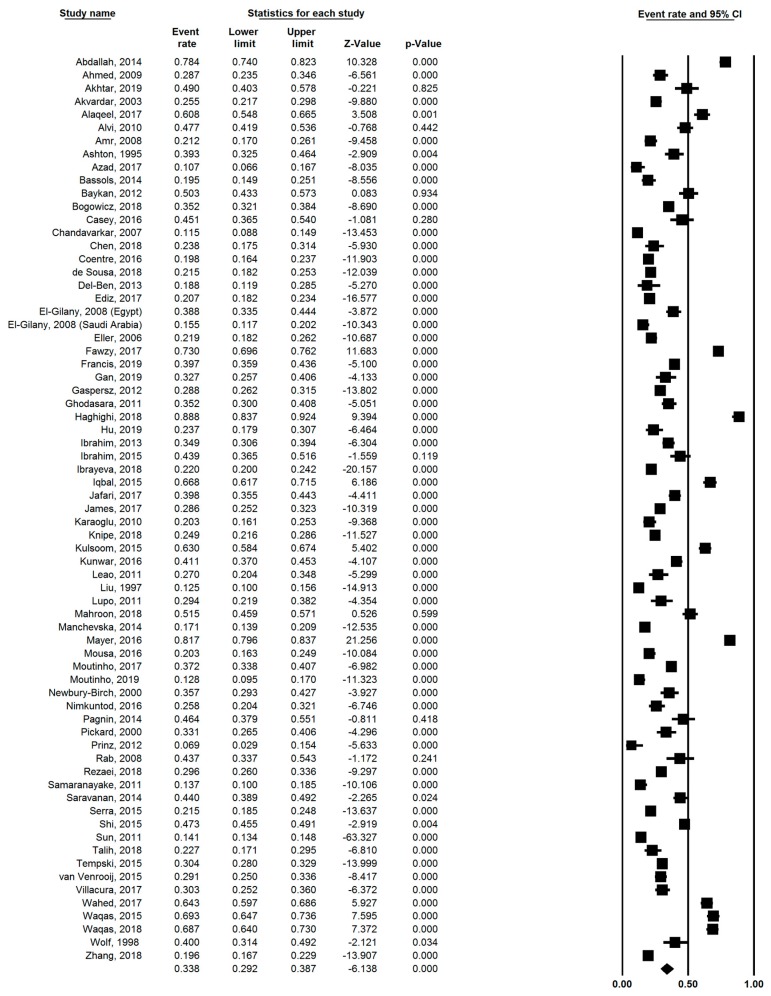
Anxiety, although as common and arguably as debilitating as depression, has garnered less attention, and is often undetected and undertreated in the general population. Similarly, anxiety among medical students warrants greater attention due to its significant implications. We aimed to study the global prevalence of anxiety among medical students and the associated factors predisposing medical students to anxiety. In February 2019, we carried out a systematic search for cross-sectional studies that examined the prevalence of anxiety among medical students. We computed the aggregate prevalence and pooled odds ratio (OR) using the random-effects model and used meta-regression analyses to explore the sources of heterogeneity. We pooled and analyzed data from sixty-nine studies comprising 40,348 medical students. The global prevalence rate of anxiety among medical students was 33.8% (95% Confidence Interval: 29.2–38.7%). Anxiety was most prevalent among medical students from the Middle East and Asia. Subgroup analyses by gender and year of study found no statistically significant differences in the prevalence of anxiety. About one in three medical students globally have anxiety—a prevalence rate which is substantially higher than the general population. Administrators and leaders of medical schools should take the lead in destigmatizing mental illnesses and promoting help-seeking behaviors when students are stressed and anxious. Further research is needed to identify risk factors of anxiety unique to medical students.
Overview
The claims and statistics of this paper haven’t been checked yet.
Run the check — free, no account needed. It reads the open-access text and checks the sources it cites.
Integrity signals
Registry
Cites
Statistics
Figures
Verification
Claims the paper makes
The claims and statistics of this paper haven’t been checked yet.
Run the check — free, no account needed. It reads the open-access text and checks the sources it cites.
Claims other papers make about this one
Each is checked against this paper’s own text: does it say what the citing paper says it does?
The cited source says what the claim attributes to it.
In the citing paper
“a meta-analysis revealed that approximately 1 in 3 medical students worldwide experiences anxiety, a rate significantly exceeding that of the general population [5].”
Self-check
Percentages, sums and reported differences re-computed from the paper’s own numbers.
The self-check needs the paper’s full text.
Citations
Cites
Preferred Reporting Items for Systematic Reviews and Meta-Analyses: the PRISMA statement
Moher, D., Liberati, A., Tetzlaff, J., Altman, D. G., & for the PRISMA Group (2009) · BMJ · doi:10.1136/bmj.b2535 · Cited by 83,823
Preferred Reporting Items for Systematic Reviews and Meta-Analyses: The PRISMA Statement
Moher, D., Liberati, A., Tetzlaff, J., Altman, D. G., & The PRISMA Group (2009) · PLoS Medicine · doi:10.1371/journal.pmed.1000097 · Cited by 64,042 · cited 1×
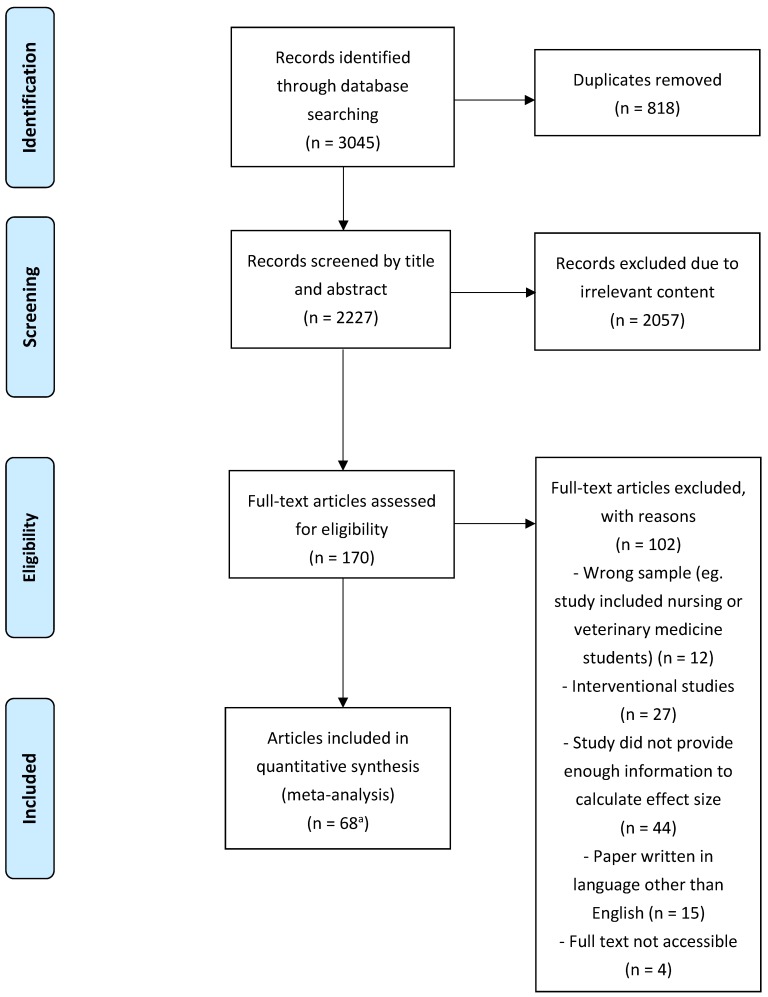
“The selection process, based on the Preferred Reporting Items for Systematic Reviews and Meta-Analyses (PRISMA) guidelines [18], is detailed in Figure 1.”
Bias in meta-analysis detected by a simple, graphical test
Egger, M., Smith, G. D., Schneider, M., & Minder, C. (1997) · BMJ · doi:10.1136/bmj.315.7109.629 · Cited by 56,722 · cited 1×
“We evaluated publication bias using the Egger’s regression method [22].”
MethodThe Hospital Anxiety and Depression Scale
Zigmond, A. S., & Snaith, R. P. (1983) · Acta Psychiatrica Scandinavica · doi:10.1111/j.1600-0447.1983.tb09716.x · Cited by 47,139 · cited 4×
“As a comparison, the prevalence of anxiety among the general population was found to be 3% as screened by the DASS-21 [96], 8.2% as screened by the GAD-7 [97], not more than 10% as screened by the BAI-21 [98] and not more than 25% as screened by the HADS-A [99].”
MethodInfluentialA Brief Measure for Assessing Generalized Anxiety Disorder: The GAD-7
Spitzer, R. L., Kroenke, K., Williams, J. B. W., & Löwe, B. (2006) · Archives of Internal Medicine · doi:10.1001/archinte.166.10.1092 · Cited by 31,765 · cited 4×
“As a comparison, the prevalence of anxiety among the general population was found to be 3% as screened by the DASS-21 [96], 8.2% as screened by the GAD-7 [97], not more than 10% as screened by the BAI-21 [98] and not more than 25% as screened by the HADS-A [99].”
MethodInfluentialWang, G., Ma, R., Qiao, G., Wada, K., Aizawa, Y., & Satoh, T. (2015) · Integrative Medicine International · doi:10.1159/000368408 · Cited by 18,762
An inventory for measuring clinical anxiety: Psychometric properties.
Beck, A. T., Epstein, N., Brown, G., & Steer, R. A. (1988) · Journal of Consulting and Clinical Psychology · doi:10.1037/0022-006x.56.6.893 · Cited by 14,407 · cited 4×
“As a comparison, the prevalence of anxiety among the general population was found to be 3% as screened by the DASS-21 [96], 8.2% as screened by the GAD-7 [97], not more than 10% as screened by the BAI-21 [98] and not more than 25% as screened by the HADS-A [99].”
MethodInfluentialDepression and quality of life in older persons: A review
Sivertsen, H., Bjørkløf, G. H., Engedal, K., Selbæk, G., & Helvik, A.-S. (2015) · Dementia and Geriatric Cognitive Disorders · doi:10.1159/000437299 · Cited by 14,152
Henry, J. D., & Crawford, J. R. (2005) · British Journal of Clinical Psychology · doi:10.1348/014466505x29657 · Cited by 5,801 · cited 4×
“As a comparison, the prevalence of anxiety among the general population was found to be 3% as screened by the DASS-21 [96], 8.2% as screened by the GAD-7 [97], not more than 10% as screened by the BAI-21 [98] and not more than 25% as screened by the HADS-A [99].”
MethodInfluentialAnxiety and cognitive performance: Attentional control theory
Eysenck, M. W., Derakshan, N., Santos, R., & Calvo, M. G. (2007) · Emotion · doi:10.1037/1528-3542.7.2.336 · Cited by 5,289 · cited 1×
“Anxiety can also impair goal-directed attention and concentration [9], working memory [10], and perceptual-motor function [11], all of which are important domains which enable medical students and physicians to provide safe and efficacious medical care to patients.”
Background
Research works printed but not linked: 2
- Prinz, 2012, Burnout, depression and depersonalisation--psychological factors and coping strategies in dental and medical students, GMS Z Med. Ausbild, 29, Doc10
- Lydiard, 2001, Irritable bowel syndrome, anxiety, and depression: What are the links?, J. Clin. Psychiatry, 62, 38
Cited by
Sorted by citations
Items 901–988 of 988
Sperling, E. L., & Hulett, J. M. (2026) · BMC Medical Education · doi:10.1186/s12909-026-09556-2
“Students’ increased levels perceived stress, anxiety, and depression from the start of school to the end of the first semester is consistent with the literature and rein-forces what is known about mental health struggles in health profession schooling [1, 4, 15, 20, 21, 24, 27].”
Belal, M. M., Khalefa, B. B., Bashir, M. N., Sayed, A. A., Khatatbeh, A. A., Baraka, A., Bahbah, E. I., & Meshref, M. M. (2026) · Discover Psychology · doi:10.1007/s44202-026-00706-7
Węglorz, N., Grajek, M. K., Nowak, B., Piotrowska, M., & Jurys, T. (2026) · Polish Annals of Medicine · doi:10.31648/paom/218874
The impact of career planning on health behaviors in medical students: a mixed methods study
Huang, Y., Yang, C., Kang, B., He, S., Zhou, J., & Yang, L. (2026) · Frontiers in Medicine · doi:10.3389/fmed.2026.1815494
“Intense coursework, frequent examinations, pressure from clinical rotations, and uncertainty regarding future employment and career prospects place medical students at high risk for mental health problems (1, 3, 4).”
InfluentialAltowijri, A. (2026) · Frontiers in Medicine · doi:10.3389/fmed.2026.1816941
Impact of Stress on the Oral Cavity: A Cross-Sectional Study Among Dental Students
Rahmaoui, M., Elgasmi, F. E., Nouara, F., & Badre, B. (2026) · Cureus · doi:10.7759/cureus.110045
“Such measures may not only improve student well-being but also enhance learning outcomes and facilitate a smoother transition to professional practice [14,19,20,26,27].”
Suicidal ideation among medical students differs between basic sciences and clinical training levels
Zivarifar, H., Hasan, M., & Osmani, F. (2026) · Discover Psychology · doi:10.1007/s44202-026-00738-z
“Meta-analytic evidence shows that gender, marital status, academic stress, and living arrangements contribute significantly to psychological distress and suicidal thoughts in this population [9, 10].”
Rashid, F., Waqas, A., Siddiqui, R., Ahmed, T., Rahman, A., & Malik, A. (2026) · Research Square · doi:10.21203/rs.3.rs-9558779/v1
Krikorian, A., Lecocq, B., Pen, M. L., Rollet, A., Gouy, E., Mura, M., Métais, A., Spiegel, K., Pelloux, S., Haesebaert, J., et al. (2026) · Research Square · doi:10.21203/rs.3.rs-9094809/v1
Hariasz, W., Adamczak, B. B., Makles, S., Kuźnik, Z., Kloc, M., & Kosendiak, A. A. (2026) · Rozprawy Społeczne · doi:10.29316/rs/222206
Caracterización clínica sobre la evaluación de síntomas de salud mental en estudiantes de medicina
Ramírez, C. R. C. (2026) · Revista Científica Internacional · doi:10.46734/revcientifica.v9i1.251
Effects of the WHO QualityRights Training on Stigma Attitudes Among Social Work Students in Germany
Dieckmännken, I., & Hollederer, A. (2026) · Journal of Social Work Education · doi:10.1080/10437797.2026.2666252
Barrios, I., Mendoza, C. A., Arce, F. J. B., Giménez, F., Salinas, E., Giménez-Legal, E. N., O’Higgins, M. G., Caycho-Rodríguez, T., Ventriglio, A., Castaldelli-Maia, J. M., et al. (2026) · Revista del Nacional (Itaguá) · doi:10.18004/rdn2026.e1800111
Prevalence and Correlates of Test Anxiety Among Medical Students: Systematic Review
Mady, M., El-Nayal, M., Abdel‐Khalek, A. M., Khan, N., Osman, S., Sayegh, M. G., & Hajomer, H. A. E. (2026) · Advances in Medical Education and Practice · doi:10.2147/amep.s595472
A six-year longitudinal study of a well-being evaluation and support program for medical students
Raider, L., Kobayasi, R., Olivo, C. R., Siqueira, M. A. M., Tempski, P. Z., & Martins, M. A. (2026) · BMC Medical Education · doi:10.1186/s12909-026-09714-6
“Previous longitudinal studies in medical schools reported high depression symptoms among medical students that either increased or did not change during medical courses [29–31].”
Segawa, V. K., Nakano, J. M. T., Blaas, I. K., & Castaldelli-Maia, J. M. (2026) · Medicina Clínica y Social · doi:10.52379/mcs.v10.805
Sánchez, X., Carrera, P., Merchán, I. G. V., Jimbo-Sotomayor, R., Manzano, A., & Araujo, V. (2026) · Journal of Affective Disorders Reports · doi:10.1016/j.jadr.2026.101106
Godbole, N., Choi, S., Shim, K., Liu, Y., Hu, J., Wong, J. A., Nguyen, P., Chan, S. W., Ðoàn, L. N., Lin, N., et al. (2026) · PLoS ONE · doi:10.1371/journal.pone.0351759
“Medical students experience significant burnout [1] and higher rates of anxiety compared to the general population [2], along with disproportionately high prevalence of self-reported depression and suicidal ideation [3].”
Wubet, H. B., Ayalew, E. M., Asmare, T. B., Teshome, D., Chekol, B., Desse, T., Hunie, M., Mossie, K. D., Demissie, S., & Gobezie, N. Z. (2026) · Nursing Open · doi:10.1002/nop2.70645
“The prevalence of anxiety among health science students during clinical training has been reported to range from 30% to 70% in North America, Europe, and Asia (Tian-Ci Quek et al. 2019).”
Ofurum, I. C., Uzie, F., Uzoka, M., & Vincent-Obialor, C. (2026) · World Journal of Public Health · doi:10.11648/j.wjph.20261102.22
Tan, Y., Liu, S., & Zang, L. (2026) · Healthcare · doi:10.3390/healthcare14131863
“Anxiety and depressive symptoms have also been widely documented in student populations, including in medical and general university contexts [4,5].”
Jadhav, S., & Kadam, M. (2026) · MGM Journal of Medical Sciences · doi:10.4103/mgmj.mgmj_30_26
Afsharchi, F., Edwards, J., Ram, K. S., Huang, J., Hale, V., & Moudden, I. E. (2026) · Journal of Medical Education and Curricular Development · doi:10.1177/23821205261449382
Gogate, S., Nanaware, S. S., & Padma, K. (2026) · Indian Journal of Medical Specialities · doi:10.4103/injms.injms_8_26
Barrueta-Alvarez, B., Singer, M. S., Bishayee, A., & Syed, M. S. (2026) · Advances in Integrative Medicine · doi:10.1016/j.aimed.2026.100689
Rojas-Cárdenas, P., Nazar, G., & Castillo-Navarrete, J.-L. (2026) · PLoS ONE · doi:10.1371/journal.pone.0352779
“Reports in student populations describe high levels of anxiety and depressive symptoms alongside increasing rates of excess body weight and early cardiometabolic risk profiles [3,81,106,107].”
Mental Health of Medical Students in Portugal: The Role of Sexual Orientation
Moura, A., Ferreira, M. M., D’Alva-Teixeira, V., Macedo, R., & Morgado, P. F. (2026) · Healthcare · doi:10.3390/healthcare14132023
Assessment of the Impact of Medical Studies on the Mental Health of Medical Students in PolandPreprint
Kolanek, A., Kaczmarczyk, K., Ślinko, I., Metelkina, D., Dryl-Jarmoc, E., Kuliś, G., Panas, Z., Krawczuk, K., Dziemiańczuk, J., Zimowski, M., et al. (2026) · Research Square · doi:10.21203/rs.3.rs-10059668/v1
Khan, M. A., Amiri, S., Yaghoobi, A., & Fini, F. N. (2026) · Medicine · doi:10.1097/md.0000000000049665
“[2] The prevalence of anxiety disorders has been investigated and has attracted significant attention.”
Tandon, M., & Dhoble, S. (2026) · International Journal of Community Medicine and Public Health · doi:10.18203/2394-6040.ijcmph20262339
Mughal, A., Bibi, A., Afzal, A., Taj, I., Siddiqui, R., & Raza, M. (2026) · Journal of Rawalpindi Medical College · doi:10.37939/jrmc.v30i2.3185
Chukr, M., Qatza, A., Khaled, M., Attiya, B., Siddiq, A., & Elsayed, M. M. (2026) · BMC Medical Education · doi:10.1186/s12909-026-09937-7
“In the Middle East, research on medical students’ quality of life remains comparatively scarce [10].”
Bacchi, G. N. V., Furukawa, L. H., Soares, A. B., Turatti, A. P., Horst, E. G., Fillmann, G. P., dos Santos, V. B., Karpovich, E., Pereira, V., Vieira, M., et al. (2026) · medRxiv · doi:10.64898/2026.07.14.26357843
Sánchez, X., Carrera, P., Cortez, M. D., Cruz, A., & Merchán, I. G. V. (2026) · PLoS ONE · doi:10.1371/journal.pone.0354032
“More recent reviews indicate that between one-quarter and one-third of trainees are affected worldwide [24], underscoring that our findings exceed global averages.”
Guo, R., Yuan, Z., Yan, W., Huang, Z., Rong, R., Liu, Y., Zhouguo, Y., Abdul, M., Li, Y., Feng, G., et al. (2026) · Frontiers in Psychology · doi:10.3389/fpsyg.2026.1801247
Self-citationMajlish, M. K., Majlish, M. R. K., Shohid, S., Islam, M. S., & Islam, A. N. M. S. (2026) · PLoS ONE · doi:10.1371/journal.pone.0354261
Hong, D. T., Duy, N. T. H., & Quyen, T. T. K. (2026) · Health Psychology and Behavioral Medicine · doi:10.1080/21642850.2026.2687929
Negash, K. H., Osman, A. A., Abdilahi, A. M., Omar, F. M., Guelleh, O. S., Farah, M. A., & Shegere, M. M. (2026) · BMC Psychiatry · doi:10.1186/s12888-026-08438-7
“…of depression among students in Chinese universities, which accounts for 9.8% [31]; 33.8% reported global anxiety prevalence among medical students [32]; 48% in Trinidad and Tobago [9]; 44% in Ethiopia [15]; and 32.2% in Bangladesh [33] anxiety prevalence among undergraduate health professions…”
InfluentialLiu, T., Akhter, S., Gupta, H., Khuu, M., & Nori, P. (2026) · Research Square · doi:10.21203/rs.3.rs-10128857/v1
Ellaban, M. M., Bashandy, S. M., El-Yamanay, Z. Y., Alebiary, R. O., Osman, S. S., & El-Ghaffar, Y. S. A. (2026) · Journal of the Egyptian Public Health Association · doi:10.1186/s42506-026-00224-3
“The demanding nature of medical training compounds these difficulties and may exacerbate existing mental health problems [1, 18].”
Frough, Z., Yaqubi, A. S., Matin, A. B., Watandost, A. R., & Binam, S. (2026) · Salamat Academic & Research Journal · doi:10.61438/sarj.v3i2.297
“This finding is consistent with the social support buffering hypothesis, whic h suggests that emotional and practical support can reduce the psychological impact of stress [2].”
Hong, D. T., Duy, N. T. H., & Thinh, N. G. (2026) · BMC Medical Education · doi:10.21203/rs.3.rs-10059918/v1
Ahmad, G., & Hashmi, F. (2026) · International Health Review · doi:10.32350/ihr.61.01
Baumgartner, S., Huber, A., Höge, T., Schurr, T., & Höfer, S. (2026) · Applied Research in Quality of Life · doi:10.1007/s11482-026-10651-1 · Cited by 1
“Compared to the general population, medical students have a higher risk of anxiety (Quek et al., 2019), depression (Rotenstein et al., 2016), and burnout (Dyrbye et al., 2014).”
Mercado, A. D., Altamar, C. G., Rosania, J. L. L., & Pareja–Loaiza, P. (2025) · Revista de Salud Pública · doi:10.15446/rsap.v27n3.111964
Maghbouli, N., Dokesh, A. M. J., Lorzadeh, N., & Vaziri-harami, R. (2026) · Health Science Reports · doi:10.1002/hsr2.72941
Grebenișan, L., Abalasei, B., Sima-Comaniciu, A., Nireștean, A., Strete, E., Boacă, A.-C., Ujlaki-Nagi, A.-A., Cimpean, D. M., Manolachi, R., Mărginean, C., et al. (2026) · Nutrients · doi:10.3390/nu18152499
Alobud, O. (2026) · Frontiers in Psychology · doi:10.3389/fpsyg.2026.1825898
“…clinically significant anxiety symptoms, often manifesting as worry about academic performance, difficulty managing competing demands, and concerns about their capability to meet the expectations placed upon them (Juul et al., 2022; Kjær et al., 2022; Quek et al., 2019; Agroia et al., 2024).”
Alghamdi, A. H., Almadani, A. H., Aljaffer, M. A., Alghamdi, S. A., AlDrees, A., Almansour, M., AlMuraikhi, N. A., Fiaar, H. A. A., Ibrahim, E. O., Alshadwi, A. M., et al. (2026) · Frontiers in Psychiatry · doi:10.3389/fpsyt.2026.1879787
Rashi, I., Thakre, S. S., Deshmukh, J., & Digambar, G. P. (2026) · International Journal of Community Medicine and Public Health · doi:10.18203/2394-6040.ijcmph20262791
Asghar, T., Hassan, A., Sahar, I., Tahir, M., Shahid, B., & Komal, K. (2026) · BMC Psychology · doi:10.1186/s40359-026-05332-5
Anxiety in Medical Students: a Pilot Study on Associated Factors
Patel, M. (2026) · Academic Psychiatry · doi:10.1007/s40596-026-02418-5
Hernandez-Colin, B., Ceja-Camarillo, L. A., & Arredondo‐Santoyo, M. (2026) · South Florida Journal of Development · doi:10.46932/sfjdv7n8-007
Lymar, L. V., Khaustova, O. O., & Taltanova, O. (2026) · Clinical and Preventive Medicine · doi:10.31612/2616-4868.5.2026.22
“Such data are particularly relevant to medical education, since medical students are already recognised as a population with elevated risk of depression, anxiety, and psychological distress even in non-war conditions [8, 9].”
Prinzi, F., Tripoli, G., Bonaccorso, N., Bongiorno, E., Daino, M., Byrtus, R., Cascia, C. L., Currieri, T., Maniaci, G., Vella, I., et al. (2026) · Human Behavior and Emerging Technologies · doi:10.1155/hbe2/4663853
Lone, A., Dar, I. A., Alfarhan, M. F. A., Gulfishan, S., Pathath, A. W., Quadri, S. A. Q., Khashram, N. A., Alnaim, A. A., & Jan, M. (2026) · Frontiers in Medicine · doi:10.3389/fmed.2026.1883808
“Medical students are also particularly vulnerable to elevated levels of stress because of the demanding nature of their educational environment (29, 30).”
Thapa, P., Thapa, R., & Pahari, S. (2026) · Health Science Reports · doi:10.1002/hsr2.73079
“A Meta‐ Analysis, found the prevalence of anxiety to be 33.8% among medical students globally, which is substantially higher than the general population [10].”
InfluentialGagnidze, A., & Hassan, N. (2026) · Georgian Medical Journal · doi:10.66636/gmj.v1.i3.a186
“Studies indicate that approximately 36% of international students report experiencing poor mental health [8], and a meta-analysis found a global prevalence of anxiety among medical students of 33.8% [9].”
InfluentialJing, L., Zhang, W., Lee, D. P., Sun, M., Wu, G., Ouyang, X., & Liu, Z. (2026) · Mental Wellness · doi:10.4081/mw.2026.44
Falade, T. A. (2026) · Noise and Health · doi:10.4103/nah.nah_249_25 · Cited by 1
Owuor, D. C., Gatotoh, A. M., Omungo, R. M., & OTIENO, G. A. (2026) · Primary Health Care Practice Journal · doi:10.11604/phcp.2026.6.1.52093
Non-fatal health outcomes of anxiety disorders in Ethiopia, from 1990 to 2023
Tadesse, S., Jemal, M., Sherfa, A., Lahole, B. K., Belay, S., Gebremariam, G., Wodessa, G., Zewudie, A., & Tuke, G. (2026) · SAGE Open Medicine · doi:10.1177/20503121261486073
Ortega-Susín, M. J., Pérez, T., Serrano, D. R., & González‐Burgos, E. (2026) · Public Health · doi:10.1016/j.puhe.2026.106490
Webster, K. D., Smith, A. C., MacMillan, K., Kong, S., Miller, E., Sikorskii, A., & Ezeamama, A. E. (2026) · Journal of Psychiatric Practice · doi:10.1097/pra.0000000000000951
Ellett, S. G., Consedine, N. S., Akroyd, A., Wearn, A. M., & Serlachius, A. S. (2026) · Medical Teacher · doi:10.1080/0142159x.2026.2733136
Rashid, F., Noor, I., Najeeb, W., Siddiqui, H. R., Ali, H. M., Malik, A., & Rahman, A. (2026) · Health Science Reports · doi:10.1002/hsr2.73250
FACTORS ASSOCIATED WITH ANXIETY AND DEPRESSION AMONG HIGHER EDUCATION STUDENTS
Lacerda, D. O. F., Torres, M. R., Barbosa, A. X., Costa, N. J. C. S., Barbosa, R. R. S., Mesquita, M. T. M. P., de Almeida, I. D., Machado, A. S., Novaes, K. E. D. S., Alves, A. X. D. F., et al. (2026) · Revista Gênero e Interdisciplinaridade · doi:10.51249/gei.v7i02.3221
Ravendran, K., Singh, A. P., Kishore, J., Roy, Y. J., Mirani, Y., Nawaz, H., Nissar, M., Azhar, A., & Singh, K. (2026) · Psychiatry International · doi:10.3390/psychiatryint7050214
Chen, Y., Zhang, S., Liu, X., Li, L., Si, M., & Xu, C. (2026) · Behavioral Sciences · doi:10.3390/bs16101715
“Mental health problems are a significant concern in medical education and have long been a predominant issue (Quek et al., 2019).”
InfluentialDawood, E., Monica, A., Abdullah, A., Alalyani, G., Alzhrani, N., Alqahtani, F., Ali, G. B., & Shereda, H. M. A. (2026) · Health Science Reports · doi:10.1002/hsr2.72981
Gupta, M. D., Sabherwal, S., Goel, V., Girish, M. P., Shetty, M. K., Prabhakaran, S., Gill, T., Puri, S., Singh, A., Sharma, V., et al. (2026) · Indian Heart Journal · doi:10.1016/j.ihj.2026.09.002
Debnath, A., Gupta, P., Basu, S., Santoshi, S., & Verma, A. (2026) · Indian Journal of Social Psychiatry · doi:10.4103/ijsp.ijsp_393_24
Shpakau, A., Gacek, M. K., Sokołowska, D., Trofin, P. F., RUDZENIK, V., Loginovich, Y., Raskilienė, A., Cociu, S., Наумов, И. А., Knyszyńska, A., et al. (2026) · Bratislavské lekárske listy/Bratislava medical journal · doi:10.1007/s44411-026-00868-9
Manafi, F., Rahbar, S., Radinmehr, H., Talimkhani, A., & Asadi, M. A. Z. (2026) · Critical Public Health · doi:10.1080/09581596.2026.2741480
Gao, X., Cao, L.-Y., Liu, W.-L., Zhao, X.-T., Ren, S., & Fan, H. (2026) · Collegian Journal of the Royal College of Nursing Australia · doi:10.1016/j.colegn.2026.09.002
Prevalence and risk factors of depression and anxiety among Yemeni students in Saudi universities
Abbad, A. A. B., Alasheq, A., Bokir, M., Balafkhar, R. M., Binyamani, F., Aldabek, S., Makarem, Z. A. A., Binsaeedu, A. S., Tamim, H., Alghalyini, B., et al. (2026) · Scientific Reports · doi:10.1038/s41598-026-63348-8
“Quek and colleagues reported a pooled anxiety prevalence of 33.8% among medical students worldwide with a 95% confidence interval of 29.2% to 38.7% 22 ; that interval expresses uncertainty around a single pooled estimate rather than a range of observed prevalences, and it should not be quoted as…”
InfluentialLemes, J. P., Santana, A. L. M., Furuto, F., Massuco, G. A. D. B., Silva, G. X., da Silva, W. A., & Borges, C. C. (2026) · Revista Contemporânea · doi:10.56083/rcv6n10-007
Gurnani, B., & Awasthi, S. (2026) · Journal of Ecophysiology and Occupational Health · doi:10.18311/jeoh/2026/58948
Sun, H., Li, Z., Gao, C., Sun, H., Zhou, Y., Liu, L., Sun, Y., & 李雯雯 (2026) · Frontiers in Psychology · doi:10.3389/fpsyg.2026.1931480
“…high academic workload and frequent assessments in medical education are associated with relatively high levels of psychological distress among medical students, including depression, anxiety, and burnout (Dyrbye et al., 2006; Rotenstein et al., 2016; Frajerman et al., 2019; Quek et al., 2019).”
Prácticas ayurvédicas y técnicas mente-cuerpo para el estrés académico: revisión narrativa
Garrido, A. S., Andino, D. G. M., & Estrella, M. A. M. (2026) · Sanitas. Revista arbitrada de ciencias de la salud. · doi:10.62574/h8858b41
Meditation in an academic medical institution to improve student mental health: a pilot study
Morgan, M. V., & Tinsley, S. (2026) · Frontiers in Digital Health · doi:10.3389/fdgth.2026.1957495
de Oliveira, M. V. F., Aguiar, I. D. S., & Nascimento, C. J. C. (2026) · Revista Multidisciplinar do Nordeste Mineiro · doi:10.66104/rn1fde78
Pleșea-Condratovici, C., Vlase, C.-M., Vasile, I.-S., Pleșea-Condratovici, A., Arbune, M., Pleșea-Condratovici, V. M., & Pana, R. C. (2026) · Healthcare · doi:10.3390/healthcare14203455
“Systematic reviews and meta-analyses have documented that approximately one in three medical students reports clinically significant anxiety, a figure that appears to exceed estimates for the general young adult population [1,2].”
InfluentialZhu, W., Zheng, X., Tian, D., Yan, L., Bai, Z., Wu, J., Hu, P., & Chen, R. (2026) · doi:10.2196/preprints.112699
Anxiety symptoms among Namibian pharmacy and medical students: a cross-sectional study
Hausiku, W., Shailemo, D., Bamitale, K. O., & Aboua, Y. (2026) · Journal of Affective Disorders Reports · doi:10.1016/j.jadr.2026.101207
Torad, A. A. M., Alanazi, S., Elbosaty, R. F., Essa, N. A., Hasan-Hafez, O., Horvath, A. A., Boolani, A., Singh, H., Taha, M. M., Alawafi, R., et al. (2026) · Healthcare · doi:10.3390/healthcare14213573
Sampieri-Cabrera, R., Guízar-Sánchez, D., Robles-Cabrera, A., Vives-Varela, T., & Contla-Cervantes, F. (2026) · Frontiers in Psychology · doi:10.3389/fpsyg.2026.1869011
Metadata
- Authors
- Tian-Ci Quek, T., Wai-San Tam, W., X. Tran, B., Zhang, M., Zhang, Z., Su-Hui Ho, C., & Chun-Man Ho, R.
- Affiliations
- Department of Psychological Medicine, Yong Loo Lin School of Medicine, National University of Singapore, Singapore 119007, Singapore
- Alice Lee Centre for Nursing Studies, National University of Singapore, Singapore 119007, Singapore
- Institute for Preventive Medicine and Public Health, Hanoi Medical University, Hanoi 100000, Vietnam
- Huaibei Normal University (CN)
- Department of Psychological Medicine, National University Health System, Singapore 119007, Singapore
- Corresponding author
- Zhang, Zhisong
- ORCID
- Venue
- International Journal of Environmental Research and Public Health
- Publisher
- MDPI AG
- Published
- 2019-07-31
- Volume
- 16
- Issue
- 15
- Pages
- 2735
- ISSN
- 1660-4601 (ISSN-L)
- PMC
- PMC6696211
- OpenAlex
- W2965255255
- Cited by
- 990
- References
- 136
- Citations by year
- 2026: 141 · 2025: 130 · 2024: 186 · 2023: 165 · 2022: 174 · 2021: 124 · 2020: 66 · 2019: 3
- FWCI
- 16.82
- Type
- journal article
- Language
- en
- Open access
- gold
- dx.doi.org
- Licence
- Locations
- International Journal of Environmental Research and Public Health (publishedVersion, cc-by)
- PubMed Central (publishedVersion, cc-by)
- PubMed (publishedVersion)
- Rare & Special e-Zone (The Hong Kong University of Science and Technology) (submittedVersion)
- National University of Singapore (submittedVersion, cc-by)
- RePEc: Research Papers in Economics (submittedVersion)
- DOAJ (DOAJ: Directory of Open Access Journals) (submittedVersion)
- Funders
- This study received funding from the National Social Science Fund (General Project of Education) (BBA170063)
- Topics
- Health Sciences › Health Professions › General Health Professions › Healthcare professionals’ stress and burnout
- Health Sciences › Medicine › Psychiatry and Mental health › Mental Health Treatment and Access
- Social Sciences › Psychology › Clinical Psychology › COVID-19 and Mental Health
- Keywords
- anxiety, medical students, prevalence, risk factors, mental health, medical education, help-seeking, stigma, gender differences, year of study
- MeSH terms
- Anxiety, Humans, Risk Factors, Students, Medical, Global Health, Models, Statistical, Prevalence, Odds Ratio
About these checks
Registry, retraction, Cites and statistics results are computed, not judged, with one exception: a printed reference that no index lists is read once by a model before it counts as a citation error. Claims are extracted by a model and kept only when their quote appears verbatim in the text; each cited source is then checked, with a model’s help, for whether it says what the claim relies on. Those verdicts can be wrong — read the claim’s quote and the cited source before relying on one.
Statistics and arithmetic are recomputed, not judged.
Confidence bands are shown only for fields calibrated on our annotated test set. None is calibrated yet, so no band is shown.
What counts as a claim ›How we measure confidence ›How we check this ›
Are you an author, or do you see a problem with this page? Request a review
