

The DOI matches its Crossref record; 133 of the 136 references it cites were found in a registry or an index.
The Global Prevalence of Anxiety Among Medical Students: A Meta-Analysis
Open accessAbstract
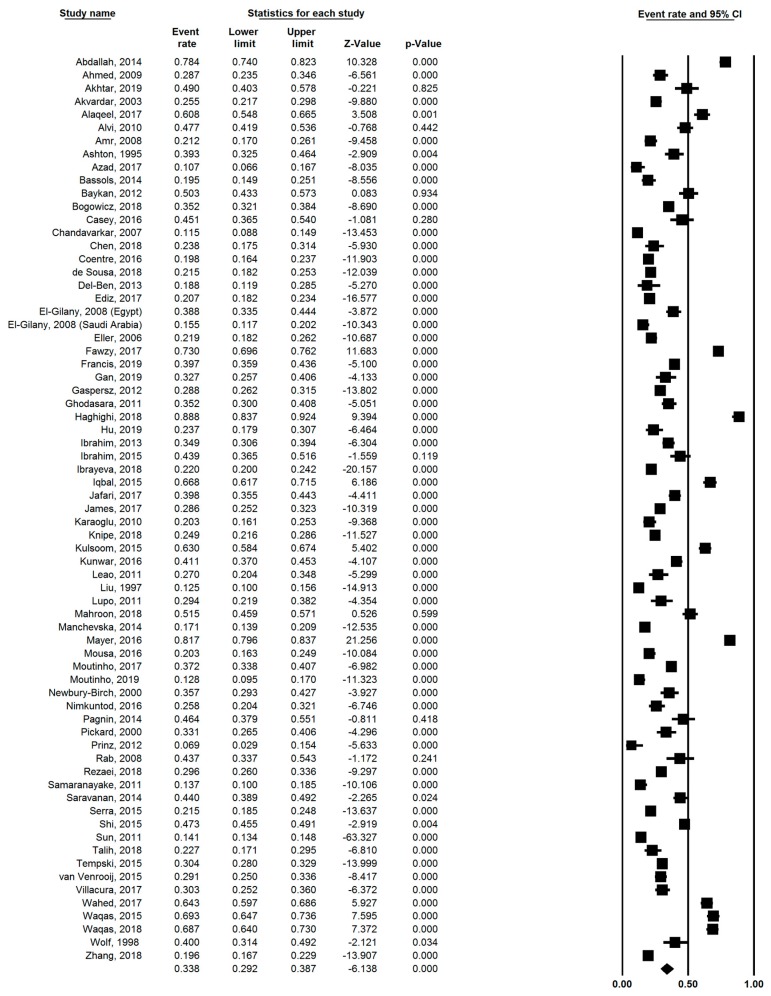
Anxiety, although as common and arguably as debilitating as depression, has garnered less attention, and is often undetected and undertreated in the general population. Similarly, anxiety among medical students warrants greater attention due to its significant implications. We aimed to study the global prevalence of anxiety among medical students and the associated factors predisposing medical students to anxiety. In February 2019, we carried out a systematic search for cross-sectional studies that examined the prevalence of anxiety among medical students. We computed the aggregate prevalence and pooled odds ratio (OR) using the random-effects model and used meta-regression analyses to explore the sources of heterogeneity. We pooled and analyzed data from sixty-nine studies comprising 40,348 medical students. The global prevalence rate of anxiety among medical students was 33.8% (95% Confidence Interval: 29.2–38.7%). Anxiety was most prevalent among medical students from the Middle East and Asia. Subgroup analyses by gender and year of study found no statistically significant differences in the prevalence of anxiety. About one in three medical students globally have anxiety—a prevalence rate which is substantially higher than the general population. Administrators and leaders of medical schools should take the lead in destigmatizing mental illnesses and promoting help-seeking behaviors when students are stressed and anxious. Further research is needed to identify risk factors of anxiety unique to medical students.
Overview
The claims and statistics of this paper haven’t been checked yet.
Run the check — free, no account needed. It reads the open-access text and checks the sources it cites.
Integrity signals
Registry
Cites
Statistics
Figures
Verification
Claims the paper makes
The claims and statistics of this paper haven’t been checked yet.
Run the check — free, no account needed. It reads the open-access text and checks the sources it cites.
Claims other papers make about this one
Each is checked against this paper’s own text: does it say what the citing paper says it does?
The cited source says what the claim attributes to it.
In the citing paper
“a meta-analysis revealed that approximately 1 in 3 medical students worldwide experiences anxiety, a rate significantly exceeding that of the general population [5].”
Self-check
Percentages, sums and reported differences re-computed from the paper’s own numbers.
The self-check needs the paper’s full text.
Citations
Cites
Preferred Reporting Items for Systematic Reviews and Meta-Analyses: the PRISMA statement
Moher, D., Liberati, A., Tetzlaff, J., Altman, D. G., & for the PRISMA Group (2009) · BMJ · doi:10.1136/bmj.b2535 · Cited by 83,823
Preferred Reporting Items for Systematic Reviews and Meta-Analyses: The PRISMA Statement
Moher, D., Liberati, A., Tetzlaff, J., Altman, D. G., & The PRISMA Group (2009) · PLoS Medicine · doi:10.1371/journal.pmed.1000097 · Cited by 64,042 · cited 1×
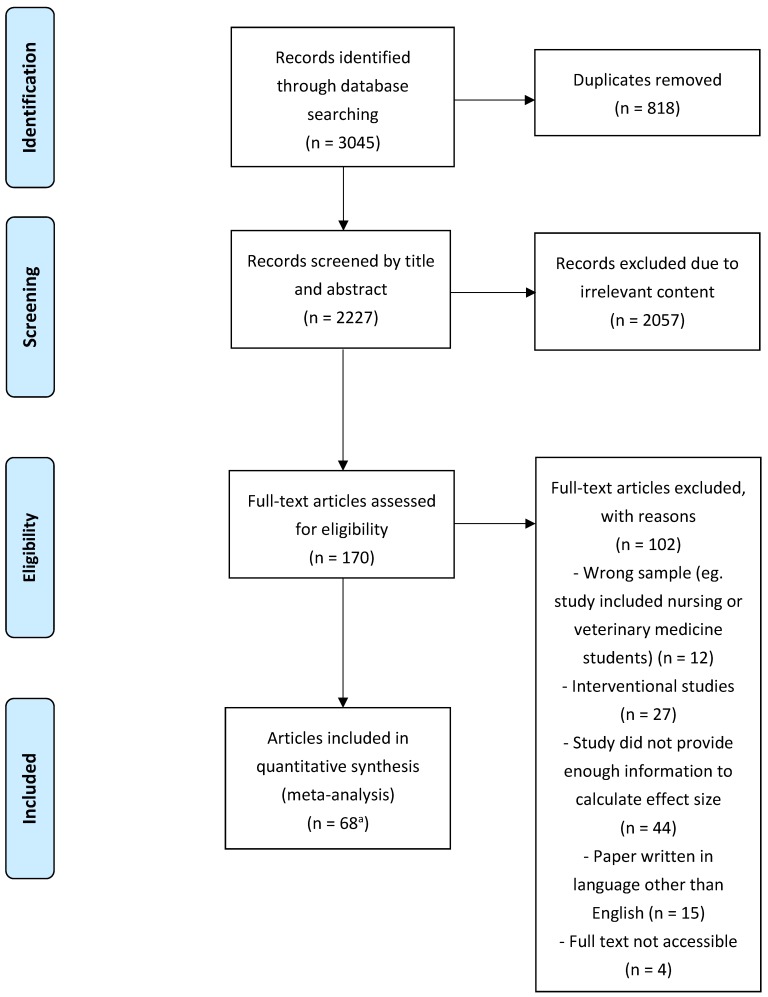
“The selection process, based on the Preferred Reporting Items for Systematic Reviews and Meta-Analyses (PRISMA) guidelines [18], is detailed in Figure 1.”
Bias in meta-analysis detected by a simple, graphical test
Egger, M., Smith, G. D., Schneider, M., & Minder, C. (1997) · BMJ · doi:10.1136/bmj.315.7109.629 · Cited by 56,722 · cited 1×
“We evaluated publication bias using the Egger’s regression method [22].”
MethodThe Hospital Anxiety and Depression Scale
Zigmond, A. S., & Snaith, R. P. (1983) · Acta Psychiatrica Scandinavica · doi:10.1111/j.1600-0447.1983.tb09716.x · Cited by 47,139 · cited 4×
“As a comparison, the prevalence of anxiety among the general population was found to be 3% as screened by the DASS-21 [96], 8.2% as screened by the GAD-7 [97], not more than 10% as screened by the BAI-21 [98] and not more than 25% as screened by the HADS-A [99].”
MethodInfluentialA Brief Measure for Assessing Generalized Anxiety Disorder: The GAD-7
Spitzer, R. L., Kroenke, K., Williams, J. B. W., & Löwe, B. (2006) · Archives of Internal Medicine · doi:10.1001/archinte.166.10.1092 · Cited by 31,765 · cited 4×
“As a comparison, the prevalence of anxiety among the general population was found to be 3% as screened by the DASS-21 [96], 8.2% as screened by the GAD-7 [97], not more than 10% as screened by the BAI-21 [98] and not more than 25% as screened by the HADS-A [99].”
MethodInfluentialWang, G., Ma, R., Qiao, G., Wada, K., Aizawa, Y., & Satoh, T. (2015) · Integrative Medicine International · doi:10.1159/000368408 · Cited by 18,762
An inventory for measuring clinical anxiety: Psychometric properties.
Beck, A. T., Epstein, N., Brown, G., & Steer, R. A. (1988) · Journal of Consulting and Clinical Psychology · doi:10.1037/0022-006x.56.6.893 · Cited by 14,407 · cited 4×
“As a comparison, the prevalence of anxiety among the general population was found to be 3% as screened by the DASS-21 [96], 8.2% as screened by the GAD-7 [97], not more than 10% as screened by the BAI-21 [98] and not more than 25% as screened by the HADS-A [99].”
MethodInfluentialDepression and quality of life in older persons: A review
Sivertsen, H., Bjørkløf, G. H., Engedal, K., Selbæk, G., & Helvik, A.-S. (2015) · Dementia and Geriatric Cognitive Disorders · doi:10.1159/000437299 · Cited by 14,152
Henry, J. D., & Crawford, J. R. (2005) · British Journal of Clinical Psychology · doi:10.1348/014466505x29657 · Cited by 5,801 · cited 4×
“As a comparison, the prevalence of anxiety among the general population was found to be 3% as screened by the DASS-21 [96], 8.2% as screened by the GAD-7 [97], not more than 10% as screened by the BAI-21 [98] and not more than 25% as screened by the HADS-A [99].”
MethodInfluentialAnxiety and cognitive performance: Attentional control theory
Eysenck, M. W., Derakshan, N., Santos, R., & Calvo, M. G. (2007) · Emotion · doi:10.1037/1528-3542.7.2.336 · Cited by 5,289 · cited 1×
“Anxiety can also impair goal-directed attention and concentration [9], working memory [10], and perceptual-motor function [11], all of which are important domains which enable medical students and physicians to provide safe and efficacious medical care to patients.”
Background
Research works printed but not linked: 2
- Prinz, 2012, Burnout, depression and depersonalisation--psychological factors and coping strategies in dental and medical students, GMS Z Med. Ausbild, 29, Doc10
- Lydiard, 2001, Irritable bowel syndrome, anxiety, and depression: What are the links?, J. Clin. Psychiatry, 62, 38
Cited by
Sorted by citations
Items 301–400 of 988
Nguyen, M. H., Do, X. T., Nguyen, T. T., Pham, D. M., Pham, T. T. M., Khuê, P. M., Giang, K. B., Binh, N., Nguyen, H. T., Nguyen, N.-M., et al. (2022) · Frontiers in Nutrition · doi:10.3389/fnut.2022.938769 · Cited by 12
Impact of students assistance policies on quality of life and mental health
de Brito, L. D. S., Pereira, T. N., dos Santos, E. R., de Barros, T. G., Martinez, W. D., dos Santos, L. L., Brienze, V. M. S., Lima, A. R. D. A., Bizotto, T. S. G., & André, J. C. (2023) · Frontiers in Psychology · doi:10.3389/fpsyg.2023.1266366 · Cited by 8
“…their QoL and mental health were lower than the general population in several studies (Dyrbye et al., 2006; Gan and Hue, 2019; Maser et al., 2019; Quek et al., 2019; Solis and Lotufo-Neto, 2019; Miguel et al., 2021), including a systematic review and meta-analysis of 195 studies involving…”
BackgroundWang, H., Zhou, Y., Dai, P., Guan, Y., Zhong, J., Li, N., & Yu, M. (2023) · BMJ Open · doi:10.1136/bmjopen-2023-079084 · Cited by 9
An Escape Game on University Students’ Mental Health During the COVID-19 Pandemic: Cocreation Study
Labrosse, D., Vié, C., Hajjam, H., Tisseron, C., Thellier, D., & Montagni, I. (2024) · JMIR Serious Games · doi:10.2196/48545 · Cited by 8
“Furthermore, previous studies have shown that health care students are a population at risk of mental illness [38] and, as a consequence, tend to be more sensitive to this topic.”
BackgroundPhysical activity and mental health of medical students
Stratakis, K., Terzić-Šupić, Z., Todorović, J., Nešić, D., & Novaković, I. V. (2024) · Central European Journal of Public Health · doi:10.21101/cejph.a8097 · Cited by 8
AlSamhori, J. F., Kakish, D. R. K., AlSamhori, A. R. F., AlSamhori, A. F., Hantash, N. R. A., Swelem, A. F. A., Abu-Suaileek, M. H. A., Arabiat, H. M., Altwaiqat, M. A., Banimustafa, R., et al. (2024) · Middle East Current Psychiatry · doi:10.1186/s43045-024-00493-8 · Cited by 8
“The average GAD-7 scores across all students indicated considerable anxiety levels, consistent with findings by Quek et al. [28] that medical students in the Middle East and Asia are particularly susceptible to anxiety.”
Depression in Mexican medical students: A path model analysis
Castaños-Cervantes, S., & Domínguez-González, A. D. (2020) · Heliyon · doi:10.1016/j.heliyon.2020.e04178 · Cited by 8
“8% (Quek et al., 2019), and of depression was between 27%-28% (Tam et al.”
BackgroundGao, F., Jiao, S.-X., Bi, Y., Huang, Z.-Y., Wang, P., Zhang, B.-Y., Fang, J., Han, R.-L., Fan, L., Wang, M.-J., et al. (2021) · Frontiers in Psychiatry · doi:10.3389/fpsyt.2021.641138 · Cited by 8
Self-citationDOES CAFFEINE INTAKE INFLUENCE MENTAL HEALTH OF MEDICAL STUDENTS?
Isa, Z. M., Anuar, A. A., Azmi, A. D., Selvan, S. T., Hisham, N. S., & Qing, Y. Z. (2021) · Malaysian Journal of Public Health Medicine · doi:10.37268/mjphm/vol.21/no.2/art.626 · Cited by 8
El-Khodary, B., Alshawamreh, S., Salah, M. A. A., Hamada, A. M. A., Alhendawi, B. H. M., Alhabil, M., Alemour, Y., Zaqout, H., & Wadi, E. A. (2021) · Middle East Current Psychiatry · doi:10.1186/s43045-021-00146-0 · Cited by 9
Development and psychometric properties of COVID-19 related Healthcare Student stress scale (CHSSS)
Baghcheghi, N., Mesri, M., Karimy, M., Bigdeli, S., & Koohestani, H. R. (2022) · BMC Psychology · doi:10.1186/s40359-022-00778-9 · Cited by 8
Mourad, F., Mangialavori, S., & Fave, A. D. (2022) · International Journal of Environmental Research and Public Health · doi:10.3390/ijerph191811714 · Cited by 8
Measurement Properties and Optimal Cutoff Point of the WHO-5 Among Chinese Healthcare Students
Yang, N., Ma, H., Huang, M., Lau, E. Y. Y., Fong, D., Wang, M., Wang, P., Xu, S., Xu, J., Jiang, C., et al. (2023) · Psychology Research and Behavior Management · doi:10.2147/prbm.s437219 · Cited by 8
“15,16 A meta-analysis of mental health problems among healthcare students in China showed that the prevalence of depression, anxiety, and suicidal ideation were 29%, 21%, and 11%, respectively, underlining the severity of the issue and urgency to understand their well-being more.”
BackgroundGastro-esophageal reflux disease among the urban population of Saudi Arabia
Maqbul, M. S., Alshehri, W. A. A., Bajubair, A. M., Mohamed, M. E. S., aljohani, S. H., Alnajjar, D. B., Ahmed, L. A., bawadud, W. A., Alyousef, M. A., Althagafi, N. G., et al. (2024) · Gastroenterology & Endoscopy · doi:10.1016/j.gande.2024.07.004 · Cited by 8
伊藤, 和., & Audi, L. (2021) · Journal of Health Sciences · doi:10.17532/jhsci.2021.1191 · Cited by 8
Hasan, M. T., Safa, F., & Hossain, S. (2020) · doi:10.31234/osf.io/9fdu2 · Cited by 8
Sadeghi, H., Nikkhahi, F., Maleki, M. R., Simiari, A., Bakht, M., & Khoei, S. G. (2023) · Microbial Pathogenesis · doi:10.1016/j.micpath.2023.106153 · Cited by 7
Sustainable benefits of mindfulness training in health professions education
Sköld, C., Steen, A., Niemi, M., Vinnars, B., & Kiessling, A. (2025) · BMC Medical Education · doi:10.1186/s12909-025-06998-y · Cited by 9
Huang, S.-S., Wu, J.-W., Huang, C.-C., Liang, J.-F., Yang, Y.-Y., Cheng, H., & Chen, C.-H. (2025) · International Journal of Health Promotion and Education · doi:10.1080/14635240.2025.2489382 · Cited by 9
Fang, Y., Yang, M. S., Huang, W., Zhang, Y., Gao, X., Chen, Y., Meng, S., & Zeng, S. (2025) · BMC Medical Education · doi:10.1186/s12909-025-07141-7 · Cited by 7
Sosa, J. V. C., & Huancahuire‐Vega, S. (2026) · JMIR Formative Research · doi:10.2196/82667 · Cited by 13
Paz, D. C., Bains, M. S., Zueger, M. L., Bandi, V. R., Kuo, V. Y., Payton, M. E., & Ryznar, R. J. (2023) · Frontiers in Psychology · doi:10.3389/fpsyg.2023.1076841 · Cited by 7
Scullion, R., Icke, K., Tissen‐Diabaté, T., Adam, D., Ortiz, M., Witt, C. M., Brinkhaus, B., & Stöckigt, B. (2023) · BMC Medical Education · doi:10.1186/s12909-023-04745-9 · Cited by 7
“Its rigour is considered integral to students’ future responsibility for patient care and public health [10, 26].”
BackgroundConsequences of the COVID-19 pandemic on the mental health of medical students202.
Molina, A. M. S., Gómez-Sierra, F. J., Fernández-Ruiz, J., Jiménez‐Fernández, S., González-Domenech, P., García-Jiménez, J., & Gutiérrez-Rojas, L. (2023) · PubMed Central · Cited by 7
Figuerola-Escoto, R. P., Hernández, L. F. B., Cruz, I., & Pérez, D. L. (2024) · CES Psicología · doi:10.21615/cesp.6992 · Cited by 7
Maddalena, N. D. C. P., Lucchetti, A. L. G., Ezequiel, O. D. S., & Lucchetti, G. (2024) · Journal of Mental Health · doi:10.1080/09638237.2024.2390374 · Cited by 8
Mahihu, C. (2020) · Open Journal of Social Sciences · doi:10.4236/jss.2020.812014 · Cited by 8
Graduating from Medical School amid a Pandemic: A Study of Graduates’ Mental Health and Concerns
Alkwai, H. M. (2021) · Education Research International · doi:10.1155/2021/8854587 · Cited by 6
Serviços de apoio à saúde mental do estudante de Medicina: uma revisão sistemática
de Morais, M. G., Silva, I. M. A. D. O. E., Versiani, E. R., da Silva, C. C. G., & de Moura, A. S. (2021) · Revista Brasileira de Educação Médica · doi:10.1590/1981-5271v45.2-20200428 · Cited by 7
The impact of the COVID-19 pandemic on the mental health of medical students
Ertek, İ. E., Özkan, S., Candansayar, S., & ILHAN, M. N. (2022) · Journal of Surgery and Medicine · doi:10.28982/josam.1061178 · Cited by 11
“The prevalence of depression in this population has been reported as 22% – 49% [1], anxiety as 33.8% [2], suicidal ideation as 11.1% [3], and burnout as 45% – 71% [4].”
InfluentialO primeiro ano do resto das nossas vidas: Saúde mental de alunos de medicina
Figueiredo, D. S. D. S., de Lima, K. A., Figueiredo, F. N. D. S., Bellodi, P. L., Porfírio, G. B., Carraro, E., & Figueiredo, D. L. A. (2022) · Research Society and Development · doi:10.33448/rsd-v11i9.31651 · Cited by 7
Terzi, Ö., Arslan, H. N., Mıdık, Ö., & Dündar, C. (2022) · INQUIRY The Journal of Health Care Organization Provision and Financing · doi:10.1177/00469580221109671 · Cited by 9
“7 11 (8-14)** 11 (7-13)** 10 (4-14)** With friend at home 10.”
InfluentialWahab, I. A., Goh, K. W., Zainal, Z. A., Yusof, N. S. M. M., Huri, H. Z., Jacob, S. A., Alwi, M. N. M., Hashim, R., Hisham, S. A., & Jamil, N. (2022) · International Journal of Environmental Research and Public Health · doi:10.3390/ijerph19159629 · Cited by 7
“Medical and health sciences students reported high levels of stress, leading to a low quality of life [10,11].”
BackgroundBaranauskas, M., Kupčiūnaitė, I., & Stukas, R. (2022) · International Journal of Environmental Research and Public Health · doi:10.3390/ijerph19159725 · Cited by 7
“8% among medical students globally, which was substantially higher than the general population [48].”
BackgroundGrover, S., & Sahoo, S. (2023) · Indian Journal of Psychiatry · doi:10.4103/indianjpsychiatry.indianjpsychiatry_486_22 · Cited by 7
“[16] A large amount of data has emerged after the COVID-19 pandemic, and this suggests a high prevalence of anxiety among physicians (25.8”
InfluentialUpotreba anksiolitika kod studenata medicine na Medicinskom fakultetu u Osijeku
Odjel za internu medicinu, N. M. B. V., Marušić, R., Medicinski fakultet, S. J. J. S. U. O., Karl, D., Medicinski fakultet, S. J. J. S. U. O., Olujić, M., Medicinski fakultet, S. J. J. S. U. O., Oftalmološka klinika dr. Balog, O., Jurić, P., Medicinski fakultet, S. J. J. S. U. O., et al. (2023) · Socijalna psihijatrija · doi:10.24869/spsih.2022.373 · Cited by 7
“Kod mlađih studenata češća je zabrinutost oko fakulteta i ispita, dok stariji studenti počinju brinuti o raznim egzi-stencijskim problemima, a zabrinutost oko fa-kulteta je manja (12).”
InfluentialThompson, C., Meller, J. L., Naqvi, M., Adesanya, O. A., & Vasylyeva, T. L. (2023) · Journal of Education and Health Promotion · doi:10.4103/jehp.jehp_1027_22 · Cited by 7
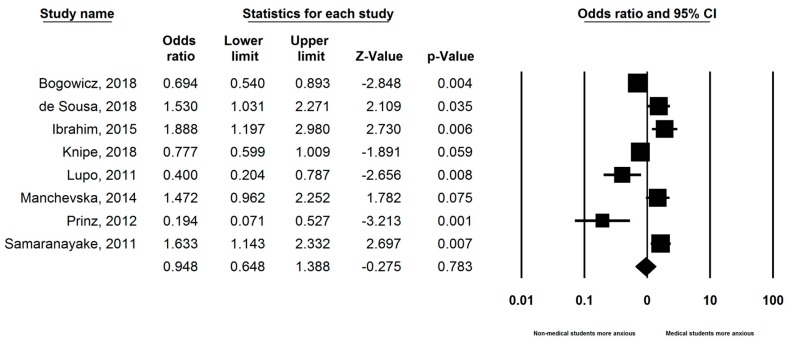
“[8] In the meta‐analysis, the pooled odds ratio comparing anxiety in medical versus non‐medical students was also statistically significant.[1,8] A systematic review of studies examining North American medical students found higher rates of anxiety in medical versus non‐medical students and the age‐matched general pop…”
BackgroundHäfner, S., Zolk, O., & Barth, H. (2022) · Naunyn-Schmiedeberg s Archives of Pharmacology · doi:10.1007/s00210-022-02225-3 · Cited by 7
“All over the world, medical education is challenging and often perceived as stressful, and medical students are at higher risk for anxiety disorders and depression in comparison to the general population (Moir et al. 2018; Quek et al. 2019).”
BackgroundKavaliauskas, P., Nomeikaitė, A., Geležėlytė, O., Kazlauskas, E., & Smailytė, G. (2024) · International Journal of Occupational Medicine and Environmental Health · doi:10.13075/ijomeh.1896.02350 · Cited by 10
“The findings in anxiety prevalence are also comparable to worldwide data, which ranges 22.6–36.3% [15,38–41].”
ResultInfluentialPsychological distress and suicidal ideation in Sicilian Medical Students: The SMS-ME project
Bonaccorso, N., Tripoli, G., Vella, I., Cascia, C. L., Amodio, E., Bongiorno, E., Genovese, D., Maniaci, G., Sciortino, M., Galatà, E., et al. (2024) · Journal of Affective Disorders Reports · doi:10.1016/j.jadr.2024.100834 · Cited by 6
Differentiating anxiety profiles in medical students: a latent profile analysis
Ding, X., & Zhang, Z. (2024) · Psychology Health & Medicine · doi:10.1080/13548506.2024.2424991 · Cited by 6
Self-citationSankova, M. V., Nikolenko, V. N., Litvinova, T. M., Volel, B. A., Oganesyan, M. V., Rizaeva, N. A., Vovkogon, A. D., Sankov, S. V., Bulygin, K. V., Zharikova, T. S., et al. (2025) · BMC Medical Education · doi:10.1186/s12909-024-06407-w · Cited by 6
Social Anxiety and Its Comorbidity With Depression in Medical Students: A Network Analysis
Chen, Z., Bai, J., Hu, Y., & Wang, Y. (2025) · Stress and Health · doi:10.1002/smi.70045 · Cited by 7
Problem-based learning in radiology achieves similar results in classroom and metaverse settings
Rudolphi‐Solero, T., Bajos-Ariza, F., Lorenzo-Álvarez, R., Domínguez-Pinos, D., Ruiz-Gomez, M. J., & Sendra‐Portero, F. (2025) · Insights into Imaging · doi:10.1186/s13244-025-01987-7 · Cited by 6
Xiao, J., & Fu, X. (2025) · Frontiers in Medicine · doi:10.3389/fmed.2025.1601116 · Cited by 6
“For medical students who have not yet experienced real clinical settings, interacting with actual patients can cause anxiety and uncertainty (54).”
The medical student stressor questionnaire (MSSQ): validation and reliability in Turkish students
Ateş, F. S. Ö., Akçay, E., Gökmen, D., & Rahman, S. (2025) · BMC Medical Education · doi:10.1186/s12909-025-07689-4 · Cited by 6
“For instance, Quek et al. found that approximately one in three medical students globally experience anxiety [9].”
Wan, D. W. J., Hamid, N. A. B. A., & Krishna, L. K. R. (2025) · BMC Medical Education · doi:10.1186/s12909-025-08385-z · Cited by 6
Factors influencing test anxiety in health professions education students: a scoping review
Wadi, M., Yusoff, M. S. B., Rahim, A. F. A., & Lah, N. A. Z. N. (2022) · SN Social Sciences · doi:10.1007/s43545-022-00459-9 · Cited by 8
“While several sources of stress have been associated with academic life, studies showed that stress due to examinations is the most frequently reported (Aziz and Serafi 2017; Boparai et al. 2013; Frajerman et al. 2019; Quek et al. 2019; Yusoff 2011; Yusoff et al. 2010; Yusoff et al. 2011).”
BackgroundTHE INFLUENCE OF INTERNET ADDICTION ON ANXIETY INDICATORS IN MEDICAL UNIVERSITY STUDENTS
Derevyannich, E. V., Balashova, N. A., Yaskevich, R. A., & Moskalenko, O. L. (2022) · Russian Journal of Education and Psychology · doi:10.12731/2658-4034-2022-13-4-133-150 · Cited by 8
Villalón, F., Cerda, M. I. M., Venegas, W. G., Amaro, A. A. S., & C., J. V. A. (2022) · Revista médica de Chile · doi:10.4067/s0034-98872022000801018 · Cited by 6
Usta, E., & İnözü, M. (2023) · Current Psychology · doi:10.1007/s12144-023-05318-1 · Cited by 6
“In spite of its high prevalence, anxiety disorders remain undiagnosed and untreated (Quek et al., 2019).”
Kusumadewi, A. F., Marchira, C. R., Widyandana, D., & Wirasto, R. T. (2023) · Trends in Psychiatry and Psychotherapy · doi:10.47626/2237-6089-2023-0713 · Cited by 6
Neuropeptides affecting social behavior in mammals: Oxytocin
Zhou, H., Zhu, R., Xia, Y., Zhang, X., Wang, Z., Lorimer, G. H., Ghiladi, R. A., Bayram, H., & Wang, J. (2024) · Peptides · doi:10.1016/j.peptides.2024.171223 · Cited by 6
Relationship between anxiety and insomnia in clinical clerkship students during COVID-19 pandemic
Sekartaji, M., Sari, R. P., Irsan, M., Adnan, M., Aquaira, L. P., Farahiya, S. R., & Hafidz, F. (2021) · Journal of Community Empowerment for Health · doi:10.22146/jcoemph.61392 · Cited by 7
“The ISI score was interpreted as absence of insomnia (0-7), subthreshold insomnia (8-14), moderate insomnia (15-21), and severe insomnia (22-28); with excellent reliability and validity among university student(12).”
Zielinska, A. P., Mawhinney, J. A., Grundmann, N., Bratsos, S., Ho, J. S. Y., & Khajuria, A. (2021) · Advances in Medical Education and Practice · doi:10.2147/amep.s306394 · Cited by 6
Brunfentrinker, C., Gomig, R. P., & Grosseman, S. (2021) · Revista Brasileira de Educação Médica · doi:10.1590/1981-5271v45.3-20210177.ing · Cited by 12
Assessment from a disciplinary approach: design and implementation in three undergraduate programmes
Ruiz, J. F., Panadero, E., & García-Pérez, D. (2021) · Assessment in Education Principles Policy and Practice · doi:10.1080/0969594x.2021.1999210 · Cited by 8
Amaranggani, A. P., Prana, T. T., Arsari, N. M. C. D., Surbakti, A. M., & Rahmandani, A. (2021) · Journal An-Nafs Kajian Penelitian Psikologi · doi:10.33367/psi.v6i2.1623 · Cited by 12
Mastour, H., Ghalibaf, A. M., & Niroumand, S. (2022) · Iranian Red Crescent Medical Journal · doi:10.32592/ircmj.2022.24.3.1645 · Cited by 23
Sleep Quality, Wellbeing and Happiness in Medical Undergraduates in Western India
Kukade, A. S., Mathad, M. D., & Sashidharan, R. K. (2022) · National Journal of Community Medicine · doi:10.55489/njcm.13052022133 · Cited by 6
Education during the COVID-19 pandemic: the perception of Italian dental and medical students
Spirito, F., Amato, A., Scelza, G., Pisano, M., Caponio, V. C. A., & Martina, S. (2022) · Minerva Dental and Oral Science · doi:10.23736/s2724-6329.22.04712-x · Cited by 6
Symptoms of Depression, Anxiety, and Stress in Students in Albania
Pilika, A., Maksuti, P., & Simaku, A. (2022) · Open Access Macedonian Journal of Medical Sciences · doi:10.3889/oamjms.2022.9737 · Cited by 6
“Another global meta-analysis found that one in three medical students experience symptoms of anxiety [8].”
BackgroundAlmarri, F. K., Alaseem, A. M., Alanazi, M., Alyahya, S., Alsanad, N. H., Alswayed, K. E., Alanazi, J., Alharby, T. N., & Alghamdi, S. A. (2022) · BMC Psychiatry · doi:10.1186/s12888-022-04372-6 · Cited by 9
A depressão em estudantes de medicina
de Oliveira, R. S., Cunha, R. D. S., Andrade, M. E. G., Rocha, S. S., & Marques, M. S. (2023) · Revista Eletrônica Acervo Saúde · doi:10.25248/reas.e12665.2023 · Cited by 6
Bayrak, G., Özdemir, H., Aslan, Ü. B., & Yağcı, N. (2023) · Psychology in the Schools · doi:10.1002/pits.22913 · Cited by 6
Worst, H., Adams, K., & Thompson, A. (2023) · Journal of Physical Therapy Education · doi:10.1097/jte.0000000000000317 · Cited by 7
Nurrahmasia, N., Amalia, E., & Sari, D. P. (2021) · Smart Medical Journal · doi:10.13057/smj.v4i1.47695 · Cited by 6
Tarasov, A. V., Rakhmanov, R. S., Bogomolova, E. S., Перминова, Л. А., & Malakhova, Z. L. (2021) · Nutrients · doi:10.3390/nu13062116 · Cited by 6
Mageswaran, N., & Ismail, N. A. S. (2022) · JMIR Medical Education · doi:10.2196/31392 · Cited by 6
“8% and 33% respectively, both substantially higher than those in the general population [12,13].”
BackgroundCarletto, S., Miniotti, M., Persico, A., & Leombruni, P. (2021) · Journal of Education and Health Promotion · doi:10.4103/jehp.jehp_612_21 · Cited by 6
“[1,3,7] The presence of depressive and anxiety symptoms appears to be associated with poor academic performance, [10] financial burden, unhealthy lifestyles, substance use, and suicidal ideation.”
InfluentialLee, J., Lee, S. J., Chang, S. M., Won, S., Woo, J., & Kim, B. (2022) · Psychiatry Investigation · doi:10.30773/pi.2022.0080 · Cited by 5
Isolation insult during COVID ‐19 pandemic on the psychological status of medical students
Jaafar, I. F., Mehdi, S. A., & Fawzi, A. M. (2022) · Journal of Clinical Laboratory Analysis · doi:10.1002/jcla.24702 · Cited by 6
Effects of Neurofeedback Training on Anxiety Symptoms Among University Students
Mutang, J. A., Seok, C. B., & Ee, G. T. (2021) · Advances in Social Science, Education and Humanities Research · doi:10.2991/assehr.k.210423.012 · Cited by 5
“A previous meta-analysis conducted on global prevalence of anxiety among medical students indicated anxiety was most prevalent among medical students from the Middle East and Asia [15].”
BackgroundInfluentialLee, D., Erande, A. S., Christodoulou, G., & Malik, S. (2024) · Stress and Health · doi:10.1002/smi.3502 · Cited by 7
Prevalence of depression among medical students across the Arab region: a scoping review
Al-Amer, R. M., Alshawish, E., Soudah, O., Othman, W. M., Albikawi, Z. F., Subih, M. M., Alkouri, O. A., Ali, A. M., & Randall, S. (2025) · BMC Medical Education · doi:10.1186/s12909-025-07793-5 · Cited by 5
Akiki, Z., Karam, V. Y., Salame, W. O., & Asmar, N. (2025) · BMC Medical Education · doi:10.1186/s12909-025-07942-w · Cited by 12
“Prior meta-analyses findings indicate that on a global scale, prevalence rates of depression and anxiety among medical students are estimated to be 27% and 34%, respectively [3, 4], with burnout and quality of life (QoL) being significant factors that impact the overall well-being [5].”
The Level of Anxiety among Medical University Students with Physical Activity of Different Intensity
Khusainov, A., Рахимьянович, З. Т., Agafonov, A., Анатольевна, П. Е., Mochalkin, P. A., & Shamsutdinova, A. (2022) · ЗДОРОВЬЕ НАСЕЛЕНИЯ И СРЕДА ОБИТАНИЯ - ЗНиСО / PUBLIC HEALTH AND LIFE ENVIRONMENT · doi:10.35627/2219-5238/2022-30-4-39-43 · Cited by 5
Le, M., Phan, H. H., Lê, D. N., Đạt, N. T., Ngo, T. M., Nguyen, H. V., Tu, N. H., Foster, K., Giang, K. B., & Thanh, T. P. (2022) · PLoS ONE · doi:10.1371/journal.pone.0279446 · Cited by 5
Ansiedad y depresión en estudiantes de medicina de Latinoamérica durante la pandemia del COVID-19
Aveiro-Róbalo, T. R., Torales, L. D. G., Nati-Castillo, H. A., Paucar, J. R. V., García-Arévalo, C. M., Ayala-Servín, N., Flores-Enríquez, J. F., Ríos-González, C. M., & Rodriguez-Morales, A. J. (2023) · Revista de salud publica del Paraguay · doi:10.18004/rspp.2023.abril.06 · Cited by 5
Ahmad, F. M., & Sajit, D. M. (2024) · Frontiers in Public Health · doi:10.3389/fpubh.2024.1398238 · Cited by 5
Anithasri, A. (2022) · JOURNAL OF COMMUNICABLE DISEASES · doi:10.24321/0019.5138.202223 · Cited by 5
Frank, V. G., Doshi, A., Demirjian, N. L., Fields, B. K. K., Song, C., Lei, X., Reddy, S., Desai, B., Harvey, D. C., Cen, S., et al. (2022) · World Journal of Virology · doi:10.5501/wjv.v11.i3.150 · Cited by 5
Faculty caring behavior and effect on dental hygiene students’ worry or anxiety
Gillespie, K., Boyd, L. D., Perry, K. R., & Vineyard, J. (2022) · Journal of Dental Education · doi:10.1002/jdd.13115 · Cited by 6
Maestre-Miquel, C., Rodríguez, F. M., Durantez‐Fernández, C., Martín‐Conty, J. L., Viñuela, A., López, B. P., Romo‐Barrientos, C., Criado‐Álvarez, J. J., Torres-Falguera, F., Conty‐Serrano, R., et al. (2022) · International Journal of Environmental Research and Public Health · doi:10.3390/ijerph192315713 · Cited by 5
Post COVID-19 Pandemic Generalized Anxiety Status of Health Professional undergraduate students
Kamran, R., Tufail, S., Raja, H. Z., Alvi, R. U., Shafique, A., Saleem, M. N., Sami, W., & Mahmood, A. (2022) · Pakistan Journal of Medical and Health Sciences · doi:10.53350/pjmhs20221612144 · Cited by 5
Anxiety and Depression among Medical Students of Karachi During the Covid-19 Pandemic
Iqbal, S. P., Siddiqui, N., Gul, F., & Jaffri, S. A. (2023) · Journal of Bahria University Medical and Dental College · doi:10.51985/jbumdc2022024 · Cited by 4
Effects of MBCT training on anxiety-related personality traits in medical students: a pilot study
Yin, D., Wang, H., Xu, X., Jin, C., Wang, Z., & Wang, T. (2023) · Current Psychology · doi:10.1007/s12144-023-05300-x · Cited by 4
“Medical education is considered to be one of the most aca-demically and emotionally demanding training programs out of any profession (Quek et al.,2019).”
Weurlander, M., Wänström, L., Seeberger, A., Lönn, A., Barman, L., Hult, H., Thornberg, R., & Wernerson, A. M. (2024) · BMC Medical Education · doi:10.1186/s12909-024-05220-9 · Cited by 5
Humes, E. D. C., Iosifescu, D. V., Siqueira, J. D. O., & Fráguas, R. (2024) · Medical Teacher · doi:10.1080/0142159x.2024.2337248 · Cited by 5
Manuaba, I. B. P., Darmayani, I. G. A. S., Sindhughosa, D. A., Yani, M. V. W., Remitha, N. P. S. I., Sasmana, I. G. A. P., Sudira, P. G., & Supadmanaba, I. G. P. (2023) · Bali Medical Journal · doi:10.15562/bmj.v12i1.4032 · Cited by 5
“22 24 The prevalence of sleep disorders among young adults is increasing globally and in adolescents aged 13-16 years, insomnia is reported to be 11%.”
BackgroundMedical students’ perspectives on a longitudinal wellness curriculum: a qualitative investigation
Velez, C., Gendreau, P., & Saad, N. (2024) · Canadian Medical Education Journal · doi:10.36834/cmej.77833 · Cited by 5
Mental health support services for medical students: a systematic review
de Morais, M. G., Silva, I. M. A. D. O. E., Versiani, E. R., da Silva, C. C. G., & de Moura, A. S. (2021) · Revista Brasileira de Educação Médica · doi:10.1590/1981-5271v45.2-20200428.ing · Cited by 5
Zehra, S., Qureshi, F. M., Faiz, S., & Khalid, K. (2022) · Pakistan Journal of Medical Sciences · doi:10.12669/pjms.38.4.5105 · Cited by 5
Ölmez, S. B., Sarıgedik, E., & Ataoğlu, A. (2022) · Journal of Affective Disorders Reports · doi:10.1016/j.jadr.2022.100367 · Cited by 5
Assessment Modalities That Provoke Test Anxiety Among Medical Students
Wadi, M., Yusoff, M. S. B., Rahim, A. F. A., & Lah, N. A. Z. N. (2022) · Education in Medicine Journal · doi:10.21315/eimj2022.14.2.4 · Cited by 6
“While medical students have identified a variety of stressors, studies have shown that examinations are the most frequently reported causes of stress (3, 11-16).”
BackgroundHuang, Z., Zhang, L., Wang, J., Wang, T., Xu, L., Yang, X., & Lu, H. (2022) · Heliyon · doi:10.1016/j.heliyon.2022.e10803 · Cited by 5
Procrastinación académica y ansiedad ante exámenes en estudiantes universitarios
Balladares, K. R. N., & Gómez, D. G. (2023) · LATAM Revista Latinoamericana de Ciencias Sociales y Humanidades · doi:10.56712/latam.v4i1.358 · Cited by 18
El-Desoky, R., Cruz, A. D. L., Thornton, J. D., Wanat, M. A., & Varkey, D. A. (2023) · Currents in Pharmacy Teaching and Learning · doi:10.1016/j.cptl.2023.02.005 · Cited by 5
Psychosomatic symptoms associated with traumatic events experienced in medical students
Stanisławska–Kubiak, M., Stelcer, B., Wojciechowska, J., Kułacz, K., Szybowicz, U., & Mojs, E. H. (2023) · International Journal of Occupational Medicine and Environmental Health · doi:10.13075/ijomeh.1896.02078 · Cited by 5
Bahmani, D. S., Eisenhut, L., Mikoteit, T., Helfenstein, N., Brühl, A. B., Dürsteler, K. M., & Brand, S. (2025) · Journal of Attention Disorders · doi:10.1177/10870547251355005 · Cited by 4
“…(Becker, Holdaway, & Luebbe, 2018; Dessauvagie et al., 2022; Gloger & Suhr, 2020; Harrer et al., 2019; Li et al., 2022; Pukas et al., 2022; Rockwell & Kimel, 2023; Shan et al., 2022; Suyo-Vega et al., 2022; Quek et al., 2019; Verger et al., 2010), including medical students (Regli et al., 2024).”
Metadata
- Authors
- Tian-Ci Quek, T., Wai-San Tam, W., X. Tran, B., Zhang, M., Zhang, Z., Su-Hui Ho, C., & Chun-Man Ho, R.
- Affiliations
- Department of Psychological Medicine, Yong Loo Lin School of Medicine, National University of Singapore, Singapore 119007, Singapore
- Alice Lee Centre for Nursing Studies, National University of Singapore, Singapore 119007, Singapore
- Institute for Preventive Medicine and Public Health, Hanoi Medical University, Hanoi 100000, Vietnam
- Huaibei Normal University (CN)
- Department of Psychological Medicine, National University Health System, Singapore 119007, Singapore
- Corresponding author
- Zhang, Zhisong
- ORCID
- Venue
- International Journal of Environmental Research and Public Health
- Publisher
- MDPI AG
- Published
- 2019-07-31
- Volume
- 16
- Issue
- 15
- Pages
- 2735
- ISSN
- 1660-4601 (ISSN-L)
- PMC
- PMC6696211
- OpenAlex
- W2965255255
- Cited by
- 990
- References
- 136
- Citations by year
- 2026: 141 · 2025: 130 · 2024: 186 · 2023: 165 · 2022: 174 · 2021: 124 · 2020: 66 · 2019: 3
- FWCI
- 16.82
- Type
- journal article
- Language
- en
- Open access
- gold
- dx.doi.org
- Licence
- Locations
- International Journal of Environmental Research and Public Health (publishedVersion, cc-by)
- PubMed Central (publishedVersion, cc-by)
- PubMed (publishedVersion)
- Rare & Special e-Zone (The Hong Kong University of Science and Technology) (submittedVersion)
- National University of Singapore (submittedVersion, cc-by)
- RePEc: Research Papers in Economics (submittedVersion)
- DOAJ (DOAJ: Directory of Open Access Journals) (submittedVersion)
- Funders
- This study received funding from the National Social Science Fund (General Project of Education) (BBA170063)
- Topics
- Health Sciences › Health Professions › General Health Professions › Healthcare professionals’ stress and burnout
- Health Sciences › Medicine › Psychiatry and Mental health › Mental Health Treatment and Access
- Social Sciences › Psychology › Clinical Psychology › COVID-19 and Mental Health
- Keywords
- anxiety, medical students, prevalence, risk factors, mental health, medical education, help-seeking, stigma, gender differences, year of study
- MeSH terms
- Anxiety, Humans, Risk Factors, Students, Medical, Global Health, Models, Statistical, Prevalence, Odds Ratio
About these checks
Registry, retraction, Cites and statistics results are computed, not judged, with one exception: a printed reference that no index lists is read once by a model before it counts as a citation error. Claims are extracted by a model and kept only when their quote appears verbatim in the text; each cited source is then checked, with a model’s help, for whether it says what the claim relies on. Those verdicts can be wrong — read the claim’s quote and the cited source before relying on one.
Statistics and arithmetic are recomputed, not judged.
Confidence bands are shown only for fields calibrated on our annotated test set. None is calibrated yet, so no band is shown.
What counts as a claim ›How we measure confidence ›How we check this ›
Are you an author, or do you see a problem with this page? Request a review
