

Fungal Resistance to Echinocandins and the MDR Phenomenon in Candida glabrata
Open accessPublished version of a preprint
The DOI matches its Crossref record; 109 of the 109 references it cites were found in a registry or an index.
Abstract
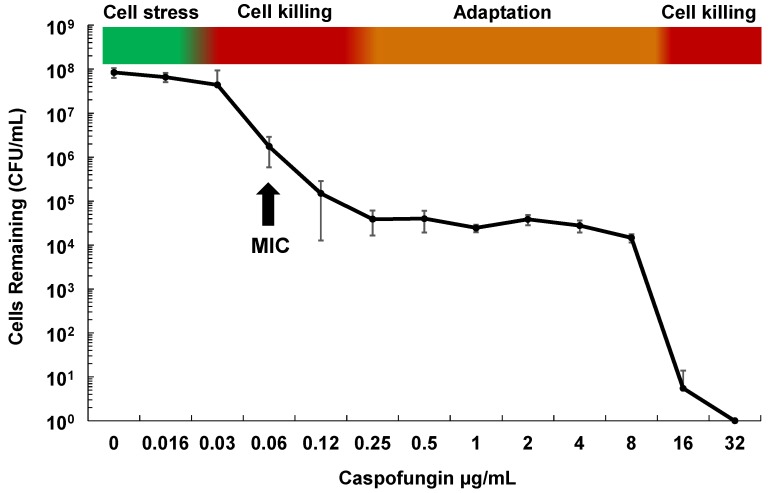
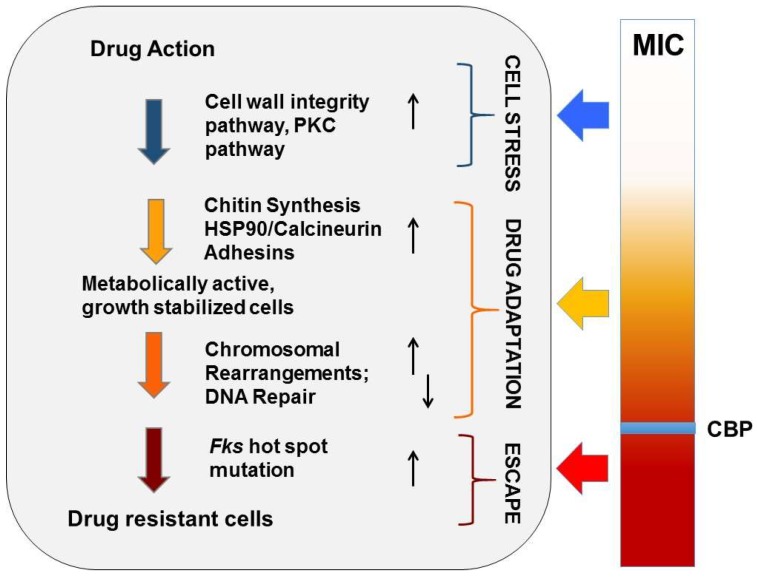
Candida glabrata has thoroughly adapted to successfully colonize human mucosal membranes and survive in vivo pressures. prior to and during antifungal treatment. Out of all the medically relevant Candida species, C. glabrata has emerged as a leading cause of azole, echinocandin, and multidrug (MDR: azole + echinocandin) adaptive resistance. Neither mechanism of resistance is intrinsic to C. glabrata, since stable genetic resistance depends on mutation of drug target genes, FKS1 and FKS2 (echinocandin resistance), and a transcription factor, PDR1, which controls expression of major drug transporters, such as CDR1 (azole resistance). However, another hallmark of C. glabrata is the ability to withstand drug pressure both in vitro and in vivo prior to stable “genetic escape”. Additionally, these resistance events can arise within individual patients, which underscores the importance of understanding how this fungus is adapting to its environment and to drug exposure in vivo. Here, we explore the evolution of echinocandin resistance as a multistep model that includes general cell stress, drug adaptation (tolerance), and genetic escape. The extensive genetic diversity reported in C. glabrata is highlighted.
Overview
The claims and statistics of this paper haven’t been checked yet.
Free: it reads the open-access text and checks the first 5 claims that cite a source we can check. Create a free account to check every claim.
Integrity signals
Registry
Cites
Statistics
Figures
Verification
Claims the paper makes
The claims and statistics of this paper haven’t been checked yet.
Free: it reads the open-access text and checks the first 5 claims that cite a source we can check. Create a free account to check every claim.
Claims other papers make about this one
Each is checked against this paper’s own text: does it say what the citing paper says it does?
The source backs part of the claim, not all of it — or backs it for a different population, condition or comparison.
In the citing paper
“However, strong resistance to echinocandins arises primarily through mutations in the two targets, encoded by FKS1 and FKS2 (23, 24), the latter of which depends on calcineurin and the Crz1 transcription factor for maximal expression (25).”
From Echinocandin tolerance and persistence in vitro are regulated by calcineurin signaling in Candida glabrata (2026) · cites this paper as [23]
Experimental — accuracy not yet measuredThe cited source says what the claim attributes to it.
In the citing paper
“Indeed, ECN resistance is a multistep developmental process consisting of stress adaptations such as cell wall integrity signaling (86).”
From Transcriptomics and Phenotyping Define Genetic Signatures Associated with Echinocandin Resistance in Candida auris (2022) · cites this paper as [86]
The check wasn’t confident either way, so it gives no verdict — never disputed.
In the citing paper
“The recent report (47) did not make use of time-kill experiments and extensively utilized low-resolution dose-kill experiments, in which CFU are quantified at only one time point (24 h) after exposure to varying doses of echinocandins (23).”
From Echinocandin tolerance and persistence in vitro are regulated by calcineurin signaling in Candida glabrata (2026) · cites this paper as [23]
Experimental — accuracy not yet measuredIn the citing paper
“Recently, a substantial number of azole-resistant C. glabrata isolates have also been found to be resistant to cell-wall targeting drugs echinocandins, which inhibit the β-glucan synthase enzyme [101,102,103].”
From Candida glabrata: A Lot More Than Meets the Eye (2019) · cites this paper as [103]
In the citing paper
“Resistance towards echinocandins is primarily due to mutations in the CgFKS1 and CgFKS2 genes that code for β-1,3-glucan synthase [103].”
From Candida glabrata: A Lot More Than Meets the Eye (2019) · cites this paper as [103]
1 more claim about this paper
Create a free account to see every claim other papers make about this one.
Self-check
Percentages, sums and reported differences re-computed from the paper’s own numbers.
The self-check needs the paper’s full text.
Citations
Cites
Pappas, P. G., Kauffman, C. A., Andes, D. R., Clancy, C. J., Marr, K. A., Ostrosky-Zeichner, L., Reboli, A. C., Schuster, M. G., Vazquez, J. A., Walsh, T. J., et al. (2016) · Clinical Infectious Diseases · doi:10.1093/cid/civ933 · Cited by 4,200
Pappas, P. G., Kauffman, C. A., Andes, D. R., Clancy, C. J., Marr, K. A., Ostrosky-Zeichner, L., Reboli, A. C., Schuster, M. G., Vazquez, J. A., Walsh, T. J., et al. (2016) · Clinical Infectious Diseases · doi:10.1093/cid/civ1194 · Cited by 1,298
The global problem of antifungal resistance: prevalence, mechanisms, and management
Perlin, D. S., Rautemaa-Richardson, R., & Alastruey-Izquierdo, A. (2017) · The Lancet Infectious Diseases · doi:10.1016/s1473-3099(17)30316-x · Cited by 1,055
Self-citationCell Wall Assembly in Saccharomyces cerevisiae
Lesage, G., & Bussey, H. (2006) · Microbiology and Molecular Biology Reviews · doi:10.1128/mmbr.00038-05 · Cited by 849
Alexander, B. D., Johnson, M. D., Pfeiffer, C. D., Jiménez-Ortigosa, C., Catania, J., Booker, R., Castanheira, M., Messer, S. A., Perlin, D. S., & Pfaller, M. A. (2013) · Clinical Infectious Diseases · doi:10.1093/cid/cit136 · Cited by 778 · cited 1×
“glabrata isolates ranges from 3–5% in population-based studies [10], some centers report rates of 10–15% [3,11].”
BackgroundSelf-citationMechanisms of Antifungal Drug Resistance
Cowen, L. E., Sanglard, D., Howard, S. J., Rogers, P. D., & Perlin, D. S. (2015) · Cold Spring Harbor Perspectives in Medicine · doi:10.1101/cshperspect.a019752 · Cited by 647 · cited 2×
“While multiple mechanisms of azole resistance have been reported for Candida species [13], the overwhelming singular mechanism of resistance identified in clinical isolates of C.”
BackgroundSelf-citationMutation as a Stress Response and the Regulation of Evolvability
Galhardo, R. S., Hastings, P. J., & Rosenberg, S. M. (2007) · Critical Reviews in Biochemistry and Molecular Biology · doi:10.1080/10409230701648502 · Cited by 643 · cited 1×
“, as during stress-induced mutagenesis [77]) in these mechanisms are often associated with increased mutation rates [97].”
BackgroundTackling Human Fungal Infections
Brown, G. D., Denning, D. W., & Levitz, S. M. (2012) · Science · doi:10.1126/science.1222236 · Cited by 619
Chowdhary, A., Prakash, A., Sharma, C., Kordalewska, M., Kumar, A., Sarma, S., Tarai, B., Singh, A., Upadhyaya, G., Upadhyay, S., et al. (2018) · Journal of Antimicrobial Chemotherapy · doi:10.1093/jac/dkx480 · Cited by 577
Self-citationDNA‐damage repair; the good, the bad, and the ugly
Hakem, R. (2008) · The EMBO Journal · doi:10.1038/emboj.2008.15 · Cited by 549 · cited 1×
“, as during stress-induced mutagenesis [77]) in these mechanisms are often associated with increased mutation rates [97].”
Background
Research works printed but not linked: 1
- Healey K. Shor E. Perlin D. Antifungal resistant isolates of Candida glabrata from the united states are enriched for specific sequence types with distinct MSH2 alleles Proceedings of the 20th Congress of the International Society for Human and Animal Mycology, ISHAM Amsterdam, The Netherlands 30 June–4 July 2018 Poster: P475
Cited by
Items 101–200 of 201
Elhasan, L. M. E., Hassan, M. B., Elhassan, R. M., Abdelrhman, F. A., Salih, E. A., Asma Ibrahim., H., Mohamed, A. A., Osman, H. S., Khalil, M. S. M., Alsafi, A. A., et al. (2021) · Journal of Immunology Research · doi:10.1155/2021/8280925 · Cited by 9
Molecular investigations on Candida glabrata clinical isolates for pharmacological targeting
Gupta, H., Gupta, P., Kairamkonda, M., & Poluri, K. M. (2022) · RSC Advances · doi:10.1039/d2ra02092k · Cited by 10
Special Issue: Treatments for Fungal Infections
Segal, E., & Elad, D. (2018) · Journal of Fungi · doi:10.3390/jof4040135 · Cited by 9
“glabrata is especially prone to develop resistance during therapy due to its ability to go through a slow-growing persistence phase, providing the necessary time to develop resistant mutants [8].”
Basharat, Z., Khan, K., Jalal, K., Alnasser, S. M., Majeed, S., & Zehra, M. (2022) · Life · doi:10.3390/life12111743 · Cited by 8
Detection of ERG11 gene in fluconazole resistant urinary candida isolates
Said, M. E., Badawi, H., Gamal, D., Salem, D., Dahroug, H., & El-Far, A. (2022) · Egyptian journal of Immunology · doi:10.55133/eji.290413 · Cited by 13
Early phenotypic detection of fluconazole- and anidulafungin-resistant Candida glabrata isolates
Georgiou, P., Arendrup, M. C., & Meletiadis, J. (2022) · Journal of Antimicrobial Chemotherapy · doi:10.1093/jac/dkac075 · Cited by 8
Cai, L., Xue, X., Salehi, M., Perlin, D. S., Hoenigl, M., Liao, W., Pan, W., Arastehfar, A. A., & Fang, W. (2026) · iFungi · doi:10.26599/ifungi.2026.9670002 · Cited by 7
Self-citationArastehfar, A. A., Daneshnia, F., Hovhannisyan, H., Cabrera, N., İlkit, M., Desai, J. V., Gabaldón, T., Shor, E., & Perlin, D. S. (2024) · FEMS Yeast Research · doi:10.1093/femsyr/foae035 · Cited by 7
“glabrata is one of the most prevalent fungal pathogens causing systemic infections in humans and is 375 characterized by a relatively high number of MDR isolates compared to other Candida species (31).”
Self-citationCastanheira, M., Deshpande, L. M., Kimbrough, J. H., & Winkler, M. (2025) · Open Forum Infectious Diseases · doi:10.1093/ofid/ofae702 · Cited by 7
“C glabrata is the most common non-albicans Candida species causing invasive infections in various geographic regions and clinical settings [1, 4, 18].”
Parra, L. Y. C., Rodríguez, A. E. R., Pérez, J. E., & Pérez-Agudelo, J. M. (2024) · Journal of Fungi · doi:10.3390/jof10070509 · Cited by 7
Maniah, K. (2023) · Journal of Environmental Science and Health Part A · doi:10.1080/10934529.2024.2315922 · Cited by 6
“[23] C. glabrata has intermediate resistance to all azoles, and around 20% of strains acquire resistance while undergoing fluconazole treatment and prophylaxis.”
BackgroundSavin, N. A., Erofeev, A. S., Колмогоров, В., Salikhov, S. V., Efremov, Y. M., Timashev, P. S., Grammatikova, N. E., Levshin, I. B., Edwards, C., Korchev, Y. E., et al. (2022) · Biomaterials Science · doi:10.1039/d2bm00964a · Cited by 6
Asfare, S., Eldabagh, R. S., Siddiqui, K., Patel, B., Kaba, D., Mullane, J. A., Siddiqui, U., & Arnone, J. T. (2021) · Microorganisms · doi:10.3390/microorganisms9020276 · Cited by 6
Schleker, E. S. M., Buschmann, S., Xie, H., Welsch, S., Michel, H., & Reinhart, C. (2022) · Proceedings of the National Academy of Sciences · doi:10.1073/pnas.2202822119 · Cited by 6
Candida infections in COVID-19 patients: A review of prevalence, risk factors, and mortality
TÚLIO, E. F., Lucini, F., de Lima, A. C., Martins, N. D. G., Barbosa, M. D. S., de Souza, G. H. D. A., & Rossato, L. L. (2025) · Indian Journal of Medical Microbiology · doi:10.1016/j.ijmmb.2025.100831 · Cited by 6
Zhou, H., Yang, X., Zhou, Q., Hu, C., Xin, C., & Song, Z. (2025) · Mycopathologia · doi:10.1007/s11046-025-01008-7 · Cited by 5
“In this study, MDR mechanisms in clinical C. duo-bushaemulonii isolates revealed a complex interplay of genetic mutations and gene expression adaptations, with striking parallels to and deviations from other pathogenic Candida species [29–31].”
Mechanisms Of Dermatophyte Resistance To Antifungal Substances
Łagowski, D., Gnat, S., & Nowakiewicz, A. (2020) · Postępy Mikrobiologii - Advancements of Microbiology · doi:10.21307/pm-2020.59.2.012 · Cited by 7
RetractedSah, S. K., Yadav, A., Kruppa, M., & Rustchenko, E. P. (2023) · Microbiology Spectrum · doi:10.1128/spectrum.03295-23 · Cited by 5
Harrington, A. A., Nickels, T. J., & Cunningham, K. W. (2026) · mBio · doi:10.1128/mbio.02546-25 · Cited by 4
“The fks1∆ mutants are FK506-sensitive because they depend on calcineurin signaling, Crz1, and elevated expression of FKS2 for viability (25).”
InfluentialGonzalez-Jimenez, I., Keniya, M. V., Aptekmann, A. A., Quinteros, C., Wilkerson, A., Arastehfar, A., Daneshnia, F., Perlin, D. S., & Shor, E. (2025) · Antimicrobial Agents and Chemotherapy · doi:10.1128/aac.00500-25 · Cited by 4
Self-citationA Bibliometric Review on Candida auris of the First Fifteen Years of Research (2009‐2023)
Villanueva‐Lozano, H., Trejo-Castro, A. I., Carrión-Álvarez, D., Lozano-Díaz, S. T., & Martínez‐Torteya, A. (2023) · BioMed Research International · doi:10.1155/2023/2385018 · Cited by 4
“parapsilosis, which are monitored for multidrug resistance [35, 36].”
BackgroundInduction of Antifungal Tolerance Reveals Genetic and Phenotypic Changes in Candida glabrata
Chedraoui, C., Fattouh, N., Hachem, S. E., Younes, M., & Khalaf, R. A. (2025) · Journal of Fungi · doi:10.3390/jof11040284 · Cited by 5
“Usually, upregulated efflux pumps release azoles from the intracellular to the extracellular environment, but in some cases, some efflux pumps such as Pdr1 have been reported to pump out echinocandins [53].”
Niacin Limitation Promotes Candida glabrata Adhesion to Abiotic Surfaces
Li, X., He, L., Krom, B. P., Cheng, L., de Soet, J. J., & Deng, D. (2022) · Pathogens · doi:10.3390/pathogens11040387 · Cited by 4
Lin, W., Peng, Y., Xiang, B., Fang, J., Ye, J., & Guo, P. (2025) · BMC Microbiology · doi:10.1186/s12866-025-04275-y · Cited by 3
“Alarmingly, nearly one-third of echinocandins resistant C. glabrata isolates also exhibit non-susceptibility to triazoles, severely limiting treatment options [22].”
Core histones govern echinocandin susceptibility in Candida glabrata
Pareek, A., & Kaur, R. (2025) · Microbiology Spectrum · doi:10.1128/spectrum.02399-24 · Cited by 3
“as well as echinocandin drugs (10, 15), thereby highlighting the cross-talk between these two cellular signaling pathways for antifungal tolerance.”
Antifungal Resistance in Candida albicans
Seyedjavadi, S. S., Hatami, F., & Jahanshiri, Z. (2024) · IntechOpen eBooks · doi:10.5772/intechopen.1004578 · Cited by 3
Bednarek, A., Kabut, A., Rąpała‐Kozik, M., & Satała, D. (2024) · Open Life Sciences · doi:10.1515/biol-2022-0995 · Cited by 4
Nakaseomyces glabratus (Candida glabrata) MLST Genotypes in Central Poland
Kuthan, R. (2025) · International Journal of Molecular Sciences · doi:10.3390/ijms26094407 · Cited by 3
“Moreover, the pathogenicity of N. glabratus is consistent with its low susceptibility to fluconazole and the rapid development of resistance to other antifungal drugs, particularly azoles such as voriconazole and echinocandins, which can occur even during treatment [5,9–13].”
Maqueda-Cabrera, E. E., & Cuéllar‐Cruz, M. (2026) · Current Microbiology · doi:10.1007/s00284-025-04715-y · Cited by 2
“In addition, synthetic compounds, metal complexes and plant extracts [23–28] have been investigated, broadening the spectrum of candidates evaluated using this model.”
Surfactin-Induced β-(1,3)-Glucan Exposure in Aspergillus niger Cell Wall: A Molecular Perspective
Zhang, B., Zhang, L., Pang, Z., Zhang, W., Wang, F., Fan, J., & Zhang, B. (2026) · Foods · doi:10.3390/foods15040788 · Cited by 2
“At present, the most studied non-competitive inhibitors of β -(1,3)-glucan synthase are echinocandins and papulacandi derivatives [9].”
Kumar, M., Kumari, S., Wasi, M., Ali, B., Kumar, P., Sharma, G. L., Singh, A., Dantas, A. D. S., Gow, N. A. R., Gaur, N. A., et al. (2026) · The Cell Surface · doi:10.1016/j.tcsw.2026.100180 · Cited by 2
“For multidrug-resistant strains, the polyene macrolide antifungal amphotericin B (AmB) is the only remaining treatment option (Healey and Perlin, 2018).”
Gifford, H., Pradhan, A., Caswall, B. A., Murphy, S. E., Leaves, I., Edmondson, M. B., Chakraborty, T., Wilson, D., Taori, S. K., Gow, N. A. R., et al. (2026) · Nature Communications · doi:10.1038/s41467-026-76954-x · Cited by 3
Barroso, F. D. D., da Silva, L. J., Sá, L. G. D. A. V., da Silva, C. R., Neto, J. B., do Nascimento, F. B. S. A., Queiroz, H. A., Leitão, A. C., Cabral, V. P. D. F., Rodrigues, D. S., et al. (2022) · Future Microbiology · doi:10.2217/fmb-2020-0256 · Cited by 2
Fungal infections of the central nervous system
Gupta, M. K. (2024) · Elsevier eBooks · doi:10.1016/b978-0-323-95735-9.00011-5 · Cited by 2
Conway, T. P., Šimoničová, L., & Moye-Rowley, S. (2024) · Genetics · doi:10.1093/genetics/iyae115 · Cited by 2
“…via positive transcriptional autoregulation, with this induced expression of Pdr1 being essential for the subsequent activation of a battery of genes required for azole resistance, including the ATP-binding cassette (ABC) multidrug transporter, CDR1 (Sanglard et al. 2001; Healey and Perlin 2018).”
Antypenko, L., Antypenko, O., Fominichenko, A., Karnaukh, I., Коваленко, С. І., & Arisawa, M. (2024) · Journal of Fungi · doi:10.3390/jof10120816 · Cited by 3
Candidíase e candidemia neonatal: Revisão de literatura
Luz, G. A., Schneider, G. C., & do Carmo, M. S. (2021) · Research Society and Development · doi:10.33448/rsd-v10i4.14326 · Cited by 4
Mechanisms of Resistance to Antifungal Agents
Perlin, D. S. (2023) · Wiley eBooks · doi:10.1002/9781683670438.mcm0134 · Cited by 2
Self-citationAptekmann, A. A., Cabrera, N., Hayman, M. C., Watson, R. A., Stewart, J. A., Quinteros, C., Liu, C., Hayter, C. E., Keniya, M. V., Perlin, D. S., et al. (2025) · bioRxiv (Cold Spring Harbor Laboratory) · doi:10.1101/2025.09.15.676333 · Cited by 2
Self-citationAmirrajab, N., Mousavi, S. A. A., Taheri, B., Salari, S., & Sarsahra, N. A. A. (2023) · Iranian Journal of Microbiology · doi:10.18502/ijm.v15i3.12907 · Cited by 4
“The development of multidrug-resistant candida strains has led to the further complicated therapeutic management of these infections (6, 20, 21).”
BackgroundHarnessing the Antifungal Potential of Natural Products
Jaiswal, N., & Kumar, A. (2024) · Springer eBooks · doi:10.1007/978-981-97-5165-5_8 · Cited by 1
Ivanov, M., Stojković, D. S., & Sokóvić, M. (2025) · Springer eBooks · doi:10.1007/978-981-96-1305-2_7 · Cited by 2
Casu, C., Butera, A., Scano, A., Scribante, A., Fais, S., Ladu, L., Siotto-Pintor, A., & Orrù, G. (2025) · Photonics · doi:10.3390/photonics12080786 · Cited by 2
Cytrynbaum, E. G., & McClean, M. N. (2025) · Advanced Drug Delivery Reviews · doi:10.1016/j.addr.2025.115740 · Cited by 1
Misawa, S., Chonan, M., Sano, M., Igawa, G., Takahashi, M., Ito, K., Nagasawa, T., Furusawa, K., Otsuka, S., Takeda, S., et al. (2025) · Medical Mycology Journal · doi:10.3314/mmj.25-00005 · Cited by 1
Gao, Y., Su, J., Yuan, J., Cao, Q., Wu, Y., Xiao, Y., Yang, G., Xia, R., Yang, J., Li, Y., et al. (2025) · Advanced Science · doi:10.1002/advs.202518196 · Cited by 1
Holt, C. J. D., Williams, C. C., & Usher, J. (2026) · Journal of Medical Microbiology · doi:10.1099/jmm.0.002127 · Cited by 1
“Multidrug-resistant (MDR) C. glabrata isolates have been reported, in which strains carrying PDR1+alleles show cross-resistance to both azoles and echinocandins, further limiting available treatment options [30].”
Arastehfar, A. A., Daneshnia, F., Hovhannisyan, H., Cabrera, N., Jusuf, S., Salehi, M., Mansour, M. K., Gabaldón, T., Shor, E., & Perlin, D. S. (2026) · Antimicrobial Agents and Chemotherapy · doi:10.1128/aac.01801-25 · Cited by 1
“Since C. glabrata is a major cause of candidemia (2) and the GI tract is believed to be a primary reservoir of ECR in patients (11, 41, 42), we were interested in examining the fitness of ECR mutants and the importance of FKS1 and FKS2 in the context of GI-tract colonization and systemic infections.”
Self-citationLysková, P., Dobiáš, R., Bezdíček, M., Hubka, V., Sumerauerová, P., Lžičařová, D., Kocmanová, I., Buchta, V., Prošková, I., Janouškovcová, H., et al. (2026) · Mycopathologia · doi:10.1007/s11046-026-01076-3 · Cited by 1
“Echinocandins are the first-line treatment for IC [4, 5], but the emergence of multi-drug resistant (MDR) C. glabrata and C. auris is a growing concern [6–8].”
Uddin, Z., Tahsin, S., Valíčková, K., Long, T., Macedo, L. F. D., Popencuk, G., Zhao, Y., & Healey, K. R. (2026) · Microbiology Spectrum · doi:10.1128/spectrum.03874-25 · Cited by 1
“Upon exposure to stress, such as an antifungal drug, fungal cells activate various cellular mechanisms and pathways that can influence drug tolerance and resistance development (11).”
Self-citationPhenotypic and Genotypic Characterization of Intestinal Candida spp. in Tunisia
Ben-Rhouma, K., Ben-Salah, S. F., Boulehmi, N., & Bouratbine, A. (2021) · Jundishapur Journal of Microbiology · doi:10.5812/jjm.113800 · Cited by 1
Candida Glabrata fungemia: An emerging threat in Egypt
AL‐Tabbakh, A. M., & EL-Melouk, M. S. (2020) · The Egyptian Journal of Medical Microbiology · doi:10.21608/ejmm.2020.249874 · Cited by 1
Compostos naturais com ação inibitória contra Candida tropicalis e Candida glabrata:uma revisão
de Santana, A. C., de Castro, A. P., & de Paiva, M. C. (2022) · Brazilian Journal of Health and Pharmacy · doi:10.29327/226760.4.2-2 · Cited by 2
Mechanisms of Resistance to Antifungal Agents
Perlin, D. S. (2023) · Wiley eBooks · doi:10.1002/9781683674849.mcm0134 · Cited by 1
Self-citationWang, H., Xing, M., Ji, H., Cheng, Y., Hu, S., Wang, G., Zhou, S., Han, Y., Wang, C., Zha, L., et al. (2025) · medRxiv · doi:10.1101/2025.11.23.25340841 · Cited by 1
Attenuated apoptotic BAX expression as a xenobiotic reporter inSaccharomyces cerevisiae
Keniya, M. V., & Monk, B. C. (2019) · FEMS Yeast Research · doi:10.1093/femsyr/foz048
Use of Nanoparticles to Manage Candida Biofilms
Monteiro, D. R., Arias, L. S., Araujo, H. C., Caldeirão, A. C. M., Gulart, B. F., de Oliveira, J., dos Santos, M. B., Ramage, G., & Pessan, J. P. (2020) · Springer eBooks · doi:10.1007/978-981-15-0391-7_7 · Cited by 1
Nangwat, C., Dougue, A. N., Kountchou, C. L., Ekpo, A. I., Ngouana, T. K., Dzoyem, J. P., & Christopher, T. B. (2020) · European Journal of Clinical and Biomedical Sciences · doi:10.11648/j.ejcbs.20200605.11
“glabrata isolates to polyenes, including amphotericin B [27-29].”
BackgroundCurrie, A. (2021) · Kent Academic Repository (University of Kent) · doi:10.22024/unikent/01.02.86837 · Cited by 1
Regulation of the pleiotropic drug resistance transcription factors Pdr1 and Pdr3 in yeast
Vasiljević, T., & Proft, M. (2021) · St open · doi:10.48188/so.2.7
Fungal Infections Complicating COVID-19
Hoenigl, M., & Talento, A. F. (2021) · MDPI eBooks · doi:10.3390/books978-3-0365-0555-8
Lepak, A. J., & Andes, D. R. (2020) · Elsevier eBooks · doi:10.1016/b978-0-12-819990-9.00018-4 · Cited by 2
Rimadhani, S. A., Setyawati, Y., Avidar, Y. P., & Endraswari, P. D. (2022) · International Journal of Research Publications · doi:10.47119/ijrp10011511220224307
Morales, R. (2023) · Digital Library of Theses and Dissertations (Universidade de São Paulo) · doi:10.11606/t.9.2023.tde-18082023-153026 · Cited by 1
Chauhan, A., Kumar, P., Kumar, M., Narayanan, A., Yadav, K., Ali, B., Saini, A., Singh, A., Banerjee, A., Rudramurthy, S. M., et al. (2023) · bioRxiv (Cold Spring Harbor Laboratory) · doi:10.1101/2023.09.20.558730
“Mutations in FKS1/2 genes are the main 72 cause of echinocandin ineffectiveness in Candida cells (6).”
BackgroundИННОВАЦИОННОЕ РАЗВИТИЕ НАУКИ: ФУНДАМЕНТАЛЬНЫЕ И ПРИКЛАДНЫЕ ПРОБЛЕМЫ
университет», Ф. В. «. Г., Романова, И. Б., Азарян, Е. М., Туган-Барановского», Ф. В. «. Н. У. Э. И. Т. И. М., Voziyanova, N. Y., Туган-Барановского», Ф. В. «. Н. У. Э. И. Т. И. М., Александровна, Б. А., Туган-Барановского», Ф. В. «. Н. У. Э. И. Т. И. М., Вячеславовна, К. В., университет», Ф. В. «. Г. Э., et al. (2023) · ICSP «NEW SCIENCE» eBooks · doi:10.46916/02102023-1-978-5-00215-087-8
Araji, A. E. A. A. A., Chessab, R. M., & Chessab, J. M. (2023) · AIP conference proceedings · doi:10.1063/5.0183717
RetractedMicrobiologia avançada: perspectivas atuais e futuras
Almeida‐Bezerra, J. W., & Coutinho, H. D. M. (2024) · doi:10.22533/at.ed.164240703
Marques, E. D. L. S., Silva, A. B. D. C. E., & Silva, M. (2024) · doi:10.22533/at.ed.1642407032
Bezerra, C. F., Pereira, S. A. S., Bezerra, M. C. F., Feitosa, V. Q. C., Almeida‐Bezerra, J. W., Morais‐Braga, M. F. B., Siqueira, D. S., Rocha, J. E., Castro, J. W. G., de Oliveira, M. G., et al. (2024) · doi:10.22533/at.ed.1642407033
RESISTÊNCIA DE MICRORGANISMOS: O DESAFIO CONTÍNUO DA ERA PÓS-ANTIBIÓTICOS
Almeida‐Bezerra, J. W., Filho, A. M., Silva, R. L., Novais, M. H. G., Pereira, A. L. G., de Araújo, W. P., Macêdo, M. J. F., Rodrigues, V. L. C., da Silva, N. C., Dunes, C. A. T., et al. (2024) · doi:10.22533/at.ed.1642407031
Vural, D. G., Çetin, G., Bılgın, K., Çaycı, Y. T., & Bırıncı, A. (2024) · The Journal of Infection in Developing Countries · doi:10.3855/jidc.19253 · Cited by 1
“Invasive Candida infections affect an estimated 250, 000 patients per year globally and are associated with high morbidity and mortality in immunocompromised patients, particularly in intensive care units [1,2].”
BackgroundEmerging Saccharomycotina yeast pathogens: Detection and susceptibility profiles
Stavrou, A. A. (2021) · UvA-DARE (University of Amsterdam) · doi:10.5281/zenodo.5558633
Candida albicans - Epidemiology and Treatment
Behzadi, P. (2024) · IntechOpen eBooks · doi:10.5772/intechopen.1001505
Singh, H., Pandya, S. R., Yadav, A., Dhanda, P. S., Kaushik, P., & Jain, M. (2025) · Coronaviruses · doi:10.2174/0126667975333157241227074402
Sah, S. K., Yadav, A., Stahl, T. J., Hayes, J. J., Bulger, M., & Rustchenko, E. P. (2025) · Journal of Fungi · doi:10.3390/jof11020110
“Mechanisms involved in decreasing the susceptibility of C. albicans to ECNs are of considerable importance, and are likely to provide critical steps in the evolution of clinical resistance [16].”
Klimova, N. G., Patel, H., Devaux, F., & Turcotte, B. (2025) · bioRxiv (Cold Spring Harbor Laboratory) · doi:10.1101/2025.03.25.645289
Characterization of COVID ‐19‐Associated Candidemia Among Burn Patients
Salimi, M., Javidnia, J., Moslemi, A., Abastabar, M., Mobayen, M., Rahimzadeh, G., Tirabadi, N. M., Nouranibaladezaei, S., Asghari, H., Sobouti, B., et al. (2025) · Journal of Clinical Laboratory Analysis · doi:10.1002/jcla.70031
Fungicidal Efficacy of Amphotericin B and Micafungin Against Candida auris Within Macrophage
Zhao, F., Takahashi‐Nakaguchi, A., Okamoto, M., Sasamoto, K., Yamaguchi, M., & Chibana, H. (2025) · Medical Mycology Journal · doi:10.3314/mmj.24-00029
Epidemiology and Mechanisms of Antifungal Resistance in Common Fungal Infections
Rizvi, M., Fatima, N., & Sami, H. (2025) · Fungal biology · doi:10.1007/978-3-032-06014-3_3
Yeast Lipids: Emerging Key Players in Antifungal Resistance and Pathogenesis
Ali, B., Laitthma, D. T., Singh, A. K., & Prasad, R. (2025) · Current Clinical Microbiology Reports · doi:10.1007/s40588-025-00261-0
Recent Advances on Resistance Mechanism and Structural Modification of Azole Drugs
韩, 云. (2022) · Advances in Microbiology · doi:10.12677/amb.2022.114026 · Cited by 1
Wang, Q., Chen, R., Cao, X., Zhang, H., Yang, L., Wang, X., Liu, Y., Tan, X., Liang, T., Li, R., et al. (2025) · Emerging Microbes & Infections · doi:10.1080/22221751.2025.2595789
“More notably, it is the mutations in the transcriptional factor PDR1 that result in triazole-resistance in N. glabratus , while the mutations in the triazole target gene ERG11 [6] mainly confers triazole-resistance in other Candida pathogens.”
Molecular epidemiology and treatment outcomes of vulvovaginal candidiasis in Namibian women
(2023) · UpSpace Institutional Repository (University of Pretoria) · doi:10.25403/upresearchdata.25208987 · Cited by 1
Feyaerts, A. F. (2019) · Lirias (KU Leuven)
Five things the intensivist cannot forget in the management of invasive candidiasis
Paiva, J. A., Pina‐Vaz, C., & Pereira, J. M. (2026) · Critical Care Science · doi:10.62675/2965-2774.20260217
Developing a novel antifungal strategy by targeting an epigenetic reader domain
Wei, K. (2020) · theses.fr (ABES) · doi:10.70675/ce7dc30ezfb21z43adz8835zf9a2e73daf67
Wali, S., Ghazal, F., Atia-tul-Wahab, Maharjan, R., Husain, S., Liu, X., & Choudhary, M. (2026) · Bioorganic Chemistry · doi:10.1016/j.bioorg.2026.109848
de Lima, E. L. F., de Mendonça, A. K. P., Sette‐de‐Souza, P. H., Costa, M. R. M., de Lima, K. C., & Lins, R. D. A. U. (2026) · Pesquisa Brasileira em Odontopediatria e Clínica Integrada · doi:10.1590/pboci.2026.071
Lefranc, M., Accoceberry, I., Fitton‐Ouhabi, V., Biteau, N., & Noël, T. (2026) · JAC-Antimicrobial Resistance · doi:10.1093/jacamr/dlag091
AHMED, M. I., Zielińska, A., Paul-Samojedny, M., Nowak, A., Dulski, M., Strach, A., Potocka, I., Matus, K., & Wasilkowski, D. (2026) · Coatings · doi:10.3390/coatings16060690
“An increasing prevalence of azole resistance is observed among Candida and Aspergillus spp. [9–11], polyene resistance in Fusarium , Scedosporium and Mu-corales species [9,12–14], and echinocandin resistance in selected strains [15].”
Solid-phase synthesis and antimicrobial activities of lipid-neomycin conjugates
Story, S., Bhaduri, S., & Arya, D. P. (2026) · Bioorganic & Medicinal Chemistry Letters · doi:10.1016/j.bmcl.2026.130713
Ozanique, P. R., Avesani, J. G. G., & Regasini, L. O. (2026) · Springer eBooks · doi:10.1007/978-3-642-36202-6_246-1
Zhu, G., Zheng, N., Zhai, P., & Mou, Y. (2026) · Biomedical Reports · doi:10.3892/br.2026.2204
“Echinocandins have limited activity against filamentous fungi, cannot effectively cross the blood‑brain barrier, and are increasingly associated with resistance in Candida glabrata and Candida auris ( C. auris ) (13,14).”
Efflux pump-mediated resistance to manogepix in Candida albicansPreprint
Zhu, G., Zheng, N., Li, Y., Pan, H., Dong, Y., Yao, R., & Mou, Y. (2026) · Research Square · doi:10.21203/rs.3.rs-10960226/v1
Gómez-Gaviria, M., Ramírez-Sotelo, U., & Mora-Montes, H. M. (2026) · Journal of Fungi · doi:10.3390/jof12100791
“For instance, tolerance to echinocandins in N. glabratus , despite these drugs being considered fungicidal against this species, allows a small subpopulation of cells (approximately 10 − 4 –10 − 5 of the total population) to survive across a broad range of drug concentrations [168,169].”
Zhu, C., Zhang, M., Wan, F., Wang, Z., Wang, S., Kang, Z., Tsui, C. K. M., Guo, J., Liu, N.-N., & Wu, W. (2026) · The Lancet Microbe · doi:10.1016/j.lanmic.2026.101509
BindingDB (2022) · UC San Diego · doi:10.7270/q2348q30
Metadata
- Authors
- Healey, K. R., & Perlin, D. S.
- Affiliations
- William Paterson University (US)
- Rutgers Health (US)
- Corresponding author
- Healey, Kelley R.
- Perlin, David S.
- Venue
- Journal of Fungi
- Publisher
- MDPI AG
- Published
- 2018-09-01
- Volume
- 4
- Issue
- 3
- Pages
- 105
- ISSN
- 2309-608X (ISSN-L)
- PMC
- PMC6162769
- OpenAlex
- W2889229333
- Cited by
- 194
- References
- 105
- Citations by year
- 2026: 20 · 2025: 28 · 2024: 25 · 2023: 23 · 2022: 34 · 2021: 25 · 2020: 27 · 2019: 11 · 2018: 1
- FWCI
- 2.35
- Type
- journal article
- Language
- en
- Open access
- gold
- dx.doi.org
- Licence
- Locations
- Journal of Fungi (publishedVersion, cc-by)
- Preprints.org (acceptedVersion, cc-by)
- Europe PMC (PubMed Central) (publishedVersion, other-oa)
- PubMed Central (publishedVersion, cc-by)
- PubMed (publishedVersion)
- DOAJ (DOAJ: Directory of Open Access Journals) (submittedVersion)
- Funders
- National Institutes of Health (AI109025)
- Topics
- Health Sciences › Medicine › Infectious Diseases › Antifungal resistance and susceptibility
- Life Sciences › Biochemistry, Genetics and Molecular Biology › Molecular Biology › Fungal and yeast genetics research
- Life Sciences › Agricultural and Biological Sciences › Plant Science › Fungal Plant Pathogen Control
- Keywords
- Candida glabrata, echinocandin resistance, multidrug resistance, azole resistance, antifungal drug tolerance, FKS1, FKS2, PDR1, CDR1, drug transporters, cellular stress, genetic diversity, fungal adaptation
About these checks
Registry, retraction, Cites and statistics results are computed, not judged, with one exception: a printed reference that no index lists is read once by a model before it counts as a citation error. Claims are extracted by a model and kept only when their quote appears verbatim in the text; each cited source is then checked, with a model’s help, for whether it says what the claim relies on. Those verdicts can be wrong — read the claim’s quote and the cited source before relying on one.
Statistics and arithmetic are recomputed, not judged.
Confidence bands are shown only for fields calibrated on our annotated test set. None is calibrated yet, so no band is shown.
What counts as a claim ›How we measure confidence ›How we check this ›
Are you an author, or do you see a problem with this page? Request a review
Data sources
Bibliographic data: Semantic Scholar, OpenAlex, Crossref.
Contains information from the Semantic Scholar Academic Graph Datasets, made available under the ODC Attribution License (ODC-BY 1.0).
Semantic Scholar’s data is described in: Kinney, R., et al. (2023). The Semantic Scholar Open Data Platform. arXiv:2301.10140.
