

Fungal Resistance to Echinocandins and the MDR Phenomenon in Candida glabrata
Open accessPublished version of a preprint
The DOI matches its Crossref record; 109 of the 109 references it cites were found in a registry or an index.
Abstract
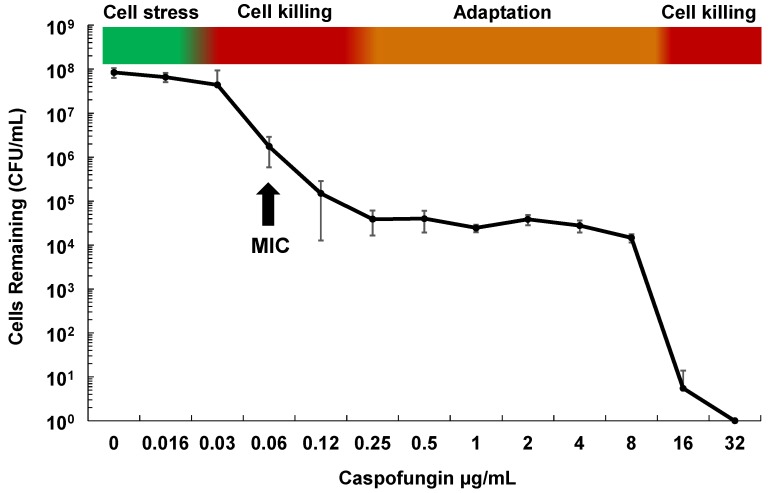
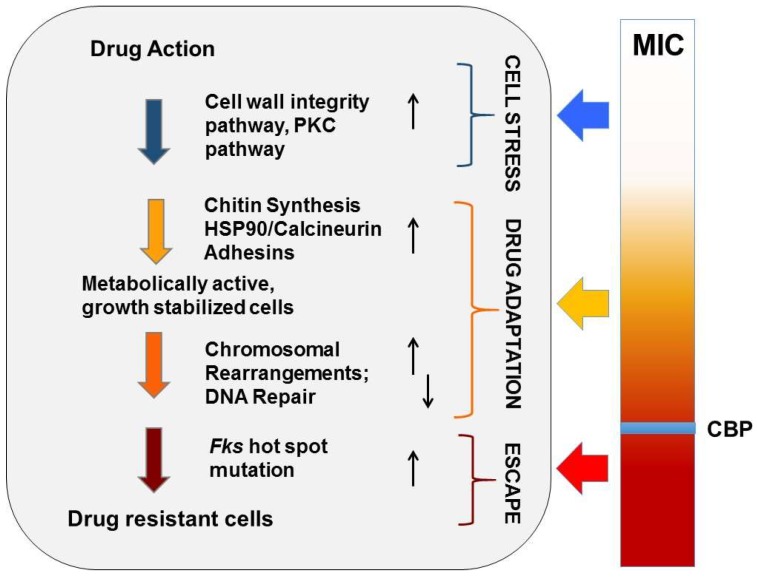
Candida glabrata has thoroughly adapted to successfully colonize human mucosal membranes and survive in vivo pressures. prior to and during antifungal treatment. Out of all the medically relevant Candida species, C. glabrata has emerged as a leading cause of azole, echinocandin, and multidrug (MDR: azole + echinocandin) adaptive resistance. Neither mechanism of resistance is intrinsic to C. glabrata, since stable genetic resistance depends on mutation of drug target genes, FKS1 and FKS2 (echinocandin resistance), and a transcription factor, PDR1, which controls expression of major drug transporters, such as CDR1 (azole resistance). However, another hallmark of C. glabrata is the ability to withstand drug pressure both in vitro and in vivo prior to stable “genetic escape”. Additionally, these resistance events can arise within individual patients, which underscores the importance of understanding how this fungus is adapting to its environment and to drug exposure in vivo. Here, we explore the evolution of echinocandin resistance as a multistep model that includes general cell stress, drug adaptation (tolerance), and genetic escape. The extensive genetic diversity reported in C. glabrata is highlighted.
Overview
The claims and statistics of this paper haven’t been checked yet.
Free: it reads the open-access text and checks the first 5 claims that cite a source we can check. Create a free account to check every claim.
Integrity signals
Registry
Cites
Statistics
Figures
Verification
Claims the paper makes
The claims and statistics of this paper haven’t been checked yet.
Free: it reads the open-access text and checks the first 5 claims that cite a source we can check. Create a free account to check every claim.
Claims other papers make about this one
Each is checked against this paper’s own text: does it say what the citing paper says it does?
The source backs part of the claim, not all of it — or backs it for a different population, condition or comparison.
In the citing paper
“However, strong resistance to echinocandins arises primarily through mutations in the two targets, encoded by FKS1 and FKS2 (23, 24), the latter of which depends on calcineurin and the Crz1 transcription factor for maximal expression (25).”
From Echinocandin tolerance and persistence in vitro are regulated by calcineurin signaling in Candida glabrata (2026) · cites this paper as [23]
Experimental — accuracy not yet measuredThe cited source says what the claim attributes to it.
In the citing paper
“Indeed, ECN resistance is a multistep developmental process consisting of stress adaptations such as cell wall integrity signaling (86).”
From Transcriptomics and Phenotyping Define Genetic Signatures Associated with Echinocandin Resistance in Candida auris (2022) · cites this paper as [86]
The check wasn’t confident either way, so it gives no verdict — never disputed.
In the citing paper
“The recent report (47) did not make use of time-kill experiments and extensively utilized low-resolution dose-kill experiments, in which CFU are quantified at only one time point (24 h) after exposure to varying doses of echinocandins (23).”
From Echinocandin tolerance and persistence in vitro are regulated by calcineurin signaling in Candida glabrata (2026) · cites this paper as [23]
Experimental — accuracy not yet measuredIn the citing paper
“Recently, a substantial number of azole-resistant C. glabrata isolates have also been found to be resistant to cell-wall targeting drugs echinocandins, which inhibit the β-glucan synthase enzyme [101,102,103].”
From Candida glabrata: A Lot More Than Meets the Eye (2019) · cites this paper as [103]
In the citing paper
“Resistance towards echinocandins is primarily due to mutations in the CgFKS1 and CgFKS2 genes that code for β-1,3-glucan synthase [103].”
From Candida glabrata: A Lot More Than Meets the Eye (2019) · cites this paper as [103]
1 more claim about this paper
Create a free account to see every claim other papers make about this one.
Self-check
Percentages, sums and reported differences re-computed from the paper’s own numbers.
The self-check needs the paper’s full text.
Citations
Cites
Pappas, P. G., Kauffman, C. A., Andes, D. R., Clancy, C. J., Marr, K. A., Ostrosky-Zeichner, L., Reboli, A. C., Schuster, M. G., Vazquez, J. A., Walsh, T. J., et al. (2016) · Clinical Infectious Diseases · doi:10.1093/cid/civ933 · Cited by 4,200
Pappas, P. G., Kauffman, C. A., Andes, D. R., Clancy, C. J., Marr, K. A., Ostrosky-Zeichner, L., Reboli, A. C., Schuster, M. G., Vazquez, J. A., Walsh, T. J., et al. (2016) · Clinical Infectious Diseases · doi:10.1093/cid/civ1194 · Cited by 1,298
The global problem of antifungal resistance: prevalence, mechanisms, and management
Perlin, D. S., Rautemaa-Richardson, R., & Alastruey-Izquierdo, A. (2017) · The Lancet Infectious Diseases · doi:10.1016/s1473-3099(17)30316-x · Cited by 1,055
Self-citationCell Wall Assembly in Saccharomyces cerevisiae
Lesage, G., & Bussey, H. (2006) · Microbiology and Molecular Biology Reviews · doi:10.1128/mmbr.00038-05 · Cited by 849
Alexander, B. D., Johnson, M. D., Pfeiffer, C. D., Jiménez-Ortigosa, C., Catania, J., Booker, R., Castanheira, M., Messer, S. A., Perlin, D. S., & Pfaller, M. A. (2013) · Clinical Infectious Diseases · doi:10.1093/cid/cit136 · Cited by 778 · cited 1×
“glabrata isolates ranges from 3–5% in population-based studies [10], some centers report rates of 10–15% [3,11].”
BackgroundSelf-citationMechanisms of Antifungal Drug Resistance
Cowen, L. E., Sanglard, D., Howard, S. J., Rogers, P. D., & Perlin, D. S. (2015) · Cold Spring Harbor Perspectives in Medicine · doi:10.1101/cshperspect.a019752 · Cited by 647 · cited 2×
“While multiple mechanisms of azole resistance have been reported for Candida species [13], the overwhelming singular mechanism of resistance identified in clinical isolates of C.”
BackgroundSelf-citationMutation as a Stress Response and the Regulation of Evolvability
Galhardo, R. S., Hastings, P. J., & Rosenberg, S. M. (2007) · Critical Reviews in Biochemistry and Molecular Biology · doi:10.1080/10409230701648502 · Cited by 643 · cited 1×
“, as during stress-induced mutagenesis [77]) in these mechanisms are often associated with increased mutation rates [97].”
BackgroundTackling Human Fungal Infections
Brown, G. D., Denning, D. W., & Levitz, S. M. (2012) · Science · doi:10.1126/science.1222236 · Cited by 619
Chowdhary, A., Prakash, A., Sharma, C., Kordalewska, M., Kumar, A., Sarma, S., Tarai, B., Singh, A., Upadhyaya, G., Upadhyay, S., et al. (2018) · Journal of Antimicrobial Chemotherapy · doi:10.1093/jac/dkx480 · Cited by 577
Self-citationDNA‐damage repair; the good, the bad, and the ugly
Hakem, R. (2008) · The EMBO Journal · doi:10.1038/emboj.2008.15 · Cited by 549 · cited 1×
“, as during stress-induced mutagenesis [77]) in these mechanisms are often associated with increased mutation rates [97].”
Background
Research works printed but not linked: 1
- Healey K. Shor E. Perlin D. Antifungal resistant isolates of Candida glabrata from the united states are enriched for specific sequence types with distinct MSH2 alleles Proceedings of the 20th Congress of the International Society for Human and Animal Mycology, ISHAM Amsterdam, The Netherlands 30 June–4 July 2018 Poster: P475
Cited by
The Antifungal Pipeline: Fosmanogepix, Ibrexafungerp, Olorofim, Opelconazole, and Rezafungin
Hoenigl, M., Sprute, R., Egger, M., Arastehfar, A., Cornely, O. A., Krause, R., Lass-Flörl, C., Prattes, J., Spec, A., Thompson, G. R., et al. (2021) · Drugs · doi:10.1007/s40265-021-01611-0 · Cited by 467
Drug-Resistant Fungi: An Emerging Challenge Threatening Our Limited Antifungal Armamentarium
Arastehfar, A., Gabaldón, T., Garcia-Rubio, R., Jenks, J. D., Hoenigl, M., Salzer, H. J. F., Ilkit, M., Lass-Flörl, C., & Perlin, D. S. (2020) · Antibiotics · doi:10.3390/antibiotics9120877 · Cited by 292
“Moreover, significant variation in tolerance observed among clinical isolates has been associated with a difference in genetic backgrounds [119], which may reflect the mutagenesis potential of a given isolate to induce resistance [22].”
BackgroundSelf-citationArastehfar, A., Carvalho, A., Nguyen, M. H., Hedayati, M. T., Netea, M. G., Perlin, D. S., & Hoenigl, M. (2020) · Journal of Fungi · doi:10.3390/jof6040211 · Cited by 272
Self-citationEchinocandins – structure, mechanism of action and use in antifungal therapy
Szymański, M., Chmielewska, S., Czyżewska, U., Malinowska, M., & Tylicki, A. (2022) · Journal of Enzyme Inhibition and Medicinal Chemistry · doi:10.1080/14756366.2022.2050224 · Cited by 270
Daneshnia, F., de Almeida Júnior, J. N., Ilkit, M., Lombardi, L., Perry, A. M., Gao, M., Nobile, C. J., Egger, M., Perlin, D. S., Zhai, B., et al. (2023) · The Lancet Microbe · doi:10.1016/s2666-5247(23)00067-8 · Cited by 257
Self-citationAspergillus fumigatus and aspergillosis: From basics to clinics
Arastehfar, A., Carvalho, A., Houbraken, J., Lombardi, L., Garcia-Rubio, R., Jenks, J. D., Rivero-Menendez, O., Aljohani, R., Jacobsen, I. D., Berman, J., et al. (2021) · Studies in Mycology · doi:10.1016/j.simyco.2021.100115 · Cited by 241
Self-citationThe importance of antimicrobial resistance in medical mycology
Gow, N. A. R., Johnson, C., Berman, J., Coste, A. T., Cuomo, C. A., Perlin, D. S., Bicanic, T., Harrison, T. S., Wiederhold, N., Bromley, M., et al. (2022) · Nature Communications · doi:10.1038/s41467-022-32249-5 · Cited by 224
Self-citationInvasive candidiasis: current clinical challenges and unmet needs in adult populations
Soriano, A., Honore, P. M., Puerta-Alcalde, P., Garcia-Vidal, C., Pagotto, A., Gonçalves-Bradley, D. C., & Verweij, P. E. (2023) · Journal of Antimicrobial Chemotherapy · doi:10.1093/jac/dkad139 · Cited by 190
The fungal cell wall as a target for the development of new antifungal therapies
Cortés, J. C. G., Curto, M.-Á., Carvalho, V. S. D., Pérez, P., & Ribas, J. C. (2019) · Biotechnology Advances · doi:10.1016/j.biotechadv.2019.02.008 · Cited by 170
The Quiet and Underappreciated Rise of Drug-Resistant Invasive Fungal Pathogens
Arastehfar, A., Lass-Flörl, C., Garcia-Rubio, R., Daneshnia, F., Ilkit, M., Boekhout, T., Gabaldon, T., & Perlin, D. S. (2020) · Journal of Fungi · doi:10.3390/jof6030138 · Cited by 145
Self-citationAntifungals and Drug Resistance
Hossain, C. M., Ryan, L. K., Gera, M., Choudhuri, S., Lyle, N., Ali, K. A., & Diamond, G. (2022) · Encyclopedia · doi:10.3390/encyclopedia2040118 · Cited by 166
Candida glabrata: A Lot More Than Meets the Eye
Kumar, K., Askari, F., Sahu, M. S., & Kaur, R. (2019) · Microorganisms · doi:10.3390/microorganisms7020039 · Cited by 128
“Resistance towards echinocandins is primarily due to mutations in the CgFKS1 and CgFKS2 genes that code for β-1,3-glucan synthase [103].”
BackgroundMajor challenges and perspectives in the diagnostics and treatment of dermatophyte infections
Gnat, S., Łagowski, D., & Nowakiewicz, A. (2020) · Journal of Applied Microbiology · doi:10.1111/jam.14611 · Cited by 137
“…antifungal drug, damage to their cell wall, disturbances in the osmolarity of the environment and appearance of reactive oxygen forms are stimuli that can be activators of signalling pathways aimed at counteracting the effects of sudden cellular stress (Hayes et al. 2014; Healey and Perlin 2018).”
BackgroundDrug Resistance and Novel Therapeutic Approaches in Invasive Candidiasis
Murphy, S. E., & Bicanic, T. (2021) · Frontiers in Cellular and Infection Microbiology · doi:10.3389/fcimb.2021.759408 · Cited by 83
Recent Progress in the Discovery of Antifungal Agents Targeting the Cell Wall
Liu, W., Yuan, L., & Wang, S. (2020) · Journal of Medicinal Chemistry · doi:10.1021/acs.jmedchem.0c00748 · Cited by 89
Megri, Y., Arastehfar, A., Boekhout, T., Daneshnia, F., Hörtnagl, C., Sartori, B., Hafez, A., Pan, W., Lass-Flörl, C., & Hamrioui, B. (2020) · Antimicrobial Resistance & Infection Control · doi:10.1186/s13756-020-00710-z · Cited by 65
“Data included in this study were analyzed using SPSS software v27 (PSS Inc. Chicago, IL, USA).”
BackgroundResultInfluentialIdentification of Mycoses in Developing Countries
Arastehfar, A., Wickes, B. L., Ilkit, M., Pincus, D. H., Daneshnia, F., Pan, W., Fang, W., & Boekhout, T. (2019) · Journal of Fungi · doi:10.3390/jof5040090 · Cited by 63
Castanheira, M., Deshpande, L. M., Davis, A. P., Carvalhaes, C. G., & Pfaller, M. A. (2022) · Journal of Global Antimicrobial Resistance · doi:10.1016/j.jgar.2022.05.004 · Cited by 63
Arastehfar, A., Daneshnia, F., Cabrera, N., Penalva-Lopez, S., Sarathy, J., Zimmerman, M., Shor, E., & Perlin, D. S. (2023) · Nature Communications · doi:10.1038/s41467-023-36882-6 · Cited by 58
Self-citationKhunweeraphong, N., & Kuchler, K. (2021) · International Journal of Molecular Sciences · doi:10.3390/ijms22094806 · Cited by 53
“Importantly, among other mechanisms, such as drug target gene mutations [243,244], efflux-based MDR/PDR has been recognized as a major cause of fungal anti-infective drug resistance [219,235,244–247].”
BackgroundFungal resistance to echinocandins and the MDR phenomenon in Candida glabrata
Healey, K., & Perlin, D. S. (2018) · doi:10.20944/preprints201808.0306.v1 · Cited by 194
Self-citationMamali, V., Siopi, M., Charpantidis, S., Samonis, G., Tsakris, A., Vrioni, G., & on behalf of the Candi-Candi Network (2022) · Journal of Fungi · doi:10.3390/jof8020116 · Cited by 58
Li, J., Tan, T., Zhao, L., Liu, M., You, Y., Zeng, Y., Chen, D., Xie, T., Zhang, L., Fu, C., et al. (2020) · ACS Applied Bio Materials · doi:10.1021/acsabm.0c00705 · Cited by 55
Al-Baqsami, Z. F., Ahmad, S., & Khan, Z. (2020) · Scientific Reports · doi:10.1038/s41598-020-63240-z · Cited by 49
How Gut Bacterial Dysbiosis Can Promote Candida albicans Overgrowth during Colonic Inflammation
Jawhara, S. (2022) · Microorganisms · doi:10.3390/microorganisms10051014 · Cited by 59
Daneshnia, F., de Almeida, J. N., Arastehfar, A. A., Lombardi, L., Shor, E., Moreno, L., Mendes, A. V. A., Barberino, M. G., Thomaz, D. Y., Butler, G., et al. (2022) · Emerging Microbes & Infections · doi:10.1080/22221751.2022.2117093 · Cited by 56
“[20,21], the higher level of echinocandin tolerance could translate into a higher level of persistent colonization and a greater likelihood of emergence of stable ECR isolates carrying FKS1 HS mutations during”
BackgroundSelf-citationHoenigl, M., Sprute, R., Arastehfar, A., Perfect, J. R., Lass-Flörl, C., Bellmann, R., Prattes, J., Thompson, G. R., Wiederhold, N. P., Al Obaidi, M. M., et al. (2022) · Expert Opinion on Investigational Drugs · doi:10.1080/13543784.2022.2086120 · Cited by 45
“glabrata [22,23] and reported for other fungal pathogens [24], but the direct involvement of such polymorphisms in drug resistance remains elusive, and epidemiological studies have related such SNPs with sequence-type prediction rather than a facilitator to development of drug resistance [25,26].”
BackgroundRecent developments in membrane targeting antifungal agents to mitigate antifungal resistance
Mehta, D., Saini, V., & Bajaj, A. (2023) · RSC Medicinal Chemistry · doi:10.1039/d3md00151b · Cited by 49
Arastehfar, A., Daneshnia, F., Salehi, M., Yaşar, M., Hoşbul, T., Ilkit, M., Pan, W., Hagen, F., Arslan, N., Türk‐Dağı, H., et al. (2020) · Mycoses · doi:10.1111/myc.13104 · Cited by 42
Self-citationEmergence of resistant Candida glabrata in Germany
Aldejohann, A. M., Herz, M., Martin, R., Walther, G., & Kurzai, O. (2021) · JAC-Antimicrobial Resistance · doi:10.1093/jacamr/dlab122 · Cited by 41
Beyond resistance: antifungal heteroresistance and antifungal tolerance in fungal pathogens
Yang, F., & Berman, J. (2024) · Current Opinion in Microbiology · doi:10.1016/j.mib.2024.102439 · Cited by 42
Franconi, I., & Lupetti, A. (2023) · Journal of Fungi · doi:10.3390/jof9121188 · Cited by 47
“Since it has not yet been linked to in vivo demonstration of the actual development of resistance, several authors and studies have reported an association at in vitro experiments, as higher degrees of tolerance are predisposing factors for the in vitro acquisition of resistance [19,25,95,121].”
BackgroundMudenda, S. (2024) · Pharmacology & Pharmacy · doi:10.4236/pp.2024.154007 · Cited by 51
“Similarly, the resistance of C. glabrata to echinocandins has been reported to be due to mutations in the drug target genes, FKS1 and FSK2 [145].”
BackgroundSimonicova, L., & Moye-Rowley, W. S. (2020) · PLOS Genetics · doi:10.1371/journal.pgen.1009005 · Cited by 45
“These gain-of-function (GOF) forms of Pdr1 behave as hyperactive inducers of transcription and elicit high-level fluconazole resistance via overexpression of target genes such as the ATP-binding cassette (ABC) transporter-encoding gene CDR1 (Recently reviewed in [8]).”
BackgroundFungal cell wall biogenesis: structural complexity, regulation and inhibition
Gow, N. A. R. (2025) · Fungal Genetics and Biology · doi:10.1016/j.fgb.2025.103991 · Cited by 47
Vu, B. G., Stamnes, M. A., Li, Y., Rogers, P. D., & Moye-Rowley, W. S. (2021) · PLOS Genetics · doi:10.1371/journal.pgen.1009582 · Cited by 39
Nagaraj, S., Manivannan, S., & Narayan, S. (2021) · Journal of Basic Microbiology · doi:10.1002/jobm.202100204 · Cited by 39
Stavrou, A. A., Hansen, A. P., Lackner, M., Lass‐Flörl, C., & Boekhout, T. (2020) · Medical Mycology · doi:10.1093/mmy/myaa005 · Cited by 38
Epidemiology of candidemia in Shiraz, southern Iran: A prospective multicenter study (2016–2018)
Arastehfar, A. A., Yazdanpanah, S., Bakhtiari, M., Fang, W., Pan, W., Mahmoudi, S., Pakshir, K., Daneshnia, F., Boekhout, T., İlkit, M., et al. (2020) · Medical Mycology · doi:10.1093/mmy/myaa059 · Cited by 41
Self-citationGalia, L., Pezzani, M. D., Compri, M., Callegari, A., Rajendran, N. B., Carrara, E., Tacconelli, E., & the COMBACTE MAGNET EPI-Net Network (2022) · Journal of Fungi · doi:10.3390/jof8030249 · Cited by 39
Garcia-Rubio, R., Hernandez, R. Y., Clear, A., Healey, K. R., Shor, E., & Perlin, D. S. (2021) · Frontiers in Microbiology · doi:10.3389/fmicb.2021.702779 · Cited by 35
“…ScYps1p in cell wall maintenance: ScYps1 was shown to promote glucan incorporation and/or retention within the cell wall in response to cell wall stress and remodeling, acting as part of the transcriptional response to cell wall stress mediated by the Pkc1 signaling cascade (Heinisch et al., 1999).”
BackgroundSelf-citationNovel and potent antimicrobial effects of caspofungin on drug-resistant Candida and bacteria
Sumiyoshi, M., Miyazaki, T., Makau, J. N., Mizuta, S., Tanaka, Y., Ishikawa, T., Makimura, K., Hirayama, T., Takazono, T., Saijo, T., et al. (2020) · Scientific Reports · doi:10.1038/s41598-020-74749-8 · Cited by 35
Evolutionary accumulation of FKS 1 mutations from clinical echinocandin-resistant Candida auris
Tian, S., Wu, Y., Li, H., Chen, R., Wu, N., Chu, Y., Jiang, N., Zhang, J., & Shang, H. (2024) · Emerging Microbes & Infections · doi:10.1080/22221751.2024.2377584 · Cited by 34
Rasheed, M., Battu, A., & Kaur, R. (2020) · Expert Review of Anti-infective Therapy · doi:10.1080/14787210.2020.1792773 · Cited by 34
Jenull, S., Shivarathri, R., Tsymala, I., Penninger, P., Trinh, P.-C., Nogueira, F., Chauhan, M., Singh, A., Petryshyn, A., Stoiber, A., et al. (2022) · mBio · doi:10.1128/mbio.00799-22 · Cited by 32
“velopmental process consisting of stress adaptations such as cell wall integrity signaling (86).”
BackgroundGarcía‐Effrón, G. (2021) · Journal of Fungi · doi:10.3390/jof7030197 · Cited by 31
Garcia-Rubio, R., Jimenez-Ortigosa, C., DeGregorio, L., Quinteros, C., Shor, E., & Perlin, D. S. (2021) · mBio · doi:10.1128/mbio.01959-21 · Cited by 29
“Etoposide and doxorubicin were used at concentrations corresponding to one third and one quarter of their minimal inhibitory concentration (MIC) in C. glabrata, respectively.”
BackgroundInfluentialSelf-citationTreatment of invasive candidiasis in the era of Candida resistance
Paiva, J.-A., & Pereira, J. M. (2023) · Current Opinion in Critical Care · doi:10.1097/mcc.0000000000001077 · Cited by 35
Daneshnia, F., Arastehfar, A. A., Lombardi, L., Binder, U., Scheler, J., Vahedi‐Shahandashti, R., Hagen, F., Lass‐Flörl, C., Mansour, M. K., Butler, G., et al. (2023) · International Journal of Antimicrobial Agents · doi:10.1016/j.ijantimicag.2023.106831 · Cited by 31
Self-citationCandida parapsilosis Sensu Stricto Antifungal Resistance Mechanisms and Associated Epidemiology
Franconi, I., Rizzato, C., Poma, N. V., Tavanti, A., & Lupetti, A. (2023) · Journal of Fungi · doi:10.3390/jof9080798 · Cited by 29
Antifungal stewardship with an emphasis on candidaemia
Capoor, M. R., Subudhi, C. P. K., Collier, A., & Bal, A. M. (2019) · Journal of Global Antimicrobial Resistance · doi:10.1016/j.jgar.2019.05.030 · Cited by 30
Tripathi, S., Feng, Q. F., Liu, L., Levin, D. E., Roy, K. K., Doerksen, R. J., Baerson, S. R., Shi, X., Pan, X., Xu, W., et al. (2020) · mSphere · doi:10.1128/msphere.00818-19 · Cited by 29
“These adaptive responses cause the stabilization of a population of cells, allowing them time to transiently withstand drug action and eventually generate FKS mutations (4, 52).”
Sah, S. K., Hayes, J. J., & Rustchenko, E. (2021) · PLOS Pathogens · doi:10.1371/journal.ppat.1009564 · Cited by 26
“Based on such observations, Healey and Perlin [15] proposed a multistep model in which spontaneously acquired mutations lead to some decrease of drug susceptibility prior to acquisition of FKS1 resistance mutations and thus play an important role in the evolution of ECN resistance (Fig 1).”
BackgroundCOVID-19-Associated Fungal Infections: An Urgent Need for Alternative Therapeutic Approach?
Domán, M., & Bànyai, K. (2022) · Frontiers in Microbiology · doi:10.3389/fmicb.2022.919501 · Cited by 29
Virulence Regulation and Drug-Resistance Mechanism of Fungal Infection
Angiolella, L. (2022) · Microorganisms · doi:10.3390/microorganisms10020409 · Cited by 28
“[6] A single mutation is enough to induce drug resistance, although in some cases it is possible to find different alterations.”
BackgroundLive-cell assays reveal selectivity and sensitivity of the multidrug response in budding yeast
Vanacloig-Pedros, E., Lozano-Pérez, C., Alarcón, B., Pascual‐Ahuir, A., & Proft, M. (2019) · Journal of Biological Chemistry · doi:10.1074/jbc.ra119.009291 · Cited by 27
“Importantly, the xenobiotic-induced transcription is the critical step in the acquisition of drug resistance because resistant isolates of pathogenic yeasts often show constitutive and compound-independent transactivation (10, 32, 33).”
BackgroundAzole-Resistant Aspergillus and Echinocandin-Resistant Candida: What Are the Treatment Options?
Novak, A. R., Bradley, M. E., Kiser, T. H., & Mueller, S. W. (2020) · Current Fungal Infection Reports · doi:10.1007/s12281-020-00379-2 · Cited by 26
Cell Wall-Modifying Antifungal Drugs
Perlin, D. S. (2019) · Current topics in microbiology and immunology · doi:10.1007/82_2019_188 · Cited by 30
Self-citationWilliams, C. C., Gregory, J., & Usher, J. (2024) · Microbiology · doi:10.1099/mic.0.001512 · Cited by 27
“Notably triazole-resistant Aspergillus fumigatus and MDR C. auris are examples of worldwide AMR emergence within fungal species [49, 50].”
BackgroundRecent Advances in the Development of Antifungal Agents: Beyond Azoles, Polyenes, and Echinocandins
Saini, V., Safwan, S. M., Mehta, D., Das, E. E., & Bajaj, A. (2025) · ACS Infectious Diseases · doi:10.1021/acsinfecdis.4c00828 · Cited by 25
A Noncanonical DNA Damage Checkpoint Response in a Major Fungal Pathogen
Shor, E., Garcia‐Rubio, R., DeGregorio, L., & Perlin, D. S. (2020) · mBio · doi:10.1128/mbio.03044-20 · Cited by 24
“associate with humans, this adaptability is important for microevolution within the host and can translate into the development of drug-resistant infections (5, 8, 82, 83).”
BackgroundSelf-citationSatish, S., & Perlin, D. S. (2019) · Microbiology Insights · doi:10.1177/1178636119897034 · Cited by 25
Self-citationHealey, K. R., Paderu, P., Hou, X., Jimenez Ortigosa, C., Bagley, N., Patel, B., Zhao, Y., & Perlin, D. S. (2020) · Journal of Fungi · doi:10.3390/jof6030143 · Cited by 23
“Resistance-conferring mutations, including those of FKS1 and FKS2, are a final escape adaptation during prolonged drug exposure [32], and the presence of FKS mutations within patient samples is correlated with echinocandin treatment failure [33].”
BackgroundSelf-citationHistone Acetylation Regulator Gcn5 Mediates Drug Resistance and Virulence of Candida glabrata
Yu, S., Paderu, P., Lee, A., Eirekat, S., Healey, K., Chen, L., Perlin, D. S., & Zhao, Y. (2022) · Microbiology Spectrum · doi:10.1128/spectrum.00963-22 · Cited by 23
Self-citationAsadzadeh, M., Alanazi, A. F., Ahmad, S., Al‐Sweih, N., & Khan, Z. (2019) · PLoS ONE · doi:10.1371/journal.pone.0223920 · Cited by 25
“glabrata phenotype (resistant to azoles and echinocandins) occurring in ICU and non-ICU settings has also been noted in recent years [25, 26].”
BackgroundSilva, V. K. A., Bhattacharya, S., Oliveira, N. K., Savitt, A. G., Zamith‐Miranda, D., Nosanchuk, J. D., & Fries, B. C. (2022) · mBio · doi:10.1128/mbio.00190-22 · Cited by 23
“32 (6) 0 Cg (BG2) Ordinary 80 (40) 49.”
Won, E. J., Choi, M. J., Jeong, S. H., Kim, D., Shin, K. S., Shin, J. H., Kim, Y. R., Kim, H. S., Kim, Y. A., Uh, Y., et al. (2022) · Journal of Fungi · doi:10.3390/jof8100996 · Cited by 24
Corrêa-Junior, D., Parente, C. E. T., & Frasés, S. (2024) · Journal of Xenobiotics · doi:10.3390/jox14010007 · Cited by 21
“D -glucan synthase [69,70].”
BackgroundAldejohann, A. M., Menner, C., Thielemann, N., Martin, R., Walther, G., & Kurzai, O. (2024) · Antimicrobial Agents and Chemotherapy · doi:10.1128/aac.01324-23 · Cited by 23
Lim, H. J., Shin, J. H., Kim, M., Yong, D., Byun, S. A., Choi, M. J., Lee, S. Y., Won, E. J., Kee, S., Kim, S. H., et al. (2020) · Antimicrobial Agents and Chemotherapy · doi:10.1128/aac.00740-20 · Cited by 20
“glabrata is mutation of the transcription factor PDR1, which leads to increased expression of multidrug transporters that act as efflux pumps (20, 21).”
BackgroundAntimycotic Drugs and their Mechanisms of Resistance to Candida Species
Dahiya, S., Sharma, N., Punia, A., Choudhary, P., Gulia, P., Parmar, V. S., & Chhillar, A. K. (2021) · Current Drug Targets · doi:10.2174/1389450122666210719124143 · Cited by 22
Mesquida, A., Díaz-García, J., Sánchez‐Carrillo, C., Martín‐Rabadán, P., Alcalá, L., Muñóz, P., Escribano, P., & Guinea, J. (2022) · Clinical Microbiology and Infection · doi:10.1016/j.cmi.2022.04.003 · Cited by 21
Arastehfar, A., Daneshnia, F., Floyd, D. J., Jeffries, N. E., Salehi, M., Perlin, D. S., Ilkit, M., Lass-Flöerl, C., & Mansour, M. K. (2024) · mBio · doi:10.1128/mbio.00072-24 · Cited by 19
“ECR typically occurs through the acquisition of mutations in short stretches of the catalytic subunit of β1,3-glucan synthase, known as hotspot 1 (HS1) and HS2 of FKS1 and FKS2 (3, 9).”
BackgroundSelf-citationPais, P., Galocha, M., Takahashi‐Nakaguchi, A., Chibana, H., & Teixeira, M. C. (2022) · Microbial Cell · doi:10.15698/mic2022.11.786 · Cited by 19
“Remarkably, PDR1L344 allele was also found to promote ~1.7 times the adherence of the wild-type strain, associated with increased expression of EPA1 [12].”
BackgroundInfluentialSingh, A. K., Kaur, A., & Chowdhary, A. (2023) · Current Opinion in Microbiology · doi:10.1016/j.mib.2023.102365 · Cited by 21
Ceballos-Garzon, A., Monteoliva, L., Gil, C., Alvarez-Moreno, C., Vega-Vela, N. E., Engelthaler, D. M., Bowers, J., Le Pape, P., & Parra-Giraldo, C. M. (2022) · Journal of Antimicrobial Chemotherapy · doi:10.1093/jac/dkab454 · Cited by 18
Insight into the Mechanisms and Clinical Relevance of Antifungal Heteroresistance
Su, Y., Li, Y., Yi, Q., Xu, Y., Sun, T., & Li, Y. (2025) · Journal of Fungi · doi:10.3390/jof11020143 · Cited by 18
“Currently, resistance to echinocandins is mainly associated with mutations in the FKS1/FKS2 genes [82,90,91].”
Wang, Q., Cai, X., Li, Y., Zhao, J., Liu, Z., Jiang, Y., Ling, M., Li, Y., Pan, S., Ai, X., et al. (2022) · Frontiers in Microbiology · doi:10.3389/fmicb.2022.1006375 · Cited by 20
“org non-susceptible to triazoles, leaving extremely few options to treat patients infected with multidrug-resistant isolates (Healey and Perlin, 2018).”
BackgroundLim, H. J., Choi, M. J., Byun, S. A., Won, E. J., Park, J.-H., Choi, Y. J., Choi, H., Choi, H.-W., Kee, S., Kim, S. H., et al. (2023) · Journal of Fungi · doi:10.3390/jof9050515 · Cited by 19
Design, Synthesis and Antifungal Activity of Benzofuran and Its Analogues
Xu, H., Hou, Z., Liang, Z., Guo, M., Su, X., & Guo, C. (2019) · Chinese Journal of Chemistry · doi:10.1002/cjoc.201900304 · Cited by 18
Comprehensive Review on Candidemia: Epidemiology, Diagnosis, Treatment, and Future Directions
Dong, H., Song, M., Sun, J., Luan, X., Zhang, M., Wang, Y., Dong, Y., Sai, L., Li, Y., & Chang, W. (2026) · iFungi · doi:10.26599/ifungi.2026.9670005 · Cited by 18
Bhakt, P., Raney, M., & Kaur, R. (2022) · Journal of Biological Chemistry · doi:10.1016/j.jbc.2022.102485 · Cited by 17
“CSP inhibits synthesis of the cell wall component, β1,3 D-glucan, and a compensatory increase in cell wall chitin levels has been reported upon CSP exposure (15, 26, 41).”
BackgroundInfluentialGanan, M., Lorentzen, S. B., Aam, B. B., Eijsink, V. G. H., Gaustad, P., & Sørlie, M. (2019) · PLoS ONE · doi:10.1371/journal.pone.0227098 · Cited by 17
Silva, L. N., Ramos, L. S., Oliveira, S. S. C., Magalhães, L. B., Cypriano, J. B. S., Abreu, F. D. Á., Macêdo, A. J., Branquinha, M. H., & dos Santos, A. L. S. (2023) · Journal of Fungi · doi:10.3390/jof9080859 · Cited by 16
Wang, Q., Li, Y., Cai, X., Li, R., Zheng, B., Yang, E., Liang, T., Yang, X., Wan, Z., & Liu, W. (2021) · Antibiotics · doi:10.3390/antibiotics10101217 · Cited by 16
Arastehfar, A. A., Marcet‐Houben, M., Daneshnia, F., Taj‐Aldeen, S. J., Batra, D. G., Lockhart, S. R., Shor, E., Gabaldón, T., & Perlin, D. S. (2021) · Studies in Mycology · doi:10.1016/j.simyco.2021.100133 · Cited by 18
Self-citationFrom the Ground to the Clinic: The Evolution and Adaptation of Fungi
Corrêa-Junior, D., Zamith‐Miranda, D., Frasés, S., & Nosanchuk, J. D. (2025) · Journal of Fungi · doi:10.3390/jof12010008 · Cited by 16
“When they are unavailable or contraindicated, alternatives like a triazole or liposomal amphotericin B are selected based on infection severity and species susceptibility [137,138].”
Hassoun, Y., Aptekmann, A. A., Keniya, M. V., Gomez, R. Y., Alayo, N., Novi, G., Quinteros, C., Kaya, F., Zimmerman, M. D., Cáceres, D. H., et al. (2024) · PLoS Pathogens · doi:10.1371/journal.ppat.1012521 · Cited by 16
“Sphingolipid biosynthesis mutations emergein gut-colonizing C. glabrata duringcaspofungin therapy [14,26,27].”
Self-citationde Moraes, D. C., Cardoso, K. M., Domingos, L. T. S., Pinto, M. D. C. F. R., Monteiro, R. Q., & Ferreira‐Pereira, A. (2020) · Brazilian Journal of Microbiology · doi:10.1007/s42770-020-00254-9 · Cited by 17
“It confers to the microorganism a high degree of resistance to structurally and functionally unrelated compounds [3].”
BackgroundMorales, R., Telles, J. P., Kwiatkowski, S., Juodinis, V. D., de Souza, D. C., & Santos, S. R. C. J. (2022) · Liver Transplantation · doi:10.1002/lt.26517 · Cited by 13
“glabrata.[77] In addition, MDR Candida auris is a concerning emerging yeast recently reported in an outbreak involving liver transplantation recipients.”
BackgroundKoren, V., Ben‐Zeev, E., Voronov, I., & Fridman, M. (2024) · JACS Au · doi:10.1021/jacsau.4c00479 · Cited by 13
Molecular epidemiology and antimicrobial resistance of vaginal Candida glabrata isolates in Namibia
Dunaiski, C. M., Kock, M. M., Chan, W. Y., Ismail, A., & Peters, R. P. H. (2024) · Medical Mycology · doi:10.1093/mmy/myae009 · Cited by 12
Experimental evolution of drug resistance in human fungal pathogens
Gerstein, A. C., & Sethi, P. (2022) · Current Opinion in Genetics & Development · doi:10.1016/j.gde.2022.101965 · Cited by 13
Khan, Z., Ahmad, S., Al‐Sweih, N., Mokaddas, E. M., Al-Banwan, K., Alfouzan, W. A., Al‐Obaid, I., Alobaid, K., & Varghese, S. (2020) · Microbial Drug Resistance · doi:10.1089/mdr.2019.0437 · Cited by 13
“15,18 20 In fact, because of the wide-spread use of echinocandins as first-line therapy, resistance rate to fluconazole has actually declined among invasive C. glabrata isolates in the United States.”
New pharmacotherapeutic strategies for drug-resistant Candida infections: a review
Raposa, J., & Vázquez, J. A. (2025) · Expert Opinion on Pharmacotherapy · doi:10.1080/14656566.2024.2433605 · Cited by 12
“This resistance is associated with mutations in the FKS genes, which encode subunits of the glucan synthase enzyme targeted by echinocandins [22].”
Miyazaki, T., Shimamura, S., Nagayoshi, Y., Nakayama, H., Morita, A., Tanaka, Y., Matsumoto, Y., Inamine, T., Nishikawa, H., Nakada, N., et al. (2025) · Nature Communications · doi:10.1038/s41467-025-56269-z · Cited by 11
What ‘Omics can tell us about antifungal adaptation
Ribeiro, G. F., Denes, E., Heaney, H., & Childers, D. S. (2021) · FEMS Yeast Research · doi:10.1093/femsyr/foab070 · Cited by 11
“Tolerant sub-populations can proliferate slowly at high azole MICs and survive lethal echinocandin challenge without acquiring adaptive genetic mutations or altering the MIC of the population (Robbins, Caplan and Cowen 2017; Healey and Perlin 2018; Rosenberg et al. 2018).”
BackgroundSah, S. K., Bhattacharya, S., Yadav, A., Husain, F., Ndiaye, A. B. K. T., Kruppa, M., Hayes, J. J., & Rustchenko, E. P. (2022) · Antimicrobial Agents and Chemotherapy · doi:10.1128/aac.00977-22 · Cited by 11
Bavaro, D. F., Balena, F., Ronga, L., Signorile, F., Romanelli, F., Stolfa, S., Sparapano, E., Carlo, C. D., Mosca, A., Monno, L., et al. (2021) · Journal de Mycologie Médicale · doi:10.1016/j.mycmed.2021.101206 · Cited by 10
Naicker, S. D., Shuping, L., Zulu, T. G., Mpembe, R. S., Mhlanga, M., Tsotetsi, E., Maphanga, T. G., Govender, N. P., MMed, F. P. S., Black, J., et al. (2023) · Medical Mycology · doi:10.1093/mmy/myad057 · Cited by 11
Metadata
- Authors
- Healey, K. R., & Perlin, D. S.
- Affiliations
- William Paterson University (US)
- Rutgers Health (US)
- Corresponding author
- Healey, Kelley R.
- Perlin, David S.
- Venue
- Journal of Fungi
- Publisher
- MDPI AG
- Published
- 2018-09-01
- Volume
- 4
- Issue
- 3
- Pages
- 105
- ISSN
- 2309-608X (ISSN-L)
- PMC
- PMC6162769
- OpenAlex
- W2889229333
- Cited by
- 194
- References
- 105
- Citations by year
- 2026: 20 · 2025: 28 · 2024: 25 · 2023: 23 · 2022: 34 · 2021: 25 · 2020: 27 · 2019: 11 · 2018: 1
- FWCI
- 2.35
- Type
- journal article
- Language
- en
- Open access
- gold
- dx.doi.org
- Licence
- Locations
- Journal of Fungi (publishedVersion, cc-by)
- Preprints.org (acceptedVersion, cc-by)
- Europe PMC (PubMed Central) (publishedVersion, other-oa)
- PubMed Central (publishedVersion, cc-by)
- PubMed (publishedVersion)
- DOAJ (DOAJ: Directory of Open Access Journals) (submittedVersion)
- Funders
- National Institutes of Health (AI109025)
- Topics
- Health Sciences › Medicine › Infectious Diseases › Antifungal resistance and susceptibility
- Life Sciences › Biochemistry, Genetics and Molecular Biology › Molecular Biology › Fungal and yeast genetics research
- Life Sciences › Agricultural and Biological Sciences › Plant Science › Fungal Plant Pathogen Control
- Keywords
- Candida glabrata, echinocandin resistance, multidrug resistance, azole resistance, antifungal drug tolerance, FKS1, FKS2, PDR1, CDR1, drug transporters, cellular stress, genetic diversity, fungal adaptation
About these checks
Registry, retraction, Cites and statistics results are computed, not judged, with one exception: a printed reference that no index lists is read once by a model before it counts as a citation error. Claims are extracted by a model and kept only when their quote appears verbatim in the text; each cited source is then checked, with a model’s help, for whether it says what the claim relies on. Those verdicts can be wrong — read the claim’s quote and the cited source before relying on one.
Statistics and arithmetic are recomputed, not judged.
Confidence bands are shown only for fields calibrated on our annotated test set. None is calibrated yet, so no band is shown.
What counts as a claim ›How we measure confidence ›How we check this ›
Are you an author, or do you see a problem with this page? Request a review
Data sources
Bibliographic data: Semantic Scholar, OpenAlex, Crossref.
Contains information from the Semantic Scholar Academic Graph Datasets, made available under the ODC Attribution License (ODC-BY 1.0).
Semantic Scholar’s data is described in: Kinney, R., et al. (2023). The Semantic Scholar Open Data Platform. arXiv:2301.10140.
