

Fungal Resistance to Echinocandins and the MDR Phenomenon in Candida glabrata
Open accessPublished version of a preprint
The DOI matches its Crossref record; 109 of the 109 references it cites were found in a registry or an index.
Abstract
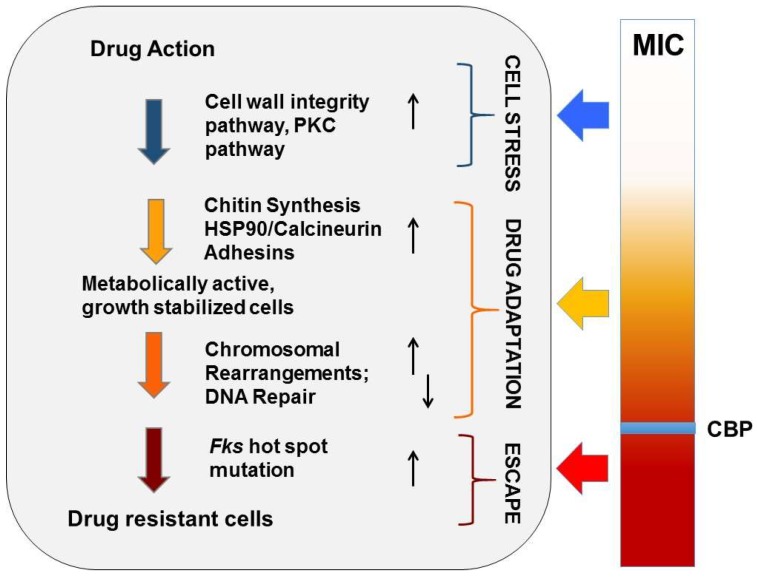
Candida glabrata has thoroughly adapted to successfully colonize human mucosal membranes and survive in vivo pressures. prior to and during antifungal treatment. Out of all the medically relevant Candida species, C. glabrata has emerged as a leading cause of azole, echinocandin, and multidrug (MDR: azole + echinocandin) adaptive resistance. Neither mechanism of resistance is intrinsic to C. glabrata, since stable genetic resistance depends on mutation of drug target genes, FKS1 and FKS2 (echinocandin resistance), and a transcription factor, PDR1, which controls expression of major drug transporters, such as CDR1 (azole resistance). However, another hallmark of C. glabrata is the ability to withstand drug pressure both in vitro and in vivo prior to stable “genetic escape”. Additionally, these resistance events can arise within individual patients, which underscores the importance of understanding how this fungus is adapting to its environment and to drug exposure in vivo. Here, we explore the evolution of echinocandin resistance as a multistep model that includes general cell stress, drug adaptation (tolerance), and genetic escape. The extensive genetic diversity reported in C. glabrata is highlighted.
Overview
The claims and statistics of this paper haven’t been checked yet.
Free: it reads the open-access text and checks the first 5 claims that cite a source we can check. Create a free account to check every claim.
Integrity signals
Registry
Cites
Statistics
Figures
Verification
Claims the paper makes
The claims and statistics of this paper haven’t been checked yet.
Free: it reads the open-access text and checks the first 5 claims that cite a source we can check. Create a free account to check every claim.
Claims other papers make about this one
Each is checked against this paper’s own text: does it say what the citing paper says it does?
The source backs part of the claim, not all of it — or backs it for a different population, condition or comparison.
In the citing paper
“However, strong resistance to echinocandins arises primarily through mutations in the two targets, encoded by FKS1 and FKS2 (23, 24), the latter of which depends on calcineurin and the Crz1 transcription factor for maximal expression (25).”
From Echinocandin tolerance and persistence in vitro are regulated by calcineurin signaling in Candida glabrata (2026) · cites this paper as [23]
Experimental — accuracy not yet measuredThe cited source says what the claim attributes to it.
In the citing paper
“Indeed, ECN resistance is a multistep developmental process consisting of stress adaptations such as cell wall integrity signaling (86).”
From Transcriptomics and Phenotyping Define Genetic Signatures Associated with Echinocandin Resistance in Candida auris (2022) · cites this paper as [86]
The check wasn’t confident either way, so it gives no verdict — never disputed.
In the citing paper
“The recent report (47) did not make use of time-kill experiments and extensively utilized low-resolution dose-kill experiments, in which CFU are quantified at only one time point (24 h) after exposure to varying doses of echinocandins (23).”
From Echinocandin tolerance and persistence in vitro are regulated by calcineurin signaling in Candida glabrata (2026) · cites this paper as [23]
Experimental — accuracy not yet measuredIn the citing paper
“Recently, a substantial number of azole-resistant C. glabrata isolates have also been found to be resistant to cell-wall targeting drugs echinocandins, which inhibit the β-glucan synthase enzyme [101,102,103].”
From Candida glabrata: A Lot More Than Meets the Eye (2019) · cites this paper as [103]
In the citing paper
“Resistance towards echinocandins is primarily due to mutations in the CgFKS1 and CgFKS2 genes that code for β-1,3-glucan synthase [103].”
From Candida glabrata: A Lot More Than Meets the Eye (2019) · cites this paper as [103]
1 more claim about this paper
Create a free account to see every claim other papers make about this one.
Self-check
Percentages, sums and reported differences re-computed from the paper’s own numbers.
The self-check needs the paper’s full text.
Citations
Cites
Pappas, P. G., Kauffman, C. A., Andes, D. R., Clancy, C. J., Marr, K. A., Ostrosky-Zeichner, L., Reboli, A. C., Schuster, M. G., Vazquez, J. A., Walsh, T. J., et al. (2016) · Clinical Infectious Diseases · doi:10.1093/cid/civ933 · Cited by 4,200
Pappas, P. G., Kauffman, C. A., Andes, D. R., Clancy, C. J., Marr, K. A., Ostrosky-Zeichner, L., Reboli, A. C., Schuster, M. G., Vazquez, J. A., Walsh, T. J., et al. (2016) · Clinical Infectious Diseases · doi:10.1093/cid/civ1194 · Cited by 1,298
The global problem of antifungal resistance: prevalence, mechanisms, and management
Perlin, D. S., Rautemaa-Richardson, R., & Alastruey-Izquierdo, A. (2017) · The Lancet Infectious Diseases · doi:10.1016/s1473-3099(17)30316-x · Cited by 1,055
Self-citationCell Wall Assembly in Saccharomyces cerevisiae
Lesage, G., & Bussey, H. (2006) · Microbiology and Molecular Biology Reviews · doi:10.1128/mmbr.00038-05 · Cited by 849
Alexander, B. D., Johnson, M. D., Pfeiffer, C. D., Jiménez-Ortigosa, C., Catania, J., Booker, R., Castanheira, M., Messer, S. A., Perlin, D. S., & Pfaller, M. A. (2013) · Clinical Infectious Diseases · doi:10.1093/cid/cit136 · Cited by 778 · cited 1×
“glabrata isolates ranges from 3–5% in population-based studies [10], some centers report rates of 10–15% [3,11].”
BackgroundSelf-citationMechanisms of Antifungal Drug Resistance
Cowen, L. E., Sanglard, D., Howard, S. J., Rogers, P. D., & Perlin, D. S. (2015) · Cold Spring Harbor Perspectives in Medicine · doi:10.1101/cshperspect.a019752 · Cited by 647 · cited 2×
“While multiple mechanisms of azole resistance have been reported for Candida species [13], the overwhelming singular mechanism of resistance identified in clinical isolates of C.”
BackgroundSelf-citationMutation as a Stress Response and the Regulation of Evolvability
Galhardo, R. S., Hastings, P. J., & Rosenberg, S. M. (2007) · Critical Reviews in Biochemistry and Molecular Biology · doi:10.1080/10409230701648502 · Cited by 643 · cited 1×
“, as during stress-induced mutagenesis [77]) in these mechanisms are often associated with increased mutation rates [97].”
BackgroundTackling Human Fungal Infections
Brown, G. D., Denning, D. W., & Levitz, S. M. (2012) · Science · doi:10.1126/science.1222236 · Cited by 619
Chowdhary, A., Prakash, A., Sharma, C., Kordalewska, M., Kumar, A., Sarma, S., Tarai, B., Singh, A., Upadhyaya, G., Upadhyay, S., et al. (2018) · Journal of Antimicrobial Chemotherapy · doi:10.1093/jac/dkx480 · Cited by 577
Self-citationDNA‐damage repair; the good, the bad, and the ugly
Hakem, R. (2008) · The EMBO Journal · doi:10.1038/emboj.2008.15 · Cited by 549 · cited 1×
“, as during stress-induced mutagenesis [77]) in these mechanisms are often associated with increased mutation rates [97].”
BackgroundSonoda, E., Hochegger, H., Saberi, A., Taniguchi, Y., & Takeda, S. (2006) · DNA Repair · doi:10.1016/j.dnarep.2006.05.022 · Cited by 525
Park, S., Kelly, R., Kahn, J. N., Robles, J., Hsu, M.-J., Register, E., Li, W., Vyas, V., Fan, H., Abruzzo, G., et al. (2005) · Antimicrobial Agents and Chemotherapy · doi:10.1128/aac.49.8.3264-3273.2005 · Cited by 434 · cited 1×
“Clinical resistance involves modification of the Fks subunits [19].”
BackgroundSelf-citationDifferential Expression and Function of Two Homologous Subunits of Yeast 1,3-β-D-Glucan Synthase
Mazur, P., Morin, N., Baginsky, W., el-Sherbeini, M., Clemas, J. A., Nielsen, J. B., & Foor, F. (1995) · Molecular and Cellular Biology · doi:10.1128/mcb.15.10.5671 · Cited by 424 · cited 1×
“cerevisiae, FKS2 and FKS3 are important during sporulation and mating [62,63].”
BackgroundAn Adhesin of the Yeast Pathogen Candida glabrata Mediating Adherence to Human Epithelial Cells
Cormack, B. P., Ghori, N., & Falkow, S. (1999) · Science · doi:10.1126/science.285.5427.578 · Cited by 383
Cleveland, A. A., Farley, M. M., Harrison, L. H., Stein, B., Hollick, R., Lockhart, S. R., Magill, S. S., Derado, G., Park, B. J., & Chiller, T. M. (2012) · Clinical Infectious Diseases · doi:10.1093/cid/cis697 · Cited by 366 · cited 1×
“glabrata ST distribution in Atlanta area hospitals changed significantly between 1992 and 2008, the time period that includes the introduction of echinocandins [101].”
BackgroundMechanisms of echinocandin antifungal drug resistance
Perlin, D. S. (2015) · Annals of the New York Academy of Sciences · doi:10.1111/nyas.12831 · Cited by 313 · cited 2×
“In the 16 years following FDA approval of caspofungin, FKS mutations are still the only mechanism associated with clinical failures [10,23].”
BackgroundSelf-citationLiu, T. T., Lee, R. E. B., Barker, K. S., Lee, R. E., Wei, L., Homayouni, R., & Rogers, P. D. (2005) · Antimicrobial Agents and Chemotherapy · doi:10.1128/aac.49.6.2226-2236.2005 · Cited by 313
Munro, C. A., Selvaggini, S., De Bruijn, I., Walker, L., Lenardon, M. D., Gerssen, B., Milne, S., Brown, A. J. P., & Gow, N. A. R. (2007) · Molecular Microbiology · doi:10.1111/j.1365-2958.2007.05588.x · Cited by 309 · cited 1×
“albicans, echinocandin-induced PKC1 expression has been linked to increased production of cell wall components chitin and mannan, potentially compensating for the loss of β-glucans [40,50,51].”
BackgroundCandida Species Biofilms’ Antifungal Resistance
Silva, S., Rodrigues, C., Araújo, D., Rodrigues, M., & Henriques, M. (2017) · Journal of Fungi · doi:10.3390/jof3010008 · Cited by 302 · cited 1×
“Drug penetration can also be hindered by the formation of a biofilm matrix by Candida species [33].”
BackgroundEchinocandin resistance: an emerging clinical problem?
Arendrup, M. C., & Perlin, D. S. (2014) · Current Opinion in Infectious Diseases · doi:10.1097/qco.0000000000000111 · Cited by 299 · cited 1×
“Resistance-conferring amino acid substitutions induce elevated MIC values [21] and the most prominent mutations can reduce the sensitivity of glucan synthase (IC50) to drug by >3,000 fold [22].”
BackgroundSelf-citationFerrari, S., Ischer, F., Calabrese, D., Posteraro, B., Sanguinetti, M., Fadda, G., Rohde, B., Bauser, C., Bader, O., & Sanglard, D. (2009) · PLoS Pathogens · doi:10.1371/journal.ppat.1000268 · Cited by 295 · cited 1×
“PDR1-mediated increased expression of EPA1 increased organ colonization in a mouse UTI model [66] and virulence in a model of hematogenous disseminated candidiasis [74,75].”
BackgroundStress, drugs, and evolution: the role of cellular signaling in fungal drug resistance.
Cowen, L. E., & Steinbach, W. J. (2008) · Eukaryotic Cell · doi:10.1128/ec.00041-08 · Cited by 285 · cited 1×
“It has been well established that in response to cell wall damage, fungi upregulate a number of stress responses and cell wall maintenance pathways that help the cells tolerate and survive the stress [39].”
BackgroundForgotten fungi—the gut mycobiome in human health and disease
Huseyin, C. E., O’Toole, P. W., Cotter, P. D., & Scanlan, P. D. (2017) · FEMS Microbiology Reviews · doi:10.1093/femsre/fuw047 · Cited by 278 · cited 1×
“Fungal populations colonize the human host at multiple body sites and represent the majority of eukaryotes in the human gut microbiome, with most organisms having a potential to act as opportunistic pathogens during immunosuppression or when natural barriers are disrupted [2].”
BackgroundHealey, K. R., Zhao, Y., Perez, W. B., Lockhart, S. R., Sobel, J. D., Farmakiotis, D., Kontoyiannis, D. P., Sanglard, D., Taj-Aldeen, S. J., Alexander, B. D., et al. (2016) · Nature Communications · doi:10.1038/ncomms11128 · Cited by 276 · cited 4×
“DNA repair alterations may be more relevant in certain populations where antifungals are routinely used for prophylaxis and treatment, and where a higher prevalence of MDR phenotypes are observed [87].”
BackgroundInfluentialSelf-citationCurrent Perspectives on Echinocandin Class Drugs
Perlin, D. S. (2011) · Future Microbiology · doi:10.2217/fmb.11.19 · Cited by 274 · cited 1×
“As such, echinocandins are fully active against azole resistant Candida [17].”
BackgroundSelf-citationPonder, R. G., Fonville, N. C., & Rosenberg, S. M. (2005) · Molecular Cell · doi:10.1016/j.molcel.2005.07.025 · Cited by 257
Garcia-Effron, G., Park, S., & Perlin, D. S. (2009) · Antimicrobial Agents and Chemotherapy · doi:10.1128/aac.01162-08 · Cited by 256 · cited 1×
“Resistance-conferring amino acid substitutions induce elevated MIC values [21] and the most prominent mutations can reduce the sensitivity of glucan synthase (IC50) to drug by >3,000 fold [22].”
BackgroundSelf-citationTwo unlike cousins: Candida albicans and C . glabrata infection strategies
Brunke, S., & Hube, B. (2013) · Cellular Microbiology · doi:10.1111/cmi.12091 · Cited by 239
Tsai, H.-F., Krol, A. A., Sarti, K. E., & Bennett, J. E. (2006) · Antimicrobial Agents and Chemotherapy · doi:10.1128/aac.50.4.1384-1392.2006 · Cited by 237 · cited 1×
“glabrata is mutation of the transcription factor PDR1, which leads to increased expression of multidrug transporters that act as efflux pumps [14,15].”
BackgroundVermitsky, J., Earhart, K. D., Smith, W. L., Homayouni, R., Edlind, T. D., & Rogers, P. D. (2006) · Molecular Microbiology · doi:10.1111/j.1365-2958.2006.05235.x · Cited by 233 · cited 1×
“glabrata is mutation of the transcription factor PDR1, which leads to increased expression of multidrug transporters that act as efflux pumps [14,15].”
Backgroundde Groot, P. W. J., Kraneveld, E. A., Yin, Q. Y., Dekker, H. L., Groß, U., Crielaard, W., de Koster, C. G., Bader, O., Klis, F. M., & Weig, M. (2008) · Eukaryotic Cell · doi:10.1128/ec.00284-08 · Cited by 232
Pham, C. D., Iqbal, N., Bolden, C. B., Kuykendall, R. J., Harrison, L. H., Farley, M. M., Schaffner, W., Beldavs, Z. G., Chiller, T. M., Park, B. J., et al. (2014) · Antimicrobial Agents and Chemotherapy · doi:10.1128/aac.03255-14 · Cited by 231 · cited 1×
“Nearly one-third of echinocandin resistant isolates are also resistant to azoles [12].”
BackgroundDNA Repair Mechanisms and the Bypass of DNA Damage in Saccharomyces cerevisiae
Boiteux, S., & Jinks-Robertson, S. (2013) · Genetics · doi:10.1534/genetics.112.145219 · Cited by 230
Elevated Chitin Content Reduces the Susceptibility of Candida Species to Caspofungin
Walker, L. A., Gow, N. A. R., & Munro, C. A. (2013) · Antimicrobial Agents and Chemotherapy · doi:10.1128/aac.01486-12 · Cited by 214 · cited 1×
“glabrata by caspofungin [45], another reported that there were no significant increases in chitin production upon caspofungin exposure in vitro [52].”
BackgroundSagatova, A. A., Keniya, M. V., Wilson, R. K., Monk, B. C., & Tyndall, J. D. A. (2015) · Antimicrobial Agents and Chemotherapy · doi:10.1128/aac.00925-15 · Cited by 210
Heenan, E. J., & Sancar, A. (2008) · Wiley Encyclopedia of Chemical Biology · doi:10.1002/9780470048672.wecb131 · Cited by 208
Formation of new chromosomes as a virulence mechanism in yeast Candida glabrata
Poláková, S., Blume, C., Zárate, J. Á., Mentel, M., Jørck-Ramberg, D., Stenderup, J., & Piškur, J. (2009) · Proceedings of the National Academy of Sciences · doi:10.1073/pnas.0809793106 · Cited by 206 · cited 4×
“glabrata to include that of cell wall proteins, such as mannosyltransferases, aspartyl proteases, phospholipases, the ABC transporter PDH1, and the sterol transporter AUS1 [88,90].”
BackgroundInfluentialGlobal Analysis of the Evolution and Mechanism of Echinocandin Resistance in Candida glabrata
Singh-Babak, S. D., Babak, T., Diezmann, S., Hill, J. A., Xie, J. L., Chen, Y.-L., Poutanen, S. M., Rennie, R. P., Heitman, J., & Cowen, L. E. (2012) · PLoS Pathogens · doi:10.1371/journal.ppat.1002718 · Cited by 205 · cited 1×
“, WSC1, MKK1, BCK1, SLT2) [43–45], Hsp90 and calcineurin signaling [46,47], and chromatin remodeling [48,49], have been shown to abrogate echinocandin tolerance or adaptation when disrupted or targeted in C.”
BackgroundAgarwal, A. K., Rogers, P. D., Baerson, S. R., Jacob, M. R., Barker, K. S., Cleary, J. D., Walker, L. A., Nagle, D. G., & Clark, A. M. (2003) · Journal of Biological Chemistry · doi:10.1074/jbc.m306291200 · Cited by 204
Erg11 mutations associated with azole resistance in clinical isolates of Candida albicans
Xiang, M.-J., Liu, J.-Y., Ni, P.-H., Wang, S., Shi, C., Wei, B., Ni, Y.-X., & Ge, H.-L. (2013) · FEMS Yeast Research · doi:10.1111/1567-1364.12042 · Cited by 197
Activity of 1,3-β-D-Glucan Synthase Requires the GTP-binding Protein Rho1
Mazur, P., & Baginsky, W. (1996) · Journal of Biological Chemistry · doi:10.1074/jbc.271.24.14604 · Cited by 196 · cited 1×
“The enzyme complex consists of a structural/catalytic subunit encoded by FKS genes; and its activity is regulated by Rho, a GTP-binding protein [18].”
BackgroundBreakthrough invasive candidiasis in patients on micafungin.
Pfeiffer, C. D., Garcia-Effron, G., Zaas, A. K., Perfect, J. R., Perlin, D. S., & Alexander, B. D. (2010) · Journal of Clinical Microbiology · doi:10.1128/jcm.02390-09 · Cited by 196 · cited 1×
“Subsequent or repeated treatment with an echinocandin can lead to rapid breakthrough [32].”
BackgroundSelf-citationReinoso-Martín, C., Schüller, C., Schuetzer-Muehlbauer, M., & Kuchler, K. (2003) · Eukaryotic Cell · doi:10.1128/ec.2.6.1200-1210.2003 · Cited by 193
Stevens, D. A., Ichinomiya, M., Koshi, Y., & Horiuchi, H. (2006) · Antimicrobial Agents and Chemotherapy · doi:10.1128/aac.00563-06 · Cited by 193 · cited 1×
“albicans, echinocandin-induced PKC1 expression has been linked to increased production of cell wall components chitin and mannan, potentially compensating for the loss of β-glucans [40,50,51].”
BackgroundSchwarzmüller, T., Ma, B., Hiller, E., Istel, F., Tscherner, M., Brunke, S., Ames, L., Firon, A., Green, B., Cabral, V., et al. (2014) · PLoS Pathogens · doi:10.1371/journal.ppat.1004211 · Cited by 191 · cited 2×
“Multiple gene knockouts, including those involved in cell wall organization, chromatin assembly, transcriptional regulation, and signal transduction, were associated with caspofungin hypersensitivity [44].”
BackgroundMultilocus Sequence Typing of Candidaglabrata Reveals Geographically EnrichedClades
Dodgson, A. R., Pujol, C., Denning, D. W., Soll, D. R., & Fox, A. J. (2003) · Journal of Clinical Microbiology · doi:10.1128/jcm.41.12.5709-5717.2003 · Cited by 190
Telomere length control and transcriptional regulation of subtelomeric adhesins in Candida glabrata
Castaño, I., Pan, S., Zupancic, M., Hennequin, C., Dujon, B., & Cormack, B. P. (2005) · Molecular Microbiology · doi:10.1111/j.1365-2958.2004.04465.x · Cited by 188
Evaluating evolutionary models of stress-induced mutagenesis in bacteria
MacLean, R. C., Barceló, C. T., & Moxon, R. E. (2013) · Nature Reviews Genetics · doi:10.1038/nrg3415 · Cited by 176 · cited 1×
“cerevisiae [81], as well as computational models of mutation rates [82], indicates that in stressed cells genome maintenance and repair mechanisms are altered, promoting mutability and increasing the pool of genetic diversity from which drug-resistant mutations can emerge.”
BackgroundShields, R. K., Nguyen, M. H., Press, E. G., Kwa, A. L., Cheng, S., Du, C., & Clancy, C. J. (2012) · Antimicrobial Agents and Chemotherapy · doi:10.1128/aac.00027-12 · Cited by 171 · cited 1×
“In the 16 years following FDA approval of caspofungin, FKS mutations are still the only mechanism associated with clinical failures [10,23].”
BackgroundSafety and pharmacokinetics of CD101 IV, a novel echinocandin, in healthy adults
Sandison, T., Ong, V., Lee, J., & Thye, D. (2017) · Antimicrobial Agents and Chemotherapy · doi:10.1128/aac.01627-16 · Cited by 161 · cited 1×
“As stated above, rezufungin can reportedly penetrate into deep tissue lesions better than micafungin [31] and exhibits a long half-life in PK studies [58,59].”
BackgroundDrug-Resistant Candida glabrata Infection in Cancer Patients
Farmakiotis, D., Tarrand, J. J., & Kontoyiannis, D. P. (2014) · Emerging Infectious Diseases · doi:10.3201/eid2011.140685 · Cited by 152
Katiyar, S. K., Alastruey-Izquierdo, A., Healey, K. R., Johnson, M. E., Perlin, D. S., & Edlind, T. D. (2012) · Antimicrobial Agents and Chemotherapy · doi:10.1128/aac.00813-12 · Cited by 148 · cited 1×
“glabrata, two functionally redundant genes, FKS1 and FKS2, encode glucan synthase catalytic subunits [20].”
BackgroundSelf-citationMutations Arising During Repair of Chromosome Breaks
Malkova, A., & Haber, J. E. (2012) · Annual Review of Genetics · doi:10.1146/annurev-genet-110711-155547 · Cited by 142
General Stress Response Regulator RpoS in Adaptive Mutation and Amplification in Escherichia coli
Lombardo, M.-J., Aponyi, I., & Rosenberg, S. M. (2004) · Genetics · doi:10.1534/genetics.166.2.669 · Cited by 136
Niimi, K., Maki, K., Ikeda, F., Holmes, A. R., Lamping, E., Niimi, M., Monk, B. C., & Cannon, R. D. (2006) · Antimicrobial Agents and Chemotherapy · doi:10.1128/aac.50.4.1148-1155.2006 · Cited by 134 · cited 1×
“Unlike azoles, multidrug transporters do not appear to play a role in echinocandin resistance, as echinocandins are not substrates for transport [16].”
BackgroundWiederhold, N. P., Kontoyiannis, D. P., Prince, R. A., & Lewis, R. E. (2005) · Antimicrobial Agents and Chemotherapy · doi:10.1128/aac.49.12.5146-5148.2005 · Cited by 131
Candida spp. with Acquired Echinocandin Resistance, France, 2004–20101
Dannaoui, E., Desnos-Ollivier, M., Garcia-Hermoso, D., Grenouillet, F., Cassaing, S., Baixench, M.-T., Bretagne, S., Dromer, F., Lortholary, O., & the French Mycoses Study Group (2012) · Emerging infectious diseases · doi:10.3201/eid1801.110556 · Cited by 130 · cited 1×
“albicans and other Candida species, the frequency of echinocandin resistance remains relatively low (1–3%) [6,7], but this is not true for C.”
BackgroundLow Prevalence of fks1 Hot Spot 1 Mutations in a Worldwide Collection of Candida Strains
Castanheira, M., Woosley, L. N., Diekema, D. J., Messer, S. A., Jones, R. N., & Pfaller, M. A. (2010) · Antimicrobial Agents and Chemotherapy · doi:10.1128/aac.01711-09 · Cited by 125 · cited 1×
“albicans and other Candida species, the frequency of echinocandin resistance remains relatively low (1–3%) [6,7], but this is not true for C.”
BackgroundMarkovich, S., Yekutiel, A., Shalit, I., Shadkchan, Y., & Osherov, N. (2004) · Antimicrobial Agents and Chemotherapy · doi:10.1128/aac.48.10.3871-3876.2004 · Cited by 122 · cited 1×
“albicans, echinocandin-induced PKC1 expression has been linked to increased production of cell wall components chitin and mannan, potentially compensating for the loss of β-glucans [40,50,51].”
BackgroundShee, C., Gibson, J. L., Darrow, M. C., Gonzalez, C., & Rosenberg, S. M. (2011) · Proceedings of the National Academy of Sciences · doi:10.1073/pnas.1104681108 · Cited by 121
Souza, A. C. R., Fuchs, B. B., Pinhati, H. M. S., Siqueira, R. A., Hagen, F., Meis, J. F., Mylonakis, E., & Colombo, A. L. (2015) · Antimicrobial Agents and Chemotherapy · doi:10.1128/aac.01177-15 · Cited by 121
Rai, M. N., Balusu, S., Gorityala, N., Dandu, L., & Kaur, R. (2012) · PLoS Pathogens · doi:10.1371/journal.ppat.1002863 · Cited by 117 · cited 1×
“, WSC1, MKK1, BCK1, SLT2) [43–45], Hsp90 and calcineurin signaling [46,47], and chromatin remodeling [48,49], have been shown to abrogate echinocandin tolerance or adaptation when disrupted or targeted in C.”
BackgroundCastanheira, M., Deshpande, L. M., Davis, A. P., Rhomberg, P. R., & Pfaller, M. A. (2017) · Antimicrobial Agents and Chemotherapy · doi:10.1128/aac.00906-17 · Cited by 114 · cited 1×
“glabrata isolates is around 8% [4], while some centers have rates exceeding 20% [5].”
BackgroundContribution of CgPDR1-Regulated Genes in Enhanced Virulence of Azole-Resistant Candida glabrata
Ferrari, S., Sanguinetti, M., Torelli, R., Posteraro, B., & Sanglard, D. (2011) · PLoS ONE · doi:10.1371/journal.pone.0017589 · Cited by 110 · cited 1×
“PDR1-mediated increased expression of EPA1 increased organ colonization in a mouse UTI model [66] and virulence in a model of hematogenous disseminated candidiasis [74,75].”
BackgroundThe Yeast Environmental Stress Response Regulates Mutagenesis Induced by Proteotoxic Stress
Shor, E., Fox, C. A., & Broach, J. R. (2013) · PLoS Genetics · doi:10.1371/journal.pgen.1003680 · Cited by 106 · cited 1×
“cerevisiae [81], as well as computational models of mutation rates [82], indicates that in stressed cells genome maintenance and repair mechanisms are altered, promoting mutability and increasing the pool of genetic diversity from which drug-resistant mutations can emerge.”
BackgroundZhao, Y., Prideaux, B., Nagasaki, Y., Lee, M. H., Chen, P.-Y., Blanc, L., Ho, H., Clancy, C. J., Nguyen, M. H., Dartois, V., et al. (2017) · Antimicrobial Agents and Chemotherapy · doi:10.1128/aac.01009-17 · Cited by 102 · cited 3×
“Some echinocandins, like micafungin, penetrate intraabdominal abscesses of murine models at considerably lower concentrations than what is measured in the blood [31].”
BackgroundSelf-citationLewis, J. S., Wiederhold, N. P., Wickes, B. L., Patterson, T. F., & Jorgensen, J. H. (2013) · Antimicrobial Agents and Chemotherapy · doi:10.1128/aac.01144-13 · Cited by 101 · cited 1×
“Echinocandin resistance always arises during therapy and is associated with repeated or chronic drug exposure, although resistance can also follow brief drug exposure [25].”
BackgroundVitenshtein, A., Charpak-Amikam, Y., Yamin, R., Bauman, Y., Isaacson, B., Stein, N., Berhani, O., Dassa, L., Gamliel, M., Gur, C., et al. (2016) · Cell Host & Microbe · doi:10.1016/j.chom.2016.09.008 · Cited by 96 · cited 1×
“glabrata through binding of Epa proteins [76].”
Genetic Drivers of Multidrug Resistance in Candida glabrata
Healey, K. R., Jimenez Ortigosa, C., Shor, E., & Perlin, D. S. (2016) · Frontiers in Microbiology · doi:10.3389/fmicb.2016.01995 · Cited by 93 · cited 1×
“Variations in karyotypes were identified in clinical isolates taken from the same patients over the course of antifungal treatment [86,91,92]; however, we have also found that that different sequence types (STs), or clades, are characterized not only by different single nucleotide polymorphisms (SNPs) but also by vary…”
BackgroundSelf-citationCandida auris for the Clinical Microbiology Laboratory: Not Your Grandfather's Candida Species
Lockhart, S. R., Berkow, E. L., Chow, N., & Welsh, R. M. (2017) · Clinical Microbiology Newsletter · doi:10.1016/j.clinmicnews.2017.06.003 · Cited by 93 · cited 2×
“auris has arisen as a considerable public health concern following reports of elevated rates of antifungal resistance and horizontal transmission within healthcare centers [26].”
BackgroundJiménez-Ortigosa, C., Perez, W. B., Angulo, D., Borroto-Esoda, K., & Perlin, D. S. (2017) · Antimicrobial Agents and Chemotherapy · doi:10.1128/aac.00833-17 · Cited by 89 · cited 1×
“An orally-active glucan synthase inhibitor, SCY-078 (Scynexis, Jersey City, NJ, USA), exhibits activity against some otherwise-resistant FKS mutants [60], likely a result of a slightly different binding spot on the Fks protein [61].”
BackgroundSelf-citationRoles of Calcineurin and Crz1 in Antifungal Susceptibility and Virulence of Candida glabrata
Miyazaki, T., Yamauchi, S., Inamine, T., Nagayoshi, Y., Saijo, T., Izumikawa, K., Seki, M., Kakeya, H., Yamamoto, Y., Yanagihara, K., et al. (2010) · Antimicrobial Agents and Chemotherapy · doi:10.1128/aac.01364-09 · Cited by 88 · cited 1×
“, WSC1, MKK1, BCK1, SLT2) [43–45], Hsp90 and calcineurin signaling [46,47], and chromatin remodeling [48,49], have been shown to abrogate echinocandin tolerance or adaptation when disrupted or targeted in C.”
BackgroundBen-Ami, R., Zimmerman, O., Finn, T., Amit, S., Novikov, A., Wertheimer, N., Lurie-Weinberger, M., & Berman, J. (2016) · mBio · doi:10.1128/mbio.00655-16 · Cited by 88 · cited 1×
“Furthermore, heteroresistance may play a vital role in cellular adaptation during stress, and epigenetic and post-translational modification mechanisms are emerging [83,84].”
BackgroundShin, J. H., Chae, M. J., Song, J. W., Jung, S.-I., Cho, D., Kee, S. J., Kim, S. H., Shin, M. G., Suh, S. P., & Ryang, D. W. (2007) · Journal of Clinical Microbiology · doi:10.1128/jcm.00381-07 · Cited by 86 · cited 1×
“Variations in karyotypes were identified in clinical isolates taken from the same patients over the course of antifungal treatment [86,91,92]; however, we have also found that that different sequence types (STs), or clades, are characterized not only by different single nucleotide polymorphisms (SNPs) but also by vary…”
BackgroundPfaller, M. A., Messer, S. A., Rhomberg, P. R., Borroto-Esoda, K., & Castanheira, M. (2017) · Antimicrobial Agents and Chemotherapy · doi:10.1128/aac.00161-17 · Cited by 84 · cited 1×
“An orally-active glucan synthase inhibitor, SCY-078 (Scynexis, Jersey City, NJ, USA), exhibits activity against some otherwise-resistant FKS mutants [60], likely a result of a slightly different binding spot on the Fks protein [61].”
BackgroundFarmakiotis, D., & Kontoyiannis, D. P. (2017) · International Journal of Antimicrobial Agents · doi:10.1016/j.ijantimicag.2017.05.019 · Cited by 83 · cited 1×
“glabrata isolates is around 8% [4], while some centers have rates exceeding 20% [5].”
BackgroundHistone Deacetylases and Their Inhibition in Candida Species
Garnaud, C., Champleboux, M., Maubon, D., Cornet, M., & Govin, J. (2016) · Frontiers in Microbiology · doi:10.3389/fmicb.2016.01238 · Cited by 81 · cited 1×
“, WSC1, MKK1, BCK1, SLT2) [43–45], Hsp90 and calcineurin signaling [46,47], and chromatin remodeling [48,49], have been shown to abrogate echinocandin tolerance or adaptation when disrupted or targeted in C.”
BackgroundCRS–MIS in Candida glabrata: sphingolipids modulate echinocandin–Fks interaction
Healey, K. R., Katiyar, S. K., Raj, S., & Edlind, T. D. (2012) · Molecular Microbiology · doi:10.1111/j.1365-2958.2012.08194.x · Cited by 79
Self-citationMuller, H., Thierry, A., Coppée, J.-Y., Gouyette, C., Hennequin, C., Sismeiro, O., Talla, E., Dujon, B., & Fairhead, C. (2009) · Fungal Genetics and Biology · doi:10.1016/j.fgb.2008.11.006 · Cited by 78 · cited 3×
“glabrata to include that of cell wall proteins, such as mannosyltransferases, aspartyl proteases, phospholipases, the ABC transporter PDH1, and the sterol transporter AUS1 [88,90].”
BackgroundDellière, S., Healey, K., Gits-Muselli, M., Carrara, B., Barbaro, A., Guigue, N., Lecefel, C., Touratier, S., Desnos-Ollivier, M., Perlin, D. S., et al. (2016) · Frontiers in Microbiology · doi:10.3389/fmicb.2016.02038 · Cited by 75 · cited 2×
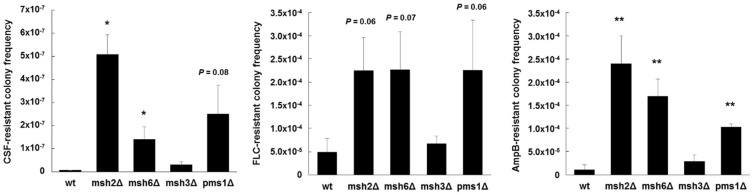
“It should be noted that not all MSH2 mutations lead to significant increases in mutants in vitro; for example, alleles encoding for P208S/N890I and E231G/L269F produced greater frequencies of resistant mutants in vitro, while others produced smaller or no increases in frequencies [98,103].”
BackgroundSelf-citationCharlet, R., Pruvost, Y., Tumba, G., Istel, F., Poulain, D., Kuchler, K., Sendid, B., & Jawhara, S. (2018) · Scientific Reports · doi:10.1038/s41598-018-21422-w · Cited by 74 · cited 1×
“glabrata chitin levels upon murine GI tract colonization [53].”
BackgroundIshihara, S., Hirata, A., Nogami, S., Beauvais, A., Latge, J.-P., & Ohya, Y. (2007) · Eukaryotic Cell · doi:10.1128/ec.00200-06 · Cited by 72 · cited 1×
“cerevisiae, FKS2 and FKS3 are important during sporulation and mating [62,63].”
BackgroundMiyazaki, T., Inamine, T., Yamauchi, S., Nagayoshi, Y., Saijo, T., Izumikawa, K., Seki, M., Kakeya, H., Yamamoto, Y., Yanagihara, K., et al. (2010) · FEMS Yeast Research · doi:10.1111/j.1567-1364.2010.00611.x · Cited by 70
Cota, J. M., Grabinski, J. L., Talbert, R. L., Burgess, D. S., Rogers, P. D., Edlind, T. D., & Wiederhold, N. P. (2008) · Antimicrobial Agents and Chemotherapy · doi:10.1128/aac.01542-07 · Cited by 69 · cited 1×
“glabrata by caspofungin [45], another reported that there were no significant increases in chitin production upon caspofungin exposure in vitro [52].”
BackgroundVale-Silva, L., Ischer, F., Leibundgut-Landmann, S., & Sanglard, D. (2013) · Infection and Immunity · doi:10.1128/iai.00074-13 · Cited by 65
Lin, C.-Y., Chen, Y.-C., Lo, H.-J., Chen, K.-W., & Li, S.-Y. (2007) · Journal of Clinical Microbiology · doi:10.1128/jcm.00699-07 · Cited by 62 · cited 1×
“Variations in karyotypes were identified in clinical isolates taken from the same patients over the course of antifungal treatment [86,91,92]; however, we have also found that that different sequence types (STs), or clades, are characterized not only by different single nucleotide polymorphisms (SNPs) but also by vary…”
BackgroundComparative Genomics of Two Sequential Candida glabrata Clinical Isolates
Vale-Silva, L., Beaudoing, E., Tran, V. D. T., & Sanglard, D. (2017) · G3 Genes|Genomes|Genetics · doi:10.1534/g3.117.042887 · Cited by 61
Lott, T. J., Frade, J. P., & Lockhart, S. R. (2010) · Eukaryotic Cell · doi:10.1128/ec.00002-10 · Cited by 58 · cited 1×
“ability to generate genetic diversity via meiosis and recombination [85].”
BackgroundHealey, K. R., Nagasaki, Y., Zimmerman, M., Kordalewska, M., Park, S., Zhao, Y., & Perlin, D. S. (2017) · Antimicrobial Agents and Chemotherapy · doi:10.1128/aac.01412-17 · Cited by 57 · cited 3×
“This clinical scenario has been modeled in mice as repeated treatments of caspofungin at 4× the humanized dose increased the frequency of FKS mutants formed within the GI tract in a model of colonization [30].”
BackgroundInfluentialSelf-citationSingh, A., Healey, K. R., Yadav, P., Upadhyaya, G., Sachdeva, N., Sarma, S., Kumar, A., Tarai, B., Perlin, D. S., & Chowdhary, A. (2018) · Antimicrobial Agents and Chemotherapy · doi:10.1128/aac.00195-18 · Cited by 56 · cited 1×
“It should be noted that not all MSH2 mutations lead to significant increases in mutants in vitro; for example, alleles encoding for P208S/N890I and E231G/L269F produced greater frequencies of resistant mutants in vitro, while others produced smaller or no increases in frequencies [98,103].”
BackgroundSelf-citationSuwunnakorn, S., Wakabayashi, H., Kordalewska, M., Perlin, D. S., & Rustchenko, E. (2018) · Antimicrobial Agents and Chemotherapy · doi:10.1128/aac.02299-17 · Cited by 53 · cited 1×
“albicans can influence overall drug sensitivity [64].”
Self-citationOstrosky-Zeichner, L. (2013) · Clinical Infectious Diseases · doi:10.1093/cid/cit140 · Cited by 51 · cited 1×
“glabrata, where resistance is more severe and often presents as multidrug (MDR) resistance [8,9].”
BackgroundVale-Silva, L. A., Moeckli, B., Torelli, R., Posteraro, B., Sanguinetti, M., & Sanglard, D. (2016) · mSphere · doi:10.1128/msphere.00065-15 · Cited by 51 · cited 1×
“PDR1-mediated increased expression of EPA1 increased organ colonization in a mouse UTI model [66] and virulence in a model of hematogenous disseminated candidiasis [74,75].”
BackgroundPharmacokinetics of the Novel Echinocandin CD101 in Multiple Animal Species
Ong, V., James, K. D., Smith, S., & Krishnan, B. R. (2017) · Antimicrobial Agents and Chemotherapy · doi:10.1128/aac.01626-16 · Cited by 51 · cited 1×
“As stated above, rezufungin can reportedly penetrate into deep tissue lesions better than micafungin [31] and exhibits a long half-life in PK studies [58,59].”
BackgroundByun, S. A., Won, E. J., Kim, M.-N., Lee, W. G., Lee, K., Lee, H. S., Uh, Y., Healey, K. R., Perlin, D. S., Choi, M. J., et al. (2018) · Frontiers in Microbiology · doi:10.3389/fmicb.2018.01523 · Cited by 51
Self-citationCandida glabrata susceptibility to antifungals and phagocytosis is modulated by acetate
Mota, S., Alves, R., Carneiro, C., Silva, S., Brown, A. J., Istel, F., Kuchler, K., Sampaio, P., Casal, M., Henriques, M., et al. (2015) · Frontiers in Microbiology · doi:10.3389/fmicb.2015.00919 · Cited by 49 · cited 1×
“Furthermore, heteroresistance may play a vital role in cellular adaptation during stress, and epigenetic and post-translational modification mechanisms are emerging [83,84].”
BackgroundHoward, S. J., Livermore, J., Sharp, A., Goodwin, J., Gregson, L., Alastruey-Izquierdo, A., Perlin, D. S., Warn, P. A., & Hope, W. W. (2011) · Antimicrobial Agents and Chemotherapy · doi:10.1128/aac.00621-11 · Cited by 48
Self-citationBader, J. C., Lakota, E. A., Flanagan, S., Ong, V., Sandison, T., Rubino, C. M., Bhavnani, S. M., & Ambrose, P. G. (2018) · Antimicrobial Agents and Chemotherapy · doi:10.1128/aac.02614-17 · Cited by 45 · cited 1×
“The new echinocandin rezafungin (formerly CD101; Cidara, San Diego, CA, USA) can be administered safely at a considerably higher level and can achieve favorable probabilities of PK-PD target attainment [34], which results in increased efficacy and reduced burden/sterilization at the site of intraabdominal abscesses [3…”
BackgroundLepak, A., Castanheira, M., Diekema, D., Pfaller, M., & Andes, D. (2012) · Antimicrobial Agents and Chemotherapy · doi:10.1128/aac.01102-12 · Cited by 41 · cited 2×
“They may display higher MIC values but respond to drug in pharmacodynamic models [29].”
BackgroundHou, X., Xiao, M., Wang, H., Yu, S.-Y., Zhang, G., Zhao, Y., & Xu, Y.-C. (2018) · Antimicrobial Agents and Chemotherapy · doi:10.1128/aac.00153-18 · Cited by 40
Ni, Q., Wang, C., Tian, Y., Dong, D., Jiang, C., Mao, E., & Peng, Y. (2018) · Mycoses · doi:10.1111/myc.12756 · Cited by 37
Lott, T. J., Frade, J. P., Lyon, G. M., Iqbal, N. J., & Lockhart, S. R. (2012) · Medical Mycology · doi:10.3109/13693786.2011.592153 · Cited by 35 · cited 1×
“One significant change is the increased prevalence of ST16, which carries a msh2 variant associated with increased echinocandin resistance frequencies in vitro [87] and was shown to be more prevalent among drug-resistant clinical isolates [102], suggesting that this ST may have an increased capacity for drug escape.”
BackgroundSusceptibility of Candida glabrata biofilms to echinocandins: alterations in the matrix composition
Rodrigues, C. F., Rodrigues, M. E., & Henriques, M. (2018) · Biofouling · doi:10.1080/08927014.2018.1472244 · Cited by 35 · cited 1×
“, BGL2, XOG1, GAS2) that are related to the replacement of β-1,3-glucans in the biofilm matrix following echinocandin exposure [54,55], which may also influence adaptation.”
BackgroundCandida glabrata’s Genome Plasticity Confers a Unique Pattern of Expressed Cell Wall Proteins
López-Fuentes, E., Gutiérrez-Escobedo, G., Timmermans, B., Van Dijck, P., De Las Peñas, A., & Castaño, I. (2018) · Journal of Fungi · doi:10.3390/jof4020067 · Cited by 35 · cited 2×
“Interestingly, a recent study found that separate clinical isolates expressed a unique variety of adhesins and other cell wall proteins [72], most likely due to the subtelomeric positions of adhesin genes and the unusually high genomic plasticity of C.”
BackgroundRodrigues, C. F., & Henriques, M. (2018) · Genes · doi:10.3390/genes9040205 · Cited by 32
Salazar, S. B., Wang, C., Münsterkötter, M., Okamoto, M., Takahashi-Nakaguchi, A., Chibana, H., Lopes, M. M., Güldener, U., Butler, G., & Mira, N. P. (2018) · FEMS Yeast Research · doi:10.1093/femsyr/fox079 · Cited by 31
Healey, K. R., Challa, K. K., Edlind, T. D., & Katiyar, S. K. (2015) · Antimicrobial Agents and Chemotherapy · doi:10.1128/aac.04667-14 · Cited by 23
Self-citationRosenwald, A. G., Arora, G., Ferrandino, R., Gerace, E. L., Mohammednetej, M., Nosair, W., Rattila, S., Subic, A. Z., & Rolfes, R. (2016) · G3 Genes|Genomes|Genetics · doi:10.1534/g3.116.032490 · Cited by 23 · cited 1×
“glabrata [38], the roles of these signaling pathways in C.”
BackgroundHaw, R., Yarragudi, A., & Uemura, H. (2001) · Yeast · doi:10.1002/yea.775 · Cited by 18
Research works printed but not linked: 1
- Healey K. Shor E. Perlin D. Antifungal resistant isolates of Candida glabrata from the united states are enriched for specific sequence types with distinct MSH2 alleles Proceedings of the 20th Congress of the International Society for Human and Animal Mycology, ISHAM Amsterdam, The Netherlands 30 June–4 July 2018 Poster: P475
Cited by
The Antifungal Pipeline: Fosmanogepix, Ibrexafungerp, Olorofim, Opelconazole, and Rezafungin
Hoenigl, M., Sprute, R., Egger, M., Arastehfar, A., Cornely, O. A., Krause, R., Lass-Flörl, C., Prattes, J., Spec, A., Thompson, G. R., et al. (2021) · Drugs · doi:10.1007/s40265-021-01611-0 · Cited by 467
Drug-Resistant Fungi: An Emerging Challenge Threatening Our Limited Antifungal Armamentarium
Arastehfar, A., Gabaldón, T., Garcia-Rubio, R., Jenks, J. D., Hoenigl, M., Salzer, H. J. F., Ilkit, M., Lass-Flörl, C., & Perlin, D. S. (2020) · Antibiotics · doi:10.3390/antibiotics9120877 · Cited by 292
“Moreover, significant variation in tolerance observed among clinical isolates has been associated with a difference in genetic backgrounds [119], which may reflect the mutagenesis potential of a given isolate to induce resistance [22].”
BackgroundSelf-citationArastehfar, A., Carvalho, A., Nguyen, M. H., Hedayati, M. T., Netea, M. G., Perlin, D. S., & Hoenigl, M. (2020) · Journal of Fungi · doi:10.3390/jof6040211 · Cited by 272
Self-citationEchinocandins – structure, mechanism of action and use in antifungal therapy
Szymański, M., Chmielewska, S., Czyżewska, U., Malinowska, M., & Tylicki, A. (2022) · Journal of Enzyme Inhibition and Medicinal Chemistry · doi:10.1080/14756366.2022.2050224 · Cited by 270
Daneshnia, F., de Almeida Júnior, J. N., Ilkit, M., Lombardi, L., Perry, A. M., Gao, M., Nobile, C. J., Egger, M., Perlin, D. S., Zhai, B., et al. (2023) · The Lancet Microbe · doi:10.1016/s2666-5247(23)00067-8 · Cited by 257
Self-citation
Metadata
- Authors
- Healey, K. R., & Perlin, D. S.
- Affiliations
- William Paterson University (US)
- Rutgers Health (US)
- Corresponding author
- Healey, Kelley R.
- Perlin, David S.
- Venue
- Journal of Fungi
- Publisher
- MDPI AG
- Published
- 2018-09-01
- Volume
- 4
- Issue
- 3
- Pages
- 105
- ISSN
- 2309-608X (ISSN-L)
- PMC
- PMC6162769
- OpenAlex
- W2889229333
- Cited by
- 194
- References
- 105
- Citations by year
- 2026: 20 · 2025: 28 · 2024: 25 · 2023: 23 · 2022: 34 · 2021: 25 · 2020: 27 · 2019: 11 · 2018: 1
- FWCI
- 2.35
- Type
- journal article
- Language
- en
- Open access
- gold
- dx.doi.org
- Licence
- Locations
- Journal of Fungi (publishedVersion, cc-by)
- Preprints.org (acceptedVersion, cc-by)
- Europe PMC (PubMed Central) (publishedVersion, other-oa)
- PubMed Central (publishedVersion, cc-by)
- PubMed (publishedVersion)
- DOAJ (DOAJ: Directory of Open Access Journals) (submittedVersion)
- Funders
- National Institutes of Health (AI109025)
- Topics
- Health Sciences › Medicine › Infectious Diseases › Antifungal resistance and susceptibility
- Life Sciences › Biochemistry, Genetics and Molecular Biology › Molecular Biology › Fungal and yeast genetics research
- Life Sciences › Agricultural and Biological Sciences › Plant Science › Fungal Plant Pathogen Control
- Keywords
- Candida glabrata, echinocandin resistance, multidrug resistance, azole resistance, antifungal drug tolerance, FKS1, FKS2, PDR1, CDR1, drug transporters, cellular stress, genetic diversity, fungal adaptation
About these checks
Registry, retraction, Cites and statistics results are computed, not judged, with one exception: a printed reference that no index lists is read once by a model before it counts as a citation error. Claims are extracted by a model and kept only when their quote appears verbatim in the text; each cited source is then checked, with a model’s help, for whether it says what the claim relies on. Those verdicts can be wrong — read the claim’s quote and the cited source before relying on one.
Statistics and arithmetic are recomputed, not judged.
Confidence bands are shown only for fields calibrated on our annotated test set. None is calibrated yet, so no band is shown.
What counts as a claim ›How we measure confidence ›How we check this ›
Are you an author, or do you see a problem with this page? Request a review
Data sources
Bibliographic data: Semantic Scholar, OpenAlex, Crossref.
Contains information from the Semantic Scholar Academic Graph Datasets, made available under the ODC Attribution License (ODC-BY 1.0).
Semantic Scholar’s data is described in: Kinney, R., et al. (2023). The Semantic Scholar Open Data Platform. arXiv:2301.10140.
