

The DOI matches its Crossref record; 238 of the 240 references it cites were found in a registry or an index.
Lactoferrin in Aseptic and Septic Inflammation
Open accessAbstract
Lactoferrin (Lf), a cationic glycoprotein able to chelate two ferric irons per molecule, is synthesized by exocrine glands and neutrophils. Since the first anti-microbial function attributed to Lf, several activities have been discovered, including the relevant anti-inflammatory one, especially associated to the down-regulation of pro-inflammatory cytokines, as IL-6. As high levels of IL-6 are involved in iron homeostasis disorders, Lf is emerging as a potent regulator of iron and inflammatory homeostasis. Here, the role of Lf against aseptic and septic inflammation has been reviewed. In particular, in the context of aseptic inflammation, as anemia of inflammation, preterm delivery, Alzheimer’s disease and type 2 diabetes, Lf administration reduces local and/or systemic inflammation. Moreover, Lf oral administration, by decreasing serum IL-6, reverts iron homeostasis disorders. Regarding septic inflammation occurring in Chlamydia trachomatis infection, cystic fibrosis and inflammatory bowel disease, Lf, besides the anti-inflammatory activity, exerts a significant activity against bacterial adhesion, invasion and colonization. Lastly, a critical analysis of literature in vitro data reporting contradictory results on the Lf role in inflammatory processes, ranging from pro- to anti-inflammatory activity, highlighted that they depend on cell models, cell metabolic status, stimulatory or infecting agents as well as on Lf iron saturation degree, integrity and purity.
Overview
The claims and statistics of this paper haven’t been checked yet.
Run the check — free, no account needed. It reads the open-access text and checks the sources it cites.
Integrity signals
Registry
Cites
Statistics
Figures
Verification
Claims the paper makes
The claims and statistics of this paper haven’t been checked yet.
Run the check — free, no account needed. It reads the open-access text and checks the sources it cites.
Claims other papers make about this one
Each is checked against this paper’s own text: does it say what the citing paper says it does?
In the citing paper
“In addition to its role in scavenging iron, lactoferrin, through binding to its cognate receptor, promotes the maturation, migration and cell proliferation of many immune cells including macrophages and monocytes which impact on the efficacy of host responses in the course of infections (Actor et al., 2009; Legrand, 2012; Lepanto et al., 2019).”
From The Role of Iron Regulation in Immunometabolism and Immune-Related Disease (2019) · cites this paper as Lepanto et al., 2019
Self-check
Percentages, sums and reported differences re-computed from the paper’s own numbers.
The self-check needs the paper’s full text.
Citations
Cites
Mizgerd, J. P., Kubo, H., Kutkoski, G. J., Bhagwan, S. D., Scharffetter-Kochanek, K., Beaudet, A. L., & Doerschuk, C. M. (1997) · The Journal of Experimental Medicine · doi:10.1084/jem.186.8.1357 · Cited by 7,332
Tolerance, Danger, and the Extended Family
Matzinger, P. (1994) · Annual Review of Immunology · doi:10.1146/annurev.iy.12.040194.005015 · Cited by 4,848
Targeting Hypoxia-Inducible Factors for the Treatment of Anemia in Chronic Kidney Disease Patients
Locatelli, F., Fishbane, S. N., Block, G. A., & Macdougall, I. C. (2017) · American Journal of Nephrology · doi:10.1159/000455166 · Cited by 4,836
Ecological and Evolutionary Forces Shaping Microbial Diversity in the Human Intestine
Ley, R. E., Peterson, D. A., & Gordon, J. I. (2006) · Cell · doi:10.1016/j.cell.2006.02.017 · Cited by 3,358
The gut flora as a forgotten organ
O'Hara, A. M., & Shanahan, F. (2006) · The EMBO Reports · doi:10.1038/sj.embor.7400731 · Cited by 2,791
Hotamisligil, G. S., Peraldi, P., Budavari, A., Ellis, R., White, M. F., & Spiegelman, B. M. (1996) · Science · doi:10.1126/science.271.5249.665 · Cited by 2,630
Hepcidin, a urinary antimicrobial peptide synthesized in the liver
Park, C. H., Valore, E. V., Waring, A. J., & Ganz, T. (2001) · Journal of Biological Chemistry · doi:10.1074/jbc.m008922200 · Cited by 2,168
Andrews, N. C. (1999) · New England Journal of Medicine · doi:10.1056/nejm199912233412607 · Cited by 2,130
Ferric Carboxymaltose in Patients with Heart Failure and Iron Deficiency
Anker, S. D., Comin Colet, J., Filippatos, G., Willenheimer, R., Dickstein, K., Drexler, H., Lüscher, T. F., Bart, B., Banasiak, W., Niegowska, J., et al. (2009) · New England Journal of Medicine · doi:10.1056/nejmoa0908355 · Cited by 2,083 · cited 1×
“AI is common in patients suffering from chronic diseases with prolonged inflammation due to aseptic diseases as cancer and obesity [75,76].”
BackgroundAn ecological and evolutionary perspective on human–microbe mutualism and disease
Dethlefsen, L., McFall-Ngai, M., & Relman, D. A. (2007) · Nature · doi:10.1038/nature06245 · Cited by 1,660
Integrated Systems Approach Identifies Genetic Nodes and Networks in Late-Onset Alzheimer’s Disease
Zhang, B., Gaiteri, C., Bodea, L.-G., Wang, Z., McElwee, J., Podtelezhnikov, A. A., Zhang, C., Xie, T., Tran, L., Dobrin, R., et al. (2013) · Cell · doi:10.1016/j.cell.2013.03.030 · Cited by 1,657
Control of pathogens and pathobionts by the gut microbiota
Kamada, N., Chen, G. Y., Inohara, N., & Núñez, G. (2013) · Nature Immunology · doi:10.1038/ni.2608 · Cited by 1,625
The anti-inflammatory agents aspirin and salicylate inhibit the activity of IκB kinase-β
Yin, M.-J., Yamamoto, Y., & Gaynor, R. B. (1998) · Nature · doi:10.1038/23948 · Cited by 1,596
Darfeuille-Michaud, A., Boudeau, J., Bulois, P., Neut, C., Glasser, A.-L., Barnich, N., Bringer, M.-A., Swidsinski, A., Beaugerie, L., & Colombel, J.-F. (2004) · Gastroenterology · doi:10.1053/j.gastro.2004.04.061 · Cited by 1,566
LEAP-1, a novel highly disulfide-bonded human peptide, exhibits antimicrobial activity
Krause, A., Neitz, S., Mägert, H.-J., Schulz, A., Forssmann, W.-G., Schulz-Knappe, P., & Adermann, K. (2000) · FEBS Letters · doi:10.1016/s0014-5793(00)01920-7 · Cited by 1,324
The iron exporter ferroportin/Slc40a1 is essential for iron homeostasis
Donovan, A., Lima, C. A., Pinkus, J. L., Pinkus, G. S., Zon, L. I., Robine, S., & Andrews, N. C. (2005) · Cell Metabolism · doi:10.1016/j.cmet.2005.01.003 · Cited by 1,275
Cario, E., & Podolsky, D. K. (2000) · Infection and Immunity · doi:10.1128/iai.68.12.7010-7017.2000 · Cited by 1,245
Weiss, G., Ganz, T., & Goodnough, L. T. (2019) · Blood · doi:10.1182/blood-2018-06-856500 · Cited by 1,219
Intravascular Danger Signals Guide Neutrophils to Sites of Sterile Inflammation
McDonald, B., Pittman, K., Menezes, G. B., Hirota, S. A., Slaba, I., Waterhouse, C. C. M., Beck, P. L., Muruve, D. A., & Kubes, P. (2010) · Science · doi:10.1126/science.1195491 · Cited by 1,210
REVIEW ARTICLE: Th1/Th2/Th17 and Regulatory T‐Cell Paradigm in Pregnancy
Saito, S., Nakashima, A., Shima, T., & Ito, M. (2010) · American Journal of Reproductive Immunology · doi:10.1111/j.1600-0897.2010.00852.x · Cited by 1,145
Infant mortality statistics from the 2004 period linked birth/infant death data set.
Mathews, T. J., & MacDorman, M. F. (2007) · PubMed · doi:10.13016/v2ql-unmj · Cited by 1,044
Aguirre, V., Werner, E. D., Giraud, J., Lee, Y. H., Shoelson, S. E., & White, M. F. (2002) · Journal of Biological Chemistry · doi:10.1074/jbc.m101521200 · Cited by 1,010
Infant mortality statistics from the 2001 period linked birth/infant death data set.
Mathews, T. J., Menacker, F., & MacDorman, M. F. (2003) · PubMed · Cited by 967
Lieschke, G. J., Grail, D., HODGSON, G. S., Metcalf, D., Stanley, E. G., Cheers, C., Fowler, K., Basu, S., Zhan, Y., & Dunn, A. (1994) · Blood · doi:10.1182/blood.v84.6.1737.1737 · Cited by 956
The Changing Microbial Epidemiology in Cystic Fibrosis
LiPuma, J. J. (2010) · Clinical Microbiology Reviews · doi:10.1128/cmr.00068-09 · Cited by 838
Hurst, S. M., Wilkinson, T. S., McLoughlin, R. M., Jones, S., Horiuchi, S., Yamamoto, N., Rose-John, S., Fuller, G. M., Topley, N., & Jones, S. A. (2001) · Immunity · doi:10.1016/s1074-7613(01)00151-0 · Cited by 811
Intestinal Permeability Regulation by Tight Junction: Implication on Inflammatory Bowel Diseases
Lee, S. H. (2015) · Intestinal Research · doi:10.5217/ir.2015.13.1.11 · Cited by 810
Cunningham, C., Wilcockson, D. C., Campion, S., Lunnon, K., & Perry, V. H. (2005) · The Journal of Neuroscience · doi:10.1523/jneurosci.2614-05.2005 · Cited by 768
Intramuscular desferrioxamine in patients with Alzheimer's disease
MCLACHLAN, D. (1991) · The Lancet · doi:10.1016/0140-6736(91)92978-b · Cited by 764
Altered Brain Metabolism of Iron as a Cause of Neurodegenerative Diseases?
Gerlach, M., Ben‐Shachar, D., Riederer, P. F., & Youdim, M. B. H. (1994) · Journal of Neurochemistry · doi:10.1046/j.1471-4159.1994.63030793.x · Cited by 704
LACTOFERRIN, AN IRON-BINBING PROTEIN NI NEUTROPHILIC LEUKOCYTES
Masson, P. L., Heremans, J. F., & Schonne, E. (1969) · The Journal of Experimental Medicine · doi:10.1084/jem.130.3.643 · Cited by 700
A Bactericidal Effect for Human Lactoferrin
Arnold, R. R., Cole, M. F., & McGhee, J. R. (1977) · Science · doi:10.1126/science.327545 · Cited by 677
Iron status during pregnancy: setting the stage for mother and infant
Scholl, T. O. (2005) · The American Journal of Clinical Nutrition · doi:10.1093/ajcn/81.5.1218 · Cited by 664
Weinstein, D. A., Roy, C. N., Fleming, M. D., Loda, M. F., Wolfsdorf, J. I., & Andrews, N. C. (2002) · Blood · doi:10.1182/blood-2002-04-1260 · Cited by 632
Glucose Challenge Stimulates Reactive Oxygen Species (ROS) Generation by Leucocytes
Mohanty, P., Hamouda, W., Garg, R., Aljada, A., Ghanim, H., & Dandona, P. (2000) · The Journal of Clinical Endocrinology & Metabolism · doi:10.1210/jcem.85.8.6854 · Cited by 621
Macrophages in intestinal homeostasis and inflammation
Bain, C. C., & Mowat, A. M. (2014) · Immunological Reviews · doi:10.1111/imr.12192 · Cited by 615
Bellamy, W., Takase, M., Wakabayashi, H., Kawase, K., & TOMITA, M. (1992) · Journal of Applied Bacteriology · doi:10.1111/j.1365-2672.1992.tb05007.x · Cited by 588
An iron-binding protein common to many external secretions
Masson, P. L., Heremans, J. F., & Dive, C. H. (1966) · Clinica Chimica Acta · doi:10.1016/0009-8981(66)90004-0 · Cited by 577
A Molecular Basis for Insulin Resistance
Paz, K., Hemi, R., LeRoith, D., Karasik, A., Elhanany, E., Kanety, H., & Zick, Y. (1997) · Journal of Biological Chemistry · doi:10.1074/jbc.272.47.29911 · Cited by 556
Berghella, V., Rafael, T. J., Szychowski, J. M., Rust, O. A., & Owen, J. (2011) · Obstetrics and Gynecology · doi:10.1097/aog.0b013e31820ca847 · Cited by 549
The role of interleukin-1 in the pathogenesis of IDDM
Mandrup-Poulsen, T. R. (1996) · Diabetologia · doi:10.1007/bf00400649 · Cited by 537
Manzoni, P. (2009) · JAMA · doi:10.1001/jama.2009.1403 · Cited by 520
Inflammatory processes in preterm and term parturition
Christiaens, I., Zaragoza, D. B., Guilbert, L., Robertson, S. A., Mitchell, B. F., & Olson, D. M. (2008) · Journal of Reproductive Immunology · doi:10.1016/j.jri.2008.04.002 · Cited by 490
Iron Homeostasis and the Inflammatory Response
Wessling-Resnick, M. (2010) · Annual Review of Nutrition · doi:10.1146/annurev.nutr.012809.104804 · Cited by 480
Valenti, P., & Antonini, G. (2005) · Cellular and Molecular Life Sciences · doi:10.1007/s00018-005-5372-0 · Cited by 470
Glasser, A.-L., Boudeau, J., Barnich, N., Perruchot, M.-H., Colombel, J., & Darfeuille–Michaud, A. (2001) · Infection and Immunity · doi:10.1128/iai.69.9.5529-5537.2001 · Cited by 465
Lactoferrin: Multifunctional roles of lactoferrin: a critical overview
Ward, P. P., Paz, E., & Conneely, O. M. (2005) · Cellular and Molecular Life Sciences · doi:10.1007/s00018-005-5369-8 · Cited by 443
Differential regulation of iron homeostasis during human macrophage polarized activation
Recalcati, S., Locati, M., Marini, A., Santambrogio, P., Zaninotto, F., De Pizzol, M., Zammataro, L., Girelli, D., & Cairo, G. (2010) · European Journal of Immunology · doi:10.1002/eji.200939889 · Cited by 438
Iron homeostasis during pregnancy
Fisher, A. L., & Nemeth, E. (2017) · American Journal of Clinical Nutrition · doi:10.3945/ajcn.117.155812 · Cited by 432
Inhibition of SARS Pseudovirus Cell Entry by Lactoferrin Binding to Heparan Sulfate Proteoglycans
Lang, J., Yang, N., Deng, J., Liu, K., Yang, P., Zhang, G., & Jiang, C. (2011) · PLoS ONE · doi:10.1371/journal.pone.0023710 · Cited by 429
Brotman, R. M., Klebanoff, M. A., Nansel, T. R., Yu, K. F., Andrews, W. W., Zhang, J., & Schwebke, J. R. (2010) · The Journal of Infectious Diseases · doi:10.1086/657320 · Cited by 422
Three-dimensional structure of diferric bovine lactoferrin at 2.8 Å resolution
Moore, S. A., Anderson, B. F., Groom, C. R., Haridas, M., & Baker, E. N. (1997) · Journal of Molecular Biology · doi:10.1006/jmbi.1997.1386 · Cited by 421
Cytokine-mediated regulation of iron transport in human monocytic cells
Ludwiczek, S., Aigner, E., Theurl, I., & Weiss, G. (2003) · Blood · doi:10.1182/blood-2002-08-2459 · Cited by 420
Nemeth, E., & Ganz, T. (2014) · Hematology/Oncology Clinics of North America · doi:10.1016/j.hoc.2014.04.005 · Cited by 401
Sustained effects of interleukin-1 receptor antagonist treatment in type 2 diabetes
Larsen, C. M., Faulenbach, M., Vaag, A., Ehses, J. A., Donath, M. Y., & Mandrup-Poulsen, T. (2009) · Diabetes Care · doi:10.2337/dc09-0533 · Cited by 401
Hunter, H. N., Fulton, D. B., Ganz, T., & Vogel, H. J. (2002) · Journal of Biological Chemistry · doi:10.1074/jbc.m205305200 · Cited by 400
Martínez-Medina, M., Aldeguer, X., López‐Siles, M., Gónzalez‐Huix, F., López-Oliu, C., Dahbi, G., Blanco, J. E., Blanco, J., Garcia-Gil, L. J., & Darfeuille–Michaud, A. (2009) · Inflammatory Bowel Diseases · doi:10.1002/ibd.20860 · Cited by 398
The Effects of Salsalate on Glycemic Control in Patients With Type 2 Diabetes
Goldfine, A. B., Fonseca, V. A., Jablonski, K. A., Pyle, L. L., Staten, M. A., Shoelson, S. E., & for the TINSAL-T2D (Targeting Inflammation Using Salsalate in Type 2 Diabetes) Study Team* (2010) · Annals of Internal Medicine · doi:10.7326/0003-4819-152-6-201003160-00004 · Cited by 392
Receptor-mediated Transcytosis of Lactoferrin through the Blood-Brain Barrier
Fillebeen, C., Descamps, L., Dehouck, M., Fénart, L., Benaı̈ssa, M., Spik, G., Cecchelli, R., & Pierce, A. (1999) · Journal of Biological Chemistry · doi:10.1074/jbc.274.11.7011 · Cited by 389
Suzuki, Y. A., López, V., & Lönnerdal, B. (2005) · Cellular and Molecular Life Sciences · doi:10.1007/s00018-005-5371-1 · Cited by 384
Lactoferrin: a natural Glycoprotein involved in iron and inflammatory homeostasis
Rosa, L., Cutone, A., Lepanto, M., Paesano, R., & Valenti, P. (2017) · International Journal of Molecular Sciences · doi:10.3390/ijms18091985 · Cited by 376
Self-citationEvaluation of Vaginal Complaints
Anderson, M. (2004) · JAMA · doi:10.1001/jama.291.11.1368 · Cited by 375
Haemostatic reference intervals in pregnancy
Jørgensen, M., Klajnbard, A., Andersen, M. R., Colov, N. P., Stender, S., & Szecsi, P. B. (2010) · Thrombosis and Haemostasis · doi:10.1160/th09-10-0704 · Cited by 364
Apolactoferrin structure demonstrates ligand-induced conformational change in transferrins
Andersen, B. F., Baker, H. M., Morris, G. E., Rumball, S. V., & Baker, E. N. (1990) · Nature · doi:10.1038/344784a0 · Cited by 363
β-Defensin-2 Expression Is Regulated by TLR Signaling in Intestinal Epithelial Cells
Vora, P., Youdim, A., Thomas, L. S., Fukata, M., Tesfay, S., Lukasek, K., Michelsen, K. S., Wada, A., Hirayama, T., Arditi, M., et al. (2004) · The Journal of Immunology · doi:10.4049/jimmunol.173.9.5398 · Cited by 358
Antiviral properties of lactoferrin--a natural immunity molecule
Berlutti, F., Pantanella, F., Natalizi, T., Frioni, A., Paesano, R., Polimeni, A., & Valenti, P. (2011) · Molecules · doi:10.3390/molecules16086992 · Cited by 356
Self-citationThe Isolation of a Red Protein from Milk2
Groves, M. L. (1960) · Journal of the American Chemical Society · doi:10.1021/ja01498a029 · Cited by 350
The role of interleukins in insulin resistance and type 2 diabetes mellitus
Fève, B., & Bastard, J.-P. (2009) · Nature Reviews Endocrinology · doi:10.1038/nrendo.2009.62 · Cited by 343
Hepcidin-Induced Endocytosis of Ferroportin Is Dependent on Ferroportin Ubiquitination
Qiao, B., Sugianto, P., Fung, E., del-Castillo-Rueda, A., Moran-Jimenez, M.-J., Ganz, T., & Nemeth, E. (2012) · Cell Metabolism · doi:10.1016/j.cmet.2012.03.018 · Cited by 334
Meng, Q., Wang, A., Hua, H., Jiang, Y. Y., Wang, Y., Mu, H., Wu, Z., & Sun, K. (2018) · International Journal of Nanomedicine · doi:10.2147/ijn.s151474 · Cited by 318
Lactoferrin in a Context of Inflammation-Induced Pathology
Kruzel, M. L., Zimecki, M., & Actor, J. K. (2017) · Frontiers in Immunology · doi:10.3389/fimmu.2017.01438 · Cited by 308
Polarization dictates iron handling by inflammatory and alternatively activated macrophages
Corna, G., Campana, L., Pignatti, E., Castiglioni, A., Tagliafico, E., Bosurgi, L., Campanella, A., Brunelli, S., Manfredi, A. A., Apostoli, P., et al. (2010) · Haematologica · doi:10.3324/haematol.2010.023879 · Cited by 304 · cited 2×
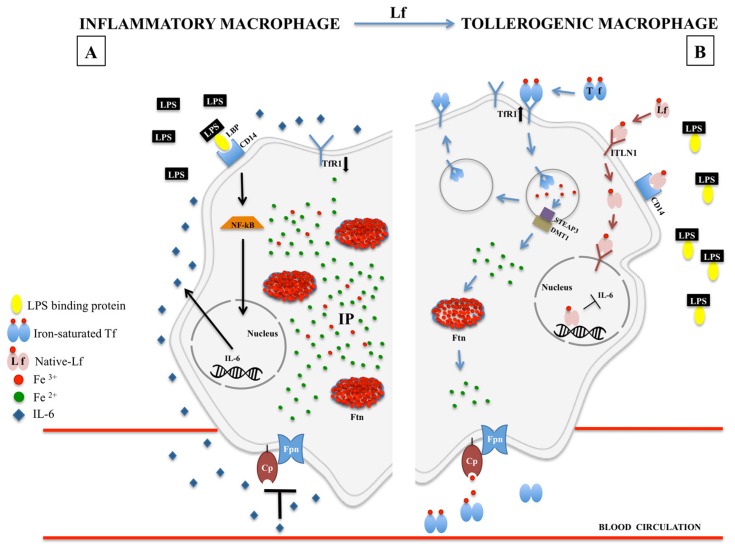
“As matter of fact, following inflammatory stimuli, macrophages polarize into M1 phenotype, characterized by the synthesis of pro-inflammatory cytokines, including IL-6, as well as by the dysregulation of the main iron-related proteins, as the down-regulation of Fpn/Cp axis, TfR1 and the up-regulation of cytosolic Ftn…”
BackgroundIsolation of an Iron-Containing Red Protein from Human Milk.
Johanson, B., Virtanen, A. I., Tweit, R. C., & Dodson, R. M. (1960) · Acta chemica Scandinavica/Acta chemica Scandinavica. B, Organic chemistry and biochemistry/Acta chemica Scandinavica. A, Physical and inorganic chemistry/Acta chemica Scandinavica. Series B. Organic chemistry and biochemistry/Acta chemica Scandinavica. Series A, Physical and inorganic chemistry · doi:10.3891/acta.chem.scand.14-0510 · Cited by 301
Adherent-invasive Escherichia coli in inflammatory bowel disease
Rolhion, N., & Darfeuille–Michaud, A. (2007) · Inflammatory Bowel Diseases · doi:10.1002/ibd.20176 · Cited by 299
Khan, S., & Dickerman, J. D. (2006) · Thrombosis Journal · doi:10.1186/1477-9560-4-15 · Cited by 290
Iron and Alzheimer’s Disease: From Pathogenesis to Therapeutic Implications
Liu, J., Fan, Y., Yang, Z., Wang, Z., & Guo, C. (2018) · Frontiers in Neuroscience · doi:10.3389/fnins.2018.00632 · Cited by 289
Adlerova, L., Bartoskova, A., & Faldyna, M. (2008) · Veterinární Medicína · doi:10.17221/1978-vetmed · Cited by 288
A structural framework for understanding the multifunctional character of lactoferrin
Baker, E. N., & BAKER, H. (2008) · Biochimie · doi:10.1016/j.biochi.2008.05.006 · Cited by 287
Barrier function in the peripheral and central nervous system—a review
Reinhold, A., & Rittner, H. L. (2016) · Pflügers Archiv - European Journal of Physiology · doi:10.1007/s00424-016-1920-8 · Cited by 279
Sterile inflammation and pregnancy complications: a review
Nadeau‐Vallée, M., Obari, D., Palacios, J. L., Brien, M., Duval, C., Chemtob, S., & Girard, S. (2016) · Reproduction · doi:10.1530/rep-16-0453 · Cited by 277
Overview of Lactoferrin as a Natural Immune Modulator.
Legrand, D. (2016) · Jornal de Pediatria · doi:10.1016/j.jpeds.2016.02.071 · Cited by 274
Ganz, T. (2018) · International Journal of Hematology · doi:10.1007/s12185-017-2366-2 · Cited by 270
Understanding the Bacterial Flora of the Female Genital Tract
Larsen, B., & Monif, G. R. G. (2001) · Clinical Infectious Diseases · doi:10.1086/318710 · Cited by 266
Préparation et propriétés de la lactosidérophiline (lactotransferrine) du lait de femme
Montreuil, J., Tonnelat, J., & Mullet, S. (1960) · Biochimica et Biophysica Acta · doi:10.1016/0006-3002(60)91478-5 · Cited by 265
Oakley, B. B., Fiedler, T. L., Marrazzo, J. M., & Fredricks, D. N. (2008) · Applied and Environmental Microbiology · doi:10.1128/aem.02884-07 · Cited by 264
Lönnerdal, B. (2014) · American Journal of Clinical Nutrition · doi:10.3945/ajcn.113.071993 · Cited by 263
Lactoferrampin: a novel antimicrobial peptide in the N1-domain of bovine lactoferrin
van der Kraan, M. I. A., Groenink, J., Nazmi, K., Veerman, E. C. I., Bolscher, J. G. M., & Amerongen, A. V. N. (2004) · Peptides · doi:10.1016/j.peptides.2003.12.006 · Cited by 254
Salicylate (Salsalate) in Patients With Type 2 Diabetes: A Randomized Trial
Goldfine, A. B., Fonseca, V., Jablonski, K. A., Chen, Y.-D. I., Tipton, L., Staten, M. A., & Shoelson, S. E. (2013) · Annals of Internal Medicine · doi:10.7326/0003-4819-159-1-201307020-00003 · Cited by 251
Invasive Escherichia coli are a feature of Crohn's disease
Sasaki, M., Sitaraman, S. V., Babbin, B. A., Gerner‐Smidt, P., Ribot, E. M., Garrett, N. A., Alpern, J. A., Akyildiz, A., Theiss, A. L., Nusrat, A., et al. (2007) · Laboratory Investigation · doi:10.1038/labinvest.3700661 · Cited by 243
Inflammation, Infection, and Pulmonary Function in Infants and Young Children with Cystic Fibrosis
Dakin, C., Numa, A. H., Wang, H., Morton, J. R., VERTZYAS, C. C., & Henry, R. L. (2002) · American Journal of Respiratory and Critical Care Medicine · doi:10.1164/ajrccm.165.7.2010139 · Cited by 233
Persistence of Human Milk Proteins in the Breast‐Fed Infant
Davidson, L. A., & Lönnerdal, B. L. (1987) · Acta Paediatrica · doi:10.1111/j.1651-2227.1987.tb10557.x · Cited by 232
Qian, Z., & Wang, Q. (1998) · Brain Research Reviews · doi:10.1016/s0165-0173(98)00012-5 · Cited by 230
Surface nucleolin participates in both the binding and endocytosis of lactoferrin in target cells
Legrand, D., Vigié, K., Said, E. A., Elass, E., Masson, M., Slomianny, M., Carpentier, M., Briand, J., Mazurier, J., & Hovanessian, A. G. (2003) · European Journal of Biochemistry · doi:10.1046/j.1432-1033.2003.03929.x · Cited by 228
Interleukin-6 stimulates prostaglandin production by human amnion and decidual cells.
Mitchell, M. D., Dudley, D. J., Edwin, S. S., & Schiller, S. L. (1991) · European Journal of Pharmacology · doi:10.1016/0014-2999(91)90090-d · Cited by 228
Changing Epidemiology of the Respiratory Bacteriology of Patients With Cystic Fibrosis
Salsgiver, E. L., Fink, A. K., Knapp, E. A., LiPuma, J. J., Olivier, K. N., Marshall, B. C., & Saiman, L. M. (2015) · CHEST Journal · doi:10.1378/chest.15-0676 · Cited by 224
Structure and Reactivity of Transferrins
Baker, E. N. (1994) · Advances in inorganic chemistry · doi:10.1016/s0898-8838(08)60176-2 · Cited by 222
Metal Chelation as a Potential Therapy for Alzheimer's Disease
Cuajungco, M. P., Faget, K. Y., Huang, X., Tanzi, R. E., & Bush, A. I. (2000) · Annals of the New York Academy of Sciences · doi:10.1111/j.1749-6632.2000.tb06938.x · Cited by 220
Pammi, M., & Suresh, G. (2017) · Cochrane Database of Systematic Reviews · doi:10.1002/14651858.cd007137.pub5 · Cited by 218
Role of Lactobacilli and Lactoferrin in the Mucosal Cervicovaginal Defense
Valenti, P., Rosa, L., Capobianco, D., Lepanto, M. S., Schiavi, E., Cutone, A., Paesano, R., & Mastromarino, P. (2018) · Frontiers in Immunology · doi:10.3389/fimmu.2018.00376 · Cited by 217
The orchestration of body iron intake: how and where do enterocytes receive their cues?
Frazer, D. M., & Anderson, G. J. (2003) · Blood Cells Molecules and Diseases · doi:10.1016/s1079-9796(03)00039-1 · Cited by 211
Scaldaferri, F., Pizzoferrato, M., Gerardi, V., Lopetuso, L. R., & Gasbarrini, A. (2012) · Journal of Clinical Gastroenterology · doi:10.1097/mcg.0b013e31826ae849 · Cited by 205
Tomlin, H., & Piccinini, A. M. (2018) · Immunology · doi:10.1111/imm.12972 · Cited by 205
Guo, C., Wang, T., Zheng, W. H., Shan, Z., Teng, W., & Wang, Z. (2012) · Neurobiology of Aging · doi:10.1016/j.neurobiolaging.2012.05.009 · Cited by 200
Natori, T., Sata, M., Washida, M., Hirata, Y., Nagai, R., & Makuuchi, M. (2002) · Biochemical and Biophysical Research Communications · doi:10.1016/s0006-291x(02)02335-5 · Cited by 200
Iron homeostasis: An anthropocentric perspective
Coffey, R., & Ganz, T. (2017) · Journal of Biological Chemistry · doi:10.1074/jbc.r117.781823 · Cited by 194
Legrand, D. (2012) · Biochemistry and Cell Biology · doi:10.1139/o11-056 · Cited by 193
Guo, C., Wang, P., Zhong, M., Wang, T., Huang, X., Li, J., & Wang, Z. (2012) · Neurochemistry International · doi:10.1016/j.neuint.2012.12.005 · Cited by 192
Abnormal Intestinal Permeability Predicts Relapse in Inactive Crohn Disease
Arnott, K. K. I. D. R. (2000) · Scandinavian Journal of Gastroenterology · doi:10.1080/003655200750056637 · Cited by 189
The role of the intestinal microbiota in enteric infection
Sekirov, I., & Finlay, B. B. (2009) · The Journal of Physiology · doi:10.1113/jphysiol.2009.172742 · Cited by 188
Raulston, J. E. (1997) · Infection and Immunity · doi:10.1128/iai.65.11.4539-4547.1997 · Cited by 180
Bruns, C. M., Nowalk, A. J., Arvai, A. S., McTigue, M. A., Vaughan, K. G., Mietzner, T. A., & McRee, D. E. (1997) · Nature Structural & Molecular Biology · doi:10.1038/nsb1197-919 · Cited by 177
Barboza, M., Pinzon, J., Wickramasinghe, S., Froehlich, J. W., Moeller, I., Smilowitz, J. T., Ruhaak, L. R., Huang, J., Lönnerdal, B. L., German, J. B., et al. (2012) · Molecular & Cellular Proteomics · doi:10.1074/mcp.m111.015248 · Cited by 176
Studying Lactoferrin N-Glycosylation
Karav, S., German, J., Rouquié, C., Parc, A. L., & Barile, D. (2017) · International Journal of Molecular Sciences · doi:10.3390/ijms18040870 · Cited by 174
Lactotransferrin immunocytochemistry in Alzheimer and normal human brain.
Kawamata, T., Tooyama, I., Yamada, T., Walker, D. G., & McGeer, P. L. (1993) · PubMed Central · Cited by 173
Local and Systemic Cytokine Levels in Relation to Changes in Vaginal Flora
Hedges, S. R., Barrientes, F. J., Desmond, R. A., & Schwebke, J. R. (2006) · The Journal of Infectious Diseases · doi:10.1086/499824 · Cited by 170
Transferrins: insights into structure and function from studies on lactoferrin
Baker, E. N., Rumball, S. V., & Anderson, B. F. (1987) · Trends in Biochemical Sciences · doi:10.1016/0968-0004(87)90163-0 · Cited by 168
van Asseldonk, E. J. P., Stienstra, R., Koenen, T. B., Joosten, L. A. B., Netea, M. G., & Tack, C. J. (2011) · The Journal of Clinical Endocrinology & Metabolism · doi:10.1210/jc.2010-2992 · Cited by 165
Thrombophilia and Pregnancy Complications
Simcox, L. E., Ormesher, L., Tower, C. L., & Greer, I. A. (2015) · International Journal of Molecular Sciences · doi:10.3390/ijms161226104 · Cited by 165
Fuller, S., Steele, M. L., & Münch, G. (2010) · Mutation research · doi:10.1016/j.mrfmmm.2009.08.016 · Cited by 164
Jiang, R., López, V., Kelleher, S. L., & Lönnerdal, B. L. (2011) · Journal of Cellular Physiology · doi:10.1002/jcp.22650 · Cited by 162
Bacterial vaginosis as a risk factor for upper genital tract infection
Peipert, J. F., Montagno, A. B., Cooper, A. S., & Sung, C. J. (1997) · American Journal of Obstetrics and Gynecology · doi:10.1016/s0002-9378(97)70038-3 · Cited by 161
Hainer, B. L., & Gibson, M. V. (2011) · PubMed · Cited by 158
Dhindsa, S., Tripathy, D., Mohanty, P., Ghanim, H., Syed, T., Aljada, A., & Dandona, P. (2004) · Metabolism · doi:10.1016/j.metabol.2003.10.013 · Cited by 156
Lactoferrin: Balancing Ups and Downs of Inflammation Due to Microbial Infections
Drago-Serrano, M., Campos-Rodríguez, R., Carrero, J., & De la Garza, M. (2017) · International Journal of Molecular Sciences · doi:10.3390/ijms18030501 · Cited by 151
Gerstein, M., Anderson, B. F., Norris, G. E., Baker, E. N., Lesk, A. M., & Chothia, C. (1993) · Journal of Molecular Biology · doi:10.1006/jmbi.1993.1592 · Cited by 150
Microevolution of Pseudomonas aeruginosa to a Chronic Pathogen of the Cystic Fibrosis Lung
Hogardt, M., & Heesemann, J. (2011) · Current topics in microbiology and immunology · doi:10.1007/82_2011_199 · Cited by 144
Rissanen, A., Howard, C. P., Botha, J., Thuren, T. Y., & for the Global Investigators (2012) · Diabetes Obesity and Metabolism · doi:10.1111/j.1463-1326.2012.01637.x · Cited by 143
Hepcidin agonists as therapeutic tools
Casu, C., Nemeth, E., & Rivella, S. (2018) · Blood · doi:10.1182/blood-2017-11-737411 · Cited by 136
Gotsch, F., Gotsch, F., Romero, R. J., Erez, O., Vaisbuch, E., Kusanovic, J. P., Mazaki‐Tovi, S., Kim, S. K., Hassan, S. S., & Yeo, L. (2009) · The Journal of Maternal-Fetal & Neonatal Medicine · doi:10.1080/14767050902860690 · Cited by 133
Togawa, J.-I., Nagase, H., Tanaka, K., Inamori, M., Nakajima, A., Ueno, N., Saito, T., & Sekihara, H. (2002) · Journal of Gastroenterology and Hepatology · doi:10.1046/j.1440-1746.2002.02868.x · Cited by 133
van Veen, H. A., Geerts, M., van Berkel, P. H. C., & Nuijens, J. H. (2004) · European Journal of Biochemistry · doi:10.1111/j.1432-1033.2003.03965.x · Cited by 132
Leveugle, B., Spik, G., Perl, D. P., Bouras, C., Fillit, H. M., & Hof, P. R. (1994) · Brain Research · doi:10.1016/0006-8993(94)90202-x · Cited by 131
Baker, H. M., & Baker, E. N. (2012) · Biochemistry and Cell Biology · doi:10.1139/o11-071 · Cited by 130
Lactoferrin activates macrophages via TLR4-dependent and -independent signaling pathways
Curran, C. S., Demick, K. P., & Mansfield, J. M. (2006) · Cellular Immunology · doi:10.1016/j.cellimm.2006.08.006 · Cited by 130
Du, L., Zhao, Z., Cui, A., Zhu, Y., Zhang, L., Liu, J., Shi, S., Fu, C., Han, X., Gao, W., et al. (2018) · ACS Chemical Neuroscience · doi:10.1021/acschemneuro.8b00194 · Cited by 129
Lactoferrin: A Critical Player in Neonatal Host Defense
Telang, S. (2018) · Nutrients · doi:10.3390/nu10091228 · Cited by 129
Liao, Y., Jiang, R., & Lönnerdal, B. L. (2012) · Biochemistry and Cell Biology · doi:10.1139/o11-075 · Cited by 125
Conrad, M. E., & Jn, U. (2000) · New England Journal of Medicine · doi:10.1056/nejm200004273421716 · Cited by 125
Structure of human diferric lactoferrin refined at 2.2 Å resolution
Haridas, M., Anderson, B. F., & Baker, E. N. (1995) · Acta Crystallographica Section D Biological Crystallography · doi:10.1107/s0907444994013521 · Cited by 122
Regulation of cytokine production during phagocytosis of apoptotic cells
Chung, E. Y., Kim, S. J., & Jing, X. (2006) · Cell Research · doi:10.1038/sj.cr.7310021 · Cited by 118
Cellular internalization of lactoferrin in intestinal epithelial cells
Ashida, K., Sasaki, H., Suzuki, Y. A., & Lönnerdal, B. (2004) · BioMetals · doi:10.1023/b:biom.0000027710.13543.3f · Cited by 117
Intelectin: A Novel Lipid Raft-Associated Protein in the Enterocyte Brush Border
Wrackmeyer, U., Hansen, G. H., Seya, T., & Danielsen, E. M. (2006) · Biochemistry · doi:10.1021/bi060570x · Cited by 113
NF-κB and the intestine: Friend or foe?
Karrasch, T., & Jobin, C. (2007) · Inflammatory Bowel Diseases · doi:10.1002/ibd.20243 · Cited by 111
Guo, C., Yang, Z., Zhang, S., Chai, R., Han, X., Zhang, Y., Li, J., & Wang, Z. (2017) · Neuropsychopharmacology · doi:10.1038/npp.2017.8 · Cited by 109
Hensen, J., Howard, C. P., Walter, V., & Thuren, T. Y. (2013) · Diabetes & Metabolism · doi:10.1016/j.diabet.2013.07.003 · Cited by 108
Iron-sensitive fluorescent probes: monitoring intracellular iron pools
Ma, Y., Abbate, V., & Hider, R. C. (2014) · Metallomics · doi:10.1039/c4mt00214h · Cited by 106
Characterization of the Glycosaminoglycan-Binding Region of Lactoferrin
Wu, H. F., Monroe, D. M., & Church, F. (1995) · Archives of Biochemistry and Biophysics · doi:10.1006/abbi.1995.1139 · Cited by 104
Dynamic properties of the tight junction barrier
Weber, C. R. (2012) · Annals of the New York Academy of Sciences · doi:10.1111/j.1749-6632.2012.06528.x · Cited by 101
Wenstrom, K. D., Andrews, W. W., Tamura, T., DuBard, M. B., Johnston, K. E., & Hemstreet, G. P. (1996) · American Journal of Obstetrics and Gynecology · doi:10.1016/s0002-9378(96)80007-x · Cited by 101
Cutone, A., Rosa, L., Lepanto, M. S., Scotti, M. J., Berlutti, F., di Patti, M. C. B., Musci, G., & Valenti, P. (2017) · Frontiers in Immunology · doi:10.3389/fimmu.2017.00705 · Cited by 101
Agrawal, M., Saraf, S., Saraf, S., Antimisiaris, S. G., Hamano, N., Li, S., Chougule, M. B., Shoyele, S., Gupta, U. D., Ajazuddin, M., et al. (2018) · Expert Opinion on Drug Delivery · doi:10.1080/17425247.2018.1471058 · Cited by 101
The role of gastrointestinal permeability in food allergy
Samadi, N., Klems, M., & Untersmayr, E. (2018) · Annals of Allergy Asthma & Immunology · doi:10.1016/j.anai.2018.05.010 · Cited by 101
Puddu, P., Latorre, D., Carollo, M., Catizone, A., Ricci, G., Valenti, P., & Gessani, S. (2011) · PLoS ONE · doi:10.1371/journal.pone.0022504 · Cited by 100
Poredoš, P., & Jezovnik, M. K. (2007) · PubMed · Cited by 95
Role of IKK and ERK pathways in intrinsic inflammation of cystic fibrosis airways
Verhaeghe, C., Remouchamps, C., Hennuy, B., Vanderplasschen, A. F. C., Chariot, A., Tabruyn, S. P., Oury, C., & Bours, V. (2007) · Biochemical Pharmacology · doi:10.1016/j.bcp.2007.03.019 · Cited by 95
Uptake of ingested bovine lactoferrin and its accumulation in adult mouse tissues
Fischer, R., Debbabi, H., Blais, A., Dubarry, M., Rautureau, M., Boyaka, P. N., & Tomé, D. (2007) · International Immunopharmacology · doi:10.1016/j.intimp.2007.05.019 · Cited by 95
Paesano, R., Torcia, F., Berlutti, F., Pacifici, E., Ebano, V., Moscarini, M., & Valenti, P. (2006) · Biochemistry and Cell Biology · doi:10.1139/o06-040 · Cited by 95
Mohamed, W., Salama, R. M., & Schaalan, M. F. (2019) · Biomedicine & Pharmacotherapy · doi:10.1016/j.biopha.2018.12.118 · Cited by 95
Conte, M. P., Longhi, C., Marazzato, M., Conte, A. L., Aleandri, M., Lepanto, M. S., Zagaglia, C., Nicoletti, M., Aloi, M., Totino, V., et al. (2014) · BMC Research Notes · doi:10.1186/1756-0500-7-748 · Cited by 94
Mechanistic Differences Leading to Infectious and Sterile Inflammation
Behnia, F., Sheller‐Miller, S., & Menon, R. (2016) · American Journal of Reproductive Immunology · doi:10.1111/aji.12496 · Cited by 93
Lepanto, M. S., Rosa, L., Cutone, A., Conte, M. P., Paesano, R., & Valenti, P. (2018) · Frontiers in Immunology · doi:10.3389/fimmu.2018.02123 · Cited by 91
Losfeld, M., Khoury, D. E., Mariot, P., Carpentier, M., Krust, B., Briand, J., Mazurier, J., Hovanessian, A. G., & Legrand, D. (2008) · Experimental Cell Research · doi:10.1016/j.yexcr.2008.10.039 · Cited by 89
Relationship between fecal lactoferrin and inflammatory bowel disease
Dai, J., Liu, W., Zhao, Y.-P., Hu, Y., & Ge, Z. (2007) · Scandinavian Journal of Gastroenterology · doi:10.1080/00365520701427094 · Cited by 89
Rossi, P., Giansanti, F., Boffi, A., Ajello, M., Valenti, P., Chiancone, E., & Antonini, G. (2002) · Biochemistry and Cell Biology · doi:10.1139/o01-209 · Cited by 86
Biological effects of mutant ceruloplasmin on hepcidin-mediated internalization of ferroportin
Kono, S., Yoshida, K., Tomosugi, N., Terada, T., Hamaya, Y., Kanaoka, S., & Miyajima, H. (2010) · Biochimica et Biophysica Acta (BBA) - Molecular Basis of Disease · doi:10.1016/j.bbadis.2010.07.011 · Cited by 85
Infant mortality statistics from the 2007 period linked birth/infant death data set.
Mathews, T. J., & MacDorman, M. F. (2011) · PubMed · Cited by 85
Determining the Cause of Vulvovaginal Symptoms
Farage, M. A., Miller, K. W., & Ledger, W. J. (2008) · Obstetrical & Gynecological Survey · doi:10.1097/ogx.0b013e318172ee25 · Cited by 82
Berlutti, F., Schippa, S., Morea, C., Sarli, S., Perfetto, B., Donnarumma, G., & Valenti, P. (2006) · Biochemistry and Cell Biology · doi:10.1139/o06-039 · Cited by 82
Precuneus amyloid burden is associated with reduced cholinergic activity in Alzheimer disease
Ikonomović, M. D., Klunk, W. E., Abrahamson, E. E., Wuu, J., Mathis, C. A., Scheff, S. W., Mufson, E. J., & DeKosky, S. T. (2011) · Neurology · doi:10.1212/wnl.0b013e3182231419 · Cited by 82
Pathophysiology and classification of iron overload diseases; update 2018
Brissot, P., Troadec, M., Loréal, O., & Brissot, É. (2018) · Transfusion Clinique et Biologique · doi:10.1016/j.tracli.2018.08.006 · Cited by 82
Lyon, D., Cheng, C., Howland, L. C., Rattican, D., Jallo, N., Pickler, R. H., Brown, L., & McGrath, J. M. (2009) · Biological Research For Nursing · doi:10.1177/1099800409344620 · Cited by 80
The In Vitro Protective Role of Bovine Lactoferrin on Intestinal Epithelial Barrier
Zhao, X., Xu, X., Liu, Y., Xi, E.-Z., An, J., Tabys, D., & Liu, N. (2019) · Molecules · doi:10.3390/molecules24010148 · Cited by 80
Microbiota of the upper and lower genital tract
Rampersaud, R., Randis, T. M., & Ratner, A. J. (2011) · Seminars in Fetal and Neonatal Medicine · doi:10.1016/j.siny.2011.08.006 · Cited by 79
Prà, I. D., Chiarini, A., Gui, L., Chakravarthy, B., Pacchiana, R., Gardenal, E., Whitfield, J. F., & Armato, U. (2014) · The Neuroscientist · doi:10.1177/1073858414529828 · Cited by 79
Commensal Bacteria-Specific CD4+ T Cell Responses in Health and Disease
Sorini, C., Cardoso, R. F., Gagliani, N., & Villablanca, E. J. (2018) · Frontiers in Immunology · doi:10.3389/fimmu.2018.02667 · Cited by 77
Alexander, D. B., Iigo, M., Yamauchi, K., Suzui, M., & Tsuda, H. (2012) · Biochemistry and Cell Biology · doi:10.1139/o2012-013 · Cited by 75
Suzuki, Y. A., Wong, H., Ashida, K.-Y., Schryvers, A. B., & Lönnerdal, B. (2008) · Biochemistry · doi:10.1021/bi8012164 · Cited by 75
Xiao, J., Yin, Y., Gao, Y., Lau, S., Shen, F., Zhao, M., & Chen, Q. (2012) · Cytokine · doi:10.1016/j.cyto.2012.07.039 · Cited by 75
Cell death in the pathogenesis of immune-mediated diseases
Pisetsky, D. S. (2011) · Swiss Medical Weekly · doi:10.4414/smw.2011.13256 · Cited by 74
Health status and work burden of Alzheimer patients’ informal caregivers
Colvez, A., Joël, M.-È., Ponton-Sanchez, A., & Royer, A.-C. (2002) · Health Policy · doi:10.1016/s0168-8510(01)00215-9 · Cited by 69
Frioni, A., Conte, M. P., Cutone, A., Longhi, C., Musci, G., di Patti, M. C. B., Natalizi, T., Marazzato, M., Lepanto, M. S., Puddu, P., et al. (2014) · BioMetals · doi:10.1007/s10534-014-9740-9 · Cited by 69
5 The Present Status of Chelating Agents in Medicine
May, P. M., & Bulman, R. A. (1983) · Progress in medicinal chemistry · doi:10.1016/s0079-6468(08)70220-0 · Cited by 69
Paesano, R., Berlutti, F., Pietropaoli, M., Goolsbee, W., Pacifici, E., & Valenti, P. (2010) · International Journal of Immunopathology and Pharmacology · doi:10.1177/039463201002300220 · Cited by 69
Russo, R., Edu, A., & Seta, F. D. (2018) · Archives of Gynecology and Obstetrics · doi:10.1007/s00404-018-4771-z · Cited by 68
Mohamed, W., & Schaalan, M. F. (2018) · Diabetology & Metabolic Syndrome · doi:10.1186/s13098-018-0390-x · Cited by 67
di Patti, M. C. B., Cutone, A., Polticelli, F., Rosa, L., Lepanto, M. S., Valenti, P., & Musci, G. (2018) · BioMetals · doi:10.1007/s10534-018-0087-5 · Cited by 66
Cutone, A., Frioni, A., Berlutti, F., Valenti, P., Musci, G., & di Patti, M. C. B. (2014) · BioMetals · doi:10.1007/s10534-014-9742-7 · Cited by 64
Management of anemia in patients with congestive heart failure
Goodnough, L. T., Colet, J. C., Leal-Noval, S. R., Ozawa, S. J., Takere, J., Henry, D. H., Javidroozi, M., Hohmuth, B., Bisbe, E., Gross, I., et al. (2016) · American Journal of Hematology · doi:10.1002/ajh.24595 · Cited by 64
Structural Heterogeneity and Multifunctionality of Lactoferrin
Albar, A. H., Almehdar, H. A., Uversky, V. N., & Redwan, E. M. M. M. (2014) · Current Protein and Peptide Science · doi:10.2174/1389203715666140919124530 · Cited by 63
Recombinant Human Intelectin Binds Bovine Lactoferrin and Its Peptides
Shin, K., Wakabayashi, H., Yamauchi, K., Yaeshima, T., & Iwatsuki, K. (2008) · Biological and Pharmaceutical Bulletin · doi:10.1248/bpb.31.1605 · Cited by 62
Valenti, P., Greco, R., Pitari, G., Rossi, P., Ajello, M., Melino, G., & Antonini, G. (1999) · Experimental Cell Research · doi:10.1006/excr.1999.4500 · Cited by 60
Peeters, H., Jongen‐Lavrencic, M., Vreugdenhil, G., & Swaak, A. J. G. (1996) · Annals of the Rheumatic Diseases · doi:10.1136/ard.55.10.739 · Cited by 60
The Chlamydia trachomatis Ctad1 invasin exploits the human integrin β1 receptor for host cell entry
Stallmann, S., & Hegemann, J. H. (2015) · Cellular Microbiology · doi:10.1111/cmi.12549 · Cited by 60
Paesano, R., Pacifici, E., Benedetti, S., Berlutti, F., Frioni, A., Polimeni, A., & Valenti, P. (2014) · BioMetals · doi:10.1007/s10534-014-9723-x · Cited by 59
Beigi, R. H., Yudin, M. H., Cosentino, L. A., Meyn, L. A., & Hillier, S. L. (2007) · The Journal of Infectious Diseases · doi:10.1086/521628 · Cited by 59
Spear, G. T., Kendrick, S. R., Chen, H. Y., Thomas, T. T., Bahk, M., BALDERAS, R. S., Ghosh, S. K., Weinberg, A., & LANDAY, A. L. (2011) · PLoS ONE · doi:10.1371/journal.pone.0019560 · Cited by 58
Chassaing, B., Etienne‐Mesmin, L., Bonnet, R., & Darfeuille–Michaud, A. (2012) · Environmental Microbiology · doi:10.1111/j.1462-2920.2012.02824.x · Cited by 57
Liao, H., Liu, S., Wang, H., Su, H., & Liu, Z. (2019) · BMC Microbiology · doi:10.1186/s12866-018-1370-x · Cited by 55
The clinical use of inflammatory markers during pregnancy
Genç, M., & Ford, C. E. (2010) · Current Opinion in Obstetrics & Gynecology · doi:10.1097/gco.0b013e3283374ac8 · Cited by 54
Venous Thrombosis: Prevalence and Interaction of Risk Factors
Rosendaal, F. R. (1999) · Pathophysiology of Haemostasis and Thrombosis · doi:10.1159/000054106 · Cited by 52
Research works printed but not linked: 1
- Hainer, 2011, Vaginitis: Diagnosis and Treatment, Am. Fam. Physician., 83, 807
Cited by
Sorted by citations
Kell, D. B., Heyden, E. L., & Pretorius, E. (2020) · Frontiers in Immunology · doi:10.3389/fimmu.2020.01221 · Cited by 460
The Role of Iron Regulation in Immunometabolism and Immune-Related Disease
Cronin, S. J. F., Woolf, C. J., Weiss, G., & Penninger, J. M. (2019) · Frontiers in Molecular Biosciences · doi:10.3389/fmolb.2019.00116 · Cited by 299
Habib, H. M., Ibrahim, S., Zaim, A., & Ibrahim, W. H. (2021) · Biomedicine & Pharmacotherapy · doi:10.1016/j.biopha.2021.111228 · Cited by 259
Lactoferrin’s Anti-Cancer Properties: Safety, Selectivity, and Wide Range of Action
Cutone, A., Rosa, L., Ianiro, G., Lepanto, M. S., di Patti, M. C. B., Valenti, P., & Musci, G. (2020) · Biomolecules · doi:10.3390/biom10030456 · Cited by 212
Elzoghby, A. O., Abdelmoneem, M. A., Hassanin, I. A., Elwakil, M. M. A., Elnaggar, M. A., Mokhtar, S., Fang, J., & Elkhodairy, K. A. (2020) · Biomaterials · doi:10.1016/j.biomaterials.2020.120355 · Cited by 203
Metadata
- Authors
- Lepanto, M. S., Rosa, L., Paesano, R., Valenti, P., & Cutone, A.
- Affiliations
- Sapienza University of Rome (IT)
- Microbo S.R.L., 00153 Rome, Italy
- University of Molise (IT)
- Corresponding author
- Cutone, Antimo
- Venue
- Molecules
- Publisher
- MDPI AG
- Published
- 2019-04-03
- Volume
- 24
- Issue
- 7
- Pages
- 1323
- ISSN
- 1420-3049 (ISSN-L)
- PMC
- PMC6480387
- OpenAlex
- W2935579023
- Cited by
- 147
- References
- 240
- Citations by year
- 2026: 6 · 2025: 17 · 2024: 16 · 2023: 23 · 2022: 31 · 2021: 24 · 2020: 23 · 2019: 6
- FWCI
- 3.35
- Type
- journal article
- Language
- en
- Open access
- gold
- dx.doi.org
- Licence
- Locations
- Molecules (publishedVersion, cc-by)
- PubMed Central (publishedVersion, cc-by)
- PubMed (publishedVersion)
- IRIS Research product catalog (Sapienza University of Rome) (submittedVersion, cc-by)
- DOAJ (DOAJ: Directory of Open Access Journals) (submittedVersion, cc-by-sa)
- Archivio Istituzionale della Ricerca - Università degli Studi del Molise (submittedVersion)
- Funders
- Sapienza Università di Roma
- Topics
- Health Sciences › Medicine › Hematology › Iron Metabolism and Disorders
- Health Sciences › Nursing › Nutrition and Dietetics › Infant Nutrition and Health
- Life Sciences › Immunology and Microbiology › Immunology › Immune Response and Inflammation
- Keywords
- lactoferrin, sterile inflammation, septic inflammation, interleukin-6, iron homeostasis, anti-inflammatory activity, anemia of chronic disease, preterm birth, Alzheimer's disease, type 2 diabetes, Chlamydia trachomatis infection, cystic fibrosis, inflammatory bowel disease, bacterial adhesion, iron saturation
- MeSH terms
- Anemia, Animals, Anti-Infective Agents, Anti-Inflammatory Agents, Humans, Inflammation, Iron, Lactoferrin, Biomarkers, Sepsis
About these checks
Registry, retraction, Cites and statistics results are computed, not judged, with one exception: a printed reference that no index lists is read once by a model before it counts as a citation error. Claims are extracted by a model and kept only when their quote appears verbatim in the text; each cited source is then checked, with a model’s help, for whether it says what the claim relies on. Those verdicts can be wrong — read the claim’s quote and the cited source before relying on one.
Statistics and arithmetic are recomputed, not judged.
Confidence bands are shown only for fields calibrated on our annotated test set. None is calibrated yet, so no band is shown.
What counts as a claim ›How we measure confidence ›How we check this ›
Are you an author, or do you see a problem with this page? Request a review
