

Turning Agri-Food Cooperative Vegetable Residues into Functional Powdered Ingredients for the Food Industry
Open accessThe DOI matches its Crossref record; 30 of the 30 references it cites were found in a registry or an index.
Abstract
Current food transformation processes must face the food waste issue by developing valorization processes to reintroduce by-products in the economic cycle and contribute to circular economy, generating social and economic value, and ensuring permanence of agricultural and rural activities. In the present paper, the results of a collaboration project between a regional agri-food cooperative and university are summarized. The project aimed to revalorize a series of vegetable wastes (carrot, leek, celery, and cabbage) from the fresh and ready-to-eat lines of the cooperative, by producing functional powders to be used as functional food ingredients. Vegetables residues were successfully transformed into functional ingredients by hot air drying or freeze-drying, and variables such as storage conditions and grinding intensity prior to drying were considered. Twenty-five vegetable powders were obtained and characterized in terms of physicochemical and antioxidant properties. Results showed that drying (mainly hot air drying) allowed obtaining stable powders, with very low water activity values, and a significantly increased functionality. Vegetable waste powders could be used in the food industry as coloring and flavoring ingredients, or natural preservatives, or either be used to reformulate processed foods in order to improve their nutritional properties.
Overview
The claims and statistics of this paper haven’t been checked yet.
Free: it reads the open-access text and checks the first 5 claims that cite a source we can check. Create a free account to check every claim.
Integrity signals
Registry
Cites
Statistics
Figures
Verification
Claims the paper makes
The claims and statistics of this paper haven’t been checked yet.
Free: it reads the open-access text and checks the first 5 claims that cite a source we can check. Create a free account to check every claim.
Claims other papers make about this one
Each is checked against this paper’s own text: does it say what the citing paper says it does?
In the citing paper
“In addition, the use of vegetable by-products in the food industry offers a real opportunity to improve human health through the reformulation of processed foods as part of the FAO concept of “Ensure healthy lives and promote well-being for all at all ages” [84,130].”
From From Industrial Food Waste to Bioactive Ingredients: A Review on the Sustainable Management and Transformation of Plant-Derived Food Waste (2023) · cites this paper as [130]
Self-check
Percentages, sums and reported differences re-computed from the paper’s own numbers.
The self-check needs the paper’s full text.
Citations
Cites
Antioxidant activity applying an improved ABTS radical cation decolorization assay
Re, R., Pellegrini, N., Proteggente, A., Pannala, A., Yang, M., & Rice-Evans, C. (1999) · Free Radical Biology and Medicine · doi:10.1016/s0891-5849(98)00315-3 · Cited by 26,165
Use of a Free Radical Method to Evaluate Antioxidant Activity
Brand-Williams, W., Cuvelier, M. E., & Berset, C. (1995) · LWT - Food Science and Technology · doi:10.1016/s0023-6438(95)80008-5 · Cited by 25,994 · cited 1×
“[20], which measures the change in color of a DPPH‐methanol solution when reacting with the sample.”
BackgroundSingleton, V. L., Orthofer, R., & Lamuela-Raventós, R. M. (1999) · Methods in Enzymology · doi:10.1016/s0076-6879(99)99017-1 · Cited by 19,125 · cited 1×
“Total phenolic content of samples was determined with the Folin–Ciocalteau method [18].”
MethodFruit and Vegetable Waste: Bioactive Compounds, Their Extraction, and Possible Utilization
Sagar, N. A., Pareek, S., Sharma, S., Yahia, E. M., & Lobo, M. G. (2018) · Comprehensive Reviews in Food Science and Food Safety · doi:10.1111/1541-4337.12330 · Cited by 1,237
Current options for the valorization of food manufacturing waste: a review
Mirabella, N., Castellani, V., & Sala, S. (2014) · Journal of Cleaner Production · doi:10.1016/j.jclepro.2013.10.051 · Cited by 1,166 · cited 3×
“Results are the mean of five replicates and are given as equivalent volume diameter D[4,3] and surface area mean diameter D[3,2], together with the distribution percentiles d10, d50, and d90.”
BackgroundMethodLin, C. S. K., Pfaltzgraff, L. A., Herrero-Davila, L., Mubofu, E. B., Abderrahim, S., Clark, J. H., Koutinas, A. A., Kopsahelis, N., Stamatelatou, K., Dickson, F., et al. (2013) · Energy & Environmental Science · doi:10.1039/c2ee23440h · Cited by 1,137 · cited 1×
“The need for reducing the generation of food wastes and developing processes that allow their reuse by re‐introducing the wastes or their components in the productive cycle has been discussed during years [8], but it still challenges all the agents involved.”
BackgroundChemical composition, functional properties and processing of carrot—a review
Sharma, K. D., Karki, S., Thakur, N. S., & Attri, S. (2012) · Journal of Food Science and Technology · doi:10.1007/s13197-011-0310-7 · Cited by 708 · cited 1×
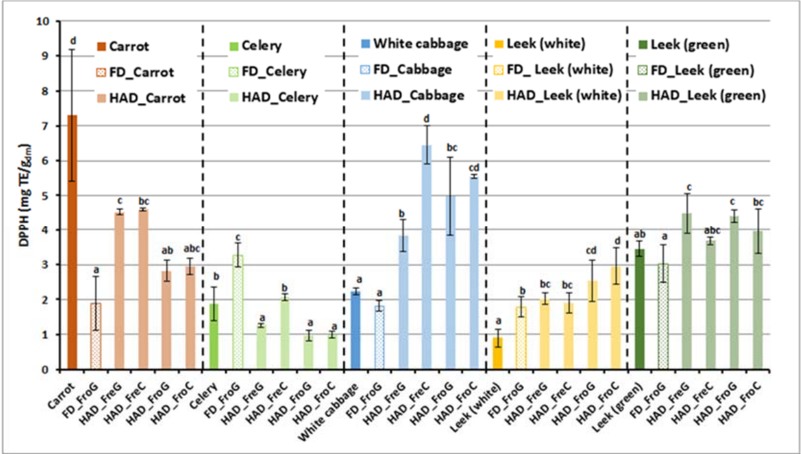
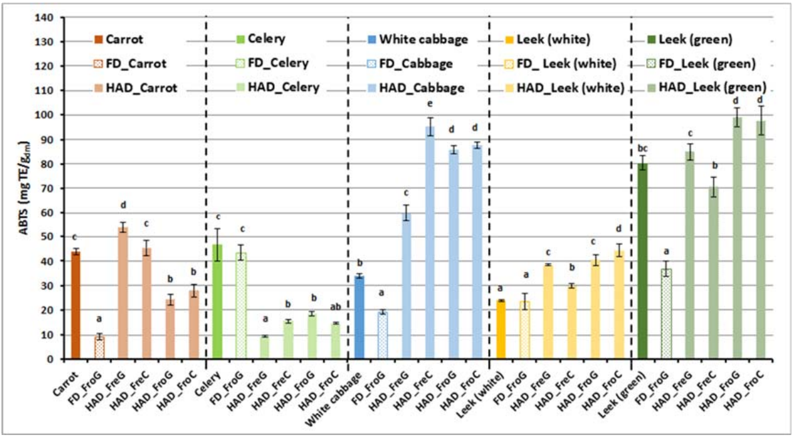
“This difference with the previous analysis (phenols and flavonoids) was most probably due to carotenoids, one of the main bioactive compounds in carrots that exhibited significant AO activity, but are not detected by the previous methods [29,30].”
ResultAgro-industrial potential of exotic fruit byproducts as a source of food additives
Ayala-Zavala, J. F., Vega-Vega, V., Rosas-Domínguez, C., Palafox-Carlos, H., Villa-Rodriguez, J. A., Siddiqui, M. W., Dávila-Aviña, J. E., & González-Aguilar, G. A. (2011) · Food Research International · doi:10.1016/j.foodres.2011.02.021 · Cited by 616 · cited 1×
“In addition, agroindustrial wastes (such as seeds, peels, or pulp) generated in the different steps of the processing chains, present a high content of bioactive compounds, often even higher than that of the whole fruit [9,10].”
BackgroundFood and Agricultural Organization of the United Nations.
Wu Leung, W. T. (1962) · Journal of AOAC INTERNATIONAL · doi:10.1093/jaoac/45.2.508a · Cited by 535
Luximon-Ramma, A., Bahorun, T., Soobrattee, M. A., & Aruoma, O. I. (2002) · Journal of Agricultural and Food Chemistry · doi:10.1021/jf0201172 · Cited by 476 · cited 1×
“The colorimetric method of aluminium chloride [19] was applied to determine total flavonoid content of samples.”
Method
Research works printed but not linked: 2
- 16. ORDEN 3 / 2018. Conselleria de Agricultura, Medio Ambiente, Cambio Clim á tico y Desarrollo Rural ; Comunitat: Valenciana, Spain, 2018; pp. 6510-6522. Available online: https: // www.dogv.gva.es / datos / 2018 / 02 / 09 / pdf / 2018\_1197.pdf (accessed on 10 December 2019).
- 24. Serna-Cock, L.; Torres-Le ó n, C.; Ayala-Aponte, A. Evaluation of food powders obtained from peels of mango (Mangifera indica) as sources of functional ingredients. Inf. Tecnol. 2015 , 26 , 41-50. [CrossRef]
Cited by
Towards Circular Economy in the Agri-Food Sector. A Systematic Literature Review
Esposito, B., Sessa, M. R., Sica, D., & Malandrino, O. (2020) · Sustainability · doi:10.3390/su12187401 · Cited by 337
“, rainwater harvesting tools [51], pelletization [52], Cornell Net Carbohydrate and Protein System [53], hot air drying or freeze-drying [54], solvent-based extraction and pressurized liquid extraction [55]); these represented 17.”
BackgroundCircular Economy Models in Agro-Food Systems: A Review
Hamam, M., Chinnici, G., Di Vita, G., Pappalardo, G., Pecorino, B., Maesano, G., & D’Amico, M. (2021) · Sustainability · doi:10.3390/su13063453 · Cited by 234
“[61] proposed a method for enhancing vegetable waste, such as carrots, leeks, celery, and cabbage, from fresh and ready-to-eat lines, aimed at the production of functional powders as functional food ingredients.”
MethodSustainable Agri-Food Systems: Environment, Economy, Society, and Policy
El Bilali, H., Strassner, C., & Ben Hassen, T. (2021) · Sustainability · doi:10.3390/su13116260 · Cited by 213
Hamed, I., Jakobsen, A. N., & Lerfall, J. (2022) · Comprehensive Reviews in Food Science and Food Safety · doi:10.1111/1541-4337.12870 · Cited by 195
Haque, F., Fan, C., & Lee, Y.-Y. (2023) · Journal of Cleaner Production · doi:10.1016/j.jclepro.2023.137873 · Cited by 179
Food Waste and Circular Economy: Challenges and Opportunities
Tamasiga, P., Miri, T., Onyeaka, H., & Hart, A. (2022) · Sustainability · doi:10.3390/su14169896 · Cited by 164
“Bas-Bellver et al. [137] studied revalorizing vegetable waste (carrot, leek, celery, and cabbage) from the fresh and ready-to-eat lines of the cooperative into functional ingredients.”
BackgroundMelini, V., Melini, F., Luziatelli, F., & Ruzzi, M. (2020) · Antioxidants · doi:10.3390/antiox9121216 · Cited by 146
“Particle size reduction prior to drying also affected the content in phenolic compounds in waste from carrots and white cabbage [25].”
BackgroundBianchi, F., Tolve, R., Rainero, G., Bordiga, M., Brennan, C. S., & Simonato, B. (2021) · International Journal of Food Science & Technology · doi:10.1111/ijfs.15168 · Cited by 116
Water hyacinth for energy and environmental applications: A review
Li, F., He, X., Arora, S., Song, S., Tan, H. T. W., Sweeney, D. J., Ghosh, S., & Wang, C. (2021) · Bioresource Technology · doi:10.1016/j.biortech.2021.124809 · Cited by 117
‘Aqilah, N. M. N., Rovina, K., Felicia, W. X. L., & Vonnie, J. M. (2023) · Molecules · doi:10.3390/molecules28062631 · Cited by 108
“This waste includes leaves, peels, unwanted pulp, seeds, cull fruits, and stones [5,6], which contain high levels of bioactive substances such as polysaccharides (starch, cellulose, and pectin) and proteins [7,8].”
BackgroundBigdeloo, M., Teymourian, T., Kowsari, E., Ramakrishna, S., & Ehsani, A. (2021) · Materials Circular Economy · doi:10.1007/s42824-021-00017-3 · Cited by 127
Jaouhari, Y., Travaglia, F., Giovannelli, L., Picco, A., Oz, E., Oz, F., & Bordiga, M. (2023) · Foods · doi:10.3390/foods12112183 · Cited by 89
Valorization of Fruit and Vegetable Waste into Sustainable and Value-Added Materials
Râpă, M., Darie-Niță, R. N., & Coman, G. (2024) · Waste · doi:10.3390/waste2030015 · Cited by 103
“Producing functional powders from a variety of vegetable wastes, including carrot, leek, celery, and cabbage sourced from both fresh products and ready-to-eat lines of the cooperative to be utilized as functional food ingredients, will contribute to a circular economy [16].”
BackgroundBedia, A. M. S., & Pérez-Pérez, M. (2022) · Sustainable Production and Consumption · doi:10.1016/j.spc.2022.02.001 · Cited by 108
Pulido, B. R., Bas-Bellver, C., Betoret, N., Barrera, C., & Seguí, L. (2021) · Frontiers in Sustainable Food Systems · doi:10.3389/fsufs.2021.654313 · Cited by 64
Self-citationQuantum dot synthesis from waste biomass and its applications in energy and bioremediation
Ahuja, V., Bhatt, A. K., Varjani, S., Choi, K., Kim, S., Yang, Y., & Bhatia, S. K. (2022) · Chemosphere · doi:10.1016/j.chemosphere.2022.133564 · Cited by 54
Okuthe, G. E. (2024) · Recycling · doi:10.3390/recycling9030040 · Cited by 63
“In the study by Bas-Bellver et al. [70], bioactive compounds were extracted from selected vegetable residues using hot air drying or freeze-drying and grinding processes.”
MethodBas-Bellver, C., Barrera, C., Betoret, N., & Seguí, L. (2022) · Foods · doi:10.3390/foods11223663 · Cited by 40
“As expected, FD powders exhibited higher specific volumes than HAD ones due to the air channels generated during sublimation, which produce a more open and porous structure that determines powder volume [29,54].”
BackgroundMethodResultSelf-citationEffects of Processing and Storage Conditions on Functional Properties of Powdered Blueberry Pomace
Calabuig‐Jiménez, L., Hinestroza-Córdoba, L. I., Barrera, C., Seguí, L., & Betoret, N. (2022) · Sustainability · doi:10.3390/su14031839 · Cited by 47
Self-citationReche, C., Rosselló, C., Umaña, M. M., Eim, V. S., & Simal, S. (2021) · Foods · doi:10.3390/foods10050931 · Cited by 40
“Large quantities of by-products are produced through the processing of plant-based foods whose re-introduction into a circular sustainable economy is important for reducing environmental problems generated by agro-industrial processes [1,2].”
BackgroundDevelopment and Characterisation of Functional Bakery Products
Guiné, R. P. F., & Florença, S. G. (2024) · Physchem · doi:10.3390/physchem4030017 · Cited by 54
“…waste for the recovery of bioactive compounds is influenced by factors such as the heterogeneity and structure of the waste, the presence of edible or inedible parts, the validity of the final product and the need to preserve compounds of nutritional interest or with antioxidant properties [35].”
BackgroundNutrient-Dense Shelf-Stable Vegetable Powders and Extruded Snacks Made from Carrots and Broccoli
Ying, D., Sanguansri, L., Cheng, L., & Augustin, M. A. (2021) · Foods · doi:10.3390/foods10102298 · Cited by 38
Malekjani, N., & Jafari, S. M. (2022) · Critical Reviews in Food Science and Nutrition · doi:10.1080/10408398.2022.2068123 · Cited by 30
“These powders can be exploited as new food ingredients to enhance the nutritional value and also techno-functional characteristics of final products (Elleuch et al. 2011; Ferreira et al. 2015; Bas-Bellver et al. 2020; Ramírez-Pulido et al. 2021).”
BackgroundMethodBas-Bellver, C., Barrera, C., Betoret, N., & Seguí, L. (2023) · Foods · doi:10.3390/foods12040731 · Cited by 33
“The interdependence between grinding and drying processes and their relationship with the final characteristics of the powders have been previously reported [25,35,42].”
BackgroundMethodResultSelf-citationRoad to Sustainability: University–Start-Up Collaboration
Jirapong, K., Cagarman, K., & von Arnim, L. (2021) · Sustainability · doi:10.3390/su13116131 · Cited by 40
Maiuolo, J., Bosco, F., Guarnieri, L., Nucera, S., Ruga, S., Oppedisano, F., Tucci, L., Muscoli, C., Palma, E., Giuffrè, A. M., et al. (2023) · Plants · doi:10.3390/plants12112126 · Cited by 27
Jaouhari, Y., Ferreira‐Santos, P., Disca, V., Oliveira, H., Martoccia, M., Travaglia, F., Gullón, B., Mateus, N. F. D. C. B., Coïsson, J. D., & Bordiga, M. (2024) · LWT · doi:10.1016/j.lwt.2024.116573 · Cited by 21
Sanahuja, A. B., Landete, M., Martínez, M. I. D., Moya, S. P., & Valdés, A. (2021) · Foods · doi:10.3390/foods10112664 · Cited by 25
Bas-Bellver, C., Barrera, C., Betoret, N., & Seguí, L. (2023) · Foods · doi:10.3390/foods12193526 · Cited by 19
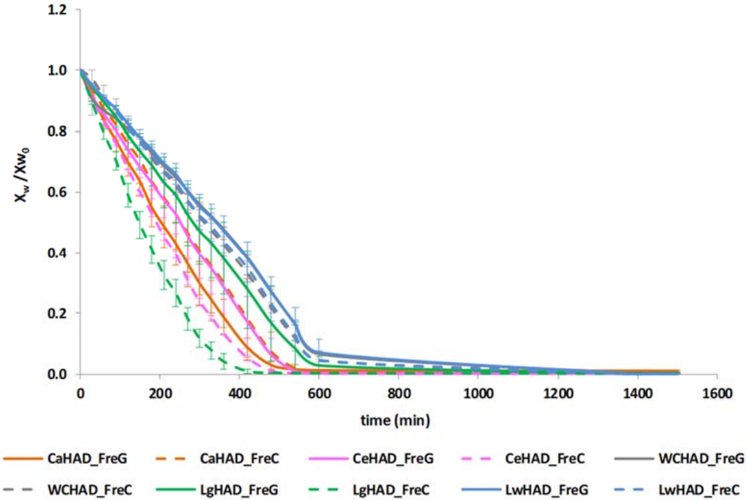
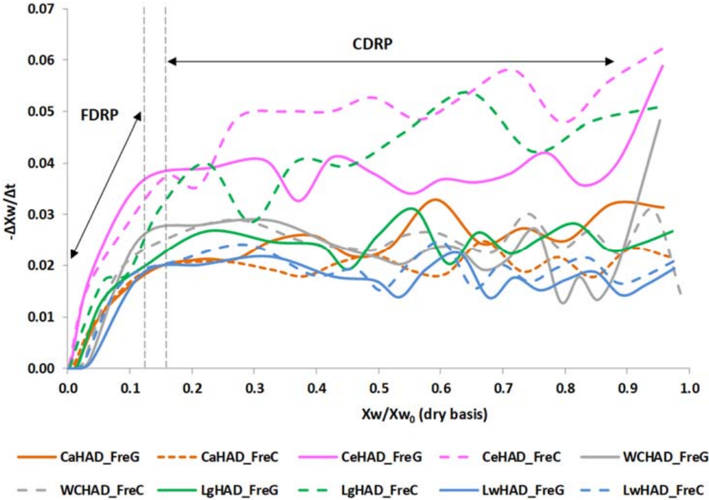
“This procedure was carried out as explained elsewhere [17,18] and allowed to obtain the drying curves and drying rate curves of broccoli stems as a function of the different pretreatments applied (fermented/non-fermented, chopped/ground).”
MethodSelf-citationBas-Bellver, C., Barrera, C., Betoret, N., & Seguí, L. (2023) · Plant Foods for Human Nutrition · doi:10.1007/s11130-023-01114-1 · Cited by 17
Self-citationBas-Bellver, C., Barrera, C., Betoret, N., Seguí, L., & Harasym, J. (2024) · Foods · doi:10.3390/foods13091312 · Cited by 16
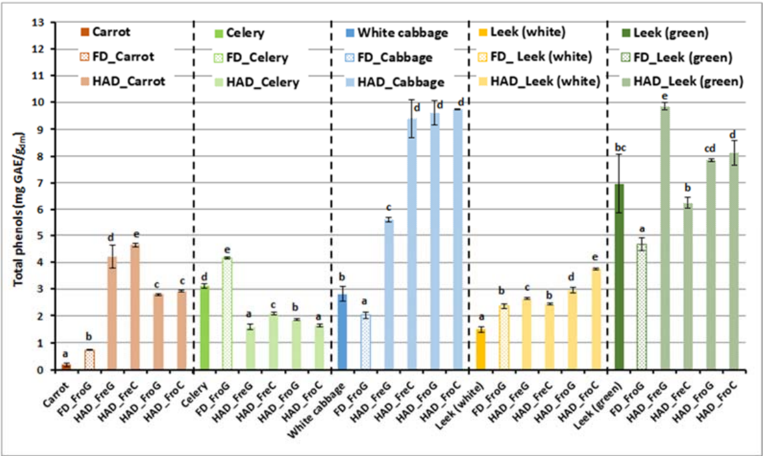
“…ects the granule swelling potential and the amount of amylose leaching out into the solution [37]. carrot waste powder has been evidenced in previous studies [5,6,27], with values ranging from 2 to 4.5 mg GAE per gram of dry matter and from 1.8 to 4.8 mol of TE per gram of dry matter, respectively.”
BackgroundInfluentialSelf-citationPhysical and Functional Properties of Sweet Potato Flour: Influence of Variety and Drying Method
Pereira, N., Ramos, C., Alves, M., Alves, V. D., Moldão‐Martins, M., & Abreu, M. (2025) · Molecules · doi:10.3390/molecules30081846 · Cited by 22
“This valorisation not only enhances food security by promoting a stable and diversified supply but also improves the economic viability of SP production [2].”
Malenica, D., & Bhat, R. (2020) · EMU DSpace · doi:10.15159/ar.20.086 · Cited by 31
“This causes serious environmental pollution, as they are easily perishable due to their high moisture content, which leads to microbiological contamination (Banerjee et al., 2017; Plazzota et al., 2017, Pham Van et al., 2018; Coman et al., 2019; Bas-Bellver et al., 2020).”
BackgroundUltrasound-Assisted Vacuum Impregnation as a Strategy for the Management of Potato By-Products
Mierzwa, D., Szadzińska, J., Radziejewska‐Kubzdela, E., & Biegańska‐Marecik, R. (2021) · Sustainability · doi:10.3390/su13063437 · Cited by 13
“The re-use by-products from food processing and re-introducing them in the production cycle [4] is a strategy that is worth considering for the development of more sustainable technologies.”
BackgroundCirrincione, F., Ferranti, P., Ferrara, A., & Romano, A. (2024) · Food Research International · doi:10.1016/j.foodres.2024.114422 · Cited by 15
Beneficial Effects of Standardized Extracts from Wastes of Red Oranges and Olive Leaves
Burò, I., Consoli, V., Castellano, A., Vanella, L., & Sorrenti, V. (2022) · Antioxidants · doi:10.3390/antiox11081496 · Cited by 13
Alzubi, E., Kassem, A., Melkonyan, A., & Noche, B. (2023) · Resources Conservation & Recycling Advances · doi:10.1016/j.rcradv.2023.200199 · Cited by 18
Malenica, D., Maciel, L. S., Herodes, K., Kass, M., & Bhat, R. (2024) · Sustainability · doi:10.3390/su16072765 · Cited by 11
Sustainable Development of Apple Snack Formulated with Blueberry Juice and Trehalose
Castagnini, J. M., Tappi, S., Tylewicz, U., Romani, S., Rocculi, P., & Rosa, M. D. (2021) · Sustainability · doi:10.3390/su13169204 · Cited by 10
“The re-use of by-products from food processing and their re-introduction in the production cycle [5] is a strategy that is worth considering for the development of more sustainable technologies [6].”
BackgroundMartínez-Martí, J., Panušková, K., Larrea, V., Bleha, R., Quiles, A., & Hernando, I. (2023) · Food Structure · doi:10.1016/j.foostr.2023.100346 · Cited by 11
Bas-Bellver, C., Barrera, C., Betoret, N., Seguí, L., & Harasym, J. (2024) · LWT · doi:10.1016/j.lwt.2024.117008 · Cited by 9
Self-citationGluten-Free Sweet Potato Flour: Effect of Drying Method and Variety on the Quality and Bioactivity
Pereira, N., Ramos, C., Alves, M., Alves, V. D., Roseiro, L. C., Vida, M., Moldão‐Martins, M., & Abreu, M. (2024) · Molecules · doi:10.3390/molecules29235771 · Cited by 10
Duarte, S., Puchades, A., Jiménez‐Hernández, N., Betoret, E., Gosalbes, M. J., & Betoret, N. (2023) · Antioxidants · doi:10.3390/antiox12061229 · Cited by 11
“The combination of grinding and dehydration has been shown to be a suitable processing method for the production of stable powdered ingredients with interesting industrial applications [7].”
BackgroundSelf-citationBas-Bellver, C., Barrera, C., & Seguí, L. (2024) · Foods · doi:10.3390/foods13223585 · Cited by 16
“The impact of grinding intensity, as well as freeze–thaw pretreatment, have already been evaluated in previous studies [10,11].”
InfluentialSelf-citationKumari, P., Mehta, A., Sehgal, R., Ray, R. C., & Gupta, R. (2022) · Springer eBooks · doi:10.1007/978-981-16-9527-8_10 · Cited by 9
de Almeida, G. D. Á., Aguiar, M. F., & Jugend, D. (2021) · Revista Produção Online · doi:10.14488/1676-1901.v21i3.4321 · Cited by 11
Project management and circular economy in agribusiness: A systematic literature review
Dalto, J. L., da Silva, L. F., Penha, R., & Bizarrias, F. S. (2023) · Waste Management & Research The Journal for a Sustainable Circular Economy · doi:10.1177/0734242x231219643 · Cited by 10
“Bas-Bellver et al. (2020) in this same line demonstrated the collaboration between industry and university.”
Challenges and Prospects of Tackling Food Loss and Wastes in the Circular Economy Context
Bhat, R., Sharma, M., Rätsep, R., Malenica, D., & Jõgi, K. (2023) · Springer eBooks · doi:10.1007/978-981-19-6454-1_2 · Cited by 9
Motti, P., Bastiaens, L., Geelen, D., & Mangelinckx, S. (2024) · Industrial crops and products (Print) · doi:10.1016/j.indcrop.2024.118848 · Cited by 5
Exploring the prebiotic potential of unpurified apple dietary fibre concentrate
Vaz, A. A., Bellí, G., Oms‐Oliu, G., Martín‐Belloso, O., & Odriozola‐Serrano, I. (2025) · LWT · doi:10.1016/j.lwt.2025.117608 · Cited by 5
Tokuyasu, K., Yamagishi, K., Matsuki, J., Nei, D., Sasaki, T., & Ike, M. (2021) · Journal of Applied Glycoscience · doi:10.5458/jag.jag.jag-2021_0009 · Cited by 5
Valorisation of asparagus pruning waste as a new ingredient to improve pasta quality properties
da Silva, D. S., Saraiva, B. R., Lazzari, A., Cestário, A. C. D. O., de Oliveira, M. C., Bruschi, M. L., Rosa, C. I. L. F., & Matumoto‐Pintro, P. T. (2023) · International Journal of Food Science & Technology · doi:10.1111/ijfs.16738 · Cited by 5
Hayes, M., Mohamedshah, Z., Corbin, S., Hoskin, R. T., Iorizzo, M., Lila, M. A., Neilson, A. P., & Ferruzzi, M. G. (2022) · Food & Function · doi:10.1039/d2fo00051b · Cited by 7
Bas-Bellver, C., Melero-Carnero, N., López-González, D., Barrera, C., Verdeguer, M., & Seguí, L. (2025) · Sustainability · doi:10.3390/su17010282 · Cited by 4
“The extraction procedure was performed in dark conditions for 1 h (horizontal stirrer, Magna Equipments S. L., model ANC10, Barcelona, Spain) [41].”
Self-citationFood Waste Upcycling and Applications: Circular Economy in Modern Food Industries
Zareie, Z., Moayedi, A. A., & Nooshkam, M. (2025) · Springer eBooks · doi:10.1007/978-3-031-91693-9_12 · Cited by 4
Candela, D., Preston, J., Fiore, C., Parisi, E., Garofalo, S. F., Demichelis, F., Fino, D., & Simone, E. (2025) · Applied Food Research · doi:10.1016/j.afres.2025.101285 · Cited by 1
Matei, E., Cosma, L., Râpă, M., Calotă, A.-S., Predescu, A. M., Stoica, A., & Coman, G. (2026) · Foods · doi:10.3390/foods15081432 · Cited by 3
Bonifacino, C., López, D. N., Palazolo, G. G., Panizzolo, L. A., & Abirached, C. (2024) · Journal of Food Science · doi:10.1111/1750-3841.17024 · Cited by 3
ROSPECTS FOR THE USE OF WILD BERRY PROCESSING PRODUCTS AS FUNCTIONAL FOOD INGREDIENTS
Demidova, E., & Самілик, М. М. (2023) · Food Science and Technology · doi:10.15673/fst.v17i4.2780 · Cited by 5
Kwak, S. A., Lee, J., & Joo, N. (2025) · CyTA - Journal of Food · doi:10.1080/19476337.2025.2502537 · Cited by 4
“Bas-Bellver et al. (2020) developed a method for producing functional powders from vegetable by-products, such as celery, carrots, cabbage, and leeks.”
Muñoz-Bas, C., Sayas‐Barberá, E., Pérez‐Álvarez, J. Á., Fernández‐López, J., & Viuda‐Martos, M. (2024) · Elsevier eBooks · doi:10.1016/b978-0-443-21873-6.00025-7 · Cited by 1
Benas, K., Karaaslan, M. A., & Arslan, Ö. Ç. (2024) · Ege Journal of Fisheries and Aquatic Sciences · doi:10.12714/egejfas.41.4.09 · Cited by 1
Assessment of the Chemical Properties and Resource Utilization Potential of Paprika Plant Residues
Ju, S. H., Kim, Y. J., Go, Y., Kim, E. J., Lee, J. G., Park, J. S., Kim, D., Lee, B. S., & Na, H. (2025) · Horticultural Science and Technology · doi:10.7235/hort.20250073 · Cited by 1
Bas-Bellver, C., Barrera, C., & Seguí, L. (2026) · Foods · doi:10.3390/foods15060985 · Cited by 1
“When received, carrot wastes were disrupted in a Thermomix ® food processor (Vorwerk, Madrid, Spain) at 10,000 rpm for 10 s to obtain pieces of about 5 mm [22], before they underwent the processes described below.”
Self-citationUdzu, R. A. F., Tetteh, A. Y., & Lowor, S. T. (2026) · Cogent Food & Agriculture · doi:10.1080/23311932.2026.2651461 · Cited by 1
Msacky, N. J., Ndaka, F. E., & Mgana, S. M. (2026) · Clean Technologies and Recycling · doi:10.3934/ctr.2026008 · Cited by 1
Functional and technological effects of vegetable powders in gluten-free formulations
Garzón, R., Espert, M., Salvador, A., & Rosell, C. M. (2026) · LWT · doi:10.1016/j.lwt.2026.119719 · Cited by 1
Mungkung, R. T., Saejew, K., Jaieim, P., Cheevaphantusri, T., Gheewala, S. H., & Jakrawatana, N. (2026) · Circular Economy and Sustainability · doi:10.1007/s43615-026-01086-9 · Cited by 1
Valorization of Persimmon (Diospyros kaki) Wastes to Be Used as Functional Ingredients
Seguí, L., Bas-Bellver, C., Barrera, C., & Betoret, N. (2022) · Springer eBooks · doi:10.1007/978-3-030-84436-3_32 · Cited by 4
Self-citationSECTION 21. POWDERS FROM DERIVATIVES OF WILD PLANT FRUIT PROCESSING
Самілик, М. М., & Demidova, E. (2023) · doi:10.30525/978-9934-26-328-6-21 · Cited by 1
ПЕРСПЕКТИВНИЙ СПОСІБ ВИКОРИСТАННЯ ВІДХОДІВ ВОЛОСЬКОГО ГОРІХА
Тюрікова, І. С., Прибильський, В. Л., Іщенко, В. Л., Кайнаш, А. П., & Будник, Н. В. (2021) · Journal of Chemistry and Technologies · doi:10.15421/jchemtech.v29i2.213567
López-Mejía, N., Posada, N. B. M., & García, H. F. L. (2022) · Revista Mutis · doi:10.21789/22561498.1810 · Cited by 2
Cabbage Core Powder as a New Food Material for Paste Preparation with “Nata Puree”
Tokuyasu, K., Yamagishi, K., Ando, Y., & Shirai, N. (2022) · Journal of Applied Glycoscience · doi:10.5458/jag.jag.jag-2022_0003
Vegetable research matters for Africa
Wopereis, M. C. S., & Kuo, C. G. (2022) · Acta Horticulturae · doi:10.17660/actahortic.2022.1348.1
Microwaves Application to Food and Food Waste Processing
Barrera, C., Fito, P. J., Castro‐Giráldez, M., Betoret, N., & Seguí, L. (2022) · Wiley eBooks · doi:10.1002/9781119776376.ch6
Self-citationВИБІР ФУНКЦІОНАЛЬНИХ КОМПОНЕНТІВ З РОСЛИННОЇ СИРОВИНИ ТА ЗАСТОСУВАНЯ ЇХ В РЕЦЕПТУРАХ ШОКОЛАДНИХ МАС
Земелько, М. Л., & Bukhkalo, S. (2023) · Journal of Chemistry and Technologies · doi:10.15421/jchemtech.v31i3.284837 · Cited by 3
Development of Edible Food Wrappers: An Eco-Friendly Approach Towards Sustainability
Basharat, Z., Ahmed, D., Tariq, M. R., Ali, S. W., & Pervaiz, M. U. (2024) · Advances in environmental engineering and green technologies book series · doi:10.4018/979-8-3693-0819-6.ch009 · Cited by 1
Sustainable materials in food packaging and preservation: an introduction
Swargiary, B., Patel, S., Chutia, H., Nath, P., Bora, R., & Ghosh, T. (2024) · Elsevier eBooks · doi:10.1016/b978-0-443-13567-5.00001-0 · Cited by 1
Greening Urban Landscapes: A Look at Singapore’s Urban Farming for Malaysia’s Inspiration
Suhaidi, U. S., & Maimun, N. H. A. (2025) · Lecture notes in civil engineering · doi:10.1007/978-981-96-3804-8_34
Waste to Wealth: The Circular Economy for Agricultural and Food Waste
Ali, M., & Peerzada, H. A. (2025) · IntechOpen eBooks · doi:10.5772/intechopen.1010848 · Cited by 1
Enhancing the Sustainability of Biomass Fuel by Co-Pelletizing Water Hyacinth with BambooPreprint
Kirasamutranon, K., & Thanglerdsumpan, W. (2025) · SSRN Electronic Journal · doi:10.2139/ssrn.5385296
Martínez, E., Martínez‐Navarro, M. E., Pardo, J. E., Panadero, I. G., & Álvarez‐Ortí, M. (2026) · LWT · doi:10.1016/j.lwt.2026.119211
Exploring Thematic Diversity and Evolution of Circular Economy using BERTopic Modeling
Kamani, S. J., Vyas, B., Pattnaik, D., Kumari, R., & Pandey, S. (2026) · Circular Economy and Sustainability · doi:10.1007/s43615-026-00959-3 · Cited by 1
Thanglerdsumpan, W., & Kirasamutranon, K. (2026) · Sustainable Chemistry for Climate Action · doi:10.1016/j.scca.2026.100207
Tiţa, O., Moga, M., Tița, M. A., Ognean, M., Georgescu, C., Frum, A., Florea, A. C., & Constantinescu, M. A. (2026) · Frontiers in Nutrition · doi:10.3389/fnut.2026.1809167
“In other countries, such as France (17–19), Canada (20), and China (21), these fruits are processed (22).”
Bas-Bellver, C., Barrera, C., & Seguí, L. (2026) · Applied Sciences · doi:10.3390/app16209988
Self-citationThe Role of Food Waste in Resource Recovery and Circular Economy: Advocacy and Implementation
Rezaeisabzevar, Y., & Golzary, A. (2026) · Springer eBooks · doi:10.1007/978-3-032-23993-8_12
Metadata
- Authors
- Bas-Bellver, C., Barrera, C., Betoret, N., & Seguí, L.
- Affiliations
- Universitat Politècnica de València (ES)
- Corresponding author
- Seguí, Lucía
- Venue
- Sustainability
- Publisher
- MDPI AG
- Published
- 2020-02-11
- Volume
- 12
- Issue
- 4
- Pages
- 1284
- ISSN
- 2071-1050 (ISSN-L)
- OpenAlex
- W3004508535
- Cited by
- 87
- References
- 30
- Citations by year
- 2026: 12 · 2025: 10 · 2024: 16 · 2023: 16 · 2022: 14 · 2021: 16 · 2020: 3
- FWCI
- 7.95
- Type
- journal article
- Language
- en
- Open access
- gold
- dx.doi.org
- Licence
- Locations
- Sustainability (publishedVersion, cc-by)
- RePEc: Research Papers in Economics (submittedVersion)
- DOAJ (DOAJ: Directory of Open Access Journals) (submittedVersion, cc-by-sa)
- RiuNet (Universitat Politècnica de València) (submittedVersion, cc-by-nc-nd)
- Funders
- Generalitat Valenciana (AGCOOP_D/2018/025)
- Topics
- Life Sciences › Agricultural and Biological Sciences › Food Science › Food Drying and Modeling
- Life Sciences › Agricultural and Biological Sciences › Food Science › Microencapsulation and Drying Processes
- Life Sciences › Agricultural and Biological Sciences › Food Science › Agricultural and Biological Research
- Keywords
- plant waste valorization, agri-food cooperatives, functional food ingredients, vegetable powders, hot air drying, freeze-drying, antioxidant activity, water activity, storage stability, carrot, leek, celery, cabbage, natural preservatives, food waste, circular economy
About these checks
Registry, retraction, Cites and statistics results are computed, not judged, with one exception: a printed reference that no index lists is read once by a model before it counts as a citation error. Claims are extracted by a model and kept only when their quote appears verbatim in the text; each cited source is then checked, with a model’s help, for whether it says what the claim relies on. Those verdicts can be wrong — read the claim’s quote and the cited source before relying on one.
Statistics and arithmetic are recomputed, not judged.
Confidence bands are shown only for fields calibrated on our annotated test set. None is calibrated yet, so no band is shown.
What counts as a claim ›How we measure confidence ›How we check this ›
Are you an author, or do you see a problem with this page? Request a review
Data sources
Bibliographic data: Semantic Scholar, OpenAlex, Crossref.
Contains information from the Semantic Scholar Academic Graph Datasets, made available under the ODC Attribution License (ODC-BY 1.0).
Semantic Scholar’s data is described in: Kinney, R., et al. (2023). The Semantic Scholar Open Data Platform. arXiv:2301.10140.
