

Turning Agri-Food Cooperative Vegetable Residues into Functional Powdered Ingredients for the Food Industry
Open accessThe DOI matches its Crossref record; 30 of the 30 references it cites were found in a registry or an index.
Abstract
Current food transformation processes must face the food waste issue by developing valorization processes to reintroduce by-products in the economic cycle and contribute to circular economy, generating social and economic value, and ensuring permanence of agricultural and rural activities. In the present paper, the results of a collaboration project between a regional agri-food cooperative and university are summarized. The project aimed to revalorize a series of vegetable wastes (carrot, leek, celery, and cabbage) from the fresh and ready-to-eat lines of the cooperative, by producing functional powders to be used as functional food ingredients. Vegetables residues were successfully transformed into functional ingredients by hot air drying or freeze-drying, and variables such as storage conditions and grinding intensity prior to drying were considered. Twenty-five vegetable powders were obtained and characterized in terms of physicochemical and antioxidant properties. Results showed that drying (mainly hot air drying) allowed obtaining stable powders, with very low water activity values, and a significantly increased functionality. Vegetable waste powders could be used in the food industry as coloring and flavoring ingredients, or natural preservatives, or either be used to reformulate processed foods in order to improve their nutritional properties.
Overview
The claims and statistics of this paper haven’t been checked yet.
Free: it reads the open-access text and checks the first 5 claims that cite a source we can check. Create a free account to check every claim.
Integrity signals
Registry
Cites
Statistics
Figures
Verification
Claims the paper makes
The claims and statistics of this paper haven’t been checked yet.
Free: it reads the open-access text and checks the first 5 claims that cite a source we can check. Create a free account to check every claim.
Claims other papers make about this one
Each is checked against this paper’s own text: does it say what the citing paper says it does?
In the citing paper
“In addition, the use of vegetable by-products in the food industry offers a real opportunity to improve human health through the reformulation of processed foods as part of the FAO concept of “Ensure healthy lives and promote well-being for all at all ages” [84,130].”
From From Industrial Food Waste to Bioactive Ingredients: A Review on the Sustainable Management and Transformation of Plant-Derived Food Waste (2023) · cites this paper as [130]
Self-check
Percentages, sums and reported differences re-computed from the paper’s own numbers.
The self-check needs the paper’s full text.
Citations
Cites
Antioxidant activity applying an improved ABTS radical cation decolorization assay
Re, R., Pellegrini, N., Proteggente, A., Pannala, A., Yang, M., & Rice-Evans, C. (1999) · Free Radical Biology and Medicine · doi:10.1016/s0891-5849(98)00315-3 · Cited by 26,165
Use of a Free Radical Method to Evaluate Antioxidant Activity
Brand-Williams, W., Cuvelier, M. E., & Berset, C. (1995) · LWT - Food Science and Technology · doi:10.1016/s0023-6438(95)80008-5 · Cited by 25,994 · cited 1×
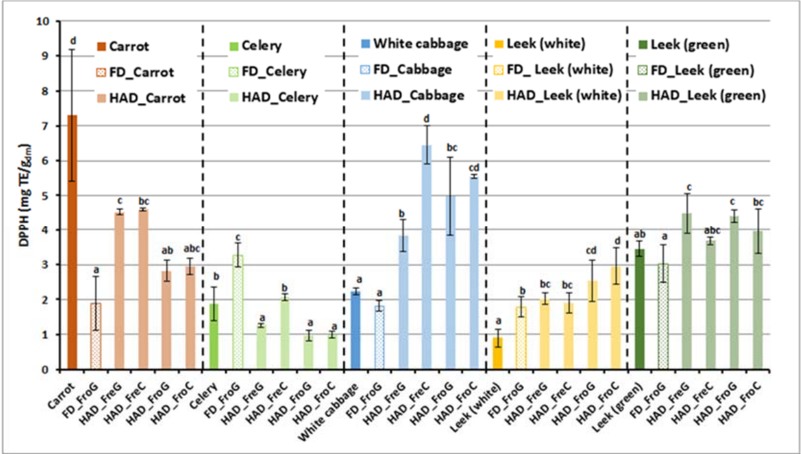
“[20], which measures the change in color of a DPPH‐methanol solution when reacting with the sample.”
BackgroundSingleton, V. L., Orthofer, R., & Lamuela-Raventós, R. M. (1999) · Methods in Enzymology · doi:10.1016/s0076-6879(99)99017-1 · Cited by 19,125 · cited 1×
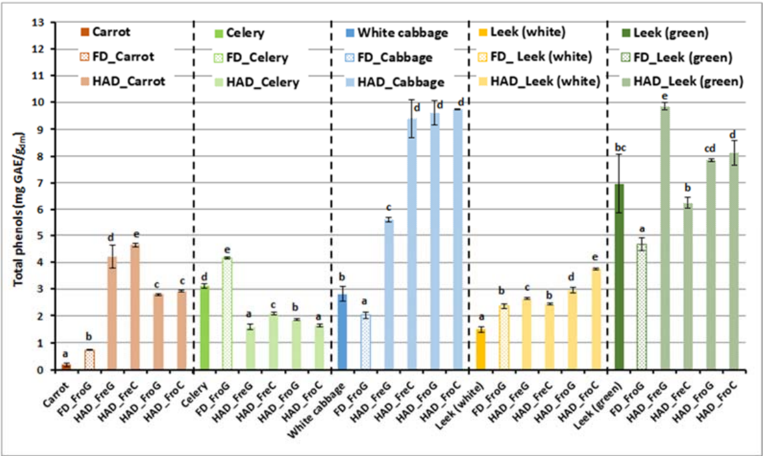
“Total phenolic content of samples was determined with the Folin–Ciocalteau method [18].”
MethodFruit and Vegetable Waste: Bioactive Compounds, Their Extraction, and Possible Utilization
Sagar, N. A., Pareek, S., Sharma, S., Yahia, E. M., & Lobo, M. G. (2018) · Comprehensive Reviews in Food Science and Food Safety · doi:10.1111/1541-4337.12330 · Cited by 1,237
Current options for the valorization of food manufacturing waste: a review
Mirabella, N., Castellani, V., & Sala, S. (2014) · Journal of Cleaner Production · doi:10.1016/j.jclepro.2013.10.051 · Cited by 1,166 · cited 3×
“Results are the mean of five replicates and are given as equivalent volume diameter D[4,3] and surface area mean diameter D[3,2], together with the distribution percentiles d10, d50, and d90.”
BackgroundMethodLin, C. S. K., Pfaltzgraff, L. A., Herrero-Davila, L., Mubofu, E. B., Abderrahim, S., Clark, J. H., Koutinas, A. A., Kopsahelis, N., Stamatelatou, K., Dickson, F., et al. (2013) · Energy & Environmental Science · doi:10.1039/c2ee23440h · Cited by 1,137 · cited 1×
“The need for reducing the generation of food wastes and developing processes that allow their reuse by re‐introducing the wastes or their components in the productive cycle has been discussed during years [8], but it still challenges all the agents involved.”
BackgroundChemical composition, functional properties and processing of carrot—a review
Sharma, K. D., Karki, S., Thakur, N. S., & Attri, S. (2012) · Journal of Food Science and Technology · doi:10.1007/s13197-011-0310-7 · Cited by 708 · cited 1×
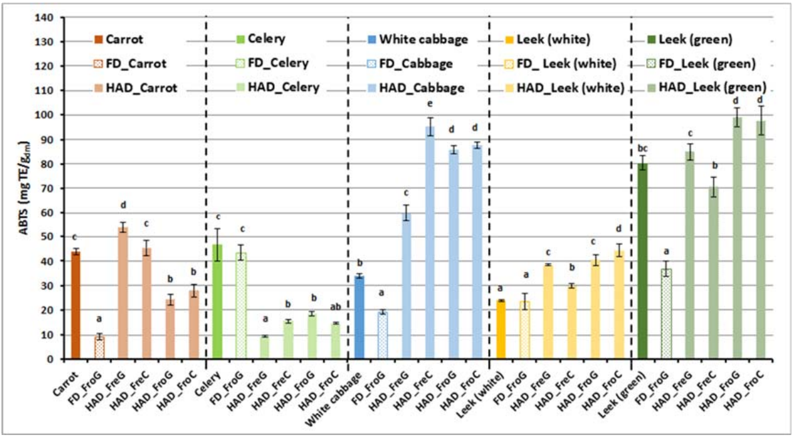
“This difference with the previous analysis (phenols and flavonoids) was most probably due to carotenoids, one of the main bioactive compounds in carrots that exhibited significant AO activity, but are not detected by the previous methods [29,30].”
ResultAgro-industrial potential of exotic fruit byproducts as a source of food additives
Ayala-Zavala, J. F., Vega-Vega, V., Rosas-Domínguez, C., Palafox-Carlos, H., Villa-Rodriguez, J. A., Siddiqui, M. W., Dávila-Aviña, J. E., & González-Aguilar, G. A. (2011) · Food Research International · doi:10.1016/j.foodres.2011.02.021 · Cited by 616 · cited 1×
“In addition, agroindustrial wastes (such as seeds, peels, or pulp) generated in the different steps of the processing chains, present a high content of bioactive compounds, often even higher than that of the whole fruit [9,10].”
BackgroundFood and Agricultural Organization of the United Nations.
Wu Leung, W. T. (1962) · Journal of AOAC INTERNATIONAL · doi:10.1093/jaoac/45.2.508a · Cited by 535
Luximon-Ramma, A., Bahorun, T., Soobrattee, M. A., & Aruoma, O. I. (2002) · Journal of Agricultural and Food Chemistry · doi:10.1021/jf0201172 · Cited by 476 · cited 1×
“The colorimetric method of aluminium chloride [19] was applied to determine total flavonoid content of samples.”
MethodEffects of drying and grinding in production of fruit and vegetable powders: A review
Karam, M. C., Petit, J., Zimmer, D., Baudelaire Djantou, E., & Scher, J. (2016) · Journal of Food Engineering · doi:10.1016/j.jfoodeng.2016.05.001 · Cited by 449 · cited 1×
“Fruit and vegetable powders have become a new way of consuming these products, which has gain importance along years [11,14,15].”
BackgroundA review of new directions in managing fruit and vegetable processing by-products
Majerska, J., Michalska, A., & Figiel, A. (2019) · Trends in Food Science & Technology · doi:10.1016/j.tifs.2019.03.021 · Cited by 239 · cited 1×
“In addition, agroindustrial wastes (such as seeds, peels, or pulp) generated in the different steps of the processing chains, present a high content of bioactive compounds, often even higher than that of the whole fruit [9,10].”
BackgroundSun, T., Simon, P. W., & Tanumihardjo, S. A. (2009) · Journal of Agricultural and Food Chemistry · doi:10.1021/jf9001044 · Cited by 206 · cited 2×
“This difference with the previous analysis (phenols and flavonoids) was most probably due to carotenoids, one of the main bioactive compounds in carrots that exhibited significant AO activity, but are not detected by the previous methods [29,30].”
BackgroundResultKusznierewicz, B., Bartoszek, A., Wolska, L., Drzewiecki, J., Gorinstein, S., & Namieśnik, J. (2008) · LWT - Food Science and Technology · doi:10.1016/j.lwt.2007.02.007 · Cited by 175 · cited 1×
“In addition, more detailed information on specific bioactive compounds potentially present in the vegetable wastes and their powders, such as carotenoids in carrots [29], apigenin in celery [32], glucosinolates in white cabbage, [33] or sulfoxides in leek [34], would be convenient to know, to discriminate more precise…”
BackgroundBhandari, B., Bansal, N., Zhang, M., & Schuck, P. (2013) · Woodhead Publishing Limited eBooks · doi:10.1533/9780857098672 · Cited by 162
Goula, A. M., & Lazarides, H. N. (2015) · Journal of Food Engineering · doi:10.1016/j.jfoodeng.2015.01.003 · Cited by 158 · cited 3×
“Continuity of agricultural and rural activities requires the development of new processes for the valorization of food industrial residues in order to generate social and economic value [2,3].”
BackgroundMethodRana, S., Gupta, S., Rana, A., & Bhushan, S. (2015) · Food Science and Human Wellness · doi:10.1016/j.fshw.2015.10.001 · Cited by 135
Li, P., Jia, J., Zhang, D., Xie, J., Xue-shu, X., & Wei, D. (2014) · Food & Function · doi:10.1039/c3fo60273g · Cited by 110
Beyond sustainability. Transforming industrial zero-valued residues into increasing economic returns
Scheel, C. (2016) · Journal of Cleaner Production · doi:10.1016/j.jclepro.2016.05.018 · Cited by 100
Michalska-Ciechanowska, A., Wojdyło, A., Lech, K., Łysiak, G. P., & Figiel, A. (2016) · LWT · doi:10.1016/j.lwt.2016.12.008 · Cited by 94
AIR IMPINGEMENT DRYING CHARACTERISTICS AND QUALITY OF CARROT CUBES
Xiao, H., Gao, Z., LIN, H., & Yang, W. (2009) · Journal of Food Process Engineering · doi:10.1111/j.1745-4530.2008.00314.x · Cited by 88 · cited 2×
“Carrot residue is known to have a considerable rigid structure, as indicated previously, for which grinding may have favored the breakage of such structures and the release of the water retained inside [25].”
BackgroundJongaroontaprangsee, S., Tritrong, W., Chokanaporn, W., Methacanon, P., Devahastin, S., & Chiewchan, N. (2007) · International Journal of Food Properties · doi:10.1080/10942910601183619 · Cited by 84 · cited 1×
“Nevertheless, it must be taken into account that other important functional parameters such as fiber content may be affected by particle size [31], for which this parameter needs to be known before making a decision.”
BackgroundNeacsu, M., Vaughan, N. J., Raikos, V., Multari, S., Duncan, G., Duthie, G. G., & Russell, W. R. (2015) · Food Chemistry · doi:10.1016/j.foodchem.2015.01.128 · Cited by 75 · cited 2×
“There is a continuous growing interest in such food, leading to new products permanently appearing on the market, including those which may contain fruit and vegetable industrial wastes [11].”
BackgroundPhysicochemical and antioxidant properties of non‐refined sugarcane alternatives to white sugar
Seguí, L., Calabuig‐Jiménez, L., Betoret, N., & Fito, P. J. (2015) · International Journal of Food Science & Technology · doi:10.1111/ijfs.12926 · Cited by 67 · cited 1×
“This spectrophotometric procedure is especially influenced by the difference in absorbance between the major flavone in the sample and that one use as a reference value [28], although it is useful for comparison purposes.”
BackgroundSelf-citationJiang, H., Zhang, M., & Adhikari, B. (2013) · Elsevier eBooks · doi:10.1533/9780857098672.3.532 · Cited by 46 · cited 1×
“Fruit and vegetable powders have become a new way of consuming these products, which has gain importance along years [11,14,15].”
BackgroundConesa, C., Laguarda-Miró, N., Fito, P. J., & Seguí, L. (2019) · Waste and Biomass Valorization · doi:10.1007/s12649-019-00621-0 · Cited by 45 · cited 1×
“Present food transformation processes need not only to focus on proper waste management, but they also need to be rethought to contribute to circular economy through the valorization of by‐ products, which are reintroduced in the economic cycle [1].”
BackgroundSelf-citationBernaert, N., Clercq, H. D., Bockstaele, E. V., Loose, M. D., & Droogenbroeck, B. V. (2013) · Postharvest Biology and Technology · doi:10.1016/j.postharvbio.2013.06.010 · Cited by 34 · cited 1×
“In contrast, postharvest processing and storage can cause loss of antioxidants or formation of compounds with pro‐oxidant action, which may also lower the antioxidant capacity [27].”
BackgroundSerna‐Cock, L., Torres‐León, C., & Ayala-Aponte, A. A. (2015) · Información tecnológica · doi:10.4067/s0718-07642015000200006 · Cited by 30
Bernaert, N., Loose, M. D., Bockstaele, E. V., & Droogenbroeck, B. V. (2013) · Journal of the Science of Food and Agriculture · doi:10.1002/jsfa.6389 · Cited by 28 · cited 1×
“In addition, more detailed information on specific bioactive compounds potentially present in the vegetable wastes and their powders, such as carotenoids in carrots [29], apigenin in celery [32], glucosinolates in white cabbage, [33] or sulfoxides in leek [34], would be convenient to know, to discriminate more precise…”
BackgroundAlternation drying and grinding (ADG) technique: A novel approach for producing ripe mango powder
Djantou, E. B., Mbofung, C. M., Scher, J., Phambu, N., & Morael, J. D. (2011) · LWT · doi:10.1016/j.lwt.2011.01.022 · Cited by 22 · cited 1×
“[26], elucidating the interdependence of drying and milling results essential to obtain high‐quality powders, with proper nutritional and physicochemical characteristics.”
Background
Research works printed but not linked: 2
- 16. ORDEN 3 / 2018. Conselleria de Agricultura, Medio Ambiente, Cambio Clim á tico y Desarrollo Rural ; Comunitat: Valenciana, Spain, 2018; pp. 6510-6522. Available online: https: // www.dogv.gva.es / datos / 2018 / 02 / 09 / pdf / 2018\_1197.pdf (accessed on 10 December 2019).
- 24. Serna-Cock, L.; Torres-Le ó n, C.; Ayala-Aponte, A. Evaluation of food powders obtained from peels of mango (Mangifera indica) as sources of functional ingredients. Inf. Tecnol. 2015 , 26 , 41-50. [CrossRef]
Cited by
Towards Circular Economy in the Agri-Food Sector. A Systematic Literature Review
Esposito, B., Sessa, M. R., Sica, D., & Malandrino, O. (2020) · Sustainability · doi:10.3390/su12187401 · Cited by 337
“, rainwater harvesting tools [51], pelletization [52], Cornell Net Carbohydrate and Protein System [53], hot air drying or freeze-drying [54], solvent-based extraction and pressurized liquid extraction [55]); these represented 17.”
BackgroundCircular Economy Models in Agro-Food Systems: A Review
Hamam, M., Chinnici, G., Di Vita, G., Pappalardo, G., Pecorino, B., Maesano, G., & D’Amico, M. (2021) · Sustainability · doi:10.3390/su13063453 · Cited by 234
“[61] proposed a method for enhancing vegetable waste, such as carrots, leeks, celery, and cabbage, from fresh and ready-to-eat lines, aimed at the production of functional powders as functional food ingredients.”
MethodSustainable Agri-Food Systems: Environment, Economy, Society, and Policy
El Bilali, H., Strassner, C., & Ben Hassen, T. (2021) · Sustainability · doi:10.3390/su13116260 · Cited by 213
Hamed, I., Jakobsen, A. N., & Lerfall, J. (2022) · Comprehensive Reviews in Food Science and Food Safety · doi:10.1111/1541-4337.12870 · Cited by 195
Haque, F., Fan, C., & Lee, Y.-Y. (2023) · Journal of Cleaner Production · doi:10.1016/j.jclepro.2023.137873 · Cited by 179
Metadata
- Authors
- Bas-Bellver, C., Barrera, C., Betoret, N., & Seguí, L.
- Affiliations
- Universitat Politècnica de València (ES)
- Corresponding author
- Seguí, Lucía
- Venue
- Sustainability
- Publisher
- MDPI AG
- Published
- 2020-02-11
- Volume
- 12
- Issue
- 4
- Pages
- 1284
- ISSN
- 2071-1050 (ISSN-L)
- OpenAlex
- W3004508535
- Cited by
- 87
- References
- 30
- Citations by year
- 2026: 12 · 2025: 10 · 2024: 16 · 2023: 16 · 2022: 14 · 2021: 16 · 2020: 3
- FWCI
- 7.95
- Type
- journal article
- Language
- en
- Open access
- gold
- dx.doi.org
- Licence
- Locations
- Sustainability (publishedVersion, cc-by)
- RePEc: Research Papers in Economics (submittedVersion)
- DOAJ (DOAJ: Directory of Open Access Journals) (submittedVersion, cc-by-sa)
- RiuNet (Universitat Politècnica de València) (submittedVersion, cc-by-nc-nd)
- Funders
- Generalitat Valenciana (AGCOOP_D/2018/025)
- Topics
- Life Sciences › Agricultural and Biological Sciences › Food Science › Food Drying and Modeling
- Life Sciences › Agricultural and Biological Sciences › Food Science › Microencapsulation and Drying Processes
- Life Sciences › Agricultural and Biological Sciences › Food Science › Agricultural and Biological Research
- Keywords
- plant waste valorization, agri-food cooperatives, functional food ingredients, vegetable powders, hot air drying, freeze-drying, antioxidant activity, water activity, storage stability, carrot, leek, celery, cabbage, natural preservatives, food waste, circular economy
About these checks
Registry, retraction, Cites and statistics results are computed, not judged, with one exception: a printed reference that no index lists is read once by a model before it counts as a citation error. Claims are extracted by a model and kept only when their quote appears verbatim in the text; each cited source is then checked, with a model’s help, for whether it says what the claim relies on. Those verdicts can be wrong — read the claim’s quote and the cited source before relying on one.
Statistics and arithmetic are recomputed, not judged.
Confidence bands are shown only for fields calibrated on our annotated test set. None is calibrated yet, so no band is shown.
What counts as a claim ›How we measure confidence ›How we check this ›
Are you an author, or do you see a problem with this page? Request a review
Data sources
Bibliographic data: Semantic Scholar, OpenAlex, Crossref.
Contains information from the Semantic Scholar Academic Graph Datasets, made available under the ODC Attribution License (ODC-BY 1.0).
Semantic Scholar’s data is described in: Kinney, R., et al. (2023). The Semantic Scholar Open Data Platform. arXiv:2301.10140.
