

Induced plant secondary metabolites for phytopatogenic fungi control: a review
Open accessThe DOI matches its Crossref record; 115 of the 115 references it cites were found in a registry or an index.
Abstract
Pathogenic fungi constitute one of the main infectious agents in plants, causing alterations during developmental stages including post-harvest.Phytopathogenic fungi are controlled by synthetic fungicides; however, the use of these is progressively restricted due to both, the harmful effects of pesticides on the environment and human health and the appearance of highly resistant fungal strains.Therefore, there is a great demand for novel natural fungicides.Higher plants are rich source of bioactive secondary metabolites of wide variety such as tannins, terpenoids, saponins, alkaloids, flavonoids, and other compounds, reported to have in vitro antifungal properties.Thus, secondary metabolites with antifungal activity represent an alternative for achieving a sustainable control of phytopathogenic fungi and to reduce the heavy reliance of synthetic pesticides used to control them.Plant antifungal metabolites may be preformed inhibitors that are present constitutively in healthy plants (phytoanticipins), or they may be synthesized de novo in response to pathogen attack or another stress conditions (phytoalexins).These molecules may be used directly or considered as a precursor for developing better fungicidal molecules.This review presents a selection of antifungal agents induced in plants during fungal attack that can be potentially used for phytopathogenic fungi control in crops.
Overview
The claims and statistics of this paper haven’t been checked yet.
Free: it reads the open-access text and checks the first 5 claims that cite a source we can check. Create a free account to check every claim.
Integrity signals
Registry
Cites
Statistics
Figures
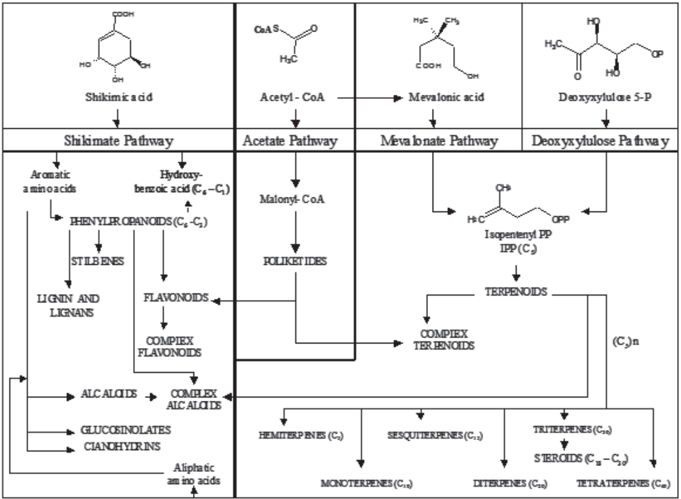
Verification
Claims the paper makes
The claims and statistics of this paper haven’t been checked yet.
Free: it reads the open-access text and checks the first 5 claims that cite a source we can check. Create a free account to check every claim.
Claims other papers make about this one
Each is checked against this paper’s own text: does it say what the citing paper says it does?
The cited source says what the claim attributes to it.
In the citing paper
“In order to achieve a sustainable control of phytopathogenic fungi and to lessen the heavy reliance on synthetic fungicides used to control them, secondary metabolites with antifungal activity constitute an alternative mechanisms.”
Self-check
Percentages, sums and reported differences re-computed from the paper’s own numbers.
The self-check needs the paper’s full text.
Citations
Cites
Plant Physiological Ecology: Field methods and instrumentation
(2000) · Springer eBooks · doi:10.1007/978-94-010-9013-1 · Cited by 3,294
Lambers, H., Chapin, F. S., & Pons, T. L. (2008) · Springer eBooks · doi:10.1007/978-0-387-78341-3 · Cited by 2,317
Natural products and plant disease resistance
Dixon, R. A. (2001) · Nature · doi:10.1038/35081178 · Cited by 1,790 · cited 2×
“…derived from plants may be preformed inhibitors that are present constitutively in healthy plants (phytoanticipins), or they may be synthesized de novo in response to pathogen attack or another stress conditions (phytoalexins) (Morrisey and Osbourn, 1999; Os- bourn, 1996, 1999; Dixon, 2001).”
BackgroundMedicinal natural products: A biosynthetic approach
(2001) · European Journal of Medicinal Chemistry · doi:10.1016/s0223-5234(01)01302-2 · Cited by 1,700
On the Trail of a Cereal Killer: Exploring the Biology of Magnaporthe grisea
Talbot, N. J. (2003) · Annual Review of Microbiology · doi:10.1146/annurev.micro.57.030502.090957 · Cited by 962 · cited 2×
“(Talbot, 2003).”
BackgroundLangcake, P., & Pryce, R. J. (1976) · Physiological Plant Pathology · doi:10.1016/0048-4059(76)90077-1 · Cited by 912 · cited 2×
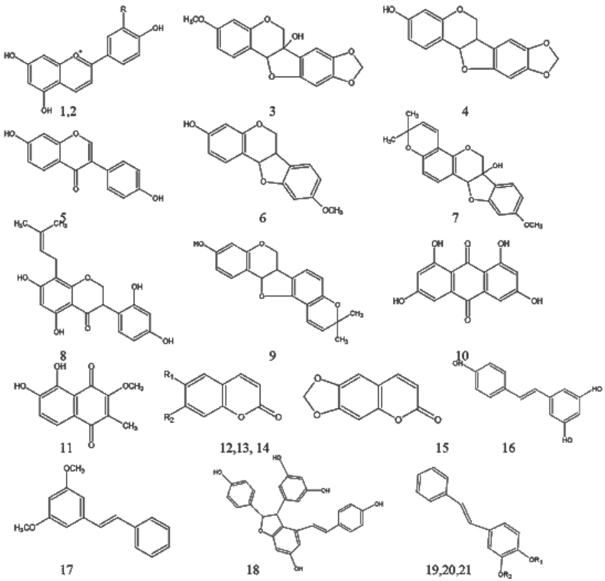
“After fungal attack of grapevine and berries leaves produce resveratrol (trans-3,5,4’-trihydroxystilbene, 16) (Langcake and Pryce, 1976) and related compounds which have antifungal activity toward a number of fungal pathogens, including Rhizopus stolonifer, Plasmopara viticola, and Botrytis cinerea ((Jeandet et al.”
BackgroundLuis Balcázar, J., Díaz, J., & Gabarró, J. (1995) · Texts in Theoretical Computer Science An EATCS Series · doi:10.1007/978-3-642-79235-9 · Cited by 866
Medicinal Natural Products: A Biosynthetic Approach
Kite, G., & Dewick, P. M. (1998) · Kew Bulletin · doi:10.2307/4114524 · Cited by 737
Preformed Antimicrobial Compounds and Plant Defense against Fungal Attack.
Osbourn, A. E. (1996) · The Plant Cell · doi:10.1105/tpc.8.10.1821 · Cited by 729 · cited 1×
“…derived from plants may be preformed inhibitors that are present constitutively in healthy plants (phytoanticipins), or they may be synthesized de novo in response to pathogen attack or another stress conditions (phytoalexins) (Morrisey and Osbourn, 1999; Os- bourn, 1996, 1999; Dixon, 2001).”
BackgroundJeandet, P., Douillet-Breuil, A.-C., Bessis, R., Debord, S., Sbaghi, M., & Adrian, M. (2002) · Journal of Agricultural and Food Chemistry · doi:10.1021/jf011429s · Cited by 646 · cited 6×
“…as chlorine at the 3-, 3,4-, or 3,5-positions of the stilbene ring) play an important role in the formation of charge transfer complexes, favoring contact and affinity with (membrane) proteins and acting as uncoupling agents of electron transport and photophosphorilation (Jeandet et al., 2002).”
BackgroundInfluentialDisease resistance results from foreign phytoalexin expression in a novel plant
Hain, R., Reif, H.-J., Krause, E., Langebartels, R., Kindl, H., Vornam, B., Wiese, W., Schmelzer, E., Schreier, P. H., Stöcker, R. H., et al. (1993) · Nature · doi:10.1038/361153a0 · Cited by 642 · cited 3×
“cinerea (Hain et al., 1993), to Phytophthora infestans (Thomzik et al.”
BackgroundFungal Resistance to Plant Antibiotics as a Mechanism of Pathogenesis
Morrissey, J. P., & Osbourn, A. E. (1999) · Microbiology and Molecular Biology Reviews · doi:10.1128/mmbr.63.3.708-724.1999 · Cited by 635 · cited 2×
“napus produce a group of sulfur-containing phytoalexins following infection with pathogens (Morrissey and Osbourn, 1999).”
BackgroundBiotechnology for the production of plant secondary metabolites
Verpoorte, R., Contin, A., & Memelink, J. (2002) · Phytochemistry Reviews · doi:10.1023/a:1015871916833 · Cited by 606 · cited 1×
“For these reasons, different biotechnological tools can be used to produce plant secondary metabolites of commercial interest (Verpoorte et al., 2002).”
BackgroundB IOLOGICAL C ONTROL IN G REENHOUSE S YSTEMS
Paulitz, T. C., & Bélanger, R. R. (2001) · Annual Review of Phytopathology · doi:10.1146/annurev.phyto.39.1.103 · Cited by 574 · cited 1×
“Nevertheless, this method has become less effective and more restricted due to the appearance of highly resistant isolates (Yourman and Jeffers, 1999) and to the negative environmental effects that derive from the indiscriminate use of these products (Paulitz and Bélanger, 2001).”
A survey of antifungal compounds from higher plants, 1982–1993
Grayer, R. J., & Harborne, J. B. (1994) · Phytochemistry · doi:10.1016/0031-9422(94)85005-4 · Cited by 489 · cited 5×
“Resveratrol have been also recognized as phytoalexin produced by Arachis and Trifolium (Leguminosae) and, Broussonetia (Moraceae), Festuca, Saccharum (Gramineae) and Veratrum (Liliaceae) (reviewed in Grayer and Harborne, 1994).”
BackgroundInfluentialRizvi, S. J. H., & Rizvi, V. (1992) · Springer eBooks · doi:10.1007/978-94-011-2376-1 · Cited by 461
Thomma, B. P. H. J., Nelissen, I., Eggermont, K., & Broekaert, W. F. (1999) · The Plant Journal · doi:10.1046/j.1365-313x.1999.00513.x · Cited by 432 · cited 1×
“Similarly, the infection of Arabidopsis thaliana leaves with both biotrophic and necrotrophic plant pathogens induce camalexin formation (Thomma et al., 1999, Roetschi et al., 2001).”
BackgroundAllelopathic Interactions and Allelochemicals: New Possibilities for Sustainable Weed Management
Singh, H. P., Batish, D. R., & Kohli, R. K. (2003) · Critical Reviews in Plant Sciences · doi:10.1080/713610858 · Cited by 427 · cited 3×
“One of the most important plant defences against fungal pathogens is the production of secondary metabolites (Singh et al., 2003).”
BackgroundKhripach, V. A., Zhabinskii, V. N., & de Groot, A. E. (1999) · Brassinosteroids · doi:10.1016/b978-012406360-0/50004-6 · Cited by 419
Plant Antimicrobial Agents and Their Effects on Plant and Human Pathogens
González-Lamothe, R., Mitchell, G., Gattuso, M., Diarra, M. S., Malouin, F., & Bouarab, K. (2009) · International Journal of Molecular Sciences · doi:10.3390/ijms10083400 · Cited by 413 · cited 6×
“…from the condensation of acetate units, those produced by modifications of aromatic acids, phenolic compounds such as phenolic acids, coumarins, stilbenes, flavonoids, isoflavonoids, quinones and xanthones (Grayer and Harborne, 1994; Morrisey and Osbourn, 1999; González-Lamothe et al., 2009).”
BackgroundInfluentialPhytoalexins, Stress Metabolism, and Disease Resistance in Plants
Kuc, J. (1995) · Annual Review of Phytopathology · doi:10.1146/annurev.phyto.33.1.275 · Cited by 402 · cited 1×
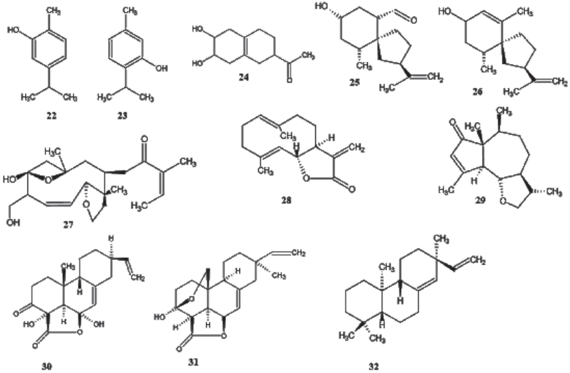
“The sesquiterpenes rishitin (24), lubimin (25) and, solavetivone (26) are the major phytoalexins that accumulate in potato tubers in response to fungal infection (Kúc 1995).”
BackgroundAllelopathy : Basic and applied aspects
Rizvi, S. J. H., & Rizvi, V. (1992) · Cited by 392
Plant-Microbe Interactions: Chemical Diversity in Plant Defense
Bednarek, P., & Osbourn, A. (2009) · Science · doi:10.1126/science.1171661 · Cited by 369 · cited 1×
“Furthermore, the induced response mechanism includes the trafficking and secretion of these compounds to the infection site (Bednarek and Osbourn, 2009).”
BackgroundBouchra, C., Achouri, M., Idrissi Hassani, L. M., & Hmamouchi, M. (2003) · Journal of Ethnopharmacology · doi:10.1016/s0378-8741(03)00275-7 · Cited by 359 · cited 2×
“The strong antifungal activity of carvacrol and thymol was also confirmed on the ubiquitous phytopathogenic fungi B. cinerea (Bouchra et al., 2003; Tsao and Zhou, 2000; Camele et al., 2012).”
BackgroundSynthesis of Phytoalexins in Sorghum as a Site-Specific Response to Fungal Ingress
Snyder, B. A., & Nicholson, R. L. (1990) · Science · doi:10.1126/science.248.4963.1637 · Cited by 345 · cited 2×
“In this specie, the accumulation of 3-deoxyanthocyanidins has been shown to be toxic to the pathogen Colletotrichum graminicola (Nicholson et al., 1987; Snyder and Nicholson, 1990).”
BackgroundAdrian, M., Jeandet, P., Veneau, J., Weston, L. A., & Bessis, R. (1997) · Journal of Chemical Ecology · doi:10.1023/b:joec.0000006444.79951.75 · Cited by 300 · cited 2×
“plasmic granulation of conidia, disruption of plasma membrane, or regrowth of a secondary or tertiary germ tube from the surviving conidium (Adrian et al., 1997).”
BackgroundGrayer, R. J., & Kokubun, T. (2001) · Phytochemistry · doi:10.1016/s0031-9422(00)00450-7 · Cited by 296 · cited 2×
“In addition, the same molecule can be Journal of Soil Science and Plant Nutrition a phytoalexin or a phytoanticipin in different organs of the same plant (Grayer and Kokubun, 2001).”
BackgroundKliebenstein, D. J., Rowe, H. C., & Denby, K. J. (2005) · The Plant Journal · doi:10.1111/j.1365-313x.2005.02508.x · Cited by 293 · cited 2×
“In addition, high concentrations of camalexin have been observed at the infection site of Alternaria alternata (Schuhegger et al., 2007) and in the proximity to the lesions induced Journal of Soil Science and Plant Nutrition by Botrytis species (Kliebenstein et al., 2005).”
BackgroundEmodin – a secondary metabolite with multiple ecological functions in higher plants
Izhaki, I. (2002) · New Phytologist · doi:10.1046/j.1469-8137.2002.00459.x · Cited by 287 · cited 1×
“…bark was highly effective against Journal of Soil Science and Plant Nutrition spore germination of 17 tested fungi species, including seven species of Alternaria and three species of Fusarium, and was also highly inhibitory against a pathogenic basidiomycete fungus Fomes annosus (Izhaki 2002).”
BackgroundGlawischnig, E. (2007) · Phytochemistry · doi:10.1016/j.phytochem.2006.12.005 · Cited by 281
Secondary Metabolites as Plant Traits: Current Assessment and Future Perspectives
Hadacek, F. (2002) · Critical Reviews in Plant Sciences · doi:10.1080/0735-260291044269 · Cited by 276 · cited 1×
“These consist of low-molecular weight compounds that are regarded as not essential for sustaining life, but as crucial for the survival of the producing organism (Hadacek, 2002).”
BackgroundMolecular basis of glycoalkaloid induced membrane disruption
Keukens, E. A. J., de Vrije, T., van den Boom, C., de Waard, P., Plasman, H. H., Thiel, F., Chupin, V., Jongen, W. M. F., & de Kruijff, B. (1995) · Biochimica et Biophysica Acta (BBA) - Biomembranes · doi:10.1016/0005-2736(95)00186-7 · Cited by 261 · cited 4×
“, 2010), is apparently due to their ability to complex with sterols in fungal membranes and to cause loss of membrane integrity (Keukens et al., 1995).”
BackgroundInfluentialMulabagal, V., Lee, C.-Y., Lo, S.-F., Nalawade, S. M., Lin, C. Y., & Tsay, H. (2004) · doi:10.7016/bbas.200401.0001 · Cited by 261 · cited 1×
“For these reasons, different biotechnological tools can be used to produce plant secondary metabolites of commercial interest (Verpoorte et al., 2002).”
BackgroundNeufeld, H. S. (1999) · Ecology · doi:10.1890/0012-9658(1999)080[1785:ppe]2.0.co;2 · Cited by 250
Mueller-Riebau, F., Berger, B., & Yegen, O. (1995) · Journal of Agricultural and Food Chemistry · doi:10.1021/jf00056a055 · Cited by 239 · cited 2×
“Journal of Soil Science and Plant Nutrition It has been described that the monoterpenes carvacrol (22) and thymol (23) are the main antifungal compounds found in Satureja thymbra and Thymbra spicata, respectively (Müller-Riebau et al., 1995).”
BackgroundTansley Review No. 86 Accumulation of phytoalexins: defence mechanism and stimulus response system
SMITH, C. J. (1996) · New Phytologist · doi:10.1111/j.1469-8137.1996.tb04506.x · Cited by 238 · cited 1×
“Phytoalexins are a group of structurally diverse molecules that are generally lipophilic and nonspecific in their antifungal activity (Smith, 1996; Morrisey and Osbourn, 1999; González-Lamothe et al., 2009).”
BackgroundAllelopathy: Current Status and Future Goals
Einhellig, F. A. (1994) · ACS Symposium Series · doi:10.1021/bk-1995-0582.ch001 · Cited by 238 · cited 2×
“These interactions include largely a negative effect on germination, growth, development, distribution and behaviour of other organisms (Rizvi and Rizvi 1992, Einhellig 1995).”
BackgroundBednarek, P., Schneider, B., Svatoš, A., Oldham, N. J., & Hahlbrock, K. (2005) · Plant Physiology · doi:10.1104/pp.104.057794 · Cited by 216 · cited 1×
“The camalexin biosynthesis is not restricted to leaves, but also to roots infected with the oomycete Phytium sylvaticum (Bednarek et al., 2005).”
BackgroundMomilactones, growth inhibitors from rice, oryza sativa L.
Kato, T., Kabuto, C., Sasaki, N., Tsunagawa, M., Aizawa, H., Fujita, K., Kato, Y., Kitahara, Y., & Takahashi, N. (1973) · Tetrahedron Letters · doi:10.1016/s0040-4039(01)87058-1 · Cited by 214 · cited 1×
“pounds were originally isolated and identified as plant growth inhibitors from rice seed (Kabuto et al., 1973).”
BackgroundFiori, A. C. G., Schwan‐Estrada, K. R. F., Stangarlin, J. R., Vida, J. B., Scapim, C. A., Cruz, M. E. S., & Pascholati, S. F. (2000) · Journal of Phytopathology · doi:10.1046/j.1439-0434.2000.00524.x · Cited by 206 · cited 2×
“This, in addition to the increasing demand by environmentally safe agrochemicals generated by alternative agriculture systems that promote the sustainable and healthy production of foods, has stimulated the development of research oriented to provide alternative control strategies, being the use of plants as a source…”
BackgroundHipskind, J. D., & Paiva, N. L. (2000) · Molecular Plant-Microbe Interactions® · doi:10.1094/mpmi.2000.13.5.551 · Cited by 199 · cited 1×
“The transformants showed an increase in the resistance to B. cinerea (Hain et al., 1993), to Phytophthora infestans (Thomzik et al., 1997), and to Phoma medicaginis (Hipskind and Paiva, 2000).”
BackgroundThe significance of stilbene phytoalexins in the Plasmopara viticola-grapevine interaction
Dercks, W., & Creasy, L. L. (1989) · Physiological and Molecular Plant Pathology · doi:10.1016/0885-5765(89)90043-x · Cited by 192 · cited 1×
“…of hydroxyphenyl groups can potentially lead to an increased biocidal activity in phenolics (Pezet and Pont, 1990). ε-viniferin (18) has an antifungal activity upon germination of B. cinerea conidia very similar to pterostilbene, which is the most toxic stilbene (Dercks and Creasy, 1989).”
BackgroundChemical and antimicrobial studies of monoterpene: Citral
Saddiq, A. A., & Khayyat, S. A. (2010) · Pesticide Biochemistry and Physiology · doi:10.1016/j.pestbp.2010.05.004 · Cited by 187 · cited 2×
“Moreover, the monoterpene citral has been reported as a potent antimicrobial compound against Penicillium italicum (Saddiq and Khayyat, 2010), B.”
BackgroundPhytoalexins from crucifers: synthesis, biosynthesis, and biotransformation
Pedras, M. S. C., Okanga, F. I., Zaharia, I. L., & Khan, A. Q. (2000) · Phytochemistry · doi:10.1016/s0031-9422(99)00494-x · Cited by 179 · cited 2×
“, 2003) and Erucastrum gallicum (Pedras and Ahiahonu, 2004), wild crucifer species appear to produce only typecamalexin metabolites (Pedras et al., 2000).”
BackgroundSTRUCTURE OF MEMBRANE HOLES IN OSMOTIC AND SAPONIN HEMOLYSIS
Seeman, P., Cheng, D., & Iles, G. H. (1973) · The Journal of Cell Biology · doi:10.1083/jcb.56.2.519 · Cited by 179 · cited 1×
“Electron microscopic analysis and electrical conductivity measurements suggest the formation of transmembrane pores (Seeman et al., 1973; Armah et al., 1999), although steroidal glycoalkaloids have been proposed to interfere with membrane integrity by extracting sterols from membranes (Keukens et…”
BackgroundKim, Y.-M., Lee, C.-H., Kim, H.-G., & Lee, H.-S. (2004) · Journal of Agricultural and Food Chemistry · doi:10.1021/jf049379p · Cited by 177 · cited 1×
“Such compounds are active against a limited number of specific target species, are biodegradable to non-toxic products, and are potentially suitable for their use as agrochemicals in integrated pest management programs (Kim et al., 2004).”
BackgroundRoetschi, A., Si‐Ammour, A., Belbahri, L., Mauch, F., & Mauch‐Mani, B. (2001) · The Plant Journal · doi:10.1046/j.1365-313x.2001.01148.x · Cited by 168
Thomzik, J. E., Stenzel, K., Stöcker, R., Schreier, P. H., Hain, R., & Stahl, D. J. (1997) · Physiological and Molecular Plant Pathology · doi:10.1006/pmpp.1997.0123 · Cited by 161 · cited 2×
“The transformants showed an increase in the resistance to B. cinerea (Hain et al., 1993), to Phytophthora infestans (Thomzik et al., 1997), and to Phoma medicaginis (Hipskind and Paiva, 2000).”
BackgroundIsolation and identification of a potent allelopathic substance in rice root exudates
Kato‐Noguchi, H., Ino, T., Sata, N., & Yamamura, S. (2002) · Physiologia Plantarum · doi:10.1034/j.1399-3054.2002.1150310.x · Cited by 154 · cited 1×
“Later it was demonstrated that at least momilactone B acts as an allelochemical, inhibiting seed germination of other plant species (Kato-Noguchi et al., 2002).”
BackgroundGoetz, G. H., Fkyerat, A., Metais, N., Kunz, M., Tabacchi, R., Pezet, R., & Pont, V. (1999) · Phytochemistry · doi:10.1016/s0031-9422(99)00351-9 · Cited by 153 · cited 3×
“More specifically, it has been described that some natural plant products can cause inhibition of cutinases and laccases production by phytopathogenic fungi (Goetz et al., 1999, Bostock et al., 1999).”
BackgroundArmah, C. N., Mackie, A. R., Roy, C., Price, K., Osbourn, A. E., Bowyer, P., & Ladha, S. (1999) · Biophysical Journal · doi:10.1016/s0006-3495(99)77196-1 · Cited by 153 · cited 4×
“Electron microscopic analysis and electrical conductivity measurements suggest the formation of transmembrane pores (Seeman et al., 1973; Armah et al., 1999), although steroidal glycoalkaloids have been proposed to interfere with membrane integrity by extracting sterols from membranes (Keukens et…”
BackgroundInfluentialNicholson, R. L., Kollipara, S. S., Vincent, J. R., Lyons, P. C., & Gómez, G. C. (1987) · Proceedings of the National Academy of Sciences · doi:10.1073/pnas.84.16.5520 · Cited by 150 · cited 2×
“In this specie, the accumulation of 3-deoxyanthocyanidins has been shown to be toxic to the pathogen Colletotrichum graminicola (Nicholson et al., 1987; Snyder and Nicholson, 1990).”
BackgroundFunctions and Biotechnology of Plant Secondary Metabolites
(2010) · Wiley-Blackwell eBooks · doi:10.1002/9781444318876 · Cited by 149 · cited 2×
“Terpenoids (mono, di, tri and sesquiterpenes) are frequently highly hydrophobic substances, stored in resin ducts, oil cells or glandular trichomes (Wink, 2010).”
BackgroundTsao, R., & Zhou, T. (2000) · Journal of Essential Oil Research · doi:10.1080/10412905.2000.9712057 · Cited by 138 · cited 3×
“The strong antifungal activity of carvacrol and thymol was also confirmed on the ubiquitous phytopathogenic fungi B. cinerea (Bouchra et al., 2003; Tsao and Zhou, 2000; Camele et al., 2012).”
BackgroundResistance to Benzimidazole and Dicarboximide Fungicides in Greenhouse Isolates of Botrytis cinerea
Yourman, L. F., & Jeffers, S. N. (1999) · Plant Disease · doi:10.1094/pdis.1999.83.6.569 · Cited by 136 · cited 1×
“Nevertheless, this method has become less effective and more restricted due to the appearance of highly resistant isolates (Yourman and Jeffers, 1999) and to the negative environmental effects that derive from the indiscriminate use of these products (Paulitz and Bélanger, 2001).”
Oryzalexin F, a diterpene phytoalexin from UV-irradiated rice leaves
Kato, H., Kodama, O., & Akatsuka, T. (1994) · Phytochemistry · doi:10.1016/s0031-9422(00)97064-x · Cited by 127
In Vitro Control of Post-Harvest Fruit Rot Fungi by Some Plant Essential Oil Components
Camele, I., Altieri, L., Martino, L. D., Feo, V. D., Mancini, E., & Rana, G. L. (2012) · International Journal of Molecular Sciences · doi:10.3390/ijms13022290 · Cited by 124 · cited 2×
“The strong antifungal activity of carvacrol and thymol was also confirmed on the ubiquitous phytopathogenic fungi B. cinerea (Bouchra et al., 2003; Tsao and Zhou, 2000; Camele et al., 2012).”
BackgroundNatural pesticides from plants.
Duke, S. O., Janick, J., & Simon, J. E. (1990) · Cited by 122
Suppression ofMonilinia fructicolacutinase production by peach fruit surface phenolic acids
Bostock, R. M., Wilcox, S. M., Wang, G., & Adaskaveg, J. E. (1999) · Physiological and Molecular Plant Pathology · doi:10.1006/pmpp.1998.0189 · Cited by 119 · cited 2×
“More specifically, it has been described that some natural plant products can cause inhibition of cutinases and laccases production by phytopathogenic fungi (Goetz et al., 1999, Bostock et al., 1999).”
BackgroundNatural product formation by plant cell biotechnology
Alfermann, A. W., & Petersen, M. (1995) · Plant Cell Tissue and Organ Culture (PCTOC) · doi:10.1007/bf00052176 · Cited by 116 · cited 1×
“Problems connected with gathering, storing (in special conditions), processing and disposal of huge amounts of biomass, connected with extraction of active substances from in vivo plants are also solved (Alfermann and Petersen, 1995; Calva-Calva et al., 2000; Vanisree et al., 2004).”
BackgroundPedras, M. S. C., Chumala, P., & Suchý, M. (2003) · Phytochemistry · doi:10.1016/s0031-9422(03)00441-2 · Cited by 109 · cited 2×
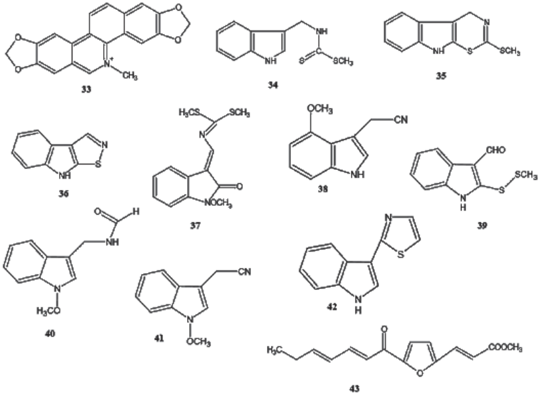
“In the last years four new related chemical structures have been reported: arvelexin (38) isolated from Thlaspi arvense (stinkweed) (Pedras et al., 2003), and isalexin, brassicanate A, and rutalexin isolated from B. napus, ssp. rapifera (rutabaga) (Pedras et al., 2004).”
BackgroundUltraviolet-Induced Accumulation of Phytoalexins in Rice Leaves
Kodama, O., Suzuki, T., Miyakawa, J., & Akatsuka, T. (1988) · Agricultural and Biological Chemistry · doi:10.1080/00021369.1988.10869067 · Cited by 105
Brassicanal C and two dioxindoles from cabbage
Monde, K., Sasaki, K., Shirata, A., & Takasugi, M. (1991) · Phytochemistry · doi:10.1016/s0031-9422(00)98224-4 · Cited by 102 · cited 2×
“, 1988) and brassicanal C (Monde et al., 1991).”
BackgroundTakasugi, M., Monde, K., Katsui, N., & Shirata, A. (1988) · Bulletin of the Chemical Society of Japan · doi:10.1246/bcsj.61.285 · Cited by 102 · cited 1×
“Other known phytoalexins in this specie are isalexin (Pedras et al., 2004), S-(−)spirobrassinin (Takasugi et al., 1987; Kutschy et al., 2001), 1-methoxybrassitin (Takasugi et al., 1988) and brassicanal C (Monde et al., 1991).”
BackgroundTakasugi, M., Monde, K., Katsui, N., & Shirata, A. (1987) · Chemistry Letters · doi:10.1246/cl.1987.1631 · Cited by 95 · cited 1×
“Other known phytoalexins in this specie are isalexin (Pedras et al., 2004), S-(−)spirobrassinin (Takasugi et al., 1987; Kutschy et al., 2001), 1-methoxybrassitin (Takasugi et al., 1988) and brassicanal C (Monde et al., 1991).”
BackgroundPezet, R., & Pont, V. (1990) · Journal of Phytopathology · doi:10.1111/j.1439-0434.1990.tb04286.x · Cited by 95 · cited 4×
“Destruction of the conidium ends with the disruption of the plasma membrane (Pezet and Pont, 1990).”
BackgroundInfluentialAntimicrobial Phytoprotectants and Fungal Pathogens: A Commentary
Osbourn, A. (1999) · Fungal Genetics and Biology · doi:10.1006/fgbi.1999.1133 · Cited by 94 · cited 8×
“Although both, disease-resistant and –disease-susceptible plants may respond to pathogen attack by producing phytoalexins, these compounds generally accumulate more rapidly at high levels in resistant plants (Morrisey and Osbourn, 1999).”
BackgroundInfluentialExploitation of allelochemicals in improving crop productivity
Rizvi, S. J. H., & Rizvi, V. (1992) · Springer eBooks · doi:10.1007/978-94-011-2376-1_25 · Cited by 89 · cited 2×
“These interactions include largely a negative effect on germination, growth, development, distribution and behaviour of other organisms (Rizvi and Rizvi 1992, Einhellig 1995).”
BackgroundRegulatory variability of camalexin biosynthesis
Schuhegger, R., Rauhut, T., & Glawischnig, E. (2006) · Journal of Plant Physiology · doi:10.1016/j.jplph.2006.04.012 · Cited by 89 · cited 2×
“In addition, high concentrations of camalexin have been observed at the infection site of Alternaria alternata (Schuhegger et al., 2007) and in the proximity to the lesions induced”
BackgroundSerazetdinova, L., Oldach, K., & Lörz, H. (2005) · Journal of Plant Physiology · doi:10.1016/j.jplph.2004.11.005 · Cited by 86 · cited 2×
“Their expression in transgenic plants caused accumulation of novel stilbenes and improved disease resistance against two wheat-specific pathogens, P. recondita f. sp. tritici and S. nodorum Berk (Serazetdinova et al., 2005).”
BackgroundStudies on the Mode of Action of the Phytoalexin Phaseollin
VanEtten, H. D. (1971) · Phytopathology · doi:10.1094/phyto-61-1363 · Cited by 82
Pedras, M. S. C., & Jha, M. (2006) · Bioorganic & Medicinal Chemistry · doi:10.1016/j.bmc.2006.03.014 · Cited by 82 · cited 1×
“Brassinin (34) is of great interest in the interaction of crucifers with their fungal pathogens due to both its biological activity and as intermediary in the biosynthetic pathway of other relevant phytoalexins such as cyclobrassinin (35), brassilexin (36) and brassicanal A (Pedras and Jha, 2006).”
BackgroundCline, S. D., & Coscia, C. J. (1988) · PLANT PHYSIOLOGY · doi:10.1104/pp.86.1.161 · Cited by 76 · cited 1×
“Their synthesis is stimulated by both fungal elicitation and hormonal deprivation (Cline and Coscia, 1988).”
BackgroundWasalexins A and B, new phytoalexins from wasabi: Isolation, synthesis, and antifungal activity
Pedras, M. S. C., Sorensen, J. L., Okanga, F. I., & Zaharia, I. L. (1999) · Bioorganic & Medicinal Chemistry Letters · doi:10.1016/s0960-894x(99)00523-5 · Cited by 73 · cited 2×
“rapa) (Pedras and Sorensen, 1998; Pedras et al., 1999).”
BackgroundResveratrol Oxidation in Botrytis cinerea Conidia
Adrian, M., Rajaei, H., Jeandet, P., Veneau, J., & Bessis, R. (1998) · Phytopathology® · doi:10.1094/phyto.1998.88.5.472 · Cited by 73 · cited 1×
“Laccase-mediated oxidation of resveratrol by a number of enzymes has been described (Adrian et al., 1998).”
BackgroundPedras, M. S. C., Montaut, S., & Suchý, M. (2004) · The Journal of Organic Chemistry · doi:10.1021/jo049648a · Cited by 73
Pedras, M. S. C., & Ahiahonu, P. W. K. (2004) · Journal of Chemical Ecology · doi:10.1023/b:joec.0000048781.72203.6c · Cited by 71 · cited 2×
“, 2003) and Erucastrum gallicum (Pedras and Ahiahonu, 2004), wild crucifer species appear to produce only typecamalexin metabolites (Pedras et al.”
BackgroundBiochemical Changes in Secondary Metabolites in Wounded and Deteriorated Cassava Roots
Tanaka, Y., Data, E. S., Hirose, S., Taniguchi, T., & Uritani, I. (1983) · Agricultural and Biological Chemistry · doi:10.1080/00021369.1983.10865717 · Cited by 67
Antifungal Activity and Molecular Orbital Energies of Aldehyde Compounds from Oils of Higher Plants
Kurita, N., Miyaji, M., Kurane, R., Takahara, Y., & Ichimura, K. (1979) · Agricultural and Biological Chemistry · doi:10.1080/00021369.1979.10863805 · Cited by 65 · cited 2×
“Apparently, the antifungal actions of the aldehydes, including citral, are due to their capacities to form charge transfer complexes with electron donors as well as to their reactivity with SH groups (Kurita et al., 1979).”
BackgroundUltraviolet-induced accumulation of phytoalexins in rice leaves.
Kodama, O., Suzuki, T., Miyakawa, J., et al. (1988) · Agricultural and Biological Chemistry · doi:10.1271/bbb1961.52.2469 · Cited by 65 · cited 2×
“Specifically, the momilactones exhibit antifungal activity against M. grisea and only appear in rice leaves after infection (Kodama et al., 1988).”
BackgroundCucurbitacins protect cucumber tissue against infection by Botrytis cinerea
Bar-Nun, N., & Mayer, A. M. (1990) · Phytochemistry · doi:10.1016/0031-9422(90)80019-d · Cited by 63 · cited 2×
“cinerea (Bar-Nun and Mayer, 1990).”
BackgroundZhao, C. L., Cui, X. M., Chen, Y. P., & Quan, L. (2010) · Natural Product Communications · doi:10.1177/1934578x1000500736 · Cited by 63 · cited 2×
“, 1999), which despite acts mainly as phytoanticipins also can be induced (Zhao et al., 2010), is apparently due to their ability to complex with sterols in fungal membranes and to cause loss of membrane integrity (Keukens et al.”
BackgroundCotoras, M., Folch, C., & Mendoza, L. (2004) · Journal of Agricultural and Food Chemistry · doi:10.1021/jf030672j · Cited by 62 · cited 2×
“cinerea mycelium, suggesting that their effect is mainly by affecting membrane permeability (Cotoras et al., 2004).”
BackgroundIsolation and identification of piceatannol as a phytoalexin from sugarcane
Brinker, A., & Seigler, D. S. (1991) · Phytochemistry · doi:10.1016/0031-9422(91)83181-j · Cited by 59
Wharton, P. S., & Nicholson, R. L. (2000) · New Phytologist · doi:10.1046/j.1469-8137.2000.00600.x · Cited by 59
Three biologically active heliangolides from Helianthus annuus
Spring, O., Albert, K., & Hager, A. (1982) · Phytochemistry · doi:10.1016/0031-9422(82)85254-0 · Cited by 59 · cited 1×
“The sesquiterpene lactones, niveusin B (27), ethoxyniveusin B and, leptocarpin described from the different species of Helianthus, are among the most active fungicidal compounds (Spring et al., 1982).”
BackgroundPhytoalexin accumulation and antifungal compounds from the crucifer wasabi
Pedras, M. S. C., & Sorensen, J. L. (1998) · Phytochemistry · doi:10.1016/s0031-9422(98)00424-5 · Cited by 59 · cited 2×
“rapa) (Pedras and Sorensen, 1998; Pedras et al., 1999).”
BackgroundMalvone A, a phytoalexin found in Malva sylvestris (family Malvaceae)
Veshkurova, O. N., Golubenko, Z., Pshenichnov, E. A., Arzanova, I. A., Uzbekov, V. V., Султанова, Э. М., Salikhov, S. I., Williams, H. J., Reibenspies, J. H., Puckhaber, L. S., et al. (2006) · Phytochemistry · doi:10.1016/j.phytochem.2006.08.010 · Cited by 58
A review on bioactive compounds isolated from plants against plant pathogenic fungi
Yazdani, D. (2011) · Journal of Medicinal Plants Research · doi:10.5897/jmpr11.485 · Cited by 55 · cited 1×
“Moreover, some molecules can be synthesized by all plant tissues, whereas others are produced in a specific tissue or even cell-specific fashion (Yazdani et al., 2011).”
BackgroundPhytoalexin Accumulation in Colombian Bean Varieties and Aminosugars as Elicitors
Durango, D., Quiñones, W., Torres, F., Rosero, Y., Gil, J., & Echeverri, F. (2002) · Molecules · doi:10.3390/71100817 · Cited by 53
6,7-Dimethoxycoumarin, a citrus phytoalexin conferring resistance against Phytophthora gummosis
Afek, U., Sztejnberg, A., & Carmeli, S. (1986) · Phytochemistry · doi:10.1016/s0031-9422(00)81162-0 · Cited by 52
Espinosa-García, F. J., & Langenheim, J. H. (1991) · Biochemical Systematics and Ecology · doi:10.1016/0305-1978(91)90080-j · Cited by 48 · cited 2×
“cinerea (Espinosa-Garcia and Langenheim, 1991).”
BackgroundJejelowo, O. A., Conn, K. L., & Tewari, J. P. (1991) · Mycological Research · doi:10.1016/s0953-7562(09)80089-0 · Cited by 40 · cited 1×
“…sativa and C. bursa-pastoris to different Brassica pathogens including Alternaria brassicae has been associated with the production of camalexin as the major antifungal compound, as well as smaller quantities of a related compound, 6-methoxycamalexin (Jejelowo et al., 1991; Jimenez et al., 1997;).”
BackgroundIsolation and identification of six mansonones fromUlmus americana infected withCeratocystis ulmi
Dumas, M. T., Strunz, G. M., Hubbes, M., & Jeng, R. S. (1983) · Cellular and Molecular Life Sciences · doi:10.1007/bf01943121 · Cited by 40
Takasugi, M., Okinaka, S., Katsui, N., Masamune, T., Shirata, A., & Ohuchi, M. (1985) · Journal of the Chemical Society Chemical Communications · doi:10.1039/c39850000621 · Cited by 40 · cited 1×
“In addition, costunolide (28) and cichoralexin (29) have been also recognized as phytoalexins in lettuce (Takasugi et al., 1985) and chicory (Grayer and Harborne, 1994), respectively.”
BackgroundPhytoalexins produced in the leaves of Capsella bursa-pastoris (shepherd’s purse)
Jimenez, L. D., Ayer, W. A., & Tewari, J. P. (2005) · Phytoprotection · doi:10.7202/706124ar · Cited by 39 · cited 1×
“…sativa and C. bursa-pastoris to different Brassica pathogens including Alternaria brassicae has been associated with the production of camalexin as the major antifungal compound, as well as smaller quantities of a related compound, 6-methoxycamalexin (Jejelowo et al., 1991; Jimenez et al., 1997;).”
BackgroundPhytoalexin production in grapevine protoplasts during isolation and culture
Commun, K., Mauro, M.-C., Chupeau, Y., Boulay, M., Burrus, M., & Jeandet, P. (2003) · Plant Physiology and Biochemistry · doi:10.1016/s0981-9428(03)00025-1 · Cited by 38 · cited 3×
“…as a result of infection or stress treatment are, pterostilbenes (3,5-dimethoxy-4’-hydroxy stilbene) (17) and viniferins, in which resveratrol units are coupled together to produce compounds containing aryl dihydrobenzofuran units (Jeandet et al., 2002; Commun et al., 2003; Bala et al., 2000).”
BackgroundBiochemical changes in secondary metabolites in wounded and deteriorated cassava roots.
Tanaka, Y., Data, E. S., Hirose, S., et al. (1983) · Agricultural and Biological Chemistry · doi:10.1271/bbb1961.47.693 · Cited by 37
Antifungal activity of post-infectional metabolites from potato tubers
Harris, J. E., & Dennis, C. (1976) · Physiological Plant Pathology · doi:10.1016/0048-4059(76)90035-7 · Cited by 33
New modes of action of fungicides
Hewitt, G. (2000) · Pesticide Outlook · doi:10.1039/b006311h · Cited by 30 · cited 1×
“In fact, according to current estimates, almost 10 to 20% of staple foods and cash crops are destroyed by phytopathogenic fungi (Hewitt, 2000).”
BackgroundCoumarin glycosides from the roots ofAngelica dahurica
Kim, S. H., Kang, S. S., & Kim, C. M. (1992) · Archives of Pharmacal Research · doi:10.1007/bf02973988 · Cited by 29 · cited 2×
“…(14) is the main phytoalexin involved in induced defense mechanism of citrus against pathogens such as Phytophthora parasitica (Afek, et al., 1986), Guignardia citricarpa (De Lange et al., 1976), Penicillium digitatum (Kim et al., 1992) and Diaporthe citri (Arimoto et al., 1986).”
BackgroundCis ε-viniferin: A New Antifungal Resveratrol Dehydrodimer from Cyphostemma crotalarioides Roots
Bala, A. E., Kollmann, A., Ducrot, P., Majira, A., Kerhoas, L., Leroux, P., Delorme, R., & Einhorn, J. (2000) · Journal of Phytopathology · doi:10.1046/j.1439-0434.2000.00071.x · Cited by 26 · cited 1×
“…as a result of infection or stress treatment are, pterostilbenes (3,5-dimethoxy-4’-hydroxy stilbene) (17) and viniferins, in which resveratrol units are coupled together to produce compounds containing aryl dihydrobenzofuran units (Jeandet et al., 2002; Commun et al., 2003; Bala et al., 2000).”
BackgroundIto, S., Nagata, A., Kai, T., Takahara, H., & Tanaka, S. (2005) · Physiological and Molecular Plant Pathology · doi:10.1016/j.pmpp.2005.07.002 · Cited by 21 · cited 2×
“complexes result in pore formation and loss of membrane integrity (Ito et al., 2005).”
BackgroundThe effect of post-infectional potato tuber metabolites and surfactants on zoospores of oomycetes
HARRIS, J. (1977) · Physiological Plant Pathology · doi:10.1016/0048-4059(77)90054-6 · Cited by 19
O, D. A. A., M, G. I. M., Lucía Afanador, K., Durango, D., & P., C. M. G. (2009) · Revista Vitae · Cited by 18
Effect of cucurbitacins on mRNA coding for laccase in Botrytis cinerea
Gonen, L., Viterbo, A., Cantone, F. A., Staples, R. C., & Mayer, A. M. (1996) · Phytochemistry · doi:10.1016/0031-9422(95)00988-4 · Cited by 18 · cited 2×
“This effect is because that cucurbitacin specifically reduced the amount of mRNA coding for laccase (Gonen et al., 1996).”
BackgroundARIMOTO, Y., Homma, Y., & Ohsawa, T. (1986) · 日本植物病理學會報 · doi:10.3186/jjphytopath.52.620 · Cited by 17 · cited 1×
“…(14) is the main phytoalexin involved in induced defense mechanism of citrus against pathogens such as Phytophthora parasitica (Afek, et al., 1986), Guignardia citricarpa (De Lange et al., 1976), Penicillium digitatum (Kim et al., 1992) and Diaporthe citri (Arimoto et al., 1986).”
BackgroundIsolation of Esculetin from Sweet Potato Roots with Black Rot
Minamikawa, T., Akazawa, T., & Uritani, I. (1962) · Nature · doi:10.1038/195726a0 · Cited by 15 · cited 1×
“The main constituents induced were identified as umbelliferone (12) and scopoletin (13), and the minor ones esculetin and the two ß-D-glucosides such as scopolin and skimminn (Uritani and Hoshiya, 1953; Minamikawa et al., 1962; Tanaka et al., 1983; Minamikawa et al., 1964).”
BackgroundBuzi, A., Chilosi, G., Timperio, A. M., Zolla, L., Rossall, S., & Magro, P. (2003) · UnitusOpen (Tuscia University) · doi:10.4454/jpp.v85i2.1018 · Cited by 13 · cited 1×
“The greater ability of B. fabae to colonize broad bean tissues seems to be related to its capacity to detoxify broad bean phytoalexins and to reduce their toxic effects (Buzi et al., 2003).”
BackgroundTwo Glucosides of Coumarin Derivatives in Sweet Potato Roots Infected by Ceratocystis Fimbriata
Minamikawa, T., Akazawa, T., & Uritani, I. (1964) · Agricultural and Biological Chemistry · doi:10.1080/00021369.1964.10858231 · Cited by 12
Phytopathological Chemistry of the Black-rotted Sweet Potato
Uritani, I., & HOSHIYA, I. (1953) · Nippon Nōgeikagaku Kaishi · doi:10.1271/nogeikagaku1924.27.161 · Cited by 7 · cited 1×
“These kind of effects have also been observed in fungal cells treated with isoflavonoid phytoalexins, such as phaseolin and keivitone (VanEtten and Bateman, 1971).”
BackgroundTamogami, S., MITANI, M., Kodama, O., & Akatsuka, T. (1993) · ChemInform · doi:10.1002/chin.199325225 · Cited by 6 · cited 1×
“1993, Tamogami et al., 1993) and, mansonones A-F synthezised in sapwood of Ulmus americana (Dumas et al., 1983).”
BackgroundSuchý, M., Kutschy, P., Monde, K., Goto, M., Harada, N., Takasugi, M., Dzurilla, M., & Balentová, E. (2001) · ChemInform · doi:10.1002/chin.200138216 · Cited by 3
Pedras, M. S. C., Montaut, S., & Suchý, M. (2004) · ChemInform · doi:10.1002/chin.200443222 · Cited by 3 · cited 3×
“In the last years four new related chemical structures have been reported: arvelexin (38) isolated from Thlaspi arvense (stinkweed) (Pedras et al., 2003), and isalexin, brassicanate A, and rutalexin isolated from B. napus, ssp. rapifera (rutabaga) (Pedras et al., 2004).”
BackgroundPlantas como biorreactores para la producción de biomoléculas y remoción de xenobióticos
Calva-Calva, G., García, F., Vargas, J. P., Juárez, V. M. M., Cervantes, S. S., & López Sánchez, C. (2002) · Avance y perspectiva · Cited by 2
Research works printed but not linked: 10
- [4]4. Agrios, G.N. 2004. Losses caused by plant diseases. p. 29-45. Plant Pathology. Elsevier, Oxford, UK.
- [22]22. Croteau, R., Kutchan, T., Lewis, N. 2000. Chapter 24: Natural products (secondary metabolites). In:
- [23]23. Buchanan, B., Gruissem, W., Joneas, R. (eds), Biochemistry and Molecular Biology of Plants, American Society of Plant Biologists, Rockville, MD, pp. 1250 -1268.
- [32]32. Engelmeier, D., Hadacek, F. 2006. Antifungal natural products: assays and applications. In: Rai, et al., (eds) Naturally occurring bioactive compounds, Elsevier Sci. Ltd. pp. 423-467.
- [39]39. Graham, T.L. 1995. Cellular biochemistry of phenyl- propanoids responses of soybean to infection by Phytophthora sojae. In: Daniel, M. and Purkay- astha, R.P. (Eds.), Handbook of Phytoalexin Me- tabolism and Action. Marcel Dekker, New York, pp. 85-116.
- [40]40. Graham, T.L., Graham, M.Y. 2000. Defense potentia- tion and competency, redox conditioning effects of salicylic acid and genistein. In: Keen, N. and Stacey, G. (Eds.). Plant-Microbe Interactions, Vol. 5. APS Press, St.
- [50]50. Inderjit, Weston, I.A. 2003. Root exudation: an over- view, In: Root Ecology, Ed. De Kroon and Visser EJW), Springer Verlag, Heidelberg, Germany. pp. 235-251.
- [62]62. Kindl, H. 2000. Interplay Botrytis-plant: Plant stilbene synthase gene promoters responsive to Botrytis- made compounds and Botrytis chaperones sensi- tive to plant stilbene phytoalexins. Presented at the XII th International Botrytis Symposium, Re- ims, France.
- [77]77. Nordlund, D.A. 1981. Semichemicals: A review of the terminology; Semiochemicals-their role in pest control, pp. 13-28; eds.
- [78]78. Nordlund, D.A., Jones, R.L., Lewis, W.J. New York: John, Wiley. 306 p.
Cited by
Recent Approaches towards Control of Fungal Diseases in Plants: An Updated Review
El-Baky, N. A., & Amara, A. A. A. F. (2021) · Journal of Fungi · doi:10.3390/jof7110900 · Cited by 186
“These natural fungicides, such as phytoanticipins and phytoalexins differ in their structure, molecular weight, functions, and classification [40].”
BackgroundDeresa, E. M., & Diriba, T. F. (2023) · Heliyon · doi:10.1016/j.heliyon.2023.e13810 · Cited by 142
Genetic manipulation of anti-nutritional factors in major crops for a sustainable diet in future
Duraiswamy, A., Nancy Mano Sneha, A., Sherina Jebakani, K., Selvaraj, S., Pramitha, L., Ramchander, S., Petchiammal, K. I., Sharmili, K. S., Thinakaran, J., Samundeswari, R., et al. (2023) · Frontiers in Plant Science · doi:10.3389/fpls.2022.1070398 · Cited by 109
“Saponins also act as a phytoalexin during fruit and tuber development in crops (Ribera and Zuñiga, 2012).”
BackgroundIn Vitro Antifungal Activity of Plant Extracts on Pathogenic Fungi of Blueberry (Vaccinium sp.)
Ceja, A. H., Loeza-Lara, P. D., Espinosa-García, F. J., García-Rodríguez, Y. M., Medina-Medrano, J. R., Gutiérrez-Hernández, G. F., & Ceja-Torres, L. F. (2021) · Plants · doi:10.3390/plants10050852 · Cited by 72
Bano, A., Qadri, T. A., Mahnoor, M., & Khan, N. (2023) · South African Journal of Botany · doi:10.1016/j.sajb.2023.05.049 · Cited by 60
Metadata
- Authors
- Ribera, A. E., & Zuñiga, G.
- Affiliations
- Universidad de La Frontera (CL)
- Venue
- Journal of soil science and plant nutrition
- Published
- 2012
- Issue
- ahead
- Pages
- 0-0
- ISSN
- 0718-9508 (ISSN-L)
- 0718-9516
- OpenAlex
- W2135036295
- Cited by
- 87
- References
- 113
- Citations by year
- 2026: 1 · 2025: 3 · 2024: 4 · 2023: 11 · 2022: 10 · 2021: 15 · 2020: 10 · 2019: 4 · 2018: 8 · 2017: 4 · 2016: 6 · 2015: 6 · 2014: 3 · 2013: 2
- FWCI
- 0.48
- Type
- journal article
- Language
- en
- Open access
- hybrid
- doi.org
- Licence
- cc-by-nc
- Locations
- Journal of soil science and plant nutrition (publishedVersion, cc-by-nc)
- LA Referencia (Red Federada de Repositorios Institucionales de Publicaciones Científicas) (publishedVersion, other-oa)
- Americanae (AECID Library) (submittedVersion, cc-by-nc)
- Topics
- Life Sciences › Agricultural and Biological Sciences › Plant Science › Fungal Plant Pathogen Control
- Life Sciences › Agricultural and Biological Sciences › Plant Science › Plant-Microbe Interactions and Immunity
- Life Sciences › Agricultural and Biological Sciences › Plant Science › Allelopathy and phytotoxic interactions
- Keywords
- plant secondary metabolites, plant pathogenic fungi, antifungal activity, phytoalexins, phytoanticipins, induced plant defense, natural fungicides, tannins, terpenoids, saponins, alkaloids, flavonoids, postharvest disease, fungicide resistance, sustainable disease management
About these checks
Registry, retraction, Cites and statistics results are computed, not judged, with one exception: a printed reference that no index lists is read once by a model before it counts as a citation error. Claims are extracted by a model and kept only when their quote appears verbatim in the text; each cited source is then checked, with a model’s help, for whether it says what the claim relies on. Those verdicts can be wrong — read the claim’s quote and the cited source before relying on one.
Statistics and arithmetic are recomputed, not judged.
Confidence bands are shown only for fields calibrated on our annotated test set. None is calibrated yet, so no band is shown.
What counts as a claim ›How we measure confidence ›How we check this ›
Are you an author, or do you see a problem with this page? Request a review
Data sources
Bibliographic data: Semantic Scholar, OpenAlex, Crossref.
Contains information from the Semantic Scholar Academic Graph Datasets, made available under the ODC Attribution License (ODC-BY 1.0).
Semantic Scholar’s data is described in: Kinney, R., et al. (2023). The Semantic Scholar Open Data Platform. arXiv:2301.10140.
