

The DOI matches its Crossref record; 24 of the 24 references it cites were found in a registry or an index.
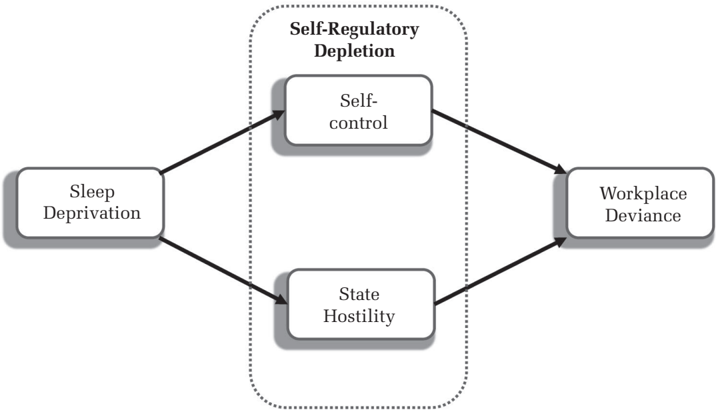
Examining the Effects of Sleep Deprivation on Workplace Deviance: A Self-Regulatory Perspective
Overview
The claims and statistics of this paper haven’t been checked yet.
Run the check — free, no account needed. It reads the open-access text and checks the sources it cites.
Integrity signals
Registry
Cites
Statistics
Figures
Verification
Claims the paper makes
The claims and statistics of this paper haven’t been checked yet.
Run the check — free, no account needed. It reads the open-access text and checks the sources it cites.
Claims other papers make about this one
Each is checked against this paper’s own text: does it say what the citing paper says it does?
In the citing paper
“Many studies showed that sleep was negatively related to unethical behavior [14][15][16][17], and that ego depletion mediated the relationship between sleep and unethical behavior [14,16,17].”
From Millennials’ Sleep and Unethical Behavior: Testing the Relationship between Sleep and Academic Dishonesty of Millennials in a Korean University (2020) · cites this paper as [15]
In the citing paper
“A sleep-deprived person could also experience a temporary reduction in their capacity for self-control [15][16][17].”
From Millennials’ Sleep and Unethical Behavior: Testing the Relationship between Sleep and Academic Dishonesty of Millennials in a Korean University (2020) · cites this paper as [15]
In the citing paper
“The results are more trustworthy than those in other studies, because this study has a rigorous research design, which separates the time to measure sleep and the time to measure unethical behavior like Barnes et al. [14], Christian and Ellis [15], and Welsh et al. [16,17].”
From Millennials’ Sleep and Unethical Behavior: Testing the Relationship between Sleep and Academic Dishonesty of Millennials in a Korean University (2020) · cites this paper as [15]
Self-check
Percentages, sums and reported differences re-computed from the paper’s own numbers.
The self-check needs the paper’s full text.
Citations
Cites
Podsakoff, P. M., MacKenzie, S. B., Lee, J.-Y., & Podsakoff, N. P. (2003) · Journal of Applied Psychology · doi:10.1037/0021-9010.88.5.879 · Cited by 82,194
The Measurement of Observer Agreement for Categorical Data
Landis, J. R., & Koch, G. G. (1977) · Biometrics · doi:10.2307/2529310 · Cited by 81,148
Preacher, K. J., & Hayes, A. F. (2008) · Behavior Research Methods · doi:10.3758/brm.40.3.879 · Cited by 34,117
Asymptotic Confidence Intervals for Indirect Effects in Structural Equation Models
Sobel, M. E. (1982) · Sociological Methodology · doi:10.2307/270723 · Cited by 12,810
Mediation in experimental and nonexperimental studies: New procedures and recommendations.
Shrout, P. E., & Bolger, N. (2002) · Psychological Methods · doi:10.1037/1082-989x.7.4.422 · Cited by 11,335
Gottfredson, M. R., & Hirschi, T. (1990) · doi:10.1515/9781503621794 · Cited by 10,127
High self-control predicts good adjustment, less pathology, better grades, and interpersonal success
Tangney, J. P., Baumeister, R. F., & Boone, A. L. (2004) · Journal of Personality · doi:10.1111/j.0022-3506.2004.00263.x · Cited by 6,557
Buss, A. H., & Perry, M. (1992) · Journal of Personality and Social Psychology · doi:10.1037/0022-3514.63.3.452 · Cited by 4,693
Gross, J. J. (1998) · Journal of Personality and Social Psychology · doi:10.1037//0022-3514.74.1.224 · Cited by 4,671 · cited 2×
“sleep deprivation has the potential to impair emotion regulation, whereby individuals modulate the emotions they experience, when they experience them, and how they express them (Gross, 1998).”
BackgroundSelf-regulation and depletion of limited resources: Does self-control resemble a muscle?
Muraven, M., & Baumeister, R. F. (2000) · Psychological Bulletin · doi:10.1037/0033-2909.126.2.247 · Cited by 4,510
Research works printed but not linked: 110
- Agnew H., 2007, Psychophysiology, 2, 263, 10.1111/j.1469-8986.1966.tb02650.x · DOI · Paper page
- Anderson S. W., 1999, Nature Neuroscience, 2, 1032, 10.1038/14833 · DOI · Paper page
- Aquino K., 2000, Journal of Organizational Behavior, 20, 1073, 10.1002/(SICI)1099-1379(199912)20:7<1073::AID-JOB943>3.0.CO;2-7 · DOI
- Avakame E. F., 1998, Violence and Victims, 13, 301, 10.1891/0886-6708.13.3.301 · DOI
- Banks S., 2007, Journal of Clinical Sleep Medicine, 3, 519, 10.5664/jcsm.26918 · DOI · Paper page
- Barnes C. M., 2011, Organizational Dynamics, 40, 18, 10.1016/j.orgdyn.2010.10.001 · DOI
- Barnes C. M., 2009, Journal of Applied Psychology, 94, 1305, 10.1037/a0015320 · DOI · Paper page
- Barnes C., 2009, Academy of Management Review, 34, 56, 10.5465/amr.2009.35713280 · DOI
- Barnett K. J., 2008, Journal of Integrative Neuroscience, 7, 405, 10.1142/S0219635208001903 · DOI
- Baron R. M., 1986, Journal of Personality and Social Psychology, 51, 1173, 10.1037/0022-3514.51.6.1173 · DOI · Paper page
- Baumeister R. F., 1998, Journal of Personality and Social Psychology, 74, 1252, 10.1037/0022-3514.74.5.1252 · DOI · Paper page
- Baumeister R., 1994, Losing control: How and why people fail at self-regulation
- Baumeister R., 2003, Handbook of self and identity, 197
- Baumeister R., 2007, Social and Personality Psychology Compass, 1, 115, 10.1111/j.1751-9004.2007.00001.x · DOI · Paper page
- Beal D. J., 2005, Journal of Applied Psychology, 90, 1054, 10.1037/0021-9010.90.6.1054 · DOI
- Becker W., 2009, Journal of Organizational Behavior, 30, 1, 10.1002/job.576 · DOI
- Bennett R. J., 2000, Journal of Applied Psychology, 85, 349, 10.1037/0021-9010.85.3.349 · DOI
- Bennett R. J., 2003, Organizational behavior: The state of the science, 247
- Berry C. M., 2007, Journal of Applied Psychology, 92, 410, 10.1037/0021-9010.92.2.410 · DOI
- Bies R., 1998, Dysfunctional behavior in organizations: Non-violent dysfunctional behavior, 49
- Blagrove M., 1995, Applied Cognitive Psychology, 9, 21, 10.1002/acp.2350090103 · DOI
- Bonnet M. H., 1995, Sleep, 18, 908, 10.1093/sleep/18.10.908 · DOI
- Bonnet M., 2000, Principles and practice of sleep medicine, 53
- Bordia P., 2008, Journal of Applied Psychology, 93, 1104, 10.1037/0021-9010.93.5.1104 · DOI
- Brief A. P., 1988, Journal of Applied Psychology, 73, 193, 10.1037/0021-9010.73.2.193 · DOI
- Brown M., 2004, Journal of Medical Humanities, 25, 173, 10.1023/B:JOMH.0000036636.43638.03 · DOI
- Chen J. H., 2005, Journal of Palliative Medicine, 8, 96, 10.1089/jpm.2005.8.96 · DOI
- Chen P., 1992, Journal of Occupational and Organizational Psychology, 65, 177, 10.1111/j.2044-8325.1992.tb00495.x · DOI
- Cherek D. R., 1997, Biological Psychiatry, 41, 523, 10.1016/S0006-3223(96)00426-X · DOI
- Christian M. S., 2009, Journal of Applied Psychology, 94, 1103, 10.1037/a0016172 · DOI
- Cochran J., 1998, Deviant Behavior, 19, 227, 10.1080/01639625.1998.9968087 · DOI
- Coffin B., 2003, Risk Management, 50, 8
- Collins W. E., 1977, Journal of Applied Psychology, 62, 567, 10.1037/0021-9010.62.5.567 · DOI
- Dahl R. E., 2002, Journal of Adolescent Health, 31, 175, 10.1016/S1054-139X(02)00506-2 · DOI · Paper page
- Damasio A., 1994, Descartes' error: Emotion, rationality and the human brain
- Davidson R. J., 2000, Science, 289, 591, 10.1126/science.289.5479.591 · DOI · Paper page
- DeWall C., 2007, Journal of Experimental Social Psychology, 43, 62, 10.1016/j.jesp.2005.12.005 · DOI
- Douglas S. C., 2001, Journal of Applied Psychology, 86, 547, 10.1037/0021-9010.86.4.547 · DOI
- Durmer J. S., 2005, Seminars in Neurology, 25, 117, 10.1055/s-2005-867080 · DOI · Paper page
- Evans J. M., 2006, Paper presented at the annual meeting of the Academy of Management
- Ferrara M., 2001, Sleep Medicine Reviews, 5, 155, 10.1053/smrv.2000.0138 · DOI
- Finkel E. J., 2001, Journal of Personality and Social Psychology, 81, 263, 10.1037/0022-3514.81.2.263 · DOI
- Fox S., 2001, Journal of Vocational Behavior, 59, 291, 10.1006/jvbe.2001.1803 · DOI
- Gailliot M. T., 2006, Journal of Personality and Social Psychology, 91, 49, 10.1037/0022-3514.91.1.49 · DOI
- Giacalone R., 1997, Antisocial behavior in organizations, 109
- Gibbs J., 1998, Journal of Research in Crime and Delinquency, 35, 40, 10.1177/0022427898035001002 · DOI
- Glomb T., 2003, Academy of Management Journal, 46, 486, 10.2307/30040640 · DOI
- Grafman J., 1996, Neurology, 46, 1231, 10.1212/WNL.46.5.1231 · DOI · Paper page
- Greenberg J., 1990, Journal of Applied Psychology, 75, 561, 10.1037/0021-9010.75.5.561 · DOI
- Greenberg J., 2006, Journal of Applied Psychology, 91, 58, 10.1037/0021-9010.91.1.58 · DOI
- Griffin R., 1998, Trends in organizational behavior, 5, 65
- Gross J. J., 1998, Journal of Personality and Social Psychology, 74, 224, 10.1037/0022-3514.74.1.224 · DOI · Paper page
- Harmon-Jones E., 2001, Journal of Personality and Social Psychology, 80, 797, 10.1037/0022-3514.80.5.797 · DOI · Paper page
- Harrison Y., 1999, Organizational Behavior and Human Decision Processes, 78, 128, 10.1006/obhd.1999.2827 · DOI
- Harrison Y., 2000, Journal of Experimental Psychology: Applied, 6, 236
- Harrison Y., 1998, Journal of Sleep Research, 7, 113, 10.1046/j.1365-2869.1998.00104.x · DOI
- Hershcovis M. S., 2007, Journal of Applied Psychology, 92, 228, 10.1037/0021-9010.92.1.228 · DOI
- Horne J. A., 1988, Sleep, 11, 528, 10.1093/sleep/11.6.528 · DOI · Paper page
- Horne J., 1993, British Journal of Psychiatry: The Journal of Mental Science, 162, 413, 10.1192/bjp.162.3.413 · DOI
- Horne J., 1999, Occupational and Environmental Medicine, 56, 289, 10.1136/oem.56.5.289 · DOI
- Ilgen D., 1986, Generalizing from lab to field settings, 257
- Jennings J., 2003, Psychology Science, 14, 473, 10.1111/1467-9280.02456 · DOI
- Judge T. A., 2006, Journal of Applied Psychology, 91, 126, 10.1037/0021-9010.91.1.126 · DOI
- Kahneman D., 1973, Attention and effort
- Kahn-Greene E., 2006, Personality and Individual Differences, 41, 1433, 10.1016/j.paid.2006.06.002 · DOI
- Kanfer R., 1990, Learning and Individual Differences, 2, 221, 10.1016/1041-6080(90)90023-A · DOI
- Kanfer R., 1989, Journal of Applied Psychology, 74, 657, 10.1037/0021-9010.74.4.657 · DOI
- Lee K., 2002, Journal of Applied Psychology, 87, 131, 10.1037/0021-9010.87.1.131 · DOI
- Leith K. P., 1996, Journal of Personality and Social Psychology, 71, 1250, 10.1037/0022-3514.71.6.1250 · DOI
- Longshore D., 1998, Social Problems, 45, 102, 10.2307/3097145 · DOI
- Longshore D., 1998, Criminal Justice and Behavior, 25, 81, 10.1177/0093854898025001005 · DOI
- Marcus B., 2004, Journal of Applied Psychology, 89, 647, 10.1037/0021-9010.89.4.647 · DOI
- Marcus C. L., 1996, Sleep, 19, 763, 10.1093/sleep/19.10.763 · DOI
- Marlatt G., 1985, Relapse prevention, 3
- Martinko M., 2002, International Journal of Selection and Assessment, 10, 36, 10.1111/1468-2389.00192 · DOI
- McKenna B. S., 2007, Journal of Sleep Research, 16, 245, 10.1111/j.1365-2869.2007.00591.x · DOI · Paper page
- Mead N. L., 2009, Journal of Experimental Social Psychology, 45, 594, 10.1016/j.jesp.2009.02.004 · DOI
- Miller E. K., 2000, Nature Reviews. Neuroscience, 1, 59, 10.1038/35036228 · DOI · Paper page
- Muraven M., 2003, Personality and Social Psychology Bulletin, 29, 894, 10.1177/0146167203029007008 · DOI
- Muraven M., 1998, Journal of Personality and Social Psychology, 74, 774, 10.1037/0022-3514.74.3.774 · DOI · Paper page
- Murphy K., 1993, Honesty in the workplace
- National Institute for Occupational Safety and Health, 2004, Overtime and extended work shifts: Recent findings on illnesses, injuries, and health behaviors
- National Center on Sleep Disorders Research, 2003, National sleep disorders research plan
- National Sleep Foundation, 2009, Sleep in America poll
- O'Leary-Kelly A., 1996, Academy of Management Review, 21, 225, 10.5465/amr.1996.9602161571 · DOI
- Ones D., 1993, Journal of Applied Psychology, 78, 679, 10.1037/0021-9010.78.4.679 · DOI
- Percival J., 1982, Sleep, 6, 390
- Pilcher J. J., 1997, Journal of Psychosomatic Research, 42, 583, 10.1016/S0022-3999(97)00004-4 · DOI
- Pilcher J. J., 1996, Sleep, 19, 318, 10.1093/sleep/19.4.318 · DOI · Paper page
- Reynolds S. J., 2006, Journal of Applied Psychology, 91, 737, 10.1037/0021-9010.91.4.737 · DOI
- Robinson S., 1995, Academy of Management Journal, 38, 555, 10.2307/256693 · DOI
- Robinson S., 1997, Research on negotiation in organizations, 7, 3
- Robinson S., 1998, Academy of Management Journal, 41, 658, 10.2307/256963 · DOI
- Samkoff J. S., 1991, Academic Medicine, 66, 687, 10.1097/00001888-199111000-00013 · DOI
- Schmeichel B. J., 2003, Journal of Personality and Social Psychology, 85, 33, 10.1037/0022-3514.85.1.33 · DOI · Paper page
- Schmeichel B., 2004, Handbook of self-regulation: Research, theory, and applications, 84
- Scott B., 2006, Journal of Management, 32, 622, 10.1177/0149206306289762 · DOI
- Sobel M., 1982, Sociological methodology 1982, 13, 290
- Spector P., 2002, Human Resource Management Review, 12, 269, 10.1016/S1053-4822(02)00049-9 · DOI · Paper page
- Spector P., 2005, Counterproductive work behavior: Investigations of actors and targets, 151, 10.1037/10893-007 · DOI
- Steers R., 1984, Absenteeism, 1, 229
- Urry H. L., 2006, Journal of Neuroscience, 26, 4415, 10.1523/JNEUROSCI.3215-05.2006 · DOI · Paper page
- Van Dongen H. P., 2004, Sleep, 27, 423
- Vohs K. D., 2008, Journal of Personality and Social Psychology, 94, 883, 10.1037/0022-3514.94.5.883 · DOI · Paper page
- Vohs K., 2000, Psychology Science, 11, 249, 10.1111/1467-9280.00250 · DOI
- Vohs K., 2008, Psychology Science, 19, 49, 10.1111/j.1467-9280.2008.02045.x · DOI
- Watson D. , Clark L. 1994. The PANAS-X: Manual for the positive and negative affect schedule-expanded form. Unpublished manuscript, University of Iowa. · DOI
- Webb W. B., 1986, Biological Psychology, 22, 169, 10.1016/0301-0511(86)90043-8 · DOI
- Weinger M., 2002, Journal of the American Medical Association, 287, 955, 10.1001/jama.287.8.955 · DOI
- Zillmann D., 1993, Handbook of mental control, 5, 370
Cited by
Sorted by citations
Sleep and emotion regulation: An organizing, integrative review
Palmer, C. A., & Alfano, C. A. (2017) · Sleep Medicine Reviews · doi:10.1016/j.smrv.2015.12.006 · Cited by 935
Beginning the workday yet already depleted? Consequences of late-night smartphone use and sleep
Lanaj, K., Johnson, R. E., & Barnes, C. M. (2014) · Organizational Behavior and Human Decision Processes · doi:10.1016/j.obhdp.2014.01.001 · Cited by 738
Barnes, C. M., Lucianetti, L., Bhave, D. P., & Christian, M. S. (2015) · Academy of Management Journal · doi:10.5465/amj.2013.1063 · Cited by 441
Self-citationJohnson, R. E., Lanaj, K., & Barnes, C. M. (2014) · Journal of Applied Psychology · doi:10.1037/a0035647 · Cited by 277
Do the Hustle! Empowerment from Side-Hustles and Its Effects on Full-Time Work Performance
Sessions, H., Nahrgang, J. D., Vaulont, M. J., Williams, R., & Bartels, A. L. (2021) · Academy of Management Journal · doi:10.5465/amj.2018.0164 · Cited by 116
Murnieks, C. Y., Arthurs, J. D., Cardon, M. S., Farah, N., Stornelli, J., & Michael Haynie, J. (2020) · Journal of Business Venturing · doi:10.1016/j.jbusvent.2018.12.004 · Cited by 88
Untangling the adverse effects of late-night usage of smartphone-based SNS among University students
Luqman, A., Masood, A., Shahzad, F., Shahbaz, M., & Feng, Y. (2021) · Behaviour & Information Technology · doi:10.1080/0144929x.2020.1773538 · Cited by 56
Ha, S. (2020) · Sustainability · doi:10.3390/su12093902 · Cited by 4
Metadata
- Authors
- Christian, M. S., & Ellis, A. P. J.
- Affiliations
- University of North Carolina at Chapel Hill
- University of Arizona
- Venue
- Academy of Management Journal
- Publisher
- Academy of Management
- Published
- 2011-10
- Volume
- 54
- Issue
- 5
- Pages
- 913-934
- ISSN
- 0001-4273
- 1948-0989
- Cited by
- 433
- References
- 24
- Language
- en
About these checks
Registry, retraction, Cites and statistics results are computed, not judged, with one exception: a printed reference that no index lists is read once by a model before it counts as a citation error. Claims are extracted by a model and kept only when their quote appears verbatim in the text; each cited source is then checked, with a model’s help, for whether it says what the claim relies on. Those verdicts can be wrong — read the claim’s quote and the cited source before relying on one.
Statistics and arithmetic are recomputed, not judged.
Confidence bands are shown only for fields calibrated on our annotated test set. None is calibrated yet, so no band is shown.
What counts as a claim ›How we measure confidence ›How we check this ›
Are you an author, or do you see a problem with this page? Request a review
